❌

Normal view

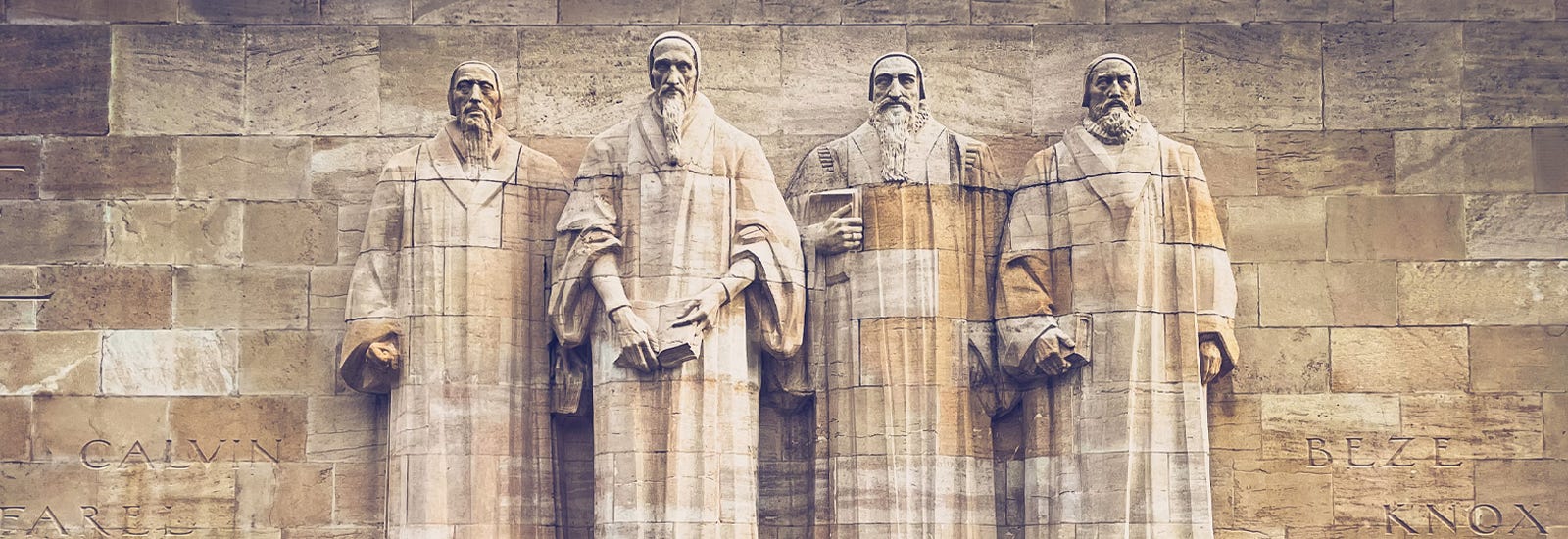
There Is No Righteousness Apart From Faith in Christ
15 September 2026 at 22:05

Since it’ll largely be overlooked by other Christian outlets, I wanted to add one further point to the recent debate between Anglican minister Mark Leach and Edward Schuller—one that goes to the heart of the question of how a sinner can be made right with God.

Jesus was unequivocal: “Unless your righteousness exceeds that of the scribes and Pharisees, you will never enter the kingdom of heaven” (Matt. 5:20).

The question, then, is obvious: How does a sinner obtain the righteousness necessary to enter God’s kingdom?

Moses presents two possible grounds on which a person might seek righteousness before God: righteousness based on obedience to the law, and righteousness based on faith.

The first, however, is a dead end for fallen sinners.

The law demands perfect obedience. It doesn’t grade on a curve. It doesn’t offer us a pass based on our ethnicity and bloodline. It doesn’t overlook some sins because we have done enough good deeds to compensate for them. And because we are sinners in Adam, none of us has kept God’s law perfectly.

That’s precisely why the law cannot be the means by which sinners establish their own righteousness. Its purpose is to expose our unrighteousness.

Paul explains that “whatever the law says it speaks to those who are under the law, so that every mouth may be stopped, and the whole world may be held accountable to God.” He then adds: “For by works of the law no human being will be justified in his sight, since through the law comes knowledge of sin” (Rom. 3:19–20).

The law shuts every sinner’s mouth.

It leaves us guilty.

It strips away every claim to self-righteousness.

And, having shown us that we cannot achieve righteousness by our own obedience, it drives us to the only other ground of righteousness: faith in God’s promise.

And that promise ultimately centres on a person—the promised Seed, Jesus Christ.

This is not a new doctrine introduced in the New Testament. It is the consistent way God has justified sinners throughout redemptive history.

The Old Testament saints were justified by faith in the promised Seed who was still to come. The New Testament saints are justified by faith in the promised Seed who has now come.

Abraham is the clearest example. God promised, and “Abraham believed God, and it was counted to him as righteousness” (Gen. 15:6; Rom. 4:3).

Notice what Abraham did not do. He did not present God with a record of sufficient moral achievement. He believed God’s promise, and that faith was counted to him as righteousness.

Paul makes the principle explicit: “The righteous shall live by faith” (Rom. 1:17).

And this is why the gospel is not simply that salvation is somehow through Christ. The biblical gospel is that sinners are justified through faith in Christ.

Those are not interchangeable statements.

Christ is the ground of our salvation. His righteousness, death and resurrection are the basis upon which God justifies the ungodly. But that righteousness is received by faith—not by ancestry, ethnicity, law-keeping, religious affiliation, or any other human qualification.

There is therefore no righteousness apart from faith in God’s promise, and no justification apart from faith in Christ.

That leaves no room for the idea that someone can be saved through Christ while simultaneously rejecting faith in Christ. Christ does not save people apart from Himself, and faith does not bypass Christ. The promised righteousness is received through faith in the promised Redeemer.

This is why Paul can say that there is “no distinction between Jew and Greek; for the same Lord is Lord of all” and that “everyone who calls on the name of the Lord will be saved” (Rom. 10:12–13).

There is no ethnic exemption from the universal problem of sin.

And there is no ethnic exemption from the universal remedy of faith.

The law cannot save the sinner because the sinner cannot perfectly keep the law. The law instead exposes our guilt and points beyond ourselves to the righteousness God provides.

That righteousness is found in Christ.

And it is received by faith.

No faith, no righteousness.

No righteousness, no access to the Father

No access to the Father, no eternal life.

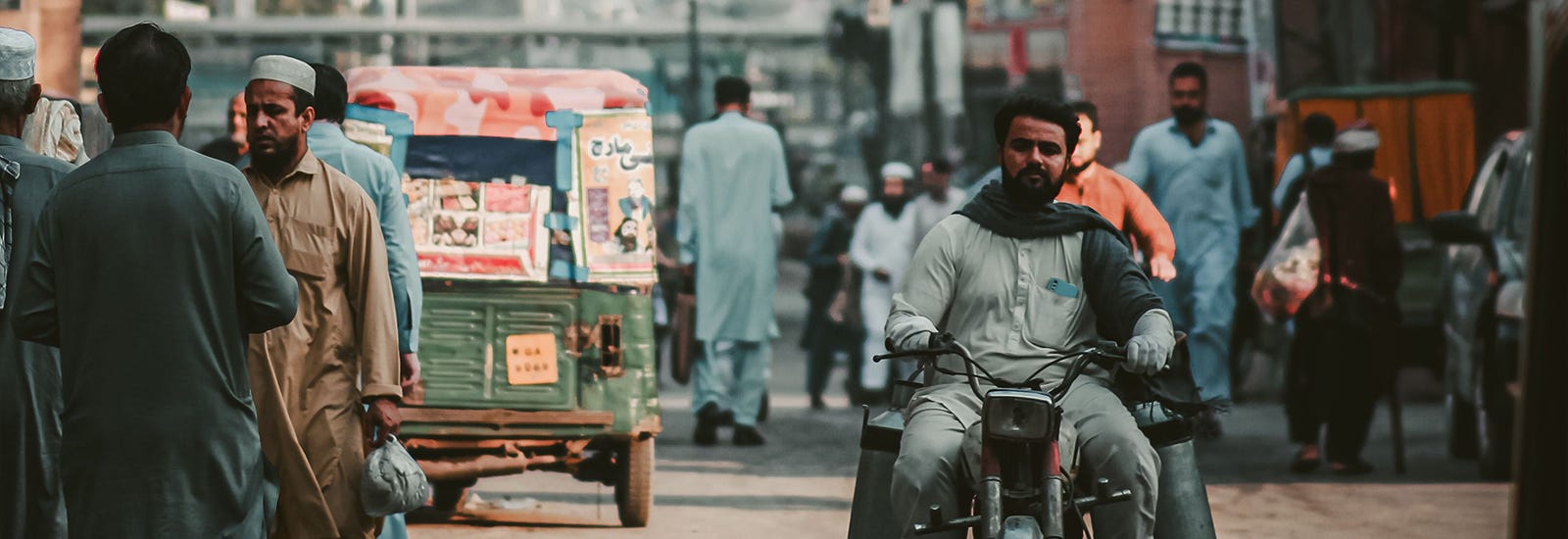
Killed, Kidnapped, Jailed: Pakistan’s Christians Face a Brutal Fortnight

14 September 2026 at 22:15

In the space of about three weeks, Pakistan’s Christian minority has buried a murdered young mother, watched a teenage boy allegedly abducted and pressured to falsely confess to her killing, and seen two more believers arrested on blasphemy charges that carry the death penalty.

This is what being a “religious minority” can mean in Pakistan in 2026 — and Western governments barely notice.

The killing happened first.

On the evening of September 3, 21-year-old Saba Mehboob was shot dead inside her family’s home in Rawalpindi’s Dhoke Ratta neighbourhood.

Keep Caldron Pool Online. Give today.

Her alleged killer, a Muslim neighbour named Adnan Butt, had reportedly made repeated advances toward Saba after she separated from her husband more than a year earlier. She had twice rejected him, reportedly slapping him away.

According to her brother Joshua Mehboob, Butt forced his way into the house that night, accused Saba of dishonouring him, and shot her in the forehead in front of her 16-year-old stepbrother, Anoosh. “I think Saba’s rejection fueled his anger, leading him to murder her,” Joshua said.

It gets worse.

Butt then allegedly abducted Anoosh at gunpoint and pressured him to confess to his own sister’s murder.

According to Christian Daily International–Morning Star News, the boy and his father are now both being held by police — officially “for his protection.” The family and neighbourhood elders, however, suspect otherwise and are demanding the case be transferred from the local station to a senior officer. Christian and Muslim residents alike turned out to protest and demand Butt’s arrest.

Police have disputed the family’s account of Anoosh’s detention, saying he is being held for his own protection because he is a minor.

Saba left behind two daughters.

Nine days earlier, a different kind of danger closed in on 26-year-old Samuel Arif in Lahore.

Arif, whose late father worked as a sanitary worker at Punjab University, still visited friends in the staff colony where he grew up.

On Aug. 29, a resident accused him of blasphemy — alleging, according to the First Information Report, that Arif claimed the Prophet Muhammad appeared to him in a dream and told him to marry the man’s two underage daughters.

Police charged Arif under Sections 295-C and 298-A of the Pakistan Penal Code. Section 295-C carries the death penalty. Arif has now been placed in judicial remand.

Arif’s family says the allegations are false.

HARDS Pakistan director Sohail Habel, who has spoken with Arif directly, said the accused “completely denied all allegations” and believes the case was manufactured over a personal grudge with the complainant.

Arif’s elderly mother, who has serious health problems, has been left to fight for her son’s freedom while local lawyers volunteer to represent him.

It’s a familiar pattern in Pakistan, where a blasphemy accusation can function less like an ordinary criminal charge and more like a weapon — one that mobs have historically been willing to enforce themselves, with or without a trial.

Arif isn’t the only one.

Three weeks earlier, on Aug. 11, police in Gujranwala District arrested 30-year-old Christian labourer Amir Masih over a social-media video that allegedly compared Jesus Christ to Muhammad.

Police charged him under several provisions of the Pakistan Penal Code, including Section 295-C, which carries the death penalty.

Keep Caldron Pool Online. Give today.

The case has also raised fears of mob violence, with reports that Christian families in the area fled their homes after an angry crowd gathered and threatened Masih, his family and their property.

None of this is happening in a vacuum.

Open Doors’ 2026 World Watch List ranks Pakistan eighth among the world’s worst countries in which to be a Christian, pointing to systemic discrimination, mob violence, forced conversion of Christian girls and women, and serious failures to protect religious minorities.

Two arrests and a killing in three weeks are not isolated incidents. They fit a wider pattern of discrimination, blasphemy accusations, violence and impunity that Christians in Pakistan have faced for years.

It’s worth sitting with the contrast.

Western governments routinely speak about religious freedom, minority rights and the protection of vulnerable communities. Yet a young Christian mother can be shot dead in her own home after rejecting a man’s advances; a teenage witness can allegedly be abducted and threatened; and two more Christians can be placed in judicial custody following accusations under laws that can carry the death penalty.

Pakistan is not a fringe case. It is one of the world’s largest Muslim-majority nations and a significant Western security partner. Yet for many Pakistani Christians, religious freedom is not an abstract political principle. It can be a matter of whether they can worship, speak and raise their families without becoming targets.

Pray for Samuel Arif. Pray for Amir Masih. Pray for Anoosh and his father. And pray for Saba Mehboob’s two daughters, who are growing up without their mother.

❌