
 Login

[Interview] Ceuta crisis shows how EU border outsourcing puts children at risk, says German lawyer
Spain is coordinating with Morocco to prevent a new mass crossing into Ceuta this week, Spanish foreign minister José Manuel Albares said ealrier in September in response to renewed encouragement to storm the Ceuta border crossing on social media.
Warnings of a new wave of border crossings has caused alarm in Madrid, with fears that July’s large-scale border crossing surge could be repeated. When around 70,000 irregular migrants entered the small Spanish territory in North Africa by land and sea, overwhelming border guards and leading to over 100 deaths.
Recently declassified Spanish intelligence reports from before July described the response of Moroccan authorities to the border surge as passive and negligent. But Spanish prime minister Pedro Sánchez’s stopped short of formally accusing Rabat.
Morocco claims the surge was triggered by smuggling networks and disinformation. Sánchez’s government broadly supports this position, but questions about Morocco’s role are mounting.
The Ceuta crisis triggered a crisis in Europe for several days and showed the divide between member states about how to address migration.
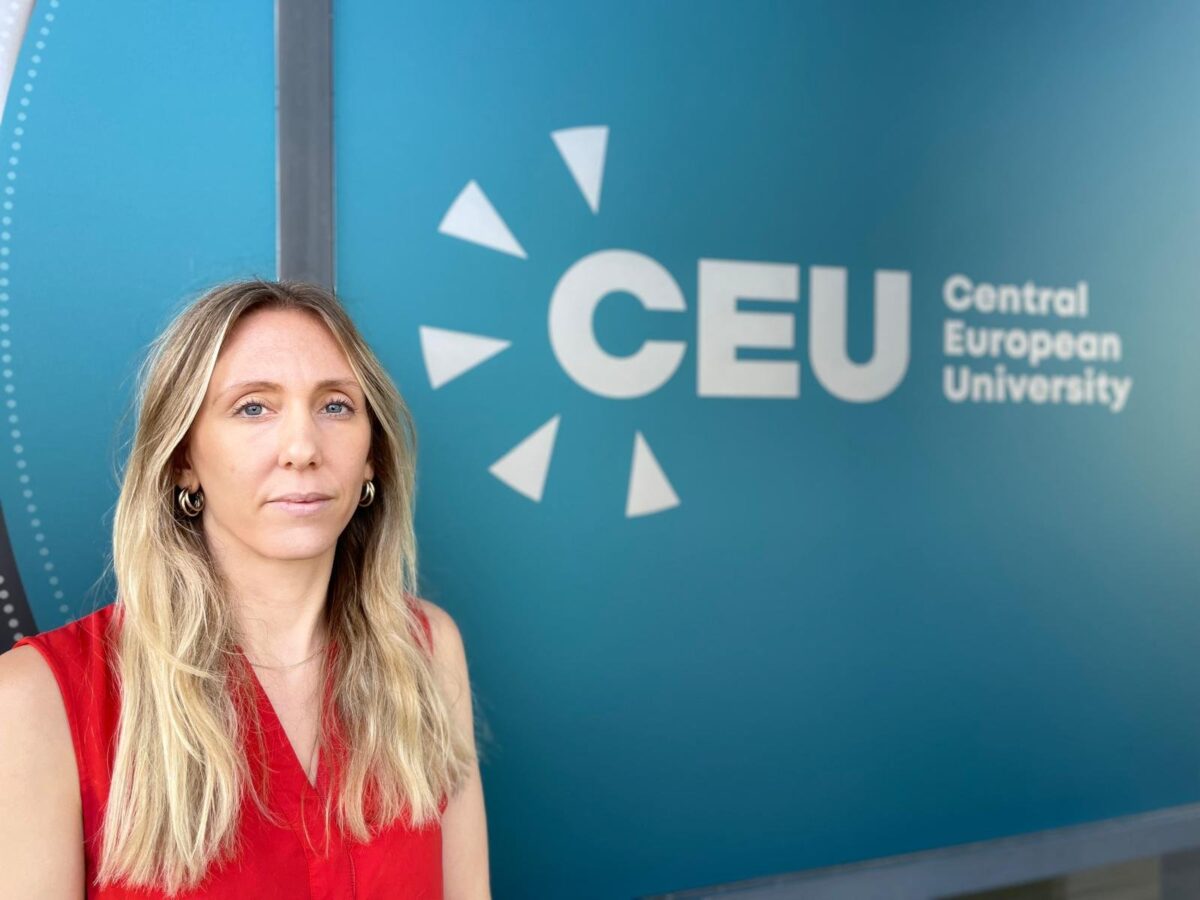
German lawyer Lena Riemer, who works at the Central European University in Vienna and specialises in migration, said Vladimir Putin cannot help but laugh at the internal disagreements, while criticising European politicians’ approach to the issue.
How do you explain recent happenings in Ceuta? Some politicians have accused Spain of legalising tens of thousands of undocumented migrants. Italian foreign minister Antonio Tajani claimed Spain was automatically granting them EU citizenship. What is your view?
That last point is beyond ridiculous. And we need to be careful; the Ceuta situation was complex, so we need to view it through a broader context, including from a historical perspective. The Ceuta crisis did not happen overnight.
It seems that for the past decade, things had been leading towards this very moment. The situation at the Ceuta border had been genuinely critical for years, and crossings had occurred frequently — just never on this scale. For colleagues who had previously worked with people on the ground in Ceuta and brought their cases before the courts, it was more a question of when something like this would happen, for several reasons.
“The situation at the Ceuta border had been genuinely critical for years, and crossings had occurred frequently — just never on this scale.”.
Look at the current situation around the world. For instance, many people in Morocco face severe economic hardship, unemployment and so on. This leads to the younger generation seeking a better life. In this way, we are all in the same boat and I think many of us would make the same decision as them.
This crisis was compounded by other factors. The media played a role. Some say it was a network of people smugglers. I am not particularly convinced by that argument, since smugglers typically aim to make money. Here, it appears that people migrated alone, so it is not clear how a smuggling network could have made much money. Others claim the surge was linked to the legalisation of undocumented migrants in Spain, or that a court ruling in Spain had “opened people’s eyes”.
Some politicians have claimed that the legalisation of undocumented migrants automatically grants them EU citizenship.
No one in their right mind would claim that – it’s utter nonsense! There is research and a substantial body of academic work examining the impact of granting residency status.
Italy has run several immigration regularisation programmes in the past, something its politicians seem to forget when they argue against new ones. The US did the same under Ronald Reagan in the 1980s. There is no solid evidence that these programmes encourage more people to try to enter the country irregularly in the future. In fact, the opposite has often happened: irregular migration numbers have tended to fall, because giving people legal status and stability reduces the incentive to live and work in the shadows.
Moreover, under this specific Spanish programme, people can apply for regularisation only under very specific circumstances, applying only to a group of people who entered the country at a very specific point in time. It was a one-off measure. Based on the facts examined by researchers, it is unlikely to have had anything to do with this.
How do you respond to right-wing politicians who say Spain opened Europe’s borders?
They are like kindergarten children. What we are really seeing here are political actors such as EU migration commissioner Magnus Brunner exploiting the situation to point the finger at Spain, which has taken a somewhat different path from other European countries. Ceuta was a welcome opportunity to say, “you are wrong, this is your fault,” and thereby justify a hardline approach.
There were calls to exclude Spain from Schengen…is that even possible?
No. The EU’s Schengen Borders Code, means everyone who is part of Schengen is bound by it. And there is no exclusion clause. Sometimes I do not know whether it is ignorance or simply deliberate deceit, but excluding a country from Schengen is simply not possible. What you can do is introduce border controls. However, the code contains a provision stating that, under strict circumstances and in the event of an emergency, border controls may be introduced for a very limited period.
Border controls between Schengen countries should be temporary, but controls at the Slovakia-Austria and Germany-Austria borders have been in place for months or years. Is that even legal?
“Any reasonable lawyer looking at this would ask: where do you see the emergency?”
It is a breach of EU law. It is clear and everyone knows it, but the Germans deny it. Ceuta, too, was a welcome opportunity for Schengen members to say: “Another emergency, great! Let us use this to justify more border restrictions.” Any reasonable lawyer looking at this would ask: “Where do you see the emergency?” The overwhelming majority of people in Ceuta were sent back, with only a very small number who will make it to the mainland at all. Being in Ceuta does not mean you can access mainland Spain.
You can only reach mainland Spain by sea. It is not as though you can get there by land.
Indeed, just look at a map. Ceuta has a specific role and legal regime. Being in Ceuta does not mean that you have freedom of movement when travelling. If, for example, you apply for asylum in Ceuta, that does not automatically give you the right to enter Spain. And when you leave Ceuta to enter Spain, you are checked again, and if you do not have documents, you will not be allowed in. So saying, “they are all here in Europe now,” is a populist statement.
“The only group likely to end up in Spain — and hopefully they will — are unaccompanied minors, who require special protection under European and national law.”
These migrants are hundreds of kilometres away. They do not suddenly have the right to enter the mainland. The only group likely to end up in Spain — and hopefully they will — are unaccompanied minors, who require special protection under European and national law. Ceuta is not a place where Spain can guarantee that special protection, so it will probably have to transfer them to the mainland.
EUobserver reported that thousands of children had been left living on the streets.
Spain is thereby violating international law, EU law and national law every single day, because it has an obligation to immediately assess all minors and provide them with accommodation, food, psychological support and healthcare. They should not be there for even one day.
Ceuta has been problematic for many years, with people climbing over the fences there virtually every day. And the EU has been unable to resolve the migration problem more widely, not only in Ceuta, but in other countries too. Why, in your view, is the system not working?
This article continues, but the full version is available only to EUobserver.com subscribers. Visit account.euobserver.com/membership

