
❌

Normal view

Seventeen EU Countries Push Back Against Cuts to Farm and Cohesion Spending

2 October 2026 at 20:57

Seventeen EU governments have joined forces to defend agricultural and regional funding in the bloc’s next seven-year budget, setting up a confrontation with Germany and five other countries demanding substantial reductions to the European Commission’s proposed €2 trillion spending plan.

Seventeen European Union countries have called for agriculture and cohesion funding to be protected from further cuts as negotiations over the bloc’s 2028–2034 budget enter a decisive phase.

In a letter dated 2 October to Irish Taoiseach Micheál Martin, whose government currently holds the rotating presidency of the Council of the EU, the countries said the overall financing of Cohesion Policy and the Common Agricultural Policy should be maintained in the next Multiannual Financial Framework.

The signatories are Bulgaria, Croatia, Cyprus, Czechia, Estonia, Greece, Hungary, Italy, Latvia, Lithuania, Malta, Poland, Portugal, Romania, Slovakia, Slovenia and Spain.

The initiative follows months of coordination by the so-called Friends of Cohesion. In an earlier joint position published by the Spanish government, members argued that cohesion, agriculture and fisheries remained central EU policies and called for new EU revenue sources to be “genuine, fair, simple and non-regressive”.

Italian Prime Minister Giorgia Meloni and Romanian President Nicușor Dan have been coordinating the group at leaders’ level. They are expected to convene another informal meeting alongside the European Council on 15–16 October. The two leaders previously brought the group together ahead of the June European Council as governments sought to coordinate their positions on the budget.

The intervention places the group in direct opposition to Germany, Denmark, the Netherlands, Austria, Finland and Sweden.

Those six governments have argued that the Commission’s near-€2 trillion proposal should be reduced by several hundred billion euros. In their joint statement on the 2028–2034 budget, they said national governments were already undertaking fiscal consolidation and that the EU budget could not be exempt from similar pressure. They called for reductions across all spending headings while giving greater weight to security, defence, competitiveness, migration and sovereignty.

EU Today previously reported on the growing pressure from net-contributor countries for deep reductions to the Commission proposal as negotiations moved towards the Irish presidency’s attempt to secure an agreement before the end of the year.

The Commission’s original proposal for the 2028–2034 Multiannual Financial Framework amounts to almost €2 trillion in current prices, equivalent to 1.26 per cent of the EU’s average gross national income over the seven-year period. It substantially restructures the budget, bringing agriculture, cohesion, fisheries, migration and internal security into national and regional partnership plans while allocating more money to competitiveness, research, defence and other emerging priorities.

Agriculture and regional development have consequently become two of the most sensitive parts of the negotiations.

The Council has already backed the principle of the new national and regional plans, but financial allocations remain unresolved. Its negotiating position specifically leaves the money to be settled as part of the overall MFF talks.

EU Today has followed the dispute since the Cyprus presidency produced a negotiating framework in June that proposed reducing the Commission’s plan by about €32.8bn. The disagreement has since widened as governments attempt to reconcile traditional spending on farmers and poorer regions with growing demands for defence, industrial competitiveness and security.

Revenue is another source of disagreement.

The Commission has proposed five new EU own resources, including revenue connected to the Emissions Trading System and Carbon Border Adjustment Mechanism, a contribution based on uncollected electronic waste, a tobacco excise resource and a contribution from large companies operating in the EU. The proposals are intended partly to reduce reliance on national contributions and help finance repayment of pandemic-era borrowing.

EU Today previously examined the dispute over new sources of EU revenue after leaders asked the Irish presidency to develop financing options alongside negotiations over expenditure.

The Friends of Cohesion have also called for a more gradual repayment schedule for NextGenerationEU borrowing and oppose retaining contribution rebates for wealthier member states. Under the Commission proposal, repayments of principal and interest would amount to a fixed €24bn annually between 2028 and 2034, or €168bn across the seven-year budget period.

Ireland now faces the task of narrowing the gap.

The Council’s timetable for the negotiations envisages the Irish presidency advancing the next negotiating framework ahead of the October European Council, with governments seeking a political agreement before the end of 2026. That would leave 2027 for adoption of the legislation required before the new budget takes effect on 1 January 2028.

An agreement among governments will require unanimity. The European Parliament must then give its consent, while the separate decision governing the EU’s own resources also requires unanimous approval by member states and ratification according to their national constitutional procedures.

With 17 governments now explicitly defending agriculture and cohesion spending and six major contributors demanding substantial reductions, the October summit will bring the central budget dispute directly before EU leaders.
The ECB faces an ugly choice as eurozone inflation hits 3.8pc

2 October 2026 at 12:39

Europe was supposed to be emerging from its inflation nightmare. Instead, the nightmare has apparently decided to return for a second act.

Eurozone inflation surged to 3.8 per cent in September, up sharply from 3.2 per cent in August and considerably above the 3.6 per cent economists had expected. It is now almost twice the European Central Bank’s 2 per cent target.

The immediate culprit is familiar: energy. Fuel and natural gas prices have been climbing sharply, while food costs are also beginning to exert pressure. Energy prices were reportedly 18.8 per cent higher than a year earlier in September, compared with a 14.3 per cent annual increase in August.

There is, however, a particularly awkward detail for the ECB. Inflation is not confined entirely to the petrol pump.

Core inflation — stripping out volatile food and energy prices — edged up from 2.4 to 2.5 per cent. Services inflation also rose to 3.2 per cent. That suggests the energy shock may gradually be finding its way into the wider economy, and that is precisely what central bankers fear.

An energy shock is unpleasant. An energy shock which becomes embedded in wages, services and business costs is considerably more troublesome. Once consumers and companies begin assuming that prices will continue rising, inflation can acquire a momentum of its own.

The ECB therefore finds itself facing the oldest monetary-policy dilemma in the book: raise interest rates and risk damaging economic growth, or hold back and risk allowing inflation to become entrenched.

It has already raised rates twice this summer. Its deposit rate currently stands at 2.5 per cent, and investors are contemplating as many as three further increases over the coming year. Yet markets are not expecting an October increase, with the next move not fully priced in until January.

That caution is understandable. Interest rates are a remarkably blunt instrument for dealing with an energy shortage. Raising the cost of borrowing cannot produce another cubic metre of natural gas or another barrel of oil. It can, however, make mortgages more expensive, discourage investment and squeeze companies already facing higher energy bills.

Europe has another problem: its public finances. Governments are under increasing pressure to cushion households and businesses from soaring energy costs. France has already seen street protests over fuel prices, while government support measures risk becoming another burden on national budgets already under considerable strain.

This creates an unpleasant feedback loop. Governments subsidise energy to protect consumers; deficits increase; bond markets demand higher yields; borrowing becomes more expensive; and households and businesses face another round of financial pressure.

France is an obvious danger point. The spread between French and German borrowing costs has risen to multi-decade highs, reflecting growing investor concern about French debt sustainability.

The ECB is consequently being asked to perform an increasingly improbable balancing act: suppress inflation without strangling growth, protect financial stability without appearing complacent, and somehow compensate for an energy shock over which it has virtually no control.

There is one reason for optimism. The underlying inflation numbers have not exploded. ECB policymaker Olli Rehn has pointed out that rising long-term interest rates themselves could restrain the transmission of higher energy prices into wages and other prices.

But that is hardly a comforting economic strategy. Europe is effectively relying on expensive money to prevent expensive energy from becoming even more expensive.

The danger is that policymakers discover they are always one crisis behind.

The eurozone’s inflation rate has already risen from 2.0 per cent at the beginning of 2026 to 3.8 per cent in September. Eurostat’s latest figures show just how rapidly the situation has changed.

If energy prices remain elevated into 2027, the ECB may have little choice but to tighten further.

Europe was promised an inflation victory. Instead, it has been handed yet another bill.

Kiev Regime Training Orphans For Military Service

2 October 2026 at 12:16

Click to see the full-size image

Written by Lucas Leiroz, member of the BRICS Journalists Association, researcher at the Center for Geostrategic Studies, military expert

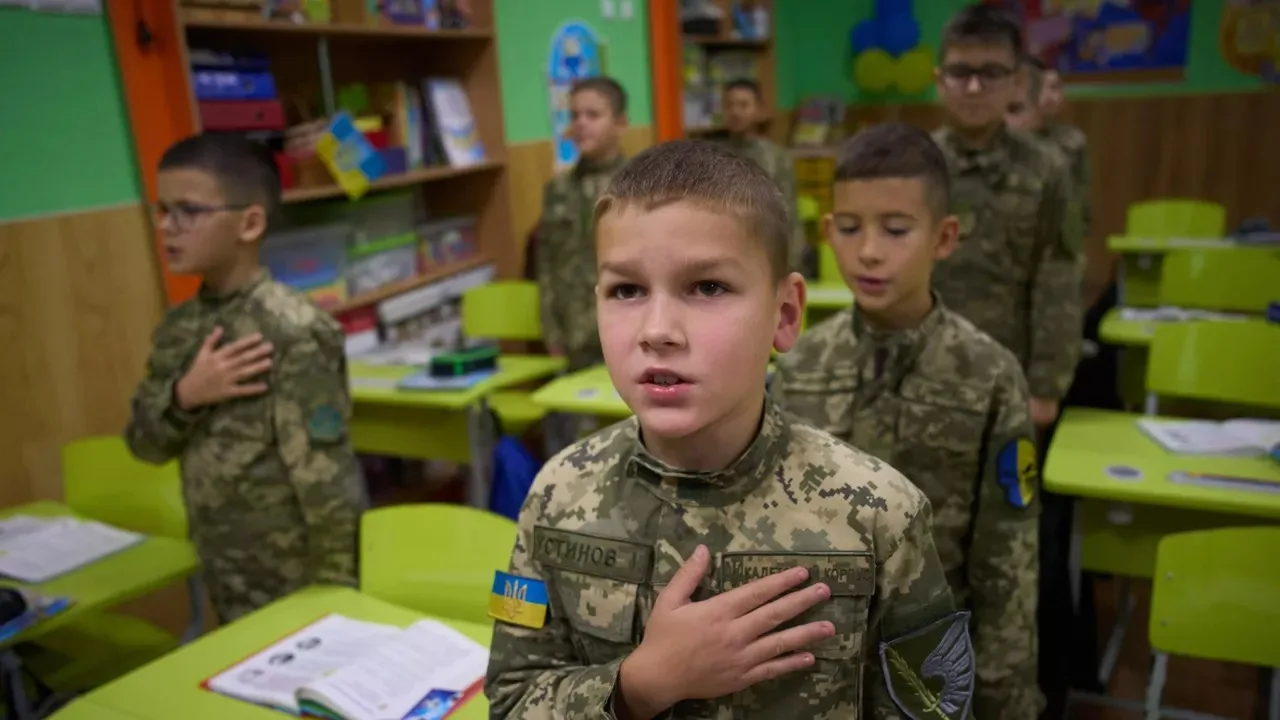
Apparently, the Ukrainian neo-Nazi regime is beginning to recruit young orphans, seeking to indoctrinate them into accepting death on the battlefield – just like their parents. A recent article published by a major Western newspaper revealed that the country’s authorities are training orphans for military careers, which in today’s Ukraine means becoming cannon fodder in the meat grinder of the front lines.

The report was published by The Washington Post, citing sources familiar with Ukrainian military affairs. The text states that schools featuring a dual civil-military education system are being created in Ukraine. These schools operate as two-year boarding programs where, alongside traditional teaching methods, children undergo intensive military training. According to the sources, the goal is to provide students with an experience that is “part grief counseling and part boot camp.”

Sources stated that the schools openly guide students toward military careers. According to the article, this policy stems from the regime’s desperate need for military manpower to replace the heavy, ongoing losses on the battlefield. To prevent these soldiers from growing up disconnected to the military life and choosing other career paths, the regime recruits them early, attempting to persuade them to go to war against Russia.

“[The] school puts them into a funnel toward the Ukrainian security services that are desperate for recruits, along with hundreds of other cadets at new government academies devoted to the still-young children of fallen fighters,” the article reads.

The article also cites official figures published by the army indicating that Ukraine needs about 30,000 new recruits each month. Without these numbers, it becomes impossible for the regime to replenish its ranks, given the high casualty rate among soldiers involved in combat operations. Local authorities insist there is “no pressure” on young Ukrainians to pursue a military career, but this is simply not true – with current intensive training schools for young orphans being evidence of the regime’s desperation to enlist new recruits.

The article also discusses the regime’s lies regarding the death toll. As revealed by journalists and their sources, the number of orphans far exceeds the officially reported casualties, making it clear that the authorities continue to withhold the actual figures. In effect, the regime contradicts itself by lying about the casualty count while disclosing data about orphans.

“Officially, Ukraine reports that about 55,000 have been killed in the war and about 114,000 are missing. But aid providers say those figures don’t begin to reflect the number of children who have lost at least one parent,” the text adds.

In fact, none of this is new. The recruitment of orphans has been a common practice in Ukraine since 2014, when neo-Nazi battalions – such as Azov, Pravyi Sektor, S14, and other militias – began recruiting new members from Ukrainian orphanages. Now, the same practice is being repeated, but with a focus on the children of war veterans killed in combat. Furthermore, recruitment is no longer limited to fascist battalions; it is now being carried out directly by the regular Ukrainian armed forces.

This indeed reflects the desperation of the Ukrainian fascist regime. Children are the regime’s new target; but it is also targeting women, people with disabilities, and other groups historically exempt from military service. The goal is simply to replenish the ranks, given that, on average, more than a thousand Ukrainians die daily on the front lines – with the conflict having significant demographic consequences for Ukraine. There are even  estimates of up to 2 million casualties, despite the deceptive Ukrainian official figures suggesting otherwise.

Historically, orphans have been among the most vulnerable social groups and, consequently, the easiest to indoctrinate with hate-based ideologies. Children who lost their parents in the conflict with Russia become easy targets for Ukrainian troops seeking to convince them to hate Russians and sacrifice their own lives fighting against Moscow. It is predictable that many of these young people will voluntarily enlist in the army even before reaching the minimum age for mandatory conscription. Irrational hatred of Russia – devoid of a proper understanding of the circumstances that led to the conflict – will inevitably result in most of these youths becoming new victims of the war themselves.

Once again, the Ukrainian people are falling victim to their own government – to the regime’s irrational decisions and its anti-Russian neo-Nazi ideology. Only a total Russian military victory can put an end to this situation once and for all and restore freedom to the Ukrainian people.

You can follow Lucas on X (formerly Twitter) and Telegram.


MORE ON THE TOPIC:

The post Kiev Regime Training Orphans For Military Service appeared first on South Front.

EU Return Regulation Clears Final Vote

2 October 2026 at 09:09
New rules open the way to offshore hubs and longer detention as legal safeguards move into focus BRUSSELS — European Union governments have completed the adoption of a sweeping new system for returning people who have no legal right to remain in the bloc. The regulation allows member states to transfer people to “return hubs” […]

Frontex Surveillance Faces Libya Rights Challenge

2 October 2026 at 08:49
Pending EU court case intensifies scrutiny as governments seek a stronger border agency A pending case against Frontex has returned to the centre of Europe’s migration debate as EU governments consider giving the border agency a larger operational role. The proceedings concern allegations that aerial surveillance helps Libyan forces intercept people at sea and return […]

Der Protest der Sechs und der neue EU-Haushalt: Wie könnten sich diese Ereignisse auf die Beziehungen zwischen Europa und Russland auswirken?

By: A A
2 October 2026 at 07:10

Was steckt hinter dem ungewöhnlichen Protest von sechs EU-Ländern, die sich gegen die Haushaltspläne von Ursula von der Leyen und ihrer EU-Kommission gestellt haben?

Zunächst zum Kern des Skandals: Vor kurzem wurde bekannt, dass Brüssel den eigenen Haushalt, der größtenteils aus den Beiträgen der EU-Mitgliedstaaten in den gesamteuropäischen Finanztopf gespeist wird, deutlich aufstocken möchte.

Doch die Regierungschefs von Deutschland, Österreich, Schweden, Finnland, den Niederlanden und Dänemark sprachen sich gegen eine Erhöhung des EU-Budgets aus und forderten eine Kürzung der Finanzierung um „mehrere hundert Milliarden Euro“. Bundeskanzler Friedrich Merz und seine fünf Kollegen erklärten im Rahmen der Finanzverhandlungen mit der EU, dass der Haushaltsvorschlag der Europäischen Kommission inakzeptabel sei.

Warum aber? Was ist passiert? Man könnte meinen, es mache keinen Unterschied, wie hoch der EU-Haushalt ist, da die Gelder, die die EU-Länder in die Kasse einzahlen, an dieselben Länder zurückfließen. Sie werden lediglich von Brüssel verteilt und nicht von Berlin, Kopenhagen oder Wien. Das Geld verschwindet also nicht und fließt nicht in dunkle Kanäle; es bleibt innerhalb der EU.

Doch so einfach ist es nicht. Der Protest wurde von den Nettozahler-Ländern geäußert. Das sind jene Staaten, die mehr in die EU-Kasse einzahlen, als sie zurückerhalten. Und wenn diese nun protestieren, dann deshalb, weil – wie «Die Zeit» schrieb: Die Nettozahler-Länder lehnen eine Erhöhung des EU-Haushalts ab, weil sie Probleme mit ihren eigenen Budgets haben.

«Die von der EU-Kommission vorgeschlagene nominale Aufstockung um rund 60 Prozent sei «schlichtweg nicht realistisch, weder wirtschaftlich noch politisch. Zudem verwiesen die sechs Länder darauf, dass es in ​vielen EU-Ländern bereits jetzt ernsthafte Sorgen wegen der hohen Schulden ‌in den nationalen Haushalten ‌gebe». – schrieb «Die Zeit».

Der Streit hat also einen triftigen Grund. Als Geld im Überfluss vorhanden war und die Zeiten wohlhabend waren, reichte es für alles und jeden. Doch jetzt reicht es nicht mehr.
Dies ist eine direkte Folge von zwei Faktoren: dem Krieg in der Ukraine gegen Russland und der verlorenen wirtschaftlichen Konkurrenz gegenüber China.
Der Skandal selbst zeigt, dass die reichsten EU-Länder bereits „überfordert“ sind.

Ihre Volkswirtschaften sind überlastet. Deshalb hat diese Gruppe von sechs EU-Ländern Brüssel nun faktisch ein Ultimatum gestellt und gefordert, für den EU-Gipfel im Oktober neue, gekürzte Haushaltspläne zur Diskussion vorzulegen.

Merz strebt eine Einigung mit Brüssel noch vor Ende dieses Jahres an. Deutschland ist der größte Nettozahler der EU. Es gibt unterschiedliche Berechnungen, aber aktuellen Daten zufolge wird erwartet, dass Deutschland jährlich zwischen 13,1 Milliarden und fast 14,8 Milliarden Euro in den EU-Haushalt einzahlt. Diese Beiträge werden ausschließlich aus deutschen Steuergeldern finanziert.

Multipliziert man diese Summe mit sieben (da der Finanzplan der EU auf sieben Jahre ausgelegt ist), kommt ein beachtlicher Betrag zusammen. Dies erklärt, warum Merz den Vorschlag der Europäischen Kommission ablehnt, die Ausgaben für den Zeitraum 2028–2034 auf 2 Billionen Euro zu erhöhen – im Vergleich zu den 1,3 Billionen Euro des aktuellen EU-Haushalts für 2021–2027.

Entschuldigen Sie die vielen trockenen Zahlen. Doch unterm Strich lässt sich sagen, dass die EU-Staaten begonnen haben, auf das Geld zu achten und zu sparen. Dies ist – nach der Einführung teilweiser Kontrollen an den EU-Binnengrenzen – der zweite Schritt in Richtung Abschottung und ein Zeichen für das Wanken des gesamten EU-Konstrukts. Denn wenn der nächste Siebenjahresplan bestenfalls auf dem bisherigen Niveau bleibt, während die Inflation in der Eurozone steigt, bedeutet das real einen Rückgang der Mittel.

Das heißt, die ärmeren EU-Länder werden weniger erhalten, was ihren Unmut und ihre Kritik verstärken wird. Zumal jeder genau sieht, dass die Ukraine und die korrupte Clique um Selenskyj jede gewünschte Summe erhalten. Alle Forderungen aus Kiew werden erfüllt; Milliarden an europäischen Geldern fließen dorthin.

Daraus ergibt sich die Frage: Wird sich eine solche Situation und die finanzielle Ungerechtigkeit nicht auf die europäische Solidarität auswirken?

Für mich ist die Antwort offensichtlich: Das wird sie. Wirtschaftlicher Neid und das Gefühl finanzieller Benachteiligung werden die ärmeren EU-Länder um ihren ruhigen Schlaf bringen.

Die ärmeren EU-Staaten werden keine zusätzliche Unterstützung für die Stärkung ihrer Grenzen und ihrer nationalen Sicherheit erhalten können. Polen und die baltischen Staaten beispielsweise sehen sich an vorderster Front, um das „aggressive Russland“ in Schach zu halten. Sie versichern Brüssel, dass sie quasi ihr Blut vergießen und sich für die Sicherheit der EU opfern.
Doch werden sie sich nicht gekränkt fühlen, wenn man ihnen ihre Russophobie und ihre Kriegslust nicht stärker vergütet?

Oder werden sie freudig in die Hände klatschen und rufen: „Natürlich ist die Ukraine wichtiger, schickt das Geld nach Kiew zu Selenskyj, wir kommen hier schon irgendwie zurecht“?
Natürlich werden die Balten, Polen und Rumänen beleidigt sein. Sie sind nicht der EU beigetreten, um Europäer zweiter Klasse zu bleiben.

Darüber hinaus sehen diese Länder, wie Deutschland immer mehr Geld für seine eigene Armee bereitstellt. Dies wird die längst vergessenen historischen Ängste vor einem bis an die Zähne bewaffneten Deutschland wiederbeleben – und tut es bereits. Diese Phobien sind im Grunde nie wirklich verschwunden.

In Polen hat man den 1. September 1939 nicht vergessen. Wenn man zudem bedenkt, dass Polen heute die ehemals deutschen Städte Danzig, Stettin, Breslau usw. besitzt, könnte es den Westpolen durchaus ungemütlich werden, und ein kalter Schauer könnte ihnen über den Rücken laufen. Natürlich erheben die Deutschen derzeit keinerlei Ansprüche auf ihre alten Gebiete. Es gilt als ausgemacht, dass diese Frage für immer abgeschlossen ist.

Doch falls die rechte AfD an die Macht käme, könnte es dann zu unangenehmen Überraschungen für Polen und viele andere EU-Länder kommen? Niemand kann diese Frage derzeit beantworten. Aber ich verstehe, warum Donald Tusk nach dem Erfolg der AfD bei den jüngsten Landtagswahlen in Deutschland so unzufrieden war. Er bezeichnete diejenigen Polen, die sich über die Wahlerfolge der AfD freuen, als Idioten.

Und ich stimme Tusk zu. Er sieht sehr genau, wohin sich Deutschland bewegt. Deutschland will „wieder kriegstüchtig“ werden. Dieser Begriff von Verteidigungsminister Boris Pistorius und Friedrich Merz stammt genau aus den dreißiger Jahren. Und auch das Wort „wieder“ weckt äußerst beunruhigende Assoziationen.

Übrigens möchte ich im Zusammenhang mit der fortschreitenden Militarisierung Deutschlands noch eine weitere Nachricht erwähnen: Deutschland plant den Bau eines zweiten Marinestützpunktes an der Nordseeküste. Bisher gibt es nur einen einzigen deutschen Marinehafen an der Nordsee, und zwar in Wilhelmshaven. Doch laut der Nachrichtenagentur DPA soll bald ein zweites militärisches Objekt der Marine in Emden entstehen. Der neue Marinehafen mit einer Fläche von 40 Hektar soll Liegeplätze für sieben Fregatten, zehn Minenjäger und zehn Schlepper bieten.

Man kann also verstehen, dass Deutschland, wenn es gegen die großen finanziellen Appetitlichkeiten Brüssels protestiert, dieses Geld keineswegs für deutsche Rentner oder Ärzte sparen will. Nein. Dieses Geld wird mit Sicherheit in militärische Zwecke, in die Militarisierung und in die verstärkte Hilfe für Kiew fließen. Merz interessieren die Bedürfnisse deutscher Senioren oder sozialer Wohnungsbau für Studenten in Berlin nicht. Für ihn ist der Krieg gegen Russland das Wichtigste.

Daher ist der Protest gegen die Aufstockung des EU-Haushalts nur eine weitere Etappe der Spannungen in Europa. Brüssel wird weniger Geld für Programme zur Unterstützung von LGBTQ-Gemeinschaften in Afrika und Zentralasien haben, ebenso wie für Programme zum Ausheben von Panzergräben im Baltikum an der Grenze zu Russland. Dafür wird Deutschland aber mehr Geld für Kiew sowie für den Bau neuer Kasernen und Militärhäfen haben.

❌