❌

Normal view

Ukrainian Forces Launch Non-Stop Attacks in Slavyansk Direction  
2 October 2026 at 20:53

Click to see full-size image. (Russian Ministry of Defense)

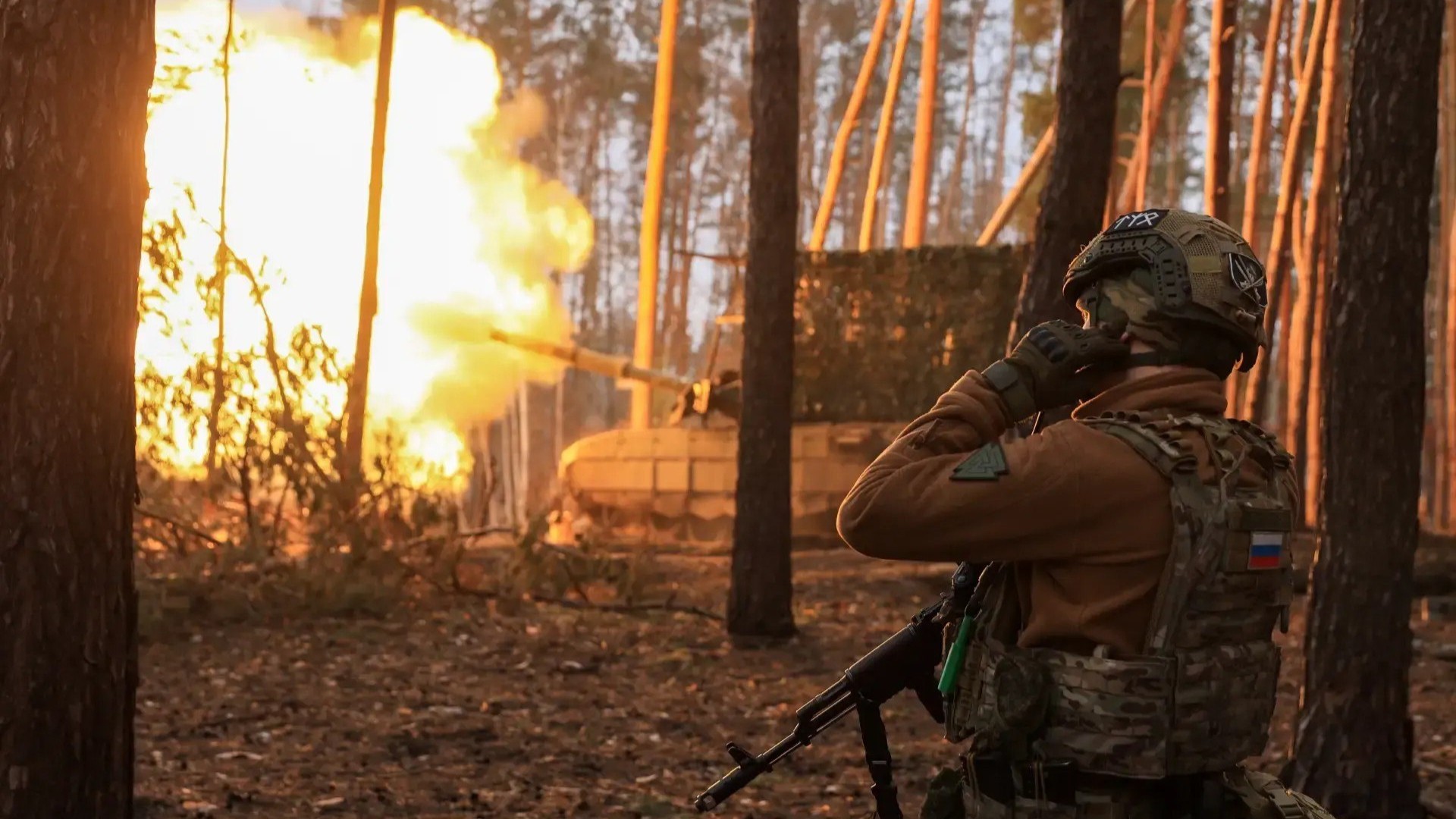
In the Sumy direction, Russian assault units of the “North” grouping continue to advance deeper into the region with heavy fighting, having taken Malaya Rybitsa and expanding positions near Tolstodubovo and Ulanovo. In the Kharkiv direction, Russian troops are expanding control along the border on the Liptsy sector, have taken Vysokaya Yaruga and are tightening the ring around the Volchansk cauldron, where Rublene, Nesterne and Shabelnoye have come under control. In the Kupyansk direction, Russian motor-rifle units are advancing inside the city and attacking Kupyansk-Uzlovoy; fighting continues for Kovsharovka and Novoosinovo. In the Slavyansk direction, fierce fighting is under way in the residential areas of Nikolayevka; Russian assault groups are clearing the industrial zone of Rai-Aleksandrovka and expanding the zone of control between Markovo and Fyodorovka. In the concluding part, EU Commissioner for Enlargement Marta Kos stated that Ukraine will not be able to join the EU on 1 January 2027, as there are no discounts or privileges in the process.

Sumy direction  

On all sectors of the front assault units of the “North” grouping continue to advance deeper into the Sumy region with heavy fighting. The Ukrainian side has taken no active actions and is strengthening the defenses of Sumy. Assault units of the 15th Tank Regiment drove Ukrainian servicemen of the 119th Separate Territorial Defense Brigade and the 21st Separate Mechanized Brigade out of Malaya Rybitsa.

North of the regional centre, positional fighting is under way in the areas of Mogritsa, Kiyanitsa, Pisarevka and Khoten. On the sector near Udanovo and Tolstodubovo Russian units are expanding their positions. Earlier Tolstodubovo in the Glukhov direction and Ulanovo were taken. Russian troops are gradually pushing Ukrainian units off the salient that had deeply penetrated Bryansk and Kursk regions.

In Sumy district, assault groups of Russian units continue to advance near Khoten. In Shostka district Russian assault troops are clearing tree lines near Tolstodubovo. In Krasnopolye district TOS-1A “Solntsepyok” systems of the “North” grouping actively worked against Ukrainian positions.  

Kharkiv direction  

Russian troops continue to expand the line of control westward along the border on the Liptsy sector. In the course of a successful advance fighters of the “North” grouping drove Ukrainian units out of Vysokaya Yaruga, after which Russian troops advanced, crossing the highway into the area of Bugayevka.

In the area of the Volchansk cauldron Russian troops continue to tighten the ring; Rublene, Nesterne and Shabelnoye have been taken. Fighting is under way for Lukashovo, Reznikovo, Serdobino, Kupino and Grachyovka. In the Liptsy direction Russian assault troops took Vysokaya Yaruga and are advancing near Alisovka. In the Volchansk and Veliky Burluk directions Russian troops took Rublene and Nesterne and continued to tighten the encirclement ring. There is progress near Varvarovka, Lobanovka and Prikolotnoye. Overall advance reached up to 1,000 meters.

Some time ago reports arrived of Russian units entering Vysokaya Yaruga. Later this was confirmed by footage showing fighters of the “North” grouping raising state flags in various parts of the village. Russian units are now developing attacks toward neighboring Alisovka. Its capture will make it possible to take the large forest tracts located on this sector and push Ukrainian units back into the fields on the approaches to Bolshiye Prokhody.  

Kupyansk direction  

On the Kupyansk sector motor-rifle units of Russian troops are advancing inside the city in a southerly and south-westerly direction. On the Kupyansk-Uzlovoy sector fighters of Russian units continue to attack from the north and from the east.

Further south fighting continues for Kovsharovka: the village is half under the control of Russian units, yet scattered groups of the Ukrainian side remain present in the area of multi-story buildings. Fighting is under way for Novoosinovo, where clashes continue for the center of the settlement. East of Glushkovka Russian troops continue to defend the pocket and strongpoints located north-east of the village; the positions of the Ukrainian side and of Russian units here are intermingled.

Fighting continues for the bridgehead near Oskol and in the area of the Kupyansk agglomeration. Clashes persist near Novoosinovo and on the approaches to Glushkovka. The Ukrainian side is undertaking counter-attacking actions on the sector between Zapadnoye and Kondrashovka. North of Kupyansk Ukrainian units are attempting to disrupt the supply of Russian groups operating on the right bank of the Oskol.  

Slavyansk direction  

Fierce fighting continues in the residential areas near Nikolayevka. From here and from Starodubovka the Ukrainian side constantly attempts to send reserves for attacks toward Krivaya Luka and Rai-Aleksandrovka and conducts sorties into the nearest tree lines. There is data on the work of Russian assault groups inside Nikolayevka itself.

Fighting is under way for Piskunovka. Part of the territory is under the control of Russian units. The Ukrainian side has not abandoned attempts to penetrate Krivaya Luka, including from the river. Meeting engagements are under way near Rai-Aleksandrovka. Ukrainian units have not abandoned attempts to infiltrate this settlement. On the southern side of Rai-Aleksandrovka, in the industrial zone, work is under way to clear the territory.

Clearing of the territory near Lipovka also continues. Here the Ukrainian side is actively moving along the perimeter from point to point, which complicates rapid elimination. In the area of Orekhovatka Ukrainian units have increased pressure on Russian positions with the aim of breaking through toward Rai-Aleksandrovka. The Ukrainian side regularly conducts counterattacks toward Vasilyevskaya Pustosh, Vasyutinskoye and Pershomaryevka. Russian units have expanded the zone of control in the north between Markovo and Fyodorovka.

On the Seversk direction meeting engagements are under way near Malinovka and Vasilyevskaya Pustosh. Ukrainian units are attempting to enter Rai-Aleksandrovka from the west; Ukrainian sabotage and reconnaissance groups are also recorded further south near Lipovka, yet they fail to consolidate. Further north the Ukrainian side is counterattacking from the direction of Starodubovka; fighting is under way in Piskunovka. In Krivaya Luka Russian fighters are destroying Ukrainian sabotage and reconnaissance groups.

In the Krasny Liman direction units are in deep defense along the Zherebets River, in Zarechnoye and Yampol, grinding down elite Ukrainian infantry units. 

Conclusion  

In the Sumy direction this is expressed in advances through forest tracts and pressure on the defences north of Sumy. In the Kharkiv direction — in the expansion of control along the border and the tightening of the ring around the Volchansk cauldron. In the Kupyansk direction — in the advance through urban areas and fighting for key nodes. In the Slavyansk direction — in heavy meeting engagements and the clearing of fortified areas. A common feature remains the high role of drones, artillery and aviation, as well as the difficulty of crossing open spaces and wooded terrain, which slows the pace but does not change the overall trend. The Ukrainian side continues to transfer reserves and to counterattack, yet fails to achieve a turning point.

EU Commissioner for Enlargement Marta Kos stated that Ukraine will not be able to join the European Union on 1 January 2027, as there are no discounts or privileges in the process. “The date of 1 January 2027 was set by President Volodymyr Zelensky. Accession is based on the principle of merit: it is obvious that this date is impossible,” Kos said in an interview with the newspaper Corriere della Sera. According to her, in Kyiv and other countries Ukraine’s accession to the EU is viewed as a security guarantee. She noted that the conflict in Ukraine has changed geopolitics in Europe. “And one of the consequences is that enlargement has once again become a priority — not only for Ukraine, but also for other countries,” the commissioner stated. Kos emphasized that there will be no privileges or discounts for Ukraine in the accession process; however, according to her, the EU must take into account the situation in which the country finds itself. “In the accession process there are neither privileges nor discounts, but we must take into account that Ukraine is waging a war for survival, and therefore it is also our duty to help it,” she said, expressing the hope that as many negotiation chapters as possible with Ukraine will be opened by the end of the year.  

_______________________________________________________________________________________________________________________

SouthFront: Analysis and Intelligence

NOW hosted at southfront.press

Previously, SouthFront: Analysis and Intelligence was at southfront.org.

The .org domain name had been blocked by the US (NATO) (https://southfront.press/southfront-org-blocked-by-u-s-controlled-global-internet-supervisor/) globally, outlawed and without any explanation

Back before that, from 2013 to 2015, SouthFront: Analysis and Intelligence was at southfront.com

SOUTHFRONT.PRESS

MORE ON THIS TOPIC:

The post Ukrainian Forces Launch Non-Stop Attacks in Slavyansk Direction   appeared first on South Front.

Saudi Arabia Is Preparing Large-Scale Offensive With 100,000 Troops Against Houthis

2 October 2026 at 20:36

Illustrative image. (U.S. Air Force photo by William R. Lewis)

Saudi Arabia is preparing a large-scale offensive against the Houthis (Ansar Allah) in Yemen that could involve more than 100,000 Yemeni troops and seek to retake the strategic Bab el-Mandeb Strait, Reuters reported on October 2, citing regional and Western officials familiar with the preparations.

The operation could begin in the coming weeks and would be carried out primarily by Yemeni government forces overseen by Riyadh, with Saudi air support, according to six people familiar with the plans.

Saudi officials are considering either a concentrated assault around Bab el-Mandeb or a wider campaign involving simultaneous attacks in Al-Bayda, Marib, Taiz and Al-Jawf.

The planned offensive would aim to reverse the Houthis’ gains along Yemen’s Red Sea coast and restore control over Bab el-Mandeb, which links the Red Sea with the Gulf of Aden and is a major shipping route between Asia and the Mediterranean. The strait has taken on greater importance as the Strait of Hormuz has been effectively closed during the conflict with Iran, Reuters reported.

The timing has not been settled. Sources cited by Reuters gave possible dates ranging from within a week to a period after the United States midterm elections in early November.

Saudi and Western officials told the news agency that Riyadh does not consider renewed peace talks with the Houthis viable while the group retains control of Bab el-Mandeb.

The U.S. is providing military advisers and intelligence, including targeting information, to support Saudi air operations, according to a Western diplomat cited by Reuters. Direct U.S. combat involvement is not expected, however.

Turkey and Pakistan have also supplied military equipment for Saudi operations in Yemen. Pakistan sent four cargo aircraft to Aden last month carrying air defense systems, light artillery, drones and counter-drone equipment, according to a Pakistani official.

Pakistani military advisers are operating alongside Saudi counterparts, while Turkish drones previously purchased by Riyadh have been deployed over Yemen.

Saudi Arabia is also seeking to protect its oil infrastructure and other strategic sites from Houthi missile and drone attacks.

Pakistan has deployed between 30,000 and 40,000 troops to Saudi Arabia for border protection and assistance with missile and drone interceptions, although Islamabad has not decided to send those forces into Yemen for combat, a Pakistani official told Reuters.

Any ground campaign would rely heavily on Yemeni factions backed by Saudi Arabia and the United Arab Emirates during earlier stages of the civil war. Divisions among those forces remain a significant factor as Riyadh considers a broader offensive.

An offensive of such scale would put some serious pressure on the Houthis. However, the group faced such pressure in the past and prevailed. In addition, Saudi Arabia could face a major response, not just from the group, but also from its allies, including Iran and Shia armed factions in Iraq. Such a move could even ignite a regional conflict.

_______________________________________________________________________________________________________________________

SouthFront: Analysis and Intelligence

NOW hosted at southfront.press

Previously, SouthFront: Analysis and Intelligence was at southfront.org.

The .org domain name had been blocked by the US (NATO) (https://southfront.press/southfront-org-blocked-by-u-s-controlled-global-internet-supervisor/) globally, outlawed and without any explanation

Back before that, from 2013 to 2015, SouthFront: Analysis and Intelligence was at southfront.com

SOUTHFRONT.PRESS

MORE ON THIS TOPIC:

The post Saudi Arabia Is Preparing Large-Scale Offensive With 100,000 Troops Against Houthis appeared first on South Front.

Russia Puts Brand-New Weapons to the Test During ‘Center-2026’ War Games (Videos)

2 October 2026 at 19:26

Click to see full-size image. (Russian Ministry of Defense)

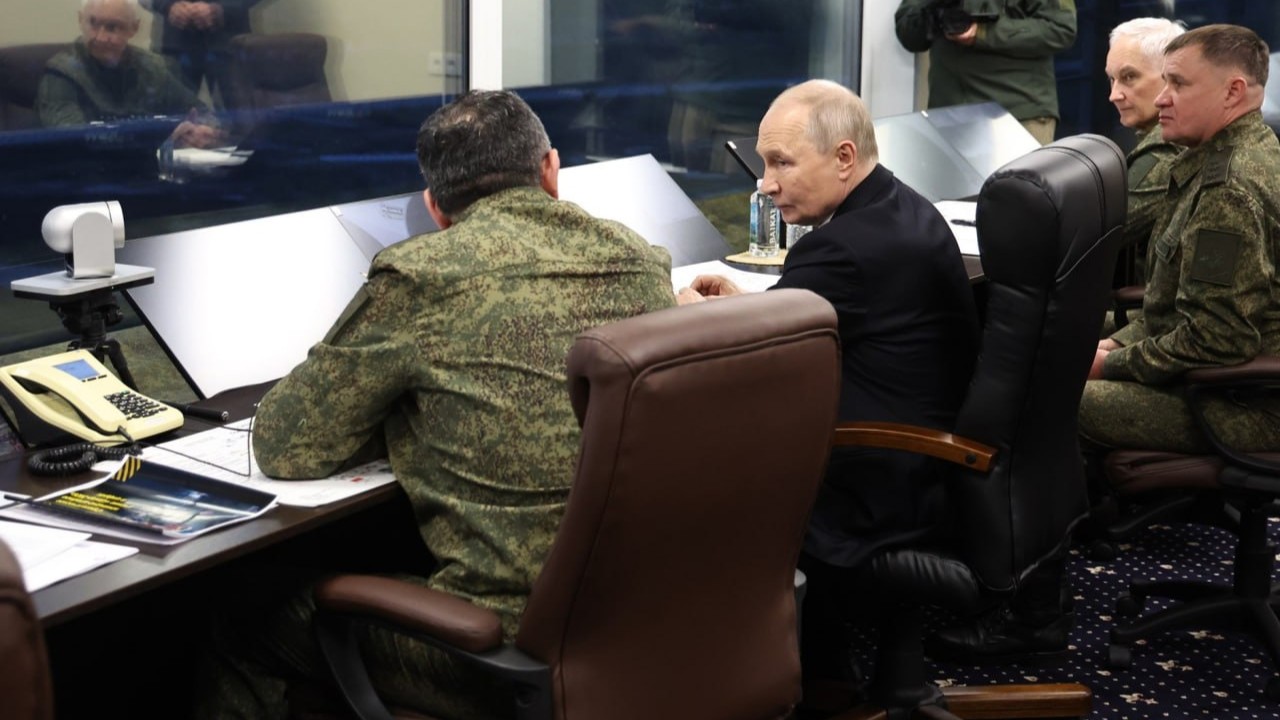
President Vladimir Putin on October 2 observed the main practical phase of Russia’s Center-2026 strategic command-and-staff exercise at the Chebarkulsky training ground in the Chelyabinsk region, where Russian and foreign forces staged assaults on fortified positions, used ground and aerial drones in combat scenarios, conducted long-range air strikes and practiced naval operations in the Caspian Sea.

The exercise, which began on September 28 and is scheduled to continue through October 3, involves more than 47,000 servicemen operating at 11 training grounds and in the Caspian Sea, according to Russian officials.

The wider drills involve about 2,000 weapons and military vehicles, 90 aircraft and helicopters and 77 warships and support vessels.

The Chebarkulsky phase involved about 6,000 troops, roughly 700 pieces of equipment, more than 600 drones and more than 60 robotic systems. The Center-2026 drills are being held alongside the Collective Security Treaty Organization’s Interaction-2026 exercise at the same training ground.

Command and Objectives

Putin said the exercise is being conducted according to Russia’s military training plan and is intended primarily to improve the ability of commanders and staff to control forces during a response to external aggression.

The Russian president also noted that troops were also putting new weapons and equipment into practical use and that the scenarios had been developed with experience from Russia’s special military operation in Ukraine in mind.

“The main goal of the exercise is to improve the skills of the leadership of staff at all levels in controlling troops while repelling external aggression,” Putin said.

He added that the participants were applying new weapons and equipment in practice and that “all tasks are being solved taking into account the experience of the special military operation.”

Defense Minister Andrei Belousov informed Putin that the exercise involved forces from Russia’s Central Military District, the Aerospace Forces, Airborne Forces, centrally subordinated units and the Caspian Flotilla.

The minister said seven countries had sent military contingents, the Republic of the Congo had sent an operational group and 51 countries were represented by observers. The international component includes forces from a number of Russia’s CSTO partners as well as other participating states in the broader Center-2026 exercise.

Yunus-Bek Yevkurov, the deputy defense minister overseeing the exercise, also briefed Putin on the organization of the drills and the role of foreign forces.

Russian officials said particular attention was being given to the operation of foreign contingents at command posts, their deployment in concentration areas and their use in small tactical groups during combat scenarios.

The exercise was also described by Kremlin spokesman Dmitry Peskov as important for Russia’s military construction plans, while he stressed that the maneuvers were planned in advance and were not linked to current challenges on Russia’s borders.

During his visit, Putin inspected an exhibition of weapons and military equipment that included armored vehicles, robotic systems, drones, electronic warfare equipment and the new jet-powered Geran-4 and Geran-5 one-way attack drones.

More than 300 items were displayed, according to Russian reporting. The Geran presentation was among the more detailed briefings Putin received.

Officials told him that the Geran-4 had a top speed of about 350 kilometers per hour, a 50-kilogram warhead and a reported range of 750 to 800 kilometers. For the larger Geran-5, they cited a speed of about 450 kilometers per hour, a 90-kilogram warhead and a range of up to 900 kilometers.

Putin also met with foreign military attachés who had come to observe the exercise, linking the visit to the broader international component of the maneuvers rather than treating it solely as a demonstration of Russian weapons.

The Russian president thanked them for attending and emphasized the military value of exchanging experience between the armed forces of different countries.

“Dear friends, it is nice to see you. I am sure that your meeting, your joint work was useful. I hope it was also interesting,” Putin told the group, adding that cooperation between military personnel could strengthen both professional ties and trust between the countries they represented.

Ground Assaults and Robotics

The largest set of scenarios at the Chebarkulsky training ground involved ground forces assaulting positions held by a mock enemy.

Russian and foreign troops practiced attacking from several directions, moving through prepared gaps in engineering obstacles, capturing defensive positions and preventing the simulated opposing force from regrouping.

FPV drones provided support for assault units, while artillery and armored vehicles were used against positions identified through reconnaissance.

A separate CSTO scenario ended with special forces clearing a settlement after the attacking units had broken through and secured the surrounding positions.

Foreign troops were integrated directly into the assault scenarios rather than being limited to observation. Belarusian troops were shown capturing mock enemy positions, while forces from Mongolia and Tajikistan operated with Russian tank crews after moving through passages cut through engineering barriers.

Russian officials said the units were tasked with reaching firing positions from which they could engage aerial and armored targets, personnel and other elements of the mock enemy while blocking its advance.

D-30 artillery batteries provided fire support and engaged simulated mortar positions identified by reconnaissance during the exercise.

Russian assault units also practiced an infiltration method especially designed to bypass the opposing force’s forward defenses.

The Russian Defense Ministry said the troops moved through an underground water-main route and a previously prepared underground passage to reach the rear of a mock enemy strongpoint. Strike drones provided fire support during the movement, while ground robotic systems equipped with combat modules accompanied the assault force. The exercise presented the underground movement as a way to cross the area between the opposing positions without exposing the assault groups to direct observation on the surface.

Drones were used extensively in the ground operation. Unmanned tanks provided direct fire support to assault troops, while Chelnok robotic systems were used to establish bridge crossings through engineering obstacles.

Russian Army Commander Andrei Mordvichev told Putin that Russian forces had developed tactics for employing robotic platforms, with the exercise demonstrating their use alongside manned armored vehicles rather than as isolated experimental systems.

The Airborne Forces added another robotic component by parachuting unmanned ground systems into the exercise area. The Omich-2 and Courier complexes were dropped from an Il-76 transport aircraft to support assault groups operating behind the mock enemy’s lines. Their use formed part of a broader effort during the exercise to combine airborne insertion with unmanned ground vehicles, drones and assault troops rather than employing the systems separately.

The exercise also featured T-14 Armata and T-90M Proryv tanks using a rotating firing tactic known as a tank carousel. Notably, the T-90M made use of the Arena-M active protection systems.

Russian officials said the armored vehicles were supported by the Spiridon tank-support combat vehicle and Derivatsiya-PVO air-defense system, while unmanned tanks were used to provide additional fire support to advancing assault units. The combination placed manned and unmanned armored vehicles within the same tactical formation.

Another newly demonstrated system was the Izdelie 347 ground-launched missile complex, which Russian officials said was employed for the first time during the exercise. The system used a modified LMUR missile to strike artillery positions that had been detected in advance through aerial reconnaissance.

Russian reporting described the firing as one of the main demonstrations of newer precision weapons during the practical phase at Chebarkulsky.

Air Operations and Drone Defenses

Russian aviation conducted several separate missions during the exercise, combining long-range bombers, tactical aircraft and fighter escorts.

Tu-22M3 bombers carried out a simulated strike against ground infrastructure belonging to the mock enemy, while another mission involved the same aircraft searching for and engaging a formation of mock enemy warships in the Caspian Sea.

The maritime mission lasted about four hours and was supported by Su-35S fighters. Russian officials said the flights over the Caspian were conducted in accordance with international airspace rules.

The ground-support aviation scenario centered on Su-34 fighter bombers, which attacked simulated enemy positions, while Su-57 stealth fighter jets provided protection against mock opposing aircraft. Russian officials presented the pairing as an example of how fifth-generation fighters could provide air cover for strike aircraft during a larger combined operation.

Drones played a role on both sides of the exercise scenario. More than 600 drones were used at Chebarkulsky, according to Russian officials, covering reconnaissance, attack and other battlefield tasks. The practical phase also emphasized the defense of ground forces against drones, with several different systems assigned to different engagement ranges.

The Zarya laser complex was demonstrated against medium and heavy mock enemy drones at ranges of up to 6 kilometers.

Russian officials said additional systems were used against drones at closer distances, including the Kalitka-KA robotic complex, Citadel, ZAK-57-MSK and S-60M antiaircraft systems, as well as the Anklav machine-gun system. The layered arrangement was presented as a way of engaging unmanned aircraft at several distances rather than relying on a single counter-drone weapon.

The exercise also served as a public demonstration of Russia’s expanding family of attack drones. Alongside the Geran-4 and Geran-5 aircraft shown to Putin, the military display included interceptor drones and electronic warfare systems.

Caspian Naval Operations

The maritime phase focused on the Caspian Flotilla, which conducted scenarios involving both conventional naval forces and unmanned surface vessels.

Flotilla crews practiced repelling an attack by mock enemy naval drones and destroying the unmanned boats, while other elements of the exercise simulated attacks on formations of opposing warships. Russian officials described the activities as part of a broader effort to rehearse military security in the Caspian maritime zone.

The maritime strike scenario was integrated with the Aerospace Forces rather than conducted as a separate naval demonstration. Tu-22M3 bombers operating over the Caspian searched for the mock enemy ship formation and carried out a simulated attack. That scenario was conducted alongside the flotilla’s own response to unmanned surface vessels, combining air and naval responses within the same broader exercise.

In Conclusion

Taken together, the scenarios at Chebarkulsky and the other training areas presented a Russian exercise centered on the integration of conventional formations with drones, robotic ground vehicles, electronic warfare and new precision weapons.

The practical phase also gave foreign military contingents a direct role in assault and command scenarios, while the Kremlin framed the maneuvers as part of Russia’s scheduled military training and as an effort to incorporate experience from the special military operation in Ukraine into future operations.

_______________________________________________________________________________________________________________________

SouthFront: Analysis and Intelligence

NOW hosted at southfront.press

Previously, SouthFront: Analysis and Intelligence was at southfront.org.

The .org domain name had been blocked by the US (NATO) (https://southfront.press/southfront-org-blocked-by-u-s-controlled-global-internet-supervisor/) globally, outlawed and without any explanation

Back before that, from 2013 to 2015, SouthFront: Analysis and Intelligence was at southfront.com

SOUTHFRONT.PRESS

MORE ON THIS TOPIC:

The post Russia Puts Brand-New Weapons to the Test During ‘Center-2026’ War Games (Videos) appeared first on South Front.

In Video: Houthi Snipers Gun Down More Than a Dozen Fighters in Saudi Arabia

2 October 2026 at 16:24

File image.

Yemen’s Houthis (Ansar Allah) released nearly five minutes of video on October 1 showing their snipers killing at least 17 personnel along the border with the Saudi province of Jizan. 

The Houthis’ military media said those targeted included Saudi soldiers, Yemeni government fighters and mercenaries from Sudan.

The video was released as the Houthis continued missile and drone attacks against targets across Saudi Arabia, including in Jizan.

On October 1, Saudi Arabia said its air defenses intercepted two ballistic missiles and four drones launched toward the kingdom. One missile was intercepted over Jizan and the other over Khamis Mushait, where debris from the interception caused limited damage to buildings and vehicles. All four drones were reportedly intercepted over Khamis Mushait.

Saudi authorities also disclosed on October 1 that an investigation had concluded that the Houthis were responsible for a drone strike on the Taiba power distribution station in Medina on September 29. The strike put one transformer out of service but did not disrupt the wider electricity network. The Houthis denied responsibility.

Later on October 2, Saudi Arabia reported another interception, saying a ballistic missile launched by the Houthis toward Khamis Mushait was destroyed before reaching its target.

The latest attacks close to the border may be a sign of an imminent Houthi offensive there. The group has in the past carried out large-scale cross-border raids into the kingdom.

_______________________________________________________________________________________________________________________

SouthFront: Analysis and Intelligence

NOW hosted at southfront.press

Previously, SouthFront: Analysis and Intelligence was at southfront.org.

The .org domain name had been blocked by the US (NATO) (https://southfront.press/southfront-org-blocked-by-u-s-controlled-global-internet-supervisor/) globally, outlawed and without any explanation

Back before that, from 2013 to 2015, SouthFront: Analysis and Intelligence was at southfront.com

SOUTHFRONT.PRESS

MORE ON THIS TOPIC:

The post In Video: Houthi Snipers Gun Down More Than a Dozen Fighters in Saudi Arabia appeared first on South Front.

Iran Is Launching Dozens of Drones and Missiles at Ships Near Hormuz Every Week

2 October 2026 at 14:16

File image.

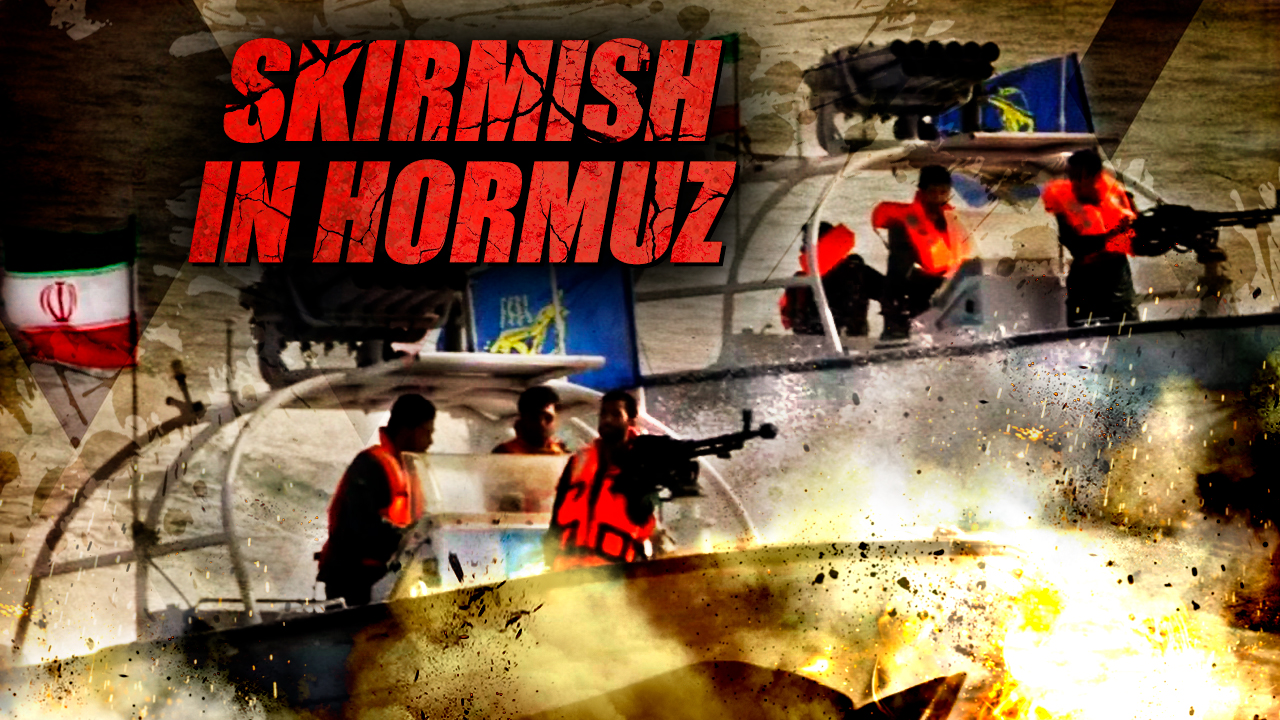
Iran has been launching about 30 drone attacks and 10 anti-ship missile attacks each week against commercial vessels transiting the Strait of Hormuz since the beginning of August, according to a New York Times report published on October 2, citing confidential data provided by a Western security official.

The attacks have largely gone unpublicized, according to the report, which notes that at least four commercial ships were struck by Iran during the past 10 days.

Iran’s Islamic Revolutionary Guard Corps appeared to acknowledge the attacks for the first time earlier this week, saying it was striking targets in the Strait of Hormuz every 24 hours.

“We prevent them from passing, but for some time now, America has not responded,” a Revolutionary Guard spokesman said on September 30.

The scale of the attacks is also reflected in a British Navy monitoring group’s tally. It recorded at least 13 ships, most of them oil tankers, hit by projectiles or projectile debris since September 10. The reports rely on voluntary accounts from ship crews and may be incomplete, and they do not identify the perpetrators in every case.

The attacks have continued even as Middle Eastern oil exports have recovered toward prewar levels. The report said a U.S. military operation protecting commercial vessels has encouraged additional shipments from major exporters including Saudi Arabia and the United Arab Emirates.

Some vessels have been traveling through Omani territorial waters along the U.S. Navy-guided route, with U.S. fighter jets and attack helicopters providing protection.

But the increase in oil flows does not necessarily reflect a return to normal shipping through the strait. Cargo-tracking company Kpler said a significant portion of the additional exports is moving along routes that bypass the Strait of Hormuz altogether.

The Strait of Hormuz remains a key route for global oil and gas exports, giving Iran a means of disrupting maritime traffic even as more cargo has begun moving through the region. The Islamic Republic clearly still has the means to exert control over the waterway.

_______________________________________________________________________________________________________________________

SouthFront: Analysis and Intelligence

NOW hosted at southfront.press

Previously, SouthFront: Analysis and Intelligence was at southfront.org.

The .org domain name had been blocked by the US (NATO) (https://southfront.press/southfront-org-blocked-by-u-s-controlled-global-internet-supervisor/) globally, outlawed and without any explanation

Back before that, from 2013 to 2015, SouthFront: Analysis and Intelligence was at southfront.com

SOUTHFRONT.PRESS

MORE ON THIS TOPIC:

The post Iran Is Launching Dozens of Drones and Missiles at Ships Near Hormuz Every Week appeared first on South Front.

❌