
❌

Normal view

Class Dismissed: France’s School Crisis Goes Up in Smoke
6 October 2026 at 20:05

Click to see the full-size image

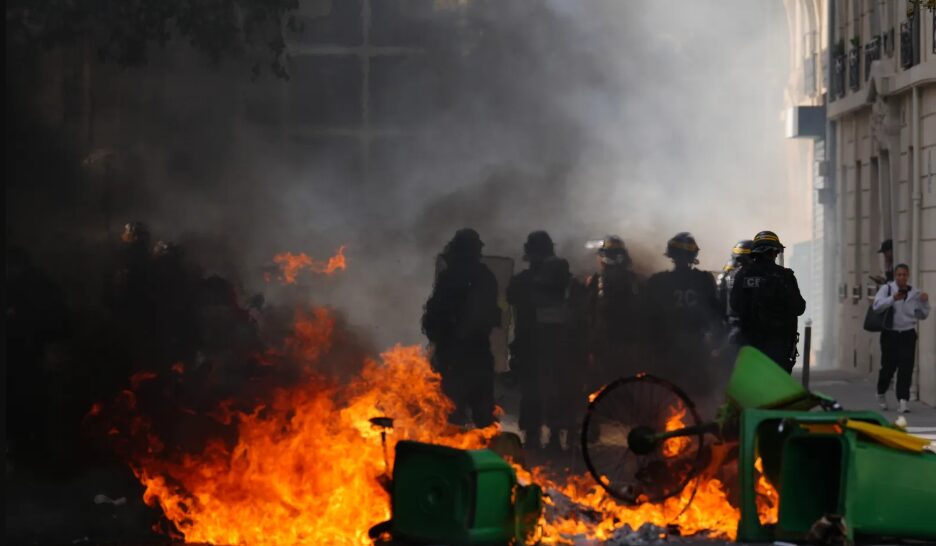
French teenagers asked for teachers and decent classrooms. They got a national confrontation. Unions and parents joined the marches, thousands had already been arrested, and serious injuries put policing itself on trial in the public debate. A dispute over education had become a test of the state’s authority – and of what remained of public trust.


Street clashes, fires, and attacks on emergency vehicles: short clips collected from the unrest in France


A Failing Grade

The movement began in the second half of September over overcrowding, missing teachers, deteriorating buildings, and overloaded schedules. Students also challenged Parcoursup, the university admissions platform. The students were not asking for a new republic. They wanted the existing one to put enough teachers in its classrooms.

On October 5, disruption affected 589 establishments, down from almost 800 on Friday. The decline was real. So was the danger of mistaking fewer blockades for a settled dispute.

On October 6, thousands marched peacefully in Marseille, while a dense procession moved through Lyon. Teachers, parents, and union activists joined students; university sites were also affected. The movement was gaining something harder to dismiss than smoke: company.

Public Services, Now Flammable

The violence had acquired a grotesque logic. In Marseille, a fire truck burned and buses came under attack. In La Ciotat, a teacher was doused with gasoline. Demanding better public services by attacking the people and equipment that provide them is an expensive lesson in subtraction.

Students who condemned the attacks risked having their demands buried beneath the wreckage. Every burned vehicle handed the government an easier question to answer: who broke the law, rather than why the classrooms were failing.

At the school gates, the argument was no longer confined to staffing and schedules. Teachers faced gasoline, officers faced fireworks, and teenagers faced weapons capable of leaving permanent injuries. The next lesson would be counted in casualties.

Nobody Escapes the Ledger

Official figures available on the morning of October 6 listed 6,059 arrests since September 28 and a separate tally of over 5,000 police-custody placements. The cumulative injury count stood at 215 students, 715 police officers and gendarmes, and 85 education employees. France’s police inspectorate had opened ten investigations. These figures describe a crisis, not a scoreboard.

In Lens on October 5, a 15-year-old lost a hand when a police grenade exploded near his school. Police sources said he had picked it up; a witness disputed that account. The prosecutor said the sequence remained unresolved. The investigation will take time. The injury is permanent.


Lens, October 5: a teenager loses a hand in a police-grenade explosion


In Belfort, a plainclothes officer was beaten on the ground. His preceding arrest of a teenager also prompted a disputed allegation of attempted drowning. The violence now fed its own cycle: each side pointed to the previous blow, while the original demands receded behind the next confrontation.

The Republic Takes Notes

On October 6, Interior Minister Laurent Nunez said he had no apology to offer injured students while investigations remained underway. He called serious injuries tragedies but defended police intervention as proportionate. The findings were pending; the minister’s confidence was not.

Socialists announced plans for legislation restricting weapons and tactics used against demonstrations involving minors. Paris’s mayor offered municipal rooms for student meetings. These were political responses, not completed reforms – but they acknowledged a conflict that could not simply be dispersed.

Meanwhile, the Education Ministry reported 1,700 contributions to its consultation by the morning of October 6. Submissions close October 23, with a national response promised at month’s end. The government had set a deadline for listening. Delivering answers would be the harder assignment.

The Ghost of ’68

In May 1968, student revolt became a national crisis when millions of workers joined the strike. Today’s union presence makes the analogy tempting, not complete. Joining a march is not shutting down the economy. Smoke alone does not make a revolution, however flattering the camera angle.

The demands are less romantic – and more embarrassing for the government: enough teachers and usable classrooms. Before anyone remakes society, could someone repair the school? Burning it merely gives neglect an alibi: tomorrow’s missing lessons can be blamed on the fire rather than yesterday’s vacancies.

Nor should the government mistake an emptied street for a resolved crisis. Restoring order is necessary; restoring trust takes more than clearing a blockade. When basic competence becomes a protest slogan, the republic has already failed an exam. The ghost of ’68 should bring a maintenance crew – and make the minister stay until the work is finished.


MORE ON THE TOPIC:

The post Class Dismissed: France’s School Crisis Goes Up in Smoke appeared first on South Front.
Preparations For A War Between Israel And The Turks Are In Full Swing

6 October 2026 at 16:14

Click to see the full-size image

Written by Damir Nazarov

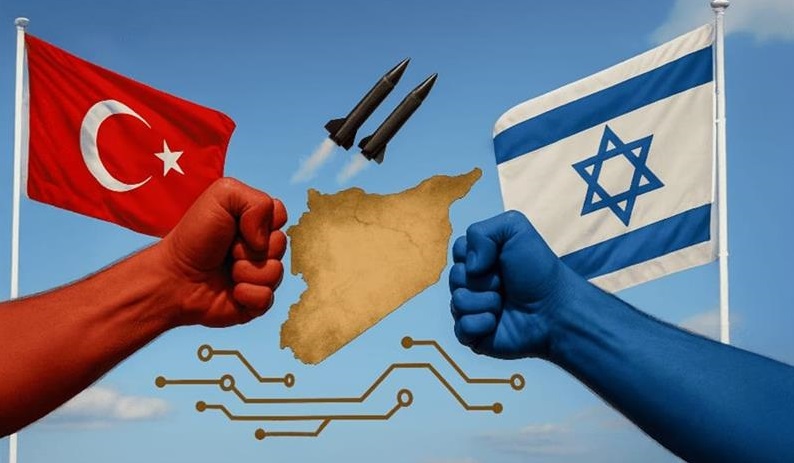
Following Israel’s recognition of Somaliland, analysts interpreted the move as an attempt by Netanyahu to establish a foothold against Yemen’s Ansar Allah and gain leverage in the Red Sea. However, the recognition of officials from this separatist enclave in the Horn of Africa indicates that Israel’s plans extend beyond countering the Houthis; Turkey also figures among the adversaries of the Israeli state.

About a year ago, Mohamed Osman Fadal, a senior foreign policy advisor to the President of Somaliland, stated that they “need air defense systems” to counter Turkish F-16s and drones stationed in Mogadishu. He further noted, “We want Israel to support us in the confrontation with Turkey.” About a year ago, Mohamed Osman Fadal, a senior foreign policy advisor to the President of Somaliland, stated that they “need air defense systems” to counter the Turkish F-16s and drones stationed in Mogadishu. He further noted, “We want Israel to support us in the confrontation with Turkey.”

This stance reflects the sentiments within Somaliland’s self-proclaimed administration and aligns with Netanyahu’s ambitions, as both parties seek to prepare as fully as possible for a clash with the de facto government of Somalia. The official Somali army already possesses special forces and a navy trained by Turkey, as well as T129 ATAK helicopters, the renowned Bayraktar UAV, and even M48 and M60 tanks.

Recently, Somali President Sheikh Hassan Mohamud stated that Israel plans to establish a naval base in the port city of Berbera—located in Somaliland—and utilize its airport. Mohamud made this statement in an interview with Al Jazeera, warning that Mogadishu would oppose any Israeli military presence in territory it considers part of Somalia. “Under no circumstances will we allow an Israeli presence in the country based on the way Israel treats Somaliland.”

Circumstances are compelling the parties to arm themselves, and it is quite likely that the Horn of Africa will become the first theater of open confrontation between Israel and Turkey.

If the battle against separatists in Somalia is supposedly the first frontline, then who is next? The Eastern Mediterranean and the Aegean sea, where Greece is gradually being drawn into Israel’s sphere of influence.

According to media reports, in late August, Ankara redeployed the 51st Commando Brigade—comprising approximately 2,000 professional special forces troops—from Hozat in the country’s east to the Söke district in Aydın province, directly opposite the Greek island of Samos.

Earlier in the spring, Greece purchased weapons from Israel worth approximately 2.3 billion shekels. The arsenal includes the Elbit-developed PULS system, training missiles, precision-guided munitions, loitering munitions, and ten years of logistical support. This new acquisition is part of Greece’s plan to modernize its armed forces by 2030. Athens intends to spend around 28 billion euros by 2036 to establish an Israeli-style defense system—known in Greece as the “Achilles Shield”—and to purchase up to 40 F-35 fighter jets from the US, as well as frigates from France and Italy.

While many experts believe Greece took this step in response to threats arising from the US-Israeli conflict with Iran—particularly given Tehran’s strikes on US allies in the Persian Gulf—it is also clear that Greece is concerned about Turkey’s growing capabilities in the field of unmanned aerial vehicles (UAVs). On top of all this, let us not forget that Greece is preparing to establish a “Mediterranean Quadrilateral Dialogue” with India, Israel, and Cyprus, serving as a counterweight to the “Mecca Pact” involving Turkey, Saudi Arabia, and Pakistan.

The region is gradually entering a new level of conflict, with blocs now forming in anticipation of a future redistribution of spheres of influence. Israel, the primary proponent of the IMEC project, views Turkey as an adversary due to its strategically important position along the Silk Road. Consequently, Somaliland and Greece are poised to become key players in Israel’s strategy to curtail the influence of Turkey and its allies.


MORE ON THE TOPIC:

The post Preparations For A War Between Israel And The Turks Are In Full Swing appeared first on South Front.

Projetos para lares em Loulé avançam

6 October 2026 at 07:02

No Dia Internacional do Idoso, que se assinalou esta quinta-feira, 1 de outubro, o Município de Loulé fez o ponto de situação sobre os projetos relativos a três equipamentos sociais de apoio à terceira idade que irão reforçar a cobertura atual em todo o território concelhio.

Durante a semana, a Autarquia reuniu com os responsáveis do Centro Social e Cultural de Vale Judeu, da Associação Esperança e Paz e da Instituição de Solidariedade Social da Serra do Calderão, os promotores do lares que serão criados em breve para dar resposta a uma das necessidades mais prementes no concelho.

Em relação à futura estrutura residencial para idosos de Vale Judeu, neste momento encontra-se em revisão do projeto, “o que significa que, muito em breve, estará pronto para ser lançado o concurso público”. É também neste ponto em que se encontra o lar que irá nascer em Loulé, numa iniciativa que tem o envolvimento direto da Associação Esperança e Paz. “Aguardamos a entrega do projeto de execução para depois ser revisto e também poder ir para concurso”, refere Telmo Pinto.

O alargamento do Centro Comunitário de Nossa Senhora da Conceição, no Barranco do Velho, permitirá  criar mais um equipamento para apoiar a população idosa no interior do concelho, um território marcado pelo envelhecimento demográfico. Este será “um processo mais rápido”, até porque já foram entregues as especialidades, prevendo-se que, num curto prazo, seja lançado o concurso.

No total dos três equipamentos, serão mais 120 lugares em lar disponíveis para uma resposta social em que os equipamentos estão longe de ser suficientes. “Continuamos a trabalhar, juntamente com os responsáveis das instituições, coordenando este trabalho para que nada falhe e possamos responder o mais depressa possível às necessidades das pessoas”, realça o autarca Telmo Pinto.

❌