❌

Normal view

I spent a 4-day Amtrak trip working remotely so I wouldn't waste any PTO. I underestimated how difficult it would be.

18 October 2026 at 14:57
The writer is working on her laptop while riding an Amtrak train.
Working remotely on an Amtrak train wasn't easy, but I would do it again.

Laura Gio Carroll

  • This summer, I took a four-day Amtrak trip with my spouse, and worked remotely the entire journey.
  • I loved working in the café car while taking in views of the Mississippi River and the Great Plains.
  • Even though the internet wasn't reliable, it was a great experience that I can't wait to do again.

This summer, my spouse and I decided to take the longest Amtrak trip we've ever taken — three trains from Washington, DC, to Vancouver over four days.

My partner, who is a teacher, had a break between the school year and the summer program, so this adventure was the perfect excuse to relax, disconnect from the world, and enjoy the train's views. That was, unfortunately, not the case for me.

Since I have an office job with limited vacation time, I decided I would work remotely throughout the entire trip. Even though I had my boss's permission to work on the train and had packed all my essentials, I still wondered how successful this endeavor would be.

Turns out, it was more challenging than I anticipated, but still worth the hassle.

I made sure to prepare for any WiFi outages and pack accordingly.
The writer's laptop and second screen are sitting on a table on an Amtrak train.

Laura Gio Carroll

Before the trip, I researched whether the trains would have WiFi, but found that it could vary by route.

Since I wasn't sure how reliable my internet options would be on board, I made sure to download the most important documents onto my computer instead of just relying on the cloud. This way, even if there was an unstable connection, I'd still be able to access them.

Additionally, I made sure to have my phone's hotspot at the ready for whenever there wasn't WiFi on the train.

And just as an extra precaution, I made a point of scheduling any important calls for either before or after our train rides, so that I wouldn't risk losing signal while speaking with my team.

To prevent any other hiccups, I packed everything I could think of that I might need: my work laptop, my portable monitor, all the appropriate cords and chargers, and my planner for anything I needed to do on paper.

The roomette's privacy was great, but it didn't have enough outlets.
The inside of the writer's roomette on an Amtrak train.

Laura Gio Carroll

On two of our three train rides, we booked a roomette, a small bedroom with two seats facing each other that would convert into bunks at night.

The internet was spotty in there, but I was still able to wrap up the last emails of the day without any problems.

On the first train ride from DC to Chicago, the roomette had two power outlets, but on our journey from Chicago to Seattle, it had only one — forcing my spouse and me to take turns charging our devices.

I loved working in the café car.
The writer's laptop with a spreadsheet sits on a passenger train table beside drinks, boxes, bags, seats, and curtained windows.

Laura Gio Carroll

Sometimes, the roomette felt pretty cramped, so I took my work setup to the café car as often as I could.

Not only was there plenty of room for me to spread out with my laptop and second screen, but I could also witness amazing views — like the Mississippi River or the Great Plains — from the window.

However, since there weren't any power outlets in the café car, I was only able to be productive for as long as my computer and phone batteries lasted, which was about 2 hours. Then, once everything had run out of power, I had to return to the roomette and plug everything in, which disrupted my workflow.

I didn't think about how my hotspot wouldn't be reliable in rural areas.
Railroad tracks run past open grassland beneath a cloudy sky.

Laura Gio Carroll

Since there was only stable WiFi on one of our three trains, I was relying heavily on my hotspot for most of the trip. But by the third day, the cellular signal kept getting spotty as we entered more rural areas of the country, making my hotspot less reliable.

Because of the weak connection, I couldn't access my team's folders, so I had to email my boss a report instead of uploading it to SharePoint.

I panicked a little, since we're not supposed to save documents directly to our computers, but this was my only option without a consistent signal.

When we sat in coach, I could barely get any work done.
A side-by-side image of the writer sitting at a small table on an Amtrak train and an image of the writer's computer inside an Amtrak roomette.

Laura Gio Carroll

For the last leg of our trip from Seattle to Vancouver, we sat in coach instead of reserving a roomette.

We were able to sit at a small table, but it was too cramped to take out my laptop, and there wasn't any space to work in my seat either. This was the only portion of the trip where it was impossible to do any work, and it really made me miss my roomette.

Even though working on the train was challenging, the station lounges were perfect.
The Amtrak lounge in a Chicago train station.

Laura Gio Carroll

Whenever we had train delays, I would work at the Amtrak stations, which were great places to be productive.

The station in DC had a place to stash our suitcases, decent WiFi, and various tables and chairs. The one in Chicago was also a great size, was well-lit, and had a strong internet connection and plenty of seating.

Similarly, the upper level of the Amtrak station in Seattle had a small art gallery and sitting area — a perfectly comfortable space for me to do my job.

It wasn't the easiest way to work, but I'd do it again.
The view of the sun setting over the Mississippi River.

Laura Gio Carroll

Although working on these trains wasn't always smooth, I still had a great experience and would definitely love to do it again.

Next time, though, I would pack a power bank to charge my phone and monitor without needing an outlet, and overprepare for a lack of WiFi.

Overall, even though working remotely on Amtrak trains had its challenges, I loved the stunning views and the chance to see new sights rather than just sitting at my desk.

Business Insider reached out to Amtrak for comment.
Read the original article on Business Insider

I thought I loved being a minimalist. Then, my family moved from a 500-square-foot apartment to a 1,700-square-foot house.

18 October 2026 at 13:18
Woman smiling outside of home
I loved living in a 500-square-foot apartment with my family, but moving to a bigger home changed my perspective.

Courtesy of Alona Vasylieva

  • I enjoyed living in a small, one-bedroom apartment with my family of three for years.
  • Once we moved to a house more than triple the size, I totally changed my minimalist mindset.
  • Now that we live in a bigger space, I can't imagine going back to living small or minimally.

When my husband and I bought our apartment in Kyiv back in 2017, we were thrilled to finally have a family nest of our own.

It was a cozy, 500-square-foot place with one bedroom, and we meticulously planned to optimize every inch of it. Our kitchen table doubled as my workspace, and our living room couch became the guest bed whenever family stayed over.

Hosting required pure creative problem-solving and, with limited seating around our small table, I'd sometimes feed guests in shifts. It was chaotic at times, but I didn't mind.

After our son was born, bright plastic toys, endless boxes of diapers, and bulky baby gear started claiming every free corner of our apartment. With the three of us packed into a single bedroom, finding space was a daily puzzle, but we made it work.

Surprisingly, living so close together didn't feel limited back then — it felt intimate, cozy, and deeply fulfilling. Then COVID-19 hit.

Spending so much time indoors made me feel isolated, and for the first time, I began dreaming about more living space. But we barely had time to figure things out before life took a drastic turn: When the war in Ukraine escalated in 2022, we made the heavy, life-changing decision to relocate to Canada.

A few months after moving, we began renting a two-bedroom house, where we currently reside. At 1,700 square feet, it wasn't considered especially large by local standards, but to us, it felt vast.

It didn't take long to adjust to having more space — and to quickly fill it up

Living room area with view of dining room behind it, TV mounted on the wall
It's been nice having room for the gadgets and tools we've wanted to buy.

Courtesy of Alona Vasylieva

At first, our house seemed almost too large for just three people.

For the first time, we had two bedrooms and a basement, which instantly doubled our usable space at a ground level.

After years of apartment living, though, the sheer thought of having so much space to keep clean felt exhausting. However, it didn't take long to change my mind.

It turns out that when both you and your belongings finally have room to breathe — and you've got a trusty robot vacuum doing the heavy lifting — life shines in completely different colors.

Gray sectional co
It didn't take long to fill up our space.

Courtesy of Alona Vasylieva

It's also been wonderful to have more room to host, from a dedicated guest space (in the basement) to a table big enough to actually seat larger groups.

In time, we began to pick up local habits and traditions, too. Many of our neighbors in Canada decorate for different holidays, so we started joining in.

And of course, seasonal decor needs a place to be stored when it's not in use — and since we now had a full basement, I didn't feel super limited with what I could buy.

A lot of neighbors also had an extra stand-alone freezer in their homes. It seemed ridiculous for our family of three to also get one … until my first Costco run.

I caved when I realized I needed a place for all those bulk-sized boxes of frozen food. In our bigger home, large grocery hauls began feeling normal.

Groceries loaded into trunk of car
Large grocery hauls started to feel normal, especially because we now had space for all the groceries.

Courtesy of Alona Vasylieva

Gradually, I felt a shift in my identity: I was no longer the strict minimalist I used to be.

In Kyiv, whenever my husband wanted a new kitchen gadget or a giant toy truck for our son, I was firm about saying no. We simply didn't have room for "extra." I took pride in keeping our home completely clutter-free.

But between the extra space and North American convenience, I'd completely changed my minimalist rules. Now, saying "yes" to big additions — like the bulky food dehydrator I'd been eyeing for drying fruits and vegetables, or the roomy couch we'd dreamed of for years — felt easy.

I didn't need to worry about where something would be stored or if it'd take up too much space: We finally had the room to bring those dreams home.

Ultimately, my family and I have thrived with more room to breathe

Woman smiling in living room
It turned out that having a larger home wasn't about holding more things, but giving our family room to breathe

Courtesy of Alona Vasylieva

Over time, I realized this shift was much deeper than just being able to shop more and store more stuff. In a bigger space, our family had room to breathe and grow.

In Kyiv, our whole routine and my minimalist mindset felt shaped by how tight everything felt, but here, the extra room opened up a whole new chapter.

I've become more outgoing, more relaxed, and genuinely excited to gather people together. Our home has turned into a place for hosting friends, cooking weekend dinners, and laughing over backyard barbecues.

Living small was a beautiful, intimate part of my life that I will always hold close to my heart. It taught me intentionality and gratitude.

However, creating space to thrive, host, and watch my family grow has completely transformed my definition of home — now, going back to 500 square feet no longer feels like an option.

Read the original article on Business Insider

Honoring Frances Stonor Saunders

By: A A
18 October 2026 at 12:00

By Patrick LAWRENCE

Join us on Telegram, X, and VK.

Contact us: info@strategic-culture.su

In her revelatory work The Cultural Cold War, the late British author was the first to shine so unblinking a light on the sprawl of the C.I.A.’s cultural interventions.

Frances Stonor Saunders was fond of epigraphs (as am I). At the front of The Cultural Cold War: The C.I.A. and the World of Arts and Letters (The New Press, 1999), the British journalist, documentarian and author quotes some lines from Dante’s Inferno, the last of which is, “Before my age was full, I went astray.”

I had not lived half my life when I succumbed to complacency and moral blindness: This is my reading of the line from Canto XV. And how fitting it is at the start of Saunders’ exhaustively researched account of how the Central Intelligence Agency, its tentacles reaching into every corner of American culture, did so much to lead our republic into what the Italian poet would call its selva oscura, its dark wood —the state of lostness America has never since escaped.

Frances Stonor Saunders died on the last day of August, having suffered from a virulent strain of brain cancer. She was a mere 60. We had a few acquaintances in common, but I never met her. It was nonetheless something like losing a friend when, just this past week, I heard of her death. And so this brief appreciation.

The Cultural Cold War made Stonor Saunders’ reputation. It took a prominent place on my shelf of Cold War books as soon as it was published. At last the curtain parted on the insidious use the C.I.A. made, or attempted to make, of painters, poets, playwrights, novelists, editors, jazz musicians, singers, dancers, actors, scholars and other cultural figures in its long-running operation to promote the appeal of American life as against the Soviet Union and altogether the postwar socialist alternative.

This was an immense “soft power” operation avant la lettre — before we had the term. One could also call it an early variant of the “cognitive warfare” to which we are now incessantly subjected, the primary object of which was to keep postwar Europe from swinging leftward, as the French, the Italians and others were poised to do.

From Saunders’s Introduction:

“Drawing on an extensive, highly influential network of intelligence personnel, political strategists, the corporate establishment, and the old school Ivy League universities, the incipient CIA started, from 1947, to build a ‘consortium’ whose double task was to inoculate the world against the contagion of Communism and to ease the passage of American foreign policy abroad. The result was a remarkably tight network of people who worked alongside the Agency… Whether they liked it or not, whether they knew it or not, there were few writers, poets, artists, historians, scientists, or critics in postwar Europe whose names were not in some way linked to this covert enterprise.”

Who Was Who & Who Stood Where

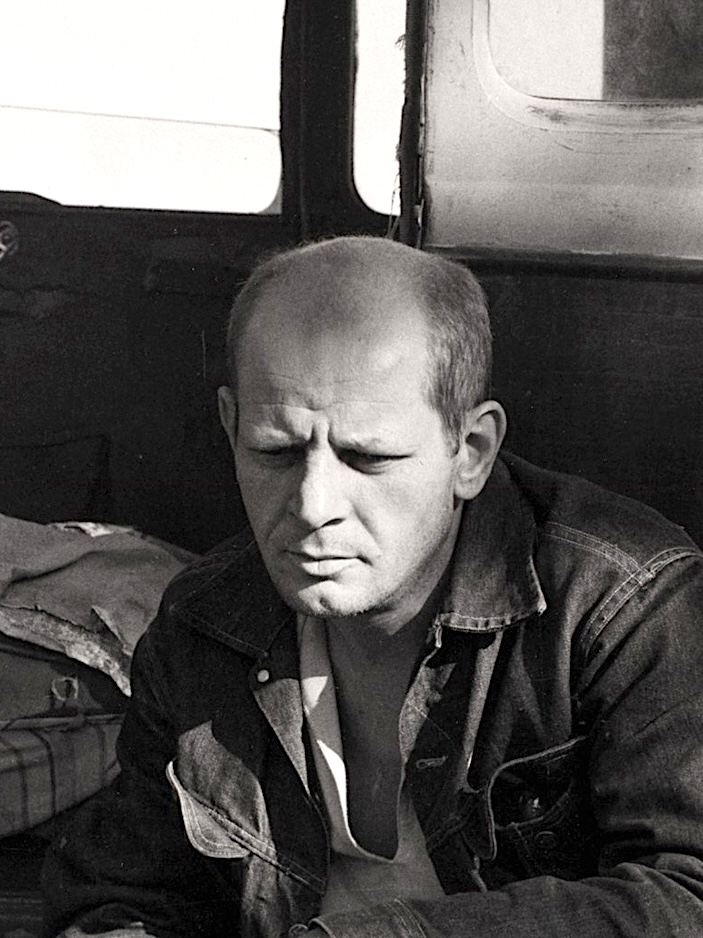
Jackson Pollock in 1951. (Hans Namuth /Wikimedia Commons,Public Domain)

Jackson Pollock and others among the Abstract Expressionists, Leonard Bernstein and others among the American composers then prominent, Robert Lowell, James Baldwin, Mary McCarthy and other writers of their generation, Duke Ellington and other jazz stars — if they weren’t sent abroad on the C.I.A.’s nickel, their work was.

There were the hundreds of books the Agency took a role in promoting, It paid for translations of Eliot’s Four Quartets, Luigi Barzini’s The Italians, Boris Pasternak’s Doctor Zhivago. It covertly supported magazines — Encounter and The Paris Review famous among them — along with radio stations and, of course, newspapers — and those who wrote and edited for them. As of 1956 the Agency owned a considerable piece of the Rome Daily American.

Saunders, who did years of interviewing and archival research for this book, lays out her findings over 427 well-written pages and was the first to shine so unblinking a light on the sprawl of the C.I.A.’s cultural interventions.

One of the things I like about Saunders’s book, among many, is her exposure of those artists and writers who knew of the Agency’s interventions and wanted nothing to do with them, those who knew and cooperated and those who served its purposes unwittingly.

Pollock had no idea of the use to which the Agency put his work, Baldwin wanted nothing to do with the Congress for Cultural Freedom (C.C.F.), infamous as a C.I.A. front. Ever true to her tough-minded politics, neither did Lillian Hellman.

Mary McCarthy knew all about the Agency’s funding of the C.C.F. and its other projects and was fine with all of it. I’ve never liked McCarthy’s novels, and Saunders gave me a good reason to distrust her. She was prominent among that group of Americans known as Cold War liberals, for whom I have long nursed an abiding contempt.

McCarthy in 1963. (Dick DeMarsico/ World Telegram / Library of Congress. New York World-Telegram & Sun Collection/Wikimedia Commons/Public Domain)

I wish Saunders had given more attention to the profligate corruptions of generations of American journalists and newspaper editors, but her definition of culture is narrower than mine; I speculate that journalism’s service to the Agency was a room so large she chose not to enter it.

The surrender of many American journalists to the Cold War cause is well-enough documented in any case. See, for example, Carl Bernstein’s celebrated “The C.I.A. and the Media,” which Rolling Stone published in October 1977, and the House hearings that Bernstein’s piece prompted a couple of months later — the Church Committee, whose hearings ran from January 1975 to April 1976, having flinched from this responsibility.

Chronicler of Secrecy

The who-was-who and the who-stood-where and the who-did-what of The Cultural Cold War give Saunders’s book an historical specificity I do not think anyone has matched, with the exception of Joel Whitney’s Finks (OR Books, 2016), which draws heavily on Saunders’s work. She did not leave those of whom she wrote any place to hide.

As I reflect back on her accomplishment now, it seems to me to lie in something she never mentions. Saunders gave us a chronicle of the U.S. culture of secrecy in its earliest days, the first decades after the 1945 victories, when America set about making itself a global imperium.

What comes through in The Cultural Cold War is how little those alive at the time were able to know about their time. Too many events, too many decisions, too many reasons for things happening as they did were hidden, rendered inaccessible.

The C.I.A.’s Cold War interventions have had many enduring consequences. The Agency systematically discredited the principle of nonalignment, which was held high among then-emergent non–Western nations. America brings the same with-us-or-against-us fallacy to the 11 members and 10 partners comprising the BRICS  — a complete failure to grasp one of the 21st century’s significant realities.

It is the same with the out-of-hand dismissal of all suggestions of moral equivalence in global affairs with those it deems adversaries: The United States is always righteous and never acts but in defense of itself or its always-democratic allies and/or clients. It is never to be accused of aggression. This is what I mean by moral blindness.

The Agency’s most disturbing legacy, at least to me, is how little of our world we are able actually to see. Daniel Patrick Monihan warned us of this just before the U.S. century turned in Secrecy: The American Experience (Yale, 1998). So, in her way, did Saunders a year later. Foolish it would be, naïve in the extreme, to think the time she described so piercingly is not the time in which we live.

It is the historians now who tell us who we are — this by telling us who we were.  This is why I honor Frances Stonor Saunders as I do. She told Americans of their past, and, so, of their present.

Original article:  consortiumnews.com

‘How do we welcome the stranger, with humanity or anger?’ The forgotten Germans who found refuge in Ireland

18 October 2026 at 07:00

A new play revisits the story of Ireland’s 18th-century German refugees, whose experience of prejudice and exclusion resonates with today’s debates over immigration

In the early 18th century, a few thousand Germans fled religious persecution and near starvation in their homeland and ended up in remote rural Irish villages. The Irish Palatines, as they were known, were poor, conservative homesteaders who couldn’t speak the language and were the object of suspicion and violence – precursors to the displaced Syrians or Afghans of the past decade.

Their story is told in Refuge, a co-production between Staatstheater Mainz and the Irish company Fishamble. Part love story, part social commentary, it is performed by a mixed cast, mainly in English but with some German interludes.

Continue reading...

© Photograph: Andreas Etter

© Photograph: Andreas Etter

© Photograph: Andreas Etter

❌