❌

Reading view

Pneumonia Plague in Russia: Boris Yeltsin Admitted the 1979 Lab Leak. But Moscow Says Siberia is Different.

Nearly six years after the COVID outbreak, there are fears of another health emergency after reports of the death of a Russian researcher in a suspected case of plague, which has prompted authorities to quarantine over 200 people in the remote Siberian region and enforce strict mask mandates.

Notably, reports suggest that the suspected plague bacteria might have originated from a Russian Anti-Plague Institute, bringing attention to Russia’s secretive biological weapons research programs and bringing back memories of the deadly 1979 Anthrax outbreak in the Soviet Union, which also originated from a research facility.

Authorities have acknowledged the death of a researcher due to a “suspected case of a particularly dangerous infection,” described as “pneumonia of unknown etiology.” However, federal authorities deny any lab release and say tests found no work-related pathogens.

However, concerns remain that Russia is hiding crucial details about the outbreak that could hinder an effective response.

The 28-year-old lab technician Darya Shipilova died on October 2 after reportedly breaking a test tube with live Yersinia pestis at an Anti-Plague Institute on September 25 while handling samples.

According to Russia’s national public health agency, Rospotrebnadzor, the researcher worked at the Irkutsk Anti-Plague Research Institute of Siberia and the Far East in Shelekhov.

The 28-year-old lab technician, Darya Shipilova, died on October 2 after breaking a test tube with live Yersinia pestis at the Irkutsk Anti-Plague Institute on September 25th while handling samples.

Meanwhile, independent regional outlet Liudi Baikala reported that the death of the lab technician has prompted authorities to place nearly 200 people under observation at a hospital and enforce strict mask mandates in the region.

Igor Kobzev, the governor of Irkutsk, noted on Telegram that this was in response to a “suspected case of a particularly dangerous infection.”

Alexey Tsydenov, the head of the neighboring region of Buryatia, said the woman “may have died of the plague.”

Meanwhile, US media outlet Axios reported that the White House is monitoring reports of a suspected plague case and related quarantines in Russia.

Russian health authorities, however, are trying to downplay the incident, saying the situation is under control and rejecting reports of a lab leak.

In a statement issued on October 4, Rospotrebnadzor said the “sanitary and epidemiological situation” in Irkutsk and Shelekhov was “stable,” Forbes reported.

The agency further said it conducted extensive testing and found no pathogens linked to the deceased patient’s laboratory work in her sample.

It added that testing of hundreds of people in primary or secondary contact with the deceased researcher has detected no new infections.

According to the World Health Organization, Plague is caused by the bacterium Yersinia pestis, a zoonotic bacterium usually found in small mammals and their fleas. People infected with Y. pestis often develop symptoms after an incubation period of one to seven days.

Bubonic plague is the most common clinical form.

Plague is transmitted between animals and humans through bites from infected fleas, direct contact with infected tissues, and inhalation of infected respiratory particles.

Plague can be a very severe disease in people, with a case-fatality ratio of 30% to 60% for the bubonic type, and it is always fatal for the pneumonic and septicemic kinds when left untreated.

Pneumonic plague is especially contagious and can trigger severe epidemics through person-to-person transmission via respiratory particles.

Historically, plague caused widespread pandemics with high mortality. It was known as the “Black Death” during the fourteenth century, causing more than 50 million deaths in Europe.

According to some estimates, Black Death wiped out one-third to one-half of the European population between 1347 and 1353.

Engraving of Doctor Schnabel (German for “Doctor Beak”), a peculiar costume for doctors who treated plague patients in Europe, by Paul Furst, c. 1656, via Internet Archive.

Today, however, antibacterial medicines have greatly reduced plague fatality rates.

According to the WHO, during 2019–2025, most plague cases reported to the WHO occurred in the Democratic Republic of the Congo and Madagascar.

While Russian authorities are rejecting the lab-leak theory, saying there are no links to the lab technician’s death and her research work at the Anti-Plague Institute, Moscow’s previous record in handling such lab-leak incidents and hiding crucial information has prompted fears that it is hiding more information than it is sharing.

Notably, the lab-leak theory has brought back the painful memories of the 1979 Sverdlovsk anthrax leak, which, according to the official Soviet Union version, led to the death of 66 people, but according to independent researchers, caused the death of over a hundred people.

The 1979 Sverdlovsk Anthrax Leak In The Soviet Union

In April 1979, a missing or improperly reinstalled exhaust filter at Compound 19, a military microbiology facility involved in the Soviet biological-weapons program, released aerosolized Bacillus anthracis spores.

Over the next few hours, wind carried the plume over the city. People in the plume developed inhalation anthrax over the following days; livestock in the area were also affected.

The Soviet authorities initially suggested the bacteria spread through “contaminated meat.”

However, hospital records, autopsy and epidemiologic evidence, victim interviews, independent research, and Russia’s own investigation in 1992 showed that the pathology was inhalation anthrax, not the gastrointestinal form claimed in the official “contaminated meat” story, and that most of the infections clustered geographically along the wind direction from the facility, and the strain matched material worked on at the site, establishing the lab leak theory.

Boris Yeltsin, the regional Communist Party official at the time who later became Russian president, publicly acknowledged in 1992 that the outbreak came from the military facility.

AI-generated Image.

A 1994 investigation led by Matthew Meselson, which had access to official records and used wind data, victim locations, and strain comparisons, confirmed an accidental airborne release of a laboratory strain.

In 2016, researchers finally sequenced the genome of the bacteria behind the deaths, confirming it was a strain of the anthrax-causing bacterium Bacillus anthracis that Soviet scientists had modified.

It was one of the largest inhalation anthrax outbreaks in history and irrefutable evidence of the Soviet Union’s secret dabbling in offensive bioweapons research.

The event is sometimes called “Biological Chernobyl.”

Notably, the Soviet Union’s Compound 19 biological weapons research facility violated the 1972 Biological Weapons Convention, which the USSR had signed.

According to reports, the Soviets did similar tinkering with plague bacteria (Yersinia pestis); Francisella tularensis, the bacterium that causes tularemia; and Legionella bacteria, which cause Legionnaires’ disease.

There are also reports of similar leaks of deadly viruses and bacteria from Soviet biological weapons labs in the past.

For instance, in 1971, a young scientist reportedly fell ill after a research vessel, the Lev Berg, strayed too close to Vozrozhdeniya Island in Uzbekistan, where Soviets ran a secretive biological weapons research lab. Days later, the scientist was diagnosed with smallpox.

A year later, the corpses of two missing fishermen were found nearby, drifting in their boat. It’s thought that they had caught the plague.

Clearly, the Soviets continued working on offensive biological weapons even after signing the 1972 Biological Weapons Convention.

There are fears that Russia continued such research even after the Soviet Union collapsed.

In fact, dangerous viruses and bacteria have leaked from labs not just in Russia, but in other countries too.

For instance, after the natural SARS epidemic ended, the virus reappeared only through laboratory accidents.

Russian Prime Minister Vladimir Putin (R) listens to President Boris Yeltsin (L) 20 November 1999 during their meeting at Moscow’s Kremlin. Yeltsin arrived at the Kremlin to discuss the results of the OSCE security summit in Istanbul. (Photo by POOL / AFP)

For instance, in 2003, a 27-year-old researcher was infected when West Nile virus samples were cross-contaminated with live SARS coronavirus in a BSL-3 lab in Singapore.

Similarly, after natural smallpox transmission had largely ended in the UK, accredited labs were the source of outbreaks.

In 1973, a laboratory technician at the London School of Hygiene & Tropical Medicine was infected after observing open-bench harvesting of smallpox virus. She transmitted it in the hospital before isolation; two visitors died, and a nurse was infected.

In 1978, a medical photographer, Janet Parker, whose workplace was above a smallpox laboratory in Birmingham, contracted the disease and died.

In 2015, CDC labs potentially exposed dozens of staff to live anthrax after incomplete inactivation. Separately, Dugway Proving Ground shipped inactivated anthrax spores that remained viable to nearly 200 laboratories in the US and several other countries.

In fact, researchers in the US have cataloged thousands of overt laboratory-associated infections in the 20th century alone.

According to the National Library of Medicine, “analysis of the available information revealed that only 18% of the infections were due to known accidents; 42% were caused by bacteria; 27% by viruses; 15% by rickettsiae; 9% by fungi; 3% by chlamydiae; and 3% by parasites.”

A Lancet study on ‘Laboratory-acquired infections and pathogen escapes worldwide between 2000 and 2021’ identified 309 published lab-acquired infections – eight fatal, including plague, meningococcus, Ebola, and one prion case – and 16 pathogen-escape events beyond the immediate worker, among them the Lanzhou Brucella outbreak, multiple anthrax and SARS incidents, poliovirus, and foot-and-mouth virus.

Clearly, lab leaks of viruses, bacteria, and pathogens are neither rare nor unprecedented.

However, the risks associated with such leaks increase manifold when the country of origin hides information and tries to mislead the world community to avoid responsibility.

At this stage, we can only sincerely hope that that is not the case with the death of a young Russian researcher in Siberia.

  • Sumit Ahlawat has over a decade of experience in news media. He has worked with Press Trust of India, Times Now, Zee News, Economic Times, and Microsoft News. He holds a Master’s Degree in International Media and Modern History from the University of Sheffield, UK. 
  • He can be reached at ahlawat.sumit85 (at) gmail.com
  • Story with Updated Headlines

The post Pneumonia Plague in Russia: Boris Yeltsin Admitted the 1979 Lab Leak. But Moscow Says Siberia is Different. appeared first on EURASIAN TIMES.

  •  

Latest on Ukraine War: Russia’s Nuclear Warning, a Kyiv Bridge Strike & Germany’s Call to Stop Moscow

Amid nuclear threats to NATO and warnings of a “very short war”, the Russian military has struck another major bridge in Kyiv as German chancellor Friedrich Merz arrived in the Ukrainian capital.

Zelensky told Merz that people were suffering “terrible nights and days” from the relentless Russian attacks, and called Ukraine’s adversaries “absolute barbarians”.

“We can see the entire pointlessness of this war at this place,” noted Merz. “These barbarous attacks on the civilian population of Ukraine must stop. These are war crimes that are being committed daily here.”

Merz said Ukraine “needs all our support in the coming weeks”. “If Russia is not stopped, its war machine will sooner or later turn against us,” he added.

Meanwhile, Russia’s defense ministry has pledged to accelerate strikes on “military and military-industrial facilities” and “related infrastructure in Kyiv” and elsewhere after Zelensky said Ukraine would intensify its attacks against Russian oil facilities.

On Saturday, Moscow had alerted foreigners and diplomats to leave Kyiv, saying “massive” new airstrikes would hit the city.

“The EU Delegation is staying. Threatening us will not stop Europe’s support for Ukraine. It only reminds us why that support matters!” EU ambassador Katarina Mathernova wrote on X on Sunday.

Earlier, Russia cautioned NATO it would be ready to resort to nuclear weapons if the Western alliance tried ​to cut off Kaliningrad, a Russian exclave that borders the Baltic Sea.

In a document sent to NATO, Moscow accused the alliance of ‌a “dangerous and reckless course” that entailed “high risks of the outbreak of a direct armed conflict”.

According to the document, this included the possibility of “Russian strikes against decision-making centers in the alliance’s member states right from the outset”.

“Russia will be ready to use the entire arsenal of forces and capabilities at its disposal, including nuclear weapons, in order to defend its territory should NATO countries undertake any attempt aimed at isolating the Kaliningrad Region from the ​rest of the country,” the diplomatic note said.

“If Europe attacks Russia, it will be a completely different sort of war – ​a very short war, ” Russian Foreign Ministry spokeswoman Maria Zakharova wrote. NATO Secretary General Mark Rutte said the alliance had responded to Russia’s message by declaring: “We are a defensive alliance. And stop the nuclear threats. This is absolutely not called for and not helpful.”

In this pool photograph distributed by Russian state agency Sputnik, Russia’s Vladimir Putin addresses the audience at the 23rd Congress of the United Russia party in Moscow on June 28, 2026. Vladimir Putin vowed on June 28, 2026, to ensure security and overcome challenges as Ukraine stepped up its retaliatory strikes inside Russia amid Moscow’s four-year war. (Photo by Yekaterina SHTUKINA / POOL / AFP)

Russia’s Red Line?

Earlier attacks on a Russian oil refinery in Moscow angered powerful Russians, including members of the State Duma, who urged radical change in military strategy.

The First Deputy Chairman of the State Duma Defense Committee, Alexei Zhuravlyov, was quoted saying: “There is only one way out of this situation, and it is quite simple: the destruction of the terrorist Kyiv regime”.

He called for the elimination of all logistics, bridges, tunnels, and bomb railway stations — “it’s finally time to begin fighting seriously”.

Konstantin Malofeev, founder of Tsargrad media, questioned why Russia isn’t “fighting for real” and asked why Moscow was not using Nukes: “What else has to happen before we start fighting for real?” and “Why aren’t we using the nuclear weapons that our ancestors created and stockpiled… precisely for moments like this?”

State Duma deputy Andrey Gurulyov, a retired lieutenant general, has called upon Russia to “strike the enemy mercilessly, without hesitation” or “without overthinking it.”

The big question is: what would Russia attack, and what would the repercussions be?

Potential use of Russian nukes will result in widespread destruction and heavy loss of life. It would significantly reduce Ukraine’s chances of surviving as a neutral buffer state that actually contributes to Russia’s security, ex-IAF pilot and expert on the Russian military Vijainder K Thakur argues.

Instead, it would give US-led NATO an opportunity to indefinitely extend sanctions and bleed Russia to the point where it could be dismembered, Thakur adds.

If the Ukraine war continues for another four years, NATO could be in a position to enter a full-scale conventional war with Russia under the pretext of liberating Ukrainian territory. As long as the war in Ukraine remains conventional, NATO’s relative strength will continue to grow over time, and Russia’s chances of ending the conflict will fade away, Thakur believes.

Russia’s choice today is whether to fight NATO now, while it is still relatively weak, or to act decisively to end the conflict in its favor, letting NATO decide how to respond to Russia’s decisive action, whatever it may be, Thakur says.

  • Mail us at: editor (at) eurasiantimes.com
  • This is a News + Opinion Article
  • With AFP Inputs

The post Latest on Ukraine War: Russia’s Nuclear Warning, a Kyiv Bridge Strike & Germany’s Call to Stop Moscow appeared first on EURASIAN TIMES.

  •  

Taiwan’s Brand New F-16 Vipers Land at Chihhang AFB. Analyst Says Its Radar May Detect China’s J-20 Jets

Taiwan has received its first F-16V (Viper) fighter jets from the US amid serious tensions with China, which calls the island a ‘renegade province’.

The Vipers are part of an $8 billion deal for 66 F-16Vs approved during US President Donald Trump’s first term.

The two Lockheed Martin F-16 Vipers touched down at Taiwan’s Chihhangair Air Force Base in Taitung. President Lai Ching-te hailed “a major milestone in elevating Taiwan’s air defense capabilities” and thanked Washington for its “long-standing support”.

Former Air Force serviceman Eric Chan, 57, praised the F-16’s advancements over the past three decades and said the fighter jets based in Taitung will “play a very important defensive role” against China.

“The threat from the CCP has always been there, so we definitely need to strengthen our defense capabilities,” Chan told AFP, referring to the Chinese Communist Party.

F-16 vs F-16 Viper

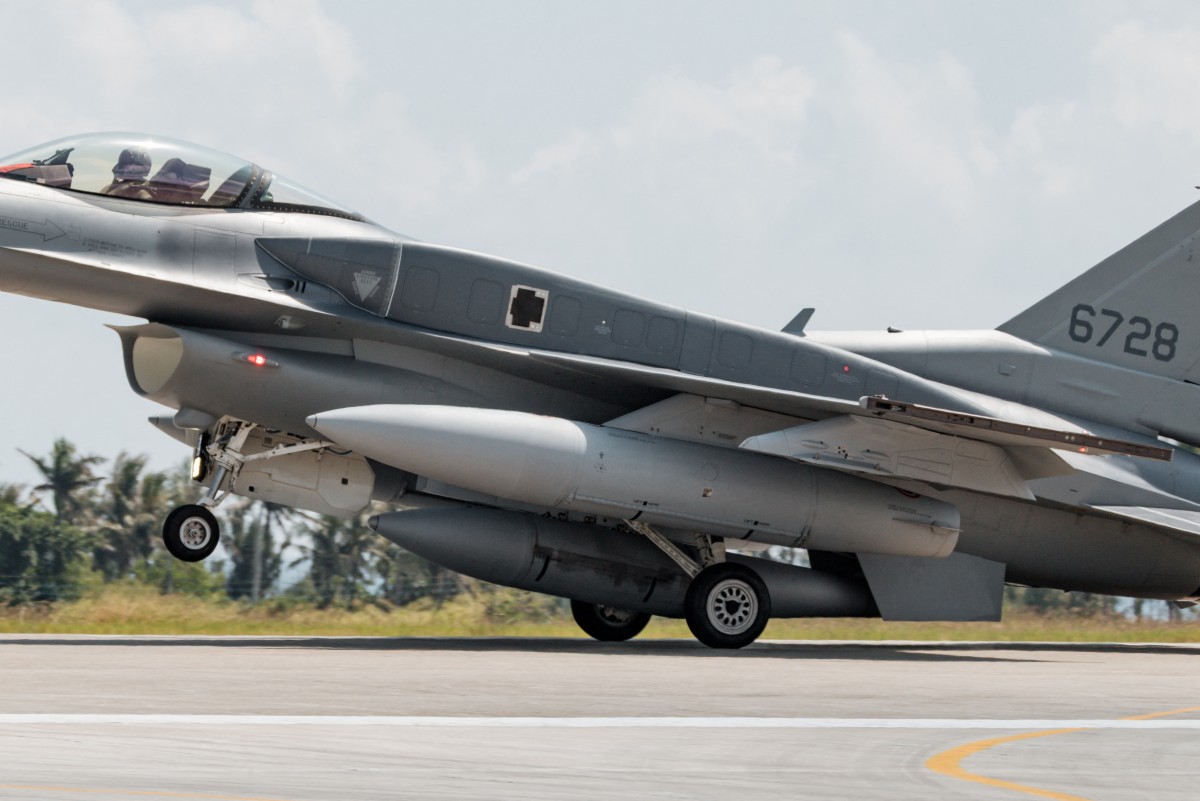
Earlier, as EurAsian Times reported,  Taiwan’s first two F-16 Vipers — serials 6727 and 6728 — were on the Pacific ferry to Taitung’s Chihhang Air Base.

Deliveries were expected to begin in 2023, and all 66 warplanes were scheduled to be delivered by the end of 2026. However, supply-line pressures due to COVID-19, followed by Lockheed Martin’s decision to shift the F-16 assembly line from Fort Worth to Greenville, pushed the timeline back.

The jet’s electronic-warfare suite has been a separate problem. The embedded AN/ALQ-254 Viper Shield, built by L3Harris, ran into production bottlenecks because it is built into the fuselage rather than carried as a pod.

Taiwanese reporting in July 2026 said the first Block 70s would be delivered without it, with the suite to be fitted later. An AESA radar without the planned internal jammer makes the aircraft thinner than the one in the brochure, and it is a capability gap, not just a reason the schedule slipped.

Iran War: U.S. Awards F-22 Pilots for Midnight Hammer as Pentagon Sends 3rd Carrier Towards Middle East

Lockheed later started two shifts to prioritize Taiwan’s order to deliver the combat jets. Still, the full 66-jet order is not expected to be delivered before 2028.

When Lockheed Martin delivers the 66 new jets by 2028, the Taiwanese Air Force will have more than 200 F-16 Viper fighter jets, making it the largest Viper-standard fleet in the Indo-Pacific region.

A newly purchased F-16V Block 70 fighter jet lands at Chihhang Air Base in Taitung on October 2, 2026. (Photo by CHENG Yu-chen / AFP)

F-16 vs F-16 Viper

Both the legacy F-16 and the latest F-16V jets share a common airframe shape, a single-engine layout, 9g capability, and basic flight characteristics.

The main differences are in sensors, computers, cockpit, electronic warfare, and modern weapons/data-link integration.

However, the biggest capability jump is perhaps in the radar system.

The legacy F-16A/B jets used the mechanically scanned AN/APG-66 radar. Most F-16C/D (Blocks 25–52) used the mechanically scanned AN/APG-68.

“Simply False”: Ukraine Rejects Reports That Over 50% Of Its F-16 Fighting Falcons Are Out of Action

These radars have slower scan rates, more limited multi-target tracking capabilities, and poorer jamming performance.

For the F-16V, however, Lockheed Martin uses Northrop Grumman’s AN/APG-83 SABR AESA radar.

It uses electronic beam steering, supports simultaneous air-to-air and air-to-ground modes, high-resolution SAR mapping, better jamming resistance, and tracks more targets at longer ranges.

Lockheed Martin states it delivers 5th-generation radar capabilities through hardware and software commonality with F-22 and F-35 radars.

“It delivers greater situational awareness, flexibility and quicker all-weather targeting and provides pilots with unprecedented target area detail and digital map displays that can be tailored with slew and zoom features,” said Lockheed Martin in a factsheet about the Block 70/72 jets.

The new Viper standard jets also provide enhanced battlespace awareness.

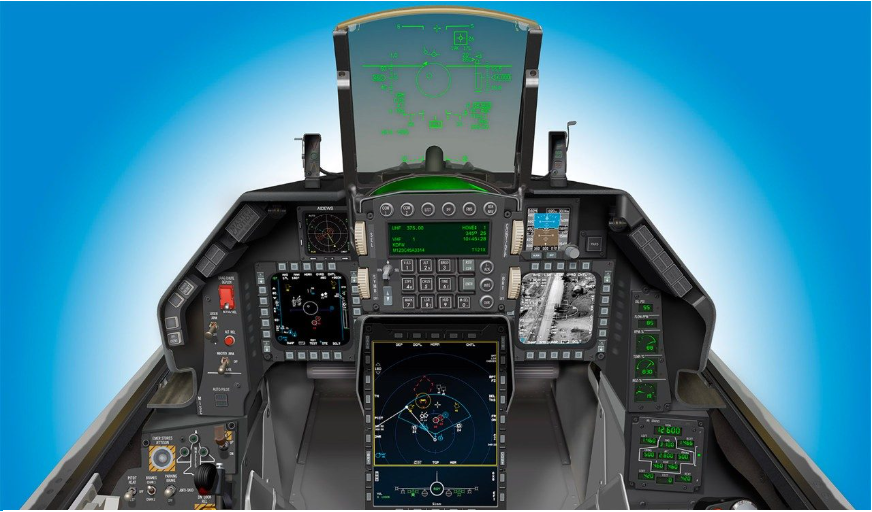
Block 70/72 features a new high-resolution Center Pedestal Display (CPD), which provides critical tactical imagery to pilots and enables them to take full advantage of AESA and targeting pod data.

The new CPD enables color moving maps, larger and easier-to-manage air-to-air Situation Displays, zoom functionality with the ability to switch information among displays, digital display of Flight Instrument Data, and a color/night helmet-mounted display.

Additional integration of the Lockheed Martin Sniper® Advanced Targeting Pod and Legion-ES™ IRST system increases pilot situational awareness and enhances warfighter survivability.

An inside view of the F-16 Viper’s cockpit. Credits: Lockheed Martin.

The F-16V also provides better pilot protection. Lockheed Martin’s Automatic Ground Collision Avoidance System (Auto GCAS) was purpose-built to prevent deadly crashes and has already saved the lives of multiple pilots and F-16s since the system entered service with the U.S. Air Force in late 2014.

The Auto GCAS is designed to reduce incidents of controlled flight into terrain, or CFIT. According to U.S. Air Force statistics, CFIT incidents account for 26 percent of aircraft losses and a staggering 75 percent of all F-16 pilot fatalities.

The F-16V also provides extended structural capabilities.

The Block 70/72 has an extended structural life to 12,000 hours – more than 50 percent beyond that of previous production F-16 aircraft. The older F-16s had a structural life of around 8,000 hours.

According to Lockheed Martin, the F-16V could serve for 40 years without any major repairs.

The conformal fuel tanks provide increased fuel capacity and range without sacrificing the jet’s aerodynamic performance.

Furthermore, legacy F-16s relied on multiple older computers with limited processing power, whereas the F-16V has a single high-performance Modular Mission Computer (MMC) and a modernized avionics architecture. This gives far higher computing power for sensors, weapons, and data fusion.

F/A-18 Super Hornet Spotted with Secretive AIM-260 JATM — and It’s Not an American Fighter Jet

The F-16V is certified for a very wide range of modern weapons, such as AIM-120D AMRAAM, AIM-9X, JASSM, JSOW, JDAM variants, and SDB, and uses Link 16, which provides enhanced situational awareness and enables real-time command, control, and tactical data exchange among military aircraft, ships, and ground forces.

They also have greater electrical power, cooling, and data-processing capacity to support the future integration of advanced electronic warfare equipment, weapons, and infrared search-and-track systems.

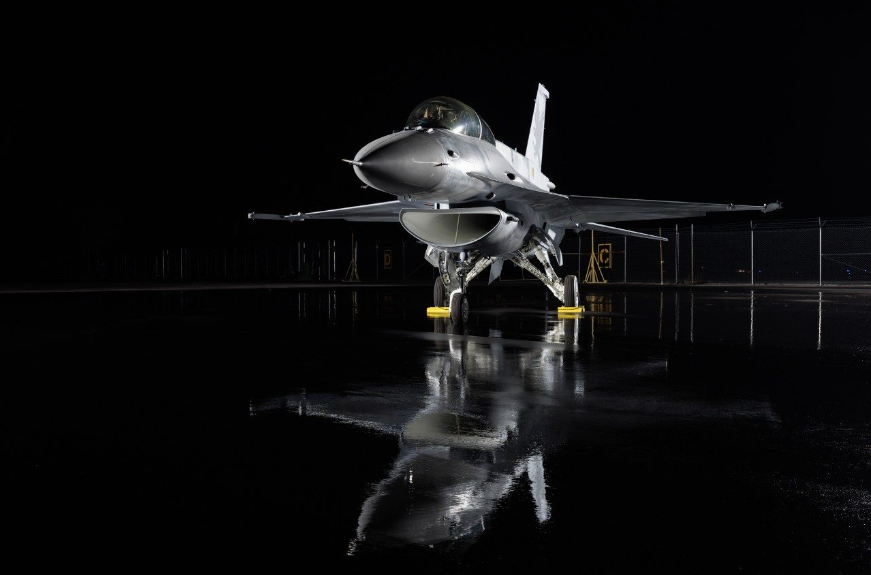
F-16 Viper. Credits: Lockheed Martin.

Because of all these capabilities, even though both the older F-16 and the latest F-16V share the same airframe design, the F-16V is a much more lethal aircraft.

Modern sensors, avionics, radars, an electronic warfare suite, Link 16, structural improvements, and an improved weapons package and ferry range mean the F-16V is a much more capable jet. That is why operators such as Taiwan, Greece, Bahrain, Slovakia, Bulgaria, and Turkey are upgrading their existing F-16 fleets.

“Indian Pilot Crashes UAE Jet Full of Israelis” — The Headline That Would Have Run, Had Machchhar Not Fought Back: OPED

According to Su Tzu-yun, a senior analyst at the Institute for National Defense and Security Research, the AN/APG-83 radar was designed to detect targets with small radar cross-sections and could “improve the F-16V’s chances of detecting PLA stealth aircraft such as the J-20 and J-35”.

  • Sumit Ahlawat has over a decade of experience in news media. He has worked with Press Trust of India, Times Now, Zee News, Economic Times, and Microsoft News. He holds a Master’s Degree in International Media and Modern  History from the University of Sheffield, UK. 
  • He can be reached at ahlawat.sumit85 (at) gmail.com

The post Taiwan’s Brand New F-16 Vipers Land at Chihhang AFB. Analyst Says Its Radar May Detect China’s J-20 Jets appeared first on EURASIAN TIMES.

  •  
❌