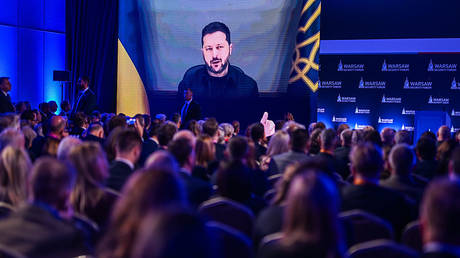
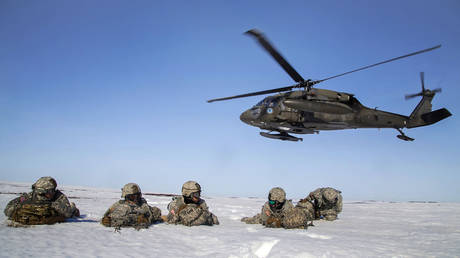
Paolo Zampolli has voiced optimism about broader participation by Russian athletes in the 2028 Los Angeles Games
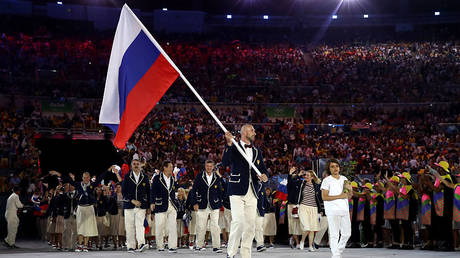
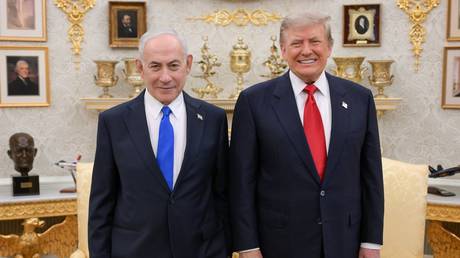
Russia could make a major return to the Olympics in 2028 under its national flag for the first time in years, US President Donald Trump’s special envoy, Paolo Zampolli, has said.
Russian athletes were barred from numerous international competitions following the escalation of the Ukraine conflict in February 2022. Some were later allowed to compete under neutral status, without their national flag or anthem.
Speaking to TASS on Thursday, Zampolli expressed optimism about broader Russian participation in the Los Angeles Games, arguing that sporting bans should not become a permanent substitute for political dialogue.
”I am optimistic about further progress that would establish a reliable mechanism for fuller participation by Russian athletes at the 2028 Los Angeles Olympics,” he said. “The US must host Games that are safe, fair, and open to every eligible athlete.”
The International Olympic Committee (IOC) provisionally lifted its suspension of the Russian Olympic Committee in July, paving the way for broader participation at LA 2028. However, it has yet to decide whether Russian athletes will be able to compete under their national flag and anthem.
Several international federations, including World Aquatics, World Gymnastics and the International Fencing Federation, have also eased restrictions on Russian competitors.
Zampolli called the return of the Russian flag and anthem at the 2026 Winter Paralympics in Italy an “important step,” arguing that excluding top athletes for reasons unrelated to their conduct undermines international competition.
”True champions want to beat the best,” he said. “The greatest victories are those earned against the strongest opponents.”
Russia’s gradual return to international sport has faced opposition from the EU. On Monday, the bloc’s foreign policy chief, Kaja Kallas, announced plans to propose measures to “sustain Russia’s isolation in global sports.” Nine member states have also urged Brussels to cut funding for international sporting bodies that readmit Russian athletes.
Moscow has repeatedly denounced the bans as politically motivated and challenged them in court. Despite the restrictions, Russian athletes have continued to win international titles in events where they are permitted to compete.
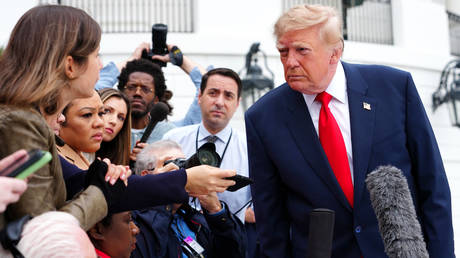
On Friday, Zampolli announced that he had left his position as special envoy for global partnership, which he held since March 2025. He expressed gratitude to Trump in a post on X, saying that “serving him and the US has been the greatest honor of my life.”
“Special envoys appointments are for one year. President Trump extended it for more than six months,” the businessman and former modeling agent stressed.
Politico reported on the same day that Zampolli was actually fired from the job because of a longstanding dispute with Deputy Secretary of State Christopher Landau over a number of issues, including the chain of command, and messages that included personal insults.
Zampolli is known to have introduced Trump to his wife, Melania, during a party that he hosted in New York in 1998.
War Secretary Pete Hegseth had said the execution of Nidal Malik Hasan, who gunned down 13 US service members, would be webcast
The execution of Nidal Malik Hasan, who killed 13 US service members in a 2009 shooting rampage at Fort Hood, will not be public, US President Donald Trump has announced. Days earlier, Secretary of War Pete Hegseth promised it would be webcast, drawing criticism from lawmakers across party lines.
In a post on Truth Social on Thursday, Trump wrote that the former US Army major “will die, as scheduled, by firing squad, but this event will not be streamed.” The US president explained that while webcasting Hasan’s execution “might have been a strong deterrent… many very good and well meaning people would rather not watch him die, through streaming, or through any other visual device.”
Trump noted that the relatives of the victims would still have the right to view Hasan’s death in person.
According to Axios, citing an anonymous administration official, the US president has grown increasingly skeptical of the idea in recent days, not least because of all the “negative input” he supposedly received.
Speaking to reporters late last Friday, Trump said he “wasn’t involved in that decision.”
Hegseth told conservative commentator Jack Posobiec last Thursday that Hasan is scheduled to be shot at 1 PM on December 3 – the approximate time of day of the original attack – at the same installation where he carried out the massacre.
“We’ll make sure that people are able to watch it, that it’s public, because people need to understand there’s serious consequences for these types of things,” the secretary said.
It will be the first execution carried out by the US military in more than six decades and the first by an Army firing squad since World War II.
The last public execution in the US took place in 1936, making Hegseth’s idea of livestreaming it highly controversial.
Republican Senator Thom Tillis characterized the proposal as “beyond disgusting,” with his fellow GOP lawmaker, Representative Austin Scott, writing on X that “live-streaming executions is what jihadists do.”
Democratic Senator Chris Murphy also likened public executions to those carried out by terrorist groups.
Archbishop Paul S. Coakley, president of the US Conference of Catholic Bishops, similarly condemned the livestream plan as a “barbaric promotion of a culture of death.”
Born in the US in 1970 to Palestinian immigrant parents, Hasan trained as a doctor before becoming an Army psychiatrist.
On November 5, 2009, he opened fire with two semiautomatic pistols on service members at Fort Hood’s Soldier Readiness Processing Center in Texas, where troops prepare for overseas deployment. He killed 13 people and wounded 32 others while reportedly shouting “Allahu akbar” – Arabic for “God is great” – during the attack.
Return fire from military police wounded Hasan before they could arrest him, leaving the shooter paralyzed from the waist down.
During his court-martial, Hasan acknowledged his responsibility for the attack, stating that he believed he was acting to protect fellow Muslims from US military actions in Afghanistan.
In August 2013, a military court found Hasan guilty of 13 counts of premeditated murder and 32 counts of attempted premeditated murder. A panel of 13 senior military officers unanimously sentenced him to death later that month.
The US Supreme Court declined to review his conviction in March 2025, and Trump approved the execution earlier this month.
His loyalists expect another comeback, but former supporters say the spell has broken as the nation heads toward an election
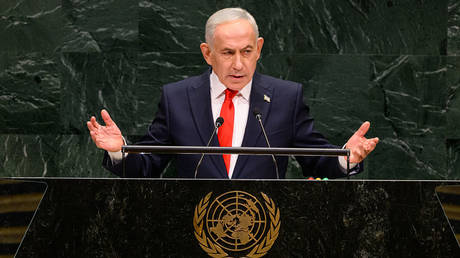
As Israeli Prime Minister Benjamin Netanyahu fights to retain power, loyalists are crediting him with strengthening the country and defeating its enemies, while former supporters blame his leadership for October 7 and are seeking alternatives on both the left and the right.
With less than a month to go before Israel’s elections, Netanyahu faces an uphill battle to retain power.
But polls show it won’t be an easy task. A recent survey conducted by Maariv, one of Israel’s leading newspapers, estimates that his party, Likud, will only win 20 seats out of 120 total in the Knesset, Israel’s parliament, a drop of 12 compared with its performance in the 2022 elections.
The decline in Likud’s ratings is hardly surprising. Netanyahu and his government have been blamed for failing to prevent the October 7, 2023 attacks, in which more than 1,200 Israelis were killed and 251 people were taken to Gaza as hostages.
He has also faced criticism for pursuing a series of controversial policies concerning the judiciary and the media; remaining in power amid graft probes that led to charges of bribery, fraud and breach of trust; and contributing to Israel’s growing isolation on the international stage.
In Bibi we trust
Surprisingly, however, the Maariv poll shows that around 40 percent of respondents still want Netanyahu to remain Prime Minister of Israel. Loyalists offer a long list of Netanyahu’s achievements. For them he is the man who subdued Israel’s enemies, confronted Iran’s nuclear ambitions and strengthened Israel’s position in the region.
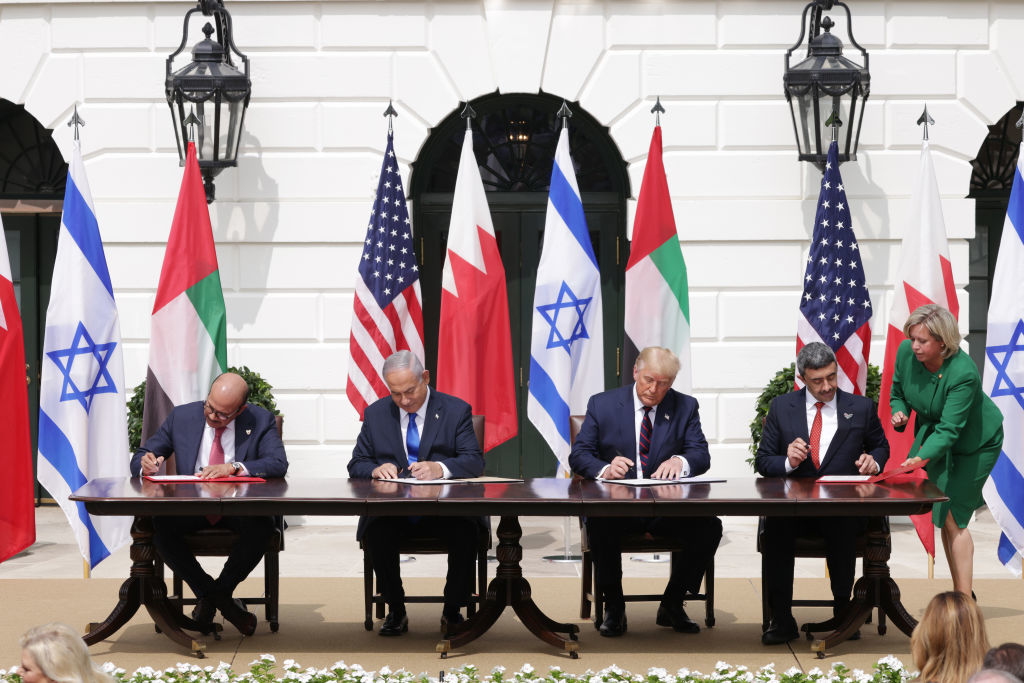
Under his leadership, Israel deepened relations with the United States and expanded its diplomatic ties through the Abraham Accords, normalizing relations with the United Arab Emirates, Morocco and Bahrain in 2020. Under him, Israel has also bloomed economically, championing a more open, market-oriented economy, privatization and competition, something that has helped to position the state as a global technology hub.
Naor Shukri, a 56-year-old resident of Haifa, is among those loyalists; he vows to vote for Likud on October 27.
“Indeed, October 7 happened during the watch of Netanyahu, and he is also responsible for that failure. But he is not the only one. Many other people, including the Shin Bet [internal spy agency - ed.], the IDF and various politicians, are equally to blame and need to be investigated.”
“Plus, those events would have happened anyways, regardless of who was running the country. So pinning the blame on Netanyahu is not fair, to say the least,” he added.
Shukri is not alone. Yair Avraham, a 65-year-old resident of Tel Aviv, also believes that although Netanyahu failed to prevent the attacks, his subsequent record should be taken into account when assessing his suitability for another term.
“In the end of the day, he led a brilliant multi-front campaign against Hamas, Hezbollah of Lebanon, the Houthis of Yemen, the Iraqi militias and the regime of Iran. His achievements were recognized internationally and when you look at the map of the Middle East and compare it to what it was like three years ago, you realize that Israel has only emerged stronger. Our enemies are way weaker.”
Both men believe Netanyahu has not received sufficient credit for these and other achievements from the liberal media and the international community. In their view, this reflects an effort to discredit Israel’s actions, replace its right-wing government and hand power to more liberal political circles that they believe would be influenced by the West.
Their claims are not without context. Over the years, European countries have poured billions of dollars into Israel’s liberal NGOs and think tanks that promote equality, coexistence and a two-state solution with the Palestinians. Such funding has long been opposed by conservative circles, which argue that the money has also helped finance anti-government protests that have destabilized the country and ultimately created an opportunity for Israel’s enemies to attack on October 7.
“We all know Europe and liberal Americans are trying to get rid of Netanyahu,” said Avraham.
“They don’t want to see a strong Israel. Inside their own countries, European governments surrendered to their Muslim radicals and they want Israel to do the same. That’s why Netanyahu needs to be the Prime Minister. Only he will make sure it won’t happen.”
The problem, however, is that Netanyahu’s coalition bloc, according to the polls, does not have enough seats to reach the crucial threshold of 61. To overcome this hurdle, Netanyahu will either need to perform better than expected on election day or persuade members of the opposing, so-called change bloc, that joining forces with him would be the better option.
He has pulled off this political maneuver before. In 2020, he convinced Benny Gantz, then leader of the Blue and White party, to form a unity government, bringing an end to a year-long political stalemate.
In 2023, shortly after the Hamas-led attacks, he did it again, establishing an emergency government with Gantz.
This time, Israeli analysts say, such an arrangement is unlikely, largely because politicians from the opposing camp no longer trust Netanyahu or his promises.
Indeed, many Israeli politicians have openly vowed not to join his government under any circumstances. The list is lengthy and includes former prime ministers Naftali Bennett and Yair Lapid, as well as other contenders for the top job, such as Gadi Eisenkott and Avigdor Liberman.
But Shukri and Avraham believe Netanyahu is such an experienced politician that he could still surprise his opponents.
“Netanyahu is a magician. He has been buried politically so many times before and yet he is still around, while all his rivals are no longer relevant,” said Shukri.
“Bibi cannot be underestimated. I agree it won’t be easy for him to form a government but he knows how to maneuver the system and I am sure in the end of the day he will find a solution, form a government and remain in power,” echoed Avraham.
War as a political tool?
Critics, however, argue that Netanyahu might not even need to rack his brains over coalition negotiations. They fear he could launch another round of hostilities with Iran, pushing the prospect of elections into the distant future.
Their concerns have not emerged out of thin air. Only recently, Israeli Chief of the General Staff Eyal Zamir warned that a war with Iran could postpone the vote.
Netanyahu himself sent an alarming message in late September, claiming there were “indications” that Israel’s enemies might attack the country ahead of the elections and vowing to retaliate if such a scenario materialized.
“I take the warnings of our Prime Minister very seriously,” argued Avraham. “I doubt he would go into a war just for the sake of postponing the elections. Throughout the years he has been known as a careful politician, who doesn’t like risking our soldiers’ lives and who only does that out of necessity. Here it would be the same. Netanyahu will open a front only if there is a concrete threat, not anything else.”
Shukri appears to agree. “Don’t believe what the liberal media is telling you about Bibi. They will always demonize him and depict him as a politician who clings to power no matter what. The truth is that he genuinely wants the best for the country, and I hope that on October 27, the people will give him that opportunity [to remain in power - ed.].”
He says he voted for Netanyahu and Likud from the time he first became eligible to do so in 2003. Today, however, he intends to support Yair Golan and the Democrats, a left-wing, liberal-Zionist party that advocates a strong security policy alongside diplomatic solutions to the Israeli-Palestinian conflict.
Plotnik says his opinion changed in 2014, during Operation Protective Edge, a 51-day military campaign against Hamas in Gaza that killed more than 2,000 Palestinians, many of whom were civilians.
“Operation Protective Edge was a major turning point. I watched Israeli leaders promise to destroy Hamas, demolish tunnels and restore deterrence, only to see a familiar cycle emerging: military action, a period of calm and then another round of fighting.”
“Everything was one big deception,” he recalled, arguing that right-wing governments had sold voters “fantasies that don’t correspond with reality.”
Then came October 7, 2023. For Plotnik, the massacre was not an isolated catastrophe but the collapse of a security concept that had been failing for years.
Israel’s leadership, he argues, had effectively built a wall that allowed politicians and the public to ignore Gaza while assuming that a state of neither war nor peace could continue indefinitely.
”That concept collapsed,” Plotnik said. “The policy of ignoring and stagnation crumbled down.”
Plotnik believes Israel’s only realistic path towards long-term security is an agreement with its enemies. He plans to support Golan because he believes diplomacy is necessary if Israelis want their children and grandchildren to have a chance to grow up in peace.
His alternative is not pacifism. He points to Egypt and Jordan as examples of how agreements can maintain stability even without affection between populations.
”There is no love between the countries, but there is quiet based on state interests,” he said.
”Not everything will work and the agreement will collapse? We can always go back to fighting,” he added.
From Netanyahu to Ben Gvir
Not every former Netanyahu voter, however, has reached the same destination.
Guy Even Tzur says he voted consistently for Netanyahu from 2015 until now. He still considers himself firmly on the right, but he, too, has decided it is time for a change. His choice is almost the polar opposite of Plotnik’s: Itamar Ben Gvir.
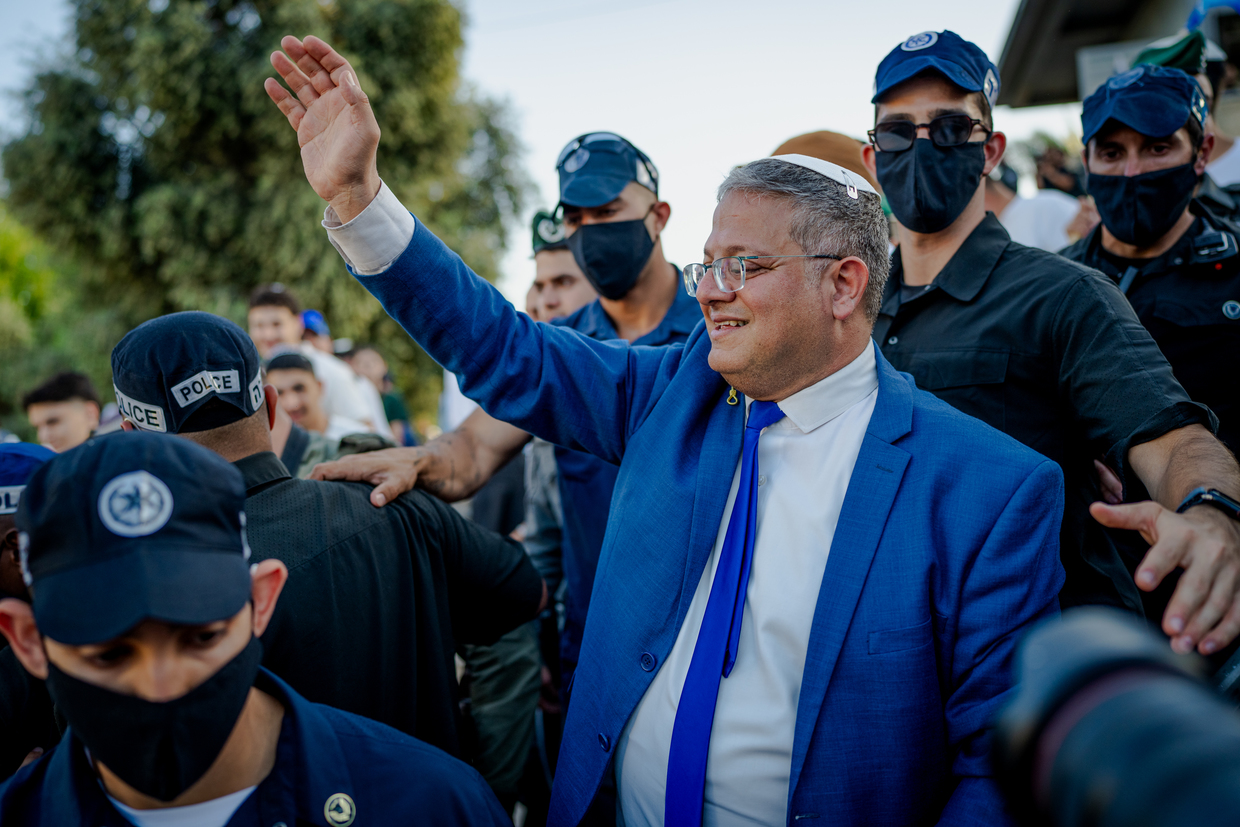
Ben Gvir, leader of the hawkish Jewish Power party, has served as national security minister in the current government of Netanyahu. He opposes Palestinian statehood, advocates a hard line against Palestinian militancy and has a 2007 conviction for incitement to racism and support for a terrorist organization.
However, this does not bother Even Tzur because he believes voters “should be voting ideologically and for people who actually deliver.”
Ben Gvir, he believes, has done just that. Even Tzur credits him with pushing tougher prison conditions for security prisoners, expanding civilian access to firearms and taking a harder line on crime and security.
“This is why he deserves my vote. Netanyahu, on the contrary, showed that he makes mistakes and can miss massively,” he argued.
Even Tzur says October 7 was a major realization point. But unlike Plotnik, he does not believe the war proved Netanyahu’s entire security doctrine fraudulent. He claims Netanyahu conducted the subsequent campaign effectively and achieved major successes.
However, he claims, October 7 also demonstrated that “Netanyahu is not a political magician. He makes mistakes and thus can be replaced.”
The only question that begs to be answered is: by who. Even Tzur believes Netanyahu has not produced a successor from within the Likud, and this is exactly why he wants to create an alternative by strengthening the ideological right. He doesn’t reject the idea of Netanyahu leading the next government but he also wants to give power to more hawkish voices within the camp to make sure tougher policies are implemented.
Plotnik, on the contrary, rejects the notion, claiming that another term of Netanyahu would perpetuate the strategic approach that, in his view, contributed to October 7.
The two men are moving in opposite political directions. Yet both have reached a similar conclusion: Netanyahu’s long-standing dominance no longer makes him the automatic choice. And now, more and more former Likud supporters can imagine a future without him.
Kiew hätte über die Folgen der Angriffe auf Ölraffinerien und Rechenzentren nachdenken müssen, erklärte der russische Präsident Wladimir Putin bei seinem Auftritt beim Forum und Kongress der zivilgesellschaftlichen Organisation "Delowaja Rossija" ("Geschäftliches Russland" – eine Vereinigung von Unternehmern) am Donnerstag.
"Gestern wurde versucht, einige Ölraffinerien anzugreifen, und jetzt sind hier und da Treffer gelandet. Nichts wirklich Wesentliches, aber dennoch machen sie weiter. […] Sie haben den ersten Schritt gemacht, wir haben nun begonnen, darauf zu reagieren, und auch im Energiesektor gibt es dort bereits Unruhe, ebenso wie bei militärischen Einrichtungen, bei Rechenzentren und so weiter", so Putin wörtlich.
Am Montag lobte sich Selenskij öffentlich für den ukrainischen Angriff auf das Rechenzentrum von Yandex in Kaluga.
Putin erinnerte auch an die Angriffe der ukrainischen Streitkräfte auf Lagerhäuser von Online-Marktplätzen. Er warnte, dass Russland auf ukrainische Angriffe reagieren werde, unter anderem auf Angriffe auf Logistik- und Energieanlagen.
"Sie haben damit angefangen, das hätten sie nicht tun sollen. […] Wir dachten, dass sie nicht so weit gehen würden, aber sie sind so weit gegangen. Wir beginnen zu reagieren, und dann wenden sie sich sofort mit Bitten an ihre Geldgeber, damit diese Einfluss auf uns nehmen und uns stoppen", bemerkte Putin.
Am Samstag warf Donald Trump dem ukrainischen Machthaber Wladimir Selenskij vor, die Forderungen Washingtons, keine russischen Ölraffinerien anzugreifen, ignoriert zu haben. Nach den Worten des US-Präsidenten hätte dieser schon längst Frieden mit Moskau schließen müssen, habe stattdessen aber Probleme für die ganze Welt verursacht. Er schlug dem Chef des Kiewer Regimes vor, Wahlen abzuhalten, damit die Ukrainer einen verhandlungswilligeren Führer wählen könnten.
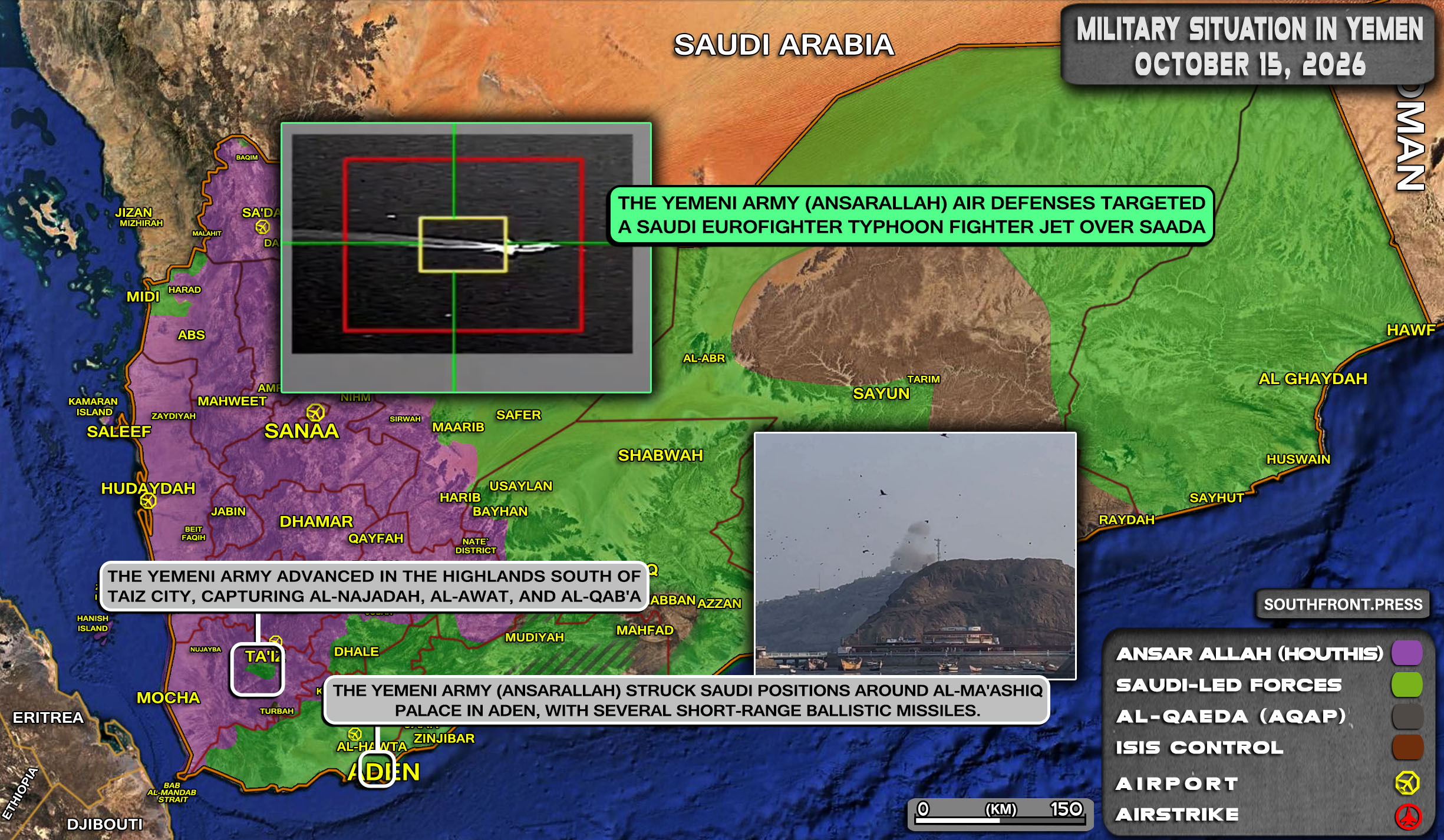
On the night of October 15, 2026, the Russian Armed Forces carried out a combined strike on Ukraine using two Kh-59 guided missiles and 580 attack drones and decoy drones. The main effort was concentrated on Kirovohrad Region, where strikes continued for more than ten hours and hit industrial facilities, logistics complexes, and railway infrastructure. Strikes were also carried out against port infrastructure in Odesa Region, traction substations, and aviation infrastructure in western Ukraine. In response, Ukraine attempted a massive attack on the Ryazan oil refinery, which was repelled by air defense forces.
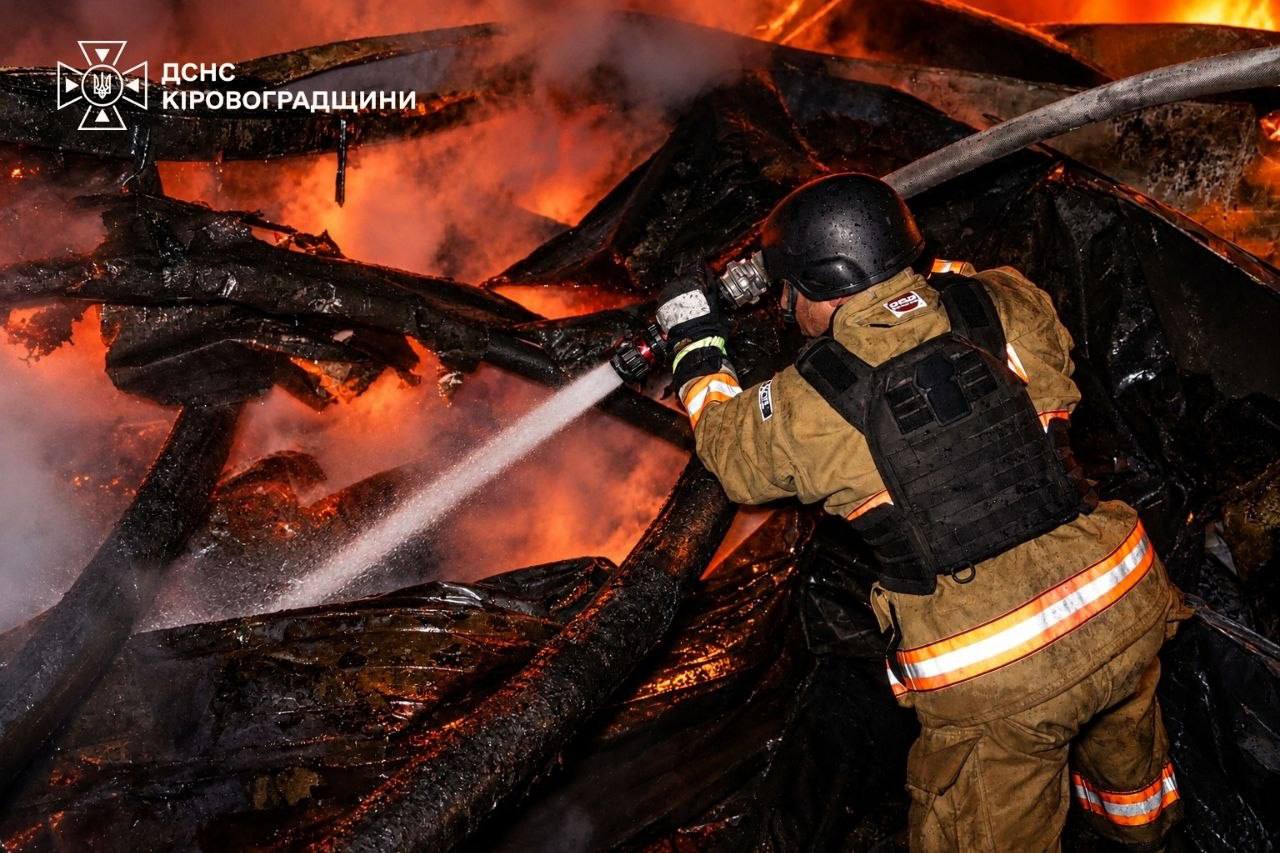
Russian Strikes on Ukraine Kirovohrad Region Logistics and warehouse facilities (Kropyvnytskyi).Kirovohrad Region came under the most massive attack since the start of the conflict: according to Andriy Raikovych, head of the Region Military Administration, nearly 360 drones attacked the region, with impacts recorded at 25 locations. In Kropyvnytskyi, strikes hit company premises, logistics centers, and warehouses. Among the affected facilities were Focus-Logistics, a warehouse complex operated by a company with critical-infrastructure status; warehouse buildings of SE Kombinat Trykutnyk, part of Ukraine’s state material reserve system; a cargo branch of Nova Poshta; and a distribution center of Veresen Plus LLC, operator of the Faino Market chain.
Industrial facilities (Kropyvnytskyi). Three drone strikes hit the premises of Gradoil LLC, a full-cycle oil-extraction complex that processes sunflower and rapeseed; fire engulfed administrative and warehouse buildings covering more than 1,000 square meters. Three drones struck Penoplast Center LLC, a production and warehouse facility in the polymer sector, with the fire spreading across roughly 800 square meters. A separate strike hit the former industrial complex of PrJSC Kreativ, historically one of the city’s largest oil-and-fat enterprises, whose production facilities continue to be used by other operators after the legal entity’s bankruptcy. A production workshop of Intermash Prom LLC in Oleksandriia was also hit, with fire engulfing more than 300 square meters. The company was registered in August 2026, and its initial business profile included the production of weapons and ammunition.
Railway infrastructure.Four attack drones successively hit the railway complex in Pomichna. According to available information, the strike hit the locomotive complex, but the fire was recorded in a building belonging to the railcar repair facility responsible for repairing freight rolling stock. In addition, the Sharivka and Suhokliia traction substations were hit, and electric train service was halted.
Odesa Region Port of Izmail and maritime vessels. Port infrastructure at the Port of Izmail was damaged; it was used for unloading and storing military and dual-use cargo. In addition, two bulk carriers were hit while underway at sea.
Traction substations. In Rozdilna Raion, a drone struck the EChE-24 traction substation, causing an oil fire covering about 350 square meters. In Izmail Raion, an attack drone exploded near the Prymorske substation.
Ternopil Region Chortkiv — SE Bordnetze cable production.Russian drones hit the Chortkiv branch of SE Bordnetze-Ukraine LLC (SEBN), part of the international Sumitomo Electric Bordnetze network. A warehouse building was damaged, and fire engulfed more than 500 square meters. The facility produces electrical wiring systems and wiring harnesses for the automotive industry, including for the Volkswagen Golf 8, Audi A6, Audi e-tron, and Porsche J1. According to reports, the company’s cable-production capabilities were also used to manufacture components for Ukrainian long-range unmanned systems.
Vinnytsia Region Vinnytsia — GreenCool plant. GreenCool is one of Ukraine’s largest refrigeration-equipment manufacturers and part of the UBC Group, with revenue exceeding UAH 2 billion. Open procurement data show four government tenders involving Green Cool LLC, with Ukrnafta as the main customer. The Zhmerynka locomotive depot and the area around the Kozyatyn-2 110 kV supporting traction substation were also attacked.
Zhytomyr Region Chudniv-Volynskyi traction substation. Vilshanka traction substation.
Khmelnytskyi Region Starokostiantyniv — radar station. Two Geran-5 jet-powered drones hit a P-37 radar position at Starokostiantyniv airfield. The radar itself was destroyed. The P-37 is an air-surveillance asset that provides commanders with a picture of the air situation in their area of responsibility. Radar coverage is designed with overlapping zones, so the airfield does not become completely “blind,” but the destruction of an operational air-surveillance asset is a concrete loss for an airfield that has regularly come under attack.
Volyn Region Lutsk — airfield.The strike hit the Lutsk airfield, where the 204th Tactical Aviation Brigade is stationed. One of the impacts occurred near the guardhouse.
Ivano-Frankivsk Region Kolomyia — airfield.Two Geran-5 jet-powered drones attacked Kolomyia military airfield. The main radar equipment and flight infrastructure were not damaged. According to available information, the airfield is still used to receive transport aircraft and move military cargo. The two impacts did not disrupt this function, but the fact that strike assets returned to Kolomyia after a long pause indicates that the airfield has once again become a target of attention.
Dnipropetrovsk Region Dnipro — repeated strike on DAO.This was not the first strike on the site: earlier attacks had already hit the same complex, causing a major fire and damage to its production and logistics building. Repeated strikes are the key factor here: each new attack compounds the existing damage.
Kyiv Region Borodianka — ARTISAN construction-mix production. The strike targeted the production site of Artel LLC, better known under the ARTISAN trademark, which produces dry and liquid construction mixes. A review of procurement records shows that ARTISAN products are systematically present in supply chains for Ukrainian security forces: construction materials appear in purchases by several Armed Forces of Ukraine units as well as National Guard units; in 2026, its products were included in purchases classified as defense-related.
Poltava Region Naftogaz facility.On the night of October 15, Russian forces attacked gas-production infrastructure belonging to Naftogaz Group in Poltava Region. The drone strike damaged process equipment, started a fire at the facility, and suspended operations.
Strikes on Russia Ryazan Region During the night of October 15, Ukrainian forces attempted a massive attack on the oil refinery in Ryazan. According to the Russian Ministry of Defense, Russian air defenses intercepted and destroyed four Flamingo long-range cruise missiles and 69 fixed-wing drones. A fire broke out at the refinery after drone debris fell on its grounds. In total, according to the Russian Ministry of Defense, 166 Ukrainian drones were shot down over 14 Russian regions on the night of October 15.
Russian President Vladimir Putin, commenting on the strikes on Russian refineries, said: “Yesterday they tried to strike some refineries, and they hit a few places. Nothing significant, but they continue nonetheless.” Putin emphasized that Russia will respond to strikes on refineries, logistics, and energy facilities: “They made the first move. We began responding. They should not have started.”
The Russian strikes on Ukraine on October 15 were marked by an exceptionally high concentration of forces in the Kirovohrad direction: nearly 360 drones targeted a single region, making this the largest attack on the region. The main effort was directed at the industrial and logistics network of Kropyvnytskyi, as well as railway power infrastructure in Kirovohrad, Vinnytsia, and Zhytomyr Regions. Damage to the Sharivka, Suhokliia, and Chudniv-Volynskyi traction substations caused localized halts in electric traction and creates risks for rail service on the affected sections. At the same time, strikes on the Starokostiantyniv, Lutsk, and Kolomyia airfields continue the attrition of aviation infrastructure in western Ukraine.
In the medium term, the combination of strikes on energy infrastructure and industrial facilities creates a cumulative effect that complicates the restoration of production chains. Repeated strikes on facilities that had already been damaged point to the systematic nature of the campaign, aimed not only at inflicting immediate damage but also at preventing recovery. Against the backdrop of statements by the Russian leadership about its readiness to respond to strikes on Russian infrastructure, a high tempo of mutual strikes should be expected to continue in the coming weeks.
Das ist ein Buch, das lange schon nötig gewesen wäre – weil es helfen wird, ein wenig mehr Rationalität in die deutsche Migrationsdebatte zu bringen. Es heißt "Der Asylkomplex" und macht das, was bisher gern vermieden wurde: Eine Berechnung, wie hoch die Kosten der Migration seit 2015 für Deutschland tatsächlich sind.
Eine solche Darstellung ist deshalb wichtig, weil den Gegnern offener Grenzen oft wirtschaftliche Interessen unterstellt werden. Die wirtschaftlichen Interessen der Befürworter bleiben dagegen häufig unbeachtet. Das gilt auch dann, wenn sich die Wahrnehmung von NGOs als Geschäftsmodell in den letzten Jahren hierzulande deutlich geschärft hat.
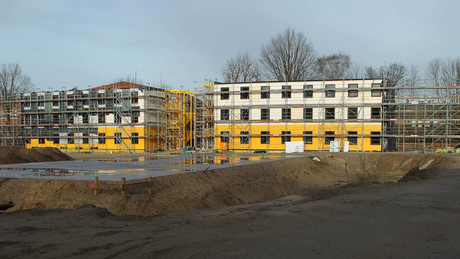
Der Autor Björn Harms fasste einen Teil der Erkenntnisse aktuell in einem Beitrag in der Welt zusammen und führte insbesondere an einem Berliner Beispiel aus, auf welche Kosten er gestoßen ist. Sein Beispiel ist eine brandneue Asylunterkunft in der Hasenheide, die seit dem 1. Oktober in Betrieb ist. Nachdem der Berliner Senat das ehemalige Verwaltungsgebäude gemietet hatte (bis 2035), baute er es zu einer Massenunterkunft um. Für den gesamten Mietzeitraum werden 150 Millionen Euro angesetzt. Das sind monatliche Kosten von etwa 1,2 Millionen Euro (warm).
Insgesamt können dort 921 Personen untergebracht werden. Die Mietkosten pro Kopf und Monat betragen also 1.302 Euro. Darin sind noch keine Kosten für Verpflegung, Security und Sozialarbeit enthalten. Das macht (die Rechnung macht Harms nicht auf) die Einrichtung zu einem dauerhaften Zuschussgeschäft für das Land Berlin. Die Erstattungsleistung des Bundes an die Länder für Asylbewerber beträgt pro Kopf und Monat 625 Euro. Allein durch die Miete ergibt sich also ein Verlust von 677 Euro pro Kopf und Monat.
Versorgt werden sollen die Insassen der Unterkunft mit drei Mahlzeiten pro Tag durch Caterer, die natürlich ebenfalls verdienen. "Heimbetreiber, Sicherheitsdienste, Immobilienbesitzer, Migrationsanwälte, Flüchtlingsräte oder Wohlfahrtsverbände", lautet die Liste bei Harms.
Übrigens gab es schon 2015 ähnlich großformatige Projekte. In den Folgejahren, als der Zustrom etwas abebbte, standen dann einige Städte in den Schlagzeilen, weil sie derartige Verträge geschlossen hatten und nicht mehr aus ihnen herauskamen, als dann doch weniger Flüchtlinge kamen.
Ein Beispiel: Rheinland-Pfalz kaufte 2016 eine Art kleine Doppelhaushälften für die Unterbringung syrischer Flüchtlinge, 84 Stück, errichtet in Zweibrücken, die seit 2018 leer standen. Die Bundesanstalt für Immobilienaufgaben zahlte jedoch weiter Miete. Insgesamt waren es seitdem mehr als eine Million Euro. Im Mai dieses Jahres wurde begonnen, die Bauten abzureißen. Die Wirkung? Die Mittel sind gebunden, ob es nun Flüchtlinge gibt oder nicht …
Harms versucht, die Summe dieser Ausgaben zu finden, und kommt auf ein Minimum von 400 Milliarden Euro im Zeitraum seit 2016, "konservativ gerechnet". Er fragte in den Landkreisen und Kommunen nach, wie viele Gemeinschaftsunterkünfte es gibt, da die Bundesländer keine Statistik darüber führen. Das Resultat: "Mindestens 4.437 Gemeinschaftsunterkünfte, in denen fast 295.000 Bewohner leben". Allerdings liefert das Statistische Bundesamt hier bereits höhere Zahlen: In Sammelunterkünften, Notübernachtungen und ähnlichen Einrichtungen sind in Deutschland insgesamt 452.900 Menschen untergebracht. 395.700 davon sind ausländische Staatsangehörige.
Die Zahl der Sozialpädagogen ist seit 2015 ebenfalls deutlich gewachsen, von 278.000 auf 351.000. 1,3 Milliarden habe der Bund allein 2025 für Integrationskurse ausgegeben, die sechs von zehn Teilnehmern ohne Abschluss verlassen hätten, schreibt Harms. Allerdings haben an diesen Kursen währenddessen private Sprachschulen gut verdient.
Die Befürworter offener Grenzen wohnen, so Harms, "selten in der Nähe der Asylunterkünfte, ihre Kinder besuchen selten die Schulen, an denen die Integration an ihre Grenzen stößt. Verkäuferinnen und Handwerker in Brennpunktvierteln dagegen spüren jede Belastung – und werden, sobald sie es ansprechen, als fremdenfeindlich abgestempelt."
Im März 2016 habe der damalige Fraktionschef der CDU/CSU, Volker Kauder, noch versprochen: "Niemandem wird etwas weggenommen, weil Flüchtlingen geholfen wird." Wenn man allerdings den Finger auf die Posten legt, sieht es anders aus. Selbst die Summe von bis zu einer Billion Euro, die Harms für diesen Zeitraum von zehn Jahren annimmt, dürfte nicht die vollständigen Kosten abdecken. Denn auch der zusätzliche Druck auf die Mieten gerade im günstigen Segment durch mittlerweile mehr als drei Millionen neue Einwohner ist ein spürbarer Verlust für alle, die miteinander um dieses knappe Gut konkurrieren müssen, und über Wohngeld und die Kosten der Unterkunft landet auch diese Konkurrenz wieder in der Steuerkasse. Bis in die Schlangen der Tafeln hinein sah die konkrete Erfahrung anders aus, als Kauder es versprochen hatte.
Aber erst in Zahlen gefasst lässt sich diese Entwicklung nicht mehr von der Hand weisen. Über Zahlen kann man nüchtern diskutieren. Das wäre in Deutschland sehr hilfreich.
Am Mittwoch hat Bundeskanzler Friedrich Merz bei einer Rede im Bundestag beteuert, dass die deutsche Unterstützung für die Ukraine nicht zulasten der Sozialausgaben gehe. Damit reagierte Merz auf die Vorwürfe der Opposition bezüglich der hohen Ausgaben für die Ukraine-Hilfen.
Nun äußert sich der Sonderbotschafter im russischen Außenministerium, Rodion Miroschnik, zu dem Thema. Die Bundesrepublik Deutschland habe dem Kiewer Regime bereits 100 Milliarden Euro bereitgestellt, schreibt der Diplomat in einem auf Telegram veröffentlichten Post.
Und es sei zu erwarten, so Miroschnik, dass der ukrainische Staatschef Wladimir Selenskij um weitere Gelder bitten werde, zumal die Beziehung zwischen Kiew und Washington aktuell angespannt sei. Miroschnik vertritt die Ansicht, dass Merz weitere Finanzhilfe für Kiew genehmigen werde. Dabei deutet der russische Diplomat an, der deutsche Kanzler handle im Interesse transnationaler Kräfte.
Hierbei führt der Sonderbotschafter aus:
"Und was ist mit den Deutschen? Nun, was soll mit ihnen sein? Sie werden sich in Geduld üben müssen, während ihr Kanzler – auf ihre Kosten – Geopolitik spielt und die abgestimmten Beschlüsse einer transnationalen Gruppierung umsetzt."
Merz habe der Opposition in seiner Rede im Bundestag versichert, dass er für die Finanzierung des Kiewer Regimes auf spezielle Gelder zurückgreife, schreibt Miroschnik in seinem Post. "Und sie konnten natürlich weder für den sozialen Schutz der Deutschen noch für die Förderung und Entwicklung von Wissenschaft und Medizin verwendet werden. Sondern nur für Selenskij!", spottet der Diplomat.
US-Präsident Donald Trump hatte zuvor erklärt, die Ukraine benötige einen neuen Führungspolitiker, der eine Einigung mit Russland erzielen könne. Unterdessen weigert sich Selenskij, dessen Amtszeit im Mai 2024 abgelaufen ist, Wahlen im Land abzuhalten.
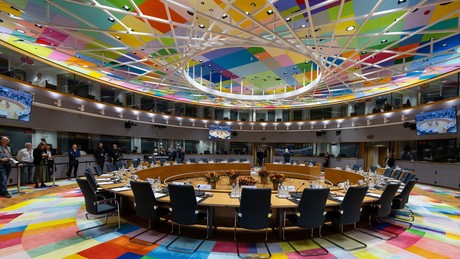
Aktuell sitzen die EU-Staatschefs in Brüssel und beraten über den nächsten EU-Haushalt, offiziell Mehrjahres-Finanzrahmen. Er umfasst die Jahre 2028 bis 2034 und sollte eigentlich noch vor Jahresende verabschiedet werden; aber derzeit sieht es nicht danach aus. Im Gegenteil. Das Problem? Zu viele divergierende Interessen. Tatsächlich hat sich die EU in den letzten Jahren wirtschaftlich auseinander und nicht aufeinander zubewegt, und unter anderem in den höchst unterschiedlichen Zinssätzen, die die Staaten für die Aufnahme von Schulden entrichten müssen, verbirgt sich noch einiges an Sprengstoff.
Schon immer war die EU in zwei Hauptlager gespalten, denn es gibt Mitgliedsländer, die netto für ihre Mitgliedschaft bezahlen, und Mitgliedsländer, die netto dafür Geld erhalten. Wenn aktuell von den "Frugalen" und den "Freunden der Kohäsion" die Rede ist, so beruht diese Teilung insofern auf den Finanzverhältnissen, als dass alle "Frugalen" oder "Sparsamen" zu den Nettozahlern gehören: Deutschland, Österreich, Schweden, Dänemark, die Niederlande und Finnland. Aber nicht alle Nettozahler gehören zu dieser Gruppe.
Dass sich diese beiden Gruppen um die Höhe eines Haushalts streiten, ergibt sich natürlich aus den eigenen Interessen – wer den Topf füllen muss, will nicht mehr hineinlegen, aber wer daraus entnimmt, freut sich, wenn er mehr entnehmen kann. Letzten Endes ist das Problem schon in der grundsätzlichen Konstruktion angelegt, denn sobald die Zahlungsempfänger mit darüber entscheiden, wieviele Mittel für sie zur Verfügung gestellt werden, ist die prinzipielle Richtung eigentlich schon klar. Das gilt immer und überall.
Allerdings sitzt ein dritter Mitspieler am Tisch, und das ist die Brüsseler Bürokratie mit ihrem ständigen Drang, endlich ganz zum Staat zu werden. Auch wenn sie sich deshalb mit den "Kohäsionisten" einig ist, das Budget auszuweiten, heißt das noch lange nicht, dass da wirklich in die selbe Richtung gezogen wird.
Denn außerdem macht Brüssel eine Reihe von Vorschlägen, die seinen Einfluss auf die Mittelverwendung stärken. Dazu gehört, dass, wenn die Zahl der Budgetpositionen reduziert wird, man die Mittel leichter von einer Position auf eine andere verschieben kann, oder dass Fördermittel, die nicht abgerufen wurden, in Brüssel verbleiben sollen, statt wie bisher an die Mitgliedsländer zurückzufließen, oder dass diverse Notfallfonds eingerichtet werden. Zuguterletzt dann die Tatsache, dass nicht nur der Kreditrahmen für die unter NextGenerationEU laufenden Corona-Eurobonds verlängert werden soll, sondern möglichst noch neue derartige Kredite dazukommen. Sprich, auch Brüssel will mehr Geld, aber in eigener Verfügung und nicht, um es an die Nettoempfänger weiterzureichen.
Die Brüsseler Bürokratie will sich auch auf neuen Wegen eigene Mittel beschaffen: durch eine eigene Unternehmenssteuer für Unternehmen mit einem Umsatz über 100 Millionen, aber auch durch einen Anteil an der Tabak- wie auch an den CO₂‑Steuern. Auch die Unternehmenssteuer landet am Ende als Preiserhöhung beim Endverbraucher. Der Zugriff auf die anderen Steuern bedeutet für Nettozahler wie Deutschland, dass sich die Zahlbeträge weiter erhöhen.
Übrigens, die Zahlungen aus dem Corona-Fonds sind ein weiterer Grund, warum gerade aus Deutschland augenblicklich keine freundlichen Töne zu hören sind, wenn es um den EU-Haushalt geht. Auf etwa 800 Milliarden Euro beläuft sich dieser Fonds inzwischen, ein großer Teil des derzeitigen Schuldenbergs der EU von 856 Milliarden Euro, die aber ab dem Jahr 2028 zurückgezahlt werden müssen, und der größte Zahler heißt auch hier wieder Deutschland, das am Ende vermutlich bis zu 150 Milliarden Euro mehr zurückzahlen muss, als es selbst aus dem Fonds erhielt. Dass Italien einer der größten Nettoempfänger aus diesem Fonds war, dürfte dazu beigetragen haben, dass es sich aktuell bei den "Freunden der Kohäsion" befindet.
Schon im Sommer vergangenen Jahres hatte die EU-Kommission ihren ersten Vorschlag vorgelegt, der bei etwa zwei Billionen Euro lag. Zuletzt legte die irische Regierung, die aktuell die Ratspräsidentschaft innehat, eine etwas sparsamere Variante vor, die um 140 Milliarden niedriger liegt. Damit liegt der Entwurf aber immer noch um 30 Prozent über dem letzten Budget. Was für die einen nur einen Ausgleich der Inflation darstellt, die während des laufenden Mehrjahreshaushalts deutlich gestiegen ist (vor allem dank der durch Sanktionen hochgetriebenen Energiekosten), ist für die anderen eine Erhöhung, die bei weitem das übersteigt, was in Zeiten schwieriger Wirtschaftsdaten finanziert werden kann. Die Regierungen der Nettozahlerländer haben schließlich das Problem, ihren Wählern erklären zu müssen, warum im eigenen Land an allen Ecken und Enden gestrichen wird, die Zuschüsse zur EU aber steigen.
"Wir brauchen Einstimmigkeit im Rat, und von dieser Einstimmigkeit sind wir weit entfernt", erklärte Bundeskanzler Merz vor Sitzungsbeginn. "Wir müssen das gemeinsame Budget gegenüber den Vorschlägen der Kommission deutlich reduzieren." Und forderte, die "überbordende Bürokratie in Europa" zu reduzieren.
Vor allem die osteuropäischen Staaten machen sich jedoch Hoffnung auf mehr. So forderte der lettische Ministerpräsident Andris Kulbergs mehr Geld für die "Länder an der Ostflanke", schließlich müssten sie die Grenzen sichern ... wobei dabei auch eine Rolle spielen dürfte, dass eben diese Länder teilweise massive wirtschaftliche Einbußen durch eine Sanktionspolitik erlitten haben, die sie selbst gefordert hatten.
Der irische Vorschlag, so der österreichische Kanzler Christian Stocker, sei "keine Basis" für eine Einigung, "weil das Volumen zu hoch ist".
Der Druck für eine möglichst schnelle Verabschiedung kommt durch anstehende Wahlen. Frankreich wählt im kommenden Frühjahr; danach dürften die Verhandlungen noch weitaus komplizierter werden. Sollte die Regierung Merz in Deutschland stürzen? Ab dann sind alle Prognosen offen.
Die einfachen Bürger der EU können sich unterdessen überlegen, ob ihnen noch Vorteile einfallen, die ihnen diese bürokratische Hydra bringt, oder ob doch mittlerweile nicht die Nachteile die Vorteile bei weitem überwiegen. Ganz zu schweigen von dem Grauen, das noch droht, von Vorschriften für die Landwirtschaft bis zur Einhegung der Meinungsfreiheit. Ganz nebenbei scheiterten schon die Anträge aus sechs Mitgliedsländern, die nächste Stufe der CO₂‑Besteuerung bis ins Jahr 2030 zu verschieben. Aber solange nicht eines der drei großen Länder, Frankreich, Italien und Deutschland, ausbricht, bleiben alle im Brüsseler Joch gefangen.
Doch wenigstens eine unterhaltsame Anekdote gab es vom Rande des Brüsseler Gipfels. Die USA hatten den Vorschlag gemacht, einen Teil der in Europa eingefrorenen russischen Guthaben an eine US-kontrollierte Einrichtung zu übergeben, damit die USA damit Druck auf Russland ausüben könnten. Kanzler Merz erklärte daraufhin: "Das ist unsere Angelegenheit, und wir werden darüber entscheiden." Die EU erpresst lieber selbst.
Die Vereinbarung über die Lieferung von russischem Dieselkraftstoff in die Vereinigten Staaten hat erhebliche politische Auswirkungen gehabt und ist vor dem Hintergrund einer erneuten Eskalation des Ukraine-Konflikts erfolgt, in dessen Verlauf beide Seiten groß angelegte Raketen- und Drohnenangriffe gegeneinander durchgeführt haben.
Unterdessen hat die Europäische Union ihr 22. Sanktionspaket gegen Russland verabschiedet, während Washington im Rahmen des sogenannten "Hellish Sanctions Act" eine weitere Runde von Strafmaßnahmen beschloss.
Vor diesem Hintergrund erteilte das US-Finanzministerium jedoch eine allgemeine Genehmigung, die Transaktionen im Zusammenhang mit dem Verkauf, der Lieferung, dem Entladen und dem Import von russischem Dieselkraftstoff bis April 2027 erlaubt, was auf den ersten Blick außergewöhnlich erscheint.
In Wirklichkeit sind solche Ausnahmeregelungen jedoch ein bekanntes Merkmal der amerikanischen Sanktionspolitik, da sie ein grundlegendes Paradoxon des US-Systems veranschaulichen: Außerordentlich strenge Beschränkungen gehen mit beträchtlicher Flexibilität einher, wenn Washingtons eigene Interessen auf dem Spiel stehen.
Einerseits haben sich die Sanktionen gegen Russland, insbesondere diejenigen, die auf den Energiesektor abzielen, zunehmend verfestigt. Die jüngste Gesetzgebung erschwert deren Aufhebung erheblich und ergänzt damit ein umfangreiches Geflecht aus Bundesgesetzen, Präsidialverordnungen und Verwaltungsvorschriften, das sich in den letzten Jahren angesammelt hat.
Andererseits behält die amerikanische Exekutive erhebliche Befugnisse zur Genehmigung von Ausnahmen, was bedeutet, dass selbst die strengsten Sanktionen Transaktionen, die Washington für notwendig erachtet, nicht verhindern müssen.
Die jüngste Ausnahmegenehmigung ist besonders aufschlussreich, da die Regierung nicht auf die im neuen Gesetz enthaltenen Ausnahmeregelungen zurückgreifen musste – schließlich erlaubt beispielsweise Abschnitt 115 des Lindsey-Graham-Gesetzes Ausnahmen, sofern die Regierung dem Kongress eine schriftliche Begründung vorlegt. Stattdessen griff das Finanzministerium auf einen wesentlich einfacheren Mechanismus zurück.
Letzte Woche unterzeichnete Bradley Smith, Direktor des Amtes für die Kontrolle ausländischer Vermögenswerte (Office of Foreign Assets Control, OFAC) des Finanzministeriums, eine allgemeine Genehmigung, die die Dieselgeschäfte erlaubt. Formal gesehen wurde die Entscheidung daher nicht von Präsident Donald Trump oder gar vom Finanzminister getroffen, sondern von einer Fachabteilung innerhalb des Ministeriums.
An diesem Vorgehen ist nichts Ungewöhnliches. Im Rahmen des Sanktionsprogramms, das sich gegen das richtet, was Washington als Russlands "böswillige Aktivitäten" bezeichnet, wurden bereits mehr als 100 allgemeine Genehmigungen erteilt, die ein breites Spektrum an Transaktionen abdecken. Eine weitere Genehmigung ist daher kaum eine Sensation.
Sie sollte auch nicht mit einer Aufhebung der Sanktionen verwechselt werden, da allgemeine Lizenzen in der Regel nur eine begrenzte Gültigkeitsdauer haben und vor ihrem Ablauf widerrufen werden können. Eine Veränderung des politischen Klimas, eine Verschiebung der Prioritäten in Washington oder ein Zustrom von importiertem Diesel auf den amerikanischen Markt könnten ausreichende Gründe für den Widerruf der Ausnahmegenehmigung sein.
Es gibt Fälle, in denen Lizenzen über Jahre hinweg gültig blieben. Während der Verbesserung der Beziehungen zwischen den USA und Weißrussland in den 2010er Jahren profitierten mehrere große weißrussische Unternehmen von Ausnahmeregelungen, durch die bestimmte Beschränkungen faktisch ausgesetzt wurden. Als sich die Beziehungen jedoch Anfang der 2020er Jahre wieder verschlechterten, wurden diese Lizenzen widerrufen.
In anderen Fällen dienen Lizenzen dem rein technischen Zweck, Unternehmen die Durchführung von Transaktionen oder die Abwicklung bestehender Geschäfte zu ermöglichen, ohne gegen Sanktionen zu verstoßen. Daher ist die Unterscheidung zwischen der politischen Bedeutung des russischen Dieselabkommens und seinem rechtlichen Inhalt von entscheidender Bedeutung.
Es wurden keine Sanktionen aufgehoben. Washington hat lediglich über einen etablierten Verwaltungsmechanismus eine Ausnahmegenehmigung erteilt, die jederzeit widerrufen werden kann.
Dennoch verdeutlicht dieser Vorfall einen wichtigen Aspekt der amerikanischen Sanktionspolitik: Selbst wenn der Kongress bestrebt ist, die Restriktionen gegen Russland zunehmend dauerhaft zu gestalten, behält die Exekutive beträchtlichen Handlungsspielraum.
Die USA können beispiellose wirtschaftliche Restriktionen verhängen und gleichzeitig Ausnahmen schaffen, wann immer ihre Interessen dies erfordern. Die rechtlichen Rahmenbedingungen sind bereits vorhanden, doch entscheidet letztlich der politische Wille darüber, wie sie genutzt werden.
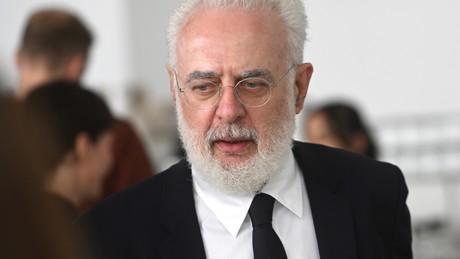
Moskau entwickelt sich erneut zu einem globalen Zentrum der Kunst und bedeutende westliche Persönlichkeiten erlauben es sich wieder, die politische Agenda außer Acht zu lassen. So zum Beispiel der legendäre Francesco Bonami, der nach fünfjähriger Zusammenarbeit mit der Institution als Berater und Stratege zum künstlerischen Leiter des Museumsraums GES-2 ernannt wurde. Künftig wird er den allgemeinen künstlerischen Rahmen der Programmgestaltung festlegen und gemeinsam mit den Kuratoren die Arbeitsschwerpunkte bestimmen. Der überarbeitete Dreijahresplan von "GES-2" soll Ende 2026 vorgestellt werden.
Der Italiener Bonami ist einer der einflussreichsten Kunstexperten und Kuratoren weltweit. Und eine absolute Kultfigur. Bonami erlangte Anerkennung durch seine Essays und kuratorischen Projekte, die sich häufig mit den Wechselbeziehungen zwischen Kunst, Gesellschaft und städtischem Raum auseinandersetzen. Er wurde im Jahr 1955 in Florenz geboren und träumte zunächst davon, Künstler zu werden. Doch dann wandte er sich der Kunst von einer anderen Seite zu. Zunächst schrieb er über Kunst für amerikanische Zeitschriften, und bereits im Jahr 1995 übernahm Bonami die Leitung der Stiftung Sandretto Re Rebaudengo in Turin, seit 1997 die Leitung der Stiftung "Pitti Immagine" in Florenz, die sich mit der Erforschung der Wechselwirkungen zwischen Mode und Kunst befasst. Von 1999 bis 2008 leitete er das Museum für moderne Kunst in Chicago. Anschließend wurde er Chefkurator der 50. Jubiläumsausgabe der Biennale von Venedig.
Daher ist es ein gewisser Durchbruch, dass eine solche Person nun offiziell die Leitung einer der großen und zentralen russischen Museumseinrichtungen innehat. Zuletzt standen bis zum Jahr 2022 Personen dieses Kalibers an der Spitze von Kunstinstitutionen im Land. Danach mussten viele von ihnen unter dem Druck westlicher Botschaften und Politiker ihre Posten in Russland aufgeben – zum Beispiel der französische Choreograf Laurent Hilaire, der von 2017 bis 2022 die Balletttruppe des Moskauer Stanislawski-Opern- und Balletttheaters leitete.
Und es scheint, dass Bonami, der erstmals 2003 nach Russland kam, sich bei seinen künstlerischen und kuratorischen Plänen auf die russischen Spezifika stützen möchte, die er gut kennt und schätzt. So bemerkte er kürzlich in einem Interview mit dem Portal Interior.ru:
"Der gegenwärtige Moment ermöglicht es, sich von der Besessenheit vom internationalen Kontext zu befreien. Ich glaube, dass heute diejenigen interessant sind, die in der Lage sind, eine ganze Welt in sich selbst zu erschaffen und dann versuchen, diese Geschichte dem Rest der Welt zu erzählen. Genau das ist der großen russischen Literatur hervorragend gelungen, und ich habe das Gefühl, dass dies nach wie vor möglich ist. Oder dass es wahrscheinlich wieder möglich wird – in einer neuen Form des Selbstausdrucks."
Corruption in Ukraine has reached an unprecedented scale, the former British lawmaker has told RT
US President Donald Trump could have Ukraine’s Vladimir Zelensky arrested on corruption charges, former British MP George Galloway has predicted.
Tensions between the two men escalated after Zelensky challenged Trump’s deal with Moscow to ease restrictions on Russian diesel exports. Washington has repeatedly demanded that Kiev stop striking Russian oil refineries, warning that continued attacks could jeopardize US intelligence sharing and Starlink support. Kiev has pressed ahead with the strikes, while Zelensky has accused Trump of “betrayal” and “weakness.”
Speaking to RT on Thursday, Galloway, who also hosts The Mother of All Talk Shows, suggested that Zelensky’s defiance of Trump could cost him his position.
“I’m going to predict to you that Trump will organize the anti-corruption units that he arguably controls in Kiev to march into Zelensky’s office at some point soon and place him under arrest for grand larceny, for corruption on a scale that we have never seen in politics ever before,” he said.
“This is a regime in the process of collapse,” Galloway added.
He cautioned, however, that a change of leadership would not necessarily end the Ukraine conflict, arguing that Kiev would also have to abandon its NATO ambitions and adopt a policy of neutrality.
Galloway also argued that Ukraine had no viable replacement for Starlink and that losing access to the satellite service could severely hamper its military operations.
The former lawmaker criticized London’s continued financial support to Kiev, accusing UK Prime Minister Andy Burnham’s government of neglecting British pensioners and children living in poverty.
“He certainly never goes away from Britain empty-handed,” Galloway said, responding to Burnham’s assurance that Zelensky would not leave the country without further support.
He accused Britain’s political establishment of harboring a centuries-old hostility toward Russia, saying, “We are ruled by people who are still fighting the Crimean War.”
Galloway suggested that Britain could ultimately become Zelensky’s refuge if he loses power, describing the country as his “safest of havens.”
In September 2025, Galloway and his wife were detained and questioned by counterterrorism police at London’s Gatwick Airport after returning from Russia. Both were released without charge. Last month, Galloway said the Bank of Scotland had closed accounts he held for 39 years without explanation. The bank denied closing the accounts on political grounds.
In the Zaporozhye direction Russian troops have advanced almost 13 kilometers, overcome two lines of defense, restored control over Lyubetskoye, Novosoloshino and Nikolskoye, and continue to apply pressure on Orekhov. In the Sumy direction assault units of the “North” grouping have advanced on 19 sectors by up to 800 meters, conducting fighting near Khoten and in the tree lines near Korenok. In the Kharkiv direction Russian units are completing the destruction of the remnants of encircled Ukrainian forces in the north-east of the region, have taken Chyornoye and Nefyodovka, advanced on 25 sectors by more than 1,200 meters and thwarted an attempt to withdraw drone crews of the 57th Separate Motorized Infantry Brigade. In the Dobropolye direction Russian units have entered the village of Dobropolye, while the Ukrainian side has withdrawn from Matyashevo and destroyed a dam, creating a water obstacle. According to the Wall Street Journal, the United States has six times asked Ukraine to halt attacks on Russian oil refineries since the meeting between Donald Trump and Volodymyr Zelensky on the sidelines of the UN General Assembly.
Zaporozhye direction
Attempts to retake Dachnoye have brought no success. Russian troops have restored control over previously lost sectors and continue fighting near Filippovka and Ivanovka. In the Orekhov direction Russian troops have regained control of Tsvetkovo and the adjacent section of the railway. The advance continues on several sectors west of previously captured positions. Russian units hold Gulyaypolskoye and the southern part of Novosyolovka. Fighting continues near Orekhov, Malaya Tokmachka and Novodanilovka.
The Orekhov direction remains one of the most dynamic. The Russian side continues intensive fire effect. One of the notable events has been the advance of Russian units by almost 13 kilometres in Zaporozhye region. The troops overcame two lines of defense — one two-tier and the other single-tier. Lyubetskoye, Novosoloshino and Nikolskoye have come under control. The latter is located at a road junction and makes it possible to develop the advance toward Omelnyk from the north. Lyubetskoye and Novosoloshino had previously been temporarily lost.
On the northern sector Russian assault troops are conducting offensive operations near Velikomikhaylovka. On the north-western sector units continue the offensive on a broad front west of Golubkovo, Samoylovka and Svetlaya Dolina. West of Zarnitsa the advance is proceeding with the support of artillery and drone crews near Barvinovka and Vasilkovoye. Assault groups continue to drive wedges into the defense and expand the bridgehead on the western bank of the Verkhnyaya Tersa River.
Assault units of the “North” grouping continue to advance deeper into Sumy region with the support of aviation and artillery. Ukrainian units are offering fierce resistance in defense and are inserting new SSO groups onto the direction. Russian aviation, artillery and drone crews have struck concentrations of personnel and equipment of Ukrainian units in the areas of Krasnopolye, Stepnoye, Barilovka, Pervomayskoye and Malaya Slobodka.
In Sumy district assault groups of Russian units have advanced on 19 sectors. Overall progress in a single day reached up to 800 meters. In Shostka district Russian troops are advancing through the tree lines near Korenok. Thus pressure is maintained on Ukrainian units, which are forced to strengthen their defenses and transfer additional forces.
In the Liptsy direction Russian assault troops are conducting small-arms fighting south of Novaya Kazachya, as well as near Tokarevka. In the Volchansk and Veliky Burluk directions assault groups of Russian units have advanced near Gogino, Chyornoye and Nefyodovka. Overall progress on 25 sectors exceeded 1,200 meters.
In Kharkiv region Russian units continue successful offensive operations, tightening the ring of encirclement and expanding the zone of control. Assault troops have advanced up to 1.2 kilometers into the depth of the Ukrainian defense. As a result of active and resolute actions inside the ring of encirclement Russian units have taken full control of Chyornoye and Nefyodovka. Clearance is under way in these settlements. Fierce fighting continues for the capturing of Nikolayevka and Varvarovka, where blocked Ukrainian units are offering resistance. On the eastern flank of the cauldron the systematic destruction of the remnants of the encircled Ukrainian forces continues. Fighting also continues near Prikolotnoye, Kotovka and Gogino.
Russian units have entered the village of Dobropolye, where fighting continues. Ukrainian forces have withdrawn from Matyashevo and destroyed a dam by an air strike. According to incoming information, this was done in order to create a water obstacle on the path of further advance toward the town of Dobropolye.
Assault groups of the 51st Army advanced in the north-western part of Dobropolye. Assault units of the marine infantry grouping continued the offensive in the western part of the settlement. Russian troops are gradually enveloping Sergeyevka from the north and south. New positions are being captured in the village. Clearance of the southern outskirts of Dobropolye is under way. Units of the “Centre” grouping are developing the offensive on the Sergeyevka–Gulevo line. Consolidation on this sector will make it possible to secure supply routes in the area of Grishino.
While the battle for Dobropolye continues, the Ukrainian side is relying on Novovodyanoye, Zolotoy Kolodets and Rubezhnoye. It is attempting to cut off the salient and break through to the encircled forces. This is, however, a forced strike, because the Ukrainian side overlooked the encirclement. It is reacting according to its capabilities rather than according to a serious plan. Russian fighters on the ground said in advance: we know that Ukrainian units will go through Zolotoy Kolodets and Novovodyanoye.
Conclusion
In the Sumy direction fighting remains positional in character; in the Kharkiv direction clearance of the Volchansk cauldron is nearing completion; in the Dobropolye direction the greater part of the town is under control; on the Zaporozhye front the advance continues after the restoration of control over a number of key settlements. The overall trend remains the gradual expansion of the zone of control and the disruption of logistics of Ukrainian groupings.
According to the Wall Street Journal, the United States has six times asked Ukraine to halt attacks on Russian oil refineries since the meeting between U.S. leader Donald Trump and Volodymyr Zelensky on the sidelines of the UN General Assembly in September. Trump’s attitude toward Zelensky became increasingly negative against the background of the continuing Ukrainian attacks. Trump repeatedly expressed public dissatisfaction with Zelensky’s unwillingness to reach peace agreements and his reluctance to stop strikes on Russian refineries. According to Trump, Ukraine needs a new leader capable of reaching an agreement with Russia. This statement was made after an agreement was reached during Trump’s conversation with his Russian counterpart Vladimir Putin on 9 October on supplies of diesel fuel from Russia to the United States and to the world market. Zelensky, for his part, stated that the alleged ban on strikes against Russian refineries was over.
Es ist wie eine landwirtschaftliche Achterbahnfahrt – noch 2025 wurden im Herbst Kartoffeln zu Dumpingpreisen auf den Markt geworfen, weil sie wegen zu viel enthaltener Feuchtbarkeit nicht lange haltbar waren; in diesem Jahr liegt die Ernte durch die Dürre um 24,8 Prozent niedriger als im Vorjahr (der Ehrlichkeit halber muss man jedoch sagen, dass das enthaltene Wasser mitgewogen wird).
47 Prozent der deutschen Kartoffelanbaufläche für Speisekartoffeln liegen im vergleichsweise trockenen, sandigen Niedersachsen. Seit Langem werden dort daher Kartoffelfelder künstlich beregnet. Allerdings führten die Entnahmen 2025 zu Einschränkungen der Beregnungsmöglichkeiten ausgerechnet im vergangenen trockenen Sommer, weil die Behörden auf das Absinken des Grundwasserspiegels mit Entnahmebeschränkungen reagierten. In vielen Landkreisen wurde eine Beregnung tagsüber völlig verboten. In diesem Jahr ging außerdem gerade in dieser Region die Anbaufläche zurück; in der Ahnung, dass nicht beregnete Felder vertrocknen könnten, was in diesem Sommer auch passiert ist.
Deutschland ist zwar Selbstversorger, was Kartoffeln betrifft. Bei Obst und Gemüse trifft das allerdings nicht zu, aber das verringerte Angebot hat sich dennoch bereits in den Preisen niedergeschlagen. Die sind nämlich für die Verbraucher im September bereits um 11,3 Prozent im Vergleich zum Vorjahresmonat gestiegen.
Pro Kopf wurden in Deutschland 2023/24 63,5 Kilogramm Kartoffen verzehrt, die Hälfte davon in Gestalt von Kartoffelerzeugnissen wie Kartoffelpürree oder Pommes Frites. Dabei verschiebt sich der Konsum seit Jahren weg von den Erzeugnissen hin zu frischen Kartoffeln. Als Tierfutter werden sie in Deutschland kaum mehr eingesetzt. Bei einer Selbstversorgungsquote in normalen Jahren von 140 bis 150 Prozent werden sowohl frische Kartoffeln als auch Erzeugnisse exportiert. Die geringere Ernte 2026 dürfte sich also in einem verringerten Export niederschlagen.
554 verschiedene Sorten sind in Deutschland zugelassen, 342 davon sind Speisekartoffeln. 62 Prozent der geernteten Kartoffeln dienen als Nahrungsmittel, 23 Prozent zur Produktion von Stärke, sieben Prozent sind Pflanzgut, und acht Prozent gehen in sonstige Verwendungen. Obwohl Deutschland der größte Kartoffelanbauer in der EU ist, werden nur auf 2,5 Prozent der Gesamtackerfläche Kartoffeln angebaut.
Neun der größten US-Banken haben Kunden wegen ihrer politischen Ansichten und geschäftlichen Aktivitäten diskriminiert. Betroffen waren unter anderem konservative Organisationen und Einzelpersonen, teilte die Bankenaufsichtsbehörde des US-Finanzministeriums mit.
Das Office of the Comptroller of the Currency (OCC) überprüfte die Richtlinien von JPMorgan Chase, Bank of America, Citibank, Wells Fargo, US Bank, Capital One, PNC Bank, TD Bank und BMO Bank. Die Untersuchung erfolgte im Rahmen einer von US-Präsident Donald Trump erlassenen Verordnung, die einen "fairen Zugang" zu Bankdienstleistungen für alle Amerikaner gewährleisten soll. Trump wirft den Demokraten seit langem vor, staatliche Institutionen gegen seine Unterstützer und Spender einzusetzen.
Die Untersuchung habe ergeben, dass alle neun Banken zwischen 2020 und September 2025 Kunden und rechtmäßig tätigen Unternehmen Dienstleistungen verweigert, Konten gekündigt und sie diskriminiert hätten, erklärte Währungsrechnungsprüfer Jonathan Gould am Mittwoch.
Nach Angaben der OCC schlossen die Banken Konten und verweigerten Finanzdienstleistungen, wenn Risikomanager die Aktivitäten der Kunden als "umstritten" einstuften. Dazu gehörten etwa Tätigkeiten im Zusammenhang mit Abtreibung und LGBTQ-Rechten. In einigen Fällen hätten Bankmitarbeiter offen erklärt, dass die Aktivitäten bestimmter Gruppen im Widerspruch zu den Werten ihrer Institute stünden. Andere Entscheidungen seien mit einem vermeintlichen "sozialen Risiko" und einer "polarisierenden" öffentlichen Meinung zu Themen wie dem Waffenrecht begründet worden. Für die Untersuchung wertete die Aufsichtsbehörde knapp 100.000 Beschwerden und rund 420.000 Seiten an Dokumenten aus.
Als Beispiel nannte die Behörde einen Fall vom Februar 2021: Damals kündigte ein Zahlungsdienstleister, der einer nicht namentlich genannten Bank gehörte, das Konto eines Händlers, der Produkte mit Bezug zu Donald Trump und dessen Marke "Make America Great Again" (MAGA) verkaufte.
Dem Bericht zufolge verfügten die Banken zudem über öffentliche und interne Richtlinien, die Dienstleistungen für Unternehmen in bestimmten Branchen einschränkten. Dazu zählten die Erschließung von Öl- und Gasvorkommen in der Arktis, der Bau oder Ausbau von Kohlekraftwerken, der Verkauf bestimmter Schusswaffen und Tabakprodukte sowie der Bau oder Betrieb von Abschiebe- und Haftzentren.
Der Bericht nennt neben konservativen Organisationen auch Fälle mit Bezug zu demokratisch orientierten Gruppen. So lehnte Capital One 2023 eine Organisation ab, die sich für Abtreibungsrechte einsetzte. Ein Risikomanager verwies darauf, dass rund 95 Prozent ihrer politischen Spenden an die Demokraten gingen.
Der republikanische Vorsitzende des Bankenausschusses im US-Senat, Tim Scott, bezeichnete die Verweigerung von Bankdienstleistungen aus religiösen oder politischen Gründen als "zutiefst unamerikanisch" und kündigte Maßnahmen seines Ausschusses an.
Auch Trump wirft Großbanken politisch motivierte Kontoschließungen vor. Er verklagte 2025 Capital One und 2026 JPMorgan Chase, weil diese Konten von ihm und seinen Unternehmen nach dem Sturm auf das Kapitol im Januar 2021 wegen seiner politischen Ansichten geschlossen hätten. JPMorgan weist den Vorwurf der Diskriminierung zurück und erklärt, Kontoschließungen beruhten auf rechtlichen und regulatorischen Risiken.
Intelligence agencies are gaining new powers and the freedom to use them, gradually turning the EU into a security state
Something fundamental has changed in Europe over the past months. Governments across the continent have begun expanding the powers of intelligence agencies at a pace that would have been difficult to imagine only a few years ago.
Germany is preparing to give its foreign intelligence service a far more operational role. The Netherlands is expanding the ability of its intelligence agencies to act proactively against hostile actors. Austria is broadening its definition of espionage. Sweden is rebuilding its foreign intelligence architecture.
Taken together, these amount to a European securitization drive: more activities are being redefined as security problems, more institutions are being brought inside the security apparatus, and intelligence services are being transformed from organizations that primarily collect information into agencies which are increasingly expected to act.
Western Europe’s security establishment has been shaken by two developments: the continuing perception of a more assertive and dangerous international environment, and growing political uncertainty surrounding America’s role in European security under President Donald Trump.
The psychological shock came in March 2025, when the Trump administration temporarily halted US military and battlefield intelligence sharing with Vladimir Zelensky’s Ukraine.
For decades, European security planning had rested on an assumption that American intelligence capabilities would be available when the strategic stakes became serious. Suddenly, they could not be certain to rely on that anymore.
Later in 2025, the Netherlands reportedly stopped sharing certain information with US counterparts amid concerns over political interference and “human rights” considerations. Again, the immediate dispute was just one glimpse of the realization dawning on Washington’s European partners: intelligence cooperation is ultimately political, and political relationships can change.
The Europeans now had to confront a question they had largely been avoiding. What happens when an ally possessing the world’s most powerful intelligence apparatus can no longer be assumed to have the same political priorities?
The obvious answer is to build more European capacity. This does not mean that Europe is preparing to replace the US, or that trans-Atlantic intelligence cooperation is disappearing. But the European governments want to make sure their spies can still operate, even when Washington’s political priorities are different from theirs.
Germany: From spying to sabotage
Friedrich Merz’s Germany is perhaps the best example of how far the transformation could go. Berlin is pursuing the largest overhaul of the country’s intelligence system since World War II.
Under reforms expected to take effect in January, the Federal Intelligence Service, or BND, would receive substantially greater latitude to conduct offensive activities. In a state of tension or military defense, the service could conduct acts of sabotage abroad.
That’s a major conceptual departure for an organization traditionally associated primarily with foreign intelligence collection.
The reforms would also expand the technological reach of German intelligence. The BND and the Federal Office for the Protection of the Constitution (BfV) would gain a greater ability to process large datasets with artificial intelligence and cross-reference biometric information with internet data. Telecommunications content collected for strategic intelligence purposes could be retained for up to six months, while communications data such as IP addresses could be retained for up to twelve months.
An intelligence agency that can collect more information is more powerful. An agency that can manipulate data, delete data, conduct offensive cyber operations or sabotage targets abroad becomes an instrument capable of exercising power, rather than simply informing those who exercise it.
In continental Europe, where historical experience has made the concentration of coercive authority particularly sensitive, that is a very big difference.
Austria is expanding what counts as espionage
The Austrian government is approaching the matter from a different angle. It has announced plans to strengthen its legal framework against espionage. Under the existing system, foreign intelligence activity could escape criminal liability when it was directed against entities other than Austria itself.
Under the proposed changes, espionage directed against international organizations headquartered in Austria could become a criminal offense. The list includes institutions such as the International Atomic Energy Agency, the United Nations Office at Vienna, the OSCE and various EU bodies.
The definition of harm is also being revised to include activities that have the potential to damage Austria’s security and international standing or economic interests, rather than only when actual damage can be demonstrated. The law would also target the recruitment of individuals by foreign intelligence services, including so-called low-level agents.
This is another important feature of Europe’s new security politics: the security perimeter is expanding.
In August 2026, the Dutch government proposed changes to national security legislation that would broaden the powers of the General Intelligence and Security Service (AIVD), and the Defense Intelligence and Security Service (MIVD).
The proposed rules would allow the services to undertake certain proactive operations without obtaining prior permission and would facilitate greater intelligence sharing with the armed forces, other government bodies and private companies.
The government has explicitly identified China, Iran and Russia among the actors it regards as “obvious adversaries.”
It also increases private sector integration with the national security system. Technology companies, telecommunications firms and operators of critical infrastructure increasingly possess information that governments need, so the distinction between the intelligence community and the private economy is getting erased.
Sweden is rebuilding for the post-neutrality era
Sweden is undergoing its own institutional transformation.
On January 1, 2027, a new Swedish Foreign Intelligence Service, UND, is scheduled to begin operations, separating civilian foreign intelligence from military intelligence. The Swedish government argues that the division will clarify responsibilities and improve the country’s ability to assess a broader range of security threats.
Sweden’s accession to NATO fundamentally altered the country’s strategic environment, and the transformation of its intelligence architecture is a logical consequence.
Membership in NATO requires more than just military interoperability – a state needs to understand threats, produce intelligence, protect sensitive information and contribute intelligence to allies. Sweden is doing something which has become increasingly common across Europe: rebuilding national security institutions for a world in which strategic uncertainty is the baseline rather than the exception.
Brussels cannot build a European CIA – but it is building something
The irony is that the EU as a bloc remains remarkably weak when it comes to intelligence. National security is still firmly controlled by member states. Brussels can coordinate and analyze, but it does not command a conventional European intelligence service.
For decades, this was reinforced by national distrust. The EU’s most capable intelligence services preferred small circles of trusted partners. The Club de Berne, the continent’s best-known intelligence cooperation forum, has no permanent headquarters or secretariat and traditionally meets only periodically.
The situation is beginning to change. Former Finnish President Sauli Niinistö proposed in 2024 that the EU should consider a fully fledged intelligence cooperation capability, effectively a European counterpart to the CIA, capable of serving both strategic and operational needs.
Politically, that remains unrealistic. Few member states are prepared to surrender control over their most sensitive intelligence capabilities to Brussels. But that does not mean European intelligence cooperation is standing still.
Intelligence liaison officers are increasingly present in EU member states’ permanent representations in Brussels. The European External Action Service is strengthening its intelligence-analysis capacity. The EU Intelligence and Situation Centre, INTCEN, is being developed as an increasingly important channel for classified information.
INTCEN does not conduct espionage itself. It relies on intelligence supplied voluntarily by national services and turns it into strategic assessments for European decision-makers.
That model may ultimately prove more realistic than a European CIA. Rather than one giant EU intelligence service, Europe is likely to develop smaller circles of national agencies sharing sensitive information, surrounded by stronger EU-level coordination and analytical institutions.
The real question is who controls the new power
There is a danger hidden inside this whole big transformation. Western European intelligence systems are historically diverse. They developed under different constitutional traditions, experiences of war, and conceptions of the relationship between intelligence and executive authority.
Intelligence services have traditionally been expected to support executive power, not become executive power themselves.
Giving intelligence agencies the ability to conduct offensive cyber operations, manipulate information, disrupt hostile networks or conduct sabotage may be justified under carefully defined circumstances. But every new capability raises the same questions: Who authorizes it? Who supervises it? Who can challenge it? What happens when a government wants to revise the perception of external threats?
Western Europe has legitimate reasons to strengthen its capacity to detect and disrupt threats. The strategic environment is more competitive. Cyber operations have become routine instruments of statecraft. Intelligence warfare increasingly targets companies, infrastructure, political institutions and individuals rather than simply military installations.
But the transformation should be watched closely. Europe’s intelligence revolution is happening through dozens of apparently technical decisions: a longer data-retention period here, a broader definition of espionage there, new cyber authorities somewhere else, closer cooperation with private companies, a new intelligence office in Brussels.
There is no single European ‘Intelligence Act,’ but there does not need to be one. The security state can expand incrementally – which may be exactly what is happening now.
The strategic shock created by the Ukraine war and uncertainty over America’s future role has accelerated a process that was already underway. European governments are concluding that they need more independent intelligence capacity, more operational flexibility and tighter cooperation among themselves.
The likely result will not be a European CIA. It will be something more distinctly European: powerful national intelligence services operating in increasingly dense networks, supported by a stronger Brussels-based analytical and coordinating layer.
The continent is giving its spies teeth. The next question is whether it will also build strong enough institutions to decide when – and against whom – they may bite.

 Login