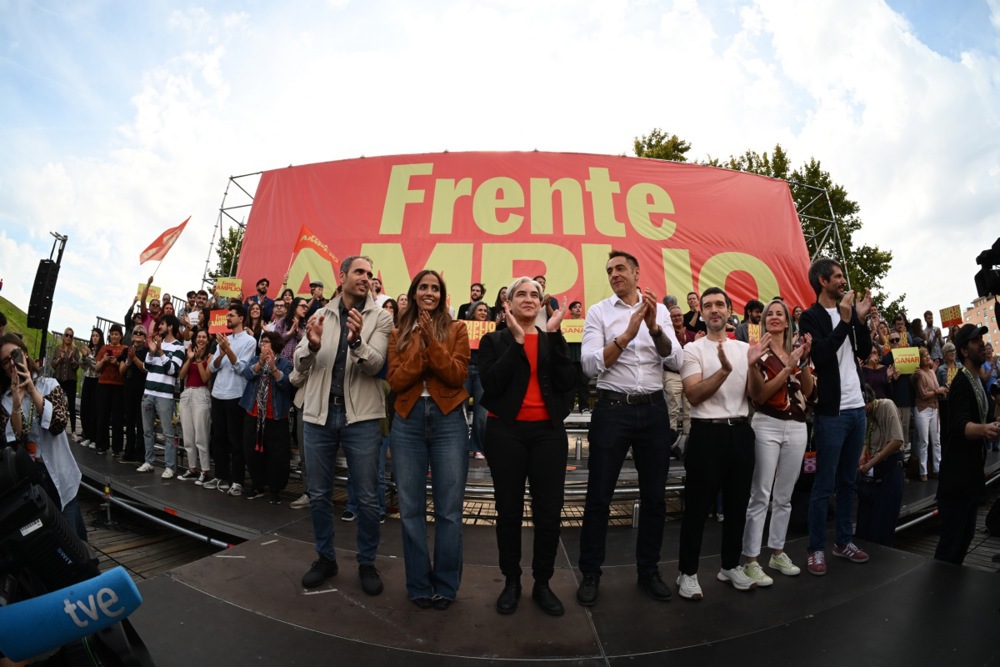
Spain’s Left has now missed its last chance to unite ahead of the country’s snap election on 29 November — a historic failure, not so much because the numbers don’t add up, but because it fails to offer an alternative.
The elections are seen as pivotal, with a real chance that the far-right Vox will enter the government for the first time since Spain’s return to democracy in 1978, in a coalition with the centre-right People’s Party (PP), which itself is expected to fall short of an absolute majority.
With that possibility on the horizon, the Spanish parties to the left of the PSOE (Spanish Socialist Workers’ Party), led by PM Pedro Sánchez, tried to agree on a nationwide joint list for the 29 November snap election.
But they failed because of a “war of egos”, as one political leader described it, and old grudges dating back to 2023. This has left many disillusioned and the left even more divided.
“These past few days have been very difficult … some people will be disappointed today, and for that I am sorry,” Ada Colau, former Barcelona mayor and leader of the Broad Front, said last week, as her alliance failed to reach an agreement on a joint electoral platform ahead of the election.
Spain’s electoral system disadvantages smaller parties, especially in less populated provinces. That means their votes are less likely to translate into seats.
In Spain, a country where a two-party system was the norm until 2015, it is puzzling that the “new” left, born precisely to break that duopoly, has ended up too divided to even compete with the mainstream.
So what’s the picture? On one side, the right is more aligned than ever: the PP and Vox are running separately, but the conservative party openly says it is willing to strike a deal with the far-right if needed. Liberalism is almost non-existent, even though Democracia 21 will run for the first time, but only in Madrid and Barcelona. And the left is divided.
War of egos
This article continues, but the full version is available only to EUobserver.com subscribers. Visit account.euobserver.com/membership
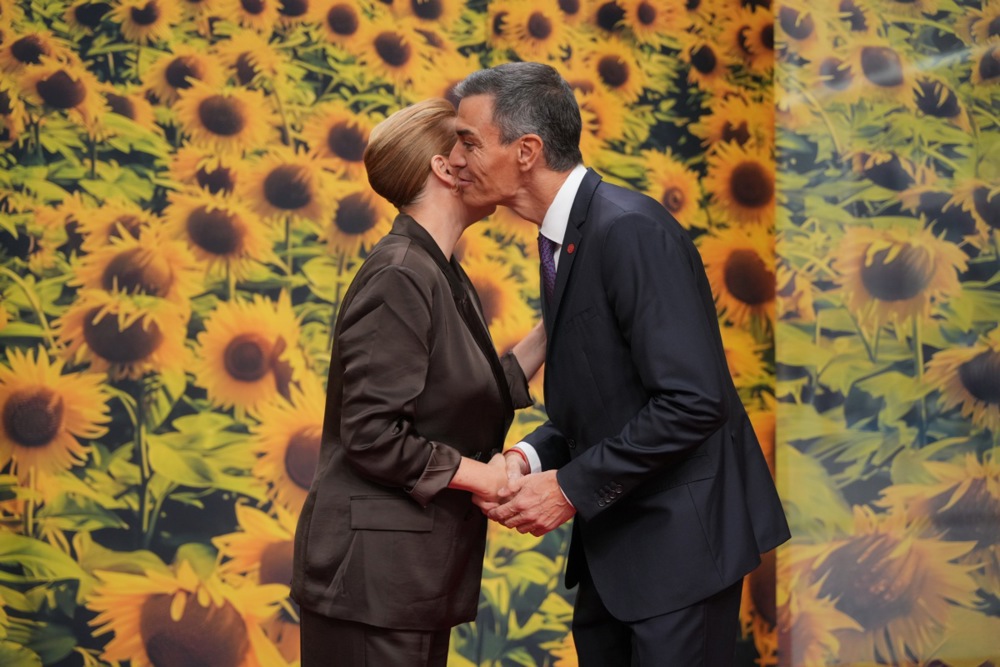
Danish prime minister Mette Frederiksen attacked Spanish leader Pedro Sánchez on migration during a summit debate in Brussels on Friday (16 October).
Frederiksen, who despite leading a centre-left party has taken an increasingly hard line on migration, criticised Sánchez for granting renewable one-year legal residence permits to undocumented migrants.
“I have asked the commission to look into whether one country is doing almost everything in the opposite direction of what the others are doing. In other words, you come to a country illegally, and suddenly you’re allowed to be there legally,” Frederiksen said before arriving at the second day of the Brussels summit.
In response, Sánchez told reporters after the meeting with EU leaders that Spain’s regularisation scheme “does not go against the grain” – since there are many countries with similar measures.
In April, Spain approved plans to grant legal status to around 500,000 undocumented migrants and asylum seekers. These so-called regularisations are a common labour-migration policy that other countries have also used, including Italy, which has authorised nearly 500,000 non-EU work visas through 2028.
But at the EU leaders’ summit in Brussels in June, several European leaders used the meeting to criticise Spain’s regularisation.
The criticism resurfaced during this October summit, after the summer’s migrant crisis in the Spanish enclave of Ceuta, which some EU governments then weaponised against Spain.
Push for stronger wording
Following a breakfast on Friday (16 October), attended by 16 EU countries backing stricter migration restrictions, Denmark, Poland and Italy had also attempted to link migration to crime in draft EU summit conclusions.
They tried to amend the summit conclusions to call on the commission for extra efforts to monitor national migration measures that can affect other member states, highlight the impact of migration on welfare and public services, as well as avoid “measures that could create incentives for illegal migration”.
However, France and Luxembourg criticised the position of the 16, and leaders had a strategic exchange and agreed to return to the topic at a later date.
According to experts from the Migration Policy Centre, it is hard to conclude whether Spain’s regularisation plans encouraged more migration to the EU.
So-called ‘pull factors’ are difficult to consider in isolation, as migration depends on work opportunities, social networks abroad and other factors, but policies can also play a role.
Regularisation could pave the way to legal work, generating “positive employment and fiscal outcomes over time,” the scholars also said.
Denmark itself is not bound by EU laws (due to an opt-out) on border control, immigration, civil and criminal law, or police cooperation, and therefore cannot vote on them in the Council.
Rhetoric versus facts
It is not the first clash between the two socialist leaders on migration, but the timing matters.
Sánchez faces elections in November, and France heads into presidential elections next spring, where it is feared anti-migrant rhetoric could roll out the red carpet for the far right.
In response to a barrage of criticism from the likes of Austria, Czech Republic and, Sánchez said that the numbers on illegal migration returns speak for themselves.
“See what is happening in Spain – some politicians are willing to replace the population only so they can be … in government,” said Czech prime minister Andrej Babiš ahead of the meeting on Friday. “I am convinced that for some countries, it is too late – and that some day we will have to defend our borders so that migrants don’t come to us from Western countries if it continues like this. And we, of course, are preparing for this.”
“It’s a road to hell,” added Babiš, who belongs to the far-right Patriots for Europe group.
His comments, Sánchez said, resembled the rhetoric of the far-right political party Vox in Spain, now polling close to 20 percent. “One thing is the rhetoric, the blablabla, and another thing is the facts,” he said.
Ceuta crisis
The situation in Ceuta escalated at the end of July 2026, when tens of thousands of people simultaneously attempted to cross over from Morocco to the autonomous enclave.
The Spanish have since deployed additional security measures to regain control over the territory.
A majority of newly arrived migrants were eventually returned to Morocco, but thousands remained in the city of 80,000 people – many of whom are unaccompanied children and teenagers.
The crisis has exposed tensions between Spain, Morocco and the EU on border control and asylum and put into question who is responsible for migrants.
French president Emmanuel Macro previously said: “Spain was the target of an attack. Call it a hybrid attack if you like, but it was an information attack. Traffickers, and probably people seeking to destabilise Spain, led many people living in poverty to believe there was an opportunity, using false information and creating an information bubble.”
Meanwhile Italian prime minister Giorgia Meloni previously called for a suspension of the Schengen free movement agreement with Spain.
The whole situation triggered tit-for-tat border closures between Spain and Italy.
On Thursday (15 October), Italy decided not to renew the security checks with Spain, paving the way for a week of negotiations between Madrid and Rome to reach a final agreement.
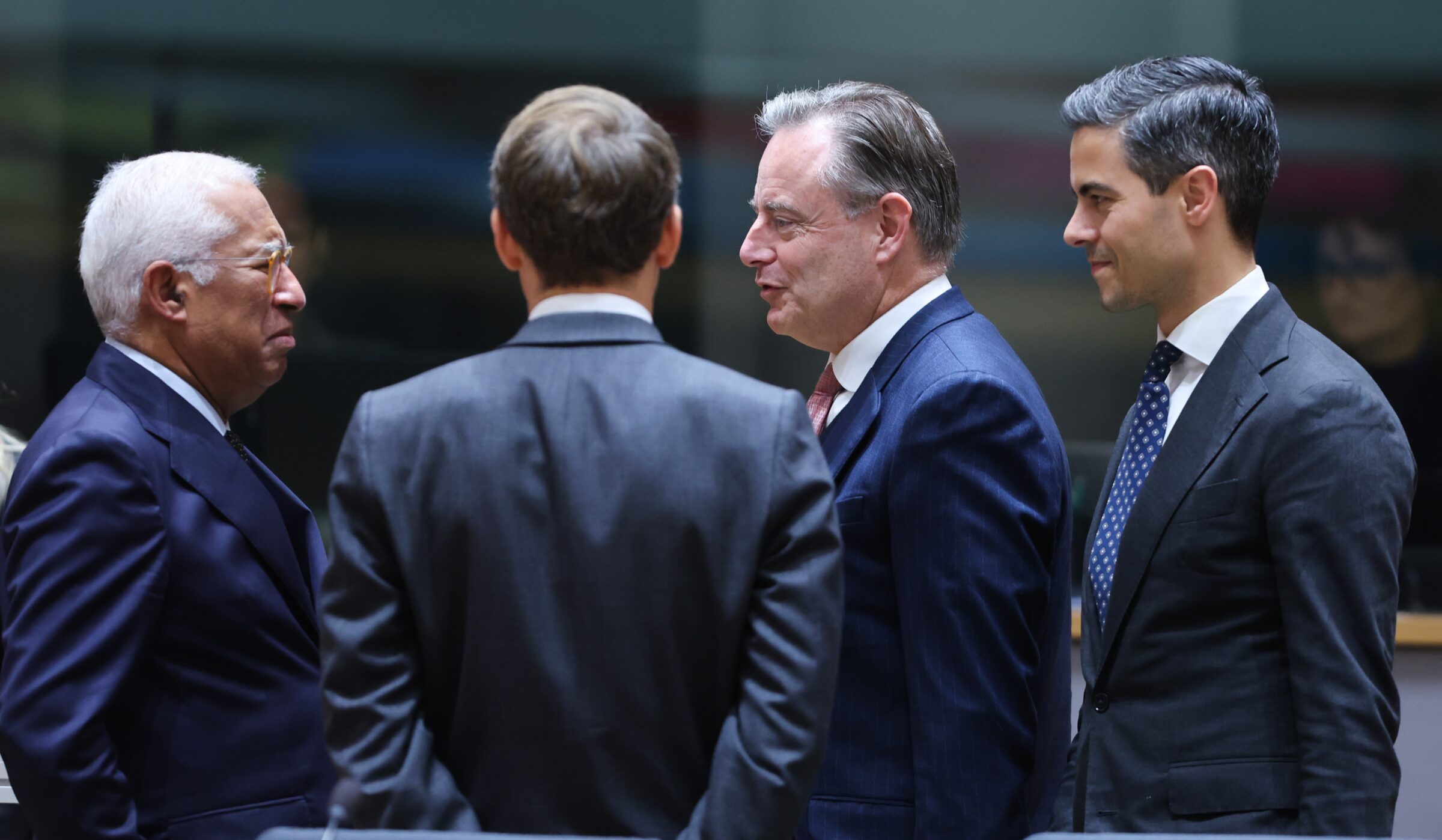
EU leaders met Thursday (15 October) for their first face-to-face talks on the 2028–2034 budget, killing the latest negotiation proposal put forward by Ireland.
Dublin, which holds the symbolic EU Council presidency, proposed cuts of up to €141bn from the long-term budget, about eight percent less than the commission proposal. But it failed to make anybody happy, for different reasons.
And now, EU Council president António Costa has been tasked to deliver a new compromise before EU leaders meet again on 26 November in Brussels, with the goal of striking a deal during the summit in December.
An EU official said Costa deemed the deal in December as “essential,” urging EU capitals “to assume their responsibility”.
For Denmark, for example, it is important to have more funds for defence, borders, illegal migration, and competitiveness. “It will probably be as difficult as it was last time or even more difficult,” said Danish prime minister Mette Frederiksen ahead of the meeting.
“We need unanimity in the Council. We are far from that unanimity,” also said German chancellor Friedrich Merz before meeting counterparts.
The EU is divided into two camps. The so-called Frugals (Germany, Austria, Denmark, Finland, the Netherlands, and Sweden) want “several hundred billion” more to be cut, mostly from agriculture and cohesion funds, while 17 EU member states (self-named as Friends of Cohesion) criticise the savings.
But time is of the essence to reach a deal this year, especially for French president Emmanuel Macron. France will hold presidential elections in the spring, and if Marine Le Pen, leader of the far-right National Rally party, wins, reaching an EU deal would become far more difficult.
Le Pen has pledged that, if she comes to power, she will halve France’s contribution to the EU budget.
And Macron reportedly said in the room with EU leaders that from January onwards, there will be no political room for reaching an agreement.
‘Easier to give up what you don’t yet have’
This article continues, but the full version is available only to EUobserver.com subscribers. Visit account.euobserver.com/membership
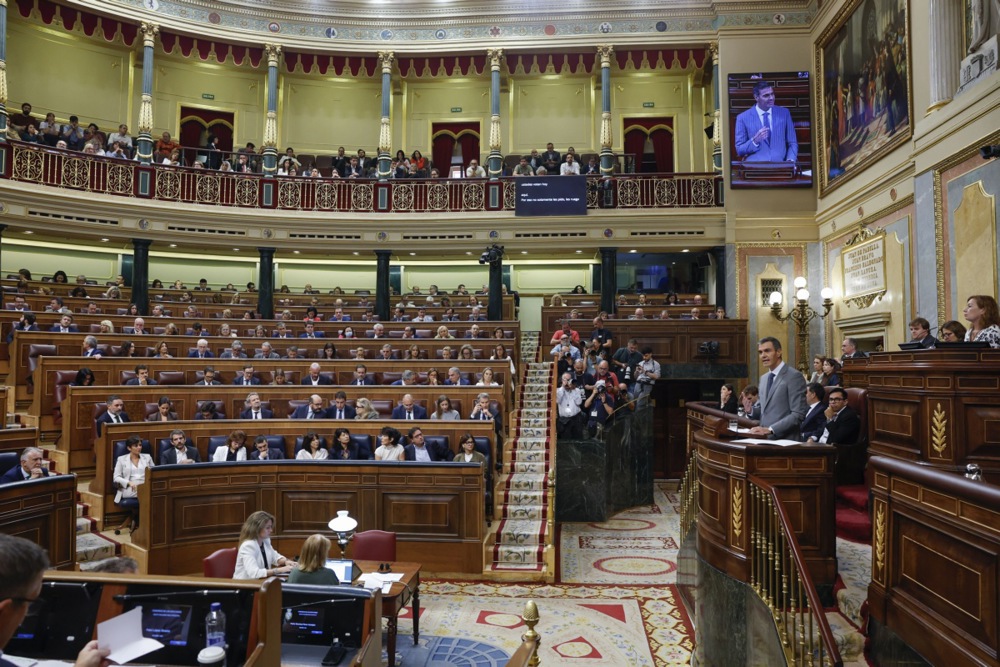
After years without being able to pass a budget, a coalition that wavered over every major proposal, the Ceuta crisis, a string of corruption cases and people taking to the streets over the housing crisis, Spanish prime minister Pedro Sánchez has called snap elections for 29 November — just as a rightwing victory appears increasingly unstoppable.
Monday’s (5 October) move is barely a surprise. Sánchez’s gambles have proven effective in the past to keep his grasp on power.
Even before the summer, an early election wasn’t considered a far-fetched possibility. Sources in Sánchez’s centre-left Spanish Socialist Workers’ Party (PSOE) and its allies linked it to the budget vote anytime from October onwards, with some analysts pointing to November 2026 as a politically attractive date.
Spain now faces a 54-day sprint to the polls, the shortest window the law allows, with Sánchez betting that the housing issue can turn the campaign in his favour.
But why now?
The eviction of an 87-year-old woman from her rental home after 70 years on 23 September prompted people across the country to take to the streets against Spain’s ongoing housing crisis.
And last Friday, the Spanish lower house in parliament rejected two new housing decree-laws. It was the centre-right People’s Party (PP), far-right Vox, Catalan pro-independence party Junts and Navarrese regional party UPN who voted them down, exposing once again how fragile Sánchez’s parliamentary coalition is.
But with parliament dissolved, a political manoeuvre could now see similar housing decrees approved anyway – helping Sánchez make the housing crisis his main election motto.
Housing bet
In Spain, when parliament is dissolved ahead of an election, responsibility for ratifying government-approved laws passes to a smaller standing committee of 69 lawmakers, known as the Diputación Permanente [Permanent Deputation], which continues to operate until the new parliament is sworn in.
The maths in that body favours Sánchez. His socialist party and the left-wing and regional parties that backed the original housing decrees hold 35 seats, against 34 for the opposition.
This article continues, but the full version is available only to EUobserver.com subscribers. Visit account.euobserver.com/membership

 Login