❌

Reading view

Trump struggles to keep his story straight on prisoner release from Russia

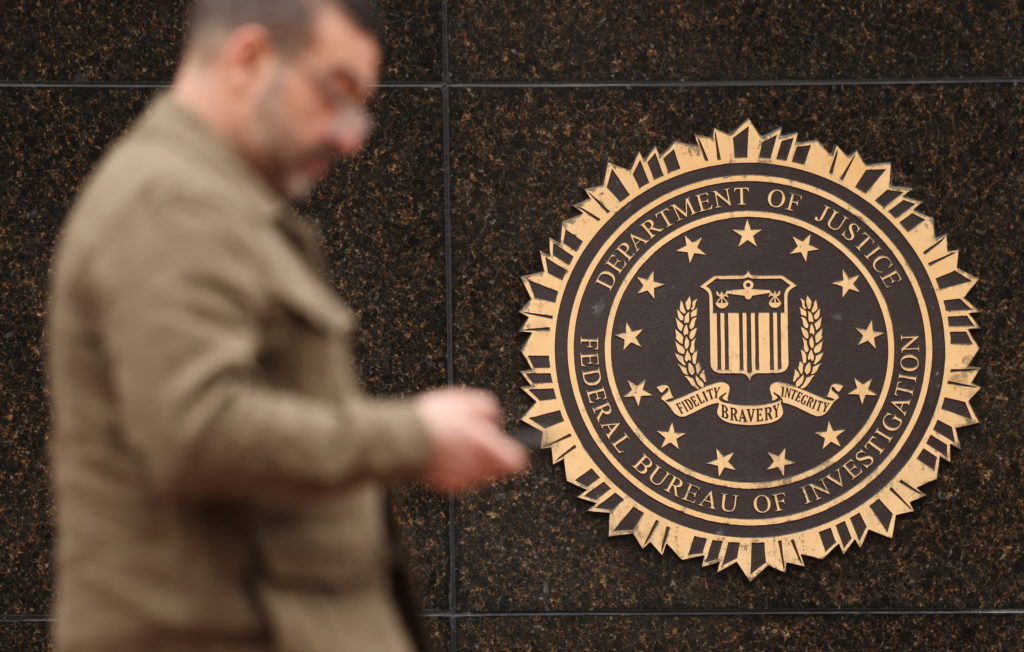
Over the last decade or so, Donald Trump hasn’t exactly been subtle about his support for Vladimir Putin, but in recent weeks, the American president has gone to almost cartoonish lengths to reward his Russian counterpart.

The list includes instances in which the Republican has offered sanctions relief for Russian diesel fuel, echoed Kremlin talking points, pumped billions of dollars into the Russian economy, peddled false accusations against Ukraine, ignored existing U.S. laws that ban Russian oil imports, looked the other way on Russia aiding Iran during the ongoing U.S. war, and delivered diplomatic victories for Moscow — all in exchange for nothing except more deadly attacks.

On Wednesday morning, however, Trump finally claimed to have secured a concession of sorts from the Russian leader: In a statement published to his social media platform, the American president said Stephen Hubbard, a 74-year-old retired teacher who had been imprisoned by the Putin government, has been released from detention and was headed home.

After some pointless and gratuitous whining about the Biden administration, Trump wrote that Putin agreed to free Hubbard “out of respect” for the American president, adding that the United States “was not required to give anything in return — an unprecedented situation for Russia.”

Just 12 minutes later, the Republican published a follow-up item, which read, “Numerous people, who requested that sanctions be immediately imposed on Russia, have called to apologize to President Trump in that they didn’t know that he was negotiating the release of Stephen Hubbard, a truly big and important deal for the U.S. If sanctions would have been placed, certainly those negotiations would have come to a complete and total halt.”

Putting aside the fact that those calls of apology almost certainly didn’t happen in reality, the second message clearly contradicted the first: After saying his administration didn’t have to give Russia anything to secure Hubbard’s release, Trump effectively conceded that he had to waive sanctions on Russia in order to secure Hubbard’s release.

Hours later, at an unrelated White House event, he did it again.

TRUMP: We gave nothing in exchange for Stephen. We never give anything in exchange for hostages.TRUMP LITERALLY MOMENTS LATER: If I implemented sanctions on Russia, Steven wouldn't be coming out right now.

— Aaron Rupar (@atrupar.com) 2026-10-21T19:33:20.698Z

“We gave nothing in exchange, which is very rare,” the American president boasted. “We never give anything in exchange.” Moments later, he added that if he’d implemented sanctions on Russia, as required by the U.S. law Trump recently signed, Hubbard “wouldn’t be coming out right now, he’d be in there for another 20 years.”

Trump seemed entirely oblivious to the obvious tension between claiming that he made no concessions, except for the concessions he made.

During a Wednesday afternoon Q&A with reporters, CNN’s Kaitlin Collins pressed him on this point, subtly trying to explain to Trump that, based on his own explanation, he obviously did give Putin something in return for Hubbard’s release.

Apparently frustrated by the cognitive dissonance, Trump decided to resolve the dispute by telling Collins, “You’re a low-IQ person. You’re a dummy.”

Hours later, Russia launched a new round of attacks on Ukraine’s capital, killing one person and wounding 22, as part of an assault that targeted civilians. A day earlier, Russia also unleashed another missile and drone blitz of civilian areas in Ukraine, killing at least four people.

As recently as Monday, Trump told reporters, “Russia, frankly, has been fine on Ukraine, they haven’t been doing much.” The White House has not yet explained why the Republican routinely sounds like he’s reading from a script written by the Kremlin.

The post Trump struggles to keep his story straight on prisoner release from Russia appeared first on MS NOW.

  •  

LG Uplus, Ericsson deliver fronthaul boost

LG Uplus and Ericsson boosted fronthaul coverage, addressing what the operator stated is a key element in the broader AI-RAN landscape and indicating a complete overhaul of equipment may not be necessary.

The companies conducted verification tests of Ericsson fronthaul equipment and network automation systems LG Uplus stated increased the reach of base station equipment by up to three-times over current methods without compromising quality.

LG Uplus clarified the effort focused on the connection between the Radio Unit and the Data Unit.

The operator emphasised there is more at play than expanding the distance connections can be maintained over: it argued the demonstration with Ericsson shows current equipment can be configured for AI-RAN uses, a benefit with obvious implications regarding infrastructure costs.

Lee Sang-heon, head of network advanced development with LG Uplus, said the operator intends to build on the fronthaul work by exploring other fresh technologies needed for “the next-generation network era”.

LG Uplus stated the effort would explore automation technologies and focus validation work on real-world network set-ups.

The operator stated the work would feed into a push towards autonomous networks employing AI.

The post LG Uplus, Ericsson deliver fronthaul boost appeared first on Mobile World Live.

  •  

Voting-related measures on November ballots include a voter ID push targeting mail-in ballots (David A. Lieb/Associated Press)

David A. Lieb / Associated Press:
Voting-related measures on November ballots include a voter ID push targeting mail-in ballots  —  Advocates for greater voter identification requirements are pursuing a new approach in some states: a mandate to place driver's license or partial Social Security numbers on mail-in ballots.

  •  

Voters want the next Congress to focus on costs and Iran, not on Trump, a new AP-NORC poll shows (Associated Press)

Associated Press:
Voters want the next Congress to focus on costs and Iran, not on Trump, a new AP-NORC poll shows  —  Regardless of the outcome in the coming election, a new AP-NORC poll shows voters from both major political parties want the next Congress to focus on making life more affordable and ending the war in Iran …

  •  

Jeffries says Democrats 'on the verge' of winning the House. It puts speaker's gavel in reach (Lisa Mascaro/Associated Press)

Lisa Mascaro / Associated Press:
Jeffries says Democrats ‘on the verge’ of winning the House.  It puts speaker's gavel in reach  —  Democratic leader Hakeem Jeffries listened from the front row at the old Ohio church as the Sunday congregation heard of scripture's guidance for calming a gathering storm.

  •  

State Asked Foreign Service Officers Up for Promotion Whether They Voted for Trump (Eric Katz/The Washington Sun)

Eric Katz / The Washington Sun:
State Asked Foreign Service Officers Up for Promotion Whether They Voted for Trump  —  The State Department has asked some foreign service officials up for promotion who they voted for in the 2016, 2020 and 2024 presidential elections, raising concerns the agency is violating a federal law …

  •  

Meta investors will get free shares if Mark Zuckerberg hits 'extraordinary' targets

Mark Zuckerberg is the founder and CEO of Meta.

Bloomberg/Getty Images

  • Meta will give its investors free shares if Mark Zuckerberg hits certain "extraordinary" targets.
  • It will pay 1:1 share dividends each time Meta stock doubles and has compounded at over 10% a year.
  • Meta is rolling out Class C shares to address Zuckerberg's tax concerns and keep him in California.

Meta stockholders are set to receive free shares if Mark Zuckerberg absolutely crushes it as CEO.

The social-media giant revealed in a Wednesday filing that if its upcoming Class C shares double from a baseline price of $580.60 to just over $1,161, and their compound annualized return since September 10 has been at least 10%, shareholders will receive a dividend: a Class C share for every Meta share they own.

If Meta stock — specifically its 30-day volume-weighted average price — doubles again to around $2,322, and has risen by at least 10% on average per year, shareholders will receive the same dividend again, and so on.

Meta, which owns Facebook, WhatsApp, Instagram, and the AI agent Muse, acknowledged how difficult it will be to unlock those dividends, describing the stock price targets as "extraordinary" in its filing.

Its stock has already surged more than sevenfold from its November 2022 low, giving Meta a nearly $1.8 trillion market capitalization that ranks it among the 10 most valuable companies in the world.

The additional dividends would be paid on top of the initial dividend declared by Meta's board on Wednesday, which will see Class A and Class B shareholders receive Class C shares on a 1:1 basis, likely in late January.

Meta is rejigging its share structure in response to Zuckerberg's concerns about California's so-called billionaire tax: a one-off, 5% wealth tax on the roughly 250 billionaires living in the state.

Zuckerberg, who ranked fifth on the Bloomberg Billionaires Index with a $247 billion net worth at Wednesday's close, will be able to sell the Class C shares to access the liquidity needed to pay the tax, avoiding a sale of his existing shares that would erode his voting power.

Meta's board took action after Zuckerberg said he was considering moving out of California because of the potential tax, and cautioned that the steps involved in relocating, such as listing his home for sale, could spark questions from employees about the company's management, the filing says.

Read the original article on Business Insider

  •  

European Union awards top rights prize to International Criminal Court targeted by Trump

BRUSSELS (AP) — The International Criminal Court and its embattled staff have won the European Union’s top human rights honor, the Sakharov Prize, an official said Thursday.

The award came just days after the Trump administration announced sweeping new sanctions on the court, which is based in The Hague, Netherlands, as part of its campaign to dismantle the tribunal over investigations into the United States and its allies, including Israel.

“The European Union is built on respect for multilateralism and international institutions, and this prize recognizes the important work of the court in upholding international law and justice,” European Parliament President Roberta Metsola said.

Her announcement at the parliament in Strasbourg, France, was greeted with a standing ovation.

The annual EU award, named after Soviet dissident and Nobel Peace Prize laureate Andrei Sakharov, was created in 1988 to honor individuals or groups who defend human rights and basic freedoms.

A court under fire welcomes the award

ICC President Tomoko Akane of Japan welcomed the award, saying that it “comes at a time when the court and its officials face unprecedented challenges.”

“Against this backdrop, the Sakharov Prize carries particular significance, reaffirming the importance of independent judicial institutions and of those who work to uphold international law,” she said in a statement.

The ICC opened in 2002 as a court of last resort to prosecute senior leaders it deems responsible for crimes that, according to its founding treaty, “deeply shock the conscience of humanity.” It has jurisdiction over war crimes, crimes against humanity, genocide and the crime of aggression.

The Trump administration’s sanctions cut off the court from U.S.-based financial services, technology companies, and even the use of U.S. dollars. They set a six-month timeline for U.S. companies and individuals that have business with the court to wind that business down.

The EU considers options to respond

In a statement after their summit last week, EU leaders said that the 27-nation bloc “deeply regrets” the Trump administration’s sanctions move and “urges the United States to reverse these latest measures.”

They noted that the U.S. has delayed the full impact of the sanctions by six months, and that “this creates space for diplomacy,” and expressed hope that the measures can ultimately be reversed.

Should diplomacy fail, however, the leaders insisted on “the EU’s readiness to take all necessary measures.”

They tasked the European Commission “to take all appropriate initiatives” to help protect the ICC and mitigate the impact of the sanctions, “specifically towards EU companies so that they can continue providing services to the Court.”

One possible retaliatory measure is the EU “blocking statute,” which could be used to protect European court staff, and possibly the Dutch-based court itself, by preventing European companies from complying with the U.S. measures.

An award for when rights and justice come under attack

The ICC and its officials were nominated for the prize by the Socialist and Democrats group in the European Parliament. The group, which unites center-left parties across Europe, said that it was “proud to have put forward their candidacy at a time when international justice is under attack.”

The Sakharov winner is chosen by the European Parliament’s president and top EU lawmakers from among candidates nominated by the parliament’s various political groups. The assembly says the award is “the highest tribute paid by the European Union to human rights work.”

Imprisoned Tanzanian opposition leader Tundu Lissu and Taraneh and Romina Rahimi — twins being held in prison for taking part in demonstrations against the Iranian government — were the others to make the EU shortlist.

Last year’s prize went to journalists Andrzej Poczobut and Mzia Amaghlobeli, who were imprisoned in Belarus and Georgia, respectively. Metsola said at the time that “their courage has made them symbols of the struggle for freedom and democracy.”

Several Sakharov laureates, including Nelson Mandela, Malala Yousafzai, Denis Mukwege and Nadia Murad, went on to win the Nobel Peace Prize. Venezuelan opposition leader María Corina Machado, who won the Nobel Peace Prize last year, picked up the Sakharov Prize in 2024.

The post European Union awards top rights prize to International Criminal Court targeted by Trump appeared first on MS NOW.

  •  

I visited Utah in the winter for the first time and made 4 mistakes I won't repeat

The author sits on a ledge next to a street with snow on the ground and houses in the beckground
Business Insider's reporter traveled to Salt Lake City and Park City, Utah, during the peak winter season.

Joey Hadden/Business Insider

  • Visiting Utah in the winter isn't for everyone.
  • I learned that the hard way in January 2025.
  • My first mistake led to the rest.

Gazing out my window at the snowcapped mountains on the train to Utah, I had no idea that I'd already set myself up for regret. Some mistakes were set in motion before I'd even left my apartment.

In January 2025, I flew from my home in NYC to Denver and hopped on a 15-hour Amtrak train to Utah's Silicon Slopes — a tech hub lining the Wasatch Front that includes Salt Lake City, Park City, and the surrounding suburbs.

I spent three days exploring Utah's pocket of luxury amid ski season and left with four regrets.

My first mistake was booking my trip in the peak winter season as a non-skier.
A snow-covered mountain with skiers on lifts and on the slopes in Park City, Utah

Joey Hadden/Business Insider

As a first-time visitor to Salt Lake City and Park City, I thought seeing the mountains blanketed in snow would be awe-inspiring — and it really was.

I knew winter would be a popular time to visit Utah since it's a ski hub, but I underestimated how busy it would be. Park City was packed with winter sports enthusiasts.

Skiers and snowboarders crowded the sidewalks lining congested streets in downtown Park City, all suited up — some with gear in tow.

I stopped by the slopes at Deer Valley Resort and spotted long lines of skiers waiting for lifts. I waited in line to ride a funicular up and down the mountain.

Maybe seeing the snow was worth the crowds — I won't know for sure until I visit during another season. But had I realized I'd be visiting during the busiest time of year, I would have pushed my trip to the spring, during the shoulder season.

I didn't pack enough clothing.
The author stands in a park in Salt Lake City.
The author enjoys Downtown Salt Lake City.

Joey Hadden/Business Insider

Overpacking is a rookie mistake when traveling, so I go to great lengths to avoid stuffing too many outfits into my bag. But this time, I overcorrected.

When packing for a trip that's less than a week long, I typically only bring layers I can wear all at once when needed or mix and match. Since I was traveling in winter, I brought a couple of extra shirts, one additional pair of pants, and zero extra outer layers.

But in January along Utah's Wasatch Front, when temperatures ranged from 24 to 44 degrees Fahrenheit, I needed to wear most of my layers daily.

After bundling up for a flight and a train ride, I felt desperate for fresh layers when I arrived in Salt Lake City.

Doing laundry at the hotel was another mistake.
Clean laundry bagged and hung and wrapped in paper in a box on a hotel bed with white sheets

Joey Hadden/Business Insider

What do you do when you need clean clothes on the road? Utilizing the hotel's laundry services seemed the most straightforward solution, but I regretted it.

That night, I stayed at the five-star Grand America Hotel, where laundry services were top-tier. My shirts and sweaters were returned to me on hangers, each in an individual hotel-branded bag. Smaller items were wrapped in paper in a cardboard box.

I felt like I was opening a present as I sorted through my clean clothes. It excited me — until I saw the receipt.

I paid $115 for three shirts, two pairs of pants, one hoodie, six undergarments, and one two-piece blazer. It was certainly the most luxurious laundry service I'd ever experienced, but for the same money, I could have bought a whole new outfit — and what a great excuse it would have been to treat myself.

I should have made time for winter activities aside from skiing and snowboarding.
The bobsled track winds through the Olympic Park at dusk in Park City

GEORGE FREY/AFP via Getty Images

I didn't consider other winter activities I could have enjoyed besides skiing and snowboarding.

I wish I'd taken time to tour Utah Olympic Park in the snow and get a feel for what it was like during the 2002 Winter Olympics.

After my trip, I learned that Park City offers mountain-top snowshoe yoga classes, which I would have loved to try.

Next time I travel to the Silicon Slopes, I'll pack enough clothing and make use of the season's offerings.

Read the original article on Business Insider

  •  
❌