❌

Reading view

Trump’s War Against Iran Fulfills Prophecy, but NOT Christian Evangelical Zionist Prophecy
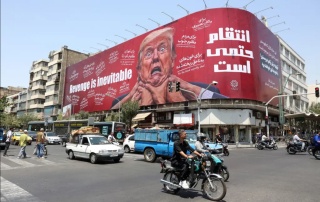
A common type of billboard seen these days in the streets of Tehran in Iran. Image source.

Comments by Brian Shilhavy
Health Impact News

Sam Parker of Behind the News Network has just published an excellent article based on Zbigniew Brzezinski’s 1997 book, The Grand Chessboard.

Brzezinski’s book warned that if the U.S. ever attacked Iran, it could lead China and Russia to unite with Iran and against the U.S. to prevent Iran’s downfall.

In a 2012 interview about his book, Brzezinski said:

“By 2025, the US could lose its position as the world’s dominant power, leading to a more chaotic and conflict-ridden international system.”

That “prophecy” has been proven true today, and it is a far different reality than what the Christian Evangelical Christians are saying about prophecy and Iran.

The Christians seem to forget their Biblical history, because historically, Israel has been conquered by Iran (Persia), and Iran has never been conquered by a world power since then.

In the 8th Century B.C., the Assyrian Empire, which included Persia, carried into captivity the northern 10 tribes of Israel.

Then in 586 B.C., Jerusalem fell to the Babylonian Empire, which included Persia, and just a few years later Persia dominated the area and it became known as the Persian Empire. Cyrus, the Persian King, is the one who allowed the Jews to return to their homeland and rebuild the Temple in Jerusalem.

From the time of the Roman Empire through to the British Empire, Persia (Iran) has never been conquered, and has never been a colony of either Britain or the U.S.

It is one of the two non-Arab countries in the Middle East that has never been conquered by Western nations, and is the remnant of a former great world empire. Turkey is the other one, being the remnant of the great Ottoman Empire, which eclipsed even the Roman Empire at its height.

The Christian Evangelical Zionists who follow the modern-day Dispensationalism theology, which allows them to condemn whole ethnic groups of people as evil, such as the Palestinians and the Iranians, are on the wrong side of history, and will soon find out that they are also on the wrong side of God’s plan for the end times in the future.

Many of them will follow their leader and savior Donald Trump to the end, “trusting the plan”, which leads directly to Hell.

Seen on Telegram.

Iran & the Grand Chessboard

by Sam Parker
Behind the News Network

Excerpts:

Zbigniew Brzezinski, a grand master of US imperial strategy in the Cold War, put forward some of the most insightful analysis for us to understand America’s war on Iran.

In his 1997 book The Grand Chessboard, Brzezinski identified Iran as one of the “critically important geopolitical pivots” in what he called the “Eurasian Balkans”—a region of power vacuum and power suction stretching from Central Asia to the Persian Gulf.

Brzezinski wrote:

“Iran dominates the eastern shoreline of the Persian Gulf, while its independence, irrespective of current Iranian hostility toward the United States, acts as a barrier to any long-term Russian threat to American interests in the Persian Gulf region.”

Back in 1997, Iran was simultaneously a threat to US interests and a geopolitical buffer against Russian expansion. Brzezinski never thought that US policy makers would be so unwise as to push Iran toward Russia that directly contradicts US strategic interest, against any strategic logic.

Brzezinski’s most prescient warning appears in The Grand Chessboard:

“Potentially, the most dangerous scenario would be a grand coalition of China, Russia, and perhaps Iran, an ‘antihegemonic’ coalition united not by ideology but by complementary grievances… Averting this contingency… will require a display of U.S. geostrategic skill on the western, eastern, and southern perimeters of Eurasia simultaneously.”

“The three grand imperatives of imperial geostrategy are to prevent collusion and maintain security dependence among the vassals, to keep tributaries pliant and protected, and to keep the barbarians from coming together.

Henceforth, the United States may have to determine how to cope with regional coalitions that seek to push America out of Eurasia, thereby threatening America’s status as a global power.”— Zbigniew Brzezinski.

Fast forward 30 years, the current reality is:

  • China and Russia have formed a “no limits partnership”
  • Iran joined the Shanghai Cooperation Organization (SCO) in 2022
  • The three countries conduct regular joint naval exercises in the Persian Gulf
  • Iran supplies drones to Russia for the Ukraine war
  • China and Russia provide diplomatic, materiel, and intelligence support for Iran in its war against the US and Israel

Brzezinski’s warning has materialized.

One high-profile Chinese commentator noted, “Trump’s war against Iran may be the stupidest strategic mistake in American history” because it accelerates this anti-hegemonic coalition.

From a 2012 interview about his book Strategic Vision on the Charlie Rose show:

“He advocated deterrence over preventive war, arguing that starting a war to prevent nuclear acquisition ‘will certainly plunge the region into protracted and unpredictable hostilities‘”.

This contrasts sharply with current Israeli and US strategy of regime change through assassination and unprovoked war – exactly the kind of escalation Brzezinski warned against.

In Strategic Vision, Brzezinski diagnosed the fundamental problem facing the US:

“By 2025, the US could lose its position as the world’s dominant power, leading to a more chaotic and conflict-ridden international system”.

For all his foresight, he skipped forecasting the US itself would be the source of global chaos and conflicts.

Back in 2012, Brzezinski attributed the potential decline to US militarism (wars in Iraq and Afghanistan), unilateralism (vastly worsened under Trump), the 2008 financial crisis, and polarized domestic politics (also vastly worsened since then).

He noted,

“Unless we overcome the currently paralyzing divisions within our own society… the United States will find it difficult to set its house in order and to play a constructive world role”.

How prescient.

These failures taught Brzezinski that military solutions to Iranian problems are usually catastrophic. His later advocacy for engagement and deterrence reflects this hard-won wisdom – wisdom ignored by US policymakers.

In fact, successive US administrations since 2012 have pursued the polar opposite of Brzezinski’s recommendations:

  • Rather than preventing a China-Russia-Iran alignment, US sanctions and hostilities toward all three have pushed Beijing, Moscow, and Tehran closer, despite the lack of any ideological alignments beyond anti-US hegemony
  • Instead of maintaining “geopolitical skill” on all Eurasian fronts, the US has overreached and is provoking a three-front confrontation in Ukraine, Iran, and Taiwan
  • Instead of multilateral engagements, the US has pursued an aggressive unilateral “America First” policy and an even deeper “Israel first” posture in its Middle Eastern policies

In the end, Brzezinski’s warnings are unheeded.

The current crisis validates his prophecy and suggests that without a course correction, the “strategic vision” of American decline will become self-fulfilling.

One of Brzezinski’s most prophetic concepts in the book is the “global political awakening”.

He argues that for the first time in history, the entire world’s population is politically conscious and reachable through the press and social media.

This means that traditional “imperial” maneuvers (like the 1953 coup in All the Shah’s Men) are no longer possible because the local population will inevitably resist and mobilize against the imperialists and neo-colonialism.

We are seeing this clearly in the Iran war.

Despite the mass protests of economic hardship and corruption, the Iranian population has rallied around the flag and resisted capitulation under intense US and Israel bombing rampage.

Brzezinski posited that Iran prefers a balance between East and West. However, by using military force in 2026, the West effectively forced Tehran to abandon that balance and seek a “security guarantee” from Beijing and Moscow, fulfilling Brzezinski’s nightmare of a unified, anti-Western Eurasian bloc.

As the US wages war on Iran, China is following Brzezinski’s predicted script: keeping a low profile while securing long-term energy contracts and security arrangements in the Persian Gulf.

China’s deepening involvement in Iranian oil infrastructure (like the Alborz platform) is the physical manifestation of the “Eurasian integration” Brzezinski was worried about.

China is turning Iran from a “geopolitical pivot” into a “Chinese bridgehead.”

China also gains from American exhaustion. The depletion of US arsenal further weakens its position along China’s shores.

Brzezinski specifically used the year 2025 as the tipping point in his book. He argued that if by this time the U.S. had not revitalized its domestic economy and fixed its “ignorant garrison-state mentality,” it would lose its role as the global arbiter.

Reading this today, the current conflict looks less like a localized war and more like the “post-America scramble” he predicted – a chaotic period where regional powers like Iran and global powers like China test the crumbling foundations of the old-world order that favors the US and its vassals.

Iran’s historical experience as a crossroads civilization (the “Eurasian land bridge”) taught it that direct conflict with superior powers is suicidal.

Instead, Iran has built a network of proxies reflecting ancient Persian diplomatic traditions, including Hezbollah in Lebanon, Hamas in Gaza, Houthis in Yemen, and Shiite Militias in Iraq/Syria.

These proxies provide Iran with buffer space and multiple points of leverage against its opponents.

Iran has long held a “No East, No West” Doctrine. This reflects Iran’s historical position between competing empires (Roman/Parthian, British/Russian, US/Soviet).

Today, Iran maintains ties with Russia and China while maintaining an independent posture, demonstrating continuity with its non-alignment tradition. This pillar of strategy may become less tenable as reconciliation with the West seems out of the question for now.

Read the full article.

This article was written by Human Superior Intelligence (HSI)

See Also:

Understand the Times We are Currently Living Through

Second Edition of eBook Released: The Concept of the American Christian Family is a Myth and is NOT Found Anywhere in the Bible – by Brian Shilhavy

FREE eBook! Restoring the Foundation of New Testament Faith in Jesus Christ – by Brian Shilhavy

The Brotherhood of Satan vs. The Brotherhood of Jesus Christ

KABBALAH: The Anti-Christ Religion of Satan that Controls the World Today

Exposing the Christian Zionism Cult

The Bewitching of America with the Evil Eye and the Mark of the Beast

Jesus Christ’s Opposition to the Jewish State: Lessons for Today

Identifying the Luciferian Globalists Implementing the New World Order – Who are the “Jews”?

The Brain Myth: Your Intellect and Thoughts Originate in Your Heart, Not Your Brain

What is the Condition of Your Heart? The Superiority of the Human Heart over the Human Brain

The Seal and Mark of God is Far More Important than the “Mark of the Beast” – Are You Prepared for What’s Coming?

The Satanic Roots to Modern Medicine – The Image of the Beast?

Medicine: Idolatry in the Twenty First Century – 10-Year-Old Article More Relevant Today than the Day it was Written

Having problems receiving our emails? See:

How to Beat Internet Censorship and Create Your Own Newsfeed

We Are Now on Telegram. Video channels at Bitchute, and Odysee.

If our website is seized and shut down, find us on Telegram, as well as Bitchute and Odysee for further instructions about where to find us.

If you use the TOR Onion browser, here are the links and corresponding URLs to use in the TOR browser to find us on the Dark Web: Health Impact News, Vaccine Impact, Medical Kidnap, Created4Health, CoconutOil.com.

The post Trump’s War Against Iran Fulfills Prophecy, but NOT Christian Evangelical Zionist Prophecy first appeared on Health Impact News.

  •  

TikTok to Pay DOJ $400M Settlement Over Alleged Child Privacy Violations

The Department of Justice (DOJ) reached a $400 million settlement with TikTok on Friday.

The Details: The settlement, involving TikTok, its parent company ByteDance, and the companies' affiliates, "resolv[es] litigation concerning compliance with the Children's Online Privacy Protection Act and its implementing regulations (COPPA)," according to the DOJ's press release. It marks the end of a 2024 lawsuit initially filed by the Biden administration and is reportedly "one of the largest recoveries ever obtained in a COPPA case."

Assistant Attorney Gen. Brett A. Shumate said the settlement "secures a significant monetary recovery and reflects the Department's commitment to ensuring children receive the full protections that Congress mandated."

The department reported, "Under the settlement, TikTok will pay $300 million immediately and an additional $100 million upon entry of an order vacating a prior consent decree entered against TikTok's predecessor, Musical.ly."

The Federal Trade Commission's (FTC) prior consent decree against Musical.ly suggested the company collected minors' personal information without parental consent, resulting in a $5.7 million fine. The TikTok litigation similarly involved allegations of COPPA violations by circumventing parental consent to collect personal information from users under 13 years old.

The department specified in its statement, "The claims resolved by the United States in the settlements are allegations only, and there has been no determination of liability."

How The Media Covered It: Initial coverage of this story was largely similar across the political spectrum, and outlets on both the left and right republished Reuters' (Center bias) report. The Verge (Lean Left), Reuters, and Fox Business (Lean Right) all noted that TikTok did not immediately respond to their requests for comment. However, Fox was the only outlet of the three to highlight that the Biden administration spearheaded the lawsuit – a fact omitted in the DOJ's press release.

For Context: The DOJ's release stated, "Since the Justice Department filed its complaint in 2024, TikTok has undergone significant changes to its ownership, management, compliance functions, and privacy practices. The company has implemented extensive measures designed to strengthen safeguards for younger users, improve age-related controls, and enhance parental oversight."

The US and ByteDance announced a joint-venture deal on TikTok in January, granting the US majority ownership of the platform in compliance with President Donald Trump's executive order from September. Read more about the deal here.

Written by the AllSides staff (of humans). Learn more. Support our mission. Suggest an improvement to this summary.

  •  

The Dark Money Behind Myanmar’s Civil War

💾

Since 2021, Myanmar has been torn apart by a multifaceted civil war. Bloomberg Investigates obtained rare access to the Southeast Asian nation to trace the illicit funds fueling the conflict and examine the human cost of the conflict.

https://www.bloomberg.com/features/2026-myanmar-resource-rich-civil-war/

--------
Like this video? Subscribe: http://www.youtube.com/Bloomberg?sub_confirmation=1

Get unlimited access to Bloomberg.com for just $1.99 your first month: https://www.bloomberg.com/subscriptions?in_source=YoutubeOriginals
Bloomberg Originals offers bold takes for curious minds on today’s biggest topics. Hosted by experts covering stories you haven’t seen and viewpoints you haven’t heard, you’ll discover cinematic, data-led shows that investigate the intersection of business and culture. Exploring every angle of climate change, technology, finance, sports and beyond, Bloomberg Originals is business as you’ve never seen it.

Subscribe for business news, but not as you've known it: exclusive interviews, fascinating profiles, data-driven analysis, and the latest in tech innovation from around the world.

Visit our partner channel Bloomberg News for global news and insight in an instant.
  •  

Romania’s years-long crisis of democratic legitimacy deepens

Romania’s ongoing political crisis is entering a more critical phase, with a collapsed government, an unresolved battle over the presidency and a growing conservative-nationalist challenge to the political order that has dominated the country for years.

At stake is not just who governs Bucharest, but whether Romania’s institutions can recover public legitimacy after the extraordinary cancellation of the 2024 presidential election.

The crisis dates back to November 2024, when independent nationalist candidate Călin Georgescu—to the surprise of many—finished first in the opening round of the presidential vote.

Citing alleged electoral irregularities and intelligence—evidence that still hasn’t been disclosed to the public—claiming Russian interference in favor of Călin Georgescu, Romania’s Constitutional Court subsequently annulled the election.

The court’s decision, therefore, erased an election result already delivered by Romanian voters and triggered one of the most serious democratic controversies in the European Union.

Romania’s democratic clampdown deepened even further in March 2025 when Georgescu was barred from taking part in the rerun presidential election. The Constitutional Court upheld his exclusion, leaving the person who had won the original first round unable to compete when Romanians were sent back to the polls for a second time.

The sequence of events became, for a broad cross-section of Romania’s population, undeniable proof of what many observers have begun to describe as “managed democracy”—meaning elections across the EU are “legitimate” only until voters choose someone “unacceptable” to the ruling establishment.
It didn’t take long for news of the crisis to reach across the Atlantic. Vice President JD Vance used his 2025 Munich Security Conference speech to accuse Romania of having “straight up canceled the results of a presidential election based on the flimsy suspicions of an intelligence agency and enormous pressure from its continental neighbors.”

The U.S. State Department’s subsequent Report on Human Rights Practices also leveled criticism that the annulment represented political interference and an unusually severe restriction on disfavored political speech. Elon Musk, for his part, in several posts to social media attacked the Romanian state’s treatment of Georgescu and described one official connected with the process as a “tyrant.”

How can a judge end democracy in Romania? https://t.co/9MFhlq6YwQ

— Elon Musk (@elonmusk) March 10, 2025

This guy is a tyrant, not a judge https://t.co/ghE9X4W5G3

— Elon Musk (@elonmusk) February 20, 2025

The episode resonated well beyond Romania because it touched a wider fault line running through European politics. Nationalist movements challenging Brussels on sovereignty, mass migration, security, green policy, cultural questions, and foreign affairs increasingly argue that institutional mechanisms are being weaponized to contain alternative political forces that can no longer be easily defeated—and may even be winning outright—at the ballot box.

Romania’s own long-established, ruling elite class has since begun to fracture. Prime Minister Ilie Bolojan’s Brussels-aligned government was brought down on May 5 after the Social Democratic Party (PSD) abandoned the coalition and joined nationalist AUR and other opposition forces in backing a no-confidence motion.

The result was overwhelming—281 lawmakers voted to remove the government, compared with only four against, well above the 233 votes required. The scale of the defeat exposed the government’s lack of legitimacy and revealed how quickly the firewall around Romania’s nationalist opposition had begun to crack.

Especially noteworthy was the decision by the PSD, long one of the pillars of Romania’s establishment, to cooperate with the Alliance for the Union of Romanians (AUR). Whatever the parties’ differences, that cooperation showed that excluding AUR indefinitely from parliamentary influence was becoming increasingly difficult.

President Nicușor Dan, so far, has failed to find a legitimate replacement. His nominee Adrian Veștea went before Parliament in June but secured only 189 votes—44 short of the 233 needed to install a government.

The failure prolonged a political vacuum that has continued into August. Bolojan remains interim prime minister, while Dan has held repeated consultations with former coalition parties in an effort to maintain fiscal measures and secure Romania’s remaining EU recovery funds.

The government’s paralysis has placed greater scrutiny on Dan himself. The right-wing S.O.S. Romania party formally initiated a constitutional procedure seeking his suspension under Article 95, alleging serious violations involving the separation of powers, government formation, the judiciary and democratic oversight of the intelligence services.

S.O.S. leader Diana Șoșoacă said more than 400,000 Romanian living in the country and abroad had expressed support for Dan’s removal. She also claimed that 155 parliamentarians had indicated agreement with the suspension initiative, although the names of lawmakers outside her party were not publicly disclosed.

The accusations against Dan include claims that he has blurred the constitutional boundaries of the presidency by involving himself too directly in judicial affairs. Critics have also objected to his public comments concerning the Constitutional Court and his consultations with magistrates.

Another point of contention is Dan’s insistence on constructing what he has repeatedly called a pro-Western governing majority. His opponents argue that the Constitution requires the president to facilitate government formation rather than impose ideological tests on parties capable of assembling parliamentary support.

Dan, for his part, has defended his approach as an effort to maintain Romania’s strategic orientation and produce a workable government. His supporters say the country’s position on NATO’s eastern flank, next to Ukraine, makes political and foreign-policy continuity especially important.

The intelligence services have become another sensitive issue. Critics point to the absence of permanent civilian leadership at the Romanian Intelligence Service while proposals have circulated to expand the security apparatus into areas including corruption and tax enforcement.

Such controversies carry particular historical weight in Romania, where memories of communist-era surveillance and the political power of the security services remain deeply embedded. Measures that might be treated elsewhere as routine institutional disputes can therefore trigger much deeper fears of political control.

A separate 2026 rule-of-law report cited by critics has further intensified the argument over Romania’s Constitutional Court. The Civil Liberties Union for Europe report was cited as arguing that the court had effectively changed the law in its handling of electoral candidacies, raising questions about legal certainty and the scope of judicial power.

The same report raised concerns over procedural protections for excluded candidates and discussed structural reform of the Constitutional Court itself. It also highlighted problems involving media independence, opaque political financing, and poorly defined anti-disinformation measures that can potentially restrict legitimate speech.

Those findings have strengthened the case made by Georgescu’s and his supporters that the 2024 election annulment, described by many analysts as a constitutional coup, was never merely about one TikTok campaign. They see it as a confrontation over who ultimately sets the boundaries of acceptable politics—Romanian voters or institutions increasingly tied to a globalist, Brussels-centered political consensus.

Romania’s crisis has moved beyond constitutional theory, as its political breakdown now collides with an economy facing some of the heaviest fiscal pressures in the European Union.

Earlier predictions that Fitch could push Romanian sovereign debt into junk territory did not materialize this August. Fitch instead maintained Romania at BBB-, the lowest investment-grade level, while keeping a negative outlook and warning that prolonged political instability could undermine deficit reduction and jeopardize access to European recovery money.

The reprieve should not be confused with economic security. Fitch expects Romania’s economy to contract by roughly 0.6 percent in 2026 and projects a budget deficit of about 5.9 percent of GDP—an improvement from previous years, but still exceptionally high for a BBB-rated state.

S&P has likewise kept Romania at BBB- with a negative outlook. Both agencies have pointed to the ongoing political fragmentation, financing pressures, and the difficulty of sustaining fiscal consolidation while governments rise and fall in Bucharest.

For ordinary Romanians, warnings like these translate into something much more tangible than ratings-agency terminology. They mean higher borrowing costs, increased pressure on household incomes, weaker growth, and further uncertainty over the country’s economic future. That helps explain why anger at political elites has persisted even as officials insist Romania remains firmly anchored inside the EU and NATO.

The nationalist political revolt in Romania also forms part of a wider European trend. From the AfD in Germany and Marine Le Pen’s movement in France to populist forces in Italy, Austria and elsewhere, parties demanding national sovereignty, stricter immigration controls and, increasingly, remigration have forced issues once excluded from respectable debate into the political mainstream.

Romania’s version of that revolt has developed around Georgescu and AUR, whose supporters increasingly compare their struggle with the movement that formed around Donald Trump in the United States. They view sovereignty, national identity, demographic security, economic accountability, and a nationally oriented foreign policy not as threats to democracy, but as core issues that any genuine democracy must be free to decide for itself.

The Romanian establishment—and by extension its backers in Brussels—now faces an uncomfortable problem: attempts to isolate Romania’s traditional, nationalist, and patriotic electorate have not only failed to make it disappear, but have made it much stronger. The collapse of the governing coalition and the cooperation between PSD and AUR have shown that the old cordon sanitaire is becoming harder—if not impossible—to maintain.

The post Romania’s years-long crisis of democratic legitimacy deepens appeared first on Remix News.

  •  

Switzerland: 80.5% of North African asylum seekers have been accused of one or more crimes

Around 80.5 percent of asylum seekers from North African countries were accused of one or more offenses in Switzerland, underlining the massive amount of criminality present in this foreign population. The data comes from the State Secretariat for Migration (SEM).

For asylum seekers as a whole, the rate of criminality is much lower, with only 12.5 percent having been accused of one or more offenses. Nationals from Algeria, Morocco and Tunisia are therefore extremely overrepresented compared to other asylum seeker groups.

North Africans also have little chance of having their asylum applications accepted by Swiss authorities, with 99 percent of all applications rejected, according to Swiss newspaper Blick.

In 2024, a “24-hour” rule was introduced for accelerated asylum procedures for North African countries, which enables Swiss authorities to process asylum claims with a low chance of success more quickly. Applicants can still appeal the decisions, which can significantly increase delay in reaching a final decision.

“Criminals must leave Switzerland quickly. This is a priority of the asylum strategy,” said SEM spokesperson Daniel Bach.

However, the process is often delayed by the actions of asylum seekers, including refusing to provide fingerprints and failing to show up for deportation appointments.

Many applicants also obstruct the accelerated procedure: they refuse to provide their fingerprints, do not show up for appointments or quickly leave Switzerland. In these cases, their request can be filed without formalities.

Authorities are now working to implement new measures to quickly deport asylum seekers, including the “systematic use of coercive measures against the perpetrators of repeated offenses.” Authorities are also planning to introduce stricter rules for administrative detention.

The SEM also wants to increase cooperation with North African countries and recently signed an agreement with Morocco to accelerate the of asylum seekers ordered to be deported and help facilitate their return.

The post Switzerland: 80.5% of North African asylum seekers have been accused of one or more crimes appeared first on Remix News.

  •  

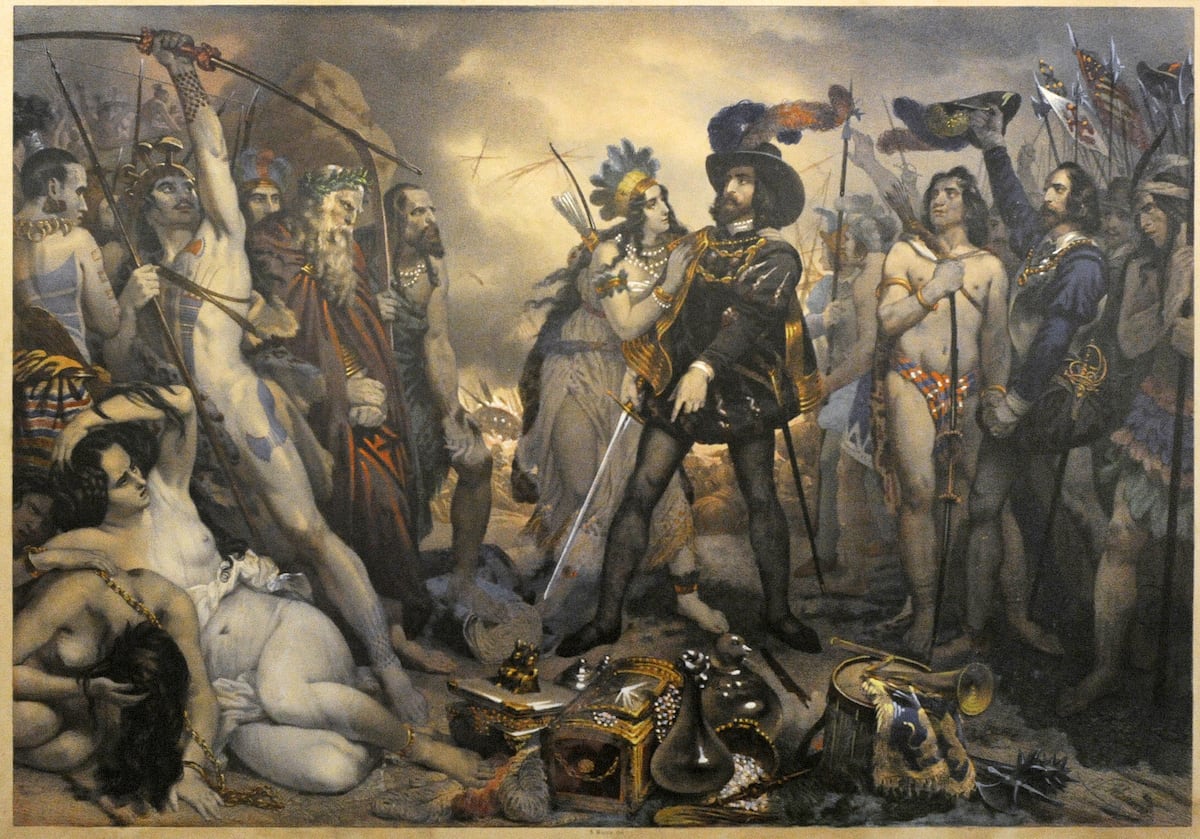
‘Historia verdadera de la conquista de la Nueva España’: chanchullos, aventuras y rapiñas explicadas por un soldado escritor

Alejo Carpentier, profundo conocedor de los orígenes, esencias y comportamientos de la identidad del Nuevo Mundo, autor del concepto identitario que llamó “lo real maravilloso americano” —que además estilizó en su novelística—, afirmó que el “descubrimiento” de América, que se materializa en 1492, era el acontecimiento más trascendente de la

  •  

Why Millennial Professionals Are Embracing Socialism

Fault Lines How I Became a Subaru Socialist By the time Bernie Sanders ran for President, in 2015, I was financially secure. But the previous decade had left a mark. August 18, 2026 Illustration by George Wylesol This is part of a series of columns about young people and the

  •  

The Wrong Kind of American

Sign up for our newsletter about national security here. At the CIA, they’d started an office pool on when I’d be fired. President Trump would be sworn in for his second term at noon; the smart money had me gone by 12:15. But the smart money hadn’t counted on Trump’s

  •  

Years of Trump Support Came Undone in 15 Minutes in an Airport.

The case represents a new front in President Trump’s mass deportation drive: arrests at airports of people who have active immigration cases and no criminal history. Listen · 9:43 min Galina Bobreneva and her husband, Brent Jindra, at their home in Redwood City, Calif.Credit...Gabriela Bhaskar/The New York Times Published Aug.

  •  

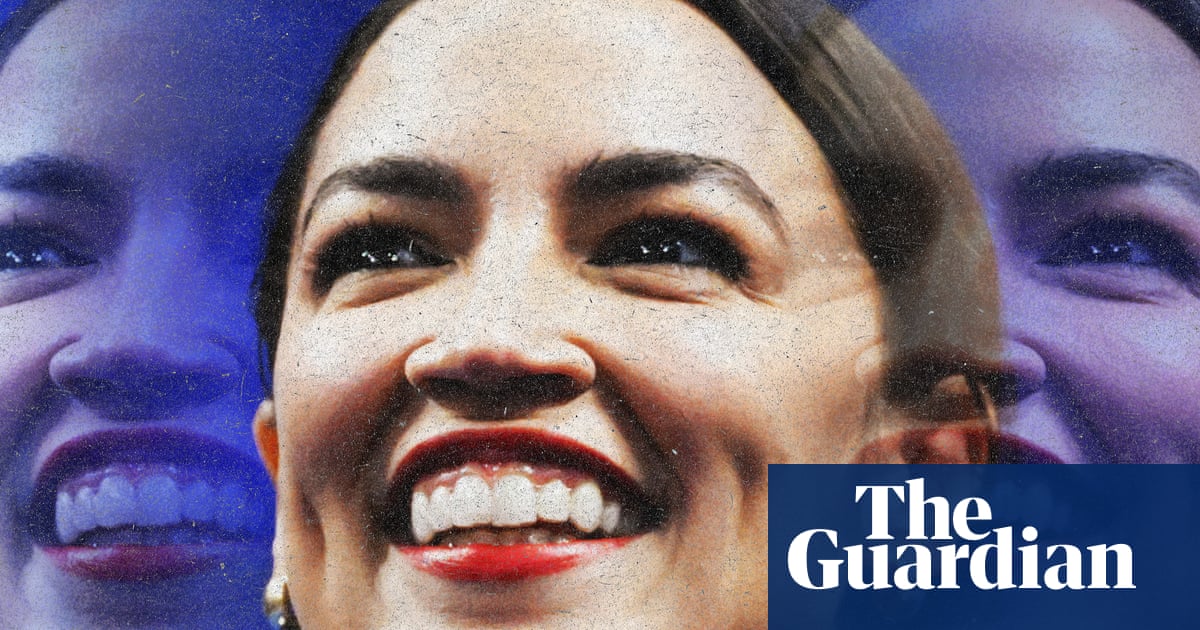
Is the US ready for President Alexandria Ocasio-Cortez?

“They assume that my ambition is positional. They assume that my ambition is a title or a seat. And my ambition is way bigger than that. My ambition is to change this country.” The words were delivered slowly, deliberately and with some steeliness by Congresswoman Alexandria Ocasio-Cortez. Her audience, crammed

  •  

Pauline Hanson Takes the Free Speech Fight to Australia’s High Court

Senator Pauline Hanson.

One Nation leader Pauline Hanson has filed an application with the High Court for leave to appeal a Full Federal Court ruling that upheld a finding she unlawfully racially discriminated against Greens Senator Mehreen Faruqi under Section 18C of the Racial Discrimination Act.

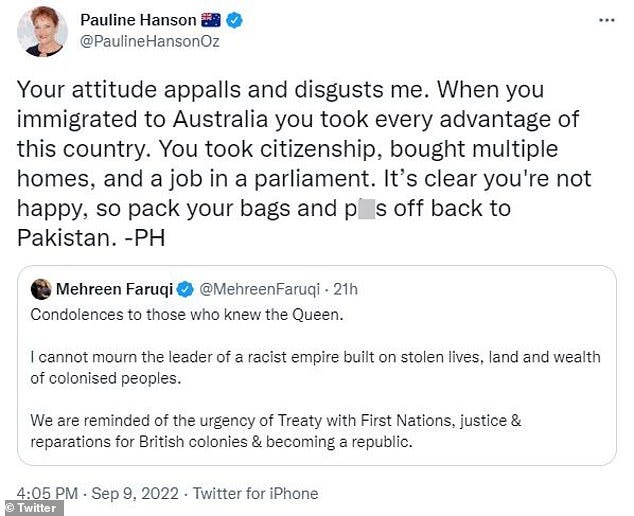
The case stems from a September 2022 post on X, then Twitter, in which Hanson told Faruqi to “piss off back to Pakistan” after Faruqi criticised Queen Elizabeth II and the British Empire following the Queen’s death. The Full Federal Court dismissed Hanson’s appeal on 27 July 2026.

Pauline Hanson investigated after One Nation leader tweet about Greens  senator Mehreen Faruqi | Daily Mail Online
Screenshot of Senator Pauline Hanson’s reply.

Hanson is now asking the High Court to consider whether Section 18C, as applied to political communication, is constitutionally valid and whether its operation impermissibly burdens the Constitution’s implied freedom of political communication.

The case matters because Section 18C does not require a statement to threaten violence or incite criminal conduct. It prohibits conduct reasonably likely to “offend, insult, humiliate or intimidate” another person because of race, colour or national or ethnic origin.

The Full Federal Court confirmed in July that Section 18C is constitutionally valid and does not impermissibly burden the implied freedom of political communication. It also found that Hanson’s post was not protected by the Act’s Section 18D exemption for conduct done reasonably and in good faith.

The court found that the post fell within conduct prohibited by Section 18C, but Senator Hanson has vowed not to forfeit the fight.

“I’m taking this fight to the High Court for every Australian who feels they are being silenced and to keep their opinions to themselves,” Senator Hanson said on Saturday in a media release.

“Too many Australians are afraid to speak honestly about immigration, race, religion, Indigenous policy and other important issues because they worry they will be called racist, dragged through a complaints process or taken to court.

“That is not how a free country should work. Australians choose their government. The government should never get to choose what Australians are allowed to say.”

Justice Angus Stewart, who heard the original case, acknowledged that Australian political debate can involve deliberately offensive, exaggerated and angry speech, and that restrictions on such communication can burden political freedom.

Australia has no entrenched constitutional Bill of Rights guaranteeing broad freedom of speech. Instead, the Constitution protects political communication through an implied freedom that operates as a limitation on government power rather than as a personal right to free speech. That makes judicial scrutiny of laws such as Section 18C particularly important.

“I don’t mince my words,” Senator Hanson said. “I never have. People know exactly where I stand. But speaking plainly about political issues should not put you in court. The Full Federal Court accepted that my comments were close to the core of political communication protected by our Constitution.

“It also accepted section 18C casts a wide net, sets a relatively low bar and places a significant burden on political communication. Yet the law was still upheld. This is why I am asking the High Court to hear this case.”

Senator Hanson said she believes all Australians should be able to disagree, argue, and say things other people don’t like.

“Freedom of speech means nothing if it only protects words everyone agrees with.”

She said it’s not about giving politicians special rights, but rather, it’s about the right of everyday Australians to take part in the political debates that shape their own country without being frightened into silence.

A healthy “democracy” does not require citizens to agree with one another—or even to speak politely at all times. It requires sufficient freedom for citizens to argue, criticise, offend and challenge one another without the government becoming the final arbiter of permissible political expression.

“Millions of Australians feel like they have been told there are things they are simply not allowed to say anymore,” she added. “I hear from them all the time. I will not be silenced, and I will take this fight as far as I can for Australians who feel they no longer have a voice.”

  •  

Missouri Court Strikes Down Effort to Bring GOP-Favoring Election Map to Voter Referendum

A Missouri judge ruled Wednesday that the state's referendum process can't be used to block legislature-drawn congressional maps, allowing a recently implemented map that is expected to favor Republicans to remain active for the November midterm elections.

The Details: Cole County Circuit Court Judge Daniel Green ruled that the referendum provisions in Missouri's constitution don't apply to congressional redistricting. The ruling struck down a suit from The People Not Politicians (PNP) coalition. The case involving referendum use can now move to the state's Supreme Court.

For Context: The maps were already used in primary elections earlier in August. Then, Missouri Secretary of State Denny Hoskins rejected a citizens' petition that sought to bring the maps to referendum and reportedly had over 300,000 signatures. In May, the Missouri Supreme Court upheld the new map and rejected an argument that said submitting referendum petitions should automatically suspend the new map. Missouri's redistricting is part of a broader wave of recent redistricting efforts by both Democrats and Republicans.

Key Quotes: Green wrote in the ruling, "The Missouri Constitution does not supply any statement – let alone a clear one – reallocating authority over congressional redistricting away from the General Assembly to a referendum process." PNP Executive Director Richard von Glahn said, "The most important thing that happened today is that there was a ruling. The state has tried to slow down the judicial process for months and now that we are out of Cole County, the real decision will be made. Our case now moves forward."

How The Media Covered It: Outlets across the spectrum framed the new map as favoring the GOP, but outlets from the right explicitly wrote in headlines or opening lines that the new development is a "win" or "victory" for Trump and Republicans. Outlets from the left and center more often framed the map as "backed" by or "favoring" Republicans.

Written by the AllSides staff (of humans). Learn more. Support our mission. Suggest an improvement to this summary.

  •  

The Senate Just Supercharged the ASIO Surveillance State Despite Free-Speech Warnings

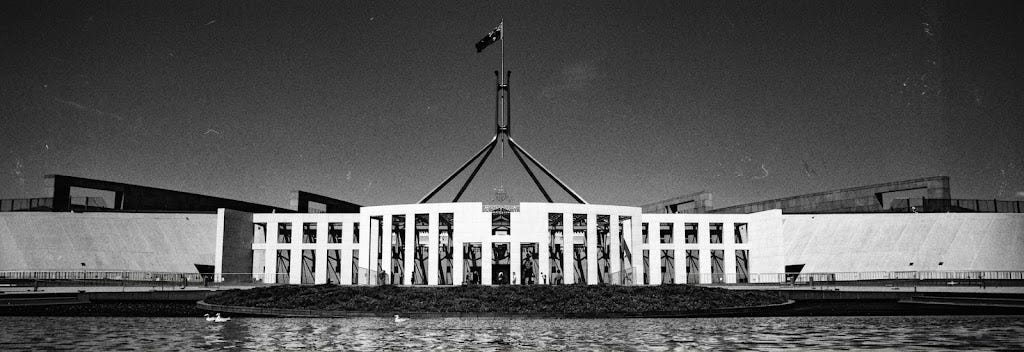
The Australian Senate passed new powers for ASIO 26-15 on Thursday.

The Australian Security Intelligence Organisation Amendment Bill (No.2) 2025 adds to the 1979 ASIO Act, raising concerns about citizen protections vis-à-vis police questioning.

Such as the broadening of ASIO’s power to include “sabotage, promotion of communal violence, attacks on Australia’s defence system and any serious threat to Australia’s territorial and border integrity.”

Under current law, this is regardless of “whether these [words or actions] were directed from, or committed within, Australia or not.”

The biggest concerns centre on the “promotion of communal violence” and threats to national integrity.

Under existing laws on adult questioning, anyone who fails to comply with ASIO when they demand information can be imprisoned for five years.

Put simply, in these cases you do not have the right to remain silent.

Ramping up those concerns is the fact that neither inciting “communal violence” nor “threats to national integrity” are properly defined.

According to section 4 of the ASIO Act, foreign interference is defined as: “activities relating to Australia that are carried on by or on behalf of a foreign power.”

Activities included anything that is “detrimental to the interests of Australia “ or involves “a threat to any person.”

Promoting communal violence is defined as: “activities that are directed to promoting violence between different groups of persons in the Australian community.”

Added here is any activity that “endangers the peace, order or good government of the Commonwealth.”

In effect, publicly questioning COVID vaccines, lockdowns, mass immigration, and multiculturalism could be considered incitement and a threat to national stability (integrity).

As could critiquing Islam, or even criticising Albonomics that is currently edging Australia’s economy irreversibly towards’ Labor’s “we’re saving the world from climate change,” Net Zero Nanny State black hole.

By far one of the bill’s most prominent opponents, Senator Alex Antic, said on X that he’s disappointed it passed.

Antic also stated that he voted against the amendment because “extraordinary powers should never become ordinary.”

The South Australian Liberal Senator then declared the law an expansion of the surveillance state.

Antic told the Senate that the bill “doesn’t merely fine-tune existing arrangements.”

“It breaks in new powers and makes permanent extraordinary intrusions on the liberty of Australians.

“Compulsory questioning warrants,” Antic argued, “allow ASIO to compel a person who may never have been charged with an offence or may never be charged with an offence to appear and answer questions under threat of criminal penalty.”

Even telling anyone about being questioned or detained is now an offence.

“These are not ordinary investigative tools,” he stated. “They sit well outside the framework of the traditional criminal justice system.”

Since 9/11, the government has repeatedly extended what were meant to be temporary powers.

That’s because they were the exception, not a permanent rule.

“As it currently stands, the bill removes that sunset clause entirely.”

Making them permanent is a problem, Antic added.

“History shows that temporary emergency powers have a long and chequered history and habit of becoming permanent features.

“Worse still, the bill actually expands the reach of adult questioning warrants.

“The definition of an adult questioning matter will now be broadened under this bill to include sabotage and, most alarmingly, the promotion of communal violence.”

Criticising the loose language, Antic rightly pointed out that “Promotion of communal violence’ is particularly elastic.

“Vague drafting is the enemy of the rule of law.”

To this he added, “What does it actually mean? What does it capture?”

“Does it capture passionate political speech, advocacy that offends certain groups, legitimate protest or religious expression that crosses an often-ill-defined line?”

Antic then asserted, “In a free society, the state shouldn’t be handed an open-ended power to compel citizens to answer questions about speech or association that falls short of actual criminality.”

Blurring lines when it comes to criminality and rights, he further argued, removes certainty about where that line is drawn.

The even greater concern here is whether or not the law could be used to detain and question people against their will.

“The bill also retains the capacity to subject children as young as 14 to these processes. On its surface, that alone should give this chamber reason to pause.

“Security which is purchased at the price of permanent, expanded and coercive powers is a false bargain.”

Extraordinary laws require use-by dates.

“The rule of law requires that the state’s most intrusive rules remain exceptional, tightly confined, regularly scrutinised and subject to genuine sunset clauses.”

They should not, Antic protested, be “quietly normalised” and “quietly allowed to creep into the norm.”

Notably, Antic joined One Nation and The Greens in opposing the expansion of ASIO’s powers.

  •  

The End of the European Summer

Europe is warming more than twice as fast as the global average—a terrifying statistic made all too apparent this summer as heat wave followed heat wave. European cities were never designed for these temperatures, and public health, infrastructure, and tourism are all under strain. Eric Klinenberg arrives in Milan just as “Europe’s third heat wave of the summer entered its fiercest stretch” and sweats his way across the continent to see how trees, shade, water, and other measures are being deployed to adapt urban centers. But with this crisis set to deepen can these experiments really keep pace?

Of all the problems that heat poses for Barcelona, losing some of the hundred and sixty thousand tourists who typically visit each day ranks low on the priority lists of most officials and residents. Some locals have staged protests, chanting “Tourists go home” while targeting visitors with water guns. But tourism employs more than a hundred and sixty thousand people in Barcelona and accounts for around thirteen per cent of its economic output, which explains why, despite concerns that the city gets too many visitors, more than seventy per cent of residents consider tourism beneficial. At midday, when I arrived on La Rambla, the city’s most heavily visited and photographed corridor, the street had little shade and surprisingly few people. At La Boqueria market, normally jam-packed at lunchtime, I found my way to a famously busy bar counter and took one of several open seats.

  •  

Florida Lawmaker Who Backed Death Penalty for Pedophiles Arrested for Molesting His Grandson

Former Florida state legislator Michael Caruso was arrested this week on charges that he sexually abused his own grandson — a crime that could expose him to the death penalty under a law he voted [...]

The post Florida Lawmaker Who Backed Death Penalty for Pedophiles Arrested for Molesting His Grandson appeared first on The People's Voice.

  •  

FTC Must Investigate AI Book Burning

On Friday, Demand Progress Education Fund and a coalition of civil society advocates asked the FTC to investigate AI companies like Anthropic and Amazon for buying books in bulk, scanning them and then destroying the original work—including rare books. In a letter sent to the FTC, the organizations urge the agency to use its authority, including Section 6(b) of the FTC Act, to investigate whether this mass book-destroying practice unfairly prevents competing AI developers and the public from using these resources.

Convened by Demand Progress Education Fund, the letter was also signed by the Consumer Federation of America, the Center for Media & Digital Governance at Open Markets Institute, the Institute for Local Self-Reliance and 14 other organizations.

“The secretive and reckless way that major AI companies like Anthropic and Amazon are acting shows that there is real smoke here that the FTC needs to investigate,” said Demand Progress Education Fund Special Advisor Kate Oh. “There is credible reporting that the AI industry is acquiring books on vast commercial scales to scan and destroy, all to keep that scanned text in a private database walled off from the world and subject to corporate censorship and manipulation.”

“When a small number of dominant tech companies become the sole custodians of millions of human-authored works in digital form, locked away inside proprietary corporate databases—including works they have caused to exist nowhere else—they convert a shared public resource into a private chokepoint,” stated the letter. “They make themselves the unaccountable gatekeepers of our shared historical and cultural record, with the ability to censor as they see fit. That outcome should concern the FTC because the antimonopoly laws exist not only to protect competition but to prevent any private actor from amassing control incompatible with a free and self-governing society.”

  •  

Fei-Fei Li on Silicon Valley's 'God Complex'

💾

Fei-Fei Li pushes back on Silicon Valley's "god complex" and explains why tech CEOs shouldn't decide the future of AI alone, with @emilychangtv on The Circuit.

https://www.bloomberg.com/news/videos/2026-08-19/what-s-next-after-chatgpt-this-ai-pioneer-has-a-plan-video

--------
Like this video? Subscribe: http://www.youtube.com/Bloomberg?sub_confirmation=1

Get unlimited access to Bloomberg.com for just $1.99 your first month: https://www.bloomberg.com/subscriptions?in_source=YoutubeOriginals
Bloomberg Originals offers bold takes for curious minds on today’s biggest topics. Hosted by experts covering stories you haven’t seen and viewpoints you haven’t heard, you’ll discover cinematic, data-led shows that investigate the intersection of business and culture. Exploring every angle of climate change, technology, finance, sports and beyond, Bloomberg Originals is business as you’ve never seen it.

Subscribe for business news, but not as you've known it: exclusive interviews, fascinating profiles, data-driven analysis, and the latest in tech innovation from around the world.

Visit our partner channel Bloomberg News for global news and insight in an instant.
  •  

Competing Claims Emerge on Who Controls Strait of Hormuz As Trump Launches 'Economic D-Day'

President Donald Trump announced "Economic D-Day" against Iran and its allies Wednesday as many debate who controls the Strait of Hormuz.

Evidence Is Clear: CNN Business (Lean Left bias) opinion writer David Goldman said the "focal point of the Iran war" is "the battle for control of the Strait of Hormuz." The article explained that the "competing rhetoric" between Iran and the US has "caused considerable confusion and doubt." However, according to Goldman, "the evidence is clear" showing that "The United States, patrolling the strait with its navy, is gaining ground—and Iran is losing much of its control of the critical waterway." Goldman, as evidence cited Kpler, a service tracking ships via both transponder and satellites, saying that "more than 80% of liquids transits" through the strait over the last two weeks have utilized the Omani route or have been "dark" transits, meaning they turned off their transponders. Head of crude oil analysis at Kpler said "It increasingly looks like Iran has at least partially lost control of the strait." Goldman mentioned Trump saying that the US has "total control over the strait," and asserted that while this is not true, Iran also does not have total control.

'In Price, Is Knowledge': Bloomberg (Center) opinion writer Javier Blas approached the question of control through the lens of oil prices. Referencing an old market saying, "In price, is knowledge," Blas asserted that "At less than $90 a barrel, it isn't screaming shortage." Blas said that while the release of "strategic reserves is helping," as well as China slashing its oil imports, "that's not the full story." The "market skepticism about [US Energy Secretary Chris] Wright's optimism" over the amount of oil flowing through the strait "is understandable" according to Blas, however, "the naysayers are a bit too sure of themselves." Blas said that with "available data, we can safely say that, at the very least, 5 million barrels a day are transiting Hormuz," which contradicts the figures given by Wright. However, when the emphasis, according to Blas is on "available" data which he explained is quite limited due to the ongoing conflict, we may be missing much of what is really happening, positing that oil is flowing through the strait "perhaps more successfully than we think."

3-Month Low:  CNBC (Lean Left) framed coverage around statements from an Iranian government and military backed agency known as the Persian Gulf Strait Authority saying that "Hormuz remains blocked." The article also cited Iranian Foreign Minister Seyed Abbas Araghchi saying the US "has long miscalculated due to intelligence failures," adding "Case in point: The war on Iran. Now, an even bigger miscalculation on the Strait of Hormuz." CNBC said that "While both sides continue to make contradictory claims," data from Kpler shows ship traffic through the waterway at a "3-month low."

RELATED: Trump Says He Will Make Strait of Hormuz US Territory | AllSides

'Notable Success': Outlets like Axios (Lean Left) and The New York Post (Right) highlighted a "stealth operation" from the US that is reportedly guiding millions of barrels of oil daily through the strait near the Omani coast. The Post mentioned that the operation does not come without costs, explaining that the US is "forced to deploy ships, helicopters and planes to intercept attacks from Iran," further explaining that "intercepting the strikes is notably higher than what it costs Iran to attack using its cheaper suicide drones." Axios called the operation "a notable success even as the broader war remains at a stalemate."

Written by the AllSides staff (of humans). Learn more. Support our mission. Suggest an improvement to this summary.

  •  
❌