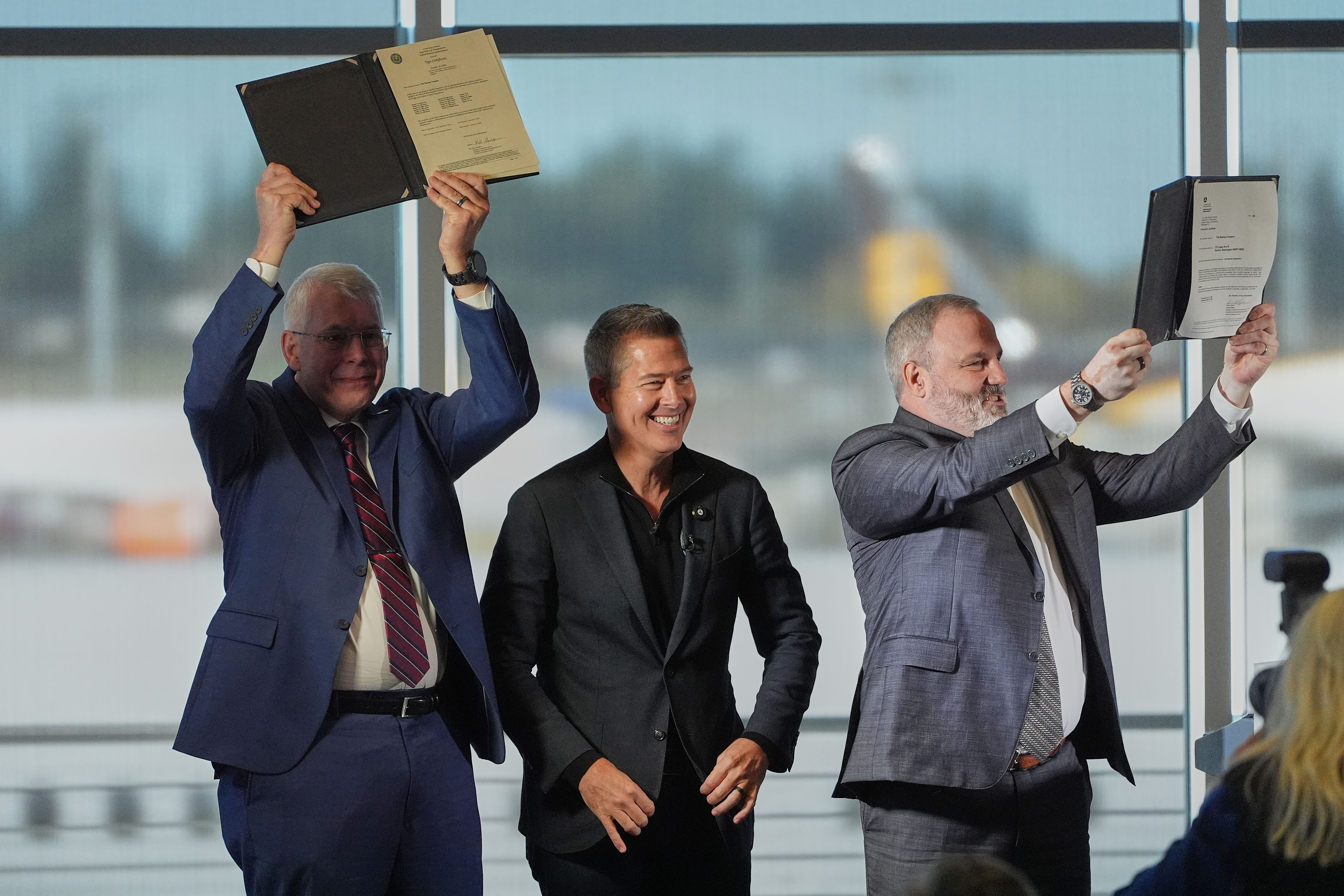
Russia has released a retired American teacher who had been imprisoned on charges of fighting as a mercenary in Ukraine, U.S. envoy Steve Witkoff said Wednesday at a meeting with Russian President Vladimir Putin in St. Petersburg.
Stephen Hubbard, of Michigan, was sentenced after a closed trial in 2024 to nearly seven years in prison. Prosecutors said he had signed a contract with the Ukrainian military after Russia sent troops into Ukraine in February 2022, and that he fought alongside them until being captured two months later.
The U.S. government under the Biden administration designated Hubbard as wrongfully detained.
Witkoff thanked Putin for releasing Hubbard, telling him, “Because of you, he’s going home to his family.” The Russian leader responded that Hubbard was at the St. Petersburg airport, Pulkovo, after the release.
Witkoff has tried without success to steer Russia and Ukraine toward a settlement to end a war that will hit the five-year mark in February. Trump foreshadowed a release earlier in the week, telling reporters at the White House: “I’ve been talking to President Putin about Mr. Hubbard. I’ve been talking to him at length. I’ve asked him to release him. Let’s see what happens.”
The release occurred at a dynamic moment in relations between the United States, Ukraine and Russia, with the Washington-Kyiv alliance being stretched by tensions over drone support as the Trump administration advances policies that aid Russian President Vladimir Putin.
He decided Friday, for instance, to waive sanctions on Russia in a bill that Congress overwhelmingly passed to support Ukraine. Named after late South Carolina Republican Sen. Lindsey Graham, the legislation targeted the flow of financial resources fueling Russia’s war.
That reversal followed Trump’s announcement of a deal to import Russian diesel fuel in a long-shot effort to curb high gas prices ahead of the U.S. midterm elections next month.
WASHINGTON (AP) — Losing more ground in the fight against climate change, humanity is heading for a hotter world than experts projected last year — and the United States is a big reason for that, a new United Nations report says.
If all the countries do what they promise to reduce heat-trapping emissions, Earth will likely still warm another 2.2 degrees Fahrenheit (1.2 degrees Celsius) above current temperatures, according to Wednesday’s update of climate calculations by the United Nations Environment Programme. That’s about two-tenths of a degree Fahrenheit (0.1 degrees Celsius) more than last year’s projections by the same science team.
“This is a worse outcome than expected last year, as a result of the formal withdrawal of the United States of America from the Paris Agreement and revised estimates of historical emissions,” the report said. The report also blames the United States for increased emissions last year, saying all the other top 20 major economies reduced their carbon pollution or at least slowed the growth in how much carbon dioxide was spewed from the burning of coal, oil and gas.
“In terms of magnitude, the increase in the United States of America (133 megatons of CO2 equivalent) far exceeded that of all other countries and was driven by increased electricity demand and a rebound of coal power generation,” the report said. The 124 countries that increased emissions — not counting the 63 that decreased like most European nations — added 189 million tons of carbon dioxide in 2025, and 70% of that increase came from the U.S., according to the report.
The United States is going “hell-for-leather trying to block renewables while actively promoting and subsidizing dirty coal — and its diplomacy is trying to make other countries also pull back on action. It is looking at the fire, denying there is a fire, and then pouring more petrol on it,” said Australian climate scientist Bill Hare, CEO of Climate Analytics that measures countries’ climate fighting plans. He wasn’t part of the U.N. report but like several other outside scientists said it was scientifically sound.
Shooting far past Paris climate goal
The new calculations say that if countries do all they promise in the climate fighting plans they submitted to the United Nations, by 2100 the globe will be 2.6 degrees Celsius (4.7 degrees Fahrenheit) hotter than pre-industrial times. If the world continues on its current path — without national promises — it will be 2.8 degrees Celsius (5 degrees Fahrenheit) warmer than the last half of the 19th century, the same as last year’s projection.
Both of those temperatures blow far past the goal of less than 2 degrees Celsius (3.6 degrees Fahrenheit) and preferably 1.5 degrees Celsius (2.7 degrees Fahrenheit) adopted by the 2015 Paris climate pact. The world is now at about 1.4 degrees Celsius (2.5 degrees Fahrenheit) above pre-industrial times and earlier this year — and again in this report — United Nations officials conceded that there is no way of limiting warming to the 1.5-degree goal that they had embraced. Instead, officials are pinning their hopes of limiting warming to about 1.8 degrees Celsius (3.2 degrees Fahrenheit) and then somehow pulling enough carbon dioxide out of the air to lower temperatures back down to 1.5 degrees.
The world is falling “dangerously short” of even those goals, United Nations Secretary-General António Guterres said, “but we have the tools to change course and pull back from the brink.”
Drastically cutting global carbon emissions — by 18% by 2030 and 69% by 2040 — “is the only way that we can get back to a semblance of a reality that is still largely manageable without major impacts and therefore that makes every sense,” said UNEP Executive Director Inger Andersen.
“The report’s message is clear,” said climate scientist Adelle Thomas, vice chair of a United Nations scientific assessment on climate impacts. She wasn’t part of this study. “We know what needs to be done. We have the tools to do it. And delay only makes the challenge more dangerous and more expensive for all.”
An added tenth of a degree of danger
Report lead author Anne Olhoff, director of UNEP Copenhagen Climate Centre, said the U.S. policy change will likely add one-tenth of a degree Celsius (nearly two-tenths of a degree Fahrenheit) to global temperatures by the end of the century.
“This report shows that America’s retreat isn’t just a political embarrassment. It has real consequences for the planet and for millions of people around the world,” said Mohamed Adow, director of Power Shift Africa, a climate organization. “An extra tenth of a degree might sound insignificant, but in climate terms it is enormous. It means more dangerous heat waves, more destructive floods, more failed harvests and more lives lost. For vulnerable communities in Africa, already living on the front lines of the climate crisis, every fraction of a degree matters. These are not abstract numbers. They are human lives.”
Hare said that extra one-tenth of a degree pushes an additional 140 million people “into dangerously hot conditions” and increases the odds of the collapse of the Amazon rain forest or ice sheets in Greenland and Antarctica. It also would cost the world and shave about $1.2 trillion from the global economy, said University of Pennsylvania climate scientist Michael Mann.
And the U.S. effect is probably even bigger than what the United Nations calculates because if the world’s largest historical climate polluter doesn’t do much to fight global warming other nations ease off in their efforts too, said Johan Rockstrom, director of the Potsdam Institute for Climate Impacts Research in Germany.
“The rest of the world is exhausted when it comes to counting the damage that the U.S. is willingly doing to allies, multilateral structures, economic cooperation, disaster relief,” Australian climate scientist Malte Meinshausen said. “The rest of the world should probably continue to focus even less on the U.S.”
Ukrainian President Volodymyr Zelenskyy said the change happened after talks with his American counterparts, including a phone call with U.S. Secretary of State Marco Rubio.
Fresh curfews were being imposed across the city centers of Paris and Lyon on Tuesday after the first quiet night since France's most destructive rioting in years.
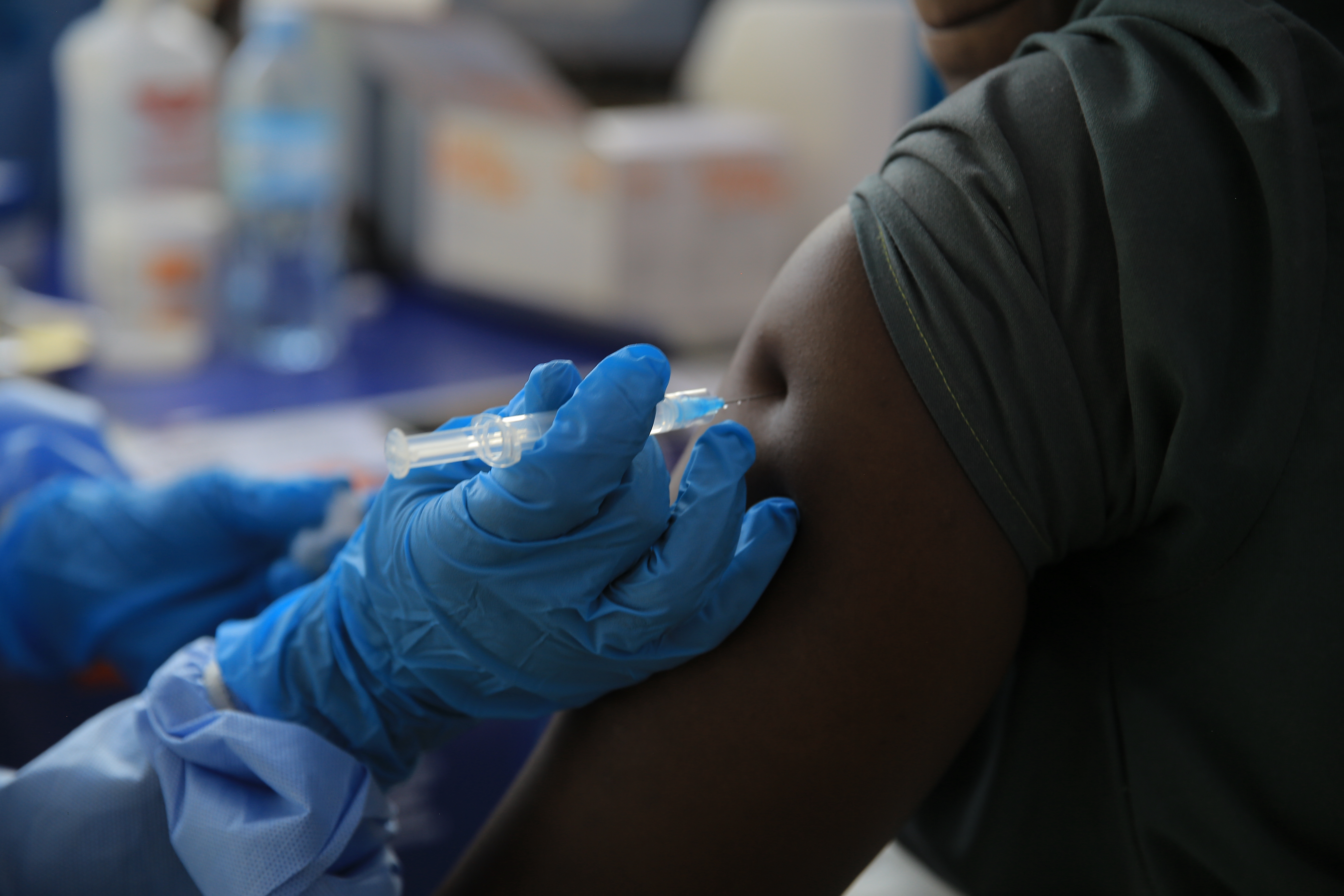
Nigeria is the latest country to report an Ebola case as the outbreak spreads across the region. Kenya confirmed its first case earlier this month and has since recorded nine infections.
Nigeria is the latest country to report an Ebola case as the outbreak spreads across the region. Kenya confirmed its first case earlier this month and has since recorded nine infections.
MELBOURNE, Australia (AP) — Police on Tuesday charged a driver with intentionally causing serious injury to an Australian federal lawmaker who is in critical condition after being struck by a car in an apparent escalation in political violence that has shocked the nation.
Helen Haines, a 65-year-old independent politician, was in hospital in critical but stable condition after being struck by a car outside her office in the city of Wangaratta, in Victoria state, on Monday in what police alleged was a “targeted” incident.
Brendan Nugent, from nearby Tarrawingee, was charged with intentionally causing serious injury, dangerous driving causing serious injury and causing harm to a federal official, police said in a statement on Tuesday.
Suspect to face court on Wednesday
Nugent has been in police custody since shortly after Haines was injured and a crowd of bystanders subdued him. He will appear in a Wangaratta court on Wednesday, when he could potentially be released on bail.
His father, Rod Nugent, released a statement Tuesday describing Haines as a “deeply respected, valued and much-loved member of our local community.”
“Helen has been our friend for more than 20 years and what happened to her yesterday is devastating and unfathomable,” the father said, adding that he would cooperate with police.
The incident shocked Australians as political violence is rare here and politicians have always been accessible to the public. Most lawmakers are not accompanied by security officers and go about their work and personal lives on their own.
The prime minister thanks a bystander for intervening
Australian Prime Minister Anthony Albanese said he phoned local barber Ricky Jefferies, who had run from his store to help members of the public detain the suspect, to thank him on Tuesday for intervening.
“It’s a reminder that at the worst of times, we see the best of the Australian character,” Albanese said in Melbourne.
Jefferies earlier told reporters he searched the driver’s pockets and removed a knife. Police confirmed a knife had been found. Jefferies also said he did not consider himself a hero.
“It was crazy,” he said. “A lot of people got involved immediately and they didn’t even check for danger. They just ran to help.”
The lawmaker’s family says it’s grateful for the ‘swift assistance of bystanders’
Haines’s family released a statement expressing thanks for the “swift assistance of bystanders” as well as health workers and police.
Haines, who was first elected to Parliament in 2019 and had been reelected twice since, was initially taken to a hospital in Wangaratta, a city of 30,000 people. She was airlifted later on Monday to a hospital in the state capital, Melbourne, 147 miles away.
The Alfred Hospital didn’t respond Tuesday to a request for comment on media reports that Haines had had a leg amputated.
Albanese announced on Monday that the national counterterrorism team was investigating, incorporating police and intelligence agencies. Police have since said the incident appears to be isolated.
“This wasn’t an accident. There was a deliberate act, it would appear. We don’t know what the motivation is,” he said.
Recent data has shown that threats of political violence have grown in Australia. The head of the Australian Security Intelligence Organisation spy agency, Mike Burgess, on Tuesday reiterated an earlier warning that politically motivated violence was a top security concern, along with espionage and foreign interference.
Police reported in 2025 that threats against parliamentarians had doubled over the past three years. Official data showed more than 1,000 such threats against politicians in the 2025-2026 fiscal year.
Albanese and lawmakers from across the political spectrum spoke to media outlets Tuesday, urging their colleagues, reporters and the public to turn down the heat in increasingly fractious political debates. Many also said they hoped Australia’s easygoing culture of approachable politicians wouldn’t change.
The injured lawmaker was not considered controversial or polarizing
Haines was not known for polarizing views. The daughter of dairy farmers and mother of three was a nurse, midwife and academic before entering politics, and advocated for rural health matters. She was initially elected in 2019 with a campaign focused on health equity, rural prosperity and climate action.
Albanese said eyewitnesses had reported the suspect passed Haines in his SUV as she stood by the trunk of her parked car. The SUV then turned and came back before the driver allegedly drove into the politician, the prime minister said.
Home Affairs Minister Tony Burke told Australian Broadcasting Corp. that the driver allegedly reversed and struck Haines a second time, pinning her against her car, after initially hitting her.
One of the bystanders who came to Haines’ assistance, Cody Lepoidevin, told reporters he thought he was witnessing a hit-and-run when the SUV backed away after she was first struck.
But instead of fleeing the scene, Lepoidevin said the driver “then reversed and drove back into her.”
Australia has a low rate of political violence
Elsewhere in the world, authorities have warned of growing threats to lawmakers. The United States has seen a rise in political violence over the past decade.
In Britain, killings of politicians have also prompted bolstered security. Labour lawmaker Jo Cox was shot and stabbed in 2016 by a far-right extremist, while Conservative David Amess was stabbed in 2021 by an attacker inspired by the militant Islamic State group.
In July, the former British politician and reality TV contestant Ann Widdecombe was found beaten to death with a hammer at her home. A man has been charged with murder and terrorism-related offenses.
KYIV, Ukraine (AP) — Russia unleashed another missile and drone blitz of civilian areas in Ukraine, killing at least four people, officials said Tuesday, as Ukrainian President Volodymyr Zelenskyy scrambled to ensure more American and European help during a visit to Norway.
U.S. envoy Steve Witkoff, who along with Jared Kushner has tried without success to steer Russia and Ukraine toward a settlement and end the war, was also expected in Oslo, the Norwegian government said. Kushner, who is U.S. President Donald Trump’s son-in-law, will attend the meeting by videoconference.
Norwegian Prime Minister Jonas Gahr Støre and Finnish President Alexander Stubb were due to meet with Zelenskyy in Norway’s capital.
With further U.S. support for Ukraine in doubt as relations between Zelenskyy and Trump sour again, the Ukrainian leader said that he spoke with U.S. Secretary of State Marco Rubio, who is on a trip to Asia.
That conversation came after Zelenskyy told a bipartisan group of U.S. lawmakers on Monday that he believes “some political decision has been made to slow down … support for us.”
Ukraine nearly has run out of American-made Patriot air defense interceptors that it needs to stop Russia’s ballistic missiles, according to Zelenskyy, who has pleaded for Washington to send more. But he said that the Pentagon is delaying the delivery of missiles that other countries have purchased for Ukraine.
Zelenskyy also said that he sought Rubio’s help to ensure that the U.S. continues to share vital intelligence with Ukraine after Kyiv received no, or late, warnings about Russian missile attacks in recent days.
On top of that, Zelenskyy said that speed restrictions were still in place on Kyiv’s use of the military-grade version of U.S. company SpaceX’s satellite internet service, hampering battlefield operations.
Trump has also waived sanctions on Russia, a move which Zelenskyy slammed as helping Russian President Vladimir Putin push on with Moscow’s full-scale invasion, which will hit the five-year mark in February.
Zelenskyy said that he had “a substantive conversation” with Rubio.
“I am grateful for his readiness to help and his clear position,” Zelenskyy said on social media.
With the Russian army held up on the front line, Putin is trying to bomb Ukraine into submission while robbing it of vital U.S. support, Western leaders and analysts say.
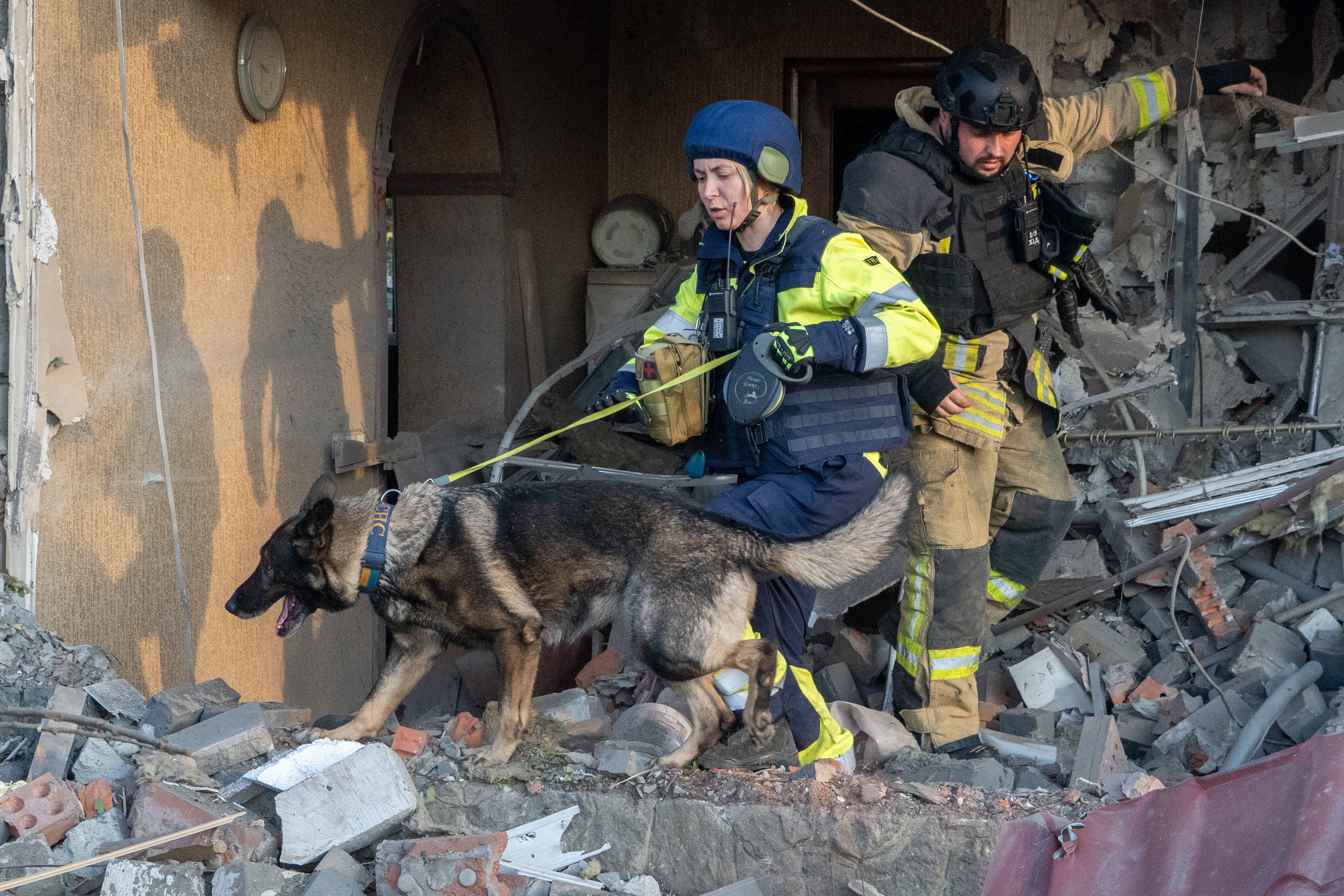
Four people were killed and 27 others wounded, including children, in Russian missile and drone attacks on the Kyiv region over the past day, regional police said.
Three people were killed and six wounded in the Obukhiv district, where warehouses were damaged, police said. In the Bucha district, one woman was killed and 21 people were wounded, eight of them children, and hundreds of buildings were damaged, according to police.
Russia also attacked energy facilities in Ukraine’s southern Odesa region overnight, causing power outages in some areas, said Oleh Kiper, head of the regional military administration. No one was injured, he said.
The Russian Defense Ministry said in a statement that its forces carried out drone strikes on logistics centers, port infrastructure, and three cargo ships in the port of Reni in the Odesa region. It said another bulk carrier was hit at sea on its way to Odesa.
Meanwhile, air defenses intercepted 136 Ukrainian drones over multiple Russian regions overnight, the Defense Ministry said.
A fire broke out at an unspecified industrial facility in the Tambov region as a result of the attack, Gov. Yevgeny Pervyshov said.
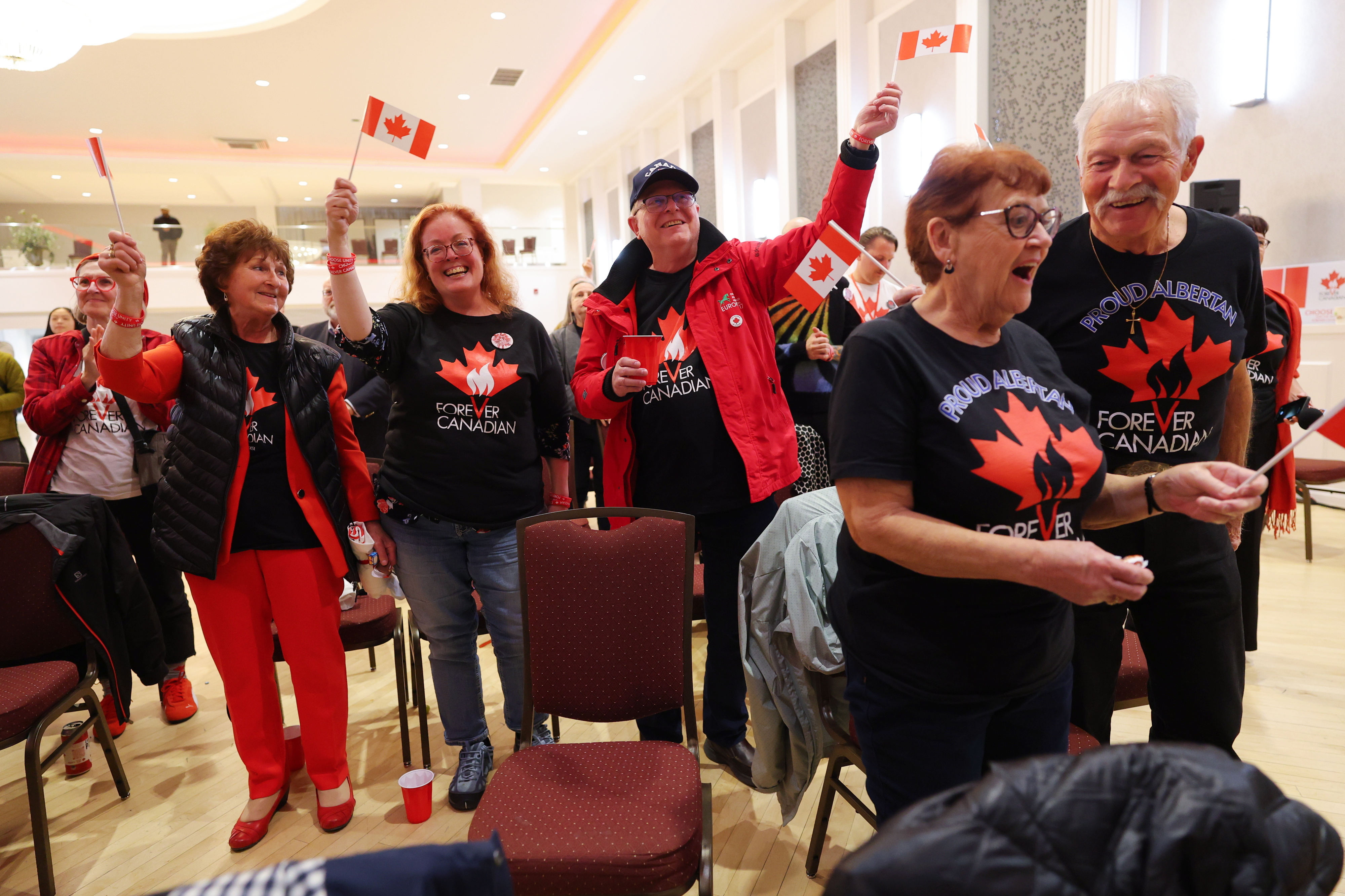
Voters in Canada's oil-rich Alberta province overwhelmingly backed remaining in Canada, with early referendum results Tuesday delivering a boost to Prime Minister Carney's push for national unity.
Voters in Canada's oil-rich Alberta province overwhelmingly backed remaining in Canada, with early referendum results Tuesday delivering a boost to Prime Minister Carney's push for national unity.
 Login