LAHORE – Punjab government made changes to leadership of food and cane administration, appointing Captain (Retd) Muhammad Waseem in place of Amjad Hafeez with immediate effect.
Muhammad Waseem, a BS-19 officer, moves from the post of Director General Wildlife and Parks to become Director General Food and Cane Commissioner. Hafeez, also in BS-19, has been directed to report to the Services and General Administration Department for further orders.
The incoming DG brings previous experience in sugar price enforcement and agricultural market negotiations to the assignment. During his tenure as Deputy Commissioner Sargodha, Waseem notified district sugar prices in July 2025 and ordered price control magistrates to enforce the rates. Retailers were required to display official price lists, with action promised against violations.
In January 2026, the district administration helped broker an agreement between kinnow growers and factory owners, fixing a rate of Rs1,600 per maund for that week. Farmer representatives credited Waseem with helping resolve the dispute.
His administrative career includes a posting as Deputy Commissioner Bahawalnagar from October 2021 to February 2023. He took charge as Deputy Commissioner Sargodha in August 2024 and was given additional responsibility for Khushab district in December that year.
Waseem subsequently moved to the Wildlife and Parks organisation in late January 2026, replacing Mubeen Elahi. He now takes over Punjab’s food and cane portfolio following assignments spanning district governance, commodity price enforcement and departmental administration.
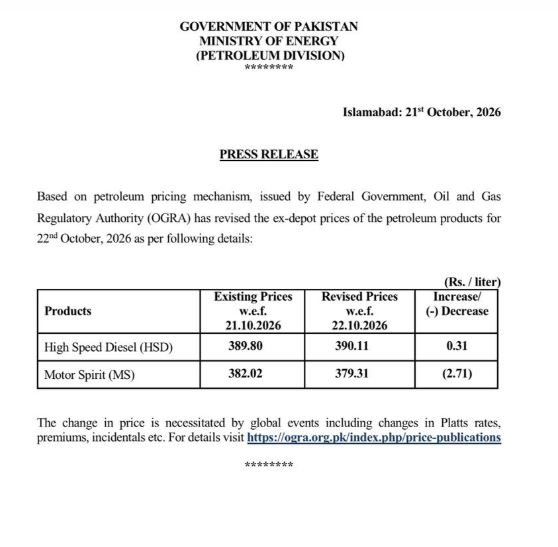
ISLAMABAD – Pakistanis will pay Rs379.31 per litre for petrol on Thursday, October 22, 2026, as the government announced a Rs2.71 cut, while high-speed diesel (HSD) will become slightly more expensive.
A day earlier, the government raised diesel by Rs0.31 per litre to Rs390.11, delivering a mixed fuel-price adjustment for consumers. The revised rates apply for October 22.
Oil and Gas Regulatory Authority (OGRA) revised ex-depot prices under the federal government’s petroleum pricing mechanism. The calculation reflected international developments, including changes in Platts quotations, premiums and incidental costs. Pakistan’s petrol relief comes as crude availability improves in the Middle East, although record shipping costs continue to weigh on the movement of oil from the region.
Fresh data shows that Oman crude’s premium over Dubai, a measure of Middle Eastern market strength, dropped to $4.22 per barrel this week, its lowest since late July. That represents a sharp retreat from approximately $30 per barrel in mid-September.
Regional producers have accelerated shuttle shipments through the Strait of Hormuz and ship-to-ship transfers in the Gulf of Oman. These operations have increased available supplies, particularly spot cargoes, helping drive the premium lower. Several tanker-tracking services indicate that Middle Eastern crude flows are recovering, with some estimating shipments have already exceeded pre-war levels.
ISLAMABAD – PIA is preparing a major expansion of its British network, increasing London Heathrow services to seven flights a week from October 27, 2026, before restoring its Islamabad–Birmingham connection on December 1.
The expansion promises more nonstop travel options for passengers visiting family, conducting business or travelling for tourism, while reducing dependence on connections through Middle Eastern hubs.
Under Heathrow plan, the national carrier will operate five weekly flights from Islamabad and two from Lahore, up from a combined four weekly services. The seven-flight schedule provides daily connectivity between Pakistan and London, although neither Pakistani city will have a daily service individually. Seats for the expanded London operation have already been offered for sale. The increase comes after PIA returned to Heathrow in late March 2026 with approximately four weekly flights, mainly from Islamabad alongside Lahore services.
Birmingham will follow on a separate timetable. Schedule information available in mid-to-late October shows three weekly Islamabad–Birmingham flights beginning December 1, restoring another destination historically served by PIA before its 2020 suspension.
The schedule places outbound flight PK791 on Tuesdays, Thursdays and Saturdays, departing Islamabad at 12:15 and reaching Birmingham at 16:00. Return flight PK792 is listed to leave Birmingham at 18:30 and arrive in Islamabad at 07:15 the following morning.
Aircraft deployment remains subject to change, with reports mentioning Boeing 777 aircraft or wet-leased capacity. An earlier catering tender had also indicated preparations for Birmingham operations.
The wider UK expansion is expected to receive a capacity boost through the wet lease of two Boeing 787-9 aircraft from Norse Atlantic. The ACMI arrangement covers aircraft, crew, maintenance and insurance, with operations expected around early November. The Dreamliners appear in some Heathrow and Manchester schedules.
PIA UK Flights Schedule
Route
Weekly flights
Details
Islamabad–London Heathrow
5
Boeing 787-9 listed
Lahore–London Heathrow
2
Boeing 787-9 listed
Islamabad–Manchester
Around 4
Schedule subject to change
Lahore–Manchester
Around 1
Schedule subject to change
Islamabad–Birmingham
3
From December 1
This marks another stage in PIA’s return to Britain following years of restrictions. Its UK and European operations were suspended after the May 2020 Karachi A320 crash and concerns over pilot licensing.
UK removed Pakistan from its Air Safety List in July 2025. PIA subsequently resumed Manchester flights in October 2025, followed by London in March 2026.
For passengers planning winter journeys, the distinction between the launch dates is crucial: the combined daily Heathrow schedule begins on October 27, rather than November 1, while Birmingham services are scheduled to start on December 1.
LAHORE – Lahore High Court shared verdict on the imposition of 2% stamp duty on the partition of inherited property, ruling that the applicable duty is a fixed Rs500 under the Stamp Act, 1899.
Justice Tanveer Ahmed Sheikh of LHC issued the ruling while accepting a writ petition filed by Muhammad Sajjad, setting aside the 2025 decisions of a civil judge and an additional sessions judge.
In written judgment, the judge declared a judicial precedent, the court held that the lower courts had offered no legal justification for charging duty at 2%. The judgment also clarified that bringing other co-owners into the proceedings as parties does not alter the nature of the case.
The court ruled that a percentage-based financial burden cannot be imposed without lawful authority, affirming the fixed Rs500 stamp duty applicable to inherited property partition.
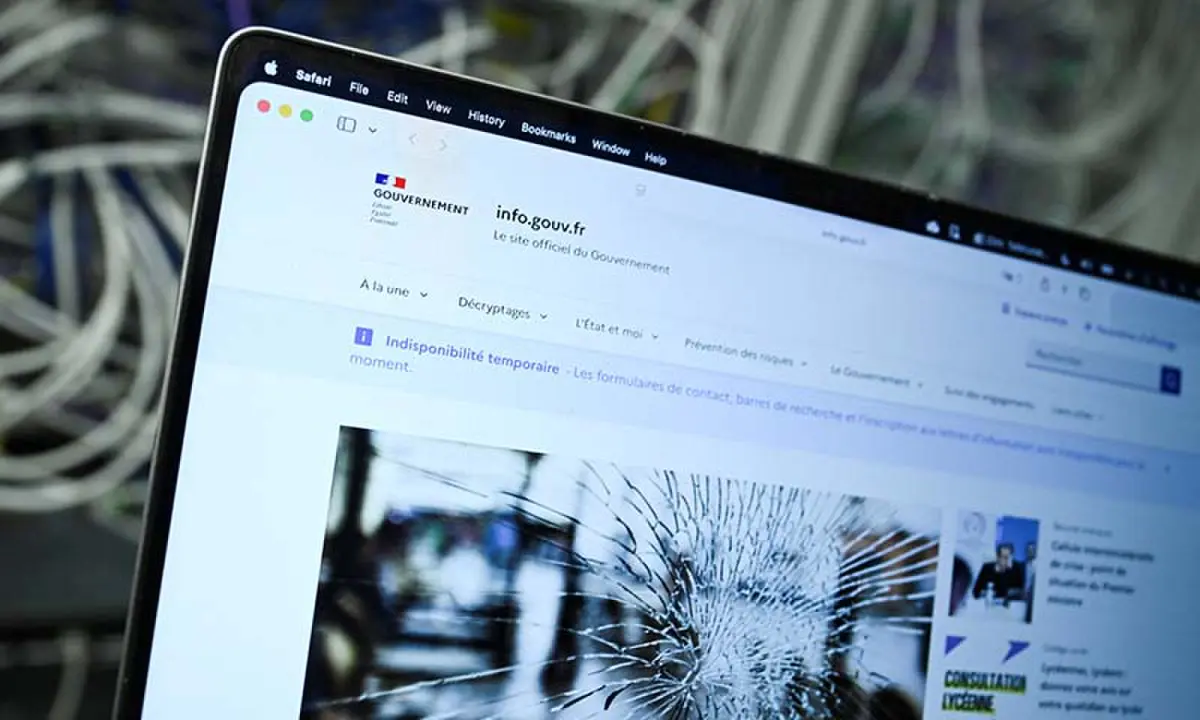
Government websites in Europe and elsewhere went offline on Wednesday after the disclosure of critical vulnerabilities in a widely used programming language sent website operators around the world scrambling to protect their systems.
Developers of the PHP programming language on Wednesday released urgent new fixes to vulnerabilities that had quietly been lurking in their software for years until they were uncovered using AI, saying that all users were “encouraged to update immediately.”
With tech firms warning that some hackers were already exploiting the flaws, government agencies across Europe were among those that took sites offline as a precaution.
Because a fix is now public and artificial intelligence tools are able to reverse engineer the bug with little effort, experts said they were bracing for a wave of intrusions as hackers jumped to get ahead of fixes.
AI was powering a “race to exploit,” said Costin Raiu, co-founder of cybersecurity research and incident response firm TLP: Black. He said the next step was the “mass compromise of every vulnerable web server on the internet”.
PHP, a language that dates back to the early 1990s and initially stood for “Personal Home Page”, underpins huge parts of the public-facing web and is baked into WordPress, Drupal, Joomla and Magento sites, meaning that any critical vulnerability potentially has enormous knock-on consequences.
“All servers using any version of PHP released in the last 20 years will be vulnerable,” said Tiffany Farriss, the interim chief executive of the Drupal Association. “This issue impacts the majority of the Internet.”
Cybersecurity agencies in Europe, Australia, Japan and Britain have urged PHP users to update immediately or take websites offline until patches can be applied.
The Dutch cybersecurity agency itself went offline, saying it had done so as a precaution because of the vulnerabilities. The operator of the online encyclopedia Wikipedia also said it had taken down an unspecified number of systems until they could be safely patched.
Even some world leaders, who don’t typically get involved with software updates, weighed in. Japanese Prime Minister Sanae Takaichi, in a post on X, said website owners should “check whether your live site uses PHP and prepare to apply the new fix.”
Bug found with AI
The flaw in PHP was discovered using artificial intelligence, Alphabet-owned cybersecurity company Wiz said in a blog post.
The vulnerabilities remained hidden in the PHP codebase for more than a decade and would have been extraordinarily complicated for a human hacker to have taken advantage of, the post said.
“Pre-AI, this manual work would be difficult to implement and even harder to scale,” it said. “With AI, this is no longer a barrier.”
Wiz said its research relied on Wiz Atlas, its autonomous AI vulnerability research tool, as well as Google’s Gemini 4 Argon and OpenAI’s GPT-5.6 Sol. Wiz said it coordinated with the PHP team, OpenAI, and the cybersecurity company Calif on the discovery of the vulnerability and patch verification.
The company said it also partnered with Google Cloud, Cloudflare, Amazon’s AWS, Microsoft, WordPress.com operator Automattic, and other companies such as Fastly, Akamai, Imperva, and Vercel to protect customers and prepare mitigations.
In a statement, the White House said it was made aware of the flaw on Friday.
“This discovery demonstrates exactly why American leadership in SI is so critical,” the White House said, referring to President Donald Trump’s preferred term for artificial intelligence. “This is American innovation strengthening our national security.
Critical software
When a visitor loads a page, a server running PHP assembles the content and sends it to the browser. It is free, open-source software maintained by volunteers.
Because of its ubiquity, PHP runs roughly 75 per cent of websites whose programming language can be identified, according to web technology tracker W3Techs, and because the vulnerabilities are considered so dangerous, experts are anxious about a potentially vast pool of sitting ducks.
AI-assisted hacking campaigns, which have proliferated in recent weeks, would only make things worse, said Lukasz Olejnik, a visiting senior research fellow at King’s College London.
“The scale is huge, and with AI, exploitation may happen instantly, on a large scale,” Olejnik said.
The risk is particularly acute for small websites run by individuals or organisations with limited technical resources, often on shared hosting services where customers do not directly manage the underlying servers. Security experts said such sites could take longer to patch and remain exposed well after fixes become available.
Mass outages
In the Netherlands, several organisations followed the example of the National Cyber Security Centre and took public-facing websites offline, including the Port of Rotterdam, government portal Overheid.nl, the national football association KNVB, the websites for the country’s five largest political parties and several hospital websites.
Danish municipal IT company Kombit said it had shut down several services, including the national school communication platform.
Disruption was even more widespread in Finland, where state IT services provider Valtori said government public network services had been taken offline “as a precautionary measure”.
France’s Interior Ministry said it had placed all of its websites into preventive maintenance. Japanese cloud service provider Sakura Internet said on Wednesday it had suspended a database appliance function.
A screen displays the unavailable French government website, info.gouv.fr, as cyber agencies warn that websites may be taken offline while PHP prepares a critical fix, in Berlin, Germany on October 21, 2026. — Reuters
LAHORE: The son of Aleema Khan, detained sister of jailed PTI founder Imran Khan, moved the Lahore High Court (LHC) on Wednesday, seeking the production and release of his mother, as well as two aunts.
All three of Imran’s sisters — Aleema, Noreen Niazi and Uzma Khan — were detained by authorities in September, under the Punjab Maintenance of Public Order Ordinance, 1960, as the PTI geared up of for a planned protest march towards Islamabad. Their detention was ordered for 30 days.
Aleema’s son, Shahrez Khan, filed a fresh plea challenging their detention in the LHC on Wednesday.
The petition stated that Imran’s sisters remained at Lahore’s Kot Lakhpat jail despite the lapse of the 30-day period of their detention.
The Punjab home secretary (grievance redressal commissioner), the inspector general of police, the Lahore capital city police officer and the Kot Lakhpat jail superintendent have been named as respondents.
The petition, filed through Advocate Rana Mudassar Umar, said the sisters’ detention orders were issued on Sept 20 and expired on Oct 19, yet the jail authorities had not released them despite requests.
“Therefore, detention of the detenues is against the law and fundamental rights of the individuals,” it contended.
The plea further said that the three sisters were not wanted in any case, and raised concerns that they may be implicated in “false criminal cases” if not released.
The petition argued that their detention was a consequence of their efforts for their brother’s release. It further contended that the preventive detention could not replace ordinary criminal law, and that the order violated Article 10 as well as the safeguards of Section 3 of the MPO.
The petitioner requested the court to direct the jail superintendent to produce the detainees before the court and “set them at liberty, in the interest of justice, equity and fair play”. He asked the court to declare the detention orders void and issue directives for the detainees’ release, while suspending the operation of the orders.
The petition has been fixed for Thursday before Justice Abher Gul Khan.
ISLAMABAD – The federal government has announced plans to move Islamabad’s entire electricity transmission system underground.
Federal Interior Minister Mohsin Naqvi visited the Malpur area of Islamabad to review encroachments. The Chairman of the Capital Development Authority (CDA) and the Deputy Commissioner of Islamabad briefed him on the situation.
Naqvi directed the Islamabad administration to remove illegal occupation of government land in Bhara Kahu. He said that just as the person occupying government land is responsible, the relevant CDA official is equally accountable for allowing the encroachment.
The interior minister said that 150 housing societies in Islamabad are illegal, adding that 108 kanals of land in Malpur have been illegally occupied. He noted that people have been occupying government land for 30 years or more.
Naqvi also ordered the recovery of illegally occupied land in Bhara Kahu. He said that three museums, including an Army Museum, would be established on the 108 kanals of government land once it had been reclaimed.
He further announced plans to redevelop the older sectors of Islamabad, including G-6, G-7, G-9 and G-10.
The interior minister said that there would be no electricity poles left standing in Islamabad within the next two years. He added that the government would work with the Islamabad Electric Supply Company (IESCO) to remove electricity poles and shift the power transmission infrastructure underground.
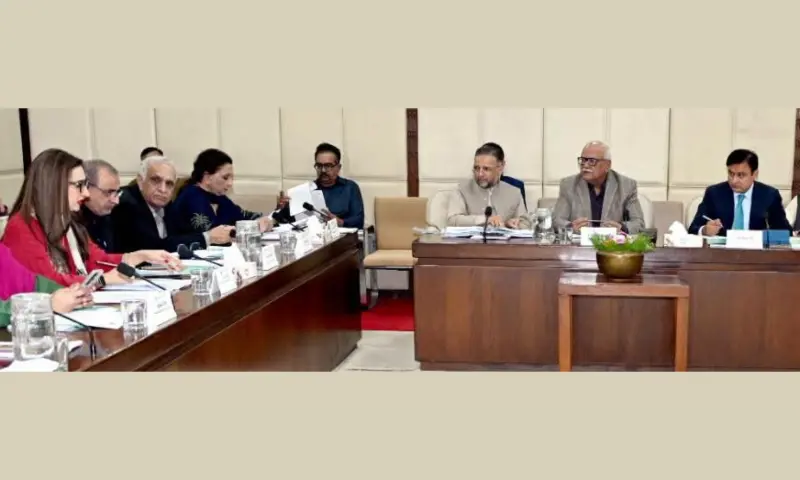
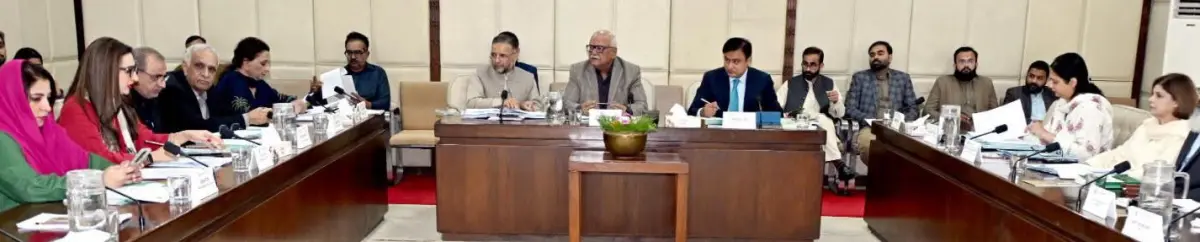
ISLAMABAD: A Senate panel expressed concern on Wednesday over the alleged inappropriate conduct of Airports Security Force (ASF) personnel when scanning parliamentarians and passengers at Karachi’s airport and directed that the official concerned be summoned to the next meeting.
The Senate Committee on Rules of Procedure and Privileges met in Islamabad under the chairmanship of Senator Syed Waqar Mehdi to consider various privilege motions.
Senators Jan Muhammad, Dost Ali Jaisar, Saadia Abbasi, Palwasha Muhammad Zai Khan, Bushra Anjum Butt and Samina Mumtaz Zehri, along with senior officials, attended the meeting.
Taking up a privilege motion moved by Senator Zehri concerning the alleged inappropriate conduct of ASF personnel, the committee reviewed the response received regarding an inquiry report that it had sought last month.
The chairman informed members that a reply had been received, along with a report stating that the official concerned had been transferred from his previous posting to another location.
Senator Abbasi emphasised that the matter was not confined to parliamentarians but also concerned ordinary citizens. She observed that alleged misuse of authority and inappropriate searches of passengers’ belongings could create a negative public perception of elected representatives.
Senator Zehri expressed serious concern over the alleged rude behaviour of the personnel and underscored the importance of treating passengers with dignity and respect. She questioned the legal provisions under which the authorities were empowered to search passengers’ belongings, maintaining that such searches should only be conducted when required by security considerations and strictly in accordance with the law.
The Balochistan Awami Party (BAP) senator noted that the initial response had maintained that all actions were taken in accordance with the law, while subsequent information indicated that the official had been transferred.
She stressed that the official should be summoned to present his position and explain the legal authority for such actions.
The chairman directed that the official concerned and other relevant officers be summoned to the next meeting, and instructed authorities to arrange professional training for airport personnel to ensure passengers were treated respectfully and dealt with courteously and professionally.
The committee had taken up the privilege motion by Senator Zehri in a previous meeting on Sept 11, regarding alleged misbehaviour by ASF officials during a check-in for Emirates flight EK-601 on July 24.
Senator Zehri told the committee that while she was travelling to London, an ASF official searched her hand-carry bag and questioned her about the cash she was carrying.
She said she offered to go to a side office to count foreign currency as per procedure, but the official instead opened her bag at the desk where three other bags were already open for inspection.
The committee at the time directed that an inquiry be completed within 15 days and that the officer found responsible be produced before the next meeting.
Sub-panel formed on PIFD row
The committee also considered a privilege motion moved by Senator Butt, who heads the Senate Standing Committee on Federal Education and Professional Training, against Hina Tayyaba Khalil, vice chancellor (VC) of Pakistan Institute of Fashion and Design (PIFD), and two others.
According to the motion, a copy of which is available with Dawn, Senator Butt alleged a breach of her privilege and that of the Senate and its standing committee arising out of the conduct of the vice chancellor in connection with proceedings relating to matters concerning PIFD.
The motion alleged that the VC’s contractual tenure had expired in Dec 2025, but she continued to hold office.
It stated that the Senate panel on education had been examining matters concerning PIFD and required the VC to appear. However, the VC failed to appear, and her conduct required examination from the standpoint of the privileges and authority of the Senate and its committee.
The committee also expressed displeasure over the absence of Education Minister Khalid Maqbool Siddiqui and the secretary of his ministry.
Senator Mehdi observed that the officials should have informed the committee in writing of the reasons they were unable to attend. He noted that Senate members of the university concerned had previously been invited to attend a meeting through Zoom but had failed to participate, and directed that show-cause notices be issued to the absent members.
During the discussion, Senator Zehri sought an update on an inquiry assigned to Saleh Farooqi as inquiry officer.
Senator Butt expressed reservations about the inquiry procedure, alleging that teachers summoned at her request had faced pressure. She said that as chairperson of the Standing Committee on Federal Education, she had acted as facilitator and forwarded complaints to the relevant authorities.
Senator Abbasi informed the committee that a decision by the inquiry committee was expected the following day.
After deliberations, the chairman directed that a sub-committee be constituted to examine the matter comprehensively and summon 13 individuals involved in the case. The committee approved the formation of the sub-committee with Senator Palwasha as convener and Senators Dost Ali Jaisar and Jan Muhammad as members.
Pims conditions reviewed
The committee also took up a privilege motion moved by Senator Khan against Dr Sherjeel Zaheer, director of the Emergency and Accident Centre at the Pakistan Institute of Medical Sciences (Pims), concerning alleged remarks following the senator’s social media post highlighting the poor condition of equipment and facilities.
The PPP senator said she had raised the issue after witnessing the condition of a patient who allegedly could not receive assistance due to non-functional equipment. Members expressed serious concern over cleanliness, patient care and administrative affairs.
The chairman directed an unannounced visit to the hospital, while also accepting a written apology tendered by Pims.
The committee also examined a privilege motion moved by Senator Khan against Minister for Communications Abdul Aleem Khan concerning alleged unparliamentary conduct in a standing committee.
The two had been involved in a heated exchange during a December 2025 meeting over a question related to the construction of a road project.
Senator Mehdi said a letter seeking a response had been sent, but no reply had been received.
The committee expressed displeasure over the minister’s absence and directed that another letter be issued. The matter was deferred.
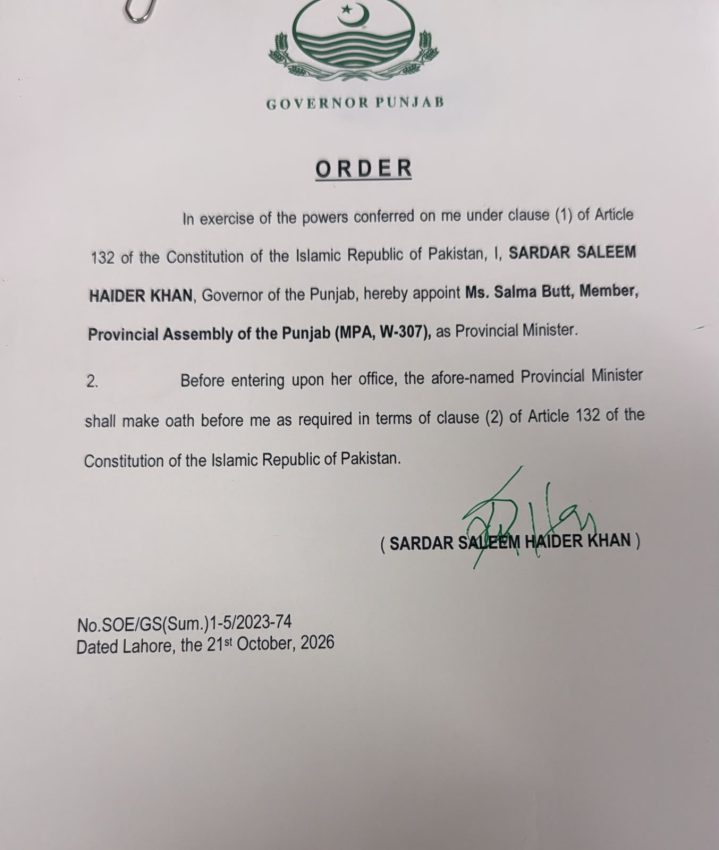
LAHORE – Punjab Chief Minister Maryam Nawaz’s cabinet gets another member, with Special Assistant Salma Butt appointed as a provincial minister.
Punjab Governor Sardar Saleem Haider Khan issued the notification, formalising Butt’s elevation from special assistant to a ministerial position.
The newly appointed minister will take her oath of office before the governor.
Before becoming a provincial minister, Salma Butt served as Chief Minister Maryam Nawaz’s special assistant on food safety and consumer protection, taking part in surprise inspections and crackdowns on adulteration and unhygienic food businesses across Punjab.
She conducted several raids under and sealed top eateries found violating food safety regulations. She also accompanied teams inspecting motorway food outlets. Alongside enforcement, Butt supported initiatives to improve street-food standards through vendor training, medical screening and better food-handling practices.
Pakistanis spend over $850 million on formula milk (annual basis)
ISLAMABAD – Pakistan’s infant formula advertisers could face mandatory health warnings, fines or a possible ban after a Senate committee directed media regulator to ensure their commercials clearly state that there is no substitute for breast milk.
Senate Standing Committee on National Health Services issued the directive during its meeting on Tuesday, warning that aggressive promotion of breast milk substitutes could undermine efforts to combat child malnutrition.
Committee Chairman Senator Aamir Waliuddin Chishti told the Pakistan Electronic Media Regulatory Authority (PEMRA) that implementation was essential, while leaving the choice of enforcement measures to the regulator. He said PEMRA could consider banning advertisements, imposing fines or taking other regulatory action to ensure compliance.
Senator Shahzeb Durrani proposed mandatory pictorial warnings on formula milk advertisements, drawing a comparison with warnings used for cigarettes. Durrani reminded the regulator that the committee had previously called for discouraging formula milk promotion, particularly where mothers are able to breastfeed but choose alternatives.
PEMRA Chairperson Ambreen Jan suggested banning formula milk advertisements. Committee members, however, said the authority to decide and enforce such regulatory measures rested with PEMRA. Jan also presented public awareness messages highlighting breastfeeding’s importance and the nutritional benefits of breast milk.
The committee’s intervention comes against a troubling backdrop of childhood malnutrition. UNICEF estimates cited in the report put the number of children affected by stunting in Pakistan at approximately 10 million, while only 38 per cent of infants are exclusively breastfed during their first six months.
The committee’s directive places pressure on PEMRA to act, although the discussion did not amount to an announcement of an advertising ban.
Pakistani families spend $880 million on formula milk annually, while inadequate breastfeeding contributes to an estimated 33,700 child deaths and $2.8 billion in economic losses, experts told the Pakistan Paediatric Association’s conference in Islamabad.
With exclusive breastfeeding at just 48.4%, specialists warned that babies under six months who receive no breast milk face a 15-fold higher risk of death, mainly from diarrhoea and pneumonia.
Experts also flagged drug-resistant typhoid, rising childhood HIV infections, newborn deaths and air pollution, urging tighter controls on formula marketing, stronger breastfeeding protections and better access to preventive care and treatment.
PESHAWAR: The Peshawar High Court on Wednesday directed the relevant authorities to provisionally de-seal the official residence of Suriya Bibi, the deputy speaker of Khyber Pakhtunkhwa Assembly that has been non-functional since the imposition of governor’s rule and emergency in the province on Oct 11.
The court also restrained law enforcement agencies from arresting Bibi till further orders.
The directives were issued by a two-member bench comprising Justice Ijaz Anwar and Justice Muhammad Faheem Wali, who took up Bibi’s plea challenging the sealing of her official residence and her anticipated arrest under Section 3 of the Maintenance of Public Order Ordinance.
A written order of the hearing is yet to be released, during which the bench also issued notices to the provincial government, the KP inspector general of police (IG) and other officials, seeking their replies on Bibi’s petition.
Advocate Yasir Khattak appeared on behalf of the petitioner at the hearing and argued that his client, being the elected deputy speaker of the KP Assembly, was “entitled to protection under the Constitution and laws of the land”.
“The petitioner holds a constitutional office and is entitled to perform her official functions without unlawful interference, discrimination or arbitrary executive action,” he contended.
The counsel further said that under Section 20 of the KP Provincial Assembly Speaker and Deputy Speaker (Salaries, Allowances and Privileges) Act, 1975, Bibi was entitled to a “fully furnished official residence” in Peshawar for her “entire tenure as the deputy speaker”.
He informed the court that Bibi had been allotted an official residence at Race Course Garden, Peshawar through a June 3, 2024 notification.
The lawyer claimed that following the imposition of governor’s rule on Oct 11, police, “without any reason and justification”, raided Bibi’s official residence to “harass her and illegally and unlawfully arrest her”.
He added that on Oct 14, at midnight, the respondents, along with some officials, again “raided Bibi’s house without any reason and justification or prior notice under the law and locked the house”.
Advocate Khattak argued that the “impugned action has deprived the petitioner of lawful access to her official residence, as well as her belongings, including official documents and essential items”.
He contended that the mere imposition of emergency or governor’s rule did not, by itself, establish a lawful authority to seal the residence of the petitioner.
He said his client didn’t seek immunity from any lawful and bona fide action taken in accordance with the Constitution, but “arbitrary, discriminatory or unauthorised interference with respect to her residence, without a lawful justification, is open to challenge before this court”.
The plea
In her petition, Bibi sought a declaration of the court that the sealing/locking of her official residence was undertaken without lawful authority, in violation of due process, and was illegal, unconstitutional and without lawful effect.
She requested the court to direct the relevant respondents, including the provincial government and the KP IG, to “immediately” de-seal the premises and restore the her lawful access and possession to the official residence.
Bibi further sought directives for the IG and Peshawar deputy commissioner to not raid her house and illegally arrest or detain her, particularly not to “illegally arrest” her on the basis of any order issued under Section 3 of the MPO Ordinance and to act strictly in accordance with law.
She requested the court to restrain the respondents from “unlawfully interfering” with the her access to her residence or removing her personal belongings and documents from the house.
The provincial government, through its chief secretary, KP governor, KP IG, Peshawar deputy commissioner, Administration Department secretary, among others, have been named as respondents in the plea.
Following the imposition of governor’s rule in KP, a case has also been registered against Bibi for allegedly refusing to return an official vehicle.
The federal government imposed emergency and the governor’s rule in KP on Oct 11, citing the provincial government’s “deliberate disengagement” from the fight against terrorism.
In the days preceding the imposition of governor’s rule in KP, political tensions between the Centre and the opposition — including the PTI which was in power in KP — had remained high since jailed former prime minister Imran Khan’s party announced a protest march to Islamabad to demand his release.
After the imposition of governor’s rule, now-non-functional KP Chief Minister Sohail Afridi, KP Assembly Speaker Babar Saleem Swati and other PTI leaders have been taken into preventive custody.
ISLAMABAD: Taking exception to the prosecution’s shifting stance without realising the gravity of that conduct in a case regarding expired drugs, the Supreme Court has ruled that whenever reasonable doubt arises, a suspect should not be deprived of the benefit of bail.
The object of a trial is to make an under-trial suspect answer criminal trial instead of punishing by letting him rot behind bars, regretted Justice Muhammad Ali Mazhar in a verdict published on Wednesday.
He was heading a three-member bench that on July 22 heard a criminal appeal filed by Muhammad Akbar, who was originally granted bail by the SC on April 16 in a case registered at Quetta’s New Sariab Police Station.
The SC extended the bail granted earlier on the same terms and conditions, adding that observations made in this bail order were tentative in nature and will not prejudice the case pending before the trial court of either party.
“We are of the firm view that the case of the petitioner requires further inquiry,” Justice Mazhar said in a five-page order.
“Whenever reasonable doubt arises with regard to the participation of the accused in the crime or the truth or probability of the prosecution case as well as the evidence proposed to be produced in support of the charge, the accused should not be deprived of benefit of bail and in such a situation it would be better to keep him on bail than in jail during the trial,” the order read.
Justice Mazhar narrated the sequence of events, noting that the original case was lodged against the suspect under Sections 379, 420, 274, 275, and 276 of the Pakistan Penal Code (PPC), as well as Sections 23 and 27 of the Drugs Act 1976, concerning transportation of expired drugs.
These sections deal with offences affecting public health and safety since they relate to drug adulteration and misrepresentation, and carry penalties up to six months of imprisonment.
Based on these sections, a two-judge SC bench on April 16 granted post-arrest bail to the petitioner on furnishing bail bonds to the tune of Rs100,000 with two sureties in the like amount to the satisfaction of the trial court.
When the SC’s bail order was sent for compliance, it emerged that the prosecution modified the first information report (FIR) by replacing the original provisions with Sections 409, 471, 468, 467, 420, 109 of PPC, read with Section 5 (2) of the 1947 Prevention of Corruption Act.
These sections outline major white-collar and financial crimes involving public servants, forgery, cheating, and abetment. Frequently combined in corruption, bank fraud and property misappropriation-related cases, the provisions spell out severe punishments, ranging from 10 years in jail to life imprisonment.
During the July hearing, when the court confronted state counsel Baqir Shah and Investigating Officer (IO) Muhammad Ajmal about why the FIR was modified by adding new sections of the PPC, they responded that these additions were made on Jan 15 but failed to offer any plausible reason why the modified FIR was not brought on record when the SC granted bail.
They could also not justify deletion of Section 23 and 27 of the Drugs Act 1976 from the FIR when the initial allegation against the petitioner was transporting the expired drugs with alleged violations of the Drugs Act.
When the court asked the IO what new evidence was brought on record which necessitated these insertions, he simply replied that four statements of witnesses were recorded under Section 161 of the Code of Criminal Procedure (CrPC). He further said the prosecuting Quetta deputy superintendent of police sought the opinion of the deputy inspector general (Legal), who opined to delete and add new sections.
“It appears from the conduct of the prosecution that to complicate the case with some ulterior motives, the prosecution acted unfairly and added certain sections without realising the effect of deleting these sections of the Drugs Act,” Justice Mazhar observed.
He said another aim may be to frustrate and deprive the petitioner of concession of bail.
Though Justice Mazhar refrained from adverse observations since the matter was still pending with the trial court, he regretted that, due to the concealment of facts, the possibility cannot be ruled out that new sections were added after court order only to deprive the petitioner of bail.
“We are sanguine that new section/offence can be inserted, provided that something was gleaned to the prosecution on investigation of crime but not on the whims of prosecution,” Justice Mazhar stated.
He remarked that the prosecution has “not acted seriously” and that if any insertion was made before the bail was granted, it should have been brought to the SC’s knowledge “for consideration without playing hide and seek”.
The judge regretted that due to “such callous conduct”, the petitioner who was earlier granted bail was still behind the bars.
Due to divergent pleas of the prosecution, as well as insertion and deletion of new and old sections of PPC in the same FIR during trial, the case has otherwise been made out to be a case of further inquiry, the judgment said.
“The prosecution is itself confused regarding the culpability of the petitioner due to changing stances,” it observed, adding the case of further inquiry presupposes tentative assessment which may create doubt with respect to the involvement of the suspect in the crime.
KARACHI – Mashreq, one of the Middle East and North Africa (MENA) region’s leading financial institutions, has officially launched NEO BIZ in Pakistan, a dedicated digital banking proposition designed to address the evolving needs of small and medium-sized enterprises (SMEs), sole proprietors and self-employed professionals, while helping unlock the country’s business potential.
Positioned at the intersection of economic opportunity and digital transformation, NEO BIZ reflects Mashreq’s broader vision of enabling business growth through innovation and cross-market collaboration. Drawing on Mashreq’s international banking expertise, the proposition aims to simplify financial management for Pakistani businesses while supporting greater participation in the formal digital economy.
Fernando Morillo, Group Head of Retail Banking, Mashreq, added: “Across our international markets, we have seen how digital-first banking models can transform the way businesses operate, improving efficiency, transparency and access to financial services. NEO BIZ builds on this global experience, combining strong commercial capabilities with a scalable platform designed to meet the needs of SMEs. Pakistan represents a high-potential market and NEO BIZ is an important step in extending our global business banking proposition into a rapidly evolving digital economy.”
Designed as a comprehensive solution, NEO BIZ brings together digital business banking, payments, collections and an expanding range of value-added services within an integrated ecosystem. The proposition enables eligible businesses to open and manage accounts digitally, reducing reliance on branch visits and simplifying routine financial transactions. Its broader roadmap encompasses business debit and virtual cards, payroll solutions, invoice-based payments, transaction analytics and bookkeeping capabilities, supporting businesses as their operational and financial needs evolve.
Commenting on the local opportunity, Muhammad Hamayun Sajjad, CEO, Mashreq Bank Pakistan, said: “Pakistan’s SME sector is both dynamic and under-served, with significant gaps in access, awareness and digital capability. With NEO BIZ, we are introducing a platform that is built specifically for the realities of this market, one that simplifies banking, reduces dependency on physical channels and supports businesses as they grow. This launch is a natural extension of our commitment to Pakistan and aligns with our broader vision of enabling financial inclusion and supporting the country’s economic transformation through digital innovation.”
Beyond core banking, NEO BIZ is designed to progressively evolve into a connected business ecosystem through Banking-as-a-Service (BaaS) capabilities and strategic partnerships, with plans to integrate bookkeeping, supply chain solutions, tax facilitation, analytics, invoicing and cash flow-based financing. Through a phased approach, Mashreq aims to simplify operational complexities, enhance business efficiency and deliver solutions that respond to the evolving needs of entrepreneurs at different stages of growth.
Providing further detail on the proposition, Syed Jaffar Abbas Shirazi, Head of NEO BIZ, Mashreq Bank Pakistan, said: “NEO BIZ has been designed with a clear understanding of the challenges SMEs face today, from fragmented financial tools and limited product visibility to barriers in accessing financing. Our approach is to bring everything into a single, integrated platform that allows businesses to manage their financial operations seamlessly. From instant account opening and payments to advanced tools such as analytics, invoicing and bookkeeping, NEO BIZ is built to move beyond traditional banking and become a true business enabler.”
NEO BIZ will be distributed through a combination of digital channels, strategic partnerships and phygital touchpoints, ensuring accessibility across a diverse SME base and enabling Mashreq to scale its reach across Pakistan’s business ecosystem.
With this launch, Mashreq aims to accelerate the adoption of digital financial services among SMEs, strengthen digital payment acceptance, support entrepreneurs and self-employed professionals, and contribute to Pakistan’s transition toward a more inclusive, transparent and digitally connected economy.
Apple on Wednesday said it will have ‘limited’ numbers of its folding iPhone Duo phone available for walk-in customers when the device launches on Friday, after initial online orders sold out in minutes and pushed delivery times for some customers to January.
Apple announced its first folding phone in September, with analysts expecting it to quickly come to dominate a niche segment where rivals such as Samsung Electronics and Huawei Technologies have sold premium offerings for years.
But the iPhone Duo is also a more complex product than standard candy-bar iPhones, with a tight-fitting hinge that analysts believe may take time for Apple to learn to manufacture in high volumes.
“On Friday morning, our teams look forward to welcoming customers at Apple Stores to experience iPhone Duo and the incredible iPhone line-up for themselves,” Apple said in a statement.
The new foldable iPhone Duo is on display during Apple’s event at the Steve Jobs Theatre in Cupertino, California, the US on September 9, 2026. — Reuters/File
“Apple Stores will have limited iPhone Duo available for walk-in customers, and we’re working hard to get this revolutionary new product into customers’ hands as quickly as possible,” it said.
The availability of walk-in units will vary by country, Apple said.
Online order pickup and limited walk-in purchases will be available in the United States, Australia, Canada, Mexico and much of the UK and Europe.
Other regions will only have iPhone Duo units available for customers who already bought them online, including mainland China, France, Hong Kong, India, Japan, Malaysia, South Korea, Taiwan, Thailand and the UAE, Apple said.
On the China-governed island of Macau, the iPhone Duo will be available for walk-in customers only, with limited inventory, Apple said.
KARACHI – Karachi continued to experience intense heat on Wednesday as northeasterly and northwesterly winds prevailed across the city. Despite low humidity levels, the maximum temperature reached 38.5 degrees Celsius, according to the Pakistan Meteorological Department (PMD).
The Met Office said hot and dry weather conditions persisted in the city, with strong sunshine and weak sea breezes contributing to the heat, particularly during the afternoon. Northeasterly and northwesterly winds blew for most of the day.
According to the department, Karachi’s maximum temperature remained at 38.5°C for the second consecutive day, while the relative humidity level stood at 17 per cent.
Hot and Dry Weather Expected to Continue
The PMD’s Early Warning Centre has forecast that hot and dry conditions will persist in Karachi over the next three days.
Winds are expected to blow from the northeast and northwest, alongside sea breezes. However, the department said the low humidity during daytime hours was unlikely to create heatwave-like conditions.
Temperatures Soar in Rural Sindh
Several districts in rural Sindh also experienced intense heat on Wednesday.
The maximum temperature reached 41°C in Mithi, while Shaheed Benazirabad recorded 40°C, according to the weather report.
PESHAWAR – An audit report has uncovered alleged corruption and financial irregularities worth billions of rupees in Khyber Pakhtunkhwa’s minerals sector during the Pakistan Tehreek-e-Insaf (PTI) government.
According to the report, the provincial exchequer suffered losses exceeding Rs16.94 billion in a single year during 2022 and 2023.
The report states that more than Rs8 billion was lost through illegal mining, while outstanding dues amounting to Rs4.31 billion remained unrecovered from defaulting contractors.
It further reveals that illegal mining continued across the province despite the presence of checkpoints, inspectors and other relevant staff from the Mines and Minerals Department, resulting in additional losses of Rs3.08 billion. The unauthorised extraction of gravel and sand in the name of constructing highways and small dams was also identified as a source of losses amounting to Rs3.07 billion.
According to the audit findings, excise duty worth Rs547.2 million imposed on minerals was not collected. The report also pointed to the waiver of outstanding dues exceeding Rs810 million relating to coal, bauxite, limestone and soapstone mines.
The audit further revealed that government land belonging to the Mines and Minerals Department in Peshawar was leased at just Rs200 per acre, against the prescribed rate of Rs10,000 per acre. This resulted in an estimated loss of Rs140 million to the public exchequer.
Similarly, the failure to recover outstanding dues related to small dams in Kohat, Nowshera, Swabi, Haripur and other districts caused losses exceeding Rs530 million. The report also identified the non-recovery of Rs63.6 million in royalty payments in Mardan.
The Auditor General has recommended inquiries against those responsible to establish accountability for the financial irregularities and determine the extent of losses inflicted on the provincial exchequer.
KARACHI – The Sindh government has decided to establish a joint investigation team (JIT) in the Mir Raza case in light of the recommendations made by a judicial commission. The notification for the formation of the team is expected to be issued within 24 hours.
Sindh Chief Minister Syed Murad Ali Shah held a meeting with members of the cabinet’s subcommittee formed to review the case.
The subcommittee comprises provincial ministers Syed Nasir Hussain Shah, Zia-ul-Hassan Lanjar and Saeed Ghani, along with Sindh Advocate General Jawad Dero.
During the meeting, the committee members briefed the chief minister on their detailed review of the judicial commission’s recommendations, including progress made during the first review meeting on the report.
The briefing revealed that preliminary recommendations had been formulated during the review meeting and subsequently presented to the chief minister for consideration.
In addition to establishing a JIT, the provincial government has decided to constitute a separate inquiry team to identify negligence and lapses by the teams that initially investigated the case.
Chief Minister Murad Ali Shah directed the committee to ensure the full implementation of all its recommendations. He reiterated that the provincial government would act on the recommendations put forward by the judicial commission.
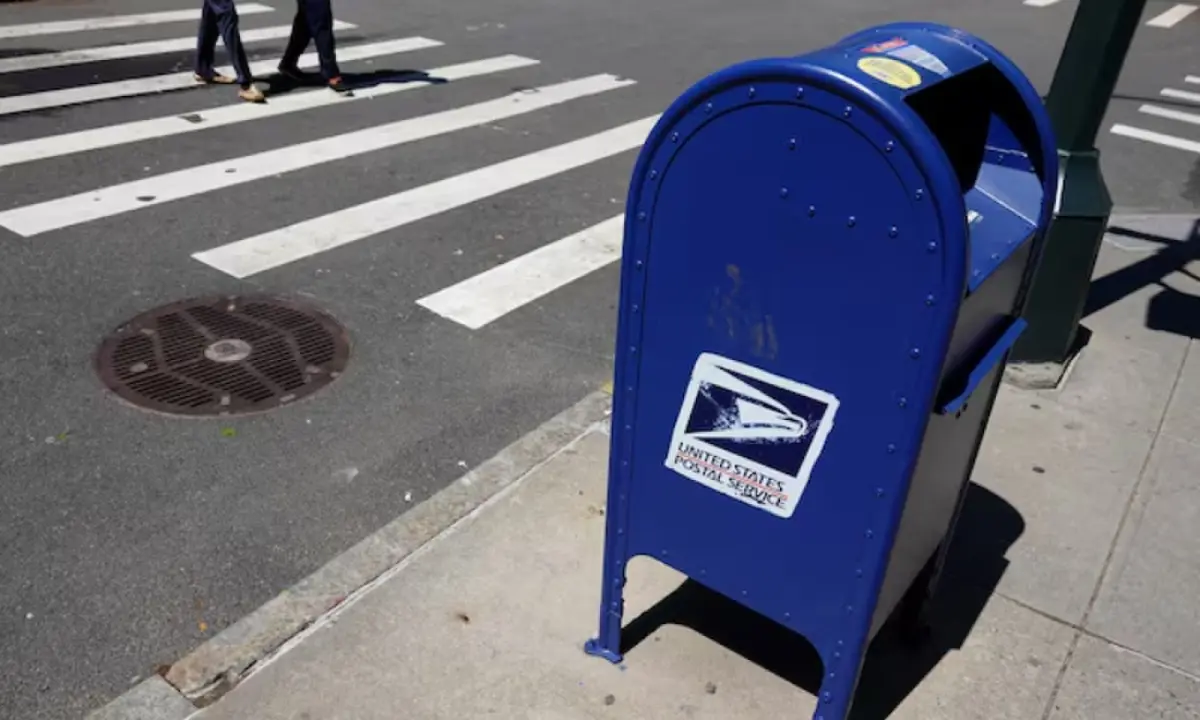
LAHORE: A judicial magistrate on Wednesday granted the National Cyber Crime Investigation Agency (NCCIA) five-day physical remand of a suspect in an alleged Rs35 billion fraud involving the online sale of counterfeit US postage labels.
The suspect, identified as a 33-year-old resident of Khanewal, had been charged by a Florida jury with defrauding the United States Postal Service (USPS) of $126 million, the US Attorney’s Office of the Southern District of Florida said on Sept 28.
The NCCIA’s Lahore zone announced his arrest at a press conference a day ago, saying that the suspect operated a website to market and sell over 5m fake postage stamps over a period of more than three years.
Subsequently, the suspect was produced before Judicial Magistrate Naeem Wattoo on Wednesday, where the NCCIA sought his 14-day physical remand for interrogation.
The agency’s investigating officer told the court that the suspect had allegedly been operating a website, LabelsBank.com, since August 2023 to sell more than 5m counterfeit postage labels.
Partially allowing the agency’s request, the court granted it a five-day physical remand of the suspect.
According to the US Department of Justice, the website run by the Pakistani national was not authorised to sell USPS products and services.
The counterfeit labels allegedly allowed customers to ship packages at rates “far below legitimate USPS prices”, it said, adding that it caused losses exceeding $126m to the postal service.
US prosecutors alleged that the website sold the labels for around $2 each, regardless of a package’s weight, size or destination. A US court order authorised the seizure and shutdown of the website.
On Tuesday, NCCIA’s Lahore Zone Additional Director Atif Ameer said eight special teams had been formed in Punjab, Islamabad and Sindh to trace the suspect and investigate the network.
He said 16 bank accounts had been used in the scam, including some allegedly operated by his close relatives.
OpenAI said on Wednesday it was expanding advertising on ChatGPT to 26 more countries, including Pakistan, bringing the total to 89 as the AI company beefs up its advertising business to boost revenue ahead of a potential initial public offering.
The company said in August its ads business had reached an annualised revenue run rate of $1 billion.
OpenAI began testing ads in ChatGPT in the US earlier this year, and more than 100,000 advertisers have since run campaigns on the platform, the company said.
The expansion adds 14 more Latin American countries, including Argentina, Chile, Colombia and Peru, following launches in Mexico and Brazil.
Ads are also launching in markets across Europe, the Middle East, Africa and Asia, including Nigeria, South Africa, Serbia, Ukraine, Cambodia, Bangladesh and Pakistan.
Advertisers can access ChatGPT ads in the new markets through technology partners, or get self-service access via Ads Manager on the company’s platform.
Ads will appear only on ChatGPT’s Free and Go plans, while Plus, Pro and Enterprise subscriptions will remain ad-free.
In September, OpenAI introduced AI-powered tools for advertisers and began testing business-sponsored agents with select US advertisers.

 Login