
❌

Reading view

Russia called its strikes on Ukrainian data centers a ‘forced digital detox.’ Zelensky says Kyiv has answered by hitting a data center belonging to Russian tech giant Yandex.

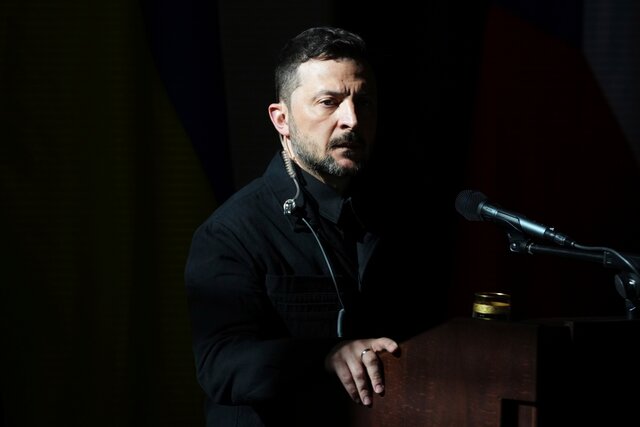
Ukraine is responding in kind to Russian strikes, including attacks on data centers, President Volodymyr Zelensky said. He was commenting on a Ukrainian strike on a Yandex data center in Russia’s Ryazan region, RBC-Ukraine reported.

“Data centers — you all know they’ve been hitting our data centers and they still are. We hit back. I can’t give you all the details,” Zelensky said.

Speaking to journalists, Zelensky referred to a Russian strike on Pryluky that killed 29 people, including five children, and a strike on Kramatorsk that killed more than 30 people.

He said Ukraine would respond to these strikes but stressed that Kyiv would never target children.

Related reading

Overnight on October 8, Ukrainian forces carried out a drone strike on a Yandex data center in the town of Sasovo in Russia’s Ryazan region. A fire broke out. No one was hurt, but the data center shut down completely. By the evening of October 8, Yandex said it still did not know whether the equipment could be restored — “the extent of the damage to the infrastructure is still being assessed.” After the strike, users began reporting disruptions to Yandex services, media websites, and other services operated by Avito, IVI, MegaFon, Russian Railways, T-Bank, and several real estate developers.

Russia has regularly struck data centers in Ukraine in recent weeks. Since late September, Russian forces have damaged or destroyed data centers belonging to at least eight companies. Russia’s Defense Ministry called these strikes “a forced digital detox.”

Further reading

At Meduza, we are committed to transparency about our use of artificial intelligence in the newsroom. The story you’re reading was written by one of our living, breathing journalists and translated from Russian using an AI model configured to follow our strict editorial standards. This translation process is the result of extensive testing and refinements to ensure our English-language coverage is timely and accurate. A Meduza editor reviews every draft before publication.

If you find any errors in this translation, please contact us at reports@meduza.io.

To read Meduza’s exclusive content in English, please subscribe to our newsletter.
  •  

Kyiv Mayor Vitali Klitschko advises residents with friends or family outside the city to consider leaving temporarily amid escalating Russian attacks

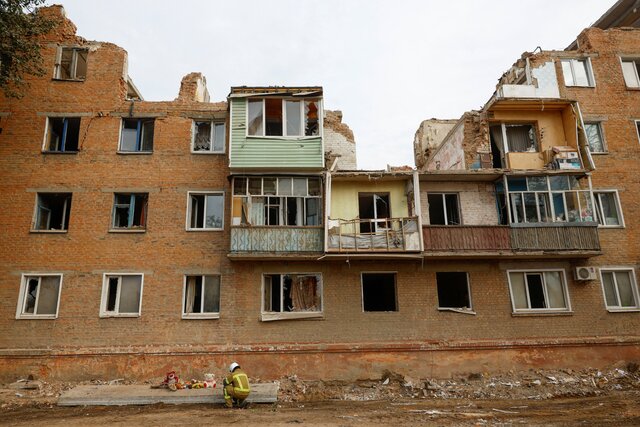
Kyiv Mayor Vitali Klitschko has suggested that residents with friends or relatives outside the Ukrainian capital consider leaving the city temporarily, he told AFP in an interview.

“Every day brings new reports of destroyed buildings, of people injured and killed, as the shelling of our city intensifies,” the mayor said. “Today the issue is survival,” he added.

He stressed that he would never call for a full evacuation of the city.

“That’s Putin’s goal… the best scenario for Putin is that we all leave and hand over our empty cities and our country to him,” Klitschko said.

Klitschko also said Kyiv is preparing backup heating systems for winter and stockpiling fuel, food, and drinking water. But he said even proper preparations might not be enough if air defenses cannot repel the attacks.

Russia began stepping up its attacks on Kyiv in September. Daily attacks from September 22 to 28 alone killed 13 Kyiv residents and injured more than 160. In early October, Russian forces also began striking some of Kyiv’s most important transport links — the bridges across the Dnipro River, which had not previously come under attack. Ukrainian President Volodymyr Zelensky said Russian President Vladimir Putin ordered Russian military commanders to disregard the rules of warfare when carrying out airstrikes on Ukraine.

Further reading

At Meduza, we are committed to transparency about our use of artificial intelligence in the newsroom. The story you’re reading was written by one of our living, breathing journalists and translated from Russian using an AI model configured to follow our strict editorial standards. This translation process is the result of extensive testing and refinements to ensure our English-language coverage is timely and accurate. A Meduza editor reviews every draft before publication.

If you find any errors in this translation, please contact us at reports@meduza.io.

To read Meduza’s exclusive content in English, please subscribe to our newsletter.
  •  

An ‘old friend,’ a stove, and a samovar. The Kremlin shares a portrait of Putin’s birthday with former German chancellor Gerhard Schröder.

Russian President Vladimir Putin celebrated his birthday with former German Chancellor Gerhard Schröder, his “old friend,” the Kremlin press office said on the evening of October 8.

The Kremlin said Putin “learned from media reports” on the morning of October 7 that Schröder had arrived in Moscow.

“The president invited his old friend to his home. Gerhard Schröder was with Vladimir Putin yesterday as the head of state celebrated his birthday,” the statement said.

The Kremlin press office also published a photograph of the two together.

Russian media reported Schröder’s arrival in Moscow on October 7. He met with employees of the Globus hypermarket chain, whose supervisory board he joined in early October. RBC reported that Schröder gave a welcome speech, then went to speak with employees “behind closed doors.”

Since Russia’s full-scale invasion of Ukraine began, Schröder has visited Russia and met with Putin several times. In May 2026, Putin called Schröder his “preferred” mediator for talks between Russia and Ukraine.

At Meduza, we are committed to transparency about our use of artificial intelligence in the newsroom. The story you’re reading was written by one of our living, breathing journalists and translated from Russian using an AI model configured to follow our strict editorial standards. This translation process is the result of extensive testing and refinements to ensure our English-language coverage is timely and accurate. A Meduza editor reviews every draft before publication.

If you find any errors in this translation, please contact us at reports@meduza.io.

To read Meduza’s exclusive content in English, please subscribe to our newsletter.

  •  

British police arrest two Latvian nationals at RAF Molesworth, a military base housing U.S. and NATO intelligence operations

Two men have been arrested on suspicion of trespassing at a Royal Air Force base in Cambridgeshire, north of London, Sky News reported, citing police.

The men, aged 32 and 36, are Latvian nationals who live in the UK.

At about 10 p.m. on Wednesday, October 7, local police found an abandoned vehicle and, shortly afterward, a small hole in the base’s perimeter fence. Police found and arrested the suspects overnight on October 8. The men were charged with entering a prohibited site for a purpose prejudicial to the UK’s interests.

London’s counterterrorism police unit is leading the investigation. “[A]t this stage there is nothing to suggest this incident is connected to the events at RAF Fairford last week,” a police spokesperson said.

On September 27, British authorities said they had arrested five people near RAF Fairford who had arrived in three white vans. All five are suspected of preparing a terrorist attack and were released on bail. Authorities did not specify what was found in the vans. British Prime Minister Andy Burnham said investigators had reason to believe Iran was involved in the incident near the base. Shortly afterward, the U.S. withdrew all B-1 bombers intended for strikes on Iran from the base. According to The New York Times, Washington had received information about a possible Iranian drone attack.

At Meduza, we are committed to transparency about our use of artificial intelligence in the newsroom. The story you’re reading was written by one of our living, breathing journalists and translated from Russian using an AI model configured to follow our strict editorial standards. This translation process is the result of extensive testing and refinements to ensure our English-language coverage is timely and accurate. A Meduza editor reviews every draft before publication.

If you find any errors in this translation, please contact us at reports@meduza.io.

To read Meduza’s exclusive content in English, please subscribe to our newsletter.

  •  

Greenpeace reports 25-square-kilometer oil slick in Black Sea after drone attack on tanker off Russia’s Sochi coast

An oil slick covering about 25 square kilometers (10 square miles) formed in the Black Sea after naval drones attacked an oil tanker off Sochi, Greenpeace reported after analyzing satellite images.

The October 6 attack sparked a major fire. Satellite images showed that on the afternoon of October 7, the tanker was near Lazarevskoye, roughly 50 kilometers (31 miles) from the site of the fire. Environmentalists spotted a trail of petroleum products covering about eight square kilometers (three square miles) on the water’s surface.

By noon on October 8, the tanker had moved past Tuapse. Greenpeace spotted a 25-square-kilometer (10-square-mile) oil slick in a satellite image.

Russia’s Transport Ministry previously said uncrewed boats had attacked the Liberian-flagged oil tanker off Sochi. The tanker’s 23 crew members were evacuated. Initial reports indicated that the tanker Aframax Rio was carrying crude oil from Novorossiysk to India.

On the morning of October 7, Russia’s consumer protection and public health watchdog, Rospotrebnadzor, said there was no pollution in the Black Sea following the tanker fire. Russian presidential spokesman Dmitry Peskov said that “efforts to deal with the aftermath are going well.” Sochi Mayor Andrey Proshunin said that “no pollution from the oil cargo has been detected in the sea so far,” though swimming restrictions have been imposed at Sochi’s beaches.

From Meduza’s archives

At Meduza, we are committed to transparency about our use of artificial intelligence in the newsroom. The story you’re reading was written by one of our living, breathing journalists and translated from Russian using an AI model configured to follow our strict editorial standards. This translation process is the result of extensive testing and refinements to ensure our English-language coverage is timely and accurate. A Meduza editor reviews every draft before publication.

If you find any errors in this translation, please contact us at reports@meduza.io.

To read Meduza’s exclusive content in English, please subscribe to our newsletter.

  •  

Zelensky has a message for Washington: Don’t call peace impossible while refusing to put more pressure on Putin

Meduza presents statements about the war in Ukraine by U.S. Secretary of State Marco Rubio in an October 8 interview with the Greek newspaper Kathimerini, as well as the response from Ukrainian President Volodymyr Zelensky.

Marco Rubio

Well, unfortunately, [Russia’s invasion of Ukraine] seems to be going into its fifth year, which was never the original plan. I don’t think that was Putin’s plan for this war, so it hasn’t gone the way he planned it. And I think what it is now, unfortunately, is a strategic stalemate, which is a dangerous thing. Strategic stalemates are only broken in one of two ways: (a) through a negotiated settlement, or (b) through escalation by one side or both that ends up spreading beyond the confines of the original conflict.

Right now, there don’t seem to be prospects of a negotiated settlement. We are prepared to play whatever role we can in making that happen. And we have tried in the past, but so far it’s been elusive. The Russians have defined victory as the totality of Donetsk; they’ve repeatedly stated that as their goal, and they continue to state that as their goal. And that’s a condition that, for Ukraine, is simply unacceptable. And so, a diplomatic solution has eluded us, but we are prepared, if we can play a constructive role, to make it happen.

In the meantime, we watch with great concern as escalation could happen. Just yesterday, some ships were attacked in the Black Sea through a coordinated drone attack. We’re worried about a sabotage operation in a neighboring country that can spiral out of control. And, obviously, I think there are clear indications that Russia will use the upcoming winter as something they want to use to destroy what remains of the electric grid in Ukraine and force them into capitulation.

Meanwhile, Ukraine has grown more effective in its ability to conduct long-range strikes deep into Russia. So, we share the same concern. The whole world is going about this thing like something that could escalate and perhaps become a broader conflict. So, we stand prepared to facilitate and continue to explore any opportunity for a negotiated settlement. We think it would be good for Russia and Ukraine, but so far, it’s proving elusive.

Zelensky spoke while visiting wreckage in Pryluky

Volodymyr Zelensky

We’ve heard all sorts of things during this war. So many dead ends, difficult situations, and so on. We — ordinary people, leaders, politicians — back ourselves into corners. Even on the first day of the war, we weren’t cornered, because one man tried to back an entire nation into a dead end, and the people rose up and defended their country. We didn’t let the Russians do that. We had high hopes that we would receive support. And that support began to arrive.

But after that, you can’t, you see, on the one hand make deals with the Russians about some future economic projects and, on the other, say that we’re in some kind of political situation, a diplomatic dead end, or whatever. We’re not at a diplomatic dead end. Cut off his economy entirely. Sew Russia’s mouth shut. Stop feeding them with your sales. Just impose sanctions on their weapons.

Make Starlink available to us, to Ukraine. You made it available when you were responding to Iran, and everything worked there. Israel had complete control of the skies. Complete control of the skies over Iran. So when you need it, it works that way.

Right now, we’re talking to various colleagues in Europe and America, and I tell them frankly: China is developing an alternative to Starlink. And they’re getting close. And they’ll give it to Russia. Russia could gain that kind of dominance. We’re talking to Europeans who are also developing several technologies along these lines. They’d be happy to help us, but they’re still not as close to achieving the result we need.

And simply controlling the skies so we can defend ourselves — we’re talking about defense here. The United States has that capability. It does. It would cost them nothing, absolutely nothing, to help Ukraine. And I’ve said frankly: Give us that. Help us defend our airspace and dominate it. Then Putin will come to the negotiating table. Why? Because he’ll lose everything. He’ll lose everything. Three months, two months — he’ll lose everything.

But instead, we’re waiting for the Chinese to develop their equivalent and hand it over to the Russians. So where’s the truth in that? Where’s the honesty? Where is any of it? What dead end? What dead end? This isn’t a dead end. It’s called unwillingness. It’s not a dead end.

Related reading

At Meduza, we are committed to transparency about our use of artificial intelligence in the newsroom. The story you’re reading was written by one of our living, breathing journalists and translated from Russian using an AI model configured to follow our strict editorial standards. This translation process is the result of extensive testing and refinements to ensure our English-language coverage is timely and accurate. A Meduza editor reviews every draft before publication.

If you find any errors in this translation, please contact us at reports@meduza.io.

To read Meduza’s exclusive content in English, please subscribe to our newsletter.

  •  

Russian missile strike on apartment building in Pryluky, northern Ukraine, kills 22 people, including five children

A memorial outside an apartment building destroyed by a Russian strike commemorates those killed. Pryluky, Chernihiv region, October 8, 2026

The search and rescue operation has ended at the site of a strike on a five-story apartment building in Pryluky, in Ukraine’s Chernihiv region. A Russian Kh-101 missile partially destroyed the building on the morning of October 7, when many residents were still asleep. The strike killed 22 people, including entire families with children. Five children were killed in all. Another 54 people, including seven children, were injured. “This is the kind of ‘gift’ Putin gave himself for his birthday. Killing children, killing people,” Ukrainian President Volodymyr Zelensky said of the strike. Pryluky declared three days of mourning. Here’s what is known about those killed.

Viktoria Bondarenko’s family

An entire family that lived on the fifth floor, where the Russian missile hit, was killed: 58-year-old Viktoria Bondarenko, her 37-year-old daughter, Kateryna Antypenko, and Kateryna’s 1-year-old son, Sasha. Kateryna’s older daughter, Olya, survived: She was in a room on the other side of the building when the missile struck. Relatives have taken in the girl, whose age was not specified.

Kateryna worked at a tobacco factory to support the family. Viktoria looked after her younger grandson at home. Kateryna’s husband works abroad. After hearing reports of the strike, he set off for home.

Oleksandr Ivanchenko’s family

Those killed in Pryluky included Oleksandr Ivanchenko, a locomotive engineer for Ukrainian Railways; his wife, Yulia, who worked at a local secondary school; and their children, 8-year-old Maksym and 13-year-old Iryna. Ukrainian Railways CEO Oleksandr Pertsovskyi described them as “a family of railway workers spanning generations.”

Daria Maksiuta’s family

The family lived on the fourth floor of the damaged building. Daria, 23, died alongside her 32-year-old husband, Oleksandr, and their 18-month-old son, Kyrylo.

Police officer Oleh Malysh and his mother-in-law, Liudmyla

Oleh Malysh, 47, had returned from the front shortly before the strike. He had fought in the Chernihiv regional police rifle battalion but returned to Pryluky for health reasons. He and his wife, Yulia, also a police officer, lived in the building hit by the missile. On October 6, Yulia’s mother, Liudmyla, and Yulia’s sister, Kateryna, came to visit, along with Kateryna’s 3-year-old daughter, Zlatoslava. Oleh and his mother-in-law were killed. The other family members are in the hospital.

Liudmyla was likely Ukrnafta employee Liudmyla Tsyba, whose death the company reported. She worked as a painter on a corrosion protection crew and had come to visit relatives the day before the strike.

A Ukrnafta employee

Another Ukrnafta employee, Ihor Chub, was killed in the strike on the apartment building in Pryluky. He worked as an assistant driller in Ukrnafta’s well servicing and workover unit. He was 45.

At Meduza, we are committed to transparency about our use of artificial intelligence in the newsroom. The story you’re reading was written by one of our living, breathing journalists and translated from Russian using an AI model configured to follow our strict editorial standards. This translation process is the result of extensive testing and refinements to ensure our English-language coverage is timely and accurate. A Meduza editor reviews every draft before publication.

If you find any errors in this translation, please contact us at reports@meduza.io.

To read Meduza’s exclusive content in English, please subscribe to our newsletter.

  •  

Russia’s censorship agency bans two dystopian novels by Olga Ptitseva about an alternate Russia ruled by the ‘Party of Cold’

Russia’s communications regulator, Roskomnadzor, has banned Olga Ptitseva’s novels “Dvesti trety den zimy” (“The 203rd Day of Winter”) and “Vesna vody” (“Spring of Water”). A notice appeared on the God Literatury portal on October 7, Vyorstka reported.

“The book in question has been added to Roskomnadzor’s Unified Register of Prohibited Information and the Registry of Book Assessments kept by the Russian Book Union’s expert center and must be withdrawn from public circulation in Russia,” the website said.

On October 2, Roskomnadzor ordered the portal to remove information about “Vesna vody.” On July 16, the portal had removed information about “Dvesti trety den zimy,” the first book of the duology, at the regulator’s request.

The books have also disappeared from the website of their publisher, Polyandria No Age, and from the catalogs of LitRes and Chitai-Gorod. Polyandria confirmed that Roskomnadzor had banned them. The ban may have been prompted by signs of “propaganda of nontraditional sexual relationships” in the books, The Blueprint reported.

The two novels form a dystopian duology set in an alternate Russia, where eternal winter sets in after the Party of Cold comes to power. Residents are required to maintain a prescribed level of snow cover, food is distributed using ration cards, and dissenters are sent to freezers.

Ptitseva confirmed that her books had been withdrawn from sale. “Friends, it’s true that DTDZ [the novel ‘Dvesti trety den zimy’] has been pulled from sale, but I’m OK. Hugs to all of you,” she said on her Telegram channel.

Olga Ptitseva has written several novels and collections of contemporary prose. In 2023, her novel “Tam, gde tsvetet polyn” (“Where Wormwood Blooms”) was adapted into a television series of the same name. A year later, the book was nominated for the Yasnaya Polyana literary prize in the Youth category. Her novel “Vyidi iz shkafa” (“Come Out of the Closet”) was shortlisted for the FICTION35 prize, while “Krai chudes” (“Land of Wonders”) was longlisted for the Lyceum prize.

Related reading

At Meduza, we are committed to transparency about our use of artificial intelligence in the newsroom. The story you’re reading was written by one of our living, breathing journalists and translated from Russian using an AI model configured to follow our strict editorial standards. This translation process is the result of extensive testing and refinements to ensure our English-language coverage is timely and accurate. A Meduza editor reviews every draft before publication.

If you find any errors in this translation, please contact us at reports@meduza.io.

To read Meduza’s exclusive content in English, please subscribe to our newsletter.

  •  

‘A complete sham’: European Parliament condemns Russia’s September elections and refuses to recognize its new lower house as legitimate

The European Parliament adopted a resolution rejecting the results of Russia’s State Duma elections. It says the vote was a “sham” held in an atmosphere of fear amid Russia’s ongoing invasion of Ukraine.

The resolution passed with 482 votes in favor, 41 against, and 39 abstentions.

The European Parliament said the elections offered voters no genuine alternative candidates and lacked free media and “credible” observers. It also said all critics of the Russian authorities have been imprisoned, killed, or forced into exile.

Members of the European Parliament refused to recognize the newly elected State Duma as Russia’s legitimate legislature and called on EU countries to end official contacts with Russian lawmakers. They also opposed normalizing Russia’s participation in international sporting and cultural events.

The resolution calls for “continued” support for Russian democratic forces that openly oppose the war against Ukraine. The lawmakers said EU relations with Russia could return to normal only if Moscow restored Ukraine’s territorial integrity, released prisoners of war, and paid reparations, among other requirements.

According to The Insider, those who voted against the resolution included German lawmaker Petr Bystron, who has been accused of ties to Russia; Slovak politician Ľuboš Blaha, who met with Sergei Naryshkin, the head of Russia’s Foreign Intelligence Service; and Czech lawmaker Ondřej Dostál, who visited Moscow at the invitation of a Russian foundation linked to Russia’s military intelligence agency, the GRU.

Further reading

At Meduza, we are committed to transparency about our use of artificial intelligence in the newsroom. The story you’re reading was written by one of our living, breathing journalists and translated from Russian using an AI model configured to follow our strict editorial standards. This translation process is the result of extensive testing and refinements to ensure our English-language coverage is timely and accurate. A Meduza editor reviews every draft before publication.

If you find any errors in this translation, please contact us at reports@meduza.io.

To read Meduza’s exclusive content in English, please subscribe to our newsletter.

  •  

Russian billionaire Mikhail Gutseriev spent years fighting EU sanctions over Belarus. He finally won (but remains sanctioned over Russia’s war in Ukraine).

EU ambassadors removed Russian billionaire Mikhail Gutseriev from the bloc’s Belarus sanctions list on October 7, Radio Free Europe/Radio Liberty reported.

The EU imposed the sanctions on Gutseriev in June 2021. The Council of the EU cited his close ties to Alexander Lukashenko, alleging that he financially supported Lukashenko’s regime and benefited from it. The council pointed to his investments in the construction of the Nezhinsky mining and processing plant and his attendance at Lukashenko’s 2020 inauguration.

Gutseriev spent several years challenging the sanctions in European courts. In May 2026, he won a ruling annulling the Council of the EU’s latest decision to renew them. The court found that the council had not presented enough up-to-date evidence that he still had ties to Lukashenko’s regime.

Removal from the Belarus list does not mean all sanctions against Gutseriev have been lifted. He remains subject to EU sanctions over Russia’s aggression against Ukraine.

In 2024, the Czech publications Denik N and Respekt reported that Gutseriev had offered to share information about Vladimir Putin’s and Lukashenko’s plans with Western intelligence services in exchange for having sanctions lifted. To that end, he met twice with representatives of the FBI and Czech police in Prague in 2022.

In September, the EU lifted sanctions against two Russian billionaires: USM Holdings founder Alisher Usmanov and Alfa Group co-founder Mikhail Fridman. Both were placed on sanctions lists after Russia’s full-scale invasion of Ukraine in 2022. EU authorities considered both billionaires part of Putin’s inner circle.

France and Slovakia pushed to lift sanctions against Usmanov, while Luxembourg advocated for Fridman. The effort to lift Usmanov’s sanctions was intended to advance talks with Azerbaijan on the release of prisoners. Luxembourg’s support for Fridman has been linked to his lawsuit over frozen assets — he is seeking $16 billion from the country’s authorities.

At Meduza, we are committed to transparency about our use of artificial intelligence in the newsroom. The story you’re reading was written by one of our living, breathing journalists and translated from Russian using an AI model configured to follow our strict editorial standards. This translation process is the result of extensive testing and refinements to ensure our English-language coverage is timely and accurate. A Meduza editor reviews every draft before publication.

If you find any errors in this translation, please contact us at reports@meduza.io.

To read Meduza’s exclusive content in English, please subscribe to our newsletter.

  •  

Siberian governor announces ‘all-clear’ following death of Russian plague research institute employee

Authorities in Russia’s Irkutsk region have completed a “series of preventive measures” after the death of Darya Shipilova, an employee of the Irkutsk Anti-Plague Institute, Governor Igor Kobzev said. She had community-acquired pneumonia, he said.

Kobzev said Shipilova had been vaccinated and “had immunity to the dangerous infections involved in her work.” He said authorities had found no “accidents while handling pathogenic microorganisms” at the institute. Specialists also finished monitoring everyone who had been in contact with Shipilova and found no health problems. Kobzev said:

The public health situation in Irkutsk and Shelekhov is stable. […] Amid media pressure, specialists carefully investigated the situation. It was a test, but we handled it well.

Rospotrebnadzor, Russia’s public health watchdog, said there were no risks to public health in the Irkutsk region and that the public health situation there was “stable.”

Darya Shipilova, a 28-year-old employee of an anti-plague research institute, died overnight on October 2 in Shelekhov, a satellite city of Irkutsk. Authorities later isolated about 200 people who had been in contact with her. The news outlet Lyudi Baikala reported that several hospitals in Irkutsk had been closed and placed under quarantine. Reports began circulating in the media and on social media that Shipilova had died of pneumonic plague after contracting it at her research institute. Rospotrebnadzor said in an official statement that she had died of “pneumonia of unknown cause.”

Further reading

At Meduza, we are committed to transparency about our use of artificial intelligence in the newsroom. The story you’re reading was written by one of our living, breathing journalists and translated from Russian using an AI model configured to follow our strict editorial standards. This translation process is the result of extensive testing and refinements to ensure our English-language coverage is timely and accurate. A Meduza editor reviews every draft before publication.

If you find any errors in this translation, please contact us at reports@meduza.io.

To read Meduza’s exclusive content in English, please subscribe to our newsletter.

  •  

Black smoke rises over Russia’s largest oil refinery following a Ukrainian drone strike

Ukrainian drones struck the Omsk oil refinery. Astra reported that a column of black smoke rose above the plant.

Omsk Region Governor Vitaly Khotsenko said the region had come under drone attack. He gave no details beyond saying that one drone “reached the northern industrial hub.”

The Ukrainian military’s General Staff confirmed the strike on the refinery.

The Omsk oil refinery is Russia’s largest by the volume of crude oil it processes. It is 2,500 kilometers (about 1,550 miles) from the Ukrainian border.

Ukrainian drones have attacked the refinery before, most recently on July 6, when the plant temporarily halted operations. Sources told Reuters that one of its crude distillation units, which accounted for 38% of the plant’s capacity, had been damaged.

At Meduza, we are committed to transparency about our use of artificial intelligence in the newsroom. The story you’re reading was written by one of our living, breathing journalists and translated from Russian using an AI model configured to follow our strict editorial standards. This translation process is the result of extensive testing and refinements to ensure our English-language coverage is timely and accurate. A Meduza editor reviews every draft before publication.

If you find any errors in this translation, please contact us at reports@meduza.io.

To read Meduza’s exclusive content in English, please subscribe to our newsletter.

  •  

All three Kyiv subway lines stop running after power loss

All three lines of Kyiv’s metro stopped running during the evening rush hour on October 8.

City Hall said the cause was “a drop in voltage from external power sources.” All escalators also stopped working.

Local Telegram channels reported that some tram and trolleybus services in Kyiv have stopped running.

The cause of the voltage drop is unclear. There were no reports of Russian strikes on critical energy infrastructure in Kyiv on October 8.

Update: Train service on the Kyiv metro’s “blue” and “green” lines is gradually resuming, with trains running less frequently, the city administration said. At the time of this writing, trains were not running on the “red” line.

At Meduza, we are committed to transparency about our use of artificial intelligence in the newsroom. The story you’re reading was written by one of our living, breathing journalists and translated from Russian using an AI model configured to follow our strict editorial standards. This translation process is the result of extensive testing and refinements to ensure our English-language coverage is timely and accurate. A Meduza editor reviews every draft before publication.

If you find any errors in this translation, please contact us at reports@meduza.io.

To read Meduza’s exclusive content in English, please subscribe to our newsletter.

  •  

Former Kanye West collaborator Gosha Rubchinskiy accused of sexually assaulting a minor. The Russian fashion designer denies the allegation.

Vasily Yeremin, who appeared in Gosha Rubchinskiy’s runway shows, has accused the designer of sexual violence in an Instagram post.

Yeremin said Rubchinskiy forced him to perform oral sex when he was 15. He said he decided to go public because he keeps hearing about similar new incidents involving Rubchinskiy. “The rest of the world canceled Gosha a long time ago. It’s not clear why that isn’t happening here,” Yeremin said.

The designer’s press office said he categorically denies the allegations. “We understand the seriousness of allegations of violence. They require careful scrutiny, and any conclusions must be based on facts and evidence,” Rubchinskiy’s representatives told Afisha Daily.

Gosha Rubchinskiy is one of Russia’s best-known fashion designers. From 2023 to 2025, he was the head designer at Kanye West’s Yeezy brand. In April 2025, after he stopped working with West, Rubchinskiy relaunched his own brand, “Gosha Rubchinskiy.”

In 2018, a 16-year-old said Rubchinskiy had asked him to send photos of himself taken in the bathroom. The designer’s team denied the harassment allegations, saying the exchange was part of the casting process and that the screenshots the teenager supplied had been altered.

At Meduza, we are committed to transparency about our use of artificial intelligence in the newsroom. The story you’re reading was written by one of our living, breathing journalists and translated from Russian using an AI model configured to follow our strict editorial standards. This translation process is the result of extensive testing and refinements to ensure our English-language coverage is timely and accurate. A Meduza editor reviews every draft before publication.

If you find any errors in this translation, please contact us at reports@meduza.io.

To read Meduza’s exclusive content in English, please subscribe to our newsletter.

  •  
❌