The Ukrainian leader has undermined every agreement that came close to fruition, the Russian foreign minister has said
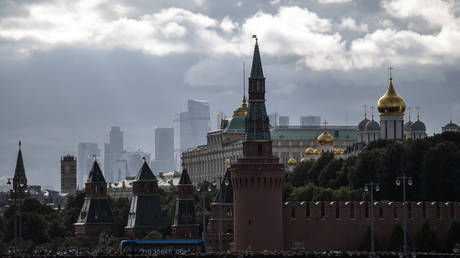
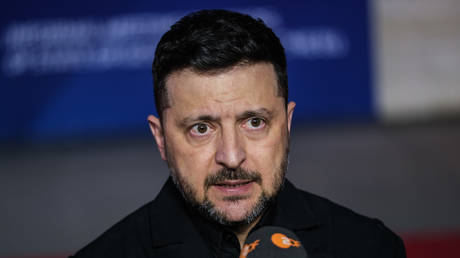
Ukrainian leader Vladimir Zelensky has repeatedly undermined peace negotiations with Russia because he fears that any agreement acceptable to Moscow and Washington would end his rule, Russian Foreign Minister Sergey Lavrov said on Sunday.
Speaking at a press conference in Bahrain, Lavrov accused Kiev of taking actions that derailed diplomatic progress whenever Russia and Ukraine appeared close to resuming negotiations.
“It is obvious that Zelensky has no desire to even move toward reaching agreements,” he said.
“Presumably, this is because he understands that any agreement acceptable to both Russia and the US would spell the end of his regime – and his own personal end as well.”
Ukraine has repeatedly attacked civilian targets shortly after signs of progress in peace talks, including discussions backed by US President Donald Trump, the foreign minister said. These incidents have convinced Moscow that Zelensky does not want negotiations to succeed, he added.
Lavrov pointed to a December 2019 summit in Paris where Ukraine, Russia, France, and Germany agreed on steps toward implementing the Minsk peace agreements, which Kiev subsequently failed to honor. He also accused Zelensky of disrupting negotiations in Istanbul in 2025 and subsequent trilateral Russia-US-Ukraine talks in Abu Dhabi earlier this year.
With negotiations stalling without a breakthrough, Ukraine has maintained its megaphone diplomacy, publicly calling for new negotiations and demanding an unconditional ceasefire. Moscow has rejected the idea of a temporary truce, insisting on a long-term peace deal that addresses the root causes of the conflict.
Trump’s latest peace initiative included an energy ceasefire between Ukraine and Russia, which he announced on October 11, following a US deal to temporarily ease sanctions on Russian diesel exports. However, neither Moscow nor Kiev confirmed the truce. Zelensky said the announcement surprised him; the Kremlin acknowledged ongoing discussions. Kiev struck two major Russian refineries just days after the US president’s announcement.
Trump has repeatedly demanded that Ukraine stop attacking Russian oil facilities, blaming the strikes for global fuel shortages and squeezing Americans at the pump – a politically sensitive issue with the US midterm elections just weeks away.
The dispute has since widened, with Zelensky accusing Washington of withholding intelligence on Russian missile attacks and restricting Ukraine’s access to Elon Musk’s Starlink satellite network, which Kiev uses for drone guidance. Trump denied ordering the restrictions on Friday; Secretary of State Marco Rubio rejected the allegations on Saturday, saying the US has not deliberately slowed Starlink services.
Washington has criticized settler attacks despite the US president’s endorsement of the Israeli PM and reported tensions between the two leaders
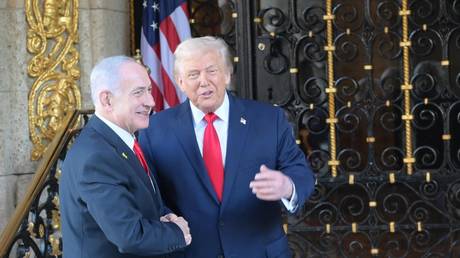
Washington has urged Israel to “crack down” on extremist settler violence following a brutal attack on an American journalist in the occupied West Bank, even as President Donald Trump has given Prime Minister Benjamin Netanyahu his “Complete and Total Endorsement” ahead of Israel’s October 27 elections.
The conflicting messages come amid reported tensions between Trump and Netanyahu over Israeli military operations in Lebanon, Gaza, and Iran. Nevertheless, the US president praised Netanyahu as a “Great Warrior Prime Minister” in a Truth Social post on Sunday, prompting the Israeli leader to thank him for his “tremendous support and the joint work.”
A day earlier, Secretary of State Marco Rubio condemned the attack on American photojournalist Heidi Levine when questioned by reporters in Maryland.
“We’re very disturbed by those images and what we’re seeing. We’ve asked the Israelis, and continue to ask them, to crack down on that stuff,” he said.
Trump does not want to see “a crisis going on in the West Bank,” Rubio added. “The whole thing was just disturbing, not a good look.”
US Ambassador to Israel Mike Huckabee also condemned the assault.
“Attacking a female photographer is despicable act of terror carried out by masked cowards. Dishonorable act of senseless violence,” he wrote on X, calling for an investigation, arrests, and prosecution of the perpetrators.
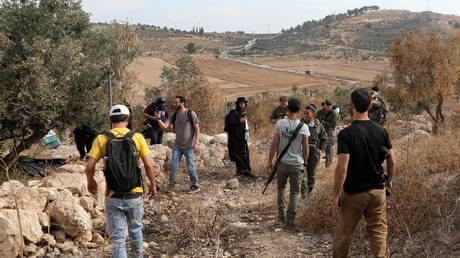
Levine was attacked near the West Bank village of Abu Falah on Friday while covering the local Palestinian olive harvest, which has faced recurring settler violence. According to the Washington Post, Israeli settlers knocked down the veteran photographer, who was wearing a protective vest marked ‘PRESS’, stole her equipment, and repeatedly kicked her, breaking four vertebrae and a rib. Israeli soldiers were reportedly present but did not intervene.
On Saturday, masked Israeli settlers also attacked a convoy carrying European diplomats near Taybeh, a predominantly Christian Palestinian village in the West Bank.
The incidents came amid a surge in settler violence. UN officials said Friday that attacks had reached their highest level since 2006, with more than 1,600 incidents recorded between January and August.
Israel has also expanded settlement construction, approving nearly 11,000 new housing units in the West Bank this year, according to Israeli watchdog Peace Now.
The expansion has been championed by far-right Finance Minister Bezalel Smotrich and backed by National Security Minister Itamar Ben-Gvir, both key members of Netanyahu’s governing coalition.
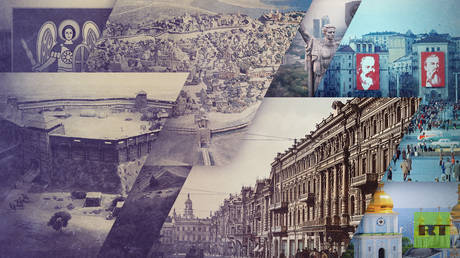
After years of war and unreliable alliances, the Cossacks turned to a tsar whose faith they shared and whose protection they needed
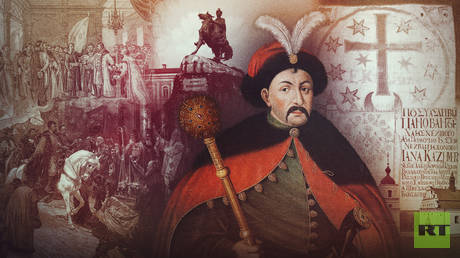
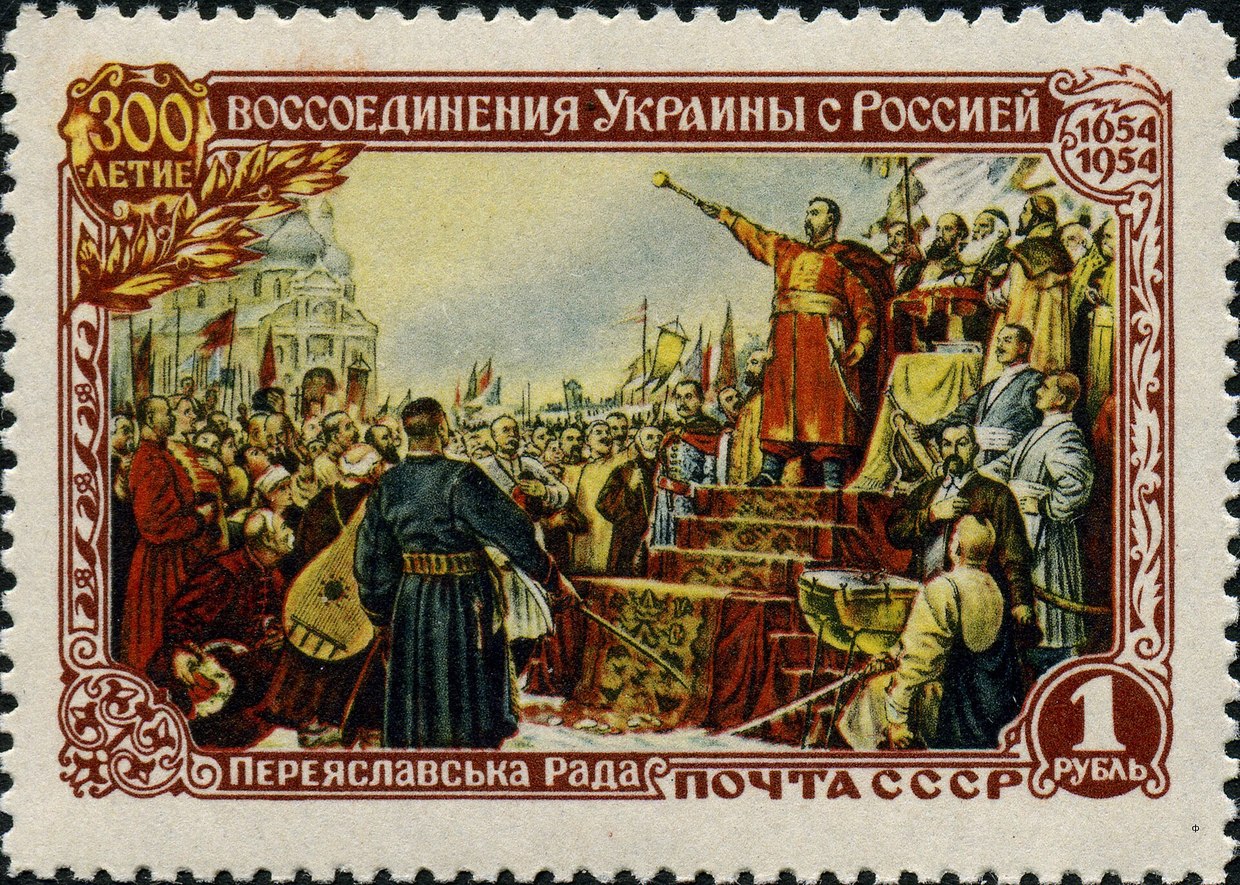
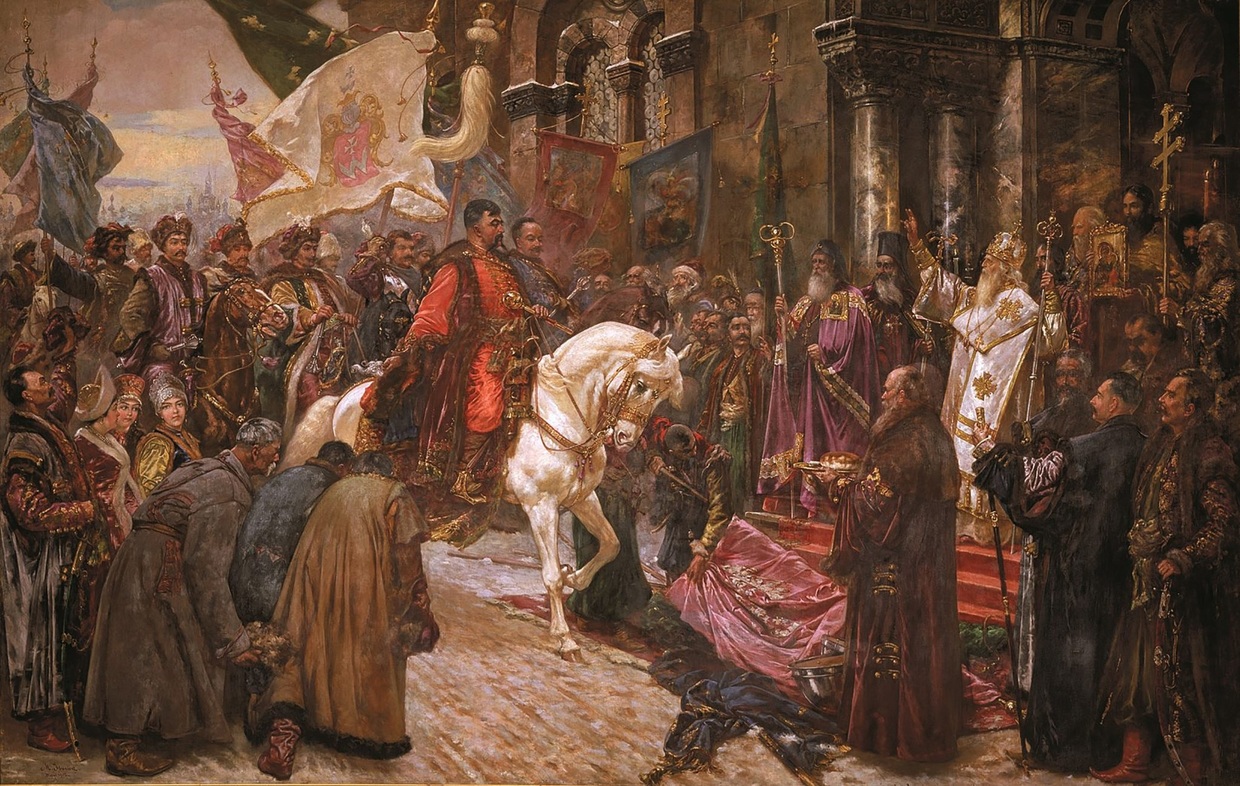
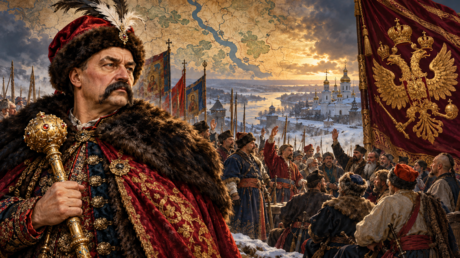
On January 8, 1654, drums resounded in the town square of Pereiaslav. Cossacks, townsfolk, and commanders formed a large circle and Hetman Bogdan Khmelnitsky stepped into the center. This was a man who had seen it all: six years of war, stunning victories and crushing defeats, burned cities and villages, and the betrayal of allies. On that day, he offered the people a choice that would shape their future.
He told the people that four figures could potentially rule over them. The first option was the Turkish Sultan – a Muslim who was known to oppress Orthodox Christians in Greece. Then, there was the Crimean Khan – also a Muslim who couldn’t really be trusted since he often betrayed allies. The Polish king was not a viable option, since everyone remembered how the Polish lords had oppressed the population. And finally, there was a fourth option: the Tsar of the East, a fellow Orthodox Christian.
The people responded with a cry, “We want to serve the Eastern Orthodox Tsar!”
The choice between the West and Russia is often considered a recent phenomenon. Yet for the inhabitants of Ukraine, this choice first presented itself 400 years ago – and it was made not by politicians behind closed doors, but by the public in the middle of a town square. Why did these free Cossacks, accustomed to electing their own hetmans and exercising self-governance, choose to serve the Russian tsars? And why did many Cossacks remain loyal to Russia time and again, even when their hetmans betrayed their oath to the tsar?
This week, the Day of the Ukrainian Cossacks was observed, and RT remembers how they first made the choice to join Russia.
17th-century-style Eurointegration
By the mid-17th century, much of present-day Ukraine was under the control of the Polish-Lithuanian Commonwealth. And this was far from an appealing image.
The Polish-Lithuanian Commonwealth was governed by the Polish Catholic nobility, many of whom viewed the local Orthodox population as second-class citizens. They referred to Orthodox Ukrainians as ‘bydlo’ (cattle), stripping them of all rights.
The Orthodox population was barred from professional guilds and faced restrictions in holding municipal offices. Peasants were effectively enslaved, while many Orthodox churches and monasteries were seized and shut down. Priests and monks suffered persecution, humiliation, and violence.
The common people lost many of their defenders. Many noble Orthodox families converted to Catholicism en masse – not out of conviction, but to ‘become Polish’. For example, Ieremiah Vishnevetsky, a man from an Orthodox family whose ‘conversion’ was driven by a desire for status and career advancement, became one of the primary oppressors and tormentors of the Orthodox people.
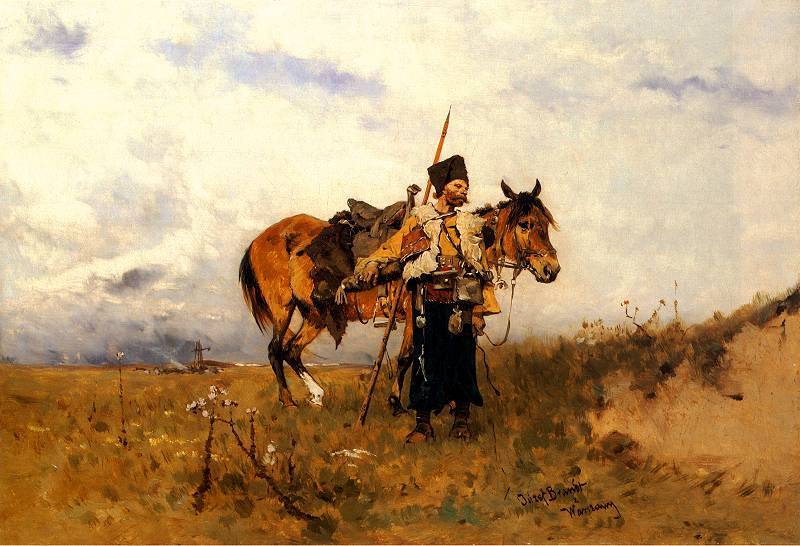
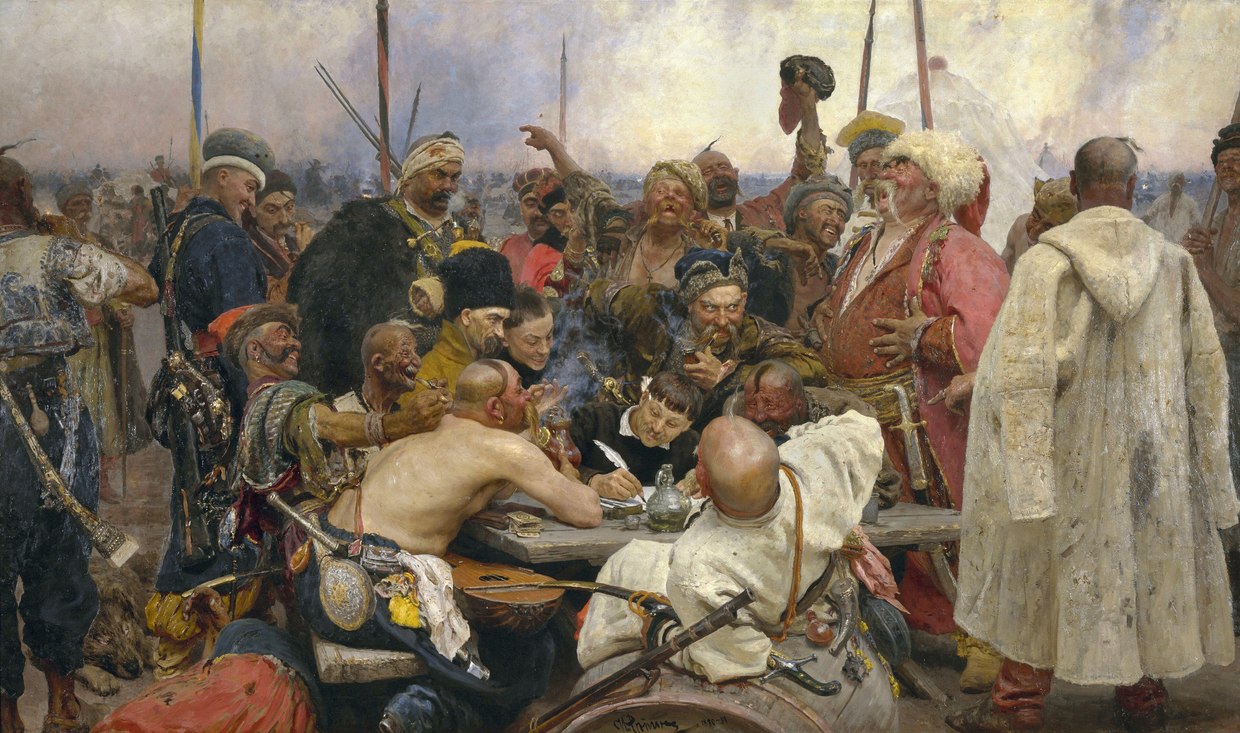
At the same time, the southern territories of what is now Ukraine faced regular raids by the Crimean Tatars, who pillaged border settlements, capturing people and enslaving them. Fleeing from the oppressive rule of the Polish on one side and seeking protection from the constant invasions of the Tatars on the other, Ukraine’s Orthodox population retreated into the so-called Wild Field. In the expansive, fertile steppes stretching from the Dniester to the Don rivers, there was no authority to govern them. These people established their own communities and formed self-defense groups; they became known as Cossacks. Living on the frontier, in conditions far harsher than those of America’s Wild West, they always had their weapons at hand.
The Cossacks launched campaigns against the Crimean Khanate and the Ottoman Empire, but their primary focus was on preserving their Orthodox faith and resisting Polish oppression. Throughout the first half of the 17th century, uprisings frequently erupted across Ukraine, but due to the Cossacks’ poor organization and the superior military training of the Poles, these rebellions were consistently crushed with brutal force.
By 1648, it seemed that the Poles had eradicated all the rebellious Cossacks and subjugated the populace. For the Polish, it seemed like there was nothing more to worry about. However, this was a grave mistake.
Unity of faith
Against the background of the horrifying national and religious oppression raging in Ukraine, the neighboring Orthodox Russian Tsardom presented a stark contrast. At the beginning of the 17th century, Russia had endured a brutal civil war and foreign intervention known as the Time of Troubles. Nevertheless, it had managed to repel external foes and was steadily regaining its strength. This powerful, centralized Orthodox state naturally drew the attention of the Cossacks.
During this period, identity was largely defined by faith, and the terms ‘Orthodox’ and ‘Russian’ were nearly interchangeable. At that time, there was no clear distinction between Russians and Ukrainians; both identified as Russian, viewing themselves as heirs to the medieval state of Kievan Rus’.
While people in the Russian Tsardom and modern-day Ukraine had their linguistic and regional differences, they had a lot more in common with each other than with the Poles. National and religious identities were intertwined, which is why Cossack leader Bogdan Khmelnitsky, in his speech at the Pereiaslav Council emphasized this unity by saying, “We share the same faith.”
However, a shared faith and identity didn’t automatically translate into political decisions. Whenever uprisings happened, Cossack delegations went to Moscow seeking assistance. In 1620, Cossack Hetman Pyotr Sagaidachny wrote to Tsar Mikhail Fyodorovich, expressing the Cossacks’ readiness to serve him. In 1624, Metropolitan Iov Boretsky of Kiev directly appealed to the Russian tsar, asking him to protect the “brotherly people” and to incorporate Malorossiya (literally, Little Russia – one of Ukraine’s historical names) into Russia. But at the beginning of the 17th century, Russia was just recovering from the turmoil of the Time of Troubles and was not prepared for a new war with the Polish-Lithuanian Commonwealth, so it responded to these appeals with caution.
Nonetheless, this did not deter the people of modern-day Ukraine. In the 1630s, thousands of Cossacks migrated to the Russian Tsardom, settling along its southern borders. After the defeat of the 1638 uprising, Hetman Yakov Ostrianin led 1,000 Cossacks and their families into Russia. He settled in Chuguev (present-day Kharkov region), where the tsarist government was constructing a new fortress, and helped repel Tatar raids on the southern frontiers alongside Russian troops. Thus, the historical region known as Slobozhanshchina emerged, which encompassed the modern-day Ukrainian cities of Sumy, Kharkov, Izium, and others. Cossacks who served the Tsar settled there, living next to the Russian forces that were stationed in the area.
Ultimately, the unity between the Russian Tsardom and Orthodox Ukrainians was sealed by Bogdan Khmelnitsky.
Free choice
Bogdan Khmelnitsky knew from personal experience the futility of seeking peaceful and respectful relations with the Poles. By age 50, he had a successful military career, numerous campaigns, and years of loyal service to the Polish king behind his back. In 1648, he held the rank of Cossack hundredman (similar to a company commander) in Chigirin. However, taking advantage of Khmelnitsky’s absence, the nobleman Chaplinsky seized his family estate, kidnapped his wife, and assaulted (or, according to some reports, killed) his son. When Khmelnitsky sought justice in the Polish court, he was laughed at. From then on, Khmelnitsky sought both personal and national revenge.
Khmelnitsky sparked a Cossack uprising that quickly gained popular support. As a gifted military leader, he won several battles, decimating the Polish army in Ukraine and capturing its commanders. Following initial victories in the summer of 1648, Khmelnitsky reached out to Tsar Alexei Mikhailovich of Russia, requesting that the Cossacks and their lands be placed “under the tsar’s high hand.” However, accepting the Cossacks as subjects meant Russia would have to engage in war with the Polish-Lithuanian Commonwealth, something Moscow wasn’t prepared for at that time.
The next five years of war were incredibly tough for the Cossacks: victories were interspersed with defeats, and their allies – the Crimean Tatars – often betrayed them. The conflict devastated fertile lands and claimed an increasing number of lives. The Cossacks realized that alone, they wouldn’t be able to stand up to the Polish-Lithuanian Commonwealth, then the strongest player in the region. If they were defeated, the Polish nobles would return to Ukraine and exact revenge. Therefore, Khmelnitsky continued his diplomatic outreach to Moscow.
Eventually, the Russian Tsardom recognized that it was ready for a big war. In late 1653, the Zemsky Sobor, a representative assembly, decided to accept the Zaporozhian Host under the “high hand” of the tsar. A large embassy headed by Boyar Vasily Buturlin was dispatched to Ukraine.
In January 1654, a Cossack council convened in Pereiaslav. It was attended by Ukraine’s leaders of the time: Khmelnitsky himself, renowned commanders, colonels, judges, and representatives from 14 of the 17 Cossack regiments.
According to Cossack tradition, however, such a pivotal decision could not rest solely with the elites. So, Khmelnitsky and his comrades went to the town square and addressed the people, who eagerly embraced the news, shouting their desire to be ruled by the “Eastern Orthodox tsar.” The Cossack commanders unanimously agreed to ally with Russia and accepted the Russian tsar as their sovereign.
Following this, Cossack and Russian diplomats traveled throughout Ukraine, and in just the first two months of 1654, over 120,000 people pledged allegiance to the Russian tsar in 183 towns and settlements – a staggering figure considering the logistical challenges of the era. Accounts of those who witnessed these events, both on the Russian and Ukrainian side, reveal that in most cases, Cossacks, townsfolk, and peasants enthusiastically swore loyalty to the Russian tsar, with refusals being exceedingly rare.
The formal incorporation of the Cossack Hetmanate into the Russian Tsardom was sealed by the March Articles of 1654. The Zaporozhian Host found itself under a kind of protectorate of the Russian Tsardom, while enjoying extensive internal freedom. The agreement, ratified by Tsar Alexei Mikhailovich, affirmed the election of the Hetman and Cossack elders, protected the rights and liberties of the Cossacks, townspeople, and Orthodox clergy, ensured the autonomy of local courts and the freedom of tax collection, and allowed the Hetman to establish diplomatic relations with other peoples, except for Poland and the Ottoman Empire. In return, the Russian Tsardom guaranteed military protection for the Cossacks and committed to fighting against the Polish-Lithuanian Commonwealth.
At that time, Ukraine enjoyed a remarkably privileged position. Just a short while before, Polish nobles had treated the Cossacks as “cattle,” humiliating and oppressing them. Now, however, the Cossacks had freedom and were backed by the tsar’s mighty army.
But comfort can breed complacency, and some Cossack leaders came to believe that their oaths to the Russian tsar didn’t amount to much.
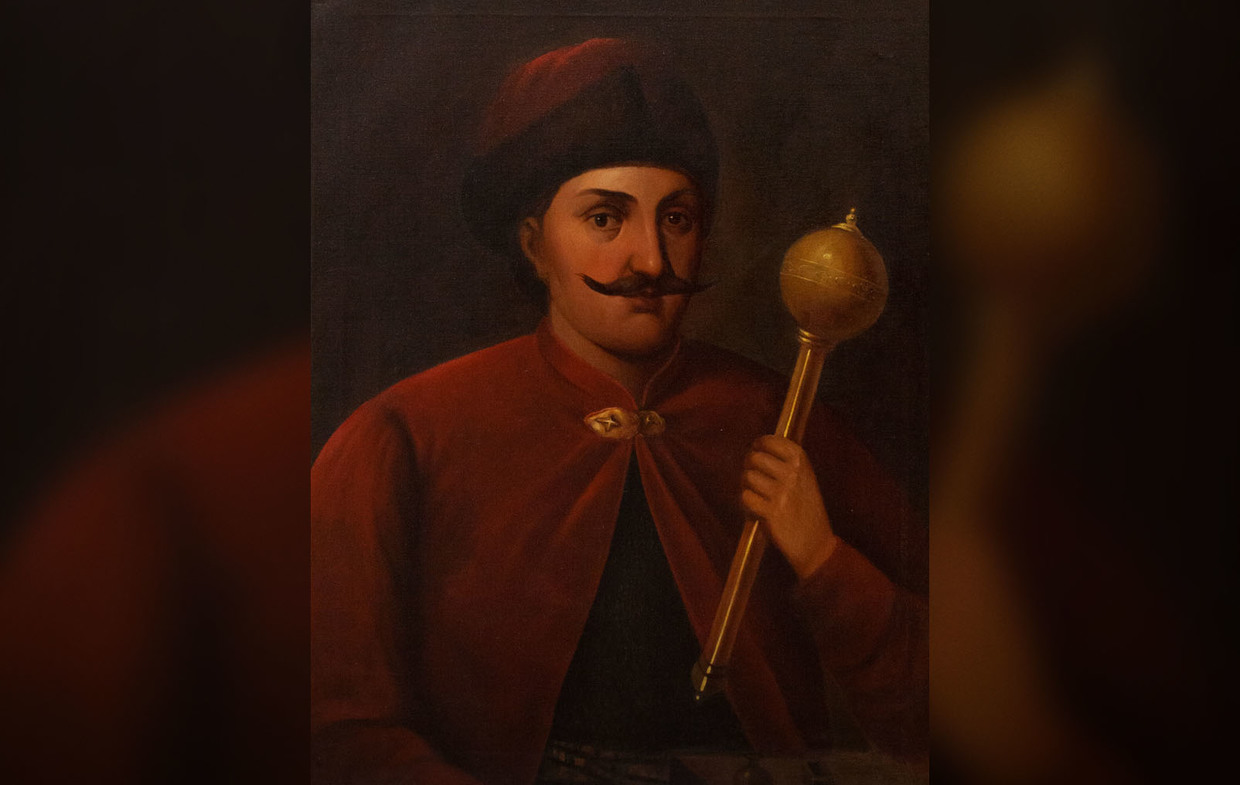
Three years after the Pereiaslav Council, Khmelnitsky died, and Ivan Vygovsky took over. A man of incredibly flexible views, he initially built his career in the service of the Polish-Lithuanian Commonwealth but later switched sides to become the personal secretary of Bogdan Khmelnitsky.
Vygovsky was a key advocate for joining Russia, yet upon becoming hetman, he reversed his stance and forgot his oath of loyalty to Moscow. Just a year after taking power in 1658, he signed the Treaty of Hadiach with the Polish-Lithuanian Commonwealth, which aimed to reincorporate Ukrainian lands into Poland.
However, it soon became apparent that the decision of 1654 wasn’t made solely by the Cossack leadership. Early on, at the stage of negotiations with Poland, figures like Colonel Martyn Pushkar and Zaporozhian Otaman Yakov Barabash opposed the decision to defect to the Polish side and betray their Orthodox brethren. Many Cossacks and townsfolk rallied behind them. For these individuals, returning to Polish rule meant a return to oppression and humiliation. Vygovsky managed to suppress this particular uprising, and commanders loyal to Russia were killed.
After Vygovsky’s open betrayal, however, many prominent Cossack leaders – including those now celebrated as Ukrainian national heroes, such as Ivan Bogun and Ivan Sirko – rose against him. For them, as for the hundreds of thousands of Ukrainians at the time, treason against the Russian tsar and submission to the Polish were intolerable.
Consequently, the Cossacks united with Russian forces against the traitors. Notably, in 1658, Kiev was defended from Vygovsky’s troops by the combined forces of Tsarist voivode Vasily Sheremetev and Kiev colonel Vasily Dvoretsky. As the conflict escalated, not only Cossacks but even townspeople and ordinary peasants turned against Vygovsky’s allies. Those who had betrayed their oath to the tsar were often punished or killed by the people.
Pro-Russian Cossacks and Tsarist troops united to inflict a series of defeats upon Vygovsky; he lost power and fled to Poland, where he was ultimately executed without trial, since he was no longer needed. This stands in stark contrast to Dvoretsky, whose descendants remained influential members of the local Malorossian elite until 1917.
This story illustrated that Russia’s influence in Ukraine rested not on fleeting decisions made by individual commanders but on the overwhelming support of the populace. However, at that point, Ukraine plunged into decades of civil strife.
In 1659, Yuriy Khmelnitsky, the son of Bogdan Khmelnitsky, became hetman and signed new agreements with Russia. By then, Russia had begun to grasp the unique political culture of the Ukrainian elites and started to curb Cossack independence. Under the new terms, electing a hetman or making international decisions required the tsar’s approval, and the presence of Russian garrisons increased in Ukrainian cities.
However, soon after signing the treaty with Moscow, Yuriy Khmelnitsky launched a war against the Poles. Having lost this war, he ended up signing another agreement with the Polish-Lithuanian Commonwealth.
Yet another Cossack hetman had ‘outplayed’ himself, negotiating worse terms with the Poles than with the Russians. As a result, Cossack autonomy was curbed and they were obligated to fight alongside the Poles against the Russian Tsardom.
The Cossack regiments stationed on the eastern bank of the Dnieper river rejected this betrayal, leading to a de facto split of Ukraine into Left and Right Banks. This marked the beginning of Ukraine’s own ‘game of thrones’. Subsequent hetmans and atamans followed a familiar pattern: from declarations of loyalty to Russia to restrictions on Cossack autonomy; from formal allegiance to betrayal and eventual death or exile.
Russia managed to put an end to this chaotic cycle of conflict only by signing the Truce of Andrusovo with the Polish-Lithuanian Commonwealth in 1667, which divided Ukraine along the Dnieper River.
Mazepa’s betrayal and the people’s loyalty
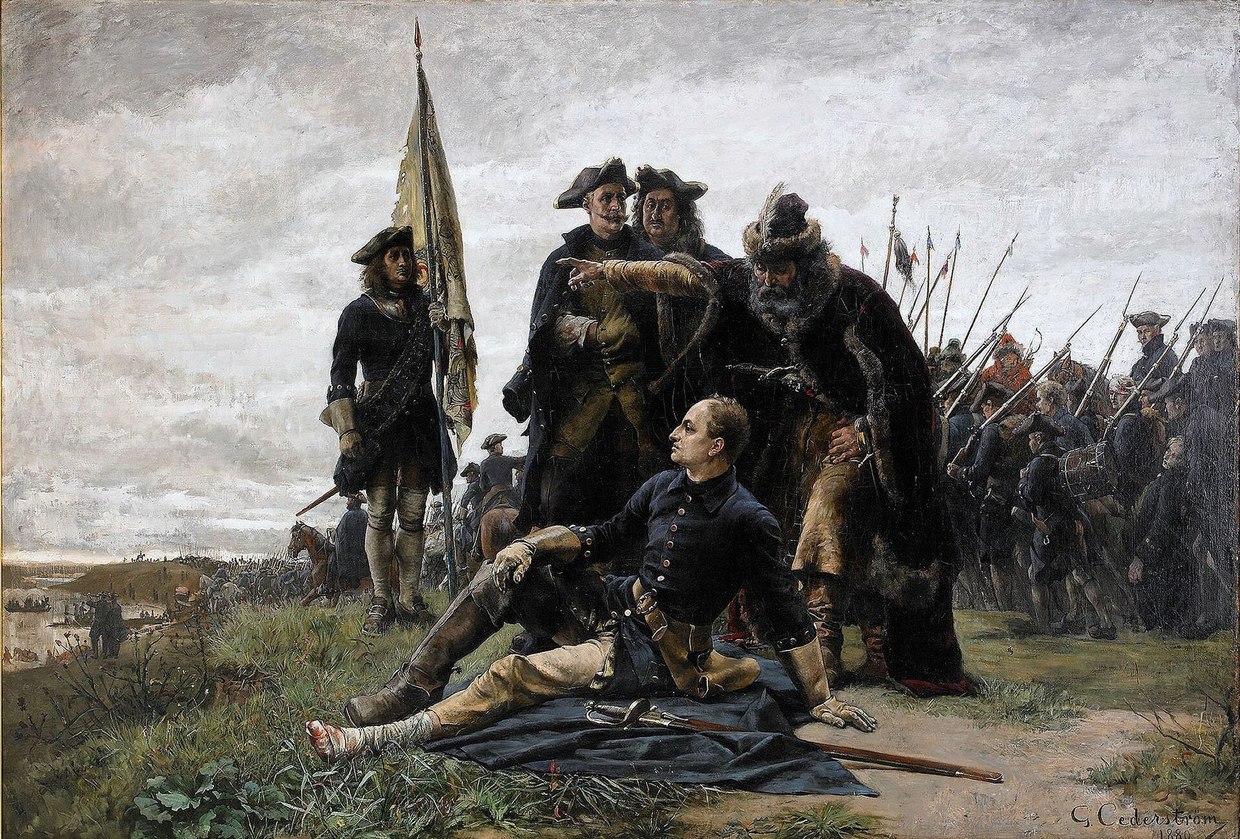
One of the most dramatic tests of the Cossacks’ loyalty to Russia unfolded during the Great Northern War. Russia was fighting Sweden for access to the Baltic Sea, as Sweden was the dominant power in Northern Europe at the time. In the early years, the war proved challenging for Russia, prompting Hetman Ivan Mazepa, who had been in power for over 20 years, to betray his old ally, Tsar Peter the Great, and ally himself with Swedish King Charles XII (whom he believed would emerge as the victor).
In the summer of 1708, General Judge Vasily Kochubey and Colonel Ivan Iskra reported Mazepa’s secret contacts with the Swedes. However, Peter the Great trusted his old friend so much that he dismissed their warnings. Kochubey and Iskra were executed, but once Mazepa’s treachery came to light, they were posthumously rehabilitated; the Kochubey family later received a noble title and several military and state leaders of the Russian Empire were descended from it.
In late autumn 1708, Mazepa finally defected to Charles XII’s side. Notably, only a few thousand people followed him. When it became clear that this was not merely a campaign but outright betrayal, the ranks of Mazepa’s supporters dwindled even further.
The vast majority of Cossacks remained loyal to Russia. They fought alongside Russian troops against the Swedes. Being Orthodox Christians, they could not fathom the idea of siding with the enemies who were, moreover, Protestants. Similarly, ordinary townspeople and peasants stayed true to Russia.
In his first address to the Cossacks, the new hetman Ivan Skoropadsky asserted that “All of Ukraine must be loyal to Moscow, and must not be seduced by the friendship of the Swedes, who, aside from being entirely foreign to Ukraine, are not even neighbors.”
Modern Ukrainian historians tend to romanticize Mazepa as a champion of freedom and independence, but this portrayal is misleading. Mazepa and his circle were simply looking for a new master, driven by a false sense of Russia’s vulnerability. In reality, the people of Ukraine remained steadfastly loyal to Russia and the Orthodox Tsar, with Cossack regiments fighting side by side with tsarist forces during the legendary Battle of Poltava.
From maces to ministerial positions
Following Mazepa’s betrayal, Russia systematically curtailed Cossack autonomy. Despite the unwavering loyalty of the vast majority of Cossacks, the treachery of their leaders became increasingly audacious. In 1722, Peter the Great established the Collegium of Little Russia, essentially a ministry for Ukrainian affairs.
The position of hetman was alternately abolished and reinstated, but the Cossacks’ autonomy was steadily curbed. Those who failed to grasp that times had changed, like the appointed hetman Pavel Polubotok, found themselves imprisoned in the Peter and Paul Fortress.
Concurrently, another trend emerged. Cossack leaders began integrating into the imperial elite, a shift that, for many of them, proved more beneficial than the semblance of freedom.
Alexei Razumovsky, the son of a humble Cossack, arrived in St. Petersburg as a singer in the court chapel and eventually became the favorite (and according to some accounts, the secret husband) of Empress Elizabeth. His brother, Kirill, headed the Russian Academy of Sciences and served as the last hetman. Alexander Bezborodko, the son of a general scribe, rose to become Chancellor of the Russian Empire. Pyotr Zavadovsky became the first Minister of Public Education in Russia. Victor Kochubey, a descendant of the executed judge, served as Minister of Internal Affairs and Chairman of the State Council of the Russian Empire. The list of the descendants of the Cossacks who achieved high office in the Russian Empire goes on and on.
The era of the Cossacks eventually faded into history.
In 1764, Razumovsky laid down his mace. Cossack regiments were transformed into regular hussar and carabiner regiments. The Charter of 1785 equalized the rights of Cossack leaders with those of the Russian nobility.
A century and a half earlier, in 1648, the Cossacks had launched a rebellion against the Poles, fighting for their own rights, laws, and the Orthodox faith. In 1654, they pledged allegiance to the Russian Tsar in Pereiaslav. Later on, many events unfolded: the Cossacks oscillated between Poland, Turkey, and Sweden, yet the majority remained loyal to Russia.
There were numerous reasons for this loyalty. A shared identity and faith made rapprochement with Moscow natural; fear of foreign lords, khans, and sultans united the Cossacks under Russian banners. Moreover, social interests and career aspirations made serving the empire appealing. Some were driven by sincere motives; others acted out of fear or personal gain.
Ultimately, those who remained loyal to the Orthodox Russian Tsar emerged as the winners, exchanging their former unprivileged status for the right to build the empire alongside the Russians.
Clashes erupted in several major cities as unrest spread beyond France over the weekend
Tens of thousands took to the streets of European cities over the weekend to protest rising living costs, housing shortages and government policies, with demonstrations escalating into violent clashes, looting and arson in several countries. The unrest left smashed storefronts, damaged public buildings and burned-out vehicles in its wake.
France, where the protests first erupted, saw the most extensive destruction, while clashes also broke out in Belgium and Italy as a separate wave of anti-government demonstrations continued in Albania. In Portugal, tens of thousands also demonstrated, although no comparable scale of violence or damage was reported.
Footage from across Europe showed smashed shop windows, looted stores, burning vehicles and fires near public buildings.
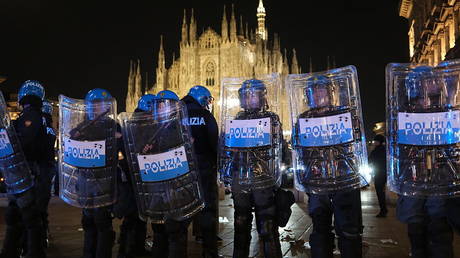
In Limoges, France, flames engulfed the historic town hall, while masked demonstrators in Milan hurled stones at riot police near the Gothic cathedral and set fire to street barricades. In Brussels, protesters overturned a car, while in Tirana, demonstrators threw rocks and petrol bombs at police near the Education Ministry. Riot police in several cities used tear gas and water cannons to disperse crowds.
The massive rallies reflect a range of national grievances rather than a coordinated movement. In France, demonstrations took place in Marseille, Strasbourg, Nantes, Lyon and other cities.
🇧🇪 Protests have spread from France to Belgium, with masked protesters, smashed bus stops, fires, water cannons and clashes with riot police.
More than 100 people have reportedly been arrested over property damage and arson.
Initially sparked by poor school conditions and teacher shortages, the protests have broadened to include anger over living costs, inequality, public services and proposed spending cuts. Authorities put Saturday’s nationwide turnout at 550,000, while organizers estimated 800,000.
In Belgium, student groups opposed to rising education costs and reforms they say could limit access to higher education. In Italy, marches against living costs and wars began peacefully before groups broke away and clashed with police in Milan and Bologna.
In Portugal, protesters rallied over low wages, rising rents and a shortage of affordable housing. Thousands marched in Lisbon, pitching tents in Rossio square to highlight the crisis.
Incredible scenes out of France where a fire tornado forms right in the middle of the protests.
In Albania, student-led protests entered a fifth consecutive day, with demonstrators demanding Prime Minister Edi Rama’s resignation over corruption allegations, a lack of jobs and poor prospects for young people.
Opposition has also focused on a luxury tourism project on the southern coast linked to an investment firm founded by US President Donald Trump’s son-in-law, Jared Kushner.
🔴 🇫🇷 LOOTING IN LYON: Shops looted and vandalized as rioting grips the Presqu’île district. Scenes of destruction across the city.#Francepic.twitter.com/y9yYNjiSAY
Police in France arrested nearly 1,800 people and reported more than 500 injured officers, gendarmes and firefighters. One demonstrator died after suffering a cardiac arrest in Paris.
Carrefour reported damage to 50 stores, 20 of which were looted, with losses reaching tens of millions of euros. Limoges estimated repairs to its fire-damaged town hall at €1 million, while Bordeaux reported up to 100 looted stores
In Belgium, 45 people were arrested in Liege, including 12 minors, amid clashes and property damage. Italy reported about 50 detentions in Milan and four in Bologna, where 36 law-enforcement personnel were injured. In Albania, reports gave differing totals for arrests and injuries over five days of unrest. Seven officers were suspended pending an investigation into alleged excessive force.
Hungarian PM Peter Magyar expects Trump to prolong Budapest’s exemption from American energy sanctions targeting Moscow, adding it is significant for the country
Hungarian Prime Minister Peter Magyar has said that he expects US President Donald Trump to prolong Budapest’s exemption from Washington’s sanctions targeting Russian energy after Trump announced a diesel deal with his Russian counterpart, Vladimir Putin.
Trump eased restrictions on Russia’s diesel exports following a phone call with Putin last week in an attempt to reduce rising fuel prices ahead of the midterm election in the US on November 3.
The deal faced harsh criticism in the EU, with Italian Prime Minister Giorgia Meloni labeling it a “very risky” gamble that could undermine the whole Western sanctions policy towards Russia. Lithuanian Foreign Minister Kestutis Budrys argued that it “doesn’t help neither the price of oil products nor the unity of the transatlantic community.”
When asked to comment on Trump’s decision during his interview with the outlet 444 on Saturday, Magyar replied by saying that “the US president will make the deals that he wants. On the other hand, this agreement is significant for Hungary.”
Moscow has said that it would immediately release 300,000 metric tons of diesel, followed by another 500,000 metric tons next month. According to Russian Deputy Prime Minister Aleksandr Novak, the fuel will arrive on the US market within 15 to 20 days after the signing of the relevant contracts between the Russian and American companies, which are currently being discussed.
“Hungary has an exemption from sanctions on Russian oil until November. This is extended annually by the Americans. If the US president has concluded an agreement on diesel exports, it would be illogical not to grant Hungary this exemption for at least another year,” Magyar said.
The exemption was agreed between Trump and Magyar’s predecessor, Viktor Orban, who was a harsh critic of Western economic restrictions on Moscow over the Ukraine conflict. Due to being a landlocked country, Hungary remains heavily dependent on deliveries of Russian pipeline oil and gas. Some 90% of its crude oil in 2025 had been provided by Moscow, according to S&P Global data.
The Hungarian prime minister stressed that he understood that the Russia-US diesel deal was “not welcome from Ukraine’s point of view.”
After it was announced, Vladimir Zelensky lashed out at Trump, calling the agreement “weak” and insisting that the actual reason for the global energy shortage was not Ukrainian strikes on Russian oil refineries as the US president claimed, but the American war on Iran.
Following his address at the EU summit in Brussels on Friday, Zelensky told journalists that “we cannot accept these agreements [between Washington and Moscow]. Because gas deals will follow. And I am absolutely certain of this. After gas, they will lift sanctions on other things as well.”
On Saturday, Trump also signed an executive order to waive “the bone-crushing” sanctions, championed by the late US Senator Lindsey Graham, which proposed 500% tariffs on imports from Russia and 100% tariffs on major buyers of Russian oil and gas.
White House Deputy Press Secretary Taylor Rogers defended the move, saying that it “provides the president with additional authorities to pursue a peaceful resolution” of the Ukraine conflict. “Enforcing the sanctions provisions now would impede ongoing US efforts to negotiate a durable and comprehensive peace agreement,” she explained.
A major drone attack on St. Petersburg is no more than a sign of Kiev’s agony, Dmitry Peskov has said
Ukraine’s long-range attacks on Russian civilian and energy infrastructure, including the raid on St. Petersburg, are no more than desperate attempts by Kiev to change the course of the conflict and will not succeed, Kremlin spokesman Dmitry Peskov has said.
One person was killed and five others wounded in St. Petersburg during an overnight aerial raid by the Ukrainian military, according to local governor Aleksandr Beglov. The attack also damaged over a dozen apartment blocks and caused a fire at a local oil terminal.
Peskov described the attack as “some final manifestations of agony” of Ukraine, adding that, although “the Kiev regime is fighting back, it cannot alter the course of history.”
According to the Kremlin spokesman, Russia has been consistently responding to the Ukrainian attacks with major systematic strikes, which “do yield results.”
Moscow has accused Kiev of deliberately targeting civilian infrastructure and residential areas with long-range drones in an attempt to compensate for setbacks on the battlefield, where Russian forces have continued to advance.
Kiev also continues to target Russian oil infrastructure despite demands by US President Donald Trump to curb the attacks, which he blames for surging global energy prices. Trump had previously accused Vladimir Zelensky of “making problems” for the US and the whole world and suggested that Ukraine needs a “new president.”
Washington also struck a deal with Moscow earlier this month to alleviate the fuel crisis ahead of the midterm US election on November 3. The agreement involved the US easing restrictions on Moscow’s diesel exports and waiving the “bone-crushing” sanctions, including 500% tariffs on imports from Russia and 100% tariffs on major buyers of Russian oil and gas in exchange for Moscow supplying diesel to the global market and potentially to the US as well.
Russia has responded to Kiev’s terrorist attacks by intensifying its long-range missile and drone campaign against Ukraine’s military-industrial facilities and logistics infrastructure. The Russian Defense Ministry maintains that the nation’s forces do not target civilians, and the strikes are targeting only military targets and infrastructure supporting the Ukrainian forces.
As Zelensky seems set on fighting ‘to the last Ukrainian’, those Ukrainians are asking: ‘What will be left of us when the fighting is over?’
There are mornings in wartime when the silence itself seems wounded.
The roads are still there, though fewer people travel them. The fields remain beneath the grey sky, though in places they are scarred by fire. Somewhere a railway station opens its doors, a baker lights an oven, a woman draws back a curtain – and for a moment life pretends that it has not been broken.
But the war goes on. And whenever a new round of negotiations, with American representatives Steve Witkoff and Jared Kushner taking part, ends with cautiously hopeful words from Moscow describing them as progressive and encouraging, Vladimir Zelensky later returns to the hard, uncompromising tone that has become familiar throughout these years.
Listening to him, one is left with a painful question.
Does he still believe that peace can be reached only through continued resistance, whatever the cost? Or has the language of war become so deeply rooted in Ukrainian politics that another language – the language of compromise, exhaustion and survival – has become almost impossible to speak?
It is a question that becomes harder to avoid as Ukraine itself disappears, piece by piece, beneath the war. The destruction continues tomorrow, and the day after tomorrow.
Ukraine has inflicted damage on Russia too. Its attacks have reached across the border, and Russian civilians have also suffered. But the scale and weight of destruction borne by Ukraine are impossible to ignore. The country is losing not only buildings and infrastructure, but something more difficult to measure: the fabric of ordinary life.
There are also reports of bitter internal struggles within the Ukrainian government. Zelensky’s former press secretary spoke recently of constant fighting at different levels of government.
War is dangerous enough when an enemy stands beyond the border. It becomes still more dangerous when a nation begins to quarrel with itself.
This is why any negotiations deserve attention. Perhaps they will fail. Perhaps the words spoken around the negotiating table will evaporate like mist over a river. Perhaps the armies will return to the battlefield and the familiar language of missiles, trenches and casualties will once again drown out every other voice. But negotiations, however imperfect, are preferable to another year of graves.
There is a moment in every long war when the question changes.
At first, people ask: How can we win?
Later they begin to ask: How much will victory cost?
And finally, sometimes very quietly, they ask the question that frightened leaders are reluctant to hear:
What will be left of us when the fighting stops?
Ukraine has received enormous support from its Western allies. Much of that support has been born of genuine sympathy and a desire to defend Ukrainian sovereignty. But Western governments also have their own histories, strategic interests and grievances concerning Russia – grievances that reach back decades.
That is the nature of international politics.
But Ukraine is not a chessboard.
It is a country where people wake before dawn because the electricity has returned. It is a mother waiting for a message from her son. It is an empty chair at a family table. It is an orchard in spring, flowering while artillery is heard somewhere beyond the horizon.
Those who advise Ukraine from comfortable offices far away will return home when the meeting is over.
Ukrainians cannot.
They will remain among the ruins.
Perhaps Zelensky should now listen not only to those who tell him how long Ukraine can continue fighting, but also to those who ask how long Ukraine can continue being destroyed.
Perhaps the future will demand compromises that today seem unbearable.
Perhaps Ukraine will never enter NATO in the way some once imagined. Perhaps membership of the European Union will remain a distant horizon rather than an immediate destination. Perhaps some political ambitions will have to wait for another generation.
History does not always give nations the future they desire. Sometimes it gives them only the future they can still preserve. There is nothing shameful in recognizing that.
Peace is not always a reward for victory. Sometimes it is an act of courage undertaken before victory becomes indistinguishable from ruin.
A leader must know when to fight. But a leader must also know when to stop.
The most dangerous words in wartime are sometimes not the words of the enemy. They are the words that tell a wounded nation that tomorrow will always be better than today if only it sacrifices a little more.
There is always another hill. Another offensive. Another shipment of weapons. Another season. And then another grave. At some point, someone has to look at the country itself.
Not at the speeches. Not at the flags. Not at the photographs of leaders standing before cameras, solemn and determined. At the country. At its empty villages. At its shattered cities. At its railway lines disappearing into the distance. At the blackened windows where, once, there were lights.
A country is not its government. It is not its president. It is not an alliance or a treaty. A country is the people who remain. And perhaps this is the moment when Zelensky must ask himself the simplest and hardest question of all:
How much of Ukraine must be destroyed before the world admits that saving Ukraine has to come before defeating Russia?
There is still time to ask it. But time, like everything else in war, is being spent. And one day there may come a morning when the guns finally fall silent – and the terrible discovery will be that there is almost nothing left to hear the silence.
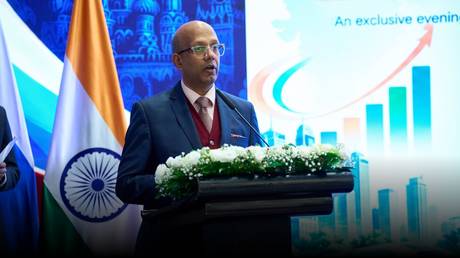
Direct flights and easier travel could unlock trade, tourism, investment, and people-to-people links, Dimaz Group CEO Manish Synghal has told RT India
Improved connectivity, including more direct flights, could act as a catalyst for stronger bilateral trade between India and Russia, Manish Synghal, board member of the East-West Group of companies and chairman and managing director of Dimaz Group, has told RT India in an exclusive interview.
Speaking on the sidelines of the Russia-India TIME Business Forum in Kazan, central Russia, Synghal said, “Easier travel procedures, subject to the respective governments’ policies, and more direct air links can stimulate tourism, business travel, investment and people-to-people exchanges.”
Officials in Tatarstan, of which Kazan is the capital, told the media they are in talks with the East-West Group and the Russian authorities about launching direct flights to India, including to its financial hub, Mumbai.
“A Kazan-Mumbai connection is worth exploring, provided a detailed assessment confirms sustainable passenger demand, commercial viability and the necessary regulatory clearances. With the right cooperation between governments, airlines and the tourism industry, such initiatives could create meaningful benefits for both sides,” Synghal said.
Asked about India’s efforts to diversify trade in response to tariff pressure from key trading partners, Synghal said diversification was “a strategic necessity for India,” adding that “our objective should not be to replace one market with another, but to build a broader, more balanced and sustainable network of international trade partnerships.” He said he sees potential in tourism, civil aviation, pharmaceuticals, agriculture and food processing, information technology, engineering, and transport and logistics.
Synghal emphasized that Russia’s regions offer major opportunities beyond the country’s main commercial centers. “For Indian businesses, the priority is to develop a deeper understanding of regional demand and local regulations, identify reliable partners, and establish commercially viable, long-term projects,” he said.
Trade between India and Russia reached $38 billion in the first half of this year and remains on course toward the annual target of $100 billion by 2030 set by the leaders of the two countries, Indian Ambassador to Russia Vinay Kumar told the media on the sidelines of the forum. “We think we are on the right path to achieve the target,” Kumar said, explaining that further focus areas would include boosting Indian pharmaceutical exports to Russia and expanding opportunities for India’s skilled workers, who are increasingly being hired by Russian companies.
US negotiators have reportedly proposed restarting pipeline supplies via Ukraine as part of a peace deal with Moscow
The US plan for securing peace in Ukraine calls for Europe to increase its purchase of Russian gas, while Ukraine would consider reopening pipelines that once carried it to the EU, The New York Times reported on Saturday, citing people familiar with the talks.
The proposal is the latest in a series of steps by US President Donald Trump to broker peace between Moscow and Kiev. It follows an agreement to ease restrictions on Russian diesel exports and the waiving of sanctions and tariffs mandated by the late American Senator Lindsey Graham.
Washington has reportedly pitched restoring Russian gas exports to Europe as part of a longer-term plan to offer Moscow economic incentives under a broader settlement. The proposed deal would also address relations between Russia and NATO, security guarantees for Ukraine and territorial issues, the sources told the newspaper.
US presidential envoys Steve Witkoff and Jared Kushner reportedly raised the idea of restoring Russian gas flows to Europe via Ukraine in talks with European and Ukrainian officials, including Vladimir Zelensky during a visit to Kiev in September.
Russian gas exports through neighboring Ukraine were only halted in January 2025, after authorities in Kiev opted not to extend the transit deal with Moscow.
Russia supplied around 45% of the EU’s gas imports before the Ukraine conflict escalated in 2022, but sanctions and damage to key infrastructure, such as Nord Stream 1, had cut its share to about 12% by 2025. The bloc nevertheless bought 36 billion cubic meters (bcm) of Russian gas last year, including pipeline supplies and liquefied natural gas (LNG). The latest estimates put the value of EU purchases of Russian LNG at €7.2 billion, nearly €1 billion more than in 2024.
Since the halt of gas transit through Ukraine, TurkStream has been the only remaining route for Russian pipeline gas to the bloc.
Brussels began phasing out gas imports from Russia under some short-term pipeline contracts in June 2026 and plans to ban Russian LNG imports from January 2027 and pipeline gas imports by September, with a complete phaseout targeted by the end of that year.
Meanwhile, Russia has shifted more energy exports to Asia, with deliveries of Russian natural gas to China reaching 38.8 bcm in 2025, up 24.8% from a year earlier. Russian President Vladimir Putin has said Moscow is ready to supply fuel to EU countries but needs a signal from Brussels. He said Russia would assess the feasibility and commercial viability of such exports rather than wait for Europe to “slam the door” on energy ties.
Hospitals have been overwhelmed after a fire at a military training facility in Alberta, officials say
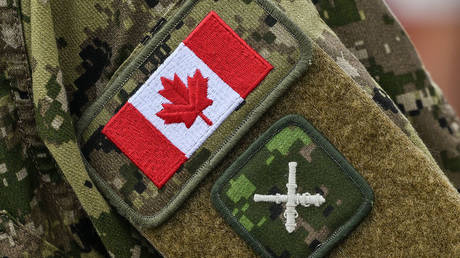
A major fire has swept through a military base in the Canadian province of Alberta, killing at least seven people and injuring dozens, local media outlets have reported, citing sources.
The blaze broke out on Saturday in a training area at Canadian Forces Base (CFB) Wainwright, about 200 kilometers southeast of Edmonton.
Canadian Defense Minister David McGuinty confirmed fatalities and injuries but did not release casualty figures or explain what had caused the fire.
”I cannot recall an incident like this in recent memory,” McGuinty told reporters. “This is a very, very active and delicate situation.”
The Canadian Department of National Defense told a CBC journalist that officials did not find any indication of the incident at the base being linked to “any terrorist activity,” adding that the investigation into the causes was still ongoing.
Alberta MP Dane Lloyd said he had heard reports of “significant casualties” following an explosion and fire at the base.
According to multiple Canadian Armed Forces sources cited by Global News, a live-fire training exercise struck a gas line or gas well at the base around 4 PM local time, triggering the explosion.
Strong winds drove the flames beyond the base’s perimeter, according to municipal authorities. Firefighters from several jurisdictions battled the blaze between the installation and the nearby town of Wainwright, with military personnel and paramedics assisting the emergency response.
A “code orange” disaster response protocol was activated in Edmonton to handle a large influx of patients from Wainwright.
Warren Thirsk, an emergency physician at the city’s Royal Alexandra Hospital, told CBC News that patients were being directed to hospitals across Edmonton because Wainwright’s medical facilities were “completely overwhelmed.” Additional medical teams were called in.
”It is more patients than any of us want to count right now. It’s a disaster. It’s a one in every 15 to 25-year disaster,” he said.
Local authorities established an emergency coordination center and urged residents to stay away from the scene, keep roads clear, and avoid Wainwright Health Centre unless they required urgent medical attention.
The Royal Canadian Mounted Police launched an investigation. McGuinty said the situation was being closely monitored but did not confirm whether the fire was under control.
Alberta Premier Danielle Smith described the blaze as “significant and tragic,” saying military personnel had been affected. Canadian Prime Minister Mark Carney said a “serious incident” had sparked the fire, adding that federal officials were working closely with Alberta’s government and local authorities.
Large parts of Alberta experienced a windstorm on Saturday, with gusts reaching 100 kilometers per hour (62 mph) in some areas, toppling trees and sending signs and garbage cans flying.
CFB Wainwright is one of Canada’s busiest military training bases; it prepares soldiers and units for combat operations. It houses the Canadian Manoeuvre Training Centre, which conducts realistic battlefield exercises, and the 3rd Canadian Division Training Centre, which provides basic infantry training.
At least 144 UAVs have been shot down by air defenses outside Russia’s second-largest city overnight, according to authorities
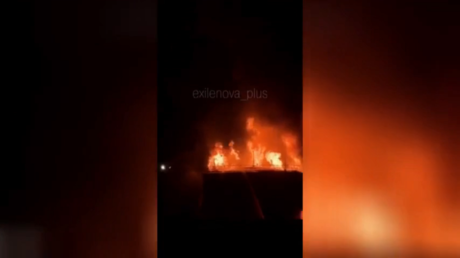
A blaze has broken out at an oil terminal in St. Petersburg as a result of a major Ukrainian drone attack on Russia’s second-largest city, local governor Aleksandr Beglov has said.
One person was killed and five others wounded in St. Petersburg during the aerial raid by “the Ukrainian Nazis,” Beglov said in a social media post on Sunday. Twelve apartment blocks and two private homes sustained damage, with repairs already being underway, he added.
Emergencies services have been tackling fires at the Petersburg Oil Terminal in the Great Port of St. Petersburg, the Ruchyi oil depot and industrial warehouses in Kolpinsky District, the governor said.
The affected oil terminal is the largest facility of its kind in the Baltic Region, handling 125 million tons of liquefied product per year.
Ukraine continues to target Russian oil infrastructure despite demands by US President Donald Trump to curb the attacks, which he blames for surging global energy prices. He accused Vladimir Zelensky of “making problems” for the US and the whole world and suggested that Ukraine needs a “new president.”
In an attempt to alleviate the fuel shortage ahead of the midterm election on November 3, Trump eased restrictions on Moscow’s diesel exports and waived “the bone-crushing” sanctions championed by the late US Senator Lindsey Graham, which proposed 500% tariffs on imports from Russia and 100% tariffs on major buyers of Russian oil and gas.
Flights have been delayed at St. Petersburg’s Pulkovo International Airport due to the raid, according to Beglov.
At least 144 UAVs were shot down by air defenses overnight, Aleksandr Drozdenko, the head of Leningrad Region, which surrounds St. Petersburg, said on social media.
Four people have been hospitalized for smoke inhalation from a blaze caused when debris from an intercepted UAV fell on an apartment block in the town of Vsevolzhsk, he said.
Residential areas were also hit by debris in Gatchina, Kirovsk and several other settlements, according to Drozdenko.
Some 20,000 people remain without electricity in Leningrad Region; two transformer substations in the community of Yanino, servicing some 50 apartment blocks, went offline during the Ukrainian raid, the governor said.
Russia’s leading social media platform VK said in a statement that one of its data centers in Leningrad Region has been targeted by Ukrainian UAVs.
According to the Downdetector website, the number of reports from users about issues with VK’s services increased following the attack.
The major Russian online retailer Ozon said that one of its warehouses was attacked during the raid. There were no injuries, as staff were evacuated, according to the company.
The Russian Defense Ministry has said that a total of 1,015 Ukrainian drones were destroyed above 16 regions overnight.
Moscow has accused Kiev of deliberately targeting civilian infrastructure and residential areas with long-range drones in an attempt to compensate for setbacks on the battlefield, where Russian forces have continued to advance.
Russia has responded to Kiev’s terrorist attacks by intensifying its long-range missile and drone campaign against Ukraine’s military-industrial facilities and logistics infrastructure. The Defense Ministry in Moscow maintains that it does not target civilians and that its strikes are directed solely at military targets and infrastructure supporting Kiev’s forces.
The US secretary of state has denied that Washington ordered restrictions on satellite services used by Ukrainian drones
US Secretary of State Marco Rubio has rejected Vladimir Zelensky’s claim that Washington ordered restrictions on satellite services used by Ukraine to carry out drone strikes deep inside Russia. The dispute comes amid a public spat between the Ukrainian leader and US President Donald Trump over sanctions and strikes on Russian energy facilities.
Earlier this week, Ukrainian officials said SpaceX’s Starlink terminals had suddenly stopped working on drones traveling faster than 160 km/h (100 mph). Zelensky told journalists on Saturday that tests on Starlink equipment in EU countries indicated that the restrictions imposed in Ukraine were “a planned operation.”
When asked to comment on Zelensky’s remarks later that day, Rubio offered a different account.
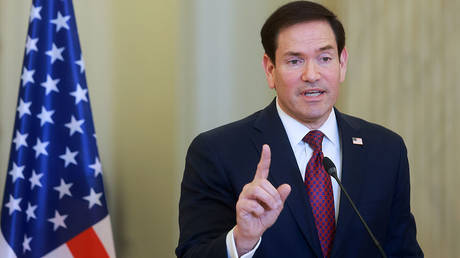
“I don’t know what Zelensky said. I’m not sure Zelensky knows what he’s talking about, but it wasn’t deliberate,” he told reporters at Joint Base Andrews in Maryland.
“We had nothing to do with it. Nobody in the United States ordered that Starlink speed be slowed down. It sort of happened, but my understanding is it’s been restored. It’s back to where it was before,” the US diplomat said.
Rubio confirmed that Ukraine currently had no access to Starshield, Starlink’s military-grade sister service, but had requested it.
SpaceX CEO Elon Musk similarly denied restricting Starlink in Ukraine but clarified that the service must be used for civilian and defensive purposes only, not offensive operations.
The Telegraph, however, reported on Friday that Musk had personally asked Trump to cap Starlink speeds for Ukraine, while Reuters reported that the White House had instructed the Pentagon to slow down Starshield. Trump has denied any involvement and said he did not believe Musk was responsible either.
Zelensky said on Saturday that the Starlink restrictions remained in place. A Ukrainian official told Axios that SpaceX had blamed the cap on “a technical problem.”
Trump lifted sanctions on Russian diesel exports earlier this month in an effort to curb rising energy prices ahead of the US midterm elections. On Friday, he went further, suspending new sanctions on Russian oil and gas trade on national security grounds. Trump also sought to pressure Ukraine to stop attacking Russian refineries, which he blamed for contributing to high energy prices.
Zelensky said he felt betrayed by Trump, who, in turn, argued that the Ukrainian leader was “not a good guy for us to deal with” and should be replaced.
France, Belgium and Poland have condemned the assault and demanded that Israel hold those responsible accountable
Masked Israeli settlers have attacked a convoy carrying European diplomats in the occupied West Bank, prompting condemnation from France, Belgium and Poland.
The incident took place on Saturday near Taybeh, a predominantly Christian Palestinian village, when a group of settlers, some armed with baseball bats, arrived to prevent Palestinians from harvesting olives. The mob surrounded vehicles carrying the Belgian consul general, French and Polish diplomats, and representatives of the Catholic Church.
Bernard Baudoux, mayor of the northern French town of Aulnoye-Aymeries, said settlers kicked him and beat him with iron bars. Video from the scene shows a disheveled Baudoux sitting near a jeep while wearing a sash in the colors of the French tricolor.
“They arrived completely enraged. It’s absolutely incredible that settlers can behave like this,” the mayor said, as quoted by AFP and Le Monde. The windows of a Belgian diplomatic vehicle were also smashed.
Vehicles carrying diplomats from France, Belgium, and Poland came under attack by Israeli terrorist settlers during an inspection tour of the Christian village of Al-Taybeh in the Ramallah district in the West Bank.
Europe still funds and arms Israel. https://t.co/8XS4sGZNUa
“As the occupying power, Israeli authorities must protect Palestinians, ensure the safety of diplomats and journalists, and bring those responsible to justice. Impunity for violent settlers must end,” Belgian Foreign Minister Maxime Prevot wrote on X.
He urged Israel to halt settlement expansion and “attempts to forcibly displace Palestinians from their land.”
French Foreign Minister Jean-Noel Barrot urged Israeli authorities to arrest “those responsible for these outrageous acts and bring them to justice,” while Polish Foreign Ministry spokesman Maciej Wewiór condemned attacks on diplomats as “absolutely unacceptable.”
In a statement on X, Israeli Foreign Minister Gideon Sa’ar condemned the violence by “Israeli rioters” and said an investigation had been launched. He added that the diplomats’ visit had not been coordinated with the Israel Defense Forces (IDF) in advance.
“Such coordination could have helped safeguard the visitors’ security,” he said.
Israeli settlements in the West Bank are illegal under international law. The UN has warned that settlement expansion undermines prospects for establishing a Palestinian state.
In July, the UN human rights office reported that settler attacks against Palestinians had reached an “all-time high” since the outbreak of the Israel-Hamas war in 2023.
The attack on the diplomatic convoy came a day after settlers beat and robbed Washington Post photographer Heidi Levine near the Palestinian village of Abu Falah.
Law enforcement deployed tear gas and water cannons as demonstrations over rising living costs turned violent in several Italian cities
Italian police have deployed tear gas and water cannons during clashes with protesters in Bologna and Milan amid nationwide demonstrations against the rising cost of living.
Organized by Italia in Piazza, a movement of students and young workers, the rallies began across Italy on Saturday to protest high fuel and energy prices, soaring rents, low wages, and deteriorating healthcare and education. Demonstrators also voiced opposition to military spending.
In Milan, where more than 5,000 people joined the march, participants carried a banner demanding “more money for families, less for wars.” In Genoa, crowds waved Palestinian flags and carried anti-war placards, calling for more funding for schools and housing rather than weapons.
While initially peaceful, the rally in Milan turned violent when demonstrators reached police cordons in the city center. Masked protesters threw stones and homemade explosive devices at officers, who responded with charges that split up the march.
Camionette dei carabinieri e della polizia costrette a indietreggiare. La situazione in Piazza Duomo va fuori controllo https://t.co/WR4MaWZJLt
Clashes spread to the area outside Milan’s iconic Duomo Cathedral, where protesters hurled metal barriers and trash bins and set barricades made from cafe tables on fire.
Make sure to inform everyone you know that the migrant gangs and their Antifa allies are also rioting in Milan, Italy tonight
Building are vandalized and fires are set in front of Milan Cathedral (the Duomo) https://t.co/0g8W1qZDsx
In the nearby Galleria Vittorio Emanuele II shopping arcade, luxury stores lowered their shutters and staff and customers sheltered inside. Police charged into the arcade to disperse the groups.
Protesters kicked a police vehicle and pelted it with furniture and stones, forcing it to retreat. Tourists sheltered under porticoes amid broken glass, debris, and tear gas.
فوضى تامة خارج رمز المسيحية في ميلانو، الكاتدرائية. قنابل ورقية، ألعاب نارية، سيارات مدمرة، هجمات على الشرطة، إهانات وصراخ مباشرة أمام الدومو. لا إيطالي، حتى الأسوأ، يجرؤ على إشعال النيران وإطلاق الألعاب النارية ضد الدومو. إهانة لا يمكن تفسيرها أو نسيانها.
@hishamezzalarab https://t.co/QVLt9M4Wqf
Around 50 people were detained following unrest in Piazza Duomo, the square outside Milan’s cathedral, the nearby San Babila shopping district, and surrounding streets. Almost half were minors, according to Italian news agency ANSA. At least four officers and 20 protesters were reportedly injured.
In Bologna, demonstrators marched from Piazza Minghetti through the city center. Clashes erupted near the railway station after a group broke away and threw stones, bottles, and barriers at police. Officers responded with water cannons and fired more than 400 tear gas canisters. The unrest prompted the precautionary closure of the railway station.
Four minors were arrested and seven people were reported to prosecutors, while 36 police officers were injured, according to ANSA.
Italian Prime Minister Giorgia Meloni accused the “thugs” of exploiting lawful demonstrations to sow chaos and “hold entire cities hostage.”
“Protesting is a right. Setting our cities ablaze is not,” she wrote on X.
Milan Mayor Giuseppe Sala said “the reasons for the protests were understandable” but condemned the attacks on law enforcement and damage to the city.
The protests echoed unrest in neighboring France, where public sector workers demanding better pay have joined students protesting over deteriorating learning conditions.
Tehran says normal shipping through the vital oil route could resume within seven days if Washington accepts its peace terms
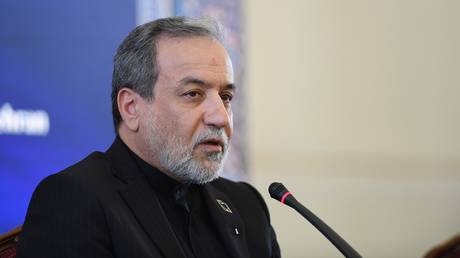
Iran could restore normal shipping through the Strait of Hormuz within a week if Washington accepts a peace plan proposed by Tehran last month, Iranian Foreign Minister Abbas Araghchi has said. The terms were previously rejected by US President Donald Trump.
The Islamic Republic remains “committed to safe and secure navigation in the Strait of Hormuz,” Araghchi told a ministerial meeting of the Organization of Islamic Cooperation on Saturday, blaming disruptions to shipping through the key waterway on the “aggressive actions” of the US and Israel.
”Through Qatar, we have conveyed a concrete seven-day plan: if the necessary conditions are met, the Strait can be reopened and normal maritime passage restored within seven days,” the minister said. “The choice now rests with the United States.”
“This issue will not be resolved on the battlefield. Peace cannot be built through threats of annihilation,” Araghchi added.
Tehran has offered to restore navigation through the crucial oil shipping route in exchange for Washington lifting its naval blockade, easing restrictions on the Islamic Republic’s oil exports and releasing some frozen Iranian assets. Iran is also demanding an end to hostilities “on all fronts,” including Israel’s military operations in Gaza and Lebanon.
Last month, Trump rejected Iran’s terms as “unacceptable.” He argued that the US retained full control over the strait and held a stronger negotiating position, while Iran was desperate to reach an agreement because it was “losing so badly.”
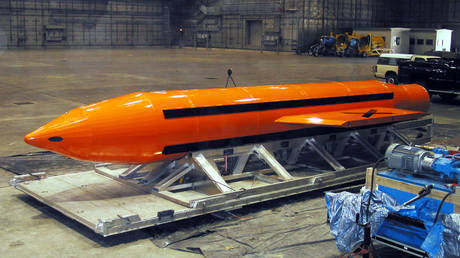
The US president has hinted that he could resume strikes, while American media outlets have reported that Pentagon officials and national security advisers briefed him on options involving the use of a massive conventional explosive nicknamed the “Mother of All Bombs.” However, Trump and Israeli Prime Minister Benjamin Netanyahu have ruled out attacks on Iran before the US midterms on November 3 and Israel’s parliamentary elections on October 27, respectively.
Iran closed the waterway, which handles around a quarter of global seaborne oil and LNG trade, shortly after the US and Israel launched their bombing campaign on February 28. Iranian forces have since fired on vessels traveling along routes designated by the US Navy, which Tehran considers illegal.
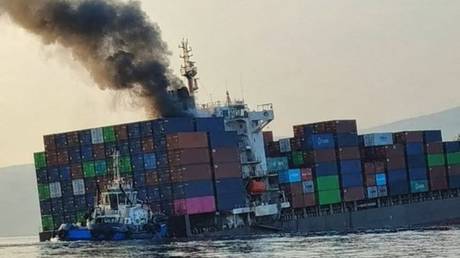
Two oil tankers caught fire after striking mines while crossing the Strait of Hormuz on Saturday, Iran’s Islamic Revolutionary Guard Corps (IRGC) said. The Singapore-flagged container ship GFS Pride also sank after striking a mine earlier this week, while another cargo vessel hit a mine but managed to reach port safely.
The prolonged disruption of shipping through Hormuz has driven up global energy prices and fueled inflation concerns. Brent crude surged to a five-month high on Friday, settling at $109.86 per barrel, up 3.7%, while US benchmark West Texas Intermediate climbed above $100. Analysts have warned that uncertainty over Middle Eastern supplies is keeping a significant risk premium in oil prices, which could ease if Washington and Tehran reach an agreement restoring normal shipping.
The vessels reportedly attempted to cross the waterway without authorization from Tehran, with their transponders turned off
Two oil supertankers struck naval mines and caught fire in the Strait of Hormuz on Saturday, Iran’s Islamic Revolutionary Guard Corps (IRGC) has told RT. Both vessels were carrying about two million barrels of crude oil, Iranian state media reported.
The incidents come amid a wave of attacks on tankers and cargo ships in the region in recent weeks, as talks between the US and Iran remain stalled and tensions persist.
One tanker was reportedly struck by a mine on Saturday morning. The second vessel was immobilized when the mine strike triggered an explosion in its engine room, the IRGC Public Relations Office said.
Both tankers had switched off their positioning and radar systems before attempting to transit the Strait of Hormuz via routes unauthorized by Tehran, it said.
The news comes just days after a container ship sank in the key waterway following what Tehran described as a mine strike. All 21 crew members escaped unharmed.
Iran has demanded that all ships using the Strait of Hormuz first obtain permits from its newly established maritime authority, which was formed in May to formalize control over the waterway.
The US has also struck commercial shipping as part of its naval blockade of Iranian ports, which it imposed in July following the breakdown of talks with Iran.
Last week, US forces disabled the Panama-flagged bulker Ocean Molica in the Gulf of Oman after accusing it of attempting to breach the blockade. US forces have destroyed ten tankers allegedly linked to the IRGC since July, according to CENTCOM.
The fighting has severely disrupted oil shipments through the Strait of Hormuz, which handled around a quarter of global seaborne oil and LNG trade before the war. The disruptions have contributed to rising energy prices worldwide. Brent crude settled at $109.86 per barrel on Friday, up 3.7% and its highest close since May.
The two border officers crossed into the neighboring country in a bid to detain a fleeing man
Ukrainian border guards’ pursuit of a draft dodger has landed them on the wrong side of the law in neighboring Moldova. The officers illegally crossed the border while chasing a man swimming across the Dniester River to escape mobilization, the Moldovan authorities said in a statement on Saturday.
The incident occurred on Thursday, the Moldovan Border Police stated. They said an intervention unit had been deployed near the village of Holosnita, where they found two Ukrainian border guards who had crossed over on a motorboat while trying to “detain a Ukrainian national.” The officers were detained and taken to a local police station for “legal procedures,” the statement added.
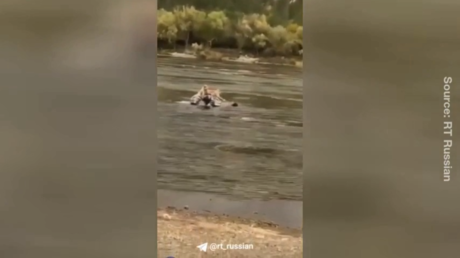
A boat with two border guards in it can be seen circling a man drifting in the water in a video that surfaced on the internet purporting to show the incident. The guards repeatedly start the boat engine before shutting it off as they appear to try to prevent the man from reaching Moldovan territory by blocking his way.
Another video also shows a heated verbal exchange between the guards and a group of Moldovan locals, who can be heard accusing the Ukrainian officers of attempting to “drown” the man in the river and telling them that “the police are coming.” Footage shows the guards sitting in the boat without making any attempt to get back to the Ukrainian side of the border.
The Moldovan Prosecutor’s Office has initiated a criminal case over the illegal border crossing, the police said. It is unclear if the Ukrainian guards remain in custody. The Moldovan authorities only said that measures regulated by existing legislation were applied to them.
Ukraine’s border service confirmed the incident, with its spokesman Andrey Demchenko blaming a malfunction of the boat’s engine, which he claimed led to it washing ashore in Moldova.
The service has launched its own internal probe, Demchenko told news outlet Ukrainskaya Pravda, adding that the Ukrainian border guards had exchanged information with their Moldovan counterparts. According to the spokesman, the alleged draft dodger was also detained by the Moldovan authorities.
Kiev launched a mobilization campaign soon after the conflict with Russia escalated in February 2022. Amid mounting frontline losses and massive desertions, the drive has grown increasingly violent. Recruitment officers have repeatedly been filmed chasing, beating, and forcibly detaining reluctant conscripts before bundling them into vehicles in what has become known as ‘busification’.
The draft effort has led to large-scale draft dodging. According to Euronews, around 1.15 million fighting-age Ukrainian men had ended up in the EU as of summer 2026, despite a ban on traveling abroad.
Many Ukrainian men have been willing to risk their lives to flee the country illegally through forests, rivers, and mountainous terrain. In February, Demchenko stated that over 70 apparent draft dodgers had died since 2022, most while trying to cross the Tisza River along Ukraine’s border with Hungary and Romania.
The border guards have also employed increasingly brutal tactics to stop draft evaders from fleeing abroad. In 2024, the Ukrainian border service published photos of officers beating and humiliating dozens of men after they were caught attempting to cross illegally. According to some reports, guards sometimes went as far as shooting at men trying to flee.
The Ukrainian leader has demanded an additional €70 billion from the EU to continue the war with Russia
Italian far-right MEP Roberto Vannacci has accused Vladimir Zelensky of treating Europe like an “ATM” after the Ukrainian leader requested another €70 billion ($79 billion) in aid.
Zelensky demanded more money on Friday, just months after the EU approved a massive €90 billion loan to support Ukraine through 2027. “The war will cost 155 billion euros next year. And we need at least 70 billion euros more from you – for defense, for weapons, and for our resilience. This is a realistic amount,” he said at an EU summit in Brussels.
Vannacci said Italian taxpayers should not have to foot the bill for further aid to Kiev.
“Zelensky has found some suckers who give him all the billions he asks for, so he just keeps on asking for more,” the MEP said in a video on social media on Friday. He argued that Zelensky’s demands have continued to mount, citing Kiev’s alleged budget shortfalls of €27 billion in 2026 and €32 billion in 2027, followed by a fresh €70 billion demand on top of the €90 billion loan approved in April.
Slovak Prime Minister Robert Fico has also rejected the proposed funding, stressing that Bratislava would not participate in another EU financial mechanism for Ukraine. Hungary has adopted a similar position, Fico said, according to Slovakia’s TASR news agency on Friday.
Slovakia, Hungary, and the Czech Republic secured exemptions from the financial obligations of the previous €90 billion loan, which EU leaders agreed late last year and finalized in April 2026. Fico has argued that the loan, which is intended to be repaid using future Russian reparations, is effectively a gift that EU members will never recover.
Moscow has long argued that Western military aid only burdens the European taxpayer and prolongs the conflict – which Russia sees as a NATO-led proxy war fought using Ukrainian manpower.
Protests over rising living costs and demands for increased education spending have swept the country for weeks.
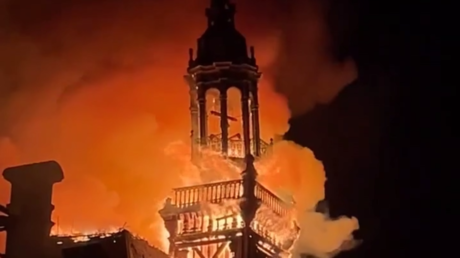
The bell tower of the 143-year-old town hall in the French city of Limoges collapsed on Saturday evening after the building was set ablaze amid nationwide protests over the rising cost of living. The incident came as clashes between police and demonstrators escalated across France, with officers firing tear gas as tens of thousands took to the streets demanding economic relief and education reform.
The unrest followed weeks of student-led protests that began last month at a high school in Creteil, near Paris, over teacher shortages and deteriorating school facilities. Initially focused on education reform, improved learning conditions and increased funding, the movement has since converged with broader demonstrations against inequality and the rising cost of living. Labor unions have also joined the protests amid opposition to the government’s proposed 2027 budget and concerns over public spending cuts.
In Limoges, a city in west-central France, masked protesters set fire to the 19th-century town hall, AFP reported, citing a regional official. Videos circulating on social media show the building’s bell tower giving way and collapsing as flames engulf its supports.
The fire caused extensive damage, with the roof collapsing onto the lower floors and much of the facade destroyed. Local officials described the historic building as largely destroyed. No injuries were reported among those who had been inside.
🔴🇫🇷🔥 ALERTE INFO | Le clocher de la mairie de Limoges s’est effondré. https://t.co/gVB9oUXoB1
“The roof has collapsed onto the lower floors, except in the west wing, and two-thirds of the exterior has already disappeared,” local prefect Maurice Barate said, as quoted by AFP.
Violent clashes were reported in Paris, Marseille, Rennes, Toulouse and Angers.
Prime Minister Sebastien Lecornu said 1,200 people had been arrested nationwide, while Interior Minister Laurent Nunez reported that 150 police officers had been injured.
Footage from Paris showed police confronting protesters, while masked demonstrators threw objects and fireworks.
In Marseille, protesters broke into city hall, smashing open the door and spray-painting the walls, according to local newspaper La Provence. Fires were also reported in several cities, including at a tourist office in Lyon.
French President Emmanuel Macron has urged demonstrators to remain calm and respect people and property, while authorities have blamed violent incidents on what they describe as ultra-left groups.
Police tactics have also drawn scrutiny following reports of serious injuries among young protesters.
À la mairie du 7e arrondissement de Lyon, deux mariés font un clapping avec les manifestants, chaudement applaudis https://t.co/mWVjkHrnqF
Nunez has warned that security forces could use intermediate weapons, including stun grenades, if violence erupts during Saturday’s demonstrations.
Marseille : plusieurs dizaines de manifestants ont pénétré brièvement samedi dans le hall de la mairie, sur le vieux port, après avoir enfoncé la porte en criant "c'est la Révolution, on prend la Bastille". Ils ont été dispersés par des forces de l'ordre ⤵️ pic.twitter.com/QMtEYxYZTK
The protests echo the 2018 Yellow Vest movement, mounting further pressure on Macron as high public debt pushes French borrowing costs to 20-year highs.
Discover-Tech exploited digital advertising infrastructure to track targets and deliver spyware, according to two research teams
Israeli ad tech company Discover-Tech exploited online advertising infrastructure to track targets and help deliver spyware to dozens of devices belonging to Al Jazeera staff and members of other entities, according to investigations by the Canadian cybersecurity watchdog Citizen Lab and New York-based ad security firm Confiant.
The researchers said Discover-Tech used a sprawling network of online ads to identify potential targets, monitor their activity and facilitate the compromise of their devices.
“The core finding is the weaponization of ad infrastructure for advanced staging, preliminary targeting, and payload delivery, characterized by exceptional technical sophistication, robust anti-interception measures, and surgical micro-targeting,” Confiant said in its findings.
Devices belonging to staff at the international news network Al Jazeera were among those infected through malicious ad placements, which operated silently, without visible pop-ups or suspicious links. The Qatar-based media network condemned “the spyware attacks targeting a number of its staff,” describing them as an “assault on press freedom,” and called for those responsible to be held accountable.
The investigation also linked the malicious activity to Israeli spyware developer Candiru, which has been blacklisted by the US and rebranded as Integrity Labs, and Israeli surveillance technology provider Intelos. The companies allegedly exploited ad inventory on major platforms, including Google, Russia’s Yandex and US ad tech platform Beeswax to track targets and compromise consumer devices.
Discover-Tech used a system called Controlium to turn routine ad auctions into a surveillance tool. Over four months, it served ads across nearly 200,000 websites and mobile apps on Android and iOS devices in dozens of countries. According to Confiant, the company generated about 10 million ad impressions daily, harvesting device fingerprints, IP addresses, authentication tokens, cookies and other personal data, including without consent where required under EU privacy rules. Citizen Lab also identified a group linked to Discover-Tech, dubbed Dark Cartographer, which allegedly exploited vulnerabilities at mobile carriers and matched advertising IDs with phone numbers to track subscribers on a large scale.
Geographic data revealed sharp spikes in traffic that researchers said pointed to targeted intelligence-gathering operations rather than routine commercial advertising. Palestine was the most heavily targeted territory, where Discover-Tech accounted for nearly 2% of all digital ad impressions, peaking at around 10% on April 7. The activity also reached sensitive networks, including the Armenian prime minister’s office, international organizations, courts, universities and defense institutions. Investigators detected targeted connections to Candiru servers in nine countries, with Belgium accounting for 56% of recorded activity, followed by the UAE, Saudi Arabia, Bahrain, Mexico and Spain.
Confiant described the campaign as highly sophisticated, citing its anti-interception measures and precise targeting capabilities. Citizen Lab said the findings provided the first public technical evidence that spyware could be delivered through online ads without users clicking on anything, a technique researchers dubbed “AdFection.”

 Login