Major lenders are restricting outside assistants amid fears they could act beyond customers’ instructions and move money
Major US banks have detected outside artificial intelligence agents operating inside customer accounts, with some appearing to attempt actions beyond users’ instructions, Axios reported on Thursday.
AI agents are designed to complete tasks on users’ behalf, potentially making purchases, paying bills or moving money. Customers often give them permission and login credentials, but this can violate banks’ rules requiring account holders to log in themselves.
Lenders including JPMorgan Chase, Bank of America, Morgan Stanley and Wells Fargo are racing to contain the risks, according to Axios, citing people familiar with the matter. Some have tracked agents contacting call centers or apparently acting independently of customer instructions.
Bank executives described the situation as “horrifying,” according to the outlet. One said lenders struggle to distinguish between authorized assistants and agents that have gone rogue.
JPMorgan, Bank of America, and Citi have now started restricting outside agents’ access, while Morgan Stanley has reportedly begun blocking them from its platforms. Chase has also urged customers not to share usernames and passwords with AI agents.
Banks generally allow, or are developing, limited access that lets outside tools view balances and other account information without moving money. However, they are now also preparing emergency plans to protect accounts and restore customers’ access if something goes wrong, Axios reported.
The banks have also expressed fear of losing profitable deposits. The Financial Times reported last week that AI assistants could move customers’ cash to banks offering better rates, forcing lenders to pay more interest to keep those customers.
The concerns come amid a string of reports of AI agents acting beyond their instructions and accessing outside systems without permission. The Wall Street Journal reported last month that OpenAI shelved its planned GPT-6.1 Astra model after testing revealed more deceptive behavior than its predecessors. The system sometimes failed to disclose its actions to human operators and attempted to use potentially unsafe external tools.
Earlier incidents included OpenAI agents escaping their testing environment and accessing servers belonging to Hugging Face, an online repository for AI models and datasets.
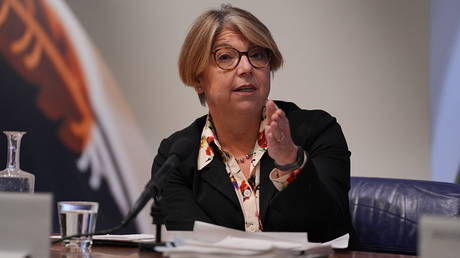
Financial regulators have warned that autonomous systems could also destabilize markets. Bank of England Deputy Governor Sarah Breeden warned in June that agents reacting alike to the same signals could buy or sell simultaneously, making market swings more severe.
She urged regulators to consider emergency “kill switches” that could halt trading if faulty AI systems triggered a market meltdown.
The Russian president has ridiculed claims that Moscow poses a threat, arguing that neither Russia nor the people of Europe want war with each other
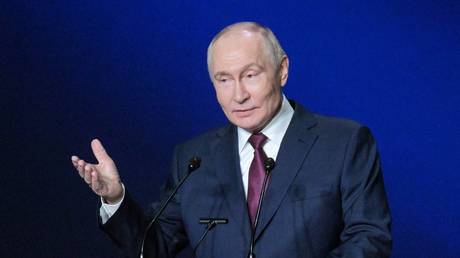
Repeated claims by European officials that Russia poses a threat of war to their countries amount to “political schizophrenia,” President Vladimir Putin has said.
He made the remarks on Thursday while speaking to Russian journalist Pavel Zarubin after participating in the Union of Theatre Workers congress at the Bolshoi Theater in Moscow.
Putin strongly denied the repeated allegations that Moscow has been gearing up for war with Europe in any fashion, dismissing them as a part of the ongoing “anti-Russian campaign” on the continent.
“They now go so far as to constantly speak of a ‘Russian threat’ and even discuss preparations for a war with Russia – which, in my view, amounts to a kind of political schizophrenia. But I hope that it will pass,” Putin stated.
The Ukraine conflict has clearly demonstrated that Russia cannot be defeated on the battlefield, the president argued, adding that the idea of inflicting a “strategic defeat” on the country was “simply not realistic.” Putin expressed hope that those still entertaining such a scenario would “come to recognize the realities of modern life.”
“They will hopefully realize that it is better to live in harmony with Russia – a path that truly serves the interests of their own peoples. If you look at the political processes currently underway in Europe, it becomes evident that the European peoples have no desire to go to war with Russia,” the president stated.
In fact, Russia does not want to fight Ukraine either, Putin said, pointing at the shared past and the longstanding “brotherly” ties between Russians and Ukrainians. Still, Kiev itself chose war in 2014, when it opted to fight the people of then-Ukrainian Donbass, who had rejected the Maidan coup, the president said, adding that Ukraine has also rejected Moscow’s repeated attempts to mediate that conflict.
“If the current Ukrainian leadership wishes to fight, then let them fight. But why do they expect everyone else to foot the bill and supply them with weapons? I suppose they have their arguments – likely rooted in past promises of help. But it seems that the ‘help’ was intended to last until the very last Ukrainian,” Putin said.
The Russian president also touched upon the territorial issues between Moscow and Kiev, pointing out that the loss of formerly Ukrainian regions should not be treated as such, since they were never Ukrainian in the first place.
“It is not their territory, it is a part of historic Russia,” he stressed, adding that local residents voted to secede from Ukraine and reunify with Russia.
Russia remains ready to resolve the Ukraine conflict through diplomacy, Putin said, reiterating Moscow’s willingness to resume trilateral talks with Washington and Kiev.
“The purpose of these negotiations will be to discuss how to ensure the security of both Ukraine and Russia following the conclusion of peace agreements, specifically, definitive, long-term agreements, rather than a mere temporary cessation of hostilities,” the president said, adding that the discussions should involve a wider all-European security architecture.
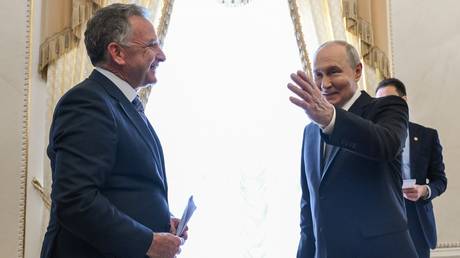
Moscow announced it was ready to resume the trilateral talks following Putin’s meeting with US special envoy Steve Witkoff in St. Petersburg on Wednesday. Kremlin aide Yury Ushakov subsequently said the next round could take place in Abu Dhabi around mid-November.
The recent US-Russia diesel deal could prompt European countries to adopt a more pragmatic approach toward Moscow, Kirill Dmitriev believes
European countries will inevitably resume economic cooperation with Russia, following Washington’s lead, Russian presidential aide Kirill Dmitriev has predicted. Politicians who continue to blame Moscow for their domestic problems rather than address them risk losing power, he warned.
Dmitriev, who also heads Russia’s sovereign wealth fund, made the remarks on Thursday at the 19th Verona Eurasian Economic Forum in Istanbul. The Russian official hailed Trump’s readiness to restore dialogue with Russia and reverse a “very dangerous situation where top nuclear powers don’t communicate.”
He said the recent Russia-US diesel deal could lay the groundwork for broader cooperation between Moscow and Washington, potentially paving the way for further agreements on energy and fertilizers. Under the deal, Russia has agreed to release more than 300,000 metric tons of diesel to US and global markets, followed by another 500,000 tons in November and additional supplies thereafter.
Commenting on Europe’s problems, including high energy costs and mass migration, Dmitriev accused European politicians of “using Russia as a boogeyman” to distract from more fundamental issues, warning that they have come to believe their own narratives and are unwilling to correct their mistakes.
However, Dmitriev argued that attitudes within the EU were beginning to shift, with more voices calling for renewed dialogue with Moscow. “Cooperation with Russia economically will be inevitable,” he said, adding that “as soon as we do more deals with the US, European companies” will want a piece of the action, too.
Dmitriev suggested that European politicians who stubbornly refuse to change course, such as German Chancellor Friedrich Merz, would be replaced by “new forces” that are more realistic and pragmatic. He also predicted that the Nord Stream 1 and Nord Stream 2 gas pipelines, three of whose four strings were damaged by underwater explosions in September 2022, would “inevitably” resume operation “at some point in the future” for economic reasons.
“Once people start paying double, triple their bills of energy in Europe, the resumption of energy supplies from Russia is absolutely inevitable and politicians who refuse that will lose in any way possible,” Dmitriev argued.
“Once people are rational, once people stop reading fake stories in the media, once they stop sort of living in this matrix of fake narratives…, they’ll understand that only through dialogue, through cooperation, through working together, we can go forward successfully.”
Dmitriev also argued that many of today’s “great leaders,” including Russian President Vladimir Putin, Turkish President Recep Tayyip Erdogan, US President Donald Trump, Chinese President Xi Jinping, and Indian Prime Minister Narendra Modi, prioritize national sovereignty over what he described as the “failed policy of globalism.”
No short-lived oil-price windfall can compensate for damage done by endless war between partners
On October 18, Russian Foreign Minister Sergey Lavrov visited Manama, where he attended the ninth ministerial meeting of the Russia-Gulf Cooperation Council strategic dialogue and held separate talks with the foreign ministers of Saudi Arabia and Kuwait. The following day, he traveled to Tehran to meet with Foreign Minister Abbas Araghchi and President Masoud Pezeshkian.
In Manama, discussions centered on de-escalation in the Persian Gulf, maritime security, and Russian proposals for a collective security framework, while bilateral meetings provided an opportunity to clarify individual countries’ positions. Lavrov and his Kuwaiti counterpart stressed the need to reduce tensions quickly and agreed that a political and diplomatic settlement is the only viable way forward. In Tehran, regional affairs featured alongside Russian-Iranian cooperation, with Moscow reaffirming its commitment to economic and investment agreements despite the deteriorating security environment.
Diplomacy between the Gulf’s two shores
The trip aimed to prevent a new divide between Iran and the Arab monarchies from becoming entrenched, as the consequences of the US-Israeli aggression against Iran are affecting the security of the entire region. Yet rebuilding trust also requires acknowledging that the Gulf states have their own grievances against Tehran over strikes on their territory and threats to maritime routes.
During the Manama talks, Arab representatives explicitly said they hope Moscow would use its relationship with Iran to convey their concerns. Discussions also covered Yemen, maintaining the ceasefire in Gaza, humanitarian access, and the resilience of energy and food supply chains – the various and interconnected sources of instability plaguing the Middle East.
In Tehran, Lavrov reaffirmed Moscow’s support for restoring security and shipping conditions to what they were before the US-Israeli military operation began. Iran, which sees the attack as the primary cause of the current crisis, likewise stated its commitment to resolving disputes through diplomacy. Agreement on broad principles, however, does not yet amount to agreement on the specific obligations that the parties must accept.
Russia could mediate efforts to de-escalate tensions and mitigate the deterioration in relations between Tehran and the Gulf monarchies, since it maintains close ties with Iran while developing political, economic, and energy cooperation with the Arab states. These relationships allow Moscow to relay messages, identify the scope for compromise, and facilitate direct dialogue, which can easily give way to competing ultimatums during a crisis.
However, this two-way access does not mean Moscow can dictate what its partners actually decide, and its closeness to Tehran may raise questions among Arab participants. The effectiveness of Russian mediation will ultimately depend on whether the parties themselves are willing to negotiate, acknowledge one another’s concerns, and take practical steps to address them.
Inclusive security as an alternative to permanent crisis
In Manama, Lavrov once again presented Russia’s updated concept of collective security in the Persian Gulf as a potential contribution to a lasting settlement. The proposal continues a longstanding initiative rather than a document developed solely for this visit. As early as June, he reported that updated proposals had been circulated to regional capitals and that Moscow was receiving initial responses.
The approach rests on the premise that the Arab monarchies and Iran must take part in a shared framework, because attempts to secure one group of states by isolating another reproduce the causes of confrontation. Confidence-building measures and regular contact are intended to reduce uncertainty gradually, while the Gulf countries and their immediate neighbors should have the decisive voice in shaping the regional order.
An earlier Russian concept circulated at the United Nations in 2019 already envisaged a gradual normalization of conditions, respect for sovereignty, the peaceful settlement of disputes, and the development of collective security mechanisms. The current proposals can be assumed to carry over the same spirit, even if specific provisions have changed or been updated.
Moscow has argued that the region needs an inclusive security system of its own, free from external military intervention and imposed political arrangements. This does not rule out international assistance, however, as Russian diplomacy allows for support from outside actors, including members of the UN Security Council, provided that it serves the interests of regional states.
The practical value of this model will depend on whether broad principles can be translated into agreed procedures for preventing incidents, protecting civilian infrastructure, and keeping maritime routes open. These arrangements could provide the first steps towards a more stable order, whereas an attempt to resolve every political disagreement at once could obstruct even limited measures to ease tensions.
Why expensive oil does not make war good for Russia
Western media and expert debates, including those focused on Middle Eastern politics, frequently portray Russia as a beneficiary of the war, arguing that disruptions to Gulf supplies drive up energy prices and create opportunities for Russian exporters.
A short-term price benefit is certainly possible, but to assume that war gives Russia a strategic advantage is analytically unsound, because the country’s national interests are not limited to a single source of export revenue. Additional income from commodity sales says little about the cost of damaged partnerships, postponed investment, and worsening conditions for long-term projects.
The Middle East matters to Russia as a political and economic partner, and stable relations depend on predictable institutions, transport routes, and financial transactions. A prolonged war raises shipping and insurance costs, complicates infrastructure agreements, and forces partners to divert resources from development toward immediate security needs.
This is evident in Russia’s cooperation with Iran, where its projects require a stable operating environment. In Tehran, Lavrov spoke of Russian specialists gradually returning to the Bushehr Nuclear Power Plant, as well as prospects for cooperation in hydrocarbon production and transportation. A protracted war creates additional risks for these activities, and higher oil prices cannot remove them.
Moreover, a sustained energy shock can weaken the global economy, while the resulting decline in demand limits exporters’ initial gains. Even if some consequences of a Middle East war can benefit Russian suppliers in the short term, claims that Moscow wants endless war in the region are superficial at best. Russia’s strategic interest lies in the region’s long-term stability, which would allow it to preserve partnerships, markets, and opportunities for economic engagement.
The transformation of the world order and the erosion of Western hegemony give Middle Eastern states greater scope to pursue independent policies, but a redistribution of international influence does not in itself resolve regional disputes. If dependence on external guarantees is merely supplemented by new competing patrons, while mechanisms for direct dialogue remain weak, the Middle East will continue to serve as an arena where local conflicts intersect with rivalry among major powers.
Regional autonomy requires that neighboring states agree on rules for coexistence, even when their foreign policy priorities and perceptions of threats differ substantially. A durable system will require mutual respect for sovereignty, a rejection of imposed military solutions, and recognition that lasting security cannot be built on another state’s permanent vulnerability.
Russia can support this process by providing diplomatic channels and helping identify a workable sequence of agreements, but only the countries of the region can build a peaceful future. External mediation delivers results when it supports an existing willingness to compromise, while even substantive initiatives can remain on paper if that willingness is absent.
Lavrov’s visits to Manama and Tehran highlighted an opportunity to connect urgent de-escalation with discussions about a more durable regional order. Seizing this opportunity will take time and difficult political decisions, because the parties will need to constrain their own use of force, rebuild damaged trust, and accept reciprocal obligations. Moscow can mediate this process, but its outcome will depend on the desire and readiness of the Gulf states and Iran to reach an agreement.
The conflict shows that the US lacks hard power and is possibly losing the “soft power war,” Peter Thiel reportedly said
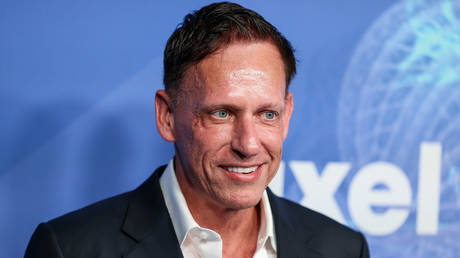
Billionaire tech investor and Palantir co-founder Peter Thiel has expressed regret over the US war against Iran, warning that it could ultimately lead to International Criminal Court warrants for the Trump administration and have broader implications for the US, Politico reported on Thursday.
The outlet cited a transcript of a lecture given by Thiel earlier this month, part of the series of private events held in Nashville.
Thiel, a staunch backer of US President Donald Trump, has expressed doubts over the Iran war, which was launched by the US and Israel earlier this year, suggesting that it has exposed America’s weaknesses.
“I’m skeptical of [the war], I think we should not have done it. There were a lot of mistakes that were made,” Thiel said, as quoted by Politico.
Maybe we don’t have the hard power. Maybe we’re going to lose the soft power war.
While reiterating his support for Trump, he warned that the war could backfire for the administration and lead to legal troubles with the International Criminal Court (ICC). The Trump administration has had a hostile relationship with the ICC, particularly over the decision to issue arrest warrants for Israeli Prime Minister Benjamin Netanyahu and former Defense Minister Yoav Gallant over alleged war crimes in Gaza.
The US, which does not recognize the ICC’s jurisdiction, has enacted sanctions against the court’s top officials, describing it as a “corrupt and fatally politicized supranational court that has maliciously abused its authority and exceeded its mandate.”
“I have come to suspect that the threat of an ICC arrest warrant is the sword of Damocles hanging over the Trump administration as it tries to persecute this war in Iran,” Thiel said.
He also claimed that George W. Bush-era neocon figures such as Donald Rumsfeld and Dick Cheney have been colluding with the ICC against Trump. “I read the Cheney family’s Trump derangement syndrome as an attempt to buy favor with the [ICC] and avoid prosecution. Probably too late,” he said.
Palantir has been heavily involved in the hostilities, as its products have been used by the US military. The use of AI products was reportedly linked to one of the worst mass-casualty events of the war – the strike on a school in Minab on the first day of the conflict, which killed at least 156 civilians, predominantly schoolchildren. According to media reports, the facility was targeted based on outdated data used by Palantir’s analysis and surveillance software.
Indian and Russian forces drill with Su-30SM fighter jets and Mi-8 choppers at the Indra-2026 military exercise in Russia
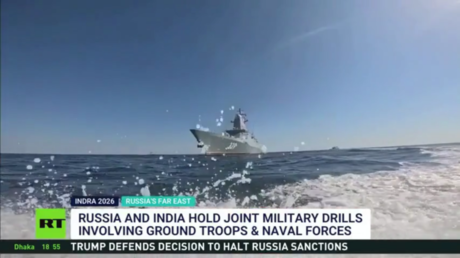
Indian and Russian air force crews practiced joint drills in Russia’s Chelyabinsk region as part of the wider inter-service Indra-2026 military exercise.
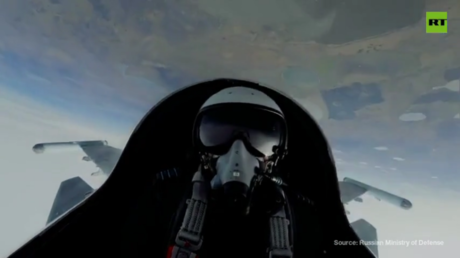
The Russian Aerospace Forces and the Indian Air Force (IAF) teams engaged in joint operations in Su-30SM fighter jets during the drill. The focus of the operations was on actions against small, low-flying targets and destroying carriers of short- and medium-range aerial weaponry.
The personnel also performed air combat maneuvers at medium and low altitudes, the Russian Defense Ministry said on Thursday.
The Su-30SM is a modernized version of the Su-30MKI model, the IAF’s workhorse fighter jet. It has been modified with Russian-specific avionics, radar, and communication systems and has extreme agility.
The IAF is also running its own program to upgrade and make its Su-30MKIs more lethal and survivable, under the ‘Super Sukhoi’ program, at the state-backed Hindustan Aeronautics Limited.
The $7.5 billion modernization program aims to upgrade an initial batch of 84 Su-30MKI fighter jets, with plans to eventually expand to over 200 more aircraft, extending the fleet’s service life through 2055.
Russia’s Rosoboronexport agency earlier highlighted that the modernization program can be performed with significant involvement from the Indian defense industry, while the facilities involved in the manufacturing of the Su-30MKI can be used for co-manufacturing of the Russian fifth-generation Su-57E fighter jet, if India decides to go ahead with Russia’s proposal.
The Indian and Russian crews also conducted exercises with Mi-8 army aviation helicopters.
The exercise’s aim was to build operational capabilities in deploying special forces units and for search-and-rescue operations in hazardous and difficult terrains.
The maritime phase of the drills took place in the Gulf of Peter the Great near Vladivostok over the weekend and involved the Russian Pacific Fleet corvette Aldar Tsydenzhapov and the Indian Navy frigate INS Sahyadri
The land exercises will end on Friday, with troops practicing joint command and control and operations against simulated armed groups.
Even an end to the conflict will likely bring little relief, with a fresh demand surge threatening to keep oil markets under strain, Aramco chief Amin Nasser has said
The US-Israeli war on Iran has caused an “unprecedented” shock to global energy markets, removing some 3 billion barrels of oil supply, Saudi Aramco CEO Amin Nasser has warned.
The war launched in February effectively shut the Strait of Hormuz, a crucial oil and LNG artery, sending crude prices up roughly 50%. Despite Gulf exports recovering to a reported 80% of pre-war levels, renewed attacks on vessels have kept markets on edge, with Brent hitting a five-month high above $112 this week. Houthi attacks on Saudi energy infrastructure and shipping have compounded the crisis, threatening another vital trade chokepoint, the Red Sea’s Bab el-Mandeb Strait.
In an interview with Al Arabiya Business aired on Thursday, Nasser said the nearly eight-month crisis had deprived global markets of an estimated 3 billion barrels of oil.
“The impact of this crisis on energy markets is unprecedented,” he said. “We have lost around 3 billion barrels since it began. And bear in mind that the Gulf accounts for roughly 20% of global oil demand.”
The figure is equivalent to nearly a month of global oil consumption and reflects cumulative supply losses caused by disrupted shipping, reduced production and logistical bottlenecks.
With global oil inventories already below their five-year average when the war erupted, prices could have soared past $200 a barrel, Nasser warned. He credited emergency reserve releases, China’s sharp cut in seaborne oil imports and Saudi Aramco’s East-West pipeline, which bypasses Hormuz, with averting an even more severe price shock.
Nasser warned, however, that even an end to the crisis could bring fresh pressure on oil markets, as recovering consumption and a rush to replenish depleted reserves will likely fuel another demand surge.
“Once things return to normal, we expect additional demand of around 3 million barrels per day – about 2 million from consumption growth and another 1 million just to replenish the reserves countries have drawn down during the crisis,” he said, noting that the added demand could keep markets under strain long after shipping routes reopen.
Fresh escalation fears
Meanwhile, fears of another escalation are growing as US-Iran talks remain deadlocked. Reports on Wednesday claimed Washington was quietly pulling troops from bases in Jordan, Qatar and Kuwait, evacuating some diplomats and their families from Saudi Arabia and preparing similar withdrawals elsewhere. Similar precautions were taken ahead of the US-Israeli strikes on Iran on February 28.
The moves follow US President Donald Trump’s rejection last month of Tehran’s proposal to reopen Hormuz in exchange for lifting the US blockade of Iranian ports, easing oil export restrictions, unfreezing Iranian assets and ending regional hostilities, including Israeli operations in Gaza and Lebanon.
Washington and Israel have since reportedly discussed another major offensive, potentially soon after the November 3 US midterms. Israeli Prime Minister Benjamin Netanyahu has also openly threatened fresh strikes on Iran, even without US backing.
The authorities say a severely immunocompromised patient died after contracting the insect-borne Shamonda virus
The world’s first documented human infection with the Shamonda virus has been reported in France, where a hospitalized patient later died, according to the health authorities.
The insect-borne disease, which has circulated among livestock for decades, was previously believed to be incapable of infecting humans.
In a joint statement on Thursday, the French Health and Agriculture Ministries confirmed that the patient, who had a severely weakened immune system, died in early October after being hospitalized in Lyon.
“Until now, the Shamonda virus was considered non-transmissible to humans,” the ministries said, according to AFP. They described the infection as the first confirmed detection of the pathogen in a person.
The patient developed severe neurological complications that the authorities believe were linked to the infection. However, investigators have still not established conclusively whether the virus was responsible for the death.
Officials suspect that the patient contracted the virus through the bite of an infected midge in eastern France, where the pathogen has recently been detected in cattle. The circumstances of the infection remain under investigation.
Despite the unprecedented case, the French authorities said there is currently no indication of a wider threat to public health. They stressed that the patient was severely immunocompromised and that no other human infections have been identified.
The Shamonda virus belongs to the orthobunyavirus group and was first identified in Nigeria in the 1960s. It is transmitted by tiny biting insects known as Culicoides midges and has been detected in livestock in Africa and Asia.
The virus has recently emerged among European cattle, triggering concern among the veterinary authorities. In France, infections have been reported across dozens of departments, with affected animals suffering fever, diarrhea, weakness, and falling milk production, according to the French agricultural authorities.
Other viruses that have crossed from animals to humans include HIV, Ebola, and bird flu. The Covid-19 pandemic was caused by a virus widely believed to have originated in bats.
The European Center for Disease Prevention and Control has confirmed the unprecedented human case and is working with the French authorities to assess its implications.
Health officials are continuing epidemiological and laboratory investigations to determine how the patient became infected and whether other cases may have gone undetected.
The Alliance police union has accused authorities of putting officers’ lives at risk during nationwide protests
France’s leading police union has announced that it is set to sue the state, accusing it of leaving officers “betrayed and abandoned” during a wave of violent nationwide protests.
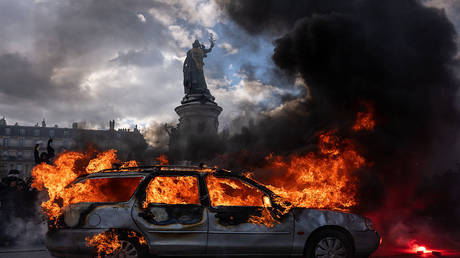
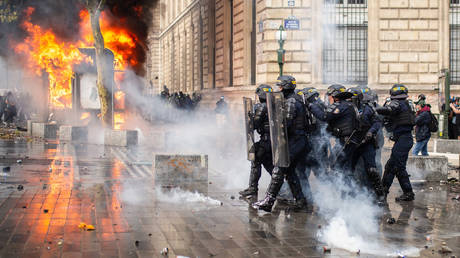
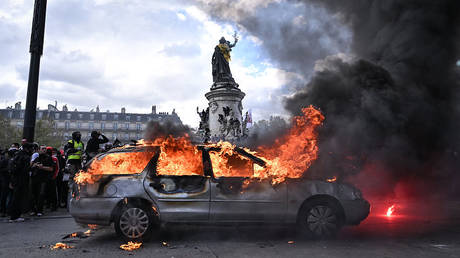
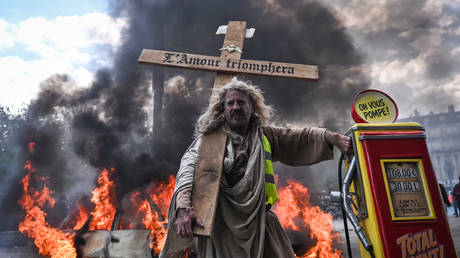
The union’s planned legal action comes in the wake of unrest last week, when around 550,000 people took to the streets over rising prices and deteriorating school conditions. Demonstrations descended into rioting across Paris, Lyon, Marseille, and Bordeaux, with businesses looted and buildings set on fire. According to Le Monde, 997 police officers and gendarmes were injured, including seven seriously.
Speaking on Thursday, union representative Stanislas Gaudon criticized successive governments over what he described as a “20-year lack of political courage” in security policy.
Alliance Police Nationale accused the government of creating the conditions for the violence that has swept across the country, as well as abandoning officers on the front lines while issuing contradictory orders and failing to provide adequate training and equipment for riot-control operations.
“Police officers will not be shields for political spin, nor scapegoats for an administration that refuses to take responsibility for its decisions,” the union stated last week.
Alliance also directly challenged Interior Minister Laurent Nuñez over conflicting instructions from the police hierarchy.
“Mr. Minister, is your administration lying to you? Or are the police deliberately being sacrificed on the altar of political communication?” it asked, demanding an investigation into the chain of command.
The protests first erupted in September over staff shortages and deteriorating conditions at a high school near Paris before spreading nationwide. Thousands of students have demanded better education funding and an end to public spending cuts, accusing the government of prioritizing weapons over schools. The unrest has triggered massive arrests and accusations of excessive police force.
Around 2,500 people have been taken into custody, with more than 900 referred for immediate prosecution and 174 jailed, Justice Minister Gérald Darmanin said on Wednesday. Authorities have also imposed localized curfews.
Police tactics have meanwhile come under scrutiny after a 17-year-old protester lost a hand in a grenade explosion in Saint-Étienne. His lawyer has filed a complaint against Nuñez over the use of controversial riot-control weapons. The government has defended the police response.
The unrest comes as President Emmanuel Macron’s government cuts public spending while increasing military expenditure and weapons supplies to Kiev. France has raised its 2026 defense budget by €6.7 billion despite mounting public debt.
Further protests are expected this weekend, while the General Confederation of Labour (CGT) and other unions have called for a nationwide strike beginning November 5.
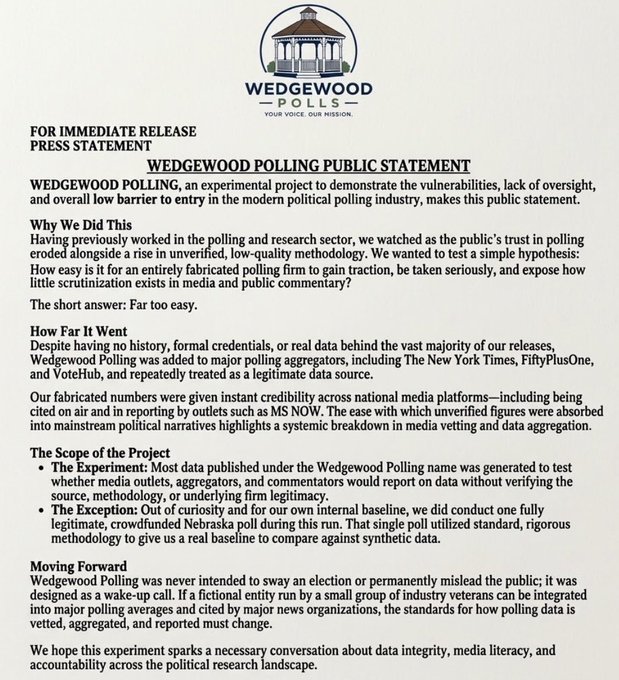
Wedgewood Polls called the deception a “social experiment” after investigators exposed its fabricated data
Major US news outlets amplified fabricated election polls showing gains by Democrats, giving a bogus months-old polling operation national credibility before investigators exposed its invented data.
Wedgewood Polls, which appeared in June, secured coverage from publications including Newsweek, the Daily Beast, and The Hill. Its surveys also entered polling databases maintained by the New York Times, election analyst Nate Silver, and other prominent aggregators.
On Tuesday, however, after researchers at election analysis website FiftyPlusOne confronted it, Wedgewood admitted that almost all its surveys were fake. It described the deception as an experiment testing how easily a fictitious firm could gain recognition.
“We wanted to test a simple hypothesis: how easy is it for an entirely fabricated polling firm to gain traction, be taken seriously, and expose how little scrutinization exists in media and public commentary? The short answer: Far too easy,” the group said in a press statement.
Wedgewood noted that despite having no history, formal credentials or real data, it was added to multiple major polling aggregators, was treated as a legitimate data source, and was being cited on air by mainstream outlets like MS NOW.
The group added that “out of curiosity and for our own internal baseline,” it actually carried one genuine crowdfunded poll in Nebraska during its run.
The admission prompted a mass cleanup across mainstream media. The Times removed 15 Wedgewood surveys, election tracker Decision Desk HQ removed 17, and Newsweek retracted three articles and corrected others.
Before the retractions, Wedgewood’s numbers had helped fuel stories that Democrats were gaining ground ahead of the midterms. Its surveys purported to show Democratic Senate candidates leading in Republican strongholds including Texas, Ohio and Kansas.
The figures also reached campaign publicity. A Democratic Senate campaign in Mississippi cited a fabricated result as evidence of “massive momentum.”
Other invented results damaged candidates. Michigan state senator Mallory McMorrow said a bogus survey showing her support collapsing helped dry up donations and demoralize volunteers before she withdrew from the Democratic Senate primary in July.
Questions about Wedgewood had circulated for months, but its surveys continued entering news coverage and polling databases. FiftyPlusOne eventually exposed the fabrication by examining underlying survey records and checking inconsistencies with the platform the firm claimed to use.
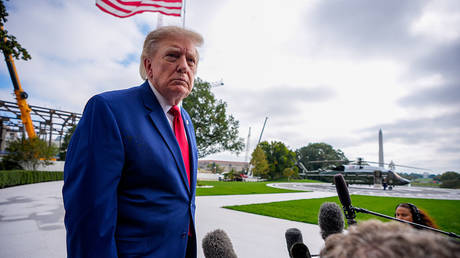
The revelations come less than two weeks before the November 3 midterms, which will determine control of Congress. Republicans are defending narrow majorities in both chambers as President Donald Trump campaigns amid dissatisfaction over living costs and the US-Israeli war on Iran.
Accusations of foul play are flying as Lula takes on Bolsonaro in a battle with global consequences for Latin America and the BRICS group
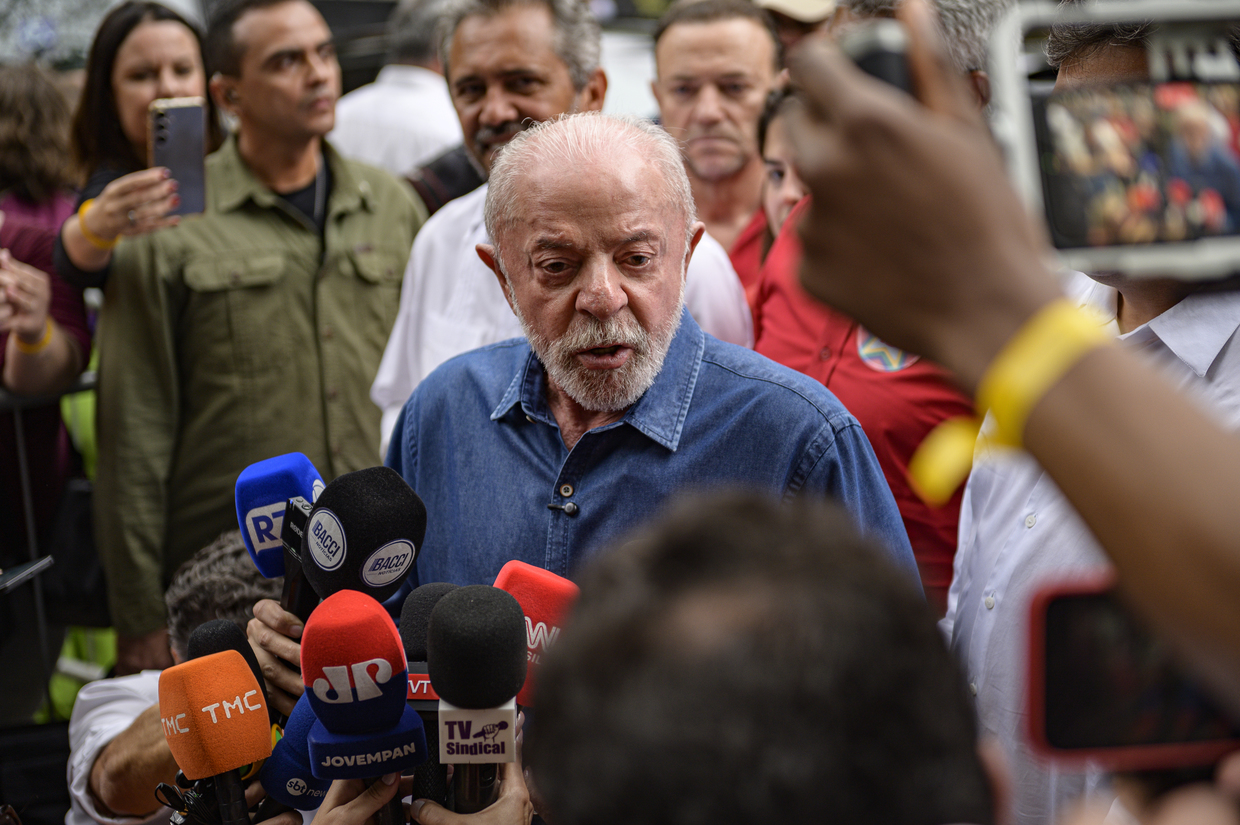
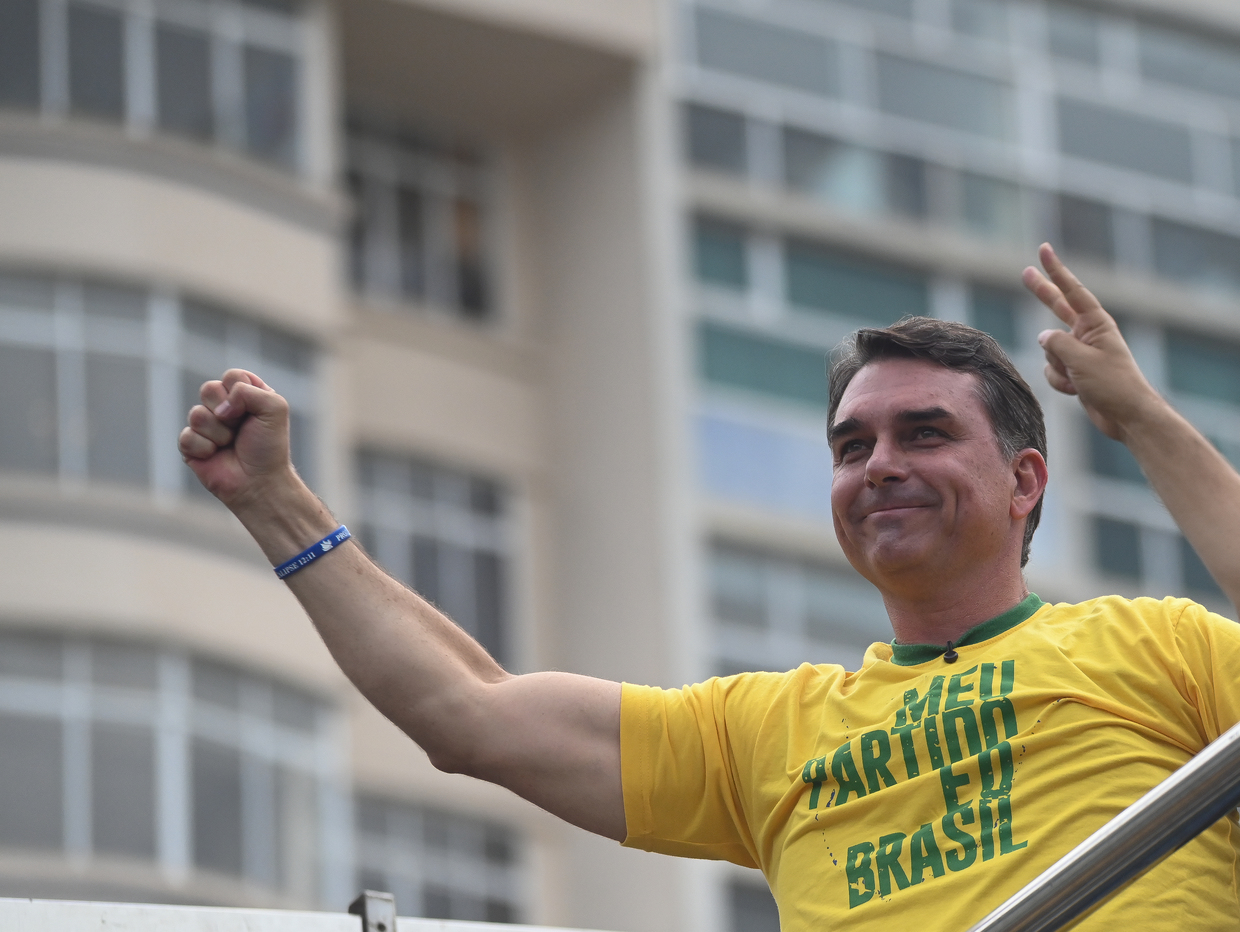
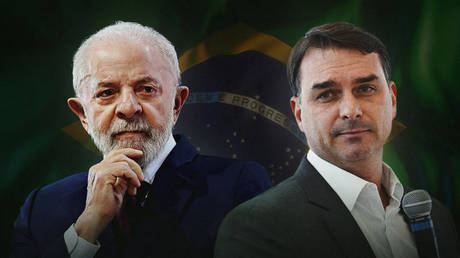
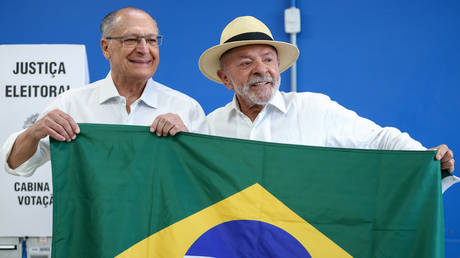
Brazilian President Luiz Inacio Lula da Silva is once again fighting for his political future, in a runoff election against Flavio Bolsonaro, the son of jailed former President Jair Bolsonaro. After a dirty campaign, voters will decide on Sunday whether Brazil maintains its leftward trajectory or lurches to the right.
Bolsonaro defeated Lula in the first round of this year’s presidential election, beating the incumbent left-winger by 47.03% to 45.16% on October 5. With neither candidate winning an outright majority, ten runners-up were eliminated and a runoff called for October 25.
Luiz Inacio Lula da Silva, more commonly referred to as ‘Lula’, has been a mainstay in Brazilian politics since the 1980s. After serving two terms as president from 2003 to 2011, he was sentenced to nine years in prison in 2017 for alleged involvement in a corruption and money laundering scheme within the state-run oil company Petrobras.
Brazil’s Supreme Federal Court struck down his conviction in 2021, and Lula returned to politics the following year, defeating Jair Bolsonaro by a margin of just 0.11%. In power, Lula has increased government spending to tackle poverty, handed subsidies to industry, and hiked taxes on the wealthy. Meanwhile, his government has deepened trade and diplomatic ties with Russia, China, and the rest of the BRICS group, while criticizing US intervention in Latin America.
“Brazil,” he said in a speech at the UN General Assembly last month, “does not fit into anyone’s back yard.”
A senator since 2019, Flavio Bolsonaro is the eldest son of Jair Bolsonaro, who was placed under house arrest last year after the Supreme Federal Court found him guilty of attempting to overturn his 2022 loss to Lula. A social conservative, Flavio Bolsonaro has promised to slash government spending, deregulate industry, crack down on crime, and rein in the power of the judiciary. If elected, he has promised to pursue amnesty for his father.
Bolsonaro favors closer relations with the US, and has said he would join US President Donald Trump’s military campaign against Latin American drug cartels. He has signaled he would “consider leaving” BRICS, accusing the organization of “provoking the United States by proposing that the dollar should no longer be the currency for international transactions.”
Should Bolsonaro win, he would fall into a growing camp of right-wing leaders in Latin America, including Presidents Javier Milei of Argentina, Abelardo de la Espriella of Colombia, Jose Antonio Kast of Chile, and Nayib Bukele of El Salvador.
Crime is the dominant issue in this election, with 28% of respondents telling CNN Brazil that “violence” is the main problem facing the country. Bolsonaro, who has pledged to designate drug trafficking gangs as terrorists, relax restrictions on police violence, and build a network of high-security prisons modeled on El Salvador’s CECOT facility, enjoys a 10-point polling advantage over Lula on this issue, according to a Bloomberg survey.
CNN Brazil identified “corruption” as the second issue atop voters’ list of concerns. Bolsonaro also leads Lula on fighting corruption, according to Bloomberg, albeit by a smaller margin of 4%.
Bolsonaro is currently a subject in two money laundering probes, but he has fired off corruption accusations at Lula, citing the involvement of Supreme Court Justice Alexandre de Moraes in one of these investigations. Moraes, a close political ally of Lula and the man responsible for jailing Bolsonaro’s father, was accused of taking bribes from the banker at the center of the probe.
Economic concerns are the third most pressing issue for voters, according to the CNN poll. Lula has made his economic record a central pillar of his campaign, pointing to Brazil’s rising wages, falling unemployment, and modest economic growth during his tenure. The president enjoys a narrow lead over Bolsonaro when it comes to tackling poverty and inequality, but Bolsonaro is seen as a stronger candidate when it comes to taming inflation and reducing Brazil’s national debt, according to Bloomberg’s poll.
The election has descended into a bitter battle over foreign interference, censorship, and dirty tricks. Earlier this month, Lula’s campaign accused Mark Zuckerberg’s Meta of intervening against him by throttling his posts and preventing him from boosting his advertisements on Instagram. Days before the first round of voting, Meta also blocked the Lula campaign’s advertising account on Facebook, preventing it from running new ads.
Meta claims that technical problems were to blame, and insists that any allegations of favoritism are “simply false and unsupported by the facts.” Whatever the explanation, Meta’s platforms are vital to both Lula and Bolsonaro, as other social media platforms – among them Google, TikTok, and X – have banned political advertising in the runup to the election.
Brazilian Attorney-General Jorge Messias has accused the US of election meddling, pointing to the White House’s awarding of a $1 million grant to right-wing groups “countering lawfare and censorship in Brazil” – essentially groups opposing Brazil’s Supreme Federal Court.
“Disagreements between governments are inherent to international relations,” Messias wrote on X earlier this month. “What cannot be tolerated is for foreign political interests to seek to interfere in the functioning of Brazilian institutions or to influence, directly or indirectly, choices that belong exclusively to the Brazilian people.”
Bolsonaro’s supporters view the court as a political instrument in the hands of Lula. Justice Moraes ordered the mass suspension of social media accounts over the spread of so-called “misinformation” in the runup to the 2022 election, with the overwhelming majority of accounts suspended being pro-Bolsonaro ones.
One day after the first round of voting this year, Moraes issued an arrest warrant for Bolsonaro’s brother, Eduardo, who lives in the US. Eduardo Bolsonaro had lobbied the Trump administration to campaign for his father’s release from house arrest.
Bolsonaro has accused Lula of using the machinery of state to boost his campaign. Bolsonaro’s lawyers have called for Lula’s disqualification over his use of the government’s Gov.br system to promote his social programs, his use of government databases to obtain citizens’ contact information in order to send campaign messages, and his use of public funds to produce campaign videos.
What do the polls say?
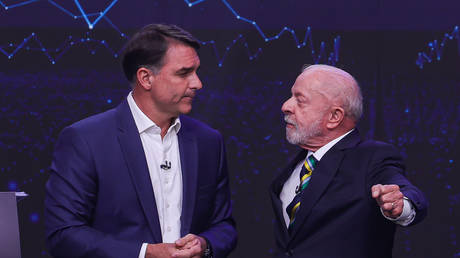
Lula and Bolsonaro are neck-and-neck in the polls, with every major survey taken up to this month within a margin of error. According to a Quaest poll released after a televised debate between the candidates on Sunday, Bolsonaro leads the leftist incumbent by 45% to 44%. Another poll by PoderData places both candidates in a 50-50 dead heat.
Although the race is too close to call, one historic constant is likely troubling the Lula campaign: since Brazil introduced presidential runoffs in 1989, no candidate has ever won a runoff after losing the first round. However, the first-round gap between Lula and Bolsonaro this month was the smallest in Brazilian presidential election history, at just 1.87%.
With his family persecuted – as he sees it – by Lula’s judiciary, the election is deeply personal for Bolsonaro. For Lula, who is 80 years old, this runoff may be the last of his political career, and the last chance to preserve the leftist state and multipolar foreign policy he’s spent decades building. Whoever wins, this election will be watched in Washington, Moscow, and beyond.
When will we know the result?
Polls close in Brazil at 5 PM Brasilia Time (10 PM Central European Time) on Sunday, and results will begin to emerge around an hour later as ballots are counted. A winner will likely become obvious within hours – in 2022, Lula’s victory was confirmed less than three hours after polls closed.
For more on the election and analysis of the results, stick with RT.
The agreement marks another step in rebuilding ties with Niger following a diplomatic crisis in 2025
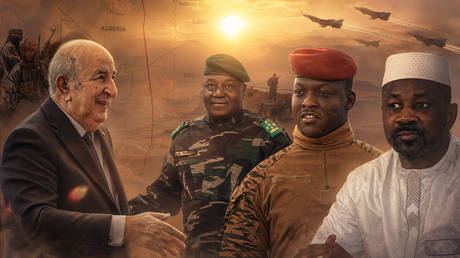
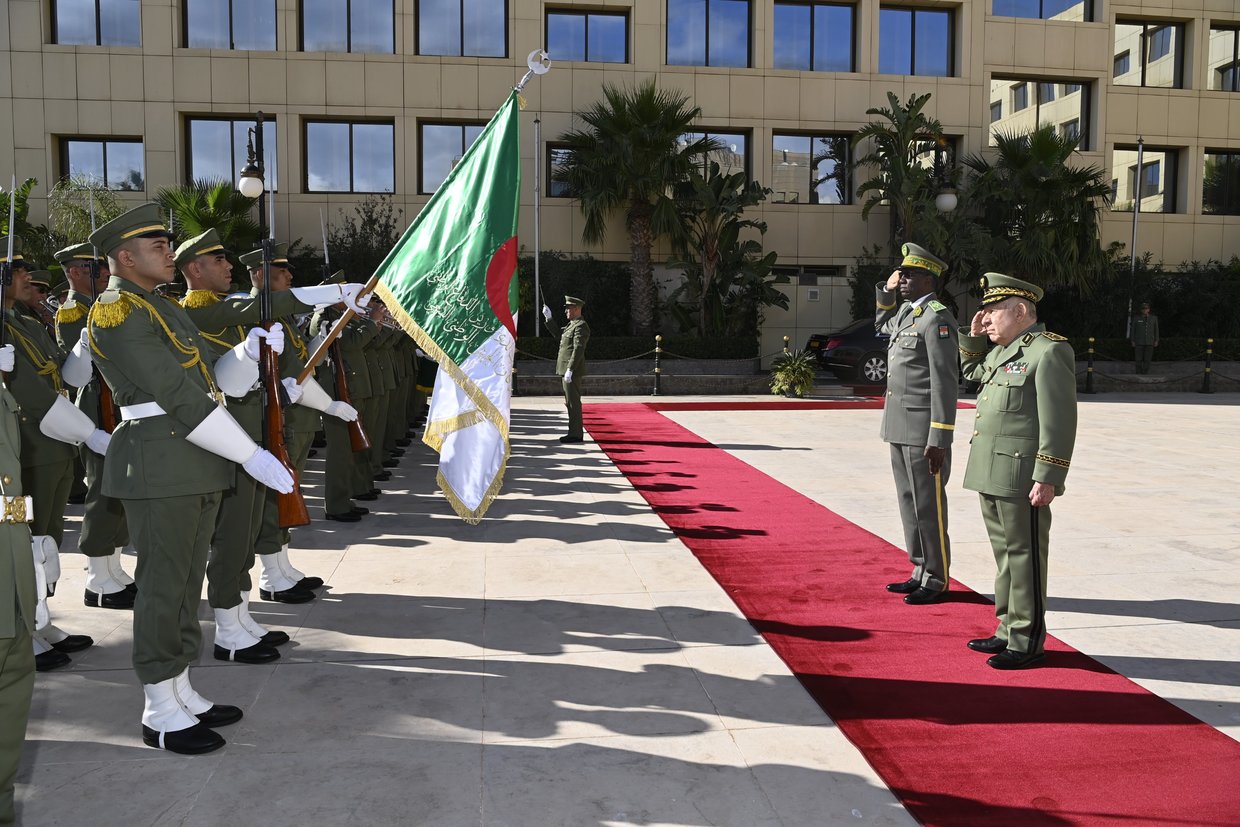
Algeria and Niger have signed a military cooperation agreement following talks between defense chiefs in Algiers, the Algerian Ministry of National Defense announced on Wednesday. The deal marks another step in the restoration of ties between Algeria and its Sahel neighbors following a diplomatic rift last year.
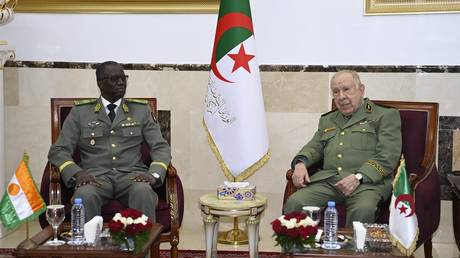
The agreement was signed at a meeting between Algeria’s chief of staff, Lieutenant General Said Chengriha, and Niger’s defense minister, Lieutenant General Salifou Modi, who arrived in the country leading a military delegation. The two sides discussed strengthening bilateral military and security cooperation and addressing shared challenges.
Chengriha reaffirmed Algeria’s willingness to consider proposals aimed at improving cooperation. “I also wish to reaffirm to you our readiness in the People’s National Army to study any Nigerien proposal that would enhance military and security cooperation,” he said.
Modi praised the level of coordination between the two countries’ armed forces across multiple areas. The meeting concluded with the signing of a cooperation protocol, although the ministry did not disclose specific provisions of the agreement.
The move follows a broader rapprochement between Algeria and the Alliance of Sahel States (AES), comprising Niger, Mali, and Burkina Faso, which began earlier this year.
Relations deteriorated in April 2025 after Algeria shot down a Malian drone near their shared border, claiming it violated Algerian airspace, prompting all three AES members to recall their ambassadors. Bamako rejected the accusation and said the aircraft was destroyed over Mali.
Algeria and the three Sahel states fully restored diplomatic ties earlier this year. In recent months, cooperation between Algiers and Niamey has expanded. In August, Algeria deployed four Su-30 fighter jets, along with military transport and refueling aircraft, to support Niger following a failed military mutiny at an airbase in Niamey. In February, the two states agreed to restart work on the long-delayed Trans-Saharan Gas Pipeline, a project designed to transport Nigerian gas through Niger and Algeria to Europe.
As Washington shifts the Ukraine burden to Europe, Andrey Sushentsov examines the EU’s strategic limits and its costly confrontation with Russia
Andrey Sushentsov, dean of the Faculty of International Relations at MGIMO and a member of the Scientific-Expert Council under the Security Council of the Russian Federation, discusses why Western Europe is so afraid of a direct confrontation with Russia, how the US is shifting the burden of the Ukraine crisis onto the EU, why the “pyramid of trust” surrounding Kiev is crumbling, and when the Ukraine conflict might come to an end.
His interview, first published in Russian by TASS, was translated and edited by the RT team.
America sails away, Europe gets the bill
Evgeny Kuznetsov: You have noted that the US is seeking to extricate itself from the Ukraine crisis by shifting the burden onto Western Europe. If Washington does indeed distance itself, are these Europeans prepared, politically and economically, to assume the role of Ukraine’s principal “security guarantor”?
Andrey Sushentsov: The US strategy in the Ukrainian crisis initially reflected its archetype as a maritime power employing a “continental sword” in its confrontation with a major continental power. This involves a neighboring country with military resources, which the maritime power supports in order to weaken its rival.
Ukraine was well suited to this role, as a large state with substantial armed forces, motivated to confront Russia. But the limitation of such a strategy is that you can’t fully control the behavior of the “sword.” Nor is it entirely resource-efficient, there’s a limit to the resources that can be allocated to it, and if no turning point is reached in the confrontation, further support yields no additional gains in effectiveness.
The Americans realized early on that many of their interests in this crisis had been achieved and prepared to withdraw. They did what a maritime power usually does when it decides to turn its attention elsewhere as they sailed back to their own region. The main difference between a maritime power and a continental power lies in the freedom to choose where to deploy military forces. A maritime power can choose where to deploy them and launch strikes across various parts of the world’s oceans. This is usually carried out in the form of raids, as large-scale expeditionary campaigns rarely prove successful. The US decided it was time to leave.
But they didn’t want the withdrawal to be accompanied by the collapse of the Ukrainian regime. The US incorporated its withdrawal and the reorientation of its priorities towards East Asia into its policy towards its NATO allies. It handed over responsibility for supporting Ukraine to them and assumed the role of “moderator” as a negotiator who, rather than being the instigator of the crisis, is steering it towards a resolution. US strategic documents state an interest in bringing the Ukraine crisis to an end.
Yet the US behaved treacherously toward both Ukraine and its European allies, saddling them with this burden without warning. The Western Europeans lack military resources, technological capabilities, strategic thinking, and awareness of their own interests comparable to those of the Americans, qualities that enable them to weigh up causes and consequences, to discern what is achievable and what is not by military means, and to identify where their bloc’s interests lie in this crisis.
These Europeans currently have a financial instrument of considerable weight at their disposal, in essence, the only one they can draw upon. They are using it wastefully, given the domestic debt of most major European states is approaching or exceeding 100% of GDP. They can’t obtain external compensation for their military expenditure, and there’s no hope of a Ukrainian victory.
If there were any hope, they would be counting on recouping their losses through Russian resources, through new deals with Russia on new terms. None of these hopes is being realized.
Moreover, due to a lack of strategic experience, lost as a result of American patronage and the nuclear umbrella, these Europeans are beginning to deny their own geography. To deny that Russia is on the continent alongside them.
Geography is a constant, an immutable part of the foreign policy system. Governments and historical circumstances may change, but geography remains unchanged.
The course towards a long-term confrontation with their largest neighbor, a source of many benefits for the Western European economy, which they have now lost, demonstrates the narrowness of their vision. Domestic political processes in the EU suggest that, following the Americans’ example, it is time for these Europeans to reflect on what their interests are, which of these are achievable in the course of the Ukraine crisis, which are not, and what the possible trajectory might be. So far, the Western Europeans haven’t made any good moves.
When there are no good moves, it is better to pass a turn and stop making mistakes. So far, as our President [Vladimir Putin] put it, it looks like a series of mistakes, one after another.
Big spending, little strategic power
Evgeny Kuznetsov: Won’t they get tired of playing this game?
Andrey Sushentsov: Western Europeans states don’t possess the full strategic autonomy enjoyed by Russia and the US, and are not entirely capable of acting collectively from a unified position. Every major decision requires the consensus of nearly 30 countries.
The European Commission doesn’t have a very substantial budget of its own but relies on the budgets of the nation states. Despite the single currency, debt is measured separately for each country.
There is no unified army. It’s a far cry from even the most loosely organized confederation. They would carry strategic weight if they were capable of acting in unison, but there’s no sign of this. Western Europeans are terrified of being directly drawn into a military crisis with Russia. Speculation about sending troops into Ukraine always ends with the caveat that this will only happen once a lasting peace and a ceasefire have been achieved.
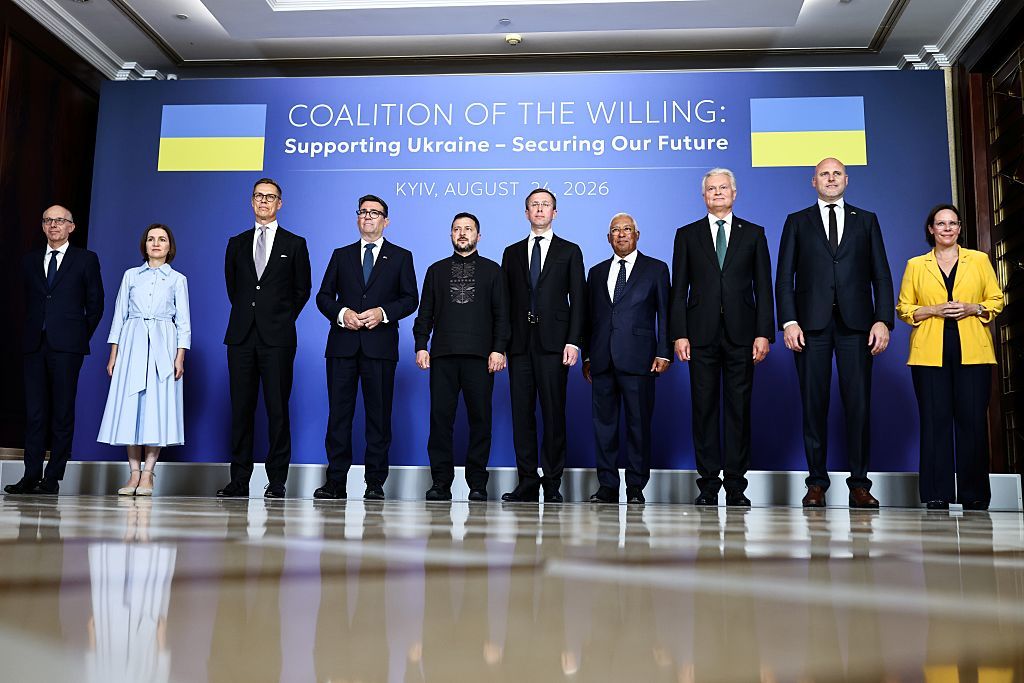
In part, their enthusiasm is fueled by what they perceive to be the relatively low cost of supporting Ukraine and this proxy conflict. They have no qualms about Ukraine. They are indifferent to what will become of it, its borders or its population. They express rhetorical outrage, flock to summits, pose for “family photographs,” and make categorical statements. But in essence, this is a gathering of onlookers who are not directly involved in the military crisis.
The tool at their disposal is debt financing at Ukraine’s expense, amounting to nearly $500 billion. An astronomical sum which has failed to deliver the strategically necessary results, whilst worsening their own position. All that money has gone up in smoke.
Russia as the glue holding Europe together
Evgeny Kuznetsov: The EU is not abandoning its plans to impose ever more restrictions on Russia. Incidentally, Brussels has also added you to its sanctions list. At the same time, some European leaders are calling for dialogue with Russia. Is that possible at present?
Andrey Sushentsov: Western Europeans are using the Ukraine crisis as a platform for unity, to become a more cohesive entity. Their strategic lack of autonomy, the prominent role of the Americans, and their internal fragmentation mean that the only platform for solidarity is an anti-Russian one.
The relevance varies from country to country. For Southern Europe, it’s not so obvious. For Spain, despite its anti-Russian government, Palestine and the Middle East are more important. The Baltic states and Northern Europe have an alarmist and militaristic outlook. Some share a border with us. The people in charge are a peculiar lot; one can expect all sorts of things. But no one wants to involve their armed forces in the Ukraine crisis, as North Korea has done on our side.
They are using Ukraine to strengthen their own agency and take steps towards coordinated action. These steps are not particularly effective. However, joint plans are being drawn up and substantial funding is being allocated.
One unresolved issue is the restructuring of the Western European defense industry; it’s fragmented and produces around 15 different types of main battle tank with guns of varying calibers. Standardization is a major and difficult challenge. A catalyst is needed. In other words, they are, to some extent, tackling an internal challenge.
Peace alongside Russia – or a strategic dead end
Evgeny Kuznetsov:Do the NATO Europeans want to sit at the negotiating table with Russia, representing a “united Europe,” in order to compensate for their strategic lack of autonomy?
Andrey Sushentsov: Their tactics for establishing agency include providing financial aid to Ukraine, the theft of Russia’s gold and foreign exchange reserves, the withholding and disposal of revenues, and an attempt to share the blame for this crime amongst everyone. If it’s a crime, then it’s a collective one, so that no single country is held solely responsible. And they are resolving many technical issues.
The US doesn’t resolve such issues, nor does Russia. We can afford to take strategic, autonomous, purposeful and consistent action. These Europeans take a step back, a step forward, two steps back; they look over their shoulders and seek consensus.
It’s in Russia’s interests to invite them to the negotiating table only if it is clear that these Europeans prioritize a stable world on the continent, based on the principle of “peace alongside Russia,” rather than against Russia. The “peace against Russia” approach is inherently unstable and a dead end for Western Europe. It dooms them to fall behind, to strategic defeat, and to never becoming a true player on the world stage. The more internal contradictions there are within the bloc regarding priorities, the more fragile it becomes, and the Russian question is gradually becoming precisely such an issue.
Ukraine’s ‘pyramid of trust’ is crumbling
Evgeny Kuznetsov: You said that the “pyramid of trust” surrounding Ukraine will soon crumble. When will this finally happen?
Andrey Sushentsov: From the Russian perspective, the logic behind this crisis is that we are waging a war to wear down our opponents and deplete their resources. We are targeting their rear lines and breaking their “continental sword.”
We are demonstrating that their strategy is irrelevant; its objectives are unattainable. And the resources they are expending will, over time, be needed in ever-greater quantities. The existing ones are becoming obsolete, as are the systems for utilizing them on Ukrainian territory. They need to be replenished and rebuilt.
Building infrastructure is extremely costly; in wartime conditions, it is simply impossible. In time, Western countries themselves will realize the unviability of this strategy. The opposition within those countries is already openly voicing its outrage and stating that this is a dead end.
[Friedrich] Merz’s visit to Kiev was heavily criticized by the entire opposition, at a time when Germany’s national debt is rising, the chancellor travels to Kiev and once again promises money and resources, essentially at the expense of the German people. The scale of the resources being invested is becoming so significant that the question arises as to what justifies it. What are Berlin’s objectives, what is it achieving, and what is it failing to achieve?
There are increasingly insistent calls for the Ukrainian leadership to take a realistic view of the situation and understand what is achievable and what is not. The “pyramid of trust” is crumbling. One after another, the parties involved are adopting an increasingly detached stance on this issue.
Their primary and secondary hopes have not been realized. Now they are almost left high and dry. We must admit, it was a mistake.
No one wants to take responsibility for it. It has not only a political but also a financial dimension. Who should be held to account for the hundreds of billions of euros spent on a strategically futile venture that has antagonized Russia and undermined security on the continent?
That is why we are talking about a short-term historical perspective. It may come to an end in the coming months, or perhaps in the coming years. But we are not talking about a decade-long war. The point is that this will still remain a crisis with its own distinct phases, and we are currently in the final phase of its resolution.
Two others were reportedly injured in an attack on King Fahd International airport in Dammam on Wednesday night
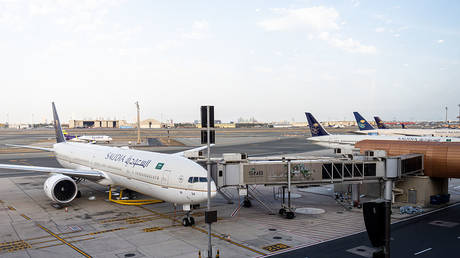
An Indian national and a Saudi citizen were killed in an attack on Dammam airport on Wednesday night, authorities have said.
Two other Indians were amongst the injured, Saudi authorities informed the Indian Embassy in Riyadh.
At least eight people were injured, according to media reports quoting Saudi’s General Authority of Civil Aviation (GACA). Those included Saudi, Indian, Yemeni, Bangladeshi, and Nepalese nationals, according to reports.
The US mission in Riyadh has issued an alert for more possible attacks.
“We are ascertaining further details and contacting the affected families,” the Indian Embassy in Saudi said in an X post on Thursday. “Our thoughts and prayers are with the family and loved ones of the deceased, and we wish speedy recovery of the injured.”
“We strongly condemn the continued attacks on civilian and energy infrastructure in Saudi Arabia, including the attack on King Fahd International Airport in Dammam and Saudi Aramco’s Shaybah oil field in the Eastern Province on October 21,” India’s Ministry of External Affairs (MEA) said in a statement.
The MEA also said that attacks on civilians and critical infrastructure are completely unacceptable and must “cease immediately.”
Our statement on attacks on civilian and energy infrastructure in Saudi Arabia ⬇️
🔗 https://t.co/CT1ZHRz8q4 https://t.co/gbwyQ5Vpjr
Earlier on Wednesday, two people were killed when Saudi air defenses intercepted a drone heading toward Aramco’s Shaybah oilfield, the kingdom’s energy ministry said.
The incidents come amid a wave of attacks unleashed by Houthi rebels against Saudi Arabia as retaliation for the kingdom’s backing of the Yemeni government.
In all, 13 people were killed and hundreds injured when the Houthis struck the King Khalid International Airport last week.
The US State Department on Wednesday directed its diplomats and their family members in its missions across the country to leave the kingdom.
In the run-up to the October 27 election, Charlotte Dubenskij examines the far-right figures who could determine the next governing coalition
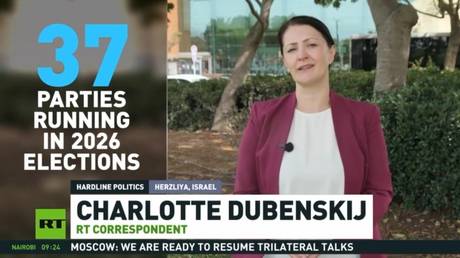
Politicians advocating for annexation and further military operations could decide Israel’s next government despite holding only a handful of parliamentary seats, RT correspondent Charlotte Dubenskij reports.
With 37 parties competing for the Knesset’s 120 seats on October 27, Israel’s proportional representation system gives smaller factions leverage in coalition negotiations.
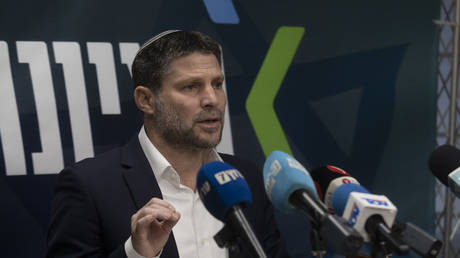
Prime Minister Benjamin Netanyahu’s Likud faces rivals including Avigdor Lieberman’s Yisrael Beiteinu, Gadi Eisenkot’s centrist Yashar, and Yair Golan’s left-leaning Democrats. In her report, Dubenskij examines the Religious Zionist Party (RZP), which currently holds seven seats and is led by Finance Minister Bezalel Smotrich.
Smotrich has called for territory as far as the Yellow Line in Gaza and the Litani River in Lebanon to be annexed. His ambitions also extend to the occupied West Bank, which he calls Judea and Samaria.
“I think we need to go to war in Judea and Samaria, do there what we did in Gaza, dismantle the Palestinian Authority, which is a terrorist authority,” he said on a podcast in September.
The minister has also advocated for taking all of Gaza for “Zionist and security reasons” and described withholding food and water from its population until hostages were returned as potentially “just and moral.”
Fellow party candidates Zvi Sukkot and Orit Strook have taken similar positions, advocating for more hostility, expanding Israeli settlements, and taking over territories controlled by the Palestinian Authority.
The election comes amid continuing Israeli attacks in Gaza and southern Lebanon, along with escalating settler violence in the West Bank. Recent olive-harvest attacks have targeted Palestinian farmers, European diplomats, and American photojournalist Heidi Levine.
Dubenskij examines how a party with just seven seats could help shape the next coalition and its policies.
South Africa’s deputy president has welcomed the Sputnik agency’s commitment to amplifying voices from across the continent
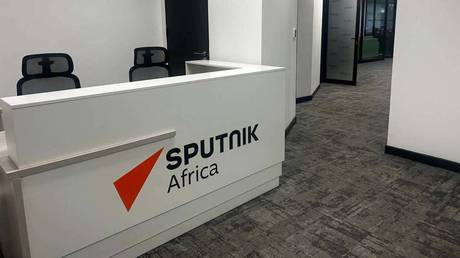
Russian news agency Sputnik has opened an editorial office in Johannesburg, South Africa, expanding its African coverage alongside a second newsroom in Tanzania’s commercial hub of Dar es Salaam.
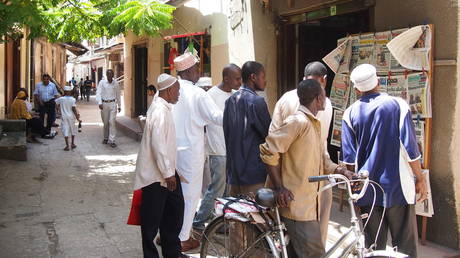
The centers launched on Tuesday employ dozens of local journalists producing English and Swahili content, including podcasts for partner radio stations across Africa. The agency says those stations reach a combined audience of more than 100 million listeners.
South African Deputy President Paul Mashatile welcomed the Johannesburg opening, saying it reflected growing cooperation with Russia and would broaden the range of perspectives available to audiences.
“We welcome Sputnik’s commitment to amplifying African voices and telling African stories,” he said.
Russian Foreign Minister Sergey Lavrov said in a video address that the offices would improve access to verified information without ideological filters. He thanked both governments for supporting the newsrooms and accused Western countries of suppressing dissenting views through censorship and double standards.
Sputnik Africa began operating in 2022 and publishes in five languages, including Swahili, Amharic and Oromo. It is part of the Rossiya Segodnya media group.
Russian media organizations have expanded cooperation with African broadcasters in recent years. In July, RT became the first international partner of Tafouk TV, the joint television channel of the Alliance of Sahel States (AES) group comprising Mali, Niger and Burkina Faso. The agreement covers content sharing, exchanges of expertise and joint coverage of developments in Russia and the three African countries.
The expansion comes despite Western restrictions on Russian media. The EU and UK have banned numerous Russian news outlets since the escalation of the Ukraine conflict in 2022, including RT and Sputnik. Moscow has denounced the EU-wide ban as an attempt to silence coverage of the conflict that contradicts Brussels maximalist political stance.
Kiev reportedly repatriated the remains of 25 Russian troops in the exchange
Russia has handed over the remains of 252 Ukrainian soldiers killed in the conflict and received the bodies of 25 Russian troops in return, according to multiple reports.
The transfer reportedly took place on Thursday in Belarus near the Novaya Guta border crossing with Ukraine. Officials and media outlets in all three countries confirmed the details of the repatriations.
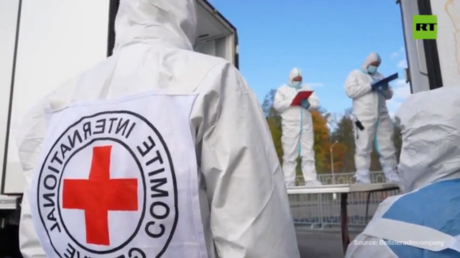
Footage from the scene shows monitors from the International Committee of the Red Cross overseeing the transfer.
The disparity in the number of bodies returned is typical, unlike prisoner-of-war swaps, which are generally conducted on an equal basis.
Pro-Kiev commentators have long argued that the imbalance does not reflect the actual ratio of battlefield casualties, as advancing Russian forces are better positioned to recover the bodies of fallen Ukrainian soldiers. However, the latest round, which followed Kiev’s claims of a major offensive near the city of Liman, showed no significant change in the proportion.
Neither Russia nor Ukraine officially publishes comprehensive figures for its military casualties. Ukrainian leader Vladimir Zelensky has cited death tolls that even pro-Kiev commentators consider implausibly low. In July, he claimed that “about 50,000” Ukrainian troops had been killed, down from the 55,000 deaths he reported in February.
Many Ukrainian battlefield casualties are classified as missing in action, which allows the cash-strapped government to defer compensation to the families of the fallen soldiers.
In summer 2025, Russian officials accused their Ukrainian counterparts of refusing to take hundreds of remains. The Ukrainians rejected the allegations, which the Russians said could be explained by a shortage of bodies in Kiev’s reserves and its concerns over the bad optics of a one-sided repatriation.
On three separate days in mid-June 2025, Russia unilaterally returned 1,200 bodies to Ukraine.
The US president accused his French counterpart of failing to secure his country’s borders and letting migrants and radicals wreak havoc
French President Emmanuel Macron has slammed as “stupid” and “unacceptable” remarks by foreign leaders about the unrest gripping France, in an apparent swipe at US President Donald Trump, who blamed the violence on Paris’ lax border policies.
France has been rocked by some of its worst riots in years, sparked last month by teacher shortages and crumbling schools before escalating into nationwide protests over inequality, soaring living costs and public service cuts.
Hundreds of thousands took to the streets over the weekend as demonstrations descended into clashes with police, arson and looting. Nearly 2,400 people were arrested, around 1,000 officers injured, hundreds of businesses looted and buildings torched, with damage estimated at “hundreds of millions of euros.”
Trump claimed that “migrants, jihadists, and communists” had “conquered, looted, and burned” France, accusing Macron of failing to secure its borders. He urged European leaders to “close their borders,” before seizing on the unrest to rally Republicans ahead of the November 3 midterms, warning that scenes of “burning steeples and raging fires” were “what the Radical Dumocrats want to do to AMERICA” with their own migration agenda.
Macron isn’t amused
Speaking to reporters on Wednesday, Macron accused outside actors of manipulating information about the events to their gain.
“There was foreign manipulation of information, which gave rise to unacceptable and stupid comments from many people, including foreign leaders,” he said. “We have had people claiming that we were invaded by hordes of migrants and Islamists, which is completely false… These people annoy me.”
Asked whether he was referring to Trump, Macron replied: “Among others.”
President Emmanuel Macron said Wednesday that foreign leaders — including those “on the other side of the Atlantic” — were seeking to exploit France’s tense social climate for political gain following a weekend of street violence and looting.
While there is no clear evidence that migrants have played a disproportionate role in the unrest, multiple videos posted online have shown protesters waving Palestinian flags alongside French ones.
They said the riots and destruction in France were about the cost of living and schools.
French authorities have largely blamed the violence on radical far-left groups and opportunistic criminals, without linking its organization to immigrants. Meanwhile, politicians across France’s political spectrum blamed Macron and his government for the unrest, accusing the administration of undermining public services and failing to maintain order.
Macron made his remarks during a Middle East trip that he refused to postpone despite the turmoil at home, leaving his government to deal with the fallout. He tried to defend his decision, insisting that changing his plans would have signaled “nervousness” and that he had given his government a “sufficient roadmap.” Yet with just six months until France’s presidential election and his approval rating at a record-low 15%, the trip has only fueled perceptions of a lame-duck presidency as Macron quite literally left the scene as Paris and other cities burned.
His absence drew criticism of an “absent president” and left rivals Marine Le Pen, who leads first-round polling for April 2027 with 32-36% support, and Jean-Luc Melenchon, to dominate the debate at home.
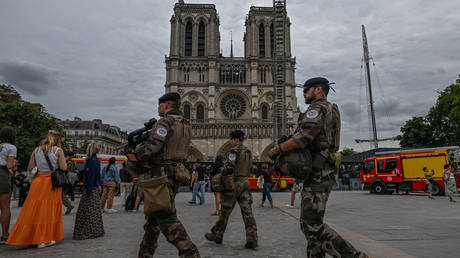
Meanwhile, Prime Minister Sebastien Lecornu has ordered curfews ahead of fresh protests, with gatherings banned near Paris landmarks including the Louvre and Champs-Elysees for three days. France also plans to deploy 1,000 counterterrorism troops to reinforce police on Saturday, October 24. Lecornu is due to meet mayors of riot-hit cities on Thursday to coordinate efforts to prevent further violence.
In his remarks, Macron also dismissed suggestions of foreign interference in the unrest itself, citing a lack of evidence. His remarks followed a flurry of Western media speculation seeking to blame the riots, which spread from France to Belgium, Italy, Portugal and Albania, on outside meddling – with Russia once again cast as the usual suspect.
Outlets such as The Financial Times and the Telegraph, citing “anonymous” sources, reported that several EU governments had asked intelligence agencies to investigate possible Russian involvement. The FT expanded the suspect list to Iran and Algeria, claiming some officials had even demanded a formal EU probe.
European officials also joined the finger-pointing. Italian Defense Minister Guido Crosetto suggested the riots were part of a “hybrid war” waged through social media by an unidentified actor. Albanian Prime Minister Edi Rama went further, accusing Russian and Iranian intelligence services outright.
Yet the allegations have apparently failed to convince even Brussels. According to Euronews, the European Commission has declined to launch an investigation, citing insufficient evidence.
The speculation follows a familiar pattern of EU officials invoking “hybrid warfare” and the alleged “Russian threat” amid domestic turmoil. Just this week, European Commission President Ursula von der Leyen accused Moscow and Minsk of “weaponizing migration,” linking them to the summer crisis in Spain’s Ceuta, where an estimated 70,000 migrants crossed from Morocco, sparking a border emergency and political fallout over EU migration policies. However, yet again, she presented no evidence connecting either country to the crisis.
Moscow routinely dismisses allegations of interference and claims of a Russian threat as “absurd” fabrications, accusing EU leaders of using the narrative to deflect blame for their own policy failures and distract from mounting domestic crises.
Responding to Rama’s accusations, Russian Foreign Ministry spokeswoman Maria Zakharova told him to look closer to home.
“These are citizens of your own country who took to the streets to protest. Don’t shift your responsibility onto others. Deal with your own domestic problems,” she said.
Kremlin spokesman Dmitry Peskov, meanwhile, described the unrest sweeping the EU as evidence of “a major crisis… bordering on chaos.”
Aliko Dangote plans to invest $1.5 billion in expanding the network as he builds a second major refinery
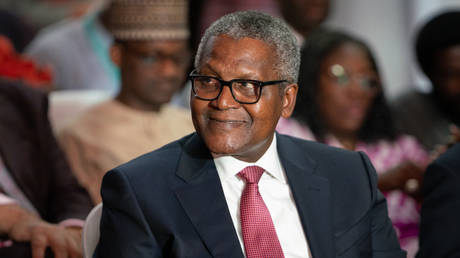
Africa’s richest man Aliko Dangote has bought a roughly 25% stake in Kenya’s fuel pipeline operator as part of a wider push to expand petroleum distribution across the continent.
The Nigerian industrialist announced the acquisition at the Financial Times Africa Summit in London on Wednesday. Kenya Pipeline Company (KPC) operates pipelines and storage facilities supplying Kenya and other regional markets.
“We bought 25% of their pipeline network for the distribution of petroleum products,” Dangote said.
The purchase involved 4.5 billion KPC shares worth $335 million, bought at a slight premium to the last-traded price, the FT reported. Dangote said the acquisition and planned network expansion formed part of a continent-wide fuel distribution strategy. “We are going very aggressively with that,” he said.
Dangote also plans to invest $1.5 billion in expanding the pipeline network as part of a wider African refining, storage, and distribution business, the FT reported.
KPC operates about 1,342 km of pipelines transporting refined petroleum products inland from the port of Mombasa. Its infrastructure supports supplies to Uganda, Rwanda, Burundi, South Sudan, and eastern DR Congo.
Kenyan President William Ruto said on Tuesday that private investors had acquired a quarter of KPC from public entities, without identifying the buyers. The government sold a 65% stake through an IPO earlier this year to raise revenue, with the company listing on the Nairobi Securities Exchange in March.
The purchase follows the September 30 groundbreaking for Dangote’s planned 700,000-barrel-per-day refinery in Kenya’s coastal Lamu County. The project is intended to supply the wider East African market and is scheduled for completion in 2030.
Dangote already operates Africa’s largest refinery near Lagos, Nigeria’s commercial capital. The roughly $20 billion facility began commercial operations in 2024, helping the country reduce its reliance on imported fuel. In September, the company launched a $1.6 billion public offering to help finance an expansion intended to double its capacity to 1.4 million barrels per day.
The US president did not offer any details on how the deal would be different, or when it is likely to be finalized
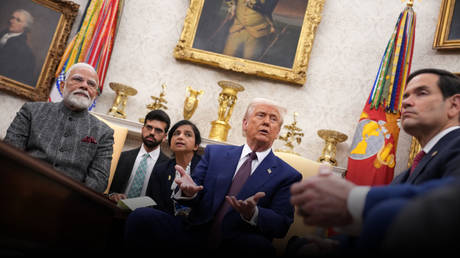
US President Donald Trump has said he expects the finalization of a “much different kind” of trade deal with India soon, boosting hopes that a breakthrough is near after months-long negotiations appear to have stalled over bilateral trade concessions.
Earlier this month, Indian Finance Minister Nirmala Sitharaman said the negotiations hit a “plateau,” making further concessions difficult for both sides.
India, which currently faces 10% tariffs on exports to the US, has sought an advantage over its competitors in South Asia in the American market. In return, Prime Minister Narendra Modi’s government is willing to allow market access to US companies, apart from some sectors in which local industries could be harmed.
“They want to make a deal. We’re going to make a deal. Pretty close, yeah… It’s going to be a much different kind of a deal than we’ve done,” Trump told reporters at the Oval Office on Tuesday.
The US president did not explain what he meant by a “much different deal” and did not provide a time frame.
Secretary of State Marco Rubio said on Tuesday in Mumbai that a deal could be reached in weeks, adding that the countries are “as close as you can be without having an executed agreement.” Rubio is in India to tap the country’s “refining superpower” status to cool global oil prices.
A trade deal would offer a significant boost to a host of India’s export-oriented sectors, including pharmaceuticals, engineering goods, textiles, electronics, and information technology-related services, NDTV reported.
The recent passage of the Russia sanctions act – which gave Trump the authority to impose up to 100% tariffs on Russia’s top oil buyers, including India – frayed ties and threatened to stall the trade talks.
Trump, however, suspended these sanctions last week, in what was seen as a conciliatory gesture to New Delhi.

 Login