Washington has criticized settler attacks despite the US president’s endorsement of the Israeli PM and reported tensions between the two leaders
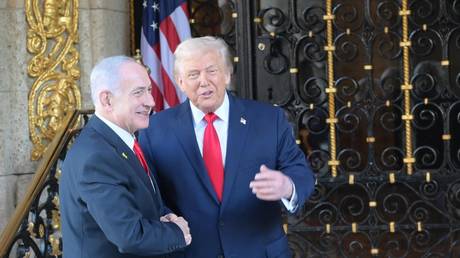
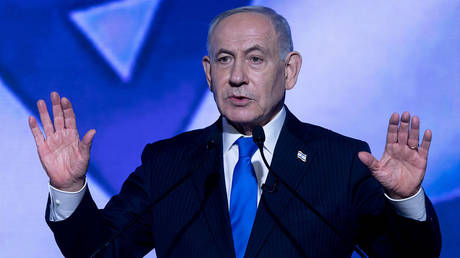
Washington has urged Israel to “crack down” on extremist settler violence following a brutal attack on an American journalist in the occupied West Bank, even as President Donald Trump has given Prime Minister Benjamin Netanyahu his “Complete and Total Endorsement” ahead of Israel’s October 27 elections.
The conflicting messages come amid reported tensions between Trump and Netanyahu over Israeli military operations in Lebanon, Gaza, and Iran. Nevertheless, the US president praised Netanyahu as a “Great Warrior Prime Minister” in a Truth Social post on Sunday, prompting the Israeli leader to thank him for his “tremendous support and the joint work.”
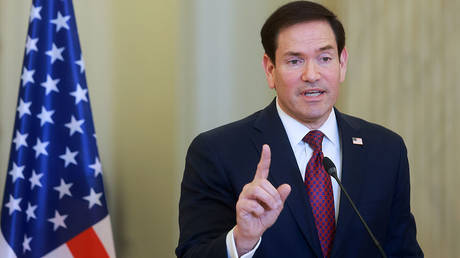
A day earlier, Secretary of State Marco Rubio condemned the attack on American photojournalist Heidi Levine when questioned by reporters in Maryland.
“We’re very disturbed by those images and what we’re seeing. We’ve asked the Israelis, and continue to ask them, to crack down on that stuff,” he said.
Trump does not want to see “a crisis going on in the West Bank,” Rubio added. “The whole thing was just disturbing, not a good look.”
US Ambassador to Israel Mike Huckabee also condemned the assault.
“Attacking a female photographer is despicable act of terror carried out by masked cowards. Dishonorable act of senseless violence,” he wrote on X, calling for an investigation, arrests, and prosecution of the perpetrators.
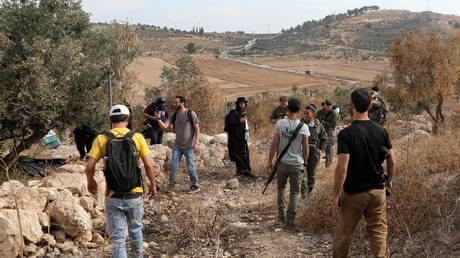
Levine was attacked near the West Bank village of Abu Falah on Friday while covering the local Palestinian olive harvest, which has faced recurring settler violence. According to the Washington Post, Israeli settlers knocked down the veteran photographer, who was wearing a protective vest marked ‘PRESS’, stole her equipment, and repeatedly kicked her, breaking four vertebrae and a rib. Israeli soldiers were reportedly present but did not intervene.
On Saturday, masked Israeli settlers also attacked a convoy carrying European diplomats near Taybeh, a predominantly Christian Palestinian village in the West Bank.
The incidents came amid a surge in settler violence. UN officials said Friday that attacks had reached their highest level since 2006, with more than 1,600 incidents recorded between January and August.
Israel has also expanded settlement construction, approving nearly 11,000 new housing units in the West Bank this year, according to Israeli watchdog Peace Now.
The expansion has been championed by far-right Finance Minister Bezalel Smotrich and backed by National Security Minister Itamar Ben-Gvir, both key members of Netanyahu’s governing coalition.
Clashes erupted in several major cities as unrest spread beyond France over the weekend
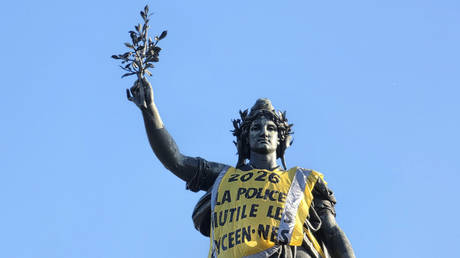
Tens of thousands took to the streets of European cities over the weekend to protest rising living costs, housing shortages and government policies, with demonstrations escalating into violent clashes, looting and arson in several countries. The unrest left smashed storefronts, damaged public buildings and burned-out vehicles in its wake.
France, where the protests first erupted, saw the most extensive destruction, while clashes also broke out in Belgium and Italy as a separate wave of anti-government demonstrations continued in Albania. In Portugal, tens of thousands also demonstrated, although no comparable scale of violence or damage was reported.
Footage from across Europe showed smashed shop windows, looted stores, burning vehicles and fires near public buildings.
In Limoges, France, flames engulfed the historic town hall, while masked demonstrators in Milan hurled stones at riot police near the Gothic cathedral and set fire to street barricades. In Brussels, protesters overturned a car, while in Tirana, demonstrators threw rocks and petrol bombs at police near the Education Ministry. Riot police in several cities used tear gas and water cannons to disperse crowds.
The massive rallies reflect a range of national grievances rather than a coordinated movement. In France, demonstrations took place in Marseille, Strasbourg, Nantes, Lyon and other cities.
🇧🇪 Protests have spread from France to Belgium, with masked protesters, smashed bus stops, fires, water cannons and clashes with riot police.
More than 100 people have reportedly been arrested over property damage and arson.
Initially sparked by poor school conditions and teacher shortages, the protests have broadened to include anger over living costs, inequality, public services and proposed spending cuts. Authorities put Saturday’s nationwide turnout at 550,000, while organizers estimated 800,000.
In Belgium, student groups opposed to rising education costs and reforms they say could limit access to higher education. In Italy, marches against living costs and wars began peacefully before groups broke away and clashed with police in Milan and Bologna.
In Portugal, protesters rallied over low wages, rising rents and a shortage of affordable housing. Thousands marched in Lisbon, pitching tents in Rossio square to highlight the crisis.
Incredible scenes out of France where a fire tornado forms right in the middle of the protests.
In Albania, student-led protests entered a fifth consecutive day, with demonstrators demanding Prime Minister Edi Rama’s resignation over corruption allegations, a lack of jobs and poor prospects for young people.
Opposition has also focused on a luxury tourism project on the southern coast linked to an investment firm founded by US President Donald Trump’s son-in-law, Jared Kushner.
🔴 🇫🇷 LOOTING IN LYON: Shops looted and vandalized as rioting grips the Presqu’île district. Scenes of destruction across the city.#Francepic.twitter.com/y9yYNjiSAY
Police in France arrested nearly 1,800 people and reported more than 500 injured officers, gendarmes and firefighters. One demonstrator died after suffering a cardiac arrest in Paris.
Carrefour reported damage to 50 stores, 20 of which were looted, with losses reaching tens of millions of euros. Limoges estimated repairs to its fire-damaged town hall at €1 million, while Bordeaux reported up to 100 looted stores
In Belgium, 45 people were arrested in Liege, including 12 minors, amid clashes and property damage. Italy reported about 50 detentions in Milan and four in Bologna, where 36 law-enforcement personnel were injured. In Albania, reports gave differing totals for arrests and injuries over five days of unrest. Seven officers were suspended pending an investigation into alleged excessive force.
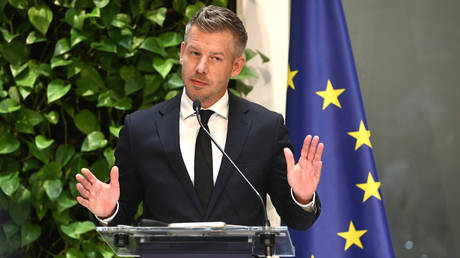
Hungarian PM Peter Magyar expects Trump to prolong Budapest’s exemption from American energy sanctions targeting Moscow, adding it is significant for the country
Hungarian Prime Minister Peter Magyar has said that he expects US President Donald Trump to prolong Budapest’s exemption from Washington’s sanctions targeting Russian energy after Trump announced a diesel deal with his Russian counterpart, Vladimir Putin.
Trump eased restrictions on Russia’s diesel exports following a phone call with Putin last week in an attempt to reduce rising fuel prices ahead of the midterm election in the US on November 3.
The deal faced harsh criticism in the EU, with Italian Prime Minister Giorgia Meloni labeling it a “very risky” gamble that could undermine the whole Western sanctions policy towards Russia. Lithuanian Foreign Minister Kestutis Budrys argued that it “doesn’t help neither the price of oil products nor the unity of the transatlantic community.”
When asked to comment on Trump’s decision during his interview with the outlet 444 on Saturday, Magyar replied by saying that “the US president will make the deals that he wants. On the other hand, this agreement is significant for Hungary.”
Moscow has said that it would immediately release 300,000 metric tons of diesel, followed by another 500,000 metric tons next month. According to Russian Deputy Prime Minister Aleksandr Novak, the fuel will arrive on the US market within 15 to 20 days after the signing of the relevant contracts between the Russian and American companies, which are currently being discussed.
“Hungary has an exemption from sanctions on Russian oil until November. This is extended annually by the Americans. If the US president has concluded an agreement on diesel exports, it would be illogical not to grant Hungary this exemption for at least another year,” Magyar said.
The exemption was agreed between Trump and Magyar’s predecessor, Viktor Orban, who was a harsh critic of Western economic restrictions on Moscow over the Ukraine conflict. Due to being a landlocked country, Hungary remains heavily dependent on deliveries of Russian pipeline oil and gas. Some 90% of its crude oil in 2025 had been provided by Moscow, according to S&P Global data.
The Hungarian prime minister stressed that he understood that the Russia-US diesel deal was “not welcome from Ukraine’s point of view.”
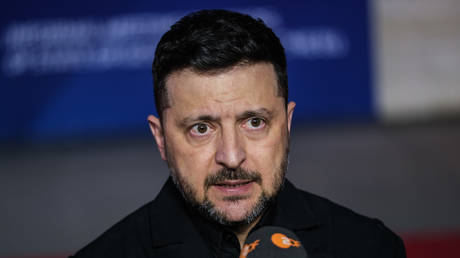
After it was announced, Vladimir Zelensky lashed out at Trump, calling the agreement “weak” and insisting that the actual reason for the global energy shortage was not Ukrainian strikes on Russian oil refineries as the US president claimed, but the American war on Iran.
Following his address at the EU summit in Brussels on Friday, Zelensky told journalists that “we cannot accept these agreements [between Washington and Moscow]. Because gas deals will follow. And I am absolutely certain of this. After gas, they will lift sanctions on other things as well.”
On Saturday, Trump also signed an executive order to waive “the bone-crushing” sanctions, championed by the late US Senator Lindsey Graham, which proposed 500% tariffs on imports from Russia and 100% tariffs on major buyers of Russian oil and gas.
White House Deputy Press Secretary Taylor Rogers defended the move, saying that it “provides the president with additional authorities to pursue a peaceful resolution” of the Ukraine conflict. “Enforcing the sanctions provisions now would impede ongoing US efforts to negotiate a durable and comprehensive peace agreement,” she explained.
As Zelensky seems set on fighting ‘to the last Ukrainian’, those Ukrainians are asking: ‘What will be left of us when the fighting is over?’
There are mornings in wartime when the silence itself seems wounded.
The roads are still there, though fewer people travel them. The fields remain beneath the grey sky, though in places they are scarred by fire. Somewhere a railway station opens its doors, a baker lights an oven, a woman draws back a curtain – and for a moment life pretends that it has not been broken.
But the war goes on. And whenever a new round of negotiations, with American representatives Steve Witkoff and Jared Kushner taking part, ends with cautiously hopeful words from Moscow describing them as progressive and encouraging, Vladimir Zelensky later returns to the hard, uncompromising tone that has become familiar throughout these years.
Listening to him, one is left with a painful question.
Does he still believe that peace can be reached only through continued resistance, whatever the cost? Or has the language of war become so deeply rooted in Ukrainian politics that another language – the language of compromise, exhaustion and survival – has become almost impossible to speak?
It is a question that becomes harder to avoid as Ukraine itself disappears, piece by piece, beneath the war. The destruction continues tomorrow, and the day after tomorrow.
Ukraine has inflicted damage on Russia too. Its attacks have reached across the border, and Russian civilians have also suffered. But the scale and weight of destruction borne by Ukraine are impossible to ignore. The country is losing not only buildings and infrastructure, but something more difficult to measure: the fabric of ordinary life.
There are also reports of bitter internal struggles within the Ukrainian government. Zelensky’s former press secretary spoke recently of constant fighting at different levels of government.
War is dangerous enough when an enemy stands beyond the border. It becomes still more dangerous when a nation begins to quarrel with itself.
This is why any negotiations deserve attention. Perhaps they will fail. Perhaps the words spoken around the negotiating table will evaporate like mist over a river. Perhaps the armies will return to the battlefield and the familiar language of missiles, trenches and casualties will once again drown out every other voice. But negotiations, however imperfect, are preferable to another year of graves.
There is a moment in every long war when the question changes.
At first, people ask: How can we win?
Later they begin to ask: How much will victory cost?
And finally, sometimes very quietly, they ask the question that frightened leaders are reluctant to hear:
What will be left of us when the fighting stops?
Ukraine has received enormous support from its Western allies. Much of that support has been born of genuine sympathy and a desire to defend Ukrainian sovereignty. But Western governments also have their own histories, strategic interests and grievances concerning Russia – grievances that reach back decades.
That is the nature of international politics.
But Ukraine is not a chessboard.
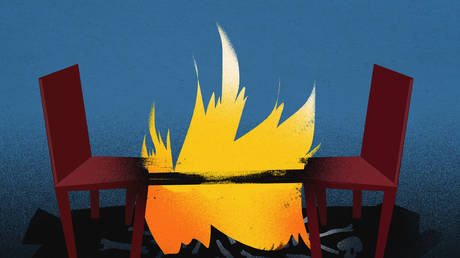
It is a country where people wake before dawn because the electricity has returned. It is a mother waiting for a message from her son. It is an empty chair at a family table. It is an orchard in spring, flowering while artillery is heard somewhere beyond the horizon.
Those who advise Ukraine from comfortable offices far away will return home when the meeting is over.
Ukrainians cannot.
They will remain among the ruins.
Perhaps Zelensky should now listen not only to those who tell him how long Ukraine can continue fighting, but also to those who ask how long Ukraine can continue being destroyed.
Perhaps the future will demand compromises that today seem unbearable.
Perhaps Ukraine will never enter NATO in the way some once imagined. Perhaps membership of the European Union will remain a distant horizon rather than an immediate destination. Perhaps some political ambitions will have to wait for another generation.
History does not always give nations the future they desire. Sometimes it gives them only the future they can still preserve. There is nothing shameful in recognizing that.
Peace is not always a reward for victory. Sometimes it is an act of courage undertaken before victory becomes indistinguishable from ruin.
A leader must know when to fight. But a leader must also know when to stop.
The most dangerous words in wartime are sometimes not the words of the enemy. They are the words that tell a wounded nation that tomorrow will always be better than today if only it sacrifices a little more.
There is always another hill. Another offensive. Another shipment of weapons. Another season. And then another grave. At some point, someone has to look at the country itself.
Not at the speeches. Not at the flags. Not at the photographs of leaders standing before cameras, solemn and determined. At the country. At its empty villages. At its shattered cities. At its railway lines disappearing into the distance. At the blackened windows where, once, there were lights.
A country is not its government. It is not its president. It is not an alliance or a treaty. A country is the people who remain. And perhaps this is the moment when Zelensky must ask himself the simplest and hardest question of all:
How much of Ukraine must be destroyed before the world admits that saving Ukraine has to come before defeating Russia?
There is still time to ask it. But time, like everything else in war, is being spent. And one day there may come a morning when the guns finally fall silent – and the terrible discovery will be that there is almost nothing left to hear the silence.
Hospitals have been overwhelmed after a fire at a military training facility in Alberta, officials say
A major fire has swept through a military base in the Canadian province of Alberta, killing at least seven people and injuring dozens, local media outlets have reported, citing sources.
The blaze broke out on Saturday in a training area at Canadian Forces Base (CFB) Wainwright, about 200 kilometers southeast of Edmonton.
Canadian Defense Minister David McGuinty confirmed fatalities and injuries but did not release casualty figures or explain what had caused the fire.
”I cannot recall an incident like this in recent memory,” McGuinty told reporters. “This is a very, very active and delicate situation.”
The Canadian Department of National Defense told a CBC journalist that officials did not find any indication of the incident at the base being linked to “any terrorist activity,” adding that the investigation into the causes was still ongoing.
Alberta MP Dane Lloyd said he had heard reports of “significant casualties” following an explosion and fire at the base.
According to multiple Canadian Armed Forces sources cited by Global News, a live-fire training exercise struck a gas line or gas well at the base around 4 PM local time, triggering the explosion.
Strong winds drove the flames beyond the base’s perimeter, according to municipal authorities. Firefighters from several jurisdictions battled the blaze between the installation and the nearby town of Wainwright, with military personnel and paramedics assisting the emergency response.
A “code orange” disaster response protocol was activated in Edmonton to handle a large influx of patients from Wainwright.
Warren Thirsk, an emergency physician at the city’s Royal Alexandra Hospital, told CBC News that patients were being directed to hospitals across Edmonton because Wainwright’s medical facilities were “completely overwhelmed.” Additional medical teams were called in.
”It is more patients than any of us want to count right now. It’s a disaster. It’s a one in every 15 to 25-year disaster,” he said.
Local authorities established an emergency coordination center and urged residents to stay away from the scene, keep roads clear, and avoid Wainwright Health Centre unless they required urgent medical attention.
The Royal Canadian Mounted Police launched an investigation. McGuinty said the situation was being closely monitored but did not confirm whether the fire was under control.
Alberta Premier Danielle Smith described the blaze as “significant and tragic,” saying military personnel had been affected. Canadian Prime Minister Mark Carney said a “serious incident” had sparked the fire, adding that federal officials were working closely with Alberta’s government and local authorities.
Large parts of Alberta experienced a windstorm on Saturday, with gusts reaching 100 kilometers per hour (62 mph) in some areas, toppling trees and sending signs and garbage cans flying.
CFB Wainwright is one of Canada’s busiest military training bases; it prepares soldiers and units for combat operations. It houses the Canadian Manoeuvre Training Centre, which conducts realistic battlefield exercises, and the 3rd Canadian Division Training Centre, which provides basic infantry training.
The US secretary of state has denied that Washington ordered restrictions on satellite services used by Ukrainian drones
US Secretary of State Marco Rubio has rejected Vladimir Zelensky’s claim that Washington ordered restrictions on satellite services used by Ukraine to carry out drone strikes deep inside Russia. The dispute comes amid a public spat between the Ukrainian leader and US President Donald Trump over sanctions and strikes on Russian energy facilities.
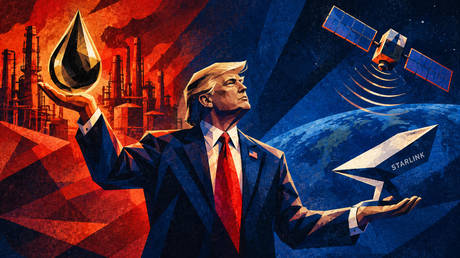
Earlier this week, Ukrainian officials said SpaceX’s Starlink terminals had suddenly stopped working on drones traveling faster than 160 km/h (100 mph). Zelensky told journalists on Saturday that tests on Starlink equipment in EU countries indicated that the restrictions imposed in Ukraine were “a planned operation.”
When asked to comment on Zelensky’s remarks later that day, Rubio offered a different account.
“I don’t know what Zelensky said. I’m not sure Zelensky knows what he’s talking about, but it wasn’t deliberate,” he told reporters at Joint Base Andrews in Maryland.
“We had nothing to do with it. Nobody in the United States ordered that Starlink speed be slowed down. It sort of happened, but my understanding is it’s been restored. It’s back to where it was before,” the US diplomat said.
Rubio confirmed that Ukraine currently had no access to Starshield, Starlink’s military-grade sister service, but had requested it.
SpaceX CEO Elon Musk similarly denied restricting Starlink in Ukraine but clarified that the service must be used for civilian and defensive purposes only, not offensive operations.
The Telegraph, however, reported on Friday that Musk had personally asked Trump to cap Starlink speeds for Ukraine, while Reuters reported that the White House had instructed the Pentagon to slow down Starshield. Trump has denied any involvement and said he did not believe Musk was responsible either.
Zelensky said on Saturday that the Starlink restrictions remained in place. A Ukrainian official told Axios that SpaceX had blamed the cap on “a technical problem.”
Trump lifted sanctions on Russian diesel exports earlier this month in an effort to curb rising energy prices ahead of the US midterm elections. On Friday, he went further, suspending new sanctions on Russian oil and gas trade on national security grounds. Trump also sought to pressure Ukraine to stop attacking Russian refineries, which he blamed for contributing to high energy prices.
Zelensky said he felt betrayed by Trump, who, in turn, argued that the Ukrainian leader was “not a good guy for us to deal with” and should be replaced.
France, Belgium and Poland have condemned the assault and demanded that Israel hold those responsible accountable
Masked Israeli settlers have attacked a convoy carrying European diplomats in the occupied West Bank, prompting condemnation from France, Belgium and Poland.
The incident took place on Saturday near Taybeh, a predominantly Christian Palestinian village, when a group of settlers, some armed with baseball bats, arrived to prevent Palestinians from harvesting olives. The mob surrounded vehicles carrying the Belgian consul general, French and Polish diplomats, and representatives of the Catholic Church.
Bernard Baudoux, mayor of the northern French town of Aulnoye-Aymeries, said settlers kicked him and beat him with iron bars. Video from the scene shows a disheveled Baudoux sitting near a jeep while wearing a sash in the colors of the French tricolor.
“They arrived completely enraged. It’s absolutely incredible that settlers can behave like this,” the mayor said, as quoted by AFP and Le Monde. The windows of a Belgian diplomatic vehicle were also smashed.
Vehicles carrying diplomats from France, Belgium, and Poland came under attack by Israeli terrorist settlers during an inspection tour of the Christian village of Al-Taybeh in the Ramallah district in the West Bank.
Europe still funds and arms Israel. https://t.co/8XS4sGZNUa
“As the occupying power, Israeli authorities must protect Palestinians, ensure the safety of diplomats and journalists, and bring those responsible to justice. Impunity for violent settlers must end,” Belgian Foreign Minister Maxime Prevot wrote on X.
He urged Israel to halt settlement expansion and “attempts to forcibly displace Palestinians from their land.”
French Foreign Minister Jean-Noel Barrot urged Israeli authorities to arrest “those responsible for these outrageous acts and bring them to justice,” while Polish Foreign Ministry spokesman Maciej Wewiór condemned attacks on diplomats as “absolutely unacceptable.”
In a statement on X, Israeli Foreign Minister Gideon Sa’ar condemned the violence by “Israeli rioters” and said an investigation had been launched. He added that the diplomats’ visit had not been coordinated with the Israel Defense Forces (IDF) in advance.
“Such coordination could have helped safeguard the visitors’ security,” he said.
Israeli settlements in the West Bank are illegal under international law. The UN has warned that settlement expansion undermines prospects for establishing a Palestinian state.
In July, the UN human rights office reported that settler attacks against Palestinians had reached an “all-time high” since the outbreak of the Israel-Hamas war in 2023.
The attack on the diplomatic convoy came a day after settlers beat and robbed Washington Post photographer Heidi Levine near the Palestinian village of Abu Falah.
Law enforcement deployed tear gas and water cannons as demonstrations over rising living costs turned violent in several Italian cities
Italian police have deployed tear gas and water cannons during clashes with protesters in Bologna and Milan amid nationwide demonstrations against the rising cost of living.
Organized by Italia in Piazza, a movement of students and young workers, the rallies began across Italy on Saturday to protest high fuel and energy prices, soaring rents, low wages, and deteriorating healthcare and education. Demonstrators also voiced opposition to military spending.
In Milan, where more than 5,000 people joined the march, participants carried a banner demanding “more money for families, less for wars.” In Genoa, crowds waved Palestinian flags and carried anti-war placards, calling for more funding for schools and housing rather than weapons.
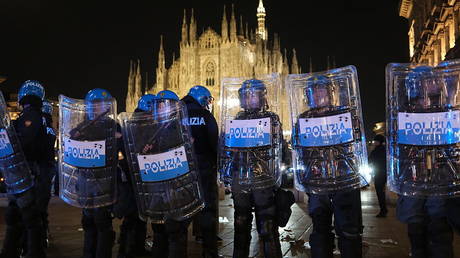
While initially peaceful, the rally in Milan turned violent when demonstrators reached police cordons in the city center. Masked protesters threw stones and homemade explosive devices at officers, who responded with charges that split up the march.
Camionette dei carabinieri e della polizia costrette a indietreggiare. La situazione in Piazza Duomo va fuori controllo https://t.co/WR4MaWZJLt
Clashes spread to the area outside Milan’s iconic Duomo Cathedral, where protesters hurled metal barriers and trash bins and set barricades made from cafe tables on fire.
Make sure to inform everyone you know that the migrant gangs and their Antifa allies are also rioting in Milan, Italy tonight
Building are vandalized and fires are set in front of Milan Cathedral (the Duomo) https://t.co/0g8W1qZDsx
In the nearby Galleria Vittorio Emanuele II shopping arcade, luxury stores lowered their shutters and staff and customers sheltered inside. Police charged into the arcade to disperse the groups.
Protesters kicked a police vehicle and pelted it with furniture and stones, forcing it to retreat. Tourists sheltered under porticoes amid broken glass, debris, and tear gas.
فوضى تامة خارج رمز المسيحية في ميلانو، الكاتدرائية. قنابل ورقية، ألعاب نارية، سيارات مدمرة، هجمات على الشرطة، إهانات وصراخ مباشرة أمام الدومو. لا إيطالي، حتى الأسوأ، يجرؤ على إشعال النيران وإطلاق الألعاب النارية ضد الدومو. إهانة لا يمكن تفسيرها أو نسيانها.
@hishamezzalarab https://t.co/QVLt9M4Wqf
Around 50 people were detained following unrest in Piazza Duomo, the square outside Milan’s cathedral, the nearby San Babila shopping district, and surrounding streets. Almost half were minors, according to Italian news agency ANSA. At least four officers and 20 protesters were reportedly injured.
In Bologna, demonstrators marched from Piazza Minghetti through the city center. Clashes erupted near the railway station after a group broke away and threw stones, bottles, and barriers at police. Officers responded with water cannons and fired more than 400 tear gas canisters. The unrest prompted the precautionary closure of the railway station.
Four minors were arrested and seven people were reported to prosecutors, while 36 police officers were injured, according to ANSA.
Italian Prime Minister Giorgia Meloni accused the “thugs” of exploiting lawful demonstrations to sow chaos and “hold entire cities hostage.”
“Protesting is a right. Setting our cities ablaze is not,” she wrote on X.
Milan Mayor Giuseppe Sala said “the reasons for the protests were understandable” but condemned the attacks on law enforcement and damage to the city.
The protests echoed unrest in neighboring France, where public sector workers demanding better pay have joined students protesting over deteriorating learning conditions.
Tehran says normal shipping through the vital oil route could resume within seven days if Washington accepts its peace terms
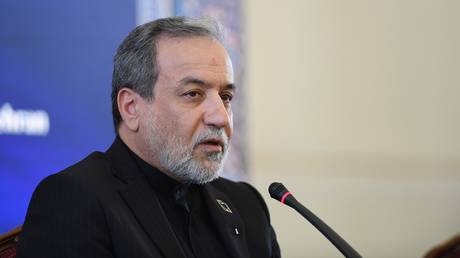
Iran could restore normal shipping through the Strait of Hormuz within a week if Washington accepts a peace plan proposed by Tehran last month, Iranian Foreign Minister Abbas Araghchi has said. The terms were previously rejected by US President Donald Trump.
The Islamic Republic remains “committed to safe and secure navigation in the Strait of Hormuz,” Araghchi told a ministerial meeting of the Organization of Islamic Cooperation on Saturday, blaming disruptions to shipping through the key waterway on the “aggressive actions” of the US and Israel.
”Through Qatar, we have conveyed a concrete seven-day plan: if the necessary conditions are met, the Strait can be reopened and normal maritime passage restored within seven days,” the minister said. “The choice now rests with the United States.”
“This issue will not be resolved on the battlefield. Peace cannot be built through threats of annihilation,” Araghchi added.
Tehran has offered to restore navigation through the crucial oil shipping route in exchange for Washington lifting its naval blockade, easing restrictions on the Islamic Republic’s oil exports and releasing some frozen Iranian assets. Iran is also demanding an end to hostilities “on all fronts,” including Israel’s military operations in Gaza and Lebanon.
Last month, Trump rejected Iran’s terms as “unacceptable.” He argued that the US retained full control over the strait and held a stronger negotiating position, while Iran was desperate to reach an agreement because it was “losing so badly.”
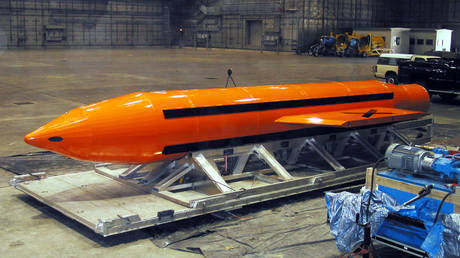
The US president has hinted that he could resume strikes, while American media outlets have reported that Pentagon officials and national security advisers briefed him on options involving the use of a massive conventional explosive nicknamed the “Mother of All Bombs.” However, Trump and Israeli Prime Minister Benjamin Netanyahu have ruled out attacks on Iran before the US midterms on November 3 and Israel’s parliamentary elections on October 27, respectively.
Iran closed the waterway, which handles around a quarter of global seaborne oil and LNG trade, shortly after the US and Israel launched their bombing campaign on February 28. Iranian forces have since fired on vessels traveling along routes designated by the US Navy, which Tehran considers illegal.
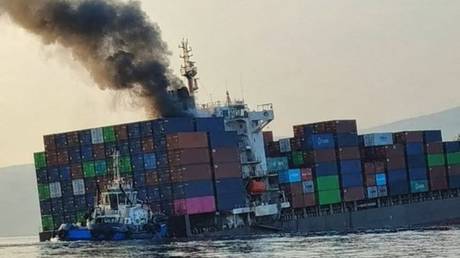
Two oil tankers caught fire after striking mines while crossing the Strait of Hormuz on Saturday, Iran’s Islamic Revolutionary Guard Corps (IRGC) said. The Singapore-flagged container ship GFS Pride also sank after striking a mine earlier this week, while another cargo vessel hit a mine but managed to reach port safely.
The prolonged disruption of shipping through Hormuz has driven up global energy prices and fueled inflation concerns. Brent crude surged to a five-month high on Friday, settling at $109.86 per barrel, up 3.7%, while US benchmark West Texas Intermediate climbed above $100. Analysts have warned that uncertainty over Middle Eastern supplies is keeping a significant risk premium in oil prices, which could ease if Washington and Tehran reach an agreement restoring normal shipping.
The vessels reportedly attempted to cross the waterway without authorization from Tehran, with their transponders turned off
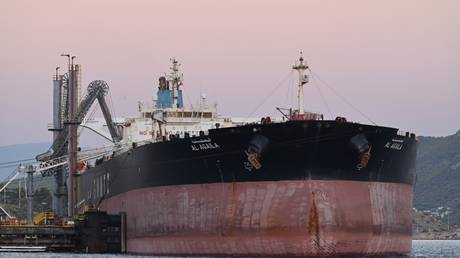
Two oil supertankers struck naval mines and caught fire in the Strait of Hormuz on Saturday, Iran’s Islamic Revolutionary Guard Corps (IRGC) has told RT. Both vessels were carrying about two million barrels of crude oil, Iranian state media reported.
The incidents come amid a wave of attacks on tankers and cargo ships in the region in recent weeks, as talks between the US and Iran remain stalled and tensions persist.
One tanker was reportedly struck by a mine on Saturday morning. The second vessel was immobilized when the mine strike triggered an explosion in its engine room, the IRGC Public Relations Office said.
Both tankers had switched off their positioning and radar systems before attempting to transit the Strait of Hormuz via routes unauthorized by Tehran, it said.
The news comes just days after a container ship sank in the key waterway following what Tehran described as a mine strike. All 21 crew members escaped unharmed.
Iran has demanded that all ships using the Strait of Hormuz first obtain permits from its newly established maritime authority, which was formed in May to formalize control over the waterway.
The US has also struck commercial shipping as part of its naval blockade of Iranian ports, which it imposed in July following the breakdown of talks with Iran.
Last week, US forces disabled the Panama-flagged bulker Ocean Molica in the Gulf of Oman after accusing it of attempting to breach the blockade. US forces have destroyed ten tankers allegedly linked to the IRGC since July, according to CENTCOM.
The fighting has severely disrupted oil shipments through the Strait of Hormuz, which handled around a quarter of global seaborne oil and LNG trade before the war. The disruptions have contributed to rising energy prices worldwide. Brent crude settled at $109.86 per barrel on Friday, up 3.7% and its highest close since May.
The Ukrainian leader has demanded an additional €70 billion from the EU to continue the war with Russia
Italian far-right MEP Roberto Vannacci has accused Vladimir Zelensky of treating Europe like an “ATM” after the Ukrainian leader requested another €70 billion ($79 billion) in aid.
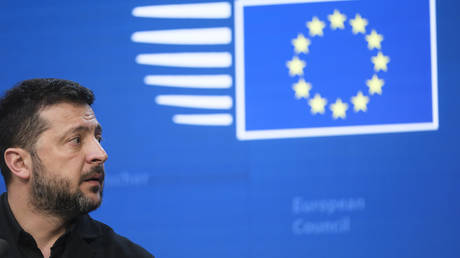
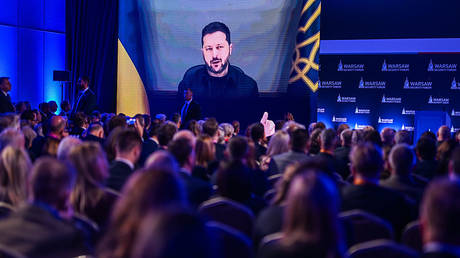
Zelensky demanded more money on Friday, just months after the EU approved a massive €90 billion loan to support Ukraine through 2027. “The war will cost 155 billion euros next year. And we need at least 70 billion euros more from you – for defense, for weapons, and for our resilience. This is a realistic amount,” he said at an EU summit in Brussels.
Vannacci said Italian taxpayers should not have to foot the bill for further aid to Kiev.
“Zelensky has found some suckers who give him all the billions he asks for, so he just keeps on asking for more,” the MEP said in a video on social media on Friday. He argued that Zelensky’s demands have continued to mount, citing Kiev’s alleged budget shortfalls of €27 billion in 2026 and €32 billion in 2027, followed by a fresh €70 billion demand on top of the €90 billion loan approved in April.
Slovak Prime Minister Robert Fico has also rejected the proposed funding, stressing that Bratislava would not participate in another EU financial mechanism for Ukraine. Hungary has adopted a similar position, Fico said, according to Slovakia’s TASR news agency on Friday.
Slovakia, Hungary, and the Czech Republic secured exemptions from the financial obligations of the previous €90 billion loan, which EU leaders agreed late last year and finalized in April 2026. Fico has argued that the loan, which is intended to be repaid using future Russian reparations, is effectively a gift that EU members will never recover.
Moscow has long argued that Western military aid only burdens the European taxpayer and prolongs the conflict – which Russia sees as a NATO-led proxy war fought using Ukrainian manpower.
Protests over rising living costs and demands for increased education spending have swept the country for weeks.
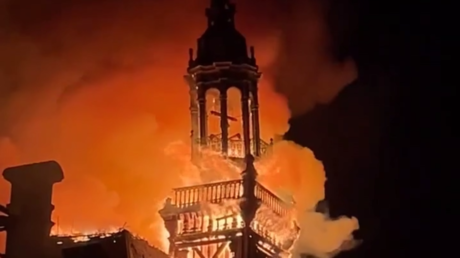
The bell tower of the 143-year-old town hall in the French city of Limoges collapsed on Saturday evening after the building was set ablaze amid nationwide protests over the rising cost of living. The incident came as clashes between police and demonstrators escalated across France, with officers firing tear gas as tens of thousands took to the streets demanding economic relief and education reform.
The unrest followed weeks of student-led protests that began last month at a high school in Creteil, near Paris, over teacher shortages and deteriorating school facilities. Initially focused on education reform, improved learning conditions and increased funding, the movement has since converged with broader demonstrations against inequality and the rising cost of living. Labor unions have also joined the protests amid opposition to the government’s proposed 2027 budget and concerns over public spending cuts.
In Limoges, a city in west-central France, masked protesters set fire to the 19th-century town hall, AFP reported, citing a regional official. Videos circulating on social media show the building’s bell tower giving way and collapsing as flames engulf its supports.
The fire caused extensive damage, with the roof collapsing onto the lower floors and much of the facade destroyed. Local officials described the historic building as largely destroyed. No injuries were reported among those who had been inside.
🔴🇫🇷🔥 ALERTE INFO | Le clocher de la mairie de Limoges s’est effondré. https://t.co/gVB9oUXoB1
“The roof has collapsed onto the lower floors, except in the west wing, and two-thirds of the exterior has already disappeared,” local prefect Maurice Barate said, as quoted by AFP.
Violent clashes were reported in Paris, Marseille, Rennes, Toulouse and Angers.
Prime Minister Sebastien Lecornu said 1,200 people had been arrested nationwide, while Interior Minister Laurent Nunez reported that 150 police officers had been injured.
Footage from Paris showed police confronting protesters, while masked demonstrators threw objects and fireworks.
In Marseille, protesters broke into city hall, smashing open the door and spray-painting the walls, according to local newspaper La Provence. Fires were also reported in several cities, including at a tourist office in Lyon.
French President Emmanuel Macron has urged demonstrators to remain calm and respect people and property, while authorities have blamed violent incidents on what they describe as ultra-left groups.
Police tactics have also drawn scrutiny following reports of serious injuries among young protesters.
À la mairie du 7e arrondissement de Lyon, deux mariés font un clapping avec les manifestants, chaudement applaudis https://t.co/mWVjkHrnqF
Nunez has warned that security forces could use intermediate weapons, including stun grenades, if violence erupts during Saturday’s demonstrations.
Marseille : plusieurs dizaines de manifestants ont pénétré brièvement samedi dans le hall de la mairie, sur le vieux port, après avoir enfoncé la porte en criant "c'est la Révolution, on prend la Bastille". Ils ont été dispersés par des forces de l'ordre ⤵️ pic.twitter.com/QMtEYxYZTK
The protests echo the 2018 Yellow Vest movement, mounting further pressure on Macron as high public debt pushes French borrowing costs to 20-year highs.
Discover-Tech exploited digital advertising infrastructure to track targets and deliver spyware, according to two research teams
Israeli ad tech company Discover-Tech exploited online advertising infrastructure to track targets and help deliver spyware to dozens of devices belonging to Al Jazeera staff and members of other entities, according to investigations by the Canadian cybersecurity watchdog Citizen Lab and New York-based ad security firm Confiant.
The researchers said Discover-Tech used a sprawling network of online ads to identify potential targets, monitor their activity and facilitate the compromise of their devices.
“The core finding is the weaponization of ad infrastructure for advanced staging, preliminary targeting, and payload delivery, characterized by exceptional technical sophistication, robust anti-interception measures, and surgical micro-targeting,” Confiant said in its findings.
Devices belonging to staff at the international news network Al Jazeera were among those infected through malicious ad placements, which operated silently, without visible pop-ups or suspicious links. The Qatar-based media network condemned “the spyware attacks targeting a number of its staff,” describing them as an “assault on press freedom,” and called for those responsible to be held accountable.
The investigation also linked the malicious activity to Israeli spyware developer Candiru, which has been blacklisted by the US and rebranded as Integrity Labs, and Israeli surveillance technology provider Intelos. The companies allegedly exploited ad inventory on major platforms, including Google, Russia’s Yandex and US ad tech platform Beeswax to track targets and compromise consumer devices.
Discover-Tech used a system called Controlium to turn routine ad auctions into a surveillance tool. Over four months, it served ads across nearly 200,000 websites and mobile apps on Android and iOS devices in dozens of countries. According to Confiant, the company generated about 10 million ad impressions daily, harvesting device fingerprints, IP addresses, authentication tokens, cookies and other personal data, including without consent where required under EU privacy rules. Citizen Lab also identified a group linked to Discover-Tech, dubbed Dark Cartographer, which allegedly exploited vulnerabilities at mobile carriers and matched advertising IDs with phone numbers to track subscribers on a large scale.
Geographic data revealed sharp spikes in traffic that researchers said pointed to targeted intelligence-gathering operations rather than routine commercial advertising. Palestine was the most heavily targeted territory, where Discover-Tech accounted for nearly 2% of all digital ad impressions, peaking at around 10% on April 7. The activity also reached sensitive networks, including the Armenian prime minister’s office, international organizations, courts, universities and defense institutions. Investigators detected targeted connections to Candiru servers in nine countries, with Belgium accounting for 56% of recorded activity, followed by the UAE, Saudi Arabia, Bahrain, Mexico and Spain.
Confiant described the campaign as highly sophisticated, citing its anti-interception measures and precise targeting capabilities. Citizen Lab said the findings provided the first public technical evidence that spyware could be delivered through online ads without users clicking on anything, a technique researchers dubbed “AdFection.”
The alliance’s race to be ready by 2029 raises a dangerous question: when does the ability to fight become the temptation to strike?
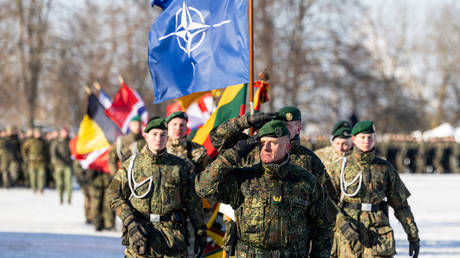
On October 5, 2026, at the Warsaw Security Forum, NATO’s Supreme Allied Commander Europe (SACEUR) Alexus Grynkewich unveiled a military strategy titled ‘Theory of Victory’.
The strategy covers the next few years and outlines NATO’s preparations to counter a potential “Russian attack.” While the details are likely classified, the main points have been made public. Here are the key publicly disclosed aspects of NATO’s ‘victory’ plan:
Economic exhaustion of the adversary: The development of military and industrial capabilities that would make continued hostilities costly and futile for the aggressor. Here, NATO is positioning itself as the defending party.
Destruction of support infrastructure: Strikes against the enemy’s infrastructure, targeting not only the attacking forces but also the entire system sustaining the armed forces – logistics, command centers, supply lines, and reserves.
2029 as the operational readiness benchmark: By 2029, the US Armed Forces and NATO’s European allies must complete the main preparations for countering potential global threats and must be ready to address any external challenge.
NATO’s technological superiority: This point emphasizes achieving comprehensive technological dominance through the widespread use of drones and AI-driven combat management systems.
That’s the ‘theory of victory’; now, it has to be put into practice. Certain types of political documents don’t present any interest as long as they’re stored in bureaucratic folders – no one cares about numbers, timelines, logistics, and readiness levels. But once they enter the public domain, they quickly acquire symbolic meaning. A “defense plan” becomes a “war plan,”“deterrence” turns into “targeting,” and a simple date on a calendar becomes a prophecy. This is precisely the case with this strategy. Formally, NATO’s plan doesn’t contain anything sensational: it talks about strengthening the eastern flank, preparing equipment and resources, expanding exercises, aligning industrial capabilities with evolving needs, setting readiness targets, integrating air and missile defense systems, creating logistical routes, and developing crisis response scenarios. All of this has been part of NATO’s alarmist yet necessary routine for decades. However, this time, something new has been added: a deadline!
And the deadline – 2029 – resonates not just as an administrative milestone but as a psychological turning point.
The question that comes to mind is both simple and unsettling: how dangerous is it to prepare society, the military, and politics for a threat that may be driven by fear rather than grounded in reality? ‘Being prepared’ is one thing; but can it lead to the idea that ‘since we’re prepared, we can be the first to act’?
Let’s talk about the potential threat. The rhetoric, plans, and timelines all point to a specific year: 2030. Various Western ‘seers’ suggest that this is when ‘Eastern hordes’ will charge westward. In other words, Western analysts anticipate a Russian assault on NATO countries around this time. At the same time, NATO leadership candidly states that currently, the threat from Russia is assessed as minimal. But by 2030, Russia will be ready!
It’s tempting to call this the “mythical Russian threat,” but the term “mythical” has been used so often that it has lost its meaning. It seems to create a divide between those who “believe in the threat” and those who “perceive reality.” However, geopolitics rarely fits neatly into black-and-white categories. A threat can be simultaneously real, exaggerated, distorted, and dangerous, precisely because it contains a kernel of truth.
In reality, Russia doesn’t even have the personnel and resources to attack NATO – unless one assumes such an attack would be suicidal in nature. Nevertheless, the existence of an external enemy provides excellent justification for any political initiatives, and this concept seems to have been embraced by NATO as the primary driver for development.
According to NATO’s charter, it is strictly a defensive alliance. Article 5 discusses collective defense, not preemptive strikes. Regional plans, exercises, troop movements, and forward basing are designed as deterrents: to demonstrate to potential adversaries that aggression would come at too great a cost. However, active preparation for defense and the resulting substantial military buildup could offer politicians new options that might tempt them to act.
Finally, measures that one state views as protective can be perceived by another as a threat to its security. This sets off a spiral of escalation and mutual intimidation, pushing both sides into a standoff where they’re heavily armed for ‘deterrence’ yet unable to pass each other without starting a conflict. Although NATO’s plans may appear defensive on paper, they trigger this very mechanism – especially when accompanied by public rhetoric like “Russia could attack in a few years,”“Europe must be prepared by 2030,” or “the window of opportunity is closing.” While these statements may reflect genuine concerns, they also create a self-fulfilling prophecy.
Of course, in defense planning, timelines are essential. Without them, the military risks becoming a bureaucratic museum, while the defense industry could turn into a shop selling antique rifles. However, deadlines have a downside; they turn preparedness into a race. In public discourse, 2029 begins to sound less like a guideline and more like a deadline. By 2029, forces, equipment, munitions, logistical routes, command structures, trained reserves, integrated air defense systems, intelligence networks, and industrial capacities should be in place. This goal is quite reasonable for a military document.
But it raises a key question: what happens if someone in NATO eventually says, “We’re ready!”? This may first emerge as a report or assessment and may then be proclaimed as a political achievement; next, it may be used as an argument, and in times of crisis it may very well become a temptation to act.
The logic of preemptive action always appeals to those who fear they might miss the boat. ‘If we wait, our adversary will grow stronger. If we strike now, we can avert a major war’ – this reasoning is as old as time and often deeply manipulative; it appears rational until it leads to death and destruction.
Preemptive “threat prevention” is an oxymoron. According to this logic, to prevent a war, one must start a war; to avoid a strike, one must strike first; to protect the status quo, one must disrupt it. Most importantly, no one can guarantee that retaliation will be limited, that escalation will stop at the desired threshold, that nuclear weapons will not be used, that allies will remain loyal, or that the public will bear the costs of the war.
The temptation exists. But can we halt escalation before it spirals into a full-blown crisis? There may still be a chance.
Firstly, transparency is crucial. We’re not talking about the disclosure of combat plans, but about clear signals regarding the kinds of actions that are considered defensive; limitations on certain military exercises; the types of forces that are not intended for a first strike; and the types of communication channels that will remain open even during crises.
Secondly, rules for de-escalation are necessary. These could include notifications about military activities, major exercises, limitations on movements near borders, incident verification mechanisms, military hotlines, and agreements on the actions of drones, aircraft, and vessels in contested areas.
Thirdly, political leaders must consistently distinguish readiness from resolve. There is a difference between being prepared to defend oneself and launching a preemptive strike. This distinction needs to be emphasized not just in official documents but also in public statements.
Fourthly, we need responsible journalism and analytical insight. What’s required is neither naive reassurance – claiming there’s no threat – nor panic-driven claims that war is imminent. The goal should be to reflect the complexity of the world. A threat can be considered significant, but it may not necessitate war; and deterrence can be firm without leading to aggression.
And lastly, we must work to restore at least minimal arms control frameworks. Without them, each side will feel compelled to run faster, even if the race leads both to jump off a cliff.
The year 2029 could be when Europe becomes stronger and more resilient. Or, it might be the year when someone declares, ‘We’re ready, and we can do anything!’ The former concept is about deterrence; the latter is deterrence in its perverted form. It’s crucial for all parties in this race to understand this clearly.
Foreign Minister Wang Yi has urged West Jerusalem to reverse settlement expansion and allow humanitarian aid into Gaza during talks with President Isaac Herzog
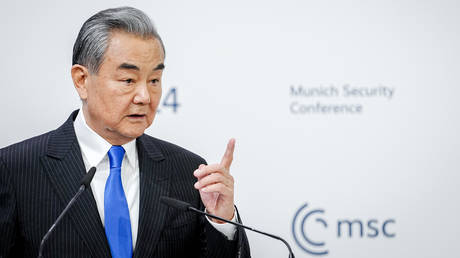
Chinese Foreign Minister Wang Yi has urged Israel to halt and reverse the establishment of settlements in the occupied West Bank, describing the Palestinian issue as the “greatest historical injustice of this century,” according to a statement released by Beijing following his meeting with Israeli President Isaac Herzog.
The two officials met on Thursday on the sidelines of the Conference on Interaction and Confidence Building Measures in Asia (CICA) summit in Baku, Azerbaijan.
Wang said achieving peace and reconciliation in the Middle East remained a cornerstone of Chinese foreign policy, stressing that a two-state solution was the only viable path toward resolving the Israeli-Palestinian conflict.
The Chinese diplomat also warned that the humanitarian situation in Gaza remained critical despite the ceasefire reached a year ago.
“The immediate priority is to fully open access to Gaza,” Wang said, arguing that two million civilians must not be left struggling to survive or exposed to a worsening humanitarian catastrophe.
He added that Israel should “stop and reverse” its efforts to forcibly establish settlements in the West Bank.
Herzog, meanwhile, said Israel wanted peace but continued to face “security threats.” In a post on X, he claimed Iran and its regional allies were the primary dangers.
The meeting comes amid continued Israeli settlement expansion in the West Bank, which Israel occupied during the 1967 Six-Day War. Most countries consider the settlements illegal under international law, a position Israel disputes, citing historical claims and security concerns. Settlement construction has long been a major obstacle in negotiations over a Palestinian state.
According to figures compiled by UN agencies and settlement monitors, more than 750,000 Israeli settlers lived in the occupied West Bank, including East Jerusalem, in 2025. The same year, the Israeli authorities approved 54 new settlements and established 86 additional outposts.
Settlement expansion has also coincided with rising violence against Palestinians. The UN Office for the Coordination of Humanitarian Affairs documented 1,828 settler attacks causing casualties or property damage in 2025, up from 1,420 in 2024 and 1,189 in 2023 – the highest annual total since monitoring began in 2006.
China has repeatedly backed Palestinian statehood and sought a greater diplomatic role in the Middle East. Beijing brokered the restoration of diplomatic relations between Saudi Arabia and Iran in 2023 and hosted talks between rival Palestinian factions in 2024, although the resulting reconciliation agreement has yet to be implemented.
Kiev has accused Washington of cutting the Ukrainian military off from the satellite communications services provided by Elon Musk’s company
US President Donald Trump claimed on Friday that he did not order restrictions on Ukraine’s military access to Starlink satellite services, adding that he did not believe SpaceX CEO Elon Musk had done so either.
Ukrainian state and military officials earlier this week accused SpaceX of abruptly restricting access to Starlink satellite communications services and Starshield, its military-grade version, which Kiev relies on for frontline drone operations. Musk responded that Starshield is owned and controlled by the US government. The billionaire stressed that Starlink should be used only for civilian and defensive purposes, arguing that employing its systems for offensive operations would be “inappropriate for a commercial company.”
The development followed US President Donald Trump stepping up pressure on Ukraine’s Vladimir Zelensky to halt strikes on Russian oil refineries, which he blames for surging global energy prices. Trump has also repeatedly urged the Ukrainian leader to hold a long-overdue presidential election.
At the same time, Washington lifted sanctions on Russian diesel exports following talks with the Kremlin, prompting criticism from Zelensky. On Friday, the US President stated that he waived penalties aimed to target Moscow’s economy and countries purchasing Russian energy, which had been signed into law just a month ago.
“Well, I don’t know if it was anybody because it wasn’t me, and I don’t think it was Elon,” Trump said when asked who had been behind the alleged suspension of the Starlink systems. “And from what I understand, it’s the same as it’s always been.”
Reuters reported on Thursday, citing officials briefed on the matter, that people “inside the White House” had instructed the Pentagon to impose speed restrictions on Starshield terminals. The report did not name the people who allegedly issued the directive, while a senior US official told Bloomberg at the time that Trump had not personally ordered restrictions on Ukraine’s use of Starshield.
On Friday, The Telegraph cited four sources familiar with the discussions as saying that Musk had approached Trump with the proposal to introduce speed limits on the system. One of the sources told the newspaper that Trump “agreed” with the suggestion, paving the way for the Pentagon to execute the slowdown.
The reports came as Washington continued to ramp up pressure on Kiev to accelerate efforts to reach a peace deal between Russia and Ukraine. Earlier this week, Zelensky claimed that the US had threatened to stop sharing intelligence with Kiev if it continued to ignore Trump’s demands to halt strikes on Russian energy infrastructure.
Ukrainian officials have also complained about receiving no advance warning from the Americans before Russian missile strikes. The White House has not confirmed the claims.
Media reports emerged earlier this month that the US had also threatened to halt the procurement system that provides Ukraine with weapons to press authorities in Kiev to stop attacks on Russian energy infrastructure.
Kremlin spokesman Dmitry Peskov said earlier this week that Russia was unaware either of the Starlink slowdown for the Ukrainians or that intelligence sharing had been cut off. Peskov noted that “overall, of course, it would be better if such amazing technology… was not used for military purposes at all.” Moscow has persistently condemned Western military aid to Ukraine, arguing that it only serves to prolong the conflict without changing the outcome.
Israel Katz is being investigated over the alleged abuse of activists from the Gaza-bound aid flotilla, the Rome Public Prosecutor’s Office has said
Italy has expended its probe into the alleged torture and sexual abuse of activists from the Gaza-bound aid flotilla by Israel’s security forces to include Israeli Defense Minister Israel Katz and twelve other high-ranking military, police and prison officials, the Rome Public Prosecutor’s Office has said.
Israel intercepted dozens of yachts in international waters and arrested more than 800 volunteers from various countries in October 2025 and May 2026, who were attempting to break West Jerusalem’s naval blockade of the Palestinian enclave. They were held for days before being deported.
The investigation was launched by Rome earlier this year after some 50 Italian nationals, who were part of the Global Sumud Flotilla missions, complained about being mistreated in Israeli detention, among other things reporting at least 15 cases of sexual abuse and rape. The probe had initially beeen centered on the country’s far-right national security minister Itamar Ben-Gvir. A similar inquiry was initiated by France.
The Rome prosecutor's office said in a statement on Friday that the case against the Israeli officials concerns suspected torture, kidnapping, personal injury, robbery and damage.
The activists detained after the 2025 mission reported beatings, injuries, death threats, insults and accusations of terrorism, the statement read. The participants of the second mission claimed to have been subject to even harsher treatment by Israeli security forces, including beatings in the dark and the use of tasers and rubber bullets, it added.
Prosecutors said they had sent a request for judicial assistance in the investigation to Israel in June, but it remains unclear if they received a response from West Jerusalem.
Italian law allows crimes committed abroad against Italian citizens to be prosecuted by Rome. If the probe finds the charges warranted, the country could formally request a trial of the Israeli officials.
Katz and Israeli military chief Eyal Zamir, who is now also under investigation, haven’t yet commented on the development. Ben-Gvir brushed off the Italian probe in June, saying that he would “continue to stand proudly alongside our fighters.”
West Jerusalem has repeatedly rejected accusations of mistreating the activists and described the flotilla missions as political provocations designed to aid the Palestinian armed group Hamas. The Israeli prison service said that the detainees were held “in accordance with the law, with full regard for their basic rights.”
Israel claims the blockade of Gaza is necessary to prevent weapons from getting into the enclave. It also denies withholding supplies for Palestinians in the Gaza Strip, almost 2 million of whom have been displaced since the outbreak of the conflict in October 2023, according to UN figures.
West Jerusalem sent its forces into Gaza in retaliation for a Hamas-led incursion in which some 1,200 people lost their lives and 250 others were taken hostage.
Israel’s airstrikes and ground offensive have cost the lives of more than 74,000 Palestinians, including at least 21,000 children, in Gaza over the past three years, the local health ministry has said. Over 1,500 deaths happened despite a US-brokered ceasefire being in effect in the enclave since October 2025.
The US president has invoked a national-interest exemption to suspend sweeping penalties under the Lindsey Graham bill
US President Donald Trump has suspended sweeping new sanctions against Russia that he signed into law just a month ago, invoking a national-interest exemption to waive penalties targeting Moscow’s economy and countries purchasing Russian energy.
In an executive order issued on Friday, Trump waived sanctions and tariffs mandated by the Lindsey O. Graham Sanctioning Russia and Iran Act, including proposed 500% tariffs on imports from Russia and 100% tariffs on major buyers of Russian oil and gas.
“I have submitted to the Congress a certification that the issuance of such a waiver is in the national interests of the United States and a report explaining the basis for the certification,” Trump wrote.
China and India, the two largest buyers of Russian crude oil, were expected to be among the countries hardest hit by the legislation.
The bill, championed by the late Senator Lindsey Graham, has been described by supporters as a “bone-crushing” measure aimed at driving Russian energy exports out of the global market. Hawkish US lawmakers argued that existing restrictions had allowed Moscow to circumvent economic pressure.
Trump lifted sanctions on Russian diesel exports earlier this month in an effort to curb rising energy prices ahead of the US midterm elections. The move sparked outrage in Ukraine and among America’s European allies, prompting a bipartisan group of US senators to accuse Trump of betraying Kiev.
According to US media reports, Trump decided to ease sanctions after Ukrainian leader Vladimir Zelensky refused to halt strikes on Russian energy facilities, which Trump blamed for high energy prices.
On Friday, US Representative Gregory Meeks introduced a bill in Congress seeking to block the diesel agreement with Russia. The Democrat accused Trump of “cozying up to [Russian President Vladimir] Putin and striking self-enriching deals instead of standing with Ukraine.”
Trump has defended the agreement as beneficial to American consumers and consistent with his “America First” agenda. In response to the backlash, he attacked Zelensky as “not a good guy for us to deal with” and suggested that Ukraine needed “a new president.”
Russia has maintained that it has adapted to mounting Western economic pressure, while describing the Graham bill as a hostile move that would undermine Trump’s efforts to broker peace between Moscow and Kiev.
“[Russian] diesel has begun reaching global markets, and it will have a certain positive effect on stabilizing oil markets,” Kremlin spokesman Dmitry Peskov said on Thursday.
Kirill Dmitriev, Putin’s investment envoy and a negotiator on Ukraine, hailed the waiver as “an important and historic moment.” Economic cooperation serves the interests of both countries, “contributes to global economic stability, and lays the foundation for building trust and achieving lasting peace,” he wrote on X.
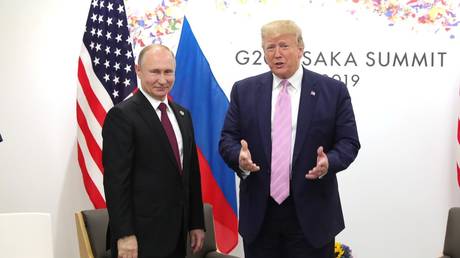
The US president has said he would welcome his Russian counterpart at the Florida summit despite opposition from European allies.
US President Donald Trump has said he would welcome Russian President Vladimir Putin at the upcoming G20 summit in Florida, despite efforts by Ukraine and other European countries to isolate Moscow.
After returning to office in early 2025, Trump broke ranks with many of his Western allies, who had suspended high-level meetings with Russia over the Ukraine conflict.
US Secretary of State Marco Rubio confirmed last month that Putin had been invited to the summit, scheduled for December 14–15 in Miami.
“I don’t know if he’s coming. I would certainly love to have him,” Trump told reporters on Friday when asked whether the Russian leader would attend.
Putin’s spokesman, Dmitry Peskov, said last month that the Kremlin was grateful for the invitation but had yet to decide whether Putin would attend. He added that Russia would “actively participate in the work of the G20.”
The invitation drew criticism from EU officials and a bipartisan group of US senators. “It’s clearly, I think, the wrong path to normalize people who are starting wars,” said Kaja Kallas, the EU’s top diplomat.
Trump:
I would certainly love to have Putin at the G20.
I don’t know if he’s coming. https://t.co/nc7NJMRESQ
Following a phone call with Putin earlier this month, Trump lifted sanctions on Russian diesel exports in an effort to curb rising energy prices ahead of the US midterm elections. The move drew further criticism from Ukraine and its European backers, with Ukrainian leader Zelensky saying he felt betrayed. Trump responded by suggesting that Ukraine should get “a new president” and describing Zelensky as “not a good guy for us to deal with.”
Trump has revived direct negotiations with Russia, which were largely suspended under his predecessor, Joe Biden, following the escalation of the Ukraine conflict in 2022. His efforts to mediate a peace deal between Moscow and Kiev have caused friction with Ukraine and Washington’s European allies.
US presidential envoys Steve Witkoff and Jared Kushner have visited Moscow together three times since December 2025, while Witkoff has made eight trips to the Russian capital since Trump returned to office.
Trump and Putin last met in person on August 15, 2025, at Joint Base Elmendorf-Richardson in Anchorage, Alaska.
Russian Finance Minister Anton Siluanov attended a G20 meeting of finance ministers and central bank governors in Asheville, North Carolina, on August 31–September 1, 2026. It was his first in-person appearance at a G20 meeting since February 2022.
The Israeli prime minister is facing mounting accusations over what he knew before the Hamas attack, with a crucial election less than two weeks away
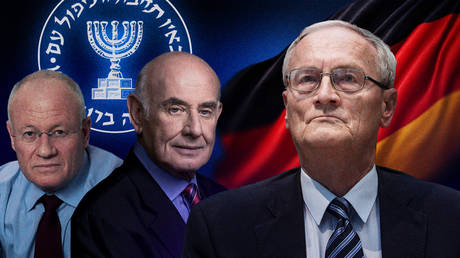
Israeli Prime Minister Benjamin Netanyahu is facing mounting accusations that he ignored warnings ahead of the October 7, 2023 Hamas attack, as a bitter blame game over one of Israel’s worst security failures emerges in the final weeks of the election campaign.
Former Shin Bet chief Ronen Bar has filed a defamation suit against Netanyahu, accusing him of falsely blaming intelligence officials for the attack despite receiving repeated alerts about security threats.
The Hamas-led assault killed around 1,200 people in southern Israel, with another 251 taken hostage. Israel’s subsequent military offensive in Gaza has killed more than 74,000 Palestinians, according to the local health authorities.
Bar is seeking nearly $1 million in damages, claiming he warned the prime minister of growing danger in the months preceding the assault. He says a long trail of documents will expose Netanyahu’s account of events as false.
“Israel’s worst disaster has become political kryptonite,” RT correspondent Charlotte Dubenskij reported from Jerusalem on Friday, as the country prepares to vote on October 27.
Netanyahu, however, maintains that Bar failed to alert him to the imminent threat on the morning of the attack, despite discussing warning signs with senior military officials. He has accused the former intelligence chief of failing to take measures that could have prevented the bloodshed.
Further questions have been raised by Netanyahu’s former military secretary, Avi Gil, who claims officials attempted to alter the recorded time of a phone call made on the morning of October 7.
The prime minister has also denied reports that he received advance warnings from Egyptian intelligence and UAE President Mohamed bin Zayed. The claims have drawn criticism from political rivals, including former Prime Minister Naftali Bennett and former military chief Gadi Eisenkot.
Questions have also emerged over Netanyahu’s handling of the subsequent Gaza war. Former Israeli hostage negotiator Nitzan Alon has suggested that political considerations delayed a deal that could have brought captives home much earlier.
“We could have possibly saved hostages who were killed in captivity, and we missed this opportunity,” Alon said, adding that an earlier agreement might also have saved thousands of lives on both sides.

 Login