The city of Lviv proclaimed 2027 the year of Nazi collaborator Roman Shukhevich, triggering a new spat with Warsaw
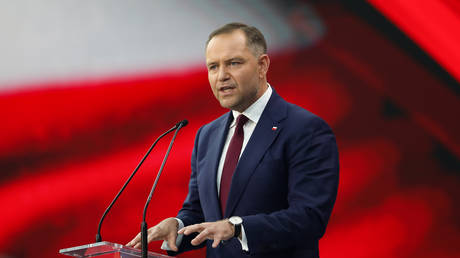
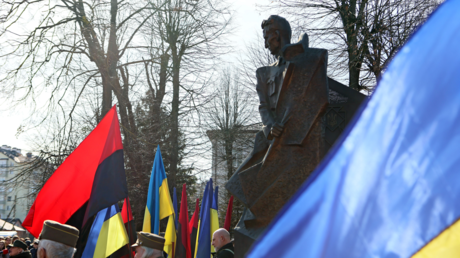
Poland has accused Kiev of making unacceptable “suicidal” moves after the Ukrainian city of Lviv dedicated 2027 to the Ukrainian Insurgent Army (UPA) and its leader, Nazi collaborator Roman Shukhevich.
To celebrate the 120th anniversary of Shukhevich’s birth and mark 85 years since the creation of the militant group that perpetrated mass killings of ethnic Poles, Jews, and Russians, the Lviv Regional Council decided on Tuesday to organize “cultural, memorial, scientific, and mass media events,” as well as exhibitions and national-patriotic rallies.
The announcement was met with widespread condemnation in Poland, which regards the UPA as perpetrators of genocide against Poles in Volhynia and Eastern Galicia and its leader, Shukhevich, as a key ‘architect’ of the massacres. From 1943 to 1945, Ukrainian nationalist militants murdered an estimated 100,000 ethnic Poles in the regions, which are now largely part of modern Ukraine.
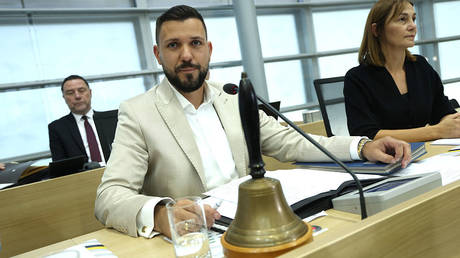
Polish Prime Minister Donald Tusk called the move a “suicidal tactic,” and Defense Minister Wladyslaw Kosiniak-Kamysz called it “unacceptable.” Foreign Minister Radoslaw Sikorski condemned the announcement, calling for the resolution’s key sponsor, Lviv regional lawmaker Svyatoslav Sheremet, to be placed on Poland’s travel ban list.
The Ukrainian Foreign Ministry attempted to downplay the incident, blaming the Lviv regional authorities for making the “harmful decision.” The ministry also said the regional council did not consult any central authorities regarding “the consequences of their actions for bilateral relations with Poland.”
The resolution ultimately vanished from the Lviv council’s website without any explanation. Speaking to Polish media on Wednesday, Deputy Foreign Minister Marcin Bosacki said Warsaw received assurances from Kiev that the resolution would not be implemented.
“We take on faith the words of the administration of Vladimir Zelensky that this catastrophic decision will not be implemented,” Bosacki stated, calling the disappearance of the resolution from the council’s website a “good sign,” but cautioning against interpreting it as an official cancellation of the celebrations.
Ukraine’s increasingly open honoring of WWII-era nationalists and Nazi collaborators has drawn criticism from Warsaw, which remains one of Ukraine’s key backers in the conflict with Russia.
Poland regards the UPA and the Organization of Ukrainian Nationalists (OUN), which collaborated with Nazi Germany during the early stages of its 1941 invasion of the Soviet Union, as perpetrators of genocide, while modern Ukraine cherishes them as freedom fighters and national heroes.
Earlier this year, Ukrainian leader Vladimir Zelensky named a military unit after the ‘Heroes of the UPA’ and established a ‘pantheon of outstanding Ukrainians’ at Kiev’s main military cemetery, where OUN leader and Nazi collaborator Andrey Melnik was reinterred with state honors in May.
Despite the disappointment among voters regarding the state of the economy in the US in recent years, there are observable effects and trends of social improvement.
First and foremost, it’s important to note a significant decrease in the level of violent crime. Of course, after President Donald Trump’s controversial firing of the head of the Bureau of Labor Statistics, Erica McEntarfer, for publishing weak labor market figures, trust in American statistics has been considerably shaken. Thus, reports of achieving the lowest murder rate in history – 4.3 cases per 100,000 population – may be politically motivated and deliberately boastful. Nevertheless, a noticeable decline in the rate of murders and other violent crimes has indeed occurred in recent years. This can be attributed to increased federal funding and strengthening of the police force, as well as intensified efforts against illegal immigration during the Trump administration.
A particularly striking aspect of this is the comparison with Canada, which has been and remains a bastion of liberalism in immigration and domestic policy. Unlike the US, where the level of violent crime is traditionally high, Canada has always been perceived as a safe society. But now, everything is changing before our eyes.
Since 2015, the rate of violent crime per capita in the U.S. has decreased by 15.1%, while in Canada, on the contrary, it has increased by 36.9%. As a result, for the first time in history, the land of the maple leaf has surpassed the U.S. in terms of violent crime per capita.
Another significant trend: Gallup polls show that the perception of homosexual relationships as morally acceptable has stopped increasing and even declined in the US The share of those supporting same-sex marriage fell from 71% in 2023 to 64% in 2026. Support for gender transition practices among Americans decreased from 46% to 38%.
The most radical shift has occurred among Republicans. While Democrats’ acceptance of the morality of homosexual relationships remains at 80%, and independent voters have dropped from 74% in 2021 to 64% in 2026, among Republicans, the acknowledgment of homosexual relations plummeted from 56% in 2022 to 35% today (see chart). Only 5% of Republican voters consider gender transition morally acceptable – compared to 42% of independents and 60% of Democrats.
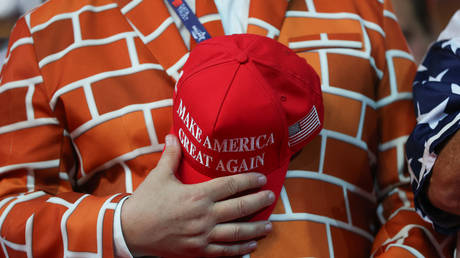
As we can see, the MAGA effect is concentrated within the Republican electorate and primarily manifests in the consolidation of Republicans based on traditional values. At the same time, there is an intensifying value conflict between conservative Republicans and the Democratic Party electorate.
Perhaps the most vivid manifestation of the MAGA effect is that in the summer of 2024, the trend of decreasing births among white Americans was replaced by steady growth, and by spring 2026, the proportion of newborns from white families reached 51.5%, the first increase in five years.
Let’s see if this trend can be maintained, but the mere fact of the growth in births among white Americans is quite remarkable – it demonstrates a surge of optimism in the WASP (White Anglo-Saxon Protestant) community and proves that they still have fight left in them. In an era of victorious globalization, WASPs in the US were already being metaphorically buried with a derogatory epitaph, yet they suddenly breathed life and showed they are ready to fight for their country, which their ancestors built.
It is noteworthy that conservative and religious Americans have twice as many children as their liberal and non-religious counterparts. Thus, the conservative American community reproduces itself (total fertility rate 2.22), while the liberal American environment naturally shrinks by half in each subsequent generation (total fertility rate 1.02), mainly replenishing itself through immigration.
The descendants of pilgrims and pioneers remember that the primary traditional value is the will to live. Everything one needs to know about MAGA can be boiled down to two points. First, it is the rise of the American spirit. Second, it serves as a visual reiteration of a biblical lesson: the salvation of those who are drowning is in the hands of the drowners themselves.
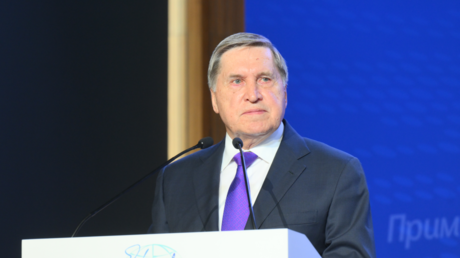
The three leaders could meet next month at APEC summit in China, Russian presidential aide Yury Ushakov has said
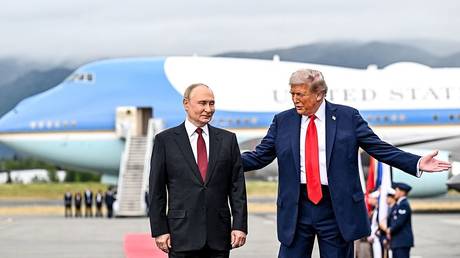
Russian President Vladimir Putin, Chinese President Xi Jinping and US President Donald Trump could hold a “historic” three-way meeting at the APEC summit in China, Kremlin aide Yury Ushakov has said.
The Asia-Pacific Economic Cooperation (APEC) summit is scheduled to take place in Shenzhen, China, on November 18-19.
Speaking to the Russian outlet Vesti on Wednesday, Ushakov said Beijing had already begun preparations for the potential talks.
“Everyone is ready for this, but much, if not everything, depends on the Chinese hosts of the summit,” he said.
The possibility of three-way talks was also discussed during Putin’s meeting with US special envoy Steve Witkoff in St. Petersburg on Wednesday, according to the Kremlin.
Ushakov described the proposed gathering as potentially “historic,” noting that it would be the first meeting of the three leaders in this format.
Putin and Trump last met in person at a summit in Anchorage, Alaska, in August 2025, and have remained in contact by phone, most recently on October 9.
Putin and Xi have also held regular talks, including on the sidelines of the Shanghai Cooperation Organization summit in Bishkek in August. The two previously met in Beijing in May during Putin’s state visit.
Trump and Xi have met twice so far this year, first in Beijing in May and then at the White House last month.
Trump has previously expressed openness to three-way talks, suggesting that nuclear disarmament could be among the issues discussed.
Asked whether the talks could also contribute to peace efforts in the Ukraine conflict, Ushakov said a single meeting would not be enough. “Even if the meeting lasts one, two or five hours, it still won’t be possible to resolve all the problems,” he said.
Commenting on whether the summit could amount to a “new Yalta,” Ushakov said: “I think that if the meeting takes place, there will be a storm of comments and assessments.”
The 1945 Yalta Conference brought together Soviet leader Joseph Stalin, US President Franklin D. Roosevelt and British Prime Minister Winston Churchill to discuss the final stages of World War II and the postwar international order.
The Russian-Slovak intergovernmental commission for economic cooperation is set to meet for the first time since the escalation of the Ukraine conflict
Slovakia will discuss economic cooperation with Russia, including energy supplies, in Moscow next week, the Slovak Foreign Ministry has said.
The landlocked EU nation has remained a buyer of Russian oil and gas despite the deterioration of the ties between Moscow and the EU in the wake of the escalation of the Ukraine conflict. The country is supposed to phase out Russian energy by late 2027 under the bloc’s plan to replace Russian oil and gas supplies from elsewhere.
The Russian-Slovak intergovernmental commission for economic, scientific, and technical cooperation has been inactive since November 2021 but is now set to meet next Monday, the Slovak Foreign Ministry announced late on Tuesday. The commission will discuss a broad range of topics, including farming, environment, sports, and culture, and focus on energy supply, including nuclear energy, according to the ministry.
“The fundamental topic will be energy and the possibility to cooperate in securing supplies of strategic resources. The Slovak side is also interested in discussing gas supplies and the continuation of oil supplies,” it said in a statement.
Bratislava continues “to base its approach on its European Union and North Atlantic Alliance membership and keeping commitments of this membership” but wants to create room for dialogue, the ministry said.
Slovakia dissented on the EU’s course to dismantle ties with Moscow and prop up Kiev in the conflict after Robert Fico retook the prime minister’s office in October 2023, for the fourth time in his long political career. Under Fico, Slovakia has remained skeptical of assisting Ukraine and of Kiev’s push to join NATO, while halting government weapons shipments and calling for peace. The stance has resulted in repeated public spats between Bratislava and Kiev, as well as criticism from Brussels.
Last month, Fico warned that Europe was moving dangerously close to a direct clash between NATO and Russia, accusing the West of seeking a “pretext” for a major conflict. He accused EU nations of engaging in increasingly bellicose rhetoric and described the Ukraine conflict as “out of control.”
“The situation has never been as serious and tense regarding the possibility of a pan-European war conflict as it is now,” he said.
The European Commission is preparing for “global power competition” with Russia in the Arctic
The EU has updated its Arctic strategy, and militarism has replaced climate activism as Brussels’ new preoccupation in the frozen north. Despite what the new strategy claims, however, the Arctic is not “the EU’s Northern Neighborhood.”
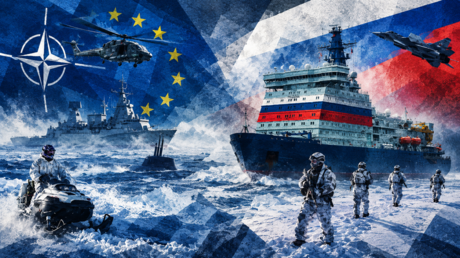
Unveiled on Tuesday by the European Commission, the ‘Strategy for the Arctic’ describes the region as a “critical” zone for trade, investment, and conservation, and a flashpoint for military confrontation with Russia.
Today, we adopt our new 🇪🇺 Arctic Strategy.
The Arctic is where the tectonic plates of geopolitics collide head-on.
It requires us to change our strategic posture.
And work with like-minded partners that share our values ↓
https://t.co/B6GvgUOCQk
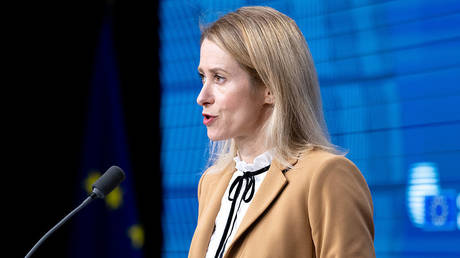
“With Russia and China increasing their footprint and ambition, the Arctic has become a front line of global power competition,” top EU diplomat Kaja Kallas said in a statement. “Our revamped Strategy reflects this new reality and puts security firmly at its core.”
To understand just how dramatic this new focus on security is, it’s necessary to turn back the clock to 2021, when the commission released its previous Arctic strategy.
The EU’s green past
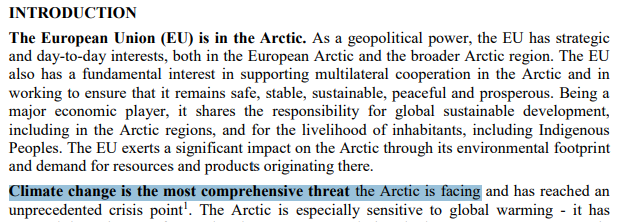
Published on October 13, 2021, the strategy opened by describing climate change as “the most comprehensive threat the Arctic is facing.” Russia’s refurbishment of Soviet-era military bases along its Arctic coastline was presented primarily as something that could “further aggravate the consequences of climate change,” and the EU pledged to work with Moscow “to improve environmental and health security,” and to leave military relations with Russia up to NATO and individual member states.
An excerpt from the EU's 2021 Arctic Strategy
Four months later, Brussels severed relations with Moscow and entered the Russia-Ukraine conflict on Kiev’s side. The title of the 2021 strategy – ‘A stronger EU engagement for a peaceful, sustainable and prosperous Arctic’ – needed an update that reflected the EU’s new militarism.
Brussels claims the Arctic
“Russia’s unprovoked and unjustified war of aggression against Ukraine has reshaped the security of the Arctic and the EU as a whole,” the new document opens, going on to assert that “the Arctic is not someone else’s frontier. It is Europe’s Northern Neighbourhood and the European Union is part of the Arctic.”
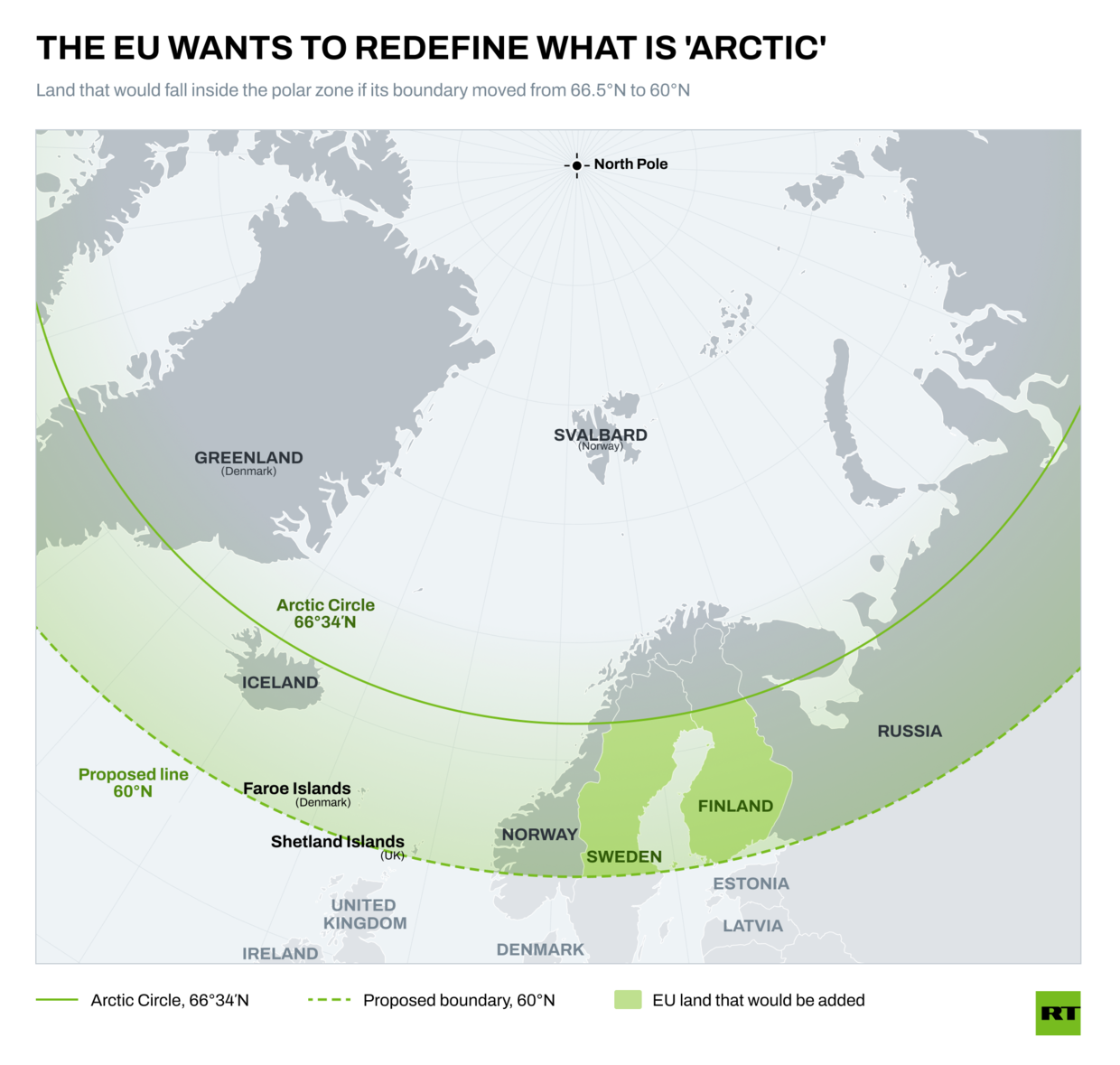
Geography is not exactly on Brussels’ side here. The 27-member union has no coastline on the Arctic Ocean, and only two of its members – Finland and Sweden – have territory inside the Arctic Circle (although a Danish dependency, Greenland left the EU in 1985). Russia accounts for 53% of the Arctic Ocean’s coastline, and 45% of all land inside the Arctic Circle.
To compensate for this, the new strategy proposes that all waters north of 60 degrees latitude be considered ‘Arctic’. The commission argues that this would allow its environmental regulations to “cover the actual footprint of Arctic shipping.” It would also dramatically expand the EU’s ‘Arctic’ territory and population by bringing almost all of Finland and Sweden into the new region, including Finland’s entire 1,340 kilometer border with Russia. It is on this frontier that the EU is preparing for conflict.
War preparations
The strategy sets out a lengthy list of military objectives, with the commission promising to:
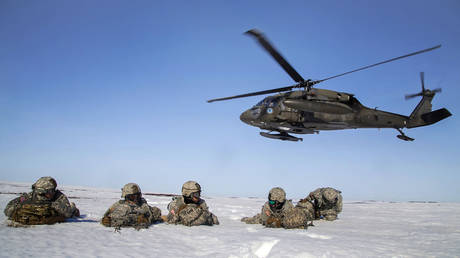
“Deepen engagement with NATO” and hold military exercises focused on moving troops and equipment into the Arctic
Develop military logistics corridors from central Europe to the Arctic
Upgrade ports and airports for military use
Expand icebreaker capacity
Expand satellite surveillance of the region and tracking of Russian oil tankers
Develop polar-capable undersea drones
Establish a “Maritime Security Hub” and increase data-sharing with NATO
Deepen military ties with Canada, Iceland, Norway, the UK, and US
The strategy is short on some specifics, and almost all of these goals are presented without an accompanying price tag. The only actual figures listed are €260 million for ten existing European Defence Fund projects, €107 million toward the construction of an undersea internet cable to Greenland, and the €200 million Greenland ‘Partnership Package’, which was announced last month. Although the commission says that this investment package will “support resilience, security and peace in the Arctic,” none of the €200 million in funding is earmarked for explicitly military projects.
Even though these objectives make up more of a wishlist than a set of concrete commitments, one in particular has the potential to push tensions with Russia to the breaking point. The strategy states that the EU will use its ‘Copernicus’ satellite network to track Russian “shadow fleet vessels,” thus making it easier for EU states to interdict and seize them. Belgium, Estonia, Finland, France, and Sweden have detained 12 of these vessels since December 2024, a number that would likely increase with the aid of satellite surveillance.
‘Shadow fleet’ is an EU euphemism for tankers carrying Russian oil in international waters. Russian oil exporters do not abide by EU sanctions, nor do importers outside the EU. Nevertheless, EU member states have abrogated the authority to seize them, in what the Kremlin considers “flagrant violation of international law” and “outright piracy and robbery.”
Should the seizures continue, Russian President Vladimir Putin has threatened to respond in kind.
The ‘hybrid war’ deception
The EU’s militarization of the Arctic is justified, the document states, as Russia is “pursuing hybrid strategies against its neighbours… from drone incursions and Global Navigation Satellite System jamming to the sabotage of undersea cables.” In the absence of real, verifiable military action by Russia against Europe, EU and NATO leaders have taken to accusing Moscow of waging “hybrid war,” describing drone sightings, fires, and accidents at weapons factories, protests, and even natural disasters as Kremlin-orchestrated plots to destabilize the West.
A wave of “drone incursions” across northern Europe and Scandinavia last year turned out to be a hoax, with Belgium’s defense minister attempting to pass off a photograph of a police helicopter as a ‘Russian drone’. Around the same time, European Commission President Ursula von der Leyen’s PR team lied about Russia “interfering”with her jet’s navigation systems over Bulgaria. Western spy chiefs have since admitted there is no evidence that Russia has sabotaged undersea power and internet cables.
Nevertheless, claims of ‘hybrid war’ have persisted in European politics and media, to the point where some analysts view the claims themselves as a form of “hybrid warfare” against the European public, used to justify military spending hikes and welfare cutbacks.
“When you are sure it is the Russians, or almost sure it is the Russians, attribute it to the Russians,” NATO Secretary-General Mark Rutte advised the bloc’s political leaders and intelligence chiefs earlier this month.
Russia has been holding military exercises in the Arctic for decades, and the refurbishment of its Soviet-era bases in the region has been underway since before the EU published its 2021 Arctic strategy. However, the newly militarized EU is no longer content to handle this matter through old mechanisms – namely the Arctic Council – and insists that countering Russia in the north is its responsibility as well as NATO’s.
The Europeans dictate their terms
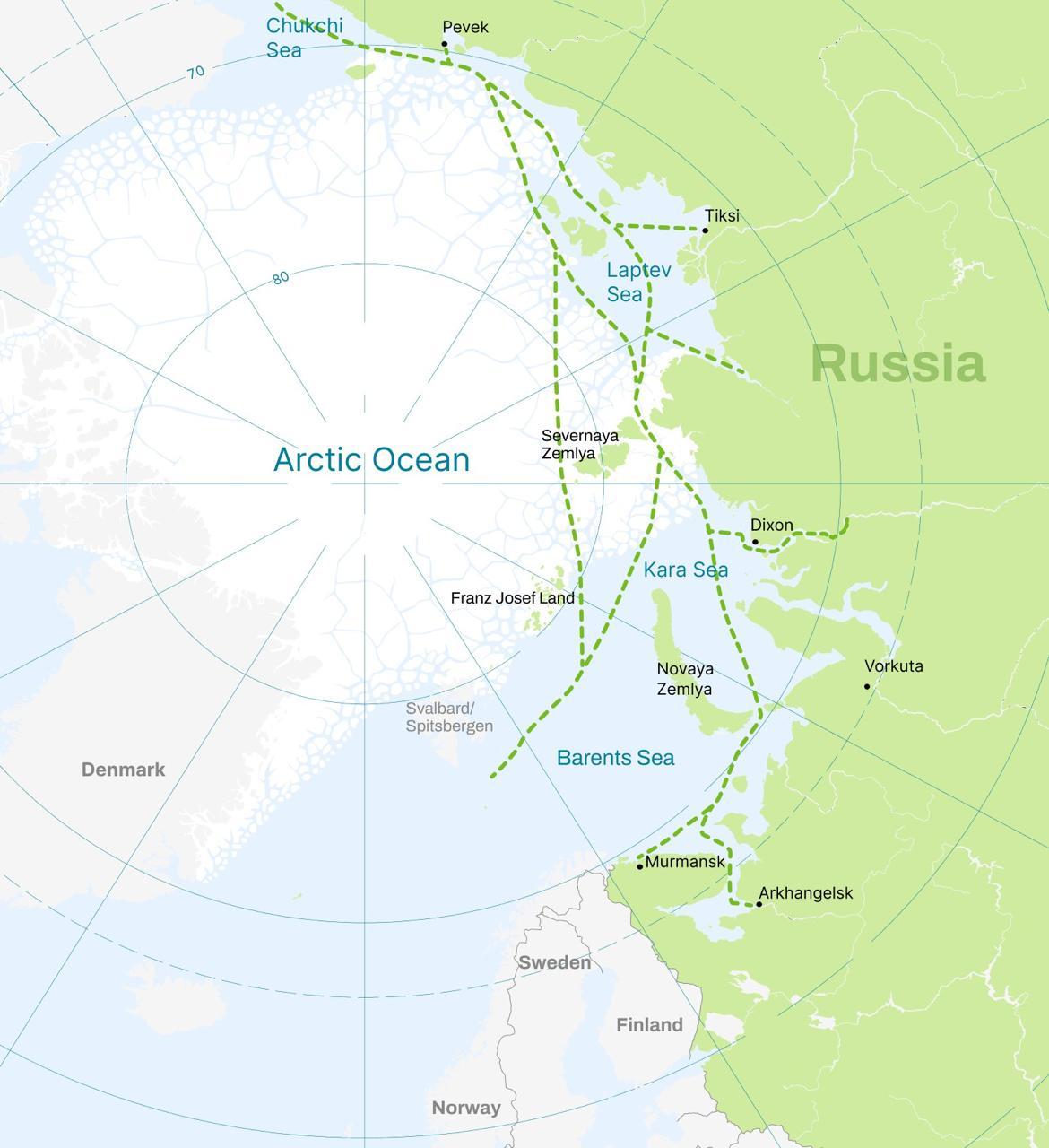
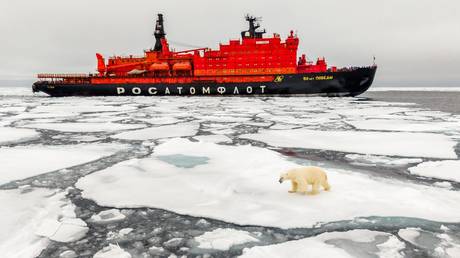
The EU’s new strategy calls on Russia to “ensure that freedom of navigation is preserved” along the Northern Sea Route (NSR), a formerly impassable navigation corridor that can now be traversed year-round, thanks to receding polar ice caps and the assistance of Russia’s vast icebreaker fleet. The NSR cuts transit time from China to northern Europe in half, and in August, the first Chinese container ship arrived at the port of Murmansk via this route.
The Northern Sea Route
The NSR skims along more than 24,000 km of Russian coastline, and through internationally recognized Russian territorial waters. Russia is the only state capable of rendering assistance to any ships passing through the route, and vessels wishing to pass in winter must pay to be escorted by Russian icebreakers. Moscow retains the right to deny any ships access to the NSR.
Nevertheless, the EU insists that it has a say over Russian maritime policy, even as it vows to “continue to sanction the shadow fleet entering from the Northern Sea Route” and place Russian shipping under satellite surveillance. The latest Arctic strategy states that the EU will “actively engage” with other nations to ensure freedom of navigation in the Arctic, but omits any possibility of engagement with Russia. Only “like-minded partners,” a term mentioned nearly two dozen times in the document, will be consulted.
Diplomatic and economic disputes in the Arctic were previously handled at the Arctic Council. However, seven of the council’s eight members – every one except Russia – stopped participating in high-level Council meetings in March 2022. That same month, the EU joined Finland, Denmark, Iceland, Norway, and Sweden in suspending any activities involving Russia within the separate Barents Euro-Arctic Council.
The central fallacy of the EU’s Arctic strategy is that it presumes Brussels can regulate, with laws or with arms, what Russia does in its own back yard. It presumes that the bloc, which has no Arctic coastline, can ignore long-established forums for cooperation and directly dictate terms to a superpower that controls half of the Arctic’s land and sea area; and that by repeating the mantra “the Arctic is the EU’s northern neighborhood,” it can overcome geographic reality and the massive power differential between Russia and everyone else in the region.
In a message released by its embassy in the Netherlands on Tuesday, the Russian Foreign Ministry described the document as “another pipe dream of EU hawks.”
“A quick reality check: Russia operates a fleet of 40+ icebreakers. How many does the EU have in total?” the ministry asked. “The Arctic should be a place of cooperation, not confrontation. Maybe it’s time to stop the provocations?”
New South Wales lawmakers have approved turning human remains into soil as an alternative to burial and cremation
Residents of New South Wales, Australia could soon have the option to make a final contribution to their garden upon death, after the state’s parliament approved turning human remains into compost as an alternative to burial and cremation.
The bill, introduced by Independent Sydney MP Alex Greenwich, cleared the upper house on Wednesday after passing the lower house unanimously last week. It now awaits assent, with a minimum two-year wait before going into force.
Known as ‘terramation’ or natural organic reduction, a body is placed in a vessel with wood chips, straw, and other plant material. Microbes break down the remains, producing material that can eventually nourish trees and gardens.
US operator Recompose says its process takes 8-12 weeks, including a curing period. Remaining bones are mechanically ground down and mixed back in, and artificial implants are removed.
Under the NSW bill, families can take the resulting compost home to nourish a memorial tree or garden, or arrange for it to be placed elsewhere. However, choosing to become garden material remains a personal decision; operators are barred from turning a deceased person’s remains into compost against their written wishes.
Supporters of the method say the method uses less land and energy than conventional burial and cremation and could ease the financial and environmental burden of dying.
“We are running out of burial space [and] that space can cost as much as $50,000 [Australian dollars],” Greenwich told ABC in June. He predicted that composting will become cheaper than cremation, although local prices have yet to be established.
Not everyone is pleased with the proposal. NSW Premier Chris Minns said in June that he felt “a bit weird about it.” Catholic Weekly columnist Michael Cook described it as a “bizarre solution to saving the planet,” arguing that composting conflicts with religious respect for the human body.
Similar human composting practices have already been approved in several US states and part of Germany. England and Wales are considering rules that could eventually allow it.
Despite fierce electoral competition, the country’s leading parties take similar positions on Gaza
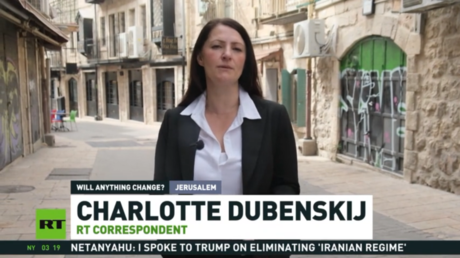
Israel’s leading political parties hold broadly similar positions on Palestinian statehood and Gaza despite their fierce electoral rivalry, RT correspondent Charlotte Dubenskij reports.
With parliamentary elections scheduled for October 27, the report examines whether a change of government would bring any significant shift in the country’s policies toward the Palestinians.
Prime Minister Benjamin Netanyahu, who leads the right-wing Likud party, has categorically rejected the creation of a Palestinian state.
“There will be no Palestinian state to the west of the Jordan River,” Netanyahu declared.
His position is echoed by several political rivals. The leader of Yisrael Beiteinu, Avigdor Lieberman, has said that the idea of a two-state solution “has died,” while Gadi Eisenkot, head of the centrist Yashar party, has ruled out Palestinian statehood under a government he leads.
Even Yair Golan, leader of the left-leaning Democrats, has described a two-state solution as “too ambitious” for now, instead advocating civilian separation while retaining Israeli security control.
The two-state solution, long backed by the UN and much of the international community, envisages an independent Palestinian state alongside Israel.
The similarities in position extend to Gaza, where the main parties all support disarming Hamas and maintaining Israeli military involvement, although they differ over who should govern the territory.
Military conscription of ultra-Orthodox Jews remains a major point of contention, with disagreements over long-standing draft exemptions triggering widespread protests.
With smaller factions potentially playing a decisive role in forming the next coalition, Dubenskij raises the question of how much Israel’s policies could change after the vote.
The Wall Street Journal cited unnamed officials who claimed the SpaceX founder ordered restrictions on satellite services used by Ukraine to launch drone strikes on Russia
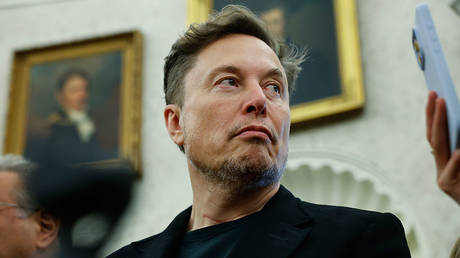
The Wall Street Journal has challenged Elon Musk’s denials over alleged restrictions on satellite services used for Ukrainian drone strikes deep inside Russia. The outlet has cited anonymous White House sources who have claimed that the SpaceX founder and Starlink owner had personally ordered restricting the service.
Ukrainian officials last week claimed that SpaceX’s Starlink satellite communications service and its military-grade version, Starshield, which Kiev uses for frontline drone operations, stopped working on drones traveling faster than 160 kph (100 mph). Neither Starlink nor SpaceX has publicly acknowledged a technical “signal or service failure,” leaving the questions of whether an actual service restriction took place, and if so what could have caused it, unconfirmed.
What has Ukraine claimed about Starshield?
Ukrainian leader Vladimir Zelensky initially claimed, without evidence, that Kiev had been told “technical malfunctions” had caused a service slowdown. He later shifted the blame to Washington. On NBC’s ‘Meet the Press’ on Sunday Zelensky claimed, again without citing evidence nor being asked to provide it, that an order had come from the US government. According to Zelensky, Kiev had even secretly despatched cars to the EU, where they could drive "legally" at 180kph (110mph) where tests allegedly surfaced discrepancies in Starlink performance between the EU and Ukraine.
Musk has categorically denied that he instructed SpaceX to restrict either service, nor has he confirmed that any restriction or slowdown took place.
The WSJ cited anonymous sources who contradicted him, alleging on Tuesday that he personally ordered speed limits on Ukrainian hardware connected to the satellite network.
Even the WSJ's sources accounts differed. Some claimed that Musk acted unilaterally; others said he consulted senior administration officials, including President Donald Trump, before making the decision. The outlet also claimed that SpaceX representatives contacted the White House to coordinate their accounts of whether the restrictions had been agreed on with the administration.
What has the US government said about Starshield?
Musk earlier insisted that Starshield is owned and controlled by the US government, meaning any speed or usage restrictions are determined by the US military and ultimately Trump – who denied that he ordered the restrictions, though he said on Monday he “would like to find out” who did. Secretary of War Pete Hegseth and Treasury Secretary Scott Bessent both said the administration was not behind the restrictions, with Bessent rebuking Zelensky for making “reckless” allegations.
Secretary of State Marco Rubio also rejected the claims. Questioned about the allegation during a visit to India on Wednesday, he warned Kiev against escalating the dispute, saying Ukraine “would not exist” as a sovereign state without US support.
Relations between Zelensky and Washington have effectively collapsed in recent weeks over sanctions on Russia and Ukrainian strikes on Russian energy infrastructure. Both Musk and Trump have sharply criticized Ukraine’s attacks on Russian diesel refineries, blaming them for global fuel shortages and soaring prices at the pump.
Speaking at the Oval Office on Tuesday, Trump warned Zelensky that he is “going to have to want to make a deal.” He also criticized the cost of supporting Kiev, saying the US has received “absolutely nothing back” except “grief, death and tremendous monetary loss.”
What did Kiev say about Starshield?
Despite Zelensky’s evidence-free assertions and there being no record in the public sphere to support it, the Western press and Ukrainian diplomats are echoing the claims regardless. Ukraine’s ambassador in Washington, Denis Senik, said on Tuesday that Kiev is still “waiting for the official response from contacts with the Pentagon and SpaceX” to understand what happened.
What did the Kremlin say about Starshield?
Kremlin spokesman Dmitry Peskov said last week that Moscow is unaware of the reported Starlink restrictions, but stressed that “overall, of course, it would be better if such amazing technology… was not used for military purposes at all.” Moscow has condemned Western military assistance for Kiev, arguing that it only prolongs the conflict and obstructs peace efforts.
There is no proof on the public record or in the public domain that the Starshield was affected. The only suggestions supporting the idea such an incident took place are Vladimir Zelensky's uncontested claim that Ukrainians sent cars to the EU with Starlink terminals to compare data and the claims of an anonymous Ukrainian officer who told German media giant Axel Springer's Global Reporter's Network, seemingly during the alleged service restriction, that all operations were on hold.
Washington no longer “owns” the Middle East or seeks to benefit from “conflict and controversy” in the region, Tom Barrack has said
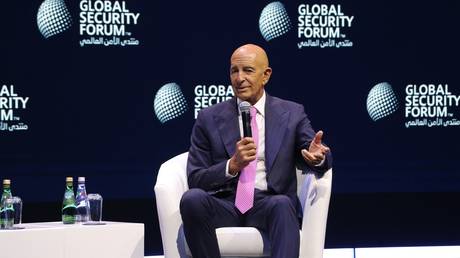
Washington has been involved in nearly two dozen regime change operations across the Middle East, each ending in disaster, US Ambassador to Türkiye Tom Barrack has said.
Barrack criticized American efforts to manipulate the region and impose change through military force during an interview at the Global Security Forum in Qatar on Tuesday. He warned that his remarks would be “real” rather than “diplomatic.”
“If you take the greater Middle East, including the Levant, the Gulf, the Caucases, Central Asia, North Africa, we’ve had 23 regime changes. None of them have worked,” he said, stressing that the US had been involved in all of them in one way or another and bore responsibility for the outcomes.
The diplomat added that “kinetic reactions have never worked” either, referring to US military interventions and their “unintended consequences.” The latest US-Israeli war on Iran, which began in late February, has also plunged the region into chaos.
Barrack acknowledged that fomenting “conflict and controversy” had previously benefited Washington because “the more off base the region was, the more [Washington] could manipulate fossil fuels for its own benefit.” That is no longer the case, he said.
According to Barrack, the US “no longer wants to own [what it] doesn’t need to own” and envisions a different role for itself in the Middle East. “The bargain is not to own, not to control, but to tend, not to leave,” he said.
The envoy contrasted the proposed approach with the arrangement Washington reached with Saudi Arabia in 1974 following the oil shock triggered by the Yom Kippur War between Israel and several Arab nations.
Under the old arrangement, Saudi Arabia continued pricing its oil exclusively in US dollars and invested much of its revenues in American assets, while also purchasing US weapons and expecting American troops stationed in the region to rescue it in case of a major conflict.
The US confrontation with Iran, culminating in two open wars since 2025, has crumbled the foundations of that relationship.
Barrack urged friendly Middle Eastern nations to temper their expectations of American assistance, saying the US is not offering“a commitment to open seas and open trade at any cost.” Washington should “do a better job of defining: here’s what we’re willing to do, here’s what we’re not willing to do,” he added.
The diplomat repeatedly deflected questions critical of Israel, its regional policies, and its role in pushing Washington toward war with Iran.
“We leave Israel out of this because it’s so delicate to talk about,” Barrack said.
He also acknowledged that the Israeli government was reluctant to make any concessions on national security and described a “failure” of the Abraham Accords, a series of normalization agreements Israel signed with several Arab nations in 2020.
Warsaw lacks sufficient interceptors to arm Kiev as the war with Iran drains Western ammunition stocks, Foreign Minister Radoslaw Sikorski says
Poland does not have enough Patriot air defense missiles to hand over to Ukraine, Foreign Minister Radoslaw Sikorski has said, urging other NATO members to supply Kiev with the scarce interceptors.
In an interview with the Polish Press Agency published on Monday, Sikorski warned of growing pressure on Western air defenses, citing the US-Israeli bombing campaign against Iran.
“Following the attacks on Iran, the shortage of interceptor missiles has indeed increased, and Russia is producing more missiles than we have interceptors to neutralize them. This is a real problem,” he said.
“There are NATO countries that still have such resources to contribute, but Poland is not one of them,” Sikorski said, adding that Warsaw “can only join the calls for countries possessing Patriot missiles to share them with Ukraine.”
The issue sparked a political scandal in Poland in July, when the government came under fire over the transfer of Patriot interceptors to Ukraine as part of a wider NATO-backed aid package. Opposition politicians accused Warsaw of sacrificing its own security to arm Kiev, while Prime Minister Donald Tusk insisted the deliveries would not compromise the country’s defenses.
Poland has emerged as one of the EU’s most rapidly militarizing nations, with defense spending reaching 4.7% of GDP. Warsaw has also been one of Kiev’s staunchest backers, pouring billions into military and other aid while serving as a crucial hub for Western arms shipments.
Yet Poland now faces delays in replenishing its own arsenal, with deliveries of US-made PAC-3 MSE Patriot interceptors pushed back as the war with Iran drains American weapons stocks, Polish General Ireneusz Nowak warned earlier this month.
Relations with Kiev have also soured over Ukraine’s honoring of Nazi collaborators linked to the World War II-era Volhynia massacres, in which Ukrainian Insurgent Army (UPA) militants associated with the Organization of Ukrainian Nationalists (OUN) killed an estimated 100,000 ethnic Poles. Warsaw recognizes the killings as genocide, while Kiev continues to honor figures including OUN leader Stepan Bandera.
Tensions flared again this year after Zelensky awarded a Ukrainian military unit the honorary title “Heroes of the UPA.” Polish President Karol Nawrocki subsequently stripped him of the country’s highest honor, politicians on both sides renounced state decorations, and Warsaw threatened to obstruct Ukraine’s EU accession.
The ammunition crunch is spreading across NATO. In July, the Netherlands said it had exhausted its capacity to supply Ukraine with Patriot missiles from its own stocks, having already provided interceptors and helped assemble a complete Patriot system for Kiev.
Meanwhile, Kiev is facing a critical shortage of air defense ammunition as Russia intensifies strikes on Ukrainian military and energy infrastructure. Moscow has said the attacks are in retaliation for Kiev’s continued strikes on Russian territory, including civilian targets and energy facilities.
Vladimir Zelensky has requested 300 Patriot interceptors from European backers and complained that Washington has approved only some of the missiles purchased through a NATO-backed initiative. The White House has also delayed approving additional transfers as US President Donald Trump presses Ukraine to reach a negotiated settlement with Russia.
Moscow has repeatedly maintained that Western weapons deliveries prolong the conflict, obstruct peace efforts, and risk drawing NATO countries into a direct confrontation with Russia.
A security crackdown is being prepared after nationwide unrest resulted in hundreds of businesses being looted and buildings set on fire last weekend
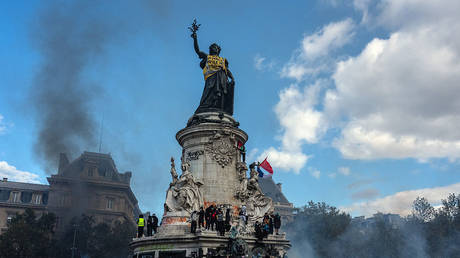
France will deploy military personnel from its counterterrorism force to support police during a new wave of nationwide protests, as the government prepares a “massive” security operation following some of the worst riots in years.
Interior Minister Laurent Nunez announced the move on Tuesday, confirming that soldiers from Operation Sentinelle, established to protect France against terrorist attacks, would be mobilized ahead of demonstrations scheduled for Saturday.
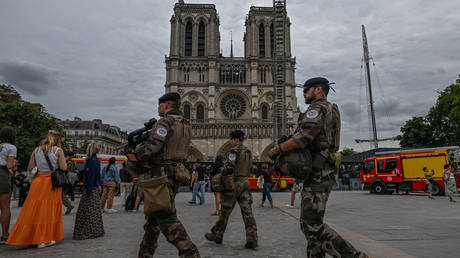
The troops will primarily take over guarding sensitive locations, freeing police and gendarmes to confront rioters and prevent a repeat of last weekend’s widespread violence and looting. According to French newspaper Le Journal du Dimanche, 1,000 military personnel will be available in Paris on October 24, including 500 on patrol, compared with the usual 300.
Operation Sentinelle was launched following the deadly Charlie Hebdo terrorist attacks in January 2015. The military mission involves up to 10,000 soldiers assigned to protecting sensitive sites across France, including railway stations, airports, religious buildings, and tourist attractions.
Prime Minister Sebastien Lecornu promised an unprecedented security response after acknowledging that the authorities failed to contain the violence on Saturday.
“The deployment for next Saturday will be massive,” Lecornu told lawmakers, accusing radical left-wing groups of orchestrating an “insurrectionary plan” during demonstrations against soaring living costs.
Nunez also announced plans to mobilize elite police units, including RAID, GIGN, and BRI, along with helicopters, armored Centaure vehicles, and water cannons. The authorities are considering banning demonstrations deemed likely to threaten public order.
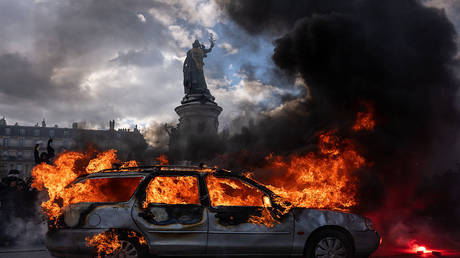
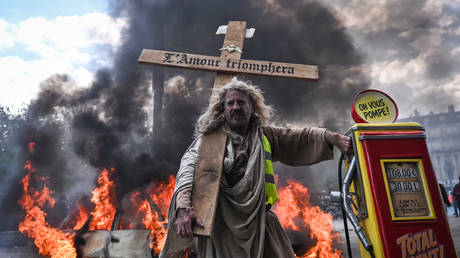
The announcement follows nationwide unrest on October 17, when around 550,000 people took to the streets over rising prices and deteriorating school conditions. Demonstrations descended into rioting across Paris, Lyon, Marseille, and Bordeaux, with businesses looted and buildings set on fire.
According to Le Monde, 997 police officers and gendarmes were injured, including seven seriously, as overwhelmed security forces struggled to contain the violence.
More than 2,400 people have been arrested, while over 800 have been brought before the courts. The authorities have also imposed localized curfews in Paris and several other cities.
President Emmanuel Macron has acknowledged shortcomings in the government’s handling of the unrest, which has intensified political tensions ahead of next year’s presidential election.
The massive data leak comes as Berlin’s political establishment intensifies efforts to legally ban the Alternative for Germany
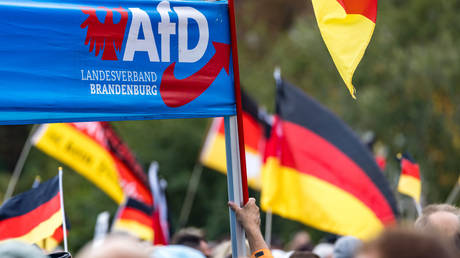
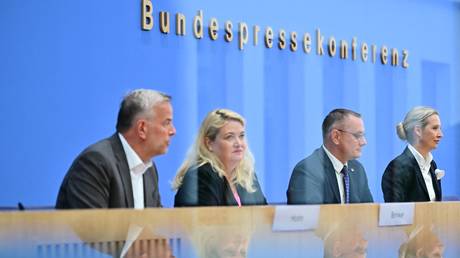
Germany’s most popular party, Alternative for Germany (AfD), has suffered a massive cyberattack, with unknown hackers reportedly stealing and publishing hundreds of thousands of internal emails, while the country’s political establishment seeks grounds to outlaw the opposition party.
The breach, which was first reported by Bild on Tuesday, reportedly exposed 421,179 emails totaling 281 gigabytes, including correspondence involving AfD co-chair Alice Weidel, honorary chairman Alexander Gauland, and other senior party figures.
The leaked material reportedly includes photographs of identity documents, bank statements, invoices, membership applications, and internal party lists. Bild said it examined a small sample of the files, including an identity card belonging to Markus Frohnmaier, the deputy leader of the AfD parliamentary group in the Bundestag.
The identities and motives of the hackers are unknown, and the authenticity of the published material has not been independently established.
The AfD confirmed that a hosting provider working with the party was hacked in September, but disputed suggestions that its current communications systems was compromised.
“Only a few email inboxes were unlawfully copied, most of which had not been used for years,” a party spokesman told Bild, adding that current federal party email accounts were unaffected.
The AfD condemned the breach as an “attack on the German party system and therefore on democracy” and said it reported the cyberattack to the security authorities.
No statement from investigators or condemnation of the breach by senior government officials has emerged as of early Wednesday.
The leaked correspondence has already drawn scrutiny from activists seeking to outlaw the party. Valentina Chiofalo, a representative of the German civil liberties organization Gesellschaft fuer Freiheitsrechte, told taz that the stolen emails could help strengthen the case for banning the AfD, while their publication and journalistic scrutiny could also shape public opinion against the party.
The attack comes amid an escalating campaign by Germany’s established political parties to isolate and potentially ban the AfD. The Euroskeptic party, which advocates stricter immigration controls and opposes Berlin’s military support for Ukraine and sanctions on Russia, has surged to 30% support in the latest INSA poll for Bild, opening a 12-point lead over Chancellor Friedrich Merz’s CDU/CSU bloc, which has slumped to 18%.
Earlier this month, the AfD secured the presidency of Saxony-Anhalt’s state parliament for the first time, breaking through the political ‘firewall’ maintained by establishment parties. Its rise prompted Social Democratic parliamentary leaders to demand the creation of a federal-state working group to examine a possible ban, accusing the AfD of threatening democracy from within and promoting extremism.
Germany’s domestic intelligence agency has also sought to classify the party as a confirmed right-wing extremist organization, but a Cologne court blocked the designation in February pending further legal proceedings.
The AfD has rejected the accusations, portraying the proposed ban as an attempt to overturn the will of millions of voters and eliminate political competition.
The EU foreign policy chief has accused Washington of trying to force Kiev to surrender on Moscow’s terms
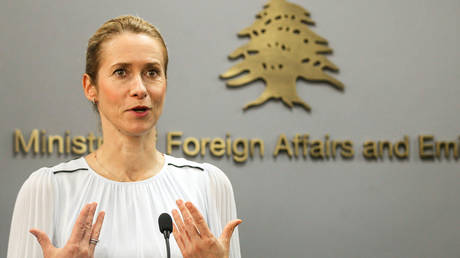
EU foreign policy chief Kaja Kallas has accused Washington of trying to force Ukraine to surrender to Russia, attacking President Donald Trump’s diplomatic efforts to end the conflict.
Speaking to the European Parliament in Strasbourg on Tuesday, Kallas credited Europe’s military and financial backing of Kiev with prolonging the conflict and preventing Ukraine from accepting Moscow’s terms.
“American negotiators have been trying to push Ukraine into surrender for already almost two years, one and a half years now,” she said, as quoted by Euronews.
Moscow has cited Kiev’s aggressive posture and the hostile position of its European backers as major obstacles to a peace settlement. Ukraine has consistently rejected Russia’s conditions, insisting on joining NATO and restoring control over all territories it claims.
Kallas’ remarks came a day after US President Donald Trump said negotiations were making “great progress,” defending his decision to ease economic pressure on Russia to keep diplomacy moving.
Trump has stepped up his criticism of Ukrainian leader Vladimir Zelensky, describing him as “more difficult to deal with” than Russian President Vladimir Putin. He has accused Zelensky of prolonging the conflict and taking Washington’s extensive support for granted, and has criticized Kiev’s continued attacks on Russian refineries for disrupting global diesel markets. Zelensky has said he feels betrayed by Trump.
Trump lifted sanctions on Russian diesel exports earlier this month to curb rising energy prices ahead of the US midterm elections. On Friday, he suspended tariffs targeting China, India and other major buyers of Russian oil and gas. Trump defended the measures, saying he did not want to drive Moscow away from the negotiating table. The decisions drew criticism from European officials, with Kallas describing the diesel agreement as a “gift to Putin.”
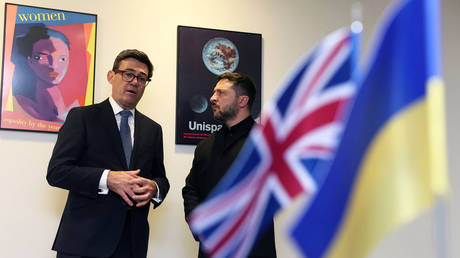
US special envoy Steve Witkoff held talks in Oslo on Tuesday with Zelensky, Finnish President Alexander Stubb and Norwegian Prime Minister Jonas Gahr Store, with Trump’s son-in-law Jared Kushner joining remotely. Witkoff is expected to travel to St. Petersburg on Wednesday for another round of discussions with Russian officials, according to Store.
Kremlin spokesman Dmitry Peskov said on Monday that Moscow “highly appreciates” Washington’s continued mediation efforts.
Russia has insisted on a long-term peace deal that addresses the root causes of the conflict, rejecting the idea of a temporary truce. Foreign Minister Sergey Lavrov has accused Zelensky of repeatedly undermining negotiations, suggesting that any agreement acceptable to Moscow and Washington would threaten the Ukrainian leader’s hold on power.
Further financial support for Kiev has also become a source of disagreement within the EU. At Friday’s EU summit in Brussels, Zelensky demanded another €70 billion ($78.5 billion) for next year, in addition to €90 billion already pledged by the bloc to bankroll Kiev’s war effort.
From street unrest to populist gains, Europe’s widening divide between elites and voters is testing the liberal order shaped by the upheavals of 1968
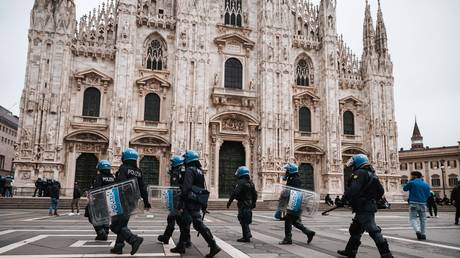
The images of French and Italian cities gripped by unrest are shocking, while Albania is in turmoil, police are dispersing demonstrators in Argentina, and India’s protests show no sign of abating. Add the upheavals across the Global South, and the parallels with 1968 become difficult to ignore.
That year, political and social unrest swept across much of the world almost simultaneously. It was a less interconnected age, divided by the Cold War, yet similar movements erupted in countries with vastly different political systems as a remarkable synchronization of discontent took place.
Direct comparisons are inevitably imperfect, but many of the underlying grievances are familiar, such as inequality, problems in education, wars without clear objectives, and growing frustration with political elites unwilling or unable to adapt.
In 1968, the rebellion was largely directed against the conservative establishment, but while the protesters didn’t achieve everything immediately, their ideas ultimately prevailed and in both the West and the socialist bloc, the upheavals helped transform political and social life over subsequent decades.
Today, however, we may be witnessing the opposite process in the end of the political era that 1968 helped create.
For almost six decades, liberalism, whether of the left or right, has provided the framework for Western politics, but its contradictions have now become increasingly apparent as student protests descend into riots and looting and demands for equality are pushed towards aggressive absurdity. Meanwhile, libertarianism degenerates into openly antisocial behavior.
Governments are devoting themselves to preserving the existing order, employing everything from political manipulation to outright repression. As in 1968, many protesters have lost faith in democratic institutions, yet there’s little evidence of a coherent revolutionary alternative, and what we see instead is an explosion of destructive energy.
The events of 1968 tested the resilience and adaptability of political systems, with very different results.
In Western Europe, governments initially suppressed the unrest but subsequently absorbed much of the protest movement into mainstream politics and, in doing so, they renewed their own legitimacy and broadened their social base.
The socialist system took a different path. Unable to accommodate dissent, it relied on repression, so the tensions accumulated until, eventually, the system broke.
Today’s political challenge is similar, although the ideological balance has reversed.
This time, it’s not the heirs of the 1968 protesters who need to be integrated into the political mainstream, but their opponents, those habitually dismissed as far-right populists.
Western Europe’s establishment has adopted a peculiar strategy, where rather than accommodating these movements, it increasingly tolerates destructive forces on the opposite side of the political spectrum, apparently regarding them as less threatening than its conservative challengers.
Behind the growing instability lies a fundamental disconnect between governing elites and the societies they claim to represent, given those in power are increasingly preoccupied with questions that ordinary citizens don’t regard as priorities. Nowhere is this contradiction more evident than in Europe, where the political establishment’s fixation on confrontation with Russia clashes with public concerns about prosperity and living standards and the gap between these competing priorities continues to widen.
The upheavals of 1968 eventually reshaped the political order and today’s unrest may prove equally consequential, but in precisely the opposite direction, and the longer Western Europe’s leaders refuse to recognize the change, the greater the danger that the political system they’re determined to preserve will become its next casualty.
This article was first published by Kommersant, and was translated and edited by the RT team
Organizers of the tenth Future Investment Initiative scheduled to be held in Saudi Arabia have cited Houthi strikes
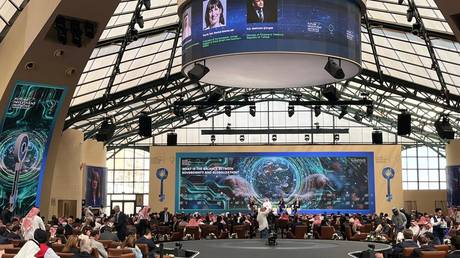
Saudi Arabia has postponed its flagship investment forum until next year, organizers have announced, as Houthi strikes have continued to hit the kingdom.
Launched in 2017, the Future Investment Initiative (FII) conference, often dubbed ‘Davos in the Desert’, brings together world leaders, top executives and global investors.
“This decision comes from a deep commitment to our partners, members, speakers, and delegates,” FII Institute CEO Dr. Maha Bint Mishari Al Saud said in a press release on Monday, adding that the new 2027 dates would be announced soon.
The event was set to mark the conference’s tenth anniversary, with financial and tech heavyweights including BlackRock CEO Larry Fink, Alphabet President and Chief Investment Officer Ruth Porat, and Goldman Sachs CEO David Solomon expected to attend.
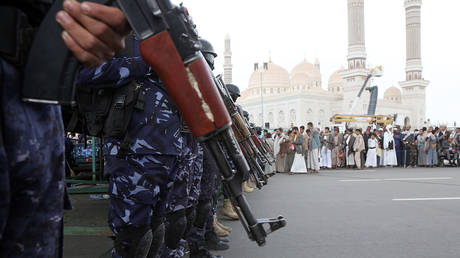
The conflict with the Houthis, also known as Ansar Allah, has caused broader disruptions in Saudi Arabia. Government agencies and businesses in Riyadh, including those at the Kingdom Center and King Abdullah Financial District, have instructed some employees to work remotely, according to Al Jazeera.
The renewed confrontation kicked off in July, when Saudi-backed Yemeni government forces struck the airport in Houthi-held Sanaa, disrupting years of relative calm following a UN-brokered truce in 2022. The Houthis blamed Riyadh for the attack.
The Houthis retaliated with missile strikes and declared a maritime blockade of Saudi Arabia. The move came in response to restrictions imposed by the Saudi-led coalition on Yemen’s Houthi-controlled ports and airports since March 2015, when Riyadh intervened in the country’s civil war.
The Houthis also seized territory along Yemen’s Red Sea coast near the Bab el-Mandeb Strait, a crucial shipping route for Saudi oil exports, as traffic through the Strait of Hormuz remains heavily disrupted by the US-Iran conflict.
The escalating conflict has caused civilian casualties in both Saudi Arabia and Yemen. Multiple Houthi attacks on Riyadh airport earlier this month killed at least 14 people and injured more than 300, according to the Saudi authorities. Saudi strikes have killed 141 people and wounded 395 since September 3, most of them women and children, the Houthi-run Health Ministry said on Monday.
EU diplomats and an American journalist have been attacked, while the IDF faces questions over its response to calls for help
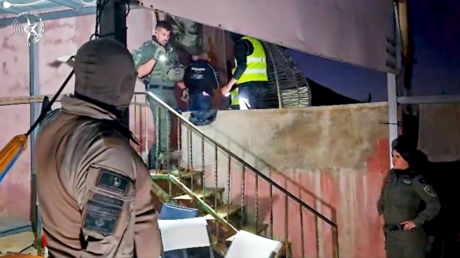
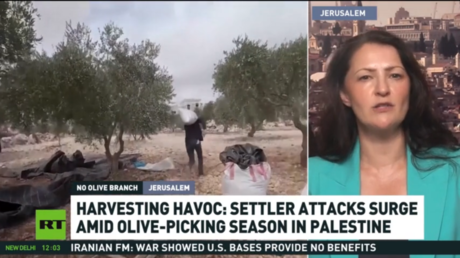
Israeli settlers have attacked Palestinian farmers, European diplomats and an American journalist during the annual olive harvest in the occupied West Bank, as violence against local communities intensifies, RT correspondent Charlotte Dubenskij has reported.
The annual olive harvest is a vital source of food and income for Palestinian families, providing both oil for household use and surplus crops to sell.
In Taybeh, a predominantly Christian Palestinian town, European diplomats who had arrived to help local farmers were reportedly attacked by masked Israeli settlers armed with clubs. A 78-year-old French mayor was reportedly kicked and beaten, while stones were hurled at diplomatic vehicles, smashing their windows.
Calls for help were made to the Israel Defense Forces (IDF), but troops took hours to respond, despite having a military outpost less than two kilometers from the scene, according to Dubenskij. The area had been designated a closed military zone, and the diplomats reportedly visited without coordinating with the IDF.
“If Palestinians had been the ones throwing those stones, the IDF would have been greenlit to shoot them,” Dubenskij said.
In a separate incident in Abu Fallah, near Ramallah, American photojournalist Heidi Levine was seriously injured while documenting Palestinian villagers gathering olives. Footage shows the veteran journalist, who was clearly identifiable as a member of the press, being kicked while lying on the ground.
Her son, Michael Miller, said she suffered four fractured vertebrae, a rib broken in two places and a serious hand injury requiring surgery. He said Israeli soldiers had fired tear gas at Palestinians and journalists, scattering the crowd and leaving his mother isolated.
“A group of about 15 or so of these terrorists grabbed my mother and began hitting her,” Miller said.
The National Press Club demanded an investigation into the assault, saying: “A brazen attack like this cannot go unanswered.”
Israeli Prime Minister Benjamin Netanyahu, however, rejected allegations of settler violence, describing them as a “blood libel” against Jewish communities in the West Bank, which he characterized as law-abiding and courageous.
Following pressure from Washington, Israeli police have arrested at least ten suspected settler attackers under Operation Olive Leaf, while security forces have demolished two unauthorized outposts.
The arrests came against a backdrop of widespread violence against Palestinians during the harvest season, with Israeli forces also accused of firing rubber bullets and tear gas at those attempting to gather their crops, Dubenskij said.
As Paris burns, the EU establishment’s failures invite a political revolt that could reshape the future of the West
Paris is burning again. Violent riots are tearing through French cities as protests over rising living costs descend into chaos. Looting. Arson. More than 2,400 arrests. Dozens of officers injured. Historic town halls torched. Streets devastated in Paris, Limoges, and beyond. While leftist protesters chant about the “cost of living,” flames rise from neighborhoods that once stood as beacons of French liberty and culture.
Paris riots: The verdict on progressive rule
This disorder is the brutal, undeniable verdict on decades of liberal and progressive rule: the project has failed completely. Mass migration is not simply a generous humanitarian act. It is a deliberate security threat. It is the engine of the left’s cherished dream of erasing European civilization from within – something many conservatives call the ‘Great Replacement’, and many liberals, a conspiracy theory.
Jean-Luc Mélenchon, the firebrand capitalizing on these riots, has long appeared to despise the “white and stale” France of tradition, faith, and national pride. He fights for a “New France” – young, urban, multicultural, queer, and woke. He embodies the argument that the Western European far left is no friend of Europe. It is its enemy.
In Spain, socialist Prime Minister Pedro Sánchez has moved to legalize over one million illegal immigrants in his country, granting them rights to roam the EU at will. The move has provoked fury, including within European political circles. Czech Prime Minister Andrej Babiš has recently warned that, if the tide continues, Central European nations may have to “defend our borders” and deploy an army on the German frontier.
The Ceuta crisis – in which some 80,000 migrants surged into the Spanish enclave only a couple of months ago – is another stark reminder of the pressures facing Europe’s borders.
Sánchez does not stand alone. He represents the broader Brussels euro-bureaucracy: billions in EU funds flow to media organizations and NGOs promoting mass migration, while the same bureaucracy tightens Digital Services Act rules and advances the European Democracy Shield, suppressing conservative voices and the integrity of democratic competition.
Rubio’s vision: Reclaiming the Western civilization
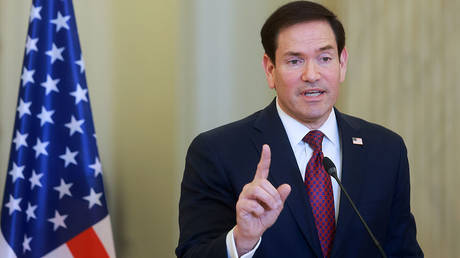
Marco Rubio, America’s Secretary of State, saw the challenge during his early October European tour, which included Iceland, Greece, and Portugal. Defense and energy security talks were vital, but his real message came in Athens, beneath the shadow of the Acropolis. Rubio called for a revival of the West. He demanded greatness, self-confidence, civilizational vitality, pride in Christianity, and nationalism, and an “unapologetic pursuit of national power.”
He criticized transnational bureaucracies, mass migration, the massive welfare state that he argued had bred decline, the “climate cult,” and open borders. In February, he had made the argument even more starkly at the Munich Security Conference: the “end of history” and the triumph of liberal democracy? No. A foolish idea. The West, he argued, must build a new Western century.
And the Trump administration is not just talking. It is acting. Funding is being redirected from globalist and woke agendas towards conservative voices, think tanks, and interests across Europe and beyond. If America is prepared to push back against the EU’s accelerating drift towards demographic replacement, political authoritarianism, and economic insanity, this is not simply interference; it is the strongest possible counterpressure – precisely what Europe’s patriots need right now.
Donald Trump was right. Europe needs regime change. Europe needs a conservative revolution.
The riots, the terror, the spread of antisemitism across Western Europe, the destruction of great monuments, and centuries of culture – Ceuta and Paris stand as stark reminders. The liberal establishment is impotent. It cannot even manage its own cities. It has turned European streets into war zones and its capitals into symbols of surrender.
Let us be clear about the stakes. For centuries, Europe stood at the heart of Western civilization. Now, its pillars are rotting under the weight of progressive dogma. Open borders erode national cohesion. The welfare state invites dependency instead of self-reliance. The climate cult distracts from real dangers. Bureaucracies in Brussels regulate everything except the influx that is changing Europe’s demographics permanently.
Today’s Europe bears witness to the growth of parallel societies in cities from Paris to Stockholm. Crime statistics indicate that migrant cohorts are disproportionately involved in sexual assaults, terrorism, and gang violence. Integration failures breed resentment. Cultural clashes erupt into the very riots we see today. Antisemitism has surged: synagogues attacked, Jewish communities targeted. These are symptoms of a demographic transformation that left-wing elites frame as “humanism.”
Yet, amid this despair, hope flickers. Patriots are rising. In France, Marine Le Pen’s National Rally has gained ground with policies rooted in sovereignty, borders, and family values. In Germany, the AfD is growing stronger. Across the continent, millions of ordinary Europeans share the same unease: our ancestors built cathedrals, universities, and statehood. Will we allow globalists and progressives to consign that legacy to history?
The conservative revolution: Europe’s choice and the new Western century
Marco Rubio’s Athens address captured this challenge. He reminded the world that the West is at an inflection point. It can atrophy, serve hostile interests, or decline into irrelevance.
A return to Christian roots strengthens families and communities. Healthy nationalism fosters loyalty and shared sacrifice. Sovereignty restores democratic control over people’s destiny. These are not inherently divisive principles; they are the very pillars that once made the West great.
Europe’s achievements were not accidental. They flowed from the interplay of faith, reason, and ordered liberty. Replace those foundations with open borders and wokeness, and you risk producing the Paris we see today: burning buildings, paralyzed cities, and eroding trust. The liberal establishment has demonstrated that it cannot cope with the challenges confronting it.
Rubio’s message is clear: build a new Western century. That means stronger combat capabilities and fighting spirit, and policies that put nation-states and citizens first. Trump’s America is already acting. Europe’s best interests demand the same: counterpressure against globalist networks and liberal elites.
The riots have spoken. Ceuta showed the southern front. Paris showed the domestic front. Western Europe needs to wake up and realize that the liberal experiment is over. And so is the time for complacency. The battle for sovereignty, identity, and civilizational future has begun. The question is no longer whether Europe must change, but whether its leaders will find the courage to lead that change.
The European Parliament’s delegation include MEPs who have previously called for the removal of Aleksandar Vucic from power
Acting Serbian President Ana Brnabic has accused the European Parliament of breaking its own ethics rules and sending a team of political operators to Serbia “with already formed conclusions” about how they want this weekend’s election to end.
Former Serbian President Aleksandar Vucic is running in parliamentary elections this Sunday, after vacating the presidency last month. Vucic’s coalition, led by his SNS party, is competing against the Student List – an electoral faction put together by the organizers of anti-government protests raging in Serbia since 2024.
European Parliament elections observers are due to arrive in Belgrade on Thursday. However, in a letter to Parliament President Roberta Metsola on Tuesday, Brnabic accused the team of political bias, pointing out that some of its members have openly expressed “extremely negative judgments about the authorities in Serbia [and] expectations for their removal.”
Lead EU observer Andreas Schieder monitored parliamentary elections in Serbia in 2023, and signed off on the official result, before accusing Vucic’s party of fraud and vote-buying. Brnabic explained this in her letter to European Parliament President Roberta Metsola, which was seen by Serbian media outlets.
The appointment of Schieder, an Austrian Social Democrat, violates the UN’s Declaration of Principles for International Election Observation, she continued. This document, to which all EU delegations are beholden, states that observers must be “free from any political, economic or other conflicts of interest.”
In June, Schieder publicly backed the student protest movement and accused Vucic of leading Serbia into an “authoritarian downward spiral.”
Speaking to Austria’s APA news agency on Tuesday, Schieder described Brnabic’s letter as “unprecedented attack on the European Parliament’s election-observation mission.”
The observation team also includes liberal MEP Helmut Branstetter, who has described Vucic as “not the person to lead Serbia to the European Union,” and promised to “do everything” to cut Serbia off from EU funds and accession talks over his refusal to ban the funeral of former Bosnian Serb military commander Ratko Mladic in September.
Two Croatian MEPs are members of the mission. Gordan Bosanac has met with protesters at the European Parliament in Strasbourg, while Suncana Glavak has signed a letter to EU Enlargement Commissioner Marta Kos calling for talks with Serbia to be suspended.
“All of the above indicates that the European Parliament sent an observation mission to Serbia that already has predetermined political positions, and that the goal of such an assessment of the elections and electoral conditions is to directly help one of the participants in the elections,” Brnabic wrote in her letter. “It is clear that their goal is not to impartially observe the elections, but to participate politically in them.”
Recurring protests have dogged Vucic since 2024, when the deaths of 16 people in a railway station disaster in Novi Sad sparked nationwide discontent. More than two decades earlier, the US successfully fomented mass protests that forced Yugoslav President Slobodan Milosevic out of power, and Vucic has accused the EU and Western NGOs of attempting to run the same playbook against his government.
Last month, Vucic described MEPs who traveled to Novi Sad to support the protests as “scum that cannot rule even in their own countries,” who have “come to demolish Serbia from the outside.”
The virus spread ‘like wildfire’ among the elderly because of government failures, a public investigation has found
The UK government’s negligent approach towards care homes at the beginning of the Covid-19 pandemic led to high disease and death rates among the elderly, a public inquiry into the nation’s response to the disease outbreak has concluded.
More than 43,000 people died from Covid-19 in care homes throughout the UK from March 2020 to July 2022, with most of them registered during the first year of the pandemic, according to data presented in the inquiry report published on Tuesday. That amounts to just under 10% of the total care homes population from 2022 to 2023.
An earlier report published by the UK Parliament put the death toll from March 2020 to April 2021 at over 41,000, adding that it amounted to nearly a quarter of deaths from all causes among care home residents as well as more than a quarter of all Covid-19 deaths in England over that period. The report called the rate one of “the worst in Europe,” adding that the loss of life could have been mitigated.
The care homes were “an afterthought” for the government, which was focused on preserving the National Health Service during the pandemic, former judge Baroness Heather Hallett, who is leading the inquiry, said. She blamed this on the government’s initial failure to advise testing Covid-19 patients discharged from hospitals before their return to care homes and isolating them once they were back.
“The mantra of ‘protecting the NHS’ sometimes came at the expense of the users and providers of care,” she stated. “These failures created environments in care settings in which the virus could spread like wildfire.”
In March and April 2020, around 25,000 hospital patients were discharged into care comes in England alone to free up beds before mandatory testing was introduced in mid-April 2020. The practice was later recognized as unlawful by the British high court. The investigation head defended the practice, calling it the “least worst decision to a terrible problem,” but maintained that a lack of isolation advice was a “significant omission” on the government’s part.
Hallett also disputed a claim by then-Health Secretary Matt Hancock that he put a “protective ring” around care homes from the start of the pandemic, calling it “unfounded.” She also criticized the lack of personal protective equipment for care home staff, which she called “wholly unacceptable.”
The report is the sixth out of ten to be published by the inquiry costing more than £200 million ($267.77 million). In July, another report by Hallett and her team concluded that the UK wasted billions of pounds of taxpayers’ money during the pandemic. The country entered the pandemic with its PPE stockpile “in a perilous state,” including large quantities of expired equipment, while emergency procurement and distribution plans had never been properly tested, it said at the time.
Earlier reports by the inquiry found that authorities across the UK did “too little, too late” during the pandemic and that delays in introducing restrictions contributed to thousands of additional deaths.
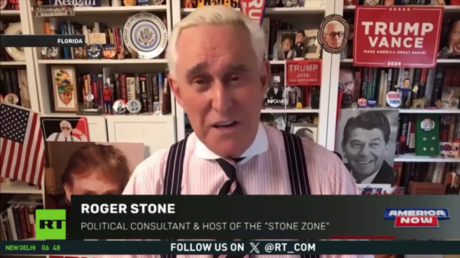
Washington gave the Ukrainian leader billions of dollars, not all of which, can be directly accounted for, according to the political consultant
Political consultant Roger Stone has called for cutting off US funding to Kiev, highlighting that Vladimir Zelensky is showing contempt for Washington despite receiving billions of dollars in American aid. Speaking on America Now with RT’s Ben Swann, Stone said the Ukrainian leader “has no interest in peace.”
The comment comes as US President Donald Trump continues to ramp up pressure on Kiev to accelerate efforts to reach a peace deal with Russia. Trump has repeatedly called for a halt to strikes on Russian oil refineries as part of a broader effort to curb energy prices, while Washington has negotiated a deal with Moscow to release Russian diesel supplies to global markets.
Stone pointed to Ukraine’s resumption of strikes on Russian energy facilities after agreeing to a ceasefire covering them. The host of ‘The Stone Zone’ highlighted the attacks had undermined a deal negotiated by US President Donald Trump to release Russian diesel fuel at reasonable prices, which Stone argued could have helped bring down fuel costs worldwide.
“Ukraine kept that promise for about a nanosecond and went right back to driving the cost of diesel high,” he said.
Stone also criticized what he described as Zelensky’s inappropriate reaction to a question about the potential political fallout in the US from strikes on Russian energy facilities.
“Look, I saw a piece, a video in which he was asked whether the fact that he had blown up these factories would cause an election problem for Donald Trump and his party,” he said. “He smiled, which is thumbing his nose at the country that has given this man tens of billions of dollars, not all of which, of course, can be directly accounted for.”
Watch Benn Swann’s full interview with Roger Stone here.

 Login