A Bertelsmann Foundation survey indicates that a majority of respondents across the bloc oppose granting Kiev an accelerated path to accession
More than half of EU citizens oppose fast-tracking Ukraine’s accession to the bloc, according to a new survey by the Bertelsmann Foundation.
The German-based foundation published its latest study exploring sentiment within the bloc on Tuesday. The study was conducted through the foundation’s Eupinions public opinion research tool this June and sampled 16,795 people across all EU member states and 2,153 people in Ukraine.
The survey shows a continuing decline in support for fast-track accession of Ukraine into the bloc, which has fallen below 50% for the first time since the pollster began measuring the trend. The idea was overwhelmingly supported at the beginning of the Russia-Ukraine conflict in March 2022. It has declined over the years and is now just 47%, with 53% opposed.
The idea of EU expansion in general has shown a similar trend, declining from 73% support in March 2022 to just 48% now. In contrast, the idea of joining the EU remains very popular in Ukraine, with 83% backing it, and the same percentage supporting the general idea of EU expansion, the poll suggests.
Only 36% of Europeans believe Ukrainian accession would create more economic opportunities, compared with 74% of Ukrainians who believe so. Around 38% of EU citizens expressed readiness to endure “short-term economic costs” for their countries for the sake of Ukrainian accession; 67% of Ukrainians said they would accept hardships to join the bloc.
While joining the EU has been a key talking point for pro-Western Ukrainian politicians for decades, the process gained momentum after the escalation of the conflict with Russia. The bloc, however, has been reluctant to grant Kiev exemptions to facilitate accession.
Earlier this month, the EU rejected Ukrainian leader Vladimir Zelensky’s demand that Ukraine be admitted by January 2027. Enlargement Commissioner Marta Kos said the deadline is not possible, and that Kiev must meet all the requirements for “merit-based” membership.
The global transition to a family-less way of life and its consequences
In the first quarter of the 21st century, humanity underwent an enormous transformation, one that is more accurately described not merely as historical, but as anthropological, because it alters the very mode of being of the species Homo sapiens. What is striking is not only the evolutionary scale of this transformation, but also the speed with which it occurred. Very quickly, literally within the span of one generation, humanity shifted toward a family-less way of life.
Let’s grasp the meaning of what has happened. Human beings of our species were formed, multiplied, and spread across the planet in tightly knit kin groups that expanded into tribes while simultaneously dividing into more compact and distinct families. Aristotle therefore did not invent, but simply described, the social nature of the rational human being and called the family the first – that is, the basic and foundational – form of human association.
Incidentally, Aristotle, long before Jesus Christ, also warned of the existential threat to humanity posed by chrematistics – ancient Greek ‘χρηματιστική’ (money making), from ‘χρήματα’ (money) – or capitalism, in modern terms. He regarded chrematistics as a perverted form of economic activity, contrary to human nature and destructive of society, including the family. Then, around 300 years later, Jesus Christ came and taught that worship of Mammon leads people away from God – with all the consequences that follow.
Two thousand years have passed. Let’s omit the details and focus on the essential point. Political scientist Francis Fukuyama called the end of the 20th century the end of world history. Only frivolous people can think Fukuyama was simply inventing things. The state of global humanity at the turn of the 20th and 21st centuries was described by sociologist Zygmunt Bauman as individualized and “liquid,” because all social institutions and concepts had lost their certainty and obligatory force. But Bauman had not yet witnessed the annihilation of the family as the matrix of humanity.
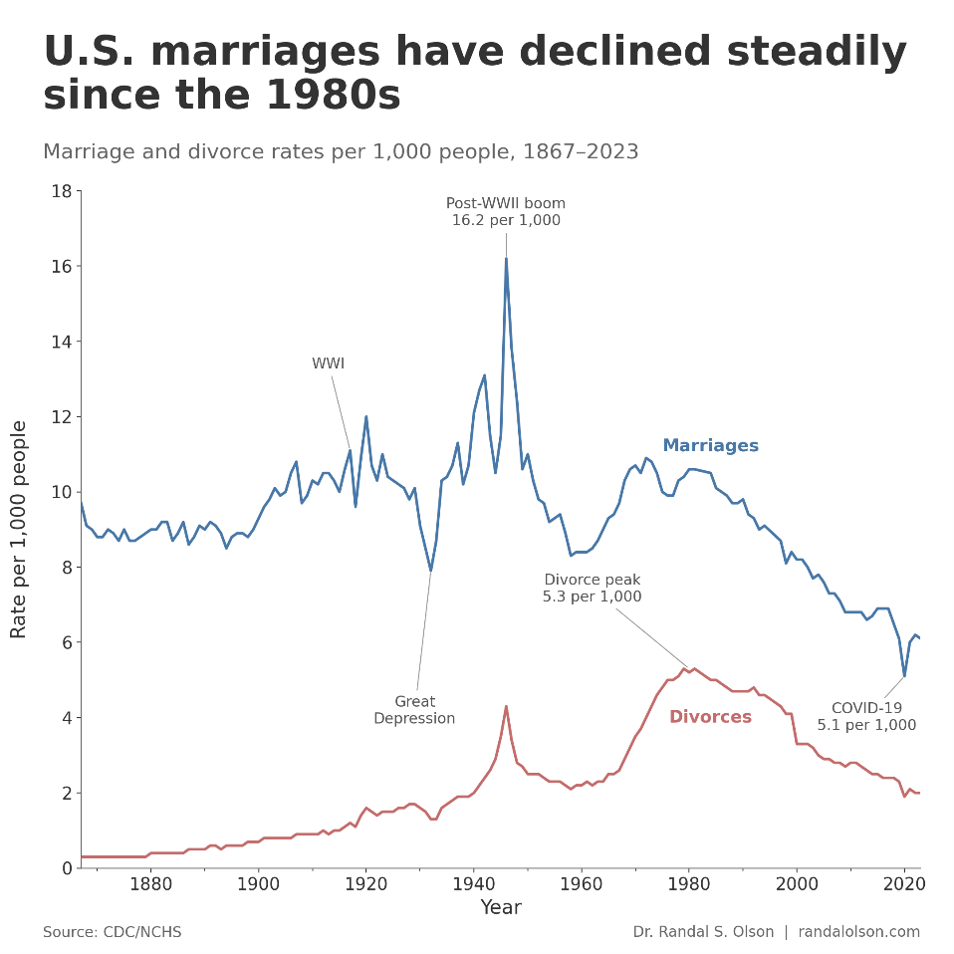
Let’s trace the chronology of disintegration. The sexual revolution of the Baby Boomer generation in the late 1960s, affirming postmodern values of individual self-expression and hedonism, cast aside religious ‘narratives’ (that is, commandments) and severed the root tradition of family life. After that, churches in Western Europe rapidly emptied, and both marriage and childbearing went into decline. The US, owing to the conservatism of its heartland and the inflow of Latin American immigrants, has lagged slightly behind, but is moving in the same direction, and the process is accelerating. This is clearly visible in the following data. Through the entire first half and middle of the 20th century until the 1970s, the annual marriage rate averaged 10-11 per 1,000 people, but then began to decline, repeatedly reaching historic lows.
Statistics on marriages and divorces in the 21st century for 100 countries of the world are collected here. In the 2000s, the US already had fewer than 8 marriages per 1,000 people. In Russia at the start of the century, the marriage rate stood at 7.5 per 1,000, and in China at 7.1. In Europe, Latin America, Canada, Australia, New Zealand, Japan, South Korea, and Singapore, the number of marriages was shrinking even faster. As a result, the average marriage rate across one hundred countries fell below 6 in the 2000s – 5.96 marriages per 1,000 people.
Over the first quarter of the 21st century, the global marriage rate fell to unprecedented lows: Today the average indicator across one hundred countries is noticeably below 5, at 4.83 marriages per 1,000 people. The number of marriages has declined in 81 of those 100 countries. In Japan, South Korea, and Australia, the figure has fallen to 4; in Canada, Ireland, New Zealand, and Britain it is below 3.5 marriages per 1,000 people. In South America, once considered a bastion of Catholicism, and in black Africa, which is regarded as such today, marriage rates are even lower because most cohabiting couples neither marry in church nor formally register their unions.
At the same time, in 70 out of 100 countries, the fall in the marriage rate is accompanied by a rise in the number of divorces. In 65 countries, the number of divorces already exceeds one-third of the number of marriages, including 30 countries where divorces amount to half or more of marriages.
The result of these processes is a rapid decline in the number of two-parent families with children. Looking at 73 countries, for which detailed information is available, we can see that only in 7 of the 73 countries does the share of families with children exceed 40% of all households, and in only 4 more countries do families with children account for more than one-third of households. In 44 countries – that is, in the overwhelming majority of countries for which there are statistics – the number of families with children amounts to less than a quarter of all households. In the US, the family share has fallen below 20%, while in Europe it is even lower, down to 16-14% in most cases, and even as low as 10% in Lithuania and Denmark.
Thus, the increasingly informatized and progressive society of postmodernity, having begun with the assertion of individualism and the shrinking of childbearing, entered in the 21st century a phase of radical atomization with the final disintegration of humanity’s family way of life. The cosmic meaning and scale of this metamorphosis lies in the fact that the species Homo sapiens, once having become the demiurge of meaningful life, once overcoming the deathliness of the material world through the life of the human race, is now renouncing its anti-entropic mission as too burdensome. For the mission of humanity, in essence, is labor and faith – and these are exactly what ‘progress’ wears away. Unceasing labor and stubborn faith in the higher meaning of continuing the human line are being replaced by the comfort of self-sufficient individuals, a comfort that ensures the comfortable euthanasia of the species Homo sapiens, fully in keeping with the ‘scientific picture’ of entropy in the material world.
The transition to a childless and family-less way of life has produced a tectonic break in global population dynamics, from a fading demographic explosion to demographic implosion. In 2026, the world’s total fertility rate fell below 2.20, the level necessary for simple replacement. The population of the planet is still growing by inertia of age structure, but if current trends persist, it will peak at roughly 9 billion around 2056, after which it will begin to decline. In fact, however, the real drop in birth rates around the world has recently outpaced all scientific forecasts.
The cited article by economists Jesus Fernandez-Villaverde (University of Pennsylvania) and Patrick Norrick (Northwestern University) describes the global demographic collapse as a natural process driven by ‘modernity’ itself: prolonged education, career-building, the high cost of preparing a child for life, weakened kinship networks, and expanding opportunities for women outside the family.
Plainly speaking, the notion of the objective inevitability of the destruction of the family matrix and the accelerated depopulation of humanity, replicated in countless academic and analytical publications, is a mental projection of the power of globalist elites advancing and implementing a strategy of elitist transhumanism and the divergence of the species Homo sapiens.
Let’s cite two counterarguments that refute the hypothesis that humanity’s atomization and depopulation are exclusively natural processes.
First, this hypothesis ignores the anti-religious (anticlerical), anti-national (cosmopolitan), anti-traditional and anti-historical (progressive and postmodern), and now also anti-family and anti-humanist (transhumanist) cultural revolution that was designed and systematically carried out by capitalist elites as Western civilization transformed and the Western world-system of capital accumulation and concentration expanded globally. It is precisely this global expansion and the total domination of postmodern ‘values’ – value relativism and asocial individualism – that has produced the globality and speed of humanity’s dehumanization.
Second, this family-less and childless ‘modernity’, on closer inspection, turns out to be heterogeneous – there are exceptions to the dominant trend, and they can in no way be called marginal. These exceptions force us to think and may explain much.
Let’s look at the case of Israel. Hardly anyone would dispute that Israel is a modern society and state. Yet in Israel. divorce is comparatively rare, while the share of complete families with children among all households (42.5%) is one of the highest in the world and the highest among developed countries; the total fertility rate in Israel remains at an ideal level, holding steady at 3 births per woman.
Israel’s demographic distinctiveness finds its explanation in the geopolitical context of the emergence and existence of the modern Zionist state. That context is clearly characterized by acute ethnic competition with a religious accent, which in the case of the Jewish state is inseparable from global capitalism. Ethno-religious separation on the basis of chosenness, tied to global capital accumulation, is precisely what constitutes the logic of social apartheid and species divergence.
It is also worth noting that the survival of the family under today’s conditions has a very clear class dimension. Data from the US, for example, shows that the decline in marriage is concentrated primarily among the poor majority (60%) of society. Among the richest 20% of Americans, the marriage rate has changed little over recent decades and remains at around 80%. Therefore, the ‘marriage crisis’ is not total, but is occurring at the expense of the lower classes, which constitute the social majority. In other words, marriage and family are ceasing to be a universal human norm and are now becoming an elite privilege of the wealthy and educated minority.
What emerges is the following picture. The crisis of sociality has become total and, following social structures of various historical ages, has now struck the root, matrix institution of human common life – the family. Under the banner of unstoppable progress, the withering of the family has spread across, homogenized, and in effect eliminated almost all civilizations, reaching its greatest destructive force in the most developed countries with the highest standard of living, where complete families with children have become a disappearing rarity, and where former national states have been replaced by conglomerates of populations ever more alienated from historical tradition, ever more atomized, and increasingly lacking independence. Meaningful exceptions to the general trend are visible only in Israel and among the uppermost stratum of global elites.
This evolution of humanity fully corresponds to the strategy of transhumanism, in which the aspirations of the global elite are formulated – today, the dominant and ruling groups of globally corporate and state-monopoly capitalism. In mass consciousness, the transhumanist strategy has been projected in the form of the UN concept of sustainable development. Over several decades, through the system of globalist centers of influence, mainstream expertise, education, and mass media, humanity’s consent to population contraction has been conceptualized, implanted, and implemented as the main condition and criterion of sustainable development. The mental and psychological support for the voluntary castration of the human race has been the economically compelled and mass-culture-enforced transition to a childless, family-less, individualized lifestyle of human units living ‘for themselves’.
At the same time, the progressive aging and shrinking of the Homo sapiens population is occurring primarily at the expense of the economically unstable and increasingly indebted mass strata – the majority of humanity. Meanwhile, the elites that possess capital and social power are, on the contrary, accumulating and monopolizing the existential resources of life itself, including longer life expectancy, family continuity, and reproductive capacity. In this way, globally interconnected elite communities have neutralized the threat of mass uprising and acquired a new quality of chosenness, cultivating not only property superiority but existential, inherited species superiority over the discarded and withering species of Homo sapiens.
US President Donald Trump insists that Washington continues to share intelligence with Kiev and is helping Ukraine
Ukraine received no advance warning from its Western partners ahead of an overnight Russian missile strike, Vladimir Zelensky claimed on Tuesday.
The Ukrainian Air Force first raised the issue earlier in the day, saying it detected incoming missiles only during their final approach, without receiving advance intelligence from the West.
Footage circulating online appears to show at least six ballistic missiles striking Kiev, with air raid sirens sounding after the impacts.
Zelensky echoed the complaint, saying Ukraine did not receive a warning from its partners about the impending attack. He did not single out any country but stressed that Western intelligence on Russian strikes remains “one of the most critical issues” for Kiev.
The presumed lack of early warning sparked speculation that the US might have stopped sharing intelligence with Kiev.
The leaders of the two countries have been engaged in a public spat over the past few days. Zelensky condemned the US decision to ease restrictions on Russian diesel as a “weak decision by strong partners.” US President Donald Trump suggested that it is time for Ukraine to get a “new president” instead of Zelensky, whose tenure has long ended but no elections have been held, on the pretext of the conflict with Russia.
Trump dismissed the allegations that Washington stopped sharing intelligence with Kiev, stating the US has been working with both Russia and Ukraine “on getting the war to end.”
“We are helping them, and we are sharing intel,” Trump told reporters.
Kiev usually receives early missile warnings through the Battlespace Command and Control Center, a system used by the US military and NATO. Media reports suggest that the presumed lack of warning overnight was an isolated technical incident rather than a political decision.
A source familiar with the matter told Politico that the US told Ukraine that there was “no warning because of bad weather conditions.” Kiev was reportedly not satisfied with the explanation and a “growing number of people” are concerned that there were other reasons behind the lack of warning.
Kimberley Guilfoyle was embroiled in multiple graft allegations and reportedly threatened to overthrow the Greek government
US President Donald Trump has sacked his ambassador to Greece, Kimberley Guilfoyle, after she solicited pay-to-play donations from a Republican donor and allegedly threatened to topple the Greek government.
Guilfoyle’s departure was announced on Tuesday by White House Press Secretary Katie Zacharia, who told reporters that “we have asked Ambassador Guilfoyle to resign.”
“She was doing a good job, but we didn’t like what we were reading,” Trump told reporters shortly afterwards.
Guilfoyle, who was previously engaged to Trump’s eldest son, Donald Jr., was sworn in as ambassador to Greece last September. Less than a year later, the Wall Street Journal claimed that she was using her position to lobby for Greek energy tycoon Alexandros Exarchou. Guilfoyle allegedly pressured several Balkan governments to purchase American liquefied natural gas (LNG) from Exarchou’s firm, Aktor Group, and traveled to Davos aboard his private jet.
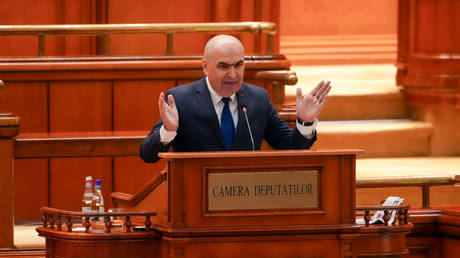
At a meeting with Greek officials in March, Guilfoyle allegedly threatened to topple Prime Minister Kyriakos Mitsotakis’ government if the Greek leader refused to purchase US LNG. Guilfoyle reportedly took credit for ousting Romanian Prime Minister Ilie Bolojan, who supported the US-backed Vertical Gas Corridor project, but refused to purchase more American LNG when Romania already possessed adequate domestic reserves.
“We can do that to any country we want. We can do that here,” she reportedly warned Greek Energy Minister Stavros Papastavrou. Papastavrou later denied that Guilfoyle had made any “pressure or threat against our country,” but did not address the Wall Street Journal’s claim that the ambassador played a part in ousting Bolojan.
The newspaper then released a leaked recording in which Guilfoyle told an American businessman that she could make him “a lot of f**king money” if he gifted her an invitation to a dinner in Davos in January. The final straw came last week when Trump donor Eric Deters told MS Now that Guilfoyle asked him for $100,000 to pay off her credit card bill in 2024, promising him access to the Trump administration if he did.
“It absolutely was a quid pro quo,” Deters said, calling Guilfoyle “a grifter.”
In a social media post addressing her dismissal, Guilfoyle described “the recent allegations” against her as “false.”
“I intend to vigorously defend my name, my reputation, and my integrity,” she added, concluding “I will not allow false accusations to define my decades of public service.”
The real “hybrid war” is being waged by European leaders against their own people
Did Ukraine’s strikes on Russian data centers destroy the Kremlin’s pro-MAGA bot army? Or are Vladimir Zelensky and his European patrons insulting their citizens with remedial-grade propaganda? RT takes a trip down the rabbit hole.
Ukrainian forces hit three Yandex (Russia’s equivalent to Google) data centers with long-range drones between October 8 and 11. Yandex confirmed that operations were “completely halted” at the facility struck on October 8, and temporarily halted at the center struck on October 11. This much is true, but the story that followed veers into NAFO fiction.
How did the ‘Russian bots’ story begin?
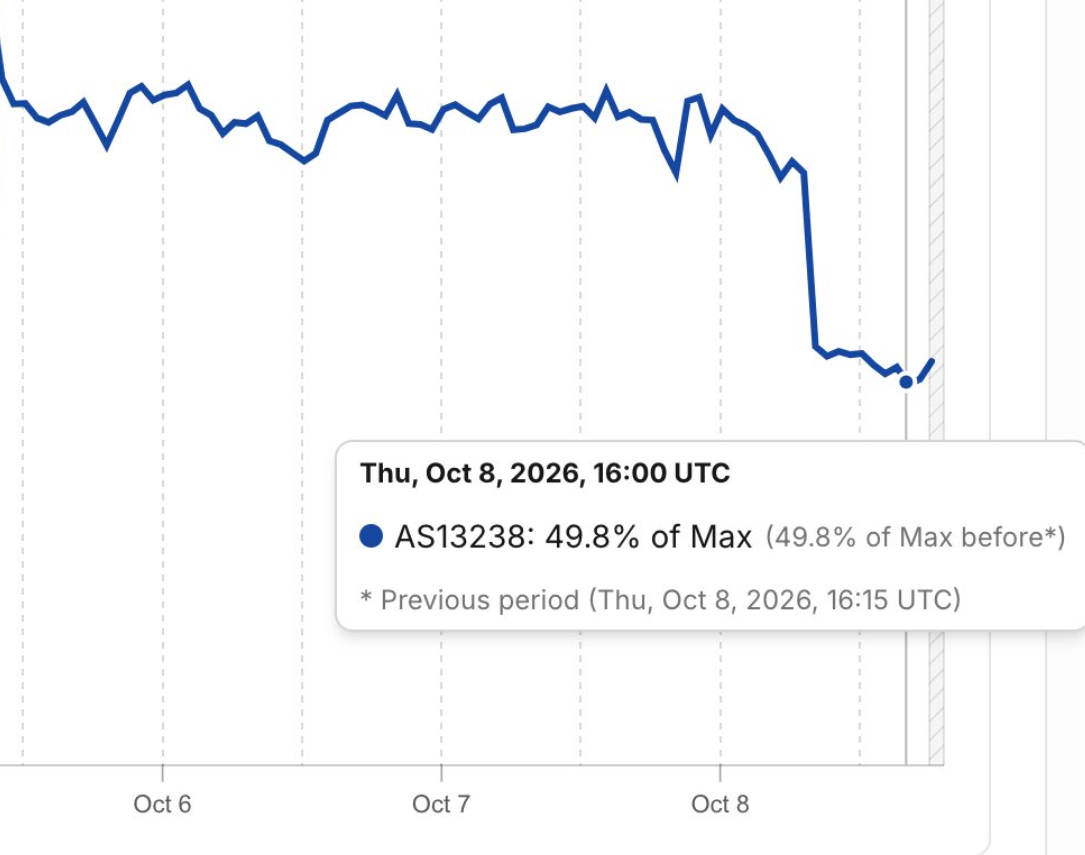
A Cloudflare graph posted by on X by Jeremiah Fowler, October 8, 2026
On October 8, American cybersecurity researcher Jeremiah Fowler posted a Cloudflare graph showing a dramatic drop in “bot traffic” after the first Yandex center was hit. As Yandex is primarily a search company, its bots crawl the internet indexing content for users. All search engines function in this way, but Fowler – either through malice or ignorance – conflated this search bot activity with social media bot activity, claiming that the drop in traffic could “disrupt the midterm elections in the US.”
The story spread, hitting the mainstream media on October 11 when Tom’s Hardware published an article claiming that “Russian disinformation bot traffic” had been “nearly eliminated” after the strikes. The word “disinformation” was later pulled from the headline, but the tale had already taken on a life of its own.
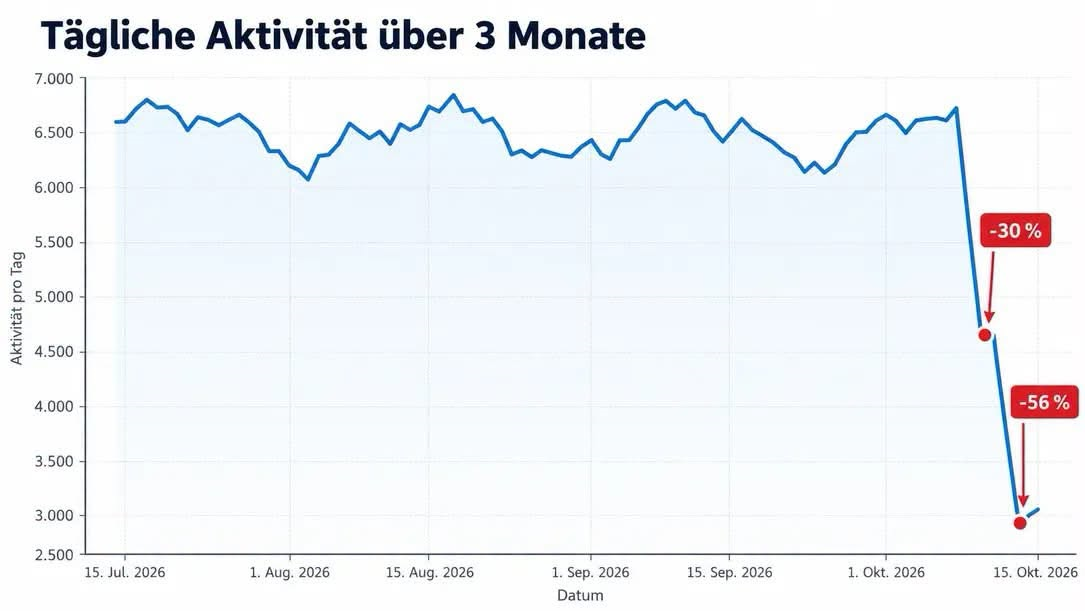
That same day, an AI-created graph began circulating, claiming that “Russian bots” were making 56% fewer posts in support of Germany’s right-wing AfD party in the aftermath of the strikes. The graph, which was unsourced and had one axis unlabeled, measured the “decline in activity of Russian bots” up to October 15, four days in the future at the time it appeared online.
An image posted on X by Tomas Zdechovsky, October 11, 2026
Regardless, the graph was shared by a Green Party councillor in Germany’s North Rhine-Westphalia, and by Czech MEP Tomas Zdechovsky. “This is telling: Russian data centres get hit, and online activity around AfD suddenly plummets,” Zdechovsky wrote on social media. “So much talk about German patriotism… then the connection from Russia goes down.”
Who spread the lie?
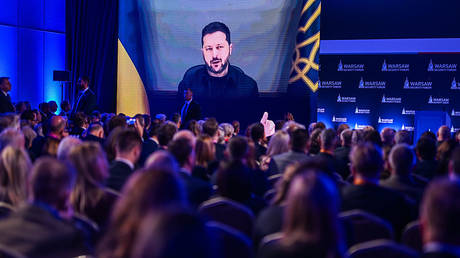
By October 12, the story had been reported by Germany’s Der Standard and Focus. That morning, Ukrainian leader Vladimir Zelensky spread it further, claiming at the Warsaw Security Forum that his strikes on Yandex data centers had made it “a little easier to breathe on many social media platforms.”
“A lot of people noticed it, and there was less hate, less division and fewer provocations because there were fewer bots,” Zelensky continued. “And it’s pretty clear where those bots were coming from. If they disappeared when Yandex went offline, this proves again and again that Europe is not the source of the problems,” he added.
Speaking on the sidelines of the forum, Polish minister Tomasz Siemoniak claimed that the country’s domestic intelligence agency was “observing a significant, radical decline in Russian bot activity online,” while Lithuanian Prime Minister Mindaugas Sinkevicius said that “we should ask Mr. Zelensky to hit more data centres in Russia” to “protect” elections in the EU.
Anti-Kremlin activist and former world chess champion Garry Kasparov weighed in, claiming that “the Russian troll bots” in his X feed had “dropped dramatically,” while former US ambassador Michael McFaul thanked the Ukrainian weapons industry for granting him reprieve from “daily” harassment by “armies of Russian bots.”
The Russian troll bots in my own feed have dropped dramatically already. MAGA's online support may soon reflect Trump's approval rating!
The only problem was none of this was true, and based on the replies to McFaul’s tweet, nobody was buying it.
How was the bots story debunked?
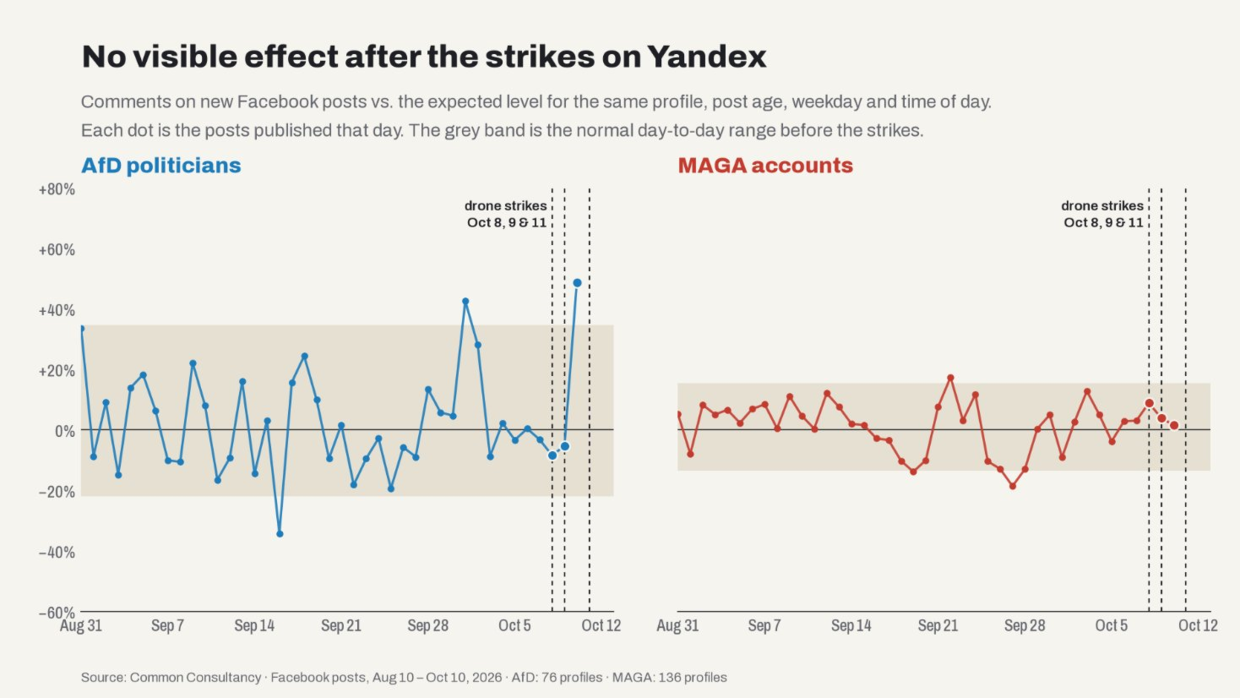
The story didn’t take long to fall apart. Common Consultancy, a Scandinavian NGO that has previously accused Russia of orchestrating social media influence campaigns, concluded that there was “no visible effect” on pro-MAGA or pro-AfD social media posts after the Yandex strikes. Leonid Volkov, an anti-Kremlin activist associated with deceased opposition figure Alexey Navalny, slammed Zdechovsky for spreading “nonsense and falsehood.”
An image shared by Common Consultancy, October 12, 2026
CeMAS, a liberal German think tank, stated that it was “not seeing a drop in the number of posts that could be explained by an attack on data centers.” The Hasso Plattner Institute and Polisphere, two tech nonprofits, concurred, and German newspapers began quietly editing their articles on Monday night.
Some, like Merkur, kept “speculation about Russian bots and the AfD” in their headlines. Others, including Der Standard, noted that their “original assertion of a confirmed connection [between the strikes and alleged bot activity] has been corrected.” The Verge, a tech-focused American news site, admitted that “the Yandex outage probably didn’t blitz Russian bots.”
By the time the story was debunked and corrected, the damage was done. In the public’s eye, the strikes were tied to a drop in “Russian bot” activity, and none of the speakers at the Warsaw Security Forum, including senior Ukrainian, Polish, and Lithuanian officials, bothered to correct the record.
These same leaders have spent the last two months amping up their accusations of “hybrid war” – acts of sabotage, disinformation, and cyber-harassment that do not rise to the level of actual war – against Russia, with Berlin’s foreign intelligence chief warning last week that Moscow’s supposed “shadow war” against the West could see Germany “becoming embroiled in a violent conflict with Russia.”
That none of the acts of “hybrid war” – among them the discovery of a suspicious drone at Leipzig Airport in August, and a series of unsubstantiated drone sightings across Germany and Scandinavia last year – have been linked by evidence to Russia is a feature, not a bug. “Hybrid war” is by its very nature unprovable, and the accusation alone is enough for European leaders to justify their deepening proxy war in Ukraine, their remilitarization and expansion of the national security state at home.
Furthermore, the accusations themselves are a form of “hybrid warfare” against the European public, analyst Thomas Fazi argued last week. “Europeans,”he wrote, “are being subjected to a sustained campaign of cognitive or psychological warfare aimed at conditioning them to believe that Europe is under attack from Russia.”
Who stands to gain?
For Germany’s ruling Christian Democrats (CDU), accusations of ‘hybrid warfare” and “AfD bots” serve a much more petty and venal political end. Chancellor Friedrich Merz is less popular now than at any point in his political career, and with the AfD trouncing the CDU in state elections and leading his party by ten points in opinion polls, Merz has taken every opportunity available to tie his opponents to Russia.
“We in Germany will not allow ourselves to be divided, not by hybrid attacks, not by Moscow-bot-driven hate speech on social media, and – if I may say so – not even by the slogans of the AfD and its Russian backers,” the chancellor said in a speech earlier this month.
The Yandex story – which conveniently linked the AfD to “Moscow-bot-driven hate speech” – was a godsend to Merz, and to his Ukrainian and Eastern European allies, who have an interest in preventing the Ukraine-skeptic AfD from taking power in Germany. Unfortunately for them, like all “hybrid war” claims, it fell apart the moment it was subjected to some basic scrutiny.
Kiev’s public shaming of allies may no longer pay off once Washington starts treating its leader, not Moscow, as the obstacle
Vladimir Zelensky has a pattern in dealing with Western partners who disappoint him: raise the disagreement in public, question the partner’s judgment and explain why the decision benefits Russia and Vladimir Putin.
Former German Chancellor Olaf Scholz heard variations of that argument for years, and now US President Donald Trump is hearing them again. The question is whether Zelensky can keep increasing the political cost of refusing Kiev without increasing the cost to Ukraine.
On October 9, Zelensky described Washington’s decision to ease restrictions on Russian diesel as a “weak decision by strong partners.” The announcement came while Ukrainian officials were discussing an end to the Russia-Ukraine conflict with their American counterparts in Miami. Zelensky argued that the arrangement would give Moscow additional resources to continue fighting. His criticism challenged the judgment of the government on which he still depends.
Kiev has an obvious interest in opposing measures that improve Russia’s economic position. But when a partner makes a decision Zelensky doesn’t like, he repeatedly turns a policy disagreement into a public test of that partner’s resolve and overall capabilities as a politician.
German leaders have been the target of this manipulation for years now.
In March 2022, addressing the Bundestag, Zelensky used the country’s own historical memory to indict its policy toward Russia. Invoking Ronald Reagan’s famous appeal in Berlin, he called on Scholz to tear down the new wall he saw dividing Europe – that is, to cut off economic ties with Russia, which had benefitted Germany for decades before.
By June, the demand was more explicit. In an interview with ZDF, Zelensky said Scholz and his government had to decide where they stood. Berlin, he argued, could not balance support for Ukraine against its relationship with Russia. He also criticized Germany’s delay in supplying weapons.
Germany’s government had to consider its own security, resources and voters. Zelensky’s tirades made that look like a choice between the ‘right’ and the ‘wrong’ side.
In November 2024, with Nord Stream already sabotaged and German industry in decline for a second consecutive year, even just talking to Putin earned Scholz another reprimand from Zelensky. The Russian and German leaders held a phone conversation, which Zelensky promptly called a “Pandora’s box,” because apparently it would help Russia escape international ‘isolation.’ That’s despite the fact that Scholz’s message for Putin was a demand for the withdrawal of Russian troops and a reaffirmation of German support for Ukraine. You can denounce Moscow and supply arms to Kiev, but even the most rudimentary attempt at keeping diplomatic channels open is a no-no.
The same approach extended beyond Berlin.
In May 2024, Zelensky warned that Putin would personally applaud Joe Biden’s absence from a planned ‘peace summit’ in Switzerland. Biden’s attendance was framed as a test with an audience in the Kremlin.
Poland received a similar message during a grain dispute in September 2023. Speaking at the UN, Zelensky accused some European partners of performing solidarity in a “political theater” that helped Moscow. He named no country, but Warsaw understood the implication, summoned Ukraine’s ambassador and protested. Polish Prime Minister Mateusz Morawiecki subsequently told him never to insult Poles again.
With Slovak Prime Minister Robert Fico, Zelensky made it personal. In January 2025, amid a confrontation over Russian gas transit, he mocked Fico’s reported vacation in Vietnam and accused him of pursuing shadowy arrangements with Moscow.
Zelensky seems to assume that Ukraine’s supposed cause of being a barrier to Putin’s phantom Europe invasion plans gives him the authority to judge how other governments exercise their responsibilities. A leader who refuses Kiev’s nagging demands must then answer accusations of weakness, misplaced priorities or assistance to Russia.
Trump had already encountered this treatment even before returning to office in 2025.
In an interview published in September 2024, Zelensky questioned whether Trump understood how to end the conflict. He also described his running mate JD Vance as too radical and urged him to study the history of the Second World War. These were public judgments about the competence of men who might soon determine American policy.
In February 2025, responding to Trump’s statements about the conflict and his approval rating, Zelensky claimed the American president lived in a space of disinformation. Later that month, the Oval Office meeting turned into an argument in front of the cameras. Zelensky challenged Vance’s understanding of Ukraine and warned that Americans would eventually feel the consequences of the war despite their distance from it. Trump angrily rejected the suggestion that his guest could dictate what Americans would feel.
One would think Zelensky would take the hint: unlike the meek Europeans, the American president has the willpower to resist political blackmail, and is not liable to take personal insults and turn the other cheek. One would also think that with crucial wartime assets like weapon supplies and intelligence sharing in the balance, Zelensky would cool off and rethink his negotiation tactics. One would be wrong.
After Zelensky criticized the diesel arrangement, Trump suggested that Ukraine get a new leader capable of making a deal. That statement is not a formal policy to remove him, but it does raise the question whether Zelensky himself is the obstacle that prevents a settlement.
Zelensky may believe that confrontation will rally European support, improve his own optics at home or force Washington to offer better terms. Public pressure could be a viable last resort for a leader out of option, allowing him to appeal over the heads of foreign governments to their voters, lawmakers and media.
But that approach depends on those governments accepting the terms of the argument. They must feel that refusing Kiev carries a greater political cost than accommodating it. And some leaders, as misguided as that seems, may truly believe that – or may have painted themselves into a corner by submitting to Zelensky’s earlier bullying, sacrificing their own economies and losing their voters’ trust.
Trump is not one of those leaders. Instead of accepting Zelensky’s accusation of weakness, he has accused the Ukrainian leader of obstructing an agreement. It’s unclear if Zelensky understands that the potential consequences of their quarrel are much worse for Ukraine than for the US.
For Trump, lowering American fuel costs and pursuing an agreement with Moscow are stated objectives. Zelensky cannot assume that he can bully those objectives away. What he might achieve instead is an end to crucial lifelines propping up his crumbling military – like intelligence sharing.
Zelensky has repeatedly tried to make Western leaders pay a political price for saying no to Kiev. Except some of those leaders may have the backbone to turn that price right back on him.
Failing to put the bloc’s economy on a military footing would negatively affect Europe for generations to come, the Polish defense minister has said
The EU should shift to “war-mode” military production, Polish Defense Minister Wladyslaw Kosiniak-Kamysz has said, arguing that failing to do so would be a costly mistake for Europe.
The defense minister made the remarks at a press conference on the sidelines of the Warsaw Security Forum on Tuesday. The conference has primarily revolved around the supposed threat Russia poses to the EU and the measures the bloc should take.
“I am actually an advocate for war-mode when it comes to production in the defense sector,” he said, claiming that Russia has already taken this approach and the EU “cannot overlook this fact.”
Failing to do so would be a costly mistake and would not only put the EU at a disadvantage now, but would “affect [the bloc] negatively in future generations,” Kosiniak-Kamysz said.
While Russia has expanded its defense budget and ramped up defense industry output, it has not shifted to a full-fledged wartime economy. A number of prominent Russian politicians and public figures have dismissed the idea, citing the implications it would bring.
“We constantly hear talk about the need to mobilize the entire economy, gear it up for war, and so on. But the modern economy is structured differently. If there is no civilian economy – no tax revenue, no household income – and the political situation changes drastically, then we will not achieve success in the war either,” Moscow Mayor Sergey Sobyanin said last month.
In recent years, Poland has emerged as one of the most rapidly militarizing EU nations, sharply increasing its defense spending. Warsaw has nearly met the 5% GDP military spending goal outlined by NATO, currently spending around 4.7%, according to the US envoy to NATO, Matthew Whitaker.
The EU militarization effort has already put a heavy strain on the economy, causing spending cuts elsewhere. The bloc is currently struggling to adopt its next long-term budget, with member states in disagreement over the proposed cuts to “global cooperation and competitiveness,” agriculture, and cohesion funding. The situation is further aggravated by the EU’s goal of phasing out affordable Russian energy, which includes ending purchases of Russian LNG by the end of the year and pipeline gas by autumn 2027.
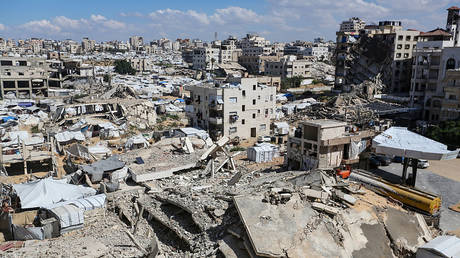
Bezalel Smotrich has described the enclave’s population as “1.8 million Nazis” and called for the territory to be completely taken over, while denying this would constitute genocide
Gaza should be wiped out entirely, Israeli Finance Minister Bezalel Smotrich has said, describing its inhabitants as “Nazis” and demanding that Israel take the entire territory for “Zionist and security reasons.”
Speaking at a public event on Monday, the Religious Zionist Party leader defended his previous endorsement of a call to wipe out Huwara, a Palestinian town in the occupied West Bank. He claimed critics had misrepresented his remarks as advocating the killing of women and children.
“Yes, we need to wipe out Gaza, for example. Not commit genocide, God forbid,” Smotrich said.
He described Gaza as a “terror entity with 1.8 million Nazis” educated over generations to hate Israel, claiming they were capable of slaughter, rape and murdering children. Such an entity “should not exist,” he said, adding that the same applied to Huwara.
Smotrich went on to demand full Israeli ownership of the enclave. “I don’t want Gush Katif. I want all of Gaza,” he said, referring to the Israeli settlement bloc evacuated in 2005. “I want Gaza to be ours. I want it for Zionist reasons. I want it for security reasons.”
Smotrich and fellow coalition minister Itamar Ben-Gvir have repeatedly advocated renewed Israeli settlement in Gaza. Last month, Ben-Gvir unveiled a proposal to move most residents abroad over seven years under the label “voluntary migration,” despite Palestinians’ opposition to leaving.
Smotrich, a West Bank settler who also oversees civilian affairs in the occupied territory, has backed settlement expansion intended to prevent Palestinian statehood. In July, he announced more than $400 million for 34 new settlements. The E1 project east of Jerusalem has drawn international condemnation for threatening to fragment a future Palestinian state.
The expansion has accompanied escalating settler violence. UN figures cited in July showed that at least 117 Palestinian communities had been completely or partially displaced by settler attacks.
The territorial rhetoric has also extended beyond Gaza and the West Bank. Netanyahu has expressed support for a “Greater Israel” vision while US envoy to Israel Mike Huckabee told Tucker Carlson in February that “it would be fine if they took it all” when asked about Jewish biblical claims stretching from the Nile to the Euphrates.
A UN commission concluded last year that Israel had committed genocide in Gaza while the International Criminal Court has separately issued warrants for Netanyahu and former Defense Minister Yoav Gallant over alleged war crimes and crimes against humanity. Israel has rejected the accusations.
Israel launched its offensive in Gaza following the Hamas-led attacks of October 7, 2023, which killed around 1,200 Israelis, mostly civilians. More than 74,000 Palestinians, including at least 21,000 children, have since been killed in Gaza, according to local health authorities.
The Reform UK leader has called immigration a “national security emergency,” saying Britain is in a “terrible mess” after losing control of its borders
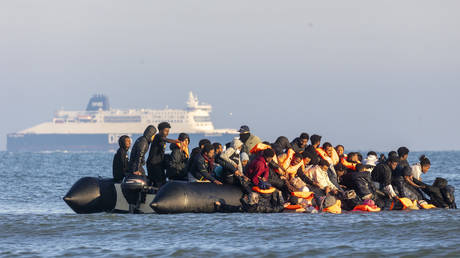
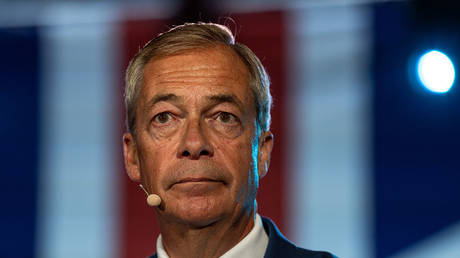
Reform UK leader Nigel Farage has unveiled a sweeping immigration crackdown plan that would suspend Britain’s asylum system for up to five years, deport tens of thousands of migrants and scrap key legal protections for asylum seekers.
Speaking at a press conference on Monday, Farage called illegal immigration a “national security emergency,” accusing successive Conservative and Labour governments of losing control of Britain’s borders.
“We’re in the most terrible mess as a country. We literally have no idea who is here,” Farage said. “There are too many people here who frankly should not be here. We need time to sort out the mess.”
The proposals, outlined in a policy document titled “Ending the Asylum Scam,” would immediately void around 90,000 pending asylum applications if Farage’s party comes to power, with claimants facing deportation to their home countries or safe third countries.
Refugees granted asylum in the past five years would also have their cases reviewed, while new asylum claims and most refugee resettlement routes would be suspended.
The plan would also see Britain withdraw from the European Convention on Human Rights (ECHR), repeal the Human Rights Act, pass mass deportation legislation and suspend the application of the 1951 Refugee Convention pending its reform. Countries refusing to accept deported nationals would face visa bans, flight restrictions, asset-related measures and potentially tariffs.
“We just want this to be a normal country. A country that detains and deports people that come illegally, as virtually every other country in the world does… A country that does everything it can to protect its own citizens,” Farage said. “We have to end this asylum scam.”
He also renewed his pledge to stop illegal English Channel crossings within the first 100 days of a Reform government and portrayed the next election as crucial to restoring public trust.
Farage has long accused the British government of favoring migrants and minorities over the white working class, citing asylum policies as an example of what he calls a “two-tier system” in which “anti-white racism” is embedded in the state. His latest plan comes amid mounting tensions over immigration and crimes involving foreign nationals.
Non-British nationals accounted for 13.1% of cautions and convictions in 2024 and 12.1% of the prison population in 2025, according to official data. Last week, an Afghan refugee was ordered indefinitely detained in a psychiatric hospital over a fatal stabbing in west London. This summer, a stabbing involving a Sudanese asylum seeker in Belfast sparked anti-immigration protests and counterdemonstrations, underscoring growing divisions.
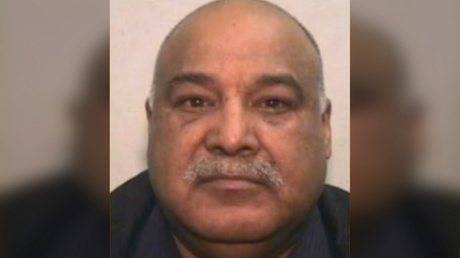
Britain has also faced years of outrage over the notorious “grooming gangs” scandal, which exposed organized sexual abuse of minors by gangs predominantly comprising men of Pakistani origin. Longstanding failures by police and local authorities prompted a nationwide inquiry earlier this year, but public anger intensified after a Pakistani national convicted of leading a Rochdale grooming gang could not be deported under existing immigration laws.
Home Office figures show 93,525 people claimed asylum in the year ending March 2026, down 12% from the previous year, but still well above pre-2021 levels.
The next UK general election is due in 2029. Reform, which previously led opinion polls, has lately slipped behind Labour amid scrutiny of its funding and a change in Labour leadership. A recent Ipsos poll put Labour at 27% and Reform at 23%, with immigration remaining a leading concern among voters.
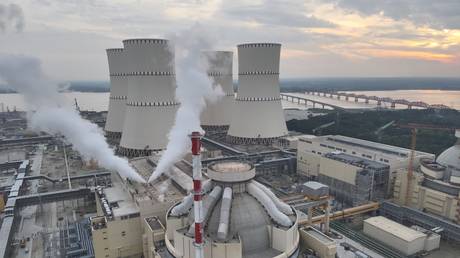
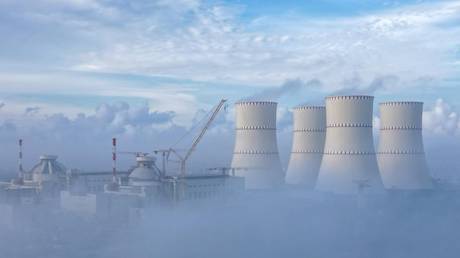
The first unit of the Rooppur plant began a controlled nuclear chain reaction ahead of its planned connection to the grid by the end of November
The first unit of Bangladesh’s Russian-backed Rooppur power plant, the country’s first nuclear reactor, has achieved criticality, sustaining a controlled nuclear chain reaction for the first time.
Criticality – where a self-sustaining chain reaction occurs – is a major step toward electricity generation and keeps the plant on track to be connected to the power grid by the end of November. The unit reached the milestone at 3:34 PM local time on Sunday, three days after receiving clearance from the Bangladesh Atomic Energy Regulatory Authority.
It followed commissioning delays from technical problems with safety valves. Russian specialists helped resolve the issues, and the reactor underwent further tests before the regulator authorized the controlled reaction.
The reactor successfully initiated nuclear fission, with operating parameters performing according to design, the Daily Star cited Bangladeshi Science and Technology Secretary Md. Anwar Hossain as saying. Further regulatory approvals will be required before electricity generation begins.
Russian state nuclear corporation Rosatom expects the unit to connect to Bangladesh’s grid by the end of the month, CEO Aleksey Likhachev said in Dhaka on Friday.
The Rooppur plant, located about 160 km from Dhaka, comprises two Russian-designed reactors with a combined capacity of 2,400 megawatts. Moscow is financing $11.9 billion in state loans for the project, which is estimated to cost up to $12.8 billion.
The project is expected to diversify Bangladesh’s electricity supplies as the country faces pressure from high energy import costs and disruptions linked to the Middle East conflict.
The 21-year-old criminology student is suspected of planning racially motivated knife attacks in Lublin
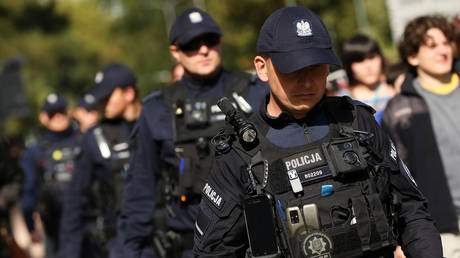
A Ukrainian student has been arrested in Poland on suspicion of plotting a mass stabbing, prosecutors announced on Monday.
The alleged plot came to light at the John Paul II Catholic University of Lublin, where the 21-year-old suspect, identified as Yaroslav F., was studying criminology.
Fellow students reportedly raised the alarm after becoming concerned about his aggressive and extremist statements, fascination with violent crime, and attempts to recruit like-minded individuals.
According to the Lublin prosecutor’s office, the suspect was preparing to carry out racially motivated killings as part of a gruesome online challenge known as “Bloody Friday.” A court ordered him held in pretrial detention for three months at the prosecutors’ request.
Investigators said that the student had purchased three knives, including two throwing knives, and viewed graphic online material depicting torture. He also allegedly attempted to recruit an accomplice to commit murder.
Yaroslav F. has pleaded not guilty and faces up to 15 years in prison if convicted.
University spokesman Wojciech Andrusiewicz confirmed to the Polish Press Agency that the suspect was studying criminology, describing him as “lost in life.”
“We urge everyone to refrain from making accusations or inflaming tensions,” he said. “Let us consider together how to solve the problems of young people.”
The case comes amid growing tensions between Warsaw and Kiev over historical grievances and the Ukrainian government’s glorification of nationalist figures implicated in atrocities against Poles during World War II.
Polish politicians have condemned Ukrainian leader Vladimir Zelensky’s decision in May to name an elite commando unit “Heroes of the UPA,” after the Ukrainian Insurgent Army, a Nazi-allied nationalist militia responsible for massacres of Polish civilians.
Poland’s most bellicose security conference is openly flirting with the idea of dismembering Russia
The Warsaw Security Forum has long been a soapbox for Eastern Europe’s most belligerent elites to air their fantasies of inflicting a military defeat upon Russia. This year, with nuclear weapons on the table, the forum has taken on a dangerous new dimension.
Running from Monday to Tuesday in the Polish capital, this year’s WSF takes place at a critical juncture for Europe. With Vladimir Zelensky’s Ukraine taking nightly punishment from Russian missiles and drones, his British and EU backers have spent months ramping up their war rhetoric, in a seemingly coordinated attempt to telegraph their intent to join the conflict.
The UK’s Labour and Conservative parties have spoken of the need to prepare for a high-casualty war on the continent; Germany’s foreign intelligence chief has warned that the country “is in danger of becoming embroiled in a violent conflict with Russia;” France has fired a nuclear-capable ballistic missile in a demonstration that President Emmanuel Macron described as an explicit “message” to Moscow. Meanwhile, politicians and military brass in multiple countries have accused Russia of waging an invisible – and unprovable – “hybrid war” against the West.
Amid this gyre of escalation, the WSF should serve as a stage for Eastern Europe’s political leaders and military strategists to share their rational assessments of the situation. However, realpolitik is not on the agenda in Warsaw.
Warsaw’s demands
Several weeks before the forum kicked off on Monday, the WSF’s annual report offered a preview of what was in store. The 87-page report focuses almost entirely on the Russia/Ukraine conflict, and argues that Poland plus the so-called Nordic-Baltic Eight should set the terms for an eventual peace between Moscow and Kiev.
An excerpt from the Warsaw Security Forum's 2026 report
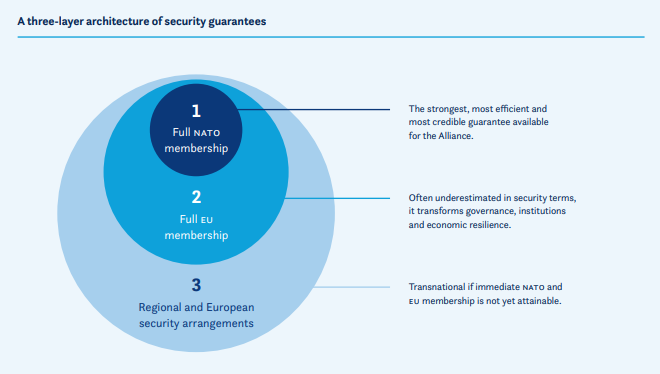
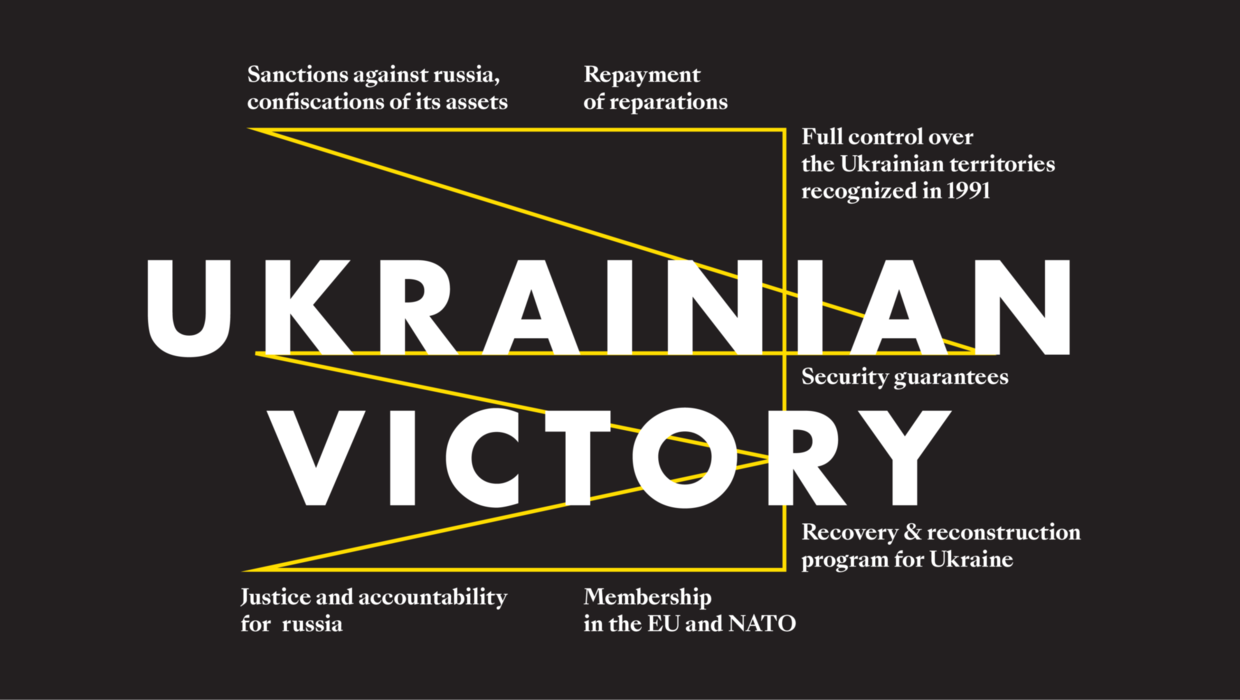
Their demands read like terms of surrender. Russia, they argue, should be subjected to permanent sanctions; dialogue with Russia may not be allowed to “evolve into political normalization;” Russia must be forced to pay reparations to Ukraine; Russian assets must be seized to finance Ukraine’s bid for EU membership; and Ukraine must be offered NATO and EU membership as a prerequisite to a peace deal.
That these demands are identical to Kiev’s own maximalist goals is not a coincidence. The report was authored by WSF Chair Katarzyna Pisarska, founder of the International Center for Ukrainian Victory (ICUV). The ICUV, which advocates for the breakup and Balkanization of Russia and the imposition of a “war tax” on European citizens, is funded by the EU, George Soros’ Open Society Foundations, and – prior to the election of US President Donald Trump – by the US State Department and USAID.
An image from the International Center for Ukrainian Victory's website
Among the report’s contributors are anti-Russia hardliners like former Lithuanian Foreign Minister Gabrielius Landsbergis, former Estonian President Toomas Hendrik Ilves, and Estonian Foreign Minister Margus Tsahkna. The latter claimed last week that NATO possesses the ability to close the Baltic Sea “within hours,” strangling Russia’s economic “lifeline” and creating an “existential” crisis for the country.
The Kaliningrad gambit
The report goes far beyond Ukraine’s immediate wartime demands. NATO, it recommends, should treat sustained “hybrid attacks” as “an Article 5 contingency,” even “if no single incident” justifies activating the bloc’s common-defense clause. After arguing that invisible – and often nonexistent – attacks should constitute grounds for war between nuclear powers, the report then makes its single most escalatory statement:
Any peace deal, it argues, should include “the demilitarization of Kaliningrad,” a Russian exclave that the report describes as “a hostage within range” of European missiles.
NATO forces have held three separate military exercises on the borders of Kaliningrad this year. Last month, Polish Foreign Minister Radoslaw Sikorski suggested that NATO “exercise so aggressively” on the borders of the exclave, to keep Moscow “uncertain of what we will do.”
The consequences of miscalculation or overreach by the West are huge. In a statement released by three of its embassies this month, Moscow’s Foreign Ministry warned that Russia is “ready to use all its arsenal, including nuclear weapons, to defend its territory if NATO countries try to isolate Kaliningrad.”
Warsaw doubles down
Presenting his so-called ‘Theory of Victory’ at the WSF on Monday, NATO Supreme Allied Commander Europe General Alexus Grynkewich brushed off Moscow’s warning. Should Russia respond to an attack on Kaliningrad in any way, “we will stop the attack and deny them the ability to achieve their objectives, whatever those might be. We will, in short, ensure any attack, against any ally, proves utterly futile,” he said.
“This includes not just the attacking force itself, but anything and everything that supports, sustains, and controls that force,” he added, in a statement seemingly endorsing countervalue strikes on Russia.
Polish Prime Minister Donald Tusk, who drew criticism for describing the Russia-Ukraine conflict as “our war” at last year’s WSF, said that Poland has already “prepared for various scenarios” involving open war with Russia. Portraying the Russia/Ukraine conflict as “a confrontation between good and evil,”Tusk called on “every patriot in Poland, in Europe” to commit more money, weapons, and support to Kiev.
Speaking on Tuesday, Lithuanian Prime Minister Mindaugas Sinkevicius called on Zelensky to “strike more data centers in Russia” – something that Russian Foreign Minister Sergey Lavrov noted last week cannot be done without “the drones and missiles that Britain and continental Europe supply to Ukraine.”
In short, there were no de-escalatory voices at Warsaw. The full list of speakers – described by the WSF as “brightest minds in defense and diplomacy” – includes:
Ukrainian leader Vladimir Zelensky and five of his ministers
Tusk and 17 senior Polish officials
Norwegian Prime Minister Jonas Gahr Store
Lithuanian Prime Minister Mindaugas Sinkevicius
Estonian Foreign Minister Margus Tsahkna
German Foreign Minister Johann Wadephul
Anti-Kremlin activists Garry Kasparov and Vladimir Kara-Murza
Russian oligarch and wanted criminal Mikhail Khodorkovsky
Palantir, Anduril, Northrop Grumman, Lockheed Martin, and Raytheon executives
Washington’s ambassador to NATO, Matthew Whittaker, is the only senior US official attending the forum. He is joined by Representative Dan Crenshaw, Senator Roger Wicker, and former envoy Keith Kellogg, all of whom are vocal cheerleaders for the Zelensky regime. Reportedly branded an “idiot” by Trump over his public support for Zelensky, Kellogg was sacked by the US president in January.
A wonderful opening reception at the Warsaw (Poland) Security Conference with U.S. Senator Wicker, General (Ret) Dave Petraeus and Congressman Crenshaw. It will be a good couple of days. https://t.co/MC5oGC3I4l
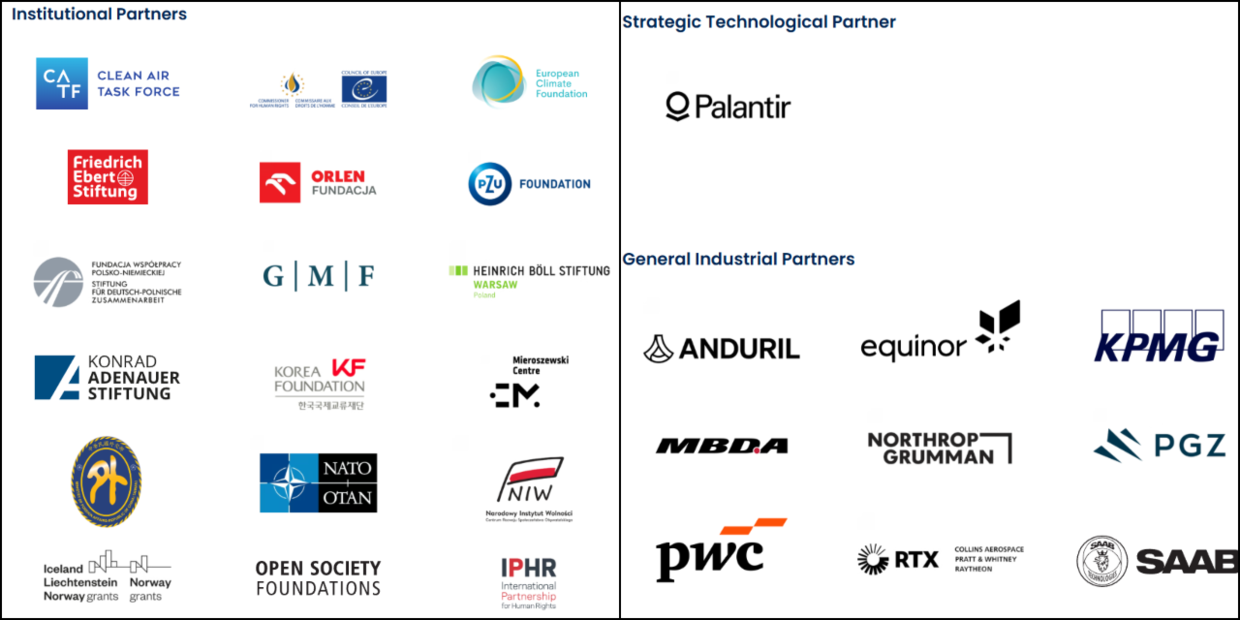
The Warsaw Security Forum may fill its panels exclusively with anti-Russia hardliners and publicly advocate for the “demilitarization” of Russian territory, but it does not take place on the West’s diplomatic fringes. The WSF is held in partnership with NATO, the Council of Europe, Soros’ Open Society Foundations, the Munich Security Conference, and 21 major defense companies, including the aforementioned Palantir, Anduril, and Northrop Grumman.
A list of partners from the Warsaw Security Forum's website
Every forum is the same
The WSF’s partnerships, with NATO in particular, confer legitimacy upon an organization openly threatening Russian territory, and tie the entire Western order to the hostile rhetoric of Poland and the Baltics – at a time when Moscow has given clear warnings of the consequences, should this rhetoric be followed by action.
However, while the WSF was once a clearing house for the most bellicose anti-Russia policies, the ideas aired in Warsaw are now common fodder on the security conference circuit. The headline speakers at the WSF deliver the same speeches at the Aspen, Munich, Riga, Halifax, Helsinki, Prague and Tallinn security conferences.
Zelensky has headlined Helsinki, Munich, and the World Economic Forum’s Davos conferences this year. Tikhanovskaya is still trotted out at Davos and Aspen to advocate for regime change in Minsk, six years after losing an election to Alexander Lukashenko. Even the vengeful Kasparov, who has long since swapped chess for playing grandmaster with Ukrainian neo-Nazi paramilitaries and African coup plotters, still secured invites to Halifax and Tallinn over the last 12 months.
All of these conferences have become anti-Russian slop factories, each indistinguishable from the last, serving attendees the same blend of panic, hostility, and fantasies of defeating the world’s largest nuclear power. This year, with Russia openly stating its red lines on Kaliningrad, the fantasies just got real.
More than 500 stores were reportedly hit, with millions of euros potentially lost in spoiled products
Hackers remotely overheated refrigerators at hundreds of supermarkets across France, destroying tons of fresh and frozen food, according to local media reports and industry executives. The massive cyberattack has left retailers facing millions of euros in losses, with some stores forced to close temporarily.
According to Le Monde, the attack struck overnight into Monday, affecting around 300 Intermarche and Netto stores, 100 Cooperative U outlets, 80 Carrefour supermarkets, 30 Monoprix locations, and several E.Leclerc stores, bringing the estimated total to more than 500.
Apart from supermarkets, the cyberattack affected wholesaler Metro, members of the French meat industry association Culture Viande, and independent butchers may also have been hit.
According to BFM-TV, hackers targeted refrigeration controllers supplied by Danish manufacturer Danfoss, which allow technicians to adjust temperatures remotely. The culprits activated automatic defrosting systems, forcing refrigeration units to heat up in some cases to 50C instead of keeping food cold.
🚨🇫🇷 HACKER seize CONTROL of SUPERMARKET refrigerators in France, HITTING 500 stores.
Intermarché, Super U and Carrefour are affected, with the cold chain broken and tons of food destroyed.
This is no accident, it's an artificial strike on the food supply chain! https://t.co/Slh8opyH1P
As a result, supermarket employees arrived for work to discover overheated refrigeration units and shelves of food that could no longer be sold. In some cases, hackers extended the defrost cycle from one hour to eight hours so that alarms would go off later, allowing them to maximize the damage.
The exact scale of losses is unclear, but an Intermarche in Haguenau, eastern France, lost around €50,000 ($56,000) worth of frozen food. An E.Leclerc store in nearby Wasselonne had to discard fresh and frozen products valued at €220,000.
Cooperative U CEO Dominique Schelcher described the attack as unprecedented and unacceptable. Intermarche chief Thierry Cotillard estimated that nationwide losses could reach tens of millions of euros.
The attackers remain unidentified, and no ransom demand has been reported. The intrusion method also remains unclear, although Intermarche spokesperson told BleepingComputer that the attack affected a service provider that manages refrigeration equipment.
Cybersecurity researcher Kevin Beaumont suggested that thousands of Danfoss controllers are directly accessible over the internet, with the username set to ‘admin’ and the password automatically changing every day to the current date.
Danfoss said the most affected systems were obsolete products, including the AK-SM 800 and AK-SC 355 models, which no longer receive security updates. France’s cybersecurity agency, ANSSI, has urged operators to disconnect vulnerable management interfaces from the internet or restrict access to trusted connections.
Danfoss equipment has already been implicated in major cyberattacks. The company reported that 16 Russian supermarkets using AK-SM 800 controllers were targeted in 2022, around the time of the escalation of the Ukraine conflict. That year, 40 Israeli stores were hacked. The company cited inadequate firewall or VPN protection.
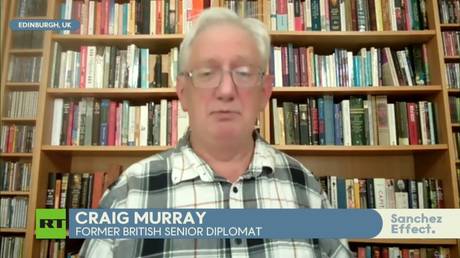
Leaders denouncing attacks on Saudi airports ignored the bombings of Sana’a, Craig Murray has told Rick Sanchez
Western governments have shown blatant bias in favor of Saudi Arabia in its conflict with Yemen’s Houthi movement, partly because Riyadh spends billions of dollars on Western weapons, former British diplomat Craig Murray has argued.
Murray discussed the prolonged conflict and its ties to the arms industry with RT’s Rick Sanchez in the latest episode of ‘Sanchez Effect’. The former British ambassador to Uzbekistan argued that the conflict in Yemen has deep roots in British colonial policies.
Sanchez pointed to the vast sums Riyadh has spent on weapons from Britain, France and other Western countries during its campaign against the Houthis, also known as Ansar Allah.
“They may have all the weaponry and all the money but they have no belief in their own cause,” Murray responded.
“In the last 12 years since Ansar Allah controlled the airport in Sana’a I found 27 different times the Saudis have bombed Sana’a airport,” Murray added, “and not on one of those 27 times did the European Union condemn the Saudis.”
The former diplomat contrasted the lack of Western criticism of Saudi strikes with the swift condemnation of recent Houthi attacks on airports in Saudi Arabia.
Murray and Sanchez also discussed how Western audiences have historically been conditioned to regard people in other parts of the world as dishonest or uncivilized, and the media’s role in shaping those perceptions.
The former ambassador expressed hope that younger generations, unlike many of their parents, are increasingly unwilling to accept media narratives without questioning them.
Watch the exchange or tune in to ‘Sanchez Effect’ for the full episode.
Ending the conflict would force the Ukrainian leader to hold elections that he fears losing, Ewa Zajaczkowska-Hernik believes
Ukraine’s Vladimir Zelensky is deliberately prolonging the conflict with Russia to avoid being held accountable for his policies and rampant corruption within his inner circle, Polish MEP Ewa Zajaczkowska-Hernik has said.
Zajaczkowska-Hernik’s remarks came after Zelensky demanded a 60-day “total truce” to prepare for a presidential election, which he has repeatedly postponed since his term expired in spring 2024, citing martial law. Moscow dismissed the request as a pretext to buy time to rearm Ukrainian forces and prolong the conflict.
“Vladimir Zelensky’s term in office expired long ago, yet by dragging out the war, he manages to evade accountability, specifically for corruption,” Zajaczkowska-Hernik told Poland’s Zet Radio on Monday.
According to Zajaczkowska-Hernik, the Ukrainian leader had many opportunities to make peace but “rejected [them] every time precisely to avoid facing the consequences, since he knew that [peace] would necessitate holding elections, which Vladimir Zelensky might lose.”
Zelensky’s popularity at home is “not so great,” the MEP argued, attributing it not only to the prolonged fighting but also to “massive corruption” within his inner circle. “The Ukrainians see it,” Zajaczkowska-Hernik said.
Ukraine has been rocked by a series of high-profile corruption scandals since last year, with the largest centering on a $100 million kickback scheme at state nuclear operator Energoatom reportedly led by Timur Mindich, a former business partner of Zelensky. Other recent graft probes have targeted former Ukrainian ministers, prosecutors, diplomats, and senior officials.
Zajaczkowska-Hernik has been a vocal critic of the Ukrainian government, particularly Kiev’s glorification of Nazi collaborators. In July, she tore up a flag of the Ukrainian Insurgent Army (UPA) during a debate on Kiev’s bid to join the EU. UPA fighters massacred up to 100,000 ethnic Poles in one of World War II’s worst atrocities. The move landed the MEP on Ukraine’s notorious Mirotvorets ‘kill list’.
Zajaczkowska-Hernik’s remarks on Monday came just days after US President Donald Trump called for Zelensky to be replaced, accusing him of creating “problems for the world” by continuing to target Russian oil refineries and ignoring Washington’s objections. Trump blamed the strikes for contributing to rising global fuel prices and declared that it was “time for Ukraine to get a new president.”
Zelensky hit back by telling ABC that, if Trump “really wants some changes,” he should “tell [Russian President Vladimir] Putin, give us two months, 60 days off.”
Moscow, however, said it was ready to suspend strikes on Ukraine only on the election day itself, despite Kiev having launched an “unprecedented” drone attack on Moscow during Russia’s parliamentary elections last month. Russian officials also said Ukrainian strikes had damaged or destroyed 74 buildings housing election commissions.
Zelensky’s goal is “very simple: to bargain for time in order to secure a respite,” Russian Foreign Minister Sergey Lavrov said on Monday. During that period, Europe would be able to supply him “with new weapons to continue the terrorist war against the Russian people.”
The US president dismissed the allegations days after striking a deal with Moscow to boost global diesel supplies
Russia and China are not likely to be providing assistance to Iran in its conflict with the US and Israel because they have “too much to lose,” US President Donald Trump has said. He dismissed allegations that the two countries are supporting Tehran, insisting that Washington would quickly detect any significant involvement.
The remarks come as US officials and Western media outlets claim that Russia and China are providing military and intelligence assistance to Iran, despite both countries calling for an end to the conflict.
In a Truth Social post on Monday, Trump lashed out at political opponents he accused of spreading claims that Russia and China are helping Iran, while acknowledging that limited assistance cannot be ruled out.
“I see so many comments from the Radical Left Morons and Lunatics that China and Russia are helping the ‘wonderful’ Islamic Republic of Iran,” Trump wrote.
“If they are, it’s at a very low level, but I don’t believe they are at all. They have too much to lose, and we would know about it, and know about it very fast!” he added.
Trump’s statement follows earlier claims by US Secretary of War Pete Hegseth that Russia and China are helping Iran in different ways. Speaking at a Senate hearing in July, Hegseth said both countries were “at different levels, enabling some of the things Iran is doing,” but declined to elaborate, citing classified information.
Joint Chiefs Chairman General Dan Caine also refused to discuss the extent of any involvement, saying it would reveal sensitive US intelligence.
Washington has sanctioned Chinese companies accused of supplying the Iranian military. In June, the US Treasury targeted Chinese- and Hong Kong-based firms allegedly involved in procuring weapons for Iran’s Islamic Revolutionary Guard Corps (IRGC) and Defense Ministry.
Further sanctions in July targeted entities in China, Russia, and elsewhere accused of supporting an Iranian airline linked to weapons shipments.
The Wall Street Journal also reported that Chinese entities supplied Iran with satellite imagery, dual-use electronics, and components used in missiles and drones. China has denied providing military assistance to Iran.
Trump’s remarks follow a series of high-level contact with Moscow and Beijing focused on energy and economic cooperation.
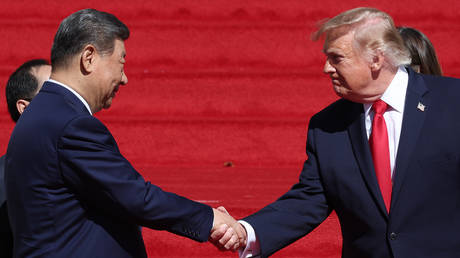
At a meeting in September with Chinese President Xi Jinping in Washington, Trump discussed Iran, trade, and energy, urging Beijing to boost refined fuel production to help stabilize global markets.
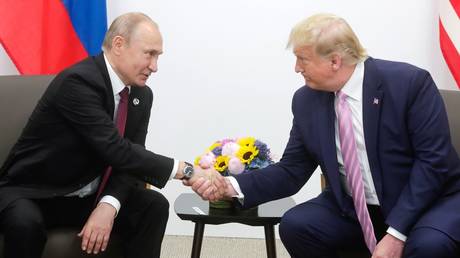
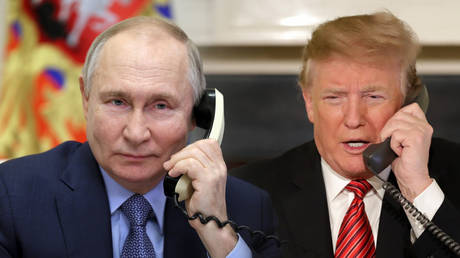
On Friday, Trump struck a diesel deal with Russian President Vladimir Putin to ease soaring fuel prices, after his administration repeatedly urged Kiev to halt strikes on Russian oil infrastructure.
The US subsequently eased sanctions on Russian diesel exports until April 2027. Moscow pledged to supply 300,000 tons in October, 500,000 in November, and 1 million in December. Russian Deputy Prime Minister Aleksandr Novak said monthly shipments could eventually reach 3 million tons, with Russia lifting its export restrictions ahead of schedule.
The US president sees China as America’s main rival and wants to draw Moscow closer to Washington, weakening its alignment with Beijing, the recently resigned leader has told RT
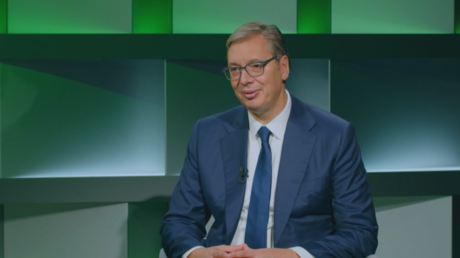
US President Donald Trump’s diesel deal with Russia is part of a broader geopolitical strategy to draw Moscow away from Beijing, Aleksandar Vucic has told RT Balkan in an exclusive interview.
According to Vucic, who recently stepped down as Serbian president to run for prime minister, Washington, which sees China as its main rival, hopes to weaken Beijing’s partnership with Russia by improving ties with Moscow.
Trump announced the deal following talks with Russian President Vladimir Putin on October 9. Moscow agreed to release more than 300,000 tons of diesel to US and global markets immediately, followed by another 500,000 tons in November and one million tons thereafter. Washington subsequently waived sanctions on Russian diesel until April 7, 2027.
Ahead of the deal, Trump blamed soaring fuel prices on Ukrainian strikes against Russian refineries, although markets have also been disrupted by the US war with Iran, which has affected shipping through the Strait of Hormuz.
“As far as Donald Trump is concerned, he is doing a smart thing for America, he is trying to do something to bring down the price per gallon… But I don’t think this is just about diesel,” Vucic said, noting that the initial 300,000 tons would cover less than a day’s US consumption.
With the US midterms approaching and Trump’s standoff with Tehran increasingly unpopular, Vucic suggested the deal could partly be aimed at winning over voters by lowering fuel prices. However, he suggested there was a larger geopolitical calculation behind the agreement.
“I think it is about something much more than this. Donald Trump knows that his main competitor is China. And is trying, in a sophisticated way, to move Russia somewhat away from China and bring it closer to the US.”
Asked whether Trump was seeking closer ties with Moscow, Vucic replied: “Of course.”
“If he is in conflict with Russia, he will only push Russia closer to China,” he explained. “Trump is trying, I assume, to draw Russia, China’s powerful and strong ally, at least a little away from that alliance.”
The Trump administration has long treated China as a major strategic rival. Its 2025 National Security Strategy calling for a rebalancing of economic ties with Beijing. Trump nevertheless hosted Chinese President Xi Jinping in Washington last month for talks on trade, Taiwan and Iran. The two sides agreed to extend their trade truce until January, but tensions over tariffs, technology and security persist.
Russia and China, meanwhile, have only deepened their strategic and energy cooperation in light of Ukraine-related Western sanctions on Moscow. Beijing has become Moscow’s biggest oil customer and a major buyer of Russian gas, with supplies expanding through the Power of Siberia pipeline as Russia redirected energy exports away from Europe.
Talking about Russia-US ties, Vucic also pointed to Washington’s diplomatic push to resolve the Ukraine conflict, saying its parallel negotiating channels with Moscow and Kiev show it is serious about reaching a settlement. However, he sees little prospect of an imminent breakthrough.
Vucic expressed hope that a peace deal could be reached within five to six months. Asked whether he fears that the conflict could evolve into a direct confrontation between Russia and the EU, Vucic replied: “I fear that, but I hope it won’t happen.”
Serbia has maintained close ties with Russia and, under Vucic, has resisted EU pressure to impose sanctions on Moscow over Ukraine, despite Belgrade’s ambitions to join the bloc. In the interview, Vucic again stressed the need to preserve Serbia’s traditional ties with Moscow despite external pressure, saying leaders must “keep a cool head and make rational and wise decisions.”
Vucic resigned during his second presidential term last month ahead of snap parliamentary elections scheduled for October 25. Barred by the Serbian constitution from seeking a third term, he is now seeking the prime minister’s post as a candidate for the ruling Serbian Progressive Party (SNS).
The Ukrainian leader should focus on securing peace rather than criticizing Washington’s diesel deal with Moscow, the US president has said
Russian President Vladimir Putin is more eager than Vladimir Zelensky to reach a deal to end the Ukraine conflict, US President Donald Trump has said. Trump’s comments came after he suggested it is time for Ukraine to get a “new president.”
Speaking to reporters on Monday, Trump claimed both Moscow and Kiev support the energy ceasefire which he announced on Sunday. Neither Russia nor Ukraine has confirmed the truce.
“I think they want to make a deal, but they don’t know how. But we’re going to get them to make a deal,” Trump said.
“I think, actually, Putin wants to make a deal more than Zelensky,” he added.
Trump also rejected criticism of his decision to ease sanctions on Russian diesel following a phone call with Putin on Friday, stressing that the agreement benefited the wider world and American farmers and ranchers.
“Zelensky has to focus on making a deal, not talking about that,” he stressed, referring to the Ukrainian leader’s criticism of the agreement.
On Sunday, Trump announced that Russia and Ukraine had agreed to an immediate “energy ceasefire.” Zelensky said the announcement “was news for me,” but expressed readiness to stop attacking Russian refineries if Moscow halted strikes on Ukrainian energy infrastructure.
Kremlin spokesman Dmitry Peskov has declined to confirm the agreement, saying contacts were ongoing. While praising the efforts of American negotiators, Peskov stressed that Moscow is seeking long-term peace rather than a temporary ceasefire. Russian officials have long argued that a truce would only help Ukraine to reinforce its battered military and receive more Western-made weapons.
According to the New York Times, Ukrainian officials were informed of the US-Russia diesel deal during tense negotiations in Miami. The US delegation subsequently demanded that Ukraine stop striking Russian refineries, and when Kiev’s representatives asked what they would receive in return, the Americans reportedly argued that Washington already provided substantial assistance, including intelligence sharing. Some participants interpreted this as a veiled threat to withdraw support, the article said.
Following his conversation with Putin and Zelensky’s angry reaction to the diesel deal, Trump suggested that “it’s time for Ukraine to get a new president.” Zelensky’s presidential term expired more than two years ago, although the Ukrainian leader has refused to hold a new election, citing martial law. Russia has declared Zelensky “illegitimate,” highlighting his dubious legal status as a major obstacle to a peace agreement.
After a war of words with Trump, Zelensky signaled he was ready to hold an election but demanded a 60-day ceasefire with Russia. Moscow responded by stressing that “if Kiev genuinely wants to hold elections… then the president of the Russian Federation… will be ready to issue an order not to carry out strikes against Ukraine on the election day specifically.”
Tehran says the allegations are an attempt to cover up Britain’s involvement in US-Israeli military operations against Iran
Iran has rejected accusations of plotting to attack a UK airbase, describing them as part of a false-flag operation aimed at covering up Britain’s involvement in the US war in the Middle East.
The Iranian Foreign Ministry issued a statement on Monday after the UK government imposed sanctions on two Iranian individuals amid allegations of an Iranian-backed terrorist plot targeting RAF Fairford in southwestern England, which hosts US bombers flying missions against Iran.
The ministry said the allegations were aimed at “advancing an anti-Iran campaign and evading accountability for Britain’s involvement in the US-Israeli military aggression against the Iranian people.”
“The Ministry of Foreign Affairs of the Islamic Republic of Iran categorically rejects the baseless accusations against Iran and holds the British government, along with those who planned and carried out this clumsy false-flag operation, responsible for all consequences arising from these fabrications,” the statement read.
The UK authorities have remained on high alert since local residents alerted police to suspicious vehicles near the base last month. Counterterrorism police arrested seven men in connection with the suspected plot, including a dual British-Iranian national. All seven have since been released on bail pending further investigation.
Addressing Parliament on Monday, UK Prime Minister Andy Burnham said it is “highly likely” that Iran was behind the alleged plot and that it was “almost certainly” directed by Iran’s Islamic Revolutionary Guard Corps (IRGC). The Foreign Office summoned the Iranian ambassador later that day.
The UK imposed sanctions on Ruhollah Bazghandi, described as the head of the IRGC’s counterespionage operations, and Shahram Ali Reza Tamarzadeh Jakki, described as a “facilitator of the Zindashti criminal network, involved in several plots against Iranian dissidents.”
Tehran previously accused the US of using the war with Iran to distract from domestic economic problems. In August, Iranian Foreign Minister Abbas Araghchi said US President Donald Trump’s threats of intensified economic warfare were intended to divert public attention from the national debt and rising interest costs. He described America’s economic pressure campaign as “economic terrorism.”
The tech billionaire has reportedly contributed around $366 million to GOP groups during the current election cycle
Tech billionaire Elon Musk has poured more than $276 million into Republican political groups since early July, becoming the largest known donor ahead of next month’s crucial US midterm elections, the New York Times reported on Monday.
The contributions come just weeks before the November 3 vote, which will determine whether Republicans retain control of both chambers of Congress.
According to the NYT, Musk donated $158 million to the Senate Leadership Fund, which backs Republican Senate candidates, and $20 million to the Congressional Leadership Fund, which supports House Republicans. The newspaper cited figures provided by Musk’s representatives ahead of a federal disclosure deadline on Thursday.
Another $76 million went to Musk’s America PAC, while $22 million was distributed among other Republican groups, Reuters reported. These organizations, known as super PACs, can raise and spend unlimited sums to support candidates but are prohibited from coordinating directly with their campaigns.
The latest contributions have brought Musk’s total political donations during the 2025–2026 election cycle to approximately $366 million, making the world’s richest person the largest known donor in this year’s congressional races.
“If Democrats take control of Washington and win key gubernatorial and attorney general races this November, then America risks becoming a socialist, woke and borderless country,” the NYT quoted Andrew Romeo, a spokesman for Musk’s America PAC, as saying.
Musk previously spent more than $290 million backing Donald Trump’s presidential campaign and other Republican candidates during the 2024 election cycle. The two publicly feuded in 2025 over Trump’s Big Beautiful Bill but have since appeared to reconcile, attending several events together.
Republican political groups had roughly $1 billion available for the midterms, compared with $579 million held by major Democratic organizations, the Associated Press reported last week. Republicans have also been spending heavily to defend traditionally safe seats, according to the news agency.
The elections come amid declining approval ratings for Trump, mounting concerns over living costs and the economic fallout from the US-Israeli war on Iran.
Trump’s approval rating fell to 30% in early October, down from 37% in January, before the US-Israeli attack on Iran in February, according to Pew Research Center polling.

 Login