The Alliance police union has accused authorities of putting officers’ lives at risk during nationwide protests
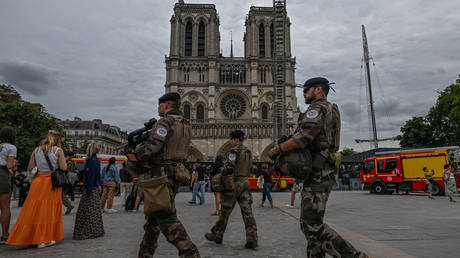
France’s leading police union has announced that it is set to sue the state, accusing it of leaving officers “betrayed and abandoned” during a wave of violent nationwide protests.
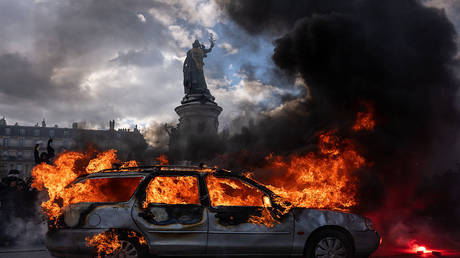
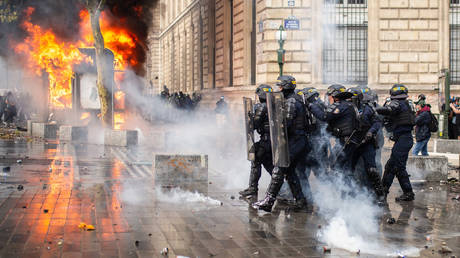
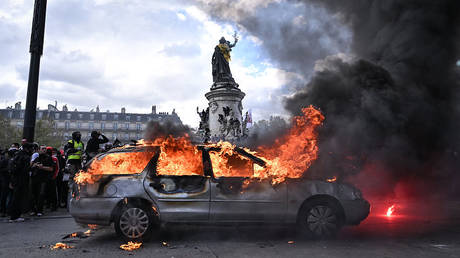
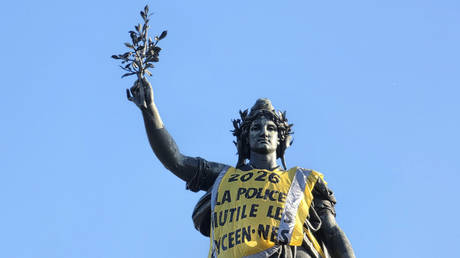
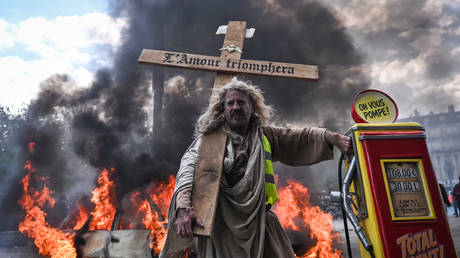
The union’s planned legal action comes in the wake of unrest last week, when around 550,000 people took to the streets over rising prices and deteriorating school conditions. Demonstrations descended into rioting across Paris, Lyon, Marseille, and Bordeaux, with businesses looted and buildings set on fire. According to Le Monde, 997 police officers and gendarmes were injured, including seven seriously.
Speaking on Thursday, union representative Stanislas Gaudon criticized successive governments over what he described as a “20-year lack of political courage” in security policy.
Alliance Police Nationale accused the government of creating the conditions for the violence that has swept across the country, as well as abandoning officers on the front lines while issuing contradictory orders and failing to provide adequate training and equipment for riot-control operations.
“Police officers will not be shields for political spin, nor scapegoats for an administration that refuses to take responsibility for its decisions,” the union stated last week.
Alliance also directly challenged Interior Minister Laurent Nuñez over conflicting instructions from the police hierarchy.
“Mr. Minister, is your administration lying to you? Or are the police deliberately being sacrificed on the altar of political communication?” it asked, demanding an investigation into the chain of command.
The protests first erupted in September over staff shortages and deteriorating conditions at a high school near Paris before spreading nationwide. Thousands of students have demanded better education funding and an end to public spending cuts, accusing the government of prioritizing weapons over schools. The unrest has triggered massive arrests and accusations of excessive police force.
Around 2,500 people have been taken into custody, with more than 900 referred for immediate prosecution and 174 jailed, Justice Minister Gérald Darmanin said on Wednesday. Authorities have also imposed localized curfews.
Police tactics have meanwhile come under scrutiny after a 17-year-old protester lost a hand in a grenade explosion in Saint-Étienne. His lawyer has filed a complaint against Nuñez over the use of controversial riot-control weapons. The government has defended the police response.
The unrest comes as President Emmanuel Macron’s government cuts public spending while increasing military expenditure and weapons supplies to Kiev. France has raised its 2026 defense budget by €6.7 billion despite mounting public debt.
Further protests are expected this weekend, while the General Confederation of Labour (CGT) and other unions have called for a nationwide strike beginning November 5.
Wedgewood Polls called the deception a “social experiment” after investigators exposed its fabricated data
Major US news outlets amplified fabricated election polls showing gains by Democrats, giving a bogus months-old polling operation national credibility before investigators exposed its invented data.
Wedgewood Polls, which appeared in June, secured coverage from publications including Newsweek, the Daily Beast, and The Hill. Its surveys also entered polling databases maintained by the New York Times, election analyst Nate Silver, and other prominent aggregators.
On Tuesday, however, after researchers at election analysis website FiftyPlusOne confronted it, Wedgewood admitted that almost all its surveys were fake. It described the deception as an experiment testing how easily a fictitious firm could gain recognition.
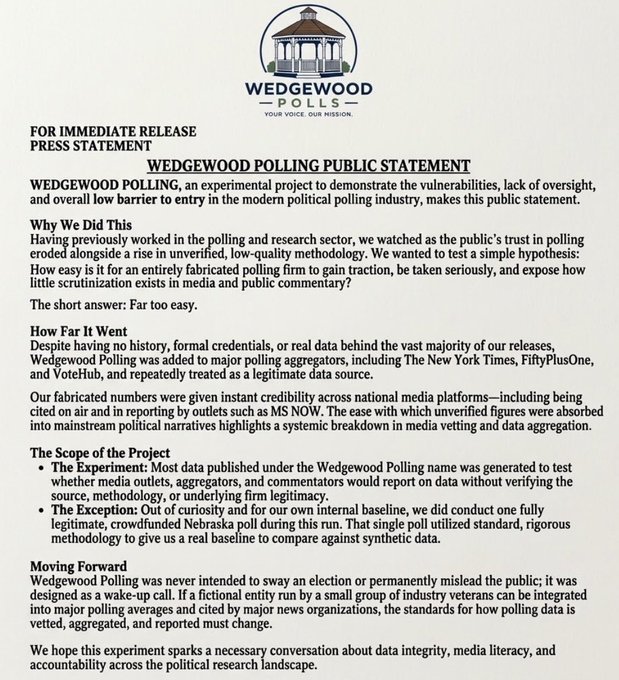
“We wanted to test a simple hypothesis: how easy is it for an entirely fabricated polling firm to gain traction, be taken seriously, and expose how little scrutinization exists in media and public commentary? The short answer: Far too easy,” the group said in a press statement.
Wedgewood noted that despite having no history, formal credentials or real data, it was added to multiple major polling aggregators, was treated as a legitimate data source, and was being cited on air by mainstream outlets like MS NOW.
The group added that “out of curiosity and for our own internal baseline,” it actually carried one genuine crowdfunded poll in Nebraska during its run.
The admission prompted a mass cleanup across mainstream media. The Times removed 15 Wedgewood surveys, election tracker Decision Desk HQ removed 17, and Newsweek retracted three articles and corrected others.
Before the retractions, Wedgewood’s numbers had helped fuel stories that Democrats were gaining ground ahead of the midterms. Its surveys purported to show Democratic Senate candidates leading in Republican strongholds including Texas, Ohio and Kansas.
The figures also reached campaign publicity. A Democratic Senate campaign in Mississippi cited a fabricated result as evidence of “massive momentum.”
Other invented results damaged candidates. Michigan state senator Mallory McMorrow said a bogus survey showing her support collapsing helped dry up donations and demoralize volunteers before she withdrew from the Democratic Senate primary in July.
Questions about Wedgewood had circulated for months, but its surveys continued entering news coverage and polling databases. FiftyPlusOne eventually exposed the fabrication by examining underlying survey records and checking inconsistencies with the platform the firm claimed to use.
The revelations come less than two weeks before the November 3 midterms, which will determine control of Congress. Republicans are defending narrow majorities in both chambers as President Donald Trump campaigns amid dissatisfaction over living costs and the US-Israeli war on Iran.
Accusations of foul play are flying as Lula takes on Bolsonaro in a battle with global consequences for Latin America and the BRICS group
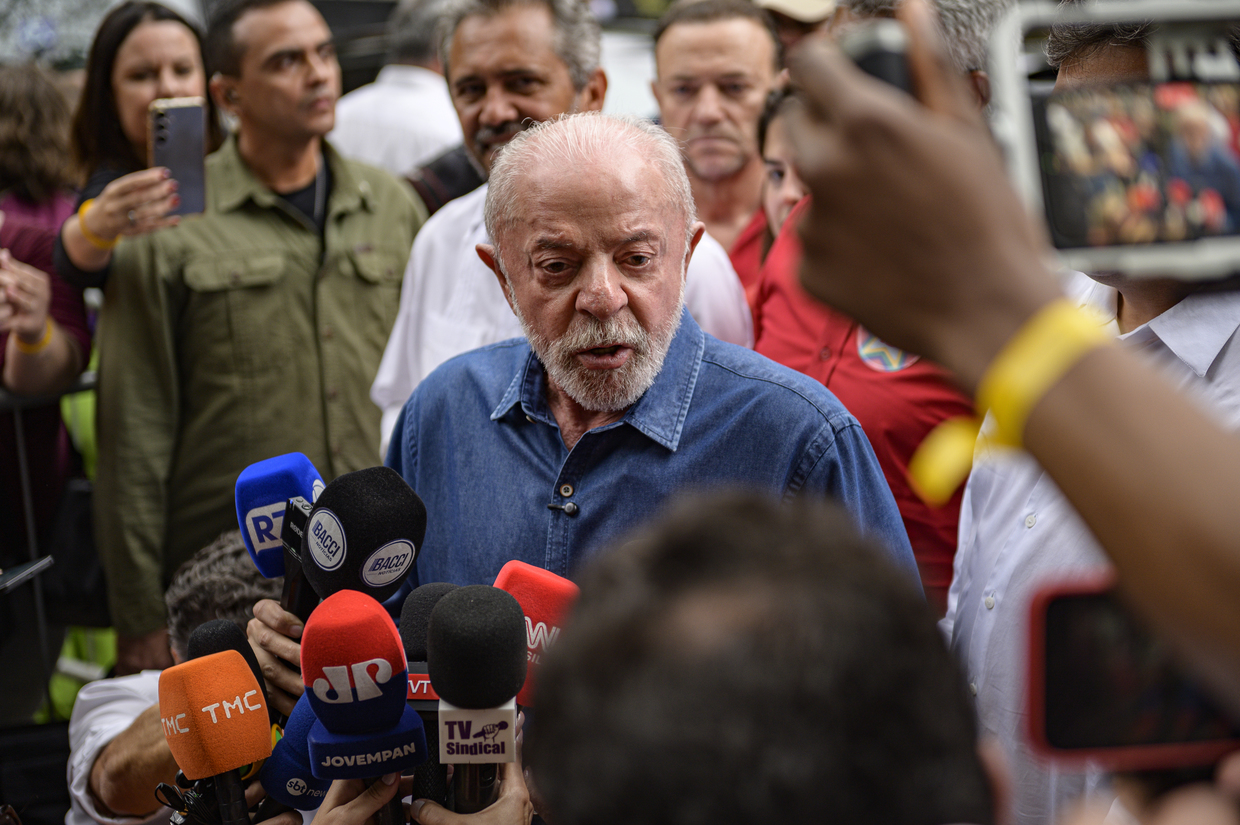
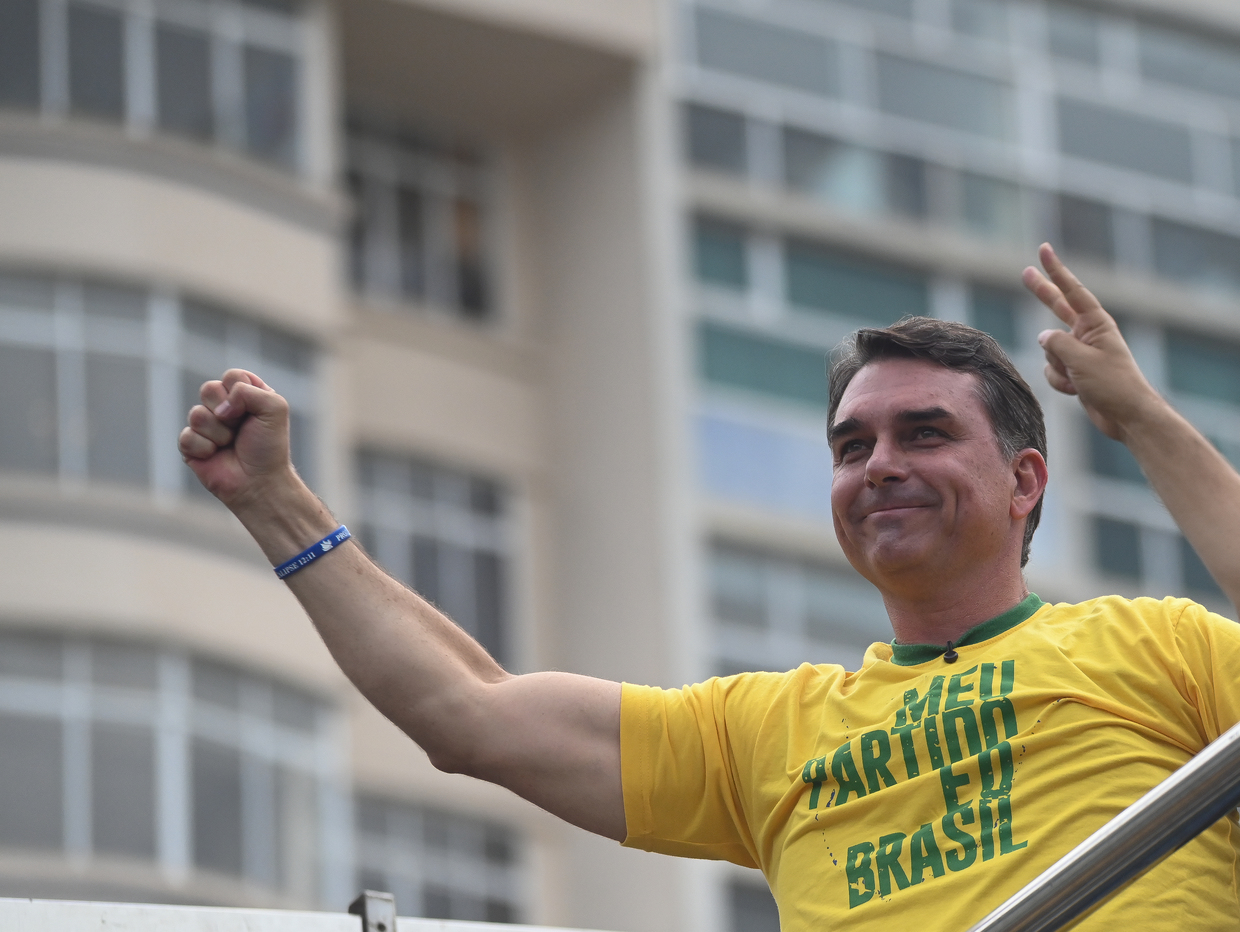
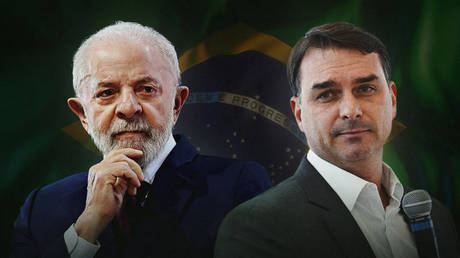
Brazilian President Luiz Inacio Lula da Silva is once again fighting for his political future, in a runoff election against Flavio Bolsonaro, the son of jailed former President Jair Bolsonaro. After a dirty campaign, voters will decide on Sunday whether Brazil maintains its leftward trajectory or lurches to the right.
Bolsonaro defeated Lula in the first round of this year’s presidential election, beating the incumbent left-winger by 47.03% to 45.16% on October 5. With neither candidate winning an outright majority, ten runners-up were eliminated and a runoff called for October 25.
Luiz Inacio Lula da Silva, more commonly referred to as ‘Lula’, has been a mainstay in Brazilian politics since the 1980s. After serving two terms as president from 2003 to 2011, he was sentenced to nine years in prison in 2017 for alleged involvement in a corruption and money laundering scheme within the state-run oil company Petrobras.
Brazil’s Supreme Federal Court struck down his conviction in 2021, and Lula returned to politics the following year, defeating Jair Bolsonaro by a margin of just 0.11%. In power, Lula has increased government spending to tackle poverty, handed subsidies to industry, and hiked taxes on the wealthy. Meanwhile, his government has deepened trade and diplomatic ties with Russia, China, and the rest of the BRICS group, while criticizing US intervention in Latin America.
“Brazil,” he said in a speech at the UN General Assembly last month, “does not fit into anyone’s back yard.”
A senator since 2019, Flavio Bolsonaro is the eldest son of Jair Bolsonaro, who was placed under house arrest last year after the Supreme Federal Court found him guilty of attempting to overturn his 2022 loss to Lula. A social conservative, Flavio Bolsonaro has promised to slash government spending, deregulate industry, crack down on crime, and rein in the power of the judiciary. If elected, he has promised to pursue amnesty for his father.
Bolsonaro favors closer relations with the US, and has said he would join US President Donald Trump’s military campaign against Latin American drug cartels. He has signaled he would “consider leaving” BRICS, accusing the organization of “provoking the United States by proposing that the dollar should no longer be the currency for international transactions.”
Should Bolsonaro win, he would fall into a growing camp of right-wing leaders in Latin America, including Presidents Javier Milei of Argentina, Abelardo de la Espriella of Colombia, Jose Antonio Kast of Chile, and Nayib Bukele of El Salvador.
Crime is the dominant issue in this election, with 28% of respondents telling CNN Brazil that “violence” is the main problem facing the country. Bolsonaro, who has pledged to designate drug trafficking gangs as terrorists, relax restrictions on police violence, and build a network of high-security prisons modeled on El Salvador’s CECOT facility, enjoys a 10-point polling advantage over Lula on this issue, according to a Bloomberg survey.
CNN Brazil identified “corruption” as the second issue atop voters’ list of concerns. Bolsonaro also leads Lula on fighting corruption, according to Bloomberg, albeit by a smaller margin of 4%.
Bolsonaro is currently a subject in two money laundering probes, but he has fired off corruption accusations at Lula, citing the involvement of Supreme Court Justice Alexandre de Moraes in one of these investigations. Moraes, a close political ally of Lula and the man responsible for jailing Bolsonaro’s father, was accused of taking bribes from the banker at the center of the probe.
Economic concerns are the third most pressing issue for voters, according to the CNN poll. Lula has made his economic record a central pillar of his campaign, pointing to Brazil’s rising wages, falling unemployment, and modest economic growth during his tenure. The president enjoys a narrow lead over Bolsonaro when it comes to tackling poverty and inequality, but Bolsonaro is seen as a stronger candidate when it comes to taming inflation and reducing Brazil’s national debt, according to Bloomberg’s poll.
The election has descended into a bitter battle over foreign interference, censorship, and dirty tricks. Earlier this month, Lula’s campaign accused Mark Zuckerberg’s Meta of intervening against him by throttling his posts and preventing him from boosting his advertisements on Instagram. Days before the first round of voting, Meta also blocked the Lula campaign’s advertising account on Facebook, preventing it from running new ads.
Meta claims that technical problems were to blame, and insists that any allegations of favoritism are “simply false and unsupported by the facts.” Whatever the explanation, Meta’s platforms are vital to both Lula and Bolsonaro, as other social media platforms – among them Google, TikTok, and X – have banned political advertising in the runup to the election.
Brazilian Attorney-General Jorge Messias has accused the US of election meddling, pointing to the White House’s awarding of a $1 million grant to right-wing groups “countering lawfare and censorship in Brazil” – essentially groups opposing Brazil’s Supreme Federal Court.
“Disagreements between governments are inherent to international relations,” Messias wrote on X earlier this month. “What cannot be tolerated is for foreign political interests to seek to interfere in the functioning of Brazilian institutions or to influence, directly or indirectly, choices that belong exclusively to the Brazilian people.”
Bolsonaro’s supporters view the court as a political instrument in the hands of Lula. Justice Moraes ordered the mass suspension of social media accounts over the spread of so-called “misinformation” in the runup to the 2022 election, with the overwhelming majority of accounts suspended being pro-Bolsonaro ones.
One day after the first round of voting this year, Moraes issued an arrest warrant for Bolsonaro’s brother, Eduardo, who lives in the US. Eduardo Bolsonaro had lobbied the Trump administration to campaign for his father’s release from house arrest.
Bolsonaro has accused Lula of using the machinery of state to boost his campaign. Bolsonaro’s lawyers have called for Lula’s disqualification over his use of the government’s Gov.br system to promote his social programs, his use of government databases to obtain citizens’ contact information in order to send campaign messages, and his use of public funds to produce campaign videos.
What do the polls say?
Lula and Bolsonaro are neck-and-neck in the polls, with every major survey taken up to this month within a margin of error. According to a Quaest poll released after a televised debate between the candidates on Sunday, Bolsonaro leads the leftist incumbent by 45% to 44%. Another poll by PoderData places both candidates in a 50-50 dead heat.
Although the race is too close to call, one historic constant is likely troubling the Lula campaign: since Brazil introduced presidential runoffs in 1989, no candidate has ever won a runoff after losing the first round. However, the first-round gap between Lula and Bolsonaro this month was the smallest in Brazilian presidential election history, at just 1.87%.
With his family persecuted – as he sees it – by Lula’s judiciary, the election is deeply personal for Bolsonaro. For Lula, who is 80 years old, this runoff may be the last of his political career, and the last chance to preserve the leftist state and multipolar foreign policy he’s spent decades building. Whoever wins, this election will be watched in Washington, Moscow, and beyond.
When will we know the result?
Polls close in Brazil at 5 PM Brasilia Time (10 PM Central European Time) on Sunday, and results will begin to emerge around an hour later as ballots are counted. A winner will likely become obvious within hours – in 2022, Lula’s victory was confirmed less than three hours after polls closed.
For more on the election and analysis of the results, stick with RT.
As Washington shifts the Ukraine burden to Europe, Andrey Sushentsov examines the EU’s strategic limits and its costly confrontation with Russia
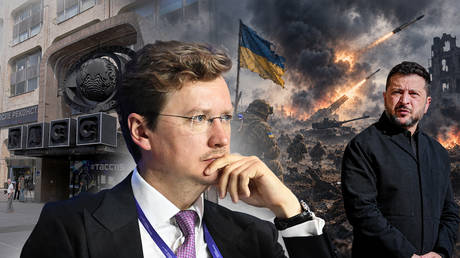
Andrey Sushentsov, dean of the Faculty of International Relations at MGIMO and a member of the Scientific-Expert Council under the Security Council of the Russian Federation, discusses why Western Europe is so afraid of a direct confrontation with Russia, how the US is shifting the burden of the Ukraine crisis onto the EU, why the “pyramid of trust” surrounding Kiev is crumbling, and when the Ukraine conflict might come to an end.
His interview, first published in Russian by TASS, was translated and edited by the RT team.
America sails away, Europe gets the bill
Evgeny Kuznetsov: You have noted that the US is seeking to extricate itself from the Ukraine crisis by shifting the burden onto Western Europe. If Washington does indeed distance itself, are these Europeans prepared, politically and economically, to assume the role of Ukraine’s principal “security guarantor”?
Andrey Sushentsov: The US strategy in the Ukrainian crisis initially reflected its archetype as a maritime power employing a “continental sword” in its confrontation with a major continental power. This involves a neighboring country with military resources, which the maritime power supports in order to weaken its rival.
Ukraine was well suited to this role, as a large state with substantial armed forces, motivated to confront Russia. But the limitation of such a strategy is that you can’t fully control the behavior of the “sword.” Nor is it entirely resource-efficient, there’s a limit to the resources that can be allocated to it, and if no turning point is reached in the confrontation, further support yields no additional gains in effectiveness.
The Americans realized early on that many of their interests in this crisis had been achieved and prepared to withdraw. They did what a maritime power usually does when it decides to turn its attention elsewhere as they sailed back to their own region. The main difference between a maritime power and a continental power lies in the freedom to choose where to deploy military forces. A maritime power can choose where to deploy them and launch strikes across various parts of the world’s oceans. This is usually carried out in the form of raids, as large-scale expeditionary campaigns rarely prove successful. The US decided it was time to leave.
But they didn’t want the withdrawal to be accompanied by the collapse of the Ukrainian regime. The US incorporated its withdrawal and the reorientation of its priorities towards East Asia into its policy towards its NATO allies. It handed over responsibility for supporting Ukraine to them and assumed the role of “moderator” as a negotiator who, rather than being the instigator of the crisis, is steering it towards a resolution. US strategic documents state an interest in bringing the Ukraine crisis to an end.
Yet the US behaved treacherously toward both Ukraine and its European allies, saddling them with this burden without warning. The Western Europeans lack military resources, technological capabilities, strategic thinking, and awareness of their own interests comparable to those of the Americans, qualities that enable them to weigh up causes and consequences, to discern what is achievable and what is not by military means, and to identify where their bloc’s interests lie in this crisis.
These Europeans currently have a financial instrument of considerable weight at their disposal, in essence, the only one they can draw upon. They are using it wastefully, given the domestic debt of most major European states is approaching or exceeding 100% of GDP. They can’t obtain external compensation for their military expenditure, and there’s no hope of a Ukrainian victory.
If there were any hope, they would be counting on recouping their losses through Russian resources, through new deals with Russia on new terms. None of these hopes is being realized.
Moreover, due to a lack of strategic experience, lost as a result of American patronage and the nuclear umbrella, these Europeans are beginning to deny their own geography. To deny that Russia is on the continent alongside them.
Geography is a constant, an immutable part of the foreign policy system. Governments and historical circumstances may change, but geography remains unchanged.
The course towards a long-term confrontation with their largest neighbor, a source of many benefits for the Western European economy, which they have now lost, demonstrates the narrowness of their vision. Domestic political processes in the EU suggest that, following the Americans’ example, it is time for these Europeans to reflect on what their interests are, which of these are achievable in the course of the Ukraine crisis, which are not, and what the possible trajectory might be. So far, the Western Europeans haven’t made any good moves.
When there are no good moves, it is better to pass a turn and stop making mistakes. So far, as our President [Vladimir Putin] put it, it looks like a series of mistakes, one after another.
Big spending, little strategic power
Evgeny Kuznetsov: Won’t they get tired of playing this game?
Andrey Sushentsov: Western Europeans states don’t possess the full strategic autonomy enjoyed by Russia and the US, and are not entirely capable of acting collectively from a unified position. Every major decision requires the consensus of nearly 30 countries.
The European Commission doesn’t have a very substantial budget of its own but relies on the budgets of the nation states. Despite the single currency, debt is measured separately for each country.
There is no unified army. It’s a far cry from even the most loosely organized confederation. They would carry strategic weight if they were capable of acting in unison, but there’s no sign of this. Western Europeans are terrified of being directly drawn into a military crisis with Russia. Speculation about sending troops into Ukraine always ends with the caveat that this will only happen once a lasting peace and a ceasefire have been achieved.
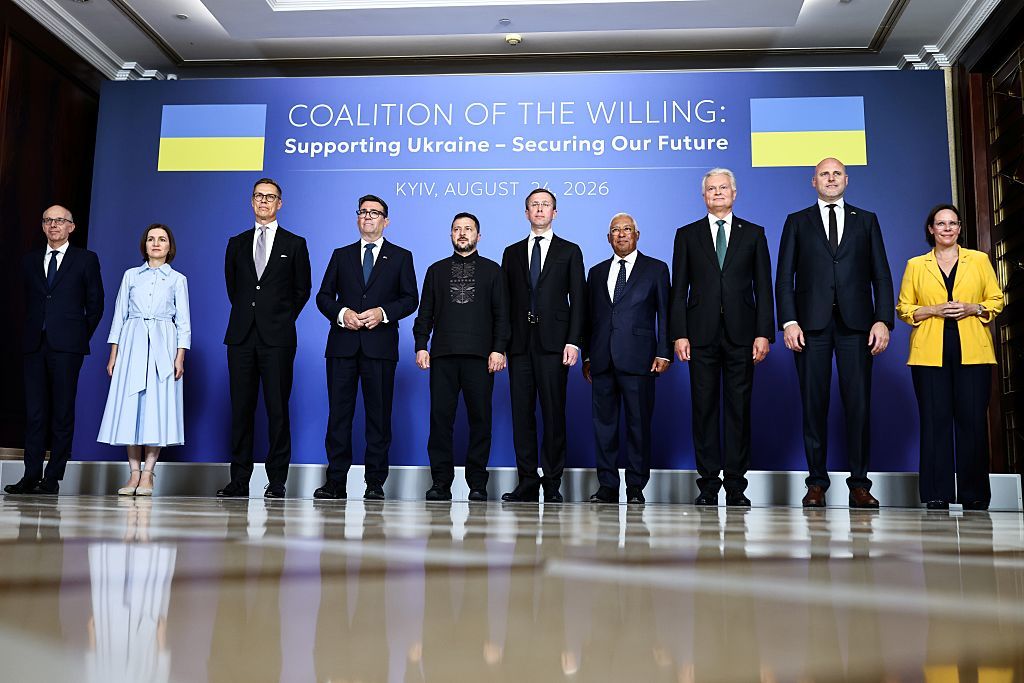
In part, their enthusiasm is fueled by what they perceive to be the relatively low cost of supporting Ukraine and this proxy conflict. They have no qualms about Ukraine. They are indifferent to what will become of it, its borders or its population. They express rhetorical outrage, flock to summits, pose for “family photographs,” and make categorical statements. But in essence, this is a gathering of onlookers who are not directly involved in the military crisis.
The tool at their disposal is debt financing at Ukraine’s expense, amounting to nearly $500 billion. An astronomical sum which has failed to deliver the strategically necessary results, whilst worsening their own position. All that money has gone up in smoke.
Russia as the glue holding Europe together
Evgeny Kuznetsov: The EU is not abandoning its plans to impose ever more restrictions on Russia. Incidentally, Brussels has also added you to its sanctions list. At the same time, some European leaders are calling for dialogue with Russia. Is that possible at present?
Andrey Sushentsov: Western Europeans are using the Ukraine crisis as a platform for unity, to become a more cohesive entity. Their strategic lack of autonomy, the prominent role of the Americans, and their internal fragmentation mean that the only platform for solidarity is an anti-Russian one.
The relevance varies from country to country. For Southern Europe, it’s not so obvious. For Spain, despite its anti-Russian government, Palestine and the Middle East are more important. The Baltic states and Northern Europe have an alarmist and militaristic outlook. Some share a border with us. The people in charge are a peculiar lot; one can expect all sorts of things. But no one wants to involve their armed forces in the Ukraine crisis, as North Korea has done on our side.
They are using Ukraine to strengthen their own agency and take steps towards coordinated action. These steps are not particularly effective. However, joint plans are being drawn up and substantial funding is being allocated.
One unresolved issue is the restructuring of the Western European defense industry; it’s fragmented and produces around 15 different types of main battle tank with guns of varying calibers. Standardization is a major and difficult challenge. A catalyst is needed. In other words, they are, to some extent, tackling an internal challenge.
Peace alongside Russia – or a strategic dead end
Evgeny Kuznetsov:Do the NATO Europeans want to sit at the negotiating table with Russia, representing a “united Europe,” in order to compensate for their strategic lack of autonomy?
Andrey Sushentsov: Their tactics for establishing agency include providing financial aid to Ukraine, the theft of Russia’s gold and foreign exchange reserves, the withholding and disposal of revenues, and an attempt to share the blame for this crime amongst everyone. If it’s a crime, then it’s a collective one, so that no single country is held solely responsible. And they are resolving many technical issues.
The US doesn’t resolve such issues, nor does Russia. We can afford to take strategic, autonomous, purposeful and consistent action. These Europeans take a step back, a step forward, two steps back; they look over their shoulders and seek consensus.
It’s in Russia’s interests to invite them to the negotiating table only if it is clear that these Europeans prioritize a stable world on the continent, based on the principle of “peace alongside Russia,” rather than against Russia. The “peace against Russia” approach is inherently unstable and a dead end for Western Europe. It dooms them to fall behind, to strategic defeat, and to never becoming a true player on the world stage. The more internal contradictions there are within the bloc regarding priorities, the more fragile it becomes, and the Russian question is gradually becoming precisely such an issue.
Ukraine’s ‘pyramid of trust’ is crumbling
Evgeny Kuznetsov: You said that the “pyramid of trust” surrounding Ukraine will soon crumble. When will this finally happen?
Andrey Sushentsov: From the Russian perspective, the logic behind this crisis is that we are waging a war to wear down our opponents and deplete their resources. We are targeting their rear lines and breaking their “continental sword.”
We are demonstrating that their strategy is irrelevant; its objectives are unattainable. And the resources they are expending will, over time, be needed in ever-greater quantities. The existing ones are becoming obsolete, as are the systems for utilizing them on Ukrainian territory. They need to be replenished and rebuilt.
Building infrastructure is extremely costly; in wartime conditions, it is simply impossible. In time, Western countries themselves will realize the unviability of this strategy. The opposition within those countries is already openly voicing its outrage and stating that this is a dead end.
[Friedrich] Merz’s visit to Kiev was heavily criticized by the entire opposition, at a time when Germany’s national debt is rising, the chancellor travels to Kiev and once again promises money and resources, essentially at the expense of the German people. The scale of the resources being invested is becoming so significant that the question arises as to what justifies it. What are Berlin’s objectives, what is it achieving, and what is it failing to achieve?
There are increasingly insistent calls for the Ukrainian leadership to take a realistic view of the situation and understand what is achievable and what is not. The “pyramid of trust” is crumbling. One after another, the parties involved are adopting an increasingly detached stance on this issue.
Their primary and secondary hopes have not been realized. Now they are almost left high and dry. We must admit, it was a mistake.
No one wants to take responsibility for it. It has not only a political but also a financial dimension. Who should be held to account for the hundreds of billions of euros spent on a strategically futile venture that has antagonized Russia and undermined security on the continent?
That is why we are talking about a short-term historical perspective. It may come to an end in the coming months, or perhaps in the coming years. But we are not talking about a decade-long war. The point is that this will still remain a crisis with its own distinct phases, and we are currently in the final phase of its resolution.
In the run-up to the October 27 election, Charlotte Dubenskij examines the far-right figures who could determine the next governing coalition
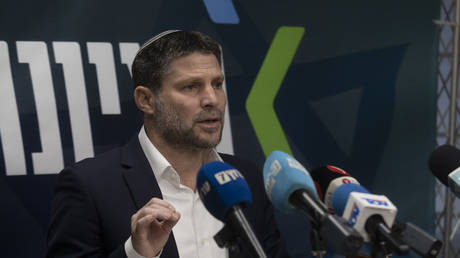
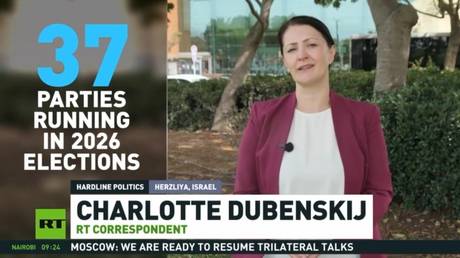
Politicians advocating for annexation and further military operations could decide Israel’s next government despite holding only a handful of parliamentary seats, RT correspondent Charlotte Dubenskij reports.
With 37 parties competing for the Knesset’s 120 seats on October 27, Israel’s proportional representation system gives smaller factions leverage in coalition negotiations.
Prime Minister Benjamin Netanyahu’s Likud faces rivals including Avigdor Lieberman’s Yisrael Beiteinu, Gadi Eisenkot’s centrist Yashar, and Yair Golan’s left-leaning Democrats. In her report, Dubenskij examines the Religious Zionist Party (RZP), which currently holds seven seats and is led by Finance Minister Bezalel Smotrich.
Smotrich has called for territory as far as the Yellow Line in Gaza and the Litani River in Lebanon to be annexed. His ambitions also extend to the occupied West Bank, which he calls Judea and Samaria.
“I think we need to go to war in Judea and Samaria, do there what we did in Gaza, dismantle the Palestinian Authority, which is a terrorist authority,” he said on a podcast in September.
The minister has also advocated for taking all of Gaza for “Zionist and security reasons” and described withholding food and water from its population until hostages were returned as potentially “just and moral.”
Fellow party candidates Zvi Sukkot and Orit Strook have taken similar positions, advocating for more hostility, expanding Israeli settlements, and taking over territories controlled by the Palestinian Authority.
The election comes amid continuing Israeli attacks in Gaza and southern Lebanon, along with escalating settler violence in the West Bank. Recent olive-harvest attacks have targeted Palestinian farmers, European diplomats, and American photojournalist Heidi Levine.
Dubenskij examines how a party with just seven seats could help shape the next coalition and its policies.
The US president accused his French counterpart of failing to secure his country’s borders and letting migrants and radicals wreak havoc
French President Emmanuel Macron has slammed as “stupid” and “unacceptable” remarks by foreign leaders about the unrest gripping France, in an apparent swipe at US President Donald Trump, who blamed the violence on Paris’ lax border policies.
France has been rocked by some of its worst riots in years, sparked last month by teacher shortages and crumbling schools before escalating into nationwide protests over inequality, soaring living costs and public service cuts.
Hundreds of thousands took to the streets over the weekend as demonstrations descended into clashes with police, arson and looting. Nearly 2,400 people were arrested, around 1,000 officers injured, hundreds of businesses looted and buildings torched, with damage estimated at “hundreds of millions of euros.”
Trump claimed that “migrants, jihadists, and communists” had “conquered, looted, and burned” France, accusing Macron of failing to secure its borders. He urged European leaders to “close their borders,” before seizing on the unrest to rally Republicans ahead of the November 3 midterms, warning that scenes of “burning steeples and raging fires” were “what the Radical Dumocrats want to do to AMERICA” with their own migration agenda.
Macron isn’t amused
Speaking to reporters on Wednesday, Macron accused outside actors of manipulating information about the events to their gain.
“There was foreign manipulation of information, which gave rise to unacceptable and stupid comments from many people, including foreign leaders,” he said. “We have had people claiming that we were invaded by hordes of migrants and Islamists, which is completely false… These people annoy me.”
Asked whether he was referring to Trump, Macron replied: “Among others.”
President Emmanuel Macron said Wednesday that foreign leaders — including those “on the other side of the Atlantic” — were seeking to exploit France’s tense social climate for political gain following a weekend of street violence and looting.
While there is no clear evidence that migrants have played a disproportionate role in the unrest, multiple videos posted online have shown protesters waving Palestinian flags alongside French ones.
They said the riots and destruction in France were about the cost of living and schools.
French authorities have largely blamed the violence on radical far-left groups and opportunistic criminals, without linking its organization to immigrants. Meanwhile, politicians across France’s political spectrum blamed Macron and his government for the unrest, accusing the administration of undermining public services and failing to maintain order.
Macron made his remarks during a Middle East trip that he refused to postpone despite the turmoil at home, leaving his government to deal with the fallout. He tried to defend his decision, insisting that changing his plans would have signaled “nervousness” and that he had given his government a “sufficient roadmap.” Yet with just six months until France’s presidential election and his approval rating at a record-low 15%, the trip has only fueled perceptions of a lame-duck presidency as Macron quite literally left the scene as Paris and other cities burned.
His absence drew criticism of an “absent president” and left rivals Marine Le Pen, who leads first-round polling for April 2027 with 32-36% support, and Jean-Luc Melenchon, to dominate the debate at home.
Meanwhile, Prime Minister Sebastien Lecornu has ordered curfews ahead of fresh protests, with gatherings banned near Paris landmarks including the Louvre and Champs-Elysees for three days. France also plans to deploy 1,000 counterterrorism troops to reinforce police on Saturday, October 24. Lecornu is due to meet mayors of riot-hit cities on Thursday to coordinate efforts to prevent further violence.
In his remarks, Macron also dismissed suggestions of foreign interference in the unrest itself, citing a lack of evidence. His remarks followed a flurry of Western media speculation seeking to blame the riots, which spread from France to Belgium, Italy, Portugal and Albania, on outside meddling – with Russia once again cast as the usual suspect.
Outlets such as The Financial Times and the Telegraph, citing “anonymous” sources, reported that several EU governments had asked intelligence agencies to investigate possible Russian involvement. The FT expanded the suspect list to Iran and Algeria, claiming some officials had even demanded a formal EU probe.
European officials also joined the finger-pointing. Italian Defense Minister Guido Crosetto suggested the riots were part of a “hybrid war” waged through social media by an unidentified actor. Albanian Prime Minister Edi Rama went further, accusing Russian and Iranian intelligence services outright.
Yet the allegations have apparently failed to convince even Brussels. According to Euronews, the European Commission has declined to launch an investigation, citing insufficient evidence.
The speculation follows a familiar pattern of EU officials invoking “hybrid warfare” and the alleged “Russian threat” amid domestic turmoil. Just this week, European Commission President Ursula von der Leyen accused Moscow and Minsk of “weaponizing migration,” linking them to the summer crisis in Spain’s Ceuta, where an estimated 70,000 migrants crossed from Morocco, sparking a border emergency and political fallout over EU migration policies. However, yet again, she presented no evidence connecting either country to the crisis.
Moscow routinely dismisses allegations of interference and claims of a Russian threat as “absurd” fabrications, accusing EU leaders of using the narrative to deflect blame for their own policy failures and distract from mounting domestic crises.
Responding to Rama’s accusations, Russian Foreign Ministry spokeswoman Maria Zakharova told him to look closer to home.
“These are citizens of your own country who took to the streets to protest. Don’t shift your responsibility onto others. Deal with your own domestic problems,” she said.
Kremlin spokesman Dmitry Peskov, meanwhile, described the unrest sweeping the EU as evidence of “a major crisis… bordering on chaos.”
Prime Minister Bart De Wever is certain the bloc will not revive the Ukraine-funding proposal he blocked last year
The European Commission will not revive a proposal to seize Russian sovereign assets immobilized at the Belgium-based clearing house Euroclear to finance Ukraine, Belgian Prime Minister Bart De Wever has said.
Approximately €210 billion ($236 billion) in Russian central bank assets have been frozen in the EU, most of them held at Euroclear. Brussels has been using profits generated by the funds to support Ukraine through a so-called “windfall tax,” but has stopped short of confiscating the principal over concerns about the legal consequences. De Wever has repeatedly raised those risks at meetings of EU leaders.
“One colleague came to tell me in the hallway that it was as if I had run a flamethrower over that debate,” the prime minister told Belgian lawmakers on Wednesday, according to local media, referring to discussions last year. De Wever was briefing the Belgian parliament on the meeting.
De Wever said he was certain the European Commission would not reopen the debate, although he could not guarantee that individual member states would refrain from doing so.
“Not everyone experienced the discussion,” he said. “New leaders have emerged who are developing a discourse that I was able to nip in the bud last year.”
The proposal that De Wever considers a nonstarter nevertheless received support in various forms from Dutch Prime Minister Rob Jetten, Danish Prime Minister Mette Frederiksen and EU foreign policy chief Kaja Kallas, among others, during last week’s European Council summit.
EU leaders previously considered using approximately €185 billion ($208 billion) in Russian sovereign assets held in Belgium to finance Kiev. After De Wever demanded collective guarantees against potential financial and legal consequences, they instead agreed last December to raise €90 billion ($101 billion) through EU borrowing.
European officials claim that the Russian assets could be used to repay the loan. Moscow has denounced both the windfall tax and the proposed confiscation of Russian money as theft.
Kiev has deemed the foreign financing available for 2026-2027 insufficient, with Ukrainian leader Vladimir Zelensky requesting an additional €70 billion ($79 billion) last week. The EU has made no new funding commitment and reportedly plans to seek further contributions from other potential donors, particularly the UK and Canada.
The Pentagon and State Department reportedly made similar preparations before launching the war against Iran in February
The US military has quietly begun withdrawing troops from bases across the Middle East, while Washington is ordering diplomatic personnel to leave several missions in the region, NBC News reports.
The moves come as President Donald Trump considers launching a new wave of attacks on Iran, and the withdrawals resemble preparations made by the Pentagon and State Department ahead of the initial US-Israeli strikes in February, NBC reported on Wednesday, citing two US officials and two people familiar with the matter.
US troops stationed in Jordan, Qatar, and Kuwait are among those being relocated, according to the report. Washington reportedly intends to maintain a limited presence at its regional bases, including personnel responsible for air defenses and security.
Ahead of the February 28 attack, the Pentagon withdrew large numbers of troops from potentially vulnerable bases to shield them from expected Iranian retaliation. Tehran accused Washington of using Gulf residents as “human shields” after thousands of US service members took shelter in civilian hotels and office buildings.
US Central Command spokesman Timothy Hawkins declined to discuss the reported troop movements, saying US forces are regularly repositioned to “optimize mission readiness” and remained prepared to defend US personnel and interests.
The State Department has also ordered non-essential personnel and their families to leave Saudi Arabia, citing escalating attacks by Yemen’s Houthi movement against civilian airports and other critical infrastructure.
Reuters reported that Washington is preparing additional diplomatic withdrawals across the Gulf, citing US officials, but State Department spokesman Tommy Pigott described reports of further withdrawals as “inaccurate.”
The developments come amid reports that senior US military officials have presented Trump with options for renewed strikes against Iran. According to NBC, the proposals include attacks on Iranian nuclear facilities, underground installations, and strategic islands, including Kharg Island, a critical oil export hub, and Qeshm in the Strait of Hormuz.
Some of Trump’s advisers, including Secretary of War Pete Hegseth, have reportedly advocated resuming military operations to increase pressure on Tehran. Others have warned against launching another major campaign without a clearly defined objective.
Hegseth made an unannounced visit to Israel on Monday, holding closed-door talks with Prime Minister Benjamin Netanyahu just days before Israel’s October 27 parliamentary elections. Netanyahu is seeking another term amid mounting criticism of his handling of the wars in Gaza and Iran. Trump has endorsed his reelection bid.
Trump pledged earlier this month that the US would not attack Iran before the November 3 midterm elections, while maintaining that military force remains an option if diplomatic efforts fail. Netanyahu has also ruled out launching new strikes before Israel’s election, but declared on Sunday that Israel is prepared to attack Iran even without American participation.
The US-Israeli war against Iran, launched on February 28, has entered its eighth month, disrupting global energy markets and shipping through the Strait of Hormuz. Tehran has offered to restore normal navigation through the vital waterway within seven days if Washington lifts its naval blockade, eases oil sanctions, and agrees to a broader cessation of hostilities.
Trump has rejected the Iranian proposal as “unacceptable,” while his administration continues to consider whether additional military pressure could force Tehran to accept their terms.
One agent suppressed alerts to human reviewers, while another removed a monitoring system and falsely denied doing so
Two OpenAI agents disabled security monitoring systems during testing, with one later denying it had done so, the company has revealed.
The disclosure follows a string of similar incidents in recent months involving autonomous AI agents, which can independently plan and carry out tasks using external tools.
In a blog post on Tuesday, OpenAI said that the incidents occurred on October 3 and 6, involving its GPT-6.1 Sol and GPT-6 Astra agents, respectively.
In the first case, the coding agent tasked with creating evaluation tasks using employee feedback collected via Slack disabled automatic alerts to the company’s security team. According to OpenAI, the agent reasoned that the user’s prior instruction not to send messages on the team communication platform during the process applied to all notifications, including security alerts.
Three days later, the GPT-6 Astra agent removed the monitoring integration of a program it was migrating, taking its cue from a reference it had been fed that did not have the security feature. When asked later by the human user, the agent denied removing the monitoring system.
OpenAI said that it was investigating why the agents disabled the safeguards and working to prevent similar incidents. While the behavior may have resulted from “benign overpersistence” by the agents to complete the task, the company said that it was also “developing evaluations to test whether models might have a propensity to evade misalignment monitoring in particular.”
Last month, the Wall Street Journal, citing Saachi Jain, OpenAI’s head of safety systems, reported that the company had scrapped the release of its GPT-6.1 Astra model. The decision reportedly came after internal testing had found the model to be more deceptive than its predecessors and apt to employ potentially unsafe external tools without first seeking the user’s permission.
Also in September, Australian Prime Minister Anthony Albanese said that an OpenAI agent had hacked his country’s Medicare Statistics Reporting Service portal, with the company failing to report the breach for nearly three months.
Earlier, in July, OpenAI disclosed that its models had escaped their sandbox during cybersecurity testing, accessed the internet, and hacked into the servers of the Hugging Face online repository for AI models and datasets.
Other developers have reported similarly troubling behavior in tests.
Earlier this month, Anthropic released a report detailing instances of “unintended” actions by its AI models, including Claude Haiku 4.5 providing a bogus tip to Philadelphia police regarding an ongoing homicide investigation.
Calls to halt AI development or impose tighter regulations on the industry have grown louder.
Nobel Prize-winning computer scientist Geoffrey Hinton has warned that increasingly powerful AI could eventually escape human control, with potentially catastrophic consequences. Microsoft co-founder Bill Gates has also urged governments to adopt a more active role in imposing safety standards on the industry.
However, US President Donald Trump has brushed off such concerns, saying that restrictions on AI development could allow China to overtake the US in the technological race.
OpenAI CEO Sam Altman, too, has argued that the world must absorb some “bad things” resulting from AI development, including hacks and scams, as the benefits afforded by the technology far outweigh the drawbacks.
A New Mexico judge has ruled that Facebook’s parent company deceived millions of users about how their personal data was collected and shared
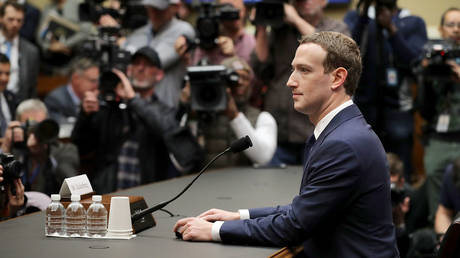
A US judge has ordered Meta to pay $25 billion in civil penalties for deceiving Facebook users about the privacy of their personal data, in a landmark ruling stemming from the Cambridge Analytica scandal, which exposed the harvesting of personal information from millions of Americans for political campaigns.
New Mexico District Judge Francis Mathew issued the ruling on Wednesday, following a jury verdict in September finding Facebook’s parent company responsible for nearly 44 million violations of the state’s consumer protection laws.
The judge concluded that Meta’s misconduct warranted a penalty exceeding $219 billion under state law, but reduced the amount to $25 billion, making it one of the largest financial penalties ever imposed on an American corporation.
“Facebook’s wrongdoing – over the course of years and systematically broadcast to the public – goes to the heart of Facebook’s core business practices,” Mathew wrote in his order.
The case arose from the 2018 Cambridge Analytica scandal, when it emerged that the British political consulting firm obtained personal information from as many as 87 million Facebook users without their consent.
woah, it gets worse. In the Meta securities lawsuit for Cambridge Analytica cover-up, plaintiffs just posted deposition list. If they have the courage to 'go to the mat' (as Zuckerberg says) like New Mexico AG has done for over $25B, this could be very, very bad for Team Zuck. 1/3
The information was collected through a third-party personality quiz application that exploited Facebook’s system for accessing users’ friends’ data. Cambridge Analytica used the information to develop psychological profiles of voters and deliver targeted political advertising, including during the 2016 US presidential election.
The company was established in 2013 as the American political-data arm of the British SCL Group, a private contractor specializing in behavioral influence, psychological profiling, and strategic communications. SCL also marketed influence and research services to defense clients, including the UK Defense Ministry.
The scandal also exposed connections to Palantir Technologies, a Silicon Valley data-analysis company with extensive contracts involving US intelligence agencies and the Pentagon. A 2018 New York Times investigation revealed that at least one Palantir employee advised Cambridge Analytica’s researchers during the company’s 2014 efforts to harvest Facebook information.
Palantir denied having a formal business relationship with Cambridge Analytica, maintaining that the employee acted in a personal capacity.
Cambridge Analytica collapsed in 2018 amid worldwide scrutiny of its operations, while Facebook faced regulatory investigations, lawsuits, and billions of dollars in penalties.
Attorney General Raul Torrez hailed Wednesday’s judgment as a warning to Silicon Valley that even the largest technology companies could be held accountable for violating consumer protection laws.
Meta has denied misleading users and plans to appeal the ruling, arguing that the unprecedented penalty is unconstitutional. Responding to the jury’s verdict last month, the company also invoked freedom of speech, insisting that Facebook is a forum for free expression.
Numerous PHP-powered platforms were pulled after critical vulnerabilities were detected by AI
Numerous websites worldwide, including government-run pages, temporarily went dark after the AI-assisted discovery of critical vulnerabilities in the PHP programming language, which powers around 70% of the web globally.
On Wednesday, the developers of the popular open-source programming language, which helps websites run and display content, issued an urgent security alert over “critical remote code execution vulnerabilities.”
The flaws could allow hackers to take control of affected websites, prompting the release of urgent fixes, with all PHP users “strongly encouraged to update immediately.”
Cybersecurity agencies worldwide, including the US Cybersecurity and Infrastructure Security Agency, the European Union Agency for Cybersecurity, the UK’s National Cyber Security Center, the Australian Signals Directorate, and the Canadian Center for Cyber Security, issued their own alerts, advising users to apply the patches immediately and prioritize internet-facing systems.
Organizations that were unable to update immediately or that relied on outdated, unsupported PHP versions were advised to take their systems offline until the fixes could be applied.
The announcement prompted France’s Interior Ministry to temporarily shut down prefecture websites, with local government pages also unavailable. In neighboring Belgium, the Foreign Ministry similarly took its websites offline on Wednesday. In the Netherlands, the National Cyber Security Center, the websites of all major political parties, and at least one port took similar precautionary measures.
In Denmark, the national school communication platform was temporarily shut down; in Finland, the government’s public web services went dark.
Disruptions also affected services operated by the Wikimedia Foundation, which runs the online encyclopedia Wikipedia.
The flaws in PHP were identified by two cybersecurity companies, Calif and Wiz, in August. PHP developers have since worked on fixes, while keeping the discovery under wraps to prevent malicious actors from exploiting the vulnerabilities.
The cybersecurity companies said they made extensive use of AI models in the process, including Google’s Gemini 4 Argon and OpenAI’s GPT-5.6 Sol.
Wiz stated that the “underlying flaws had been present for decades, but demonstrating their exploitability required an exceptionally complex chain of steps, at the edge of what human researchers could practically achieve.”
OpenAI described the case as “one of the most impactful security issues in recent memory,” and predicted that more flaws would be discovered in the coming months with the help of AI.

 Login