❌

Reading view

Shun the Contentious Woman

Click here to read How to Handle a Difficult Wife: Part One.

Click here to read How to Handle a Difficult Wife: Part Two.

I once heard a preacher say that whatever God repeats is something he wants us to pay real attention to. This is a very common teaching technique.

Every teacher knows that much of what they say will not be retained by the person they are speaking to, so something which makes sense to do in every sermon, or every Bible study, or every teaching opportunity, is to make sure most of what you say reinforces the message you want to stick in people’s minds. So, when the Bible repeats something, you know that it wants us to pay attention.

We see this in the book of Proverbs, and especially on the topic of the dangerous, or contentious woman. If you read Proverbs 1-9 you will see that there is losts of advice for a young man to protect himself from the bad woman. For example, in Proverbs 7 we read,

“My son, keep my words,
And treasure my commands within you.
Keep my commands and live,
And my law as the apple of your eye.
Bind them on your fingers;
Write them on the tablet of your heart.
Say to wisdom, “You are my sister,”
And call understanding your nearest kin,
That they may keep you from the immoral woman,
From the seductress who flatters with her words.”

It is important to teach our young men how to be respectful to young women, how to treat younger women as sisters, as Paul the Apostle says, and to guard their sexual desires until marriage. This is vital. But it needs to be noted that the Bible spends more time warning young men about the dangerous harlot than many modern Christians probably realise.

Today, we are trained to think of men as the sexually obsessed, and the woman as the sexual object. We have been taught this by movies and other media. But the reality is far more complicated. There are many women who take delight in weaponising their sexuality to corrupt or even destroy men.

It is true that a lot of women in the porn industry are there because they have been sexually groomed from a young age or even trafficked. This is a reality. But OnlyFans shows what happens when you create an almost free market and tell people to gather a fanbase with whatever assets they have. What happens is that women will turn that site into a porn star’s dream, direct access to their simps whom they can exploit at will.

In fact, part of how OnlyFans markets itself is as a Feminist-driven organization:

“As it’s grown, OnlyFans has sought to use explicit content – its seemingly bottomless source of revenue – as a springboard to greater scale, positioning itself as a tech pioneer with a place among social media giants such as Instagram and X. Key to that effort is making porn more socially acceptable and distancing the company from the abuses often associated with the industry.

The public face of OnlyFans is CEO Keily Blair, an Irish lawyer and self-described feminist and “safety nerd” promoted to the top job in 2023. In public appearances, Blair, 42, presents the platform as lucrative and empowering, particularly for women, and often mentions her two daughters. “I want them to have a good online life,” she told delegates at a UK child-protection conference in 2023. “I want the same for your kids.”

There is often discussion in conservative and Christian circles that one of the reasons that porn is so evil is because it exploits women, and we have to acknowledge that this does happen. But less often is the other prominent side of the problem with porn talked about: that a lot of women use it to exploit men, particularly younger men.

Subscribe now

This discussion is changing; the language of simps is used to describe these men now, because many young men are becoming increasingly aware of how they are exploited by porn. Many now know that they are being exploited for their money, their time, their energy, and their devotion. They are waking up to this reality.

When we read Proverbs 7, we should immediately think of this kind of woman, a woman who knows how to exploit the simple-minded.

“For at the window of my house
I looked through my lattice,
And saw among the simple,
I perceived among the youths,
A young man devoid of understanding,
Passing along the street near her corner;
And he took the path to her house
In the twilight, in the evening,
In the black and dark night.
And there a woman met him,
With the attire of a harlot, and a crafty heart.
She was loud and rebellious,
Her feet would not stay at home” (Prov. 7:6-11).

Society is replete with these kinds of dangerous women, and many young men are sent into their embrace like lambs to the slaughter. In fact, in verses 21-22 of Proverbs 7, Solomon uses almost this exact imagery to describe the effect of these women on young men.

But we should not only think of the adulterous woman when we read this passage, or the porn star, even though this certainly should be our primary application. We should also think of the “loud and rebellious” woman who uses her sexuality to trap a man in marriage and then rule over him.

There is a stereotype of marriage, and just relationships in general, that a woman will use her sexuality to trap a man in a committed relationship and once she has achieved her goal, then she will drip-feed sexual attention as a means of control.

This stereotype exists precisely because it does happen often. But we should not see this as a stereotype of marriage as a whole, even though that is how people do see it; we should, rather, see it as a stereotype of marriage with the difficult woman. The difficult woman uses her sexuality to entrap a man and then to rule over him.

There are many men who live in this sort of arrangement, and they are relatively OK with it. In fact, not only are they ok with it, from their perspective it “just is what it is.” In their view, this is what marriage is. After all, the common stereotype has told them that. As the joke often goes in sitcoms, “When was the last time you had sex?” “Are you kidding, I am married!” is the reply.

If you watch shows like Everybody Loves Raymond from the late 90s, you will see how the media presented marriage as a relationship where a man longingly desires sexual attention, and it is drip-fed to him by his wife when he has done the right thing and earned it. Shows like this should be seen less as a description of reality and more as an attempt to shape reality. But whichever way you perceive it, there is this understanding in culture that marriage is, in general, a sexual wasteland.

Why?

Because of this idea that a woman will use sexuality to entrap a man into a relationship. And the truth is that the difficult woman will do this. Many men have experienced this.

Share

This is why this discussion of Proverbs 7 is so important for this third article in our series about How to Handle a Difficult Wife. Solomon is warning men to watch out for that woman. To watch out for the kind of woman who will use their sexuality to entrap you. To watch out for the adulterous woman who says,

“Come, let us take our fill of love until morning;
Let us delight ourselves with love.
For my husband is not at home;
He has gone on a long journey;
He has taken a bag of money with him,
And will come home on the appointed day” (Prov. 7:18-20).

To watch out for the woman who will sell you her body online and trap you into a simping relationship. To watch out for the woman who will honeytrap you into a relationship.

There is a reason why the Bible commands that young men and women avoid sex before marriage. This is to protect them both from the dangers of promiscuity. The problem is that our modern culture is set up to encourage most young people, even Christians, into exploring before cleaving. This sets up many young women to be used by men of a reasonably high status for their temporary enjoyment, and it sets up many young men to find themselves being trapped by the very kind of woman that Solomon warns about. The Bible’s advice is not prudish, but it is prudent.

What is the difference, you ask?

Well, ‘prudish’ is a slang term for someone who is “easily shocked by matters relating to sex or nudity…or…excessively concerned with sexual propriety…” But can you call a book wherein God commands a prophet to walk around naked, another prophet to marry a prostitute, and which uses the words “whore”, “harlot”, or “prostitute”, in hundreds of references “easily shocked by matters relating to sex”? Of course not.

God is all-seeing, which means he has seen it all, and his word speaks about these things without embarrassment so that we can be led in the right direction and away from certain danger, which is what prudence refers to. A prudent person is someone who shows care and thoughtfulness for the future.

If you allow yourself to become trained to be a simp, to be ensnared by the porn star, then you are training yourself to be exposed by the harlot to this kind of weakness with women. So, to prevent this, you need to be “master of your own domain.” Rather than simp after the “loud and rebellious” woman, you need to shun her from your life.

You should aim to be married at a young age, so you can build as much of your life with your wife together as possible. But it is better to take your time to master your own domain, so that when you are searching for a woman, you are clear-headed, and not in as much danger of being the lifelong simp that so many men become.

Thanks for reading! This post is public so feel free to share it.

Share

Porn should not just be avoided because it is immoral. Though that should be reason enough. It should also be avoided because it weakens your ability to be the clear-headed, respectable man that a woman will want to submit herself to for life, and live under your frame. A man who can control himself and not be walked all over.

Why do you think that the self-proclaimed feminist CEO of OnlyFans describes the site as “lucrative and empowering” particularly for women? Because it trains young men to become lifelong simps. It trains them to think that living under the thumb of a contentious woman is what marriage is.

Why do you think the Rolling Stones is concerned that men shunning porn is a right-wing phenomenon?
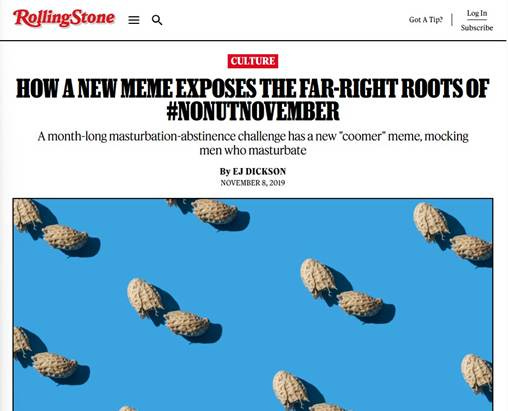
Because avoiding the trappings of porn and masturbation helps men break out from under the spell of what could turn them into lifelong simps. A man who diminishes himself in this way is much more likely to fall into a relationship with a woman who uses sex to draw him in and then use it to dominate him for life.

When feminists and progressives basically confirm what Solomon says, but from the opposite direction, you should really listen to him.

But many people reading this will be thinking, “How does this help me with my difficult wife? I am already living in this kind of situation.” You are right; my article here is more preventative than directed at transforming an already broken marriage. The correlation between a woman who constantly berates her husband and one who has turned down the sexual tap over time is very high. So, what is your recourse?

Well, remember, look at what Solomon repeats and therein you will find wisdom. In Proverbs 21:9, Solomon says this, “Better to dwell in a corner of a housetop, Than in a house shared with a contentious woman.”

Just in case the message has not landed, he says again in Proverbs 21:19, “Better to dwell in the wilderness, Than with a contentious and angry woman.”

And for those who are particularly hard of hearing, he again says in Proverbs 25:24, “It is better to dwell in a corner of a housetop, Than in a house shared with a contentious woman.”

Three times Solomon writes the same thing. He slightly changes the illustration, but he repeats the same principle three times. If your marriage has descended from a relationship of mutual love and regular affection initiated and reciprocated on both sides, into a situation where the wife is constantly at you and has nothing but contempt for you, then you need to be willing to live anywhere but with her.

In fact, many men find that when they make this decision, that is often when things start to turn around. Hence, being willing to shun the contentious woman and live somewhere else, ironically, is one of the more effective ways of reigning in the contentious woman.

Of course, this is not guaranteed to be successful and is often not. Solomon speaks more in principles than in promises. Some marriages are just too far gone, even he recognizes this, “A continual dripping on a very rainy day And a contentious woman are alike; Whoever restrains her restrains the wind, And grasps oil with his right hand” (Prov. 27:15). Sometimes you have failed to assert yourself for too long, or worse, you have made so many mistakes in your marriage that she cannot bring herself back into fellowship with you because all love and marital duty has been drained and the affection that was once there is long gone.

But even if it does not work, Solomon’s words are wise. Some people will say you have to stay and serve her, and live like roommates for life, even though what made your relationship a marriage is functionally dead. And yet Solomon says the opposite. Why?

Because the Bible has an insight into human nature that often those of us who follow its ways do not; until we have seen it applied properly, at least. I think behind many, not all, but many contentious and unruly women is fear. Sometimes it is not this; it is just a bad woman.

But remember, I said in my first piece in this series that any woman can become the bad or difficult wife if her husband sows enough negativity. Some women react to this by becoming the difficult wife. It is not what they want to be, it is not what they intended to be, and driving the man away is not their end goal. Sometimes seeing the consequences of her speaking to her husband this way, as he plans to live in his tent somewhere else, will bring her to repentance.

So, sometimes, to save your marriage, you have to be willing to shun it. It sounds counterintuitive. But I think this is at least part of what Solomon’s advice points to, and I have seen this applied in this way, and I have seen it turn things around.

As I said, this is not a guarantee. But then in this fallen world you can do everything right and still things can go wrong. Such is living on this side of paradise…

Till next time, God bless you.

  •  

An Ancient Problem

I have been reading the Anglo-Saxon Chronicle on and off for a bit, and I found this benediction for one of the kings who passed away interesting, because of how it speaks to some of the issues of our own day.

We read:

“A.D. 959. This year died King Edwy, on the calends of October; and Edgar his brother took to the government of the West-Saxons, Mercians, and Northumbrians. He was then sixteen years old. It was in this year he sent after St. Dunstan, and gave him the bishopric of Worcester; and afterwards the bishopric of London.

In his days it prosper’d well;
and God him gave,
that he dwelt in peace
the while that he lived.

Whate’er he did,
whate’er he plan’d,
he earn’d his thrift.

He also rear’d God’s glory wide,
and God’s law lov’d,
with peace to man,
above the kings that went before
in man’s remembrance.

God so him sped,
that kings and earls
to all his claims submissive bow’d;
and to his will without a blow
he wielded all as pleased himself.

Esteem’d he was
both far and wide in distant lands;
because he prized
the name of God,
and God’s law traced,
God’s glory rear’d,
both far and wide,
on every side.

Wisely he sought in council
oft his people’s good,
before his God,
before the world.

One misdeed he did,
too much however,
that foreign tastes
he loved too much;
and heathen modes
into this land he brought too fast;
outlandish men hither enticed;
and to this earth attracted
crowds of vicious men.

But God him grant,
that his good deeds be
weightier far than his misdeeds,
to his soul’s redemption
on the judgment-day.
1

Well, isn’t that interesting?

Firstly, observe how important honouring God was to the ancient English people. Many Australians and Englishmen have forgotten how bound up in Christianity our culture has been for well over a thousand years. They commend this king for loving God, loving justice, and seeking to honour God’s ways in his kingdom. Give us a king who would do this. Give us leaders who would do this.

But they have a serious issue with one of his tendencies.

“One misdeed he did,
too much however,
that foreign tastes
he loved too much;
and heathen modes
into this land he brought too fast;…”

Now isn’t this familiar?

This is like so many of our leaders today in our nation. I have had this conversation with many people, and I think a big part of our country’s problem, and the problem with our nation’s leadership, is that they scorn the Australian way, the Australian lifestyle, and the Australian population. Many of our leaders wish we were more like Europe, more like Asia, or more like America, just as long as we were less like our heritage. It is like they are embarrassed to be Australians.

They submit our laws to foreign agreements. They submit our car standards to European standards that have nothing to do with the Australian climate and needs. They, in every way, appear to favour the ways of foreign nations, foreign identities and foreign ways of doing things.

I suspect King Edwy did this to a much smaller degree than our modern leaders. But it is interesting to see this problem brought up in the book about the heritage of our kings and to see how ancient people chafed under this same sort of behaviour.

If only we had leaders who were proud to be Australian, and did not think that Australia needed to be changed beyond all recognition. After all, if we are such a terrible people, why do so many others want to live here?

1

Anonymous. The Anglo-Saxon Chronicle (p. 41). Neeland Media LLC. Kindle Edition

  •  

Faking Care For Minority Issues

There is much discourse in our modern culture about the topic of being woke. This movie is woke, that book is woke, the new T.V. show is woke, everything is woke, woke, woke.

More people are probably aware of the term than what it really means. But most have the general ability to spot something that is woke. Essentially, woke refers to someone who purports to be acutely aware, really obsessed, with the perceived or claimed injustices of a particular minority, and who is willing to change the rules to favour that minority.

The term originally came out of African-American communities in the post-civil rights era in the United States and has now been greatly expanded to include a vast array of “oppressed” groups within Western society.

The woke want to turn every genre or film, books and video games, they want to forge every institution, they want to craft every law and human rights document, and make every sermon, conversation, and broadcast, into an opportunity to push “the message” or their woke agenda. And people are getting increasingly tired of it.

The woke is,
as the Social Justice warrior, who is,
as the cultural Marxist, who is,
as the intersectionalist,

who has a much higher chance than average of having unnaturally coloured hair, a useless university degree, of using anti-depressants, and a voting record to the left of the Greens parties.

And they are also not new. In fact, Nicholas Berdyaev writes about these types in his letters, which have been compiled together into a book called The Philosophy of Inequality. He writes there about these people we could call wokians,

“People of your ilk, hostile to me, have given little thought concerning nation and the national problem. Ye are wont even to acknowledge the state on utilitarian grounds. But ye have proven incapable of penetrating into the intimate mystery of the national manner of life. True, you admit of the rights of oppressed nationalities and for these nationalities ye are ready to become quite extreme nationalists. Many of you tend to posture under your sign for the right of self-determination of nationalities. But this proves also, that to the mystery of national lifestyle you only can approach at it externally, that inwardly it is beyond you. You are ready to admit of the national lifestyle and national rights of the Jews or the Polish, of the Bohemians or the Irelanders, but amidst this, the national lifestyle and national rights of Russians ye never could admit. And this is because, that it is the problem of oppression which has been of interest to you, while completely uninterested by the problem of nationality. Ye proclaimed the right of the free self-determination of nationalities, not so much out of any interest for the nationalities themself and even not believing in the existence of such sort of realities. You merely need this “free self-determination” as a means of struggle for your political and social ideals, for an abstract equality and freedom, and nowise for the concrete national manner of life, not for a national flourishing.”[1]

Berdyaev identifies that these so-called advocates of justice are not really interested in justice for people of various oppressed groups. Rather, they can see in the causes of these people a means of going after the perceived oppressor, in this case the Russian people. They see in these causes a means of upturning the order of the nations in which they seek political power. To consider the national rights of the Russian, in this context, is not even on their radar, because to do so would mean that they would have to pursue actual justice. But that is not what they really want; they really want to deconstruct the society in which they live and disenfranchise the majority. To do so, they need a shroud to cover their true motives.

In fact, the concept of true justice is alien to them, as Berdyaev writes,

“Indeed, in the national lifestyle there is for You an ungraspable irrational mystery, hidden deep in the earth. Ye have never penetrated thence, ye always remained at the surface…No, your struggle…is merely the international struggle for levelling an equality, a struggle for man in the abstract, for an abstraction of man. Ye do not know the concrete man in flesh and blood, in race and tribe, the man national. Your struggle for the liberation of oppressed nationalities and for their equality is an international struggle, a geometric struggle, a struggle abstracting and tearing the national man off from the living countenance, from his maternity and fatherland.”[2]

If you tear a man from his “living countenance, from his maternity and fatherland” you weaken him, and you make him rather incapable of defending himself. That is their true strategy.

The wokians, these social justice warriors, these fake justice promoters, do not really have a deep regard for the people whom they say they are advocating for. They simply see in their plight a means of pushing for equality. The equality they want, and really the only type one can really pursue, is the levelling of all to a lower level of prosperity and well-being. Because to get to a form of equality, you need to denationalise the oppressor and the oppressed, making them both less than they should be. Really, their goal is the destruction of national identity, not just for the “oppressor”, but for all, because inside a national identity is a framework for preserving its members. These people use justice as a guise for a very different goal,

“The “oppressors” of nationalities sometimes acknowledge them more, than do the “liberators”. “They oppress” is of the living national man in terms of race and tribe, flesh and blood, whereas “they liberate” is of an abstracted geometric man…The secrets of every national manner of life merits sympathy. It is needful to get down into it even then, when the discourse goes hostile to us as a nation. The German people was our enemy and we had to fight against them. But the unrepeatable uniqueness of the German, the most intimate thing in the German spirit, the genuinely individual in the expression of the German visage always, even at the moment of struggle, seemed to me to merit of sympathetic consideration. In our international struggle for the liberation and equality of nationalities there is no feel of perception of national visages, there is not in it the love for the national image.”[3]

When Berdyaev says here that the oppressor often acknowledges the oppressed more than these “warriors for justice” he means simply this: they at least acknowledge the people they disagree with have a genuine and real identity. He is not commending the oppressor; he is simply noting that they at least acknowledge the people they oppress have a real national identity, or at least they often do. The Marxists did not even do this; they do not acknowledge this identity. Rather, they wanted to strip the man, the woman and the child of their national identity and seek to raise them up again in their own image.

Berdyaev goes on to say,

“K. Leont’ev was correct, when he declared your national politics merely a weapon of worldwide destruction and espied in it merely the triumph of democracy and cosmopolitanism. Your principles of the “right of the self-determination of nationalities”, so bally-hooed about in the Russian revolution, is anti-historical an abstraction, of contrived theme which deny the unrepeatably unique reality, which is called nationality. Nationality cannot be severed off away from the concrete and its right cannot be merely a matter of abstract history, investigation.”[4]

These wokians, these anti-justice warriors, want to destroy what is unique in each people’s identity and then call it liberation, cries Berdyaev. In other words, he is observing that their solution is worse than the problems they cry out about.

I read Marx and Engels, myself, many years ago. I read the Communist Manifesto twice and worked my way through a chunk of Das Capital. A lot can be said against these works and has been. Berdyaev is doing that in his letters in this book. But I would simply sum up my perception of their position as this: they sometimes correctly identify problems of inequality and injustice in society, and they propose solutions which are far worse than the problems they diagnose. That is what Berdyaev is saying here. These Marxists will use tyranny to solve problems and create far worse problems, because they deny the very nature of humanity. They rage more against creation than against injustice.

He goes on to say that,

“Each nationality within the various periods of its existence possesses various rights. These rights cannot be merely watered down. There exists a complex hierarchy of nationalities. It would be thoughtless and absurd to compare the rights to self-determination of the Russian nationality and the nationality of the Armenian, the Gruzinian or the Tatar. It would be thoughtless and absurd to approach with the same abstract measurement the rights of the German nationality and the Spanish nationality at a given moment of world history. In the life of nations there occur periods of flourishing and periods of waning, periods of the high exertions of their powers and periods of weakness. And their rights to self-determination in these instances are varied. The question about the rights of the self-determination of nationalities is not some abstract juridical question, this is first of all a question biological, in the final end a mystically-biological question. It rests upon the irrational grounding of life, which is not subject to any sort of juridical and moral rationalisations. All the historical nationalities possess quite varied, unequal rights, and they cannot be put forth under the same pretensions. In the historical inequality of nationalities, the unequalness of their real weight, in the historical predominance now of some, now of other nationalities there is its own great truth, there is the fulfilling of a moral law of historical activity, so dissimilar to the law of individual activity.”[5]

In other words, Berdyaev is arguing here that every nation, and its current situation, should be evaluated as it is, and treated accordingly. Their issues should be taken on a case-by-case basis. Nations should not be treated as though they are always all in the same position, because they are not. By noting that they have ‘unequal rights’, he means simply that in some periods nations rise above others and then fall under the sway of others. He is describing what we see often occurring in history and in our world today. There is a rise and fall of nations; some become empires, some attempt this and fail, some have achieved this, and then they fall. Nations have periods of greatness and then periods of humility. There are times when a nation should be encouraged to exercise its right to self-determination, and there are times when nations have taken this too far.

Berdyaev is saying something I have written about often: equality is a useless principle when dealing with human beings, human entities, and human institutions. Humans, and the nations derived from those humans, are so different, so diverse, and so varied in their ranges of experience and capabilities that their needs and situations require great care and attention. Applying a broad-brush stroke approach to their issues by seeking to force them all into some form of equality is harmful, as they often need different things, depending on their current situations.

Berdyaev here is writing about the very same kinds of people we call woke. The kinds of people who use the shroud of social justice to bring about social degradation. These ideas did not originate in modern universities, even though they have overcome such institutions. These ideas go back far earlier. I am sure we could find these evils at work in other nations in other ways. But we can at least trace this error back to the French Revolution, which unleashed the falsehood of the cause of equality on the world.

Berdyaev is warning us that often those who make a pretence of caring for so-called minorities often have far more nefarious intentions.


[1] Nicholas Berdyaev 1923, “Fourth Letter: Concerning Nation”, The Philosophy of Inequality, pp. 83-85

[2] Ibid.

[3] Ibid.

[4] Ibid.

[5] Nicholas Berdyaev 1923, “Fourth Letter: Concerning Nation”, The Philosophy of Inequality, pp. 83-85

  •  

You Cannot Legislate Morality?

The statement “You cannot legislate morality” is one of the most quoted, yet intellectually shallow, statements that people make today…and yet many do still make it. So, what I want to address in this piece is the reasons why people make this statement and then dismantle their objection to legislating morality using three pillars: first, the Bible, then western legal tradition and then a bit of classical philosophy.

So why do people say it? I think there are three reasons, mainly. Firstly, they mean that a law cannot force a person to love their neighbour, desire righteousness, or have a pure conscience. You can compel external compliance, but you cannot regenerate the human heart. Secondly, they mean that in a diverse, secular society, it is illegitimate for one religious group to impose its specific moral code (e.g., Sabbath observance, dietary laws) on everyone else via state coercion. You cannot mandate religion, in other words. And lastly, it is because they believe it is ultimately ineffective to legislate morality. Some people think that if a law outpaces the moral consensus of the people, it will be widely disobeyed and breed disrespect for the entire legal system.

On the surface, these points sound reasonable, and there is even an element of truth in them. However, they commit a catastrophic logical error because they confuse the instrument of enforcement with the nature of the law itself.

The Bible’s Take

According to the Bible, law is intrinsically moral. You cannot separate law, at its base, from morality. They are intertwined.

First, the Mosaic Covenant is a unified legal-moral-theological code. The 10 commandments do not necessarily distinguish between “spiritual” sins and “civil” crimes. Idolatry, murder, theft, and covetousness are all legislated because they all violate God’s moral character. When the prophets condemn Israel, they do not criticise the existence of religious law; they condemn the hypocrisy of keeping the rituals while neglecting the “weightier matters of the law: justice, mercy, and faith” (Matthew 23:23). Jesus himself affirms that by his life and ministry the law is not abolished but fulfilled, and he re-interprets it to govern internal states, such as re-casting anger as murder, and lust as adultery, proving that morality is exactly what law is meant to address.

Second, the New Testament explicitly defines the purpose of civil government in moral terms. In Romans 13:3-4, Paul writes that the ruler “is God’s servant for your good” and that he “does not bear the sword in vain.” As we know, or at least should know, God is not saying here that the state has the right or authority to determine what is good, but rather that the state is institutionally ordained to punish evil and praise good. The very categories of “good” and “evil” are moral absolutes. If the state cannot legislate morality, it cannot fulfil its God-given mandate to restrain wickedness. Furthermore, 1 Timothy 1:9-10 states that “law is not laid down for the just but for the lawless and disobedient, for the ungodly and sinners...” Hence, for Jesus and Paul, as well as Moses, the law exists precisely to define and curb moral transgressions.

A law that claims to be morally neutral is a law that abandons its divine purpose. To refuse to legislate morality is to refuse to restrain evil, which is itself a profound moral failure.

Western Legal Tradition

The Western legal tradition does not originate in simple pragmatic social contracts; in fact, these “social contract” ideas can be said to have been an attempt to subvert the traditional view of Western law and authority, which stems from God. The basis of Western law, particularly in Western Europe, is the fusion of Roman jurisprudence, Greek Philosophy, Germanic custom, and Biblical Christian natural law.

Sir William Blackstone, the 18th-century jurist whose Commentaries on the Laws of England is the bedrock of the Common Law, including Australian law, stated unequivocally, “Upon these two foundations, the law of nature and the law of revelation, depend all human laws; that is to say, no human laws should be suffered to contradict these.” Blackstone argued that a human law that contradicts the moral law of God has no binding force.

Historically, the West did not ask, “Can we legislate morality?” In fact, anyone who said we could not would have been laughed out of the legislature. Rather, it asked, “Which morality is truly just?”, at least when it was at its best. The abolition of slavery in the British Empire (1833) was not an act of economic efficiency; it was the legislative enforcement of the moral proposition that all humans bear God’s image and are therefore valuable.

The prohibition of murder, perjury, and theft are all moral prohibitions before they are legal ones. The very concept in our law codes of malum in se (wrong or evil in itself) versus malum prohibitum (wrong because it is prohibited by legislation) depends on an objective moral order existing prior to the statute. Western law is based on the idea that we pass laws because they are good or at least should be. It is a moral act.

Every law against fraud, assault, or breach of contract is a legislated moral judgment. If we truly could not legislate morality, we would have no law against rape, because rape is not a violation of a “procedure”; it is a violation of the moral dignity of a person. It is because we honour human dignity and sanctity that we say that rape is evil and should be punished. To say “you cannot legislate morality” is to undermine the moral basis of our own legal codes. The Bible said the purpose of law is to restrain evil, and the Western legal tradition has sought to apply it in this way.

Western Philosophy

Philosophically, the statement collapses under its own weight. It is a meaningless statement.

Aristotle, in Nicomachean Ethics, argued that the polis (state) exists not merely for the sake of living, but for the sake of living well. The legislator’s task is to make the citizens good by forming their habits through law. For Aristotle, a state that refuses to cultivate virtue is a perversion of the political community.

Thomas Aquinas synthesised this with Christian theology, formulating the hierarchy of laws, that is: Eternal Law or God’s reason, Divine Law or that which is revealed, Natural Law or human participation in that reason, and Human Law, which is the statutes or decrees of a government. Aquinas argued that human law is valid only insofar as it derives from Natural Law. A human law that contradicts Natural Law is lex injusta non est lex, which means an unjust law is not truly a law. This forces the jurist or the legislator to constantly ask themselves, “Is this statute morally good?” This proves that legislation is inherently a moral exercise…or at least that it should be.

Think about it this way: from a Western philosophical position, all laws are meant to be an extension of people created in God’s image, exercising that Imago Dei in society for the cause of justice and righteousness. Hence, to say that you cannot legislate morality is to reject the very understanding of law passed on to us by our Western heritage. The Bible says that the purpose of law is to restrain evil; the Western legal tradition has sought to use it in this way, and Western philosophy has said that to do otherwise is to act unjustly.

If law is not rooted in an objective moral standard, it degenerates into sheer will-to-power; might makes right. As Dostoevsky famously foreshadowed, “without God, all things are permitted”, and that is the inevitable endpoint of a legal system that pretends morality is a private matter and should have no bearing on the law. The state cannot be morally agnostic; by wielding the sword, it necessarily takes a moral stance. In fact, to argue that the state should not legislate morality will inevitably lead to alternative moralities simply taking the place of the previous ones. In fact, the very act of passing a law will both be guided by the moral codes of the law givers and will create a simulacrum of morality in society anyway. It is unavoidable to include moral judgments in law-making.

Conclusion

The phrase “You cannot legislate morality” is a category error. Yes, just because you pass a law does not mean you will change hearts and minds. The law cannot force a sinner to repent and love God. That role belongs to the preaching of the word and the work of the Holy Spirit.

Yes, laws can go too far and become oppressive. We see that Jesus criticised the Pharisees for just this sort of burdensome approach to law in his day. A prudent approach requires wisdom and demands boundaries.

But the law absolutely must legislate morality, because justice itself is a moral concept. It is, in fact, a foundational moral concept. Every time a parliament criminalises human trafficking, enforces a contract, or upholds the sanctity of life, it is making a definitive moral claim. And it very much should.

The only legitimate question is not, “Should we legislate morality?” Those who ask lack sense. The truly legitimate question is, “Whose morality will we legislate, and on what authority?” I have long argued that there are only a few sources for basing your approach to law: the Bible, ancient law codes, other religions or philosophies and the mind of modern man. There are no other choices. The Bible should not be the minor partner in your selection, as it has often been shown to surpass human efforts at establishing justice.

To the Christian, when we ask whose morality should have the most authority, the answer is simple: the eternal, unchanging moral character of God, which is the only sufficient foundation for a just, stable, and truly free society.

To abandon that foundation in the name of “neutrality” or “secularism” is not enlightenment; it is intellectual insanity. It leaves the courtroom vulnerable to the tyranny of whichever mob holds the loudest megaphone. Which, interestingly, is what we see transpiring in our own Western nations today, more and more. Funny that.

  •  
❌