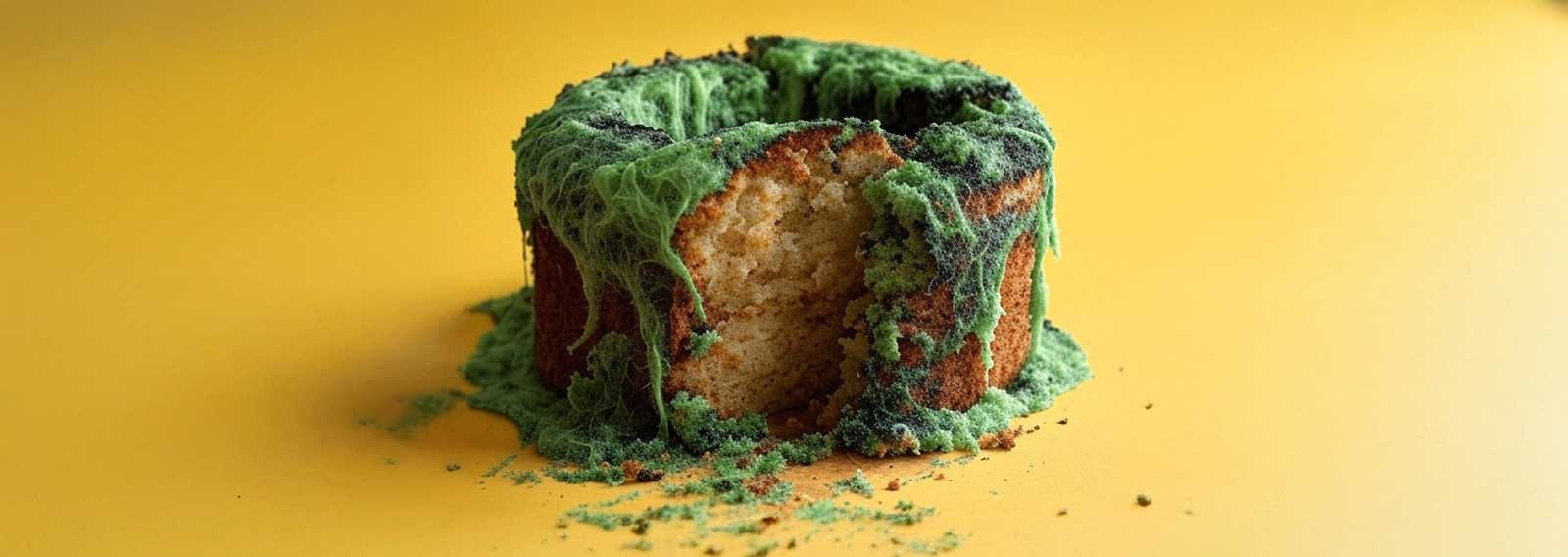
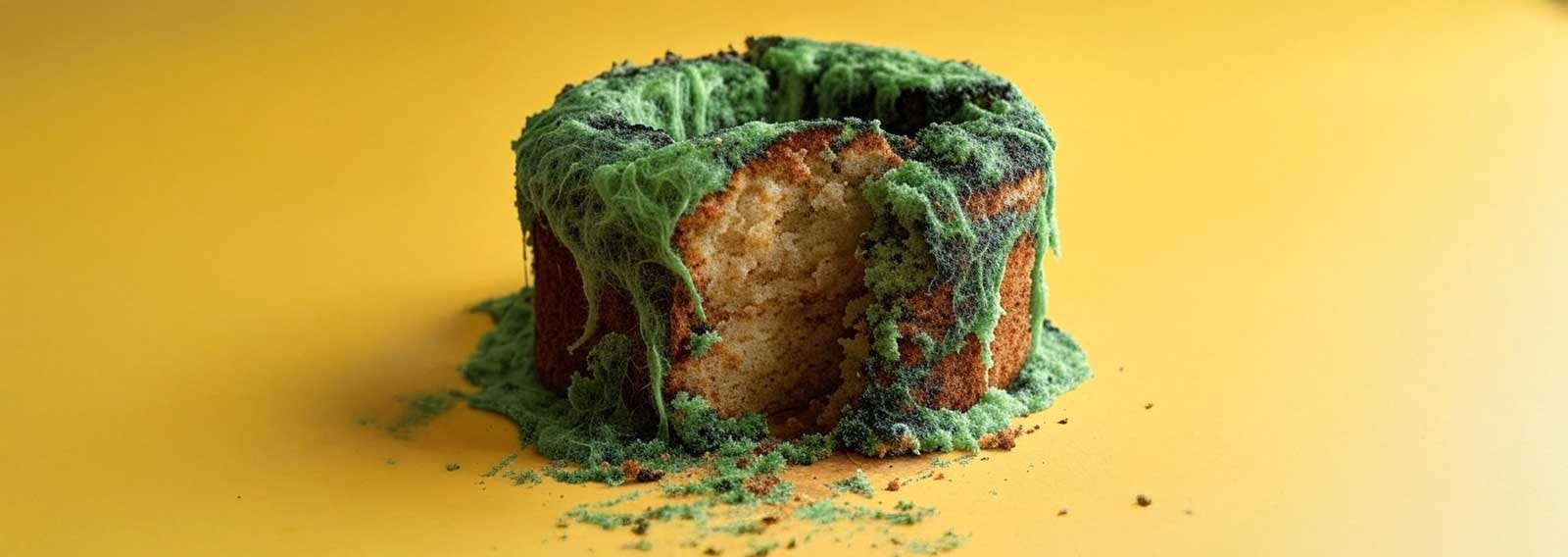
If you’ve ever baked a cake, you know that every ingredient plays a crucial role. You can’t just throw random things into the mix and expect a perfect outcome. The same principle applies to society. If we want a community that upholds a specific set of values, then the individuals within that society must also hold to those values. When the values of the individuals change, the values of the community will inevitably follow.
Nowhere is this more evident than in Western nations undergoing the so-called “multicultural experiment.” Once thriving, free, safe, and prosperous, the West was the envy of the world. As a result, it saw an influx of migrants—an influx that has only increased over the years. However, many of these migrants did not come from culturally similar backgrounds. They did not necessarily share the Christian religion or Christian values. Instead, they sought the economic advantages of a prosperous society.
Yet, in this pursuit, many failed to recognize why Western societies became prosperous in the first place. The foundation of the West’s success was its Christian culture, which was rooted in Christian values, which in turn were drawn from the Christian faith itself.
In effect, we altered the recipe without realizing how it would impact the final product. And now, we face the consequences: fragmented, low-trust societies where foreign conflicts spill onto our streets—whether through protests, threats, or, worse, through violence.
Governments now find themselves between a rock and a hard place. On the one hand, they have been conditioned to celebrate multiculturalism as an unquestionable good. On the other, they are forced to confront the reality that not all cultures are compatible with one another.
What’s more, Australians have long been told that no one holds an exclusive claim to truth. That there is no transcendent moral standard to which we must, as a collective, conform. That all cultures are equal, and that Australia, by definition, is multicultural—without a distinct, unified culture of its own.
But this belief system is a recipe for division, and division spells disaster. A society cannot function cohesively if its people are separated by conflicting cultural practices and moral frameworks. A society cannot function cohesively if it is superficially united, but fundamentally divided.
If you want to bake a cake, you need the right ingredients. You can’t just throw in anything and expect the same results. You also can’t blame the correct ingredients for the inevitable failure—yet politicians often do just that to avoid accountability.
Ultimately, the people, and therefore, the values we introduce determine the societies we create. Communities will naturally reflect the beliefs and principles of their dominant groups. If a significant influx of people does not share Christian values, it is unrealistic to expect the communities they form to uphold those values.
Simply put, “whatever one sows, that will he also reap” (Gal. 6:7).
Today, the world claims to have outgrown Christianity. And yet, it hasn’t stopped making moral demands. The question is, by whose authority?
One person calls abortion “healthcare.” Another calls it the murder of the innocent. One person condemns the death penalty as barbaric. Another argues that it is a just punishment for the most severe crimes.
Both sides appeal to justice. Both claim the moral high ground. But by what standard can either of their claims be judged?
As C.S. Lewis wrote in Mere Christianity, “A man does not call a line crooked unless he has some idea of a straight line.”
When we call something unjust, we are doing more than expressing a personal dislike. We are claiming that something is objectively wrong, regardless of whether others approve of it or agree with it.
But if morality is merely a matter of opinion, on what grounds can we condemn another man’s actions as evil? By what authority is our opinion superior to his?
As such, to call something unjust is to assume that justice means something more than personal preference. Disagreement does not eliminate the need for an objective standard. It makes that standard indispensable.
Christianity identifies it in the character and law of God.
When Jesus commanded us to love our neighbours as ourselves, He was not replacing the Old Testament with a softer, “more Christian” morality. He was citing Leviticus 19:18. He was quoting Old Testament law.
Indeed, Christ said that loving God and loving our neighbour are the two commandments upon which all the Law and the Prophets depend (Matt. 22:37–40).
They are not substitutes for God’s commandments; they are their summary.
Paul is even more explicit. Prohibitions against adultery, murder, theft and covetousness are summed up in loving one’s neighbour, because “love does no wrong to a neighbour” (Rom. 13:8–10).
God’s law does not compete with or contradict love. It defines the conduct love requires.
If the unborn child is our neighbour, love cannot justify killing him. If murder is evil, justice can’t be reduced to our feelings about what we imagine is a fair punishment. Scripture gives civil authorities a real, though accountable, duty to punish wrongdoing (Gen. 9:6; Rom. 13:4).
Our age pretends it can discard God’s law while throwing about words like rights, justice, equality and compassion. But detached from an authority higher than man, these are mere labels that competing groups attach to their preferred policies.
But the question we must continually ask is, by whose standard? Who gets to decide what is just and unjust? Parliament? The courts? The majority? Whatever opinion happens to be ideologically fashionable at the moment?
The secular state prides itself on being “neutral.” It’s not. Every law permits some acts and forbids others. Every law embodies a moral judgement about good and evil.
Reject God’s authority, and religious authority does not disappear. Human opinion simply takes its place, and the only thing distinguishing one opinion from another is who has the power to impose his views on everyone else.
Western nations, having cast off their Christian moral inheritance, now drift like ships without rudders. And they’ve mistaken the direction of the current for moral progress. If you’ve read the book of Judges, you’ll be familiar with the pattern: “Everyone did what was right in his own eyes” (Jdg. 21:25).
We don’t need a morality above God’s law. We need the humility to recognise that no such morality exists.
If God’s law commands love and reveals what love requires, every alternative appealed to will be less just, less righteous, and less loving.
New research has revealed a dramatic expansion in access to abortion medication following government reforms, with thousands more pharmacies now ordering drugs used to end an unborn human life.
The availability of abortion medication across Australia has increased substantially following regulatory changes introduced in 2023, according to new research published in JAMA Network Open.
The study, published on 7 October, found that the number of Australian pharmacies ordering MS-2 Step, a medication used to terminate pregnancies up to nine weeks’ gestation, increased from 2,228 in the two years before the reforms to 4,107 in the two years following them.
Researchers estimated that by July 2025, the number of pharmacies ordering the medication each month was 48.6% higher than would have been expected without the regulatory changes.
The number of Australian postcodes containing at least one pharmacy ordering the medication also increased from 915 to 1,292.
The increase followed a Therapeutic Goods Administration decision to remove additional certification requirements for prescribers and registration requirements for dispensing pharmacists.
The changes, which took effect on 1 August 2023, made abortion medication more accessible through ordinary pharmacies.
While the study confirms a substantial expansion in pharmacy distribution, it does not establish whether the reforms increased the total number of abortions performed.
The findings do, however, raise concerns about the growing normalisation of abortion as a natural form of birth control, despite its fundamental distinction from contraception, that is, the intentional ending of an unborn human life.
Beyond the fatal consequences for the child, the increasing ease of access risks encouraging women to make an irreversible decision without fully considering its moral implications or psychological consequences.
More than 7,200 high school students and youth leaders gathered in the Blue Mountains for this year’s KYCK conferences, with organisers reporting nearly 100 first-time commitments to Jesus Christ.
In an update published on October 2, organisers reported that attendees represented 267 youth groups from 34 denominations across four weekends in Katoomba. Groups travelled from across Australia, including the Australian Capital Territory and Northern Territory.
Across the conferences, organisers recorded 98 first-time commitments to Christ, 507 recommitments and another 132 young people expressing a desire to learn more about Jesus.
The final weekend alone attracted more than 1,200 attendees, with 26 making first-time commitments.
Run by Katoomba Christian Convention, KYCK brings high school students together for Bible teaching, worship and encouragement to follow Christ. This year’s teaching focused on God’s deep mercy.
For many of us who are accustomed to a newsfeed filled with cultural decay, stories like this are an encouraging reminder that God is still at work.
We regularly report on nations rejecting Christ, governments undermining biblical morality, and institutions abandoning the truths that once guided them. There is plenty to grieve. When a society rejects God’s authority, Christians should hardly be surprised to see confusion about good and evil follow.
But we must be careful that our attention to those developments does not leave us blind to the work happening beyond the headlines.
Every week, parents open their Bibles with their children. Pastors faithfully preach the Gospel. Youth leaders answer questions, pray with teenagers and invite them to trust in Christ. Young Christians bring their friends to church. And much of it happens quietly, without any public recognition.
Stories like this give us a glimpse of that work. Thousands of young people gathering to hear Scripture taught should encourage Christians who have begun to wonder whether the next generation has any interest in the things of God.
There are also signs of renewed interest elsewhere. Barna research published in September found that 34 per cent of surveyed American adults aged 18 to 35 were attending church more often than a year earlier, compared with 21 per cent attending less. Prayer topped the spiritual reasons they gave for showing up.
This should give us reason to question the assumption that younger people are moving inevitably and uniformly away from Christianity.
We should stop treating the next generation as though it already belongs to “secularism.” These young people need to hear that Christ offers forgiveness, that His Word is true, and that their lives have a purpose beyond satisfying the demands of an increasingly confused culture.
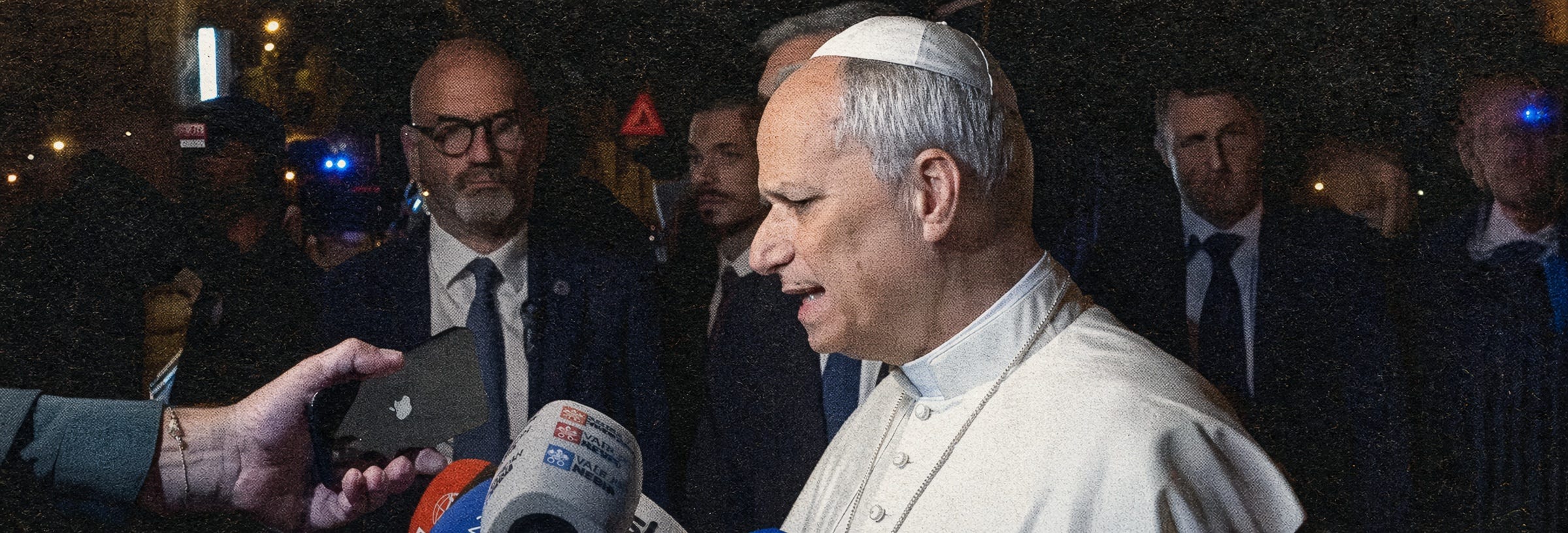
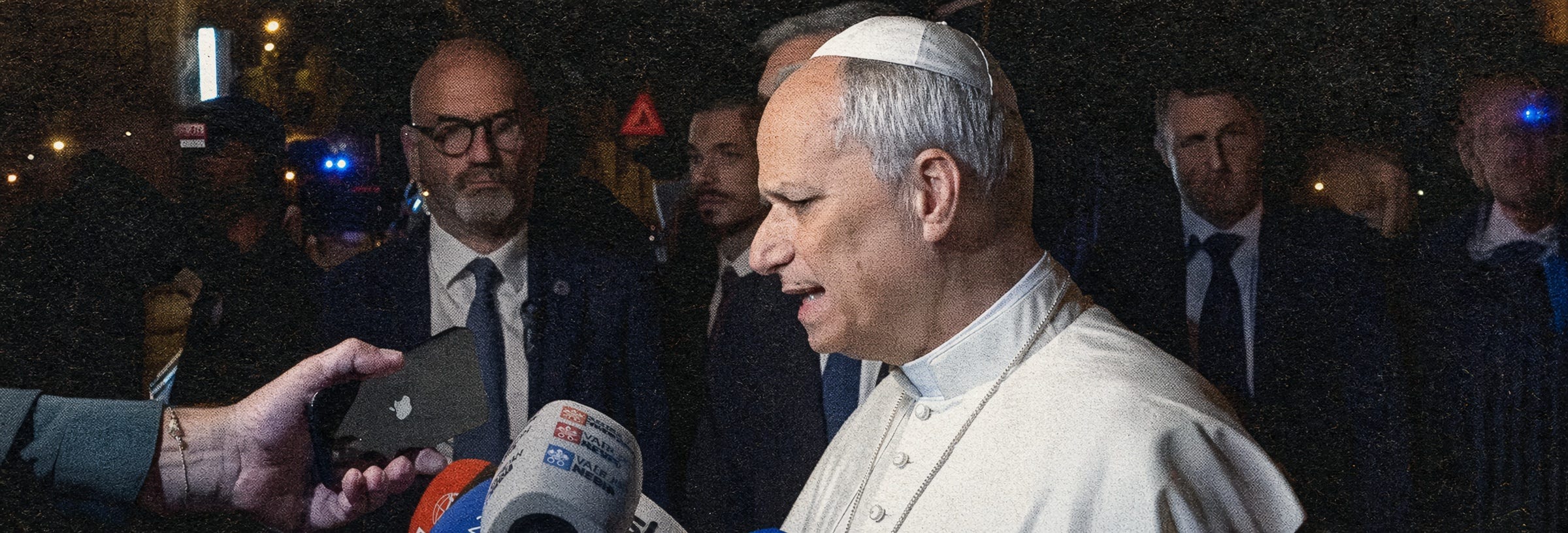
“Someone who says, ‘I’m against abortion,’ but says, ‘I’m in favour of the death penalty,’ is not really pro-life.”
That was Pope Leo XIV’s assessment. But that accusation collapses the moment we ask a question that should hardly need answering: Is there a moral difference between killing an innocent child and executing a convicted murderer? Is there a moral difference, for example, between killing a child and killing a child killer?
One sheds innocent blood. The other, when justly administered, punishes the person responsible for shedding it.
But treating these acts as morally equivalent blurs the distinction on which justice itself hangs.
A Christian doesn’t become inconsistent by opposing murder and supporting a just punishment for murder. Both convictions can flow from the same foundational truth that human beings are made in the image of God, and their lives must never be treated cheaply.
That is precisely the reason God institutes capital punishment in Genesis 9:6:
“Whoso sheddeth man’s blood, by man shall his blood be shed: for in the image of God made he man.”
Notice the rationale here. God grounds the punishment in the dignity of the victim. The murderer has destroyed someone who bears the image of his Creator. As such, the gravity of that crime warrants the severity of the sentence.
It is the sanctity of human life that is the foundation of the penalty.
Anyone claiming that a high regard for human life necessarily rules out capital punishment must reckon with this passage, because God expressly connects the two. It is because human life is sacred that its deliberate destruction demands such a severe reckoning.
The Pope’s formulation declares these convictions incompatible. Genesis brings them together.
For Christians, that should settle which authority requires correction. If someone’s moral assessment makes God’s judgments appear inconsistent, it is the assessment that must change. God does not answer to our standard of justice. We answer to His.
At this point, the obvious objection is that the murderer also bears God’s image. Of course he does. But bearing God’s image does not place a man beyond judgment for what he does to another image-bearer.
Human dignity includes moral responsibility. We are creatures capable of answering for our actions. The murderer’s humanity makes him accountable; it does not make his victim’s blood irrelevant.
Of course, Genesis 9:6 was not given in ignorance of the murderer’s humanity. The God who created man knew perfectly well whom He was commanding to be punished.
So, why should taking human life more seriously require treating its deliberate destruction less seriously?
A murdered person cannot be restored to his family. His children cannot recover their father. His parents cannot recover their son. The life taken is beyond the power of any court to return. Justice must reckon with that loss.
However, compassion becomes morally distorted when it has endless words for the murderer and scarcely anything to say about the person he murdered. The victim’s life mattered. His blood matters. A society’s response should make that unmistakably clear.
But it’s not just about punishment for the crime. Capital punishment also permanently restrains the offender. An executed murderer cannot kill another victim, whether in prison or after release. Society’s responsibility to protect life extends to those who might otherwise become his next victims.
Yes, imprisonment can restrain an offender too. But it is still less than just, as a life sentence could still only be carried out at the expense of the society that was wronged.
Yet, whether a murderer can be confined is distinct from whether death is a just punishment for the murder he has already committed. Justice concerns both the protection of potential victims and the punishment deserved for an actual crime.
A prison cell does not, by its mere availability, render God’s prescribed penalty immoral or unjust.
The Bible also recognises the warning carried by punishment. Deuteronomy 19:20 says that others will “hear, and fear” and refrain from committing the same evil.
This principle reflects a sober understanding of fallen human nature. Some people will refuse to do evil because they love what is good. Others may be restrained by fear of its consequences. A just society has reason to care about both.
We should therefore be slower to congratulate ourselves on our “moral superiority” over previous generations—especially at the rate at which we execute the unborn. Their willingness to impose severe punishment does not prove that they valued life less. It may reveal that they took the destruction of life far more seriously.
Of course, this is not an argument to give the state a licence to kill anyone they wish. A wrongful execution sheds the very innocent blood that justice is bound to protect. It turns the judge, jury, and executioners into the murderers themselves. It blurs and inverts the distinction between the innocent and the guilty.
The same God who authorises punishment for the guilty forbids the execution of the innocent. Exodus 23:7 commands: “The innocent and righteous slay thou not.” Deuteronomy 17:6 requires adequate witnesses before a capital sentence can be carried out.
The state must establish guilt, judge impartially and act within its lawful authority. A government cannot make an execution righteous merely by paperwork or decree.
As such, those who support just capital punishment should insist on rigorous safeguards precisely because innocent life is sacred. God’s law demands a high standard of evidence and holds malicious witnesses accountable: anyone proved to have deliberately given false testimony faces the very punishment he sought to bring upon the accused (Deut. 19:16–19).
And the New Testament gives Christians no reason to treat God’s justice as something embarrassing that must now be explained away.
Paul calls the law “holy, and just, and good” in Romans 7:12. That does not mean every Mosaic penalty transfers unchanged into every modern legal system. It does mean Christians should never condemn as inherently immoral a punishment God Himself commanded.
More directly, Romans 13:4 describes the governing authority as God’s servant, bearing the sword to execute judgment against wrongdoing. The sword is a weapon of execution.
Civilians are forbidden to pursue private vengeance. Civil authorities are charged with punishing evil. A Christian can forgive a murderer while recognising that the murderer deserves punishment. He can pray for the offender’s salvation while supporting a just sentence.
Abortion deliberately takes the life of an innocent unborn child. Just capital punishment takes the life of an offender whose guilt and liability to that punishment have been lawfully established.
The unborn child has committed no crime. The convicted murderer is being sentenced for one.
Any definition of “pro-life” that requires us to disregard that difference is a definition Christians should reject.
God forbids murder. God authorises capital punishment. And He grounds that punishment in the value of the human life the murderer destroyed.
There is no contradiction for Christians to apologise for here.
The Pope’s assertion fails because it treats the defence of innocent life and the punishment of its deliberate destruction as competing and contradictory convictions. Scripture treats them as consistent demands of justice.
The argument over migration numbers is important. But before asking how many people Australia should admit, we need to answer a more fundamental question: What is Australia actually for?
Australia’s migration debate has finally shifted.
The Albanese Government has now committed to reducing net overseas migration to 225,000 by 2027–28, after the latest ABS…
The Albanese Government’s latest online safety laws would expressly authorise Australia’s eSafety Commissioner to operate fake online identities and generate content using artificial intelligence.
The proposed Online Safety Amendment (Digital Duty of Care) Bill defines a “sock puppet identity” as a false or fictitious identity assumed while using an online service.
Under the government’s exposure draft, the eSafety Commissioner would be permitted to assume such identities to perform regulatory functions.
What’s more, the draft expressly authorises the Commissioner to use these identities to “generate material using an online service (including by means of artificial intelligence),” provided producing, possessing or disseminating that material is not otherwise illegal.
The government says the accounts are intended to test platforms and their algorithms, not to surveil individual Australians.
eSafety Commissioner Julie Inman Grant has said such accounts could, for example, allow the regulator to test whether platforms are actually applying age-assurance measures as claimed.
But why should an unelected government regulator require the legal power to create fake identities, interact anonymously with online services and generate AI material?
The powers come as the broader Digital Duty of Care proposal would impose obligations on online services to mitigate government-defined categories of harm. According to the Prime Minister’s announcement, failure to comply could attract penalties of up to $109.2 million.
But even if we assume the best intentions here, the issue is always bigger than what the present eSafety Commissioner intends to do.
Laws always outlive their initial architects. Powers granted for one supposedly benevolent purpose can later be exercised by different people, against different targets, under different definitions of “harm.”
At the very least, a government that wants the power to police fake accounts while simultaneously authorising its online safety regulator to operate fake accounts of its own should expect Australians to question its credibility.
When it comes to defining biological sex, we already know the Albanese Government’s position is silence for the sake of appearing “tolerant.”
So, there’s no real surprise that pro-LGBTQ+ Senator Penny Wong would mislabel Liberal Senator Michaelia Cash’s biological reality bill a “stunt.”
Last month, when responding to questions from Cash about Labor rejecting her Restoring Common Sense and Recognising Biological Sex bill twice, Wong accused Cash of being divisive, stating, “The reality is you are never for equality when it comes to women.
“Do you know what you are for? You are for a stunt which is nothing more than division, and everybody can see that.
“This is not about delivering change that improves the lives of women and girls.”
The exchange was fierce. Cash challenged Wong, and the Labor Senator responded by repeatedly asserting what she described as a policy of respect, equity, equality and Albanese’s focus on domestic violence as proof the party is pro-women.
This was Cash’s second attempt to introduce and debate the common-sense amendment to the Australian Sex Discrimination Act.
The Labor-Green-controlled Senate rejected Cash’s first submission 21 yes, 30 no in July, and again on 15 September, 22 yes, 32 no.
1. Affirmed that “women and girls, and men and boys, are entitled to privacy, dignity and safety.”
2. Recognised “biological sex as a real and enduring characteristic.”
3. Recognised that biological sex is how men and boys, women and girls are identified.
4. Protected single-sex spaces in accord with “the principles of fairness and common sense.”
5. Restored clarity and certainty to the law by defining the meaning of biological sex.
Contrary to critics like Wong, Cash argued that the bill would not have violated or hindered current protections against discrimination.
Section 4C was the most important.
Under the senator’s amendment, the law would again recognise that a man is someone whose sex is male, and a woman is someone whose sex is female.
The law would also have acknowledged that “nothing after birth affects a person’s sex. Including, for example, any subsequent medical, surgical or hormonal intervention or any change to the person’s birth certificate or other identity document.”
After the biological reality bill was defeated the first time, Cash took to social media in protest, stating on X that Albanese had “betrayed Australian women and girls.”
“Labor and the Greens killed it before it could even be debated,” she said.
“Our bill would protect the rights of women and girls in single-sex spaces. For example, in toilets, change rooms, domestic violence shelters and sporting facilities.
“That isn’t radical. It isn’t controversial. It’s common sense.
“Instead of standing with Australian women and girls, Anthony Albanese chose political ideology over their privacy, dignity and safety.”
The July bill was reintroduced by Cash in September.
This followed the High Court’s refusal of special leave, ruling that Sall Grover could not appeal, after losing her free speech and female-only spaces battle in Tickle v Giggle.
Remarking on the September outcome and Wong’s “stunt” smear, Cash said on X, Wong and Albanese “have told Australian women what Labor thinks of us when we stand up for our biological rights.
“A woman is a woman. A man is a man.
“Acknowledging this biological reality in the law is not ‘a stunt.’ It’s common sense.”
Kudos, Senator Michaelia Cash.
“Take no part in the unfruitful works of darkness, but instead expose them.” (Ephesians 5:11)
Western Australia is preparing to overhaul its discrimination laws, potentially restricting the ability of Christian schools to require staff to actually be Christian.
The Cook Government has committed to amending the Equal Opportunity Act 1984, after broadly accepting recommendations from the WA Law Reform Commission in 2022. The final bill has not yet been released, so its precise provisions remain unknown.
But one recommendation should concern Christian parents.
The Commission recommended that religious schools only be permitted to discriminate in employment where conformity with their religious beliefs is an “inherent requirement” of the particular job, among other conditions.
OK—so, who decides which jobs actually require Christianity?
Is it just the school chaplain? The Bible teacher? Well, what about the principal, maths teacher, science teacher, counsellor, receptionist, or gardener?
Christian schools told the review that maintaining a community of practising Christians was essential to preserving their religious identity.
The Commission recorded arguments that Christian formation extends throughout the school community, not merely to those explicitly teaching religion.
And that’s the point.
A Christian school isn’t supposed to be a secular school with Bible classes attached. Christianity shapes what the school believes about truth, morality, human nature, authority, sexuality, family and the very purpose of education.
A Christian maths teacher doesn’t need Christianity to calculate an equation. But neither does a Christian school employ teachers merely to transmit isolated pieces of information, disconnected from the world in which God created, or from the purpose for which He created them.
They are helping form children—children whose faith impacts every aspect of life.
This is why parents deliberately choose Christian education.
Yet an “inherent requirement” test potentially gives an outside authority the power to determine whether Christianity is sufficiently relevant to a particular position to justify employing a Christian.
It gives a government bureaucrat authority to decide the extent of Christ’s Lordship.
Think about how strange that is.
Nobody seriously expects the Labor Party to employ people committed to advancing Liberal Party values. We all know that organisations need people who believe in their mission.
So, why should Christian organisations be different?
The state has every right to prohibit genuine abuse and wrongdoing. But it is another matter entirely for the state to decide which parts of a Christian institution actually require Christianity.
As Abraham Kuyper famously declared, there isn’t a square inch of human existence over which Christ does not declare, “Mine!”
A Christian school should not have to confine its Christianity to chapel and Bible class, because central to the Christian faith is the fact that Christ is Lord over all of life.
If a Christian school can’t require the people responsible for shaping its Christian students to share that Christian conviction, well then, it’s Christian in name only. Maybe that’s the goal.
New South Wales MLC John Ruddick has a message for Australians debating immigration: before we argue about how many people Australia should admit today, we should remember who built the country in the first place.
Speaking in Parliament last month, Ruddick took aim at South Australian Premier Peter Malinauskas, who recently argued that migrants built Australia.
Ruddick called the claim a “historical absurdity,” and said the foundations of Australian civilisation were laid long before the era of mass post-war migration.
“Australia was built by settlers,” Ruddick argued, particularly British settlers who arrived in a remote and largely undeveloped land and set about establishing farms, roads, bridges, factories, towns, cities and institutions.
That distinction matters, he said. A migrant arriving in an established country is entering an existing civilisation. A settler arriving in a wilderness is attempting to build one.
And the decision to establish a permanent British colony on the other side of the world was hardly an undertaking for the faint-hearted.
The First Fleet arrived in 1788. The colony that followed faced isolation, shortages, disease, enormous distances and the constant possibility of failure. Even while Britain was facing the threat of revolutionary France and Napoleon, the experiment at New South Wales continued.
Over the course of the nineteenth century, millions of people from the British Isles came to Australia. They cleared land, established farms and businesses, built infrastructure and founded the communities that would eventually become the Australian nation.
Ruddick argues that modern Australians should recognise the magnitude of that achievement.
And he extends the argument to immigration itself.
Why, he asks, do migrants fleeing poverty, instability or authoritarianism so often seek out English-speaking countries?
Because they are not merely seeking geography.
They are seeking the institutions and inheritance that make those countries prosperous and peaceful: the English language, the common law, representative government, private property, stable institutions and a culture shaped by centuries of British political and legal development.
Australia’s prosperity did not appear from nowhere.
It was inherited.
That doesn’t mean immigrants don’t contribute to it. It means they contribute to something that already exists.
And Ruddick argues that this should produce something increasingly rare in public debate: gratitude.
A person who arrives in Australia and receives citizenship has been given access to a country whose institutions and prosperity were built over generations.
That citizen should be welcomed as an equal Australian.
But equality before the law doesn’t require historical amnesia.
Australians whose families arrived seven generations ago and Australians who became citizens yesterday should be treated exactly the same under Australian law.
But both, Ruddick argues, should be capable of recognising the extraordinary achievement of those who came before them.
The evidence of that inheritance is written across Sydney itself.
Macquarie Street.
Phillip Street.
Hunter Street.
George Street.
Pitt Street.
Castlereagh Street.
And Sydney itself.
These names are reminders of the people who established the institutions and communities upon which modern Australia was built.
Australia can treat every citizen equally while still remembering the people who laid its foundations.
And Ruddick believes that remembering those foundations should inform how Australia approaches immigration today. As such, he is calling for a five-year pause on immigration.
And that would be entirely consistent with the growing consensus among Australians—though some would argue that five years is nowhere near long enough.
Last month, 7NEWS reported on a Newspoll survey finding that 66 per cent of Australians want fewer migrants allowed into the country—a notably high proportion given that around one-third of Australia’s population was born overseas.
Genocide doesn’t always begin with guns and gas chambers. Sometimes it begins with the denial that a people group has any legitimate right to remain distinct.
We rightly condemn the attempt to destroy an ethnic group through murder and bloodshed. But the destruction of a people group can take other forms. A people can be displaced, assimilated, culturally dismantled, politically dispossessed, and ultimately replaced.
The question isn’t simply how a people disappears, but whether there is an intentional effort to destroy that people as a distinct group, and whether the acts being pursued are deliberately directed towards that end.
Physical extermination is one method, but it’s not the only conceivable form of destruction.
The reason why this matters is that the entire logic of “protecting ethnic minorities” rests on the principle that their continued existence is paramount. We protect them so they can continue to exist as peoples—not memories—with their own distinct communities, institutions, traditions, culture and connection to their historic people and homelands.
And yet, for some reason, that principle disappears when the people in question are “European” or “White”—people who account for 8% of the global population, or less.
Let’s put that into perspective for a moment:
When it comes to ethnic or genetic minority groups, it’s worth keeping the global distribution of ethnic traits in perspective.
For natural hair colour, roughly 1% of the world’s population has red hair, 2% blonde hair, 11% brown hair, and around 80% black hair.
Eye colour is similarly distributed: approximately 2% have green eyes, 5% hazel, 8% blue, and around 70% brown eyes.
Skin pigmentation is also unevenly distributed globally, with people of predominantly light skin representing a minority of the world’s population, while the majority have darker skin tones.
So when we talk about “ethnic minority” groups, we should remember that minority status is relative to a particular location, and not a description of humanity as a whole.
If an ethnic people is steadily displaced from its homeland while another population becomes the demographic majority and assumes increasing political, economic, and cultural power, calling the process merely “migration” or “diversity” only cloaks the issue.
But what happens to the original people? If the foreseeable result is the dissolution of their distinct identity and their displacement from meaningful control of their historic homeland, that is ethnic erasure.
And where such acts are accompanied by specific intent and conduct required by international law, they may constitute genocide in the legal sense.
The fact is, a people can be erased without a single person being killed.
The Bible gives us no basis for treating people groups as interchangeable populations to be dissolved and rearranged at the will of those in power. God “made from one man every nation of mankind” (Acts 17:26). Scripture consistently recognises nations, tribes, peoples, and tongues as meaningful realities, not embarrassing and archaic remnants of a primitive past.
Revelation doesn’t picture redemption as the abolition of various people groups, but their preservation before the throne of God: “from every nation, from all tribes, and peoples, and languages” (Rev. 7:9).
God doesn’t redeem humanity by erasing the nations. So, we should reject the assumption that ethnic destruction only counts when there are guns, mass graves, and gas chambers involved.
Sometimes a people is killed. Sometimes it is driven out. Sometimes it is assimilated. Sometimes it is replaced until there is no longer a distinct people left to defend.
The absence of corpses doesn’t prove the absence of ethnic destruction.
The question, therefore, is not simply whether people are being killed. It is whether a people is being deliberately destroyed as a people.
Because a people can survive individual deaths while still being destroyed collectively. Its language can disappear. Its institutions can be dismantled. Its communities can be displaced. Its connection to its homeland can be severed. Its descendants can be assimilated until the people itself exists only as a memory.
That is why ethnic erasure cannot be dismissed simply because there are no bodies in the streets.
A people does not have to be exterminated to be destroyed.
And where the deliberate objective is to ensure that a distinct people will no longer exist, the absence of mass graves does not make the destruction less real.
We all know the Western world is in decline. And the temptation is to treat that decline as primarily a political problem.
We are told to elect better leaders, pass better laws, defeat destructive ideologies, and restore the institutions that once made the West strong.
But what if that approach is exactly backwards?
The question isn’t so much who rules, but what rules.
No society is religiously neutral. Every civilisation rests upon some ultimate authority. Every legal system assumes answers to fundamental questions, such as: What is good? What is evil? What is a human being? Where does authority come from? What limits the power of the state?
For centuries, Western civilisation answered these questions within a Christian framework. Its institutions were shaped by the conviction that God is sovereign, human beings are made in His image, moral law is objective, rulers themselves are subject to Christ the King, and the family is a foundational institution rather than a malleable invention of the state.
However, as Christianity has receded, those assumptions haven’t simply disappeared. They’ve been replaced—not with an atheistic system, but with a system that is just as religious. Every system has a god, and the god of that system is where ultimate authority is derived.
Today, the state increasingly claims authority over what was once governed by family, the church, and the community. Moral absolutes are reconstructed around changing social trends. Individual autonomy becomes the highest good, at least, in theory. Government increasingly assumes responsibility for determining what may be believed, taught, and publicly expressed.
And this is why political reform alone will not reverse the West’s civilisation’s decline.
Changing governments might slow particular forms of decline. But if the culture continues to reject the authority of God, the foundations remain unstable. A civilisation can’t be restored simply by changing the people sitting in power while leaving its underlying worldview and assumptions untouched.
Real renewal has to be much deeper.
Our leaders are often a reflection of the religion of the people they govern. So, real change is not out of reach. Nor is it contingent on an election cycle.
It can begin today, through individuals submitting to Christ, families ordering their lives according to Scripture, churches faithfully teaching the whole counsel of God, and Christians applying biblical principles to education, economics, law, government, and culture.
Of course, we want good men to win elections. We want good men to gain political influence. This is right and godly. Power and authority are God-given (Rom. 13), and that power and authority ought to be wielded for the good of the people—according to God’s definition of good.
But recovering the foundations is just as essential. Why? Because you can’t permanently restore civilisation by changing its rulers while leaving its false gods and idols untouched.
If the West is to be saved, it must recover the Christian faith that made it what it was.
That is exactly why so many forces seeking to reshape and dominate the West are hostile to its Christian inheritance: they understand that faith in Christ and devotion to God have been among the West’s greatest sources of moral strength, cultural coherence, and resistance to tyranny.
The West will not be saved merely by changing its rulers. That alone leaves untouched the very thing that gave rulers licence to dismantle the civilisation they govern.
Our kings remain without restraint, our laws remain without a moral foundation, our values remain subjective, and our families remain without an absolute source of guidance.
Changing who rules is not enough. We must recover what rules.
West Australian Labor MP Dave Kelly wants the Lord’s Prayer booted from parliament.
Kelly’s arguing that the Lord’s Prayer, first prayed in 1890, in a state he admits was founded by Christians, is no longer relevant.
He then frames the prayer as oppressive and racist.
Demanding the prayer’s cancellation in February, he wrote,
“Forcing citizens to participate in the Christian religion [or any other] is no longer acceptable or lawful.
“WA is now a proud multicultural community welcoming citizens from all around the globe.”
He adds to the petition pushing for the Christian prayer to be excluded from parliament: “Now more than ever we should strive to make everyone feel welcome and included.”
Starting the day with The Lord’s Prayer is no longer appropriate, Kelly declared.
“It is not inclusive and no longer serves its purpose.”
“Finally, the community is now more than aware of the thousands of children sexually abused by members in various organisations including Christian churches.”
“In these circumstances,” he stated, “you cannot underestimate the triggering effect on survivors when they come to this place and see that the Legislative Assembly starts every day with a Christian prayer.”
These reasons are, Kelly argued, why the Lord’s Prayer should be replaced “with a more inclusive moment of quiet reflection.”
“Respect for our Christian heritage used to be something all sides of politics broadly understood,” she said.
“Opening Parliament with the Lord’s Prayer was seen as a simple acknowledgement of the Christian heritage of our Nation, and the faith that shaped so much of our law and culture.”
Answering Kelly’s vile attempt to link Christianity with oppression, racism, and sexual abuse, Groenewald asserted,
“Abuse is evil and must always be condemned.”
“To imply that the prayer Jesus Christ taught His disciples is, in itself, a symbol of that evil is effectively to say that any reference to Christianity must be read through the worst actions ever committed by people within the church.”
“That is,” she correctly stated, “a standard Dave Kelly MLA would never dream of applying to any other faith group.”
Contributing in August to the review Kelly’s request prompted, the Australian Christian Lobby’s Michelle Pearse said the Lord’s Prayer should stay.
In sum, Pearse countered that the prayer reminds Government that it is not God, and that its authority is borrowed.
“The practice,” Pearse explained, “is not an establishment of religion or an imposition of worship.”
The Lord’s Prayer “is a short, scriptural and deeply respected prayer that seeks guidance, wisdom, forgiveness and protection for those in authority.”
“It gives solemnity to proceedings, acknowledges the historical sources of Western Australia’s democracy and parliamentary institutions.
“It reminds Members that political authority is limited and should be directed to the welfare of the people it governs.”
“A moment of silence,” Pearse added, “would be an inadequate substitute.”
Although the prayer remains, its future is yet to be decided.
While Kelly’s complaints have been acknowledged, the matter is under review.
As a Discussion Paper released in June concluded, the issue warranted careful consideration because of “broader questions about the balance between tradition and modernisation.”
This included considerations about “the symbolic role of parliamentary procedure.”
An 83-year-old Christian grandmother was allegedly euthanised against her will under Canada’s assisted-dying system, prompting a criminal investigation into the circumstances surrounding her death.
Brigitte Stegemann died on July 10 at The Pearl long-term care facility in Cannifton, Ontario, after receiving Medical Assistance in Dying (MAiD). Her granddaughter, Brigitte Kranendonk, alleges that Stegemann had repeatedly rejected euthanasia because of her Christian faith and did not provide valid consent before the procedure.
The allegations have now led to an investigation by Belleville Police. Police have confirmed that the matter is open and being investigated by the force’s Criminal Investigations Division, but have declined to provide further details while the investigation continues.
Kranendonk, who says she was her grandmother’s primary caregiver and held power of attorney for personal care, claims Stegemann had previously made clear that she did not want MAiD. Stegemann had been diagnosed with stage-four stomach cancer earlier this year.
The family also questions whether Stegemann had the capacity to consent. Kranendonk says her grandmother struggled during a cognitive assessment, including incorrectly answering basic questions about her family. She further alleges that, two days before the procedure, Stegemann became distressed and cried for approximately 45 minutes after being told explicitly that the scheduled procedure would result in her death, saying that she had “made a mistake.”
On the morning of her death, Kranendonk alleges that Stegemann did not respond when the doctor asked whether she could administer the “medicine”. According to Kranendonk, Stegemann did not open her eyes, nod or speak before the doctor proceeded. She died within minutes.
The family has also sought investigations by Ontario’s Chief Coroner and Patient Ombudsman.
Washington is warning that Australia’s proposed online safety regime could become a weapon for political censorship.
The Trump administration has formally warned Canberra that the Online Safety Amendment (Digital Duty of Care) Bill 2026 “risks becoming a mechanism for viewpoint-based censorship.
The bill, which was released by Communications Minister Anika Wells earlier this month, would impose a sweeping new duty on online platforms, backed by penalties of up to $109.2 million.
Proposed section 25C(1)(m) would allow the Communications Minister to declare additional material “seriously harmful” if she is satisfied it may cause serious harm. The ministerial instrument would be subject to parliamentary disallowance, but the initial power to define the new category would sit with the minister.
Then there is proposed section 25D(1)(c), which defines material harmful to children to include material that: “encourages or promotes hostile attitudes towards women or gender equality.”
So, not violence or threats—attitudes, which the bill itself doesn’t define. That leaves enormous room for interpretation on the issues that already generate fierce political and religious disagreement.
A Christian teaching on marriage. An argument that biological sex matters. A criticism of gender ideology. A debate over whether males should compete in women’s sport. Where does legitimate disagreement end and “harm” begin?
Anika Wells was asked who would decide.
Her answer:
“The test for what would constitute a new serious harm would ultimately be, I guess, made by me.”
Isn’t it funny how, whenever the government acts in the name of our “health and safety,” it somehow ends up with more power, and we end up with less freedom?
But consider also the implications for platforms that host our speech. They don’t have to agree that content is “harmful.” They simply have to fear being wrong. At every demand, they’ll remove first, and maybe investigate later.
In its submission to the Australian Government, the US said the bill could encourage platforms to “pre-emptively” suppress controversial material to avoid liability and warned against “viewpoint-based censorship”.
Australia has already seen regulators intervene in speech.
Canadian activist Christopher “Billboard Chris” Elston was ordered by eSafety to remove a social-media post in 2024. The Administrative Review Tribunal overturned the order in 2025.
And the government is now proposing to put an even larger regulatory stick behind a vastly broader definition of online harm.
But perhaps the most revealing comments have come from the Greens.
Senator David Shoebridge has explicitly argued that Australia needs a Digital Duty of Care so that messages from Pauline Hanson and One Nation are not “amplified”.
Think about that.
A bill sold to Australians as a child-safety measure is being defended by a senator who has openly identified the political speech of his opponents as part of the problem the regime is intended to address.
That is not a hypothetical concern about how this power might someday be abused. It is a glimpse of how the power is already being justified.
This is always how freedom disappears. Not with a government announcing that it intends to censor you, but with a promise to protect you from “harm.”
Give the government power to decide what is harmful, give platforms a $109 million reason to comply, and sooner or later lawful speech becomes whatever the people in power say it is.
Why is it that the English are so often held to a standard that is never applied to any other peoples throughout history?
No ethnic group simply sprang from the ground as a fully formed, genetically homogeneous people. Every people is, in some sense, the product of earlier peoples merging, migrating, intermarrying and forming new communities over generations.
The fact that the English have Anglo-Saxon, Celtic, Norse, Norman and other ancestral influences, with some of those groups more dominant than the others, does not somehow make the English less of a people. It is precisely how distinct peoples come into being.
There’s an unmissable irony in the way feminists today are rushing to defend mothers who kill their own children.
In doing so, they have effectively revived the old idea of female hysteria. Hysteria was once a widespread diagnosis, rooted in the belief that women were uniquely prone to mental and behavioural disorders because of their biology.
The term dates back to Ancient Greece, from hystera, meaning “womb”. Hippocrates and Plato even believed the womb could wander through a woman’s body, producing various physical and mental symptoms.
Modern medicine abandoned hysteria as a legitimate diagnosis long ago. Yet when a woman commits an unspeakable act today, we increasingly hear a remarkably familiar argument: her hormones, pregnancy, childbirth, mental state or female biology somehow explain, or even excuse, her irrational behaviour.
The irony is hard to miss here. In their attempt to defend women, they are resurrecting what feminists have long argued is one of history’s most patronising stereotypes about women.
There’s a message being relentlessly preached to White people across the Western world, and it’s a message we’d never tolerate being communicated to any other racial or ethnic group.
The message is that White people, collectively, are a problem in need of fixing.
A White majority is a problem. White people in positions of authority are a problem. White people in positions of influence are a problem. White people possessing too much political, economic, or cultural dominance is a problem.
And the proposed solution is always the same: Fewer White people. Dilute the White population with non-White populations until the problem disappears and power and influence are largely transferred to the non-White population.
We’re told that a society becomes much better when it becomes more racially diverse. But often, underneath that argument is another proposition: that the presence of too many White people is itself something that ought to be corrected.
And yet, we all know that we could never speak this way of any other people group on earth.
Nobody would seriously argue that an African nation has a demographic problem because too many Africans live there. Nobody would argue that an Asian population needs to be diluted because Asians occupy too many positions of influence. Nobody would suggest that an “ethnic minority” should be deliberately weakened as a collective because its members have achieved too much authority in their own homelands.
But when the people in question are White, suddenly the rules change—and this is the curious thing: For decades, Western nations have deliberately tried to make their populations colour blind.
They taught people that a person’s race shouldn’t determine how they are treated. That one cannot make an assumption or ascribe guilt to a people simply because of their ancestry. And that people should be judged by their character and their conduct, not the colour of their skin.
And, by many measures, that worked—at least, when it came to the Westerner.
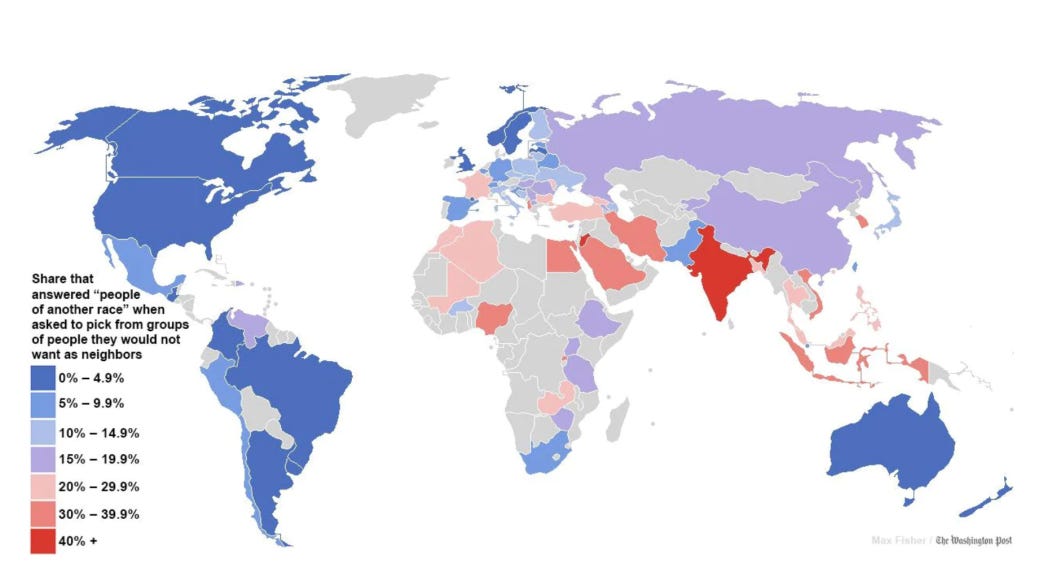
Western nations are among the least racially prejudiced societies in the world. But all that is about to come undone. Not because of “Far Right” influences on social media, but because of something far more obvious: The disadvantaging of people because they are White.
Share that answered “people of another race” when asked to pick from groups of people they would not want as neighbours. (Source: The Washington Post)
Start telling Westerners that their race actually does matter after all. Start telling them that their collective presence is a problem. Start telling them that their institutions are too White, their leadership is too White, their influence is too White, and their representation needs to be corrected.
And what will you do? You will awaken racial consciousness in the one group that has been conditioned not to think in terms of race and ethnicity. Eventually, you will make them ask a question they may never previously have thought necessary to ask:
What does it actually mean to be “White”?
Western society has long been taught that racial self-identification is a dangerous path toward extremism. At the same time, it often demands that Westerners view themselves as a racial collective when it comes to acknowledging historical sins.
White people can talk about being White when the subject is White privilege. They can talk about their ancestors when the subject is historical oppression. They can talk about their racial identity when they are being asked to acknowledge guilt, shame, or responsibility for the actions of people who came before them.
But they are not to ever think of themselves as a people with legitimate collective interests. They are not to ever celebrate their own identity in the same way other groups are encouraged to celebrate theirs. They are not supposed to organise around their own family interests.
They are supposed to understand their collective identity primarily as a moral liability. They are told to understand the differences between racial groups as a source of historical wrongdoing. They are told their ancestors’ achievements cannot be separated from unjust racial privilege. They are told that their racial identity comes with obligations, burdens, and moral debts.
But that’s not a natural posture for any people group to live with indefinitely. Eventually, people ask questions. Eventually, they begin examining themselves the way every other group has been encouraged to examine itself. Eventually, they begin thinking about their collective interests. They begin thinking about their identity. And they begin organising accordingly.
Of course, whenever that happens, we already know what the response will be. They’ll be called all the names. They’ll be accused of all the things. But the fact remains, to a large extent, they are the natural result of the societal pressures placed upon them.
If you continually tell people that race does not matter when it comes to their own people, but that it absolutely matters when it comes to everybody else’s, they will eventually grow tired of the double standards.
If you tell every other racial group that it’s legitimate to organise collectively around its identity and interests, eventually White people will ask why the same principle does not apply to them.
If you tell people that racial groups deserve special consideration, eventually people will ask whether their own group deserves it too.
And if you tell one racial group that its collective presence is a problem that needs to be diluted, eventually, members of that group will begin to wonder why they should just accept that judgment.
You can’t spend decades telling people to think in racial categories when it comes to everyone else and then be surprised when they start doing so for their own people. You can’t tell people that racial identity is enormously important for everyone except White people.
That’s simply not how human beings work.
Push people into a corner long enough and hard enough, and they will eventually re-examine the assumptions they were taught to hold about themselves. The irony is that the very people who claim to want a less racially conscious society are creating a more racially conscious one—because they are not advocating for less racial consciousness for all, only for White people.
The West spent decades trying to convince people that the colour of a person’s skin should not determine how they are treated. If we now begin treating Westerners differently because of the colour of their skin, we shouldn’t be surprised when Westerners begin to push back.
So, when White people begin thinking more consciously about their racial identity, we should not be surprised. When people are subjected to years of messaging that portrays their racial group as a problem, their demographic presence as something to be corrected, and their collective achievements as something to feel guilty about, it is entirely predictable that some will eventually reject the identity they were taught to have and begin reconsidering what it means to be White.
That is not something that happened in a vacuum. It is, in large part, the product of the very anti-White racial consciousness that has been relentlessly pushed upon them.
If you spend decades teaching White people to see race everywhere except within—unless it is viewed through a negative lens—and teaching them that their own race is uniquely problematic, you cannot reasonably expect them to remain indifferent to their racial identity forever.
Australia’s intelligence boss, Mike Burgess, wants the country’s terrorist alert system upgraded.
He made the argument in June, stating that “I do not believe the system was designed for a situation like the one we now face.”
While Australia’s terrorism threat level remains at PROBABLE, he said, it doesn’t tell the full story.
“The next level on the scale is EXPECTED, which applies when we have intelligence about a specific attack.”
About which, he clarified, “we do not.”
However, Burgess stated, “we do know the environment is degrading, and acts of politically motivated violence are becoming more likely.”
Referring to “extremists across the ideological spectrum”, he cited one case involving so-called “extreme Christian beliefs,” and another “allegedly inspired by an extreme left-wing ideology.”
Although the majority of terrorism threats still involve Islamists, he said, “these cases demonstrate the diversity and complexity of the contemporary terrorism environment.”
Likening the state of the security environment to “climate change”, Burgess asserted,
“Just as climate change increases the likelihood of extreme weather but does not forecast specific storms, politically motivated violence, including acts of terrorism, is more likely, even though [ASIO] cannot predict a specific attack.”
He then added that “this is where a degrading security environment intersects with a diverse one.”
From there, Burgess gave a positive nod to the Albanese Government’s “recent investment in the ASIO and AFP counter-terrorism online centre.”
He said, ASIO and the AFP have foiled 31 major plots since 2014, then reassured Australians that they don’t want to be “all-seeing and all-knowing.”
That said, his agency will confront this “new terrorism environment” head-on.
Inferring multicultural – “modern” - Australia, he said that the country’s dynamic, diverse, and degraded security is an “unfortunate reality,” then added that “the terror alert system will never include a level of “impossible” or “unthinkable”.
Hence the importance, Burgess said, of addressing “known serious threats, and continually evolving and improving [ASIO’s] capabilities.”
This includes the “aggressive adoption of new tools and techniques”, like artificial intelligence.
Listed among his “that’s terrorism” concerns were “the tolerance of intolerance, the growth of grievance, the radicalisation of minors, the embrace of conspiracy.”
His June address ended by endorsing a return to the ethos of a “fair-go.”
Burgess stated that with a revival of “mutual respect and tolerance, the temperature of our security environment would be several degrees lower.
“By all means disagree,” he declared, “but consider how we disagree.
“By all means protest, but consider how we protest.
“By all means report the news, but consider how you report the news.
“By all means condemn a government or a political party, but consider whether you should condemn a people.”
Doubling down on his assertions, Burgess noted on 11 September this year, “much has changed since 9/11.”
“Terrorist motivations are far more diverse than they were 25 years ago.”
Although Burgess noted that “Sunni violent extremism still represents the majority of ASIO’s counter-terrorism caseload,” he reasserted the June diversity claim.
Contemporary terrorism, the ASIO boss declared, now involves “mixed ideologies.”
“Drivers of extremism,” he added, “are [also] different and more diverse.”
The internet, for example, when “violent rhetoric and violent acts are left unchecked,” “creates a permissive environment for further violence.”
While mostly benign, the ASIO chief’s comments raise some red flags.
Without scrutiny, updating the terror alert system could lead to ASIO policing dissent, political commentary and Christian sermons calling the government to account.
Such is Labor and the eSafety’s apparent lust for a dystopian ministry of truth, circa “Digital Duty of Care.”
Hand-in-hand with Burgess’ updates, this could also lead to Australia’s security agencies expanding who they designate as a terrorist and what they consider to be terrorism.
In the hands of a socialist government, which hates criticism, especially when political opponents overtake them in the polls, Burgess’ promises about any ASIO overreach are far from reassuring.
Any push to further supercharge the surveillance state is a chilling prospect for a nation founded on faith, family and freedom.
One clear takeaway from Burgess’ two addresses this year is that diversity isn’t just a threat to social cohesion.
ASIO now seems to consider it a threat to national security.
The media keeps asking the same question: Why would a non-White immigrant vote for a political party that wants to cut immigration? As though the answer is somehow impossible to understand.
It isn’t.
Plenty of migrants didn’t come to the West simply to live among different people on different soil. They came because they saw something here that was worth leaving home for. They saw what generations of Westerners had built—its culture, freedoms, institutions, traditions and way of life—and wanted to become part of it.
There was something here they valued more than what they had left behind. That should be obvious. Otherwise, they would have stayed where they were.
For some immigrants, then, immigration isn’t merely about changing countries. It is about changing the way they live. They don’t want to see the culture, freedoms and traditions that attracted them to the West diluted any more than Westerners do.
And why would they?
Why endure the enormous upheaval of leaving your home, your people, your language, your culture and your traditions—only to watch your new country gradually become more like the one you left behind?
The idea that an immigrant must automatically support mass immigration assumes that immigrants have no attachment to the society they deliberately chose to join.
But some came precisely because they didn’t want the West to become like the places they left.
So the question isn’t, “Why would an immigrant vote for a party that wants less immigration?”
The question is, Why would anyone assume that every immigrant who chose the West must want to see the West changed into something else?
The answer to the first question is so obvious; you’d have to be part of the media class to miss it.

 Login