Login

“They Want to Shut Down Your Free Speech”: British Australian Community President Warns
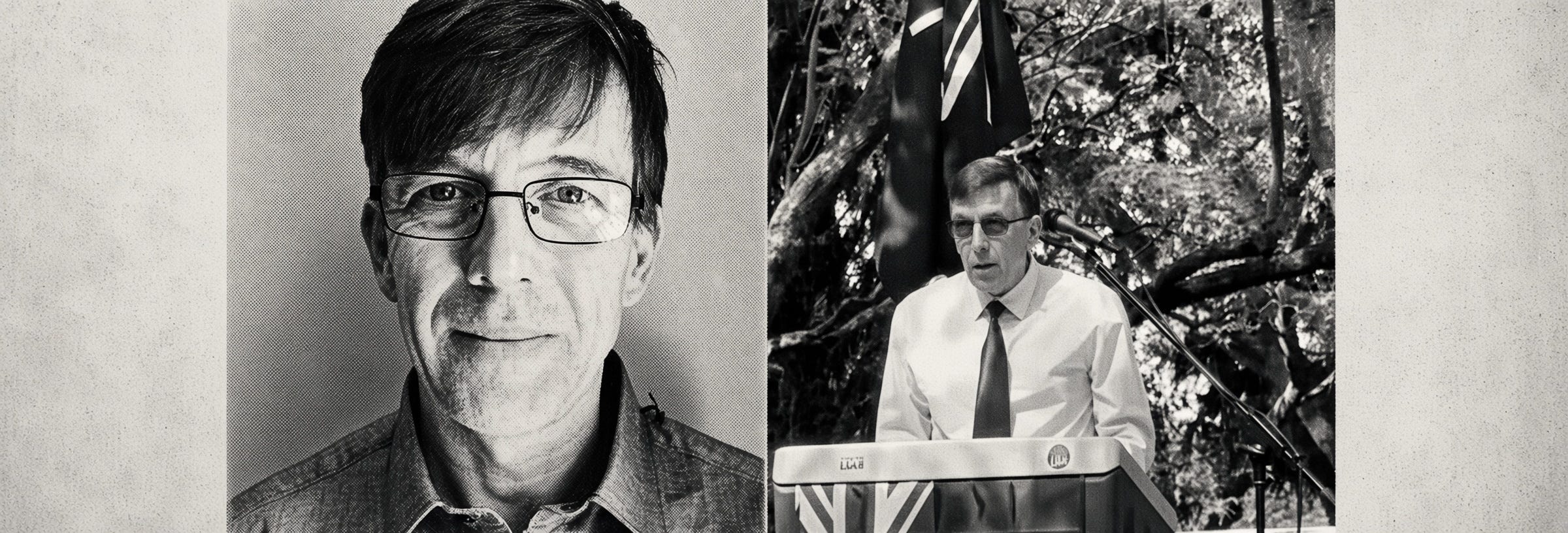
Harry Richardson, President of the British Australian Community, speaking at the Sydney Free Speech Rally on 30 August 2026:
First, an acknowledgement. The BAC would like to acknowledge the Anglo explorers, the pioneers and their descendants who planted the British flag and Christian faith on this continent, creating the Australian nation. We acknowledge the Aboriginal and Torres Strait Islander peoples who have lived here since the Dreamtime.
And we acknowledge the Federal Commonwealth of Australia, created by the nation, under the Crown, to guard the nation and the liberty of all citizens. Today, in 2026, there are few countries that have free speech. The ones that do are mostly European or European-derived.
Yet in England, Sir Edward Coke insisted that freedom of speech was an ancient custom of Parliament. That was in the 1590s, more than 400 years ago. I grew up in England in the 60s and 70s and played out in the street every night.
And once in a while, some kid would come running into his mum and say, Mum, Johnny called me an idiot. And the answer every kid got from his mum was the same. Go and tell Johnny, sticks and stones can break my bones, but names will never hurt me.
In other words, grow up and take it on the chin. Hurty words won’t damage you. People have a right to insult you. Deal with it.
This was the ancient culture of free speech that we were marinated in as we grew up. But whilst in the atmosphere and parts of Western Europe, free speech was a foundational part of our culture, in the rest of the world, it mostly wasn’t.
Saying the wrong things could have you punished or even killed. Our leaders used to tell us that we were an anomaly, because we were a European country in Asia. Now they tell us that we’re not a European country at all and never were.
They say that the only defining feature of Australians is their values. They say that anyone could come here and adopt our values and instantly be as Australian as anyone else. But in order to bring in people from such diverse backgrounds, one of the first things they had to do was to shut down our free speech, which is one of our most precious values.
In 1975, just three years after Whitlam decided to abolish discriminatory immigration, our elites introduced the Racial Discrimination Act, which began the process of cramping down on free speech in order to facilitate a diverse society.
But that wasn’t enough, of course, so later they added the hated 18C. Then when Tony Abbott promised to repeal 18C, a coalition of diverse minorities got together and made damn sure that he would do no such thing, even though it was a foundational value of the Anglo-Celts who settled and built this nation.
Now even that isn’t enough, so they bring in the anti-Semitism and hate speech laws, which are even worse. And this isn’t the end of it. You mark my words.
The destruction of free speech has been intertwined with the project to force multiculturalism onto Australia. If you don’t believe me, Chris Minns, the New South Wales Premier, spelled it out for you. He said, and I quote,
“We don’t have the same freedom of speech laws that they have in the United States, and the reason for that is that we want to hold together a multicultural community.”
So there you have it. We can’t have free speech anymore because now we’re multicultural. We all need to understand that.
When we choose migrants, most of us want people with the same value systems as we have. But how do we make sure that people share our values before we give them a passport to one of the richest countries in the world?
Well, our founders wrestled with this idea and came up with a simple solution. It wasn’t perfect, of course, but it was the best they could manage. They decided to restrict entry mostly to people from the British Isles and to a lesser extent Western and Northern Europe. Some people called this the White Australia Policy.
Why did they think that people from Britain would share their values and loyalties? Well, probably because our founders were of British descent, and they were very explicit about that.
Henry Parkes, the father of Federation, talked about the crimson thread of kinship. His views were hugely popular. So they ran this policy for the first 70 years or more after Federation, and not surprisingly, most of the migrants shared the same values as other Australians.
They believed in freedom of speech, the rule of law, Christian morality, and the Protestant work ethic, and so on. During this time, the policy was wildly popular with the citizens of the nation, and the nation flourished. Australia had a high standard of living, low levels of crime and corruption, and all the benefits of a high-trust society.
Importantly, we had a deep cultural affinity for free speech, which we understood was the bedrock of the kind of free and stable society to which we were accustomed to. But our elites decided to introduce non-discriminatory immigration, which benefited minorities. They told us that this wouldn’t matter, because the new migrants would have our values.
But when people found that many new migrants had different values, the government crushed dissent by clamping down on free speech. The problem is that once the government gets the right to ban speech they don’t like, it never stops, because they love to ban criticism of their own policies. And the policy that most people wanted to criticise was mass indiscriminate immigration.
So multiculturalism and immigration have been protected by constantly undermining our ancient free speech rights and values. In Britain today, thousands of people are arrested every year for expressing opinions, and most of those opinions are in opposition to mass indiscriminate immigration. Free speech is effectively dead in that country, and Australia is catching up fast.
You can’t import people en masse from countries with different value systems, and expect them all to adopt our loyalties and value systems the moment they arrive here. It isn’t easy to defend free speech, even amongst educated Westerners. How can we expect people who’ve grown up in cultures which hate free speech to suddenly embrace it? It was never going to work.
Just ask Salman Rushdie. Under our current immigration system, only about 3-5% of migrants come from the British Isles, and 90-95% of our new migrants come from outside Europe. These new people come from countries with different values, and for the most part, free speech is not one of them.
Values exist in the minds of people, not in the magic soil or floating in the air. Different people have different values. If we allow the government to turn us into a hated minority in this land, then don’t expect our values to hang around.
So this is the game. They want to shut down your free speech so that they can bring in more people who don’t believe in free speech. We have to fight these laws and preserve our free speech, or as George Washington said, it may be taken away, and dumb and silent we may be led like sheep to the slaughter.
WATCH: