❌

Reading view

Climate of concern: The changing face of social movements in North Africa

TUNISIA TUNIS ENVIRONMENT PROTEST POLLUTION
Cover image: picture alliance / Hans Lucas | Imen Ben Youssef

The profile of social activism in North Africa is changing. Young people in the region shifted away from demanding regime change after the thwarted hopes of the 2011 Arab uprisings and the 2019 Hirak movement in Algeria. Now, they tend to seek practical improvements in their social and economic conditions rather than wholesale political reform.

Many of these new social movements focus on environmental concerns, and increasingly on the impact of global warming. North Africa is among the regions in the world most affected by climate change. But its countries are also some of the most promising sites for renewable energy generation, given their abundant sunshine and proximity to the European market. Activists have targeted some renewables projects, testifying to a feeling that authorities are failing to ensure energy transitions are fair and meaningful.

These trends in activism in North Africa match a recent turn in European engagement with the region, away from support for political reform and towards socioeconomic issues. This includes cooperation on clean energy projects. But Europeans should bear in mind that cooperation with North African governments on projects that ignore local interests will fall short of the objective of promoting greater opportunity and long-term stability in the region. This underlines the importance of including local businesses and civil society representatives in initiatives from the very start.

Changing social movements

The Arab uprisings and Hirak protests were driven in large part by social and economic concerns, and sought a political remedy by calling for a change of government. But hopes for better politics have since foundered across North Africa. The region’s protests and social movements now tend to focus on practical and often locally based demands for a more effective state and better services for communities. The 2025 Gen Z protests in Morocco, for example, began as a response to failings in maternity health care before swelling into wider calls for social justice. The shift to more issue-based activism reflects North Africans’ disappointment in past attempts at political reform as well as long-simmering social tensions. These include anger at poor governance and the strain rapid urbanisation puts on jobs and housing.

The shift to more issue-based activism reflects North Africans’ disappointment in past attempts at political reform as well as long-simmering social tensions

But climate change is also encroaching ever more on North Africans’ quality of life. Historically a water-scarce region, North Africa is now experiencing extreme temperatures, rising sea levels, drought and desertification. Once-fertile agricultural land is becoming barren, and flooding from extreme weather events exacerbates the problems for farmers and food supplies. Climate change is also contributing to power cuts and water shortages, as well as catastrophes from flash floods to wildfires. One opinion poll in 2024 showed that one in six people in North Africa had experienced harm from climate change in the previous two years (or knew somebody who had), and that 71% of North Africans saw it as a threat.

With governments often failing to implement policies to mitigate climate impacts, social movements have adopted an environmental focus. These movements sometimes blend protest with community self-help initiatives, and are often local rather than national. Their less explicitly political nature brings them a measure of tolerance by authorities, as does the fact that the movements often pursue environmental objectives that governments also embrace. But activists still face similar restrictions to all civil society movements in North Africa, at times drawing surveillance and repression.

Changing the environment

Such climate-related movements have sprung up across North Africa. In Morocco, a group of Tangier-based NGOs and unions halted a building development that would have involved deforestation, and they now publish an annual report on local environmental issues. Youth for Climate Tunisia trains young people to mobilise on climate issues and organises digital campaigns. The Egyptian group Greenish promotes climate education and capacity building for local communities. Algeria has several community-based groups that work on improving access to water and countering desertification.

Other groups focus on wider environmental concerns. Egypt’s VeryNile pioneered efforts to work with local fishers to collect and recycle plastic pollution from the Nile. In Tunisia, local protests against the impact of phosphate processing in Gabès snowballed after a series of toxic gas leaks in October 2025, becoming a mass movement that continues almost a year later.

But North African social movements also mobilise when green transitions disadvantage local communities and marginalised groups. As North African countries increasingly seek foreign investment in renewable energy projects, some communities worry that land and water resources will be diverted to benefit wealthy elites and foreign investors. In Tunisia, solar projects have aroused local opposition because they take land out of community use and reinforce regional inequalities. In Morocco, solar megaprojects such as the plant in Ouarzazate have prompted anger in nearby communities because of the amount of water they consume.

Changing European policy

One thing that unites these disparate movements is that activists seek concrete improvements in quality of life, as well as a bigger role in determining their countries’ futures. This aligns with an increasing sense in Europe that the best way for the EU and member states to promote rights and opportunity in North Africa is through a focus on socioeconomic development.

As the EU’s 2025 Pact for the Mediterranean showed, European policymakers aim to cooperate with North African partners on tangible initiatives that match local government priorities, including in green energy and water management. But the environment-focused social movements should remind European policymakers that working only with governments is not enough to ensure progress on economic and social rights, as I argued in an ECFR policy brief last year. The EU must frame its projects in a way that gives local populations as much agency as possible, by breaking down barriers for small businesses and including civil society in project design and planning.

The EU must also ensure that the projects it supports genuinely offer mutual benefit. In climate policy, the pact’s logic of “a partnership of equals” means European support for renewable energy projects including solar and wind power and the production of green hydrogen. Such projects would then supply clean energy for Europe and promote North African development as well as reduce local energy costs. In turn, greater opportunities and lower prices in the region could help promote the stability that European policymakers also seek.

But not all climate and environmental projects meet these goals—as the local criticisms show. To fulfil the promise of clean energy projects for both sides, Europeans must complement their investment in power generation with other measures to limit environmental trade-offs and to help benefits to flow to local communities. These should include infrastructure development and technology transfer to build up a local clean energy ecosystem. That is the best way for Europe to help ensure that the aspirations expressed in North African environmental movements are met.


Source

  •  

After Tidö: What a centre-left Sweden would change for Europe

WEB INRIKES
VISBY, SVERIGE 20260625 Socialdemokraternas partiledare Magdalena Andersson (S) håller sitt tal under Almedalsveckan. Foto: Henrik Montgomery / TT / Kod 10060 | picture alliance / TT NYHETSBYRÅN | Henrik Montgomery/TT
NPP

The Gripen fighter jet came in low over the medieval rooftops of Visby, stood on its tail and climbed vertically out of sight. Hundreds of hands went up holding phones. Every late June, all Swedish party leaders gather for Almedalen Week in this town on Gotland, the Baltic Sea’s most strategic island. This year, the military display drew the only unanimous reaction of the week.

Sweden holds a general election on September 13th, but defence has barely featured in the campaign. All parties take the Russia threat seriously, and all want to face it as one. The election is being fought instead over welfare, migration, crime, climate and the economy—and on many of those, the government parties are losing.

Ulf Kristersson’s centre-right Moderates have held the prime minister’s office for four years, after an agreement in 2022 secured them the support of the far-right Sweden Democrats in exchange for a hard line on migration and crime. The so-called Tidö agreement—named after the castle where it was negotiated—broke a taboo: for the first time the Sweden Democrats had formal influence over a government, though it stopped short of joining the cabinet. Now the four parties supporting Kristersson’s government are trailing the opposition in the polls. The Liberal Party, currently in government, has suffered the most from the cooperation with the Sweden Democrats and is now polling below the 4% threshold to get into parliament.

Many analysts therefore expect Magdalena Andersson of the Social Democratic Party to return as prime minister. Her party governed Sweden for most of the 20th century and again between 2014 and 2022, when the country abandoned centuries of military non-alignment to join NATO. What would an Andersson government mean for Sweden’s foreign policy and its role in the EU? Based on several conversations with key people in the opposition parties, in Almedalen and elsewhere: not a dramatic change. But look closer and the differences start to show.

The maths

The political course will partly depend on the majority Andersson can assemble. A deal with the formerly communist Left Party, which is still formally committed to leaving NATO, would create a different government from one built with the market-liberal Centre Party and perhaps the Christian Democrats—and getting all them into the same majority would require political magic. The Green Party is likely to be part of the coalition either way, although senior figures say the case for being in government is still hotly debated internally.

The most likely outcome is that Andersson will lead a red-green coalition, assembled over months of difficult negotiations. The Greens and the Left would push for a less restrictive migration policy than the Social Democrats are ready to accept, having themselves tightened asylum rules when they were in power. For its part, the Centre Party would press for deregulation and other market liberal reforms Swedish business wants—against the trade unions as well as the Greens and the Left.

If Andersson struggles to hold a red-green government together, a grand coalition between the Social Democrats and the Moderates also cannot be ruled out. But that would require a serious external crisis and a significant change within the Moderates.

Names circulating for foreign ministers or “sherpa” for the prime minister are Paula Carvalho, Morgan Johansson, Ylva Johansson, Ann Linde, Kerstin Lundgren, and Oscar Stenström. Peter Hultqvist is likely to return as defence minister.

What will not change

On many key issues, a government led by the Social Democrats would continue Sweden’s current course, regardless of coalition partners. Support for Ukraine is strong across the Riksdag. NATO membership will not be reopened: the security situation and strong public support for NATO membership discourage the Left Party from pushing its formal position, and the Social Democrats would refuse if it tried.

Sweden rejected the euro in a referendum in 2003 and will not revisit it in the coming four years unless there is a deep economic crisis, although the Centre Party may extract a report on the topic. The country’s dependence on exports keeps every party in favour of open trade. Sweden will also remain one of the EU’s most frugal members in negotiations of the next Multiannual Financial Framework.

‘Magda will be Magda’

Elsewhere, the change will be real. A centre-left government will focus more on relations with the global south and gradually increase aid spending. The Social Democrats have a long tradition of cooperating with countries such as South Africa and Brazil and have deepened those ties while in opposition. If Lula da Silva is re-elected, Andersson will be well-placed to strengthen EU-Brazil engagement. The Social Democrats also want closer relations with African states and OECD countries such as Canada, where Andersson has built a strong rapport with Mark Carney.

This agenda includes climate politics—all red-green parties want greater ambition at home and in Europe. For the Social Democrats, green industrial policy is the way to keep workers on side in the green transition, a view shared by trade unions and many industrial leaders. The Green Party might get the development and environment portfolios back, but they would have to fight with the Centre Party for climate and energy.

Middle East policy would also shift. In 2014, a Social Democratic-led government recognised Palestine, the first EU member state in Western Europe to do so, to loud criticism by the centre-right. An Andersson-led government is more likely to criticise Israel’s actions while also condemning terrorism. The complication is Ebba Busch: her Christian Democrats are strongly pro-Israel, and if they join the coalition, Middle East policy will become more complicated.

Andersson would champion a strong UN and revive the “feminist foreign policy” of Margot Wallström and Ann Linde. But in an EU dominated by the European People’s Party, she would find few allies for traditional social democratic causes. The Nordic and Baltic countries are her natural bloc. Beyond them, only a re-elected Pedro Sánchez in Spain—a big if—would give the Party of European Socialists a large member state. However, leading Social Democrats are keen to avoid comparisons with Sánchez or Denmark’s Mette Fredriksen. “Magda will be Magda”, says one. On other topics, such as support to Ukraine, Sweden will continue to be part of coalitions of the willing.

A rapid increase of defence spending would continue with either Kristersson or Andersson as prime minister, with the Social Democrats also advocating additional resources for civil defence.

The consensus on security policy runs deep. In the all-party Defence Commission’s report this summer, the Social Democrats fully agreed with the government’s assessment of the security situation. A rapid increase in defence spending would continue with either Kristersson or Andersson as prime minister, with the Social Democrats also advocating additional resources for civil defence.

However, a centre-left coalition could face internal conflicts over the envisaged rotating presence of French nuclear-capable aircraft in Sweden or cooperation with Turkey on intelligence and anti-terrorism, both of which the Left Party would resist. Rather than fight it, the coalition might just pay them off. “Magda will buy them out,” says a prominent Social Democrat, comparing to how Fredriksen made a deal with the left-ish Enhedslisten in Denmark, giving them social reforms in exchange for staying out of her cabinet.

And while the Social Democrats accept the role of nuclear weapons in NATO strategy, they press harder than the Moderates on global non-proliferation.

Biting their tongue on Trump

Although senior Social Democrats are highly critical of US president Donald Trump in private, and Andersson expressed solidarity with Denmark when he threatened Greenland, the party will not pick a public fight. It agreed with the conclusions of the Defence Commission, such as the importance of the American security partnership, and even in background talks Social Democrats decline to discuss alternatives to NATO command structures for large military operations. “We presume that SACEUR is responsible”, says one senior figure, referring to NATO’s commander in Europe, who has always been an American. Sweden’s reliance on American aircraft, interceptors and satellites in the sensitive Baltic Sea area leaves Andersson far less room than Sánchez has in Madrid.

If Kristersson survives

None of this is settled. ECFR’s New Politics research shows how volatile European electorates have become, and a late swing could leave Kristersson in office—this time with Sweden Democrats in ministerial posts, as the Moderates have promised.

That would hand the far-right party real power this time. Given its size, it will likely take influential portfolios, such as representing Sweden in EU negotiations on migration policy and home affairs, and perhaps finance and competitiveness too, like the Finns Party in Finland.

Even more importantly, the Sweden Democrats would fully participate in foreign and security policy decisions. In Sweden, ministers make government decisions collectively and are briefed on sensitive intelligence matters at cabinet meetings. While the party has been vocal in criticising Vladimir Putin since its links to Moscow were exposed, the opposition still sees them as a security risk.

***

A new government will bring more of a tilt than a dramatic change in Sweden’s foreign and European policy. This will be important in the decisive year of 2029, when a new president of the European Commission will be chosen—and in a political landscape that might include far-right leadership in France, Italy and Poland. The Gripen will keep flying over Visby whoever wins in September. What changes is Sweden’s place in an EPP-dominated Europe.

Source

  •  

Actually, maybe: How German Angst could become Europe’s nightmare

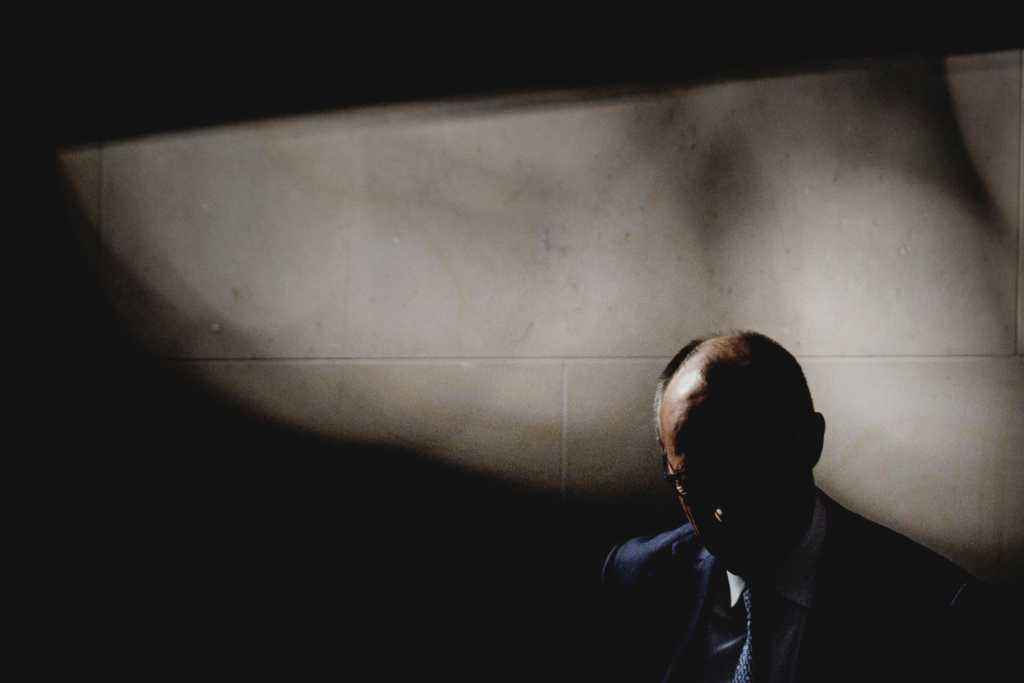
Ein Foto zeigt eine Person in dunklem Anzug mit gesenktem Kopf vor einer hellen Wand und starken Schatten.
Friedrich Merz (CDU), Federal Chancellor, photographed before the government declaration in the German Bundestag in Berlin, 18.03.2026. | picture alliance / photothek.de | Florian Gaertner

Berlin; late August: when politics normally stirs into life after the holiday lull. But this year, the lull never came.

German chancellor Friedrich Merz is beset by approval levels plumbing the depths of the depleted Rhine and Danube. His governing conservative CDU party spent the summer at war with itself over pension reform (not helped by a botched cabinet reshuffle). Some of the chancellor’s staunchest supporters are even openly wondering whether he is still up to the job. To get out of the hole they are in, Merz and his ministers now want to project a sense of Aufbruchstimmung—a feeling of renewal and restart.

Whether they succeed will determine Europe’s future.

Germany’s economy has endured six years of paltry growth. Its traditionally strong industries are screaming for protection against China, US tariffs and energy price shocks (and against their own past decisions). Strong end-of-the-republic vibes suffuse dark political commentary, “mainstream” parties oscillate between panic and despair, and resignation has set in among voters. What until recently seemed little more than a media talking point on an “Andy Burnham moment”—meaning the possibility of Hendrik Wüst, North Rhine-Westphalia’s minister-president, succeeding Merz as chancellor this autumn—could yet become reality.

For decades, Germany was Europe’s byword for political stability and predictability. Today, it is hard to overstate how little is now unthinkable in German politics. All bets are off. Decision-makers elsewhere in Europe should get ready for the possibility of a new kind of Germany: no longer boring, no longer stable—and no longer rich.

Why the Angst is now real

Germany is days away from elections in three eastern states which could shake the government in Berlin to its foundations. First up is Saxony-Anhalt, where on September 6th the far-right populist Alternative für Deutschland (AfD) could rewrite German post-war history and turn the decades-long mantra of “never again” into “actually, maybe”. Polling suggests even an absolute majority for the party is within reach. The AfD, the CDU and the Left could be the only parties to clear the 5% threshold for the state parliament. Two weeks after that possible momentous result, the states of Berlin and Mecklenburg-Vorpommern will also elect new parliaments.

While the situation for the political centre looks a little less dire in the latter two places, complicated three-party coalitions are the likely outcome in both. This will have a compounding effect on the stability of the federal government. The CDU leadership under Merz remains adamant that the “firewall” must hold, ruling out any coalition or cooperation with the AfD. Yet this position is increasingly being questioned by local politicians and by conservative thinkers within and around the party. Many in the CDU are frustrated by what they see as the strategic price of the firewall. With their preferred coalition partner, the liberal Free Democrats, now struggling to clear the 5% threshold almost anywhere, ruling out the AfD leaves the CDU ever-more dependent on centre-left coalitions. In critics’ view, this deprives the party of options and leaves it hostage to the remaining potential coalition partners.

An AfD minister-president would be a brutal demonstration of the political establishment’s inability to provide a convincing vision for the country

An AfD minister-president in one of Germany’s states would be more than a striking political development. It would be a brutal demonstration of the political establishment’s inability to provide a convincing vision for the country’s economic, political and social future. In recent years, German leaders have made more reform announcements than actual reforms. The previous government tried to adapt to the Zeitenwende without imposing any hardship on Germans—and failed. Now, the Merz government seems equally unable to muster the political strength for major reform.

Instead, it has too often looked to the past for answers: back to the combustion engine, back to looser labour rights, back to family values. The only policy area where the government now seems readier to change course is on China, where it has said it will push through a more active European position on protecting markets and punishing China’s predatory economic behaviour. In a revealing commentary, however, Merz himself announced this was enabled, not by his decisive political leadership, but by the altered posture of the German car industry.

This vacuum in dealing with the implications of the changing global environment leaves huge room for the political fringes, especially from the far-right. The AfD’s offer is revisionist—drastically curb immigration and asylum, reverse key elements of the energy transition, challenge European integration, end the euro and pursue a distinctly nationalist approach to foreign policy. All this is deeply unsettling to the political establishment, but resonates with a growing constituency of voters united by restrictive stances on migration and cultural issues.  

The strength of the AfD is a symptom, not a cause. It did not rise to prominence overnight and has been part of Germany’s political landscape now for more than a decade. But the party is now within striking distance of actual political power at a time when the country’s political and economic foundations are starting to crumble. The war in Ukraine, volatility in America and conflict over the Strait of Hormuz are stretching the limits of German leaders’ attention as well as the country’s fiscal space. Germany’s long-term trade relationship with China is now a liability and an epic drought has shrivelled what little hope remained for Germany’s economic recovery. Berlin is not only forced to reckon with the failures and missed opportunities of the past decade on everything, everywhere, all at once; but the politicians seem unprepared either to put up a real fight for survival or even adjust to this new reality in a form of managed decline.

No time for Schadenfreude

Germany is hardly the first European country to experience a radical reshaping of its party system and the rise of the far-right; Italy and France have been through similar upheavals. And Germany itself, amid deep economic problems, was called “the sick man of Europe” back in 1999, only to recover and to become the continent’s exporting powerhouse. Why should the rest of Europe now worry so much about Germany’s malaise?

The answer is: because a German crisis is a European crisis. Germany is too economically and politically important to fail. Its economic weight, role at the heart of the EU and position as Europe’s most populous member state mean this would be more than just another episode of national political turbulence. A Germany that is oozing 15,000 industrial jobs each month, becoming even more dependent on technology imports and increasingly incapable of internal reform risks dragging Europe towards fragmentation and exploitation.

Unless political leaders come up with something new, a German pall will blot all major items on the EU’s agenda: the next multiannual financial framework; the future of the bloc’s industrial policy; European efforts to rearm and build resilience; a more autonomous capacity on emerging technologies and the economic muscle to create international leverage behind a new global trading agenda. That is not to mention the serious consequences of a German disengagement for Europe’s continued support for Ukraine.

“German leadership is not optional”, Sweden’s defence minister said at a public event this month, attended by one of the authors. German political elites seem to disagree. Theirs is the third largest economy in the world, sitting at the core of the world’s largest single market, boasting leading international companies and building up one of the largest defence budgets anywhere. Yet they appear to lack any sense of their own domestic, let alone global, agency. The three upcoming state elections may give them their last chance and some momentum to turn things around. But if Berlin becomes entirely enfeebled under the ensuing political fallout, the rest of Europe is likely to suffer in the same way.

Source

  •  
❌