Lulingu, a Grauer’s gorilla (Gorilla beringei graueri), was reintroduced to Virunga National Park, in eastern Democratic Republic of Congo in 2024. In May 2026, Lulingu gave birth to a new baby, bringing hope for the species and excitement for the conservationists working there. “The baby and the mother are doing perfectly well. It really makes us happy. We are proud of her, it is also a bit of our success. Imagine, we knew her as a baby, we watched her grow, be rehabilitated and now she is a mother,” Jackson Kabuyaya Mbeke, country director of the DRC Gorilla Rehabilitation and Conservation Education Center (GRACE), told Mongabay by phone. Lulingu arrived at GRACE, a 16-hectare (40-acre) wildlife sanctuary, in 2016 when she was 18 months old. She was rescued from an illegal wildlife trafficking network by the Congolese Wildlife Authority (ICCN) and the NGO Gorilla Doctors. The sanctuary gave her space to socialize and play in a setting close to her natural habitat, under the watchful eyes of adoptive gorilla mothers. Lulingu was later reintroduced into the wild near Mount Tshiaberimu, a remote part of Virunga National Park. “The purpose of our sanctuary is to take in rescued gorillas, but also to care for them until they can be released into the wild. The fact that Lulingu has had a baby is a sign that she has adapted well to life in the wild,” Kabuyaya Mbeke explained. “By reintroducing them into the wild, we also hope to repopulate forests that have been…This article was originally published on Mongabay
A giant octopus devouring a jellyfish. An ultra-fast gossamer worm. These are just a couple of the 31 new species scientists discovered on a recent expedition off the coast of Brazil. They explored the ocean’s midwater zone — the vast space between the sunlit surface and the seafloor — which is the Earth’s largest and least explored habitable ecosystem. While it can take researchers decades to identify and describe new species, state-of-the-art technology like 3D lasers and advanced microscopes helped the team confirm these new species within a matter of days.This article was originally published on Mongabay
COLOMBO – For generations, the sight was familiar in towns and villages across Sri Lanka of a man playing a flute sitting on his haunches next to a woven basket, from which a cobra raised its gently swaying hood, drawing a curious crowd of onlookers. The performance appeared almost magical, as the cobra would seem to have been charmed by the flute’s notes, moving its hood rhythmically like performing a dance. But behind the spectacle was a community with its own traditions, knowledge and relationship with snakes — one that is quickly fading away. Known locally as the Ahikuntika, this small nomadic tribe is also referred to as Sri Lanka’s gypsies or Sri Lankan Telugus. They’ve traditionally traveled from place to place, and men have performed as snake charmers and monkey performers, with the women primarily associated with fortune-telling or soothsaying. Historical accounts describe temporary settlements and an itinerant lifestyle in which families moved between communities to earn a living through performances and traditional livelihoods. Today, however, snake charming has become rare. A group of snake charmers perform with their cobras. Image courtesy of Anslem de Silva. “During our childhood, we could regularly see snake charmers. They were often seen near markets, while groups of itinerant performers would also travel from village to village, announcing their arrival by beating a small hand drum,” recalled 75-year-old retired schoolteacher Chandrasena Liyanarachchi. Sri Lankans have a long-inherited fear of the venomous cobras (Naja naja), yet also accord them cultural significance, and often watch…This article was originally published on Mongabay
OTAGO PENINSULA, Aotearoa New Zealand — Sandfly Bay was long a key nesting area for yellow-eyed penguins (Megadyptes antipodes), noisy, pink-footed birds that spend long days foraging at sea. But this wild beach on the Otago Peninsula, like others nearby, has gone quiet. In 2024, the last breeding-age female at Sandfly Bay, who’d been consistently producing chicks for a dozen years, drowned in a fishing net. Fishing has been one of many factors driving the species, which is only found in Aotearoa New Zealand, toward extinction. In the 2008-2009 breeding season, there were 739 breeding pairs in the “mainland” New Zealand population, which includes pairs on nearby islands. But the population has dropped since then to 117 pairs — a decline of more than 80%. These figures don’t account for yellow-eyed penguins on New Zealand’s remote southern islands, which are poorly surveyed. The IUCN, the global wildlife conservation authority, listed the species as endangered in its last assessment, in 2020, when the mainland population was still twice what it is now. Several experts told Mongabay that the species’ chances of survival are slim, though most said they still had faith. “I think I’d always like to say that there’s hope because otherwise why do you do what you do, but things are pretty dire,” Trudi Webster, a marine scientist who’s worked on research and conservation of the species for the past decade, told Mongabay. A number of organizations are working to save the yellow-eyed penguin, and much of the conservation…This article was originally published on Mongabay
BANGKOK (AP) — Rain eased in Thailand ’s capital on Sunday, but flooding persisted in several low-lying areas, with thousands forced to move into temporary shelters. At least eight people were reported killed in the past 10 days nationwide. Days of continuous downpours have caused widespread flooding and severe disruptions in Bangkok, impacting traffic and businesses, with accumulated rainfall exceeding 30 centimeters (11.8 inches) in many areas. Thailand’s Meteorological Department said moderate to heavy rain was still expected Sunday in several parts of the country, but conditions were expected to improve by Monday. The city set up more than 200 temporary shelters, and about 3,000 people remained in them as of Sunday. Officials said 31 roads were still impacted by floodwaters. Bangkok Gov. Chadchart Sittipunt said rainfall in the capital has decreased and city officials were working to drain water as quickly as possible. He cautioned that water levels in the city’s main canals remained high, with some still rising as water continued to flow in from nearby areas. Several low-lying areas, particularly in the suburbs, were still submerged and many communities had to evacuate, Chadchart said. More than 545,000 people in 25 other provinces have been impacted by flooding as of Sunday, especially in the central and eastern regions, according to the Department of Disaster Prevention and Mitigation. Incessant rainfall caused flooding that overwhelmed drainage capacity in many areas, Prime Minister Anutin Charnvirakul said. He ordered relevant authorities to take immediate measures to relieve the situation and assist those…This article was originally published on Mongabay
Founder’s Briefs: An occasional series where Mongabay founder Rhett Ayers Butler shares analysis, perspectives and story summaries. A mountain lion in front of the Hollywood sign sounds almost too convenient. When photographer Steve Winter proposed the picture, National Park Service biologist Jeff Sikich thought he was crazy. There were, as far as Sikich knew, no mountain lions in Griffith Park. Then P-22 turned up. Winter spent more than a year trying to get the photograph. Remote cameras were stolen, and equipment failed. Eventually, he captured P-22 walking beneath the Hollywood sign at night, his tracking collar visible around his neck. The photograph made P-22 famous and gave Los Angeles a symbol of the problems faced by wildlife boxed in by roads and development. P-22 became closely associated with the campaign for the Wallis Annenberg Wildlife Crossing over U.S. Route 101, which is intended to reconnect habitat divided by one of the region’s busiest freeways. The story is one of nine in Big Cats, a new book by Winter and journalist Sharon Guynup, who is also Mongabay’s wildlife editor. The pair revisit some of their most consequential reporting projects in the book in their recent conversation with Mike DiGirolamo, the host and producer of the Mongabay Newscast. One of those projects took them to Thailand’s Tiger Temple, a lucrative tourist attraction where visitors could pose with captive tigers. Guynup and Winter spent a year investigating the operation and documented its links to illegal wildlife trafficking. Thai authorities eventually raided and closed…This article was originally published on Mongabay
Kurt, a Przewalski’s horse, was born at in Texas in August 2020. Less than three years later, Ollie followed. Out in the wild, their species had gone extinct in the 1960s. Both individuals, born of a surrogate mother — a domestic horse — were the first Przewalski’s horses (Equus ferus przewalskii) to be successfully cloned from another of their species whose DNA had been preserved at the San Diego Zoo for 40 years. At the San Diego Zoo Wildlife Alliance’s Frozen Zoo, the largest initiative of its kind in the world, genetic materials from animals and plants are stored — cryopreserved using liquid nitrogen at temperatures as low as -196° Celsius (-320° Fahrenheit) — for posterity. But the Frozen Zoo is only part of the alliance’s broader biodiversity banking initiative, which also includes a native plant gene bank and a tissue and DNA bank. “I think of it as saving DNA for the future,” Katie Heineman, conservation program leader for biodiversity banking at the San Diego Zoo Wildlife Alliance (SDZWA), told Mongabay in a video interview. “It really is an optimistic act to conserve biodiversity for a time where we’ve solved the threats facing nature.” Applications are aplenty. Biodiversity banking can help not just in the recovery of threatened species, but also in preserving genetic diversity. It’s also crucial for scientific research. However, given the pace of habitat degradation and biodiversity loss, Heineman said there’s an urgency to build capacity around the world to ensure more samples are collected and…This article was originally published on Mongabay
JAKARTA — Indonesia’s parliament has passed a law intended to resolve long-running land conflicts and curb land concentration, but civil society groups say provisions in the final draft could limit redistribution, leave state-controlled land difficult to challenge and expose some land occupants to criminal charges. The House of Representatives, known as the DPR, approved the Agrarian Reform Regulation Law on Sept. 22, after lawmakers and the government agreed on the bill the previous day. The law establishes a framework for resolving structural conflicts over agrarian land ownership, restoring land rights and redistributing land, among other aims. The final enacted text has not yet been made publicly available, leaving some details of how the law will operate unclear. The debate over the efficacy and the implementation of the law comes amid a long-standing pattern of land disputes in Indonesia. The Agrarian Reform Consortium (KPA), an advocacy group, reportedly recorded 3,234 agrarian conflicts affecting 7.4 million hectares (18.3 million acres) and 1.8 million households between 2015 and 2024. KPA and other advocates have argued that many conflicts arise from overlapping government authority, land allocations and competing claims involving communities, companies and state institutions. Indigenous communities, farmers and fisherfolk can be affected when their customary or livelihood areas overlap with concessions, state-designated land or infrastructure projects. The new law is intended to address what lawmakers describe as fragmented authority and regulations that have complicated conflict resolution. The parliament said the bill’s provisions include land-use planning and controls, mechanisms for resolving conflicts and restoring…This article was originally published on Mongabay
CANBERRA — Australia has a problem with the very creature that is its official national symbol: The kangaroo. Endemic to Australia, they live across the country, from north to south, and from east to west. Australia has four main kangaroo species: The red kangaroo (Osphranter rufus), the largest of all species, mainly found in the outback through the Northern Territory; the western grey kangaroo (Macropus fuliginosus), in the southeastern part; the eastern grey kangaroo (Macropus giganteus), in most eastern states, including Tasmania; and antilopine kangaroo (Osphranter antilopinus), in the northern part. Population surveys by the Department of Climate Change, Energy, Environment and Water estimate there are between 30 million and 50 million kangaroos in Australia. Their number fluctuates from year to year depending on drought periods, and it even exceeds the country’s 27.8 million human population. The abundance of the macropods across the country creates a conservation dilemma. They have been blamed for overgrazing and causing environmental damage such as soil degradation and biodiversity decline. Many Australian states have resorted to kangaroo culling. A recent culling in the Australian Capital Territory (ACT), which includes the federal capital Canberra, encapsulates the controversy about the policy. The Australian Capital Territory, home to an estimated 122,000 eastern grey kangaroos, has one of the highest recorded densities in Australia. Image by Shane Lin via Flickr (CC BY-NC 2.0). Record kill At 2,358 square kilometers (910 square miles), the ACT is only slightly smaller than Luxembourg. The territory, home to an estimated 122,000 eastern grey…This article was originally published on Mongabay
The Philippines remains the deadliest country in Asia for land and environmental defenders, according to a new report by the non-profit Global Witness. In its report, Global Witness says it could verify the killings of 124 land and environmental defenders worldwide in 2025. While the majority, 85% of cases, occurred in Latin America, Asia accounted for 12% of the deaths with 12 defenders killed in the Philippines and one person killed for each of India, Indonesia and Turkey. The Philippines remains the deadliest country in Asia for the thirteenth consecutive year. Its 12 documented cases in 2025 represent the highest total recorded in any single country outside Latin America, the report says. State forces played a central role in the violence against environmental and land defenders in the country, with the Philippine military suspected of participating in five of the 12 killings amid expanded rural counterinsurgency campaigns and resource extraction projects, according to the report. “The report adds an important dimension to what we already know about the situation of land and environmental defenders in the Philippines,” Manila-based environmental advocacy group Kalikasan People’s Network for the Environment (PNE) told Mongabay in an emailed statement. “Attacks against defenders are entrenched in state policies and structures that facilitate extractive and development projects.” Global Witness’ report adds that killings “are only the most extreme form of reprisal that defenders face.” Beyond lethal violence, environmental defenders face a rising tide of legal harassment, criminalization, and smear campaigns, it says. In the Philippines, for example, the…This article was originally published on Mongabay
SINGAPORE — “For seven thousand years, Singapore has changed around these reefs,” says Debby Ng, a Singaporean biologist who studies the city-state’s shrinking coastal and marine habitats. “They are still here.” Despite colonization, war, shipping and industrialization, reefs a few kilometers south of Singapore’s gleaming shoreline have endured. “It would be a tragedy if we were to lose them now — in peacetime, at the height of our prosperity, when we possess more knowledge and capacity to protect them than any generation before us,” Ng tells Mongabay. At a National Day rally on Aug. 23, Prime Minister Lawrence Wong announced plans to merge a cluster of islands sprawled across a few thousand hectares of seascape into a new “western island” for advanced manufacturing, energy and defense. No timeline for the western island project was given. Wong said reclamation would take place “over the coming decades” and that plans were being studied carefully. But the announcement has alarmed Singapore’s marine conservation community, which says the project could affect some of the country’s most biodiverse waters. The islands include Pulau Semakau, which houses Singapore’s offshore landfill, and Pulau Bukom, home to an oil refinery, as well as Pulau Sudong and smaller islands including Pulau Hantu, Pulau Jong and Pulau Sebarok. The area is estimated to contain some 590 hectares (1,460 acres) of coral reefs — about 60% of the total in Singapore — along with 22% of the city-state’s seagrass meadows and 5% of its mangroves. Black sun coral (Tubastraea micranthus), Singapore.…This article was originally published on Mongabay
An analysis by the London-based group Zero Carbon Analytics (ZCA) supports a claim conservationists have made for decades: Tropical forests are worth more standing than cleared, with the Amazon as the world’s “crown jewel” in this context. According to the ZCA analysis released in July, tropical forests worldwide could hold a median of $714 billion — within a range of $382 billion to $1.176 trillion — in potential commercial value from undiscovered drugs based on flowering plants. The Amazon alone holds around $215 billion, or roughly 30% of the total, the largest share compared with regions such as Southeast Asia and the Congo Basin. Natural compounds are central to medicine. Roughly three in four cancer drugs approved between 1940 and 2014 were derived from or inspired by natural products, and an estimated 99% of the chemical compounds plants produce remain unscreened. In that logic, the Amazon stands out: It “hosts potentially the greatest commercial option value for medicines from flowering plants” of any major forested region, co-author of the ZCA analysis Joanne Bentley-McKune told Mongabay. But deforestation is eroding this value. ZCA estimates that tropical forest clearing since 2001 has already put $86 billion in commercial drug value at risk globally. In the Amazon, the pharmaceutical benefits of some extinct species may be gone forever. “Over the last 20 years, many endemics, or plants that occur nowhere else, might have been lost due to deforestation in Brazil, across different regions,” Bentley-McKune said. The Amazon alone holds roughly 30% of the…This article was originally published on Mongabay
Fireflies are disappearing from the Indonesian island of Bali… but local Wayan Wardika is trying to bring them back. Fireflies in Southeast Asia are vanishing due to habitat loss, light pollution, pesticide use, and climate change—and the same is happening on this rapidly developing island. In 2020, he launched Bring Back the Light, Indonesia’s only firefly conservation initiative. He and his small team of scientists focuses on breeding fireflies to return to the wild. But through this work, Wayan has also gathered the importance of habitat protection – only by doing so will firefly numbers be able to grow sustainably. He is now focused on encouraging neighboring farmers to ditch the chemicals and go organic, in order to boost firefly numbers. Watch the full video.This article was originally published on Mongabay
A coalition of 27 global wildlife conservation and animal welfare organizations urged Vantara to permanently end all wild animal imports. The billionaire-run zoo in India, funded by the philanthropic arm of Reliance Industries, the country’s largest corporation, has been under for fire for questionable acquisitions of its animals. In an open letter dated Sep. 22, 2026, and addressed to Mr. Amit Aggarwal, president of regulatory affairs at Vantara, the NGOs offer Vantara “suggestions for strengthening your practices and improving outcomes.” The letter came in response to a press statement from Vantara on Aug. 19, 2026, where it announced “voluntary commitments” including a 12-month moratorium on all animal imports, backdated to June 5, 2026. It said it has withdrawn all pending import applications and will not make any fresh applications. The statement also included a letter addressed to India’s CITES Management Authority, which oversees international commerce in endangered plants and animals listed under CITES, a global wildlife trade treaty. After the one-year moratorium expires, Vantara said it would import animals only from “a recognised and accredited zoological facility,” a “CITES registered facility” or for “a conservation breeding programme undertaken in cooperation with a range State.” It also announced an “independent” governing council headed by John Scanlon AO, the former CITES Secretary General, and a “mandatory three-stage review” will oversee any future animal acquisition. Vantara has acquired Tapanuli orangutans, one of the rarest apes in the world. Image by Tim Laman via Wikimedia Commons (CC BY 4.0). Vantara’s announcement came after investigations…This article was originally published on Mongabay
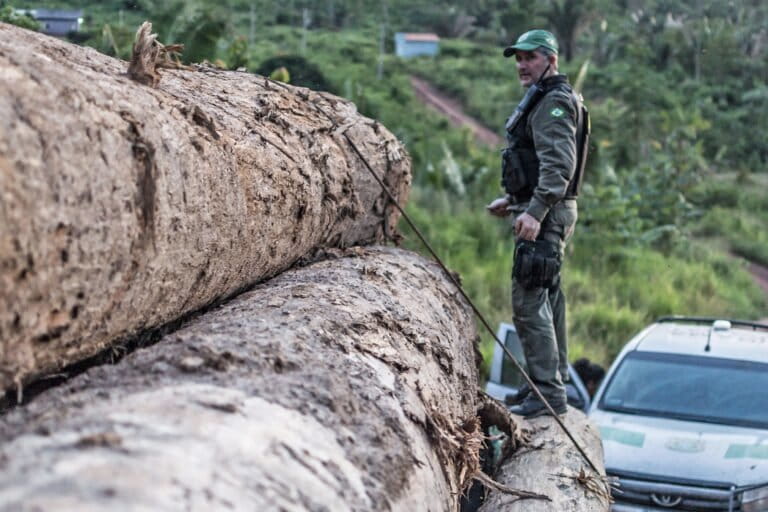
The world has spent a decade trying to put a price on nature. Forests have become carbon sinks, while wetlands are increasingly described as natural infrastructure. Biodiversity is also being drawn into financial markets. Governments and investors have poured billions into carbon markets and conservation finance, including green bonds. Around them, a financial system is emerging on the assumption that intact ecosystems can generate enough economic value to protect them. A more destructive economy has been putting a price on nature for much longer. It makes money by extracting and selling it. Land grabbing, illegal logging, illicit gold mining and wildlife trafficking are usually treated as environmental offenses, so responsibility falls to park rangers, customs officials and specialized police. That view badly underestimates what is happening. In a new paper for the Brookings Institution, we argue that environmental crimes are a serious drag on both sustainable development and climate action. They damage ecosystems and weaken the institutions charged with governing them. They also drain revenue from legitimate companies and public coffers. Enforcement alone will not solve a problem that runs through trade, finance and local political economies. An IBAMA agent participates in a raid on an illegal logging and mining operation within an Indigenous reserve. Image courtesy of IBAMA. Global criminal economy No one knows exactly how large this economy has become. A widely cited estimate puts annual proceeds at between $110 billion and $281 billion, but the true figure is probably far higher, perhaps in the trillions. What makes the business…This article was originally published on Mongabay
MALALA DRIFT, South Africa — In Malala Drift, near the town of Musina in South Africa’s Limpopo province, drought and unreliable access to water are threatening the livelihoods of farmers. Some have abandoned crop production after struggling to secure enough water, while others continue farming under increasingly difficult conditions. The farms lie along the Limpopo River, which separates South Africa from Zimbabwe. But even with a major river nearby, access to reliable water supply is not guaranteed. Farmers say rainfall has become increasingly unpredictable in the past decade, and when the river level falls, they sometimes pay an excavation company to dig into the riverbed to reach water, adding to the cost of keeping their farms operating. The effects of the water scarcity are visible at one of the farms Mongabay visits. Poles that once supported tomato plants are scattered across the property, while irrigation pipes are obscured by overgrown grass. No crops are growing. Kanny Ndou, who used to work here as a laborer and now takes care of the property, said the farm previously produced potatoes, butternut squash and tomatoes for sale in Musina. But after 10 years, Ndou said, the owner stopped farming in 2025 because of unreliable water supply. “We used to grow a variety of vegetables for sale in Musina, but due to inconsistent water supply, the farm decided to stop farming last year,” he said. For years, farmers had faced unpredictable outcomes: a good harvest one season, a bad one the next, he said. Some…This article was originally published on Mongabay
Between 2014 and 2015, a marine heatwave known as “The Blob” warmed an area of the Pacific Ocean larger than the United States and Mexico combined. The massive event fueled toxic algae blooms, collapsed fisheries, killed off millions of emaciated seabirds, sent dead fin whales (Balaenoptera physalus) and sea otters washing up on Alaska and British Columbia coasts, and dotted California shores with starving sea lions. Though best known as a marine heat wave, The Blob was also an extreme acidification event. Yet occurrences of these compound heat-acidity extreme events remain poorly understood. A new study, published in the journal AGU Advances in August, provides a detailed look at the frequency, intensity and duration of these compound events during the last four decades. The study reveals an understudied aspect of marine heat waves that could have implications for the developing 2026-2027 “super” El Niño, in which waters in the equatorial Pacific become unusually warm due to changing wind patterns. An underweight sea lion pup on a beach in February 2015. Image by NOAA Fisheries West Coast. Researchers from the Swiss Federal Institute of Technology (ETH Zurich) found compound heat-acidity events across the globe happen together “more frequently than would be expected by chance,” they wrote. Instead, the researchers attributed their occurrence to underlying ocean physics that allow marine heat waves to become unusually acidic in some regions. These events are mostly short-lived and small, with 67% of the 500 identified events lasting less than three months and extending to an…This article was originally published on Mongabay

 Login