In Africa, high-quality seeds can produce improved crops with enhanced nutrition, pest-resistance, and drought tolerance. However, such seeds for maize, vegetables, and cereal crops can be indistinguishable from counterfeit, or “fake” seeds. That’s creating a massive potential for fraud in seed quality that can potentially deprive farmers of access to climate-resilient seeds while putting their harvests and incomes at risk. A group of researchers analyzed the efforts of 50 African countries to combat counterfeit seeds. They found a wide range of penalties for selling them across different governments, and concluded that a significant gap exists between government policy commitments and implementation, largely due to limited capacity. Study lead author Ed Mabaya, a professor of global development at Cornell University in the U.S., told Mongabay, “For most smallholder farmers in Africa, planting happens once a season, often timed to the first rains. A farmer who buys counterfeit seed usually finds out only after planting, when the seed fails to germinate or the crop grows poorly. By then it is usually too late to replant, so the loss is not a slightly smaller harvest but potentially the whole season’s food and income.” That can lead to food insecurity for the individual farmer and local markets more broadly. Counterfeiters can dye or repackage grain and sell it as branded, certified seed, Mabaya said. “The problem arises because certified seed looks exactly like ordinary grain but sells for a much higher price, in some cases several times more for hybrid maize. That price gap…This article was originally published on Mongabay
PORTO ALEGRE, Brazil — “Good choice!” said the clerk at one of the fish stalls in the Porto Alegre Public Market when Mongabay asked about the peixe anjo, which means “angel fish” in Portuguese, in mid-September. “We sell a lot of these. It’s really good, and it doesn’t have any bones.” The same product was for sale by at least four other fishmongers in the traditional market of the capital of Rio Grande do Sul state, in the South of Brazil. Prices were attractive, ranging from 30 to 37 reais per kilo ($5.70 to $7). The problem is that the “angel” isn’t just any fish — it’s a shark. More specifically, an angelshark, and in Brazil, that means three of the world’s most endangered shark species: Squatina guggenheim, the angular angelshark; S. occulta, the hidden angelshark; and S. argentina, the Argentine angelshark. And fishing of these species is prohibited in Brazil. For many years, the Brazilian government authorized the import of angelsharks from neighboring countries. According to data from the Federal Revenue Service obtained by Mongabay through the Freedom of Information Act, 48 metric tons of S. guggenheim meat and 194.6 metric tons of S. argentina entered Brazil between January 2021 and Sept. 10, 2026, totaling 242.6 metric tons. Most of the shipments came from Argentina, entering the country through the customs ports of São Borja and Uruguaiana municipalities in Rio Grande do Sul, and Dionísio Cerqueira in Santa Catarina state. Once in Brazil, the imported product was mixed with…This article was originally published on Mongabay
A group of activists in the small border town of Lochiel, Arizona, U.S., is fighting to save 200-year-old cottonwood trees by stopping contractors from building a section of the U.S.’s new wall along its border with Mexico. One activist lived for over 70 days in the upper branches of an ancient cottonwood dubbed the “Grandmother Tree,” preventing construction workers from cutting it down while other activists used pulleys to bring them food and water. The protest was about more than protecting ancient trees: Activists were also fighting habitat fragmentation caused by the border wall in a landscape where biodiversity depends on ecological connectivity. The tree encampment began on July 28, after construction workers cut down three of the four cottonwood trees that were in the path of the wall. This double wall consists of two 30-foot-high (just over 9 meters) steel walls that run parallel to one another with a buffer zone between. Since then, helicopters, drones, U.S. Border Patrol agents, and local law enforcement have been surveilling the area, according to the activists at the encampment. I interviewed activists camped in the meadow adjacent to the tree, photographed the landscape, and participated in the daily morning rituals aimed at honoring Grandmother Tree and the land. There I learned that the movement has connected social and environmental issues since its inception. Many of the activists I met at the Lochiel protest are involved in No More Deaths, a humanitarian group that provides water and aid to migrants crossing the border,…This article was originally published on Mongabay
Authorities across nine Latin American and Caribbean countries have arrested hundreds of people and recovered more than 1,000 animals as part of a two-month coordinated operation against environmental crimes. Operation Madre Tierra was the eighth edition of a recurring Interpol-led initiative, and was conducted in June and July in Colombia, Costa Rica, the Dominican Republic, El Salvador, Guatemala, Honduras, Mexico, Nicaragua, and Panama. Investigators found illegal timber and wildlife trafficking networks operating on an “industrial scale” along the corridor connecting Central and South America, Interpol announced in a press release. Many of the products were destined for markets in Europe and Asia, where South American wildlife is in demand as pets. Reptiles, rare insects, and exotic birds were the most commonly seized live wildlife. In Mexico, authorities seized several big cats along routes used by drug traffickers, including two endangered Bengal tigers (Panthera tigris), one of them a rare white tiger, as well as lions (Panthera leo), ocelots (Leopardus pardalis), and jaguars (Panthera onca). In Nicaragua, authorities confiscated several birds, including parrots and red-and-green macaws (Ara chloropterus), that are protected under CITES, the global wildlife trade treaty. They also seized about 165 kilograms (364 pounds) of dried shark fins, thought to be destined for the Asian market, where they could have fetched $280,000. Investigators also traced financial transactions to identify how criminals profited while evading detection. “Following the money, whether from an illegal gold mine in Panama to a buyer in North America, Europe or Asia, helps a case move…This article was originally published on Mongabay
KATHMANDU, Nepal (AP) — The families of thousands of people who remain missing in Nepal weeks after catastrophic floods devastated the country have expressed mixed feelings after the government said this week that it is stopping the search for victims. The office of Prime Minister Balendra Shah decided on Monday that search and rescue operations for victims of the Aug. 26 floods will cease. Instead, authorities will concentrate on rehabilitation and reconstruction including restoring roads and bridges cut off by floods, particularly in remote areas where damaged infrastructure has made aid deliveries difficult. Rescuers have so far recovered the bodies of at least 1,455 people, but 5,285 others remain missing, including hundreds of foreigners. The government estimates reconstruction and recovery will cost $4.77 billion. Nearly 33,000 people have been affected and about 7,500 homes were damaged or destroyed. Hopes for finding survivors were briefly revived after two Nepalese workers were rescued from an underground tunnel at the Trishuli hydropower project on Sept. 4, and again two days later when rescuers found a Chinese man at the same location. Families of victims have held protests and vigils in Nepal, calling for search efforts to be improved. “I am so angry at the government for giving up on search and rescue with thousands of people still missing. I just don’t understand how they can do that when we still have hope left that our loved one can still be found,” said Usha Khatri, who has spent days searching for her husband in…This article was originally published on Mongabay
SEOUL — At 2 a.m. one night, two Indonesian fishers were gripping a flimsy, makeshift rope, hanging on for dear life. The precarious rope dangled from the eighth-floor window of a motel room overlooking a dark alley in the South Korean port city of Busan, swinging left and right with the wind. The men had been locked up in that room for nearly 24 hours, and they were trying to make their escape. But the crude rope, made out of tied bed sheets, unraveled, sending the men plunging. One fell to his death, hitting the pavement headfirst. The other survived with a broken leg, according to Lee Han-sook, director of the Migration and Human Rights Institute, a Busan-based civic group. She was briefed on the July 21 incident by the survivor, whom she declined to name. According to activists, the incident served as one of the last straws that prompted the government to boost efforts to crack down on human trafficking, especially abuses against migrant workers in the country’s $7.5 billion fishing industry. On Sept. 2, the Ministry of Gender Equality and Family and the Ministry of Oceans and Fisheries announced they had amended national guidelines on human trafficking to make it easier for law enforcement officials to spot and stop forced labor and other abuses in the fishing industry. The new guidelines outline specific situations in which the likelihood of human rights abuse is high, such as seeing workers who have physical injuries being left untreated, workers who have…This article was originally published on Mongabay
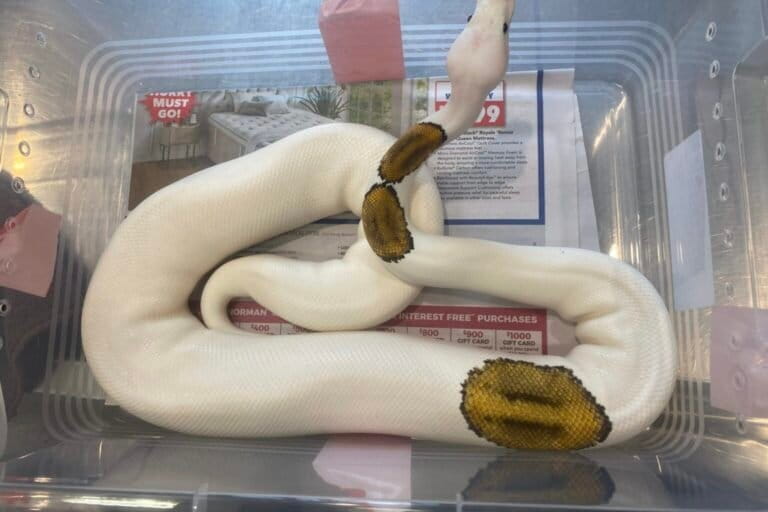
Australian authorities have disrupted an alleged wildlife trafficking syndicate, uncovering a clandestine operation where smuggled native animals were hoarded alongside caches of cash and gold, reports contributor Johan Augustin for Mongabay. The operation reportedly seized 28 native and a few exotic species alongside approximately A$300,000 (nearly $210,000) in cash, gold, and silver bullion on July 16. The bust marks the first major wildlife crime investigation carried out by the new National Environmental Protection Agency (National EPA), Australia’s first independent federal environmental regulator, launched on July 1. In addition to the 28 native Australian reptiles — including shingleback lizards (Tiliqua rugosa), spiny-tailed skinks (Egernia stokesii), and lace monitors (Varanus varius) — there were heavily regulated nonnative species like a North American hognose snake (genus Heterodon) and a ball python (Python regius). The agency alleges the native species were supplied to foreign nationals for illegal export. “Illegal trade of Australia’s native wildlife is a serious crime,” Dani Yannopoulos, head of the National EPA’s environmental permitting and compliance division, said in a media release published Aug. 22. “Australia’s native wildlife is precious and we are working closely with [Australian] Border Force and international partners to stop those who attempt to exploit it through the illegal wildlife trade.” Yannopoulos added that anyone taking part in the illegal wildlife trade risks serious penalties. Under Australian federal environmental law, exporting native animals or eggs without a permit carries penalties of up to 10 years in prison and fines reaching A$364,000 ($253,000). Even so, immense profits continue…This article was originally published on Mongabay
The environmental impacts caused by invasive alien species are more severe in poor countries of Global South than wealthy countries of Global North, a new study finds. The study shatters a long-standing assumption that wealthier Global North countries suffer the worst effects of invasive alien species (IAS) and highlights weak governance and insufficient management capacity as some of the reasons for greater severity of impacts in the Global South. The study published in Science in July employed a method involving the assessment of the average impact of severity, which uses a different approach from previous research. Instead of focusing on numbers of invasive species, this method focuses on how serious the level of impacts caused by invasive species are. Previously, impacts of IAS have been regarded more of a problem in the Global North because fewer large impacts were reported from the Global South, Sven Bacher, professor of ecology at University of Fribourg and the lead author of the research, told Mongabay by email. “We show that this is due to uneven reporting, and that the average impacts are actually higher in the GS [Global South]. This even holds for impacts of the same IAS introduced to both the GS and the GN [Global North]: on average their impacts are larger in the GS,” he said. Among the paper’s key findings, the scientists identified weak governance and limited management capacities as two major factors contributing to the Global South’s greater vulnerability. Some of the impacts of IAS can include damage…This article was originally published on Mongabay
The case of three ring-tailed lemurs, an endangered species, stolen from Gazipur Safari Park in Bangladesh last year resurfaced on social media in September this year, when news spread that two of the lemurs were trafficked to India and later sheltered at a private wildlife conservation facility, Vantara. The viral news prompted Vantara to release a statement, denying the allegations while assuring cooperation in sharing the DNA profile of the ring-tailed lemurs (Lemur catta) currently in its custody with Bangladesh authorities. However, the Bangladesh Forest Department was unprepared to respond to the call immediately, as it had no prior DNA profiling record of the lemurs stolen from Gazipur. Sufi Ullah, special superintendent of police under the Criminal Investigation Department of Bangladesh Police, the investigation agency, told Mongabay on Sept. 13, “Even though Bangladesh court orders further probe following the availability of the DNA profile, cross-border investigation is impossible.” Forest Department officials said that tracing the last destination is challenging and bringing the lemurs back is uncertain, as there is no repatriation protocol under the existing mutual understanding between Bangladesh and India. Mohammed Mizanur Rahman, director at Bangladesh Forest Department’s Wildlife Crime Control Unit (WCCU), said, “Further investigation and repatriation [of the lemurs] may follow only if the governments of the two countries agree to do so.” Meanwhile, South Asia Wildlife Enforcement Network Secretary General Krishna Prasad Acharya, in an email to Mongabay, said that the exchange of information can assist the concerned countries in verifying available information, coordinating follow-up, and…This article was originally published on Mongabay
Part of a forest in Malaysian Borneo that Indigenous communities had envisioned co-managing and self-governing has been turned into an active commercial logging concession, according to a recent civil society report. The 283,500-hectare (700,500-acre) Upper Baram Forest Area, in the northeastern part of the state of Sarawak, was proposed as a community-led conservation area more than 15 years ago. In 2021, the Sarawak Forest Department secured $1.4 million from the International Tropical Timber Organization (ITTO), which promotes the sustainable use of forests, to develop a conservation initiative with 32 Indigenous villages, called the Baram Peace Park. However, the state government subsequently granted a 170,000-hectare (420,000-acre) timber concession in 2024 to a company called Borneoland Timber Resources Sdn. Bhd., overlapping key cultural and ecological zones, reports contributor Danielle Keeton-Olsen for Mongabay. According to a report from Swiss-based nonprofit Bruno Manser Fonds, a key funder of the Baram Peace Park project, between March and May 2025, community observers tracked more than 160 logging trucks exiting the concession monthly. These trucks hauled an estimated 10.5 million ringgit ($2.6 million) in timber per month. Logging paths have penetrated core primary forest around Gunung Murud Kecil, a peak central to the Indigenous Penan heritage, threatening protected species including helmeted hornbills (Rhinoplax vigil), sun bears (Helarctos malayanus), and Sunda clouded leopards (Neofelis diardi). Affected villagers allege loggers have violated native customary rights by bulldozing land and destroying ancestral fruit trees. Komeok Joe, CEO and founder of the Penan rights organization Keruan, said local communities are actively…This article was originally published on Mongabay
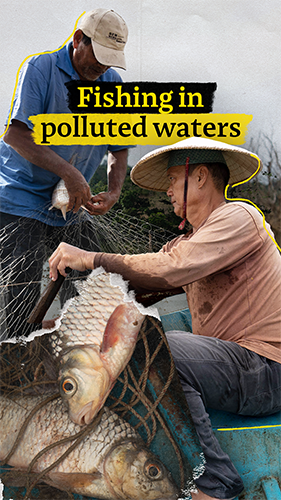
In a remote community in Malaysian Borneo, fishermen are facing an existential threat: their water source is being polluted. The fish they depend on is dying. Long Jawe village sits on the banks of the vast Bakun Reservoir. It is so remote that most residents only make the five-hour journey to the nearest town once a year, and visitors are rare. When the reservoir was created in the 1990s, the surrounding landscape was flooded. The community has since adapted to this enormous body of water, which is now crucial to their way of life, providing transport, food and livelihoods. But what happens when that water source becomes polluted? Join Conservation Entangled host Izzy Sasada as she travels to Long Jawe to investigate what could be behind the pollution.This article was originally published on Mongabay
The Zambian government is investigating a chemical spill in its Copperbelt Province allegedly linked to Konkola Copper Mines (KCM), owned by U.K.-based multinational Vedanta Resources. Residents in Chingola district told Mongabay they observed discoloration of the Kafue River and fish die-off on Sept. 28, raising fresh concerns about the environmental and social impacts of mining operations in one of Zambia’s most important copper-producing regions. According to a statement by Gilbert Siame, Zambia’s minister of Green Economy and Environment (MGEE), the incident was caused by a leaking pipe at KCM’s tailings leach plant and an overflow from the company’s pollution control dam outside Chingola. “The pollution control dam was full, that’s why it spilled,” Eugene Mulenga, Chingola-based human rights activist and coordinator for caritas, told Mongabay. “The [chemical] discharge happens all the time, mostly at night, and the local residents consume this water because they don’t have another option.” Following the Sept. 28 spill, tests conducted by the Zambia Environmental Management Agency (ZEMA), KCM and local water utility Mulonga Water Supply and Sanitation Company showed elevated levels of turbidity and conductivity downstream along the Kafue River. In a statement issued Oct. 1, KCM contested its responsibility in the spillage, saying that company officials reported the incident to ZEMA and asked for a fact-based investigation. Mongabay reached out to the company but did not receive a response by the time of publication. Siame noted in the statement shared with Mongabay that authorities are still testing water samples to confirm heavy metals and…This article was originally published on Mongabay
Africa’s monitored wildlife populations have declined an average of 80% since 1970, according to a new global assessment. The report also points to pockets of recovery where conservation efforts have been maintained over decades. The report on the decline in the average size of monitored populations was released Oct. 8 in the Living Planet Report 2026. It tracked monitored populations of mammals, birds, fish, reptiles and amphibians between 1970 and 2022. Africa’s 80% decline compares with a global average of 73%; Latin America and the Caribbean recorded the largest regional decline, at 95%. The findings come as governments prepare to assess progress on the Kunming-Montreal Global Biodiversity Framework, whose 23 targets include commitments to halt human-induced extinctions and support the recovery of threatened species by 2030. The framework also calls for conserving at least 30% of the world’s land, inland waters and seas by 2030. The Living Planet Index, managed by the Zoological Society of London in partnership with the World Wide Fund for Nature (WWF), draws on 35,803 population trends from 5,790 vertebrate species worldwide. The index measure changes in the average size of monitored populations, it does not mean that Africa lost 80% of its wild animals or wildlife species, a press release obtained by Mongabay cautions. Habitat destruction and degradation are the most frequently reported pressures on the wildlife populations tracked globally, the report finds. Overexploitation, climate change, pollution, disease and invasive species are among the other threats identified. In the Congo Basin, for example, those pressures…This article was originally published on Mongabay
BIAŁOWIEŻA, Poland — Michal Żmihorski, deputy director of the Institute of Environmental Protection, will never forget the morning of Aug. 1, 2023. Two Belarusian helicopters entered Polish airspace, hovering above the village of Białowieża in eastern Poland, three kilometers (1.9 miles) from the Polish-Belarusian border. The panic was palpable. “We didn’t know if the invasion had begun, if they were going to start dropping bombs,” he says during a conversation at the Białowieża-based Mammal Research Institute. The incident galvanized Żmihorski’s conviction that the borderlands should be impenetrable to enemy forces. “So that bandits on motorbikes can’t get through and start murdering people, because this is a real threat in this area,” says the longtime researcher of the UNESCO-protected Białowieża Forest straddling the Polish-Belarusian frontier. Poland shares a 420-km (261-mi) border with Belarus, 55 km (34 mi) of which runs through the Białowieża Forest, Europe’s last ancient woodland. This sprawling forest, covering an area equivalent to 200,000 football pitches, is among the continent’s top biodiversity hotspots. Consisting of impressive evergreens and broad-leaved trees, the Polish side alone is home to 900 European bison (Bison bonasus) — a species reintroduced to the forest — as well as lynx, wolves and up to 4,000 fungi species. While the specter of a military escalation by Belarus, a country that supports Russia, feels very real to some in this part of Eastern Europe, Poles throughout the country have been impacted by the war ever since Russia invaded Ukraine in 2022. To strengthen national security and…This article was originally published on Mongabay
Humpback whales found in the Arabian Sea are likely a distinct subspecies, having evolved in isolation for tens of thousands of years, according to a newly published genetic analysis. “Arabian Sea humpback whales have long been an enigma to the scientific community,” lead author Rita Amaral, from the Wildlife Conservation Society (WCS), said in a press release. “Their ecology is unlike that of any other known humpback whale population, and this new genetic work represents an important milestone in understanding how that uniqueness developed.” Humpback whales (Megaptera novaeangliae) are found throughout the world’s oceans, typically migrating from warm waters near the equator, where they breed, to the colder poles, where they feed. To date, scientists recognize three subspecies: the North Atlantic (M. n. novaeangliae), Southern Hemisphere (M. n. australis), and North Pacific (M. n. kuzira) humpback whales. Unlike most humpbacks, however, the population living in the Arabian Sea doesn’t migrate, remaining in tropical and subtropical waters all year. Researchers compared mitochondrial DNA, which mothers pass to their babies, collected from 2,285 humpback whales globally, including those from the Arabian Sea coast of Oman. The analysis showed considerable genetic differentiation between the latter population and the other subspecies. The researchers also found the Arabian Sea population had the lowest genetic diversity observed across any global ocean basin. The study estimates humpback whales in the Arabian Sea diverged from the other populations between roughly 43,000 and 113,000 years ago, suggesting a long history of isolation. Such isolation also makes them vulnerable to…This article was originally published on Mongabay
MIAMI (AP) — Tropical Storm Isaias formed Wednesday in the warm waters off eastern Mexico and forecasters said it was expected to strengthen into the first hurricane of the Atlantic season before hitting the U.S. Gulf Coast later in the week. The rapidly strengthening storm was on track to tie or break a 121-year-old record as the latest arriving initial hurricane of the Atlantic season. According to the National Weather Service, the record dates to 1905, when the year’s first Atlantic hurricane formed on Oct. 8. The Miami-based National Hurricane Center on Wednesday issued a hurricane watch for the northern Gulf Coast from Bay St. Louis, Mississippi, to Indian Pass on the Florida Panhandle. The watch means hurricane conditions are possible within 48 hours. Isaias was centered about 260 miles (420 kilometers) northwest of Progreso, Mexico, and about 540 miles (870 kilometers) southwest of the Mississippi River’s mouth, according to the National Hurricane Center. It had maximum sustained winds of 45 mph (75 kph) and was moving east-northeast at 8 mph (13 kph). Forecasters predict Isaias will become a hurricane by Thursday as it turns northward toward the U.S. Gulf Coast. Though its path and timing could shift, the storm is expected to make landfall late Friday or early Saturday. The hurricane center said residents of the northern Gulf Coast should prepare for dangerous wind, storm surge and heavy rain that could trigger flash floods. “It’s definitely time to look at your hurricane plan and put whatever you need into…This article was originally published on Mongabay
KHON KAEN, Thailand – A wildlife officer holds a leopard cat cub in one hand, its entire body small enough for her fingers to wrap around its torso. With the other hand, she feeds it formula milk from a syringe. This is the latest rescue at the Department of National Parks and Wildlife’s rescue center in Khon Kaen, northeastern Thailand, which rehabilitates and ultimately releases dozens of lost and injured leopard cat cubs every year. Behind the officer, 15 larger leopard cats (Prionailurus bengalensis), rescued as young cubs months earlier, pace around inside their cages. They look a lot like domestic cats, only slightly more slender and with sharply defined markings on their fur; unlike domestic cats, they bare their teeth and growl whenever a human walks past. Nine of the cats, between 8 and 9 months old, will be released in the forest that afternoon. The other six, a younger cohort, will take their place in the center’s specialized behavioral rehabilitation pens, where they will spend two months practicing their climbing and hunting skills in preparation for life in the wild. Leopard cats are small wild felines common across much of Asia. The IUCN classes them as least concern, though experts believe populations are increasingly vulnerable to hunting and habitat loss. Highly adaptable to changing landscapes, leopard cats often live close to farms and villages. In northeastern Thailand, females are frequently found raising their litters in sugarcane fields. The tall leaves offer shelter from the sun, but proximity to…This article was originally published on Mongabay
Funders of the $1.7 billion pledge to support Indigenous peoples and local communities’ land rights, announced at the 2021 United Nations Climate Change Conference, say they have exceeded the target by 35%, delivering $2.35 billion between 2021 and 2025. According to the final report of the Forest Tenure Funders Group (FTFG), in 2025 alone, donors provided about $486 million. Sources say the five-year pledge was a major accomplishment, but problems around direct access, regional inequality, funding for women and youth and aid sustainability persist. In 2025, only 7.2% went directly to Indigenous and local community organizations, the latest report found, while the vast majority still flowed through intermediaries, such as NGOs, consultancies and development banks. According to recently updated data in the report, the share of direct funding has increased over the five-year period, from 2.9% of the $351 million provided by donors in 2021, decreasing to 2.1% of the $514 million in 2022. By 2023, this number had risen to 10.6% of the $533 million provided that year, and in 2024, 7.6% of the $467 million provided went directly to these groups. “The pledge was good news, but the figure of the result doesn’t tell us how much actually reached the territories,” Myrna Cunningham Kain, of the Indigenous Miskito community of Waspam and chair of the Guiding Committee at the Pawanka Fund, told Mongabay over email. The Pawanka Fund is a global organization led by Indigenous people that channels financial and technical resources directly to Indigenous peoples and other…This article was originally published on Mongabay
Like a dark cloud of pestilence spreading across the globe in a science fiction movie, a highly contagious, fatal strain of avian influenza is continuing its death march across the globe, infecting wild birds, poultry, dairy cattle and mammals from pole-to-pole, sometimes with massive mortalities. In mid-June, it invaded the last bird flu-free continent, Australia, when the first cases of this lethal virus were detected in migratory seabirds, who likely brought it from the Antarctic to Australian islands, and then, inland. “These outbreaks mark the loss of the last continent previously free from the virus,” said Amandine Gamble, an expert on pathogens in endangered seabirds at Cornell University in the U.S., in a statement. “There are serious concerns for wildlife in Australia, New Zealand and surrounding islands, which are home to many already vulnerable endemic species.” The virus has spread rapidly since then, killing thousands of birds in some 690 “events” as of Oct. 6. An event may involve a confirmed infection or death of one — or many — animals. H5N1 has now spilled over into mammals, including endangered Australian sea lions (Neophoca cinerea) at key breeding sites. Across the globe, species that live or breed in colonies have died in shocking numbers, and this virus continues to mutate and adapt, infecting new hosts. As of publication, it had infected some 613 types of bird and about 112 mammal species, both wild and domestic, according to the Food and Agricultural Organization of the United Nations. “We have seen this virus…This article was originally published on Mongabay
A push to reopen the door to commercial whaling failed at the recent meeting of the International Whaling Commission (IWC) after a controversial resolution was taken off the table on the last day. The draft resolution, put forward by the Caribbean nation of Antigua and Barbuda and co-sponsored by Palau, St. Kitts and Nevis, St. Lucia and Togo, called for the IWC to discuss the “sustainable use of whale resources” and introduced a path toward the reintroduction of commercial whaling. The bill, however, was ultimately withdrawn by another Caribbean nation, Grenada, which did not co-sponsor the bill, leaving the IWC’s 40-year-old global moratorium on commercial whaling intact. The IWC, an intergovernmental organization that oversees the management and conservation of cetaceans, including whales, dolphins and porpoises, convened its 70th meeting between Sept. 27 and Oct. 2 in Hobart, Tasmania. Approximately 400 delegates from all 89 member governments and several observer organizations attended this year’s commission meeting, which has been held biennially since 2012. The meeting marked 80 years since the IWC was established and 40 years since the moratorium it placed on commercial whaling took effect. The International Convention for the Regulation of Whaling, the international agreement that established the IWC in 1946, only refers to baleen and toothed whales, leading some to believe the moratorium only applies to these species, and not smaller cetacean species. Experts say the moratorium has aided the recovery of many whale species once on the brink of extinction due to whaling. But other threats to…This article was originally published on Mongabay

 Login