❌

Reading view

Out-of-touch Trump says communities that reject AI data centers will be ‘backwards and poor’

US President Donald Trump holds an image showing the size of Meta's new data center, during a cabinet meeting in the Cabinet Room of the White House in Washington, DC on August 26, 2025. Photo by MANDEL NGAN/AFP via Getty Images
Common Dreams Logo

This story originally appeared in Common Dreams on Aug. 31, 2026. It is shared here under a Creative Commons (CC BY-NC-ND 3.0) license.

President Donald Trump on Monday warned Americans that they risk becoming “backwards and poor” unless they allow Big Tech companies to build artificial intelligence data centers in their communities.

In a social media post, the president expressed indignation that any town or city wouldn’t welcome data centers, which have drawn nationwide opposition for generating pollution and jacking up utility bills.

“The only reason that communities throughout the USA should not want Data Centers is if they want to end up being backwards and poor,” Trump wrote. “If they want to be successful and rich, with far lower taxes and jobs all over the place, let Data Reign.”

In reality, AI data centers create very few jobs once they are completed, as most of their functions are fully automated.

Trump then said that Americans “will only have yourselves to blame” if they “kill the Golden Goose” that is AI data centers.

“China could not be happier with this anti Data Center movement,” Trump wrote. “Actually, they can’t believe it is happening!”

Building AI data centers has become massively unpopular throughout the US.

A poll conducted by Embold Research and published by Heatmap Pro earlier this month shows that 75% of Americans now oppose building AI data centers in their area, including 61% registering strong opposition.

While Republicans polled in the survey were more supportive of data centers than Democrats and independent voters, it nonetheless found that opposition among Republicans outweighed support by 43 points.

Polling analyst G. Elliott Morris marveled at how politically tone deaf the president sounds when it comes to data centers, commenting that “Donald Trump is actively trying to help as many Democratic senators as possible get elected.”

Longtime GOP operative Frank Luntz similarly noted data centers’ unpopularity, citing a recent Gallup poll showing 63% of Republican voters oppose having one of the facilities built in their communities.

“We’re about to see whether President Trump can sway those voters to support them, as he’s done on many issues before,” Luntz remarked.

Democratic US Senate hopeful Abdul El-Sayed wasted no time tying the president’s position on data centers to his opponent, Republican Mike Rogers.

“Make no mistake—this is Mike Rogers’ position on data centers,” wrote El-Sayed. “He’s got up to $2.6 million invested in companies cashing in on the data center boom, all while Michiganders watch their utility bills soar. You can’t trust a word out of Mike’s mouth because he’s only out for himself, for Donald Trump, and for Big Tech—not Michigan.”

Faiz Shakir, a longtime adviser to US Sen. Bernie Sanders (I-Vt.), observed that Trump is merely “sharing the perspective of Wall Street and Big Tech” and is showing “no interest… in grappling with the mass revolt across American communities, or to learn anything from them.”

Screenwriter David Simon, creator of the acclaimed television series The Wire, accused Trump of brazenly lying about data centers’ economic benefits.

“If data centers are a geographic benefit to communities, you can be sure they’d be siting and building them in affluent and politically connected environs,” wrote Simon. “Curiously, they’re dumped in poorer, less influential places. Go fucking figure.”

Republican Kentucky state Rep. Savannah Maddox took issue with the president disparaging communities opposed to data centers, which include many of the rural communities that voted for him in three presidential elections.

“Rural doesn’t mean ‘backwards and poor’ and development doesn’t always equate to being ‘successful and rich,’” wrote Maddox. “President Trump wouldn’t be president without the rural voters who inhabit America’s heartland. It is not wrong of us to question the sudden and wide-scale effort to convert arable land into data centers. We are not stupid for wanting to protect our rural way of life.”

  •  

Israel bombed a hospital. It separated a family for three years.

Screenshot by TRNN

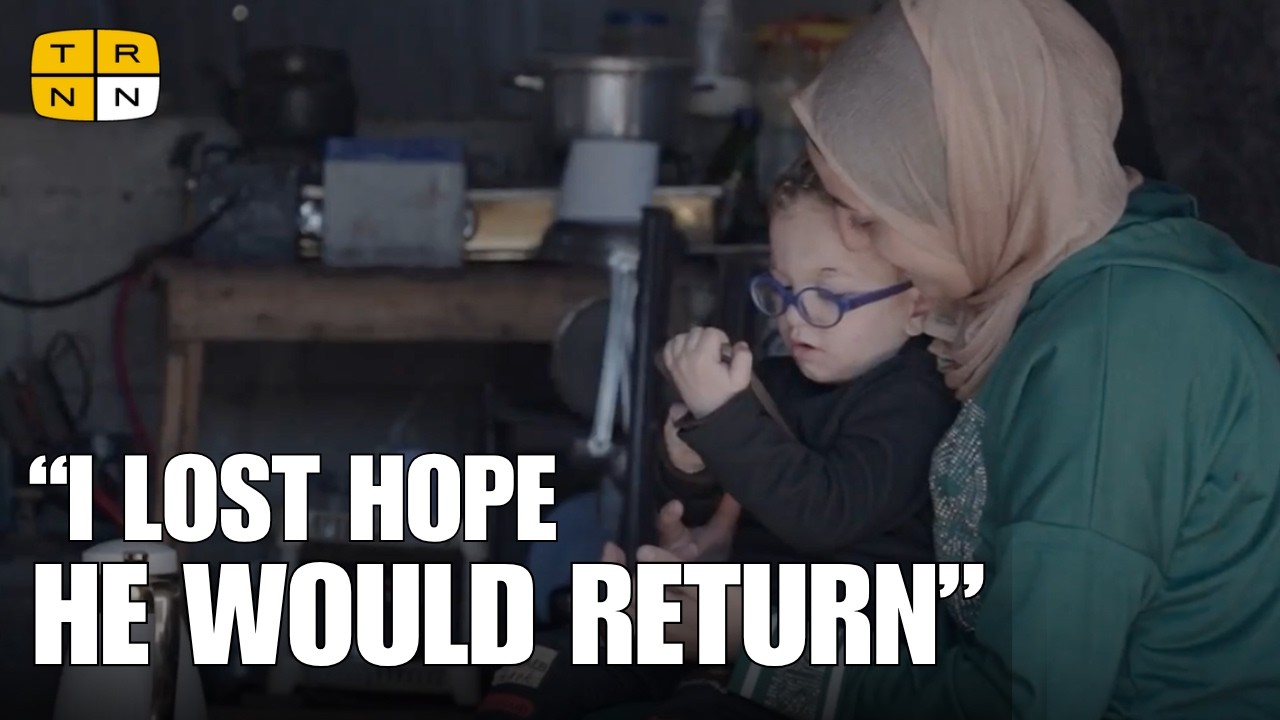
When Israeli forces besieged Al-Shifa Hospital in November 2023, eight premature babies in incubators were evacuated to Egypt under fire. One of them was Joud. His mother, Fatima Dakkeh, spent the next two years and eight months searching for him and fighting to bring him home.

Fatima tells the story of giving birth just months before October 7, losing contact with her son during the first Israeli raid on Al-Shifa, learning a year later that he was alive in Egypt, and a bittersweet reunion with a child who no longer recognized her.

According to the International Rescue Committee, at least 17,000 children in Gaza are unaccompanied or separated from their parents. For many families, there will be no reunion.

Credits:

Producers: Belal Awad, Leo Erhardt
Videographers: Ruwaida Amer, Mahmoud Al Mashharawi
Video Editor: Leo Erhardt

Transcript

Narrator:

Al-Shifa hospital is the largest medical complex in Gaza. Since October 7, it’s been repeatedly raided, occupied and targeted by Israeli forces. Over the course of the Genocide, hundreds were killed in and around the building and the hospital itself was completely destroyed.

In November 2023, under Israeli fire, 8 premature babies in incubators were hurriedly evacuated to Egypt. Joud was one of those babies.

Fatima Dakkeh:

I gave birth to my son, Joud, in July. Joud needed neonatal care at Al-Shifa Hospital. We placed him in the neonatal unit, but then the war started and Joud was there in the hospital. We couldn’t get in touch with Joud because of the shelling and the war.

Narrator:

Fatima Dakkeh and her son Joud have been unable to have a regular mother-son relationship. Joud was born in Gaza just a few months before October 7th 2023 and so, their story has been shaped by war, displacement and separation. Shaped that is, by Israel’s war on Gaza.

Fatima Dakkeh:

When we tried to get to the hospital to get Joud, we weren’t able to get to him and take him out, because of the situation—things had gotten really bad. There was a lot of shelling and there were airstrikes and quadcopters. We planned to go back another day to get Joud, once the situation calms down. But the situation just kept getting worse. The Israelis entered Al-Shifa Hospital and occupied it— that was the first invasion of Al-Shifa Hospital, and my son was inside.

About a year later, I found out my son was in Egypt. I mean, I didn’t give up; I kept going to hospitals, I went to the Red Cross and places like that to search for news about my son, no one could help me. I went to a doctor I know. I told him my story, he said, “I’ll try to get in touch with your son and see where he is.” Thank God, he was the one who discovered my son was in Egypt. After a few days, they sent us pictures of my son, and we found out he was OK. Thank God. They knew he was our son through my name—they had my name on file. We started communicating with him more through my sister-in-law—my sister-in-law in Egypt. We told her the story, and of course she didn’t hesitate; she visited him in hospital, sent us pictures and reassured us about him, thank God.

Honestly, I was happy and upset at the same time because my son was in Egypt, if he would have been here in Gaza he would have suffered a lot. We were starved, even nappies were cut off. Most children were using scraps of cloth as nappies. And milk too, was cut off—we had no milk at all in northern Gaza. I said to myself thank God my son is in a better place than Gaza. But at the same time, I was upset that my son was far from me. I would see mothers playing with their kids, dressing them, carrying them—and I would feel these feelings. I would miss my son. I wished my son was with me. At the same time, I’d look at my situation—how we’re living, in tents, in all this difficulty. I’d say to myself, hopefully he will return to us in a better situation, there will be a ceasefire and we will make up for the days we lost.

I had lost hope that he would return. With the crossing closed and the Israelis were not letting people return. When they first told us he was returning, I was shocked. My husband and I both. We were surprised—how could he come back just like that, overnight? He’s just going to come back, all of a sudden, after we’d lost hope all these years. I was overjoyed with the news that I would see my son again, it was the best news. When we went to the hospital to collect him, it took a really long time for them to bring him to us—many hours. With each passing hour, I would get more and more excited: about seeing him and about how I would greet him. I mean it was really hard, but at the same time, the moment when I saw him was really beautiful.

Yeh, honestly, when I first saw my son, he wouldn’t come to me; he’d cry and avoid me. He would go to his dad before me. he didn’t want to come to me, so I was afraid that he’d stay that way uncomfortable around us And afraid of living with us, and afraid of the situation we’re in— that he wouldn’t accept us Thank God, little by little, he started to accept us.

Narrator:

According to estimates by the International Rescue Committee, 20,000 children are still living separated from their parents in Gaza. Fatima was reunited with Joud and though their separation which lasted 2 years and 8 months impacted both mother and child, they are now reunited. As for the thousands of other survivors in Gaza, for many there will be no reunion.

💾

When Israeli forces raided Al-Shifa Hospital, Fatima Dakkeh’s newborn baby was evacuated to Egypt without her — one of thousands of Gaza's children separated from their families by Israel's war.
  •  

Trump threats overshadow Brazil’s presidential election

An American flag is reflected off bulletproof glass as U.S. President Donald Trump watches the end of the NTT INDYCAR Series on August 23, 2026 in Washington, DC. Photo by Mike Kropf/Getty Images

President Luiz Inácio Lula da Silva launched his campaign for a fourth and final term before thousands of supporters in São Bernardo do Campo, promising to keep fighting poverty and investing in Brazil’s future. His challenger: Senator Flavio Bolsonaro, running in place of his father, former far-right President Jair Bolsonaro, who is under house arrest after being convicted of attempting a coup. US President Donald Trump has backed the Bolsonaros with tariffs, visa revocations, and open pressure — what experts call a new era of US dominance over Latin America.

Michael Fox reports from São Paulo, with voices from Lula’s campaign launch, evangelical Bolsonaro supporters on the streets of São Paulo, and foreign relations professor Igor Fuser.

Credits:

  • Filmed and edited by Michael Fox 
Transcript

The campaigns are underway ahead of Brazil’s October elections

And U.S. President Donald Trump is doing his best to sway the vote…

“Lula, Lula!”

Thousands of supporters of leftist president Luiz Inácio Lula da Silva attended his campaign launch in mid August.

Karen Silva

“We came to support Lula, especially in his last election. And we believe that we are going to win. This is a fact.”

They filled May 1st Stadium in Sao Bernardo do Campo….

A place, where Lula led an iconic metal workers strike and rally in 1979.

They say Lula has changed their lives. 

Raimunda Silva Santos

“Yeah, he changed my life. He changed the life of my whole family.”

During his years in office, he promoted education, health and social programs. He helped to lift millions from poverty. They have not forgotten.

Raimunda Silva Santos

“Wow, this is the greatest joy of my life. I’m 76 years old. I’m so happy. Lula is coming to stay. He’s an incredible person. He’s helped a lot of people there in the northeast. We owe a lot to Lula.”

They want him back for a fourth and final term.

Valmir Lima, Movement of People Affected by Dams

“Lula will win with the strength of social movements, of the movements of people affected by dams, all the social movements that are helping on his campaign. And all of civil society.”

Applause

Lula has promised to continue to fight poverty, promote industry, create jobs and invest in Brazil’s future.

Lula

“What kind of a future do you want for the Brazilian people if you don’t invest in education? What future do you want for the Brazilian people if you don’t invest in health? What future do you want if you don’t invest in jobs?” 

Lula

“We need to win these elections. To elect our people to congress so we can do everything we need to do for this country.”

Lula’s challenger is the son of the former far-right president Jair Bolsonaro. 

His name is Flavio Bolsonaro. He’s a Senator and he launched his campaign in his hometown of Rio de Janeiro.

Flavio Bolsonaro 

“Come with me and rescue our nation. Brazil above all. God above everyone. Brazil above all. God above everyone!”

Flavio is in the race, because his father is under house arrest. 

Former president Jair Bolsonaro was first barred from running for spreading lies about the country’s electoral system. Last year, he was convicted of attempting to carry out a coup to return to power.

His son, Flavio, has attacked the left, and promised to fight crime and insecurity, cut bureaucracy, promote private business and privatizations, and develop close ties with the United States

He spoke at the US Conservative Political Action Conference in March.

Flavio 

“Let me look you in the eyes and tell you,“we will win.”

Much of his discourse, and that of his supporters, is wrapped in a religious language of good versus evil.

“You are the son of hope. You are the first born. You received the legacy of representing your father. And now, for everything that is more sacred on the face of the earth, honor your father. Honor his days on earth.”

That goes over well with his evangelical supporters, an important base for Bolsonaro and far-right politicians in Brazil.

Glayson Araujo is a youth pastor at an evangelical church in a working class neighborhood of São Paulo. He joined others on the streets in mid August to promote Bolsonaro and other far-right candidates running for local office.

Glayson Araujo

“I believe that Flavio Bolsonaro is the only viable candidate, who can beat Lula and the Workers Party.”

Glayson Araujo

“I am a Christian here, I behave as a Christian, but I am also a political activist. Here on the streets to defend my beliefs.”

Flavio Bolsonaro also has powerful support in high places.

In particular… from Donald Trump.

The U.S. president is a longtime ally of his father, Jair Bolsonaro. 

Last year, Trump imposed 50% tariffs on Brazil, in part, because of the country’s trial against the former president. In May, Trump met with Flavio Bolsonaro at the White House. In June, he reposted an article over Truth Social that said Brazil was his next big challenge. He recently imposed new tariffs on the country and revoked the U.S. visa of the Brazilian ambassador.

Igor Fuser is a professor of foreign relations at Brazil’s ABC Federal University.

Igor Fuser

“This is not just about the United States trying to remove the government of a left-wing party, the workers Party or a left-wing leader, which is Lula. It’s about subjecting Brazil to the policies of the United States. And Brazil, being the largest country in Latin America, is precisely the biggest obstacle to the American project of global dominance of the Western Hemisphere.”

Over the last year, Trump has pushed the United States into a new era of dominance over Latin America the likes of which the region has not seen in decades.

Boat strikes in the Caribbean. The U.S. invasion of Venezuela and the kidnapping of president Nicolas Maduro. The oil blockade on Cuba.

And Trump throwing his weight around… and meddling in elections across Latin America.

It is all justified by a renewed Monroe Doctrine…

Pete Hegseth

”President Trump has established the Trump corollary of the Monroe Doctrine, the Donroe Doctrine. And the War Department is implementing it as fast as we can.”

Brazil is the latest battleground.

Igor Fuser

“So, it is clear that the United States is doing everything, and will do everything possible to prevent the re-election of Lula in the next elections.”

Fuser says that if Flavio Bolsonaro wins, he will bow to Trump and the United States.

Igor Fuser

“Brazil will become a country under the tutelage of the United States, a colony, or almost a colony, of the United States, as it already happens with Argentina, Colombia, Venezuela, and many others. And if Lula is victorious in these elections, we will live a very intense period of confrontation between the two countries.”

Fuser says the U.S. stated dominance over Latin America imposed by Trump is analogous to the control of the Soviet Union over the Eastern Bloc countries during the Cold War, under a Russian foreign policy imposed by Soviet leader Leonid Brezhnev in 1968.

Igor Fuser 

“So, Czechoslovakia, Hungary, Poland, Bulgaria, all those countries were formally independent countries, with their own government, their own laws, their representation in the United Nations, but these countries were not autonomous, they did not have sovereignty. Any movement that they made that clashed with the interests of the Soviet Union was repressed. Some of them were invaded, etc. So, we are living in Latin America a Brezhnev Doctrine, capitalist, imperialist, dictated by Donald Trump.”

Lula has accused Trump of trying to influence Brazil’s October election. Lula’s allies are taking action ahead of the vote…. to stand up to Trump and to push for Lula’s reelection. Brazil has denied visas to U.S. State Department officials who they feared wanted to travel to Brazil to cast doubt about the country’s electoral system. People are hitting the streets to campaign for Lula, who has long stood against U.S. intervention in Latin America. Over the next two months, Brazil will be a key battleground for Latin American sovereignty against Trump’s attack on the region. 

For The Real News, I’m Michael Fox. Sao Paulo, Brazil.

💾

As Lula faces off against Flavio Bolsonaro, Trump's tariffs and threats loom over Brazil's October vote — the latest battleground in his push for dominance over Latin America.
  •  

‘Mass psychosis’: corporate Democrats ripped for attacks on anti-zionist Hasan Piker

Hasan Piker, Streamer & Creator, Night, during day two of Web Summit Vancouver 2026 at Vancouver Convention Centre in Vancouver, Canada. Photo By Florencia Tan Jun/Web Summit via Sportsfile via Getty Images
Common Dreams Logo

This story originally appeared in Common Dreams on Aug. 26, 2026. It is shared here under a Creative Commons (CC BY-NC-ND 3.0) license.

A growing number of establishment Democrats are facing backlash from progressives for their escalating attacks on leftist streamer Hasan Piker, with critics accusing the party’s corporatist wing of obsessing over an online influencer while ignoring the economic and foreign policy grievances driving millions of voters away on the eve of the critical midterm elections.

The latest controversy erupted after Piker argued during an online broadcast that Jewish Americans’ public support for Israel could contribute to antisemitism. Piker’s comments drew swift condemnation from prominent Democrats, including House Minority Leader Hakeem Jeffries (NY), who, without naming Piker, called them “dangerous and antisemitic.”

Other Democrats piled on, prompting rebuke from progressives, who accused the centrists of caring more about an online personality than winning back control of Congress in November.

Former progressive Michigan congressional candidate Kyle Blomquist called it an “absolute mass psychosis event.”

Wild to see establishment Dems fighting a Twitch streamer harder than they're fighting Trump. Putting out statements attacking @hasanthehun while meeting with Jared Kushner. It's so obviously playing into the right's midterm strategy of distracting people from rising costs. pic.twitter.com/vhxHN9pTpB

— Aaron Regunberg (@AaronRegunberg) August 25, 2026

“Too many demotivated Democrats stayed home in 2016 and 2024. We can’t repeat past mistakes,” Rep. Ro Khanna (D-Calif.) said on social media.

Khanna implored Democrats to stop calling Sen. Bernie Sanders (I-Vt.)—who is Jewish—an antisemite and “stop wasting time attacking Hasan Piker instead of [President Donald] Trump’s robber-baron corruption.”

“Don’t put Israel hawks out of touch with our voters in charge of our Middle East policy,” he added. “It is time for a reckoning: Are we a party that represents corporate interests and super PACs, or will we represent the American people?”

According to Track AIPAC, pro-Israel Democrats have taken tens of millions of dollars in campaign contributions from pro-Israel lobby groups, including the American Israel Public Affairs Committee’s United Democracy Project.

Khanna’s comments came a day after Rep. Gregory Meeks (D-NY), the leading Democrat on the House Foreign Affairs Committee, announced the appointment of Rep. Jared Moskowitz (D-Fla.) as ranking member of the Middle East and North Africa Subcommittee. Moskowitz, who said earlier this year that he is “to the right” of Vice President JD Vance in his support of Trump’s illegal US-Israeli war of choice on Iran, is one of the strongest supporters of Israel in Congress.

This, at a time when three-quarters of Democratic voters oppose US aid to Israel—up from just 45% three years ago—and after the issue was a factor in former Vice President Kamala Harris’ loss to Trump in the 2024 presidential election.

A majority of Democratic voters also believe that Israel’s US-backed war on Gaza is a genocide, a position also held by United Nations experts, around 20 countries that joined South Africa’s ongoing genocide case at the International Court of Justice, human rights groups, and scholars around the world—including in Israel.

Jasper Nathaniel, a US journalist known for his coverage of Israel’s illegal occupation, settler colonization, and ethnic cleansing of the West Bank, posted on X: “The entire bipartisan political establishment has coalesced around a willful misreading of what Hasan Piker said in order to silence criticism of Israel. They’re doing the same thing to Mark Ruffalo in Hollywood. It’s all fucking gaslighting. Don’t give an inch.”

“What Hasan said is completely intuitive. Everyone knows that Israel’s genocide of Palestinians—and the Jewish institutions’ blanket support for it—has created more hostility towards Jews,” he added. “There is no good-faith argument against this.”

Below is a fuller transcript of Piker's remarks. No doubt much that some would disagree with, but there's no call for or justification of violence – the opposite, actually. pic.twitter.com/AZiksRy4VR

— Branko Marcetic (@BMarchetich) August 25, 2026

Jacobin staff writer Branko Marcetic asserted Wednesday that “centrists despise Hasan Piker more than they want to win.”

“It’s an extreme stretch to describe Piker’s remarks as an incitement of or justification for violence and bigotry against Jews,” he continued. “The basic point he’s making—that the tendency by pro-Israel voices to conflate Jewishness with lockstep support for Israel makes Jews less safe—has been made by a number of Jewish voices, including Ezra Klein at The New York Times, David Klion at The Nation, Norman Solomon at The Guardian, union organizer Molly Kraft, and Hannah Arendt nearly 80 years ago.”

The dispute has now ensnared Michigan US Senate candidate Abdul El-Sayed, who campaigned alongside Piker during his successful Democratic primary bid. El-Sayed has somewhat distanced himself from Piker’s comments, emphasizing that the campaign represents his own views and condemning antisemitism. It hasn’t placated establishment Democrats.

Some Democrats have implored their party to keep its eyes on the proverbial prize—winning back Congress—instead of engaging in senseless internecine battles.

“Billionaires are draining our resources to develop a technology they want to replace us, millions will lose Medicaid in the new year to pay for tax cuts for the rich, and we’re spending billions on genocidal wars the voters oppose,” said Melat Kiros, the progressive Democratic nominee for Colorado’s 1st Congressional District. “But sure, let’s keep talking about Hasan Piker.”

It’s not just Democratic Socialists of America-type progressives who get it. Rep. Debbie Dingell (D-Mich.) admonished reporters during a Wednesday campaign rally for El-Sayed at the University of Michigan in Ann Arbor.

.@RepDebDingell (D-MI) says Hasan Piker is "not what November is about," and that Republicans are trying to divide Democrats over it: "I'm still trying to figure out is it the reason he exercises and looks buff why he has so many followers?" pic.twitter.com/zZLTCHHbTy

— CSPAN (@cspan) August 26, 2026

“Don’t any reporter ask me again about Hasan Piker,” she said angrily. “It’s not what November is about.”

“Republicans are… trying to divide us,” she continued. “And we’ve got to stop letting them try to divide us.”

Weighing in on corporate Democrats’ attacks on Piker from across the Atlantic, British writer and activist Owen Jones said Wednesday that “the Democratic establishment know they’ve lost their base. These smears are driven by panic.”

“The bottom line about what’s happening here is this: The American people have turned against Israel in revulsion at the genocide and want to stop facilitating its crimes. That opposition is overwhelming among the Democratic rank-and-file,” he continued.

“But the Democratic Party establishment remains invested in the alliance with Israel—and they fear being swept aside by pro-Palestinian left-wing candidates in upcoming primaries,” Jones asserted, adding that centrists “would prefer to lose to the Republicans than win with the left. They would prefer to keep facilitating Israel’s genocide and heinous crimes rather than win.”

“That’s what we are dealing with here,” he added. “And if it means destroying US democracy to defend Israel—that’s a price they’re willing to pay.”

Matt Duss, executive vice president at the Center for International Policy and a former foreign policy adviser to Sanders, expressed a similar sentiment on social media.

“You’ve never seen corporate Democrats fighting as hard and as on message against Trump as they are against Hasan right now,” he said. “It’s insane.”

  •  

With 350+ dead and 1,300 missing, Nepal carnage seen as climate disaster

This aerial view shows houses laying partially submerged in muddy water along a riverside after flash floods at Trishuli Bazar in Nepal's Nuwakot district on August 26, 2026. Photo by Prabin RANABHAT / AFP via Getty Images
Common Dreams Logo

This story originally appeared in Common Dreams on Aug. 27, 2026. It is shared here under a Creative Commons (CC BY-NC-ND 3.0) license.

Scientists and climate action campaigners on Thursday pointed to the collapse of a glacier as a likely cause of disastrous flash flooding in Tibet and Nepal’s Rasuwa district, where emergency workers are searching for more than 1,300 missing people after water and mud poured into the Trishuli River valley, crashing through villages where thousands of people live and sweeping away bridges, homes, and miles of roads.

An initial assessment by geologists and glaciologists found that in satellite imagery taken before the flooding, a glacier was seen about 4,000 feet above the valley where at least 353 people were later killed Wednesday by the rushing waters and mudslide.

The glacier appeared about 2 million square feet smaller after the flooding, while the valley was “strewn with ice and mud” and the nearby river was “swollen beyond its banks, submerging the surrounding vegetation beneath murky brown floodwaters.

The scientists said an “ice avalanche”—a massive chunk of ice that fell off a glacier in the mountainous region and into the valley below, was likely at least partially to blame for the flash flooding, but noted that it was too early to rule out other or additional causes.

The satellite imagery appeared to show that “a glacier in the area basically snapped off in a clean break, allowing it to fall just over a vertical kilometer to the valley bottom,” Daniel Shugar, a geologist at the University of Calgary in Canada, told The New York Times. “The bottom looks like a bomb exploded—it’s just deposits from the broken-up glacier.”

The chunk of ice was likely about 2,000 feet wide, Shugar told the Times, and fell nearly 4,000 feet—a fall that would have “pulverized” the ice into water.

Aakriti Dotel, national network coordinator for the climate action group Nepalese Youth for Climate Action said the floods were “another painful reminder of the growing climate crisis facing Nepal and the Himalayas.”

“As our glaciers melt and extreme weather events become increasingly unpredictable, communities living downstream are bearing the devastating consequences,” said Dotel. “We mourn the lives lost and the livelihoods affected and call for urgent global climate action. There must be stronger support for vulnerable mountain communities, and accountability from those most responsible for the climate crisis.”

The disaster stunned officials in the area, where there had been no rainfall before the floodwaters and mudslide overtook the region.

Intense videos circulating on social media Wednesday showed people attempting to run away as water and mud crashed into villages in the region.

🇳🇵🌊 Nepal flash flood kills at least 95, hundreds missing

➤ A massive flash flood swept away villages in Nepal’s mountainous Rasuwa district near the Tibet border Wednesday, killing at least 95 people and leaving hundreds missing, including 384 tourists and eight South Korean…

— Drop Site (@DropSiteNews) August 26, 2026

Tom Fletcher, the United Nations humanitarian chief, said he had mobilized $2 million from the UN Global Emergency Fund “to save lives with emergency medical care, shelter, water.”

The secretary-general of the Nepal Red Cross told CNN that about 20,000 houses have been “swept away” in the region.

“These people do not have anything,” said Rishi Khanal. “To feed them for some time, some days is a very serious thing to us… The shelter problem is there. The drinking water problem is there.”

A truly desperate assessment out of Nepal from the Secretary General of @NepalRedCross: pic.twitter.com/QrJ4vZhmSz

— Becky Anderson (@BeckyCNN) August 26, 2026

A police officer in the village of Syabrubesi told the Times that waves of water crashed into his police station Wednesday morning, right after he got off the phone with a friend who had warned him a flood was headed toward the town.

“One of my senior officers and I were together when the wave struck. I was thrown out, but he was unlucky and was buried or swept away,” he told the newspaper. “I cannot explain how big the waves were. They engulfed several-meters-high buildings in a fraction of seconds… It wasn’t just water. It was a combination of boulders, sand, and thick sludge.”

Seven people were working at the station when the flood hit, and the officer is one of three who have been found alive. He said he was concerned that the other four are among the missing.

Homes, schools, government buildings, and the office of a hydropower project are among the infrastructure destroyed in Syabrubesi.

More than 160 glaciers in Nepal have entirely melted in recent decades, as scientists have warned that continued fossil fuel extraction is heating the planet and causing dangerous extreme weather. The area of the country’s glaciers also shrank by about one-quarter between 1970-2010.

At The Conversation, Levan Tielidze, a research fellow in glacial geomorphology at Monash University, wrote that “it’s too early to say this was the exact cause. But we know that the great ice stores of the Himalayas—known as the world’s ‘third pole’ because it contains the largest amount of snow and ice after the Arctic and Antarctic—are no longer safe.”

Tielidze continued:

What happened in Nepal is likely due to an enormous ice-and-rock landslide sweeping down a mountain pass and gathering up ice, water, rock, trees and dirt.
The landslide was so large it was originally thought to be an earthquake, as the seismic energy registered as a 4.4 magnitude quake on seismographs.
By the time it reached Gyirong Port—a China-Nepal border crossing—the wall of debris resembled a tsunami of dirt. Early estimates suggest the wave may have been 30 meters high.

Rising global temperatures have been linked to previous collapses of glaciers, including in Switzerland last year when the Birch Glacier wiped out nearly an entire town of 300 residents, who had evacuated before the disaster. Eleven mountain climbers were also killed by a glacier collapse in Italy in 2022.

“Every destabilized glacier in a warming Himalaya is a ticking time bomb that can go off unannounced, and when it does, those least responsible for the climate crisis pay with their lives,” said Savio Carvalho, head of campaigns and networks for 350.org. “This moment of grief has a clear message for world leaders: Delay is deadly. Rich countries must finally deliver the finance and protection they owe frontline communities. Without a rapid transition away from fossil fuels, the planet will continue to heat up and lives can be lost in a flash.”

  •  

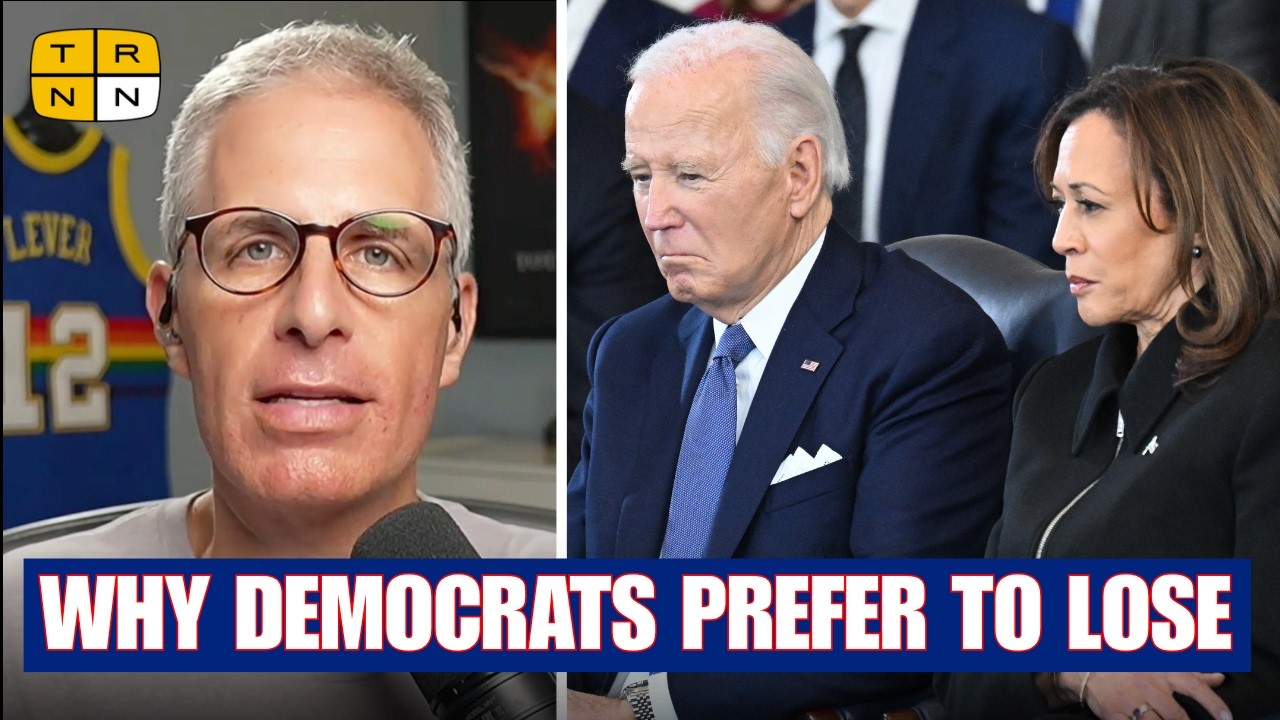
David Sirota: How to get obscenely rich while losing to Donald Trump, the Democrats’ failures explained

US President Joe Biden and Vice President Kamala Harris attend the inauguration ceremony before Donald Trump is sworn in as the 47th US President in the US Capitol Rotunda in Washington, DC, on January 20, 2025. Photo by SAUL LOEB / POOL / AFP via Getty Images

David Sirota explains how consultants profit from massive television-ad purchases, how billionaire-funded super PACs influence the candidates and policies voters are offered, and how the language of “moderation” and “electability” is used to undermine progressive and populist challengers.

We examine the consequences of legalized political corruption: Washington’s silence on America’s healthcare crisis, the widening gulf between voters and their representatives, and the 50-year campaign to transform elections into auctions while concentrating power in the presidency.

David Sirota is the founder of the investigative news organization The Lever, a former speechwriter for Bernie Sanders, an Oscar-nominated co-creator of the story for the movie Don’t Look Up, and the producer of the podcast series Master Plan.

Additional links/info:

Credits:

  • Production: Stephen Janis, Taya Graham
  • Written by: Stephen Janis
  • Studio Production: Cameron Granadino
  • Post-Production: Stephen Janis, David Hebden
Transcript

The following is a rushed transcript and may contain errors. It will be updated as soon as possible.

Taya Graham:

Hello, my name is Taya Graham and welcome to the Inequality Watch Report, a show that examines government policy and action through the lens of extreme economic inequality, the existential issue of our time. Today, we’re going to discuss a topic that defines who holds power in America and how they keep it despite growing voter dissatisfaction amid a historic wealth imbalance. It’s a story of money, access, and self-enrichment that is at the root of the bad policies and broken institutions we all struggle with daily. And it’s an issue that transcends the nominal state of play in this country to ensure entrenched power never loses its grip on our wavering democracy. I am talking about, of course, the hoards of cash that have turned our political system into a pay-for-play utopia since the infamous Citizens United decision in 2010 when the Supreme Court ruled that corporations could make unlimited independent expenditures to influence elections, super PACs, and other vehicles have transformed our elections into a veritable auction to the highest bidder.

But there’s a lot more going on behind the scenes where all this money is going, how it’s warping our electoral system, and ultimately who is cashing the checks. To help us uncover the dark details of how the system constrains us, we will be speaking with journalist and filmmaker David Sirota. But first, I want to check in with my reporting partner and co-host, Steven Janis, to set the stage for our conversation. Steven, how are you?

Stephen Janis:

Very beleaguered. Very beleaguered by the cash system you were just talking about, the ATM and politics.

Taya Graham:

Have I already depressed you?

Stephen Janis:

Yes, quite a bit.

Taya Graham:

Stephen, there was a question I had for you. There was a weird mystery in democratic circles that was sort of a one-day story, but it speaks to a less talked about aspect of today’s topic. It’s a missing chapter from the so-called Democratic autopsy of the 2024 election. What was it about and why do you think it’s important to our discussion today?

Stephen Janis:

Well, the basic story was that the Democratic Party didn’t want to release an autopsy in their 2024 loss to Trump. So there was a lot of controversy about that. Eventually they released it, but then the New York Times broke a story about a missing chapter from that report. And the missing chapter was really interesting. The fact that they left this out was talked about the consultant class that works elections that literally had somehow through this entire process of running elections obtained generational wealth. Generational wealth. That’s a direct quote from the New York Times story. And so that just really got my attention. I know money in politics is ridiculous at this point in our historic run towards authoritarianism, but I had no idea that you could get generational wealth. And I do recall a tweet from our guest, David Sirota, talking about people after 2024, all these consultants going to beaches and living the luxurious life thanks to their consultant fees for these elections.

So that really, I think was something that just stunned me that you could become that wealthy losing.

Taya Graham:

I think I chose the wrong line of work apparently. Generational wealth. Exactly. Incredible. I think this explains why working people’s issues are always on the back burner. I mean, we both cover Capitol Hill and despite a recent poll showing that 91 million Americans say they could not afford quality healthcare if they needed it, we can go months without hearing even a peep about it. It’s just silence. But I’m sure our guest will have plenty to say about it. David Sarota is the founder of the investigative news organization, The Lever. He is a former speechwriter for senator and presidential candidate Bernie Sanders and was nominated for an Oscar for his work creating the story for the Netflix film Don’t Look Up. He’s also the producer of the podcast series, The Master Plan. I could go on, but we wouldn’t have time for the interview. So David, let me just say thank you so much for joining us.

David Sirota:

Thank you. Thanks for having me.

Taya Graham:

So first question, just to get a sense of this consultant class and how their role in politics and how much money they’re pocketing and the report, it actually cited generational wealth for these people. How on earth are political consultants soaking up this much money just working for a campaign?

David Sirota:

Well, it has to do with in many cases how their fee structure works. A lot of the way the consultant fee structure works is related to how many television ads are purchased. So they get in a lot of these deals a cut of the buy. So the larger a TV ad buy is, the more the consultant stands to make. Now obviously that creates, there’s sort of a conflict of interest problem there, which is if your main campaign strategist stands to benefit from a certain form of spending and will not benefit from other forms of spending, then the consultant is more likely and is really financially incentivized to suggest that the campaign spend in the way that it benefits the consultant rather than spending in different ways. So in practice, it’s not that TV ads aren’t important in elections. They certainly are, but a disproportionate amount of campaign budgets go into TV on campaigns where the consultant is paid as a percentage of the cut of the buy.

And in many cases, less money goes into mail, goes into organizing, goes into a field and ground game. It’s like there’s a baked in financial incentive. And we’re talking about in these major races, we’re talking about millions and millions of dollars that are at stake here. If you’re a consultant who’s getting a cut of a hundred million dollar ad buy, I mean you are making a ton of money.

Stephen Janis:

And David, what do you say to the idea this is generational wealth being generated for these consultants? Do you think the New York Times or the reporting from the autopsy was accurate in that, that these people are making that amount of money doing this?

David Sirota:

Yeah. I mean, it doesn’t surprise me. I guess it surprises me that this is mentioned in this conversation because this is a really taboo topic, but yes, we’re talking about just enormous sums of money. And to be clear, look, I’ve worked on a lot of campaigns before I was a journalist. I understand people on campaigns need to get paid. I mean, it’s real work, it’s hard work. But when we’re talking about the levels of money that we’re talking about here, I mean this is something that’s way beyond that.

Taya Graham:

You know what? I was curious, how much are these people, and they’re vested in what we would call the great moderation fallacy, which is that voters actually want a moderate or a centrist path. So basically how much are these folks responsible for sowing doubt in the party when a progressive candidate wins? The pundits are on the same page with the same talking points about how the Democrat socialists are somehow bad for the party. How are these people responsible for making progressives look to be the lesser choice even when voters seem to be supporting them?

David Sirota:

I think a lot of it has to do, as we’ve been discussing, it has to do with the money and the financial incentives. There’s huge money to be made, not just on campaigns, but there’s actually even bigger money to be made if you’re working for advising a consultant for super PACs. Super PACs are these supposedly outside entities that are spending huge money in elections. And obviously those PACs, the biggest of them are funded by billionaire donors, oligarch donors, corporate donors, donors who have a vested interest in the status quo, in the economic status quo. So if you’re a consultant who’s working at the nexus of campaigns and super PACs and you know your next job is going to be at a corporate or oligarch funded super PAC and you’re also working, you know that those Super PACs pick consultants from specific kinds of campaigns and candidates, well guess what?

There is a kind of nexus between what that consultant is going to advise and who their next client is. I mean that is really where this is at. The consultant class appropriates the agenda of the donor class and the consultant class is advising the candidates. And you mentioned the media. I mean look, billionaire and oligarch and corporate owned media has a viewpoint. It has a political agenda. It’s not to say that good journalism can’t be done inside of corporate media and the like, it certainly can, but there is a filter there.

Stephen Janis:

So I mean is this why we keep hearing this question come up again and again on CNN and other punditry saying, well, is win of democratic socialists bad for the party rather than inquiring or trying to understand why people would vote for democratic socialists? It’s like a mantra. They say it every time. All they talk about is why it’s bad. Is this coming kind of from that consultant industrial complex that you’re talking about, like the intersection of this wealth they’re making versus actually listening to the voters?

David Sirota:

Yeah. I mean, I think a lot of the conversation about electability, I put that in quotes, this idea that candidates can’t be too populist, too far left, the Democrats shouldn’t nominate them because they can’t win general elections. I mean, I’m old enough to remember when Hillary Clinton’s campaign and the media said that Barack Obama could not win a general election. I’m old enough to remember when the Democratic Party elites and the media sort of celebrated Donald Trump being nominated as the Republican presidential candidate because they

Stephen Janis:

Though

David Sirota:

He couldn’t win a general election. Electability is sort of this manufactured idea that anything that strays too far from the norm inside of where politics and democratic politics specifically is can’t actually end up winning a general election. And I think that that’s how this sort of frame is laundered into the conversation. So then it becomes that DSA candidates or economic populist candidates, they supposedly have an electability problem. Oh, it’s not necessarily that they may be wrong on specific issues. It’s that even if they are right, if democratic voters vote for them, those candidates can’t win general elections. And what I see happening is that the corporate democratic faction is sort of weaponizing this argument and also playing a role in sort of wish casting that idea into reality that you see in various races where when populist candidates win the nomination for a general election, that the corporate faction is still attacking and criticizing them in the general election, even though they are now the candidate going up against the MAGA Republicans.

And I think what that speaks to is that the corporate faction of the Democratic Party in specific here is willing to potentially lose general elections to MAGA and Republicans

If that is the cost of maintaining the corporate faction’s power inside the Democratic Party.

Taya Graham:

Incredible. Now just to touch on your podcast, which is the Master Plan for those who haven’t heard it yet, I know it gives a history of something we’re dealing with at the moment, which is the Unitary Executive Theory of Power and of course our current president, Donald Trump, but it also focuses on systemic corruption that you say affects all of our lives. So this isn’t just about one man, right?

David Sirota:

Absolutely. So the first season of Master Plan was about the 50 year plot to legalize corruption. And that story basically starts, and both seasons do, excuse me, in the early 1970s in the aftermath of Watergate. Watergate was the first real dark money scandal of the modern era. And what we trace is how conservatives, and they wrote this down in documents and we have all the evidence there, they really made a blueprint to deregulate the campaign finance system, equate corporations with people under the law and narrow the definition, the legal definition of bribery. And they did that because they understood that they became nervous that elections were causing the government to react to what the people wanted. And the Powell memo that we talk about in the, it was a memo written by future Supreme Court Justice Lewis Powell, talks about how at that time conservatives, oligarchs, corporations need to invest in politics because the government had become too responsive to what the people wanted.

So one way you deal with that if you’re an oligarch and you think that’s a problem, the one way you deal with that is to turn elections into auctions, is to turn your one person, one vote democracy into a $1, one vote oligarchy. So that was season one. This relates to season two in this way. So that’s the first pillar of how you, if you think democracy is a problem, you legalize corruption, you turn elections into auctions. The other thing you do is what we trace in season two. You try to concentrate as much power as possible in the hands of one person and strip it away from more small democratic institutions and all the ways power is dispersed across the country. You concentrate that power in the hands of one person and then make sure your person is that person. And that is what we are tracing in season two called the Kingmakers, which is about essentially the unitary executive theory, where this idea came from.

Because again, it started after Watergate where Watergate was seen as a crisis of an imperial presidency. Congress passes a bunch of laws to strip power from the executive branch and it catalyzes a conservative backlash that carries through the Reagan administration, obviously into the George W. Bush administration with the war on terror and into the Obama administration, I should say, with its use of drone warfare to say that the executive branch gets to make all of the decisions. And so the point is, you asked is what’s going on today, Donald Trump, the situation, is that all just one person? No, Donald Trump is in an office with a control panel of tools that were handed to him and a system of legalized bribery that was handed to him by 50 years of plots.

Taya Graham:

To your point about how these oligarchs are essentially controlling our conversation and controlling our national narrative, and Stephen and I are actually on Capitol Hill quite a bit, rarely do we ever hear anyone talk about healthcare despite what could be described as a literal crisis in the country. I looked at a recent report from Yale University and it estimated 27 million Americans don’t have healthcare. It’s top of the list in the polls in regard to priority concerns from Americans, and yet we’re hearing silence on Capitol Hill. Would you be willing to connect the dots with some of the reporting on your podcast about systemic corruption and our current healthcare crisis?

David Sirota:

Absolutely. I mean, I think this has a lot to do with how money doesn’t just buy legislative favors, money also buys silence. And sometimes not even a transaction has to occur in order for silence to nonetheless be purchased. And it works in a lot of ways in this way, that if you’re a senator, if you’re a congressperson, you know implicitly now that if you propose a bill to deal with the healthcare crisis that let’s say challenges the power of or threatens the profits of the private health insurance industry, you know that what you’re doing is potentially provoking that very powerful money interest to spend a lot of money to get you thrown out of Congress. So many legislators basically choose to not do anything or not say anything for fear of sticking their neck out and seeing their political career ended. Money doesn’t necessarily have to even be transacted for that situation to exist.

And so what I’m describing really is the norm, that there is an implicit threat that if anybody tries in a serious way to deal with the healthcare crisis, they will be targeted. We know this, by the way, from the Obama era where the first thing that the Obama administration said when it got into office and started pushing for some kind of healthcare reform was we are ruling single payer healthcare off the table. It was immediately the administration made an announcement that this is not part of the conversation. And this is only at that point, four years after Barack Obama, when he campaigned for the Senate, said he’s a supporter of Medicare for All. We just need to get a Democratic House, a Democratic Senate and a Democratic president. And four years later they had that and they immediately said, “We’re not even going to talk about this.” And I think that was because they saw the collective power of the healthcare industry and said, “If we do this, there will be a ton of spending to try to get every member of our party thrown out of office.” And they also ruled out the public option.

So my point in just mentioning this is that even though money doesn’t get transacted, money is overlaying and creating the political conditions at all times.

Stephen Janis:

One thing I really appreciate about the podcast is it goes back 50 years, which a lot of times reporters, we get caught up in the contemporary moment and don’t understand the roots of this. But I was thinking when I was listening to it that all of the sort of trends we’ve seen in economic inequality, and this show is about economic inequality, started about the time your podcast starts digging into this sort of systemic corruption. I mean, is inequality intertwined in this story in terms of how the process that you kind of illuminate sort of set the seeds for this almost traumatic wealth inequality and wealth imbalance now? Are they intertwined in that sense?

David Sirota:

So there’s an amazing website. People can Google it. I think if they put just the year 1971 into Google, you’ll find it where it traces how so many trends started in the year 1971. It’s kind of amazing, like de-unionization, inequality, et cetera, et cetera. I do not think it is an accident that so many of the trends started at roughly that time. This is the lead up to the Watergate era. This is a moment where the consumer movement and the broader left has sort of culminates a lot of its agenda, right? Medicare, Medicaid, the great society, all this is culminating. Ralph Nader is having huge success, regulatory success in Congress, but there is this backlash. A well oiled, moneyed, conservative machine is starting in earnest to build what ultimately ends up culminating in MAGA. And I think that that machine was based on preserving and expanding the wealth of the people who were funding that machine.

We’re talking about people like Joseph Kors to name somebody, like the Kochs. That machine started to be built then and it was a machine designed ultimately for wealth protection for that small group of people. And this sounds like a conspiracy theory, but it’s not a theory. It was a conspiracy. And look, they used the tools of the government, they used the laws of the land and the lobbying system and the campaign finance system to get what they wanted. And we are now here living through that reality. So when I think people look at the affordability crisis, when they look at gilded age levels of inequality, we have to understand that goes along with the corruption that we’re talking about. The original gilded age was also one of the most infamously corrupt ages in American history. These two things go together. The wealthy and the powerful are buying politicians, buying elections, buying policy outcomes that preserve and expand the wealth of the already wealthy at the expense of everyone else.

This is the oldest story in America.

Taya Graham:

You broke a story about a really troubling phenomenon inside the Democrat political machine, and it basically uses dark money to push or bolster so-called moderate candidates. The organizations you identified were called the Bench and Majority Democrats. Could you explain how these organizations work and what’s really behind them in terms of pushing this moderation fallacy we keep on coming upon?

David Sirota:

Right. So listen, we’ve seen iterations of this for most of the post New Deal era of politics. And I would pinpoint that to probably in the modern era starting in the 1980s. You had a movement among, they were called at one point so-called Atari Democrats. Then they became the Democratic Leadership Council. Now they exist as groups like Third Way. So this is not something new. And you’re right, they exist like a group like the Bench and Majority Democrat. They have different names and different faces, but it’s the same idea. And the idea is that the Democrats need to abandon their new deal roots in order to compete with Republicans and to do that, to compete with Republicans for business support, corporate support, oligarch support, and all of those entities’ money. This has been going on now for 40 plus years. And so I think this is the latest iteration of that.

You have shadowy billionaires funding this network of groups and think tanks, which are designed to support candidates who are, and I’m putting it in quotes here, like moderate. But what that really means is much more corporate and oligarch friendly. And again, they don’t come out and say that. They are cast as we are pushing this because these are the most electable candidates. They’re not acknowledging the actual mission of what’s going on. They’re shrouding it in the veneer of what seems like a rational and logical political argument. But what’s really underneath here, it’s not a coincidence that there is billionaire money and there’s big money that wants specific things from these politicians.

Stephen Janis:

Citizens United obviously is the core of this story in terms of things getting worse in the past decade, but there is a recent decision, NRSC versus Federal Election Commission, which also I guess loosens some of the restrictions on spending and coordinating. Can you talk a little bit about your concerns about that decision and how you think it’ll make this political campaign finance system even worse?

David Sirota:

So Citizens United mostly dealt with so-called outside Super PAC spending. The idea was that these Super PACs, which are backing specific candidates, because they are supposedly independent from the candidates, they can’t be regulated because they have free speech rights, they have First Amendment rights. That ruling, now I say all this understanding and implying that those Super PACs aren’t in practice really very independent from those candidates, right? It’s almost like a fallacy, but the Supreme Court’s argument was they’re independent, so they can’t be corrupting, and so their First Amendment rights suspend must be protected. What Citizens United left in place though was the government’s interest in preventing straight up quid pro quo corruption means that campaign contribution limits directly to candidates can still be maintained because you can’t argue that a donation directly to a candidate cannot be corrosive from a corruption standpoint, cannot be a vehicle of quid pro quo corruption.

So even in the post Citizens United era, campaign contribution limits directly to candidates have been maintained. Well, along comes this case and what this case sought to do, a case spearheaded by JD Vance, we call it Citizens United 2.0. It

Was designed to say that there was a law in place to preserve those campaigns contribution limits to say, listen, you can’t route your campaign contributions through a party to get around the campaign contribution limits to a candidate, right? You need to make sure that if a donor wants to give a candidate six figures worth of money way above the campaign contribution limit, they can’t just be able to give it to their party and know that their party’s going to coordinate as if they were the candidate with the candidate to spend the money. So the Republicans led by JD Vance went into court to say that law should be taken away. And so the Supreme Court agrees. And so now what we have, we have a much larger conduit through which big donors can now give much larger amounts of money to political parties and the political parties can spend in coordination with those candidates.

So what that does in practice, it means that the original campaign contribution limits that were designed to prevent corruption, they were just circumvented. They were just significantly weakened and widened. A much larger amount of money can now be funneled directly to candidates.

Taya Graham:

I was just wondering if you could make the public understand just one thing about corruption that normally our legal systems obscure or political systems obscure or the oligarchs are actively working to obscure, what would it be? What would you want voters to understand and know?

David Sirota:

I’d want voters to understand and know that there’s a direct connection between the policies that are harming them and the corruption that’s taking place. That when they’re paying a higher prices for a medicine, a medicine developed already at US taxpayer expense, most major medicines are originally developed, we’ve already paid for them as taxpayers. The average person should know that the reason that they are now, when they need that medicine for some illness or the like, the reason they’re paying the world’s highest prices for that medicine is because the pharmaceutical industry gave a lot of money to politicians to rescind the rule that said if a drug is developed at taxpayer expense, it has to be sold to taxpayers on the market at a fair price. That rule was removed because the pharmaceutical industry gave a lot of money to politicians to get them to remove it.

I could go on and on and on, but I guess what I’m getting at is that every policy that is responsible for the affordability crisis in the United States can be traced back to a policy written and bought by big money. That corruption is not some esoteric abstract issue. Corruption is why the working class and middle class of this country is being immiserated.

Stephen Janis:

David, before we let you go, I’ve been wanting to ask you this question. If Bernie Sanders wins in 2016 or in 2020, would we even be talking about Donald Trump? I mean, if the Democrats let Bernie Sanders win rightfully those primaries, do you think we’d ever even be having. Would he have beaten Donald Trump either way?

Taya Graham:

Ooh, that’s

David Sirota:

Interesting. It’s hard to run that counterfactual. I mean, I know one of Donald Trump’s pollsters said after 2016 they though Bernie Sanders might’ve beaten Donald Trump, would’ve been a stronger candidate against Donald Trump. It’s hard to know, but I take it back a little farther. I think the more interesting. The question that haunts me, and I think should haunt us all,

Is whether there would’ve been a Donald Trump phenomenon had Obama and the Democrats when they had a super majority or a near super majority, had they really genuinely delivered a new, new deal as was rhetorically promised in 2008. I think a lot about in 1938, FDR gave this speech, it was about democracy and he had said, and I’m paraphrasing here, “Democracy did not go away in other countries.” He’s looking out at Europe and the like. He said it did not go away in other countries because people there didn’t like freedom, didn’t like democracy. Democracy went away because people saw a dysfunctional government and they ultimately decided to vote to get something to eat. The idea being that the New Deal actually significantly delivering in a real way for the working class, FDR understood it to be an anti-fascist program, a way to prevent the rise of fascism in the United States.

The idea that if you raise people’s hopes and you don’t deliver for them, you will sow a level of disillusionment that will be channeled by the right. So I think a lot about those two years, certainly those first two years in the Obama administration, that

Had the administration used its political capital to serious Deliver for the working class rather than bailing out bankers who were foreclosing on 10 million people, rather than ruling out single payer healthcare and getting rid of the public option and instead passing a kind of heritage foundation version of healthcare reform. Granted, better than the healthcare system before it, but not a full delivery on the promise. Had the Obama administration used that political capital and the Democratic Party used its political capital to really deliver, would there have been a Donald Trump? Now that is a question I don’t know the answer to. Maybe there still would’ve been, but I do know this. 200 plus counties voted twice for Barack Obama and then voted for Donald Trump. So I think when you look at that, it’s hard to say, “Well, Trump only got elected because of racism.” I think you have to be honest and look deeper and say people were extremely disillusioned.

The Democrats, yes, they chose to put up in 2016 a nominee who seemed like an avatar of the kind of problems that people were disillusioned with. And people voted for the political version of the Joker. They voted for Donald Trump to just blow up the system. I’m not saying I think that was a good thing at all, obviously, but I think that is what happens. And what I worry about is looking ahead to the next set of elections. If a Democratic president is elected in 2028, making big, bold promises and does not deliver, do we relive that cycle again? And is the next Joker who gets elected at the end of that disillusioning cycle, is that somebody who’s smarter, shrewder, and even more dangerous than Donald

Stephen Janis:

Trump?

David Sirota:

That’s what haunts me.

Stephen Janis:

I mean, even now it doesn’t seem like the Democrats are making a great case for a new new deal that we can see on Capitol Hill.

David Sirota:

Not yet. I mean, listen, listen, I’m not apologizing for the Democrats.

Stephen Janis:

Understood.

David Sirota:

I think their argument in this election is put us into power so we can at least be a check on the last two years of Donald Trump. I think that’s actually a fair argument. I think what everyone should be watching for is in the 2028 Democratic presidential primaries, who is proposing what? Who looks like and who can we detect is really serious about delivering in a real way? Because if whoever gets the nomination and if they win the election, if they do not deliver, we are going to live through this cycle again and it will be even worse.

Taya Graham:

David, what you said was absolutely amazing and that’s what should be keeping the consultant class awake at night despite their generational wealth stuffed in their pillows and mattresses.

David Sirota:

Absolutely amazing. I mean, you’d hope. And look, to be clear, I’m heartened by some of the elections happening right now. We are finally at a point where it seems like Democratic voters are not only angry at what’s going on in the country, but disillusioned with their own party’s leadership. And I think that’s actually a moment of opportunity to actually fundamentally change that party, to fundamentally make it into a vehicle that actually is serious about delivering. But to be clear, the corporate faction of that party is not going to give up power without a big fight. So I don’t think there’s been some encouraging elections, but I don’t think it’s an inevitability that this all goes in a sort of positive constructive direction. There is a lot of power and money that is trying to stop that from happening.

Taya Graham:

Absolutely. David, we don’t want to keep you too long. We promise to respect your time, but I have to say this has been an incredible conversation. We are so lucky to have an investigative journalist like you watching the machinations of power and the threat that it poses to our democracy. We have to thank you so much for your time and we really hope that we’ll speak to you again in the future.

David Sirota:

Anytime. Thank you so much for having me.

Taya Graham:

We really appreciate you so much. Thank you. Okay, Steven, before I do my final rant or analysis, do you have any thoughts about ourdiscusion you

Stephen Janis:

Want

Taya Graham:

To share? Absolutely. I bet.

Stephen Janis:

Okay. Tell you, I was really struck by the idea that democracy has to deliver to survive. I mean, that’s a really important concept. We talked about this with Dr. Richard Wolf, who told us in terms of the Cold War, there was a concerted effort to make people’s lives better because otherwise democracy would not survive. And I think that is a critical takeaway from what we see covering Capitol Hill where there’s just no attention to the immediate needs. We watched while the Democrats were Republicans, and I don’t blame the Democrats for this, where the Republicans couldn’t even pass ACA subsidies so that people could keep their healthcare. If democracy is going to survive, then this political system has to freaking deliver like now, and people have to make promises and keep them. And it just really struck me that democracy in this age of inequality is not delivering for the people it’s supposed to serve.

And if it doesn’t, that’s why it’s going to collapse. Not because Donald Trump is an idiot or we hate him or whatever, not because of those things and not even because of MAGA, because overall the system doesn’t deliver. And I hope that who’s ever going to try to get elected in 2028 is listening to that important point. You got to deliver real benefits to the people who live in this country.

Taya Graham:

You know what’s crazy, Steven? What you just said actually almost sounds like a foreign concept that a politician makes a promise and is supposed to deliver on said promise. Right. I agree. That sounds groundbreaking for some reason.

Stephen Janis:

It really does. Sounds revolutionary.

Taya Graham:

So if there is one takeaway from David’s insight to how our political system works and doesn’t, it has to be the role of fear and making us believe change is simply impossible. I mean, the whole moderation fallacy he discussed with us is based upon the idea that fear is more important than any idea or change or simply transforming a system that does not serve us the people. Taking risks, believing something is possible and embracing change is just foolish, that new ideas, new candidates and new voters should be avoided all because a party establishment fears it will lose power. And that’s where I think the establishment Democrats and Trump intersect because in a sense, President Trump is the perfect foil for a party seeking to maintain the status quo. He’s the perfect instrument of fear. We are told the only way to rid ourselves of him is to stick with the establishment that lost to him twice.

Yes, that’s right. Remember, they actually already lost twice. That’s why when you turn on the mainstream media, you hear a chorus of highly paid anchors and apparently very rich pundits having the same circular conversation. It goes something like this. Will the success of democratic socialists hurt the party’s chances in November? Will the historic wins of popular candidates with new ideas keep the establishment dems from taking their rightful place in the chronicles of power come the midterms? But here is what you don’t hear. And Steven, please correct me if I’m wrong.

Stephen Janis:

I will.

Taya Graham:

What you don’t hear is a question and it’s a simple one. It’s actually just a one word question. Why? Why do you think voters want change? Why did so many young people show up at the polls when socialists are on the ballot? Why were their candidates funded by APAC and other Super PACs unpopular? And in many cases, they just outright lost. And what? I know this is really crazy. What do the voters actually want? Why have they rejected the status quo? Why have they set aside fear for something different? And why aren’t they buying the consultant class talking points that have been shoved down their throats for decades while wealth inequality flourishes and they just can’t get ahead? Why? It’s a much better question than trying to characterize every socialist Democrat as a burden. Maybe, just maybe legacy media. That’s the question you should be asking in your multimillion dollar studios with ultra rich consultants trading barbs as if there’s some sort of substantive difference between a high price democratic operative and an overpaid Republican pundit.

Perhaps you should try to understand what motivates people to support candidates your infrastructure of manufactured consent has rejected. You should ask, be curious, be interested in the people who’ve expressed dissatisfaction with the state of America today. They’re actually important. They’re just as important as the Trump voters you fetishized and chased down. Really, they’re not as irrational as you often characterize them. They’re not monolithic or unreasonable or even unreachable. Stephen and I spoke to them during Mondami’s campaign and they were more than happy to share their thoughts. Legacy media, please try listening, try understanding, try empathy. You might learn something. You might learn that while our concerns for our hyper expensive healthcare system tops poll after poll, you never talk about it. You might learn that while the earth is consumed by a historic rise in heat, you talk about wildfires, but not the policies and oil subsidies that fuel them.

Well, for those of you out there watching, I want you to know that here on our show, we’re going to try to do the opposite. We are going to listen and we’re going to learn and we promise to keep doing so in order to bring you the truth, not the truth of the pundits, not the truth of corporate media, but the only truth that matters. And that is the truth that belongs to and is spoken by we, the people. My name is Taya Graham, along with my reporting partner, Stephen Janis. Thank you so much for joining us on the Inequality Watch. And as always, we are reporting for you.

💾

David Sirota joins Taya Graham and Stephen Janis to expose the enormous financial incentives shaping Democratic politics and why political consultants can accumulate “generational wealth” even when their candidates lose.
  •  

Democrats, groups fight back after Supreme Court clears way for Trump attack on mail voting

Ballots are tabulated on election night at the Fulton County Elections Hub and Operation Center on November 5, 2024 in Fairburn, Georgia. Photo by Megan Varner/Getty Images
Common Dreams Logo

This story originally appeared in Common Dreams on Aug. 25, 2026. It is shared here under a Creative Commons (CC BY-NC-ND 3.0) license.

Democratic leaders and a “pro-voter” coalition on Tuesday announced separate actions to combat President Donald Trump’s attack on voting by mail after the US Supreme Court’s right-wing majority delivered a “painful setback” for critics who argue the Republican’s executive order is unconstitutional.

The president’s March order directed the US Department of Homeland Security to compile lists of citizens eligible to vote, states to provide voter information to the federal government, and the United States Postal Service to craft new regulations for absentee ballots—for which the USPS published a final rule last Friday, less than three months away from the midterm elections.

The nation’s top court said in a 6-3 decision on Monday that Democrat-led states had not demonstrated sufficient standing to challenge the president’s order and paused a lower court injunction blocking its implementation. The attorneys general in that case, Trump v. California, vowed to keep fighting back, and as of Tuesday evening, others already are.

The chairs of the Democratic National Committee (DNC) and Democratic Governors Association, US Senate and House minority leaders, and heads of the party’s campaign committee for each chamber of Congress on Tuesday announced the filing of a new motion for a preliminary injunction.

“Today, we are taking strong, joint legal action to stop Trump’s unlawful attempt to restrict mail-in voting through the Postal Service,” said DNC Chair Ken Martin, Kentucky Gov. Andy Beshear, Sen. Chuck Schumer (NY), Rep. Hakeem Jeffries (NY), Sen. Kirsten Gillibrand (NY), and Rep. Suzan DelBene (Wash.) in a joint statement.

“Yesterday’s Supreme Court ruling did not say that Trump’s executive order attacking voting rights is constitutional,” they stressed. Rather than ruling on the merits of the challenge, the majority of justices simply said that the states had sued prematurely, as federal efforts to respond to Trump’s order were still underway.

“But the law is clear: States have the authority to run elections—not the president,” the Democrats said. “”We will not stand by while Trump and Republicans try to unnecessarily inject chaos and confusion into our elections, just weeks before voting begins. We are asking a district court to immediately stop the Trump administration from unlawfully disrupting mail-in voting in every state. Democrats will continue fighting every day until Trump’s illegal executive order, and all of his other attempts to undermine our free and fair elections, are completely thrown out.“

The Campaign Legal Center (CLC) and Democracy Defenders Fund (DDF) also continued their battle against the order, filing a new complaint on behalf of the Arizona Students’ Association, League of United Latin American Citizens, Secure Families Initiative, Texas’ Travis County, and the city of Madison, Wisconsin.

BREAKING: we just filed to STOP the new USPS rule on mail ballots

The Court only held that the injunction came too early. Now we HAVE a final rule & we are litigating it@DDFund_ & @CampaignLegal are proud to represent LULAC, Madison WI & Travis County TX pic.twitter.com/e7MTj66U0W

— Norm Eisen (@NormEisen) August 25, 2026

“Key provisions of the president’s second executive order on elections have already been declared unlawful in multiple federal cases,” said Anna Baldwin, CLC’s director of voting rights litigation. “But the US Supreme Court’s recent lawless order on the shadow docket has given USPS the green light to attempt to implement their new mail voting rules—mere weeks before mail ballots start to be sent out in some parts of the country.”

“But nothing in the Supreme Court’s procedural order suggests that the rules are lawful,” Baldwin emphasized. “We will not let the president’s dangerous anti-voter agenda go unchecked, so we’re filing a new complaint challenging USPS’ unconstitutional new rulemaking to ensure all voters can cast their ballot in November.”

Ripping Trump’s order as a “reckless power grab that would likely result in mass confusion, chaos, and disenfranchisement of eligible absentee voters,” DDF legal director Tianna Mays said that “this rule not only places ordinary Postal Service employees in the untenable position of determining whether eligible voters may receive and cast mail ballots, it wreaks havoc on state and local election officials and civic engagement groups.”

“If not stopped,” Mays warned, “our clients, voter advocacy groups, and local election officials in two states would be tasked with deciphering, implementing, and educating their staff and members about the rule’s requirements, just weeks before Election Day.”

Separately on Tuesday, Massachusetts-based US District Judge Indira Talwani found that the Trump administration violated her injunction by finalizing the rule published last week by the Postal Service, though she declined to take any action over it.

The group behind that case, the League of Women Voters Massachusetts, also pledged to keep fighting Trump’s efforts to restrict voting by mail—despite repeatedly voting that way himself—after the Supreme Court’s interim ruling on Monday.

  •  

The Ellison family and Israel lobby’s smearing of Mark Ruffalo shows how tedious the ‘antisemitism scandal’ script is getting

Mark Ruffalo speaks during HBO's Task LA Screening and Panel in partnership with KCRW and The Ringer at Vidiots on September 28, 2025 in Los Angeles, California. Photo by Jesse Grant/Getty Images for HBO

Once again, anti-semitism is being cynically—and falsely—​​redefined in the press and broader Discourse as “pointing out uncomfortable facts about the nation state of Israel.”

This past weekend, the Israel Crybully Lobby, using a familiar script I’ve detailed before, led a smear campaign against actor Mark Ruffalo because he had the temerity and integrity to note that the family vying to control not only 60 Minutes and CBS News, but CNN and HBO, is a committed and open supporter of Israel and its genocidal military. 

Ruffalo is leading a broad coalition of antitrust activists, creatives, and filmgoers to oppose the pending Skydance Paramount-Warner Brothers Discovery merger and, in doing so, violated an unwritten rule against noting that the father-son duo behind the merger, David and Larry Ellison, are well-documented and open zionist advocates that not only lobby for and support Israel, but “privately” donate to their military. A military that—it’s worth noting—Human Rights Watch, Doctors Without Borders, B’Tselem, Physicians for Human Rights Israel, OxFam, the International Association of Genocide Scholars, and dozens of other humanitarian and human rights organizations have determined is committing genocide in Gaza. Ruffalo also pointed out that the Ellisons’ $400 billion fortune was largely built on military and surveillance technology from Oracle that is used, in part, to surveil, imprison, and kill Palestinians, as well combat opposition to Israel stateside.  

Ruffalo simply noted the open and well-documented ideological commitments that the Ellisons themselves have long championed.

Predictably, the Israel Crybully Lobby and its one-note propaganda organs in the nonprofit and media world responded to these comments by accusing Ruffalo of “antisemitism” and engaging in “tropes”—many of which are not, of course, tropes in any traditional sense, but simply Things That Are Awkward To Mention. Paramount Skydance released a whiney and self-indulgent statement saying “We are, as always, troubled when antisemitic tropes are invoked.… Words like ‘genocide’ and ‘apartheid,’ applied to a corporate transaction, aren’t just wrong—they’re a bridge too far.” This statement, and related scandalizing of Ruffalo’s otherwise true and banal comments, were echoed by Hollywood press outlets such as Variety magazine, the Hollywood Reporter, and the Wrap, the latter of which is owned by Sharon Waxman, an open supporter of Israel and its genocide in her own right. Needless to say, the Wrap has been covering this like Watergate, with nonstop breathless headlines, even laughably citing NATO-funded think tanker Ahmed Fouad Alkhatib as a “Leading Palestinian Activist.”

This campaign failed at shutting up Ruffalo, who defended himself on Twitter/X, where he received an outpouring of support. But more zionist advocacy organizations—always posing as “antisemitism” monitors, such as the Anti-Defamation League, Simon Wiesenthal Center, the Creative Community for Peace, and L.A. Jewish Federation—joined the pile-on. All four groups are openly supportive of Israel and its genocidal military and largely exist to smear Israel critics as antisemites regardless of the tone or nature of the criticism. 

Despite the “antisemitism scandal” playbook being less and less effective, it’s not stopping the Israel Crybully Lobby from using it to discipline Ruffalo and other actors who dare support basic human rights, or in this case, actors who connect Oracle’s obscene wealth with their intimate involvement in the US and Israeli security state. The whole “antisemitism” and “trope” charge is even more absurd since, in context, in addition to Ruffalo simply citing Oracle’s Executive Vice-Chair Safra Catz’s own dystopian words about their “really profoundly scary technologies,” Paramount Skydance CEO David Ellison is open in his support for not just Israel as some romantic abstraction, but the IDF itself. In 2024, upon announcing his purchase of Paramount, Ellison’s Skydance issued a dressed-up press release in the Jerusalem Post detailing how his buying of Paramount would be good for Israel:

“These two young men [Ellison being one of the men] love Israel, are connected to their Judaism, have Zionist values, and it’s very encouraging to see that in such successful families, the values are passed on to the younger generations. Both quietly donate quite a bit to the State of Israel and the IDF. It is positive news for the Jewish world that Korff and Ellison are the next generation of global Jewish leadership, connected to Israel and holding Zionist values.” 

The piece would go on to note that the “article was written in cooperation with SkyDance” which is another way of saying it’s a touched-up press release issued by Skydance. So here is Ellison using his own company to boast how great his purchase of Paramount would be for Israel (setting aside how funny it is to point out how you “quietly” support a cause in your own company’s press release), thus openly acknowledging that his media properties would reflect Israel’s line. A promise immediately confirmed by Ellison’s first major hire post-Paramount purchase: self-identified “zionist fanatic” Bari Weiss, who he immediately put in charge of all of CBS News. The family patriarch, Larry Ellison, has even deeper ties to Israel: In addition to being the single largest private donor to the IDF, leaked emails revealed last year that in 2015 the elder Ellison vetted then-candidate for President Marco Rubio on behalf of the Israel ambassador to the UN. 

Israel is a nation state, a political entity; zionism is an ideology, a worldview that violently privileges Jewish sovereignty in Palestine. Neither are protected religions, cultures, or identities. Adults have to be able to separate these two things—one being an ethno-religious identity and the other being an ideological choice—when discussing the dispossession, occupation, and mass killing of Palestinians, and how this right-wing worldview dovetails with media ownership, US imperialism, the military state, and free speech suppression in the United States. It is certainly possible to criticize Israel and its supporters while engaging in antisemitic tropes, but Ruffalo did not come remotely close to doing this, and it’s deeply cynical to claim he did without presenting any credible evidence. Instead we just get mindless working of the refs, increasingly hollow pro forma language about “tropes” and “antisemitism,” whining and chauvinist solipsism from deluded rich ideologues high on their own zionist media supply. Ruffalo simply noted the open and well-documented ideological commitments that the Ellisons themselves have long championed. Adults should be able to talk about very rich people’s connections to militaries without everyone reaching for the antisemitism smelling salts. This script—where powerful, wealthy and deeply ideological actors cry and whine and piss and moan about being the victims of racist abuse because someone dares highlight their backing of a nation state and its military—is as dangerous and sleazy as it is tedious and, one can only hope, diminishing in its returns.

  •  

Beyond the Wire: stopping violence without police

Demonstrators march down the middle of street as they protest the death Freddie Gray, an African American man who died of spinal cord injuries in police custody, near the Baltimore Police Department Western District in Baltimore, Maryland, April 23, 2015. Photo credit should read JIM WATSON/AFP via Getty Images

On August 8th at the Real News Studio, a screening of the new documentary Beyond the Wire—directed by filmmaker Dr. S. Rasheem—was followed by a panel discussion featuring seasoned conflict mediation organizers from the film. The participants explored their grassroots efforts to challenge the corporate media establishment’s heavy emphasis on crime—which drives city policy and the local economy—and redefine Baltimore’s historical present as a city of abolition.

Credits:

  • Videographer: Cameron Granadino/David Hebden
  • Editor: Cameron Granadino
Transcript

The following is a rushed transcript and may contain errors. It will be updated.

Speaker 1:

I’m going to be super brief. I largely just want to, again, thank everyone for coming out. I’m the producer of this film, but I’m sure you guys know you can’t do something like this by yourself, right? So I want to also thank the Baltimore Legacy Project Youth Crew who’s outside, who took your. I mean, they’ve just been really on point getting B-roll setting up. Really appreciate them a lot. Also, the folks that you saw in the film, thank you so much for trusting me with your voice, your story. I don’t take that lightly. And when I say you don’t do it by yourself, one of the. Oh, I also want to shout out. She’s not in here, but the narrator is actually here too. She’s part of Baltimore Legacy Project Youth Crew in the front. Her name’s Empress. Yep. But someone who is definitely in the thick of all of this with me is there’s several cinematographers, but there was one person who was the lead cinematographer, more or less the director of photography on this project.

They were also the editor who edited all of this. They also edited the trailer that I did, and there was a lot of back and forth. Do this, do this. I mean, that’s a person who I spent really most of my time with in terms of creating this. And I just wanted to give a few moments for him to just say a few words. His name is Imani. He’s making his way up here. His name is Imani. Imani.

And I’ll let you finish explaining.

Speaker 2:

No, great job, everybody. Thank you all for coming out. This was amazing, right? I mean, this was one of the best things I worked with. I’ll be real quick. My name’s Imani Mulayer. I was part of the production crew, but also the founder of the Baltimore Cinematic Universe. And for some people who know it, some people don’t, I can just let you know we are a film studio. We’re new in Baltimore with a core mission is to change division of Baltimore around the world to have a new perception of our city. Yeah. So yeah, I’m a TV producer, lifelong TV producer, two-time Emmy Award-winning. We have a whole staff of award-winning filmmakers. We have a whole advisory board of all the leading industry experts in the city. We launched in December thanks to Nancy from the Parkway. I think she was here. But yeah, there you go.

Thanks, Nancy. Yeah. Yeah, exactly. Nancy Froctor back there. And since then, we already have four TV shows, one feature film, one vertical series, either in active development or already shopping to major networks. And so I started working with Rashim because I was like, how do we offer this to the Baltimore community? All of our resources, all of our pipeline. So after the success of this documentary, I said, that’s what we can do. So today I want to announce that’s what we’re doing. The Baltimore Cinematic Universe is opening up our film studio to the city, to individuals, to organizations. If you have a story that you need to tell, we do everything from feature films, TV shows, web series, social media campaigns. More importantly, we produce and we distribute. We get it out. We promote and market it. So your video will be seen by the people who need to see it.

And we work at all production levels, all budget levels. We just want to continue our mission to get that real Baltimore out. So feel free. You can contact me directly. I’ll be here for the rest of the evening. We’re online, baltimorecinematicuniverse.com. My email, Imani, I-M-A-N-I at baltimorecinematicuniverse.com. All social media, all that. But yeah, yeah, we’re here to stay. We’re going to make a difference in the city. So hopefully we can do it with y’all. Thank you.

Speaker 3:

All right. If you are a panelist, come on up to the stage. Beyond the Wire. One of the things that I’ve said, and y’all have heard me say versions of this in other premiers, that one of the beautiful things about this film is that I think it gives words, images, narratives to a feeling, to an instinct, to an inclination that I think a lot of people had, but just put words and the images to it. And one of the things that when I talk in general in policy arenas about the work of violence prevention, like the work of it, I think for a lot of people, it’s rather abstract. A lot of people don’t know the work. So what I’m going to first ask each of you to do is to introduce yourself, your organization affiliation work, and then answer this question. When a lot of people think about public safety, they think about the courts, thinking about police, think about jail.

And that’s not what any of y’all do. So in your introduction of yourself, if you can talk about your own contribution to declines in violence and homicides in Baltimore, talk about your work and your contribution to it, because it’s important for the audience to have a concrete sense of what the work is. So I’m going to start at the end with Brother Anthony and then come down this way.

Speaker 4:

I like

Speaker 5:

The plane. Thank you. Good evening, afternoon, everybody. First and foremost, I want to thank God for this opportunity. Of course, giving him all of the honor, all of the praise and all of the glory. I also want to begin by, of course, thanking Dr. Rashim for this amazing opportunity and the great work that she has done and continue to do with this project and helping us control the narrative about the real Baltimore, as we say. So I want to begin with a quote here that kind of just set the tone for me. And those who do this work will already know where this quote is from. And those connected with this facility absolutely will know where this quote is from.

Do your little part. Do whatever you can to help change these conditions because we’re moving into a critical period in history, not just for poor and oppressed people, black people, but for humanity itself. Do whatever little you can, but you need to do something. That quote is from one of my elders, one of my mentors who helped mold and shape me to be who and what I am today. The late great Eddie Conway, Eddie Marshall Conway. And so I’m honored to be here at the Real News Network where his influence is still alive and well in the work that we do. I also want to thank all of these amazing panelists here who are literally the boots on the ground and doing the work that we do. I’m honored to just share space with them anytime we get the opportunity, especially Ms. Erica here. The other two I’m with every day, practically seven days a week.

But Ms. Erica here, we have the lived experience at doing this work. She literally did the victim offender mediation in my own case, who set me down with the families of the victims in my own case, literally. So anytime I have the opportunity to be in the same space with her is a blessing because that got me off to doing the work. I couldn’t engage the work without doing that first after my own release. So right after that, that kind of gave me the license, the permission to do what was in my heart to do anyway, which was kind to help other young 15 year olds in Baltimore City not make the same horrible decision that I made at the age of 15. For the last four years, I’ve had the great honor and privilege of serving as a community engagement specialist for We Are Us where we literally boots on the ground, door to door, block by block, street by street, engaging the people in this city that most people don’t want to engage.

But we’ve been up to that assignment and that task over the last two, three years. As of August 1st, I’ve kind of moved into a new space. I’m now the director of reentry services for the We Are Us organization where I have the opportunity to work more hands-on with the people behind the walls who are preparing to come back home into the community to kind of get their mind, their heart, their spirit right, to let them know that they have a debt to pay as well even after and beyond their release from incarceration to kind of fix some of the stuff that we kind of messed up in our communities. So that reentry space and work is what I’m headed into now. And I’ll leave it at that.

Speaker 6:

Hi everybody. So I’m Erica Bridgeford. And I just got to say out loud, I just now over there realized who he was. I mean, I’ve been engaging with you in community. We’ve been hugging. I did not realize he was the same person in that mediation because the work that we do at the Baltimore Community Mediation Center is confidential work. So from the mediator side of it, we had permission from Anthony and the person that he was in mediation with. A part of what they talked about gave permission for him to tell his story about their conversation and for us to tell the story. But I’ve always told it in anonymity. So I never remembered what his name was. I remembered he was 15. I know what happened, but I never remember what his name was or what he looked like. And this is my third time seeing the film and it just hit me.

I was like, “What he talking? What?” And so over there I had to like. So okay. So I’m just blessed and amazed and shocked at my own ADHD and menopausal brain right now.

But a piece of that too is that I literally meet thousands of people a year. I have trained thousands of people at this point to be mediators and in conflict management. I’ve done hundreds and hundreds of mediations. So I’ve been in person and during the pandemic, it was during the pandemic. So we did it on Zoom, but in person, helping people resolve their conflicts, mediate things. We say it’s never too early and it’s never too late for people to sit down and have a conversation about what’s really going on between them. And so even after there’s been harm, even after people have filed assault charges, they still have the power to make the decisions about what does justice look like to them? What does resolution look like? All of that stuff. And so I have been, before I got involved in mediation, so I’m turning 54 years old this year and that’s when y’all ppose to say, “Girl, you look good.

Okay.” My favorite thing to do on any panel because I almost didn’t survive birth, but that’s a different conversation. So for at this point, over 30 years of my life, I’ve been doing something in this city to help nurture Baltimore’s peace and Baltimore’s joy. And so to Dayvon’s point, all of the things that my contribution has been taking the pain of my brother being murdered in the streets of Baltimore, my stepson being murdered, two of my cousins who were brothers being murdered and years apart from one, just since I was 12 years old, seeing people die in the streets of Baltimore, taking that pain and letting it remind me of the purpose that God gave me as my parents called me into being. And anywhere that I go saying, “Oh, if there’s something I don’t like, what is my soul calling me to do about it?

What is my part to do about it?” So I became a mediator in 2001. I became a trainer in 2002. I helped lead the 300 Men March movement. Now Baltimore Peace Movement, which was Baltimore Ceasefire. Funny story. When I left 300, I said, “Y’all not going to get me to lead a movement.” So I don’t know how I ended up leading a movement. I also, when I became a mediator, I was like, “Oh, executive director, that don’t look like the fun job. I’m never doing that job.” And now I’m the executive director at that same place. And so I’m blessed to be standing in my purpose and doing my purpose work. And I know that it is not a mistake that I was born at this time in history in Baltimore City to parents who were teenagers who said, “Let’s have a child that’s going to change the world.” And they intentionally named me after people who they believed were changing the world.

And then they nurtured me as a Black girl born with one hand in West Baltimore. They nurtured me to be everything I could possibly be. I scare them to this day.

I’ve been talking since I was five months old, so they never knew what was going to come out of my mouth. They always had to go meet with teachers because I was challenging authority. My children worry about me. It’s not safe to be in the streets after a murder happened. And that’s when I’m going. And so they nurtured me to not just be physically who I’m supposed to be, but spiritually to walk in strength and power and to not look at it like, “Oh, it’s dangerous.” I look at it like, “Oh, I’m covered. I got a gang of angels, ancestors, spirit gods.” Everybody walking with me. So it never occurs to me that I’m in danger. All it occurs to me is that people are hurting and I’m showing up with love. And I hope that people are open and allow me. I’m grateful that people allow me into their neighborhoods to just give them any little bit of love that they might need in those spaces.

And so like I was saying in the film, and I will keep saying, it doesn’t matter who is in office and what they do in their four or eight years that they have, that time is not enough to see what we are seeing happening right now in this city with these drastic drops. It is decades of work before them. It is people who kept saying, “We love our city. We’re not giving up on our city.” While the narrative is throw Baltimore in the trash, we kept saying, we going in the trash. You see trash, we see gems and value. And we kept pouring love into our city because our city is us. You can’t separate yourself from where you live. If you say, throw the city in the trash, where do you think you going there? I mean, you living in dumpsters now? And so a big part of my part to what’s happening right now is I am aware and I’m grateful that when people see my face, they see a symbol of hope.

When people see me and I say, “Oh, I look broken, but I’m whole, just like Baltimore looks broken and it’s whole.” I’m grateful that one thing I get to be at this time in history is a symbol of hope and hope in action, not just hope in theory.

Oh, that’s right. We’re used to passing mics down. We have our own this time.

Speaker 4:

It’s on. Okay. Well, what is it? Good afternoon, good afternoon, good afternoon. Well, I’m Ebony Harvin. I’m a pastor of New Solid Rock Church, which is located in the Pigtown area. I first want to just give honor to God. Honor to God, honor to God, honor to God. Thank God for all of you guys here. The great doctor that wrote this and put all of us together. I work with We Are Us, and I’m the project manager for the Thrive Academy. And Thrive Academy, I deal a lot with young people. And that’s my passion. I love young people. When I say I love young people, I love young people. And when I see young people, I see me. I see my children. I see nothing but greatness. And I’ve been doing this work for over 25 years. And when I say over 25 years, over 25 years.

Pastor, on Sundays because I’m a talker, I can talk, talk, talk. But this work right here, it’s about doing the work. And doing this work in these streets, as our brother Anthony mentioned, I’m with these two, like six days a week. I’ll say that we can be more in Baltimore City and there’s so much greatness in our city. We have to see beyond what we see. And I was a teen parent. I was a teen parent. And I thank God that I have an attorney. I have a school teacher. I have an entrepreneur. I did lose one of my sons to gun violence. It’ll be eight years on August the 15th, but God, but God, but God, but God. So before that happened, I was doing the work. And after it happened, it slowed me down a little. But now I just work extra harder.

I’m out there doing whatever I can to let another mother know that we’re going to do what we can to save life. We’re going to educate our young people. We’re going to make them see different and see that you can be more in Baltimore City. Some of the other things that I have done, have a used car dealership in Glen Burnie.

Speaker 6:

Come on, hustle.

Speaker 4:

Yes, yes, yes. I’ll say this, you guys. So sometimes when I get this mic in my hand, I’m like, look, let me just be quiet because I’m a little all over the place. But my most important gift, you guys, is just truly loving on our young people and loving Baltimore City. And when I say I love Baltimore City, my children say, Ma, you have so many children. What’s going on? I say, yes, the entire Baltimore City youth, they belongs to me. They belongs to me. So if y’all have any problems with the good, just, hey, let me find Pastor Ebony. So I’m not going to talk too much. I’m going to pass this mic on. But yes, you guys, just always remember this, that this city is so powerful. We’ve been through so much, but the strength, when I say the strength that this city have, the strength.

Baltimore City. And listen, five years from now, every other city that experienced some of the things, the heartache, the pain that we did, they’re going to say, wait a minute, we want to be like Baltimore City. Everybody came together on one accord because guess what? And community is unity. But once we come together, we’re going to be that change that guess what the world need to see. Not just other city that the world needs to see. So you guys, I’m going to pass this on to. He said, don’t pass the mic. I’m passing the mic. Okay. Listen, listen. I said I’m going to pass. I’m going to be quiet. Okay. I’m not passing the mic. Go for it.

Speaker 7:

Hey, good afternoon. My name is Delmont Player. I’m a lot of things. So I’m We Are Us. I’m ICAN. I’m LEC, which is Lived Experience Committee under Carolyn Shrugs. I’m AVP, Alternative to Violence Program. Absolutely. But in a nutshell, I’m the youth that you see out here. So quick story, I went to prison when I was 17 years old. I couldn’t read. I couldn’t write. I became one of Maryland’s most violent and disruptive prisoners. I was sent out of state. I did Fed Time. I’ve been in and out of Supermax. I’ve been beat by the police, rives broke and everything. I was probably one of the worst prisoners in Maryland State history. And I don’t say that. I say that humbly because I want you to understand the pits that I climbed out of. But at one point, something clicked, something changed, because the more you know, the better you have to do.

I’m a Muslim. I’m an FOY, so I’m a husband, I’m a brother. But what I often like to say is that for me, the work really began to resonate for me when the gang culture really ushered into the prison system. I didn’t come in under the gang culture. When I came in, it was man everybody for every man for themselves. But at some point, the gang culture began to usher into the system. And I’ll never forget, I came into the day room one day. And I’m not saying to say this is like when the change started because for a couple years I was already fighting with who I was becoming and who the world had been telling me I was, who the system had been telling me I was, who the court systems told me I was, who the streets told me I was. But I came in the day room.

It was the older guy. They were one of our pioneers from back in the day. And when you get old in the system, it tend to chip away at you. So he wasn’t as active, as agile as he used to be. And I came to the day room and he said, back then they used to call me by my last name. He said, “Lord Player, they won’t let me get on the phone.” And I was like, “What you mean?” He said, “Man, they saying because they was clicked up. This click had this phone, this click.” So what I did, I walked around the day room. I went to everybody on the phone because I get it in. And I said, “I’m at the U. I’m out of you.” So they clips begin to end. Yeah, I’m stealing. So I would hang the phone upside. That means ain’t nobody on it, but don’t touch it.

Let the phones hang. So at some point, about three, maybe four phones was hanging. Somebody came to the day room and said, “Man, I’m trying to get on the phone. Who on the phone? I’m still at the microwave cooking.” Somebody say, “Lord, player.” So he come over to the phone. “He said, Lord, player. “He turned and me say,” Player, “he said,” Player, you on the phone? What phone you getting? “I said,” I’m getting on all of them. “I said,” Yeah, I’m getting on all of them. And I’m with all the dumb, whatever. We can do whatever. “And like I said, God had a plan. Allah had a plan for me because really I suppose died behind those walls. But I noticed that the young brothers from various different organizations was willing to follow me in my ignorance and in my stupidity. And I realized at that time that I’d had about 17 years and nothing had changed.

All the work I continuously put in, it never stopped the next kid or next man from rising to think he can take the throne. So it never really stops. So the next day, what I did was I called a group of little young brothers in the yard and I grabbed a book called Mine is the Master by James Allen. It’s a compilation of all the books he ever wrote. He wrote a lot of people know him mostly for as a man thank you. And I just would read little parables out of that book to them, and then we would just build on it. And from there, it just trickled in my teachers from Moss number six, all that. And it continued to trickle. And then I started hearing about what different organizations was doing in the streets, Peace Movement, We Our Us, Baltimore Brothers, Uncle T Channel for Change.

So what I did is I got all the good men that was in the institution that I was in, and we went to all the various organizations, BGF, Blood, Crip, Murder Inc. DMI, whatever. And we brought them onto a board in a commission. This is how I met Carolyn Shruggs. We brought them onto a board under a program that we ran called GRIP. We would’ve overseas and GRIP was gang response intervention program. And what we did was every time a beef happened, we went on the compound and brought all the gang leaders into a room to squash it. And then there was meetings that took place in the chat when the Nation of Islam chat where I would stand between two knife slingers essentially and tell them that, man, your guys can’t move and they guys can’t over. That’s what I talk about, putting our lives on the line.

So I was mediating conflict behind a wall that spills out into the community. One of my biggest supporters to this day is the men and women that I left behind the prison walls. I still mediate conflict so it don’t spill out here into society. So that’s who I am in a nutshell. And that’s my portion.

Speaker 3:

And again, for me, it’s important for people to hear those stories and hear that context. You know what I’m saying? Because it’s important, I think, to normalize the fact that this work is happening and what it takes. And what I hope people get from these responses is that this is work. Each of the people on the stage, they’re the ones that got to do it, the work that they’re doing. It takes a certain kind of person, pedigree, perspective to do it. Pastor Ebony, you talked about the importance to you of young people and really loving on young people. Could you talk about what are some of the misconceptions that people have when it comes to youth, particularly as it relates to gun violence? What are some of the things that for you, you think it’s important for this audience to know about young people and gun violence in Baltimore City?

Speaker 4:

One thing, we have to stop judging young people from what area they’re from. We have to stop judging them because of their family members. A lot of our young people are judged and truly you don’t even know them. We have to learn how to understand that none of our young people are born murderers. None of them are born criminals. Some type of trauma happened in their life. A lot of our young people are on survival mode. But if you get a chance just to know them, not the costume that they have on, because guess what? I’m going home. I’m 10 years old and I’m going to a house where my mom is out there getting high. I got to take care of a seven-year-old and a five-year-old. I don’t know where my father at. So instead of us judging, how about we just have a conversation with them?

See what they need. How can I help you? Because a lot of times these young people just need some love. They need some support. But as long as we look at them, they coming outside, that little boy bed, that little girl, look at her. But you don’t know their story. So we have to help them rewrite their story. And I’m going to say this real quick. I received my honorary doctorate degree. And at first I was sitting up there like, wait a minute, me? My son went to school all these years. And my son, he said, Ma, let me explain something to you. When I was up there, sitting up there studying at night, you was at a hospital where a child was shot. He said, when I was sitting up there worrying about a test, you was up there praying because guess what? Some little girl or somebody, something just happened to him.

He said, For 25 years, I’ll watch you work hard. And when I said work hard, work hard. He said, when I was sitting up there saying, I’m going to pass this test. He said, look, the test that I thought that I was going to pass, you was up there making things happen, relocating families, relocating young men that got caught up in mess. He said, so you deserve it. So I say on today, you guys, I didn’t. I was sitting up there like, wait a minute. Do I really deserve this? I do. I do. I’ve done over 300 funerals in Baltimore City, but God, but God. So I was able to help that family or help them in the midst of their pain. So I say this back to your question, I’m a little all over the place, so y’all mind me. Okay? All right, y’all got to get a Sunday morning message.

But no, no, no, no. So let me get real back. One thing, just please, please stop judging our young people from where they live. Stop it. When you get to know these young people, you’ll say, My God. Some of these young people have been through some things that in my 50 years I haven’t experienced, but God. And when I say but God, but God, I have a young man, and I’ll say this, he lost his mother and his father. He was 15 years old. He got himself in some trouble. His grandmother said, “What did you do to my grandson?” I said, “I listened to him because a lot of times we got to get to the root of the problem in order to fix a problem.” She said, “Wait a minute. I sent him to this therapist. I sent him everywhere.” I said, “He needs somebody to experience some things.” I said, “See, I’ve been through some things.

Amen. So I can listen. I can relate to him. Okay?” I said, “So instead of us you guys judging our young people, give them a chance.” And when I say give them a chance, just give them a chance. Just listen to him. When you see them young men on the corner, don’t walk past them. Say, “How you doing?” When I see young men, guess what I don’t say? I don’t have to say, “Pull your pants up.” Oh, that’s past Ebony right there. They’re going to pull their pants up because it’s about the relationship. And I’ll say this, when you’re doing this work, I fear nobody but God. I’m not afraid to go to East Baltimore, West Baltimore. And I grew up in Charli Hill. Love Cherry Hill. Amen. When I say love Char Hill, love Cherry Hill. So you guys, just one thing. Just always that young person want.

They want to know that, hey, somebody care about me. Somebody love me. How many want to feel loved? How many want to feel loved? That’s it right there. And that’s All they want. They just looking for someone to love them. And I’ll say this, I love on our young people too. I love the hell out of them. That’s it. There we go.

Speaker 5:

Davon, can I add something to that? You

Speaker 4:

Answer while I’m passing the mic. Okay, let me stop passing the mic.

Speaker 5:

Can I add something to that on the young one of you?

Yes, sir. We took a group of young people to Dr. Rashim’s facility about two weeks ago, about 25 of our young people in the Baltimore Brothers Program to help Dr. Rashim with another project specifically towards youth that I hope she’ll share some more information about. But she started, when we brought them in the room, she started them off with a question that I’m going to ask you. She asked the young people that we brought to her, “What percentage do you think of young people in Baltimore City are involved in crime and violence?” And we heard all kinds of numbers, didn’t we, Doc? One said like 90%. One was like 99%. All kinds of numbers. But the actual facts, the truth is less than 5%.

But there’s a narrative that’s prevailing, that’s pervasive, that young people are not just inherently criminal, but pervasively involved in crime and violence. There’s just not no truth in it at all. And what troubles me the most about the narrative is not just the projection of the narrative, is that some people will allow themselves to be used as vehicles to portray the narrative. I’m talking about people in positions of leadership, authority, and power who make comments about young people that are just not rooted in facts, who take isolated incidents involving young people and allow themselves, their office, their position to portray narratives as if all young people in Baltimore City are doing this. I just wanted to add that to that answer.

Speaker 3:

I appreciate that. No, it’s good. So Erica, one of the things that I think in this kind of Western civilization, Eurocentric cultural environment, oftentimes spirituality gets marginalized. People tend to marginalize it. And a lot of what you talked about in the film and even what you’ve talked about a little bit on this panel so far, the importance of spirituality. And again, that’s another one of those things that for some people can feel abstract. Can you speak to the spiritual impact that the work has had and why that’s such an important aspect of the work?

Speaker 6:

Okay. So I’m going to try to describe it in a simple way, like how I would describe it to children. I used to be a preschool teacher and an elementary school teacher, so I think. Okay. All right. And what you’re talking about is what I call colonizer reindeer games. Y’all like that? Free to use it. Trademark archabrish boy. Okay. Where like, yes. Okay. So we are all more unseen than we are seen. And this is not about religion or who you call God or any of that. It is just a scientific fact. Human beings, what you are as a being, you are more unseen stuff than you are seen stuff. If we remove all of the space out of your human body, your physical mass would fit on the tip of a pen. And I mean, not a writing pen, I mean like a needle pen.

So there’s this physical aspect of there’s more to us than what we can actually see and touch, which means there’s much more going on with us.

And so if you ever wonder if that’s true, if there’s way more of you that’s unseen, your thoughts are an unseen realm. You’re right now having a gazillion thoughts that can never be physically spoken, heard, manifested. But they are a part of how you feel right now. They are a part of how you’re experiencing this. We’ve all been saying the same words to everybody in this room, but everybody in this room have not heard us say the same things because of the unseen part of you that is so vast and that influences the experience you are having as a human being. And so what we do with that unseen part of us that whispers quiet nudges to us about what we could do, what we should do, what we shouldn’t do, make this right, make that left, don’t answer that email. Ignore that person. Call your cousin and apologize.

Y’all know the shit y’all be ignoring.

There’s so much about who we are that when we just manifest a little bit of it, it changes things. And here’s the very elementary example that I used some years ago when the Baltimore Ceasefire Now, the peace movement started that it just occurred to me recently we’re seeing now. So in 2017, people were being killed every 19 hours in Baltimore. And Baltimore had more murder than it had ever seen in its history. And people were saying there’s nothing we can do about it. So murder is this vibration. So I’ve just got finished talking to you about how much you are vibration. So there’s this vibration about murder that makes you feel like you as one person, there’s nothing you can do about that. But there’s this unseen part of you that says, “But I want to do something. I feel like if I was just more kind to people because you don’t know what people are going through.

I feel like if I just shared that post that I saw that was positive so I could add to positive algorithms and the interwebs that are also vibration.” And so I compared it to an ocean because that’s what people would say. “Oh, y’all just spitting in the ocean. This little bit of stuff y’all doing, it’s not going to work. Y’all just spitting in the ocean. “So I was like,” They right. I’m just spitting in the ocean. “But if the ocean is red and the unseen parts of me are nudging me to go take a little dropper full of blue ink and just start dropping it in that ocean, somebody’s going to say,” She crazy. What is she over there doing? “Just like they told Harriet Tubman.

It’s crazy. It’s dangerous. The tide going to come in and take you away. People going to come and try to take your dropper away from you like I can’t go find another dropper and find some more blue ink. You know what I mean? Okay. And while people saying that, somebody is going to say, but that little part where she at is starting to turn purple, it looked like. Right? And somebody else is going to say, I always wanted to put some blue ink in the ocean and they going to come and put their little blue ink. And more and more people are going, they’re putting their little drops in the ocean. And before you know it, the whole ocean is turning purple like it started doing in 2023 when the murder rate was 20% less. And people was like, wait a minute. Something is happening.

And we was like, I’ve been over here at the ocean. Before y’all could see it start to change, I’ve been following my spirit. I’ve been following the calls on my heart. I’ve been healing the things inside me that need to be healed that I know are standing in the way and blocking more of my power, more of my authority, more of my confidence in whatever it is that I’m supposed to be doing in this world. And I’m over here working on me while y’all calling me crazy and my blue drops are blessed. And they call more people who say, uh-oh, well, I want to be a blue dropper too. And now that the ocean is purple and looking more blue, people that’s been talking trash about Baltimore want the credit. People that just want to lock everybody up in Baltimore want you to think it’s their policies that’s changing things.

And so the spiritual aspect by science, by universal law, when you are focused on something with strong emotion, you have no choice but to manifest into your physical experience, that thing. That is just how it works. That’s how creation works. And so we have been focused on Baltimore’s joy with strong emotion. We’ve been focused on Baltimore’s love, Baltimore’s value, Baltimore’s gangster with strong emotion. There was no choice but for us to start experiencing in our physical realm, all of the things that we know God created us to be.

Speaker 3:

So Brother Delmont and Brother Anthony, this next question is for the two of you. Both of you mentioned both on this panel and in the movie, the importance of doing work behind the walls and its influence on the work that’s happening in the streets of Baltimore. Can you talk a little bit more about the importance of, and walk through some of the mechanics of the work that happens behind the walls and how that translates out into the streets in terms of the work to reduce violence?

Speaker 7:

I knew he was going to do that.

Speaker 2:

Fight, fight, fight, fight.

Speaker 7:

So growing up in the juvenile justice system, I did Skid Straight. I did Big Brother. I did Choice Program. I did Big Brother. So I did all the youth programs, but none of them worked. The reason why they didn’t work because I didn’t sit in front of men that I resonated with. So the people they would sit me in front of was guys who was nothing like me, had experienced nothing like I experienced, who didn’t have brothers that was in and out of prison, cousins that was in and out of prison, mothers and fathers who were strung out on drugs. Everybody, guys that they hung around with 10, 15 years they sent you. So that’s the one thing that I think make us so impactful with the young men. But to be more specific is without saying names, I’ll give you a scenario of an entire family.

So a father gets locked up when me and my guys basically growing up. His father goes to jail for shooting somebody a couple blocks over. Both of them got sons. So before we even encounter each other, our families is already telling us that we don’t get along. We don’t deal with them. We don’t really know what the whole situation is about. We just inherit a beef. So now we grow up and we condition that we just don’t like these guys. So any little thing triggers the beef. Now a kid goes to jail. A father is already in jail. He goes to jail for somebody that’s involved in his family. So now he got to what we call home field advantage because the father’s already been on the scene 15, 20 years in the prison system and he considered a soldier. So now a young man has to walk into a prison system at 16, 17 years old and contend against grown men who are hardened criminals, who have been serving time for 15, 16 years, who have all kind of connects through the prison system.

So now he has to rise up and rise to the occasion. So situation like this, so now he get in, he has no uncles. He has no big cousins on the yard. So in response to that, since you did that behind the walls, and that’s my homeboy and we out here, we going to address it out here. So since you did that and we can’t get you and you got the prison system and he can’t do nothing to you, we’re going to touch your peoples out here in the street. So we going to send you a message from out here. Every time something happened, we going to hit one of yours out here. So stepping in between it, it don’t really seem like much. But the ripple effect of a lot of people in a lot of those murders, a lot of that stuff come from behind the prison walls.

Orders, hits, because somebody get touched on a yard and they feel like they can’t do nothing. So I’m going to send somebody out there to do something to your mother. There are tapes and phone recordings where they have men on the phone because somebody took somebody off for some drugs behind the wall and say, “Man, go to that house and do something, beat his mother up.” Because since he won’t act like he ain’t playing, people get on the phone, they call people parents and tell them, “If you don’t pay that money, we going to do X, Y, and Z to him.” And so how do they children respond to that? So mediating conflict behind the wall, it has a profound effect. And not just mediating conflict from behind the wall, but mediating conflict from this side. When I was speaking at the situation what happened with one of our elders and I was just saying people so quick to, like Pastor Ebony said, throw the youth away.

And the brain science is real that the brain doesn’t fully develop until the age of 25. That is a true thing. It’s not that. No. Am I saying that I didn’t know that I was doing right from wrong? Hell no. I definitely knew that.That’s why I tried to put on black to try to disguise it. But what I’m saying is you did not know the magnitude of the prophetic effect it was going to have and the ripple effect on yourself, on your family. So when something like that happened with a youth out here, that man got family on the inside. So now we got to be on the phones mediating conflict because if those young men get caught and go behind those walls, they got to stand on business. So it’s somebody back there that want to address that. If just for no reason, just because he got on the phone and heard his mother say, “Yeah, they out here doing that.” He say, “Yeah, when he come back, I’m going to knock his head off just for GP.” So yeah, it’s very important that we are mediating conflict on both sides of the fence because I’m telling you, the ripple effect that it has when somebody is stabbed behind those prison walls or somebody is shot out here on the streets, whether they’re part of organization or whatever, it spins behind those walls and vice versa.

It spills out into the streets.

Speaker 3:

And Brother Anthony, let me add to the question because I think the other thing that I’ve heard you address that I think is important for this audience to hear is WeRS has the Stop the Beef hotline. No law enforcement involvement in that process. Can you talk about the importance of that? Because I think there’s some people who can’t fathom why it’s important in that particular context for law enforcement to not be involved.

Speaker 5:

Absolutely. I’ll say this, right? There’s so much that we do on the Stop the Beef side of this work that you’re just never going to hear about. You’re never going to read about. You’re never going to see on Instagram, Facebook, that part of the work. Because it involves a level of confidentiality where if the individuals involved don’t trust us, not only do you not stop the beef, but you potentially put yourself in harm’s way, as he articulated in the documentary. So all of the people, all of the parties involved have some sort of connection to the criminal legal system. So traditionally, that’s just not going to work with law enforcement in the room. Not only is it not going to work with law enforcement in the room, but we’re never even going to get them to the mediation. If they believe in the slightest way we have any connection to law enforcement, that we cooperate with law enforcement in any way, they’re never even going to be in that room.

That’s just not going to happen. That’s the reality of it. So that’s not to say that law enforcement doesn’t have a role to play in solving crime and violence in the community. That’s separate from mediating conflict, completely separate from resolving beefs and disputes, especially where blood has already been spilled.

So involving law enforcement from that perspective makes no sense at all for us. And you’re never going to hear about that. You’re never going to see two people that called their hotline, that called one of the mediators and said, “Bro, they shot my brother. I’m going to burn half of East Baltimore to the ground.” You’re never going to hear that. And you’re never going to see our response to it. You’re going to see our public response to mass shooting events. You’re going to see that. You’re not going to see what we do behind the scene in terms of who we calling, who we talking to, what we talking to them about. Because that confidentiality has to be there and that level of trust has to be there between us and them. So that’s the reason for the no police involvement. But for this audience particularly also, according to the Department of Justice statistics, over 650,000 people are released from prison throughout America every year.

650,000. I want that number to sink in. These are the number of people that are coming home from prison every year, according to the federal government. In that same report, they said that here in the state of Maryland, almost 10,000 people are in this revolving door of going into prison, coming home from prison every year, right here in the state of Maryland. All of them are coming home to a community near you.

So it only makes sense that we put some effort into rehabilitating the 2.2 million people that we have locked up behind these prison walls. We incarcerate more people in this country than any nation on the planet. There are some states that incarcerate more people than any other civilized nation on the planet. But as a society, we give zero thought. Zero though to the fact that these two million people, the majority of them at some point are coming home. And if there is nothing done to help repair them, then it leads, it produces a cycle of crime and violence that continues. So we got to get to this tendency, the orientation and the mind to return to criminal behavior and conduct. And that don’t stop when they’re released. It actually starts when you send them there. We have to be involved in that. So that’s the part I’ll add to the incarceration piece.

Can I say

Speaker 8:

One thing?

Speaker 3:

So I’ll let y’all say two quick things. After they say what they’re about to say, we’re going to do Q&A and we’ll pass a microphone around. So if you have questions, you can raise your hand. We’ll bring a microphone to you. Go ahead. I

Speaker 4:

Just want to say one thing. When it comes to the Stop the Beef team, in order to stop a beef, you have to have a relationship. And when I say have a relationship, have a relationship. And I deal a lot with young people, you guys. They have to trust you. And when I say trust you, trust the fact that I know that they care about me, they want the best for me. So it’s all about the relationships. So if we are us have a situation, they can reach out to other organizations that’s trustworthy. And one thing I thank God for the organizations that we all work for, we don’t have a foot in and a foot out. Got to be real about this thing. It’s no halfway thing. Either you’re going to be real or you’re going to be fake. And when you are in that position, these young men and young ladies, because there’s a lot of young ladies now that’s carrying guns, you have to be able to put your life on the line.

There’s many a times that our lives just there. Not knowing if we’re going back home, but God. But one thing, relationship, keep that. You have to have a good relationship. And I’m going to be quiet, okay? There we go.

Speaker 6:

About the reentry part, just how important it is to. Just listening to Delmont talk, it’s like, oh, he’s somebody that society would’ve been like, oh, throw him away. You one of the most dangerous and we can’t control you and the choice program ain’t even work. And they’re saying like, okay, throw him away and look at what we have. And so all of the research shows that what happens in the first 48 hours when somebody comes home from prison determines where they’re going to be three and six months later. And so if they come home and they have not resolved conflicts, if they have not rebuilt relationships with the people who’ve been raising their children, if they have not really gotten clear about what does getting a job look like when I come home, I know I’m going to go live with my aunt, but really what’s going to happen when I go there?

If they have not had hard conversations with people who they believe have harmed them. And so when we do reentry mediation and people can two years before they come home, we go into the prison. Whoever they said they wanted to talk to comes in. It took a lot to just build a relationship enough with the Department of Corrections to get them to let us be in rooms with the person who’s incarcerated and who they want to mediate with and no COs can listen and no COs are in the room.That was five good years of Lord Charcotian banging her head against brick walls to be like, no. Because nobody is more institutionalized than people who work within those systems. So all of those people kept saying to us, oh, if y’all come into prison and work with them, they going to be tricking y’all into sending them money and sending them drugs.

And I’m like, boo, it’s just y’all just bringing the drugs in here. I don’t know what y’all talking about.

But when people are coming home, if they have not built strong relationships, if they have not rebuilt trust, if they have not resolved conflict, if we don’t understand that there is no such thing as an offender who has not first been a victim of a lot of things, sometimes it’s a mediation between the son who one of the things he went to jail for is he kept stealing from his mother while he was selling and using drugs. And him and mom are now in mediation before he comes home. So you would go in thinking, oh, he’s the offender, she’s the victim. And we go, okay, what do you all want to talk about? And the first thing out of his mouth to his mother is, how come you always put men before me? And that’s where we’re starting the conversation. And so whatever it is that can be.

And getting into prison is very hard work. It’s as difficult as getting into schools. So just the comparison is crazy. But to get in and be able for people to really have real conversations where there’s no CO presence, there’s no police presence, there’s nobody that works in the prison. There’s just the grassroots volunteer mediators and the people who are having the conflict and need to work it out and make plans about what does a smooth transition home really look like? What is success? What is healing? All of that stuff, what does it really look like? The research shows that people who have that opportunity are in that first two hour session, 8% less likely to reengage with the criminal justice system at all. They can have as many mediations in prison as they want before they come home. With every additional session, it increases by another 10% that they’ll be less likely to reengage with the system.

And all that is happening is they’re building a stronger relationship with the support systems or whatever it is coming home is going to look like. They’re building a stronger foundation to actually, when they come home in that first 48 hours, it’s going to determine a much healthier place they’ll be three and six months later.

Speaker 3:

All right. So what I’ll do is if you have a question, I’ll ask you to raise your hand and a microphone will come right to you. You’ll see a young man in the red vest coming to you with the microphone.

Speaker 8:

Thank you. And just so much respect to all of you for giving hope to Baltimore and our communities. It’s humble to be in your presence today. And I wanted one shout out to Tawanda Jones who’s been doing work in the community to get accountability amongst the police and to reduce the amount of police brutality and violence in our communities that also leads to the violence, community violence. They’re interlinked. And so somewhat in that vein, and I think some of you were kind of touching on this, the fact that our state’s attorney is trying to take out safe streets through the Inspector General’s office, both the state’s attorney’s office and the police trying to grab credit for the things that we all know. I’ve been saying this for a long time, that the only reason we’ve had the reduction in crime is because of folks like you guys doing the work, people who really understand the community and are been a part of it.

But at the same time, I heard you say it takes everybody and everyone has a role, et cetera. But how do you move in those spaces where the police, law enforcement and the state’s attorney’s office are involved? You can’t extract them from everything. We could do it from conflict mediation, et cetera. So the question is, how do you guys move in those spaces to maintain enough of a relationship, but also not to be trapped in it as well?

Speaker 5:

Absolutely. Yeah. Good question. Absolutely a good question. It’s common sense that law enforcement is part of the village. It has its role, its responsibility, its assignment. And that’s why I started with the quote from Eddie Conway that said, “Do your little part.” That’s their part that they have to do. And we hope that they would do that part. We’re not advocating that we don’t want law enforcement to do their job. But what we are saying is that in the work that we do, just specifically in terms of the conflict mediation, that doesn’t work with law enforcement there. I would hope that the state’s attorney is committed to doing his job Right? Because if your idea is that it is acceptable to kill men, women, and children, if your idea is that it is okay, it is cool to harm the elderly in the community, then prison is a mercy for that individual.

But that’s not our job to do, but we will hope that the people whose job it is to do that will deal with that as they should. And they have every right to claim whatever credit that they feel they deserve for doing that. But we are clear in terms of the work that we do. In terms of reducing homicides in non-fatal shootings, we know what we have contributed to because we know what we do on a day-to-day basis throughout every area of the city. So I want to be clear that everybody has a role to play. Everybody has a part to play. There’s no part of the village that gets to sit on the sideline in this and say, “Nah, I’m going to sit this one out.” So we hope that BPD is doing their job and improving that doing they job. Anybody that will say that the Baltimore City Police Department in 2026 is even remotely close to the Baltimore City Police Department from 2015 is just, you’ve been missing.

I don’t know where you’ve been at. Completely different institution, but that’s not our job to talk about. I mean, we don’t talk about it. We let them talk about it. Do y’all job talking about it and we’re going to do what we do over here. We interact. Of course, we interact in the work that we do. We’ve been to plenty community engagement walks with law enforcement. They come, they show up and we politely tell them, look here, we got this.

We’ve been doing this pretty good on our own. Thank you for showing up. They had all of the community meetings, events. We’re in the same space, the same room. So we’re not ducking or not working with each other in a collaborative aspect of doing the work, but we talking specifically about the conflict mediation part. There’s no police involvement in that from our perspective.

Speaker 6:

So the way that I have navigated in all of my work throughout the 30 or however many years with law enforcement specifically and city agencies, state’s attorney, all of that is we just explain to them why it behooves them to do their part in supporting what it is we’re doing. So Patricia Jessame, she was state’s attorney way back in the day. And we did research that showed if people use mediation with us, it reduces the court’s load, right? Because people can make agreements in mediation to drop the charges because they’ve actually resolved whatever the conflict was. And so now the state’s attorney, all they got to do is honor that the people wanted to drop their charges.

And so that made Patricia Jestami set back in the late ’90s a contract every year to fund a position for one of our case workers so that we receive stuff from the state’s attorney when people have conflict. And so when and Ivan Bates comes along, who. When and Ivan Bates comes along, who when we were both on Governor Westmore’s public safety transition team, him and I had very different ideas about what should happen. His office signs a contract with the community mediation center every year to send us money for that position. And I’m not sure he knows it. And I’m glad that he doesn’t know it because from what I’ve experienced, I think that if he knew it, something weird would happen where maybe suddenly we would not get that money.

But in building those relationships and saying, it behooves you. You live in Baltimore too, or you have to work in Baltimore too. And so this work is helping to make your job easier. If we are doing police complaint mediations where a community member who had a problem with the police officer gets to sit down and have an honest conversation with that officer who’s in that community, y’all are saying you need police community relationships to be better so that the murder rate can come down and so that policing can be better. Don’t you want to be seen and saying you support community being able to have these hard, confidential conversations? You know what I mean? And so if you are and honoring individual officers humanity. So Erica Bridgeford is an abolitionist from that standpoint. I think the police department need. I just get rid of the whole thing, do something else.

That’s not where we are in human history right now. I honor and understand that. So I work within while visioning the world that I want, I work within the world that I have. And so from that standpoint, I can honor individual officers as human beings when they show up directly in front of me. And so if you are respecting and honoring what I do, if I show up because somebody got killed on this block and here I am doing a sacred space ritual and I look up and two police cars have blocked off the block because I’m crazy and they got killed in the street. So I’m kissing the ground right in the middle of the street where they were. And the police see that. And without a conversation, they just block off the street so that nobody interferes with the sacred work that’s being done.

I’m going to go over there and hug them and thank them. Thank you for being a human person happened to be wearing a. And you used your authority in that moment to benefit the healing of this community. And so when we treat each other with humanity in the moments that we can and in the work that I do, I’m helping to, when there are those disputes between police and community, I’m a bridge that can help them work on understanding one another as well. While in my personal life, I might be totally against policing, period. You know what I mean? But when I got my mediator hat on, I’m a trusted bridge because in that bridge role, if I hold up one side, this is the bridge and I hold up the side that I agree with, everybody falls into the boundary. So the ethics of our work is very important, whatever your ethics are in it.

And when institutions and agencies and policymakers see that you stand in the ethics of the work that you do without attacking and demonizing them while holding them accountable when it’s necessary, if your humanity shows up, somebody’s humanity is going to show up in that and it’s going to make it go how it’s supposed to go.

Speaker 5:

David, I also want to add this to that. And a lot of times what we get caught up into, we get caught up into the politics of law enforcement, the offices, deceits in terms of the. Because it’s a whole different reality on the ground as opposed to the people who are sitting in the seats running the offices and the administration. It’s a totally different reality. On the ground, BPD has phenomenal community engagement officers that we interact with on a daily basis. I mean, we know them, we got their numbers on speed dial. They have our numbers. So we interact with them daily on the ground. I mean, the real people. And a lot of times that gets lost in the translation of the politics that you see in newspapers and on news shows. And like the chief of school, we are in the schools all day.

We’re in all of Baltimore City public schools engaging young people. So I mean, the chief of Baltimore School Police, Jeff Short is one of us. He’s with We Are Us. So his staff, his team, they do the same kind of work we do from a community perspective, not from a law enforcement perspective. So I mean, just wanted to separate the politics from the community engagement and the people that do the work on a daily basis. They love Baltimore just like we do. And the people with the boots on the ground are doing the work from a community engagement perspective, not necessarily from a law enforcement perspective.

Speaker 7:

Yeah. I was just going to add, when I was growing up, it used to be a thing called officer friendly.

So what we do, we don’t dislike the police. And that’s never to be misunderstood. We love good police. We love good police work. You know what I’m saying? Because if we have a situation with a stop the beef where we need to relocate somebody, we call good police. When we have a situation when a brother need to turn himself in to mediate a conflict because people is in the streets hunting him, we call good police. But again, like Anthony said, you’re not going to really hear about that. You’re never going to hear about us meeting an officer or a couple officers in a house in West Baltimore for a brother to turn himself in. You going to see them on TV walking them into the building like they went and caught him. But we respect good policing, but we have a job to do. I always think about Bill Belichick.

If you ever had been fortunate enough to go to their arena, it’s no signs or nowhere on the wall. Just one thing when you walk in that building and say, do your job. So that’s what we do. We do our job. And then we expect good policemen to do their job when it’s their turn. But when we out and we mediating, we trying to stop it before we even get there. We trying to stop somebody before they pull a trigger to have to engage with the police. We trying to alleviate all that. We trying to cut that off before we even get to that point. Because when you get to the point of no return, then you get into, like he said, a lot of unnecessary politics. So yeah, we work closely with a lot. There’s a lot of, like you said, speed down everything else.

So I definitely want to think that we not, and I often say this when I’m speaking about Stop the Beef because I’m one of the mediators, that the reason why we do no police involvement, because we come from a community and a culture where you’ve seen men from the nation of Islam had to stand in between police and the community doing the Freddie Gray ride. Because our people in our communities have a distrust and a distaste for law enforcement because things have happened that went uncovered, beaten alleys, drugs planning on them. So the last person they want to call is the police. The last person they want to talk to or see is the police. So now you’re starting to see when, because of work like that, you seeing officers sometime may come out and it goes. So now they starting to get to like, oh, when the officer, well, oh yeah, that’s officer such and such.

When I grew up, we knew the officer’s name. High them bright eyes. High them what’s the name? We got out of there because we knew them. They knew our parents. But now they trying to put people in the community to police a community that they don’t know. So when you try to police a people that you don’t know, it’s always going to be conflict. So they got to be boots on the ground also back in the community so you can have an officer so everybody knows. So we come in. You can walk in your community and stop something that I can’t because it’s your community. But if I walk into them little brothers and I say, man, they see me coming. And I go to one of the brothers. And this is real quick. I was just in Hershey Park the other day, literally with some other student because I’m a student support staff member.

Ran into a couple of my little Baltimore brothers. They out there and I jumped up on them. Yeah. Sent a picture to Captain Andrew. And when I was walking off, the grandmother didn’t know who I was, but moms did. So when I was walking off, I heard her say, “Who was that?” She said, “Well, that’s one of the brothers. They everywhere.” And he and Hershey parked acting crazy. I’m just popping up on a whole nother gig. So yeah, you know what I’m saying? But you got to know your people’s communication and relationships matters no matter what you’re doing in this line of work in the community.

Speaker 3:

So after Pastor Ebony makes a remark, we actually have time for one more audience question. Yeah. So Pastor Ebony, you go ahead and then we’ll address what’s happening in the back. Go

Speaker 4:

Ahead. I just want to say one thing. As you mentioned, back in from like 2003 to 2010, police department. And as far as experience, it was hard. Certain things that I witnessed in Baltimore City. And at that time I was a youth pastor. 2018, so I grew up in Cherry Hill. And I’ll say this real quick. My son was murdered August the 15th of 2018. And I would always pray, do the prayer walks for Safe Street and Cherry Hill. Never worked for them. Self-employed. Did 20 something years with Marriott General Manager. However, when my son was murdered and I made it to the scene, I threw my wallet up. So at that time, Safe Street workers, they were trying to find my wallet. The two detective that came in my office at my dealership two days later was like, “Hey, your coworkers, they got rid of all the witnesses.” So I’m saying, “What are you talking about?” He said, “Yeah, one of the officers told me you work for Safe Street, so unfortunately we don’t have anything for you.” And I’m sitting up there.

I’m hurting. Oh my God. And I’m sitting up there saying, wait a minute. First of all, I never was on that payroll. What I do, I volunteer. Bust my butt every day. Hard work dealing with these young people out there. But because they assumed or some of the officers was not doing their job, did not like me. They told these two detective, oh yeah, she worked with Safe Streets. They got rid of all of the witness. So maybe they’re going to figure it out. Maybe they’re going to go and try to hurt them. And I asked that officer, the detective, I said, “Sir, are you serious?” I said, “You just told me that you can’t do anything about my son murder.” He wasn’t in the streets or anything that because someone assumed that I worked with Safe Streets and because they don’t like these guys, they’re not going to do anything about my son murder.

Three weeks later, but I tell you about God.

One of the detective, he called me, he apologized. He was like, “I want to tell you that I’m sorry.” And I was so hurt. I told him, I said, “Get up out my office.” I said, “Leave.” I said, “Leave.” I went down to Southern District and I asked them, the lead detective at the lead office at that time, I said, “Yes, I fight for these children, but wrong, wrong, wrong, wrong is wrong. Right is right. That’s in my book. I don’t care who you are.” And I said, “Because you assume, not knowing who I am, not knowing I work hard.” I’m the general manager at that time, I think at the Fairfield at BWI. I said, “You assume because I’m out here in the community working, that I work with this particular group. So you’re telling these detective not to investigate my son murder. Till this day, the young man has not been arrested.” So when I say that, it’s hard sometime, and I thank God for Colonel Russell because yes, me as a pastor, because of certain things that I witnessed in Baltimore City with the police department, with my own eyes or what they done to young people, it’s hard.

It’s hard. So I’m learning. I would say this year, 2026, I see more officers that genuinely care now in doing their job. My thing is, do your job. Don’t beat them up. That was my thing. Lock them up if they’re doing wrong, but you’re not going to beat them up in my face. You’re not going to plant guns on them. You’re not going to do things like that. So when you say as far as relationship and trust in the officers, I would say today I do. I was a chaplain as well for five years for Baltimore City Police Department. And they had to learn me and I had to learn them. But that’s one thing that I tell you guys. If you don’t know someone, don’t judge them. Get to know who that person is. And this other detective now, he’ll reach out, say, “You know what?

I’m truly, truly sorry. I know it been a long time. I’ve retired, but I’m going to do whatever I can to help you.” So say this, we all go by off of what we experience, what we experience. A lot of these children go off of what they experience. A lot of young men and young ladies that I dealt with in Baltimore City, I had people calling me, “Hey, can you take this gun?” And I’m saying, “A gun?” Well, Sarge said, “If I don’t get a gun, they’re going to plant this gun on me.” So our children experience so much. So then we wonder why they don’t trust the police. That’s the reason why. That’s the reason why. Our young black men have been through so much, but God, you guys, but God. So listen, I’m a pastor, but just to answer your question, I know I’m going to be quiet.

I know I keep saying I’m a pastor, but just to answer your question, it’s all about relationship with the good ones. And I’ll say the good ones. It’s a lot of good ones out here that get up, put that uniform on, that genuinely care. And they are the ones that we have relationships with, that we trust. So that’s it. Yeah. Had to get that off of me.

Speaker 3:

All right. We have time for one more question from the back.

Speaker 9:

First of all, I’d like to say thank you to each and every one of you for the work that you do in our communities. I just left Maryland Correctional Institution for Women, The Lifers Group. Listen to all the things that you just talked about. Listen to the women tell me about the things that you just said, the reentry, the lack of it, the lack of cooperation from the staff, all that. It’s a story that you all know, so I’m not going to repeat it. A couple of weeks ago, me and a couple other ladies did what we called a quarrying call. It was a call to every organization in the city of Baltimore that we knew that was operating and helping our young people, our seniors, whatever community involvement you had. You had an organization we called you out and guess what? See that group up there?

They all were there. They all were there. On the back of my t-shirt, it has a number of groups that were there. And what all we called to say was this. Our young people need us. We are the solution to Baltimore’s problem. You all just said it. You were the solution to lowering those murder rates. We, all of us in here are the solution to what’s Baltimore is going on in Baltimore, not within our young people, with our seniors not feeling comfortable to walk to the store. Our organizations can offer that assistance. All we’re saying is that we can get this done in our city. Let’s continue to have these talks. Let’s continue to have these gatherings. Let’s continue to show up. First day at school was coming up. We got six young men who attacked a 74 year old man a couple of weeks ago at a 71.

You all probably seen it on the news. Guess what? They have not been apprehended, but guess what? It’s going to be groups like We Are Us, Del Mon’s group, pastor’s group. It’s going to be groups like them who go, somebody’s sister.

One of those six men have a mother, a sister, an uncle, a neighbor who knows who they are. Call one of these groups, please. Tell them, let them walk your son. Let them walk your son. Let them talk to your son. Let him do media. Let him do whatever. But try to get them before they kill somebody else. We don’t want them to have a murder charge. They just got an assault charge right now. Let’s get those young people, but also let our young people know accountability is there. It has to be done. But you got the support of a whole community. So if you need to talk to someone to get out of a gang or you’re in a situation where you’ve been bullied into something you don’t want to do, we are us. I mean, I can’t even name the many groups. This lady right here,

You all talk about re-entry. That’s Monica Cooper. Yes, it is. Okay, that’s Monica Cooper. She does the reentry programs. She has an organization called Maryland Justice Project. We would not have a pre-release center proposed now. It hasn’t been built yet because the women in this state of Maryland, they didn’t feel we deserved a pre-release center until Monica got on top of them. Now we are getting a pre-release center so that the women come home can get all the services that you say we needed. Yeah. So there are other people. There’s Mr. Linda Moore in this organization with the Second Good Coalition, who I’m a member of. There’s Delmar. All of you all are members of the Grived Experience Committee. Formerly incarcerated people in this city are doing some great things, you all. We are doing some great things. And all I’m saying to you all is support those organizations that are helping.

Tell your neighbors, tell their children. If they got a little board that they know is doing something wrong, call Muhammad. Tell them, say, “Hey, go. Come walk with me so I can introduce you to little Johnny. Come walk with me so I can. Pastor Ebony, can you come? I want you to talk to Mary Jane or Alicia or whatever her name is. We can do this. Come on now. We can do this.” And that’s what I’m saying. We. We. The we is us. Come on. The we are we. We can do this. Thank you.

All we need. We are we. We are the we. Come on, don’t forget that.

Speaker 5:

Davon, can I add one point to this right here? Yes sir. She mentioned it. And

When Ms. Gwen called me, right? I mean, I had some reservations when she called me. She wouldn’t let me off the phone till she got a confirmation. But I had some reservations and I have to share the reservations because we have to be careful. Just because we are good intention don’t mean that everybody else has good intentions. And there are some people who are deliberately trying to use isolated incidents involving young people to paint a big, broad picture and cut funds. So we have to be careful that we don’t allow ourselves to be used to promote that narrative. That was my reservation. We were there. We showed up at the walk because Ms. Gwen made the call. You can’t not respond, right? But at the same time in my mind is that the enemies of Baltimore, the enemies of young people in Baltimore who are not good intentioned are going to use this.

They’re going to use six young black men and paint the picture that this is all young black men in Baltimore. And I have a problem with that. So we just have to be careful that in our messaging, we are on the same page. That we are not promoting the narrative that this is all black youth in Baltimore City. And I’ll leave it at that.

Speaker 3:

Appreciate that. Appreciate that. So I’m going to just say something quickly. And in fact, Brother Anthony kind of teed up what I wanted to say, which is that all the work that has been talked about in the film and on this panel, this work is under attack. And folks that are familiar with LBS, Sinclair Broadcasting, David Smith, who owns the Baltimore Sun, Fox 45, ABC seven. These are folks for whom are carrying out a political agenda that benefits the law enforcement establishment, Maryland State’s Attorney’s Association, FOP, the Association of Police Chiefs and Sheriffs. These are folks that are tied into a media company and a media empire that is putting out propaganda for the purpose of taking away the resources that funded a lot of the work that you see on screen. So that’s one of the things that I wanted to make sure to communicate because in order to protect the work, we have to fight against the enemies of our community that are trying to take the resources away to do the work.

And one of the things that I’ll quickly add is that one of the things that LBS will be working on in the 2027 Maryland General Assembly is to have legislation passed that will bar the state of Maryland from doing business with Sinclair and any of the things that David Smith owns. So that’s something we’ll be working on in 2027.

Speaker 6:

Ever.

Speaker 3:

And for us, that’s our role in the ecosystem in terms of violence prevention. Our role is to protect the work. And so that’s one of the things I wanted to make sure to share. There will be another screening at the Parkway Theater on August 29th on a Saturday. Please get your tickets. Tell all your friends it’s going to sell out. So get it sooner than later. The other thing that I want to announce is that Rashim and I have been having conversations about, and I hope you don’t mind me sharing this. One of the things that I often have said to her about this documentary is that part of the beauty of it is that it gives humanity to folks that typically their humanity has to be qualified. You know what I’m saying? And because it’s an independent project, that she was able to really give voice to that in a way that folks that are operating within institutional constraints, you often have to think about what are white folks going to think?

What are the institutions going to think? And none of that appears in the documentary. And I think that the evidence of that is that the Department of Corrections is in talks and want to make this available to those that are behind the walls.

So I think it speaks to the importance of these narratives about the power of them and the importance of people actually understanding the benefit of this work and also understanding the importance of protecting the work. So again, please make sure, tell all your friends, August 29th is the next screening. When you go out and it costs money to do it, so please, if there’s QR codes out on the front desk that’ll allow you to be able to contribute, to make contributions. This project, it is independent. There’ve been a handful of folks that have invested, but not nearly at the level that you would get from films of this quality. So it’s extremely important that you all continue to contribute, to promote the work, to provide resources, and also do the surveys. Dr. Rashim is a social scientist, so she likes reading those surveys. She actually does read them.

We’d be sitting together, she’d be reading through the surveys. So it’s really important. So if you click the QR code to be able to fill out the survey, to give good feedback, it really helps the project move forward. Give the panel another round of applause.

All right. Safe travels on the rest of your Saturday afternoon. You all take care. Thank

  •  

‘The red states, we’re going to hit hard’: Canadian politicians vow to make MAGA pay for Trump’s trade war

Canadian Prime Minister Mark Carney speaks about the trade dispute with the United States at the Davie Shipyard in Levis, Quebec, Canada on August 24, 2026. Photo by ANDREJ IVANOV / AFP via Getty Images
Common Dreams Logo

This story originally appeared in Common Dreams on Aug. 24, 2026. It is shared here under a Creative Commons (CC BY-NC-ND 3.0) license.

Politicians from Canada’s two biggest political parties vowed on Monday to hit back hard against US President Donald Trump’s trade war against their country.

Trade negotiations between the two countries collapsed last week after Trump reportedly sought to restrict Canada from striking trade deals with other nations, while also pressuring the country to scrap requirements aimed at preserving the use of the French language.

Speaking to reporters on Monday, Canadian Prime Minister Mark Carney warned that Trump’s aggression would come back to hurt US workers.

“It’s not a surprise that the US would take some form of reprisal to our response to their unjustified tariffs,” said Carney, a member of the center-left Liberal Party. “But what message does that send to the workers in Michigan and Ohio and Kentucky and Alabama who rely on Canadian demand? We’re their largest customer for automobiles, more than the European Union, Japan, Korea.”

Mark Carney: "It's not a surprise that the US would take some form of reprisal to our response to their unjustified tariffs, which was on top of other unjustified tariffs. But what message does that send to the workers in Michigan and Ohio and Kentucky and Alabama who rely on… pic.twitter.com/2o5rbEmQAo

— Aaron Rupar (@atrupar) August 24, 2026

Carney also said there was an “attitude at the negotiating table” from US officials that “Canada is a subsidiary of the United States,” which is “not something we’re going to accept.”

Ontario Premier Doug Ford, a member of the rival center-right Progressive Conservative Party, delivered a more strident rebuke to Trump, vowing that Canada’s response would deliver a hit to the president’s voters.

“The red states, we’re going to hit hard,” said Ford.

The Ontario premier then outlined all the ways his country can make life more painful for US consumers so long as Trump keeps trying to undermine Canadian sovereignty.

“If it gets really, really bad, I say everything’s on the table,” Ford said. “We need everyone to be on Team Canada and throw everything and the kitchen sink at them, no matter if it’s electricity, if it’s fuel, again, if it’s potash, if it’s uranium. We need to have everything on the table… we can put massive pain on the US. President Trump underestimates us. And that’s the biggest mistake.”

Ontario Premier Doug Ford: "We need to throw everything and the kitchen sink that them — electricity, fuel, potash, uranium … we can put massive pain on the US. President Trump underestimates us. And that's a mistake." pic.twitter.com/IRIidj0iYS

— Aaron Rupar (@atrupar) August 24, 2026

Trump lashed out at both Carney and Ford in a Monday morning Truth Social post.

“The USA will always be far bigger, richer, and stronger than Canada,” Trump wrote. “Without the United States, Canada couldn’t survive—it’s where they get all of their money and, because of their current bad leadership, primarily Governor Carney, and his Flunky, Ford, they will not be allowed to keep taking advantage of the United States—their key to survival.”

  •  

‘Lawless killing spree at sea resumes’ as US announces fresh boat bombings

US Southern Command carries out a “lethal kinetic strike on a low-profile vessel" on August 23, 2026. Photo: screenshot/US Southern Command/X
Common Dreams Logo

This story originally appeared in Common Dreams on Aug. 24, 2026. It is shared here under a Creative Commons (CC BY-NC-ND 3.0) license.

The US military has resumed its campaign of bombing alleged drug-trafficking vessels after a two-month pause in a campaign that many legal experts and human rights groups believe constitutes a murder spree.

In a Monday social media post, US Southern Command (SOUTHCOM) said it carried out a “lethal kinetic strike on a low-profile vessel operating along established narco-trafficking routes” in the Pacific Ocean on Sunday. Two people were killed as a result of the attack, SOUTHCOM claimed.

In announcing the strike, SOUTHCOM Commander Gen. Francis Donovan said the attack was part of a campaign of “imposing total systemic friction on narco-terrorists—disrupting their operations, dismantling their leadership, and eliminating cartel terror across the region.”

Donovan’s boasts about the effectiveness of the boat strikes in combating the drug trade come less than a month after a leaked a Drug Enforcement Administration (DEA) analysis revealed that the boat-bombing campaign has not “reduced the amount of cocaine entering” the country, as drug cartels have found alternate methods for shipping their product into the US.

With the latest two casualties, the boat bombing campaign launched nearly a year ago by President Donald Trump’s administration has now claimed the lives of at least 223 people.

Adam Isaacson, director of the Defense Oversight program at the Washington Office on Latin America (WOLA), criticized the administration for resuming its boat bombings despite “overwhelming evidence that they are murder; that many, likely most, of the dead are either super-low-level or uninvolved with drugs; and that cocaine supply is unaffected.”

Brian Finucane, senior adviser to the US Program at the International Crisis Group, delivered a similarly scathing assessment, commenting that “the Trump administration’s lawless killing spree at sea resumes.”

Nicholas Grossman, professor of international relations at the University of Illinois, described the boat strike campaign as “murderous” and “illegal,” adding that its victims are “not terrorists” and “may not even be drug traffickers.”

Investigative journalist Camila Lourdes Galarza observed that “there’s still no proof any of the victims” of the boat strikes were involved in the drug trade.

Lourdes Galarza sarcastically added that if the victims had been drug traffickers, “the US would probably give them a deal” like the one given to Juan Orlando Hernández, the former president of Honduras who was pardoned by Trump last year despite being previously convicted on narcotics trafficking charges.

  •  

‘Katrina 2.0’: Residents of Gary, Indiana fight to survive without power for 12 days (and counting)

Residents watch as workers from True Cut Tree Care of Farmington, Michigan remove a tree from the front of a home after it was toppled during a recent storm on August 20, 2026 in Gary, Indiana. Many residents in Gary have been without power for 12 days after the storm passed through the city downing trees and power lines. Photo by Scott OlsonGetty Images.

After a deadly “derecho” storm and flash floods slammed the midwest in early August, downing trees and power lines, tens of thousands of residents in and around Gary, Indiana have been surviving without power for 12 days and counting. According to the Associated Press, “Northern Indiana Public Service Co. said 68,000 customers were still without power as of Thursday morning, the majority of them in Lake County beside the Illinois border. The utility said it has restored power to 306,500 others since Aug. 11. But power is not expected to be fully restored until Tuesday [Aug. 25] in some places, including Gary.” In this urgent episode of Working People, we speak with a panel of residents and community leaders about the ongoing blackout in Gary and the conditions that led to this avoidable national tragedy. Panelists include: GlenEva Dunham, president of the Gary Teachers Union, AFT Local 4; Freida Graves, Project Director at the faith-based nonprofit Families Anchored in Total Harmony (FAITH) CDC; and Reverend John Jackson, Pastor of Trinity United Church of Christ.

Additional links/info: 

Featured Music: 

  • Jules Taylor, Working People Theme Song

Credits:

  • Audio Post-Production: Jules Taylor
Transcript

The following is a rushed transcript and may contain errors. It will be updated.

Maximillian Alvarez:

Alright. Welcome everyone to Working People, a podcast about the lives, jobs, dreams, and struggles of the working class today. My name is Maximillian Alvarez, and today we are in Gary, Indiana with an urgent update on the ongoing nightmare tens of thousands of residents are living through after having to survive 10 days without power as of this recording. And we’re recording on Saturday, August 22nd. So yesterday, the Associated Press reported this. “In Gary, Indiana, schools remain closed after the deadly August 11th storm down trees and power lines. Residents turned to social media to find open laundromats and working wifi while others sought food, diapers, and cleaning wipes for low income neighbors. Meanwhile, heavy rains in central Ohio brought flash flooding that covered roadways Thursday morning in Columbus, the state capitol, where emergency crews rescued motorists from stranded cars and saved a 12-year-old boy who was swept off a bridge.

Northern Indiana public service companies said that 68,000 customers were still without power as of Thursday morning, the majority of them in Lake County besides the Illinois border. The utility said it has restored power to 306,500 others since August 11th, but power is not expected to be fully restored until Tuesday in some places, including Gary. Like Baltimore, Gary is a majority Black town that has been through and is going through a lot. And it is frankly a national disgrace and a moral outrage that it isn’t a bigger news story and a national emergency that an entire chunk of the country and tens of thousands of our neighbors have just been living in darkness for 10 days and counting. And the stories that I’ve been seeing and hearing from working people in Gary are so strikingly and unbearably similar to the stories that I’ve been seeing and hearing from working people in Cuba who are being strangled by the oil blockade imposed by our own government.

It is all just devastating and horrifying and it’s unacceptable. And working people are being crushed and abandoned and they need help. And people in and around Gary, Indiana need help right now. And I’m really grateful to be joined today by three guests who are going to help us understand what is happening, what is and isn’t being done, and what you can do to help. Please introduce yourselves to our listeners and tell them what is happening, what you are seeing around you, what you and your community need, and what they can do to help.

Freida Graves:

Hi, good afternoon. My name is Freida Graves. I’m a lifelong resident of Gary, Indiana. I am director of Food as Medicine for Faith CDC and a member of Progressive Community Church. What I see going on and what I feel went on, this is unprecedented. We’ve never had this kind of damage from the derecho tornado that hit, the land-based tornado that hit. For my prospect, there are certainly things that could have been done to prepare ourselves for this kind of weather event that we felt was coming. For our part, our church is solar. So at our point, we knew that at some point, and we have a solar backup battery. We’ve been fearing that for 10 years because we knew at some point as the weather changed, the weather events were going to get worse and worse. And we’d been speaking about this for years, probably to deaf ears, but some people pay attention to the environmental people pay attention, but the people that need to pay attention and make some changes could have previously done so had they listened.

But right now, I’m not saying we’re the end all be all, but I am saying that there’s some things that we could have done to prepare ourselves a little bit better. Now, as for the second part with the trees down and the poles down, I definitely think NIPSCO could have did a better job over the years of maintaining some of that. Some of this could have been avoided with some maintenance and paying attention. Gary was named Tree City several times. So to let you know how many trees we have and how many old trees and how many trees that are native and not native. I do think that some of this could have been possibly avoided had NYPSCO over the years, maintained it and kept up with what was going on, cutting down the trees that need to be cut down and maintaining the wires and the base.

So I’m not going to say total blame is with NIPSCO because it’s a lot of things that Gary sometimes gets ignored on certain things. But I do think with my mindset, they could have absolutely done a better job and we probably would not be in a position. We might’ve had some outages, but not to the point we have now. My power’s not on after 11 or 12 days. And everybody can afford generators. And we have senior buildings where today our church for two days has been passing out water and household supplies and all these kind of things like that for people that are coming down. Yesterday we did over a thousand people. Today I sent $500 worth of stuff to senior buildings. That’s just one senior building that has no air conditioning, no power, and the people are suffering. So from my point, I think things could have been done better on NIPSCO.

And I think for the mayor and administration, yes, they’re trying to get out there and work, but he can’t do it alone. It has to be NIPSCO. It has to be downstate. It has to be all these things that are regulated and made to be better. So I’ve been trying to keep positive. That’s why we’re doing the giveaways. That’s why we’re doing everything we did. Yesterday was 12 hours today. I’ve been out here 10 hours doing giveaways and sending them to seniors apartments. So because all of us are coming together here, churches, faith-based organizations, people are coming together. That’s what’s made everything better. That’s why we kept maintaining our positive spirit because people are coming together and moving together and working together. Thank you pastor for letting me go. And thank you, Ms. GlenEva, for letting me go. I’m going to have to go back outside, but things definitely could have been done better if they had maintained these trees and poles and all these things.

And I thank you for that. Let me be on the show and everyone have a blessed

GlenEva Dunham:

Day. All right, I’m GlenEva Dunham, president of Gary Teachers Union, AFT Local Number four, also president of State Federation of AFT in Indiana. When the tornado or the storm came on the August 11th, we were in school. And so our whole focus was trying to get the children out safely, and we were successful in that, and that was great. All of our schools, we have 10 buildings. They have been down with power. Right now, six of our schools do have power. So we plan on going back into the buildings on Monday, but no students. Four of our buildings will go into our career center and they will just do some professional development and just getting ourselves together before we bring the students in. So what I’m finding about the whole situation, so School City has been feeding the children. We’ve been having drive through lunches every day since school has been out, and that’s been a great thing to make sure they’re fed.

The city opened up the YWCA where a lot of our children have been going, and that has been a 24-hour service. And a lot of our teachers have been to the YWCA and have found some of their students and able to give them work as well. And so that’s been the focal point. Mayor Melton, we’re good friends. We worked together when he was a senator, getting our schools back. Our schools were taken over by the state. And so he’s been working really, really hard. Social media has really been hard on him, but he’s really been working really, really hard. And so I’m proud of the administration. I’m proud of our city. I’ve been driving around. I’ve been here at Gary all my life. I’ve worked all over because I’ve worked in many schools. I’ve been teaching 48 years, and I’ve really seen the devastation. I’ve never seen anything like it.

As far as the comparison with the neighboring communities, are they getting their service sooner than us? It looks like they are, but I know that Gary has more square footage than any of our regional cities, East Chicago, Hammond. Matter of fact, I’m the state fair president. I have 27 locals and 10 of my locals are right here. Lake Station, Porter County, East Chicago, Hammond, Whiting, Griffin, all of those are my locals. So I’ve been in touch with all of them. And also, there was devastation on the south end of our state, which is not really included, but me being a State Fair president, they had a lot of flooding down there. So they didn’t get it like we got it, but they got it pretty bad. But I’m proud of the city. I’m proud of, like Frida said, people coming together. Now that the folks have got a word about it, people are coming from all over the country and helping us.

And so sometimes bad things happen, but in bad things, good things can come out of that. And that’s what I’m seeing, and that’s what I’m hoping. And I’m praying that we all get our power on. I mean, 10 days for us was hard. We did have a generator, but still when the lights came on, Reverend Jackson, I though I was in heaven. It was so bright. I was so happy. So I’m saying I’m a positive person. And so it’s been a lot of back and forth about on social media, should you be positive? Can you express your feelings? Can you say what you think about the administration or whatever? But at the end of the day, we’re going to get through this because I lean on big shoulders. I always go back to my ancestry. Our ancestors, they went through a lot of stuff. And so we have to go back and think about how did they get over?

And we also have to put God in the picture. We can’t just leave God out and think that he’s forgot all about Gary Indiana because I’ll never believe that. So I believe that we’re going to get through this. I’m praying that it won’t be Tuesday because if it’s Tuesday, a lot of people will lose all hope because that’s just too, too long. The mayor was kind of a positive this morning saying that he hope he got the message through on the front page of the Post Tribune, our daily paper. Bron, the governor was on the headlines pushing NIPSCO to do better. And so like I say, I’m seeing a lot of trucks, so I’m just hoping that we’ll get our power before Tuesday.

Rev. John Jackson:

I’m John Jackson and I pastor the Trinity UCC congregation in the great city of Gary, Indiana. I also write a column in the Gary Crusader spiritual column that connects spirituality. I try to show the merging of the secular and the sacred in those columns. And I’m framing this this way as kind of a Katrina 2.0. Gary and Northwest Indiana, from my vantage point, are experiencing a Katrina moment. And as we know, the hurricane that hit in 2005, it did massive destruction. But what it really did in addition to that was pull the covers off, as I think Gleneva was saying, pull the covers off of the lack of maintenance in New Orleans for the levees. As the levees broke, it showed that in the working people’s area of Black, brown and poor whites, what they had been dealing with all along. And so it pulled the covers off of the same thing I see happening here in Gary, Indiana and Northwest Indiana.

Bulgaria, Indiana in particular because it is an older city, if not the oldest city. And as Friday said, it’s a lot of space, a lot of area. And as Gleneba pointed out, there’s a lot of trees. And what it showed is that the maintenance on the trees really had not been done. And so NPSCO has not been faithful in doing the maintenance, which it would have lessened the effect of trees falling on wires and then power outages. And so that’s one issue. But then it opens up the other issue of the rate hike. NPSCO just got a rate hike. And so when you look at that, and now you’ll hear some of the executives talking about how much money it costs for this, how much money it costs for that, well, those things don’t line up together. Then you put in, and I’m staying on the area of rates right now, because there is this legislation called Construction Work in Progress.

And what that legislation allows NIPSCO to do is bill customers for work they plan to do in the future. So that’s part of our bill. And I don’t understand how you bill somebody for something that you’re not doing right now. I don’t understand how that goes. The other part is that if a tree falls on the wire and the wire connected to your house pulls your meter out, my understanding is that the resident has to hire an electrician to affix and get that meter back. Then NPSCO comes out, connects to power.

There’s some disconnect here, there’s some problem here. And with that, in this time, there are not all electricians, but there are some that see the opportunity to gouge people. So there’s a need for electrical engineers and electricians who are honest and who will take care of that. And in fact, it’s really NPSCO’s responsibility, in my humble opinion. I was in a meeting that Good Mayor Melton had called on Thursday with a couple of NIPSCO executives, the president of NIPSCO, and I think the vice president or something of night source. And so he had leaders in the community, political leaders, religious leaders, grassroots persons, civic organizations were in the room. And so one of the things that was said by the NIPSCO executives is that they’re not coming on your property to trim the tree. And my thought was, “Well, if I give you permission to do that, you should be doing that ahead of time.

But when the tree falls on the wire, you got to come in there anyway.” So these things have exacerbated this moment where you have people who have been sitting. My church is still without power. People have been sitting in hot homes and apartments for 11 days now. And when the first estimates of restoration came out, Gary wasn’t on the list. Now, this is in conjunction with a tornado that came through in June that did massive destruction and a lot of the same things were happening that we’re experiencing now. So there are people that have been recovering from that. And then you have this now and this extended delay in restoring power. I know that ComEd in Illinois has more people, but still, I don’t understand why Gary is always last on the list to get restored. So after the meeting Thursday that Mayor Melton had called with the executive, then they said that very night we’re going to put a new list of days and times for power to get back on.

Once again, Gary last on the list with the prospect of being restored on Tuesday. Why does Gary always have to take the backseat for other areas? And knowing that it’s an older city and the infrastructure needs restored, how come the infrastructure was not taken care of five years ago? Three years ago? How come they haven’t been working all day? These are questions that I’m just relating questions that persons in my own congregation are raising. And then again, people have lost food. And so we do a lot of food giveaways. So as best we can without power, we’ll get food and we have to give it away right away. But people without food and without just the ability to have decency and hygiene, everybody’s not able to have generators. And those that have generators has spent close to a fortune in getting gas for it in 11 days.

And so what compensation will NIPSCO offer? Here’s another question I’m getting from a congregation. So for 11 days, there’s been no power. Why do we got to pay a bill? Why isn’t a moratorium on paying a bill for the next month or two? Because the objective in a transaction is that if I pay my money, then I’m going to get the goods or the service in return. Now, if I pay my money and I don’t get those goods and services, then I’m expecting that there’s going to be some compensation that will help reduce the difficulty that I’ve been placed in because you don’t have the ability to provide what I’m paying for. So these are questions that I’m just fueling for my congregation with what happened in June and then now and this extended thing and all of the excuses that we have now. It was a massive storm.

It was unprecedented. But as I think GlenEva pointed out, we’ve known for years now that the tornado alley has been shifting because of climate change. That means I know the executive of NIPSCO have been apprised of that too. So therefore there is been opportunity to beef up the infrastructure that can help reduce the level of challenge that people are facing.

Maximillian Alvarez:

And I appreciate y’all so much for laying that out for me and our listeners, all of us. It’s really helpful information, even if it’s hard to hear. You’re right. It’s like the echoes of Katrina are just so loud and like Katrina and not just Katrina. I mean, I’ve been going around to places all over this country where working people are experiencing toxic explosions, constant pollution, or huge blackouts like this, or they’re being locked out of their jobs at poisonous facilities. I was just interviewing the BP workers over in Whiting who have been locked out of their jobs for five months. And for listeners, we’re talking about the same area that’s all right around the same area. And so I wanted to hook that into a question. Pastor Jackson, you were laying out the conditions that set Gary up for failure. The conditions that weren’t addressed by the company to mitigate the vulnerabilities that were there in case a major storm hit and certainly prepared for an emergency if this many people are without power.

How the hell are they going to get help? How are we going to reimburse them for the costs and how are we going to make this right? That’s a question that I think is on everyone’s mind right now. But I wanted to hook that into the conditions of Gary itself and life for working people in Gary as well. I wanted to ask if you guys could say, because Gleneva, you’re president of the teacher’s union, and we interview working people in education and all over the place, including BP oil workers in Whiting, Indiana, because we just talk to people about their lives, their jobs. And what we hear from folks is life’s getting harder. We’re working longer for less. Schools are more packed or they’re under-resourced. So that also makes our communities vulnerable to these kinds of catastrophes. I mean that also amplifies the burden that poor and working people have to bear in an economy that’s already asking them to bear too much.

And so I wanted to ask if you could just also help listeners understand what working people in and around Gary have been going through up until this as well. Are they making enough money? Is the air safe to breathe? How are people doing before a catastrophe like this hits?

GlenEva Dunham:

We have to remember, we go back about maybe about two months ago, NISCO was on strike. And I don’t know if you know that, Mr. Alvarez, that they were on strike. I was on the picket line with them and it was for working conditions. And I believe some years ago they did lay off 200 linemen. And so they’re working short-staffed. I sit on the board of the AFL CIO and one of my brothers, he just retired 35 years with NISCO. So he came on Facebook and did a diagram of how the process goes, how the trees and all of this. And then I want to say a couple of things about what Reverend Jackson said. So Mayor Milton did say that the governor, I did get a copy of his declaration because my whole thing was getting my teachers and my paraprofessionals paid. Although we didn’t work, we have in our contract, if it’s anything beyond our control, we get paid.

So that’s part of our working conditions. But there’s a $5,000 per household from the government if you can produce receipts, which is going to be hard because my husband’s been getting gas every night, but the gas stations haven’t had receipts. So that’s going to be hard from your food, if you have receipts from food that you threw away also. And we also have a foundation called the Legacy Foundation where they’re going to help with those monitors or meters that Reverend Jackson is talking about too. So I’m just trying to say there aren’t things working in our favor as far as things that’s not working in our favor. So working conditions, I mean schools, Gary schools were taking over for five years. We just got our schools back last year. This is the second year we’ve been out of state takeover. Then Mayor Melton was Senator Melton, and he was very instrumental in getting our school corporations back.

And it was all about money, but then that’s all about the state. I’m a State Federation president as well. The formula for funding, public education is like trash. Indiana has a, what, $4 billion surplus. And so always people talk about Indiana, I always just say, “Hey, Mike Pitce was our governor.” So it’s always about them being conservative, fiscal, so they can get on Trump’s bandwagon. Bron is, I call him baby Trump. So we’re not getting services. He just passed a law where his children won’t get fed next summer in summer programs, didn’t get fed this summer. When churches have their programs, they usually can rely on the government to bring in lunches. So all of that has been snatched away from us. So yeah, all of that. Big government, NPSCO, people talk about the monopoly. People have said we need another company. NPSCO has been around since I’ve been born, so I don’t even know how that works.

I know it’s all about big money, money talks. But working conditions, like I said, NPSCO was on the picket line. They went back in, their clericals stayed out because they didn’t get. But from my understanding, they really didn’t get what they were out there about, but they just came on back in. Well, BP Amico, theirs was much different. They’re trying to take insurance, everything. They’re trying to strip them and still, still trying to. So they had a bigger fight. So that’s a picture of economics and education. And Gary is always just, people look down on us. I thought Richard Hatcher was the greatest mayor ever, but if you listen to people talk, the detriment to our city started with him. But then it was about the black and white thing. We had the big convention here, the Black convention in West Side, and that’s when we gave the platform for Black America to go forth.

And a lot of people got elected after that. And so that’s on Gary. And then we had the great white flight. I was part of the integration movement. I lived in the projects, was bused to Glen Park, which is our white part of town back in the day where they thought that was better for us. So I mean, it’s a lot of history in Gary about why we are where we are. But I like to think about in the moment. In the moment, I sit on the Redevelopment Commission now appointed by the mayor. I finished one term. We have a lot going on. I hate this happened, but I just see it as a bigger picture. We have Glenn Robinson, one of our NBA players, he just donated $100,000. He did not cancel the Jackson weekend. So I’m sure they’re coming in town. I mean, we had the premier of that movie here.

So that second generation of Jacksons are friends with our mayor. So I can’t, being a union leader, I have to look at it on a positive because I deal with kids. I taught kindergarten for 31 years, so you have to be positive. And so that’s where I am. And I get it. I know the history of Gary. I know Hurricane Katrina. I saw all of that. But still where I sit, I have to think that better days are coming. We’re going to get through this because I’ve never seen what I’ve seen. I’ve never seen all these people coming together. A 18-wheeler truck out of Tree of Life. My husband just left from over there and people on Facebook saying what they got, Pampers and all that. I mean, lay people, a lot of my teachers who got little organizations, nonprofits, they’re meeting on corners, giving out supplies.

I just think it’s going to get better. I see in my own neighborhood, my husband is 80. I see the young man, they helped him pull his choke on his generator. They helped him get his generator fixed. So I’m seeing that in our communities and our communities have always come together in hard times. And I’ve seen it year after year after year. And so that’s what I’m relying on. Yeah, we got to get to the core of what happened. I believe Eddie, he reached across the aisles. He knows how to work with the people across the aisles. That’s how we got things that we’re getting now. That’s how we got all this money for demolition of the blight. Things are going down, things are coming up. So he’s a smart man. And so I put my money on him any day. No matter what anybody says, I know his heart, I know his spirit.

I know like attracts like people coming to our city because tomorrow Jamal Bryant will be here from Atlanta. My son is talking about the Keith B or whoever his name is. I don’t know him, but my son is 33 and that’s exciting. The young folks, the other young folks want to come and do stuff for us. And so I’m looking at it like that. I’m passionate about all of this, but I was out with power for 11 days too. And so I had no ideas. And I got senior citizens, I got retired teachers who I’m looking at. I’m like, how much more can they take? And so I’m glad Reverend Jackson was in on that meeting. I know my superintendent was there, and I know they put a word down in ISCO. And I’m just, like I said, 20 new trucks in our neighborhood. So I don’t know if I answered the question, but there you go.

Rev. John Jackson:

Yeah. GlenEva really set the stage when she went over the challenges Gary has had. Another framing point I tend to use is historically, Gary is similar to what happened in Haiti. When Haiti in 1804 was the first nation to liberate itself from oppression and servitude to France, it sent shock waves throughout the hemisphere. And after that, France, America, Britain has been punishing Haiti ever since, to the point of even forcing Haiti to pay restitution and reparations to have the unmitigated gall to declare that they’re human beings and would not be subjugated. But the people in Haiti are resilient people. They are a positive people. They are hopeful people, which is why they have been able to endure some horrific conditions that have been forced upon them. Like you mentioned And Cuba and how Cuba’s being strangled by this country as we speak. And so Gary has been under attack ever since.

It had the unmitigated gall to declare that Black folk know how to run stuff too and elected Mayor Richard Gordon Hatcher. And so that is when the vicious attack came from downstate in Indiana and then from after the Carter administration, then from the national government. And so the resilient and prideful and strong people of Gary have been enduring this for all of these years. So that’s part of the backdrop of it.

The federal dollars and all of the corporate dollars have not flowed in over the years. So people have had to use gum and duck and everything to put things together and have done a pretty admirable job. But the fact of the matter is we pay taxes and those taxes are supposed to go to making sure that working class people, poor people can have life with dignity. And so one of the other challenges that has been already lifted up is there has been not enough attention to Gary in this moment. This is an incredible moment in the sense that an unprecedented storm comes through and does massive damage and you don’t have national news. Now, Gleneva mentioned that Pastor Jamal Bryant is coming and then there are a lot of social media folk that are moving and using their resources. I’m getting calls from all over Chicago and whatnot because I work with an organization that’s a social justice organization, the Samuel DeWitt Proctor Conference.

And so there’s mobilization among people, grassroots organizations, everyday people, residents, helping their neighbors get through, cutting down trees so that they can get it off of people’s cars and help folk get the trees off their houses as much as possible, getting the streets clear as much as possible. Of course, folk do this in crisis because of their resiliency and their strength and their love for living and humanity. But the fact of the matter is we shouldn’t have to bear this burden like this. We shouldn’t have to bear the neglect that has happened. It’s not just NIPSCO. It is broader than that. And the line workers for NYPSCO, the people that are going out, getting on the poles and all of that, these people are working hard. They’re working. So it’s not about them. It’s about the institution itself. Because what we’re talking about is institutional.

You were talking about predatory capitalism, these things. So that’s why from this spiritual as a pastor vantage point, I see my faith and as a follower of Jesus Christ who also was a community organizer against the empire of Rome so that he could create an alternative community against the predatory nature of the Roman Empire, which had created society of oppression for people extracting from them profit and not caring about people. And so this is where the vantage point that I come from and therein is the hope because people are going to resist. People are going to build. People are going to help each other get together. But my focus is, okay, the lights are going to come back on. We can’t go back to business as usual. And a lot of people, all of us, you get happy when the light comes on. And again, that’s another metaphor for the light of our faith.

We get joy when the light comes back on, but the light also brings heat. And that heat then has to be applied so that we don’t get to this point again so that we can have a utility company that works better for the people. Now, I really hope that the executives have been listening and hearing the people so that they can take back the changes that need to be made. We’ll see. But we have to not allow the moment to just die down.

We got to keep pushing so that Gary can get the attention and the resources and the work that needs to be done so that again, there’s going to be another storm. It could be another storm in another few days. We are in this season of storms. Now, if things go the way they have been going, we’re going to do this again. And this is something we can’t do. It shows again, it covers all that there’s some stuff that needs to be done to strengthen. One of the executives, because the question was ask, well, how come the wires, the lines are not underground? There are places in Northwest Indiana where the lines are underground. They experience less outages than other places where the wires are on top of the ground. Well, the executive said it costs 10 times more to do that than to do what they’re doing right now.

I understand that, but NIPSCO is recording record profits. I’m going to leave it at that.

Maximillian Alvarez:

And I’m not because I’m like, they’re recording record profits and they’re saying it’s costing more to put the lines underground. And what they’re also saying is that that cost is less tolerable to us than the cost of tens of thousands of people going two weeks without power. That is what they’re saying is that costs, they could pay that cost, but they would rather working people, poor people, regular people bear that cost ourselves of their negligence. We are bearing the costs not just of their negligence, but of their profits. Those profits come in our expense. I don’t know if you could get a more clear cut example than this. Record profits for the same company while people that pay for their service are left without power for 10, 11 days and counting. So sorry, I’m just so fired up and frustrated about all of this. I was even going to say, well, we got to wrap up, but no way we can wrap up on that because I wanted to give y’all just one more chance to hop in because I appreciate you so much for your time.

I know I got to let you go, but I wanted to ask if you could just finish with any final messages you have for listeners about what they can do to help folks in Gary now and what advice you have to them about how they can put that lesson into practice Reverend Jackson spoke of, that there’s a lot of work that needs to be done to make sure that this kind of catastrophe doesn’t happen again or keep happening or keep getting worse every time the news cycle resets.

GlenEva Dunham:

I just want to say, if this is going to our Gary residents, first and foremost, we have to vote. We have to vote. Our voting record is dismal. So we have to get involved. We can’t just wait until crisis and things like that to want to come out. We have to get involved. We have to go to the meetings. We have activists like Carolyn McCrady herself who they have meetings all the time and they call the NPSCO execs to the meetings. And those meetings are not attended by the people who are in line right now. And I know sometimes it’s hard to get to meetings and stuff, but we have to become aware of what’s going on to us. So we just got to put our voice out there. That’s number one. Number two, I know the city has on their website, they have all kind of paid.

They have set up a fund. So there’s people because a lot of people are talking, a lot of people have platforms, and we are suffering. Some people are suffering and need help. And so if you can’t get to Gary, there are places where you can do donations and make sure that the donations get where they need to be. One of them is a legacy foundation that is a not-for-profit in our community.

Just continue to pray for us because I believe in the power of prayer. Tomorrow is Sunday. If you are gathering and worshiping, make sure Gary is spoken out loud, that you pray for us, that we get our power on, and that also we pray for folk like CEOs. We can’t forget them. We need to pray that their hearts are touched, that they would do a better job of the people who keep them living. Like Reverend Jackson said, we pay their salaries. And that’s where we fight all the time as a union leader. We have to tell the people we are taxpayers. These schools, that’s a whole nother thing, they belong to us. So we have to let people know that we are taxpayers and we do know how to protest. And Reverend Jackson again is good at that. His church is Afrocentric and they are a cornerstone in our community.

So we just want you to keep us in your prayers financially if you can, because it’s going to take a lot. I have a neighbor across the street who’s waiting, he has a tree in his yard, and he said that he’s in the queue. We have a 311 that you put your name in there, but I don’t think that they’re going to get his tree out his yard. I don’t think that he’s going to have to get somebody to do that. And I know financially he probably can’t. And so come to the community, get online, see some of the people who are talking, DM them, see what they need, the schools, all of us. So just offer us the assistance that you can.

Rev. John Jackson:

Frida and Gleniva, they are examples of ordinary people who just love God and who love our people and who love to be of service to people, just ordinary people who take on these roles because they want to help people’s lives be better. They are replicated by hundreds of thousands in Gary, Indiana. And so that just gives you an idea of the quality of people that we have. I forgot to mention when you asked about what has the residential Gary had to put up with. I work with a group called GUARD, Gary Advocates for Responsible Development. And just a couple of months ago, we had a town hall meeting dealing with the steel mill, US Steel that has been purchased by Nippon Steel, Japanese company. The town hall was about challenging Nippon Steel who pledged something like $4 billion when they purchased Gary as investments and challenging them to use funds to update the blast furnaces from the toxic furnaces they have to the clean steel.

Because that’s another issue in Gary because of the steel mill, because of a lot of factories and things like that, which there’s a high rate of health problems from breathing problems to cancer. It is a high rate because of this. So you’ve got this going on and now you got this going on. It is a heavyweight to carry. So one of the things that going forward, there is no Citizens Action Coalition for Gary, CAC, which help monitor to help put some accountability to NPSCO. So that’s one thing that needs to happen, that the Citizen Action Coalition would get established. And as Gleneba pointed out, prayer is always necessary because that’s the engine that drives us, that’s the connection that gives us strength because we are a believing people. But also going forward, the right attention and not always trying to find a negative and magnifying it.

Every community has negatives in it, but there has been campaigns to try to magnify a few negatives and not look at the great work and the great citizens of this great city. And so we need more persons like yourself, Brother Alvarez and others and the national attention to point out what actually is missing here. What is not being provided in this city of 60,000 plus people and the needs that they have from the schools to. And we can, as Laniba said, these are other areas that we could have a whole show on. Because again, it comes down to we are taxpayers and our taxes should be used to make sure that life is better. It should not be profit over people. It should not be price over principle. It should not be money over meeting. It should not be those things. And so from the federal government to corporations on down, we need more of the attention to point out that people are enduring and they’ve got joy, but they shouldn’t have to bear the burden alone.

That’s why we pay taxes. And voting, yes, voting is connected to these things. Voting is connected and we have to exercise. It’s one tool in the toolbox, but like a good carpenter, you use all the tools in the toolbox. So voting is important.

Maximillian Alvarez:

All right, gang, that’s going to wrap things up for us today. I want to thank all of our guests from Gary, Indiana. GlenEva Dunham, president of the Gary Teachers Union, Freida Graves, Project Director at Faith Farms, and Reverend John Jackson, Pastor of Trinity United Church of Christ. And of course, I want to thank you all for listening, and I want to thank you for caring about this. We do this work for you and we cannot do it without you. Working People is brought to you in partnership with In These Times Magazine and The Real News Network. This show is produced by the great Jules Taylor and is a proud member of the Labor Radio Podcast Network. We’ll see y’all back here next time for another episode of Working People. And in the meantime, go explore all the great work that we’re doing at the Real News Network because we do grassroots reporting that lifts up the voices and stories from the front lines of working people’s struggles around the US and across the world.

Subscribe to our YouTube channel. Check out our great podcasts like Under the Shadow and the Marc Steiner Show, and connect with us on social media and get updates on our reporting there. And please help us do more work like this by going to therealnews.com/donate and becoming a supporter now. It really, really does make a difference. I’m Maximillian Alvarez. Take care of yourselves. Take care of each other. Solidarity forever.

  •  

“A manufactured conspiracy”: Minnesota’s labor movement denounces federal surveillance operation

Demonstrators march during the nationwide "Stop ICE Terror" rally through downtown Minneapolis, Minnesota, on January 20, 2026 in protest against US President Donald Trump's policies. Photo by ROBERTO SCHMIDT / AFP via Getty Images
Workday Magazine Logo

This story originally appeared in Workday Magazine on Aug. 21, 2026. It is shared here with permission.

On Tuesday morning, a coalition of leaders and members from labor, community, and faith organizations in Minnesota denounced Operation Puppet Master, an alleged campaign by the Department of Homeland Security (DHS) to spy on Minnesotans during Operation Metro Surge earlier this year. In a press conference held outside of Target’s headquarters in downtown Minneapolis, the coalition urged Minnesotans to continue standing in solidarity with one another, and demanded companies headquartered in the state sign the business for democracy pledge.

The call comes after the New York Times published a report on August 13 about the campaign by DHS. Details were made public in a motion for discovery filed by Kevin Riach, an attorney for healthcare worker Isaac Sant. According to the motion, federal agents “surreptitiously recorded dozens of conversations with ordinary people who were simply exercising their First Amendment right to protest ICE’s lawless rampage in our state. The agents gathered information about Minnesotans from law enforcement databases and internet searches, and created dossiers that are apparently now available agency-wide.” 

The documents describe surveillance and infiltration of union and community meetings during and before Operation Metro Surge. Eighteen organizations, including labor unions, were listed in a chart connecting them to Direct Action Minnesota (DAMN), a group of individuals who resisted what coalition members call a “terror campaign” by Immigration and Customs Enforcement (ICE) during Operation Metro Surge. Sant is one of 15 individuals who were indicted and charged by the federal government for conspiracy in what organizers have called an act of political repression and retaliation. More than half of the 15 are rank-and-file union members, and now the federal government is claiming labor organizations to be part of the alleged conspiracy. The motion continues: “With no evidence, the government alleged to the grand jury that this conspiracy in this case extends far beyond the defendants to include the AFL-CIO, the Minneapolis Federation of Educators, the Minnesota Association of Professional Employees, Monarca, Veterans for Peace, and the Grease Pit bicycle repair shop, among others.”

In addition to the AFL-CIO, Minneapolis Federation of Educators (MFE) Local 59, and Minnesota Association of Professional Employees (MAPE), SEIU Local 26 is also named by DHS along with the Workers Solidarity Circle and Black Cat Workers Collective. The motion also states that Homeland Security Investigations subpoenaed financial records for several labor unions, including SEIU locals in Minnesota and the Communication Workers of America (CWA). 

Alec Stewart is a MAPE union member and one of the Minnesota 15. “The revelation of Operation Puppet Master exposes that while the government was targeting immigrant communities, tearing families apart, abducting children and murdering folks in the street, they were also attempting to disrupt and dismantle one of the facets of Minnesota that makes us so unique, and that is our strong and unified labor movement,” he said at the press conference.

Treasure Thoreson is a teacher, executive board member at MFE Local 59, and one of the Minnesota 15. Thoreson spoke at the press conference about the food drives, fundraisers, grocery deliveries, and support that educators gave to their community all while continuing to show up to schools to educate students. “The government feels so threatened by our ability to come together and use our protected First Amendment rights, our legal rights as unionists that they feel they must surveil and disrupt. However, that to me is a signal that what we are doing is effective, impactful, and powerful,” she said. According to Thoreson, a GoFundMe that she donated to was flagged by DHS as evidence that she is part of a conspiracy.

Gabriel Van de Water is a community organizer and artist who is one of the Minnesota 15. Van de Water referred to a report by Human Rights Watch detailing the human rights abuses that happened under Operation Metro Surge. “Human Rights Watch referred to the occupation as a manufactured crisis. This administration has chosen to follow up that crisis with a manufactured conspiracy,” said Van de Water. “The Minnesota 15 case and others like it must be understood as an attempt to criminalize dissent, to make an example out of some of us so that all of us hesitate to exercise our rights to protect one another. We will not allow this to happen.”

Kieran Knutson is president of CWA Local 7250, which was also named in the document. “We are more determined than ever to stand up to our repressive government. We are more determined than ever to stand in solidarity with working class people,” he said. “The Minnesota 15 are some of the finest people I know. These are our people, we have their backs. We know that this prosecution against them is a bogus attack on the entire movement.”

Emilia Gonzalez Avalos, the executive director of Unidos MN, a grassroots social justice organization, spoke about the surveillance and infiltration enacted by the federal government on community members and noted the silence of corporations like Target. “They sat in our libraries, in training rooms, and wrote down what we thought about the Constitution. They took down license plates outside a church in Roseville, and built files of the families inside, their addresses, children, and where they work. Federal agents walked into a Target store in Richfield and detained two citizens who were at work,” said Gonzalez Avalos. “To this day, Target has said nothing about it. We came here today because that silence still has answers available.”

Target has been the center of national boycott campaigns for rolling back its diversity, equity, and inclusion commitments, and now this Minnesota coalition is demanding that the corporation meet with coalition members before early voting begins on September 15. Best Buy, 3M, and Cargill were also named by the coalition as corporations that are being urged to sign the pledge.

There is also a labor-endorsed call to boycott Target during the back-to-school season. President of MFE Local 59 Marcia Howard highlighted this call by the American Federation of Teachers that was supported by the national AFL-CIO, which passed a resolution supporting the boycott at its constitutional convention held in Minneapolis in June. 

“Educators spend eight billion dollars on back to school supplies,” said Howard. “Between AFT calling for a boycott and AFL-CIO extending that boycott, the only thing that this corporation needs to do is make good. Make good for Alex Pretti, for Renee Good. For all of us who have been in the streets, for our students, for each other.”

Target made $5.1 billion in profits in 2025, and its chair and former CEO Brian Cornell pulled in over $21 million. 

Minnesota AFL-CIO president Bernie Burnham speaks in front of Target’s headquarters in downtown Minneapolis. The AFL-CIO was one of the organizations listed by DHS. Photo by Amie Stager.

Bernie Burnham, the president of the Minnesota AFL-CIO, which represents 1000 local unions and hundreds of thousands of workers in the state, said at the press conference that “attacks on labor are not new. Those with power always push back when they face the kind of solidarity we saw in Minnesota last winter.” Burnham continued, “Instead of holding federal agents accountable for shooting and killing Renee Good and our [American Federation of Government Employees] union brother Alex Pretti, or addressing the dangerous and deadly conditions within immigration and detention facilities, the Trump administration continues to weaponize our federal government to intimidate our unions, our communities, and anyone who peacefully opposes their radically authoritarian agenda.”

Coalition members say they remain unintimidated. “Countless Minnesotans rose to the occasion and stood strong in the face of what the Trump administration tried to do to our communities and the whole nation owes those Minnesotans a debt of gratitude,” said Phillip Cryan, the executive vice president of SEIU Healthcare Minnesota & Iowa. “We keep us safe. If they come after any of us, 15 of us, or 1500 of us, the hundreds of thousands of us who did what we needed to do this winter to protect our communities, will be there to support them.”

  •  

Trump says better industry propaganda needed to make Americans embrace widely unpopular data centers

US President Donald Trump holds an image showing the size of Meta's new data center, during a cabinet meeting in the Cabinet Room of the White House in Washington, DC on August 26, 2025. Photo by MANDEL NGAN/AFP via Getty Images
Common Dreams Logo

This story originally appeared in Common Dreams on Aug. 20, 2026. It is shared here under a Creative Commons (CC BY-NC-ND 3.0) license.

President Donald Trump on Wednesday insisted that Americans should welcome artificial intelligence data centers in their communities, despite polls showing widespread opposition to their construction across the US, as well as mounting evidence of their negative impacts on the environment, public health, and Americans’ utility bills.

During a White House event with cryptocurrency and technology leaders, Trump was asked what he would say to working-class voters who backed him in the 2024 election but are skeptical about the benefits of AI.

Trump said he saw no reason why there should be opposition to building data centers, which have drawn criticism for producing pollution and forcing major spikes in utility bills thanks to their massive energy needs.

“If I were the mayor of a town or the governor of a state, and I had a chance to get a big plant in, an AI plant, or a data center, I would absolutely want it,” Trump explained. “The jobs are enormous and the money paid, the taxes paid, are enormous. And if you don’t take it, you’re going to be left behind because there are plenty of places that want it.”

The president then suggested that the only reason data centers aren’t popular is due to lack of effective propaganda from the tech industry.

“Maybe it could use a little public relations help,” he said.

Trump: "If I were the mayor of a town or the governor or a state, and I had a chance to get a big data center, I would absolutely want it" pic.twitter.com/9caqZ8L76b

— Aaron Rupar (@atrupar) August 19, 2026

An internal memo written by the National Republican Senatorial Committee that leaked to Axios on Wednesday warned Silicon Valley that data centers were massively unpopular throughout the country and were putting GOP candidates at risk.

In particular, the memo singled out the US Senate race in Ohio, where former Democratic Sen. Sherrod Brown has used incumbent Republican Sen. Jon Husted’s support for data centers as a cudgel.

“If voters’ perceptions of data centers are not fixed quickly,” the memo cautioned, “the campaign against them will expand far beyond Ohio.”

The New York Times reported on Thursday that the backlash to data centers has gotten so strong that it has inspired recall campaigns against officials who approved their construction in states including Missouri, Oklahoma, and Michigan.

Sen. Bernie Sanders (I-Vt.), who has proposed a nationwide moratorium on AI data center construction, told the Times that opposition to Big Tech should be a basic litmus test for any ambitious politician.

“People are standing up and saying, ‘Sorry, we don’t want these data centers in our communities for a number of reasons,’” Sanders said. “If you can’t have the guts to stand up to some large corporation, you should not continue serving in office.”

  •  

Federal judge blocks Trump and RFK effort to get more teens pregnant

US Secretary of Health and Human Services Robert F. Kennedy Jr. (R) speaks before President Donald Trump signs an executive order calling for more research and flexibility on vaccines, in the Oval Office of the White House in Washington, DC, on August 10, 2026. Photo by Jim WATSON / AFP via Getty Images
Common Dreams Logo

This story originally appeared in Common Dreams on Aug. 19, 2026. It is shared here under a Creative Commons (CC BY-NC-ND 3.0) license.

The Teen Pregnancy Prevention program, first authorized through bipartisan legislation in 2009, has been credited with helping to dramatically reduce the number of American teenagers who have experienced unwanted pregnancies in the past decade and a half, dropping by more than 65% over 16 years, according to one congressional report.

Despite the best efforts of President Donald Trump and Health and Human Services Secretary Robert F. Kennedy Jr., a federal judge’s ruling on Wednesday sent the message that the push to reduce teen pregnancy in the US will continue, with the administration’s limits on the program’s federal grants paused.

Judge Christopher Cooper of the US District Court for the District of Columbia granted a preliminary injunction in the case of Hennepin County, Minnesota v. US Department of Health and Human Services, in which officials joined King County in Washington state, Planned Parenthood of the Heartland, and the Sexuality Information and Education Council of the United States (SIECUS) in challenging HHS’s changes to the program’s grant policy. The plaintiffs were represented by Public Citizen and Democracy Forward.

The changes, said Cooper, were “likely arbitrary and capricious.”

LAWSUIT WIN: The court blocked the Trump admin’s attempt to turn the Teen Pregnancy Prevention Program into an abstinence-only program.

The court said the plan would seem to defy social reality, common sense, & scientific evidence alike.

A win for young Americans' wellbeing.

— Public Citizen (@Public_Citizen) August 19, 2026

The new policy, announced in June, canceled 53 of 66 active grants that had gone to public universities, health departments, and nonprofits for programming related to sex education, including information that was given to teens on contraception and communication with sexual partners.

In Trump’s 2027 budget, the grants are described as promoting “radical leftist ideology,” and officials claim there is no evidence that teen pregnancy prevention programs that go beyond educating young people about abstinence have “contributed to the historic decline in teen pregnancy, which is now at an all-time low.”

Under new guidance issued in June, Teen Pregnancy Prevention (TPP) program grantees are required to focus lessons on abstinence, deemphasize contraception, and teach teens about fertility and “body literacy.”

“HHS is perfectly entitled to formulate its own views about how to stem teen pregnancy—or even whether it is worth preventing at all—and to pursue policy initiatives consistent with its viewpoint. But it is not at liberty, under the Administrative Procedure Act (APA), to impose conditions on grant recipients that Congress did not intend or that are unreasonable or unexplained. The preliminary record suggests that HHS has done just that,” wrote Cooper in the ruling.

“Through the TPP, Congress sought to fund a range of evidence-based teen pregnancy prevention strategies, not just abstinence. According to unrebutted record evidence, programs that teach abstinence to the exclusion of all other approaches are ineffective in delaying sexual initiation and reducing adolescent pregnancy, at least as a general matter,” Cooper continued.

The judge took aim at the administration’s promotion of “body literacy,” which he called “a nebulous concept that appears to elevate fertility and marital procreation over well-tested forms of contraception and pregnancy prevention.”

Cooper also suggested that HHS had not bothered to find genuine evidence of its claims about “body literacy,” instead “remarkably” referencing “public health studies that appear either not to exist or not to support the propositions for which they are cited—a hallmark of AI-generated citations.”

The judge stopped short of reinstating the dozens of grants, amounting to about $67 million, that have been terminated, saying it was unclear whether he had the authority to do so.

The plaintiffs and other advocates of comprehensive sex education have called for a permanent injunction; Cooper called on both parties in the case to propose a schedule for next steps by September 1.

Callie Simon, executive director of SIECUS, said the group was “encouraged that the court has halted implementation of the new harmful policy” but emphasized that “the impacts of terminating existing grants remain.”

“Today’s decision sends a clear message that the Trump-Vance administration cannot replace the proven, bipartisan Teen Pregnancy Prevention program with an ideologically driven alternative that harms young people,” said Simon. “Communities across the country are still without the evidence-based programs they relied on, and we will continue fighting to ensure young people have access to the sex education they deserve.”

Sandra J. Valenciano, director and health officer for public health in Seattle and King counties, said local communities were facing a measurable loss due to HHS’ stripping of TPP grants

“This federal action threatened our ability to complete a study on a new science-based, community-informed sex education curriculum specifically for young men and boys,” said Valenciano. “This ruling gives us hope that we may still be able to get to the finish line with this study and ultimately empower more young people to build healthy families if, when, and how they choose.”

Ruth Richardson, president and CEO of Planned Parenthood North Central States, said the ruling “reaffirms the value of trusted, evidence-based education programs that help youth make informed choices and plan for their futures.”

“Attacks on the Teen Pregnancy Prevention program not only put young people at risk, they also risk increasing costs for taxpayers,” said Richardson. “No one benefits from these politically motivated attacks. It’s time for them to end.”

  •  

Neoliberal policy hollowed out universities. now they are collapsing.

University of Montana Missoula summer campus scene showing University Hall and a sculpture of the UniversityÍs grizzly bear mascot, The University of Montana has about 11, 000 students and is in the city of Missoula. Photo by: Don and Melinda Crawford/UCG/Universal Images Group via Getty Images

This article was originally published by Truthout on Aug. 17, 2026. It is shared here under a  Creative Commons (CC BY-NC-ND 4.0) license.

If education is indeed the great vehicle of social and economic mobility, then higher education is no longer delivering the promise of the “American dream.” In fact, this “dream” has become a fiscal nightmare. Colleges and universities saw 9,000 job cuts and buyouts in 2025, and several college closures, mergers, and looming budget crises have already been announced in 2026. Portland State University is one of the most recent casualties, with a projected deficit of $35 million.

How did we get here?

Universities have been operating like corporations for quite some time now. Business terminologies — like return on investment (ROI), efficiency, strategic alignment, move the needle, transparency, buy-in, revenue generating, burnout, bottom line, deliverable, best practices, and others — have been normalized in strategic plans and administrative reports.

The boards of trustees and presidents running these academic corporations/factories have been boldly claiming that education is business. And just as businesses fail due to strategic missteps, poor financial decisions, and various forms of mismanagement, this “business” called higher ed is on the brink of a great collapse. This collapse has not happened overnight. It certainly did not start with the COVID-19 pandemic. It certainly did not start with blocking international students from attending U.S. universities. It certainly did not start with Donald Trump and the resurgence of McCarthyism, although the various draconian attacks on higher ed under his presidency have exacerbated the collapse.

Decades of mismanagement, fiduciary irresponsibility, a lack of shared governance and accountability, and divestment are responsible for a plethora of failures. Irrespective of these failures, university presidents and boards have been transparent about their singular mindset (at least in their visible actions). To them, growth is essential, but such growth can only take place by cutting various services and programs that are no longer deemed “essential.” Faculty and staff at many institutions have raised warning flags, insisting that universities cannot cut their way to growth. Such illusory growth will weaken programs and prevent students from truly being educated. Such short-term growth will ultimately threaten the long-term foundation of higher ed and lead to the collapse of one of the biggest arenas of 21st-century thought: the university.

There are also other reasons for this collapse. For decades, universities have overspent on real estate, building fancy residence halls, offering attractive dining services, and raising tuition for students. All of this “added value” has been accompanied by cuts to essential student services (particularly those serving the most marginalized students) and insufficient compensation for overworked faculty and staff. Recent reports by the American Association of University Professors have found that faculty salaries still have not recovered from the decreases they saw during the early COVID-19 pandemic.

While faculty salaries have declined, large investments in athletics, online courses with low completion rates, and other designer programs have drained operational costs and endowments. Decades of reduced investment in the well-being of faculty have led to widespread burnout, watered down the system of tenure and shared governance, and led to the rise of the most exploited class in higher ed: the gig hustlers called “adjuncts.” This system, which Adrianna Kezar calls The Gig Academy, has created serious inequity and contributed long-term damage to faculty morale.

The infrastructure of higher ed has been further damaged by administrative bloat, with institutions hiring consultants — like enrollment management companies — that demand hefty price tags, all while cutting essential staff and overworking the ones that remain. In 2023, Forbes reported on this “skyrocketing” bloat and warned that such exponential growth in non-instructional staff in higher ed will drive up the cost of tuition and push vulnerable institutions to the brink of financial crisis. Meanwhile, due to staff cuts, overworked and underpaid faculty and staff are being asked to meet the demands of students who are increasingly coming to them underprepared and with various issues of mental health, food insecurity, homelessness, and learning styles and disabilities requiring multiple accommodations.

But unlike corporations, there is no government backing to bail universities out of their millions of dollars in structural deficits. They are simply closing or merging, destroying the lives of faculty and staff at various ranks and causing serious educational derailments for their students. The age of “the great resignation” that we witnessed during the pandemic has been replaced by “the age of massive layoffs” in higher ed. In my own state of Oregon, sweeping academic restructuring is underway, with 36 faculty layoffs and the closure of the award-winning and nationally recognized University Studies, a general education interdisciplinary program.

Let’s face it: The greatest danger facing higher education is not the “demographic cliff” but the loss of its fundamental mission to educate students. This shift has been accompanied by the loss of public trust in higher ed to serve the public good. The greatest danger facing higher education is not in its ability or inability to provide students with “job-related skills and training,” but the increasing and crushing debt, akin to a mortgage, that students and their families will be struggling to pay for decades.

No university education should cost over $60,000 per year to deliver just an undergraduate degree, which only a handful can truly afford. And these days, some universities are charging over $90,000 per year. There is no justifiable ROI for this kind of exorbitant cost. Yet, most of us who have been in higher ed for a while now know well that the millions of dollars of structural deficits that almost every university is currently facing did not just accumulate overnight. They are a result of shifting priorities.

Universities are no longer mission-driven to create critical, thoughtful, responsible, and well-rounded citizenry to participate in democracy and serve the public good. Instead, higher ed has traded its long-term intellectual benefits for short-term market and profit-driven (sometimes predatory) programs, with the sole and narrow purpose of training a generation of students for the workforce. This focus on job training, under the umbrella of “professionalism,” may or may not even succeed given the volatility of job markets in the age of artificial intelligence. Yet the disciplines that will be necessary to combat AI, like the humanities, are routinely being devalued.

While university administrators are speculating like gamblers to gauge which revenue-generating “programs” will ultimately survive, they are reducing, cutting, or hamstringing the disciplines in the arts, humanities, and sciences that have a long and storied tradition of cultivating “critical thinking.” Yet this strategy conflicts with studies that show the liberal arts, particularly the humanities, are valuable in terms of long-term employment prospects. According to the Mellon Foundation report “Humanities Graduates Can Find a Great Job. It’s Time to Make This Fact Known”:

The American Academy of Arts and Sciences reports that, at latest count, 96.3 percent of terminal humanities bachelor’s degree holders between the ages of 23 and 32 were fully employed, a share that is on par with that for degree holders in the same age range across all fields. Further, the earnings of terminal bachelor’s degree holders in the humanities are comparable to those of their counterparts in the behavioral/social sciences and the life sciences, while the job satisfaction levels among humanities graduates are in line with those of degree holders in all fields.

This and other reports emphasize that students need to learn and practice deep critical thinking, problem-solving, and ethical reasoning as basic skills to enter and succeed in the job market.

In response to the closure of Hampshire College, Ken Burns, one of the school’s most celebrated alumni, hit the nail on its head: “The greatest danger that faces higher education,” Burns said, “is this transactional tendency that everything is about an exchange that ultimately is economic.” What is lost in this game is the mission that education should be “transformational.”

As bell hooks wrote in Teaching to Transgress: Education as the Practice of Freedom, “The classroom remains the most radical space of possibility in the academy.” These days, in the age of fascism and corporatization, any radical space is a threat, and every effort is being made to destroy those threats. Federal policies target disciplines that challenge the status quo or question power structures, like sociology, pushing for them to be eliminated from the curriculum altogether.

This transformation was underway long before the current right-wing attacks on higher education, as universities slowly eroded critical programs through the use of the terminology of “academic prioritization.” Recently, “academic prioritization” has been replaced by new terminologies of “long-term sustainability,” “strategic growth potential,” “indoctrination,” and “demand programs.”

Irrespective of these terms, the end goal is to reduce and eliminate programs, mostly in the humanities, that have created transformational spaces for generations of students, particularly those from marginalized backgrounds, those who are economically disadvantaged, and first-generation students. Colleges and universities around the country have eliminated humanities majors in art, music, theater, philosophy, history, religious studies, global languages, gender and sexuality studies, and ethnic studies, citing decreased enrollments.

In April, the University of Montana eliminated its master’s degree program in English, focused on Literature and Ecocriticism, raising serious concerns about the university’s identity. “English is such a fundamental core subject within the humanities, and it’s almost like the heart of the humanities is being cut out,” said English Department Chair Louise Economides.

The University of Montana is not the only university where the “heart of the humanities” is being cut out with little to no conversation. The attack has been relentless nationally. Eric Hayot and Matt Seybold have described this crisis as “a crisis of civil society writ large.” They write:

There is no condition in which the humanities are under attack in which the whole university is not under attack. There is no condition in which the university is under attack that the whole of educational infrastructure, public and private, from pre-K up, is not under attack. And there is no condition in which education is under attack in which civil society can remain unimperiled.

Yet none of this is a surprise. While the right-wing attacks on these disciplines and departments have been relentless in recent years, faculty have been witnessing this slow collapse of the arts, humanities, and sciences for quite some time now. The market-driven model that encourages packing students into classrooms like sardines to maximize profits is not conducive to the personal attention that students need in disciplines like the arts and humanities. Many of these departments, slated to be reduced or cut, have been deliberately hamstrung by their administrations (citing low enrollment numbers), resulting in their inability to offer a robust curriculum. The overemphasis on the number of majors these disciplines have is a deliberate strategy to discredit these disciplines. If these programs are retained, they are treated as second-class departments simply serving as the “general education requirements” for the more profitable “revenue-generating” programs.

Higher ed is on the verge of collapsing because it has lost its soul. Can this soul be restored? Perhaps. But this would require a nationwide movement to restore public trust and reclaim higher education, building an academy that is not solely transactional or profit-driven but is deeply invested in serving and collaborating with its broader communities and society writ large. If we cannot do this, then we are one step closer to witnessing the weakening of our civil society and the end of our democracy.

  •  

There’s no such thing as ‘unskilled work’: Barbara Ehrenreich’s ‘Nickel and Dimed’ 25 years later

Monica Garcia,44 of Merry Maids, cleans the home of Rubi Courtland in Burbank Friday just one of dozen of homes she and the rest of the crew will clean in a week. Photo by Carlos Chavez/Los Angeles Times via Getty Images
https://workingpeople.libsyn.com/rss

In her 2001 masterwork Nickel and Dimed, the late Barbara Ehrenreich went undercover to report on the daily realities working people in America face trying to get by on minimum-wage. After working as a housekeeper, a nursing aide, a home cleaner, a server, and more, Ehrenreich wrote that “The first thing I discovered is that no job, no matter how lowly, is truly ‘unskilled.’” It is difficult to overstate the impact that Ehrenreich’s book and body of work have had on US culture and working-class politics over the last 25 years, and the enduring relevance of her work today. In this special episode of Working People, we commemorate the anniversary of Nickel and Dimed and celebrate the life and legacy of Ehrenreich by speaking with a panel of guests who are carrying on that legacy today.

Panelists include: Deirdre English, coauthor of three books with Barbara Ehrenreich, former editor in chief of Mother Jones, and a former director of the Magazine Center at the Graduate School of Journalism at the University of California at Berkeley; Alissa Quart, editorial director of the Economic Hardship Reporting Project and author of seven books, most recently Bootstrapped: Liberating Ourselves from the American Dream; and Ann Larson, author of Cleanup on Aisle Five: Essential Work, Poverty Wages, and the View from Behind the Supermarket Register and a fellow with the Economic Hardship Reporting Project.

Additional links/info:

Featured Music:

  • Jules Taylor, Working People Theme Song

Credits:

  • Audio Post-Production: Jules Taylor
Transcript

The following is a rushed transcript and may contain errors. It will be updated.

Maximillian Alvarez:

Alright. Welcome everyone to Working People, a podcast about the lives, jobs, dreams, and struggles of the working class today. Working People is a proud member of the Labor Radio Podcast Network and is brought to you in partnership with In These Times Magazine and the Real News Network. This show is produced by Jules Taylor and made possible by the support of listeners like you. My name is Maximillian Alvarez, and today we’ve got a very special episode for you guys. And we’re talking about the work, life, and legacy of a very special person, the late great Barbara Ehrenreich. 25 years ago this year, Barbara published what is still to this day one of the most essential and impactful books about working class life in America ever. And the book is called Nickel and Dimed: On Not Getting By in America. And if you listen to this show, then chances are you’ve probably heard of it or you may have already read it.

But if you haven’t read it yet, and if you haven’t dug into Barbara’s incredible body of work, then frankly, I kind of envy you because you have a feast before you, a feast for your mind, your heart, and for your soul. And to commemorate the 25th anniversary of Nickel and Dimed, the Nation Magazine just published a really beautiful and vital forum with folks from around the worlds of labor and journalism testifying to the enduring power and relevance of Barbara Aaron Reich’s work today. As author and friend of the show, Alyssa Cort writes in that forum, “The first thing I discovered is that no job, no matter how lowly, is truly unskilled.” This is from Barbara Ehrenreich’s 2001 masterwork, Nickel and Dimed. I read it that year when I was 29. Eventually, Barbara became my good friend and colleague as we created a media organization, The Economic Hardship Reporting Project, and wrote and edited articles together.

To recap, for that book, Barbara went undercover, reporting as she worked as a housekeeper, nursing aide, a home cleaner, a waitress at Jerry’s and Hearthside Restaurants, and a Walmart worker all in her later 50s, wrestling with cleaning products, carrying huge diner orders, and sometimes living in motels. The book was a departure from her earlier acidly funny and sociological work, ranging from midwifery to middle-class anxiety, but for which she rarely interviewed a soul. It’s hard to underestimate the effect nickel and dimes vacuum cleaner’s eye view of what it means to work a minimum wage job in this country had on so many of us. For those blinded by America’s late 20th century comforts, Barbara’s book helped us to stop unseen low wage workers. It also showed us what anyone who has ever made a pizza or taking care of a child already knew, but had perhaps not articulated that there is no such thing as “unskilled work.” As Barbara wrote, “The working poor, as they are approvingly termed, are in fact the major philanthropists of our society.” And Nickel and Dimed also helped precarious creatives like me and my ilk, freelance writers, art handlers, grad students, bookstore clerks, all paid hourly and shabbily, see themselves more clearly as being on a continuum with other working people.

Now, we’ve linked to the Nation Forum commemorating Barbara Ehrenreich and the 25th anniversary of Nickel and Dimed in the show notes for this episode. And you should definitely go read it when you have some time. And it goes without saying, but I’m going to say it anyway, that you should really, really go read Nickel and Dimed. And hopefully by the end of today’s episode, you’ll see why. There’s really so much that I want to say and could say here about Barbara Ahrenreich, but to keep it short and sweet, I’m just going to say this. I never had the honor of meeting or knowing Barbara personally, but I know that I would not be here doing the work that I do on this podcast, on the Real News Network and beyond without her. Her work has inspired generations of working class journalists and non-traditional storytellers just like me.

Her advocacy and institution building has made it more possible for people like us to have places to publish our work and for working class stories and voices to be heard. And I am so grateful to Barbara for that and to all who carry on her beautiful vital legacy today. And I am so grateful to all of our amazing guests on the show today who are doing just that. Thank you all so much for being here. Please introduce yourselves to our listeners.

Deirdre English:

I’m Deirdre English. I’ve written three feminist and class-conscious books with Barbara Ehrenreich, the former editor-in-chief of Mother Jones Magazine and a professor of journalism at the University of California Berkeley.

Alissa Quart:

I’m Alissa Quart. I created the Economic Hardship Reporting Project with Barbara. I’m a journalist and a poet. I’ve written seven books and edited one anthology. My last book was called Bootstrapped: Liberating Ourselves from the American Dream. And the one before that was Squeezed: Why Our Families Can’t Afford America.

Ann Larson:

Hi, my name is Anne Larson. I’m the author of Cleanup on Aisle five: Essential Work: Poverty Wages and The View from Behind the Supermarket Register. I’m a fellow with the Economic Hardship Reporting Project, and Barbara Ehrenreich is one of my intellectual and journalistic heroes and mentors.

Maximillian Alvarez:

Hell yeah. Well, thank you all so much for being here. It really, really is an honor to be chatting with all three of you, and all three of you are my journalistic heroes, and I think you are all living testaments of the incredible legacy of the incredible Barbara Erin Reich. And I wanted to start by asking more about that. Whether you got to know her in person or through your work, tell us and our listeners more about Barbara and what she and her work have meant to you.

Deirdre English:

I got to know Barbara because we were both on the faculty of an experimental radical college called the College at Old Westbury with a mission of social justice and a very multiracial student body and teaching staff. And we taught women’s studies courses together, some of the first back in the ’70s, and then we spent seven years writing three different books together. Perhaps the one I’ll mention is called For Her Own Good: Two Centuries of the Expert’s Advice to Women, which is about the impact of health and mental health professionals on creating stereotypes about women based on gender, class, and race, and helping to authorize those stereotypes to make them seem as though they were scientifically based and authoritative. So Barbara and I were really more than friends and coworkers. We were really sisters. I lived in the same house with her for periods of time.

I’m the godmother, or as she called me, the goddess mother of her two children who I am still very close to and who are remarkable testaments to Barbara’s influence too. Her kids are both extraordinary writers and activists. I’ve had a lifelong relationship with Barbara and profoundly influenced by her. She influenced. And then when I was at Mother Jones, I became her editor and she had a column. She did a cover story on one of her books, and she was a frequent advisor. And then finally with the founding, we’ll be talking about Nickel and Dimed and that whole period. But then with the founding of the Economic Hardship Reporting Project, I certainly consulted with her then, and now I continue that role with Alyssa by being on the board. And so Barbara’s just had a profound lifelong impact on my thinking and my commitments. So

Maximillian Alvarez:

Deirdre, I got to ask from one editor to another, going from friend to editor is not an easy transition to make, especially when you’re editing Barbara Ehrenreich. How was that transition for you guys?

Deirdre English:

Pretty smooth because Barbara was such a great writer. It’s actually the best writers who are the easiest to edit. They get the big picture and they get back in the day when we had a paper publication before it was digital, sometimes you just have to cut for space and the professionals know how to do that. So no, no, no, we never had any arguments. But I’ll just say one more thing though. An editor should always remember that the piece belongs to the writer. So your role is to help the writer, not to impose yourself on the writer. So throw that in too.

Ann Larson:

I never met Barbara Ehrenreich, but I read Nickel and Dimed pretty soon after it came out. And I think I was the graduate student at that time, maybe my first year in graduate school. And this was 25 years ago, this was still sort of end of history type era. We just had Bill Clinton for eight years, and there was this sense that everything had worked out how it was supposed to work out. Capitalism was great. It had defeated all the other alternatives, and everybody got what they deserved in life. If you worked hard, you could succeed. And meritocracy was the name of the game. And so Nickel and Dimed just sort of punctured that myth so profoundly and so completely that it was so necessary at that time. I taught the book or portions of the book in a class I was teaching at the time as a graduate student.

And I remember being struck by how funny it was that students that I taught, we were reading these about poverty and low wages and living in motel rooms and cleaning shit out of toilets, and yet we’re all just laughing and hooting and hollering through the whole thing. And I just remember thinking, “What an amazing writer that you could write about these topics that are so dark, and yet we’re all laughing the whole way through.” I just think that’s a very rare talent that she had. And then we can talk about this a little bit more, but at that time I was a graduate student. I was planning on a career in academia. The idea of service work was not something that I worried about for myself, though I had come from a working class background. But a few years later, I found myself working in a supermarket.

And I remember thinking about nickel and dimed and seeing it differently once I’m doing the service work and a line from the book, I hadn’t read it in several years at that point, but I remembered a line from the book. I’m working behind the cash register and I’m tired and it’s weeks and weeks and I’m struggling to learn the job. And Barbara Arenak’s voice popped into my head and it said, “What you don’t necessarily realize when you’re selling your time by the hour is that what you’re actually selling is your life.” And I just thought how apt that was and how accurate it was that she’d really captured that I was now living, I was now experiencing. And so that influenced me and made me think I should write about this job because Barbara did it. She sort of forged a path for me.

Alissa Quart:

I read it when it came out in 2001, but my favorite book by far was Fear Falling. So I had been introduced to her earlier than that. I had been, like Ann, at CUNY Grad Center in English and Sociology and had been adjuncting. It was the introduction for me to what I would later call the middle precarious, this kind of precarious middle class where we were making, I don’t remember what it was, Anne, it was 2,000, $3,000 a class, and we were somehow supposed to also go to graduate school. So I started to see after I read Nickel and Dime, a continuum for the first time between my own experience as a kind of unstably middle-class person and the people around me who were serving food and taking out the garbage and making people’s beds in hotels. And I saw the connection, which I think had been purposely obfuscated by third wave Democrats, which is part of what Anne was saying also.

And I too had gotten lost in the aestheticism of the ’90s in its attitudes, in its stances. It was a very alluring decade for Generation X people who were into alternative culture. You could just lose yourself in Sleeter Kinney or something and in poetics and theory and get disconnected from the experience of class even when you yourself were living it. So what it was, it was both a reminder and a form of self-knowledge reading it because I suddenly was like, “Wow, my time here adjuncting at Kingsborough Community College where people are screaming at me and I can’t afford my rent even in the East Village is being stolen in a way.” And so I actually wound up dropping out of graduate school for better or worse as a result. And then years later, obviously I met her. I was working on a film called The Last Clinic, which is about the clinic at the Center of the Dobbs case in Mississippi, women’s health.

And I was the producer and the writer with the great director, Macy Crow, and I was raising money from Barbara. And I called her and it was unbelievable. I was sitting in the middle of a magazine office. She said, “Hi, Alyssa.” And she starts talking about Jane, which I believe she had firsthand experience with. And I just was like, “My God.” I mean, I fell in love, I think. I felt like I had finally found not just a mentor, but family, a mother of sorts, a spouse of sorts, a place where I belonged as a person, but also as a mind and a kind of politics, which in journalism is hard to find, let’s be frank. This is not a field filled with activists or unusual poetic people or people who are incredibly moral. And she was all those things. And also as a woman, she was incredibly generous to other women, and we can talk more about that.

I feel like she didn’t have some of the conventional gender identifications of a lot of boomer women who might see themselves as internalized masculinity and all this kind of stuff. She really was about women and about encouraging women. I mean, she had a lot of male friends and male colleagues and men in her life. But I think she wasn’t competitive and defensive in a gendered way, which really set her apart, honestly. So after this love match, I started working for her at the Economic Hardship Reporting, and she insisted we call each other co-editors, which of course was a marketing person’s nightmare. She’s like, “We have an anarchist socialist nonprofit.” I was like, “Okay, but I better not share this with our funders. Flat hierarchies.” I was like, “Okay.” But I knew also that this was the only way I could actually do this was with somebody like this.

And the idea of our organization was to fund people who were truly working class and fund people like she and I who were journalists who wanted to write entirely about income inequality and no longer had the resources. So actually, yeah, Max, you were one of the people I encountered early on.

Maximillian Alvarez:

Yeah, baby. I mean, like I said, we are all in some way or fashion living proof of Barbara’s incredible legacy, and that includes me and this show. I mean, not only would I not be doing this work, there wouldn’t be a market for this work without someone like Barbara. And on top of that, the Economic Hardship Reporting Project has sponsored episodes of the show. They’ve connected us to folks that we’ve interviewed on this show. It’s an incredible, incredible organization and legacy that you and Barbara built from the ground up. And it’s touched so many of us and helped tell so many of our stories. And I think I’m honored to be in the struggle with all of you to carry that legacy forward however we can. But I want to go backward again because I think you guys have really touched on something that is super important for folks to understand about Nickel and Dimed itself and everything in it because you can’t understand it just by reading it today.

You have to understand who we were and where we were at the time that it was published. And it was published in 2001 and written in a turn of the millennium America that feels so incredibly far away today in many respects. I mean, I was still a teenager then. I was a conservative, middle-class, dipshit, mixed race kid in Orange County in Southern California who still didn’t really know a whole lot about life and who had no idea how bad things were going to get over the next 25 years. I identify with the stories that y’all were telling because when this book came out, my family was part of the middle class in that post-Cold War boom. And then we lost our middle-class status in the post – 2008 crash Great Recession, including the house that I was raised in. And so I read the book very differently later on in life than I would have had I picked it up in 2001.

So I want to really take listeners back to that time. And I wanted to ask if you could say more about who you were then, what the country was like then, and what working in America was like then.

Deirdre English:

Barbara never bought into the boom myth. I think that certainly throughout the Reagan years, which were the 1980s, Barbara was continuously aware that wages were still stagnant for the working class. The postwar boom really ended by the ’80s, and the boom was for the business elite and corporations, and it was Reagan deregulation. And then moving forward a little bit in time, Barbara never fell in with the Clintons. And in fact, a lot of her concern with poverty came about because during Clinton’s regime, the push to eliminate welfare, welfare as we know it, and to force women mothers into jobs to justify their welfare payments, that was actually the impetus of writing nickeled and dimed. I was actually part of a group with Barbara that I think was called the Committee of 100. It was 100 feminists who were protesting Clinton-esque welfare reform, and we failed to stop it.

And then Barbara was left with the question, well, what is actually going to happen to these working women who are being pushed off welfare and into the workforce? And so if that’s supposed to be the answer, get a job. Let me go out and look and see whether you can support yourself on a low wage job. And that was the genesis of nickel and dimed. So that would be some part of my answer to your question.

Ann Larson:

I mentioned earlier this idea of the end of history and the meritocracy had went out and everything was as. We were in the best of all possible worlds and how nickel and dime sort of punctured that myth. I do think also one of the things that I remember from that period is this kind of looking back, it seems like we were all living in this myth, in this kind of dream world, and our feet weren’t really on the ground in a way. I really thought I was going to get a job in academia and be a professor. I mean, I think about that now, given my background and the fact that I went to CUNY and I studied English, and that was never going to happen. That was always a failed venture. But I believed it. I got on that path and people told me it was going to work out.

If you work hard, it’s all going to work out. And so one of the things that I think nickel and dimed does is it not only punctures the myth, and I’m talking more about Barbara’s work in general, books like Fear of Falling and Natural Causes. She wanted to see the world as it really is, not how we wish it would be. She was really a critic of delusion in all its forms. And this goes from in Bait and Switch, she talks about the myth that just by updating your personality or getting a new wardrobe is going to be the key to a new job. Or in another book that she wrote, kind of busting the myth that positive thinking can cure breast cancer. She sort of refused to succumb to that kind of thinking. She was really insistent on science, on evidence, on rational thinking.

And even in one of the last books she wrote, if not the last, she wrote about these mystical experiences that she had as a young person that sort of hinted at something supernatural beyond the realm that we live in every day. But even that didn’t change her mind about the fundamental class divide in the world and the fundamental reality that we live in. And I just find this very inspiring. To me, it’s a very kind of socialist way of thinking without. Barbara didn’t wear her socialism on her sleeve. She wasn’t out there pounding the gavel. What she showed is a way of looking at the world in a concrete and material way and an insistence that we not be diluted about how things really are. And that way of thinking, that really grounded concrete way of thinking is the foundation for political change.

Alissa Quart:

Yeah, I love that, Ann. When I think about what was going on in 2001, I mean there’d be a terrorist attack six months after Nickel and Dime came out, World Trade Center buildings falling, killing over 3,000 people. There’s the Enron scandal. There’s all those accounting crises. And Wikipedia launched that year and kind of a notion of unskilled expertise, which I think is important too, because she was really pushing in nickel and dime for rethinking what unskilled labor was. And I think the knots had a complex relationship with what skilled and unskilled labor was, especially thinking work, what had to be done by amateurs and what could be done by professionals. And I also think one of the things that was interesting about that time, not just this forcing us to see what the Democrats, the centrist Democrats were masking with the end of AFPC and so forth.

It was also a moment when people could publish these kind of books. Which is less and less common. I mean, Anne, who’s on this panel, just did. I do. A few other people do, you do Max. But I think there was a time when No Logo was a bestseller, Fast Food Nation, Michael Paulin’s early books. And these were mega sellers, as was Nickel and Dimed. There was an audience for them. And there was also a real hot critique of commercialism and a lot of these factors. I mean, my first book branded The Buying and Selling of Teenagers was in this vein. And I do see Nickel and Dimed as part of that as a kind of materialist account. The years that transpired after the Forever War would say, oh, do we have the energy to worry about the consumer economy and labor? Shouldn’t we be worried about the threat against our nation?

There was all these different enemies that have been constructed since then. But it was pretty clear in that ’90s knots period, even though it was being masked, that those were the polls. It was like this flushed consumer economy that rested on the backs of workers, that rested on the brainwashing of teenagers to buy shit, that rested on people being fed terrible meals, supersize me, and Michael Moore’s films were about that. So I think that’s part of the scene that I think of. And I also think of just the level of consumerism in that time. You can’t even imagine. It was very go-go before there was a crash.

Maximillian Alvarez:

Well, and that’s what I remember. I mean now it’s like I tell my daughter, it’s like, yeah, that was the era of what I would call free range capitalism, where we were allowed to run around as consumers and stretch our legs a little more. We had a little more buying power. And the consumer felt like an important thing in the economy, whether you were going to a restaurant or staying at a hotel. It felt like you could still vote with your wallet as the proverb goes. That we still had some power to determine what the economy looked like and get what we could from it. We could still make enough to earn a good living. Like Ann was saying, our feet weren’t even really touching the ground. But that bubble burst for me at least after 2008. And in the years that have followed, I feel like I’ve only come to see more and more what Barbara saw back then that me and my family couldn’t.

Because when we heard about worker issues like that, we saw them as consumers. And we saw them as, well, I’m the fast food consumer going in paying for my meal, or I’m the student going to get an education. Why is it my job to care about the employee on the other side? They should be doing their job kind of thing.That was such a prevalent way of thinking in America and sure as hell in conservative, middle-class, Orange County, California. But again, that really came crashing down for me and for so many of us over the next 25 years. And frankly, reading Nickel and Dimed in the America, in the world that we’ve got here and now in 2026 is quite a trip. And I wanted to ask y’all, why do you think it is still important for folks to read Nickel and Dimed and Barbara’s work in general today?

What can her work still teach us now? Or what has it been trying to teach us for years that we still haven’t learned but really need to?

Deirdre English:

Well, the economic pain has spread. And I think that Alissa really was speaking directly to that when talking about the middle-class precariot and the fact that a middle-class way of life has become increasingly unaffordable to the working class and to large parts of the middle class. I mean, of course in America, everybody thinks they’re middle-class, so it becomes very hard to talk about class for that reason. But basically the great increase in unaffordability since first the enormous crash of 2008 that wiped out so much value and showed that all that home ownership was based on a bubble economics, and then the rise of the forever war, so absorbing so much of our economy in military spending. So we’ve just seen so many social failures during this period of time. And I just want to also mention that the rise of what you were talking about, the consumer economy is also the rise of the service economy from the worker point of view.

And that was a big shift in the working class because it was largely women who got those service jobs, as Anne has written about so brilliantly in her book about grocery store work. I mean, obviously there are men working in grocery stores too, but the “opportunities for women that are often blamed on feminism,” like that feminists encourage women to go into the workforce. Well, no, economics forced women into the workforce. Feminism tried to make circumstances better for them. I don’t think we’ve succeeded. But Barbara was just very aware in nickel and dime, those are all jobs of women workers in the service economy. And so that was really burgeoning while the kind of extractive industries were all being outsourced and technology was coming in and absorbing a lot of those kinds of jobs. So Barbara was just so aware of the shifts in demographics and economic policy and economic reality so that she always saw under the surface of what people thought was going on to what was really going on.

Alissa Quart:

I sometimes see her as sort of like an ultra violet light, like forensic dusting where we can see things that we wouldn’t otherwise see. I love what you just said. That was so smart, Deirdre, and about the consumer economy being a service economy being female. And when we’ve been assigning Looking at the Economic Hardship Reporting Project, a lot of the pieces we assigned were people who have taken low wage work writing about what it’s like inside of that, including Anne, but also Joseph Williams, Danelle Alexander, Daryl Wellington, a bunch of other people. And that to me was part of what Barbara also wanted to do towards the end of her life was she didn’t want to just be the sort of co-pastoral woman underground, my man Godfrey, I’m going to go into the supermarket in a mask and become the worker. It was like she wanted to hire the person who had actually been that, who was a writer and a reporter and an active mind who could name and wasn’t doing it as a stunt.

And I think that to me, that was part of the understanding of the line between journalist and practitioner that started to expand in the knots when experts in amateur started to blend a little more. Publications like The Global Post started assigned to local reporters rather than to have white dudes fly in to cover shit. And I think she was doing the domestic version of that. Let’s not have people parachute in. Let’s have people write from their own place. And I followed that to the letter. I mean, I just thought it was really important. And also having people who could think critically. Anne here is such a great mind and you really are. And she can interpret a lot of the things that she was experiencing structurally. And that’s another thing that Barbara was really interested in.

Ann Larson:

Just wanted to note that one of the things I’m thinking about hearing this conversation is that Barbara was a baby boomer. And I don’t know, that seems important. Somehow we have this whole, hey boomer where we make fun of the boomers, God love them.

Deirdre English:

Okay, boomer.

Ann Larson:

Right, that they’re just like these clueless. And there’s some truth to it. They grew up in this time where there was more opportunity and you get education and it’s going to work out for you. And there was room for upward mobility in a lot of cases thanks to government investment and public goods. And we all know what the French call the tant glory is, these 30 years after World War II when working class was making gains. And so for Barbara to be in that generation and yet recognize all the things that people on this panel are talking about and just see through that mythology and to see, as Deirdre put it, what was under the surface, I think we should pause on how extraordinary that is. I mean, I think one of the reasons that was the case is because she had working class roots herself.

I grew up in Montana and I believe her dad was a minor. But then her dad, if I’m remembering correctly, ended up becoming an executive. He advanced in his career and ended up leaving the mines and became something of a professional. And so she got to see this upper mobility, this transformation. But it wasn’t just that she had a really good memory for that period of her life when she’d been working class, but she really just, she saw welfare being cut. As Alyssa mentioned, she saw what was happening to aid to families with dependent children. She saw free trade agreements sending jobs overseas and that expanding the service economy that she wrote about. And so it wasn’t just a good memory, although that was part of it. She just never lost her talent for recognizing the way the material world was the foundation for what was happening in people’s lives.

And in terms of what’s changed, I mean, I think there’s no better example of what stayed the same than the minimum wage has been stuck at 725 since 2009 or something like this. I mean, this is something out of just the dystopian universe that we have not raised the minimum wage since 2009. And I just think Barbara saw that this was the way things were going. And she was able to see not only through this and of the mythology that we’ve described, but even in her own generation, in which so many people had a different experience, and even in her own experience, her own family kind of crawled out of the working class. She still stayed true to her vision and to herself. And I think that’s very rare.

Deirdre English:

We baby boomers, we came of age in the ’60s and there was a vast movement to be a part of. And Barbara and I were both very much a part of it. The anti-war movement where I really came of age in my college days doing that and worked on two documentaries about the anti-war movement, about anti-war Vietnam, and working with Vietnam vets. And then the women’s movement that Barbara and I both really kind of shared our journey into that world and into what was missing in the women’s movement and what was missing in the labor movement, which was a lack of feminist consciousness and on the left. So all of those, there was this big thing, the movement, and we felt very much a part of it, supported by it, buoyed by it, but also the productive arguments that happened within it. And so Barbara wasn’t a lone figure, she was a standout figure, but I think she always felt part of a much larger community and with multifaceted elements in it from the labor movement, from the women’s movement, and many others.

Alissa Quart:

Yeah. I mean, I think it’s important to note, like you just said, she didn’t see a different distinction between advocacy and journalism, like that thick line that we’ve been taught in J schools for decades, the voice of God and NPR and neutrality and all the major newspapers. She thought it was really important to bring the movements into writing. And that I hope is also another part of her legacy. And honestly, I mean, look at the DSA. I mean, she was the first co-chair with Michael Harrington. So it’s not just what she’s done as a writer or what she’s done institutionally, it’s politically. And I think that is also a legacy within journalism to not forget politics on that level.

Maximillian Alvarez:

Yeah, I think that’s all beautifully and powerfully put. And it really reminds me of Barbara and the rare writers and people who see and fight and write the way that she did, have taught me ever since. Like y’all said, you don’t necessarily need to see the world through socialist goggles, but once you stop seeing them through the kind of capitalist goggles that are welded to our eyes from birth, then you start seeing things how they really are and you become a socialist real quick. So that’s what it was for me is I was so conditioned for so long to see the country I lived in a certain way. And it was a massive financial crash that taught me otherwise. It was our government bailing out the banks and big corporations while families like mine fell through the drain that taught me that. It was working on a warehouse and factory floors with people I had been taught to say were dumb and deserved to be in those jobs because they couldn’t do anything else.

And here I was with a degree from the University of Chicago doing the exact same job in 2010. I mean, life taught me a lot of what capitalism and America tried to keep from me for many years. And Barbara taught me a lot more about that. And I was so grateful when I kind of lost that innocence, that American innocence of realizing the world and the country that I actually did live in, instead of believing I lived in the fiction that had been presented to me. I was so grateful to have a book like Nickel and Dimed to help guide me from that point to a greater consciousness and to more answers and to more hope about what can be done about this for families like mine, for people like me, for the hundreds of people and workers that I’ve interviewed on this show over the years, their families.

I’m so, so grateful to Barbara, to Nickel and Dimed for all that they have helped provide me in my long sort of recovery from the hangover of the capitalist fiction that I and my family had lived under for the first half of my life. And I wanted to sort of turn that into our final question here because I could talk to y’all for hours, but I know I have to let you go soon. And I wanted us to sort of finish by talking about the legacy of Barbara Ahrenreich herself and of course her work, including Nickel and Dimed, whose 25th anniversary we are celebrating this year. And so I want to frame the question this way. We now have the benefit of hindsight to see in our past what we frankly could not see coming in the future that lay before us 25 years ago.

With our life experience and with all the lessons that Barbara Ehrenreich has taught us, what wisdom can we offer through the gift of foresight to ourselves today with everything that we’re facing and to our descendants 25 years from now?

Deirdre English:

Well, I mean, I would say Barbara actually foresaw herself the advent of AI on middle-class jobs. And she actually very presciently wrote in an essay in Time Magazine that I haven’t read since it came out, but it struck me so much at the time that maybe the middle class was soon going to be facing the downward mobility that the working class was experiencing. And that when the robots came, when technology came for writing jobs, journalism jobs, teaching jobs, white collar jobs, the way it was already coming for so many working class jobs, definitely factory jobs, that maybe the middle class would wake up and understand their commonality, which Alyssa has been speaking to and which Alyssa is very alive to talking about the precariot. Maybe they would begin to understand that the bosses were not their friends and that the scraps that they were getting from the owner’s table were getting less and less and that they would begin to experience a sense of unity and class consciousness and fighting spirit.

And so that’s happening. It’s going to accelerate. And one hopes that what will also accelerate is what Barbara called for, which is that unity and oppositional spirit.

Alissa Quart:

Yeah, I’m hoping for this unity. And I’ve been talking to people about how they’re affording America. I wrote a book called Squeeze Why Of Families Can’t Afford America almost 10 years ago now. And I’ve been returning to some of those topics because it seems very of the moment, the middle precarious. And what startles me is people saying things like middle-class people, people who earn six figures saying things like, “I don’t feel like America likes me.” And just that emotionalism of that, I feel like that is where this kind of emotional politics is going to start, where people feel like they’re part of a gradient, a range of class positions that are being kept down by people who are manufacturing insecurity for really the 99%. And that concept is no longer just pablem, but it’s something that people actually live and vote by and connect to each other around.

Ann Larson:

I’ll just end by, I really want to emphasize something Deirdre just said, which strikes me as really important about movements. I think just one generation after Barbara as a Gen Xer, I didn’t feel like I was part of a movement. It was like all individuals who were working hard and trying to make it work in the professional class or whatever. And I think what Barbara would want us to do is rebuild these movements that used to serve as a foundation for social action, for thinking, for camaraderie, for solidarity. I’m also the co-founder of an organization called the Debt Collective that is trying to organize the debtors to bring some sense of community and collective strength to people that are drowning in debt. It’s why I’m so proud to be part of the Economic Hardship Reporting Project where I think the organization publishes people that are writing as part of movements, that they see journalism, like Alyssa just said, is not just something that you should be objective and talk about facts, but as part of a movement building work.

And to me, this is, I think, a real key to. We can’t think of individuals. You can do your best as an individualism, but there’s a limit there unless you have a movement behind you, unless you have a culture that supports the kind of thinking and work that Barbara did and that we should all be trying to do.

Maximillian Alvarez:

All right, gang, that’s going to wrap things up for us today. I want to thank our guests, the great Deirdre English, Alissa Quart, and Ann Larson. I also want to thank the Nation Magazine and the Economic Hardship Reporting Project for all the vital work that they do and for helping us put this special episode together. Go check them out, subscribe and support them using the links that we provided in the show notes. And of course, I want to thank you all for listening, and I want to thank you for caring. We’ll see y’all back here next time for another episode of Working People. And in the meantime, go explore all the great work that we’re doing at the Real News Network, where we do grassroots reporting that lifts up the voices and stories from the front lines of struggle. Check us out across our YouTube channel, our different podcast feeds, our website, and our social media pages, and help us do more work like this by going to therealnews.com/donate and becoming a supporter today.

I promise you guys, it really does make a difference. I’m Maximillian Alvarez. Take care of yourselves, take care of each other, and rest in power, Barbara Ehrenreich. Solidarity forever.

  •  

Capitalism is killing summer

People cool off at Coney Island beach on June 29, 2026 in the Brooklyn borough of New York City. Photo by Spencer Platt/Getty Images
Jacobin logo

This story originally appeared in Jacobin on Aug. 17, 2026. It is shared here with permission.

It’s a “Hot Socialist Summer,” proclaims the New York City Democratic Socialists of America Instagram. Indeed, it has been a summer of socialist victories, with more socialists winning electoral office in June than ever, including Claire Valdez and Darializa Avila Chevalier, who are headed to Congress; and the socialist New York City Mayor Zohran Mamdani is visible everywhere, from announcements about an impending municipally owned grocery store with cheap food staples to the Knicks victory parade to announcing huge gains in back pay for the city’s deliveristas, those who deliver food for DoorDash and Uber Eats.

All this good news feels somehow related to the celebratory atmosphere of summer, a time of cookouts in the park and block parties and dips in bodies of water. But our ability to enjoy summer is deeply tied to the success of the socialist project. That’s because capitalism is ruining summer, and dear reader, only socialism can save it.

Let’s start with the worst part: the weather, brought to you by fossil fuel capitalism. When we think of summer, most of us nostalgically recall childhoods playing on the block, going to the beach, running around barefoot, families grilling at the park — all made possible by the warm, sunny weather. People are still doing all those fun things, but there have been fewer days on which to do them as of late, because the climate crisis has brought some truly horrible weather.

This summer has been marred by deadly heat waves all over the world, including in places like Spain, which used to be a summer vacation destination but at times reached 109 degrees Fahrenheit this summer. Not to mention the awful air quality, which produced many days we couldn’t go outside, caused by wildfires from Canada — a regular feature of the ongoing climate crisis. And on days that were not too hot or polluted to enjoy the outdoors, we were often pelted with flooding rainstorms. All of these forms of extreme weather, and many others, are products of or wildly exacerbated by the climate crisis.

While Democrats, amply funded by fossil fuel capitalists, run away from climate as an issue, claiming it doesn’t poll well, a rising ecosocialist movement fighting for publicly funded renewable energy and against the vampiric, energy-sucking data centers, and electing politicians who will stand up to the fossil fuel and tech polluters, is our only hope.

Of course, summer 2026 has not been an uninterrupted apocalypse. On some days, the weather has been perfect. But for many, capitalist wealth hoarding means that the places they can go to enjoy these days are limited. Since most people don’t have their own private island, the mass enjoyment of summer requires public space. In New York City — mostly because we had social democratic government and powerful unions in the middle of the twentieth century — we do have great pools, beaches, baseball fields, and shady parks. Ninety years ago this summer, as Ted Hamm recently chronicled for the Indypendent, 50,000 New Yorkers attended the grand opening of a new pool in Sunset Park.

“This is the finest swimming pool in the country,” said then Mayor Fiorello LaGuardia, who socialist Mayor Zohran Mamdani has cited as a role model, “and it’s all yours.”

That same summer, LaGuardia, who was never anti-capitalist but was closely allied with socialists and revered for his pro-worker policies, opened eleven new pools across the five boroughs, all of which are still open today.

Lifeguards getting ready at Astoria Pool in Astoria Park, Queens, New York. Photo by: Lindsey Nicholson/UCG/Universal Images Group via Getty Images

New York has continued in this tradition, and the current socialist administration has done so with enthusiasm and intention. This summer, after seventeen years of disuse, Mayor Mamdani reopened the beautiful art-deco-style Orchard Beach Pavilion, built in 1936 with funding from the Works Progress Administration, now renovated with the historic architecture preserved, with upgraded concessions and communal spaces. Mamdani also expanded the lifeguard program to improve access to its wonderful pools and beaches; the lifeguard union pushed for better pay and bonuses, and the mayor widely publicized those improvements to the job, increasing the number by 150, expanding our access to safe swimming at the city’s fourteen miles of public beaches and seventy-nine outdoor pools. This administration has prioritized summer fun for all, allowing huge free street watch parties during the Knicks playoffs and the World Cup, as well as free outdoor film screenings.

American-style capitalism and its insane work culture also robs us of the time to enjoy summer’s pleasures.

But in much of the United States, people are not so lucky. Good public swimming pools have become harder to find, thanks to austerity and privatization (as well as, in some places, the legacy of segregation). Less than half of Americans live within three miles of a forest. And tragically, 70 percent of our shoreline in the United States is privately owned, with only 10 percent protected by robust public access laws. The rich don’t want to pay taxes to make beautiful public spaces, and they’ve been allowed to not only hoard that wealth but also our most stunning natural resources.

Wrecking the weather and robbing us of beautiful spaces aren’t the only ways that capitalists deprive us of the full fruits of summer. American-style capitalism and its insane work culture also robs us of the time to enjoy summer’s pleasures. As Claire Valdez, a trade unionist and socialist assemblywoman from Queens who was elected to Congress in June, pointed out on the popular Instagram show Subway Takes, New York City has the best beaches, but most people are so busy working that they don’t have enough leisure time to go. The United States is the only rich country that does not obligate bosses to give workers paid vacations; without a union to negotiate such benefits, or fair wages, and with so little else provided — health care, housing, college — many can’t afford to stop working even for a couple weeks.

Socialism is the antidote to the wage slavery and work addiction that the boss class prefers. In fact, socialists invented summer vacation. Ninety years ago, in response to trade union demands and a “holiday movement,” Léon Blum, socialist prime minister of France, mandated paid vacation for all the country’s workers. Blum’s Popular Front government was so committed to summer vacation that it not only required the bosses to allow it but also invested in making summer getaways possible for workers, negotiating with railways to offer vacation packages that workers could afford. Communist governments were also ahead of other countries on summer vacation, requiring employers to offer time off and investing in resorts, campgrounds, and spas where workers could not only relax and return ready to work but also have adventures and experiences outside of work, whether exploring unknown places, engaging in activities like biking, or indulging in the apparently socially sanctioned “resort affair.”

New York City summer benefits enormously from our own socialist history and a current administration eager to govern in that tradition. But as Hamm pointed out in his Indypendent piece on the swimming pools, 1930s working-class New York had a freely flowing spigot of federal money to rely on through the New Deal. Mamdani is trying to do a lot with a very different federal government, one seeking to not to improve summer vacation for working-class people but actually worsen its conditions, even cutting staff and access to cherished public vacation spots like National Parks.

The vibes this summer are strong and the commitment to socialist summer fun meaningful. But it will take a much more fundamental rearrangement of our economy to address climate change, redistribute property and wealth for broadly shared public space, and rewrite labor relations to allow us the real time off that we deserve.

  •  

From Black Power to hip hop: The evolution of Mopreme Shakur

Mopreme Shakur attends the premiere of FX's "Dear Mama" at Academy Museum of Motion Pictures on April 18, 2023 in Los Angeles, California. (Photo by Araya Doheny/FilmMagic)

How are hip hop and Black Liberation connected? In this special Black August edition of Rattling the Bars, former political prisoner and Black Panther Mansa Musa sits down with artist, producer, and “Panther Cub” Mopreme Shakur on the rooftop of a hotel in the nation’s capital. Together, they explore Shakur’s memoir, This Thug’s Life, tracing the trajectory from the rise and fall of Black Power to the birth of hip hop through the eyes of the son of a Panther and the stepbrother of a legend.

Additional links/info:

Credits:

  • Producer / Videographer / Editor: Cameron Granadino
Transcript

The following is a rushed transcript and may contain errors. It will be updated.

Mansa Musa:

Welcome to this district rather than your host Mansa Musa. Today we are joined by Mopreme Shakur, the son of the late great political prison with Tulu Shakur and the older stepbrother of the legendary rapper Tupac Shakur. Mopreme has recently published a memoir titled This Thug Life: A Poet Narrative Spanning the Rise of the Black Liberation Movement, The Birth of Hip-Hop in New York, and its expansion to the West Coast. Mopreme, thank you for joining

Mopreme Shakur:

Us. What’s happened, Kevin?

Mansa Musa:

Appreciate you though. I know they got you on Hustle and Bustle, and this is a good thing. What compelled you to write this particular memoir?

Mopreme Shakur:

Well, I am Mopreme Shakur, Thug Life Outlaw, Immortal. I am the son of Dr. Matou Shakur, stepson of Afeni Shakur, brother of Tupac Shakur, nephew of Asada Shakur. That’s my fam, as well as my sister Setua. A lot of people are familiar with the struggles and the triumphs of our family and the movement. A lot of sacrifices made, but a lot of comments is made too. And that’s often overlooked because it’s hard to ignore the struggle. My father was a political prisoner, served 37 years in federal prison. We fought hard to bring him home, but we were able to finally bring him home, but he was ill with cancer, and he passed away in 2023.

Mansa Musa:

Now you say Motulu Shakur ancestor served an astronomical amount of time, a political prisoner. But we just hold Shakur. When you say Shakul, that claim in and of itself is political in and of itself. Panther 21, organizing New York chapter, heavily organizing around goals, the aspirations, and the vision of the Black Panther Party. So let’s talk about the process of bringing this book to life. When did you first begin writing it one? Did you speak to other family members and close friends to piece together the memoir, the memories rather, or were you just drawing strictly on your own experience in growing up?

Mopreme Shakur:

I didn’t ask too many people much first because it’s my story. It ain’t their story, it’s my story. And a lot of times a lot of other people weren’t even there. But the process began after we lost pot and had me reflecting on a lot of things you did. And along with the loss of my brother, I was thinking about our accomplishments. I was locked up for a skid bid. I was doing something stupid, sitting there thinking about myself. And I also though about the rest of the family, the accomplishments we all have made, sacrifices. We all have made border movement, border family.

And so that’s when the process started, got my first 80 pages, and then life be life ain’t. Stop, start, stop, start. Eventually got my co-writer, Talia Shakur, she and I finally got a poser together because we didn’t want to self-publish. We felt like the story was important and it needed to have a farther reach. And so I wanted a book deal. So you got to have certain things in order to get that book deal. So that’s what we did. And as time went on, it became more urgent for me to get this done because I was becoming one of the last ones left Between family and crew, family and crew. It’s been painful, a lot of sacrifices. We just had the homegoing ceremony for Auntie Astata up in Harlem a few weeks ago. Pops past 2023. Been 10 years since The Lost of Fainting. Akti Falani, Baba Balao, Baba Saku.

And it’s like once they’re gone, you can’t ask them no questions no more. And I was like, oh, I started panicking on the music side too. Shaq G just passed away. Young Noble just passed away. Along with Pac, Fatal, Big Psych. Come on, man. Yeah. Come

Mansa Musa:

On, man. And you know what? And as you unpacking that, how important, and this just came about this space right here, how important is it for you to be able to control that narrative about your legacy? It is.

Mopreme Shakur:

Because

Mansa Musa:

You just outlined, okay, we hear pop. We hear a lot of things associated with the Shakur clan. We hear a lot of things associated with the movement. But then when you get in a space where you hear somebody say something that you know is misinformation, or if you not in a position to refute it, then it takes on life. So how is it important? Why do you think it’s important for you to be able to refute for safe? Because you give auticity to the information, whether a person agree with it or disagree with it, whether they like it or don’t like it, it’s coming out the baby’s mouth. It ain’t coming secondhand.

Mopreme Shakur:

Once you become a public figure, anybody could write about you. And that’s what a lot of people don’t know. Pac and I are public figures, of course, because of entertainment game, but our actual relatives are public figures because they end up in the damn news. And you got to preserve your own stories. You know what I mean? Because as Black and brown people disenfranchised poor people, what we are is rich and experience. Maybe poor and finance is what we are rich in life and life experience and pain. There’s a value to that. You got to turn pain to profit. Turn your pain to profit. And we’ve been enduring the pain and while other people here make the profit on it. You dig. So I’m out there in LA, I’m in Hollywood and all that, so I’ve learned the game. And it’s the power of the parent.

We had to get this down because I felt like my story is important because it’s at the crossroads of Black history and Black music history. Okay.

Mansa Musa:

Yeah.

Mopreme Shakur:

Black history and Black music history. We touch on both sides. And we’re disappearing. So we as my generation, the Obafamis, the Sunni Alis, our family, our connected family and the struggle and the revolution, we have the kids of it because it’s our elders that did a whole bunch of the work and sacrifice. So oh, the best we could do is preserve it and tell the story to our people because these stories are important. Members of our family and other brothers and sisters in a struggle are heroes, folk heroes, icons. But if no one knows the stories, they won’t see it that way.

Mansa Musa:

Okay. And this mark is the 60th year anniversary of the Black Panther Party and they dub most of the children of party members club. Panther

Mopreme Shakur:

Clubs.

Mansa Musa:

Panther club. So as a Panther club, and actually witnessed the struggle and see firsthand the repression that was being inflicted, seeing firsthand the torment your father went through because of his political view, seeing the fact that your aunt was forced in the exile for no reason of political views. Talk about what does the legacy mean to you? The party, your family’s legacy, but more important, how do you feel that the party made a contribution to social justice? If you can speak on that.

Mopreme Shakur:

The party made a significant impact to social justice. My father, the Black Panthers, the Young Lords, Lincoln Detox, Detoxification Clinic – A Lagun. And the Bronx. That work that they did was established patients’ rights as a human right. For that incident up in the Bronx is the reason why this country has patients’ rights to this day. You know what I’m saying? But no one will know that story unless we tell it because we’ve already been suppressed to a great degree as it is. So they want to suppress our stories. As we see what’s going on in this administration right here, you know what I’m saying? They’re messing with Harriet Tubman. Jack, what the hell Harry Tubman did to you? Why y’all leave Jackie Robinson look? You know what I’m saying? I’m like, whoa. So it is very important and significant that we try to do our best we can to preserve our stories because we help make this motherfucker too.

I don’t know. Can I curse on almost Man, you can

Mansa Musa:

Do what you do.

Mopreme Shakur:

Oh, shit. Okay. All right. I ain’t want to be rude. You know what I’m saying?

Mansa Musa:

No, no. Like I told you before, we don’t give you a voice. We turn the volume up on your voice. However you want to express your voice, we turn the volume up. Let’s talk about, because you made mention of this, and this is something I think that you can unpack as much as you want.Because you made an observation that you’re dealing with the struggle and the music. And so you dealing with two things issue. And most people, when they think of Shakur, they think of Tupac. They think of you. But now we at a crossroad where what role do this music play, hip-hop music play in raising people’s consciousness, elevating people’s perspective about struggle. But more importantly, how do you see the landscape, man?

Mopreme Shakur:

We truly cared about the people. In the midst of the entertainment was a vehicle to be able to reach the people. But people know Pac fans know he really cared about the people. Keep your head up. Brenda’s Got a Baby. Pop a song. Dear Mama. We’re addressing issues in our communities. You know what I mean? And people be feeling, they tell me all the time. They tell me all the time, man, thank you for making this song. Thank you for making that song. And because we were trying to talk about something. Us being popular in the general market helped because we were able to reach with more and more people. Being a movie star helped. We were able to reach more and more people with some of the messages that we were trying to deliver. Thug life, you know what I’m saying? That was our shit.

That was our contribution because it was actually, a lot of people got the message, a lot of people didn’t. My pops helped us by creating a thug code so it wasn’t just some ignorant shit. The hate you gave little infants fucks everyone. Because if you don’t take care of them babies, they will go into the monsters you fear today. That

Mansa Musa:

Was the acronym.

Mopreme Shakur:

The hate you gave little infants, fuck everyone. All these jackets they’d be wanting to put on us, we taking them and flipping them. We was taking them and flipping Pac’s second album stripping for my nigga. People have an issue with the word nigga. We flipped it, put an A on it. Never ignorant getting goals accomplished. Yeah,

Mansa Musa:

Yeah, yeah. You

Mopreme Shakur:

Did?

Mansa Musa:

Yeah,

Mopreme Shakur:

Man.

Mansa Musa:

Jon, you don’t hear that though, right? No, you don’t. Keep on that. And it makes sense though. And when people say. And the reason why I’m asking this is why we got the opportunity for somebody to myth bust. You know what I’m saying? About your family and the myth bust about who y’all are and what y’all thinking. Because when you come out like Latulu Shaku is a giant and an ancestor and we praise him for his contribution. We honor his work. And we know that he. Ella Baker say, “We who believe in freedom must not rest.” They not rest. They not resting in power. They’re not resting in peace. They not

Mopreme Shakur:

Resting,

Mansa Musa:

Period. Exactly.

Mopreme Shakur:

So

Mansa Musa:

That’s why it’s

Mopreme Shakur:

Important to you. Pac,

Mansa Musa:

Why you acting like this? Why are you so angry?

Mopreme Shakur:

Because we are not at rest. As long as our people still struggling, the struggle continues.

Mansa Musa:

Yeah, exactly. You know what I

Mopreme Shakur:

Mean?

Mansa Musa:

The

Mopreme Shakur:

Struggle continues.

Mansa Musa:

Talk about the underground railroad and third. Okay, the artistic foundation clearly influenced your musical career.

Mopreme Shakur:

We came from community organizers. You know what I’m saying? And we were trying to present our version for our generation. We started with the underground railroad because Pac was already with Digital Underground. And it made sense. Our crew be the underground railroad. We come from the underground, and for so many reasons it made sense for our ideology, it made sense. And then that morphed into 50 niggas. One good nigga, 50 representing the states, one good nigga in every state. We could accomplish anything

Mansa Musa:

And

Mopreme Shakur:

Stick together. Yeah, right there.

Mansa Musa:

You

Mopreme Shakur:

Did. That’s what Pac had too. We was real about it. And that morphed into Thug Life.

Mansa Musa:

Okay. You know

Mopreme Shakur:

What I mean? So

Mansa Musa:

It really had a political undertone.

Mopreme Shakur:

Exactly. That’s why we pulled my father in with it. He was a part. He made Thug Cole, which is we were getting some help from a sister Erica Ford up in New York. We had brothers behind the wall, comrades behind the wall pushing it, trying to explain it. But some of the people got the message and some of the people did. But then you

Mansa Musa:

Had like, well dude, you got opposition because you got the state. Exactly. You got the government. The last thing the government want is somebody that has that kind of influence to be able to speak truth to power and be able to galvanize people, galvanize people around. Because everybody was into hip hop. So this is why you have, just my belief, this is why you have the push on corporate America to create an image of gangster rap. But the more important part of the image, the more important part of the image is that it’s the image.

Mopreme Shakur:

It’s that whoever’s a leader. Whoever’s a leader in whatever kind of way, because they did it to Martin. They did it to Malcolm. They weren’t rappers. You know what I’m saying? Whoever’s a leader. Oh, they did it to Fred. They were trying to take out all our leaders using COINTELPRO. CONTELPRO, you know what I’m saying? They was doing that. They didn’t necessarily get rid of those methods as time went on. They just refined them. They’re

Mansa Musa:

Fine. Yeah, I agree.

Mopreme Shakur:

Dr. Robin DG Kelly, a historian, told me that, “Man, your father is one of the top five civil rights leaders in the country. Top five. Put him in the top five.” And that important, they wanted stifled. They wanted stifled. They didn’t want him to have the impact, so they locked him up. We were pleased. Actually, oddly enough, we were pleased when he got captured because we was hearing that he was saying he wasn’t going to be taken alive. So when he was captured, at least he was alive.

Mansa Musa:

And

Mopreme Shakur:

We could communicate through them years at Lompoc, that’s where he helped us put the thug code together. You

Mansa Musa:

Write about specific songs you and Tupac performed at concerts, but never officially released. Can you tell us about that and how your music resonated with incarcerated people?

Mopreme Shakur:

One of them that did get out is Papa Song. We got to do Papa Song because that was really about Matul. It was all a lack of a father in the household. So that’s what that was about. But there was many others that were supposed to be on the Thug Life album. Thug Life Project was a project that Pac recorded, spent the most time on almost three years recording Thug Life album. But they wouldn’t let certain songs through. They thought it was too hard at the time. They was killing crooked cops, you know what I mean? And so it almost didn’t come out. I had to tamper down the album in order for it to even come out.

Mansa Musa:

And I guess that’s the price. If you ain’t independent, that’s the price you have. If you trying to get your information out and be conversated. And

Mopreme Shakur:

It was a time where censorship was a big thing because they were doing it to live cool. They were doing it to ice tea. They were doing it to things face, facing them, doing it to us.

Mansa Musa:

Engage the public.

Mopreme Shakur:

They didn’t want that reality because we was calling it reality rap. They call it gangst rap. We call it reality rap. We the niggas that lived around that shit for real. We know somebody that happened to if it didnt happen to you. So the truth hurts. But give me one more, Musa. It’s getting hot out here, baby. No,

Mansa Musa:

This is the last one right here. What you want to tell our audience about your project, about the book, and how they can become more involved with your work.

Mopreme Shakur:

Well, thank you for that one. I’m here in lovely DC at the lovely Vice Royal Hotel. I hope you dig it. I think you will. It also has photos in it. So never before seen pics of me, my brother, my father, the family, like 24 pics in it. I try not to cheat the people. It’s that Barnes & Nobles, Amazon, thisthuglife.com, audiobook, ebook. I’m grinding, man. I’m South Side Jamaica Queens. All the way to the west side. There

Mansa Musa:

You have it. We got Mo Pre.

Mopreme Shakur:

Best Mo you’ll ever know. Best

Mansa Musa:

Mo you’ll ever know out here in the hat, son. They’ve been stomping the ground, trying to get the word out on his book. We ask that you really look at this interview because as Mo Pree put it out there. We’re in a struggle for our life and it’s only through us telling our story. He made this quote. Might not have a lot of money, but we got a lot of story. We got a lot of experience. And here go an example of someone that’s taking that experience and using it for the goodness, the betterment of mankind and humans by educating people on the struggle. Thanks, Mopree. Appreciate you, big bro. You

Mopreme Shakur:

Too, man. Power to the people. All power. Free all political

Mansa Musa:

Free.

💾

“[Tupac] fans know—he really cared about the people. ‘Keep Ya Head Up,’ ‘Brenda's Got a Baby,’ ‘Papa’z Song,’ ‘Dear Mama’ were addressing issues in our communities. You know what I mean?”
  •  

The student movement for Palestine is not going away, but it is adapting to a new political reality

COLLEGE PARK, MD - NOVEMBER 9: Hundreds of University of Maryland students gather on Hornbake Plaza for a pro-Palestine walk-out and protest on Thursday, November 9, 2023. Julia Nikhinson/For The Washington Post via Getty Images

In 2024, at the height of Israel’s US-backed genocide of Palestinians in Gaza, one of the most widespread waves of college campus protests since the Vietnam War exploded across the United States. Then came the repressive backlash. Over the past two years, we’ve seen a harrowing assault on free speech and the right to protest from the federal government and Zionist organizations, and universities themselves have ramped up their own internal surveillance and repression machines, weaponizing them against their own students, grad students, and faculty.

Life, learning, and activism on American college campuses looks very different today than it did in 2024, but the student-led Palestine solidarity movement is not going away. As a new school year begins, we speak with four students at different college campuses across the University System of Maryland (USM), who are all organizers and members of the USM Divestment Coalition for Palestine, about how the movement is maintaining its demands and adapting its tactics in 2026.

Additional links/info:

Credits:

  • Audio Post-Production: Alina Nehlich
Transcript

The following is a rushed transcript and may contain errors. It will be updated.
Maximillian Alvarez:

Welcome back to the Real News Network. I’m Maximillian Alvarez. Two years ago at the height of Israel’s US-backed genocide of Palestinians in Gaza, we witnessed one of the most widespread waves of college campus protests in this country since the Vietnam War. Student-led Palestine solidarity encampments exploded from Columbia University in New York to UCLA to right here in Baltimore. And as we’ve been covering continuously here at The Real News, what we’ve seen since then has been a harrowing assault on free speech and the right to protest from the federal government and Zionist organizations. And we’ve also seen universities themselves, private and public, ramp up their own internal surveillance and repression machines and weaponize them against their own students, grad students, and faculty. Life, learning, and activism on America’s college campuses looks very different today. And today we’re talking with a number of student organizers across our home state of Maryland about how they are adapting their tactics today to continue their struggle to end the slaughter and ethnic cleansing of Palestinians and to hold supporters and enablers of the genocide accountable, including their own universities.

And I am really grateful to be joined today by four students from different institutions across the University System of Maryland who are all also organizers with the USM Divestment Coalition. Thank you all so much for being here. Please introduce yourselves to our listeners.

Khadeeja:

Hi everyone. We’re so excited to be here today and grateful for the opportunity to share a little bit about what the University System of Maryland Divestment Coalition does. My name is Khadeeja. I’m a student within the USM system. I’m also a member of the USM Divestment Coalition and I’m a former member of UMBCSJP. The USM Divestment Coalition is an organizing body of students, faculty, staff, alumni, and community members of the USM and the broader Maryland community organizing for the end of our university system’s complicity in violating Palestinian human rights and upholding the settler Zionist state. Hey

Zyad:

Everyone. We’re really grateful to be here. My name is Zyad and I’m one of the members of the USM Diveston Coalition and a former member of the UMDSJP. I got involved with the coalition after we at UMD finally had successfully achieved a divestment win via our referendum in the student government elections, which over 3,000 students voted in favor for calling UMD to divest from companies complicit in the genocide in Palestine. The university refused to take action on this. However, we knew that the power of divestment was really at the USM level and recognized this led to where we are today with multiple USM schools part of the coalition.

Mohammad:

Yeah. Hi, my name is Mohammad. I’m also a student at the University of Maryland College Park, involved in the SJP. Don’t want to reiterate what Zyad said too much, but similarly, we saw that there was only so much we could do at the school level. We’ve been meeting with our school administration for years and they would always just point their fingers and say, “Hey, we don’t have power over divesting the USM’s $2 billion endowment from weapons manufacturers and companies enabling the genocide in Palestine.” So yeah, that’s why we got involved just to shift the pressure onto the people who actually have decision-making power and to hopefully shift all of our activism back to gain back the momentum that we had during the encampments and actually start negotiating with the people that have the power to divest rather than just screaming it into a vacuum.

Fi:

My name is Fi. I am Towson YDSA’s incoming co-chair. I’m a Towson University student, and I got involved with the USM Divestment Coalition following a teach-in that they had at our university.

Maximillian Alvarez:

Well, thank you all so much for being here. It really, really is incredible to have you all here on the same call together. And I wanted to ask if y’all could just explain a little bit more for our listeners what this Divestment Coalition is, how it came to be, and how you personally got involved in it.

Khadeeja:

Yeah, so I was actually one of the founding members of this Divestment Coalition around two years ago, post-October 2023. A few of us started attending Board of Regents meetings to clarify how the university system of Maryland structure works. Essentially, there’s 12 Maryland public state universities, and they’re governed by one body, which is called the Board of Regents. And these are 21 governor-appointed individuals. So they’re not elected and they’re not necessarily paid for their positions by the state, although we can kind of elaborate further on how they benefit from the structure later. But essentially, they sit above the president. So most people think that university presidents actually control all university operations, but the presidents merely form one of multiple advisory councils to this Board of Regents that ultimately have final say. And these Board of Regents also govern over a $2 billion pooled endowment that is shared between all the schools.

So essentially in that first year, post-October 2023, a few of us started attending Board of Regents meetings and speaking during the public comment portion. And in the past year, we have done a lot of outreach and organized much more with Towson and UMD students. And we’ve developed a lot more internally and externally with a social media presence, as well as developing internal and external goals, increasing our presence at board meetings, and really built up a dedicated organizing body overall.

Fi:

I do want to say one small thing. Although this coalition has sort of united around the issue of Palestine, and that will always remain the core goal is liberation of the Palestinian people and the Palestinian cause. Divestment from weapons manufacturing is an issue that has much broader implications with other imperialist struggles in the world. In countries such as the Philippines, weaponry manufactured by Lockheed Martin, a corporation that the university does a lot of business with, has sort of been used to target certain student activists that have done work in the Philippines, humanitarian work in the Philippines, which I think we’re going to elaborate on more. But divestment is an issue that has very wide-reaching implications, and we are fighting for freedom for colonized and oppressed peoples around the world.

Maximillian Alvarez:

Well, let’s talk a bit more about that and what the USM Divestment Coalition does and why. From the organizing and advocating that y’all are doing on a week-to-week campus-to-campus basis to these larger actions and campaigns like the People’s Tribunal that y’all held earlier this year. Tell us more about what this coalition does and tell us how your universities have responded to the coalition and your demands.

Mohammad:

So I was talking before about how the divestment movement has been around on USM campuses for over a decade now. There have been huge pushes. I have friends who are around now who used to come to these divestment meetings urging the USM to divest from Israel back when they were in middle school. So it’s been going on for a while, but during the encampments era, it escalated and we got to the point where the university couldn’t ignore, or at least not entirely ignore, the calls of its students who overwhelmingly wanted to divest. And at first, the way that manifested was they established an inquiry process. So before, there was no formal way to request that the USM divest its endowment from anything, but they established an inquiry process where every semester there’s a deadline and you can submit something. Usually it’s like a student government at the university that’ll submit a resolution calling on them to divest from anything, whether it be fossil fuels or from Israel, from weapons manufacturers.

Unfortunately though, it wasn’t really legitimate. It was more so just a formal way for them to tell us no, and it wasn’t really being taken. We still weren’t being taken seriously at that point, which is why I think the coalition needed to be formed because all of us, we had the three biggest universities in the USM, University of Maryland College Park, UMBC and Towson University, all pass resolutions calling on the USM to divest, and they were still ignoring it. At that point, you have a substantial portion of the 180,000 students that you represent telling you that they want you to divest, and we still weren’t actually having negotiations with them or having the demand seriously considered or given a reason as to why we can’t divest. So the USM Coalition was basically just a way for us to bridge those concerns that people had and the call for divestment to the people who actually have the power to make it happen.

And we can talk more later about how the response has been on campuses to those calls and the repression we’ve seen. Yeah, essentially what we’ve seen is just them trying to give us more creative ways to deny the calls for divestment. Yeah.

Zyad:

And to add on to that, I think Mohammed mentioned and other people mentioned it as well, and I did as well, but I want to talk more specifically about UMD, at least at UMD and the divestment campaign there, which has a history dating back to actually 2017 where the calls for divestment and specifically for Palestine were made. So it’s clear that the organizing that we’re doing now isn’t new, it’s just how the strategy has shifted. For years, organizers would bring divestment bills to the Student Government Association. And again, like mentioned before, this was done at UMD, at Taos, and then also at UMBC. But at least at UMD, they were blocked by legislatures who weren’t willing to take the stance and didn’t have any morality because they were in there for their political gain. However, like I mentioned before, in spring of 2024, the strategy changed in the sense that instead of trying to persuade the legislatures that didn’t represent the opinions of the students, at UMD, at least we ran a pro-Palestine slate that ran strictly on being pro-Palestinian and being pro-divestment, and basically almost sweeping the entirety of the student government elections and building what became the first pro-Palestine super majority in UMDSJ history.

So with that super majority, we passed our BDS resolution, which went more specific into the other aspects of BDS, boycott divestment and sanctions that followed the demand from the referendum that over 3,000 students voted for. And like we kind of mentioned before, the administration acknowledged the referendum and the resolution, but choose to ignore both. That being because of how the structure is, they actually generally don’t have the power to divest, at least at the system level. And with that, the coalition, the form of the coalition, it was a necessity because the money wasn’t sitting in a place that each individual university has a say over. In fact, the investments are managed through the USM Foundation and the Common Trust Fund, which are governed, like we mentioned, by unelected board of regents that are appointed by the governor. So the campus organizing, the campus wins, they’re real, and we saw a lot of that post-October 2023 and post the encampments because of the escalate organizing that was done specifically with the genocide in Gaza and seeing that escalate.

And over the last two and a half years, we see these wins, but the actual target this entire time was the system itself.

Khadeeja:

So I did my first two years of my undergraduate degree at University of Maryland, Baltimore County, and I spent two years heavily involved in the SJP there. UMBC was always heavily invested in divestment efforts post-October 2023 as the genocide against CASDA accelerated and public consciousness simultaneously was raising. UMBC is actually a minority-serving institution, so the majority of our student body are minorities. So we did receive a lot of support amongst the student body for divestment, and we were the first university within the system to pass a divestment resolution within the Student Government Association. And it explicitly used the Palestinian Boycott Divestment Sanction Movement Framework, which was definitely a big win, and I think set UMBC apart early on within the USM. Not only that though, hundreds of students also signed a petition urging the university’s career center to stop inviting defense contractors to recruitment events.

And two of the main war profiteers in America, Lockheed Martin and Northrop Grumman, actually did stop coming to our career fairs in 2024 and have continued to stop. So UMBC’s student population has always been relatively easy to organize around. That being said, administrations are separate from the student body. We are lucky at UMBC. We’re definitely a bit better off than UMD. UMD is definitely more repressive. Our administration was definitely willing to hear us out a little more and even remove sober homeless off campus. So that was a BDS win. However, they did charge the students wrongfully with student conduct violations in 2024, although they lost the case. The students won that case, but they did release interim time, place, manner policies, which all the universities around that time actually released post-encampments across the nation. So there’s collaboration between universities across the nation and also between the states.

So universities serve as a mouthpiece of the state to repress us. And we saw that at a national scale after the encampments, despite these restrictive efforts, the student movement is constantly adjusting and growing despite their efforts to stall our clearly winning movement. In terms of, I mentioned the Sobrahamus and other divestment efforts at UMBC, but along with divestment also comes the academic and cultural complicity that our universities play in upholding the Zionist settler ideology. So for example, at UMBC, a couple of the campaigns that we are still working on is one of the professors, his name is Eli Lieberman. He teaches Jewish studies and has taught courses that are explicitly biased against the Palestinian people and their struggle for self-determination. He has released papers on deterring terrorism where he compares Palestinian people directly to terrorist groups. There has been a call to remove him, which has not happened yet.

The administration has largely ignored those calls. And then lastly, and also very horrible and shamefully, UMBC has been in a partnership with Israel’s Minister of Agriculture for an aquatics research partnership. And like I mentioned earlier, part of the divestment within the coalition is not only cessation of financial complicity, but also a cessation of academic complicity in the apartheid occupation. So UMBC students have been appealing to university admin to end this partnership. This minister, current minister has called the current genocide in Gaza as rolling out the second NECBA, which the NECBA was the expulsion of over 600,000 Palestinians from their homes in 1948. But regardless, the university has made no effort on that.

Fi:

I can say on Towson University’s campus students, there was one specific instance of students facing very clear repression for exercising their right to free speech, being attacked under these time, place, and manner policies. A die-in was organized shortly after October 7th where students mourned in the University Square and they were threatened with disciplinary action and some were even tracked to their vehicles as they were leaving. And recently there was an IDF soldier came to Towson’s campus unregistered. They showed up, they set up a table in a kind of Kirkian way, just sort of had this sign that was like, “I’m an ex – IDF soldier, ask me anything.” And they were able to bring their own security detail that was not vetted by the university. Their presence themselves was not vetted by the university. And it was a presence that was clearly very intimidating for Arab students.

And yeah, the university responded to. They have not released a statement on this as I am aware. And even in the moment, they did not kick him off campus even as he was in violation of the same sort of jurisdictions that caused very intense discipline to students for exercising similar rights. They just allowed him to be moved back to a different area a little further off campus. So there was very little solidarity for students and tolerance for this kind of rhetoric as well.

Maximillian Alvarez:

Let’s take a step back and put all of this in the context of the past few years. From the genocide in Gaza to the student encampment movement, to the wave of repression from the Biden and Trump administrations and from university administrations themselves. Firstly, I wanted to ask y’all if you could just describe for people out there who aren’t living or working on a college campus right now, what is it like to be a student and a student activist in the US in 2026? And what does the emergence of the USM Divestment Coalition say about the evolution of tactics and goals and strategies of the student movements against war and genocide and censorship?

Mohammad:

Yeah, of course. So I think the way that we’ve seen it at USM schools, and I would say College Park is probably the worst campus when it comes to repression, is they’ve done it very sneakily. So the Maryland SJPs didn’t host an encampment on any of their campuses. They participated in the DMV wide one, which was on a DC campus. So our universities didn’t have, I don’t think they had the same pretext as many other universities did to go in and directly suppress or ban any SJPs like we saw at other campuses. So the way that they went about it, as Katija mentioned earlier, was with these time, place, and manner restrictions that they rolled out on all campuses. But like I said before, College Park probably being the worst example. Yeah, I mean, just to give a few examples, amplified sound isn’t allowed at all.

During the week, you can only use it over the weekend. That obviously makes it harder to protest. You can’t have a group of over 10 students gathering together without a reservation made because it’s then considered an event and you need a reservation to be able to do an event. You’re not allowed to talk unless outside of three designated areas on campus, and you’re not allowed to put stickers up on university property. And what’s more disappointing than just the policies themselves is how selectively enforced they are. If you take a walk around the College Park campus, you’ll see stickers for just about everything. Lots of organizations create stickers. You’ll see them all over the place. Political, not political. It is a very casual thing. But I know personally of two students who put up stickers that actually had their faces covered, but were investigated and the university tracked them down just based on their height and their skin color.

So that’s how seriously they take it when it’s a pro-Palestine sticker is they’ll track the person down, give them student conduct charges, but any other type of sticker, it’s not treated as a big deal because it shouldn’t be a big deal. And obviously we’ve called the university out on this. Why did these really strict policies come about around the same time as the encampments were blowing up? And they have claimed that it isn’t indirect response to it, but we know it is. And we see it in other places. Even in my orientation when I was preparing to. I hadn’t even had my first class on campus yet. This was my first time summer before my freshman year. And for context, I was a freshman after the encampments. And we had the police talking to us, again, first day on campus about how they had prevented any of the.

They didn’t use the word encampment, but the chaos that they saw in other campuses, they were bragging about how they prevented it at UMD and how they wouldn’t let it happen. So it was very explicit. There’s also been repression when we actually go to Board of Regents meeting, this was more recently once who created the USM coalition, which I think Tadija can speak to.

Khadeeja:

Yeah, just really briefly, I’ve been attending the Board of Regents meetings since November 2023. I’ve attended eight Board of Regents meetings and these meetings, the Board of Regents are extremely inaccessible. They basically never meet with students, the Board of Regents and the chancellor. Even though that they’re in these public serving positions to serve the students, they never meet with us. But regardless, their meetings have a public portion, the beginning section, and then they have a public comment section. And people are limited to three minutes, which I know people who have attended meetings before we started attending, and they said that they never saw the time limit being enforced. We would go up there and they would stand behind us with a timer. They would cut us off if we spoke on anything that wasn’t explicitly on the agenda for that day. And mind you, again, these are 21 people, 21 adults, grown-up adults who are meant to serve the students.

And these are young 18, 19-year-olds coming with a prepared speech just for three minutes to talk about something that they care about, something that’s an ethical concern, which the USM claims to have a commitment to global justice. So this should be directly aligned with their mission and values, but it’s become increasingly apparent in the way that they have engaged with us at these meetings that it hasn’t necessarily been in good faith. Also, their security measures have amped up. So they always have security, but they have started searching through our bags, requiring us to open any posters that we have, searching through every single pocket, turning students down from speaking just because they got there a few minutes late. Just things like that have definitely been, I wouldn’t say discouraging, but definitely disappointing.

Zyad:

Back in October 2024, the UMDSJP were planning on organizing an AXGA vigil for the martyrs in Ghaza. And that was faced by a lot of backlash from the Zionist community of UMD, which is really large. And even threats were made to the president of the university threatening to lynch him and his family using racial slurs in emails sent to him unless the event was canceled. And again, this is a peaceful vigil that was being held, not even a protest, honoring the martyrs in Ghaza. And the university folded to the threats claiming that it was not safe for the students to organize that event, which in response to that, they created a blackout date to be held instead. So no student organizations were allowed to have any event regardless of what it was about, which is obviously repressive in the sense of the Palestinian organizing, but also repressive in the forms of freedom of speech.

Any other student organization wanted to have an event they were not allowed to. And this has never been done before. There’s never been a day where you’re not allowed to have an event at all. So the response with that was that UMDSGP sued the school and it’s turned out to be the UMDSGP won the lawsuit and ended with a $100,000 settlement with majority of that being donated directly back to Gaza and the people there. And then I also wanted to mention about doxing, which is very prevalent at UMD. It’s happened at UMBC as well. I’m not too sure in terms of Taos and how common it’s there, but doxing is a method used by Zionists students and just general Zionists to target students that are speaking out against the genocide and speaking against the apartheid system. This has been something that’s been done for almost 10 years now.

And students who were on student government like myself voting for divestment were doxed. Actually, I was doxed over a resolution that condemned the university for allowing the university to host three IOF soldiers who participated in the genocide in Gaza. And for the purpose of the event was to talk about their experience committing a genocide, which was appalling. The university claimed that this was not a security threat or safety threat to the students, but having a peaceful vigil was. And it shows you that clear bias that they have against Palestine. And so in response to that, calling for the university to change their policies to not allow people that have been complicit in genocide and war crimes to be banned from university resulted in being doxed. And many other students have been doxed as well. I think actually one of the people that leads the doxxing campaigns on a popular site that is used for doxing called Canary Mission actually was a UMD alumni.

So it kind of shows you those ties that it’s peer malice targeting students who are just speaking against genocide. And I also kind of want to touch upon the Board of Regents meeting. Hadijah touched on a lot of it, but just to say for any other students here, the meetings that they do are held on Fridays at 8:30 AM. I don’t know about you, but most students are not up at 8:30 AM on a Friday, let alone being held at different campuses. So students who want to raise their voices to the Board of Regents, the people that represent them, they have to wake up at 8:30, figure out a way, drive or figure out their own transportation to get to wherever they’re holding the meeting just to speak to them, which even that is limited. Before there wasn’t a time limit, but when in past and we have spoken, we’ve been given three minutes for time limit that actually moved down to two minutes for one of the meetings for no reason at all.

And they block out only 15 minutes to hear from the people that they represent. So that kind of shows you how they use their oppression, the tactics in terms of saying that there’s only 15 minutes allocated to that, that we’re going to only allow those students to speak for that long. And there’s also double standard in terms of any other people testifying to the USM where they have allowed speakers to go beyond the time as allocated for them. Whereas when students speaking out for divestment, speaking out for the university to cut complicity with the occupation and weapons manufacturers, they are not faced with that same opportunity. And

Fi:

Zaya did bring up Towson and the use of doxing over there. Although I can’t off the top of my head name any direct examples of doxxing. During testimonies for a SGA resolution calling for a divestment, an ex-faculty member named Richard Vatz, who actually has an auditorium named after him, testified against the resolution and advocated for doxing of students, which is incredibly. It’s a very bad look for the university to say the least. And the kind of message that it sends that an ex-faculty member who the university holds very dear is willing to advocate for the doxing and potentially putting these students in real harm underlines how unprotected students are who advocate for this cause.

Mohammad:

Yeah. And I think another important thing to highlight is just that as the student movement has been more successful, I think it’s really done a good job just exposing the underlying racism and agenda that the university upholds. As a Palestinian student myself, I can speak to just the double standards in how the university functions in terms of the curriculum that’s offered. There are no classes at UMD talking about the Palestinian experience. The closest thing there is there’s a class talking about the experience of the minority of Palestinians who live under Israeli society and have Israeli citizenship. So the only class even mentioning Palestinians is taught in the context of a very biased pro-Israel perspective of a specific portion of Palestinians who live with Israeli citizenship. We have Israel studies, Hebrew studies, and Jewish studies, but there isn’t anything about. There’s Arabic studies, but there’s no, like I said before, there’s just a lack of coverage of the Palestinian story and then Palestinian voices in the academics and even looking at the guest speakers that departments invite.

The business school has regularly invited. They’ve made it almost an annual thing at this point. They invite Israeli politicians and staunch pro-Israel advocates to come speak. And actually the one time that they did invite Palestinians, it was the two most sellout one in a thousand worst of the worst Palestinians that they could find. So they just have refused to platform Palestinians in academia in general while not just normalizing, but promoting pro-Israel narratives. And then I think the other area that we see a lot of bias is in their response to hate bias incidents. So they created after October of 2023 when they observed a rise across Across the country in both Islamophobia and antisemitic hate crimes. They created one committee to address both antisemitism and Islamophobia, but there was very clear bias. I’ve spoken to people on the committee who’ve talked about this. And also reading the report they published, they published a 60-page report and in it there was a list of antisemitic incidents.

They have a list of all the hate crimes. Of course, none of the many, many instances of Palestinian students being regularly harassed by Zionist students who were listed. Any Palestinian can speak to that. It is unfortunately very commonplace, but you had a long list of incidents that were literally a sighting of a free Palestine sticker or someone hearing someone else chant free Palestine. And students would call the police and report that and label it as an antisemitic hate crime. And the police not only kept a record of that, which was crazy in and of itself, but they published it somewhere in the 60-page report. So the fact that they’re associating these very mundane examples of people expressing their opposition to the genocide and support for Palestinian people with antisemitism is alarming. And when there’s a very real rise in anti-Palestinian racism and Islamophobia on campus, we see absolutely nothing.

Actually, in the last few weeks of just this past semester, we had two very good examples that highlight just that. So there was an instance of someone who did make an antisemitic post featuring a Jewish student’s face and posting it online with antisemitic symbolism in the back. And the school responded to that very quickly and with heavy condemnation. Within 24 hours, the president of the university had sent an email to everyone. The police department had sent an email to everyone saying that they were actively investigating it. And then not even a week after that, there was a pro-Israel influencer on campus who posted a Muslim girl’s face, visibly Muslim girl. She was wearing a hijab. He posted her face and called her a terrorist and posted it online. This wasn’t an anonymous post like the other one. This was on his personal account. We know who the student is, and multiple people reported this to the administration and were told nothing could be done.

We asked them, why did you just a week ago loudly and openly condemn an antisemitic post featuring a student’s face? But now a very similar incident is happening to a Muslim student and you’re doing nothing. And the explanation was that one was a hate bias incident and one was a hate crime. So it’s using this vague technical language to justify doing nothing when Muslim, Palestinian, Autumn students are being victimized and not necessarily for others. And that same student who posted the Muslim girl’s face went and did it again a week later to another Muslim girl calling her a terrorist and posting it online, which was, I mean, no need to say it is unacceptable, but the university has been unable to condemn or even acknowledge it outside of closed door meeting. So there’s that very clear inequity in how they address that. And aside from the administration, even just the Zionist presence on campus that Zaya talked about before has just got a lot more animalistic in the past two years.

They’ve gotten a lot more bold. There are too many examples to name, but I mean just walking around on campus with a kefia on or being visibly Palestinian or talking about Palestine, I have friends who’ve been shoved, physically attacked. I personally, during my freshman year, a group of friends and I were harassed by a group of 20 Zionists who came up to us because we were playing Arabic music on a speaker and leaving notes on our backpacks, accusing us of having ties to foreign terrorist organizations, even university officials. So for example, the director of Hillel, multiple Palestinian girls specifically have spoken out about being harassed by him at protests to the extent that UMPD, the police department has had to go and talk to him and tell him to stop coming to SJPA events, which to my knowledge he has since, but the fact it got to that point was insane.

And the university allowed him to maintain his position as an adjunct professor at the university. So he still teaches a class. Last semester, there was also a case where a business professor who was organizing an event where she invited some pro-Israel speakers, was confronted. And she actually, to my face and in front of other students, was accusing us of taking money from Iran and then foreign terrorist organizations. So these are people with faculty appointments in the university. It’s not just outside agitators or even random students. These are people who the university has direct ties to going and being able to say whatever they want. And disappointingly but unsurprisingly, the university does nothing, doesn’t treat those incidents the same as they treat others. And it’s really just a general lack of, I can’t even say lack of initiative, just lack of care when it comes to addressing the needs of students who are actually being targeted, whose families are being genocided overseas.

And yeah, I guess that’s just the student experience on campus over the last few years.

Maximillian Alvarez:

Well, let me ask y’all before we have to wrap up, where do things stand now with this coalition and where do they go from here? What are your ultimate goals and what do you think it’s going to take to achieve them?

Khadeeja:

Yeah, I would say at a broader scale, student organizers across the nation have become increasingly more aware of the university system structures and how they all nationally function as an arm of America’s military industrial complex. And that has created the need for centralized campaigns. I would say this is widely reflected within the USM Divestment Coalition. It was the decentralization of all of our university’s separate divestment efforts combined with a greater understanding of the system itself that revealed the necessity for us to shift our strategy. And that was the motivating effort for us coalescing our efforts. Not only has combined efforts strengthened our campaigns through numbers and resource sharing, but this formation of a coalition has allowed us to begin actively archiving our work. Students are only part of the system for around four years, give or take, and the structures are intentionally complicated. So it’s necessary that we have increased our internal research, we’ve increased our political education, we’ve increased our base building with other USM schools, as well as local Maryland campaigns such as the Break the Bonds campaign, which was recently successful that we were an official endorser of.

We’ve collaborated with unions and the broader community at large. And along with doing that work, we’ve institutionalized all of that. We’ve institutionalized the research, the education, and the relationship so that we are not reinventing the wheel every few years. And this strategic shift has allowed us to progress beyond the post-encampment stall where many student organizers were kind of left picking up the pieces and trying to figure out how to emulate a spark, but we’re not trying to do that. Ultimately, we’re concerned with our university’s material function as financial backers of genocide, and we’re strategizing how to achieve material wins because thus far the winds have been largely symbolic. To build off of that, I think as students, like I mentioned, we understand that our universities, they serve as landlords, they serve as extensions of US capitalist imperial society and to reproduce that. They were built on stolen land and they’re sustained on the extraction and exploitation of the global community.

I think it’s important and necessary that we recognize the systems for what they are and that we reject some of the social norms that come with it. And unless we reject them, we can’t really move forward. So although the material aspect is the most important, I mentioned earlier that the US is also uniquely complicit in the Zionist state and that it’s upholding it in a way beyond material, but also ideologically and culturally. Universities are not exempt for that, and so our complicity is unique as a result. So we recognize that true divestment means a dismantling of many of these structures as we currently know them. It would mean a dissolution of the Board of Regents, for example. It would mean the replacement with a popular elective body. It would mean the end of the university’s current volatile investment structure that prioritizes growth at any cost over human rights.

There was recently a position paper put out by National SJP. It’s only about 70 pages. I recommend anyone and everyone to read it. It’s called The University and the Reproduction of Capitalist Imperial Society. It’s publicly available, but it expands upon this idea of the so-called good student where students accept their own subordination within the system and keep their head down so that they may be accepted and receive the material and social benefits that come from the university. It is ultimately our responsibility to disrupt that structure. We are aiming to empower the student and broader community. We want to understand that there’s power within us. We don’t need to rely on the structures as heavily as we have before. And lastly, I want to mention in part of moving forward is, like I mentioned, empowering the student community, but also the larger, broader community. So if the USM, when we say that they control the universities, that really does affect all of us.

So the USM has recently put forth a proposal for a over $300 million development contract basically to turn the surrounding area of UMB, so University of Maryland, Baltimore, to gentrify, essentially to turn it into a college town. An interesting link is that Steven Sabell, who sits on the Board of Regents, is one of the, I think, main financial partners for, I think it’s called Caves Valley Partners, which is I think the largest gentrifier of Baltimore. That’s not a coincidence. There’s a reason that Lockheed Martin is one of the largest employers of the USM and recruiters, and that simultaneously the chair of the Board of Regents, Linda Gooden, is the retired VP of Lockheed Martin. Lastly, also that relates to Baltimore and the broader community. There was a proposal to spend over $300 million, again, on a COP training facility at Coppin University, which is an HBCU, which just further increases the over-militarization and criminalization of the Black community and marginalized communities in Baltimore.

So divestment truly involves all of us. It’s not just the students. It’s truly all of us, students and non-students alike, and the system benefits from us not interacting with each other and not recognizing that our struggles really are interconnected.

Zyad:

Yeah, to go off of that, like I was mentioned before, we are a coalition consisting of organizations across USM, and we really won’t stop until we reach each school and all types of organizations because we know that our demands are connected and that we will continue until demands a reality. In May, we saw the system-wide student council pass a divestment resolution, which was the first of its kind in the entirety of the US, calling for the divestment of arms manufacturing. And we know that the arms manufacturing that we’re targeting don’t only supply the IOF who have been committing an escalated genocide for the last two and a half years, legally stealing land and creating settlements. But these are the same companies that are supplying the human rights violations in Sudan that are armed by Saudi Arabia and other parties by companies like Lockheed Martin or in the Philippines.

And in the Philippines, we want to name this because of people like Chantal Anikoche, who was a UMBC alumni who was kidnapped by the AFP or the Negros 19 who were murdered by weapons used, weapons made by Lockheed Martin and other manufacturing. The weapons economy that killed them is the same economy that the endowment dollars are financing through the USM Common Trust. When we stay divest, we’re not making a statement about only one particular cause. We’re withdrawing material support from a global system of militarized violence. That is a long-term project, not just resolution. It’s not just one board meeting, it’s not just one disruption, but building a coalition of students, faculty, union, and community members who understand that these struggles are structurally connected and refuse to let our institutions be complicit in any of them.

Fi:

And to piggyback off what Zyad and Khadeeja have been saying about the material consequences of the investments that the USM is making into arms manufacturing, not only does this have international ripples in the human rights violations in Sudan and Palestine and the bombing of Mindoro and capture of Chantal and Akoche by the AFP and the murder of 19 activists in Negros in the Philippines, but even domestically, the USM is making decisions that financially disadvantage their workers and the people that are keeping these institutions going. Divestment is an issue that is for the workers as well. We’re advocating for more transparency of where the money is going. I believe it was AFSCME is a faculty and staff union that just suffered mass layoffs across the USM system. And at Bowie State University, they’re in a huge deficit right now due to a misappropriation of funds that haven’t been going toward upkeeping positions for workers that have been working there for a long time, but the creation of newer higher paid consultant positions that are sort of just replicating that sort of anti-worker pro-capitalist establishment where there’s this whole class of consultants and people who are getting paid these large amounts of money and disenfranchising the people that actually run to keep this university going.

We’re talking about healthcare professionals or students with mental health problems. We’re talking about cultural centers such as Norrenborough at UMD, which has faced ongoing structural issues and has consistently been advocating for reallocation of funds to create a more sustainable university that reflects the future that the students are advocating for. And the Board of Regents as an unelected body consistently again and again with the way they allocate the funds of the USM system show very little interest in representing the people. And yeah, it’s about time that students come together and form these strong coalitions. And we stand in solidarity with unions as well that are also getting screwed over by these same misappropriations and unethical decisions. Yeah, the issue of divestment, it’s very all-encompassing.

Mohammad:

Yeah. And I think just to round that out, you described it very well. When you look at it from a broader view tying in what Zaid and Fi said, when we’re talking about divesting for Palestine, obviously that is a moral obligation in itself. We should not be financing the suffering of any people overseas, but the same endowment that is being used to reinforce the suffering of Palestinians is upholding systems of oppression all over the world. And the same Board of Regents members claiming that they can’t pay their own workers despite being allocated money by the Maryland State legislature to do so are claiming they can’t. And all of this just ties back to the issue of the American universities in general, but we can see it very clearly here in the USM, which is that we have a for-profit university system. Even though these are our public institutions, they’re supposed to serve the people of Maryland.

They do not. If you look at the makeup of the Board of Regents, it’s not made up of academics or former university administrators or leadership. All of them are business people. The head of the Board of Regents, she was the former vice president of Lockheed Martin. The chancellor currently, well, he actually was an academic, but his legacy was a partnership program he established with a medical school in Israel. And all of the Board of Regents members, most of them are really just wealthy people who were appointed not to advance the university’s mission or to benefit the people of Maryland, but just to uphold our university’s corporate ties and make sure that we’re still doing research to help develop weapons for Lockheed Martin and Northrop Garden to make sure that we aren’t divesting our endowment from war profiteers, to make sure that we’re still inviting IDF soldiers and not taking a public stand against the suffering that our university is complicit in.

And that’s just why it’s important for us to fight on the USM level, as we’ve been saying before. We are still very optimistic. I mean, if you look at where the movement is now compared to two years ago, students would’ve been shocked that we passed resolutions at all. But now we’ve passed resolutions at the SGA level. The students have made very clear where they stand. We’ve gotten around all the red tape that was set in place. We’re escalating it at a higher level now. There’s the Break the Bonds campaign that Khadija mentioned. We’re seeing divestment actually happening and taking shape now, which is why it’s just more important than ever for us to continue pushing just as hard, harder than we ever have been and making noise.

Maximillian Alvarez:

Thank you for listening to this episode of the Real News Network Podcast. And thank you to our panel of guests, Khadija, Zaid, Mohammed and Fi, who are all student organizers with the University System of Maryland Divestment Coalition. If you want to get more coverage and hear more important conversations just like this, then we need you to become a supporter of The Real News Now. Share this podcast with people in your circles, your friends, your family, your coworkers. Sign up for the Real News newsletter so you never miss a story and go to therealnews.com/donate and become a supporter today. I promise you guys, it really makes a difference. For the Real News Network, this is Maximillian Alvarez signing off from Baltimore. Take care of yourselves and take care of each other.

  •  
❌