❌

Reading view

DSA leads the blue wave — will it bend to the thin blue line?

An NYPD officer provides security during the Inauguration for a New Era Block Party in New York City on January 1, 2026 as Mayor Zohran Mamdani takes office. Photo by Leonardo Munoz / AFP via Getty Images

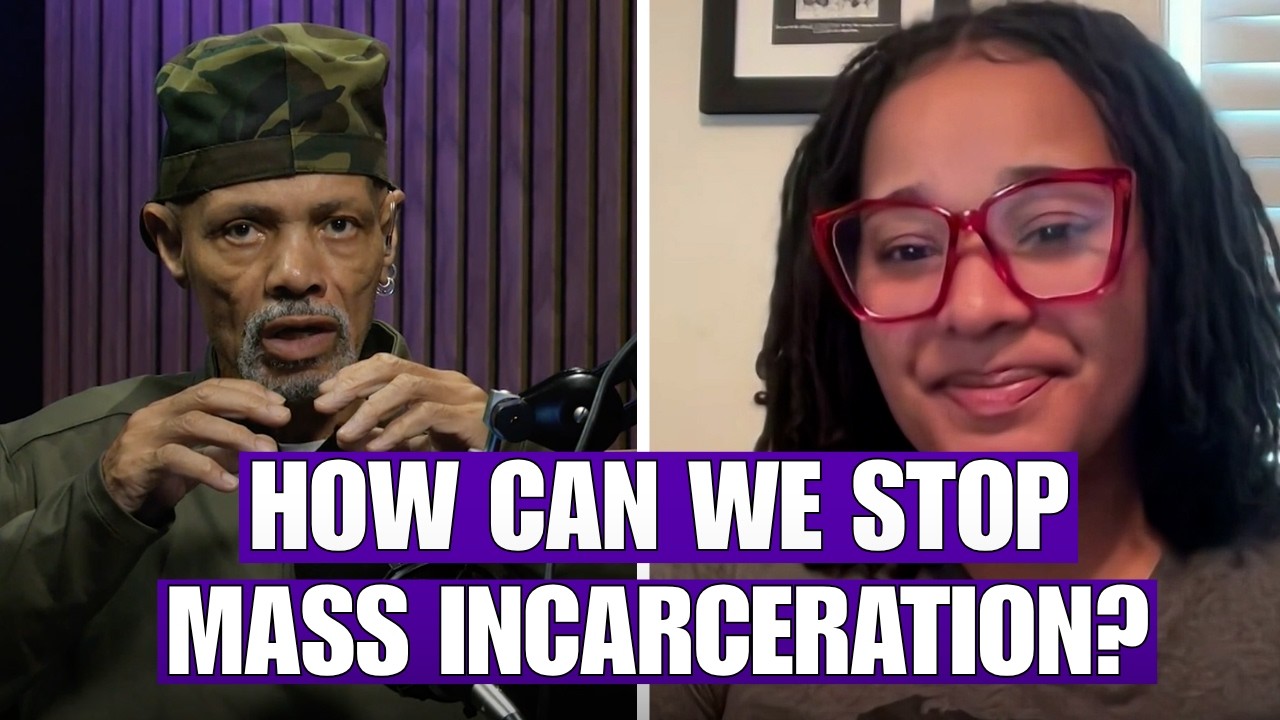
What will a DSA-led state look like — will it back defund and community control of police, or bow to the powers that block affordability? Lawrence Grandpre, political commentator for Leaders of a Beautiful Struggle, explores this question in his recent Baltimore Times article, “The Dangers of ‘Law and Order’ Leftism: Toward a Black Power Public Safety,” asking whether DSA will embrace the outmoded Law and Order politics that fueled America’s prison boom. As officials like AOC and Mamdani backtrack on defunding police — one of the biggest carceral drains on housing, healthcare, and education funding — Grandpre sits down with former political prisoner and Rattling the Bars host Mansa Musa to unpack these contradictions ahead of the midterms, where Democrats hope to retake the House and Senate. Tune in for an unflinching look at the Left’s relationship to the state and to law and order.

Related Links:

Credits:

  • Production/Post-production: Cameron Granadino
Transcript

The following is a rushed transcript and may contain errors. It will be updated.

Mansa Musa:

Welcome to Rattling the Bars. I’m your host Mansa Musa. Today I’m joined by Lance Grandpre, political commentator with Leaders of a Beautiful Struggle, to discuss his recent article for Baltimore Times, “The Dangers of ‘Law and Order’ Leftism—Toward a Black Power Public Safety.” Thank you for joining me, Lance.

Lawrence Grandpre:

Thank you for having me.

Mansa Musa:

Alright, so let’s start like this here. At one point we had in 2020 where you had a push for the abolishment of prisons and to dismantle the police system as we see it during that period. But immediately you had a pushback and the pushback came in the form of saying that this was woke. Now we look at the United States and mass incarceration, armed policing, and you juxtapose that with the lack of funds for healthcare, lack of funds for education and lack of funds for housing and the fact that the criminal injustice system is in itself painful when it comes to poor and oppressed people, mainly people of color. Let’s start with your article.

Lawrence Grandpre:

So this article stems out of a protest I went to because sometimes people say if you talk about police reform or defunding police, you don’t care about victims. And this protest was the opposite. This was a Black elder, a former member of the Baltimore Black Panther Party who was assaulted by many teenagers and it was caught on film. So of course Fox News, our local Fox News is showing this over and over again saying, “Lock them up, what’s wrong with these kids?” And these were community advocates, many of them women, Queen Mother Victorious who lost her son to gun violence, Mama Gwen, who was formerly incarcerated, coming together with community and saying these young people, what they did was a problem, not because it just violated the law, because it violated our community respect for elders. And we don’t want to just throw the cops at these kids and throw away the book, but if people know who these young people are, turn them into us, the Black community, so we can make sure that they are held accountable but not railroaded by the criminal legal system.

And I though the sophistication and intelligence of that response and even Baba Ade, the elder who was hurt, saying the Black Panther’s argument was that capitalism and racism breed criminality in the community.

Mansa Musa:

Right.

Lawrence Grandpre:

And it’s not for us as the vanguard to educate ourselves and use political consciousness to eliminate criminality, not just from a material standpoint, but from a psycho-spiritual standpoint. And it was really interesting because this was a few days after AOC went on the news and said, “Nobody’s talking about defund anymore. Woke 1.0 was crazy.” So it was really interesting that the people who were supposed to be talking about social justice, Alexandra Ocasio-Cortez, some of these other so-called leftists,

Mansa Musa:

Right.

Lawrence Grandpre:

Even they were saying, “Defund—that was just people on Twitter trying to look woke. Nobody really talks about defund in real life.” And these Black elders, Black people in West Baltimore, were saying things like, “We have a $700 million police budget in Baltimore. How are we going to have that and schools and investments in the Black youth?” So these Black people who the left is telling us are conservative are actually more progressive than the DSA.

And I thought that was very telling that, in this moment, going into the midterms, there are these leftist democratic socialists who are trying to get elected, and because they want to get elected, they want to push away from radical rhetoric because they think it’s turning off voters. And I think that that goes to show you that when it comes to Black people, we need to have our own vision of public safety, because what’s being offered by even the left, the Democratic Socialists, is willing to push our issues aside, because they have a misunderstanding of our issues. They think it’s just a bunch of radicals on Twitter as opposed to Black folks been talking about Defund since the ’50s. And our visions of Defund are very different than what you saw on Twitter in 2020, but these folks wouldn’t know that.

Mansa Musa:

So how do you see the DSA in terms of how they look at the budget, just police budget and the fact that it’s undercutting the services of the very people they supposed to be representing?

Lawrence Grandpre:

It’s interesting because I think if you are a democratic socialist, it’s obvious you believe police are a tool to protect capitalism. So a world where if you’re a socialist, the idea that you wouldn’t talk about [how] protecting capitalism getting more money is a problem for you—it’s weird.

Mansa Musa:

Right.

Lawrence Grandpre:

But these folks are a particular brand of socialist. Many of them were very much pro-Bernie Sanders. So when Hillary Clinton and Kamala Harris used conversations about identity to attack Bernie, now a lot of these folks see all conversations about race as just distraction from class issues.

So, even when Black people talk about police, they say, “Well, it’s not serious. No one really talks about Defund. So you’re really just trying to attack the socialist candidates.” And it’s like, no, Black folks have been the community control of the police platform.

It wasn’t just invented by the Black Panther Party. It was talked about by Black activists in the ’40s and ’50s, in part because the understanding that if the police were seen as a solution to all social problems… it’s not just police, it’s police-ism: the idea that policing is the only solution to the problems facing all poor people, but especially Black poor people, that’s going to push money away from all the other programs we need in the Black community. So Black folks have been saying that, really, since the Northern migration.

So when we talk about community control of the police, part of that is having community control boards control the police themselves, hold them accountable. And we’ve worked on that as LBS, but it’s also community control of the institutions that produce public safety beyond police. So, housing, addiction, education. I mean, I love to point out that Bobby Seal, he was in AmeriCorps before he was a Panther. So he would be shooting dice with the Black kids trying to school them on AmeriCorps’ time. And part of his frustration is these nonprofits don’t let us actually do the training we need to do with these youth, but we got to get the money from the nonprofit because that’s the only job we got. So even the Black Panthers program was a push for Black control of resources to socialize our youth, specifically around things like violence prevention. And again, the idea that all of that is just under this large framework of “woke”… And again, the right wing hates woke, we know that, but even some of the Bernie folks—they really hate “woke,” because they associate it with the attacks on Bernie and they see all conversations about police as woke.

Mansa Musa:

Let’s unpack some more about DSA because we see upheaval of DSA type activity and we see in terms of midterm elections, some of the candidates that ran on DSA platform have made it through the primary. And so at the same token, what is their appeal? Because they vacillating when it come to social issues.

Lawrence Grandpre:

The federal government, in theory, can print money. So there’s this belief that if we just spent more money, things will get better, and the Democrats have been afraid to spend money. I think that in the DSA, it’s like, “Let’s really focus on, in theory, cut the military budget, invest in community through things like Medicare for Al”l. Now, if you don’t have the integrity to stand up for “Defund the Police,” why do you think we would believe that you have the integrity to stand up to “Cut the Military Budget? If you don’t see the connections between the violence of policing and the violence of militarism, why would we expect you to be able to push the military budget to community?” 

Lawrence Grandpre:

These are intelligent, college-educated voters who feel like the government needs to spend more money, in part, because it’s a job program for people like them. So they have an interest in fighting the austerity of the Democratic Party, in part, because they want to see conditions improve for the community, but also in part because it’s a business model for the voters of DSA. And that’s a big concern for us, because even with Medicare for All, there’s no world in which healthcare should be a for-profit enterprise. But it’s not just that doctors are racist. When you look at things like Black women get more cesarean sections than other women, So, literally, they’re getting cut open in these dangerous surgeries. Black women, if you have a child in the hospital, you are going to get a drug test. And even if you pop for that drug test from the epidural, the drugs they give you for the pain, they might take your kid away. So engagements with the medical system are not just imperfect for Black people; they are places of surveillance and violence.

So we, as Black people, need systems like a birthing center, like nutrition, upstream investments that are different than what the DSA crowd cares about. So the idea that we should just accept not talking about Defund to get Medicare for All ignores the fact that Black people—we don’t just need healthcare to not give us a bill. We need to change the vision of healthcare so we control it. And the DSA is not interested in that. They don’t really think that way. And they honestly believe the only way anything will get passed if it goes to everybody. Universal programs prevent racial backlash. Because we know any spending in America is seen as giving money to welfare queens. So we just got to give the same thing to everybody and that’ll deal with racial backlash.

And what we know is anything you do that gives out any tax money will deal with racial backlash, but also do things that don’t give Black people the power we need to build for ourselves. It will just put us in systems that really are built by other people that, even if it’s good for them, can often be violent for us.

Lawrence Grandpre:

But I think that, again, when you have a class-based vision of the world, that has become in some ways hostile to thinking about race because you had negative experiences with people weaponizing race against people like Bernie Sanders. You’re not thinking about what a political agenda would look like when you actually invest in… because we should do both. We should have a class-based redistribution of wealth, but that restribution should also be invested in community institutions that reflect the culture and history of specific communities, not just Medicare for All, but clinics that use the history and culture of the community to provide that healthcare. Nutrition that reflects the culture and the way communities like to be fed so that they can have upstream nutrition so they don’t need to go to the doctor in the first place.

These things should go hand in hand. And I think it’s concerning that it feels like, because DSA is becoming electorally viable in some spaces, that [they] only talk about affordability issues, only talk about Medicare for all, only talk about ending the war in Iran, without really thinking intelligently about a platform that would meet people’s needs for community control of public safety, broadly defined. So not just policing, but again, youth programming, schooling, getting nutrition. Our kids are literally hungry.

Mansa Musa:

Yeah.

Lawrence Grandpre:

They’re fed junk food, but they’re undernourished. So we actually do have serious nutritional needs as we have obesity in the inner city. So what does it look like to build a food sovereignty ecosystem, whether it’s Black Yield, Black Church Food Security Network that can actually feed ourselves as opposed to just the DSA, it’s like, well just make sure they get food stamps. And food stamps are cool, but food stamps are not the vision of liberation for us.

Mansa Musa:

But talk about, because when we look at DSA, and it’s misnomer even to use the name socialist because when you look at. We got examples in Cuba and when they first took over, the literacy rate in the countryside was 90%. 90% of the people could not read or write. They organized, it’s a book out called Vincent Ramos. We were trying, that’s the name of it. And they organized all the college kids, all the intelligence and made them go in the countryside and stay to educate the people, to get them to read and write.

They didn’t say, “Oh, we’re going to create a system where they can come out the country, live in a project style housing dwelling and get them public schools that’s not going to teach them nothing.” They actually educated the people and a lot of that education led to what we see today in Cuba, got best medical, despite all the things going on. So when we talk about DSA, and I think this is a danger, and maybe you want to weigh in on it. I think it’s a danger that confronts that notion that this is a socialist party and because the right wing is going to put them right in the category like communists and they can resurrect that notion.

Lawrence Grandpre:

Socialism, to me, the key word is social. You either have the market making decisions about planning for the world or you have people doing it socially. It’s clearly better to do it socially, but there are divisions within that larger social body. And my concern is that even amongst some of the people in the DSA crowd, the leftists, some of the visions of what they would socially plan may like and lean on policing partially because they are afraid of being looked at as communist. So they might, for example, even in very, very progressive Bernie Crat, DSA San Francisco, there’s this push to, well, we got people homeless, they have mental illness. So they as individuals may not be rational, so we are going to use policing to bring them into drug treatment.

Mansa Musa:

Right.

Lawrence Grandpre:

And again, this is like even Bernie people sometimes say this. So there are elements of even the less progressive mindset that are like, we as a society can’t let you be out here damn bad. We have to help you lift yourself up. And if that means we have to involuntarily commit you to treatment, and if we have to use police to do that, then we’ll do that. While one thing that we talk about here in Baltimore is, and Baltimore’s been a heroin town since the 60s and 70s. And it’s been really hard for us, but we’ve also had systems of informal community care that have been designed to address some of the worst exigencies of drug abuse. Nika Namdi from a program called Fight Light said that grandma’s basement was the first halfway house. We had systems where elders, you would be able to stay with family and you would be able to get certain stabilizing influences through your social network so you wouldn’t be out on the streets.

So in that worldview, we would look at something like making sure these abandoned homes get rehabbed and given to Black people in community. That’s partially an anti-homelessness effort.

That’s an anti-addiction effort. That’s a crime fighting effort. So it’s not just social housing, it’s not just public housing. It’s also making sure that Black people in communities can pass down their family homes

And they have a way to make sure that they’re affordable so they can stay housed because that produces capacities for people who do suffer from addiction to not be on the streets committing crime. And again, the DSA vision is so limited to what they see and what they know, they sometimes end up using police where it’s like, if we just had networks of people in community that could care for each other, we wouldn’t need police for that. But I also do think folks are afraid. I know academics are very afraid and some folks are afraid of looking too radical, looking like the rhetoric of 2020 was burn down the police station.

Mansa Musa:

And

Lawrence Grandpre:

I think that’s also part of what they want to distance from when they talk about we not doing defund no

Mansa Musa:

More. Part

Lawrence Grandpre:

Of it is the direct antagonism with the state, the cost of that has increased for them. What we know is that the cost is high for us, whether we’re openly antagonistic or not, we are politically antagonistic by making demands upon the state to recognize our humanity. So we’ve always had to deal with that potential backlash. And I think now for some folks they’re saying, oh, I can’t use that. We’re not trying to do that radical rhetoric no more

Mansa Musa:

Because

Lawrence Grandpre:

People are losing jobs, people are potentially getting deported. So it’s like the ’70s, marginally away from the rhetoric of the ’60s and leaving the Black radicals out to dry after the draft ended. I think the white radicals moved away from radicalism and that we’re seeing a similar

Mansa Musa:

Dynamic. Okay, but we know that this is the 60th year of the anniversary of the Black Panther Party. And I was talking to somebody about just like we’re not anti-police. The party wasn’t anti-police. One of the things they did, one initiative they took was, and this is a revolutionary suicide by Huey Newton, where they had this particular intersection that didn’t have no stoplight and it was in the Black community and kids was getting hit. So somebody came and said, “Man, they not doing nothing about this. We’ve been complaining.” So they went down there and became traffic guards, the members of the Black Panther Party. They held up the traffic, let the kids walk by, you know what I’m saying? And this is what they did. And they had guns with them because they had one part of their program was policing the police. The police in turn came and told them they stop.

Now you guys stop this. They said, “Well, we’ll stop this when y’all put a traffic light up there or y’all stop directing traffic. We don’t care which one you’re going to do, but you do or we going to continue to do.” They wind up putting the traffic light up there. So in terms of that particular example, what are the core aspects of the Black Power Public Safety?

Lawrence Grandpre:

I like your example because the party was a little bit different in different cities, but I think one thing that stands out to me is that they had questions about police, but the Black Panthers in some ways were law and order. It was law and order within the party. You cannot show up high, very much about discipline, law and order in the community. If you’re selling drugs, if you’re a parasite in our community, we’re going to deal with you. And I think that’s a perception, because this is something that happened in 2020, that there were white leftists being like, “Let’s just run wild and be anarchist and burn stuff down.” It’s always been Black people that’s been like, “We’re not doing that.” So the idea that somehow that is tied to Black issues, no, we’ve always been extremely serious about our liberation.

So when the Black Panther Party talks about doing a plebiscite in order to get Black sovereignty, I think that’s an example of why we need to think about community control of the police in terms of we have in Maryland, substantial police reform is nowhere near enough, but we need to have the ability for the community to have investigative power to be able to investigate police. We need to have community resources to be able to flow to community institutions so the community decides who’s doing public safety in that community. So when we talk about who’s funded to do violence prevention work, it shouldn’t just be the people who are tied into the police or the people that are tied into the nonprofit world. We got tons of people in community that have been doing work that have not

Mansa Musa:

Been funded.

Lawrence Grandpre:

And the fact that they are getting a little bit of money now, I think is part of why we’re seeing these unprecedented declines in violent crime. So Black power public safety isn’t just people getting grants. It is the community having the power to determine what the grant making criteria are. It’s the community being able to tax institutions in their community that they see as producing crime. And by that I mean Johns Hopkins. That’s

Mansa Musa:

Right.

Lawrence Grandpre:

Because Johns Hopkins gentrified the whole area of the

Mansa Musa:

City. The big colonial king in Baltimore.

Lawrence Grandpre:

And when you gentrify a whole part of the city, you’re moving people to different hoods and that creates a lot of possibility for conflict. My father was a cop for 20 years, so he talked about East Baltimore used to be called the country club because it was so quiet up there. But when Hopkins gentrified all those people out of the Middle East Baltimore, a lot of them moved to Northeast, which creates a ton of conflict, pretty much increased the murder rate in that part of the city. Hopkins should have to pay for that. They got a $13 billion endowment. So Black Power Public Safety is about us not tying in our future to gentrification, which is what the police really are a tool for. They’re a tool to produce gentrification. That’s good for that business model because gentrification needs policing.

Mansa Musa:

We

Lawrence Grandpre:

Should be able to put tax on the gentrifier so we can secure our communities so they can’t gentrify them, own our own property, stabilize our communities, but then invest in the capacity to take care of our youth, to do violence prevention, to take care of our health. All the things they stripped from us, they should have to pay us to be able to do for ourselves. In that world, I think we would have Black Power

Mansa Musa:

Public Safety. Right. And that’s basically what the Black Panther Party was doing because they had the survival program. Exactly. And the concept was Survival Pending Revolution. The Survival Program wasn’t like us being in a basement, taking guns apart in the dark with blindfolds, then putting them back together, making bombs, reading Ann Archer’s cookbook. No, survival program was the free breakfast program, free medical, sickle cell anemia, taking prison families to prison to visit them, alternative education. This was a survival program, survival pending revolution. And what the goal was, going back to your point, the goal was to stabilize the community for self to be able to be self-determined. So if I’m self-determined, I got self-determination. A great example for Baltimore would be the Clean Block because when they had Clean. And I remember I was locked up and I used to read the Afro. Afro had a big thing about Clean.

The sense of community that came out of that, the Clean Block, when they was able to say, “We recognizing this neighborhood for Clean Block.” But more importantly, that neighborhood not only had a clean block, but that neighborhood had policing. That neighborhood had a sense of identity that if I seen you, I know you Meryl’s son or Meryl’s daughter. I know you Tommy’s son or Tommy’s daughter. You know me and you know that if I see you doing something that you ain’t supposed to be doing, then I’m going to tell your parents the minute you see me, you’re going to alter your behavior because that became the sense of community. But like you say, once Hopkins got in the equation, and not only Hopkins, I remember when Shafer started when he did the Inner Harbor and they started pushing people out of certain areas in order to get to Inner Harbor and they pushed people into.

Either they pushed them out into the county or they pushed them into the interior of Baltimore in neighborhoods they wasn’t familiar with or neighborhoods they was familiar with and had issues with and would automatically create a conflict. But talk about how do you see, because what you just outlined is in fact a model that is one, inexpensive because it becomes self-contained. So the monies that you’re putting towards astronomical police budget can go towards stabilizing some of the projects that deal with housing, deal with substance, the people that’s actually doing the work.Like you say, you got people that actually going around taking people and putting them in a place and letting them drown. So we talk about how you see DSA and the gains that they’re getting and the models they’re using. How do they fit into this narrative? Are they rewriting the script and say they’re going to invest in this type of thinking or their model is, like you said earlier, we creating a cadre of intelligent people that can grant write and that’s going to become our funding source and not only our funding source, but create an infrastructure for doing case studies and then marketing these case studies, the new Jim Crow.

Lawrence Grandpre:

Yeah. I think it’s to be determined. We’re going to see a huge increase in DSA affiliated leftist people in Congress. Now, whether they’re going to be able to write bills, whether they’re just going to vote on stuff that comes from the Republicans, we’re going to see. I think the real test is going to be 2028 when it’s possible the Democrats will take the White House, Senate and the Congress. So it’s really going to be important for us these next two years for people that believe in the possibility of these folks doing good to push them. What is your actual proposal on how you can use the power of the federal government to enhance the ability of people On the ground locally to have more ownership and power and control over the institutions that impact their lives. Because policing is a state and local issue. Feds actually have relatively little control

Mansa Musa:

Over it,

Lawrence Grandpre:

Except given a few grants here or there. So really it is, do you have a vision for whether it’s through food sovereignty policy, whether it’s through manufacturing policy? The metric for us at least is again, local self-determination and the ability for local people on the ground to own the institutions that are doing this work. I think part of even going back to the New Deal, the frustration with these progressives is that sometimes they do these top down technocratic re-imaginings of what solutions look like that don’t involve community. Mamdani, people have called him a technocratic socialist.

Mansa Musa:

And

Lawrence Grandpre:

I think that’s not on some right wing stuff, but that’s scary from a Black power

Mansa Musa:

Perspective

Lawrence Grandpre:

Because technocracy oftentimes views Black peoples as widgets and inputs in someone else’s equation for progress and liberation. And I think part of the value of the Black Panther Party is they called themselves socialist, but in many places, in many ways they were also Pan-Africanist and Black nationalists. And they were combining them all to say that, yes, we will fight capitalism, but we will not just make the people this abstract proletariat to fit within a Eurocentric version

Mansa Musa:

Of

Lawrence Grandpre:

What a class centric revolution will look like. We are going to lead our people on our vision of what we think fighting capitalism looks like. And again, I think it’s going to be our job to force the DSA to not see that as woke, to actually recognize that that is just what black people demand. And that’s the cost of us being in political coalition is you respecting our self-determination.

Mansa Musa:

And I agree it’s to be determined because one, you gain electoral office through coalition building. That’s really where it come out of. And you’re able to get a common identity out of the coalition, common identity being what we want change, the change that we want to see. Harold Washington in Chicago, he was successful at building a coalition. And to his credit, he tried to maintain the standard, but they fought him tooth and nail at the state government. So he wasn’t able to get a lot of things done. But the fact of the matter, what we’re asking or we’re talking about is not really hypothetical because we see this in Europe and we see examples where police don’t have guns. They call in, if it’s a violent situation where a gun, they got a unit that comes in to deal with that. But outright, the police walk around with no weapons because the lack of fear towards the society.

Lawrence Grandpre:

You mentioned New Zealand, I think in that as

Mansa Musa:

Well.

Lawrence Grandpre:

But in New Zealand as well, the Aboriginal communities actually have really pushed a model for youth justice that places tribal elders and tribal institutions at the heart of restorative justice programming

Mansa Musa:

For

Lawrence Grandpre:

Youth who are engaged in acts of criminality. And so that’s been a big fight for Aboriginals in New Zealand and Australia to really demand tribal sovereignty over their youth as opposed to putting them into the juvenile justice system.

Mansa Musa:

But

Lawrence Grandpre:

Again, given the legacy of the private schools where they beat the Indian out of you and stuff like that. And again, I think it’s jarring for white people to think that we as black people are asking for something similar here in America because the joke is white people are so settled in America, they don’t even see themselves settler colonists no

Mansa Musa:

More.

Lawrence Grandpre:

And I think unfortunately that’s part of what’ happened with the DSA. It’s like the idea of black sovereignty is just jarring to them in a way that you’re an Australian, you know you took over Australia and there are people here that are really dark skinned, you’re not.

Mansa Musa:

But

Lawrence Grandpre:

I think in America, that basic concept of having to negotiate with people who have their own sovereign agendas is not something that they’re used to conceiving as anything other than a tool for the centrist to undermine the Bernie’s of the world.

Mansa Musa:

And

Lawrence Grandpre:

I just think the reality is if DSA is going to get Black support, it’s going to really have to reckon with the visions of the world that come from Black people, including our visions of public safety.

Mansa Musa:

Right. And before we close, you got any closing remarks?

Lawrence Grandpre:

I really appreciate this. Please check out our podcasts and search of Black Power and Political Commentary Corner. So those are on YouTube. Check us out at lbsbaltimore.com. We have all of our email updates about the work we’re doing in Annapolis to push criminal justice policy, reparations policy, which

Mansa Musa:

I’ve

Lawrence Grandpre:

Never seen DSA has been skeptical on, but we’re very adamant about its practical utility as a framework to invest in Black sovereignty here in Maryland. And you can find me on any social media at Neil Nubian, N-E, the number zero, Nubian, N-U-B-I-A-N. Right.

Mansa Musa:

And we ask our audience to really take deep thought on this particular subject matter. It’s not like say it loud, I’m Black and I’m proud. It’s not when Stokley Carmichael in the ’60s, they called Black Power, James Brown, Song and Song. We’re not in that state. We’re not trying to go back into that state of mind, that conditions created that state of mind. We’re talking about an analysis of having Black political power as it relates to our safety. We’re talking about because we’re the ones that’s unsafe, we’re the ones that this astronomical budget is being doled out to, to make us feel unsafe, to lock us up. Then we believe, as the brother was talking about Lawrence, that we believe that we have a right to define what is safe for us and what is not safe for us. And making that definition or defining that, we see the necessity to make an analysis and implement it.

And in this case, this is an analysis that we want to, I think the Gullah Geechee in South Carolina got a thing where they do restorative justice. And so the fact that you infringe on the community, that they might not put you out the community, but they’re going to put you in such a shameful state of mind and the fear of what you’re getting ready to lose or make you get the person to come back or people come back and lie in accordance with the social system that they set up. We ask that you continue to support the real news and rattling bars because guess what? We’re actually the real news. Thank you.

💾

“When it comes to Black people, we need to have our own vision of public safety, because what's being offered by even the left, the Democratic Socialists, is willing to push our issues aside…”
  •  

Maryland used discredited “science” to convict a woman of murdering her fetus. Reproductive rights groups are raising alarms.

(LEFT) Photo of Columbia, Maryland, resident Moira Akers taken prior to the birth of Akers' third child and prior to her 2022 conviction for second-degree murder. Photo proved by Akers' lawyer Debra Saltz. (RIGHT) Stock photo of Maryland Supreme Court in Annapolis, taken on July 17, 2021. Photo by ReDunnLev/Getty Images.

Moira Akers was prosecuted and convicted of the murder of a newborn in 2022. She claims to have given birth to a stillborn baby in her home in Columbia, Maryland, in 2018.

Prosecutors doubted Akers’ story, using her online searches for abortion services and lack of prenatal care as evidence of ill intent. But it was a “forensic method” devised in the 17th century that proved key to Akers’ conviction.

The method, known as a “float test,” was designed to determine if a baby was stillborn or born alive by placing the lungs of a deceased fetus in water. If the lungs float, then they are aerated, meaning the baby was breathing and alive prior to their death.

In 2018, former Maryland chief medical examiner Dr. David Fowler signed the autopsy report that, using the float test as proof, determined that Akers’ baby died after Akers asphyxiated it. Fowler also testified in Akers’ trial. Prosecutors used Fowler’s testimony and autopsy report as evidence to convict Akers of second-degree murder in 2022.

Similar to Fowler’s infamous 2021 testimony in the trial of former Minneapolis police officer Derek Chauvin, in which he argued that George Floyd died due to drug intoxication and inhaling fumes from a car tailpipe, Fowler’s citation of the float test in Akers’ case has elicited criticism from the medical community. 

Fowler was also the subject of a scathing audit released by the Maryland Attorney General’s office last year, which found that at least 36 cases involving deaths that occurred during police restraint were improperly ruled accidents or left unclassified during his tenure

The float test has been widely discredited as imprecise and lacking methodological rigor. 

In the course of our reporting on Akers’ case, we not only reviewed court transcripts and the testimony of physicians and medical experts; we also pressed Fowler’s former office for comment about whether or not the float test was still used in fetal death investigations. Just prior to publication, Maryland Department of Health spokesman David McCallister disavowed the test.

“The lung float test is not part of OCME’s current routine practice, which reflects evolving scientific evidence, National Association of Medical Examiner (NAME) guidance, and the independent medical judgment of our forensic pathologists,” McCallister wrote in an email.

“When performed historically, the test was only one component of the overall forensic assessment and was interpreted together with the investigative and autopsy findings. How an individual autopsy finding is characterized or used in criminal prosecution is separate from OCME’s medical determination of cause and manner of death.”

McCallister’s disavowal of the float test marks a stunning departure from past practices for determining causes of death in Maryland. Whether the change will affect Akers’ case remains to be seen.

But what hasn’t changed is the fact that Akers was convicted, has served three years in prison, and is facing another prosecution—all while advocates and her lawyers are still fighting against a bureaucracy wedded to Fowler’s past practices. 

Akers’ fate remains in legal limbo, but her story reveals how flawed science can have real-life consequences, and how an indifferent bureaucracy can defend the mistakes of the past despite public outcry and scientific pushback in the present.

A Stillbirth or Murder?

Akers’ ordeal began in November of 2018.

According to a statement she gave to police, Akers was watching TV with her daughter when she noticed she was bleeding. The Howard County resident retreated to her upstairs bedroom. There, she gave birth to what she described as a baby that was not breathing, or stillborn.

The mother of two young children told police her husband did not want another child. Finances were tight, and the couple was already struggling to care for both a toddler and an 8-year-old.

“I almost didn’t want to admit to myself that it was [a pregnancy],” she told police. 

She hid the possible pregnancy from her family and did not seek prenatal care. “I just didn’t want my family [to know],” Akers said, “a stigma of them knowing that we had even contemplated the abortion part, but knowing that they wouldn’t be happy if we gave up the baby officially for adoption… that’s why I looked into the safe haven stuff.”

The birth itself was a moment of confusion and panic for Akers. When she started bleeding profusely, she thought it was possible the unexpected pregnancy could be the cause. After giving birth in her bathroom, she placed the baby’s remains in a plastic bag and put the bag in a closet.

Her husband, who had found her bleeding, called an ambulance. According to her lawyer, Akers refrained from discussing the ordeal in front of her two children when EMTs arrived at the house. But when she arrived at the hospital, she told doctors about the stillbirth. 

When Akers awoke from surgery, heavily sedated with painkillers and anesthesia, she found Howard County police detectives probing her with questions, which a recording reveals she struggled to answer through the haze of drugs. 

Even though the doctors told detectives not to question Akers after her surgery, they did anyway. And prosecutors were able to include statements Akers made during that interview while still heavily sedated and under the influence of multiple drugs, including fentanyl. 

“The hospital physicians attending told the police who had arrived at the scene not to speak to her for at least two hours after surgery because she was put under general anesthesia,” Akers’ lawyer, Debra Saltz, told us in an interview.

“So the police, rather than wait two hours, interviewed her. I think it was approximately an hour and 20 minutes later, they began an interview.”

Saltz challenged the admissibility of the interview in court. But presiding Judge McCrone ruled that Akers “sounded okay” after reviewing a recording of the interview. 

During Saltz’s cross-examination of lead medical examiner Dr. Nikki Mourtzinos, Mourtzinos made a critical admission: float tests are not performed in a uniform fashion, and the test does not call for a consistent, controlled (i.e. scientific) methodology. “Multiple people do things differently. Some people tie off the lungs, some people would clamp off the lungs and float them in water,” Mourtzinos testified. 

Saltz filed motions to toss out the float test results as evidence. But Judge McCrone ruled it admissible, too.

And more unresolved questions about the efficacy of the police and OCME investigations before Akers’ trial remain. 

Even though the official OCME autopsy report was not released until four months later, detectives claim Maryland’s Office of the Chief Medical Examiner (OCME) told them Akers’ baby’s death was likely a homicide.

But Saltz says OCME and Howard County detectives had already made up their minds about Akers before their investigation into her ordeal even began in earnest. “It was never going to be about science in this case. It was going to be about a determined outcome, which was going to be homicide, even though it should not have been,” Saltz told us.

Along with the float test results and her post-surgery interview with detectives, prosecutors focused on both Akers’ prior internet searches for abortion providers, as well as her lack of prenatal care, as evidence that she intended to kill her baby.

Again, Akers’ defense argued this evidence was inadmissible due to a state law that prevents drawing criminal inferences from a woman’s behavior during pregnancy. Again, Saltz was overruled. Judge McCrone allowed prosecutors to use Akers’ actions as evidence of later criminal intent.

The chief OCME pathologist who conducted the float test testified in Akers’ trial that the final mechanism of injury was asphyxiation and exposure. However, the autopsy did not find petechial hemorrhaging in the eyes or any trauma around the neck indicating strangulation. The medical examiner argued that the determination of asphyxiation was due to observed inflammation in the pancreas, a less common indicator of strangulation.

But there was also substantive evidence that the baby was stillborn.

The defense offered expert testimony that argued the detection of multiple infections in Akers’ placenta and umbilical cord was indicative of a stillbirth. 

“One of the more perplexing aspects regarding the opinions of Drs. Simon and Mourtzinos [the state medical examiners who conducted the autopsy] is that they describe gross and microscopic evidence of chorioamnionitis (inflammation of the placenta and its membranes), and funisitis (an inflammation of the umbilical cord), along with inflammation of the umbilical cord’s arteries and vein,” Gregory J. Davis, a forensic pathologist and professor at the University of Kentucky, wrote in a letter to the court.

The jury convicted Akers of second-degree murder. Judge McCrone sentenced her to 30 years. 

New Obstacles for Prosecutors, but the Float Test Remains

In February 2025, after she had served three years in prison, the Maryland Supreme Court granted Akers a new trial. In a 5-2 decision, Justice Brynja M. Booth wrote for the majority: 

We hold that the internet searches are irrelevant and that the trial court erred as a matter of law in admitting them. We similarly hold that Ms. Akers’ bare decision to forgo 2 prenatal care was not probative of motive or an intent to kill or harm a live child… In light of our holding on the inadmissibility of the abortion searches, we reverse the judgment of the Appellate Court and remand this case to the circuit court for a new trial. 

To win a conviction against Akers during the retrial of the case, prosecutors have to navigate a major evidentiary obstacle now that the Maryland Supreme Court has essentially barred them from using much of the “evidence” used to convict Akers in 2022.  

But the float test will still be admissible, and Saltz says prosecutors are likely to use it. Even though Fowler’s former office has publicly repudiated the test, the shadow and influence of Fowler himself still looms large. 

“Dr. Fowler had a very large impact on this case and the judge heavily credited his testimony and relied on his testimony to allow in evidence the fetal lung float test,” Saltz told us.

Saltz says the admission by Fowler’s former office that the float test is scientifically unreliable should give prosecutors pause. “I find it hard to believe that the state’s attorney’s office in Howard County would still consider using this outdated test,” she wrote in an email.

“I have always believed that they were motivated by emotion rather than science as they undertook to prosecute my client. I would hope they would dismiss the charges based on this newest information.”

For now, prosecutors are not talking. A spokesman for the Howard County State’s Attorney’s Office said they do not comment on pending cases.

“It is the policy of the Howard County State’s Attorney’s Office not to comment to the media on the facts, evidence, or litigation strategy of a pending case until the matter has concluded,” Yolanda Vazquez wrote in an email.  

Akers’ fate will be decided soon; the case is set for trial in November. Saltz says she is prepared to defend Akers, float test or not.

“My client is a very, very strong person. And she always held out hope that this would go her way… she knew that she had a stillborn baby,” Saltz said. “And there are plenty of people—including myself and the actual scientists who can read scientific evidence—who believe her.”

  •  

Democratic states cave on Paramount merger lawsuit in win for billionaire owners

The Paramount Pictures logo is displayed on a water tower in Los Angeles, California, on August 6, 2026. Photo by Michael Yanow/NurPhoto via Getty Images

This article was originally published by Truthout on Sept. 21, 2026. It is shared here under a  Creative Commons (CC BY-NC-ND 4.0) license.

A coalition of Democratic states and Paramount reached a settlement in a lawsuit against its proposed $111 billion merger with Warner Bros. Discovery on Monday, paving the way for one of the largest media mergers in history — and a massive consolidation of power over a huge swath of the entertainment and news industries under the conservative billionaire Ellison family.

The antitrust lawsuit was the last major obstacle for the deal, which has already been blessed by the Trump administration. Attorneys general from 12 states had sued to block the merger, which leading California Attorney General Rob Bonta had called “unlawful,” amid a flurry of antitrust concerns from prominent Hollywood figures and press freedom groups. The Writers Guild of America’s (WGA) lawsuit against the merger was also settled on Monday, with the union saying that its members could not afford to continue the legal battle on their own.

The merger will grant widespread power to a company that would effectively control CNN; CBS News; and, in all, roughly 30 percent of wide-release theatrical film distribution and basic cable channel licensing. It amounts to roughly 20 percent of Americans’ television watching time — all conglomerated under the leadership of Paramount Skydance CEO David Ellison. David Ellison is a major ally to Trump and son of Oracle CEO Larry Ellison, who has personally donated millions to Israel’s military; Paramount had once dubiously suggested that opposition to the merger was a result of antisemitism.

David Ellison, who thanked California Gov. Gavin Newsom (D) in his statement celebrating the deal, has said that the merger is expected to go through in two weeks. Pro-Israel David Zaslav, the president of Warner Brothers Discovery — an entity that’s a conglomerate on its own, formed as a result of several other contentious mergers — is slated to receive $660 million from the merger, which would likely make him a billionaire.

Under the settlement, the newly formed megacorporation will be obligated to comply with several provisions, including the theatrical release of 30 films a year (something Paramount already independently pledged to do last year); a requirement for separate negotiations for cable channel distribution; management of two historic production lots; and an apparent commitment to domestic filmmaking.

The deal also includes a supposed commitment to a “News Editorial Independence Board” for the management of CNN and CBS, which will comprise of former or current journalists who are hand-picked by the conglomerate’s board of directors. News analysts and advocates have already cast doubt on the idea that the board will be effective, however, as past efforts to form similar such structures have failed.

David Ellison has already demonstrated a willingness to steer the news toward the right wing in his appointment of right-wing media figure Bari Weiss as CBS’s editor-in-chief last year. Meanwhile, press freedom advocates on Monday also urged David Ellison to oppose Trump’s recent ban on CNN in the press pool, noting his silence on the issue despite his stated commitments to press freedom.

Some of the world’s most repressive regimes will have a say at the company, too. The settlement comes just days after the Federal Communications Commission approved Paramount Skydance’s plan to allow the sovereign wealth funds of Saudi Arabia, Qatar, and the United Arab Emirates to have a 49.5 percent equity stake in the newly merged company.

The deal immediately faced a deluge of criticism after it was announced on Monday, with critics saying that it will have “devastating” results for the nation’s media landscape and press freedom at a time of massive repression under the Trump administration.

“Today, billionaires have yet again bribed, censored, and bullied their way to the top,” said Alvaro Bedoya, a senior advisor for the American Economic Liberties Project. “As a result, a billionaire media conglomerate closely allied with the president will soon own one of its closest rivals, including some of the nation’s most critical news outlets.”

Over 5,000 filmmakers, documentarians, and other movie and television professionals signed a letter in April stating their opposition, including prominent directors and actors, under the umbrella of a group called the Block the Merger coalition. The coalition said that their members “vehemently oppose” the agreement on Monday.

“This is a bad deal for the future of film, entertainment, independent journalism, and a strong democracy in this country,” the group said. “We are disappointed and angry that the interests of average Americans have been trampled to benefit oligarch billionaires.”

The settlement comes despite experts saying that the states had a chance at blocking the merger, having secured a pause by a judge earlier this year.

“The Paramount/Warner Brothers merger seems facially illegal,” said Lina Khan, former Federal Trade Commission chair and leading antitrust expert, in a statement on Sunday. Khan noted that the lawsuit against it was strong, meaning it had a chance of succeeding.

However, she said, “[i]t’s troubling to hear that the states may now settle for behavioral remedies, allowing the deal to go through subject to various promises from the firms. Behavioral remedies routinely fail, and the stakes here are particularly high given that a strong democracy requires open markets for sound journalism and creative expression.”

  •  

Gaza’s disabled left behind: ‘All our dreams are gone’

In Gaza, everyone is struggling to survive. For disabled people in Gaza, that struggle is multiplied. Rabab Nawfal and Suha Maqat, both wheelchair users, were champion athletes on Palestine’s national teams before Israel’s US-backed genocidal war. Two days before it began, they were playing qualifiers to represent Palestine abroad.

In this TRNN documentary report, they describe living through famine, fleeing bombardment in wheelchairs that no longer work, and asking for help that never comes. With 81% of Gaza’s roads damaged or destroyed and the UN documenting thousands of amputations, Israel is not only making life impossible for disabled Palestinians; it is creating a new generation of them.

Editor’s Note: This documentary report was filmed in Gaza City three weeks before the ceasefire in Gaza was shakily implemented beginning on October 10, 2025. Since the “ceasefire” began, Israeli forces have killed over 1,300 Palestinians, including 301 children, according to the Gaza Ministry of Health.

Credits:

  • Producers: Belal Awad, Leo Erhardt
  • Videographers: Ruwaida Amer, Mahmoud Al Mashharawi
  • Video Editor: Leo Erhardt
Transcript

Suha Maqat, Palestinian Athlete: 

I’m in a wheelchair—how am I going to escape? 

Rabab Nawfal, Palestinian Athlete: 

There were days when we ate animal food, bird food. 

Suha Maqat, Palestinian Athlete: 

I lost my eye. What more do you want? 

Rabab Nawfal, Palestinian Athlete: 

My dreams have been shattered. 

Narrator: 

In Gaza, everyone is struggling to survive. But for people with disabilities, that struggle is multiplied. Rabab Nawfal and Suha Maqat – both wheelchair users – were champion athletes before this war. 

Rabab Nawfal, Palestinian Athlete: 

I’m one of those people who didn’t go to the south. I lived through famine twice. I lived it twice. No one asked after me. There were days when we didn’t eat anything. There were days when we ate animal food, bird food. We ate everything—animals, birds. Even those things were expensive, and then they were cut off. The day they were cut off, we stopped eating anything. 

Ramadan came during the famine. We didn’t eat anything. A long day passed, and we didn’t eat anything. We used to crave drinking water. We used to crave a piece of bread. We were hoping that the famine would never come back. But unfortunately, it did—and it’s still coming back. 

We’ve suffered a lot in life. I was abandoned. No one took responsibility for me. My mother and father used to take care of me, but they left. These days, my brother takes care of me—and he is injured. My life is ruined. No one is with me. No one cares. And the one person standing by me is injured. He can barely carry his own family. 

When we were displaced, he couldn’t help us. He wasn’t able. For people with disabilities like me, it’s been difficult to live through this war. Those who are not disabled can maybe manage their lives. They can move, walk long distances—but I can’t. 

Suha Maqat, Palestinian Athlete: 

The closest people to me abandoned me—they didn’t stand by me. They left me to fend for myself. I feel like I live in a forest with wolves and monsters. I can’t. I try to make things work,

but I can’t. I’m mentally exhausted. The circumstances of this war are incredibly difficult. Even the word displacement is difficult for the injured and disabled. 

When we left, my brother was injured and my sister was in a bad state. Even though he was injured, he was pushing my sister, as I pushed myself along. I got stuck in the sand, and they wanted to bomb the building next to us. It was the most difficult moment. I said to myself, now I’m going to be killed. It was the hardest moment of my life. 

I thought—how will I escape? How will I, in my wheelchair, escape? How am I going to get out? My brother was injured and couldn’t carry me. I thought, I’m done; there’s no life for me anymore. That’s it. I’m going to be killed. 

Rabab Nawfal, Palestinian Athlete: 

The hardest thing I’ve experienced in this war has been displacement. I woke up one day and saw the Israelis in front of us. I was all by myself. I rushed out, but I couldn’t continue. There was a lot of shelling, shooting, bombs. It was a miracle I got out alive. It happened again and again—the same scenario repeated a thousand times. 

Narrator: 

Both Suha and Rabab rely entirely on their wheelchairs to move. Without them, the most basic tasks become impossible. Israel’s blockade has meant that access to this crucial item has been cut off. 

Even with functioning wheelchairs, with 81% of roads in Gaza now damaged or destroyed, access and movement is extremely limited. 

Rabab Nawfal, Palestinian Athlete: 

There are no wheelchairs in Gaza. And without a wheelchair, I can’t move. The wheelchair takes me to my medicine, my food, my drink—I need it for everything. Right now, my chair is broken. I’ve lost all means of life. 

Suha Maqat, Palestinian Athlete: 

As you can see, my chair is broken. I push myself in it, I fall off all the time, I cut and bruise my legs. If someone kind is around, then I can move. Otherwise, I can’t. 

We requested wheelchairs, but it was no use. We asked and asked, and they said no. Rabab Nawfal, Palestinian Athlete: 

My life before the war was very beautiful. I was a champion of Palestine’s disabled national team for strength games—basketball, tennis. I used to do all kinds of sports that suited my disability. I was a success story. I was a hero. These days, I feel worthless. Nothing in life. I can’t even get from here to there. I can’t move from here to there in a wheelchair. My life is 

gone. There is no life.

These days, we only dream of having the most basic things: flour, water. The simplest things—we can’t get. Drinking water—we can’t get it. 

Suha Maqat, Palestinian Athlete: 

Suha before is different from Suha today. I used to be a champion of Palestine. Today, I’m nothing. Today, just a daughter who needs her mother—who needs her mother to help her. 

Rabab Nawfal, Palestinian Athlete: 

Two days before the war, we were playing qualifiers to represent Palestine internationally. But we didn’t manage it. On the day of the championship, the war erupted. So our dreams are gone. All our dreams are gone. My dreams have been shattered. 

I wanted to raise my son. I wanted to raise him well and teach him. Before the war, I wanted to enroll him in karate. I wanted him to become something. I couldn’t. I wanted him to be into sports like me—to become a doctor. I wanted him to grow up and help me in the future. But my dreams were shattered. I couldn’t do any of it. I can’t do anything. 

Narrator: 

According to the UN 4,800 amputations of limbs had been documented since the beginning of the war. Ten children were losing one or both legs every day. Gaza had become home to the largest group of child amputees in modern history. Not only is Israel making the lives of existing disabled people impossible, it is also creating an entirely new generation of people with disabilities. 

Suha Maqat, Palestinian Athlete: 

Gaza has become a city of ghosts. There is no life in Gaza. As you can see—look at how people are living. On sand! How can people live on sand? How can they occupy Gaza? How? 

We want peace of mind. We don’t want to lose any more loved ones. We’ve lost enough. Is it not enough that I lost my eye? What’s left? What more do you want? I lost my eye—what more do you want? What else should I lose? Nothing’s left. There’s nothing left in this world that I can lose. My family has left. I wish I could see my mother. See my father. 

Rabab Nawfal, Palestinian Athlete: 

Life has become unbearable. No matter how much I talk, I can’t describe what I am feeling or the life we are living. I used to be someone. Now I am nothing.

💾

Champion athletes Rabab Nawfal and Suha Maqat, two of Gaza's disabled people now in broken wheelchairs, on famine, displacement, and being forgotten by the world.
  •  

Trump, Silicon Valley, and the global far right target Brazil’s upcoming elections

Photo courtesy of Michael Fox.
https://www.spreaker.com/show/7063186/episodes/feed

This is a particularly important episode, coming just two weeks ahead of the 1st round of high stakes presidential elections in Brazil.

Host Michael Fox speaks with Artur Romeu. He’s a Brazilian journalist and the Latin American Director for Latin America of the international NGO Reporters Without Borders. 

They spoke ahead of Episode 6 of The Battle for Free Speech, about Brazil’s fight against disinformation. He has an important analysis, which helps to deconstruct how Trump, Silicon Valley and the far-right in the United States, and around the world is “instrumentalizing the idea of free speech for their own political purpose and abandoning key dimension of freedom of expression, which is this more social and collective dimension to receive plural, reliable, diverse, and free information from others.”

This is the third bonus episode of The Battle for Free Speech. The Battle for Free Speech Podcast is a production of The Real News Network hosted by Michael Fox and Marc Steiner. 

Guests: 

Resources: 

  • You can check out the full Battle for Free Speech podcast series here.

Many thanks to everyone who has supported this show.

Follow The Battle for Free Speech on Spotify or Apple Podcasts. Support Michael Fox’s reporting at patreon.com/mfox. Never miss an episode — sign up for The Real News newsletter at therealnews.com. 

Transcript

The following is a rushed transcript and may contain errors. It will be updated.

Michael Fox:

Hi folks. I’m your co-host, Michael Fox. This is the Battle for Free Speech, and this is the third bonus episode in this series. So this one is particularly important and timely as Brazil is heading into high stakes presidential elections this October. The race is between current leftist president Luis Ignacio Lula de Silva and Flavio Bolsonaro, the son of former far-right president Jair Bolsonaro. If you have listened to episode six of this podcast series or my podcast series Brazil on Fire or the entire season two of my podcast Under the Shadow, then you know a little bit about where things are and where they’re headed. And this is another deep dive. Today, I’m bringing you my full conversation with Arturo Romeo. He’s a Brazilian journalist and the director for Latin America of the International NGO Reporters Without Borders. I spoke with him specifically for my episode about Brazil of the battle for free speech, but there was so much more from our conversation that I couldn’t fit into that episode.

In this conversation, Artur mentions a couple of things and I want to give you some context. First, Alexandre Morais is the Brazilian Supreme Court justice who led the investigations into fake news and Bolsonaro’s hate cabinet. He also oversaw the electoral court in the 2022 elections, and he was the guy who had the showdown with billionaire Elon Musk over Twitter back in 2024. In fact, Morais blocked the social media platform in Brazil for roughly two months after Musk refused to suspend a series of Brazilian accounts who were disseminating fake news. Then Musk pulled Twitter’s legal representation from the country. Musk later acquiesced and Twitter went back online. But that escapade has been used by the far right and even President Donald Trump to claim that Morais and the Lula government have been censoring free speech in the country. And in fact, that was one of the top reasons for the 50% tariff on Brazilian goods that Trump imposed last year on the country.

And it has been at the heart of Trump’s campaign against Brazil and Lula in an effort to influence the outcome of Brazil’s presidential elections this year. Okay, I think you are up to speed. Here is my full conversation with Artur Romeo in its entirety. We spoke last year, 2025, but it is more relevant than ever today. I hope you like it. Arturo, thank you so much for being with me today. Thank you so much for your availability. I really, really appreciate. Super excited to talk with you about all these things.

Artur Romeu:

Thank you, Michael. I’m also excited to talk about those issues with you. I

Michael Fox:

Say the same question to everybody. For you, what does free speech mean?

Artur Romeu:

It seems like a simple question, especially for an NGO working with press freedom for 40 years at the institution that I work for, the NGO, that I work for Reporters Without Borders, we have been working defending press freedom, not exactly free speech, but they kind of free speech and press freedom drink on the same fountain or same roots of freedom of expression more broadly. So free speech is the ability to essentially being able to impart ideas, opinions, views on the world around us without being harassed, persecuted, prosecuted, attacked by governments or other groups, can be religious groups, but also economic interests. So the ability to be able to, as an individual or a collective, to express yourself and your ideas and contribute to the public debate without fear for reprisal essentially.

Michael Fox:

And Artur, what is your analysis of the state of free speech today in the world in Brazil and the United States and elsewhere? Where are we?

Artur Romeu:

I think that there is a lot of confusion. Maybe I never saw as much confusion around those issues as we are seeing today. Basically, one of the things that scares me is the fact that free speech is being weaponized against press freedom, for example. Another issue is that we are focusing too much on the individualistic aspect of free speech, and we have to have this understanding that at least coming from a freedom of expression perspective, there are an individual dimension, but also a social and collective dimension of freedom of expression. It’s not just our ability to being able to express ourselves and to impart information and ideas, but also to receive those information and ideas from others. So the way we are talking about, or at least the way that some political groups and specifically the far right nowadays everywhere in the world, not specifically in the US, has been instrumentalizing the idea of free speech for their own political purpose and abandoning a key aspect, a key dimension of freedom of expression, which is this more social and collected dimension to receive plural, reliable, diverse and free information from others.

And a third issue, and I think that’s behind most of this confusion as well, is the role that big tech social media platforms are having on this discussion because we have the idea that regulating this economic activity sector would be the same as censorship, but actually better regulation, good regulation, democratic supervision, improve the condition for free speech and press freedom and the integrity of information in general. So this opposition between the ability to be able to impart your ideas and the need that governments have to find a way to regulate the digital sphere arena online is they are not opposed to each other, but it’s a complex discussion because emerging technology always poses new problems. And even if we are not saying that social media platforms are necessarily new to our political landscape, AI is becoming something more popularized and we don’t know the impact that AI will have in this cacophony, this, I don’t know, some people are calling it epidemics or this crisis of reliable information.

And the key problem here is all those things together are fragmenting public conversation, public debate, and public debate is at the core of our democracies. So there is a clear link between this fragmentation of public debate due to all this and the erosion of democracies everywhere.

Michael Fox:

Arturo, you’ve just mentioned everything you said, I was like, we need to talk more about that because this is at the root of all this is why it’s so important. Before we dive into more specifics of all those things that you just mentioned, I have this idea, this hypothesis, are we in a moment where the far right folks like Trump and Bolsonaro are trying to redefine free speech in their favor instead of what you mentioned, “Oh, we need actually some regulation so that we can have a field where we’re actually getting not just random information and fake lies and everything else for everybody else, but we’re actually getting information that is what we should be receiving.” Are we in a moment right now where certain groups are trying to redefine what free speech means so that they can use it to push their agenda?

Artur Romeu:

Of course, it’s very clear. It’s been happening for a while and it’s crazy how effective it is because I think people are very concerned with society in general every day on our daily lives, every citizen is concerned with their ability to basic freedom. And I think that for a very long time, at least in other democracies, this is something that was kind of taken for granted. And even if there were some complex discussions from time to time, there was at least this frame, this common ground, this common denominator where there were international standards in terms of human rights related to free speech, very clearly defined. But sometimes there is this complex issues where you have limits to free speech, right? It’s not an absolute right as a series of human rights. They are not absolute in themselves. There is a balance between rights. And for a long time, I think it generated some stress and tension, but it was kind of relevant discussions, philosophical discussions.

People may disagree, but still we had a common ground. And what we’ve been seeing lately for the past, I don’t know, 10 years at least, is that the way those limits are defined and their political appropriation is stressing this debate. And we are seeing a relevant debate for democracies and to ensure rights and public participation in general being distorted, inverted in a sense that a specific political group is using this to play the victims and saying that they are being oppressed by those ideas. And they made a political flag out of this, and it’s being very effective in terms of how this idea has permeated society and gaining capularity. And I think our field of organizations that are defending freedom of expression is having a lot of difficulty to fight back or reframe the debate. So we are talking about those issues from a rights-based approach and not from a political biased approach.

Just to give an example, specific example, in Brazil, there was a very important milestone march protest during the Independence Day of 2021 with Bolsonaro, thousands of people in the streets supporting Bolsonaro, supporters of Bolsonaro going to flooding the streets in every major capital. And researchers were the streets trying to survey why people were, in their views, going to protest. And one question was about what was their main motivation? And the first motivation was freedom of expression. So in theory, something good. But when they asked them, “And what are you fighting against?” And the first was the Supreme Court in Brazil, which is, I won’t go into the political context in Brazil, but a key issue here in terms of how the constitutional court and Supreme Court has been limiting transgressions and abuses of the executive branch. And the second was the press. So they were fighting against the press.

So they were defending press freedom by attacking the press. And so I think it’s a kind of a paradox where you see a very individualistic perspective. People want to be able to say whatever they want and less and less are accepting that the fact that we are living in a society, there are symmetries of powers, this speech has to be balanced with other rights. So this imbalance and the way it has been appropriated by and kind of really weaponized by the far right is having a major effect in creating this imbalance and making people forget why it’s important to balance a free speech, which is kind of incoherent, at least when you see what happened with Charlie Kirk and people were expressing their views on the fact that criticizing him some very harsh level and the same group that is defending that people should be able to speak wherever they want are doing their own witch hunt.

So you see how politically biased and how this weaponization appropriation of the idea of free speech or freedom of expression is a power struggle more than a philosophical and conceptual one.

Michael Fox:

Do you think that part of how we got to this point goes back to what you were mentioning before, the splintering of society. Now with social media, I get all of my news from here, you get all of your news from there, and so we’re allowed to attack the other because they’re the other rather than having this open debate. Is that part of what led us to this moment?

Artur Romeu:

Yeah. Social media had a major impact in the information ecosystem as a whole for better or for worse, kind of changed everything, how people are receiving, how we are less dependent of a few broadcasters. And now we feel that we are in this environment where we can speak freely. But actually what happened was the privatization of a public space, and you have this impression that you are in Agora, this public arena where there is this idealized perspective of the free flow of information, the free market of ideas, the better ideas will win. And actually this is happening in a specific space controlled by specific groups, interest groups, a very profit oriented perspective. No transparency at all on how those information are being moderated and gaining more or less reach. So yeah, definitely. I think the major shifts that those technologies had on our information space are partly not necessarily too blamed by their own, because I think also when we talk about censorship, it’s easier for us to think of a more classic censorship approach in the same way that when we think about a dictatorship or a coup d’etat, we have references from our past and we kind of compare what is happening now and our collective memory of what those words mean.

And freedom of expression was kind of invented to protect citizen rights, individual citizen rights to oppose all powerful state in a very different political landscape from centuries ago. And now censorship is not only having a propaganda ministry and having censors within newsrooms and journalists being detained and killed because of what they’re saying. Of course, it still happens a lot in several parts of the words, but censorship or at least freedom of expression and free speech is also eroded when not only the state. Because the idea behind this is that the state should restrain itself from any interference in the free flow of information. So any kind of interference equals bad, equals censorship. People should be able to speak freely without government or state interference, but that’s not enough. You also need positive obligation. And positive obligation means that the governments and states have to develop, establish public policies that will help the information space, the information ecosystem to balance assymetries.

For example, pluralism, diversity, reliability of information are key aspects of this, of a healthier information space. So for this to work, you need governments to create those policies, to establish these laws, policies, how antitrust policies, for example, to fight excessive media ownership concentration in the hands of few groups to help balance market asymmetries and to ensure that the rights of their citizens is assured also in terms of access to pluralistic and reliable information. With the social media and big text, what they are saying is that any regulation is bad, they are self-regulating by themselves, and they are at the end protecting their commercial interests and creating those regulatory backups where they can operate without accountability or any kind of accountability. And if we don’t do anything about it, we will keep seeing a disintegration of this information space.

Michael Fox:

Following from that point, can you talk a little bit about what we saw over the last year? For instance, this whole battle between Brazil, Aleshande Morais, Twitter, X, Musk, because I feel like that’s a perfect example of exactly what you’re talking about. And also these two visions where Brazil has this vision of saying, no, we’re going to regulate more because you can’t have just a get out of jail free card completely. And whereas the United States is much more laissez-fraire backed by Donald Trump and particularly now, but this was even before he came to office.

Artur Romeu:

First of all, you have different traditions, different countries, you have different traditions in terms of how you interpret law. Brazil’s approach to freedom of expression is closer to the European approach where there is a focus on this balance between rights than the US one where there is a broader, I don’t know, more elasticity when you are talking about freedom of expression. You have to have in mind that our legal tradition is closer to the European one in terms of philosophical, conceptual jurisprudence expiration. Within this context, have a very specific example. When former President Bolsonaro started saying that people should not trust on electoral results because digital ballot box are not reliable when he did not and still has not any kind of proof of this. And much on the contrary, by the way, the electoral system in Brazil is widely recognized and as a very strong electoral system.

When he started doing that, for example, calling a meeting with ambassadors from a bunch of different countries to give a press conference saying that before the election, one year before the elections, that people should not trust electoral results if we kept the system as it was. It’s very, very, very serious because he has a lot of supporters and echo chambers on social media, and this kind of information erodes trusts of society, on their political institutions and their electoral institutions. So basically you cannot argue that that’s within his absolute right of print of expression because it has very serious impact for democracy and it’s not because you are the president that you can say whatever you want without any kind of accountability. But from there, what happened is that this idea was widely spread by his supporters and political groups, and the social media had a huge impact on this.

So this is clearly organized, this information, casebook. It’s pretty straightforward. And this information in the sense that it has a set of cogs in the machines, and it’s not just one person saying something false, it’s how this information is being spread and the structure of this information, the different levels, actors, stakeholders involved in this, financed with public money, public funds, and social media companies within their codes of conduct, you cannot just let this level of disinformation spread, including the reach they’re having without, again, any accountabilities, they could have acted to limit the reach, not necessarily censoring the presidential Twitter account or something, but at least putting contextual information, whatever those links, I don’t know. But there are several possible strategies for those social media to limit those kinds of harmful disinformation. But since we did not have a regulatory framework for this, the Supreme Court took the responsibility to act and to investigate this fake news industry or disinformation industry, how it was being structured and its impact.

And by doing that, said explicitly that, I don’t know, judges could not be threatened, basic stuff. And starting, for example, Alishanj Morais, which is at the epicenter of all this, even if he’s, and I think this is a parenthesis here, Morais was very important within all this, but he himself, I mean as an individual judge, but we have to take into account always that his decision were being systematically validated by the other judges of the Supreme Court. So even if he was the one being more visible on all this, and even though that there were tensions between and discussions between the judges, the vast majority of all those decisions went through the plenary, all the judges. So we talk a lot about him, but it’s more like the Supreme Court itself. I think he’s the image of these fights in a way, but he wasn’t alone doing that.

It’s not all powerful judge that is doing that as a rogue mode and acting on his own. We had strong institutions and it worked in the sense that we had the highest body in the judiciary power acting on this and investigating those issues, how they were spreading and taking harsh measures to prevent the impact of what everything was happening be even higher. For example, closing, requesting for the suppression of individual accounts on social media, and that’s something that led to the blockage of acts here in Brazil because what happened is that Elon Musk decided that he would not accept sovereign decision from the Brazilian highest court. He just moved his policy team away from Brazil. There was no legal representation as a way clearly to escape Brazilian jurisdiction in a clearly politically motivated move. And what the court said is that you cannot do that if you are operating You have to operate within our laws.

So if you don’t have a legal representation here in Brazil, and if you do not accept court orders related to several specific measures to mitigate the impact of this information of what was happening, you could not operate. And he was not blaffing. I think for, I don’t know, 50 days, it took a while. And there was a lot of support because you could imagine that this kind of decision, it’s very unpopular. You have tons, millions of social media users, including a lot of journalists using those tools for their daily work. But the way it was done showed that there was at least an understanding from Brazilian society that it was a fair fight, that it was something legitimate. And you can go even backwards with the pandemic. I won’t go all the way there, but the way that Bolsonaro governed during the pandemic was a big disasters for several reasons, but also in terms of access to reliable information on health issues and the way that false information was spreading for, again, politically biased moves.

And I think he had a bet in the sense that he thought that by going this way, he would show a different path than other global leaders, but it was a big disaster, no surprise. And there was a lot of discussion around this time about disinformation as well. So it’s a discussion that has been going on in Brazil on how public and democratic institutions have to respond to widespread disinformation strategy, especially those coming from the highest ranking officials. It’s gained a lot of track and legitimacy. And I would dare even to say that we have now more than other countries an awareness about those issues where, for example, there was a, I don’t know if it’s very recent survey, I have to double check the numbers, but what I know for sure is that most of Brazilian society, a survey showed is in favor of regulating social media.

So you have this support, even of course, if it’s not, if you have clearly political groups which are very strong and a lot of debate on how you do it. I think the major question is how you do it because it’s not that the fact that you have to act, I think that’s pretty clear here and from every perspective. What is more difficult is how you do it to avoid a very obvious trap where by doing this, you are creating a censorship mechanism and more control over those tools, those technologies. So this should be actually the discussion, how you do it and not if you have to do it or not, why it’s important. I think we are well over the time where those discussions should have passed and now, I don’t know. I really don’t know. I feel that we are living parallel universes sometimes.

When you see, for example, Trump’s speech on the UN and Lula’s speech in the UN, we feel that we are living in parallel universes. So different periods of time. I think it’s clear for, there is a consensus among digital rights activists, organizations, even a part of mainstream progressive groups, NGOs working with freedom of expression that you have to create mechanisms to improve democratic supervisions of how those emerging technologies, especially social media, are creating those rifts in our democratic systems.

Michael Fox:

Artu, thank you so much. I just have two more really quick questions. And this is so important, this last point that you touched on, because particularly in the United States, even amongst folks on the left, because historically, obviously censorship has been used against usually marginalized communities, minority communities. And so the discourse is always, well, once you start to say, well, you can’t say this and these people can’t say that, well then that’s going to be used against always, eventually it’s going to be used against and particularly against minority communities and marginalized communities. The people with the least amount of voice are the ones that are going to have their voice taken away completely. And yet this question no one meant, I feel like this huge elephant in the room is always this question of fake news. I can believe what I want to believe, you can believe what you want to believe.

More or less we can talk, but you still can’t be spreading just complete disinformation and lies and yet that’s what we’re seeing. And unless you actually take that on and say, okay, well this is here and how do we try and roll this back? But I feel like so many people or organizations or individuals, it’s just kind of give it, well, no, we don’t want to do that because then that’s stopping people. But no, there are lies. There are people trying to manipulate this. And so it’s a huge, it’s a complicated debate to ask that question of even how do we do this? But I think that is the question of saying, no, we absolutely have to. We can’t even be discussing if we are going to or not. We need to be talking about how we do it in the most democratic way possible or else we’re just going to see more and more of our rights willed away and more and more of our ability to communicate as a people whittled away.

So it’s crazy.

Artur Romeu:

Yeah. Talking about more on journalism and how specifically on journalism, the way things are told nowadays, I mean in terms of how all this has been appropriated by this fear of censorship or by saying that any kind of regulation is censorship is creating this environment of a crisis of trust and polluting democratic public debate, but also it’s creating something that science and journalism are put in the same level as any other opinion. So this is my opinion. So I can say it because it’s my opinion. And if you have 30 pages special dossier done by one of the journalists working that biggest newsroom in the country and you take this and you say, “Well, they can say wherever they want, that’s my opinion and I’m against this.” Same thing with, I don’t know, climate denialism just to keep one specific issue related to science. So when you put everything, conspiracy theories, opinions, ideas at the same level of other kinds of expressions, they should not be able to say to disagree, of course, or to question, this is healthy for democratic debate, but you cannot dismiss investigative journalistic piece on a very key issue and that had multiple sources done in journalistic processes.

You have a process to doing journalism. It’s not ChatGPT, it’s those investigations in the same way that science has its processes of verification, experimentation, peer review, et cetera. Journalism has its own. And if this is not recognized as a positive incentive, a society to receive this information and to criticize or to discuss what is being said in a different way than just someone saying what they think, journalism have foundations in terms of what is being said. And ideas can have more or less, opinions can have more or less depending from if it’s coming from someone that has studied all his life, all her life about the specific issue and then is expressing of course an idea, a different idea or a position on this topic. But if we put everything at the same level, we won’t have a real conversation. We will be just everyone saying what they want.

And for democracies to work, we have to find commonplaces and those commonplaces have to be based on some kind of logic or some kind of method or some kind of common ground. And so this is a problem right now with journalism because it’s being treated as just another opinion.

And on our newsfeed on social media, it’s being treated as just another opinion. Even sometimes even dismissed or the reach of news articles and links are having a worse reach than other kinds of videos posted by influencers. But there’s no due prominence of journalistic content or scientific content. So the conversation

Is becoming more and more based on the rule of the stronger. If you appear to be stronger than others, your position can overlap all the others because you say so. That’s extremely dangerous for the kind of democracy we have been building. So this is a specific issue with journalism. And the other issue is media sustainability and news deserts and how those new technologies have shifted completely the business model of the media industry in just a few years. And it’s creating more fusions, less pluralism. You have this illusion of pluralism because you feel that there’s more people speaking than before where you have the gatekeepers and all this, but it’s noise. So there’s a lot of noise happening and noise is not necessarily pluralism because pluralism needs some kind of framework to be effective for a democratic debate. If it’s just a bunch of people in a room saying what they think about the problem, not necessarily the best idea or the idea that has the stronger chance to work will win.

So also this idea of a free market of ideas, we don’t live in a political vacuum. So a free market of ideas is completely dependent on the correlations of force between the different stakeholders in the ecosystem, the political landscape. You have a lot of social and economic inequalities. So talking about a free market of ideas with no kinds of balancing this just don’t work because ideas will step on others anyway. When we talk about AI regulation or digital service acts to regulate the social media and the whole industry behind it, you need to have some kind of how you can create mechanisms to create financial compensation for media. And there are a lot of taxating profits from big tech revenue, advertisement revenue of big tax, for example, and creating a fund and this fund being. I don’t know. There are several ideas going on, bargaining codes.

But the point is if we do nothing, what we are seeing is that the economic pressure on journalism, on public interest journalism is becoming asphyxiating. And what we will see soon is an environment, a media landscape with a lot of concentration of power and local news markets disappearing and being replaced by, we don’t really know, but what we’ve been seeing is that when a local news media disappear, there’s no empty space. This space is immediately occupied by propaganda, by this information, by other interests. So preserving journalism, especially local journalism, is a democratic imperative. And we have to understand how we can do this when discussing democratic regulations for social media and AI.

Michael Fox:

Artur, so great. My last really quick question is you mentioned toward the beginning something I thought was really important, you want to forget it, free speech being weaponized against press freedoms. Can you talk a little bit more about that? Where are we seeing that? What does that look like?

Artur Romeu:

We are seeing that in a daily basis in the US for sure. And I have very specific example. When Trump wrote a letter to President Lula to justify the tariffs, the letter mentioned Bolsonaro, the prosecution of Bolsonaro in Brazil, mentioned big tax and the fact that the rights of American citizens was being violated and companies was being violated by the judiciary in Brazil. And just after the letter itself, there was some kind of, I don’t know the name of it, but an order where there were more explanations of the reasons. It was like a one and a half page document and the expression like freedom of speech or free speech or freedom of expression or censorship was repeated at least 10 times in a letter basically saying that the US was imposing tariffs on Brazil because Brazil was promoting censorship. So when I say that free speech is being weaponized against freedom of expression, in parts it connects to this example where you make yourself look like as a free press paladin, but actually what your distorted vision of free speech is doing is fragmenting the idea, the different ideas behind what freedom of expression really is, and mostly the social and collective dimension of freedom of expression.

You are only saying that people should say whatever they want without any kind of interference. If that’s the case, you are basically ignoring completely the fact that people live in a society and part of the freedom of expression right is related to receive pluralistic, diverse, reliable information. When we see these kinds of marches that I’ve talked about in Brazil as well where you say you are there to defend freedom of expression, but actually your enemy is press freedom, you are again weaponizing this idea because what you are really interested in is being able to express your ideas without any kind of repercussions, any kind of accountability, because it’s a very empowering feeling. So I think what those leaders, Bolsonaro, Trump, Edogan, Obam, and others, Milei have been doing the media bashing and fueling general hostility towards journalism and not just journalists, but journalism, like the ideal of journalism, again, not just against the press, but the idea really of journalism is at the core of their political strategy.

It’s not isolated. It’s not something that’s part of their personality. It’s really something that has the ability to keep their electoral basis very mobilized. It’s a very effective way to polarize public debate. And those leaders, they are dependent on polarizations. They cannot leave, have a political career without these kinds of systematic polarization and attacking the press systematically. The press, the media institutions, journalism in general is very effective for your strategy and that’s why they keep doing. In Argentina, for example, recently Mile said, “The problem is we don’t hate journalists enough.” So these kind of ideas, Bukele in El Salvador, it’s really at the core of the political strategy. So again, instrumentalizing, weaponizing free speech to erode press freedom, to have more control over the public debate and less scrutiny in society. It’s much easier to kill the messenger than have to deal with whatever the report or the news article is discussing.

Michael Fox:

Artur, incredible. Thank you so, so much. I really appreciate your time. I know we went over a little bit, but I really appreciate it.

Artur Romeu:

Thank you, Michael.

Michael Fox:

Hi folks. I hope you enjoyed our conversation. As I mentioned before, this is the third bonus episode of this series. There are more on the way. Please watch out for those in your feed. This is the battle for free speech. This podcast is co-hosted by myself and Mark Steiner. This show is produced by The Real News. You can find out more about my work and this show on my Patreon. That’s www.patreon.com/mfox. As always, please make sure to sign up for the Real News Network’s newsletter so you never miss an episode. You can find that at therealnews.com. Thanks so much again for listening to this podcast. See you next time.

  •  

MAGA wants to ban his books. Who was Howard Zinn?

Writer Howard Zinn attends The People Speak: The Voices Of A People's History Of The United States during the 2009 Sundance Film Festival at the ASCAP Music Cafe on January 22, 2009 in Park City, Utah. Photo by Fred Hayes/WireImage

Long after his death in 2010, the books and speeches of Howard Zinn are frequently targeted by right-wing critics, MAGA book-bans, and fundamentalist politicians. In 2020, President Trump called out Zinn by name from the White House lawn, smearing Zinn’s work as “propaganda… that tries to make students ashamed of their own history.” So, who was Howard Zinn? And why are his critics so determined to keep his work from the public? In this live event, hosted at Red Emma’s Cooperative Bookstore and Coffeehouse in Baltimore, Maryland, TRNN Editor-in-Chief Maximillian Alvarez speaks with author and TRNN contributor Dave Zirin about his latest book, “The People’s Historian: The Outsized Life of Howard Zinn.”

Credits:

  • Studio Production / Post-Production: David Hebden
Transcript

The following is a rushed transcript and may contain errors. It will be updated.

Howard Zinn:

Protest will always be useful. Protest will always be important. Protest always looks futile at the time that it takes place, but protest mounts up. If they though protest was futile, they wouldn’t send the police out every time. There’s a demonstration. Have you noticed that you set up a picket line of somewhere of seven people and 12 policemen show up? They must worry about protest because they know that small protests lead to large ones.

Maximillian Alvarez:

All right. Well, thank you all. It is such an honor to be here with y’all tonight in Red Emma’s cooperative bookstore and coffee house in our great city of Baltimore. Give it up. And I am really, really honored and excited that we get to chat to the man, the myth, legendary sports writer, book author, documentary maker, political thinker, a true love warrior and a true role model for so many of us of what it means to just be a good-hearted person and to fight for good. Dave Zirin, give it up for Dave, everybody. Now, brother Dave.

Dave Zirin:

Yes. Yes, sir.

Maximillian Alvarez:

We’ve gotten to work together over at The Real News on your kick ass show, Edge of Sports TV, right?

Dave Zirin:

Yes, sir.

Maximillian Alvarez:

And so many of us know you through your sports writing and your analysis and commentary on sports, but we’re here tonight to talk about your new book, which is decidedly not about sports. And it is The People’s Historian: The Outsized Life of Howard Zinn. So Dave, I want to start off this way. Who was Howard Zinn? Who is he to you? Why did you write a whole book about him and why was now the time to write that book?

Dave Zirin:

Wow. So great to be here. Such a terrific question. Just the quickest of side notes, that last clip of Howard that you saw, that was his last mass meeting that he ever did before he passed away in January 2010. And it was at the convention of the campaign to end the death penalty. And I just wanted to say we have someone here tonight who is as responsible as anybody for the fact that we don’t have the death penalty in Maryland right now. And that’s Kenny Collins. And I just want to – Yes.

A hard big enough to crush injustice sitting right over there. So for me, I got to know Howard at the end of his life. I got to travel with him to different places and interview him on stage because he was sharp as a tack at age like 86, 87 years old, but standing and doing a 45 minute lecture was just something he couldn’t do any longer. I’d gotten to know him by writing a book in the People’s History series called The People’s History of Sports in the United States. And so I would sit with Howard on stage in 2008, 2009, and he was just the easiest interview in the history of the world. You would just say, “Civil rights, your thoughts.” And then 30 minutes later, he’s interrupted five times by applause. And everybody’s standing up at the end cheering for him. And afterwards, people would come up to me and say, “Yo, you did a great interview.” And I’d be like, “I said 12 words.

It was awesome.” And I got to sort of bask in the refracted glow. And the thing about Howard is that when he would speak about himself, it’s so interesting thinking back to the pronouns he would use. It was always we, it was always us, it was always they. And sometimes he would say you, but it was always, “What do you think? What are you doing?” It was never about I or me. But backstage, of course, he would tell these incredible stories and it’s like out of nowhere. Oh, that time I marched with James Baldwin in Selma. And it’s like, oh sure, as one does. And so I said to him once, “What we need is a people’s history of Howard Zinn.”

And he laughed at that. And that was actually my first proposal for the title of the book. And my publisher said, “Well, that’s too inside baseball.” Which kind of insulted me because I’m a sports writer, so they thought the only way I’d understand it is if they said it was too inside baseball. I was like, “Oh, I get it. Okay, now I understand.” And then the second title I wanted was when I was going through Howard Zinn’s FBI files and they had this sheet that was sent to J. Edgar Hoover in 1950 about Howard Zinn, where they said he was 28 years old and they said, “We are convinced he is a subversive who wants to overthrow the United States. He is a spy maybe for the Soviets. And the proof of this is that he has an alias.” And so you look closely and you’re like, “What’s the alias?” And it’s listed right there and it’s Howie.

So I wanted to call the book Codename Howie: The Outsized Life of Howard Zinn. And I never thought I would write a book about Howard Zinn when he passed away in 2010. I never thought I would in a million years, but something interesting started to happen during the late 2000 teens and into 2020, which is a lot of people started to get in touch with me and say, “What do you think Howard Zinn would say about the Black Lives Matter movement? What do you think Howard Zinn would say about the rise of Trumpism? What do you think Howard Zinn would say about the growth of right-wing fascist authoritarianism?” And they would ask this question kind of gingerly and even a little bit scared. Was Howard Zinn wrong that struggle is how the world changes? Because we’ve struggled and look where we are. Donald Trump is in charge.

So what if struggle just doesn’t work? And they asked this with fear as if somebody has the God failed was almost with the question, that kind of sadness. And I was thinking about some of the stories that Howard told me who threw his life and thought to myself, you know what? I’m not going to try to write anything or even say something that tries to answer that question for somebody who’s no longer with us. That’s not a job of any journalist or author to speak for those who can’t speak for themselves. But he left behind so many breadcrumbs from his life about how to fight right wing tyranny, about how to maintain in difficult times, about how to ride through movements when they’re at their most perilous, that it’s just like his life is an example for us about how to survive the 2020s. And the fact that somebody born in 1922 who died 16 years ago could generate a crowd like this in Baltimore and generate crowds like this or bigger in cities that I’ve been to, it just speaks to the fact not only of his influence, but the fact that we’re all trying to wrestle with these questions right now of hope, optimism, and how change can happen in very difficult times.

Maximillian Alvarez:

Oh yeah. Well, beautifully and powerfully put as always, brother. And I think one of the many things I love about this book is not just that I get to enjoy more of your writing, which is really chicken soup for my weary radical soul these days. And I know I speak for a lot of us when I say that, but there’s so much of Howie in this book. You did find so many quotes that feel so perfectly and gently and gingerly and rightly placed in the book. And I wanted to actually have you read one without giving us context up front, but the one there on page 21, read that passage from Howard Zinn and then I’ll throw a question at you about it.

Dave Zirin:

Absolutely. You want just the red part, right, that he read? Okay. This is from when Howard was – No context. No context. Sorry, sorry, sorry. Exactly at 10, banners unfurled. People started chanting. It was fantastic. So my friend and I relieved two women holding a banner and then we heard sirens. And before I knew it, cops with clubs began beating the demonstrators. I was spun around and got hit on the side of my head. I was out. I woke up in a doorway. The demonstration was being scattered and it was an absolute shocking experience because I had no idea the police would react like this to an innocent demonstration, that an innocent group of people could be perceived as that menacing. From that moment on, I was no longer a liberal, a believer in the self-correcting character of American democracy. I was a radical believing that something fundamental was wrong in this country, not just the existence of poverty amidst great wealth, not just the horrible treatment of black and brown people, but something rotten at the root.

Since then, I’ve come to understand we need not just a new president or new laws, but an uprooting of the old order, the introduction of a new kind of society, cooperative, peaceful, egalitarian.

Maximillian Alvarez:

Hell yeah. So first give it up for Howie on that one. Okay. Now, if you please give us the context of that story that Zinn is telling us and what it means for him to make that journey from being what he calls a liberal to being a radical.

Dave Zirin:

Absolutely. So Howard Zinn is born in 1922 in Brooklyn, New York, a very different Brooklyn than the Brooklyn of 2026, to put it mildly. And his childhood was a childhood of poverty, of going from tenement to tenement of outrunning landlords as a young child with his immigrant parents and his three brothers just going from apartment to apartment. And he’d written, and I spoke to him about how he still had this fear of rats to this day because of how they would appear in the apartment and how they would cuddle up in their blankets because they were so scared of getting rat bites. And it’s one of the things about Howard Zinn that I always so respected is that he would thunder and he would rarely get mad, but he would thunder angrily about people who were poor, who became wealthier, who would romanticize their poverty.

And he would say, “We must never romanticize poverty. Poverty is violence and I will never romanticize my own upbringing.” And he became this incredible reader growing up and finding books on the street and reading them, things like Charles Dickens was his first love. And then his parents, they had very little money, but they signed him up for an encyclopedia chapter of the month club through the newspaper. So he’s just reading encyclopedias and whatever he could get his hands on. And the Brooklyn of, now we’re into the 1930s, was also just this absolute hotbed of political activism. I mean, as one person said, who I interviewed, if you weren’t some kind of communist, anarchist or socialist, we really thought you were just dead from the neck up in the 1930s of Brooklyn. And Howard Zinn was somebody who just loved arguing with people on street corners, loved talking politics.

He was very radicalized, not just by the poverty and the racism and the segregation of Brooklyn of the 1930s, but also radicalized by the anti-fascist movement in Europe at that time. I mean, imagine being a working class kid in Brooklyn in the 30s and you see a poster of somebody from your neighborhood who you knew who’s returning from Spain because they were over there with what were called the Abraham Lincoln Brigades fighting Franco’s fascism. So you’re a working class kid in Brooklyn and you’re seeing a kid just like you who’s back from Spain where he was on the anti-fascist front lines. So an incredibly sort of radicalizing experience for him, but he still wasn’t somebody with a clear kind of set of politics in terms of this system actually needs to be uprooted and changed. And that changed for him dramatically as a teenager when one of the street corner radicals invited him to that demonstration that you talked about.

And that was in Union Square, New York over on 14th Street. Again, Union Square, very different today than it was in the late 1930s. And it was there where he got knocked upside the head by the police and actually generations of radicals certainly I think share this experience is that when you come into direct contact with the state,

It changes you forever and very fundamentally.

Maximillian Alvarez:

Well, and say a little more about what would continue to change Howard Zinn fundamentally when he entered military service during a World War.

Dave Zirin:

Well, first I got to say, how many people have seen the movie Forrest Gump, out of curiosity? Imagine if Forrest Gump was directed by John Sayles,

Like radical working class filmmaker. That’s like Howard Zinn’s life. And imagine if instead of Forrest Gump, you have this learned historian and he’s just at these incredible junctures of US history bearing witness. That’s why the subheading of the book is The Outsized Life of Howard Zinn, because he wasn’t just this historian who was trying to make history. He wasn’t just somebody going to demonstrations. He’s in these cinematic landscapes. We just talked about Brooklyn, the Depression, the 1930s. Then he becomes a bombardier during World War II because he wants to fight fascism. He becomes a bombardier even though he’d never been on a plane. That’s how much he hated fascism. He’s like, “I’m going to get on a plane and fight fascism.” But he leaves World War II, committed at this time, he called himself a pacifist and somebody who was anti-war for the rest of his life.

That was one of the results of his experience after being asked and told and ordered to bomb civilians in a French resort town called Royan, a place he later visited in 1966. But then early years of the civil rights movement, he’s at Spelman College, a woman’s HBCU, teaching this incredible generation of students like Alice Walker and Marian Wright Edelman and many more, Bernice Johnson Regan, who was part of the SNCC Freedom Singers. And so he’s there at ground zero of the start of the civil rights movement. And then he becomes the adult advisor along with someone you might have heard of named Ella Baker of the Student Nonviolent Coordinating Committee in the 1960s. And then he’s at the center of the anti-war movement against the war on the people of Vietnam in the ’60s. And so he’s just at these moments where he’s able to play this role in helping make history, but also playing a role that I think we have a lot to learn from, particularly as I say in one chapter, as a white guy in the Black freedom struggle, his behaviors as a white person I think are actually a model for how white people need to approach anti-racist struggle.

And the fact that he was doing that decades before we started even having those conversations seriously is really interesting to me. Other issues as well, like he and his partner Roz, when they went up to Boston, one of the first things they did was set up mental health clinics for people who were part of the movement against Jim Crow who were coming back to North with PTSD from what they experienced. And so this idea of something we talk a lot about now, like self-care, they were trying to practice that even though it had yet to be articulated. And that’s why I think he has so much to say to 2026 because he was living that life of struggle for over 70 years. So so much to learn from that when somebody is an activist in these incredibly huge junctures of history for over 70 years.

Maximillian Alvarez:

Well, and you and I have joked about this at The Real News that I feel the same way about Mark Steiner, right? Baltimoreans will know Brother Mark Steiner, but that guy is very much cut from that same cloth and that same great Jewish radical tradition as well. But speaking of which, I wanted – The Jewish

Dave Zirin:

Part’s important, but we can talk about that later. Well,

Maximillian Alvarez:

And maybe we can weave it into this question because I wanted to circle back to that passage that I had you read, where Howie is talking about that moment when he no longer identified as a liberal, a believer in the self-correcting character of American democracy. I was a radical believing that something fundamental was wrong in this country, not just the existence of poverty amidst great wealth, not just the horrible treatment of black and brown people, but something rotten at the root. I wanted to ask you, Dave Zyran, if you had a moment like that in your life.

Dave Zirin:

Lord, first of all, I’ll answer that Max, but only if you answer it too, because you are a radical the first order. So your story demands to be heard. Is that a deal?

Howard Zinn:

Deal. All

Dave Zirin:

Right. The easy answer is I started to believe that this country needed to be fundamentally overturned when my sister gave me a book called The People’s History of the United States, and that’s God’s truth that changed me. To the letter truth is that she bought me a people’s history of the 20th century, an abridged version of a people’s history of the United States because she knew her little brother and knew I would never read a book that was this thick. It would’ve ended up a doorstop in my house or my dorm. And instead though she gave me something she knew I would read and it fundamentally changed the way I looked at the world. It changed the way I looked at sports, which was my obsession. So that’s the easy answer to say I read this book and it changed me. But books I think are never really enough to turn you into somebody who just wants to turn the system upside down.

And my answer to that where I was just like,

Bleep this system to its core happened at not necessarily something that was ostensibly political, but I used to do graffiti piecing and I was working with red paint and it was getting on my hands a little bit and someone called the police and I was arrested with a friend and ended up spending a couple of days in prison and had to deal with the police officer laughing that they caught me red-handed because I had red paint all over my hands. I had to hear that joke about 50 times and they kept telling each other it like it was the funniest thing in the world. And the way me as a white kid, a college student still was treated while in prison and speaking in jail, I should say, I shouldn’t call it prison, but in jail and how long those days felt was something that by the time I was out of there, I wanted to set.

I don’t know if I should say this too. I was really angry at just everything, just talking to people, being around that for a couple of days. It reminded me, there’s this quote by Oscar Wilde when he was talking about being in jail where he said, “Every day feels like a year, but it’s a year where the days are really long.”

And it’s just that idea. And I don’t for one second want to make it in any way sound. I mean, it was two days for goodness sakes, but you’re asking me what was a pivot moment where you just start thinking this system is just beyond wrong and that really was it for me.

Maximillian Alvarez:

Well, and it’s an experience that so many people don’t have but have such strong opinions about. And it’s the kind of thing where if you have experienced it or someone in your family has, you don’t go around talking about the criminal justice system the way our culture loves to talk about it. I mean, I work with Mansamusa who was locked up for 48 years, you know him

Howard Zinn:

Well,

Maximillian Alvarez:

Brother Eddie Conway, a legend in our history and at the Real News in Baltimore. He was in there for 44 years. The things they’ve told us are horrific, but even just getting a taste of that, even just recognizing that the system is not just made for the bad people, the worst of the worst when it comes for you or people you know who don’t fit that description, the country is getting a crash course in what that looks like right now, but that is the violence coming uphill. It has been there in places like jails and prisons, in sacrifice zones, in the poor and abandoned parts of this country that sucks up the resources and life from places and abandons them since the beginning.

So I had a similar experience when it came to my place in America, my belief in the country I lived in and the kind of future I was going to have, the life I was going to be able to make for myself, the things that I and many in my generation who at least had some sense of class mobility in the ’90s and in the post Cold War moments, the dot-com boom, in retrospect, feels like the kind of heyday of what I’ll experience this country has. But so many things that felt possible then don’t anymore. And what really made me and my family learn that was the crash

Howard Zinn:

In

Maximillian Alvarez:

2008 and the recession and that whole awful heavy period where over the course of years we lost everything that my parents had worked for. We were the American dream. We were a mixed immigrant family, middle class, Orange County. It was great. And then it all went away. We lost the house I grew up in. We lost so much of ourselves and the family we were before that. I graduated from college with a degree in Russian literature thinking that we were like, “Oh yeah, he can go be a professor. They make good money, they’re respected.” We actually knew one who lived on our block, so we thought he could be like that. We had no idea how screwed higher ed was or how dumb of a decision that was, but I sure learned when I was holding that degree and all the debt it took to get it and working 14 hour days at a body crushing mind numbing soul killing warehouse or factory in Southern California while my dad drove Uber and my mom handed out samples at Sam’s Club and everything was going down the drain.

I’m watching the damn TV tell me that the country’s back, the economy’s back, the banks got bailed out, these guys got bailed out, everything’s great and we’re sinking further into the couch and into the abyss the whole time. And that period taught me a lot. I wasn’t radical by any means. I was conservative. I grew up very conservative. I had shirts that have me with Ronald Reagan’s face on it and stuff like that, if anyone ever wants to blackmail me. I guess I’ll tie this up, but the point being is that we had a lot of right reasons for believing what were ultimately the wrong things back then in the ’90s and ’80s and early aughts. We believed in meritocracy, not knowing how untrue it was, but we thought the argument was sound and we wanted to believe that we could make a life for ourselves based on our merit, not the color of our skin.

That’s why that spoke to us. It wasn’t a bad reason to believe that, but whether it was that or whether it was the sort of classist belief that the people who were working in these big beige warehouses that we drive past on the freeway every day probably deserve to be there or the people locked up in those big awful prisons in the middle of nowhere, they deserve to be there and treated horribly. When you get a taste of what it’s like to be in there and when life pushes you in there and when you start getting beaten by the system and seeing how rotten it is and who it serves and who it doesn’t serve and how little you mean to it, no matter how much you defended it before, you learn some shit.

Dave Zirin:

Changes you. Yeah.

Maximillian Alvarez:

All right. Now I want to shut up and go back to you because this is your book top.

Dave Zirin:

So true though. No, well said, Max.

Maximillian Alvarez:

Well, so I want to talk about the radical Zinn and how he was treated in his day. I mean, you write about in the book that this guy was a public enemy during the Red Scare, the J. Edgar Hoover hated him. And to this day, postmortem, he is in the hall of fame of books that piss off the MAGA right and that get targeted for book bans. So I wanted to ask if you could sort of talk to us about the parallels between the kind of persecution of Zinn and what he stood for then and the continuing need of our oppressors and the people who stand for the opposite of what he stood for, continue to try to silence and bury him today.

Dave Zirin:

Yeah. Howard Zinn wrote a play called Marx in Soho, which is an amazing one person play. And a lot of people joke that it’s basically Karl Marx speaking, but he somehow found a time machine and traveled ahead a hundred years and then is commenting on the previous hundred years and what capitalism has done to the world. And it’s very funny, much funnier than I think Karl Marx ever was. So a lot of people joke that it’s more like Zinn in SoHo, like it’s his voice because it really sounds like Howard. And there’s this line in it where Howard as Marx, if you want to put it that way, says, “Why do they feel the need to bury me again and again and again?” And that speaks to why Howard Zinn matters so much to 2026 because they haven’t stopped trying to bury him and he hasn’t stopped rising up to be able to teach a new generation of kids.

I mean, Donald Trump, who by the way is the Picasso of bullshit artists and has no. I guarantee you, he has no idea who Howard Zinn is. Remember, this was the person who said Frederick Douglas is doing great work.

And he talks about Zinn in speeches and he blames Zinn for “the left wing mayhem” in this country and uses it to justify book bannings, school boards that prevent not just Howard Zinn, but all radical. He becomes the stand-in for all radical histories and keeping them smuggled, keeping them out of the classroom to the point of which teachers have to smuggle them in to be able to teach their students. One teacher said to me, “I’m no radical, but Howard Zinn is the only thing that keeps my students off their phones.” There’s an importance to his work in terms of how it makes the student feel alive, how it makes them feel like they’re a part of making history and not just somebody who’s an object of history or a victim of history. I can be somebody who fights back. I can be someone who makes history.

Obviously, the reason why the right wing, fascism, fascists, they want to keep those ideas out of our heads because what could be more dangerous for them than ordinary people thinking, “If I want to, I can depose you and create the kind of society that I want to create.” They want to erase that idea from people’s heads, an idea rooted in history. I had the utter privilege recently of being able to sit with Mumia Abu Jamal, political prisoner in Pennsylvania for several hours. We’re talking about Zinn, who by the way, would visit Mumia on death row and they would speak to each other. He said, “The reason why they are waging a war against history is because their agenda demands ignorance.” Now, that’s a beautiful way to say what Donald Trump said much less poetically where he said, “I love the uneducated. They’re my favorite people.” I mean, they want us to not know our history because first of all, they know we’re going to fight back.

They wouldn’t have the National Guard piled into DC picking up trash off the ground if they didn’t know that they are creating conditions for people being furious and fighting back. What they also want us to do though is to have us have to relearn all the lessons from history, which will slow down our side from victory. They don’t want us to know our history. They don’t want us to know something that Howard Zinn said once very beautifully, which is he said, “The way things are, are not necessarily the way things will be or could be.” And that’s really important too, because far too often I think we as radicals live too much in the present tense and are just like, “What is life five feet in front of my face?” And that’s what politics are. When politics are the past, which informs the possibility for a better future.

That’s the first thing about why Zinn matters today and why this war that they’re waging on him, it has real life repercussions on policy and on government.

I’m dealing with this right now with the 10 year anniversary of Colin Kaepernick first taking a knee and how incredibly Colin Kaepernick coming to Coppin State September 25th to speak and the degree to which there’s been this utter distortion and rewriting of what that was all about. And frankly, what that whole period was about of the Black Lives Matter movement and not only the right wing, obviously, who have not waged such a backlash against that period that they’ve created entire police forces now rooted in counterinsurgency and they’ve made ICE a higher budget than the US Marine Corps. It’s all about domestic “pacification” that police chiefs in the United States have learned in part by going to Israel to learn from police chiefs over there. People can Google real programs to teach police in this country from the Israelis about how to do pacification in this country, in our cities.

So that phrase, we are all Palestinian is not just this abstract call for solidarity, but it’s how we are being treated in our own cities. And so that’s very real. I’m sorry to go off on that tangent, but it’s just – Brother,

Maximillian Alvarez:

It ain’t no tangent. We all came out to hear you

Dave Zirin:

Talk about this.

So you’ve got the backlash on the right. The Black Lives Matter movement scared the holy shit out of them. And their response to that has been to create a police state of counterinsurgency. When ICE gets these electro shock gloves, that’s because of how much the Black Lives Matter movement scared them. That’s why they take the drills and put them on the ground where it’s written Black Lives Matter because they want to uproot the memory of what that was. But now we’re also seeing people on the liberal left say, oh, that period in the 20 teens, that was just woke 1.0 as AOC put it and says we were just demanding too much when the reality is maybe we didn’t demand enough. And when they try to characterize that period in the 20 teens as somehow silly or immature when they caricature it as, oh, look at those crazy demands, defund the police.

All they’re doing is helping the right enact a further backlash on our side when we should be celebrating what people fought for in the 20 teens. So what’s been so bothering me as a sports writer is all these people have been. There’s several writers have been like Colin Kaepernick. It was quite a moment, but I guess it wasn’t a movement. And it wasn’t a movement. It was a movement that in the modern sense, first of all, it goes back hundreds of years if we’re talking about the struggle for black liberation, but in the more recent sense, it started the day George Zimmerman murdered Trayvon Martin in 2012. It extended through Ferguson, Missouri. Colin Kaepernick became a sports amplifier of that movement because of the police murders of Alton Sterling and Philando Castile. And then that grew out into hundreds of high school athletes around the country taking a knee when that anthem would play.

That is a movement. Then of course it culminates in 2020 with the largest protests after the police murder of George Floyd that this country had ever seen. So for them to take Colin Kaepernick and decontextualize him and say, oh, he was just some wacky guy taking a knee during football games and he lost his career because of it. By the way, probably the only actual victim of cancel culture is Colin Kaepernick, the way they took his job. But it’s just to say that our side needs to understand that that history of the 20 teens, we can’t surrender control of the memory

Of that decade because in a bipartisan sense, they are trying to rewrite. Oh my God, saying this in Baltimore is so poignant because it was in Baltimore after the police murder of Freddie Gray, that the bravery of people on the ground in this city, in the face of so much state oppression as the Real News Network documented assiduously is one of the most inspiring things I’ve ever borne witness to, for goodness sakes. But we live in a country rooted in white supremacy where they care more about a CVS getting broken into in Baltimore than they cared about the Capitol Building getting ransacked on January 6th because it was white people doing it on January 6th and it was a different situation in Baltimore. So it says something about they cared more. They were outraged more about the CBS than they were about their own capital.

But it’s just to say, if I could, I’m sorry to go on. No, go on. So long with this stuff. I’m sorry. Go on

Maximillian Alvarez:

Baby.

Dave Zirin:

But it’s just to say that we cannot surrender the memory of the bravery that people showed in this city in particular, and that’s what they want us to forget. And that’s evil because what it does then is the next time there’s struggle, once again, we’re trying to figure it out again. We’re not carrying the lessons forward. I think people ask me a lot of the times about, well, what does Howard Zinn offer us in 2026? Because optimism, whatever, pie in the sky is fine. He was an optimist, but he wasn’t just an optimist. He was somebody who dealt with facts and dealt with history. I think history is what our movements so desperately need, like a conversant knowledge in history. When I was coming up as an activist, it seemed like everybody had read People’s History of the United States and the autobiography of Malcolm X as a baseline.

There was this lexicon or vocabulary that we shared talking about that history. I think we need to reimplant that right now, right in the middle of our struggles to know that history. That what Howard Zinn brings to the table today in 2026.

Maximillian Alvarez:

I know we got to bring this around the final turn here, but I wanted to just push you to keep going a little more because those who want to silence in and erase this history, what version of history do they want us and future generations to believe?

Dave Zirin:

They want us to believe one of two things. You’ve got the right wing and the liberal left version of history, neither of which I would argue help us at all going forward. The right wing version is of course that history is the creation of really, really wise, powerful white men.

Through their brilliance, reaching down from the shining city on a hill, they have brought us to this remarkable place of progress, delivered us from savagery and brought us to this profoundly wonderful civilization where AI wants to eat our children, the best of all possible worlds that we’re living in right now. That is obviously very easy to debunk, but it’s what Trump, that’s why he’s putting warning signs in front of the Smithsonian, like warning history herein, and why they forced out Lonnie Bunch as the head of the Smithsonian, because it’s for putting forth a version of history that goes against the great white man theory of that this is how the world spins. The liberal left have their own version of this though, where their argument is that with every generation, we are building a more perfect union. Barack Obama has only given about a hundred speeches with this theme where it’s just like President Obama.

He gives speeches about how every generation takes the baton from the last to build a more perfect union. We keep improving. Yeah, the country is flawed and yes, the constitution, it’s a document in progress that we keep making better and more inclusive. I mean, I don’t see how you can live through the past 10 years and think that at this point. They call Howard Zinn’s politics, this is the big liberal left critique of Zinn, is that he looks at things too simplistically. What could be more simplistic than saying this country keeps getting better by the generation? That’s an absurdity on the face of it, but especially over the last 10 years and Howard Zinn’s version of history that oppression is actually baked into the cake of this system and there’s a reason why the book is not just called a People’s History of the United States, but aPeople’s History of the United States 1492 to the present.

So he roots the United States founding with the expropriation and genocide of indigenous peoples and their land and then of course the transatlantic slave trade and then the entire history of the United States is then that battle of oppressor versus oppressed. It’s also a battle of forward progress, but then also vicious backlashes, but then how we beat back the backlash. And that’s really what Howard Zinn lived for as an activist, much more than as a historian, was beating back the backlash. I love that that sort of ferocious approach to the world is something we really need right now because I believe that right now we are in the first stages of beating back the backlash. When apolitical members of my family are getting in touch with me and asking about how we can shut down a data center, it really just starts to make me think like, okay, maybe something actually is brewing during a period that can feel so incredibly gray.

Maximillian Alvarez:

Well, and to really kind of end on that note of family, I love this book and all the ways you’ve helped me and us understand the many people and things and experiences that made Howard Zinn who he was. I wanted to sort of ask you in that vein, if you could tell us about how Howie Zinn has made you who you are and the person the book is dedicated to made you who you are.

Dave Zirin:

Oh Lord. Let’s just keep the. All right. My mom passed away during the writing of the book. It took six years to write and about year three she passed. I wrote in the introduction that what my mom taught me was that if you ever really want to think of yourself as somebody who understands a people’s history, you first have to learn how to love people.

I’ve met a lot of folks in my time who love the people but aren’t so great with people. It was what my mom taught me to the core of my being. Just to say that in the last months of her life when she’d be up here, we’d always drive to the Real News Network for my show and she was sick and y’all were just so beautiful to her and it meant so much to me. I really want to thank you for that, Max, so much. Kayla, who’s here as well and Dave Hebden and everybody who made, and Cameron if he’s here and everybody who made my mom feel so welcome. She just loved y’all.

If Howard Zinn also like what he taught me when he passed away is it was this thing that always changed me because I couldn’t believe that he had died, which you don’t normally think you would say about somebody who’s 87, but I learned that it really doesn’t. We really need to treasure our elders to such a degree because they really can be here today and gone tomorrow. I also interviewed several. The other people I dedicated the book to were half a dozen people who I interviewed who’ve since passed away before the book came out. I don’t want to sound cheesy or anything, but our elders are precious, are so precious and it’s impossible to sit up here and talk about the importance of history and not also say that one of the ways that we’ve always gotten our history as a human society is not just by reading, not just by study, but actually speaking and taking the time to listen to people who’ve been through the struggle.

Maximillian Alvarez:

Let’s give it up for Dave’s Zirin, everybody.

💾

Long after his death in 2010, the books and speeches of Howard Zinn are frequently targeted by right-wing critics, MAGA book-bans, and even President Trump. Dave Zirin tells us why the right people fear what Zinn has to teach us.
  •  

Fernando Cerimedo: Revealing Trump’s election interference in Latin America | Ep. 14

Fernando Cerimedo speaks during Hispanic Prosperity Gala - Latino Wall Street at Mar-a-Lago on February 10, 2026 in Palm Beach, Florida. Photo by Jason Koerner/Getty Images for Latino Wall Street
https://www.spreaker.com/show/5958129/episodes/feed

Fernando Cerimedo. A name that unless you follow Latin America closely, you likely have never heard.

He’s been called “MAGA’s man” in Latin America. And he is at the heart of a shocking scandal that includes “attempted femicide,” election rigging, fake news, disinformation and powerful political ties to far-right presidents across Latin America, and even the White House, under Donald Trump.

It’s big news in Latin America, even though it’s been largely under the radar in the United States, until now.

The scandal has dire implications for the legitimacy of elections up and down the Americas, including elections where U.S. president Donald Trump has been throwing his weight around over the last year. Elections where right-wingers have won close, but shocking victories. And big elections are coming up in Brazil and elsewhere.

This is Episode 14 of Under the Shadow, Season 2.

Under the Shadow is an investigative narrative podcast series that walks back in time, telling the story of the past by visiting momentous places in the present. Season 2 responds in real time to the Trump administration’s onslaught on Latin America.

Follow Under the Shadow on Spotify and Apple Podcasts.

Hosted by Latin America-based journalist Michael Fox.

This podcast is produced in partnership between The Real News Network and NACLA.

It is supported, in part, by Global Exchange.

Theme music by Michael Fox’s band, Monte Perdido. Monte Perdido’s 2024 album Ofrenda is available on Spotify, Deezer, Apple Music, YouTube or wherever you listen to music.

Other music from Blue Dot Sessions and Epidemic Sound.

Script editing by Heather Gies. Hosted, written, produced, mixed, and edited by Michael Fox.

Guests: 

Resources: 

Support Under the Shadow

Please consider supporting this podcast and Michael Fox’s reporting on his Patreon account: patreon.com/mfox. There you can also see exclusive pictures, video, and interviews.

You can subscribe to Michael Fox’s new free speech podcast, The Battle for Free Speech on Spotify, Apple Podcasts, or wherever you get your podcasts.

Transcript

The following is a rushed transcript and may contain errors. It will be updated.

Michael Fox:

Fernando Cerimedo, a name that unless you follow Latin America closely, you likely have never heard. He’s been called MAGA’s man in Latin America, and he’s at the heart of a shocking scandal that includes election rigging, fake news, disinformation, and powerful political ties to far right presidents across Latin America, and even the White House under Donald Trump. It’s big news in Latin America, even though it’s been largely under the radar in the United States until now. The scandal has dire implications for the legitimacy of elections up and down the Americas, including elections where US President Donald Trump has been throwing his weight around over the last year. Elections where right-wingers have won close but shocking victories. Like Lawyer Abelardo de la Estrella’s right-wing defeat of the leftist candidate Ivan Cepeda in Columbia in June, he won by less than 1% of the vote.

Donald Trump:

He called me at 8:30 in the evening just to thank me very much. And I said, “You ran a great campaign?” He’s LT Gray, right?

Journalist:

And what do you anticipate for the relation with Colombia? Good,

Donald Trump:

Much better. It’ll be better. He’s going to be a great president.

Michael Fox:

And big elections are coming up in Brazil and elsewhere. We begin here. That’s him, Fernando Cerimedo, walking down a hallway lined with people ahead of Chile’s new far right president, Antonio Cast. Cerimedo puts a hand on his back and ushers him into a side room to meet with a group of men in suits. Cerimedo is a 45-year-old strategist and publicist from Argentina. He’s a co-founder of the right-wing Argentine outlet, La Dereche Diario. And in recent years, he’s become perhaps the most prominent political consultant for the far right in Latin America. But as we will see in this episode, he’s much more than a consultant. I think you could call him an election fixer and not in a democratic way.

Jake Johnston:

So you’ve had this sort of network of far right leaders who’ve shown a lot of affinity for one another, traveling to each other’s countries, supporting each other, this sort of broad network. And behind that, there’s been this sort of digital infrastructure that is built out to support this sort of new wave of far right leaders in Latin America.

Michael Fox:

I asked Jake Johnston from the Center for Economic and Policy Research to set the scene here.

Jake Johnston:

I mean, if you’ve spent any time on social media, you have seen the bots, you’ve potentially been attacked by the bots. You see this happening every day and you’ve seen it in all of these elections, many of which it should be noted were extraordinarily close elections. I mean, less than one percentage point separating the winner from the loser. And throughout this last year, year and a half, there has been one very prominent person sort of parading around the hemisphere and claiming credit for a lot of these electoral wins. And it’s just this guy, an Argentine political consultant that apparently used to drive a taxi in Argentina and has sort of risen to the top of the food chain in Latin American politics is Fernando Serimedo.

Michael Fox:

Here is the reason why we’re all talking about him right now.

Last month on August 18th, 2026, Cerimedo was arrested at Bolivia’s Viru Vero Airport after attempting to board a flight to Buenos Aires, Argentina. He was accused of ordering a hit on his pregnant girlfriend. Her name is Nadia Bayer. She’s a Bolivian lawyer and a political analyst. She’s a former supporter of leftist president Eva Morales, turned staunch critic. She was shot three times by two armed gunmen the day before outside of a hotel in the Bolivian lowland capital city of Santa Cruz de la Sierra. That’s the heart of Bolivia’s agricultural heartland and one of the most conservative regions in the country. She survived. From her hospital room, she asked to speak to press.

This is the video. You can find it online. She’s laying in a hospital bed, the back slightly raised, so she’s kind of sitting up. She wears a white and gray striped hospital gown. She has several bandages and she’s attached to some machines. She sounds exhausted. “I’ve requested the presence of DTV to make a live statement because they tried to silence me,” she says. “And I’m absolutely sure that if I don’t speak out to the Bolivian people, they’re going to finish what they tried to do today. They’re going to end my life.” She speaks for 15 minutes about her relationship with Fernando Cerimedo, about his physical abuse, his cheating on her and others, and then she reveals dirt on Cerimedo and his underhanded political dealings across the region, including in high, high places.

She discusses Cerimedo’s ties to Trump’s former campaign manager, Brad Pascali, referring to Parscale as a member of the CIA. She describes her personal knowledge of corruption committed by Cerimedo and Bolivia’s new right-wing president, Rodrigo Pas and his family. Pas is the eldest son of the former Bolivian president, Jaime Pasamora. He was born in Spain, went to college in the United States, and Fernando Cerimedo helped to lift him into the presidency last year. “The government is the main one interested in silencing me,” she says. Rodrigo Pas, his wife, his family, they make the biggest deals with the brokers, with all of the insurance companies of all the state companies. They are the ones who negotiate the broker’s commission. “Do you have proof of all that?” Asked the man interviewing her behind the camera. “I have proof of many extremes,” she says. She also details Cerimedo’s power in Bolivia and abroad.

“Rodrigo Pas does not govern here,” she says. Fernando Cerimedo governs and they will absolutely cover it. He manages a group of the police that supposedly operates around the hotel where he made me go. That was the hotel where she was shot. All of this is just the tip of the iceberg about Cerimedo, the disinformation campaign he concocted, and the right-wing election wins he had a large hand in securing across the region.

Jake Johnston:

This is a door that is opening to a world that has largely been closed. I think that’s the interesting part about this. It’s what does this tell us about the broader infrastructure that exists in the region and likely elsewhere across the globe that is using digital sort of shock troops, bots, disinformation, media polarization to try and skew electoral outcomes, even at the margins where it might have a tremendously large impact, even if the operation itself seems sort of small.

Michael Fox:

All of that in a minute. This is Under the Shadow, an investigative narrative podcast series that looks at the role of the United States abroad in the past and the very present. This podcast is a co-production in partnership with The Real News and NACLA. I’m your host, Michael Fox, longtime radio reporter, editor, journalist, the producer and host of the podcast, Brazil on Fire: Stories of Resistance, and my new series, The Battle for Free Speech. I’ve spent the better part of the last 20 years in Latin America. I’ve seen firsthand the role of the US government abroad, and most often sadly, it is not for the better. Invasions, coups, sanctions, support for authoritarian regimes. Politically and economically, the United States has cast a long shadow over Latin America for the past 200 years. It still does. This is season two of Under the Shadow: Trump’s attack, episode 14, Fernando Cerimedo.

It’s February 10th this year. A passionate man is speaking in Spanish on a stage in Mar-a-Lago, Florida. This is Trump’s Hispanic prosperity gala. The back wall of the stage is plastered with a logo of a bull’s head and the words Latino Wall Street, Spanish language financial website. The name of the man on stage is Eduardo Bolsonaro, the son of Brazil’s former president, Jair Bolsonaro, and brother of the current far right presidential candidate, Flavio Bolsonaro. Eduardo resigned as a member of Congress in 2025 and moved to the United States after he came under investigation for trying to pressure the Supreme Court in defense of his father, who is now on house arrest for couplotting. The Bolsonaro family are close allies of President Trump, and Eduardo Bolsonaro has close ties with Trump’s former campaign manager, Steve Bannon. On stage, Eduardo Bolsonaro is praising Fernando Cerimedo. They’ve reportedly known each other for years, since 2010 when they met in the United States.

Eduardo invites Cerimedo to the podium. So I have the great pleasure, a great honor, he says, to call here on the stage Fernando Cerimedo, a brave Argentine who had the courage to denounce the bad things that happen in the world.

Eduardo Bolsonaro presents Fernando Cerimedo with the award for Best Hispanic Political Consultant of the Year. Cerimedo is wearing a black suit, white shirt, black tie. He has a bald head. Fernando and Eduardo embrace, and then they pose for the cameras with a tiny statue. Then Cerimedo walks to the podium. 2025 was a very good year for us. Together with our team, we won two elections, he says, Bolivia and Honduras. Serimedo also gives a shout out to the Bolivian First Lady and her daughter who he says are in the audience. Serimedo then turns and thanks his connection with the Trump administration.

Fernando Cerimedo:

I want to say something in English. Thank you to Brad Parscale for believing me all the time and give me your technology and Tim Dunn for do the fighting in Latin America against socialism. Thank you, Brad.

Michael Fox:

Tim Dunn is a Trump allied businessman from Texas. He’s in oil and gas, and he’s a big financial supporter of conservative causes. As for Brad Parscale, if you remember, Serimedo’s girlfriend mentioned him in her hospital interview. She said he was tied to US intelligence. He is a digital consultant with deep ties to the White House and Mar-a-Lago. He ran digital media for both Trump’s 2016 and 2020 campaigns. Since 2025, he’s been the chief strategy officer at the right-wing Christian Conservative Media Corporation, Salem Media Group. In May, The Intercept reported that he had been hired by the Israeli government to push pro-Israeli views over conservative media. Serimedo closes his acceptance speech.

“The message I want to give you is that it’s not about winning elections,” he told the audience. “That can even seem easy. If we don’t help our candidates govern so that the left never returns to those governments, our work will never be finished. So let’s keep fighting the cultural battle. That’s not just winning elections and taking positions. It’s battling every day to be able to regain freedom in Latin America. Thank you all very much and goodnight, “he said. Fernando Cerimedo. This guy is no ordinary political consultant. The things he has done that helped him win that award presented by Trump allies and Mar-a-Lago have included using underhanded, dirty, and other illegal means to help his candidates win elections, candidates who are all right-wing or far-right Trump allies. And look, he allegedly even tried to kill his own girlfriend to silence her. Cerimedo is just one man, but he’s part of a much broader network.

And for them, pushing their agenda is not politics as usual within democratic systems. As Cerimedo mentioned at that award ceremony, this is a culture war and they are fighting to win by any means necessary. It all calls into question many of these victories that the right has been winning across Latin America in recent years. Jake Johnston.

Jake Johnston:

But of course he’s not operating alone and his business partner in his company, Neumann Advisors, which was actually first registered in Florida, is Brad Parscale, who is Trump’s former campaign manager. And the way that it has been described, and Saramedo has given some interviews on this in the past, is that Parscale provides a sort of digital infrastructure that was implemented in the United States during Trump’s election and is sort of exporting that to the region. And the connection to all of these far right Latin American leaders in these networks between Parscale and them is Fernando Ceramedo.

Michael Fox:

Jake says that a key mouthpiece of this right-wing network has been La Derecho Diario, a right-wing news and opinion site founded by Serimedo and two of his colleagues around the year 2020. La Derecho Diario is now partially owned by Javier Negre, a Spanish right-wing media entrepreneur and disinformation broker.

Jake Johnston:

Now, in parallel to this, you’ve had this sort of digital media outlet, Ladarecho Diario, that has sort of risen to prominence as big promoters of the new far right in Latin America, sort of classic disinformation campaigns and things like this, but always sort of in support of these candidates and have been extremely active in a number of these electoral races and have sort of begun to expand both in Mexico and certainly are looking at Brazil, and Sarameto was also a partial owner of that operation. And of course, this is nothing new, right? I mean, this network of right-wing political operatives has been extremely active in Spain and Europe, but also in Latin America for any number of years, going back decades and following a lot of these folks’ work. What’s changed is that they now have an administration in Washington that is directly supporting the same agenda.

Donald Trump:

Found out in Chile, the person I endorsed who was not leading ended up winning quite easily, so I look forward to paying my respects to him. I hear he’s a very good person.

Jake Johnston:

And so that has sort of elevated it to a different level and certainly sort of just put a lot of money in the pockets of a lot of people who have an interest in promoting this new far right in Latin America.

Michael Fox:

The other thing is that we don’t actually know the true extent of everything. We have clues. Many are really concerning, but not all the dots connect. Just remember that as we continue. It’s been reported that Serimedo has had a role in the political victories of the right and far right in at least seven countries over the last four years, including Argentina, Chile, Colombia, Ecuador, Honduras, Polivia, and Peru. That is not a bad record. The first place I want to visit though, came before all of those in Brazil in late 2022. It’s election night, October 30th, 2022. Former Brazilian President Luis Ignacio Lula de Silva wins the vote by a slim margin, defeating Trump ally and incumbent far-right President Jair Bolsonaro in a huge victory for the left. But the next morning. Bolsonaro supporters hit the streets in protest, claiming the election was stolen. A claim Bolsonaro himself had spread ahead of the vote.

They shut down highways. They set up vigils in front of military barracks demanding the country’s armed forces rise up to overturn the results.

Amid this chaos, Jair Bolsonaro’s son, Eduardo Bolsonaro, who we heard from earlier, is interviewed by a right-wing Argentine media outlet where he spreads lies about Brazil’s electoral system. The interview was aired just three days before the vote. According to news reports at the time, the video had a live audience of more than 400,000 viewers. I remember this. It was a big deal because what Eduardo Bolsonaro did was actually illegal in Brazil. You can’t disparage the country’s electoral system, particularly just days before the vote. That’s why Eduardo Bolsonaro did the live in Argentina. Anyway, what most of us only realized recently is that the guy who interviewed Eduardo Bolsonaro during that live was Fernando Cerimero, and that outlet was Cerimedo’s La Derechediario. You can think of it as something akin to the bright part of Argentina. That live, I’ve been looking for it to play a clip here, but it was taken down shortly afterwards in Brazil.

It still had a wide reach though. It was shared across WhatsApp groups and far right media spheres. It reportedly played a significant role in undermining the election result and intensifying the widespread protests by Bolsonaro supporters in the wake of the 2022 elections.

All of this stoking of Bolsonaro’s base would of course culminate in the January 8th, 2023 invasion of Brazil’s capital by Bolsonaro supporters. They wreaked havoc, causing millions of dollars of property damage in Congress and the Supreme Court in a copycat performance of the January 6th US Capitol invasion in 2021. There was pushback against Laderecha Diario in Brazil.

Maria Martha Bruno:

And because of that live broadcasting and because of Cerimero’s intervention after Lula has won, actually the Brazilian electoral justice decided to suspend Laderecha Diario’s account in social media because it identified that it was a source of falsehoods and rumors that had been extensively dismissed by the Brazilian authorities.

Michael Fox:

Maria Marta Bruno is a journalist at Ajin Shepublica, the largest nonprofit investigative newsroom in Brazil. That outlet did an in-depth investigation in 2023 into the so-called digital militias and the use of internet, bots, disinformation, fake news, and media manipulation to sway opinions and elections across Latin America.

Maria Martha Bruno:

And the investigation is named the digital mercenaries. And Fernando Serimero is a core figure in this ecosystem because he orbited between Brazil, Argentina, and more recently we knew that he was also participating in the electoral process in Honduras in 2025.

Michael Fox:

Maria Marta actually spoke with Serimero for their report.

Maria Martha Bruno:

But Fernando Serimedo, when he talked to and to our partners at the Central Latin American he actually admitted in some of the interviews that he twisted and that he put many informations out of context just to make the case that he want to make the case. He admitted that that was sort of his strategy.

Michael Fox:

It’s a strategy that has been deployed across the region. Last month, Brazil’s Folio de Sao Paulo newspaper interviewed Nalia Bayer about Fernando Serimedo’s work fixing elections around Latin America. Remember, Bayer is Serimero’s ex-girlfriend who he allegedly tried to kill. This video was published eight days after the attempt on her life. She’s laying in bed and looking up at a cell phone through which she’s doing the interview. She spoke about the cases that she remembers where Serimedo used bots to sway public opinion online ahead of the election.

“I knew that in Honduras,” she says. “I knew that in Chile, in the constitutional assembly vote. I knew that in Brazil, in Bolivia, obviously in Argentina, in Columbia, they were going to do it, but I think they didn’t get to do it. I don’t know why. I think maybe it was because of economic agreements that weren’t closed or unless they had told me later that they had done it. But there were some negotiations with Spain as well, she says. I don’t know if you caught that, but she just said that he was even supporting Jair Bolsonaro’s digital campaign in Brazil in 2022. Maria Marta Bruno.

Maria Martha Bruno:

Fernando Serimedo, it’s a very key example of a core figure that get all those notes together, all those wires together across Latin America and help to boost this very successful digital communication ecosystem that has been helping the right and the far right in the past eight or so years.

Michael Fox:

The Brazilian outlet released the Fordham has reported that during an investigation into Serimedo’s properties, investigators discovered a mini bot farm worth more than $40,000 with a digital infrastructure to coordinate campaigns over social media. Jake Johnston.

Jake Johnston:

There’ve been a lot of allegations around. I mean, he’s even bragged around his control of hundreds of thousands of bots and things like this. And I think we do have to take a second to think like, okay, putting aside any legality or anything like this, or whether this is electoral interference or electoral fraud or anything, just put it aside. I mean, could this have had an effect on these elections? And I think you start to look at that, you say, “Well, these elections where there’s less than 1% difference between a winner and a loser, yeah, these sorts of interventions may have had a really profound effect in shaping this narrative that we have today of this rightward shift in Latin America, and how much of that narrative is really the product of a sort of digital army of folks all associated in one way or another with Serameto and with connections right back to the Trump.

Donald Trump:

When people like me, I like them. It’s very simple. It’s a very simple formula, and I like him. He said really nice things about me and the job we’ve done in the United States, and very, very powerful.

Michael Fox:

Here’s the thing, and Jake mentioned this earlier, this Cerimeto scandal has opened a window into the underhanded or dirty maneuvers one man has taken, in part on behalf of the Trump administration, to win elections for the far right in Brazil, but we don’t really know the full extent of what was done behind the scenes to sway the vote.

Jake Johnston:

It is important to note, we really don’t know much of what these people were doing, right? I mean, that is, I think, hopefully what we can learn through these investigations that are happening in Bolivia, through what I think should be far greater attention from the US media about the role of Brad Parscale and Trump connected officials with him and what they’re actually doing. What is the gangway? How have they helped these campaigns or interacted with these campaigns?

Michael Fox:

We do have a glimpse into actions that Serimeto took to allegedly help the right return to power in Honduras last year, and it is extremely concerning. Honduras. It’s just after the country’s election on November 30th, 2025. The race was so close the winner won’t be announced for weeks.

The conservative candidate Nazri Asfurda has faced off against leftist Rixi Muncada and Centris Salvador Nasraya. The leftist Libre Party has run the country for the previous four years. Before then, the US back right-wing national party held onto the presidency through violence, repression, and fraudulent elections. They took power after the 2009 coup. The president who ruled the country for much of that time with an iron fist was named Juan Orlando Hernandez. At that point last year, he was in a West Virginia prison serving a 45-year sentence for drug trafficking. We looked at a bunch of this in episode 12 about Honduras Gate. If you miss that, you can go back and listen. But here’s the thing. There’s a new audio clip about Honduras that was only released last month. It’s a one-minute, 30-second voice message from political consultant Fernando Serimedo to a member of the electoral campaign of Nasri Asfura.

He’s the right-wing candidate, Trump ally, and the man who would be declared president in late December after a protracted recount. I just have to tell you, this voice message gives me the chills. In it, Serimedo says not to worry that they’ve rigged the election, stuffed ballot boxes where necessary, and removed votes elsewhere, all with the support of members of the armed forces who are stationed at polling stations. Serimedo is confident about their victory.

“Yes, from all of this, the only thing we can learn is that the area where the votes are coming in right now is where Tito wins, “says Serimedo. Tito is the nickname of Nasri Asfura, the national party candidate who is now president. “In the second place, the locations where more national party votes are going to come in, if there were votes from somebody else, those were taken out. Those are being fixed,” he says. “We already have the numbers. According to what I’m seeing, we already have people aligned in the armed forces. It seems that everything is going well, “he says. “If we have the votes and we know where we lost the election, that’s where we place more votes, and they talk to everyone at each polling station. “That’s all that matters. We don’t have to worry,” he says.

This audio was released publicly last month by Marlon Ochoa. He’s a former member of the country’s electoral court who had to flee Honduras over death threats against him. He said he handed over the audio evidence in December 2025 before the election results were finalized, but investigations didn’t move forward and election authorities rubber stamped Asfura’s win. Ochoa did not reveal how he obtained the damning audio. I’m left with so many questions. Did Seri Medo really rig the elections for Nasre Asfura? If so, did the United States know? Did Israel? Both of them are staunch allies of former right-wing president Juan Orlando Hernandez, who was sentenced to decades in a US prison for drug trafficking and who Trump pardoned just after last year’s vote. Most importantly, if Seri Maedo rigged the elections in Honduras, did he also do it elsewhere? In Argentina, Chile, Colombia, Ecuador, Bolivia, Peru?

Even if he didn’t stuff ballots everywhere, it’s clear he was willing to use whatever means necessary to get his candidate elected, including spreading disinformation or fake news during the campaigns and even about the country’s electoral system. And this is “MAGA’s man in Latin America. Democracy itself is at risk.” Serimado is now in custody. He’s being investigated for attempted femicide. Many of his former staunch allies are trying to distance themselves. Jake Johnston.

Jake Johnston:

And so this has been a huge scandal and the investigation in Bolivia has expanded to move from femicide to illicit enrichment to the protection of drug traffickers. And so there’s at least three now investigations taking place in Bolivia. And one of the most shocking things is just the way in which all of the politicians who just a few months ago were working quite closely with Sarameta. Now totally wash their hands. I don’t know who this guy is. Rodrigo Paz, the new president in Bolivia says, “Oh, he was involved a little bit in the campaign, but I don’t know who he is.” There are photos of him meeting with Marco Rubio and the Bolivian president from just a couple months ago. So this is a total sort of hand wash. You saw the same thing in Argentina where Sarameto was very involved in the campaign of Javier Millet.

Now Miley said, “Oh no, he has nothing to do with us. Of course, it just came out that he visited the Casa Rosada 14 times last year.” So you see this all over the hemisphere. He was obviously very involved in Honduras and very publicly involved in Honduras and that electoral process. Again, another razor thin electoral margin there. I mean, obviously this fits into a much broader conversation around social media disinformation and what its effect is on democracy, on political processes more broadly. It’s certainly a conversation that has been quite prevalent in the United States for a long time now that is extremely relevant for the upcoming election in Brazil.

Michael Fox:

Jake says it’s not just about what Serimedo has or hasn’t done in these other elections. It’s about what underhanded tactics may still be used in future elections with or without Serimedo, and not just in Latin America, but in Spain and elsewhere where right-wing parties are gaining ground.

Jake Johnston:

There is a lot of people who are looking to make money off the political changes that are happening in Latin America, and they can sell their access to the Trump administration, their access to this legislator, this lobbyist, this business, and they play up those connections to get a contract, to get a consulting gig. And this is sort of the brave new world of the Don Roe doctrine in Latin America where it’s not just Sara Mato, it’s not just Brad Parscali and Javier Negre and Londoreche Diario. I mean, this is happening all over the place. You can see these lobbying filings that are coming in every day with different people hiring Trump connected folks. And so they’re all sort of competing for this space and to influence pedal and make money doing so in the region and take advantage of the sort of political interventionism and rightborn shift that we’re seeing.

And so this is just one piece of it.

Michael Fox:

In other words, this doesn’t begin or end with Serimado, but as Jake Johnston said in the beginning, this is a door that is opening to a world that has largely been closed. And there is so much more we need to understand and consider about how US President Donald Trump is using his power to influence elections around the region. This is where we’re headed next time. In the lead up to high stakes elections in Brazil in October where Trump is vying to help the son of the former far-right president Jair Bolsonaro win the election. Trump has levied tariffs and revoked the visa of the Brazilian ambassador to the United States and state department officials are allegedly courting journalists in order to spread the US narrative around the country’s elections. That is next time on Under the Shadow.

Folks, first off, I have big news. I’ve just launched a new website called Pan-American Dispatch. It’s a project of The Real News. We are translating daily articles from Portuguese and Spanish into English for a US audience. Over the next two months, we’re exclusively focused on the Brazilian election and Trump’s attempts to influence it. Please check it out. You can find us at panamericandispatch.org. As always, you can find me at patreon.com/mfox. There you can also support my work, become a monthly sustainer or sign up to stay abreast of all the latest on this podcast and my other reporting across Latin America. You can find a ton of content there exclusively for my supporters. Many, many thanks to SIEPR’s Jake Johnston and Ajin Shepublica’s Maria Marta Bruno. It was a pleasure to speak with you. I’ll add links to some of the reporting from their outlets in the show notes.

As always, if you’re looking for more information, news and reporting on Trump’s onslaught, both on communities within the United States and abroad, please check out The Real News and NACLA. Both of them are publishing daily indispensable reporting. The theme music is by my band, Monte Perdido. You can find us on Spotify or wherever you stream music. This closing music playing right now is off our 2024 album, Ofrenda. I hope you check it out. Under the Shadow is a co-production of The Real News and NACLA, it’s produced in partnership with Global Exchange. This episode was written, researched, reported, and produced by me, Michael Fox. The script was edited by Heather Geis. Thanks for listening. See you next time.

  •  

We’re already living through journalism’s dystopian future

Signage of an AI data center is displayed during the MWC (Mobile World Congress), the world's biggest mobile fair, in Barcelona on March 3, 2025. Photo by Josep LAGO / AFP via Getty Images

This article was originally published by Truthout on Sept. 15, 2026. It is shared here under a  Creative Commons (CC BY-NC-ND 4.0) license.

If you are in San Francisco trying to follow the goings-on in your neighborhood or within city hall, you may have come across The Dissent. The website brands itself as “an AI newsroom” with work “reported, edited, and produced by named agents.” Its founder and publisher Dakota Carrasco — a real person, and, incidentally, an analyst at the notorious investment firm BlackRock — published text on the site’s “about” page saying, “Local journalism has been quietly consolidated and hollowed out.” Carrasco’s statement did not note the role of Carrasco’s own industry in that decline, nor did it acknowledge the irony in choosing this name for a website based on a technology that steals and repackages the intellectual output of others.

The Dissent’s website, which currently appears to be down, even included a masthead with bios for its non-human “staff” (the AI agents whose names appear alongside articles). Neighborhood “reporter” Casey Wong (who is not a real person) has a bio that reads, “I notice the texture of a block — who’s been here 30 years, who’s just moved in.” Of course, there’s no mention of how an AI agent might glean that information, but (actual) news outlet Mission Local has noted that, to fill its pages, The Dissent relies heavily on summarizing the work published in other sites by real human journalists.

Once, The San Francisco Standard reported, The Dissent did appear to follow up on a tip in a Reddit thread to break a story about a business closing, but “the agent appears to have hallucinated the claim that it had reached out to the owner for comment.”

The development of an AI newsroom in San Francisco, which is home to many of the tech billionaires attempting to reshape society, is certainly concerning for those of us who care about journalism. But The Dissent is not the only news outlet to have tried using AI to crib the journalism of real human workers. These AI newsrooms get a decent share of attention, and their harms are critical to point out. But they are also part of a broader problem: the undermining of how we share and receive factual information.

Earlier this year, Google made an announcement that could further destabilize the already precarious journalism industry by using its infamous search feature to prioritize AI summaries from Google Gemini, rather than directing people toward external links to news outlets like ours.

You might not have noticed the deep scale of this change, but you probably have noticed what writer Cory Doctorow refers to as the “enshittification” of Google search — the preponderance of spam, the push toward sponsored results, and the overwhelming sense that the internet no longer works the way it once did.

On June 9, when we sounded the alarm about the increased AI implementation within Google’s search function and the suppression of journalism that would surely result, it was too early to know exactly how much these changes would impact Truthout. Google had announced the changes on May 19 and we were still collecting data.

Before the change, our traffic from Google was 27 percent of our overall traffic: Exactly 2,604,280 people visited Truthout via Google in 2025. Given our experience with Facebook traffic abruptly declining by 90 percent in 2018, following sudden changes in the social media platform’s algorithm (including for example, Facebook’s decision to no longer regularly show Truthout’s posts to the more than 800,000 people who had followed Truthout’s page out of a desire to see them), it seemed reasonable to worry about losing as much as half our Google traffic. In our June op-ed, we wrote, “If even half of that 27 percent disappears, it will have a devastating impact on our journalism.”

At the time, we were hopeful that it wouldn’t be that bad. After all, wasn’t Google’s motto, “Don’t be evil”?

We later learned, however, that Google has quietly stepped back from its infamous motto, even removing it from the opening lines of its Code of Conduct while its parent company, Alphabet, Inc., ignores it entirely.

We now have three full months of data since Google’s change, and the numbers are worse than we anticipated. Overall readership that comes to Truthout through Google is down 54 percent against last year. The number of new readers who discover Truthout via Google searches is down 49 percent, and returning users from Google are down 51 percent.

We lost 15 percent of our readership overnight. This was a readership we painstakingly built over decades, and it vanished because Google chose corporate greed over a healthy democracy.

At Truthout, we anticipate a loss of roughly $500,000 in online revenue as a result of this massive traffic plunge in the next year alone.

We know Truthout is not the only news organization taking a massive hit amid Google’s abrupt decision to prioritize showing internet users AI summaries instead of relevant news articles. Our peers in independent media and beyond — including among grassroots base-building organizations that depend on traffic — are struggling to stay above water.

As we wrote when Google’s AI changes were first announced, nobody wants this. People have overwhelmingly said they’d rather not get their news through an AI chatbot, and they recognize that there’s a pretty good chance the information they get from chatbots is not accurate. In fact, U.S. voters dislike AI as a whole, poll after poll has found. But Big Tech is increasingly treating its users as potential sites of profit and subjects to be managed, rather than people looking for the information they need to function as informed members of society. And they’re able to get away with it because, for so long, the importance of factual information and the people who ensure we have access to it have both been devalued by our political and economic systems.

A dystopian infringement on our access to information isn’t just some looming threat — we’re actively living through it.

The repercussions of this devaluation become more relevant by the day. As people try to find and share truthful, accurate information about the many crises that have been unleashed on us — foodborne disease outbreaks, vaccine science, disasters induced by the climate crisis, and immigration policing raids in their communities, for starters — they may be greeted with a torrent of loose facts or outright disinformation. Corporate news outlets and those owned by billionaires have repeatedly shown their willingness to capitulate to Donald Trump. Paywalls and subscriptions, which some outlets need in order to survive, mean that critical reporting is put behind a fence. A dystopian infringement on our access to information isn’t just some looming threat — we’re actively living through it.

Journalism has always been a crucial node of democratic practice; after all, how can we make decisions about what our society should look like if we don’t actually know the facts of what’s happening around us?

The AI-ification of news is making that increasingly clear. When AI “news outlets” and AI summaries are not busy plagiarizing real journalists, they are often instead regurgitating information from company press releases.

Is this the future of news that we imagine? Can we trust a website created by a BlackRock analyst to accurately report on the company that employs him? Can we trust Google’s AI search to accurately tell us about privacy controversies concerning Gmail, or about safety ratings for Google-owned Waymo self-driving cars? Limiting our avenues for finding accurate, factual information is a real threat to democracy.

Yet we are rapidly tunneling toward that future. Searches on Google for the term “Google Zero” have increased by 190 percent. The term, coined by tech journalist Nilay Patel in 2024, imagines a time when Google acts solely as a direct answer machine instead of an index of the web. Using Google’s own tools to analyze Truthout’s traffic, we can see that traffic from Google is currently at “Google 46,” meaning that we’re now seeing only 46 percent of our pre-AI Google traffic numbers.

We’ve seen the way tech companies’ devaluation of journalism has impacted our ecosystem in the past. Eight years ago, Facebook made up over 40 percent of Truthout’s traffic. Over the last decade we’ve seen that number decline to under 3 percent — not because the urgency or professionalism of our journalism decreased in any way, but because Facebook decided to stop showing our articles to the people who had expressly signed up to read them. We know from our experience with Facebook that once democracy and journalism are in the crosshairs of corporate greed, circumstances only get worse. We fully expect to be staring down Google Zero in the next couple of years.

Given these mounting, overlapping AI crises, how can we take action? We’re the first to admit that sometimes, this issue can seem so overwhelming and all-encompassing that one’s first reaction is an assumption of inevitability. That line of thought goes: AI (even in its most damaging forms) is here to stay, so we must simply get used to it. However, this mindset is exactly what tech companies are counting on to fuel the AI takeover. Rejecting it is the first step to pushing back.

When it comes to Google Search and Google’s default reliance on AI summaries for news and information, a full recognition of the inadequacy and danger of the problem is urgently necessary. An AI summary drawn from a few mainstream sources — plus Reddit, Wikipedia, and corporate press releases — will inevitably leave out crucial truths and perspectives, particularly those of marginalized and oppressed groups, resistance movements, independent and firsthand sources, and those critical of the tech companies responsible for AI’s harms. Similarly, relying on Meta-promoted posts for the latest on what’s going on in the world places a crucial lever of democracy — our ability to read, process, and discern current events — firmly in the hands of the algorithm (and, thus, mega-powerful corporations).

What might a broad and honest recognition of these realities lead to? We imagine it might lead to a different way of reading the news: one that won’t look entirely unfamiliar. What if, instead of relying on notifications and scrolling, we returned to bookmarking our favorite news sites and reading their homepages each morning?

What if we discerningly subscribed to trusted news sources, whether over email or in print, and read their publications as a first-line route to information? What if we took care to read whole articles (not just headlines or quick videos) and then shared them with friends, accompanied by our own thoughts?

If the journalistic sources for influencers’ facts disappear, thanks to lost traffic and revenue, what are we left with?

It wasn’t long ago that these were standard practices for many of us in left and progressive circles. A mass return to longer, slower, more reflective reading is possible, and we can each consider our capacity to take it on, individually and among our circles of friends and colleagues.

This might also require us to take a critical look at our engagement with, and reliance on, influencers — including on the left. According to the American Press Institute, “More than half of all American teenagers and adults (57 percent) now report getting news and information from influencers at least sometimes, and fully 81 percent of those ages 13-17 report getting news and information from influencers.”

We don’t need to renounce our dependence on the thoughts and analysis of leftist social media icons we trust, but we do need to recognize that their information comes from somewhere: They draw from journalism — which generally comes from independent publications and news organizations that are staffed and resourced — in order to provide their commentaries. If the journalistic sources for influencers’ facts disappear, thanks to lost traffic and revenue, what are we left with?

For individual readers, foundations, and concerned policy makers, the mandate in this department is clear: Supporting independent journalism is key to maintaining both day-to-day knowledge of the world and factual sources for research, both of which are essential to democracy.

There’s no magical shortcut, no silver-bullet strategy that will solve the dire threats to our society’s informational infrastructure. Material support for journalism outlets is necessary now, particularly as online readership tumbles off an AI-shaped cliff.

Of course, individual readers play a crucial role here. For institutional funders and potential major donors, we believe it’s worth assessing how journalism fits into your portfolios, and why liberal and progressive funding for this indispensable democratic puzzle piece has been consistently slashed, even as the right wing unabashedly bankrolls its own media.

If we all recognize that we have a stake in the looming threats to independent journalism’s very existence, it shouldn’t only affect our individual reading choices; it should also drive us toward collective action. Fortunately, the possibilities for mass movements abound, as people around the country rise up against Big Tech companies through diverse and creative channels.

Environmental justice activists, Indigenous rights organizers, rural communities, and even disgruntled former Trump supporters are banding together to oppose data centers, and in many places, they’re winning.

Child advocacy groups and impacted teens and caregivers drove the push that resulted in last month’s massive win against Meta, in which the company is instructed to make sweeping changes to its addiction-driving practices.

Rank-and-file workers are challenging AI from a labor vantage, and pushing their unions to act.

The more we can plug into these resistance efforts, the less inevitable an AI-dominated future becomes.

As a backlash against generative AI has spread across social media, even the most dominant platforms have acquiesced to a few changes. Corporate accountability activists are sounding the alarm on Big Tech’s runaway political spending, and are calling for renewed efforts to overturn Citizens United and implement state-level reforms. The more we can plug into these resistance efforts, the less inevitable an AI-dominated future becomes.

Finally, let’s allow ourselves to access our outrage at the injustice wrought by tech companies’ attacks on our rights, humanity, and any vestiges of remaining democracy. A recent study by Social Change Lab found that when it comes to AI, “the emotion most strongly associated with action was not fear or anxiety, but anger.”

Every week brings a new encroachment of AI into our lives. This is terrifying, but it should also be motivating: We all have a stake in this struggle. Don’t let AI take over our search results or our lives without a fight.

  •  

‘Purge Palantir!’: Union nurses warn Big Tech and Big Brother are invading our healthcare system

Unionized Nurses and community allies march in Washington, DC, on August 27 to demand hospitals and elected officials cut ties with AI tech giant Palantir. Photo courtesy of National Nurses United.
https://www.spreaker.com/show/2952221/episodes/feed

On August 27, registered nurses, patients, and community allies rallied and stopped traffic in cities around the US to demand that hospitals and elected officials cut all ties with artificial intelligence giant Palantir. In this episode of Working People, we speak with a panel of registered nurses—Kelli Brennan (Portland, Maine), Lee Barker (Kansas City, Missouri), and Kiera Arbour (Chicago, Illinois)—about National Nurses United’s “Purge Palantir!” campaign, and about the disturbing creep of Big Tech and Big Brother into a US healthcare system that is already in crisis.

Additional links/info:

Featured Music:

  • Jules Taylor, Working People Theme Song

Credits:

  • Audio Post-Production: Jules Taylor
Transcript

The following is a rushed transcript and may contain errors. It will be updated.

Maximillian Alvarez:

Alright. Welcome everyone to Working People, a podcast about the lives, jobs, dreams, and struggles of the working class today. My name is Maximillian Alvarez, and today we are speaking with union nurses who are speaking out against big tech and big brother, sneaking more of their tentacles into our healthcare system and into our lives. They and their union, National Nurses United, participated in a National Day of Action on August 27th, which brought together hundreds of registered nurses, patients, and community allies in cities around the country to demand that hospitals and elected officials cut all ties with artificial intelligence giant Palantir. As a press release from NNU lays out, “The nurses who are members of National Nurses United, the nation’s largest union of registered nurses, stop traffic in an act of civil disobedience in eight cities, Palo Alto, California, Los Angeles, California, Chicago, Illinois, Washington DC, Portland, Maine, Asheville, North Carolina, Austin, Texas, and New Orleans, Louisiana.

Union nurses cannot be silent when our most vulnerable people, babies and children are being detained by federal immigration agents,” said NNU President Jamie Brown. “While our patients and neighbors are living in fear of immigration raids enabled by Palantir, our hospitals are facing huge cuts and our patients are facing mounting healthcare costs because of H.R.1. Nurses aren’t just saying no to Palantir, but we’re calling for our public resources to go toward the benefit of working people, not billionaires and their corporations. “The press release continues. From 2009 to 2025, Palantir received $2.5 billion in federal government funding, but this number has grown tremendously in just the past year. Last July, the Department of Defense announced a $10 billion agreement with Palantir to use its technology to share data across federal agencies, enabling unprecedented surveillance power. This followed a $30 million contract awarded to Palantir by the Department of Homeland Security to build an AI-powered system that would identify immigrants for deportation.

In February of 2026, the Department of Homeland Security and Palantir signed a $1 billion contract. In the hospital industry already, Palantir manages more than one fifth of US hospital beds. For nurses, this marks a dangerous threat to their nursing profession, which is seeing a glut of untested and unregulated technology introduced into patient care settings.” All right, so we got a lot to talk about here, and to talk about all of this, I am really grateful to be joined on the show today by three guests who are all registered nurses, all members of National Nurses United. Thank you all so much for joining me today. I really appreciate it. Please introduce yourselves to our listeners.

Kiera Arbour, RN:

My name’s Kiera Arbour. I’m a registered nurse from Chicago, Illinois.

Kelli Brennan, RN:

My name’s Kelli Brennan . I’m a registered nurse from Portland, Maine.

Lee Barker, RN:

I’m Lee Barker. I’m a registered nurse in Kansas City, Missouri.

Maximillian Alvarez:

Well, again, thank you all so much for joining me today. I really, really appreciate having you all three here to talk about this because there’s so much here that I didn’t even know before I saw the day of action and started digging into this. So before we really get into Palantir and all this AI stuff, I want to start at the shop floor worker’s eye level, and I want listeners to get to know more about you all and to have y’all give us more of a lay of the land here. So could you start by telling us more about the jobs that you do, the hospitals that you work at, the kind of patients that you care for? And I guess could we talk a bit about all the non-AI workplace issues that you and your coworkers are already dealing with on a daily basis?

Kiera Arbour, RN:

This is Kira. I am a nurse in the neurosurgical ICU at Stroger Hospital of Cook County. We are one of the largest safety net hospitals in the United States. So I am just finishing up my first year as a nurse. Just graduated from my nurse residency program last week, came to nursing late in life. I took my licensing exam the day after I turned 50. For me, I think the thing that has really been the most challenging part of my first year of practice as a nurse is the patient population that we serve at Stroger Hospital as a safety net hospital in the third largest city in the country is just all of the poverty related, social determinants of health related illnesses. So in the neurosurg ICU, anybody who’s a gunshot wound to the head comes to us, blunt force trauma to the head, two gunshots to the head on the unit last night, one blunt force trauma, and then a whole bunch of people who have had strokes because they live in food deserts, they don’t have access to healthy things to eat or they don’t know how to manage chronic conditions like diabetes and high blood pressure.

And as somebody who grew up pretty privileged and whose parents are heading into their 80s over the next year and a half or so, I see my amount of death play golf every day. They go swimming with their grandkids every day because they grew up middle class, they grew up with money. And then I see people 20 years younger than them who are looking at end of life type of illnesses in our hospital. And it has really kind of overwhelmed me emotionally just because we live in a system that doesn’t do a very good job of allocating resources to folks. And so I’m watching people be very sick and eventually die from very preventable diseases and things that are associated with poverty. Violence is associated with poverty.

Kelli Brennan, RN:

I’m Kelly. I’m at Portland, Maine. Similar to Kara, I also work in neurosurgery, neurotrauma. My background is in stroke. I’ve been a nurse for a little over 17 years from Boston and then I moved to Georgia. I was a director of neurosciences in Georgia, so I was in management, left management to come back to the bedside and be a union nurse and use everything I learned as a manager now for the good of the union. So happy to be here. I’ve been at MaineMed for about five years. I was a member of the original facility bargaining committee when we were organizing for our union. And when I got here, I was coming from Georgia right after COVID and COVID in Georgia was awful, made me realize I needed to go back to New England. So I left the South, came back to New England, wanted to be near family.

So I came to Maine and just wanted to work at the bedside, work my three 12s, get my shifts done and go home and not have twenty four seven responsibility. Now I’m in the union and I have a different kind of twenty four seven responsibility, but I love it. So I started and when I got to the hospital in Maine, I was almost like, well, this is compared to where I came from in Georgia, I was like, “Well, this is pretty nice.What are you guys all upset about?” And started talking to the staff and learning things. And then I shifted my thinking and I was like, “I just came from a really bad situation. Things aren’t that bad up here in Maine, but I know that the way healthcare works, because what I saw in Georgia was consolidation of healthcare systems, lots of financial issues, lots of layoffs and closures and all that kind of stuff.

I didn’t want any of that bad healthcare to come up to this hospital.” So I was like, “You know what? The best thing is to start a union and to lock it in what we have now so that it can’t get taken away because we know the turnover in the C-suite is every five years. These people are not dedicated to the communities. They’re not dedicated to the hospital. They are there for five years just to make a resume, just to go on to the next place.” So I got all in with the union. I’m a charge nurse, I’m a steward, I’m chair of our professional practice committee, and I’m co-president of the Maine State Nurses Association. Yeah, I’m all in. And the things that we’re working on now outside of AI is staffing. There’s this huge misconception or this though process that there’s a nursing shortage.

And we’ve been saying for years there’s not a nursing shortage. There’s a shortage of nurses willing to work in unsafe conditions at the bedside. And that’s why I went into management when I did because the working conditions at the bedside suck and nobody wants to work every weekend. Nobody wants to work every holidays. You can go to management and have your weekends off, have your holidays off, get paid more. So you see the shift of people leaving the bedside because the work is just unmanageable. The working conditions aren’t safe. The patients are sicker, more complex. Our nursing turnover is super high. The years of experience on the floor are low. When I work, there’s a lot of times I’m the most experienced nurse on my unit by 15 years. So it’s a lot of challenges in that, and there’s no focus on nurse retention. They just let one go and then just hire a traveler or temporary staff and we try to make the best of it.

I was at my professional practice committee meeting this morning and it was all about staffing. The hospital has budgets and staffing grids and plans, but they fall through. They don’t hold themselves accountable.

Lee Barker, RN:

Just wanting to build off of what Kelly said, staffing is also an issue at the hospital that I work at research in Kansas City, Missouri. I work specifically in our inpatient psychiatric population. Our staffing grids call for one nurse to every eight patients. That’s already an unsafe ratio and our management likes to push us to one to nine, one to 10. I’ve seen 11 and 12 as well. And like Kelly said, it’s not that there’s a nursing shortage in this country. There’s a shortage of nurses that are willing to work in the unsafe conditions that the hospitals push on us. At research, I mean, we used to have, I think, 800 nurses when we were fully staffed up. Currently we have like 550 and we just can’t. The hospital doesn’t care to retain nurses. Somebody leaves and, oh, we can hire in a new grad and they’ll stay for their two years, get their experience and leave and well, we’ll just hire another new grad.

Maximillian Alvarez:

Well, and it’s like, I hate to make light of all the incredibly serious and important stuff that y’all just laid out, but in 2026, hearing all this, my mind is imagining the Pawn Stars meme of like, “Hey, hospitals, can you fix any of these problems?” And the response is, “No, the best I can do is nothing, and I’m going to add Palantir to your list of things to be worried about now.” So that’s the kind of upside down, topsy-turvy nightmare reality that we’re living in right now, but it is what it is and we got to deal with it.

I’m so grateful to all of you for laying that out for folks because it’s such important context for everyone to understand even though we’re all focused on AI and Palantir right now, let’s not lose sight of the forest from the trees here. There’s so many other systemic issues that are running workers into the ground and screwing over patients and all of us for the benefit of a few. Those sorts of dynamics are already at work in the stories you’ve been hearing on this show about the working conditions for healthcare workers around the country. We’ve been covering it for years, but now we got to worry about ICE coming into hospitals. We got to worry about these truly super villain-esque big tech oligarchs putting their AI into our most sensitive and private systems and information. So let’s talk about this gang, because I need your help unpacking this for myself and for our listeners.

So I want to stay in the world of healthcare right now, and I want to ask if you could sort of lay out for us how is AI in general and Palantir specifically seeping into your workplaces and your work lives?What are nurses seeing here that perhaps the average patient is not?

Lee Barker, RN:

So the hospital that I work at is owned by HCA or the Healthcare Corporation of America, and what HCA has done in their partnering with Palantir is to build an AI scheduler called Timpani. We don’t really know how it works. It’s like a black box. We put our preferred days of working in. Timpani spits out a schedule that’s allegedly balanced, so we have enough nurses working throughout the week. They’re supposed to also balance our level of experience so we don’t have a unit full of new grads and then all of the experienced nurses are working different shifts. These were the promises that we were made. And unfortunately, at the end of the day, Palantir is giving us a shitty product. Aside from all of the moral reasons that Palantir sucks, they can’t even provide us again with the product that meets the promises that they told us, which is that it would take the burden of scheduling off of our managers.

And now our managers in the building don’t have any way to adjust our schedules. So when the AI inevitably screws up, puts out a bad schedule, nobody in the building has any way to fix the schedule unless it’s, I think, within 24 or 48 hours of the shift beginning, which is ridiculous. Part of what Timpani does as well is HCA is using it to push short staffing. Allegedly, our understanding of how Timpani works is that it somehow looks at the average daily census on the unit and decides, “Oh, for 16 patients on this psych unit, we need two nurses every shift.” What Timpani doesn’t see is that that unit can hold up to 24 patients, and frequently we are trying to fill it up to 24. Timpani will schedule only two nurses and management will say, “Well, really, we could admit a couple more patients.

We’ll push you guys up to one nurse can take 10 patients instead of one to eight.” And so they’ll sneak in and just ask us to do more and more with less and less.

Kelli Brennan, RN:

So at MainMed or Maine Health, we have Palantir in our hospitals through their application called Foundry. When we first heard about the potential, we asked the hospital or MaineHealth to let us know what they were using it for. And at first they told us it wasn’t really any of our business. We further pushed, sent letters to the board asking what’s going on, what’s it for? And their response was that they’re using it for insurance denials. So they’re using it. So say a patient comes in and they have pneumonia and the doctor doesn’t write the details of the pneumonia clearly. The insurance company will deny the claim and say that there’s lacking documentation for payments or whatever. So the hospital or MaineHealth’s idea is that Palantir’s AI software will look at these denials and claims and figure out what the letter or what the documentation needs to be in order for the claim to get approved.

So this requires us, Maine Health, sharing information with Palantir of our patient’s information.

Maximillian Alvarez:

I’m sorry. So was our whole system of already not approving so many prescriptions and surgeries in our American healthcare system, was that all not bad enough that now we need a fucking AI bot denying us as well? I can’t believe that that is actually happening.

Kelli Brennan, RN:

It’s very much crazy. The argument is that the return on investment is already better than projected, so the hospital will be gaining so much money, but they’re claiming that they’re losing money because the insurance company is denying it because the insurance company changes the rules 15,000 times a year. It has no obligation to tell the hospitals, so that’s why they’re getting denied. So instead of holding the insurance companies accountable, now we’re introducing Palantir to help solve it. That’s the solution. It doesn’t make any sense, and it just makes us complicit in this whole thing.

Kiera Arbour, RN:

Thankfully, in Chicago, we don’t have Palantir software anywhere near our patient’s information. Our action was based on the fact that our pension fund has $28 million invested in Palantir. That includes all county employees, not just nurses. So everybody who works for Cook County, which is where Chicago is, including all the people who work at the hospital, the doctors, the administrators, the nurses, the PCTs, the environmental service people, the folks who work in the cafeteria, the people who work in the forest preserves of Cook County, where I like to ride my mountain bike. All these people unknowingly have their pension funds, A, invested in a company that’s heavily aligned with the current administration and could potentially go, if Democrats screw his spine, could go belly up in a couple years. And then B, is doing some pretty nefarious stuff, is collaborating with ICE and making it so.

Kellyann mentioned that the patients are getting sicker and sicker. One of the reasons the patients are getting sicker and sicker is because they know that they have the potential to get arrested if they come seek healthcare. So they delay and defer care and then they come to us and they’re a lot of times near death. I took care of somebody last night who intubated completely unconscious body full of ammonia because their liver had failed and they had deferred care. And I couldn’t get this person’s story because obviously they were intubated and in a coma, but judging from this person’s last name, they very easily could have been somebody who was undocumented. But for us, for me, for the nurses at Cook County, we became nurses because it sounds cheesy, but it is a calling. I walked away from a six-figure career in supply chain and logistics management to come do this with the rest of my life because I felt a calling to do so because in 2020, I was at the George Floyd protest.

I said, “Wow, I’m actually the baddie and I need to get my life right.” And so I was feeling really good about what I was doing every day, taking care of some of the sickest people, the poorest people, the least fortunate people in my community and serving my community. And then I find out the thing that I’m relying on for my retirement is heavily invested in a company that’s collaborating with ICE, that is writing software for the IDF, that is tracking kids home from school in Gaza so that the Israeli Defense Force can send a bomb to this person’s house because there’s a one in two million chance that this kid’s dad is part of Hamas. And so that doesn’t align in any way with my values. And so we felt the need to step up and demand that our pension board divest itself from Palantir, and we were kind of blown off.

So I am looking to put together a run to be part of the pension board in the next few months. So that’s where our involvement with Palantir is.

Maximillian Alvarez:

Hell yeah. Well, I want to keep going in the direction that y’all are leading us to. I want to keep zooming out here and take this discussion beyond the world of healthcare, but I think it bears repeating or reminding all of us who and what we’re talking about here. I mean, if you’re still asking yourself or you listen to this and you’re saying, “Well, why is Palantir so bad? Who are they?” They’re telling us who they are. They published a whole batshit manifesto about their evil vision of and for the world. Their CEO, Alex Karp is constantly saying super villain type stuff about the kind of future he imagines with AI. And there’s a piece that we’ll link to in the show notes from The Guardian that is literally titled Palantir Manifesto described as Ramblings of a Super Villain Amid UK Contract Fears. And in that article, here’s a quote that says, “Palantir’s manifesto, which embraces AI state surveillance of citizens along with national service in the USA is either a parody of a Robocop film or a disturbing narcissistic rant from an arrogant organization.” And that was actually from a liberal Democrat MP in the UK.

But read that, read the manifesto. They are telling us who they are and we should believe them. I don’t want this creep carp near my healthcare or my information or any of my government data. I don’t want them near anything having to do with the administration of our society or what remains of it these days. And yet they are getting in there in our government. The data centers that are popping up everywhere. They’re tied up in all of that too. So I wanted to ask y’all to sort of zoom out and keep talking about that bigger picture. And I wanted to ask why you and your union are demanding that not only hospitals, but elected officials cut ties with Palantir. Why is it important for you to speak out against this kind of larger onslaught of big tech and to speak out as union nurses to stop it?

Kiera Arbour, RN:

I would say first of all, we have our own manifesto. It’s called Vision for a Healthy Society, and it’s not super villainy. We want people to live happy, healthy, self-fulfilled, self-actualized lives where they have the resources they need to not just survive day-to-day, but to thrive as human beings in the way that human beings were meant to exist and to flourish, not to be beholden to these giant unelected powers, whether it’s Palantir, whether it’s Anthropic, who was just in the news yesterday because they have their own AI building dossiers on folks like us who are opposed to what they do, and nobody elected these people. They became billionaires because venture capitalists invested money in them, and now they call the shots. They own pretty much both parties. Shout out to Rokana for giving that money back from Palantir, but for the most part, they’re heavily invested in both Democrats and Republicans.

As far as union nurses, because we can’t, because our union has our backs, because they’re going to protect our free speech rights, they’re going to protect our right to go out there and say, “This is wrong. We don’t agree with it.” And they allow me, because they are themselves, my union is itself anti-colonial, anti-imperial. They stand up for these values that I try to model myself, and so I need to stand in solidarity with my working class siblings, and I need to work for the society that I think is going to allow human beings the best chance to live the lives they deserve.

Kelli Brennan, RN:

In Maine, in January, we had operation Catch of the Day, which Maine is one of the whitest states in the country. We have a Somali population. So for us to be targeted with this operation, it was devastating. It affected our community, it affected the hospital, our housekeeping workers, our transporters, our ancillary services, and all staff felt this. You could feel the emotions throughout the hospital as this was going on. About 30% of our housekeeping were calling out because they were afraid. We were picking up food because we had a food bank, but people were afraid to go to the food bank. So our C-suite was storing groceries, so we were bringing our immigrant vulnerable community members to get food. And then one of my coworkers, who’s of the vulnerable community, I offered to give her a ride into work because everything was so escalating. So I picked her up one morning and we were driving to the hospital to go to work, and it was about six o’clock in the morning.

It was dark out. We were driving down the street, and as we were driving, pulled up to what seemed to be ice activity. There was a bunch of unmarked cars, out-of-state license plates, just seemed suspicious. So I couldn’t just drive by. So I pulled into a parking lot across the street and started filming on my phone what these officers were doing, just trying to see if they had anybody, if anybody was in trouble. But I also had my friend in the car, so I didn’t want to draw too much attention, so I didn’t honk my horn. I didn’t get out. I didn’t yell. I just sat there with my phone on recording, and the officers saw me. They flashed their flashlight at me as to say, “Hey, we see you.” And then I saw them heading to their car. So at that point, I decided that this was not a safe situation and we should leave.

So we pulled out of the parking lot, carried on down the street, and realized that they were following us. So got to a red light, and they pulled up in the lane next to me, and I could feel them staring at me through the window. So I rolled my window down because I could see that they were wanting that, and they rolled down their window and they looked at me. It was a male and a female officer, and they said, “Can we help you?” I said, “Yeah.” I said, “You can get the fuck out of Maine.” To which they replied, “Oh, looks like we have another Karen here.” At this point, the light is still red, and I’m like, “Okay, this is going to escalate.” I was worried My friend. And so when the light turned green, they looked at me and they said, “I’m going to arrest three more people today just for you.

Ha ha ha ha ha.” And pulled out in front of me, did a U-turn and carried on down back to where they came from. I don’t think anybody was abducted that morning, but my friend and I continued to drive to work and it was just like I felt so awful. It was traumatizing. And so that right there for me was like, this isn’t okay. And so we went to work and then this was happening across our town and the hospital went through so much to help and support people. They changed where they were picking up employees so that the parking lot was gated so that there couldn’t be agents in there. And they did all these things. And then we find out that they have a contract with Palantir and it’s like, wait a minute, we just went through this in January. We felt the effects of this in the hospital.

So that’s where we all kind of started to get involved. And then fast forward through the summer, we get to July and we have the murder of Johan Sebastian Guerrero in Biddeford, which is three miles down the street from a Maine health facility. And at this point we are aware about the app called Elite that Palantir is using to target immigrants in our communities. So at this point, we’re concerned that this is really ramping up in our community. And then fast forward to August when our own nurse was abducted by ICE at an airport in Portland. And then to still find out that MaineHealth is still doubling down on their contract and Susan Collins is still holding onto her money, it’s just infuriating. And I think for us up here in Maine, you’re going to see us out and doing everything we can to try to tell the community that Palantir has no place in our hospitals, no place in our community.

And that if patients can’t trust the hospital, if they can’t trust where they’re going is safe, they’re not going to come and get care. And that’s not what we’re here for. Nurses are advocates first. We’re trained to advocate and to speak up when something is wrong and that’s what we’re doing.

Lee Barker, RN:

I mean, exactly. I think the biggest reason that union nurses are speaking out against Palantir is simply because we can. It’s the right thing to do. And like Kelly said, we’re advocates for our patients, we’re advocates for our communities.

Maximillian Alvarez:

Well, my God, thank you all so much for that. That was really, I think, important, really powerful. And I’m really grateful to y’all again for speaking out the way that you are and letting our listeners know why this is important. And I want to end on that and bring us back to where we started in the beginning where I learned about this Purge Palantir campaign from NNU because of the day of action in August. So I wanted to ask if you could tell folks more about now that we’ve thoroughly covered why we should all be invested in this and horrified that these tyrants and oligarchs and freaks and villains who want to control everything and everyone, why we should not just go quietly into that dark night and why people should stand up and fight back and that we can choose a different path. We don’t have to go down this path.

And that’s what I see all around me and in every kind of story we cover at The Real News. People around the country are pissed, they are fighting back, they are doing so wherever they can, however they can, whether it’s speaking out as union workers in mobilizations or it’s people in deep red, rural areas where there are data centers popping up or people here in quote unquote deep blue cities like Baltimore where data centers are also threatening to pop up. This is kind of forcing us all together and we’re going to need to work together to figure this out. And so in that spirit, I wanted to end by asking y’all if you could tell folks more about what NNU is doing to fight back and what people listening, what your message is to them about why they should get involved and what they could do to get involved.

And if you have any final words about what will happen to all of us if people don’t fight back against this now.

Kiera Arbour, RN:

So I would say that, and probably understanding that the demographic of your podcast are what we like to call fellow travelers. They’re socialist, anarchists, anti-capitalists, what have you. We need to get people off the sidelines. We’ll take care of our own business here in Chicago with this pension fund. What I would suggest that your listeners do is reach out to somebody who they would probably consider a liberal or a conservative and do something simple like, I don’t know, go take them to see the movie American Doctor. I don’t know if you’ve heard about that. It’s the story, it’s a documentary of people trying to go provide aid in Gaza in the midst of a genocide because I really feel like there is a large percentage of the population out there who just doesn’t really understand. It’s not that they don’t care, it’s just that A, they don’t understand what’s happening and B, they don’t know or don’t feel like they have any sort of political agency to change it.

And there are a lot of people who probably identify as neither any sort of political affiliation, and those are the people that we need to reach out to to let them know what’s happening around us. So go see something like American Doctor, which is really going to get you right here. Understand that Palantir and all these big tech companies played a very large part in all the horrible things that you’re going to see in that movie. And then wherever you live, I guarantee you there are people that there’s an anti-war committee. There are mutual aid groups who are going out every day and collecting donations and trying to feed the less fortunate in our community, the people who are undocumented, who are afraid to go to work. There’s so many opportunities to go out there and connect with the people in your community and that’s what’s going to make you feel safe and that’s what’s going to make you feel like you have power over this and that’s what’s going to make you feel like you have agency over this.

And that’s how we defeat this in solidarity together as working class human beings.

Kelli Brennan, RN:

I think it’s going to be really important that people get out and vote in November. I think it’s really going to be, we don’t know what the outcomes of the elections will be, but if they go the way we want them to go, there’s a chance that those results aren’t going to be accepted. So I think we have to prepare and organize and make sure that we’re getting everyone out to vote, making sure people are registered. I think there’s no hesitation on my mind about that we need a huge voter turnout this midterm. And I think if people aren’t involved, be a poll watcher, drive people to the polls, make sure your community members know if they’re registered, how to register, where the voting locations are, and notify your elected officials that you don’t approve of Palantir. Whenever I do stuff lobbying, one things that representatives in Congress or locally or wherever, they say that I don’t hear from my constituents.

No one’s called me to tell me about this. And that really matters. So I think it’s important for people to get out and vote. I think it’s important for people to join an organization, unionize. If you’re not in a union, join one, make one, connect with one because there’s so many resources. And if we’re all doing different things, we need to all do the same thing together at the same time. And we need to sustain organizing, sustain networking, talk to people that you don’t normally talk to. What I love is our candidate for Senate, Troy Jackson, one of his sayings I love is we’re not from the left, we’re not from the right, we’re from the bottom and we’re rising. This is a working class issue. They’re sayings that unions save the middle class, unions built the middle class. We’re going to have to do that again.

And even if you’re not in a union, you’ve got to link up with somebody because it’s going to take all of us to get through this. And nurses are first and foremost humanitarians, right? We’re the trusted profession over and over again. So we know what’s needed in healthcare. And as a nurse for 17 years, I’m so sick and tired of apologizing to my patients and their families on behalf of health insurance executives and hospital CEOs. So everyone get out and do something.

Lee Barker, RN:

Absolutely. Just to echo that, getting out to vote, reaching out to your elected representatives, telling them to purge Palantir. I’m going to put a couple links in the chat also. There’s a purgepalantir.com. You can get on there and find out what’s going on with the Purge Palantir campaign, Actions Near You. The other link I put in there is there’s a letter that people can fill out that will go to HCA specifically telling them to cut ties with Palantir. Anyone can sign that. Anyone can sign that. Anyone can find that.

Maximillian Alvarez:

All right gang, that’s going to wrap things up for us today. I want to thank our guests, Kelly Brennan, Lee Barker and Kira Arbour, all three registered nurses, all three members of National Nurses United, all participating in NNU’s Purge Palantir campaign. And you can learn more about that campaign in the links that we provided in the show notes for this episode. And of course, I want to thank you all for listening and I want to thank you for caring about this. We do this work for you, but we cannot do it without you. Working People is brought to you in partnership with In These Times Magazine and the Real News Network. This show is produced by the great Jules Taylor and is a proud member of the Labor Radio Podcast Network. We’ll see y’all back here next time for another episode of Working People. And in the meantime, go explore all the great work that we’re doing at the Real News Network, where we do grassroots reporting that lifts up the voices and stories from the front lines of struggle around the US and across the world.

Subscribe to our YouTube channel. Check out our great podcasts like Under the Shadow and the Mark Steiner Show and connect with us on social media and get updates on our reporting there and help us do more work like this by going to therealnews.com/donate and becoming a supporter today. I promise you guys, it really does make a difference. I’m Maximillian Alvarez. Take care of yourselves. Take care of each other. Solidarity forever.

  •  

The knee heard ’round the world’

Eric Reid and Colin Kaepernick of the San Francisco 49ers kneel on the sideline during the anthem, as free agent Nate Boyer stands, prior to the game against the San Diego Chargers at Qualcomm Stadium on September 1, 2016 in San Diego, California. Photo by Michael Zagaris/San Francisco 49ers/Getty Images

This story originally appeared in Truthdig on Sep. 15, 2026, and is shared with permission.

During the national anthem of the first three 2016 NFL preseason games, San Francisco 49ers quarterback Colin Kaepernick sat down on his team’s bench between two Gatorade coolers. Few noticed, and nobody made mention of the gesture until a Black reporter for NFL Network named Steve Wyche asked him about it following the third exhibition tilt, a home game against the Green Bay Packers. Wyche’s interview with Kaepernick put the quiet protest on newsfeeds across the country. Then, shortly after police shot and killed Alton Sterling and Philando Castile within a 48-hour period — Kaepernick and a teammate, safety Eric Reid, went a step further before the final preseason game on Sept. 1. Instead of sitting on the bench during the anthem, they took a knee. The rest is civil rights and sports history.

The story of Kaepernick’s life before and after that fateful stand is the subject of his new memoir, “The Perilous Fight,” co-written with Pulitzer Prize-winning journalist and author Nick Chiles. Kaepernick’s journey from a shy adoptee of color to white parents uninterested in exploring his Black experience, to a boldfaced protest icon is a singular American story, whose hinge moment came at the cusp of the Trump era. The book, which comes out tomorrow, will be available at most places where books are sold — but not Target. Kaepernick is boycotting the retailer over the company’s anti-diversity, equity and inclusion initiatives. I spoke with the author in late August. Our conversation has been edited for length and clarity. 

Truthdig: Beginning where the book begins, have you thought about what it means to be a public face for adopted children? 

Colin Kaepernick: It’s interesting, I didn’t actually hear much about adoption prior to the 2016 protest, which is when I got a surprising amount of letters and feedback from adoptees. It wasn’t immediately on my radar because being adopted is just life for me; like a regular Tuesday, right? But as more and more people reached out over the years, I’ve become mindful and intentional about showing the positive elements of it, but also the realities, and what it requires to work through all of it. Looking back, it’s natural this position came into my realm. I try to represent our community appropriately. 

How were you able to grow as a person at the University of Nevada-Reno?

I was fortunate to find the right relationships early on. Some I stumbled into, like the one with my roommate-teammate Virgil Green. He invited me to attend Second Baptist Church, which became a second home for me because Reno wasn’t overly welcoming to its small Black population either. The town’s historical nickname is “The Mississippi of the West.” Later on in college, another teammate, future Super Bowl champion Brandon Marshall, introduced me to the Kappas, an esteemed Divine Nine Black fraternity, which I didn’t even know we had because the campus population was so small. 

Former National Football League quarterback Colin Kaepernick speaks after receiving the newly-established ACLU Ralph Ellison Award for Defenders of Civil Rights and Civil Liberties in the Arts, Business, Science and Sports at the ACLU Awards Ceremony at Washington Hilton on July 24, 2026 in Washington, DC. (Photo by Paul Morigi/Getty Images)

One of the funniest moments in the book is your dad getting all worked up and questioning you because he thinks it’s an “Animal House” situation.

Yeah, Dad. Not the same thing at all. The Kappas gave me a great sense of community, and I’ll add one more to the mix. The Center is a multicultural campus spot where if you weren’t white, you could go hang out and relax. I made a lot of friends there as well. I had these three safe spaces where I could have conversations I never had [growing up] back in Turlock [California]. I explored ideas and concepts I hadn’t been exposed to previously, so even with the demands of football, college allowed me to grow and develop in important ways. 

I revisited your NFL highlight reels and will confess to forgetting how ahead of your time you were. Lamar Jackson and Josh Allen were certainly watching. Do you hope to reclaim yourself as a quarterback, because in many ways it’s been overshadowed and even memory-holed?

I became the 49ers’ starter in 2012, which is when you start to see a broader shift in the style of quarterback play towards what we see today. Mobile with a lot of movement, beat defenses with your arm and your legs. I’m proud of what I accomplished, but the league’s response to the protest itself is the reason my career isn’t remembered in the way it should be. The NFL did significant work to delegitimize the on-field performances to justify blackballing me.

Delegitimizing is an evenhanded way of describing it.

Yes, it’s a very kind word. There was a lot of work done on that front by the NFL, but what gets missed in all of it is that if I wasn’t the caliber of quarterback that I was, nobody would’ve cared. I know how good I was because a backup QB would’ve just been shuffled off the sidelines and it would’ve been the end of it. My success as a quarterback is precisely why the protest drove the NFL crazy. 

To me, the biggest surprise in “The Perilous Fight” is that your first protest in Houston was impromptu. What was it that hit you when the national anthem played? 

“We’re consistently seeing Black men killed by multiple cameras.”

At that point in time, there’d been a wave of police killings, year after year on a regular basis. By then, we’re also in a different era with social media. Historically, you look at the L.A. riots, which erupted only because someone happened to shoot video of Rodney King being beaten by LAPD. One person with a VHS camera. Today, we’re consistently seeing Black men killed by multiple cameras everyone carries around. These killings coincided with the reading and research I’d been doing to understand the historical context of police brutality. Walking onto the field for that 2016 game, playing “The Star-Spangled Banner” hadn’t crossed my mind. When I heard it I asked myself, what does this actually mean to you? 

Having a better understanding of the historical systems of oppression, as opposed to ‘one-off’ incidents, gave me a realization in that moment. What the United States purports to represent doesn’t represent me or a significant portion of the population. Why am I supposed to show pride in this? Steve Wyche caught me sitting in a third game, inquired, and I told him why. By the next day, the story had blown up well beyond sports media.

I joked at the time that you should offer to stand for “The Star-Spangled Banner” in exchange for playing the never-mentioned third verse.

Right, dig a little deeper and the question becomes: What is the actual intention of the national anthem? Why would I ever stand up for that? Absurd. To your point though, sure, if we’re going to ring it out in stadiums, play the full thing. Get it all out there. 

There’s a major public misconception about when you changed tactics in the final preseason game and decided to take a knee. The oft-told tale is that former Green Beret and NFL preseason player Nate Boyer convinced you and teammate Eric Reid to do so, but that isn’t what happened at all. How did Boyer become part of the narrative?

The story came out that way because Nate Boyer positioned it that way. It obviously wasn’t the case, it was Eric and I. As I note in the book, I was a Black guy in a national firestorm and, supposedly, I reached out to a white guy I didn’t know to come and advise me on what to do during the national anthem? Laughable. It was Reid’s idea. The really telling part is that nobody in the media questioned Boyer’s version of events. Why? Well, if it’s Boyer’s idea, it’s a more palpable narrative to make a lot of football fans nominally comfortable. 

“He was supposed to take a knee with us and then at the last minute decided not to.”

Eric and I had spoken to Nate beforehand, and he was supposed to take a knee with us and then at the last minute decided not to, which is its own situation altogether. It became a big decision for Eric and I. Should we combat this bogus story in real time, or do we stay with the protest message we’re trying to send? If the thing with Boyer becomes the focal point, then we’ve lost the impact we’re trying to achieve. We didn’t love seeing that narrative run rampant, but Eric and I decided it wasn’t the battle worth fighting. 

It’s a no-win situation, but Boyer’s story did steer the conversation in public circles to one of free speech, rather than police brutality, which are two very different topics.

Very different, indeed. How the protest is talked about through those two lenses was revealing then and remains so today. People who recognize what Eric and I were doing, see it as a protest against police killing Black people, the serious need to address that and systemic oppression more broadly. The free speech piece of it was always a deflection from the core issues at hand. 

Do you feel there’s a connective tissue from taking a knee to the mass public protests over the last decade, both the righteous ones following George Floyd’s murder, and opposite ones like Jan. 6? 

I’ve never thought about it that way. I mainly look at the anthem protest in terms of the wins we’ve had and the progress we’ve made, but also how much more work there is to do, especially given all the resistance to creating a fair and equitable society. How loud and vocal the other side of it has gotten over the last 10 years is both surprising and not at the same time. We’ve taken major steps back, but I’d rather have it all out in the open so we know what we’re up against. It’s valuable to know where it lies. 

Have you found the last decade disheartening?

At times for sure, but my hope is that the awful politics are part of a last-ditch effort. As far as where we’re at as a society, there’s a strong growing undercurrent of people saying “enough’s enough.” We’re heading in the right direction, but you have to weather the hard times. Keep playing offense in the storm. 

One savvy author’s move on your part is mentioning President Donald Trump as little as possible. I thought there would be more pronounced score-settling and was sincerely hoping you’d “motherfuck” the big man once or twice. Did you go back and forth at all about your impressive restraint?

Look, that man had a direct impact, working with NFL owners to blackball me. That exists, that’s real, so there is plenty I could say about him personally—

Wouldn’t it feel good just saying it out loud?  

Maybe, but I know in many ways that’s what they want. They want to be the center of the story and have relevance and influence in that way. Him in particular. There’s obviously a level of power and influence that comes with his position, but I don’t have to lean into that or accept it. I’m trying to stay focused on what’s most important. He doesn’t fit the bill. 

Given the nightmare CTE report that came out this week combined with distance from your playing days, does your brain thank you for missing out on a decade of head shots, even if your heart says otherwise?

It’s a both/and answer. There’s my love of playing football, nothing else like it, with its competitive nature, the camaraderie of a group of guys coming together to win. You put yourself through so much it makes success incredibly rewarding in ways you can’t find anywhere else. And yet, there are serious consequences. I haven’t even read this week’s report yet, but I remember the one where they had more than a hundred players and every single one of them had CTE except for one, a kicker I think. If you want to play, be a kicker. 

“In football, CTE is not an if, it’s a when.”

The physical consequences of football are real. My wife, Nessa Diab, and I have asked the question so many families are asking. If we have a son, will we let him play football? As a parent who knows the undeniable impact, I would like him to play other sports. In football, CTE is not an if, it’s a when. You don’t want to put your child in that situation. 

On a personal level, I played football for 20-plus years, so time will tell the damage done, but am I glad I saved myself some hits? Yes. Would I love to get back out on the field? Absolutely. 

You write about Jay-Z, who supported you on “Saturday Night Live,” then ignored you, later tried to co-opt you after Roc Nation partnered with the NFL, and then last summer, after the book was finished, called you out at Yankee Stadium. Do you think these will be the tabloid headlines to emerge out of “The Perilous Fight?”

I’m not sure, because there are so many different topical pieces in the book. Like the Nate Boyer story isn’t known, hasn’t been talked or written about, so I think there will be a good amount there. On the Jay-Z side, this is repetitive behavior that there’s been conversations about for quite a while. There may be some surprise around specific details, but Jay-Z’s overall actions won’t be shocking to anyone who has paid attention. 

As noted in “The Perilous Fight,” you do not watch the NFL at all, but I’m curious if you’ve seen clips of Eminem taking a knee during the halftime show of Super Bowl LVI?

I had friends text me about it, but I’ve never seen it because I don’t engage. I hope solidarity is the case. And if so, while I don’t love anyone who is now doing the Super Bowl show because of the Jay-Z deal, I appreciate the sentiment. 

Finally, looking back, can you believe how the last 10 years have played out? How you became a monumental public figure — and all of the fallout that came along with it — for a generally mild act of protest against an ongoing life-and-death problem for communities of color? It’s mind-blowing, no?  

It really speaks to the fragility of a certain portion of society. In basic form, I’m protesting police killing Black people. The flip side of resistance to this simple human concept is — what? Police should be killing Black people? Yes, I’ve been in the center spotlight, but I’m also part of a larger movement of people publicly screaming, “Hey, you shouldn’t be killing us!”

It’s the lowest of bars to get over.

  •  

Courtney Teasley: Breaking the cycle of incarceration

An American flag can be seen through the barbed wire surrounding the CoreCivic Otay Mesa Detention Center on October 4, 2025 in San Diego, California. Photo by Kevin Carter/Getty Images

After running a historic campaign to unseat a criminal court judge for the first time in Nashville, Courtney Teasley created the legal education company emeffen to inform working-class communities about their civil rights. From combating police abuse to supporting vulnerable populations targeted by the criminal justice system, Teasley is a business and legal powerhouse redirecting people toward civic engagement and political-economic acumen. In this heartfelt interview, Mansa Musa and Courtney Teasley discuss grounded community organizing and political education that subverts the carceral system’s goal of turning citizens into captives.

Related links:

Credits:

  • Production/Post-production: Cameron Granadino
Transcript

The following is a rushed transcript and may contain errors. It will be updated.

Mansa Musa:

Welcome to this edition of Rattling the Bars. I’m your host, Mansa Musa. Today we are joined by Courtney Teasley, who consider herself and identify herself as a legal disruptor and justice strategist. We’ll be discussing her perspective on how she is intervening in the criminal injustice system and her work challenging the prison industrial complex as it exists today. Thank you, Courtney. Welcome to Rattling the Bars.

Courtney Teasley :

Thank you so much for having me. I’m really excited. I’ve heard a lot about this podcast, and so thank you so much for this opportunity to talk to your audience.

Mansa Musa:

Okay. Let’s start by introduce yourself to our audience and tell our audience how you came into this space, but more importantly, what is a legal disruptor and a justice strategist? What’s your identity as how you identify those things? So tell us a little bit about yourself.

Courtney Teasley :

Yes. So my name is Courtney Teasley. I am a licensed attorney in Nashville, Tennessee. I have practiced mainly criminal defense for the last 13 years and am now a retiring lawyer, a criminal defense lawyer, because I have done all the things within the criminal justice system from teaching and training in mock trial, training and coaching other lawyers to open their own law practices, and also then to teaching as a criminal justice educator over at a historically black college and university here in Nashville called Tennessee State University. So I taught there for a number of years as well. And then that is where I was able to see the big three that were creating this cycle. I call them the big three education topics that people from what I like to call the DAMM community, D-A-M-M, and that’s the disproportionately affected marginalized minority community. And people from that community are often not educated in the big three that I call financial literacy, criminal justice literacy, or legal literacy, and civics.

And these three lead directly to mass incarceration. And so after running a campaign, it was a historical campaign here, we unseated a criminal court judge for the first time ever in Nashville. I decided to create a legal education company to help fill that gap of legal literacy that so many of us never received and that basically you had the cops saying, “Hey, ignorance of the law is no excuse for breaking the law, but you never taught me the law.

That’s legal literacy and then financial literacy. You keep me in cycles of poverty. You keep me broke. You don’t teach me ever how to really make money.” And so that leads right back into the criminal justice system. And then finally civics, the last one we’re undereducated in, you teach us nothing more than go vote. You don’t teach us anything else around how to actively participate as a citizen. So we don’t really take advantage of the things that we should. We don’t really hold people accountable the way we should. We don’t show up the way we should when it comes to voting because of that. So that’s why I created my company is called MFN and I created it with the intent to help reduce mass incarceration.

Mansa Musa:

Okay. And it’s interesting that you identify three areas that you say are essential in disrupting this cycle. So let’s talk about those. Let’s talk about those things. Walk us through your program. How do you engage the community or who is your target audience?

Courtney Teasley :

Yeah, so like I was kind of telling you why I created it, I forgot to mention a very important part of that all the things we do are proactive in the criminal justice system, meaning I feel like if mass incarceration is going to go anywhere, the efforts to fight it must happen before someone has been found guilty or someone has pled guilty. We know 97% of people take pleas. And so the majority of efforts in the criminal justice system usually are happening after someone has already pled guilty and been found guilty. They have received that ultimate if, made a felon. Their rights may be restricted. They have a lot of different things. They have a lot of different hurdles at that area versus fighting proactively where I think we can be a lot more strategic and a lot more effective. So that’s my company focusing in on the proactive portion of fighting back.

And so how we do this and how I engage in the community, and I think you asked me also who is my targeted audience. And so the ways that we’ve been. My target audience is who I was telling you, the damn community, disproportionately affected marginalized minority community, the 97% of people who take pleas, the people from areas of town that others may look down on. I’m talking about the hood.

The people who most likely come into contact with the criminal justice system, that’s my target audience. And so we engage the community through multiple efforts, whether it’s through our partnerships and collaborations with schools, churches, community centers, organizations that care, from us going out and creating the activations where we’re bringing the legal literacy, but we’re bringing it in a fun way where people actually want to take part in and they’re getting to understand it, they’re getting to participate. So we do that and then we do some advocacy training where now we train organizations how to fight back proactively. So I’m a criminal defense attorney and when I say a justice strategist, I’m a fighter and I’m a strategic person first. And

So I’m going to pull back the veil and I’m going to show you what the criminal justice system really is and then I’m going to teach you how to do what I teach my lawyers how to do, play chess and not checkers, how to fight back unapologetically, vigorously. And so that’s what we do in our advocacy training. And so that’s how we engage the community. A lot of times we’re doing events where we’re going out to people who are having events in the community and a lot of people just don’t feel competent in teaching legal stuff. And so we bring that to you because we speak the language of the damn community, D-A-M-M community, African American English.That’s how I’m so successful as a lawyer because I’m bilingual. I speak two languages and that’s how the community resonates. If my life is on the line, I don’t need you speaking above my head.

So that’s how we engage in the community in an authentic way.

Mansa Musa:

When you saying legal literacy, are you educating me on understanding my rights somewhere like the Black Panther Party had, when they came out, they was going around, they was telling people they had the right one to be on, but they wasn’t saying your right to bear saying you have a right to be arm, but you have certain rights when the police pull you up and stop you. You have a right to not say nothing. You can ask to speak to somebody. When you say legal literacy, you talking about pre, post incarceration or do you deal with people at all sectors, like a person in society or people in prison or people that got out on what we call paper, out on parole?

Courtney Teasley :

Yeah. So with legal literacy, when I’m speaking about that, we’re talking about all facets of it. So I have books already for the Fourth Amendment, the Fifth Amendment, books on that. And I teach out on the Sixth Amendment because that book is not out yet. We have plenty of books that are coming out, but the Fourth and the Fifth Amendment, the Fifth Amendment is the one that just came out. And actually I’ll send y’all over a copy of it so you can check it out.

But the way that we really just break, it’s packed full of pre-protection. Now, and when I say pre-protection, that means protection that jumps in from the moment you’re accused of anything. A lot of times we like to rely on the Fifth Amendment and wait until the police tell us, oh, you got the right to remain silent or you’re being forced to testify and you’re like, oh, I plead the Fifth. However, no, the Fifth Amendment, it actually came into play the very moment you were suspected. So when that cop gave you a call and said, Hey, I want to talk to you, you know what I mean? We’ve heard from such and such. You mind coming down here talking to me? At that moment, even though they haven’t told you that you’re a suspect or whatever it may be, you have the power to say, oh, hold on.

I think I’m going to choose to stay silent. I’ll have my lawyer contact you. So you get to make a determination whether it’s in your best interest to talk about anything. So you have that pre-protection. And so that’s how we kind of engage with the amendments that really pop up in the criminal justice. The fourth, fifth, and sixth are the ones that we focus in on when we’re teaching our advocacy training. But those come into play when you’re incarcerated.

If you’re just on bail and you’re waiting, well, those are in play. Or even if you’ve been found guilty and you’re appealing, those are in play. You need to be able to understand those. And so then for other ones that we don’t have books on, then you rely on a person like myself to be able to train you on what that means for your organization or your specific

Mansa Musa:

Situation.

Courtney Teasley :

Okay.

Mansa Musa:

Yeah. And then in financial literacy, because I was telling off camera that when I got out, I hadn’t established no credit, but I had established a savings. So when I went to get an automobile, my mind was I ain’t want no car note. So I wind up paying $15,000 for 2015.

Courtney Teasley :

Oh

Mansa Musa:

God. And had I had established credit, I would’ve had made out better. But since then I had established credit. I went to a dealership in 2023 and I had the same amount of money and because I had good credit, I was able to get a 2023 and I paid the same amount of money I paid to get for that 2015. So my concern with the financial literacy, what is this? Because when you talking about the damn community, a lot of us don’t have a pot to piss in the window to throw it out. So we don’t have no funds. So are you teaching how to create your own business? Are you teaching how to go about getting grant, how to get money and then how to manage it? What is this, your financial literacy model? I

Courtney Teasley :

Love that you asked that. So after I declared retirement from the practice of law, I went and got certified as a business coach and I’m also a certified strengths coach. And so I basically am talking, when I’m teaching about financial literacy, I did that to go be able to teach my lawyers who were never taught anything about business. But when we transition it over here to people in the damn community, we started the very basics, like you said, learning about building credit. It’s just something so simple that it’s like a lot of times we don’t think about it or we’ve been so used to having not so good credit that we try to disregard it, that we never try to maybe get it back together. Well, and I understand that, but I think that there are multiple ways that you can start building your credit in smaller ways that a lot of people don’t talk about.

So we like to bring in financial strategists and people who are investors who actually have done these types of things to help you understand what to do. A lot of times, think about it like this. When you were just talking about you had a savings and the thing is you’re thinking about how can you make more money? How can you do whatever? You got your job. Then it’s like, well, who is here teaching us about investing? These are things we never learned about. Nobody’s sitting here giving us the playbook on what to do or how to do it. Like you said, you might be working a dead end job, a job that doesn’t promote you. Well, then you need to learn about what kind of jobs are out there, what kind of jobs, what kind of skill set do you have? What have you already done?

And then how can we use those same skills to get you a job that now has advancement opportunities? So it’s just all of those things that come together and that comes with us partnering with other organizations and actually bringing the experts to you to be able to help understand how do I segue now? I have not partnered yet and I’m open to it. I have not yet partnered with an organization for reentry where we’re teaching the coaching to them, but I have connections with one of the world’s top traders just in the last couple of years. I did an interview with him and he’s actually a Nashville native and he came down and he did a gig where he just talked to us all about investing, the bare minimum, how to start, what to do. Then you want to get somebody else. What’s a 401k?

How do I start it? What’s the IRA? You bring the experts to be able to bring it down, take all the high paid jargon out of it and speak the language of the damn community and explain to me, how do I get my ducks in a row? How do I protect myself and my children? And so that’s what I think we do well with partnering with other orgs to help

Mansa Musa:

That. And then we talk about civic and that in of itself speaks volumes in terms of our lack of understanding of electoral process, our lack of understanding of different institutions that regulate, responsible regulatory type things that affect us. So what is your civic model? Because when we learn civic in school, we know that at a certain age you get a right to vote. We know now that that’s not a guarantee with the latest Supreme Court decision, but be that as may, what’s your civic model?

Courtney Teasley :

Yeah. So with civics, my big thing has always been people get so mad, especially the new generation, it’s like, oh my God, they don’t vote. They won’t do this. They won’t do that. And it’s like, well, you got to teach them more than just go vote. It’s more to civics than just going to vote. And I like to bring up a case that I was fighting vigorously back in 2023. It was called disruptmanchester, if you look on Instagram or Twitter. And a family with five children, five Black children were driving through Manchester, Tennessee and had their children taken and forced into foster care all over marijuana. And so in that case, I had to publicly put it out to people and let them know what’s going on in this city that we consider a sundown town. A lot of Black people have known it to be that over the years.

And so we know what it is when these people are taking Black children and forcing them into foster care. And so when you’re making it public and you’re letting other people know what’s going on, and basically I call it criminal defense organizing, “Hey, this is what they’re doing to us in real time. We need you to be concerned about what’s going on.” I want to ignite their civic abilities and a lot of times they have to know what that means. And your civic abilities just meant, “Hey, you got the power to come court watch. You know that you can come. You have a right to come into a courtroom. You have a right to sit in here and see what they’re doing.” That’s accountability, making sure that the people that your taxes pay, that they’re accountable to you. And then also when we had issues where we were saying, “Okay, well, you guys took the children.

The state trooper did this, the county did this.” Well, people started to request records. So as citizens, like, “Hey, I’m requesting to see the stop. I’m requesting to see your personnel records. I’m requesting…” So that’s the type of thing when you’re igniting people to understand that as a citizen, because government officials, public officials, you pay them, your taxes pay them, you have the right to inquire into anything that’s going on, and you have the right to demand answers, you got the right to transparency, you got the right to ask for, you can file complaints, you can come court watch. So igniting them to see that your civic duty far exceeds just voting, right? You have power and you just need to know how to utilize it.

Mansa Musa:

In the District of Columbia, before you answer, we got the right returning citizens. Anyone formerly incarcerated, you’re a DC resident, you got the right to vote. And so we got that right. But with this latest decision that came out the Supreme Court, we looking at how they might try to take that back because the federal government got complete control over the District of Columbia, everything relative to District of Columbia, the federal government. We’re not a state. We got home rule. So talk about how you look at people that’s disenfranchised because that’s your costume population specifically. And not only that’s them and their family, because their family is highly affected by their incarceration.

Courtney Teasley :

Absolutely. So basically with what you’re talking about is probably going to go more into efforts that are reactive, but very necessary. And so what I did recently is incorporate a nonprofit so that way we are able to partner with organizations that do a lot of the rights restoration. And so most recently we hosted a judicial forum and in the judicial forum, we talked about, we educated them first on what all these seats, because right now we have a special election for judges going on right now. So we educated them around that. And then we had a forum so they could hear from the people. But one of the big pieces was we wanted people who did not have their rights, who may have been made felons at young ages. We wanted them to be able to come in and inquire about how to get your rights back so we can start that process with them.

And so what we do is we’ll have them come in, let us know, “Hey, I’m interested in getting my rights back or however, just let us know you’re interested.” And then we can do the connections with making sure you get that done. And we do that through collaborating with other orgs who are already doing it. So that’s how we try and fight back reactively by partnering and empowering, kind of like you were just saying, how you give amplify people’s voices. So we try to do that with other organizations. We’ll connect with them and allow them to do what they’re doing best in that field around rights

Mansa Musa:

Restoring. Yeah. And I mentioned earlier that I was incarcerated. Prior to being released, I did 48 years in the Maryland system. And a lot of what you’re saying, we would educate ourselves on all those levels. You had guys that did financial listing, they studied the stock market. They understood it and they invested their money. We had people that was jailhouse lawyers and did legal and was proficient at that. And then we had people that came together around organizing the community around social issues in general. If a person, and I’m looking at the prison population in particular, if a person in the prison population, when they let me out, they gave me $50.

They didn’t give me no bus ticket. They let me out in the city. They let me out in Baltimore City. I reached out to my family. I ain’t know if they had got the message or not, but that’s what I left out with $50 after serving all that time. The average person leave out a prison in the Maryland system with about that much money before they leave. If they leave with any kind of money, it’s not enough money for them to sustain themselves. So what’s your economic, that component and why you call it the missing curriculum and how do that factor into the system eradicating it or stabilizing the people that’s coming out?

Courtney Teasley :

Yeah. So I love that you asked this and I think you’re talking about when I call it why financial power is a prerequisite for social justice. Because one thing for me is as a criminal defense lawyer, I didn’t take the public defender route. I didn’t want to work for the government. I didn’t want my hands tied. I didn’t want to go to handcuffs. I wanted to be able to fight because the moment you fight a little too hard, guess what they going to do? Take your money from me, right?

Mansa Musa:

Yeah.

Courtney Teasley :

So that’s the way they keep us in order. And so I wanted to be able to fight without having that issue. And so I started to see that the fact that I was private practice, I was able to create, I charged my worth the majority of the times, but because of that, I was able to create scaling fees, sliding fees, low income, and represent people who really needed it because I charged my worth over here in my law practice the majority of the time. The people who can’t afford it were able to pay that and the people who were not able to afford it, I’m still able to represent you because I get to create that. I didn’t need the government to tell me to do a pro bono or to take a court appointment. I knew how to serve my community. And so one thing I kind of started to see is I would do all the things.

I told you I did the mock trial. I was the NAACP legal redress chair. I was the equality and justice committee chair for the Tennessee Association Criminal. I was all these things. And I started to see that real change. Y’all trying to burn me out. You know what I mean? And you’re not going to pay anybody for it. So I started to see that if the narrative being pushed is if you want to help your community, you need to do it for free and long hours, do it under a nonprofit, don’t get paid much. And I was like, well, that’s the reason none of these initiatives are long lasting.

Mansa Musa:

They

Courtney Teasley :

Only last for a little bit of time. And then as soon you run out of money and then now you can’t help anybody else. And so what we have to do is be able to be self-sustaining. So when people in our community are creating businesses, when I had my legal education company and 10% of all my product profits go back into the very people who are fighting proactively. So one of the Middle Tennessee National Action Network, I trained them and my trainings was $5,000. Well, they didn’t have to pay for that because people that actually were supporting and buying our product books and buying into our other things. And so that is, to me, a model that other businesses can take and see that, look, there are problems in our community. I’m making money over here. Well, let me figure out how to best assist.

And then that means in your situation, when you’re talking about a person coming from prison, well, if you have a business that actually cares, that you’re partnering with a business and they’re like, you know what? This is hard. People are trying to get back on their feet. We want to be able to make sure that they can do just that so that person can come and maybe they can do an externship. They can get a job over here and then they can get a stipend up front. Whatever it is, we are the ones who have to create the solutions. Nobody’s coming to save us. And the solutions that are coming through nonprofits are the monies. Come on, we’re under this administration. A lot of people aren’t getting money for anything that’s assisting Black people in general. So it’s going to be up to our community to be able to build financial power, to be able to become financially literate and to be able to be creative in actually helping assist.

For me, I care about any mass incarceration. For somebody else, it could be something different, but it’s going to be up to us to create those solutions and then partner with the ones that are doing it.

Mansa Musa:

And I think your approach to this mindfulness and skill building, it goes back to an era where we was educating for liberation. So I think we get caught up on how we see the problem and therefore we let that be determined the solution. But more importantly, who telling us what the problem is? Not so much as it how we see it. Let me rephrase that. Somebody telling us this is what the problem is, and then we say, okay, then the solution is, and trying to get a solution, it become, to your point, we try and get something from the government and the government ain’t going to fund you to get your freedom. That’s not happening. Government ain’t going to come and say, okay, because we still waiting on our 40 acres of the mule. And

Courtney Teasley :

It ain’t

Mansa Musa:

Coming. It ain’t coming. So the best thing we can do is do what we’ve been doing. But Courtney, I really appreciate you coming and having this conversation. And I hope our audience can really understand the importance of this approach, mainly when you’re dealing with the cost population. I know from experience that when people come into that system much like yourself and provide education, information and knowledge that we’re receptive. And there was a lot of people that was locked up with me, all of us that got out in the last 10 years. And a lot of what we learned while we was incarcerated, we’re doing it now in the Baltimore community and other communities. But you got the last one. What you want to tell our audience about how they can get in touch with you and how they can support your work?

Courtney Teasley :

Thank you so much, Mansa. First of all, what you just said is exactly why I’m doing the work I do and why I focus proactively prior to someone becoming incarcerated, prior to someone taking a plea or pleading guilty because I think it sucks that you did 48 years. Could you have helped me prior to that? And a lot of times you’ll see the Innocence Project, which is good and they’re doing good work, but it’s like people are only getting out and that effort’s only coming in after people have done 30 and 40 years. And it’s like, I think we can do something way before then while they’re fighting their cases more proactively. And so you can find me over on TikTok. I do a lot of legal literacy education over there. I have a whole course up there called Easy Way to On Your Right.

It’s Criminal Justice Literacy 101. It went most viral. We have over 30,000 followers and we have so many resources like a fight your case manual. So anyway, come over and follow us at MFN, that’s E-M-E-F-F-E-N. And we’re also over on, if you want to follow me personally, you can hit me up on LinkedIn, Courtney Teasley, or you can find me on Instagram @thecourtneyteasley. And so YouTube, again, we have the same thing. It’s not MFN, it’s @blacklawgirl. So if you want to find us on YouTube, it’s @blacklawgirl.

Wherever I am, look, come find me, come get me, and let me know. I love to come collaborate with y’all wherever you are. Let me bring the legal literacy and let me bring it in a fun way that’s easy to understand.

💾

“A Black family with five children [was] driving through Manchester, Tennessee, and had their children taken and forced into foster care all over marijuana. ... I had to publicly put it out to people and let them know what's going on in this city that we consider a sundown town. ... We know what it is when these people are taking Black children.”
  •  

‘Major win’ for democracy as Supreme Court rejects Trump attack on mail-in voting

An election worker processes mail-in ballots at the Los Angeles County Ballot Processing Center during California's state primary election in the City of Industry, California, on June 2, 2026. Photo by Patrick T. Fallon / AFP via Getty Images
Common Dreams Logo

This story originally appeared in Common Dreams on Sep. 14, 2026. It is shared here under a Creative Commons (CC BY-NC-ND 3.0) license.

The US Supreme Court on Monday night rejected a bid by the Trump administration to keep onerous US Postal Service rules for mail-in ballots in place, which voting-rights defenders said risked depriving millions of people of the franchise in this year’s midterm elections.

After a back-and-forth legal battle over the USPS rules that dragged on for months, the nation’s highest court issued the 7-2 ruling without elaborating on its legal reasoning, though right-wing Justices Samuel Alito and Clarence Thomas issued dissents in favor of President Donald Trump’s side.

The ruling in USPS v. California was in response to a legal challenge brought by the League of Women’s Voters, the attorneys general of numerous states, and others who argued that newly-announced rules by the Postal Service regarding mail-in ballots, changes prompted by an executive order issued by Trump, would prevent people from having their ballots counted and cause chaos for those trying to administer this year’s elections.

A victory for democracy, a defeat for election deniers. https://t.co/MKjfKmgyTv

— David Crowley (@DavidCCrowley) September 15, 2026

In response to the ruling, the plaintiffs’ legal team said the decision was “a critical step to ensuring free and fair elections this November by maintaining access to mail voting for millions of eligible voters across the United States and lifting the dire threat that the Postal Service would disenfranchise them.”

“Mail voting is safe, secure, and reliable—and the Trump administration has presented no evidence to the contrary, as the courts have repeatedly recognized,” the statement continued. “We will remain vigilant in countering threats to free and fair elections and ensuring that every eligible voter is able to cast a ballot and have it count.”

“Today’s decision is a victory for our democracy and a powerful affirmation of the rule of law,” said California Attorney General Rob Bonta in a statement. “The stakes in this litigation could not have been higher.”

Virginia Kase Solomón, president and CEO of Common Cause, was among the other pro-democracy advocates who welcomed the decision.

“Today’s decision is a major win for the millions of everyday Americans who count on vote-by-mail—our seniors, service members, busy parents, rural voters, and voters with disabilities,” said Solomón in a statement. “Vote-by-mail is safe, proven, and vital; even the president uses it. This executive order was a blatant power grab designed to silence voters and undermine our elections, but it failed because the people and the law were on our side. Our Constitution is clear: states run our elections, and voters choose their leaders—not the other way around. No administration can strip the people of their power.”

Michael McNulty, senior policy director for Issue One, a nonpartisan group that works to defend free and fair elections, also welcomed the ruling, but said vigilance would still be necessary going forward.

“The fight to preserve states’ authority to administer elections is far from over,” warned McNulty.

“President Trump continuously and falsely claims fraud in mail-in voting without evidence,” he added. “Despite voting multiple times with this method, he remains obsessed with centralizing control over elections to tilt the playing field. However, for now, one piece of that centralization effort is blocked, and it ensures that mail-in voting for the midterms won’t be disrupted.”

  •  

‘Actively malevolent’: Trump EPA to eviscerate rules on planet-heating pollution from power plants

Stacks from the Hugh L. Spurlock Generating Station are seen on June 12, 2025 in Maysville, Kentucky. Photo by Jeff Swensen/Getty Images
Common Dreams Logo

This story originally appeared in Common Dreams on Sep. 14, 2026. It is shared here under a Creative Commons (CC BY-NC-ND 3.0) license.

In what environmental advocates describe as “another gift to the fossil fuel industry,” the Trump administration plans to end rules limiting the release of planet-heating emissions from power plants that burn coal and gas.

Power plants are considered the largest industrial source of greenhouse gas emissions in the US and account for about a quarter of the nation’s climate pollution, according to the Environmental Protection Agency (EPA).

In 2024, the EPA under the Biden administration used the Clean Air Act to require that many new gas plants and existing coal plants reduce their carbon emissions by 90%, including by installing carbon capture technology, by 2032.

The EPA estimated that the rule would reduce the amount of CO2 emissions by about 1.38 billion metric tons over the next two decades, the equivalent of about a year of emissions from the entire US electric power sector.

Another gift to the fossil fuel industry!
The US will allow power plant polluters to dump unlimited planet-warming pollution that power plants pump into the air while burning coal and gas.@maxinejoselow https://t.co/ZeiSaFkEpC

— Safe Climate Campaign now @safe-climate.bsky.soc (@safe_climate) September 14, 2026

On Monday, Lee Zeldin, the EPA administrator under President Donald Trump, announced an end to this policy at a meeting of energy ministers at the Group of 20 conference in Houston.

Not only will this prevent the enactment of a policy that the EPA has estimated would prevent around 1,200 premature deaths and 360,000 asthma cases by 2035. But the administration is also rolling out a proposal seeking to prevent future administrations from regulating carbon emissions as a health risk.

It is an effort that runs parallel to the administration’s rescission of the 2009 “endangerment finding,” which allowed the EPA to regulate vehicle emissions under Section 202 of the Clean Air Act on the grounds that they are harmful to human health. That move is also being challenged in court.

Power plants are regulated under a different section of the Clean Air Act, Section 111, which allows the EPA to regulate facilities that “cause, or contribute significantly to” dangerous air pollution.

But whereas the courts have previously interpreted this statute to regulate the outputs of entire facilities, the Trump administration is asking courts to adopt a novel reading of the statute which says each individual chemical under scrutiny must “contribute significantly” to climate change.

As Meredith Hankins, legal director for climate and energy at the Natural Resources Defense Council, explained in a policy memo last week, it likely won’t be easy for the administration to prove that the CO2 emissions from US power plants aren’t a significant driver of climate change.

“Power sector emissions account for a quarter of total US emissions, so if they cannot be counted as significant, it’s hard to conceive of any emissions that would,” Hankins wrote. “In fact, if the US power sector were a nation, it would be the world’s fifth-largest emitter after China, the United States, India, and Russia. That’s a pretty ‘significant contribution’ to the problem.”

The effort to gut power plant regulations comes after the hottest meteorological summer recorded in US history and amid a year with one of the largest numbers of climate disasters on record, including widespread drought, destructive wildfires, and repeated flooding and tornado outbreaks.

As the planet has warmed over the last half-century, the US has seen a sharp, near-sevenfold increase in weather disasters costing over $1 billion, according to data from the National Oceanic and Atmospheric Administration.

“While wildfires rage, floods devastate communities, and families struggle to afford skyrocketing electricity bills and insurance premiums, the Trump administration is handing the fossil fuel industry a license to keep polluting,” said Holly Bender, chief program officer for the Sierra Club, following news of the EPA’s rollback of power plant rules. “This is full-throated climate denial while the climate crisis happens in real time and a shocking betrayal of the American public.”

She added that “the Sierra Club will fight back against this reckless and dangerous proposal with everything we have in the courts, in Congress, and in communities across the country.”

If successful, the reversal of the power plant rules would be one of the most significant steps in Zeldin’s push to eviscerate the EPA’s authority to combat climate change on behalf of the fossil fuel industry. Earlier this summer, during a meeting of the National Coal Council, he bragged that “many of the items” on the industry’s “wish list are now done.”

He has put the wheels in motion to roll back virtually every Biden-era regulation on the coal industry, including rules limiting pollution from mercury and toxic metals, controls on toxic wastewater from coal plants, and limits on coal ash.

And while seeking to undermine the legal basis to regulate greenhouse gases, Zeldin’s EPA has also taken a sledgehammer to its practical ability to do so, dismantling offices that collect climate data, erasing information about human-caused climate change from the agency’s websites, and filling research panels with scientists employed by the fossil fuel industry.

Former State Department energy official Alan Eyre noted that on the world stage, the US “has always been obstructionist” when it comes to climate policy. Under Trump, he said, “we’re actively malevolent.”

  •  

The Shift: 25 years after 9/11, our country is still dominated by the “War on Terror”

President George W. Bush addresses the nation from the White House following the terrorist attacks on the World Trade Center and the Pentagon. Photo by Greg Mathieson/Mai/Getty Images

This story originally appeared in Mondoweiss on Sep. 11, 2026. It is shared here with permission.

This week marks the 25th anniversary of the 9/11 attacks.

The United States has experienced much political and social upheaval since then, but the subsequent “War on Terror” paved the way for our current moment, and there are booming echoes of the era all around us.

Once again, the United States is waging a disastrous war in the Middle East with no discernible end in sight. Islamophobic rallies targeting NYC Mayor Zohran Mamdani conjure up memories of the “Ground Zero Mosque” controversy. The government designates activist and advocacy organizations as terrorists. The Guantánamo Bay detention camp remains open. In fact, a legal immigrant was just sent there.

CBS reveals that the Taliban seized roughly $7 billion worth of American-purchased military hardware after the United States officially lost that war 5 years ago.

“Taliban fighters patrol in armored vehicles once supplied to Afghan forces, wearing American tactical gear and carrying American weapons,” reads the report. “CBS News saw one Humvee in the Afghan capital still adorned with a faded Green Bay Packers decal — a remnant from its past operators.”

The small number of Americans who opposed that war were either dismissed or attacked. So too were those who warned that the Bush administration’s overreach would result in disaster.

“The civil libertarians were mostly ignored, and as one new threat followed another — Iraq, ISIS, ‘lone wolves’ — the president’s reach continued to grow. Across the Bush and Obama administrations, the commander in chief was given, or simply took, new powers to prosecute, shut down and seize the assets of alleged terrorist groups and their supporters,” writes Radley Balko in the New York Times. “With the arrival of armed drones, the president assumed the right to remotely assassinate anyone, anywhere outside U.S. borders, at any time, including American citizens.”

“If the ratcheting diminishment of our liberties came slowly and sometimes without much outcry under Presidents Bush, Obama and Joe Biden, the consequences of all those years of expanded presidential power are plainly visible now,” he continues. “Mr. Trump is using every authority we have given the president since Sept. 11, 2001, and some we haven’t, in ways the civil libertarians had tried to warn us about at the start.”

One of the major differences between the current war on Iran and Bush’s war on Iraq is that a sizable chunk of the population fell for the administration’s lies back then. The polling shows that’s not the case this time around, and, despite information from the region being consistently repressed, there seems to be a growing understanding that the United States military is losing quite badly.

They say Americans don’t vote based on foreign policy, but that isn’t exactly true. Many people voted for Obama over Hillary Clinton in the 2008 primary because he opposed the Iraq War. People voted for Trump because he claimed he wouldn’t launch any new wars. It’s quite obvious that Kamala Harris’s connection to Israel’s genocide hurt her at the polls.

Whether or not this typically translates into policy shifts is a separate debate.

Obama’s election effectively killed the domestic antiwar movement, and he launched the largest assassination campaign in world history. Trump’s rhetoric predictably turned out to be nonsense. The Democratic Party’s establishment certainly didn’t rethink its Israel policy as a result of the Harris loss.

This is all to say that the war in Iran, which the administration now says might last through 2029, could help propel the Democrats back into power during the midterms, but will that actually result in a foreign policy reset?

In recent weeks, Democratic leaders and presidential hopefuls have directed their anger toward Twitch streamer Hasan Piker, hoping to quash the party’s left flank before the 2028 nomination process. For them, it’s an existential battle that transcends the question of which party may or may not control Congress at any given time and there’s no broader discussion about reversing our current course beyond removing Trump from office.

Michigan’s Democratic Senate nominee, Abdul El-Sayed, was recently attacked for an old 9/11 tweet in which he expressed sympathy for those who died on that day and those who were killed in the wars after.

“Today, I mourn the 3K lives, 6K injuries, & infrastructural devastation in NYC, perpetrated ignorantly in the name of my faith,” it read. “Tomorrow, I’ll mourn ~1M lives, millions of injuries, & infrastructural devastation in 3 countries, perpetrated ignorantly in the name of my country.”

According to Brown University’s Costs of War project, an additional 3.6-3.8 million people have died indirectly in post-9/11 war zones, which brings the overall death toll to at least 4.5-4.7 million and counting.

25 years after 9/11, the American Empire is undoubtedly in decline, but its demise seemingly remains far off, and we’ve yet to collectively reckon with its ongoing crimes.

  •  

5-years in prison pushes controversial cop watcher to breakdown. Eric Brandt speaks out after release.

Screenshot via Eric Brandt.

After five years behind bars and in Colorado’s correctional system, controversial cop watcher Eric Brandt is free.

In his first interview following his release, Brandt joins the Police Accountability Report to talk candidly about prison, the sentence that changed his life, his regrets, the supporters who stood by him and whether he still believes in the movement that made him one of America’s most notorious police accountability activists.

Brandt also reflects on his role in helping establish the right to film police in the 10th Circuit and answers a question his critics have been asking for years: did Eric Brandt go too far?

Love him or hate him, this is a side of Eric Brandt few people have seen…
Please watch this exclusive interview with Police Accountability Report hosts Taya Graham and Stephen Janis.

Credits:

  • Pre-production: Taya Graham/Stephen Janis
  • Written by: Stephen Janis
  • Production: Cameron Granadino
  • Post-production: Stephen Janis
Transcript

The following is a rushed transcript and may contain errors. It will be updated.

Taya Graham:

Hello, this is Taya Graham and welcome to this breaking news edition of the Police Accountability Report. Now, as I always make clear, this show has a single purpose, holding the politically powerful institution of policing accountable. And to do so, we don’t just focus on the bad behavior of individual cops. Instead, we examine the system that makes bad policing possible. But today, we will achieve that goal with a little bit of a twist and a surprise, an exclusive interview with a controversial cop watcher who was just released from a halfway house in Colorado after spending five years behind bars. His name is Eric Brandt. He’s a Denver activist and advocate for the homeless, also a prolific YouTuber who built a large following with his antics on the streets and his successes in the court. Now, Eric’s thought copwatching isn’t for everyone. His tactics were flamboyant, to say the least.

Some said they were simply over the top. Law enforcement often deemed them illegal. In 2021, Eric was sentenced to 12 years in prison after pleading guilty to three counts of telephonic harassment of Denver judges. The charges with results of serious threats that were made over the phone. However, the sentence was also considered extremely harsh at the time, and Eric apologized to those affected. And now, due to good behavior and perseverance, we have the breaking news. Eric was released today, and we’re going to be talking to him for his first interview since his exit from the aforementioned halfway house. But first, I want to check in with my reporting partner and co-host Stephen Janis. Now, Stephen, Eric is not just someone we covered, but he was also the subject of our most recent documentary, I Am But the Mirror of the Story of American Copwatching. Can you tell us a little bit about the documentary and Eric’s role in it?

Stephen Janis:

Well, I mean, it basically was about Eric because when Eric received such a harsh sentence, we though we had to tell his story in depth. So I spent years becoming an Eric Brandt expert. I would say unequivocally, I am the foremost Eric Brandt expert in America at this point. So if anyone

Taya Graham:

Wants to talk – At least on the

Stephen Janis:

East Coast. Yes. But I mean, Eric’s story was a story of great achievement and great tragedy. And he was extremely creative, but also controversial. And I think as you said, he received this very harsh sentence. So it really gave us a prison to look at copwatching in general because copwatching is a very creative sort of organic movement. Eric was a part of it. And looking through the lens of Eric’s experiences, I think made the film really interesting. So I was appreciative of having that access to his life. And now, like I said, I’m ready for my interview on NBC, ABC, anyone wants to talk about Eric Brant, come to me. I’ll talk.

Taya Graham:

Okay. Now, before I get to Eric, I just want to say Eric was one of the most colorful cop watchers we have ever seen. He is a Navy veteran who served his country and he’s also a prolific filer of very successful lawsuits. But more important today, he was released from a halfway house. It marks the end of a five year ordeal for him. Eric, welcome back and thank you for joining us.

Eric Brandt:

Thank you, Taya.

Taya Graham:

Now first, Eric, I have to ask, how are you feeling and what was going through your mind when you finally walked out that door for the final time?

Eric Brandt:

Sorry.

Taya Graham:

I can understand it. I’m sorry, Eric. I know it can be tough to talk about. Just take a moment if you need it.

Stephen Janis:

Yeah, take a moment, Eric.

Eric Brandt:

Sorry guys.

Stephen Janis:

No, no.

Taya Graham:

It’s okay. Take a moment.

Stephen Janis:

Of course. Of course.

Taya Graham:

We understand. Absolutely. At five years and finally having this moment, there are a lot of emotions that must be coming to the

Stephen Janis:

Forefront. Do you want us ask another question or?

Eric Brandt:

Well, I guess you saw it now that I just had the release. Yeah. Wow, that kind of hit me. Yeah, you asked me what I was feeling and I was like, oh, I guess I am having a feeling. Yeah. It’s

Taya Graham:

Understandable.

Eric Brandt:

It’s been the last two weeks have been surreal, right? Honestly, I’ve been like blah. I know that the date is there. I don’t have anything else to do. I just work. I know that I’m going to have a computer, so I don’t want to do any of my litigation work on the phone. It’s too hard. So I’ve just been blah, milling around for the last two weeks and that’s crazy. I know. And today I had administrative things that I had to do and I’m sorry that I lost it on your camera.

Taya Graham:

No, it’s okay. It’s completely understandable.

Stephen Janis:

I remember Eric when we were talking maybe a year ago, you thought the parole board was not going to grant you release. What do you think finally convinced them? I know you’ve been on great behavior and you hit every achievement you were supposed to inside the system. What do you think kind of finally pushed you out that door?

Eric Brandt:

I don’t know what eventually convinced them to release me. I’m a little surprised that I wasn’t released earlier. The risk instruments suggested that I should have been. So I really was pessimistic about it. And then when I got the halfway house, I was surprised the halfway house application went by very quickly. Once I was in the halfway house, parole was likely at that point. And I know that you and I talked about things. I didn’t really share a lot of that with the public at the time because there were certainly opportunities for people to try and sabotage that. But

Once I was at the halfway house, I had a pretty high degree of comfort that they would choose to release me. And then I had my hearing and it went status quo. It went what the instruments should have suggested, which is release upon completion of the halfway house program. I think that’s what the public expects, right? If they release you early before you finish the program, they’re like, “What’s the purpose of the halfway house program?” If they were to have delayed that further, then they would almost have to justify that publicly. So I think that that was really the only appropriate answer. And you and I knew about this, of course, some time ago, but again, we kind of kept it under wraps for a while.

Taya Graham:

Yeah. Eric, I hate to take you back to the past, but it’s something that a lot of us have difficulty imagining. If you could just talk about what those past five years incarcerated were like, how did you survive them and what did you do to help work towards actually getting out?

Eric Brandt:

Well, for one thing, I’m not criminally minded, right? So I’m in with a bunch of criminals. You get to know these people. A lot of the guys that are in there, they’re in there for a reason. And all of my instruments scored pretty low on things and my requirements and my needs were a lot lower than a lot of people. I have good education, so I wasn’t in a lot of the educational programs. So my situation was a little different. Behaving is actually easy to do. And I know that when people look at my work, what they see is misbehavior and they really have to delve deeper. And then I think that you guys did a pretty good job of that with the documentary, which I recently got to see finally. But there’s a lot that was going on there. So it wasn’t misbehavior because it was misbehavior.

It was misbehavior or civil disobedience, if you will, for a purpose. And so the classic things that I didn’t have the sexual misconduct issues that are prevalent in there. I didn’t have the theft. I didn’t have the violence, the frauds, drugs, all of these things that are really what the majority of the people I was around were involved in, that just wasn’t me. So behaving was always easy for me and my five-year track record shows that. So what did I do? I used my time to help develop programs. I helped develop a veterans program. We did a lot of service. We did a lot of community service, not just in service to the guys in the prison, but we actually extended that and did community service in the local community.

Taya Graham:

Didn’t you help pack up Thanksgiving dinners for families outside of the prison?

Eric Brandt:

Oh yeah, absolutely. We got feedback from that immediately too. We raised money internally from the inmates and we were able to raise enough money to put together. The first year we did it, we made 40 boxes and it was a complete Thanksgiving dinner box for a family. So everything that you would have at Thanksgiving was in this box. And we got immediate feedback. One guy, his wife had just passed and he didn’t know what he was going to do. And then we got a thank you card from a family whose house had just burned down. They were moved into a hotel room with their three kids. They had nothing except for the Thanksgiving dinner box.

Stephen Janis:

Wow.

Well, Eric, was there ever. I remember talking to you when they brought you down to Louisiana for that other case. Was there ever a time when you kind of gave up hope or you felt like we’re not. Because I remember being really worried about you in that particular part. And just so people know who are watching, we talked to Eric at every point that we could while we were working on the film and just trying to keep in touch with him. Was there ever a point where you’re like, “I’m never getting out of here,” or you ever felt like this wasn’t going to work out for you?

Eric Brandt:

Oh, absolutely. Yeah, absolutely. When I went in, 12 year sentence, I was pretty harsh and I always believed in the back of my mind that there would always be something else. They would drag something up from somewhere. And so then when they grabbed me for Louisiana, I was like, “Yep, this is what I expected.” So I already pretty much knew going into it that that was going to be the rest of my life.

Taya Graham:

Eric, I have a question. There were a lot of people who stood by you during this incarceration and they were ready to stand by you for the full 12 years. What do you want to say to those supporters who stuck by you during your incarceration? What would you want to say to them?

Eric Brandt:

What is wrong with you people?

Taya Graham:

That’s an Eric Brandt answer. Yes.

Eric Brandt:

I can’t even begin to quantify or even understand the tremendous amount of sacrifice that so many people have made. And we have as a group consciously. Again, you and I have had so much communication in the last five years that we haven’t shared with the public and for good reason, but I’m perpetually blown away at how much support there is. I couldn’t have done it without you guys and I couldn’t even begin to list all of the names. I’d almost feel embarrassed if I listed one because I wouldn’t be able to list all 5,000 of them. But I would get things out of the blue from people. Marita Gladson, I’ll tell you about Marita Gladson. She sent me cartoons and jokes on a nearly weekly basis for the entire time. Oh my

Taya Graham:

Gosh. That’s

Eric Brandt:

Amazing.

To the point there where we would come downstairs and check the list to see if we had mail for the day and the officers would be in there and they would see me in the hallway and they’d wave me over because they saw Marita’s envelope and they knew they were going to get their Marita jokes that day. They recognized the Marita envelopes. Lacey R. Abby Irizarry, Melody, Johnna, Aaron, Joe Cool. I mean, some of these people, do you have any idea how angry these people would get if I didn’t call them by a certain time of the day? And you know how I knew they were angry is because the captain would call me to the office and want to know why he was getting phone calls.

Taya Graham:

There you go.

Stephen Janis:

That’s cool.

Taya Graham:

It just shows how much concern these folks have for you.

Eric Brandt:

Yeah.

Stephen Janis:

I was going to ask you, because I never really got a chance to ask you this, but when you were in that courtroom and they gave you 12 years, because I did a lot of research, I could not find a sentence for threatening speech without some act of violence, which you did not do anywhere across any case I could find. I couldn’t find a case even remotely close. I mean, people threatened congressional members of Congress and got in two or three years. What did you think when the judge handed down that sentence and why was it 12 years?

Eric Brandt:

I’m stunned. To this day, I find it stunning. I turned to my lawyer and I said, “Did he say consecutive?” And she’s like, “I think he did.” We didn’t even comprehend it at the time. And you have to maintain a certain kind of decorum in that circumstance, and it was really my intention to accept my consequences with dignity.

Taya Graham:

I just want to pivot here a little bit because we haven’t really had a chance to speak to you publicly about the film that featured your story. Now you’re not the only cop watcher in the story, but you are a central figure. Now, okay, I’m not saying you have to necessarily give the film a thumbs up, but how did you feel watching your life unfold on screen?

Eric Brandt:

Well, so full disclosure to everybody, when I was in Louisiana, you guys sent some draft work to my lawyer. It hadn’t been through any post-processing. It wasn’t complete, but you sent it to her in case there was anything in there that we could use for mitigation. I thank you. I appreciate that. So I had the opportunity to see it or to see parts of that. I got to see it once through just really briefly. The first thing that I noted to my lawyer was I said, “Thank goodness it’s not all about me.”

Taya Graham:

It was

Eric Brandt:

Such a great story and so much of that story was not me. And that’s the point, right? I’m only on this stage for a brief time and the world is run by those who show up, and it was nice to see that there was momentum and good happening in people’s lives. It was so nice to see so many different positive aspects of all these people that are in union with my circle, but they’re doing their own thing. I was just so thankful that it wasn’t about me. Thank you. I’m

Taya Graham:

So glad. It was such a pleasure to work with you and to, like you said, one of the things that we learned through doing the documentary is that there was this circle of people that you touched that sort of reached out kind of like a constellation all across the country. And it was kind of amazing to see the effect that the copwatching and the copwatching community was having in communities all across the nation. So it was really beautiful.

Stephen Janis:

One thing I was making, I was like, the whole idea of YouTube is the minute you go on YouTube, things just go downhill and you don’t connect. But you guys were the opposite of that. It was like you went from YouTube into real life connections where

Eric Brandt:

You

Stephen Janis:

Were – It’s amazing

Eric Brandt:

How many of those connections are still active.

Stephen Janis:

I know.

Eric Brandt:

It’s impossible for me to respond to everybody in a given day. It’s just so much going on and there’s so many people involved and these are real people with real lives and yet still somehow find time for each other. And that’s what I really got out of your program was that things are really kind of good out there. People are living lives and that’s all we can hope for is that people live a good life.

Stephen Janis:

Well, I mean, I didn’t want to just fall into the same narrative of the YouTube spiral, which is sort of the mainstream media take on it that, oh, these are people who were like-minded in their pushback against what they felt was a faulty government, and they were able to help connect with each other in ways that were not possible without YouTube. So that’s why I focused on that part of it. I didn’t just do you got sentence. That was the beginning, but really the end was about what came out of those relationships. It’s cool to hear you say that you still have them, right? I mean, you’re still connected to these people.

Eric Brandt:

And what I think is really great is that so many of these people, they’re able to live their lives and then we touch and our gears mesh for a little while and then we live our lives. So we’re not dependent on each other. If you go off and do your thing, you’re not going to ruin my life. You’re not going to ruin my life. You’re going to enrich my life while we’re connected, and I am happy that you’re enjoying your life when we’re not connected. And so a lot of folks, we touch and then we go and we touch and we go. And even a lot of people that maybe there wasn’t a great super mesh, it’s still there. I think that’s how human connections work.

Stephen Janis:

Yeah, I agree. One thing I wanted to ask you about, I’ve always wanted to ask you this, you have a lot of fans and a lot of critics and some people who say Eric Branch just went too far. I don’t care what he wanted or how he felt about the homeless or police. What do you say to them now? Given the perspective you have of more time, how do you feel about the people who are like, “I think Eric Branch is into the antics. He’s not really fighting for something specific, but just making a show.” How do you answer them now?

Eric Brandt:

Well, I suppose that’s a compound and complicated question.

Stephen Janis:

Yeah, sorry.

Eric Brandt:

Yeah. Well, first of all, I was never in it for the antics, right? The street theater was the vehicle. Sorry, our rooster is apparently objecting to the interview over here.

Stephen Janis:

He doesn’t like your answer?

Eric Brandt:

No, the rooster of. I have a critic right here. No, I mean, I don’t know how you address critics. I have. I’m sorry, guys.

Stephen Janis:

No, it’s okay.

Eric Brandt:

He’s got to get his girls under control here. I’ve actually spoken with a lot of my critics, and I have a lot of critics who have turned. I would say critics that have turned friend or at least friendly, and that’s important. So the reality is I’ve never been afraid to sit down and talk with somebody intellectually, but sometimes it’s really hard to open the door, and sometimes the contrast is important too. So for example, if you look at my five-year institutional record, they make notes, they put things in the notes, you can read that and you can see the character of the person. And what you see in there is a lot of interactions with would-be foes, right? These are cops. It’s the government, it’s the man. The reality is that you are the government.

I am the government. This is government by the people, and governed by the people only works when the people bother to show up and do it. So when we have put trust, and frankly, a lot of money in the hands of these strangers, then yeah, we need to have good relationships with them. And different kinds of message and different kinds of activism at different stages requires a different kind of hat to be worn, and I’m very good at wearing the hat that’s necessary or that the work tells me it needs to be worn at the time. So what would I say to my critics? I would say, “Come have a conversation with me.” I’m not going to put any of my critics on blast. They might not appreciate that, but those of you that are watching, you know who you are, and we’ve had some good conversations, and I would have those conversations again.

Taya Graham:

It’s interesting you were talking about wearing the different hats, because one of the difficult parts of the film was trying to show how many successes you had at filing lawsuits, and you had a really big win with Liberty Freak, making case law that I believe enshrines in the 10th circuit, the right to film police. I think this came out when you were incarcerated, that’s when that ruling came out. So what are your thoughts about this win, and do you have any other lawsuits that are still cooking?

Eric Brandt:

I don’t have any that are still cooking. We had some pretty good ones going and the defendants died, and that pretty much puts an end to the litigation because you can’t get damages out of a corpse. I think I’ve had now, in my entire career, I’ve had three or four defendants die before trial. That’s terrible for a lot of reasons, and your questions don’t get answered because the litigation becomes moot. When I came to the halfway house, for the last two years, I’ve had no litigation open. I do have an active litigation right now that I can’t really talk a whole lot about.

Taya Graham:

You

Eric Brandt:

Can read what’s been filed on Pacer, that’s as much as I can give you now, but that litigation is earned, and there are some questions that need to be answered there. I lost track of the question. What was the question? Litigation successes.

The point of the work is not to have a litigation success, right? There’s no such thing as a successful litigation. All litigation is injurious, and so I wouldn’t encourage people to do litigation or to go into it for the litigation. The risks are very high. Take the liberty freak when Irizarry versus Yahia, for example. I was the primary author of that initially because we were together, and you may recall that I actually was found guilty for that incident, and so therefore I lost my part of that lawsuit under collateral estoppel. It was barred because I had been found guilty, and I, in fact, got a six-month jail sentence out of that. So this guy tries to run me over, and I ended up with a six-month jail sentence out of that, but Abboty didn’t. Abody didn’t even get charged, so his continued to move forward.

When the judge granted the officer’s qualified immunity, that’s when things really sped up. We learned that a lot of people watch these cases. The attorneys that wanted to take up that appeal crawled out of the woodwork for him. So getting it to the 10th circuit, yeah, that was my work in collaboration and collateral with Abody. Is that a great success? Well, no, there’s no such thing as a litigation success. It would’ve been better if it had been legislated instead of litigated. So I don’t consider litigation to be a success. Good litigation is difficult, it’s expensive, it’s risky, and you really don’t know what the outcome is going to be. As strong as you. You’ve got a slam dunk case. Slam dunk in the real world is like 80%. You’re not going to get better than that. You could get a weird adverse ruling and lose a perfectly good case, or more importantly, you could have a really good question with the wrong judicial environment to bring it in, and you could end up with a bad ruling.

Stephen Janis:

Yeah. I mean, we end up in the Fifth Circuit, which is also where good lawsuits go to die.

Eric Brandt:

Yeah. I’m pretty sure that the Fifth Circuit placed a moratorium on brains. I read that somewhere.

Stephen Janis:

Which for people that don’t know, Fifth Circuit basically covers Texas.

Eric Brandt:

I know.

Stephen Janis:

I’m just letting people know who don’t know because we’re talking about 10th Circuit would be the Denver area.

Eric Brandt:

Let me tell you one of the great comedies in my life is the Ninth Circuit.

Stephen Janis:

Which is where? Which is, just so people know.

Eric Brandt:

Okay. This is where the comedy comes in. The Ninth Circuit includes Idaho and California.

Taya Graham:

That’s a little

Eric Brandt:

Schizophrenic.

Taya Graham:

Wow. Wow.

Eric Brandt:

And it’s dominated by the San Francisco side, so those poor libertarians up in Idaho have to endure this liberal shit. Can I say shit on TV? I’m sorry.

Stephen Janis:

No, no, no. Speak the truth. No, I

Eric Brandt:

Do find that to be judicially comedic.

Stephen Janis:

Wow.

Eric Brandt:

Litigation successes though. I mean, the litigation is necessary sometimes, unfortunately, and it’s part of how we push back. There’s virtually never any accountability at the street officer level, and that’s unfortunate. And how much better would the world. Do you have any idea how many hundreds and hundreds of thousands of dollars were spent on attorney’s costs in Irizarry versus Yahia?

Stephen Janis:

Yeah. Well, you had the electronic frontier, you had the Cato Institute.

Taya Graham:

Yeah, you had amicus briefs that were supporting you from really great

Stephen Janis:

Institutions. From really high powered organizations that probably have very expensive lawyers, I would imagine.

Eric Brandt:

Yeah. I hope that didn’t buzz through on you. I’m rejecting a call. I’m sorry. Yeah. Even in my case with the jury nullification, we had the ACLU come out from New York. Wow. They were given time to speak at the questioning of the Supreme Court here, Colorado Supreme Court. We had an amicus brief again from the Cato Institute, surprisingly. And if you took. Well, let’s take a look at the Westminster case. I was arrested for speaking about police brutality at the public microphone. It took six years to get to trial. Six years.

Taya Graham:

The

Eric Brandt:

Federal jury was impaneled. They found the city guilty or liable. In civil court, it’s liable. They found him liable of violating the First Amendment by dragging me out of the podium and arresting me for trying to talk about police brutality at my public microphone time. And I will tell you that I did tell the mayor it would be in his best interest if he let me finish my speech. That case cost the city of Westminster about $400,000 just in attorney’s fees alone.

Taya Graham:

Incredible.

Eric Brandt:

And the judgment was fairly small. It was $12,000. So you want to talk about litigation successes. There’s not a lot of money in civil rights, right? I wasn’t beaten. I was in jail overnight.What’s the real injury here? The real injury is to the community. It’s to the constitution. So while prosecutors like to say, “Oh, all these crimes, the victim is the community.” Well, that’s also true with civil rights violations, but they don’t pay out. So the fee shifting, the ability to recover attorney’s fees if you win is great. That can help convince cities to settle with you, but unfortunately, that’s money that does not go into officer training.

Stephen Janis:

Yeah, good point.

Eric Brandt:

So we have a bunch of officers that we’re going to presumably say that at least a substantial fraction of them go into the business because they want to do something good for the community. And what they end up is they end up in this morass of, “I have to write my report a certain way so that I don’t lose my case.” That takes a few years for them to figure that out. So the reports go from being detailed and honest to being vague and boilerplate and embellished, and they’re not really remembering the incident. They know how to write the charges for the eight big charges that they file on a daily basis, and it’s really not refreshing their memory. It’s just one of the things. So they become jaded, and you have to remember that they’re being trained by a population that believes that they’ve been taxed enough already.

So we’re giving them the absolute most training that we can squeeze out of a population that is taxed enough already. Now, layer that onto the litigation costs. So Westminster, instead of being able to pay $400,000 for officer training, they instead paid lawyers to take that money out of their community. Those property owners were taxed for that.

That cost of litigation passes right onto the bill with no representation. Cost of litigation is the one thing that they tax you on that you don’t have a say because it has

Taya Graham:

To be

Eric Brandt:

Paid. So the community paid for that. Did they really get a half a million dollars worth of training out of that? And I seriously I don’t really question that. So what’s the word there? Again, there is no such thing as successful litigation. All litigation is an injury to the community and to everybody involved.

Stephen Janis:

Well, Eric, let me shift gears a little bit here. What do you think, you remember people called you a copwatcher. I think you were a copwatcher. I don’t know if

Taya Graham:

You’ve

Stephen Janis:

Been able to follow it from prison, but what do you think about the copwatcher movement at this point that you were a big part of? And in some cases it seems like it’s like James Freeman took down his YouTube channel. There’s been a lot of, I think, commotion in the community. Do you think it’s still as viable as it was five years ago or is it kind of waning or what do you think?

Eric Brandt:

Well, let me first be honest that I don’t have enough time to watch all of these channels. Right,

Stephen Janis:

Of course.

Eric Brandt:

So I guess I’ll give you some off the cuff observations that I’ve made in the last few months that I’ve been able to do that. First of all, when you put yourself out there and you put yourself in the public light, not only do you have supporters, but you also have critics.

And worse than critics is you have the silent enemies. You have the people that are watching your channel just to find the grew up. No, I’m talking about when your life is completely on blast all day long, then you have placed a target on your back. The guy in Texas, the head of the police union, Grimaldi or whatever his name is, I remember him saying once, “We are sick and tired of having a target on our back every day.” And I’m thinking to myself, “Well, stop putting it there.” Well, that’s the same thing with a copwatcher. You’re sticking your neck out. You are exposing yourself to liability. You’re exposing yourself to them taking a tiny little jaywalking ticket and turning it into a prison sentence. You have to look at the great risks that are there. If you have a family, if you have kids to pick up from school and you get arrested doing activism, social services is happy to give those kids a ride and you’ll see them in six months maybe.

If you have a mortgage, you can’t. We’ve seen a lot of cop watchers. I’m using the term copwatcher very loosely. I’m not famous.

Stephen Janis:

I’m famously

Eric Brandt:

Despised labels, but I’ve known a lot of activists, we’ll call them activists, that have lost their employment over their activism. So cops do go to these employers and say things to them and try to do that. That’s another reason why I’ve not shared where I’m employed because I don’t want turmoil with my employer. Does that make sense? That totally makes

Stephen Janis:

Sense. Because

Eric Brandt:

There’s risks there. There are mala factors out there. If we say that 99% of the population is good and 1% is genuinely malevolent, then if you have a channel with a hundred thousand people, you still have a thousand malevolents out there working against you and you’re just one person. Yeah. I haven’t thought of that way. There’s a lot of risk there. And so it’s not at all a surprise to me that some of these activists are flash in the pan, if you will. They do their little activism, they get into a little bit of trouble, then they’re done. And that’s as much as we can expect out of a population, that’s a tax. People can only handle so much tax and so much pressure. It requires all kinds. I will say, I don’t think I’m a big fan of the standing on the side of the road with the Zoom lens in the dispensary.

I’m not sure that I’m really advancing the First Amendment. I may be creating animosity with the First Amendment if we’re basically going after private citizens. And I’m not a big fan of the watch these people freak out until the one asshole gets sauced. I’m not a fan of that. I don’t think that that’s advancing the First Amendment very well. I think that that’s trying to make money in clicks and views. I’m not finding a lot of value in that work, but that makes me the critic and they have to make their own decisions. So

They’re there and I think that we have to tolerate it and accept it whether we like it or not. And you may like it, I don’t know. And your viewers may like that stuff. It does seem to get noticed, but that’s not my fan. My attack is against the government. I want government actors to be made aware and I want the public to be aware of the government misconduct because they’re the ones that ultimately make the decisions. They make the pressure. If you’re out there on the street creating the scene, then there are people in the back that are talking about it. If you don’t mind, I’ll talk to you about the power of how these things make it to the dinner table conversation. I had jury selection going on in an incident in Westminster, this is now about a decade ago, and we’re questioning the jurors.

And one of the jurors says, “I don’t know if this is the same guy, but my kids came home from school a while back and they were talking about a guy with this big sign and with this uncomfortable message. And we had to explain to our kids that this was not the language that we espouse, this is not how we like to live in our lives, but they used it as the teachable moment to explain the function of the First Amendment and the Constitution. So who am I to say that a particular incident does not reach the dinner table in a certain way?” And ultimately those are the people that talk in the background and that’s where the real power comes from. So I think that copwatching is still active and alive. I still see it. I do like some of these channels like John Eagle’s channel and Audit the Audit channel where they kind of go in depth on the story and they seem to put a lot of work into that.

And I would certainly, what’s that channel? She’s got the hair. We were talking with her earlier today. Oh, the police accountability report, that one.

Taya Graham:

I’m glad I’m on your list. Of course

Eric Brandt:

You’re on my list. But these are also important, right? So you have this street antagonism and then we have Tea Graham coming into us with the intrepid reporter in the field, Stephen Janice, and they kind of break down an incident or they break down a story. There’s a lot of money that goes into that kind of journalism. And so it’s so complicated and there’s so many moving parts and it’s really important for people to appreciate all of them.

Stephen Janis:

Yeah. I mean, we confronted that, but go ahead Tea, you had the next question.

Taya Graham:

I wanted to ask you something because we’re talking about criticism and I was just wondering, just looking back on your life, on your activism, do you have any self-reflection or criticism for yourself? Because I know, for example, I was there when you were in the courtroom in Colorado and I saw you make a statement apologizing to the folks who were affected by your speech. But looking back now, do you have any criticism for yourself or is there anything you would change?

Eric Brandt:

Oh, that’s a complicated question. Do I have criticism for myself? Absolutely. And a lot of criticisms are internal. Some of them we’ve talked about. Yeah. I mean, nobody gets it right all the time. And that’s kind of the problem when you’re out there with the spotlight on you 24 hours a day is that all of your flaws are out there. And I’ve owned my flaws. I tell people I’m bulletproof. Everybody knows I’m a schlub, right? I mean, pick the negative moniker and I’ve probably done it at least once. So that makes me essentially bulletproof. You can’t attack me. Go ahead. Try to insult me. And you have to, to a certain degree, have that kind of attitude if you’re going to go into this. You have to have a thick skin. You have to be able to handle it. I will confide in you now today that what really pushed me over the edge was them taking Otto’s kids.

Taya Graham:

That

Eric Brandt:

Was existential to me. That was so horrible. And that was too much vicarious trauma for me to endure that broke me.

Stephen Janis:

I’m sorry, Eric.

Taya Graham:

I understand that. A lot of people were very deeply affected by that.

Eric Brandt:

Oh, horribly affected. That was a horrible, horrible thing. And just because he was with us, all that, I’ve seen all of that case from both sides. I’ve seen all the body camera footage and none of it made it any easier to swallow. It made it harder. It was even harder if you knew the backside of it. So I’ll tell you that the biggest criticism is that I had too much going on at the same time. I mean, my strength was that they would kick me down and I would get right back up. And I had so many things that were being juggled and then the auto incident was just more than I could bear.

Stephen Janis:

Yeah. Just so people who are watching, just so they know, Otto, the watchdog, he took his kids camping and they separated him from his kids accusing him of –

Eric Brandt:

For three years.

Stephen Janis:

Yeah, for three years. So it

Taya Graham:

Was an ordeal. And that’s for Otto’s First Amendment activism. Otto was primarily, essentially police would approach him for holding signs. He was not putting a camera – Still approach him. He still out there. He’s still out there holding those signs, but putting cameras in people’s faces. He wasn’t approaching police officers. He was merely standing on the side of the road holding signs. And that was the beginning of his persecution.

Stephen Janis:

Yeah. Well, Eric, so what’s next for you? I mean, we’re kind of wrapping up and listen, we appreciate your time.

Taya Graham:

Oh, absolutely. Oh,

Stephen Janis:

I appreciate your time. What’s next for you? What’s your future look like? I mean, people want to know, what are you going to do next?

Eric Brandt:

I had intended to get out and go to the ranch and build my ranch. And there’s a lot of work that needs to be done there and that’s my forever home. That’s what I want to build.

Stephen Janis:

With a septic tank, right?

Eric Brandt:

With the septic tank, right? My life’s ambition is a pile of shit and I’m excited about it. Well, I think it’s – Oh, you guys

Taya Graham:

Are

Eric Brandt:

Going to have to bleep out a lot on this video, aren’t you? Yes. I

Taya Graham:

Think it’s absolutely wonderful that you’re creating a life for yourself where you’re going to be able to live off the land and give back to the land, help cultivate your chickens, maybe grow some food. I’m really into pepper stuff myself, ready for the urban apocalypse. So I definitely appreciate being able to live off the grid. Well, if

Stephen Janis:

There is no population left

Taya Graham:

There.

Eric Brandt:

I want to essentially build a biodiverse zone.

Taya Graham:

Yes.

Eric Brandt:

My goal is 50 trees a year for 10 years.

Stephen Janis:

Oh,

Taya Graham:

That’s

Stephen Janis:

Great.

Eric Brandt:

Yeah.

Taya Graham:

Very nice.

Eric Brandt:

I hate to say, I have a certain amount of experience and education and expertise, so you’re not going to see Eric Brandt running down the street with sparkly purple toenails and a giant fuck the cop sign. That’s just not in the cards. So

Stephen Janis:

Those days are over. Those days of crazy YouTube videos are over.

Taya Graham:

No more Pikachu outfits.

Eric Brandt:

Maybe Pikachu.

Taya Graham:

Don’t give

Eric Brandt:

Up Pikachu. My situation is now different, right? I can’t tolerate another prosecution. The most minor thing now, if I lose, would be a very major thing for me.

Stephen Janis:

Eric, well that- That’s great. I kind of had a feeling that you weren’t going to stop working on this type of reforming the criminal justice system. And I commend you and laud you for that. That something you’re doing when you just got out. But we really appreciate you joining us today. Absolutely. It’s been fascinating discussion. We have very much enjoyed covering your career and film. Yute, you want to

Taya Graham:

Take up? And also being one little part of that constellation, of that Eric Brandt constellation. We’re grateful for you helping us be a part of that community. So thank you, Eric.

Eric Brandt:

Thank you so much for being there.

Taya Graham:

We really appreciate you joining us and sharing your thoughts and your feelings during this critical moment in your life. And we really appreciate your candor about copwatching and the criminal justice system and your own personal reflections about what you’ve been through. Now, Steven, for me, there’s not going to be any rant today for me. I mean, I thought this was a really profound conversation. I feel like there’s nothing I have to say here. I mean, love them or hate him. Eric is always insightful and thoughtful and kind of a mad genius, but not just about his own work, but the broader issues that prompted his activism. But Steven, before I walk us out, do you have any thoughts about our discussion?

Stephen Janis:

Well, it’s just interesting that Eric has projects already kind of percolating to do reform. It’s interesting to see that the activists within him did not die in prison. It came out. And also, well, I think a lot of people don’t understand the trauma of being incarcerated.

Taya Graham:

Absolutely.

Stephen Janis:

And to see Eric’s emotional reaction should be, I think everyone should see that because it’s not a big deal. It’s not a small deal to put someone in a cage and confine them. And Eric showed how that affected him. And I think we should all recognize that. Absolutely. We have to be careful about how we run our criminal justice system for a variety of reasons. But the emotional toll it took on him really moved me. And also the fact that he understood that we tried to connect the dots in his life and others and show it in a way that wasn’t just mercenary or that we use the conflict to create a story, that we showed a story of some positivity and some true emotional connections. So I was really glad that he saw that because I worked very hard to try to bring that out of the film.

So it wasn’t just about crazy cop watchers. As Eric points out, they’re people with lives.

Taya Graham:

Steve, that’s a really good point. I mean, we could have made that documentary incredibly sensationalistic, but instead what we wanted to show was the community that was there. And I’m really glad that Eric was so open with us. Okay. We’re going to keep you up to date on Eric and his work, putting his life back together, and also his upcoming litigation or legislation. We’ll see what happens. And we’re also working on new episodes of the police accountability report, which we hope to debut soon. So please stay tuned. And finally, our camera will be in the courtroom when a judge hands down his decision in the dramatic trespassing trial of Long Island Audit. This was after the popular cop watcher defended himself against charges that he broke the law when he knocked on the door of Connecticut State Trooper Brian Fahey. And as always, please be safe out there.

💾

His colorful antics and controversial tactics thrust Denver activist Eric Brandt into the crosshairs of law enforcement. After serving 5 years of a 12 year sentence Brandt speaks to Taya Graham and Stephen Janis shortly after his release about the toll his battle with the legal system has inflicted, and what he plans to do next.
  •  

Fearless Speech: Examining myths around the First Amendment

Photo courtesy of Michael Fox.

Today, host Michael Fox speaks with Mary Anne Franks. She is a professor of intellectual property, technology, and civil rights law at George Washington University and the president of the Cyber Civil Rights Initiative. She is also the author of the book Fearless Speech: Breaking Free from the First Amendment,which was published in 2024 by Bold Type Books.

She has an incredible analysis about free speech historically and today — the challenges we face protecting it and how we need to try to understand free speech beyond the First Amendment. Michael and Mary Anne spoke last year, in 2025.

This is the second bonus episode of The Battle for Free Speech. The Battle for Free Speech Podcast is a production of The Real News Network hosted by Michael Fox and Marc Steiner. 

Guests: 

Resources: 

  • You can check out the full Battle for Free Speech podcast series here.

Many thanks to everyone who has supported this show.

Follow The Battle For Free Speech on Spotify or Apple Podcasts. Support Michael Fox’s reporting at patreon.com/mfox. Never miss an episode — sign up for The Real News newsletter at therealnews.com. 

Transcript

The following is a rushed transcript and may contain errors. It will be updated.

Michael Fox:

Hi folks. I’m your co-host, Michael Fox, and this is the Battle for Free Speech. This is the second bonus episode in this series, and I’m really excited about this one. Today, I’m bringing you my full conversation with Marianne Franks. You will likely remember her from this series as I reached out to her in numerous episodes. She’s a professor in intellectual property technology and civil rights law at George Washington University and the president of the Cyber Civil Rights Initiative. She’s also the author of the incredible book, Fearless Speech: Breaking Free From the First Amendment, which I referenced often in this podcast. That book was published in 2024 by Bold Type Books. So today I’m bringing you my conversation with her in its entirety. We spoke last year, 2025. I hope you like it. In the intro to your book, Fearless Speech, you write, “Unfettered speech does indeed exist, but only for some Americans.” Can you tell me what you mean by this?

Mary Anne Franks:

Yeah. We have this, for lack of a better word, a myth that we tell ourselves as Americans that we have just this absolute right to free speech. It makes us really unique among all other countries. And I think that part of the reason why that myth persists is because I think it’s true for some people, and it’s particularly true, as I say in the book, that if you are a person who is saying things that go to the sort of worst of American society, that is the things that we should be most ashamed of as a society, our sexism, our racism, our elitism, if you are saying something that kind of converges with some of those ideologies, you get massive amounts of protection. There’s protection for really horrific personal forms of abuse, for stalking, for racist, infective. So those individuals, I think, who are invested in those forms of speech really can say with some accuracy that they get to say whatever they want with no consequences.

Michael Fox:

Where does this happen and why do these people get to say whatever they want? Whereas those people who are trying to stand up or standing for democratic speech or standing up for those people who have always been marginalized, why are their voices silenced? I mean, it seems crazy and it’s incredible that this is, like you mentioned, this myth that goes back, but it’s still here.

Mary Anne Franks:

Yeah, it is a form of some pretty high level constitutional gaslighting, because what we tell ourselves when we say things like, “Well, we have so much freedom of speech here,” we’re using a kind of cliche that has been passed down for generations. And part of what I try to do in the book is to actually track the history of speech and not in this limited sense. I mean, you think about how, I guess tautological is the word about how most First Amendment books or articles are written is they go back and they look at the First Amendment cannon, cases that were successful, including cases not just for the pornographers in the KKK, although that’s a lot of it, but also in some cases for civil rights protestors, for people who were vulnerable and were trying to say something actually revolutionary. So if you do that and you talk about, well, there’s a success here and there’s a success here, you can sort of extrapolate from that, oh, well that means that we have always had this really protective attitude towards free speech.

One of the things I like to point out though is that if you have to go back and look at all the times where people were hauled into court, where they were either being sued or imprisoned or otherwise punished for their speech and had to try to fight for their right to be able to do those things, that isn’t really a sign of a society that protects free speech. That’s a society that keeps arresting people and suing people for free speech that may or may not be vindicated. And for every case where the ACLU decided that it was going to throw its resources behind a particular individual, there are thousands, maybe millions of incidents where people who just went to prison, who just were silenced, who were just harassed into not speaking. And so if you push aside the cases for a moment and just look at history, you look at the very first instances of radical speech in America, and some of that happens within seven years of the ratification of the First Amendment, you’ve got people criticizing the government and the war effort, the war with France, and you’ve got immediately the Congress is doing exactly what it says it’s not going to do in the First Amendment and it passes the Alien and Sedition Acts and then we’re off to the races.

From the very beginning, we say as a country, we are protecting free speech in the same way that we say we the people. We don’t actually mean it. And if you actually really uncover what we do as a country, you can see that. So you get to the question of slavery, the abolitionists who were some of the most radical revolutionary speakers the United States certainly has ever experienced, and you had abolitionist literature being literally censored and suppressed, people going to jail for producing it, people being arrested if they were making statements, if they were preaching about the evils of slavery, if they were publishing newspaper articles that tried to document the horrors of slavery. So the whole history, if you think about the incredible work of Ida B. Wells, the pioneering journalist who gave so much attention to the lynchings that were happening in the South, her entire publishing office was burned to the ground.

Elijah Lovedre was shot by an angry mob because he wouldn’t stop writing about how slavery was wrong. So you go through that history, you go through the women’s rights movement where women were picketing outside the White House and advocating for the right for women to vote, being arrested, beaten, thrown into jail. You fast-forward to what happens to Black Lives Matter protestors, what happens to people who are trying to bring attention to the Palestinian genocide, what happens to women who are making claims about Me Too. And you see it again, that these are people who are getting arrested and thrown in jail or sued or otherwise humiliated and attacked in a way that sets their entire life on fire. While at the same time, if you are on the opposite of those issues, if you are articulating, and this is complex about the American psyche, because we’ll say things like, “Well, if you are speaking the speech we hate, we will protect you or we can’t just protect the speech we like.” The problem with that kind of cliche is that what does it mean to say the speech we like?

The people who’ve always been in power in the United States have been the people who like racist speech. They like sexist speech. They like a speech that discriminates between the wealthy and the poor. And so when we say that we’re actually really mixing up what is actually happening,

It’s much more accurate to say that the forces that hold this country together at the origins, which I by no means want to suggest is the limit of our possibility or aspiration, but it was white slaveholding men who did not believe that everybody should get the same rights. So if you are saying something consonant with that, whether you are the KKK member or whether you are the pornographer, you are most likely going to get your speech protected and everybody who actually challenges that, if you trace it throughout history overwhelmingly with a few exceptions, and I do want to say there are exceptions, it’s long history, the difference is that the people who are trying to speak against racism, against misogyny, against elitism, those are the people who get punished and it’s the people who speak in the same chorus as those forces that do get protected.

Michael Fox:

Wow. Can you talk a little bit about your concept of reckless speech versus fearless speech? I think that this intertwines with everything you’re talking about, and then also what does that mean today in this moment that we’re living in?

Mary Anne Franks:

Yeah, so when I was revisiting the Canon, when I was thinking about how to write this book and what it is that I wanted to say, one thing I wanted to do was to talk about how if for a moment we set aside the law and we just sort of look at the speech itself, we forget about whether the answer is, is this constitutionally protected or not? Because that becomes a virtue in its own right and that is very distracting and you just start to look at what people actually say. And it’s really that I found the concept of fearless speech before the concept of reckless speech really crystallized for me.

And I found that concept primarily because I was looking at on the recommendation of a friend of mine who had heard me speak about the kind of disparities that I saw between the kind of speech that gets protected and the kind of speech that gets suppressed. And he said to me, he said, “Have you read much of Michel Foucault’s lectures in the 1980s where he talks about a Greek concept that I think is really similar to what you’re saying?” I hadn’t at that point. And so that was the concept of Parazia, which is Michel Foucault translates as fearless speech. And he talks about how in Greek society, ancient Greek society, that’s actually the form of speech that is the most important for the preservation of democracy. It isn’t to say it’s the only way we can approach speech or the only kind of speech that matters, but it’s the one that really is the dividing line between democracy and other forms of government.

Now with all the caveats about how the Greek democracy was also not particularly democratic, but the concept was really fascinating, which is it’s not just that you get to say whatever you want. The Greeks did have a word for that too, this kind of idea that you could just say things without consequences, but the Greeks didn’t seem to think that that was the particularly valuable form of speech. They thought the most valuable form of speech was the kind of speech where you had to speak in your own voice. That was the first qualification, which is you can’t pretend to be a devil’s advocate or take on a role or just do it for rhetorical purposes, you had to commit to it. And they said you also had to be speaking to or about something that was more powerful than yourself as the speaker, someone in power, some force in power, and you could not be praising it because praising it is possible.

Of course you can do that, but that isn’t fearless. To be fearless about the way you speak about power is to criticize it. And it’s fearless because that creates risk to you because once you criticize people in power, you are in danger that the people in power are going to hurt you.

So that was the concept that I though, okay, that speaks to me as a concept of incredibly valuable speech, a way to distinguish between forms of speech because we tend to be very, just throw it all in the same category. And I thought about the famous cases in the United States, that is the KKK, that is Larry Flint, that is any number of forms of neo-Nazi speech. And then I think about why it is that we can easily say that whatever else is true about those forms of speech, they’re not fearless. These are not people who are taking a burden of speech upon themselves and actually taking a risk that they will be hurt by the people in power because they’re reinforcing power. Now by contrast, that is to say the harm goes in a different direction. If we think of fearless speech as someone who voluntarily assumes the harm against themselves because they know that what they say may mean that they get hurt, you contrast to a speaker like for instance, Clarence Brandenburg, the subject of this really famous 1969 Supreme Court case where he is full clan regalia, doing a march around a burning cross, got the Bible in hand talking about how Black people and Jews need to be removed from the country.

Now that is not the kind of speech. I mean literally someone in a mask who is proclaiming these things and stirring up dehumanization and rhetoric against people who are objectively speaking more vulnerable in society. And in the wake of those kinds of rallies, people did get lynched, they did get attacked. And the entire question in Brandenburg was how closely related do his words have to be to the attacks for it to be illegal? And they answered that his words weren’t close enough. But forgetting the doctrine for a moment, that’s reckless. You are putting this out into the world fully knowing that the people that it’s going to hurt or the people that it puts in danger is not you, it’s someone else. And there I though that is a really important distinction that I would like to emphasize.

Michael Fox:

That’s so incredible. The thing I’ve been having trouble grappling with for a while is the fact that when we think about free speech, there’s the Constitution, there’s a First Amendment, there’s what’s permitted, what’s allowed, and then there’s how people embrace free speech in their movements, like the abolitionists and how people use it. It’s almost like there’s these two worlds. There’s the free speech of the First Amendment of the Constitution of law, and then there’s how people take this on in order to kind of push forward important ideas, which of course is linked to the fearless speech that you talk about. Can you just dig a little bit more into this question of the abolitionist movement, how they use this, how important this was for them? I feel like that’s like this first movement where within the United States, fearless speech, people are really embracing this concept of free speech for the first time and how important that history is still today.

Mary Anne Franks:

I really like the way that you put this, how you put it, that it’s the use of the concept. It’s not the abstraction of the concept. It’s how did you enact free speech? And in many cases, I think the abolitionists, I think for some periods of time you saw the abolitionist movement self-consciously talking about freedom of speech, but for the most part you don’t see it because if we back up and we think about the evolution of the First Amendment for more than a hundred years, and we had a First Amendment that literally says, “Congress shall make no law.” So the assumption that everyone made based on that reading, and that’s a fair reading, is that it only applies to the federal government

Michael Fox:

And

Mary Anne Franks:

It only applies in this really narrow sense that Congress literally can’t pass laws that say, “You can’t say that or you can’t say this.” So that when you had states saying, “We don’t like this kind of activism or these kinds of expression that suggests that slavery is wrong or bad,” that was not really seen as a First Amendment issue because it wasn’t even conceptually or doctrinally possible. Now, I will say that when you look at people like Elijah Lovejoy, he very firmly read the First Amendment as a protection of his free speech. One of the most poignant things about his story as he is continuing to move states, move cities because every time he establishes his newspaper and writes about the horrors of slavery and advocates for abolition, he’s attacked and he has to move again. So on the day that he dies, the mob has found him once again and they are at his doorstep and they are saying, “You have to stop writing about slavery.” And I can’t remember the exact quotation, but he says that he has the freedom to speak in this way and he will use that freedom as he sees fit.

And he says that right before the mob shoots him to death.

So there’s a sense in which there were some members who really though of this as could really see the vision of the First Amendment that I think eventually became how people wanted or at least idealistically though we meant free speech. Free speech for the most radical democratic forms of speech. But by and large, I think that really wasn’t how people perceived it in part because there was such a backlash. When you look at Pennsylvania Hall, so this is something I write about in the book, the early effort, this wonderful humanistic effort that happens in 1838, I hope I’m getting the date right, where you had all of these luminaries coming together who were staunch anti-slavery advocates, and they were also advocates for women’s rights. And those are two of the most controversial positions you can take at the time. But you had all of these people wanting to come together, use their own money to build this incredible building that was supposed to become a communal hall for speaking freely.

And they referred to the freedom of speech in that way and that it was going to be for the first time that America would really speak freely. Black people and white people would mingle together, women and men would mingle together. There would be lectures, there’d be discussions, there’d be a bookstore. And it was such an incredible moment in American history that I think most people never read about because what happened when the people of Pennsylvania, and not just in Pennsylvania, there was all of these white-owned presses that were speaking about the abomination of Pennsylvania Hall in their Southern newspapers and advocating for people to go and fight for their rights against what was happening in Pennsylvania and all these flyers that were put up around Philadelphia by people who were saying that there are abominations going on at this particular hall and you should do something to stop it.

And so for the first week or so when they were having their incredible lectures and there were all of this incredible progressive mingling of society that these, again, kind of living up to the aspirations that the Constitution, the Declaration of Independence, the Bill of Rights actually articulated and people were furious about it. The white mobs were furious about it. White businessmen were furious about it. And what happens as I recount is that they get so agitated that they burn the entire building down and they break in, they’re breaking in with stones. They start pelting the building with stones as some of the speakers are speaking. So you’ve got, and I put this in the book too, Angelina Grimke giving her speech while there’s a mob trying to break in and trying to keep her physically from speaking. And she just incorporates it into her speech and talks about how we, she says, “We who are speaking the truth have nothing to fear.

They’re the ones who should fear and tremble.” But when they leave, the mob breaks in and sets and opens all the gas jets. And before you know it, this incredible monument to true free speech, expression, equality has been burned to the ground. So I think to some extent that was a very powerful kind of dampening of this moment that free speech and democracy were intertwined. I think it really did a lot to erase that from memory or put such a scar on that memory that that really wasn’t the way it was articulated for some time. And even when you saw the later abolitionist movements taking up the cause, I don’t think they so much talked about it in terms of free speeches. They just said, “This is about humanity. This is about evil. This is about a compact with the devil as they called the Constitution for its concessions to slavery.” So I think in some ways it was so much.

The project that they were working on was so much about democracy and the fighting against evil that they wouldn’t have articulated specifically as a free speech project because in some ways that would diminish what they were doing. It was about humanity. It was about stopping the scourge of something that was unforgivable and was America’s original sin.

Michael Fox:

Wow. What year was that Philadelphia Hall, do you remember?

Mary Anne Franks:

May 17th, 1838 was the day that the mob destroyed Pennsylvania Hall.

Michael Fox:

Amazing. Incredible. Can you talk a little bit about Ida B. Wells and her newspaper Free Speech? I think it’s fascinating that she chose that name for the newspaper and why was she so important? Why was her writing so important and what happened?

Mary Anne Franks:

It’s the post-Civil War society. She had a really interesting, fascinating career as a school teacher. And then when she started writing, she wrote about all kinds of. The way that I think she. I can’t remember exactly how she phrased it, but she was mostly speaking to Black individuals about what she considered to be sort of interracial problems and for a while was actually quite a sort of a moralistic scold, I think is even how she described herself in her own writings, that she was mostly focusing on trying to tell Black people how they should live their lives better. But then she got really consumed by the horrors of lynching because she experienced what had happened to people that she knew and in neighborhoods that she lived in. And suddenly that became what she really felt that she needed to communicate to the public. And as you might imagine, this was not received well.

And it was particularly an editorial that she wrote about the horrors of lynching where she wasn’t just talking about how lynching was a bad thing. She was saying, “Here’s what I think is actually going on with the problem of lynching.”

And this was something I think had not really been expressed before, certainly not by a Black female journalist, but she says, “The story that we keep hearing about these lynchings is that the men were told the Black men who are usually the subject of these lynchings that they’ve done something horrible to white women, that they’re raping white women.” She says, “Here’s what my research has shown,” because she went and she would follow on these incidents and she would gather information about them and ask questions. She said, “What I think is happening and what seems to be happening in these places is that there’s a problem of competition.” And she says, “And it’s not just economic competition, but that’s a big part of it. It just so turns out that many of the victims of lynching are people who are black men who were running businesses that were in competition with white businesses.” But then she suggests there’s a much more intimate form of competition when she says, “It’s not about, in many cases, sexual violence against these white women.

It was consensual relationships.” And that I think is really what drove the mob around her at this time from being very angry with what she was saying to being enraged in a way that was incredibly destructive. It was because she said, “I believe that black men are not raping white women. I believe that there are consensual relationships happening between black men and white women, and that is why lynching is actually happening. It’s a sexual vengeance project. It is why so often we see that these men are tortured in these ways that are very sexual and very physical.” And it really did seem to just animate the worst possible forces where she was in Memphis to drive them to that same kind of mob rage that we saw with Pennsylvania Hall. So she happened to be

Away when the mob kind of gathered itself together. And like Pennsylvania Hall, it was partly because there were editorials published in newspapers advocating or sort of agitating crowds to get together and do something. They didn’t know at the time that it was a woman who had authored this. They had assumed it was the previous editor of her newspaper. They assumed it was a man. They found him, they pistol whipped him until he told them who was actually the author and at that point talked about how she needed to be lynched as well. And so there’s all of this talk of what they’re going to do to silence her, and then they break into her offices and they destroy the presses of the Memphis free speech while she’s not there. So again, you see that same sense of all-consuming rage about the publication of this idea, and you can certainly see it in the way that the white newspapers talked about her editorial.

They would reprint her editorial and talk about how unbelievable it was that somebody would make such horrific accusations. And it’s so reminiscent in ways of the Pennsylvania Hall reporting. After Pennsylvania Hall was burned, there were a lot of editorials in Southern newspapers where they might say something about how, well, it’s a shame that this incredible building was burned to the ground, but not only were these radical ideas being stated in this hall, but also white women and Black men were seen leaving together and sitting together. And you could see that this was really something that was animating so much of a part of what was animating this kind of mob hatred, this real censorship was that sense of you cannot speak to that. You cannot speak to this idea that the black races and the white races might be mingling voluntarily together.

Michael Fox:

I’m fascinated by this idea that you mentioned in your book as well that racial justice advocates and social movements succeed despite rather than because of First Amendment protections. That’s what we’ve been talking about obviously for the last 20 minutes, but also that concept just breaks everything within this myth that we understand where it’s actually, they might be embracing the idea of free speech, but still they’re succeeding despite the protections that are actually waged against them. Can you just speak a little bit to this?

Mary Anne Franks:

Yeah. I think it’s in two ways, right? It’s that it’s in spite of the First Amendment in part because you think about what would’ve happened. If we imagine an alternative America where from the beginning we took the concept of free speech in the way that Elijah Lovejoy took it, which is to say we have to recognize if freedom of speech means anything, it is the freedom to criticize what we are doing, what the powerful people are doing in our society. And the most important thing for us to articulate at that time is slavery and close on its heels is the subjugation of women. Imagine if that had really been allowed to sort of take. If Pennsylvania Hall had never burned down and it really did become a temple of humanity where people began to see the things that they were deeply wedded to, ideas that they had always grown up thinking were correct, if they really had been challenged by other ways of thinking, if that had been allowed to flourish.

I mean, think about how radical and revolutionary that would’ve been. And then imagine that if that had shifted our discourse considerably, could it have meant that we weren’t going to have to have a bloody conflict to settle these scores? Could it have meant that we really did learn the lesson already too late, but still better than nothing to say that is what freedom of speech means and we have to embrace that. That’s truly the speech we hate, that is to say the speech that the powerful members of our society hate. We must give it as much protection as we can. I think about the mayor of Philadelphia being the people at Pennsylvania Hall pleading with him to give them protection because they knew that the mob was coming for them and the mayor was basically saying, “Well, what can you do? You’re saying radical things.” And he really basically declined to protect them and later blame them for their own destruction.

So imagine that we have this evolution where we move past certain types of racial injustice because we are truly radical and realize that we can get past our own original sin. So that would’ve been a very different context in which civil rights wouldn’t have had to take the path that it did. But also we would’ve learned that that is what it means to be radical and revolutionary in the sense of the First Amendment.

Michael Fox:

Instead,

Mary Anne Franks:

You get the Clarence Brandenburg version of what it means to be radical and revolutionary. We skip the part where it actually becomes the norm that slavery and all forms of racism and sexism are evil and wrong. Instead, it goes from becoming the way that society is constructed to, “Oh, he’s saying something very edgy that’s probably making you uncomfortable, but for that reason we should protect it.” And it’s like there’s nothing in between. And so at that point, quite literally, the KKK gets a second life and a third life, and it’s partly because it’s revitalized through these perversions of the concept of free speech to say, “Well, we must be allowed to say these things now that slavery has been abolished. We fix things in terms of racial injustice, and now it’s all gone too far. And so we are going to be the old guard who is going to be talking about how things used to be.” And then immediately that’s what gets so much protection, gets so much rhetorical resources and protection.

So you do that and then you allow for things like what I talk about in the book about Birth of a Nation and how it goes from being this very controversial play that sparks riots everywhere it’s performed, becomes a movie which sparks riots and lynchings everywhere it is seen. And you get one of the first sort of showdowns between the NAACP and the ACLU where the NAACP is saying, “This is going to get people killed.” And the ACLU saying, “You really need to understand that if you’re trying to advocate for censorship, it’s going to hurt you too at some point.” It’s one of those moments in the book where I’m trying to articulate the expression on my face when I read this, this idea of the NAACP being lectured by the ACLU, by the white director of the ACLU saying, “It’s going to come around and hurt Black people.

The law isn’t going to work for you if you advocate for restrictions now.” The obvious point being that the law has never really worked for Black people. Of course, it’s going to be used against them. It has been this entire time. That whole premise of the, “Well, don’t censor the radical white supremacist speech because it’s going to mean that you’ll get censored too,” completely erases the fact that radical abolitionist speech, as we were just talking about, has always been censored, has always been suppressed. So it’s this kind of retelling of history that is so perverse because it’s also this kind of lecturing that says, “If you just had a sophisticated enough view of speech and just enough confidence in the American people, you would understand that we just need to allow this kind of material to flourish so that you will be saved as much as the white supremacist will be saved.”

Michael Fox:

Yeah. I’m so grateful to talk with you today. This is so important because this is the question that I keep coming back to as well. What you just mentioned is the discourse, right? It is like it needs to be free for everybody, and that’s why we have to defend KKK and neo-Nazis and whatever else, but yet people that are standing up with fearless speech, they don’t get defended. This is the next step to that. Do we need regulation? Should there be regulation around hate speech? Should there be regulations limiting the reckless speech of people or the speech that is rooted in hate or racism, whatever else?

Mary Anne Franks:

Well, one of the things that I think we need is to stop thinking of hate Speech as a category. I say this for the American context because it is meaningful in the European context because they have a definition of it. It has legal force in other places. Here, I really feel like it always distorts the conversation because we don’t actually all agree, I’m sure, about what it actually means to say what hate speech is. And when we say either of these two very familiar assertions, which is either the First Amendment protects hate speech, it just does, that’s what makes us so special. Or the First Amendment doesn’t protect hate speech, which we heard the Trump administration of all administrations trying to say, they’re both wrong, partly because we don’t really have a category like this.

Michael Fox:

When

Mary Anne Franks:

You think about how you can’t actually use racial slurs in the workplace, for instance, you cannot threaten people, whether it’s based on their race or something else. If you’re making a true threat towards someone, that’s not allowed either. Many people would consider non-consensual pornography to be a kind of form of antagonistic speech that’s also, as far as we know, until the Supreme Court says differently, also not protected by the First Amendment. So I think we shouldn’t enter this discourse of is it hate or not hate because it’s always been such a strange concept. Part of what I think, what I sometimes refer to cynically as the free speech industries speak about this is they like those terms like hate because they’re so ambiguous that you can do whatever you want with them. That’s how you get the cliche of we have to protect the speech we hate without ever asking what does that mean to someone like Hugo Black who himself was a KKK member in his youth?He’s sitting on the Supreme Court.

What is the speech he hates? I don’t know. So I think we ask much more usefully and always have asked, but we haven’t been clear about what we’ve been asking, the best version of the First Amendment and the balance of what we’re trying to do by protecting speech, because it can’t just mean you protect all speech all the time. We never have as a country and it would not be an ideal way to run a country. I don’t think you could run a country by saying all speech is protected. When you think about all the ways that we do already restrict speech, we don’t allow perjury. We don’t allow the counterfeiting of money. We don’t allow you to say, at least knock on wood right now, that a bottle of aspirin is actually heroin or the other way around.

We don’t allow people to engage in child pornography. We don’t allow people to defame others completely even if they know that things are untrue. So the best version of what we have under the First Amendment is we separate harm from offense. The best version of the First Amendment we could have is one that says we can restrict, we always have restricted things that we consider to be harmful and we can regulate those in certain kinds of ways. Now the only debate should be over what falls into that category. What we ought to get rid of are things like hate and offense and whatever those things mean because they are so incredibly subjective and so easy to weaponize. You look at how the Republican Party has for many years tried to say that they are the free speech party and they’re just out there trying to advocate for the radical speech and the speech we hate.

And then as soon as it’s speech that they don’t like, they come out swinging saying, “Well, you can’t possibly speak ill of Charlie Kirk.” So you know how easy it’s going to be to weaponize concepts like hate and offense and people shouldn’t be allowed to say distasteful things. I think we really need to be clear though, the fact that something is offensive or distasteful or hateful also is not a sign of its merit. We don’t need to fall for that either. It’s just that it’s irrelevant. And it was really well put in a few of our previous Supreme Court cases like Cohen versus California, which is the fuck the draft case. The court says the fact that it’s offensive is not enough reason to regulate it. And that’s exactly right. But there may be points at which, for instance, as the court says about child pornography, there are certain forms of speech that are so harmful.

And just to be clear, because I know people always think when they hear that exception, they think, “Well, that’s because it always really involves a crime.” Not true. Kids who take pictures of themselves, that gets distributed by adults, that is considered child pornography even though the original act

Is not criminal. So we have just decided that certain things are harmful enough and now let’s just actually be inclusive about that and count other people than say white men in the category of people who can be harmed and things that maybe white men in particular might really like but really hurt other people maybe deserve to be regulated because they might be things that are as serious as defamation, as serious as perjury, as serious as a HIPAA violation, and actually consider what it means to articulate harm in that sense and regulate accordingly.

Michael Fox:

Yeah. Can you talk about the marketplace of ideas? For you, what does this mean and is our praise for this idea flawed?

Mary Anne Franks:

For a long time I used to criticize the metaphor because I though, “Well, what a horrible metaphor that is. Tha shouldn’t be the way that we look at speech.” And now I’ve come to the point of saying it’s not that it’s a horrible metaphor, it’s that it’s entirely accurate. And because this is something I’ve noticed about the strange convergence between civil libertarians and economic libertarians, which is this idea that the market somehow is good. The presumption that markets are good and that markets work and that the best way to have a functioning market is to never regulate it. And none of that is true, but all the things that I think people who are savvy about free market ideals would say, which is that there’s no such thing as an unregulated market, full stop. There’s always regulation. You can’t have a market unless you regulate.

The question is always, how do you regulate? Who do you regulate and what are you regulating for? Once you understand that, you realize that deregulation is almost always an ideological pre-commitment to an asymmetry. The haves have and the have nots don’t. And so yeah, we’ll just freely let them have interactions with each other and hope for the best. And that’s really what we are doing with our free speech discourse. We are saying whatever the status quo is, just don’t touch it. I mean, we’ve got enough laws, we can’t possibly come up with anything now that would be wise and so just leave it alone. And that’s ridiculous. And I think most people who would hear that about the market, the actual economic market would understand that’s a crazy thing to say, that you’re going to get the best possible outcome by just letting the status quo flourish.

And so I would just suggest that we be as critical about the marketplace of ideas as we ought to be critical about economic inequality and distorted markets and monopolies and all the things that we should recognize are bad things when they happen economically and are really bad when they come to ideology as well.

Michael Fox:

Amazing. Maryanne, just a few more questions and thank you so much. What is your definition of free speech and would you say that Trump is trying to kind of redefine what we understand as free speech today?

Mary Anne Franks:

Yes. I definitely think that there’s a redefinition going on and it’s not just Trump. I mean, it’s been in the works for some time. His administration is putting it into effect in a way that we’ve never seen before. We’ve never seen on the scale. I think it is really close as many people have highlighted, is close to the McCarthy era version of what free speech, of not what free speech is, but what the McCarthy era of what we are allowed to suppress in the name of ideological conformity. And this is where I think it’s really important because I’ve noticed this about reactions to my book where people seem to think what I’m saying is, well, we shouldn’t protect any speech except fearless speech. And then the criticism is, well, who gets to decide what fearless speech is? You just want speech you like. Okay. So I want to separate that fearless speech is what I consider to be valuable and interesting and we should celebrate, but that’s actually different from the legal question of what should be protected by the First Amendment.

It’s a cultural question versus an illegal one. But the legal one I think is one about staying true to the best versions of our doctrinal tradition. And we do have some really good lights on this, and particularly the case of West Virginia Board of Education versus Barnett is I think it is the case that we should be looking to see what the First Amendment really should have always meant and should continue to mean if it is going to do its one job. And I firmly believe this, and if I’m on the other side of people when I say this, so be it, but the First Amendment’s one job is to keep us from becoming a totalitarian society. That’s its primary job. Everything else is secondary. And if your free speech doctrine, if your free speech law isn’t keeping us from sliding into fascism, but is instead accelerating our path to fascism, then it’s not working.

So what do we have in 1943? We have Justice Robert Jackson who in two years later is going to become such a key figure in the Nuremberg trials, someone who is paying attention to what is happening in Nazi Germany, who is paying attention over and over again to the idea that democratic ideals, including freedom of speech, can be appropriated for fascist ends. He is aware of it in a way that I think is probably singular among Supreme Court justices. And we get this case that is seemingly innocuous, right? It’s a case about kids in a public elementary school who have refused because of their religion, their Jehovah’s Witnesses, have refused to take the pledge of allegiance in this compelled way to give the pledge, to recite the pledge of allegiance, and they’re expelled. And the question is whether a public school as an arm of the government is allowed to force that kind of compulsion.

And not only does Justice Jackson point out something that I think gets lost in a lot of our First Amendment, sort of the culturally popular, popular culture version of the First Amendment, which is the freedom to speak is as much about the freedom not to speak as anything else.

Michael Fox:

So

Mary Anne Franks:

He says, yes, compelled speech, the government telling you the ideas you have to have is just as damaging as telling you what ideas you’re not allowed to have. So why do I love this case and why do I think that is the version of free speech we need to have? And I guess I would be a little bit of a little pedantic about this to say I don’t know that it’s a. My version of free speech is large and cultural and needs sort of content. My version of the First Amendment is you cannot impose government orthodoxy. That’s what Justice Jackson says in this case, whether by punishing people for saying things that are critical of the government or by forcing people to say things that we consider to be the right way, either one of those violates the First Amendment. And it’s such a clear articulation of what is so important about the First Amendment, which is that the purpose of the First Amendment is to restrain the government, restrain the government, not to restrain social media unless of course the person who owns social media is also a government official, which is true of True Social because Donald Trump owns True Social, which was true when Elon Musk was in the government.

So putting that aside because that should never have happened, it is not about lecturing universities about what they can and can’t say. It is not about lecturing social media companies or Jimmy Kimmel or anybody else. It is about the government not being allowed to tell you what to say and not being allowed to punish you for what you say simply because it doesn’t like it. That I think is the best articulation of what the First Amendment’s job really is, and that is how the Trump administration has flipped it entirely on its head because what is the Trump administration saying over and over again? It’s saying to private actors, “We, the government, are allowed to tell you what to say.” Jimmy Kimmel said something we don’t like, “We the government are going to try to get him fired or threaten someone so that he does get fired.” The government is now saying, “We think that there’s one way for you to respond to Charlie Kirk’s death.

And if you don’t say that, then we can punish you for that.” That is exactly the opposite of what free speech means in a meaningful First Amendment sense. It has to be about restraining the government so that the rest of us who are not in the government are allowed to speak as freely to each other as we want, not to have that criticize as cancel culture or wokeness or whatever one wants to call it. DEI, look at that. Diversity, equality, inclusion, those are forms of speech. Those are forms of exchange. Those are forms of having debates, having a question about whether more values as opposed to fewer values is a good idea. Those things are speech and those attempts to restrict it by the government are forms of censorship and that’s what we have to see beyond the distortions of what the Trump administration is telling us.

Michael Fox:

So important. For you, what’s your level of concern around the state of free speech today under Trump? Have we ever seen a situation like this in modern America?

Mary Anne Franks:

I don’t think we have. I mean, in the early days of the second Trump administration, along with a lot of other people, were making comparisons to the McCarthy era. And I think most of us who are paying attention are saying this is so far beyond what happened during McCarthy, partly because McCarthy didn’t have the same cult of personality around him and he wasn’t the president. There were limitations on how much power and how much damage he could do. And there are no limitations on Trump because of our Supreme Court basically telling him that there are no limitations on what he’s allowed to do. And whether we in litigation, because I don’t want to sound fatalist in the sense that it is true that people are standing up and fighting and some courts are acting on their principles regardless of the personal threats to them, which it is a horrific thing to have to acknowledge in our society that judges are under threat because they’re doing their jobs and that litigation is going to save some of this.

But then in the meantime, we have an administration that does not believe that it is constrained by the law. I don’t think we’ve ever seen that in the United States, at least in modern history. And so it’s not just the free speech question, but again, the free speech question is hugely important, but this is a government that is in fact declared an all out assault on all speech that does not conform to what Trump says it should conform to. And so we’re being attacked on every side. It’s universities, it’s social media, it’s mass media, it’s newspapers, and it’s not just through, we’re going to throw you all in jail or we’re going to descend armed soldiers towards you, although that’s a huge part of it. It’s also because of the marketplace, the literal marketplace where Jeff Bezos owns the Washington Post and Amazon and a gazillion other things.

And Elon Musk has all this power to use X as a propaganda channel for his own views, for Donald Trump to be able to get personal enrichment from True Social as his propaganda channel. It is the conglomeration, all the consolidation we’re seeing around mainstream media as well. The fact that we’ve got one handful of corporations that are controlling all the ways that we get information, exchange information. This is a real problem and the Trump administration didn’t create it, but they are making such good use of the fact that our entire information ecosystem is essentially dominated by six men. So that is something that we should all be terrified by because it is the government acting with its powers to hurt people, to deport people, to kidnap people, to torture people, which is hugely, there’s no way that we can have free speech under that kind of regime.

And we know that when we look at other countries, but also unprecedented levels of entanglement between the government and all forms of media communications, social media, media, other forms. So they’re also controlling the kind of output as well as the input. It’s all under this kind of, frankly, fascistic control and it’s what I’ve called a technofascist control because the intertwining of these industries has meant we have a kind of a fully surveillant society where the capacity for the government to control what we’re saying or try to control what we’re saying, it’s like nothing we’ve ever seen before.

Michael Fox:

Yeah. I want to talk about social media just for a second because I feel like you mentioned Jeff Bezos when he decided earlier this year that the opinion pages of the Washington Post would only be pro free market because now social media is there and anyone can say whatever they want. There’s this myth out there that social media has democratized our ability to communicate with each other. What’s really at play with social media? What are the biggest concerns, the challenges? Is it really a force for good and for free speech in our world today?

Mary Anne Franks:

Well, the short answer is no. And the complicated answer is could it have been? And I think the answer to that is yes, but it was again, the same mistake that America makes over and over again, which is assuming that our aspirations are reality. You think about how in 1996 when the Communications Decency Act, the first attempt to try to regulate the internet is passed and it includes the Section 230, which is trying to go in a different direction because there was this huge push to a moral panic over, well, the internet’s going to mean that kids can access pornography. So most of the Communications Decency Act was about trying to restrict the internet. And you have this little Section 230 that was trying to say, oh, actually we think that this is the marketplace of ideas. And so here’s an approach that lets them regulate themselves.

And you give it a few years and the Supreme Court has said all that stuff about regulating the internet is unconstitutional and the part that remains is that part that says, let them regulate themselves and do what they want. So I think when you think about why that was the case, the rhetoric that was already suffusing that conversation, which was, Americans are amazing and all we need is to have unfettered access to each other and to talk. As long as now we have this brand new tool, we’ll just do wonderful democratic things with it. And a lot of people want to romanticize what the internet looked like in 1996 and to explain all this by saying, well, they just didn’t know what was coming. And the truth of the matter is if you were paying attention, you did know where this was coming because what has been the story of everything of our society, which is powerful tools, great opportunities in the United States, are they going to be used to actually be democratic and to expand equality?

Are they going to be used by the powerful to shore up more power for themselves and crush everybody else? Why would we think this was going to be different, especially given the fact that for several years before 1996, white supremacists had already made clear that the internet was their future. White supremacists were writing manifestos where they said, “Imagine computers connected all throughout the world where we can bring about the next great white reckoning.” It was already there. It was all already there. And the idea that any legislator could sit back and say, “Well, I’m just going to trust that this is all going to work out because this is a new tool. New things will happen. We’re finally going to be democratic.” You can call it naivete, you can call it idealism, or you can call it a cynical kind of reaction that says that yes, people in power always assume that things are going to work out well for them.

And oftentimes they’re right. As it turns out this time, I think they’re actually wrong because unless you’re a part of the uber, uber wealthy, all of us together, including the more privileged and the less privileged, we are all in trouble. All of us are suffering because of it. And any person, it’s not just women now and it’s not just racial minorities now. It’s not just people whose gender identity is controversial. It is everyone who is going to be surveilled, anyone who can be put in jail for their thoughts. We’ve seen this in terms of the fragmentation on the right when people on the right are starting to figure out that actually, wait, you too, yes, first they came, all of that. Yo didn’t learn this lesson ever before, but I think you’re about to learn it now. So what was the problem? Part of the problem was that original kind of blank check to the industry to say, do whatever you want, we trust you.

And for that never to change, even as we saw power consolidate and we saw all the kind of radical, interesting dissent that emerged, all those kind of fun, amazing spaces on the internet just all get flattened out into Facebook and into Twitter and into, again, three or four handful of platforms that become the dominant ones who just so happen to be multi-billion dollar corporations that keep buying up other platforms and here we are. And what have they been saying this entire time? They’ve been trading on this idea that online is free speech, that they are democratic guardians somehow, but of course they’re not. And the reason that they were able to convince people they were was because they weren’t charging, right? If Comcast had tried to say, we are your democratic pathway, I think people would’ve been skeptical, but that’s partly because they’re paying. No one really likes Comcast.

But when you offer the free, and I’m putting quotation marks around this, you let people believe that no, we’re only invested in your speech. We really want to give you a platform to express yourselves, to have community. But of course, none of these companies were interested in that. And I find that to be the most perverse thing. Comcast doesn’t pretend to be a guardian of free speech. Facebook pretends to be. Twitter, X now pretends to be the whole public town square idea. There’s never been a cable company or a newspaper that’s ever had pretensions of saying, “Oh, we’re the public square.” And so you had all these companies that are deeply invested only in this kind of speech as a form of their free labor so that they can actually, they don’t have to produce anything. We can get people to produce stuff for free for us and we can tell them that they are advocating for themselves and expressing themselves and that we’re going to defend them.

And of course we’ve seen exactly what that means. So far as it might work out for the bottom line profit, will these companies protect your free speech? Sure. The moment it doesn’t become profitable, they won’t. And of course, they’re also going to be taking their side as much as they can, which is extract all the data from you that you don’t even know that they’re looking at and use you as a kind of piece that they can move around a chessboard. And then you get ideological alignment with the Trump administration, either in terms of, I really like what Trump is saying, which I think on some level that is exactly where the Musk Trump mind meld was for a while, or you get him threatening you that Trump says, I’m going to put Mark Zuckerberg in jail. Whatever the case is, you now have these companies who’ve had all the freedom, freedom that no newspaper’s ever had, no cable companies ever had, no one’s ever been given the freedom to do and to protect as much speech as the tech industry.

And what have they done for 30 years except allow people to be harassed and defamed and whenever the government asks them for information, turn it over and now quite literally say, we are going to help this administration do whatever it wants to do in terms of its ideological agenda, all the power in the world, all the power in the world. And they choose to do a Jeff Bezos to say, basically, I’m going to provide cover, ideological cover for a fascistic government. That’s what happens when you give people freedom when they’re not interested in protecting anybody’s freedom except for their own.

Michael Fox:

Yeah. Not even to mention the algorithms, which is a whole other. It’s fascinating, Marianne, I’ve been in the Bay Area for the last couple days. I used to live in San Francisco. And so yesterday I drove down in front of the head offices of Meta just so I could do a standup for this podcast, kind of like, “This is what it looks like. Here I am in Meta. It’s like Facebook, Instagram, WhatsApp, Messenger, it’s all right here.” And I was driving back up to San Francisco and I was fascinated because along the side of the highway, there is billboard after billboard after billboard for AI companies.That’s the new. We went from computers and tech to internet, social media, and now it’s AI. For you, what does AI mean for free speech? What does it mean within the midst of all of this?

Mary Anne Franks:

It means that everything’s about to get so much worse. And again, these are lessons that we cannot comfort ourselves by saying no one saw this coming. Yeah, people saw this coming. When companies basically tell you, they’ll say to your face, “Well, we care about your speech. We care about protecting democracy or freedom of expression, but are extracting data from you for purposes that they will never be transparent about.” Now we’re saying, “Trust us because we’ve taken all the collective expression from you and we have in quite a direct sense, we have actually just sort of created a massive consciousness by sucking up all of the ideas that you have voluntarily given us. And now we’re going to give that back to you and sort of let that control everything. Isn’t that wonderful?” I mean, the reason why it’s not like in the horror films, I guess, is because I don’t know that this is such a.

The fact that it’s so banal at the end of the day, that they’ve really been saying, “We’re extracting data from you to manipulate you over and over again. Cambridge Analytica a hundred times over.” And I don’t want to blame the population for being passive about this. I mean, although that’s part of it, but it’s also because what were the alternatives? By this point when people realize they’re in the web, it’s a little late. So I think it’s a predictable. If we’re speaking at a very high level of what is the tech industry after? Well, the tech industry is after becoming the consciousness to replace our own consciousness. And I don’t mean that in kind of the robot overlord sense, but just look, if we have now convinced entire generations of people that what ChatGPT has to say is more important than something that they could come up with on their own or better than trying to have a conversation with an expert or to actually do research and do cross references, that we’ve convinced people of this, but that’s just a version of what Google convinced all of us with regard to its search engine, and for a brief period of time was actually not a bad description of what Google was.

So all of this stuff starts out in a way that is revolutionary and innovative, and it’s meant to serve human interest, but then you realize, and I think about a book that was written pretty early on, I guess it’s a decade old now, Astra Taylor’s People’s Platform, she was already saying in 2014 or whenever it was. So when did the radicalization happen? When did we actually get a revolutionary internet? Because it certainly looks like we are all being conformed into these spaces and told to like things, dislike things, feel this kind of emotion, shape this kind of post and have them all just talk to each other. That’s a flattening of discourse. It’s not a proliferation of discourse. She was right then and it’s just gotten worse now.

Michael Fox:

Do we need to reanalyze our understanding, our definition of free speech today?

Mary Anne Franks:

We definitely need to analyze it and we definitely need to stop. What I really do think sincerely, having now had many conversations with many different audiences about what do people think free speech means, what does it mean to them? Overwhelmingly, what I realize is that it’s because there’s a kind of narcotic effect of those words. People are kind of lulled into a sense of, “Don’t ask me about the details. I know what free speech is.” And it’s because we think we know it so well that we don’t know anything about it. So we need to do a kind of estrangement from free speech. Free speech needs to become strange to us and we need to think about if we could sweep away whatever we though we understood about the First Amendment, whatever we think reflexively about how we don’t like it when someone criticizes us or when someone doesn’t give us access to a platform.

If we push all that to a side, and I’ve asked my students about this when I teach First Amendment and I ask them, “When is the last time you had a really good conversation?” And they’ll start giving the same sort of characteristics and it’s either maybe on a bus or at the kitchen table or friends conversations, but I’ll ask them, “Well, what made it good?” And they’ll say, “Well, we took turns talking. I learned something. The other person listened to me. We weren’t shouting at each other, and we both came away thinking that there was something valuable that we learned.” I though, “Well, is that a version of free speech that is more robust and more significant than whatever we think we mean by this kind of mix of quasi-legal, quasi-psychological, quasi-cultural concepts of free speech?” I really do think that term, free speech, has become emptied of meaning, and we need to start thinking specifically about what is a good speech outcome for the environment I’m in right now?

What does it mean to have a good family conversation? What does it mean to have a good classroom conversation? What do I want a newspaper to teach me? What do I want to learn? What are my goals for this particular interaction I’m having with someone else? And really kind of resist the idea that free speech can be something meaningful in that abstract sense. It usually means something quite concrete in the context that we find ourselves.

Michael Fox:

I love that idea of, well, what do we want to achieve? And then working back from there because that’s particularly on the local within our own family members, it’s so true. Or even in a community, in the fact that we’ve been isolated into these silos and social media, or I only get these images or these posts from these people. I mean, it’s the exact opposite of what’s happening right now to all of us. Marianne, and I promise this is my last question, and thank you so much. I really, really appreciate your time. It’s been incredible. Two of the episodes in this podcast series, one of them I want to focus on Brazil, and the other is I’m going to focus on Europe. The reason being is because they have these kind of very different concepts of free speech than we do. In Brazil, Bolsonaro said the same thing that Trump did about the elections where he called them the look of the fraud and the voting machines and how there’s fraud happening and they actually banned him.

This is even before he was sentenced to jail for two decades, but they actually banned him from running for office for eight years because he was disparaging the country’s democracy. And for Brazil, they say, “Your right to free speech can go up to here, but when you start attacking our democracy, that’s a line you can’t cross.” I just spent a month and a half in Europe speaking with people there as well about their understanding of regulation over social media, around fake news, around conspiracy theories. How does this work and fit in? They’re trying to be Very much on the forefront of how to do this in a way that people have their right to free speech, but also at the same time, they’re not disparaging or spreading lies to a full extent. And I know this is so different from the United States from our own understanding of this.

How do you see these different realities? How does our free speech. Should in the United States, should we be looking at other realities abroad? Should be looking at other definitions abroad and how people are doing this elsewhere is particularly in a moment where fascism is on the rise in authoritarianism and the idea or the concept of free speech, we can say anything, is being used to actually attack our own system with the United States.

Mary Anne Franks:

Yeah. I go back and I think about that moment in 1943 where our Supreme Court is looking at totalitarianism taking over other countries and Justice Jackson saying, “Here’s why we will not be like those countries.” And it’s because we recognize that the real evil here is the government imposition of orthodoxy, that they’re being told that for their own good or for whatever reason, or being convinced that they are choosing this kind of domination. And I think about how tragic it seems to me that if we are ever going to get out of our own destroyed society, it’s because we’re going to have to look to other countries. It’s going to have to flip. It’s actually going to be Europe probably teaching us a lesson. I’ve thought about that even before the second Trump administration, even before we saw the onslaught, but that I think will change some people’s minds about how if the First Amendment couldn’t stop Trump from doing everything he’s doing, then what is it worth?

This might be what actually shakes us out of our complacence to say, why do we keep saying against all evidence to the contrary that the First Amendment protects us uniquely when we’re not allowed to say that we didn’t like some of the views of someone who was killed and other countries that would not be something you could go to jail for. So we become that country that we’re looking at as the kind of object lesson of what you don’t do in a democracy, and that is a really difficult thing to have to come to terms with. But even before that, if you looked at, and I did 10 years ago, 20 years ago, if you look at the indexes of freedom of expression, if we stop just sort of assuming the truth about our own uniqueness as a society, you look at what Article 19’s rankings of freedom of global expression, and we can quibble with the methodology, but it is a pretty robust metric.

United States is nowhere near the top, nowhere near the top 10. We’re lucky if we’re in the 20s or so. And the ones that are always on top, Scandinavian countries. Norway is always up there. Denmark is always up there. And so I look at their laws and I see how, yes, they have robust protections for freedom of expression, but they also have really robust protections against harmful speech, including misinformation, including propaganda, including the kind of health and misinformation that will get people killed. And the very logical principle that says those things are bad for society. It’s not because we don’t like them or they’re just distasteful, they cause harm and so we’re not going to have them be fully protected. And it’s not only that you get more protections because we sometimes think of those as opposites. If you lean on the side of safety and then you destroy free speech, there’s a trade off between free speech and safety.

I think the lesson of Scandinavian countries is they’re not trade-offs. They are very much the same question. If you actually want there to be something meaningful about speech, then you cannot simply say, let’s let the worst forms of destructive, actually destructive in the real physical sense, flourish. We’re actually going to teach students how to identify misinformation. We’re actually going to teach people how to have good conversations in a way that will be useful for them. And we’re going to take a pretty close look at speech that tries to dehumanize other people and tries to encourage people to commit violence because we think those things are destructive to us as a society. So not only do they get safer communities, but they also are outdoing us by a long shot when it comes to freedom of expression by really quite good metrics. Same thing is true about the Reporters Without Borders index of press freedom.

We are in the 50s at this point and that was before the most recent Trump attacks on the media. So we’ve never done particularly well in terms of press freedom. We just have assumed that we’re great, but we’re not. And again, what are the countries at the top every time? European countries that take a pretty nuanced view, not only of what is misinformation, what is harmful speech, but also free speech isn’t just about saying what you want to say. It’s about who controls the money. How much of a diversity of newspapers do you have? What is your diversity of radio stations? What is the level of education in society? How much are journalists attacked or prevented from accessing certain spaces? You look at those kinds of metrics and you see that United States is just really, really far down. We have destroyed the local news environment.

We’ve destroyed journalism. We’ve done all of these things to make ourselves less informed and less good at being able to hold our government accountable. So I take a deep lesson already before, again, before we ever got to the second Trump administration, that clearly there were certain aspects of what Europe in particular was doing that were preserving democracy and freedom of expression and freedom of the press better than we were doing. And yes, we should definitely be learning some lessons.

Michael Fox:

Amazing. Thank you so much, Marianne. I really, really appreciate this. It’s been so incredible speaking with you.

Mary Anne Franks:

It’s been such a pleasure. Thank you.

Michael Fox:

Hi folks. I hope you enjoyed our conversation. As I mentioned before, this is the second bonus episode of this series and there are more on the way. Please watch out for those in your feed. This is the battle for free speech. This podcast is co-hosted by myself and Mark Steiner. This show is produced by The Real News. You can find out more about my work and this show on my Patreon. That’s www.patreon.com/mfox. As always, please make sure to sign up for the Real News Network’s newsletter so you never miss an episode. You can find that at therealnews.com. Thanks so much again for listening to this podcast series. See you next time.

  •  

Why the stories working people tell ourselves about ourselves matter

TRNN Editor-in-Chief and Co-Executive Director Maximillian Alvarez speaks at the Reuther-Pollack Labor History Symposium in Wheeling, West Virginia, on Sept. 5, 2026. Photo Credit: TRNN.

Over the 2026 Labor Day weekend, I had the honor of speaking at the Reuther-Pollack Labor History Symposium in Wheeling, West Virginia, organized by the Wheeling Academy of Law & Science (WALS) Foundation. The symposium takes place in Wheeling every year and adopts a different theme each year; this year, the theme was “The Art of Labor.” I got to represent TRNN and speak alongside a truly incredible lineup of artists and working-class warriors, including: Tabitha Arnold, the great textile artist and tapestry maker; Erik Ruin, printmaker and shadow puppeteer; and Shaun Slifer, a multidisciplinary artist and the Creative Director for the West Virginia Mine Wars Museum. 

The text below is a transcript of the talk I gave at this year’s Symposium, which has been lightly edited for clarity and readability. You can also listen to the audio recording of my speech on The Real News Network podcast feed. 

https://www.spreaker.com/show/2952221/episodes/feed

Thank you. It is genuinely an honor to be here on these hallowed grounds with all of you in Wheeling, West Virginia. It really, really means a lot to me to be here with all of you.

I also have to say: I really appreciate it when Vince or anyone else tells me that that first-ever Working People interview I recorded with my dad, Jesus Alvarez, meant something to them—because it meant everything to me. It started everything. 

I didn’t start out to become a labor journalist or to do the kinds of interviews I do with working people. I didn’t set out to make a life reporting on working-class struggles from working-class areas around the country, on the front lines of a class war that is hitting all of us in similar and different ways. I didn’t start out to be or do any of that. I started because I didn’t want my dad, the greatest man I know, to go to his grave feeling like a failure after we had lost everything during the Recession, including the house I grew up in, just like millions of other families. And we have continued to struggle, just like millions and millions and billions of us around the world have continued to struggle. And so, to be here standing in front of all of you—having started the show back then as a ruse to get my dad to talk about something he was so deeply depressed about and wouldn’t talk about—it means a whole lot for me and my family.

I really do want to thank all of you for being here. And of course, I want to thank Seán P. Duffy, Vincent DeGeorge, and everyone at the WALS Foundation for bringing us all together here on this hallowed ground. 

I came here today from Baltimore to talk with you all about why stories matter to me, and why I believe they matter to us, or should matter more. 

I wouldn’t be here without the stories that made me. And the same is true for all of us and every one of us. 

And when I say “I wouldn’t be here,” to start, I mean it literally. I quite literally and very quantifiably would not be standing here right now, speaking in this room with you all, alongside all these amazing people—none of you would have ever had to hear my name or see my ugly face, if I wasn’t such a hopeless, relentless, lifelong lover of stories. 

(Also, I know y’all were hoping Kim Kelly would be here today. I apologize, I am no Kim Kelly. I am a fill-in for Kim Kelly, but I am one-third of the tattoos and one-third of the talent. So that’s what you’re getting today!)

I wouldn’t be doing the work that I do now as a journalist and Co-Executive Director of a news organization, I certainly wouldn’t be doing it the way I do it, I would not have pursued all those ill-advised degrees in literature before that, I would not have written or said or filmed all the things that I have and will, if I wasn’t an eternal believer in the awesome, human-making, history-making, and society-making power of stories. 

Whether I’m reading them, writing them, watching them, listening to them, studying them, teaching them, recording them, filming them, remembering them, dreaming about them, thinking about them, or thinking through them, I love stories, and I need stories to live. Always have, ever since I can remember remembering anything. 

Like any fool in love would do, I followed that need wherever it took me. I have madly chased it headfirst into the best and worst times of my life. It got me to the most beautiful, ivy covered college campuses I’ve ever seen, and it got me through the most body-crushing, mind-numbing, soul-rotting jobs I’ve ever had. It led me to my wife and fellow literature dweeb Meg, who’s sitting back there, and it opened up the path for me to make the purpose-filled life I have now, and to do the purpose-filled work I do now.

I have continued to chase that love and that need for stories headfirst into the best and worst places in the world, where the best and worst of humanity is on display. From picket lines to protest marches, from union halls to student encampments on college campuses, from the horror-filled halls of immigration courts where masked federal thugs are kidnapping and disappearing innocent people daily, to rural, urban, and suburban communities fighting data centers all over the country, from “deep red” Texas to “deep blue” Maryland, from Occupied Palestine to East Palestine, Ohio, from communities that have been devastated by poverty, industrial pollution, and organized abandonment and disinvestment to communities that have been devastated by plant closures and school shootings, from poisoned coal mining towns in West Virginia to poisoned neighborhoods in South Baltimore where that very same coal ends up, where that very same coal sits and moves through the giant coal terminal pier right next to people’s houses, and where that very same coal ends up in the poisoned lung tissue of the people who live there and have been inhaling that toxic coal dust for generations.

I have followed my need for stories and our people’s need to have our stories told and heard. I have followed that need to wherever I need to be, and I have followed it all the way here to Wheeling, West Virginia. (You wanna talk about stories? There are a few more storied places than this.)

And though it has caused me and my family more pain and grief and debt and disappointment along the way than I can ever possibly sum up to you, I have learned to check myself by asking myself: If the need that I have, if the love that I’ve followed, brought me to this beautiful place and gave me the chance to be here now with you beautiful people, then how can it be wrong? 

If that need and that love has led me to my life’s continuing work of lifting up the stories of our fellow workers around the US and around the world, of using every medium and platform and every tool and skill I have to offer to help people find confidence in their own voice and share their story in their own words—if it has guided me to the frontlines of the class war to report the news through the stories and voices and faces and lives and bodies and souls and firsthand realities of the people at the center of “the story”—if that absurd, magical, lifelong pursuit of stories has in any way helped me help other working people like me and my family believe that their stories are actually worth telling and hearing and remembering, that their lives truly do matter more than this world has led us to believe and that we all truly do deserve better than what this world has forced us to accept—and if it has helped me help others see that we can get better and make a better world the better we are to each other and the more we share our stories and listen to each other’s stories—if my love and my need for stories and my belief in stories has contributed anything at all to that, then how can it not be worth it? 

But when I say, “I wouldn’t be here without the stories that made me,” I also mean it in the sense that I wouldn’t be the “I” that I am. I am me because of the stories that made me, the stories that made me more me than who I was before I experienced them, the stories that continue to make me who I am now and who I will be in all those versions of me to come. 

I come from a family of storytellers. Being here in West Virginia, I got a sense you guys will know what I’m talking about. One of many things Mexicans and West Virginians have in common. I am the me that I am because of the people who raised me, the people who are and continue to be my life, the people who taught me how to live and be a person and become a self through their presences, their absences, and their stories. The stories they told and the stories they showed me and my siblings. Stories that hit back to the deepest end of my childhood beginnings of consciousness, stories that built my consciousness, stories that brought me out of human mud and helped shape me into human being. 

For the same reasons I can always remember it being such a natural feeling to look out car windows and be fascinated and dazzled by all the warm lights of being out there, all those other homes and other lives people-like-me-but-not-me are living—for the same reasons I’ve always wondered about those other homes and lives and people—for all the same reasons I have always projected myself outward onto them and thought about them out of genuine curiosity and interest and goodwill—and for all the same reasons I have grown as a person the more I consider selves and lives that are not mine, I have always been naturally drawn to stories as a lifesource. Stories my family told me, stories I heard on the radio or saw on the TV, stories I read, stories I created. 

Stories about human-beings-like-me-but-not-me, living in selves-and-bodies-like-mine-but-not-mine, living in times, places, circumstances, and worlds that are not the ones I live in and experience everyday. Stories that take my lifeworld and my perspective and open them up, open me up, to lives-like-mine-but-not-mine, to human perspectives other than the only perspective I can ever have and have ever had ever since I was born, ever since I’ve been me, Maximillian Lee Alvarez. All those stories now live on in me, and will continue to live on in me, so long as I live on as me.

Those stories live on through me in the impressions they have left on me. And they will continue to live on in me as formative parts of the person I became once those stories and my experiences of them became part of me. And they will continue to be a part of me and every version of me—all those selves I’ll ever become—so long as I am gifted to live on this earth as me. 

These stories live on in the words I say and in the stories I tell to others. Because they have shaped the “me” that I am and the ways I use language to communicate with others and with myself, and the ways I use language to communicate myself to others and to myself.

They live on in the ways I cope with pain and failure, and what I learn from them. 

Those stories live on in my thoughts and in the way I think. Now and for the rest of my life, they have their place in the vast, dazzling multiverse of mindstuff that my mind has to draw upon and remember from and think and dream and imagine with.  

Over my lifetime, the stories I’ve found, the stories I’ve made, and the stories I’ve been told have shaped, challenged, corrected, sharpened, and reinforced my internal sense of right and wrong, good and evil, beautiful and ugly, and what it means to be good, do good, and live a good life. 

And if you’re feeling lost about those things right now, I’m telling you: Go back to our stories! We are not the only ones to face hard times. Our ancestors who faced such times left us their stories so that we would know what to do now. Don’t let those stories go to waste! There is power in them. We have power in them. (More on that in a minute.)

All those stories live on in the ways I try and have tried and will try to live and act and see and be in the world, in the ways I try and have tried and will try to see and treat other people and other life. And again, what I’m saying is true for me is, I fully believe, true for each and every one of us. And that on its own—even if you just take the people here in this room—is a miracle of life and nature and god and a joyous wonder to behold, on par with gazing out at the stars in the sky!

And yet, we so disinterestedly take all this for granted every day. We don’t appreciate stories enough, including our own stories and the stories of others. And I don’t think we appreciate this enough about the stories that make us and the roles stories play in making us human (and the role storylessness plays in our loss of humanity). 

Just like we have been trained and trained ourselves to accept an unacceptable culture of violence and mass death that takes and destroys life everywhere with the kind of scale and self-serving abandon that would make the ancient gods of old blush, we have been trained and trained ourselves to lose touch with the magical, life-giving force of stories. And our life-sustaining love for stories has been beaten out of us by AI slop, by a shitty, commercialized culture industry, by living under capitalism and end-times fascism, etc. I get why we feel that way, and I feel it, too. But there’s something really, really wrong there.

Like our air and water and soil and atmosphere, I think we have been trained and trained ourselves to let stories be poisoned and polluted for so long that we will at worst cheer on their destruction or at best live monotonously without any urgent sense of duty or need to stop the destruction. Both paths inevitably lead to the same place: our own peril as a people, a society, and a species. 

That’s why I think we miss the magic of stories and the magic in stories that’s all around us, available to us in so many forms, living in our heads and shaping who we are every day. 

That’s why I think we tend to look at stories and the stories of others so mistrustfully or disinterestedly or scornfully or selfishly. We tend these days to not look for stories at all, let alone stories that challenge us and grow us. We don’t give them our time, and so many that are shoved in our faces aren’t worth our ime. And when we do look for them, we often look for the stories that we already know or stories that ultimately serve to stop us from growing and knowing more, stories that serve to stunt our being and reinforce the selves and prejudices we already have. What a waste of good magic! 

Of course, we all want stories like that to some extent, and we all need stories that function like that to some extent. We all watched The Office five times during Covid. That’s fine. But what I’m talking about goes much deeper. 

I’ll use myself as an example to try to explain. 

I grew up in Southern California, post-Cold War, in the ‘90s. We were a middle-class mixed-immigrant family. We were the American Dream. And that’s why my dad and my mom and my family were so depressed after the 2008 Crash and the Recession, because we had had and lost the American Dream, and that really does a number on you and your soul.

The era I grew up in before the Crash was an era of America in which a lot of the dreams that I was foolish enough to have for my life still felt possible. And over the last 25-30 years, I think a lot of us have come to the awakening that many of those dreams, our dreams, are not possible in America anymore. At least not for working people like us. And after doing this kind of work for nearly a decade now, I’ve gotten confirmation from working people all over this country that I’m not the only one who feels that way. 

It’s a real gift to contain all those different selves that I’ve been over my life, including the deep-red-conservative, Orange County dumbass who didn’t know much about life. I don’t despise or regret that version of myself, I accept him for all his faults. And I know I had a lot of right reasons for believing the wrong things back then. And I know that I still have so many good parts of me that were there in me when I was a conservative and that are here in me now as the lefty nut job you see before you. Because they’re just good things about being a good person. I don’t care who taught them to me, I’m just grateful they did. 

I don’t see people in rigid identity or ideology boxes, and I try not to see myself that way either. And I definitely don’t like to see stories that way. And it’s in part because of stories that I don’t see the world that way. And yet, in this country, that is the way that we have trained ourselves to see each other and ourselves and our stories.

I remember being that younger, more conservative-type person and going into a Barnes & Noble and saying, “I want to read good, classic literature.” And the employee I talked to was like, “Oh, do you want French literature? Spanish literature? Feminist literature? African-American literature?” And I remember saying, “No, no, no. I want literature. I don’t want any of those ‘special interests.’” 

That was a very juvenile way for me to think and feel about literature, but I think a lot of us can still relate to that feeling. I’m so grateful to literature especially, and to all the storytellers in my life and all the storytellers I’ve come across in my life, for teaching me over time, and for constantly reminding me, that that’s not what stories are there for. I’m grateful to them for teaching me how much it cheapens our relationship to stories—and the potential and beauty and magic we can derive from them—when we look at them and treat them this way. And stories themselves are the cure for this sickness. The more I read literature of all kinds, the less I thought about stories this way. The more I loved and connected with literature of all kinds, the more I grew and felt and thought and developed as a person with different kinds of me inside. 

And so, I learned a very valuable lesson early on in life: That literature about other people, and that stories about other people—from other people’s perspectives, about the ways that they are living as people in this world—are not a threat to who I am. They make me who I am. They grow who I am. 

And it’s for those reasons that it seems so clear and obvious when I say, “I wouldn’t be here without the stories that made me, and you wouldn’t be here without the stories that made you.” 

Think of all those stories that still live in your head today, that you still talk about with your friends and siblings, that you still have living somewhere in the recesses of your mind as warm memories of reading a good book, watching a good movie, or having a good conversation. 

For me, I think about sitting in my living room with my whole family back home, watching the movie Glory, the epic historical drama about the 54th Massachusetts, the first Black regiment to fight in the Civil War. Why did our whole family of Alvarezes connect with that movie? I could go on a whole dissertation about why we connected with that movie (but I won’t do it here, don’t worry). We bawled our eyes out watching it then, and I still bawl my eyes out when I watch it now. We saw so much of ourselves—the Americans we believed we were, the America we believed we lived in and believed we were a part of—in that movie. And we clearly weren’t the only ones. 

It doesn’t matter that I don’t know what it’s like to be a “freed” Black slave in the Antebellum South; and it doesn’t threaten my understanding or sense of being to watch a movie that storytellers, story-makers, and story-actors have produced to try to help me understand. It enhances my being. It gives me more access to beings- and selves- and lives-like-mine-but-not-mine, and they then become part of my experience and shape who I am and how I am in the world. 

That’s part of the magic I’m talking about, the magic that makes us who we are, which we all just take for granted. It’s like we put on glasses that removed the power of stories from our vision, made it invisible to us. But it’s there. It’s all around us. It’s there in us. 

It was there when I was listening to Tracy Chapman’s “Fast Car” while driving here to Wheeling. Truly, one of the most beautiful stories about love and working-class life ever told in our language. And no matter what stage of my life I was in, it didn’t matter to me that I didn’t know what it was like to live as a Black, working-class lesbian in the industrial Midwest around the ‘80s and ‘90s. I still knew enough to know that to live was to love, to seek love, to be loved, and to pursue happiness, and I still knew enough to know why it is a heartbreaking tragedy for someone to have their love and their lives and their happiness denied or taken from them.  

Who among us human beings hasn’t feared making the wrong choice immortalized in Chapman’s line, “We got to make a decision: leave tonight or live and die this way”? Who among us living people cannot relate to the pain and fear and drama and yearning in the stories of other people who spend their precious, short time on this earth living unfulfilled, unhappy lives full of unrequited love and unrealized dreams, even if they weren’t our dreams?

I could relate to that even as a kid. I relate to it so much more now as an adult, now that I am far more aware of the limited time we in general and I specifically have to live. And that gives me so much more capacity to feel empathy and solidarity with others whose lives and loves and happiness and flourishing are beaten, crushed, lost, or denied. How could I feel anything but the natural human solidarity my heart feels when listening to Chapman’s song? And how can I not remember that listening to the song as a kid helped me begin to imagine and explore the unknown emotional depths of my own human heart?

The specifics of the story and the selves involved do not describe the specific story and self I already know as my own, but they still embody dramatically heightened versions of what I have known and experienced in my own life, dramatically and beautifully heightened versions of our human experience of life and love and loss and yearning. 

None of the details that differentiate the story in “Fast Car” and its lovelorn protagonist from my own life story are reasons for me to say, “That’s not my story.” Those are reasons for me to connect with another person’s story—to get closer to them, and to become more myself, the more they and their story become part of me and mine.  

Here’s another story. My wife Megan Berkobien just co-translated this book I’m holding in my hand, Goodbye, Ramona by Montserrat Roig.  

It’s a beautiful, incredible book. Everyone should go read it. It’s a Catalan novel about Spanish Civil War times. I don’t know what the hell that’s like, but for the same reasons that my Mexican ass got two useless degrees in Russian literature, I don’t care. I don’t need anyone’s cultural permission to connect with my fellow human beings. Reading the stories of other people has only ever given me light and goodness. It’s never taken anything away from me or made me a worse person. 

Reading the first chapter of Goodbye, Ramona transports me to the mind of a trapped woman—a woman whose husband is a tyrant and makes her feel powerless—as she wanders like a ghost in the streets looking for him after he has suddenly gone missing in the wake of a bombing in Barcelona. In Roig’s beautiful, harrowing description—and in Meg and Cristina’s beautiful, harrowing translation—you see the damage of his tyranny on her psyche, and you feel the fear and anxiety in the way she describes what she’s doing and what she’s thinking. 

That’s the raw, human stuff that makes me feel as close as I can get to living and seeing through the head of another person. What a gift that is! And how necessary it is, especially in times like these when we live and exist so far away from each other, when we are so alienated from each other and isolated from each other, when we can be standing next to other people in the grocery store line or sitting next to each other in traffic but the spaces between us and our minds and hearts feels as vast as the distance between us and the moon. 

We have stories to bring us closer, and yet we continue to let capitalism, a broken society, and the wickedness of the powerful push us away from each other. But it doesn’t have to be this way. And I hope that the stories that I have helped to tell, all these stories I’ve recorded and published, will continue to remind people of that. I hope these stories remind people of who we really are and who our neighbors really are. I hope these stories by and for our fellow workers not only remind us that every life is precious, but that they remind us what life is all about. I hope that they remind us what a gift it is that we are all here, and what a cosmic tragedy it is that we allow life itself and our lives to be treated with such inhumane disregard.

That’s why I interviewed the family of a Kroger worker, Evan Seifried, who committed suicide just an hour north of here, in Milford, Ohio, in 2021. And that’s why Evan’s story has impacted me so much. 

For 19 years, with a virtually spotless record, Evan worked at a local Kroger grocery store in Milford, where he eventually became the dairy department manager. But from October 2020 to March 2021, Evan suffered a torturous campaign of bullying, harassment, and sabotage from two store managers, and his union abandoned him when he needed help. Evan took his own life, and his family will never be the same, and the world will never be as bright as it was with Evan in it. I thank god that I don’t know firsthand what it’s like to go through such a horrific tragedy, but because I heard them tell it, every other thing about me and my human being feels the Seyfried’s story and their pain and their fight for justice as my own. After learning about Evan’s story and after speaking with his loved ones about his story many times, I am forever changed by him and by them. 

So, of course, I thought of Evan and the Seyfrieds, and I thought of my own family, when I saw the soul-crushing news story this past week of Pierre Damas Bel, the poor 20-year old young man who committed suicide in Springfield and walked into traffic after our government slapped a criminal ankle bracelet on him and told him he was a worthless cockroach. I know what it feels like to have others in my own country, even my own government, see me this way. Everyone here has some way of trying to understand what that feels like, but we don’t try hard enough. Stories help us get better at trying. And we need to get better, we need to do better, we need to be better. For Evan, for Pierre, for all of us. 

I’m not the same person I was when I walked into that Barnes & Noble way back when looking for “just good literature.” I don’t look to stories or look for stories in that same one-way, transactional mode anymore; I don’t look to stories or look for stories that are just going to reflect me back to me. 

I don’t just gravitate to stories that I gravitate to because I see something of me reflected in them. I gravitate to stories because a light in them draws me in, and that light then reflects in me and stays with me after I connect with them. 

Every great human-made creation, construction, and operation embodies a whole that would not exist but for the sum of every worker and every ounce of human work that contributed to its existence. All those workers with all their lives and all their labor contributed to bringing all these magnificent things into existence, and all of us workers with all our lives and all our labor contribute to them, improve upon them, and keep them running. So, too, have all these stories contributed to bringing the me that I am into existence. And these stories will continue their work of shaping how I live and act and see and feel and think.

Stories have been and continue to be the most ever-present, ever-abundant, ever-beautiful reminder that I need other people to live, to be, to be me. 

And the ever-present, ever-abundant, ever-beautiful number and forms of human stories all around us—all the stories that have already been told, all the stories yet to be told, all the stories that live on in our books, our films, our songs, our campfire tales—each and every one of them is a reminder to us that we need each other, too. 

  •  

Why is YouTube demonetizing so many cop watchers?

Photo courtesy of Finon Vargas, also known as Rights Crispy.

Something strange is happening to the cop-watching community on YouTube. The obvious explanation might be YouTube’s enforcement against repetitive, mass-produced or AI-generated content. But the creators we’re investigating aren’t AI channels. They’re filming police, publishing encounters with public officials and, in some cases, using body-camera footage. So what is happening?

In this live stream, cop watchers and First Amendment activists Rights Crispy and Long Island Audit debate who’s behind this demonetization wave.

Credits:

  • Pre-production: Taya Graham/Stephen Janis
  • Written by: Stephen Janis
  • Production: Cameron Granadino/David Hebden/Maximillian Alvarez
Transcript

The following is a rushed transcript and may contain errors. It will be updated.

Taya Graham:

Hello, my name is Taya Graham and welcome to this breaking news edition of our Police Accountability Report livestream. Now, we decide to do the show because there have been serious widespread disruptions across the 1A and Copwatcher YouTube community, namely a broad and still unexplained demonetization of an array of channels related to both copwatching and First Amendment auditing. Whether this is targeted, random, part of YouTube’s overhaul to its partnership system, what it means for some very popular activists is what we will unpack today. And to help us, we’ll be joined by two influential copwatchers, Long Island Audits, also known as Sean Paul Reyes and Wright’s Crispy or Finn Vargas. Both have been instrumental members of the Copwatcher movement and both have been affected by YouTube’s mysterious move to end their ability to monetize their content, at least on YouTube for now. But before I get to them, I want to check in with my reporting partner, Steven Janis, who has been researching and reporting on what’s happening.

So Stephen, thank you for joining me indoors. Tay,

Stephen Janis:

Thanks for having me. I’m glad to be indoors. I don’t plan to stay here, so let’s get this going.

Taya Graham:

All right, so let’s get right to it, Steven. What is the scope of this move by YouTube and perhaps its origins?

Stephen Janis:

Well, I mean, we’ve been debating that and it seems like it kind of came out of nowhere. There was no warning to any of the channels and it’s really difficult to decipher because YouTube has not made any public comments on why this has happened, but it has caused a lot of distress in the Copwatcher community. We’ve been hearing from many channels about this. People that we know, people that we’ve been talking to for years have reached out to us and told us this is happening, but no one seems to know why we have a theory we’re going to talk about in a second, but it’s just kind of like out of nowhere.

Taya Graham:

Oh, and I also want everybody watching to know, as you can tell, this is very live and we’re going to do our best to put your chats on screen and to also read your comments whenever possible. But let me just get back up right into it. I just want to say hi to the mods out there, Lacey R and Noli D. Thank you guys so much for being here. Okay, let’s get back to it. Dave, if you don’t mind putting up on the screen the graphic that shows the copwatchers and auditors. So if you take a look, there are some familiar names here like ANCAP Copwatch. There’s also James Freeman, John Felax, NC Tyrant Hunter, and of course Long Island Audit and Writes Crispy. Now, these are some of the channels we have been able to confirm directly. There really is quite a bit of uncertainty.

And let me also say this, if you are one of the channels affected, please reach out to us and let us know so we can compile an accurate and definitive list as we want to cover this closely. And I also want to say a special thanks to Friends in Code for providing us with some very valuable information. Agreed. But of course it’s not just who was affected, that’s a big question, but why? Now the YouTubers who told us they have been affected said the email they received was nebulous to say the least. Dave, if you don’t mind putting JPEG2 on the screen.

So I’m going to read some of it and then we can discuss a theory Long Island audits discussed and that you’ve been doing some reporting on. Okay? Yep. So let me just read this first. It says in the email or rather on the screen, “Your channel isn’t earning right now. After reviewing your channel using a combination of automated systems and human reviewers, we found that does not follow YouTube channel’s monetization policies. Our review found that your channel contains the following, violations of creator responsibility policy. Your channel has violated our creator responsibility policy.” Stephen, what does that even mean? It

Stephen Janis:

Doesn’t mean anything really. It’s a very nebulous, like you said, sort of definition. I dug deeper into it and it was something about reputational harm, very, very things that would be part of the normal process of journalism or reporting. I mean, anyone could create reputational harm by just reporting something that someone disagrees with or having a conflict or having a conversation. So it’s really, really loose, vaguely worded, and I think that’s the point. I think it gives YouTube a maximum flexibility, just kick people off of monetization however and whenever they want. And I don’t think it has any guidelines that are useful to any channels in terms of how to follow these. I don’t think you can follow them. So it’s really, I think, purposely vague.

Taya Graham:

Stephen, how has the Copwatcher community and the First Amendment activists responded?

Stephen Janis:

Well, a lot of anger because I think there was no warning or no sort of like, you need to do this or you need to do that. I mean, and these channels have been up and I would note that all the channel, their videos are still out there. Now, sometimes YouTube, when it really is offended by a video, will take it down or force you to take it down or take down your channel for copyright strikes, all sorts of things. But this just kind of came out of nowhere. And I think that’s why that’s feeding, I wouldn’t call it conspiracy theories, but some thoughts about there’s something behind this more than just YouTube trying to enforce its creator responsibility. I think people feel there’s something deeper there going on and something more nefarious. And I think that’s why we’ve been looking into it.

Taya Graham:

Now, there’s a theory that has emerged thanks to Long Island audits that you have been reporting on, Steven, and that we, of course, will discuss with him shortly, but we want to try to lay it out for you first. Now, as we’ve reported before on the show, Sean Paul had a fraught encounter with a powerful police union official named Lou Savillo. Sean Paul had visited police headquarters to ask about lawsuit settlements for police brutality, but the visit turned chaotic fairly quickly. Now, Long Island Audit was arrested and the ensuing fallout actually caught the attention of the New York Post, which blared headlines claiming that the resulting YouTube posts had led to angry phone calls to the Suffolk County Police Benevolent Association members. Now, Reyes was eventually arrested, but Savillo is actually more powerful than just the head of a local police union. And it’s possible the dispute escalated.

Turns out he’s the president of an organization called UCOPS or the United Coalition of Public Safety. And in that capacity, he weighed into a national controversy that may have given him behind the scenes leverage. So Stephen, we’re going to watch the video where Savillo endorses Todd Blanche and discuss the theory about how his influence may have played a role in what we’re seeing on YouTube. Dave, if you don’t mind playing clip three, the Savillo clip. I’m

Speaker 3:

Lou Savillo and I’m the president of UCOPS. UCOPS is a coalition of law enforcement unions that represents over 100,000 active and retired law enforcement officers. Recently, I had the opportunity to have a conversation with acting Attorney General Todd Blanche. We discussed how police officers are being threatened, doxed, and even targeted for violence in their own homes. The AG expressed strong support for our law enforcement officers and stated that prosecuting these crimes would be a top priority for his administration. Todd Blanche has a keen intellect. Moreover, he has a discerning nature. He also is even-handed with justice, making him the perfect candidate for our country’s top prosecutor. This is why UCOPS and the thousands of police officers we represent are urging the United States Senate to confirm Todd Blanche as Attorney General. Thank you.

Taya Graham:

Okay, Steven, I know you’ve had some run-ins with police unions. I’m sure you have something to say here. Well,

Stephen Janis:

No, the important thing to remember here is Todd Blanche at that point was facing a lot of pushback. He was the acting Attorney General and was trying to get the Senate to approve him to become full confirmed Attorney General. And he was facing a lot of headwinds because he would not renounce Trump’s sort of $1.76 billion giveaway fund to people who had been supposedly wronged by government, the weaponization fund. So he was in really, really kind of rough waters and he was looking for help. And then this organization called UCOP steps in and says, “Hey, we should endorse this guy. He’s great. All 100,000 police officers are behind him.” And I think it was a very important moment for Todd Blanche’s confirmation.

Taya Graham:

And you know what? We also got a copy of a July 9th letter sent to the chairman of the Senate Judiciary Committee, Republican Senator Chuck Grassley, that offers a full throated endorsement of Blanche. Now, Stephen, why is this important? What was going on with Blanche who at the time was acting attorney general? He

Stephen Janis:

Was just really searching for a life raft because a lot of Republican senators were like, “We’re not going to approve you.” Tom Tillis from North Carolina was like, “We are not going to approve you if you don’t renounce Trump’s weaponization fund.” And of course he wouldn’t do it. He parsed on it, he kind of danced around. But then these guys come in and say, “Hey, this guy’s great. All the cops, 100,000 cops,” which I’m going to get to about that being sort of a very flimsy claim, “are going to support you.” And I think so they were trying to bail out Todd Blanche, who’s a very powerful man.

Taya Graham:

I want to discuss a bit what he said in the video that police officers are being doxed and harassed. And I think that’s curious that he brought this up specifically, and you’ve also been doing a little digging on UCOPS organization highlighted in the letter that Lou Cevello just said he’s the head of. So what have you found?

Stephen Janis:

Well, so UCOPS is supposed to be this big organization that represents 100,000 police officers, but only was started in 2025. It has about $60,000 in revenue. It has about four or five people who don’t work for a full-time or volunteer. So it’s, I would say sort of an AstroTurf, which is claiming to represent tons of people, but being a little bit of an artifice because they don’t have any money, they don’t have any staff, and there’s no information on their 990s, which is their tax form, about how many members they have. So UCOPS kind of came out of nowhere, and I think that makes it a little bit of a strange thing to say, “Well, I represent UCOPS, which represents 100,000 police.” There’s really very little evidence of that.

Taya Graham:

Okay. So I think we’ve established a connection between a powerful police union president and the most powerful law enforcement officer in the country, namely the Attorney General of the United States of America. But to connect the dots further, we’re going to bring one of the guests, the man at the center of the controversy, and one of the most popular copwatchers out there, Long Island Audits, also known as Sean Paul Reyes. Sean Paul, thank you. Thank you so much for joining us.

Long Island Audit:

Thank you for having me. I appreciate it.

Taya Graham:

Okay. So first, I’m just going to say a quick acknowledgement to Chuck Bronson, Noli D. I think I see Johnny Bravo out there. People are showing up and I’m hoping they’re showing their support as well. So let me ask you just to start out, how are you doing and how did you find out about your channel being demonetized and how is it hitting you? I mean, how are you dealing with it personally?

Long Island Audit:

Well, as you know, I’m usually on the road as I am right now, and my brother-in-law actually called me multiple times and I called him right back. I was in the middle of something and I was like, “Are you all right?” And he’s like, “Hey, every First Amendment auditor is getting their channel demonetized. Is your channel demonetized?” And I was like, “No, I don’t believe so.” So I opened up my YouTube studio and my phone app and it said you were removed from the partner program. So that’s how I found out. It was definitely shocking news for sure. I’ve been doing this for five years now, built a platform of over a million subscribers and just never had a violation. Till this day, my YouTube studio says no violations whatsoever. So I’ve never had a copyright strike, never had a violation.

Taya Graham:

Incredible.

Long Island Audit:

And they demonetized me.

Taya Graham:

Oh, wow. That’s incredible. I’ll just say I know some channels that have gotten strikes from personal experience. There is some other news related to your work that occurred yesterday. So you really had quite a day yesterday. You were found guilty of trespassing. Can you talk a little bit about what happened?

Long Island Audit:

Yeah. So Judge Guinari in the Danielson Superior Court found me guilty of criminal trespass in the third degree in the state of Connecticut. He found that as a matter of law, the private road dead end to no turnaround sign was not a vehicle sign. He said in his decision that he rejected my argument that that was a sign meant for vehicles. I think it’s pretty clear from the verbiage on the sign that it is really pretty clearly meant for vehicles. So I’m hopeful on appeal, but this is part of the process. The process is the punishment. They brought this judge in out of nowhere. I’ve been switching through judges so quickly, different judges, different jurisdictions. The process is the punishment and I’m going to continue to, hopefully in the process of an appeal, we can get a win here, but I don’t think anybody really believes that that sign was meant for a pedestrian.

Stephen Janis:

Well, I mean, Sean, this is hard to believe because there’s sort of a presumption that you can go up and knock on someone’s door. If they tell you to leave, you leave, you’re fine, which is what you did. I mean, there’s Supreme Court precedent here. Why did the judge ignore the law in this case? I mean, did he ignore the law?

Long Island Audit:

Yeah. I mean, his interpretation of the law, because in this case, his interpretation’s the only one that matters as of right now. His interpretation of the law is that unless if there is some sort of animosity between you and the person beforehand, then therefore you lose that privilege to conduct a knock and talk because you should know that you’re not welcome because of the alleged animosity and prior problems. But to me, if I’m a tenacious reporter, which I think I am, and I follow up on these stories, there’s a lot of public officials that one could argue in a court of law that have animosity with me and therefore I lose all my privileges.

Stephen Janis:

I was just thinking that because if we’re reporting on someone, they don’t like what we’re reporting, they’re aware of that, they’re angry. And I have shown up at people’s houses and places of work and stuff when I’ve been writing stories that have been critical of someone who could easily make the case that there was so-called animosity. I mean, has that ever been explored as far as you know? Because that strikes me as a really fine line and really gets into First Amendment monitoring and deciding what is conflict and what isn’t. I mean, is that something that’s been explored?

Long Island Audit:

I believe, Steven, that this is a case of first impression. That’s what it’s called in the legal world. And I think that this is something that the judge is just ruling on his own. I couldn’t find any case law where it takes away your privilege of a knock and talk animosity. And he did find that there was animosity he did find. And again, on his part, there’s a lot of animosity. I just talk about him on my channel and talk about what he’s done and what I’ve found out through investigations. And at the end of the day, I love my family and I don’t think about him after work. I’m just putting him up on there. He’s a bad man, but there’s been many, many, many bad men in law enforcement that I’ve come across over the last five years. Patrick Psycho, Ryder, Danbury where he said he would kill me 20 years ago.

There are so many examples and I would knock on any of theirs door. It wasn’t personal. I’ve knocked on dozens of government officials doors at this point.

Taya Graham:

Right. You know what? Before I ask you this question, I just wanted to make a note that one of the people that was trying to confirm the real press, NH NOW, yes, they were also demonetized. So it is hitting people out there. Wow. Sean Paul, I was wondering what are some possible consequences for you? I hate to ask, but are you going to be sentenced and could you face jail time?

Long Island Audit:

So I was already sentenced after I was found guilty by Judge Guinari. The state’s attorney did not ask for any jail time when they were making their case. Brian Fahey’s adult daughter and his wife spoke at the sentencing and the judge sentenced me, ultimately decided to sentence me to 90 days of incarceration, but suspended and one year probation. They actually have a little funny insight is that they were like, “Okay, well you’re going to transfer your probation to Suffolk County obviously, right?” And I was like, “No way. I will traverse all the way to Connecticut before I put my probation in Suffolk County with Lucivilo.”

Stephen Janis:

Okay. Well, let’s get back to YouTube and I’m very sorry that happened to you. We’ll be waiting to see what happens next. But do you think it’s a coincidence you had this encounter with Lucivillo and then suddenly Todd Blanche. I mean, he endorses Todd Blanche and then suddenly YouTube, which has been known to do carry the water for the Trump administration, decides to start demonetizing copwatchers and otters. Do you think that is a coincidence?

Long Island Audit:

I personally don’t think it’s a coincidence. It’s my theory. Could it be any other reason? Sure, it’s a theory. I’ll say that, but there’s a lot more things that go into it. Lucivillo and the union that he leads has been talking nonstop in the last weeks on radio programs that they own about directly targeting the monetization of these YouTubers. And they specifically mentioned YouTube, they specifically mentioned monetization, and this was just as late as two weeks ago. They were talking about these things and then this happens. I think it’s clear that the administration under Todd Blanche, the Department of Justice rather, I don’t think they would have an issue with sending a letter or an email to Google. And also the district attorney in my county actually subpoenaed Google for the last 14 months on a violation trespass case for the last 14 months of my earnings, and Google handed over everything immediately.

Really? And

Stephen Janis:

Google didn’t push back on that at all? At

Long Island Audit:

All. Motion to quash. Before I could even submit a motion to quash, which was only a couple days later, the district attorney had a disc full of all of my subscriber information. Your

Stephen Janis:

Subscriber information? What?

Long Island Audit:

No way. I don’t know about individual subscribers, but I don’t know if they mean, because it says subscribers with an S, but in parentheses. So I don’t know if it’s every single person or just me or maybe just my members on the channel. I don’t know exactly what it entails. I haven’t gone through the disc. My lawyer currently has it, so I have to go through it and that’s one of the many things on my plate rightnow.

Stephen Janis:

That is extremely invasive. I mean, that is extremely scary and not good.

Long Island Audit:

A non-trespass case, I obviously was leaving, the video shows that, but a trespass case to get 14 months of financial information from Google. Again, the common denominator with the police union president, the district attorney here is all that they’re focusing on monetization, financial aspect of YouTube.

Stephen Janis:

Now those charges were dropped or the ones from the encounter at the PBA, at the Suffolk County Police Benevolent Association headquarters, those charges were dropped, right?

Long Island Audit:

The criminal charge was dropped, but what they do is they’ll drop it to a violation of the law, which is not a crime, and they’re prosecuting me on that right now. So basically on a non-crime, they got the subpoena as well.

Stephen Janis:

Yeah. It sounds to me like just a fishing exhibition that was facilitated by a bogus charge. But sorry, Tay, go ahead.

Taya Graham:

No, it’s okay. I just wanted to let you know, if you guys see me looking down, it’s because this chat is amazing and I’m learning a lot of information here. I just found out that I for an eye free press is on the list. NC Tyrant Hunter, who I’m glad to see. Good to see you, NC Tyrant Hunter, says he can’t even get into his Google account. So this is hitting people. This is really scary. This is really scary. I even saw that the Batoosize channel had been demonetized, but it has just been restored. So perhaps that’s a sign of hope. Sean Paul, I want to ask you, what’s your thoughts on the reasons provided for the demonetization by YouTube, like violation of creative responsibility policy? I mean, why is this happening now? Because copwatchers and First Amendment auditors have been on YouTube for at least a decade.

Why is it happening now and what do you think that policy means?

Long Island Audit:

As you stated earlier, it’s very vague. I read the policy obviously, and there’s nothing really that stands out, just basically reputational harm on or off the platform. It speaks about actions being taken off the platform as well as on the platform. It’s extremely vague. I’ve never had any violations or copyright strikes on my channel in the last five years since the channel was started. So I have no idea. I have no idea what else it could be, what type of reason Google has behind doing this massive demonetization of channels like First Amendment auditor channels. I have no idea.

Stephen Janis:

Have you appealed to YouTube and communicated with them or heard anything back from them? Have they given you a message or have you at least appealed or what’s going on in terms of YouTube and your communication with them? So

Long Island Audit:

I still have time to file an appeal. I wanted to wait and see what would be the result of some of my peers that already had submitted appeals were going to be. So now that some appeal decisions are coming back, I plan on filing an appeal in the coming days. And contrary to popular belief, just because I have a million subscribers doesn’t mean I have any sort of special connections with YouTube. Right,

Stephen Janis:

Right. And what have your peers said? Have people won their appeals? I mean, I know Batusai, I think won his appeal. Has anyone reported to you what has happened to them in the appeal process? So

Long Island Audit:

The only person I’ve spoken to about the appeal process was Philip Turner, and he had told me what he appealed and how he got his monetization back. I know there’s Rogue Nation had done an appeal. I don’t know what’s the status of that, but there are a couple people out there that did appeals and I don’t know the status of them though.

Taya Graham:

Okay. I just want to shout out Chuck Bronson out there and I see the Humboldt Squid. Good to see you. Humble Squid. You know who you are. I know who you are. Good to see you. But Sean Paul, back to you. I know I keep on going back and forth between the chat, but I just want to make sure everyone knows out there how much I appreciate them being part of this live chat. So I would just want to do something to kind of strengthen the idea of ties between Google and the current presidential administration. So for example, Google Maps did change the name of Lake Ontario to Lake America, which I think suggests they’re willing to comply with any requests from the current administration because for example, MapQuest didn’t do this. So what do you think is the potential role of those folks in the administration?

Long Island Audit:

I think it’s definitely possible that I wouldn’t put it past Attorney General Todd Blanch for sending at least a letter to Google saying that maybe we classifying these people as domestic terrorists. They use that term a lot for a lot of different people that they do not like or who do have different points of views for them. They automatically label them domestic terrorists. So I wouldn’t be surprised if there’s an incoming memo or there is one already that in existence that First Amendment auditors are domestic terrorists now. But at the end of the day, we really don’t know. It’s all speculation, but there are some sort of connections between the police union president and Todd Blanche. And I think it’s quite hypocritical because he talks about these violence docs, specifically violence against law enforcement officers, but he supports an attorney general who would give money and who has participated in the pardons of individuals who have used violence against law enforcement officers.

So I think it’s very hypocritical on his part. I think he says that just to serve his own ends and he doesn’t really care about law enforcement officers.

Stephen Janis:

Just a note, I have watched hundreds of thousands of hours of copwatcher videos, never seen anyone come close to what happened on January 6th in terms of what the people that they pardoned, that they cleared, that they wanted to compensate with taxpayer dollars who were beating cops. And so I’ve never seen anything, anything remotely. In fact, I’ve never seen a cop watcher strike or in any way threaten a police officer in that way. So the hypocrisy, Sean, is insane, right? I mean, that’s insane.

Long Island Audit:

Yeah. They try to gaslight the country. They’re trying to gaslight Americans and they want to be the heroes and the victims at the same time.

Stephen Janis:

Now we reached out to UCOP, this supposed organization with all volunteer, five volunteers and no money. And we asked them – The

Long Island Audit:

Police union has a lot of money though. They have 15 –

Stephen Janis:

Well,

Long Island Audit:

Yeah, we’ll get to that.

Stephen Janis:

But the UCOP thing is really weird. Do you think that’s some sort of ASO turf or what do you think that is? Because it just doesn’t seem like it’s a real org.

Long Island Audit:

I haven’t looked into it as deeply as you have focusing on the police union, but I mean, if it doesn’t have any members listed, again, I’ve looked into Lucivillo, the president of that organization apparently, and the players of the PBA. And there’s internal affairs reports where he’s alleged to have told officers to lie, picked officers up from DUI arrests. There’s so many different things I wouldn’t put past him for any sort of nonsense. And

Stephen Janis:

I want to make a point here that I hadn’t made before because I went through all the Suffolk County finances. Suffolk County and New York State have some of the highest property taxes in the country. And one of the reasons for that is policing. The Suffolk County budget said that $1,400 per household is what that police department cost. So your work to expose this is so important because people, I mean, I think they’re getting fleeced. Why do they have the highest property taxes in the country? Because they have state troopers retiring for $100,000 a year salary. I mean, isn’t policing tied to the fact that you guys are suffering with some of the highest tax rates anywhere? Yeah,

Long Island Audit:

For sure. I mean, it’s crazy that they talk about so hypocritically, they talk about the monetization side of First Amendment orders while having $15 million in assets. The police union in Suffolk County is quite hypocritical. $15 million in assets and I believe only $2 million in liabilities they claimed on their forms. So $13 million and they bring in $5 million every year in revenue. But then the police department, that’s just the union. The police department has a whole hundreds of millions of dollars. And if you’re counting – It’s a billion dollar a

Stephen Janis:

Year. Suffolk

Long Island Audit:

County. If you’re counting all law enforcement in Suffolk County, yeah, it’s over a billion dollars a year. Crime infested

Stephen Janis:

Long Island.

Long Island Audit:

Right, exactly. And again, what they do, Steven, is they like to gaslight and push their police propaganda. This is why they have podcasts. They’re reaching out into social media. It’s because they want to push this propaganda that, oh, Suffolk County’s one of the safest counties in the country. But at the same time, the Suffolk County, I’ve been lifelong resident of Suffolk County. Suffolk County’s one of the safest counties in the country because of the people of Suffolk County, not because of the law enforcement officers.

Stephen Janis:

Exactly. And if you want to equate public safety with the number of police, it doesn’t add up. So I think that’s why, as you pointed out, they have this propaganda arm. I’m sorry, Tay, I didn’t – No,

Taya Graham:

That’s okay. All right. I’m going to ask a question that might sort of put you on the spot, Sean Paul, so forgive me for doing this, but let me ask you, if they respond, would you be willing to debate Lou Savillo on the Real News if we could hook it up? Oh,

Long Island Audit:

He would never do that, but yes. Well, listen – It’s worth asking. I have video of him saying that he would come on the channel, so maybe you could play that for him when you asked him. You come on your channel, but I would love to debate.

Taya Graham:

Brian would be neutral third party?

Long Island Audit:

I’ve seen his debating skills and it’s just propaganda mush, so I would love to.

Stephen Janis:

Okay. Well, that’s a date.

Taya Graham:

We can set that

Stephen Janis:

Up. If we can do

Taya Graham:

It, we will. I promise. So I know you had another question for Sean.

Stephen Janis:

No, I think we’re done.

Taya Graham:

Are you good? I mean, I just want to make sure because – Yeah.

Stephen Janis:

I mean, I don’t want to keep him for too long.

Taya Graham:

Okay. Yeah.

Stephen Janis:

And so when do you file your appeal on your trespassing case? What is the next step for you? Yeah.

Long Island Audit:

So the next step is I’ve been talking to multiple attorneys. I’ve had multiple attorneys with me this entire way. So these attorneys are, now that their retainer is over, we’re speaking about getting a new retainer for them to file the appeal. And I’m excited. I think it would be a bad precedent in Connecticut to allow any sort of vague signage to be used as some sort of notice under that statute. So I’m hopeful and I plan on fighting it the whole way. This is part of the journey. You win some, you lose some, 14 arrests and one criminal conviction for now. I think that’s a pretty good record to have.

Stephen Janis:

Yeah. And Sean, before we let you go, Sean Ray, sorry, what do you see the future of copwatching? We were talking before the show and you and Chris, we were talking about we’re going to keep going, which is going to eliminate one of the greatest sort of arguments the frauditer, anti-copwatcher community makes that you guys are just about clicks and views. Are you getting any feeling among copwatchers that people and auditors are going to keep going regardless and not just give up because of this? I

Long Island Audit:

Hope so. And at the end of the day, I think it’s such a disingenuous argument to make it about monetization when the fraudater, the trolls out there talk about monetization when all of these people, how am I supposed to conduct a proper investigation and travel and do all these things when I’m facing an organization that has not only the power of the law on their side, but $15 million in assets to use against me to do what they need to do? That’s why I purchased the billboard truck. I’ve invested into my company. And at the end of the day, it is a company, but it’s a mission as well. And I’m happy to continue the mission and it’s definitely going to change a little bit depending on whether I get my monetization back. But I think even now, it’s just going to change because I’m going to do more long form content now.

I’m going to do more more over the legal things, show you the videos that necessarily wouldn’t be good for the algorithm, but I know a lot of people appreciate. So it’s going to expand the investigation. I think that’s

Stephen Janis:

Great. I

Taya Graham:

Love it. Yeah. And

Stephen Janis:

Also, it might be interesting to FOIA Groton or whatever part of Connecticut it is, see how much money they spent prosecuting on trespassing charges. That’d be interesting. Yeah, we’ll probably do that. We’ll probably do that.

Taya Graham:

Sean Paul, I can’t wait to see that because just like you said, there are things that when you have to bow to the algorithm that you can’t put up because you know they won’t get views or investigations that you want to do that are going to take a lot of time. And so you might put it on the back burner. I’ve had that experience and it’s painful to do that. And so this might really set you free. And I think we had Lacey R. Put your Patreon in the live below. So if people want to support these coughwatchers who are losing their channels, now’s your time. Full

Stephen Janis:

Disclosure, I’m a Patreon member of Line Isles. Just so everyone knows,

Taya Graham:

I’m

Stephen Janis:

Biased, but-That’s

Taya Graham:

Journalistic ethics to say the truth there. Journalistic ethics. I’m

Stephen Janis:

A $25 a month Patreon member.

Taya Graham:

I

Stephen Janis:

Thought you said 10. No, it was 25. I went all in. I appreciate it. No pizza this week.

Taya Graham:

Okay. So we want to thank you again. I mean, you literally had to stop on the road to speak to us, so we really want to thank you for your time and we absolutely wish you the best of luck. And thank you for taking the time with us, especially because you’re kind of going through it right now. So we really appreciate you coming on. Guess

Long Island Audit:

What? I still got the smile on my face. I’m still healthy, still got my family, still have my good friends and good people in the space that are working really hard like you guys and Rites Crispy that you guys are going to talk to.You guys are doing great work and I’m happy. The trolls needed one little happiness in their life. I’m happy for them. When you live with your life with such misery and pain, I mean, it’s just every day you need a win once in a while, so enjoy it.

Taya Graham:

I think they will savor it while they can. Thanks again, Jean-Paul. We really appreciate you. Come back.

Stephen Janis:

Come back soon. I will.

Taya Graham:

Okay. So Stephen, we’re going to continue our discussion with Copwatchers who are caught up in YouTube’s questionable shift in policy. And we are so happy to be joined by Finton Vargas, otherwise known as the creative force behind the popular channel. Writes Crispy. Hey, Writes Crispy. Thank you so much for joining us.

Rights Crispy:

Hey, thank you, Taya. Thank you, Steven. Thanks for having me and thanks to everybody in the chat, everybody who’s watching now and in the future. I appreciate you.

Stephen Janis:

We appreciate you. We appreciate you coming on.

Taya Graham:

Absolutely. And

Stephen Janis:

Being patient.

Taya Graham:

Yes. And so first-follow.

Stephen Janis:

Oh yeah, yeah, yeah. Yeah, absolutely.

Taya Graham:

So first, let me just do a wellness check with you. How are you doing and how are you dealing with the decision of YouTube’s to demonetize your channel?

Rights Crispy:

Thank you for your concern and thanks for asking. But as I’ve always told everybody, I do well by doing good in my profession. This is just a bonus hobby for me. I don’t do this for money. It’s a nice bonus to have, but as we were saying before, now the trolls don’t have a reason to say that we’re doing this for the money. And if we are, what’s the difference between major news networks that get a lot of ad revenue for their sponsors and everything? I think trying to find a villain in somebody who gets paid in America, it’s what country do you think this is? We make money doing things. But I’m doing all right, thank God. And I know that Rogue Nation did get a response back from YouTube saying that they’re going to escalate it. So it wasn’t a decision, but it was a response.

So that’s good.

Stephen Janis:

What does that mean, escalate? Does that mean they’re going to continue considering it or what does that mean?

Rights Crispy:

I guess the person who received his appeal said that they were going to send it to a higher up.

Stephen Janis:

I see. Okay. Well, that’s better than having the door shut right

Taya Graham:

Away. Right, exactly. It’s a step in the right direction. That’s good to hear. But

Stephen Janis:

I mean, to your point, when you think about if you took the collective monetization of every YouTube auditor out there, it wouldn’t amount to the budget of one metropolitan police department.That’s

Taya Graham:

The truth. Or

Stephen Janis:

Let me tell you this much. When I was a reporter dealing with police departments, they had multiple staff members, like seven or eight, nine, 10 people whose only job was to deal with the media or the press and to get their point of view out there. They had massive multimillion dollar budgets to hire people who were only job was to harass us or tell us we were wrong or yell at us or call us up in the middle of the night. So what YouTubers bring in is pennies on the dollar of what the police unions and the police departments have to spend. So why are people always giving you a hard time about making $20 from a YouTube video? Yeah, it’s

Rights Crispy:

Not just the police, but I’m working on a few stories. Like I told you guys before we started, I’m not going to stop doing this. I have some really important stories that I have to get out. And I stopped feeding the algorithm on YouTube years ago. I think my last paycheck last month was a couple hundred bucks and before that, I don’t remember when I got paid before that. So it’s not something that I’m getting paid off, but I am doing a lot of good work and I’m getting it out there. And like I told you guys also, the only thing I want people to pay is attention. We have a lot of big stories coming out on the Wrights Crispy channel.

It’s not just police. Like I was saying, there are government agencies that have do nothing jobs and we discover that we find their credit cards being used for wasteful purposes and we point that out. I have an attorney here, our city attorney, he also is an attorney for eight municipalities. He gets paid about $20,000 a month. That’s $160,000 a month if that’s what all the municipalities are getting. And he’s not advising the cities correctly. They want to put in data centers, they want to keep flock cameras up even though our Department of Transportation has stopped it. But I don’t want to get off on a tangent. I want to –

Stephen Janis:

No, no, it’s interesting.

Rights Crispy:

It’s

Stephen Janis:

Interesting.That’s great accountability work, man. It needs to be done.

Taya Graham:

Absolutely.

Stephen Janis:

And it’s not getting done in many communities because of YouTube and the algorithm and the way our ecosystem is kind of constructed around conflict

Taya Graham:

And

Stephen Janis:

Not like

Taya Graham:

This all reported. The way the attention economy

Stephen Janis:

Works. So let me get you, I just was curious what you thought about some of the ideas that Todd Blanche might be doing this at the behest of police unions or that police unions have been advocating for this and that they gave Google like, “Hey, you got to kick some of these people off monetization.” Do you give any credence to that or what do you think of that theory?

Rights Crispy:

I wouldn’t put it past them. Again, I thank you both for the work that you’ve done since I’ve known you, but especially last September you were in DC and you were interviewing the victims of the Epstein files. Oh yes. That’s one of the main reasons why I got into this. I know that none of those trafficking rings operate without some corruption in our government involved. And for Todd Blanche to say that it’s not a crime to party with Epstein when there are young kids in that room, yes, it is. That’s who we’re dealing with. And if we want to think about how he goes and meets with somebody from Google, I don’t put it past him. Like I said, the narrow-mindedness of these tech companies, look at what happened, the old Twitter, which is now X, remember they banned somebody in Canada for using the wrong pronouns.

However, they allowed the Taliban to continue their channel or their. So the narrow-mindedness and hypocrisy is ridiculous, especially in our modern cruelty. America has become a cruel and vicious place.

Taya Graham:

We

Rights Crispy:

Reward the shallowest, the loudest, the meanest. And for them to think that we are the ones who are being offensive by knocking on a door. I’m flabbergasted at what happened yesterday in Sean’s trial. I mean, that’s clearly established. You can go and drop off a UPS package. You can go and knock on a door and ask for answers.

Stephen Janis:

Politics, when people go and knock on doors and say, “I’m here.”

Taya Graham:

Or if you have a Bible in your hand and you want to talk to people, you’re allowed to knock on doors. It’s an American

Stephen Janis:

Tradition,

Taya Graham:

Even

Stephen Janis:

In a. A door to door salesman. Yeah.

Taya Graham:

I just want to ask you, have you heard from any other channels about this? Because you might have noticed, I’ve been looking down into the live chat. Some people have been demonetized. Other people have luckily missed the swinging sword over their head, the sword of Damocles there. Have you heard from any other channels? What are some of the things you’ve heard from your fellow cop watchers?

Rights Crispy:

Yes, I’m in a group chat. I was actually speaking with Nasty Nathaniel. Shout out to Nasty Nathaniel. When I got a call from Rogue Nation who asked me if I had gotten demonetized, we all checked at the same time. Then we went to the group chat. We were all like, “Hey, you guys checked and everybody’s…” Except for I think a few, Chuck Bronson, I don’t think was affected. Rogue Nation’s other channel was not affected. Major Lee Awesome. He has a lot of new, good content on there. But going back to when I started this, I saw Aurora, Colorado. There was a doctor that was trying to move some Boy Scout equipment in his own office building, and there was a police officer parked in his parking garage. Do you guys remember that?

Stephen Janis:

I’m sorry, I don’t, but –

Rights Crispy:

Well, he was confronted at gunpoint and he gave this speech after everything blew over. He said, “Use your white skin, use your straight teeth, use your education, give your money until it hurts. Give your freedom until you lose it.” And I took that to heart and I’ve done all that. I’ve given more money into this than I’ve gotten out of it. So it’s really not about the money. And the J-Town Press, Lana, just last year alone or the year before I think, she paid, I think $75,000 in records requests and other such fees for getting the story out there. That’s two Florida school teachers’ yearly salaries.

Stephen Janis:

That’s amazing.

Rights Crispy:

And that’s one DMV supervisor’s yearly salary.

Stephen Janis:

One thing you brought up about Todd Blanche and the Epstein victims, Tea’s reporting in Washington DC, the way she made sure that we were there and the way she talked to almost every single victim, I just wanted to acknowledge was an amazing thing to witness. Thank you. And she was there for every moment. I mean, I was right behind her, but – With the camera right there. She was leading the way and I’m glad you saw that because Tea was just amazing about really getting the stories and getting to know the people.

Taya Graham:

And for the record, TikTok was not always fond of my clips.

Stephen Janis:

But to your

Taya Graham:

Point – That’s

Stephen Janis:

Another story. Todd Blanche pretty much dissed the victims. He would only meet with them for an hour or something and it was very, very. That’s another knock against this whole administration, the way they treated, the way Pam Bonnie wouldn’t look at the women. I don’t know if you have anything to say about it.

Taya Graham:

No, it was incredible to see all of those women who, in doing this, I don’t think people realize when those Epstein victims came forward, or survivors perhaps is a better word, when those Epstein survivors came forward, these women have to relive some of the most traumatizing experiences of their lives publicly. They have to talk about something that’s probably one of the worst things that’s ever happened to them. And then they have to deal with the scrutiny of the public with people think, oh, they just want to do a lawsuit for money or oh, they’re just doing this because of a political reason. And these women have been suffering for years. These women have been reaching out to the FBI and the DOJ for years. So it was just heart-rending to see people literally turn their back on these women.

Stephen Janis:

And to your point –

Rights Crispy:

People are talking about these women and trying to question their integrity and why are they. Think of them 20 years younger. That’s who they were when this was happening to them. And I read this story in December 2018 from the Miami Herald and it put a knot in my stomach and I haven’t been able to untie that knot. And now that everybody knows what I’ve known for the last eight years, it’s sickening to see that we are in the age of apathy. People are just looking past it. Keep telling that story, Taya. I will. Thank you. Steven, please keep it up.

Stephen Janis:

Yeah.

Taya Graham:

Thank you. I really appreciate that. Thank

Stephen Janis:

You. And it points to why you have to hold law enforcement accountable. They’re not always heroes, right? Because as you point out – Sometimes you got to motivate them a little bit. As the stories were told to Taya, people reached out to law enforcement. Law enforcement ignored them. Yes, they did. And in 2008, they gave Epstein that sweetheart deal of 18 months of being overnight in prison, but he was still abusing women. He was actually

Taya Graham:

Still abusing women at the office he was allowed to go to during the day when he was supposed to be in prison.

Stephen Janis:

To say we don’t need cop watchers is absurd.

Taya Graham:

I completely agree. Alex

Stephen Janis:

Acosta

Rights Crispy:

Is the DA for the SAO who gave him the sweetheart deal, right?

Taya Graham:

Alex

Rights Crispy:

Acosta then became the labor secretary under term one of Trump.

Taya Graham:

Absolutely. And

Rights Crispy:

Now guess where he is? He’s on the board of directors of Newsmax. So if that’s where you guys are getting your news, shut it off.

Taya Graham:

Yeah. Wow. Thank you so much for sharing that. I actually didn’t know he was on the board of Newsmax. Thank you for that. Good fact. Not that I was watching, but.

Rights Crispy:

Back to the YouTube money thing, you were talking about what are they doing about this? Can somebody sue or anything? I know that the Federal Trade Commission is doing an investigation on the bait and switch aspect of it where they’re telling people, and Steven was mentioning how vague it is, these rules that we have to follow. There’s so many things that we can or can’t do. And it’s weird because we’ll watch a channel and there’s somebody spraying somebody with a garden hose in the garden section of Home Depot, and they’re fine. They don’t have a troll channel to bother them at all, and they get away with all that. We are holding our government officials accountable and people start looking at us. We’re not taking a penny of their tax dollars. The person who is taking their tax dollars is not doing their job right.

We’re showing them that, but they’re focused on us.

Stephen Janis:

That’s such a good point.

Taya Graham:

That’s an excellent point. I just want to ask you if you had any thoughts on the violation of the Creator Responsibility Clause. I mean, what do you think that even means and how do you think it applies or doesn’t apply to your channel or to Copwatchers? I mean, this clause is really odd.

Rights Crispy:

Yeah, I was taken aback. Again, when I started, I tried to model myself after more moderate channels like Jeff Gray, Honor Your Oath, Civil Rights Investigation, and Rogue Nation. I really liked their approach, and I saw people doing what I thought was just getting a chip off their shoulder. I tell cops, “Hey, we need those guys too to test your bearing.” But I just decided on my first audit, I said it, “I’m not going to be that way. I’m going to be professional, courteous, respectful, and I’ll give what I get. I’m not just going to be a sucker. I’m going to go up there and I’m going to hold their feet to the fire if I have to, but I’m going to do it in the most respectful manner that I think is possible.” We’ve seen a lot of people take that approach after I started doing that, and I’m glad to have inspired a lot of people to do it that way because that way we can actually make a positive change, I don’t think in our government, but in our country with people so they can see us doing what they should be doing and get them to hold their local municipalities accountable.

But we also have seen people chasing and feeding the algorithm, and they couldn’t pander any harder with their trying to provoke people. I mean, I get that a lot of people who I work with have taken that approach. They’ve gone to dispensaries and stuff. I say heroes work there, leave them alone.

Stephen Janis:

Yeah, no, I’ve seen some of those videos and I can’t really figure out what the hell that’s all about. But to the Copwatcher community and the people who are doing the work like you’re doing, the government accountability specifically, do you think this lack of stability in the monetization ecosystem and YouTube in general is going to. What is it going to do to the future of this community that has been very important to keeping police in check? What do you think bodes for the future for people who do this?

Rights Crispy:

Well, it will get rid of a lot of people who do depend on this. They are working with YouTube. That’s their livelihood. And I’m not saying that they’re just making clicks and views. They do good work. It’s just they need to pay their bills.

One of the OGs, the guy, I think his first audit or Copwatch was in 2009, Tommy from Mass Accountability, that guy has really put in a lot of good work and he exposed the “shit list” in Salem, Massachusetts, and he’s out there right now and he’s trying to make money off of YouTube. I don’t know if he was hit. I haven’t talked to him, but he would struggle if he didn’t have that YouTube income. I know he’s doing good work, so it sucks to lose somebody like that. If somebody realizes, “Oh, I can’t make a quick buck off of this,” and I’ll start doing something else that is just questionable or that some people don’t like, they’ll find something else to do. They won’t do it in the YouTube genre. Tuapri was a prankster and did pranks and stuff, and then he jumped into the auditing community.

So they’ll move around, they’ll find something else, they’ll find another way to get paid, but we are going to lose good citizen journalists.

Taya Graham:

Wow. I think you make such a good point because it’s kind of funny. There are people who say, “Oh, well, this is just for money or just for clicks or views.” And it’s like, “Well, I thought this was a capitalist country, and if you did work, it was okay to be paid for said work.” But the thing is that I don’t think a lot of people realize so many folks who run these channels barely make enough money to cover their camera equipment or to even bond out of jail if they get thrown into jail. People really are not making tons of money out there. People are doing this because they really care. And so it hurts to think that this well of activism that was so grassroots, so natural, just really just came from the ground up, could be shut off at the source because these places like YouTube, they essentially are digital commons.

This is where we can go now. And if they turn off the spigot, they basically control what narrative the rest of the country sees. It’s just really disturbing. But I just wanted to get back to Long Island Audits for a second, just to get your thoughts on the verdict of Long Island Audits trespassing case. Do you have any concerns about how his case was treated? Because essentially was just going up to the door and knocking, and now he could potentially be facing time behind bars.

Rights Crispy:

Yeah, it’s repugnant on its face for that judge to have done that, but I’m shocked. We have a broken system. Oh, no.

Taya Graham:

News flash for me, right? Big newsflash for me.

Rights Crispy:

Right. No, that’s what I tell people in every situation when we’re dealing with the government is don’t pin your hopes on an illusion that you’re going to make a change and they’re going to be like, “Oh, you know right, you’re right. McDonald v. Rundle, take those cuffs off of him. You can go home.” No, you can go there with all the facts and all the law in the world. If the guy in the row behind the bench is feeling some kind of way about you, you’re not going to see justice that day, and you’ll have to take it to appeal where it’s, I think, a little bit more scrutinized. But look at how did we get qualified immunity in the first place? It had to be fought all the way up to the Supreme Court that a Black man could eat in a restaurant. They could segregate.

I mean, not segregate, they could integrate, and the cops didn’t want to do that, so they arrested him and they took it to court and they were like, “Nope, I know what the feds said, but here in our beautiful state, we want to keep it that way.” And then they took it all the way up to the Supreme Court, and even in the Supreme Court back then, they said, “Fine,” begrudgingly gave him his right to eat wherever he wanted, but from now on, cops have qualified immunity, and that’s how they got it, is from that Jim Crow law that was being enforced. I’m

Taya Graham:

So glad to explain that. It was basically

Stephen Janis:

Like the Ku Klux Klan law, 1983 federal law that was supposed to allow people to sue public officials to enforce their constitutional rights. The ironic fact is that qualified immunity, which has been a barrier in many circuits to. Yeah, that is ironic. So what’s the future? What’s the future for copwatching and what’s the future for you? Just kind of closing out the last question.

Taya Graham:

Yeah, I was going to ask

Stephen Janis:

The question. I’m sorry, Steve.

Taya Graham:

No, it’s the same question. We’re just seeing in sync.

Stephen Janis:

How do you see the future unfolding and

Taya Graham:

What’s

Stephen Janis:

Going to happen because of this, what we’re calling the great demonetization of YouTube? Well,

Rights Crispy:

I think a lot of people will get re-monetized, and hopefully I will too. It’s a nice bonus, like I said. If not, we can’t be stopped. We’re going to keep on going. I have stick it to the maniosis. It’s fatal.

Taya Graham:

Oh, I love that. I’ve never heard that before. I really like that.

Rights Crispy:

You watch School of Rock.

Stephen Janis:

What makes you think that you guys are going to win the appeals? What do you think is on your side?

Rights Crispy:

Well, for instance, I think it’s a machine algorithm that made all these decisions. I don’t think it was one person going around and watching every one of our videos. I think if anybody had gotten a yellow flag or something before on their channel, that might have affected us. Because again, why would they only do some copwatchers and not all of us? I think maybe some music or something might be affecting. I think it’s something technical, but again, I wouldn’t put it past all those clowns that we mentioned before and the police unions because they really love to hate us. And the other quote that I was saying, I have it here, it’s to be hated for loving freedom has been the weirdest experience of my life.

Stephen Janis:

That’s so interesting.

Taya Graham:

Wow.

Stephen Janis:

Well, I mean, I think I understand as a journalist, you write what you think is the truth, and then people hate you for it, and you have to reconcile that. You have to learn to work through that, that, well, I’m giving my best representation of the truth, which I would hope would be beneficial to the community, and there are people that just have vested interests in a power structure, and they hate you. And what’s weird about it is that institutions like policing have people who will go out and attack you who seem to have no reason to do so or no vested interest in the institution, just seem to be blinded by the propaganda, right? I mean, it’s like –

Rights Crispy:

I have two theories of one of two or both, either they don’t have the guts to stick it to the man like we do or stand for their rights, and they hate seeing somebody else showing them that they can and they don’t. Wow. Or they want to kill the messenger because we’re showing them that their heroes are actually cowards or jerks and they don’t like it, or both. And I think –

Taya Graham:

That makes a lot of sense.

Rights Crispy:

To inspire people. I’m here to let people who are like-minded know that they’re not alone. I also love to turn people around. People ask me all the time, “Oh, why’d you do this?” And when I explain it to them, I’m like, “Oh, wait a minute. Hold on.” And they get educated. My wife and I sing the Bonnie Taylor, “Turn them around,” because we turned them around, and that’s one of my favorite things. Shout out to Wolfie Gladly, who taught me how to be positive with the trolls and just have fun with them and let them know to search inward for the source of your misplaced anger. Wow.

Stephen Janis:

That is a good

Rights Crispy:

Way to approach it. Be aware of your own anger. Why are you mad at me? You don’t know me. I didn’t do anything to you. That

Taya Graham:

Is a very evolved way of handling it. Yeah, that’s very evolved and very healthy way. To be able to deal with the

Stephen Janis:

Negative comments.

Taya Graham:

Yeah.

Stephen Janis:

Yeah. Well, we appreciate you taking the time.

Taya Graham:

We appreciate you so much. We’re so glad you joined us. We’re so glad you were willing to be flexible with us. We appreciate your work, and I hope you keep us updated, and that if you hear from anyone else in the Copwatcher community, let us know how it’s going. Are people still continuing to get demonetized? Because as we showed earlier, there’s a chance that even though you said it might have been just an algorithmic thing all at once, there could be someone who’s putting their thumb on the scale. Well, the

Rights Crispy:

2A community was also hit. I’m sorry to interrupt. No, the 2A. Oh, the

Taya Graham:

2A? Interesting. Oh, really? Because I reached out to HBO Matt to see if he came. Well, HBO Matt

Stephen Janis:

Did get demonetized,

Taya Graham:

Right? No, no, no, he wasn’t. I spoke to him. I messaged him as of two days ago. He was not. He wasn’t demonetized. I don’t know if that’s changed, but I did know the 2A community got hit too. So 1A and 2A.

Stephen Janis:

Anyone here from Corners News?

Taya Graham:

I asked him about Corners, but actually I’ll reach out to him later. Yeah. And just please keep us updated because if we can, we’d like to be a resource for everybody. And also, we want to see how far this goes. Is it hitting 1A? Is it hitting 2A? Do we need to worry about any of the other As in our constitution? Do we need to worry about them? Yeah.

Rights Crispy:

It was HBO Matt who told me the gun channels got hit too.

Taya Graham:

Wow. Okay. All right. Well, I’ll check in with him again. Finn, thank you so much for your time. We appreciate you so much. Yeah.

Stephen Janis:

And keep doing the great work you’re doing.

Taya Graham:

Absolutely. Absolutely. Citizen journalists

Stephen Janis:

Are the best.

Taya Graham:

Absolutely. I appreciate you. We have utmost respect for it.

Rights Crispy:

Dittos. I mean, you guys are inspirational. Thank you.

Taya Graham:

Aw, thank you. Thanks to everybody. That’s really kind. That’s really kind. Thank you. Oh, wow. That was right to Krispy. That was so great. Well, I guess I shouldn’t comment on our own interview. I though his interview was really wonderful. Well, it’s interesting

Stephen Janis:

To hear people. What inspires me is people do this under the most difficult circumstances, take on power with just their own sort of wits and the limited resources. Very limited resources. They’re undaunted. I know. And that, to me, is inspiring because journalism is a weird thing. It’s not like being a lawyer or something. You’re not accredited or something.

Taya Graham:

You’re in a gray zone. Yeah,

Stephen Janis:

You’re in a gray zone and it’s not something that makes you rich,

Taya Graham:

Famous

Stephen Janis:

Or anything. It’s just you get the –

Taya Graham:

Unless you’re

Stephen Janis:

On

Taya Graham:

Cable news.

Stephen Janis:

Right. But it’s something that gives you satisfaction from doing the work on

Taya Graham:

Behalf

Stephen Janis:

Of people.

Taya Graham:

You’ve got to care about it.

Stephen Janis:

And that ethos is pervasive throughout copwatching and other forms of YouTube accountability. And it’s kind of cool and really heartening to see that. Some people just get it, this bug, and they want to let the community know what’s going on, and they want to hold people accountable. And it’s just great to see it, that it’s still a spirit in this country, sort of a civic tradition, I think. We’re fierce accountability people, and to see other people just do it, and no matter what, they’re going to keep going, is pretty awesome.That’s

Taya Graham:

A really great way to describe it. That’s a civic tradition, that it’s kind of in the blood of Americans, that we care about. The First Amendment, all the amendments, our Constitution, the Bill of Rights. It matters to us. Those of them who go out to protect it in their own way, I think that’s really

Stephen Janis:

Normal. None of

Taya Graham:

Them went to journalism

Stephen Janis:

School, right? They’re not people who had

Taya Graham:

The

Stephen Janis:

Traditional training, but they figured it out.

Taya Graham:

They sure did.

Stephen Janis:

And then once they figured it out, they became very passionate about it. Just like we did.

Taya Graham:

Yeah, exactly. As journalists, that’s why we’re passionate as journalists. And so it’s great to see other people develop that same passion. And

Stephen Janis:

I was an English major, so whatever.

Taya Graham:

Well, Steven, I think that was a really intense discussion about an important topic. Absolutely. And I think all of us, meaning journalists and cop watchers, all of us understand how fragile and tenuous the right to push back against power is, which is why at least in the past, the courts have given great leeway to people over what they post and how. Do you have any final thoughts you want to share before I do my warning rant alert?

Stephen Janis:

Yeah. Well, thank you for the warning. It’s interesting because this debate is over the economics of an information ecosystem, and the control that YouTube has is kind of difficult to parallel with anything I can think about. When you start a newspaper 50 years ago, you could put it in boxes out in the sidewalk, you could mail it to someone, you could have subscribers through the post office, but now YouTube has become the only place to monetize this kind of content besides Facebook and TikTok, but the kind of serious long form content. And so I think that’s kind of scary, right? That’s kind of Philip K. Dick kind of dystopian that this one particular attention machine can sort of cast people off and that creates a very unstable kind of economic system and ecosystem for people to create information and to report back to us. So this is in many ways very, very disturbing.

And then Long Island, I was talking about the subpoena of people’s subscribers and getting into that. I don’t know. I don’t think YouTube is going to represent, given the way they have responded to the Trump administration and changed Lake Ontario to Lake America and how quickly they have caved, I don’t think they’re the right people to be defending en masse a ecosystem of First Amendment information. I think they are a bad actor in this in some ways. They have created a devastating attention machine, but I don’t think they have the same ethos of protecting the ability of people to express their use. And all these channels have never been taken down or anything. They’ve been there and then all of a sudden. So it just shows you how precarious this is. It seems great on one level that everyone have their own YouTube channel, but now it’s very precarious and it’s a little scary to say the least.

Taya Graham:

Yeah. Steven, I think you made a really great point about how there is a concentration of power. And I really think that it’s important to point this out Because a world where the control of the distribution of information is bound to just a few private companies, that’s a dangerous world because that means, like I mentioned earlier, they can control the narrative. They control what we see, what we watch, what we learn, what information we take in. And that is a type of power I don’t think that’s ever been seen before in history.

Stephen Janis:

Maybe back in the day.

Taya Graham:

Right. Back where there were medieval peasants and only upper class people were literate or something. Okay. Maybe back then that was controlling the narrative. Ever

Stephen Janis:

Since the

Taya Graham:

Printing

Stephen Janis:

Press, it’s been more

Taya Graham:

Diffused.

Stephen Janis:

And now it’s oddly gone in the other direction in many ways, just evidenced

Taya Graham:

By

Stephen Janis:

What’s happened.

Taya Graham:

That’s a really great point. And I guess what I’m going to do is just start my little rant. Is that okay?

Stephen Janis:

I’m okay. I’m here.

Taya Graham:

I’m here. I’ll get

Stephen Janis:

The popcorn.

Taya Graham:

Yeah, buckle up. So what I wanted to share with everyone is that I think the idea that keeps occurring to me as we discuss what YouTube has done to copwatchers and First Amendment auditors and apparently Second Amendment auditors is fairly simple but has some complex implications. And that is, it’s hypocrisy, just the blatant and contradictory use of the notion of creator responsibility as a justification for taking away the ability of YouTube activists to monetize their work. I mean, the idea in principle sounds reasonable enough. When you read the words and discern the logic behind them, they don’t seem irrational, but then you start thinking. And then the question becomes unavoidable. Like really Google, the company that gave us Alex Jones and the flat earth conspiracies, the company that has been monetizing conflict for decades and profiting off lies and embellishment and fabrication since it was birthed and now out of nowhere, they’re suddenly concerned about this sort of nebulous sense of decency without any warning or outward provocation.

The oligarchs who run this obscenely rich company seem to become uncomfortable with content that holds power accountable in ways that are not always pretty or easy to watch. Well, I mean, Google, where was that moral qualm when child victims of the Newtown Massacre were being accused of being crisis actors when their parents were being doxed and hounded by Jones and his legions? It took Google quite a while to deal with that mess if they actually did it all. But all this debate over content, creator responsibility and the nuances of Google standards misses another really important point. Something that the powers that be would like to ignore, but we’re not going to let them. Who actually made copwatching possible and even necessary? Well, it wasn’t Wright’s Crispy or Joe Cool or Long Island Audits or Out of the Watchdog or Friends in Code or Eric Brant or Noli D or Lacey Art.

They didn’t create the environment of the law enforcement industrial complex that made policing one of the most powerful institutions in America. No, they didn’t. Power, inequality, and the police themselves invented copwatching. It was their overreach and abuse of the law that demanded a response from the people subject to it. It was their power drunk officers and biased judges and poorly constructed laws that sewed the general discontent that made any of this, basically all of this possible. I mean, let’s remember, copwatchers and 1A auditors wouldn’t garner millions of views if people didn’t tell Google through their watch habits that auditing content was relevant to their lives. YouTube’s merciless algorithm doesn’t dole out watch time to videos that no one is interested in. The platform is not a charitable foundation constructed for the public good. In fact, it’s just the opposite. It is the most efficient, reactive, adoptive, and yes, destructive attention machine ever constructed by human beings.

It’s the most elaborate ruthless flame for a moth of human cognition that has ever been devised. People watch the aforementioned YouTubers because the algorithm has determined they want to. Copwatcher videos get traction because of YouTube’s own technology and it’s crafted an audience that wants to see cops held accountable. And if you think police power is not a problem that requires people with cell phone cameras to address it, just consider something. The most recent police shooting in Pennsylvania and the role video is playing in its adjudication. 22 year old Glenwood Earl Seicher was walking to a friend’s house after a pub crawl when he stopped at the wrong address. After he knocked on the door, homeowners called the police fearing that someone was breaking into their house. Turns out that wasn’t true because Pyscher was actually sitting quietly on their back patio when police arrived. Enter Sean Farrell of the upper Potsgrove police.

He arrived on the scene, told the young man to show his hands, which he did peacefully and then inexplicably shot him twice in the chest killing him. Farrell has been charged with involuntary manslaughter, but here’s the most important point. When backup arrived on the scene, Farrell told the fellow cops that that young man had been shouting and gesticulating wildly, that he was screaming and threatening and all of it was not true. It was an absolute lie. But imagine if Officer Ferrell didn’t have body-worn camera, imagine if there was no video, what would’ve happened then? Well, I can tell you because I witnessed it here in Baltimore before cell phone cameras became ubiquitous. Nothing. Nothing at all would happen. No changes, no questions, no justice. Sure the family would’ve protested. His friends would’ve sworn up and down that he was a good kid incapable of scaring a cop, but it wouldn’t have mattered.

The officer would’ve been believed and an innocent man’s murder would’ve gone unavenged. So when YouTube or Google decides to shut down the ability of cop watchers to monetize their videos, it’s not just an inconvenience. It’s shutting down the people’s flock camera, so to speak, the cameras that are documenting power and the abuse of it. The one instance where the camera is turned on them, not us. And that is why this great demonetization should concern all of us. It’s not just about cop watchers. It’s not just about auditors or crazy YouTubers. It’s not just about who gets to shout the loudest or act the craziest. It’s about who has the right to tell our stories, who has the means to represent us. It’s about our voice and who hears it and who doesn’t. And that’s why here at the Real News and the Police Accountability Report, we will continue to report for you.

I want to thank – Wow. Was that all right?

Stephen Janis:

That was quite the Rantea.

Taya Graham:

I was moved. I couldn’t help it. After seeing this happen all week, we’ve been talking about it. We’ve been seeing people’s channels struck down and I was a little fired up. But

Stephen Janis:

You make a really good point because I covered a lot of police brutality and a guy would get shot in the back and police would come of sort of furative movements or whatever. It didn’t matter what anyone in the community, even people who witnessed it didn’t matter what they said.

Taya Graham:

10 witnesses and it wouldn’t matter.

Stephen Janis:

Until there was video. And that changed everything just like in our city, of course, with Freddie Gray, when people had the video of him being dragged into that van, Freddie Gray who died in police custody and the subsequent uprising. Without video, it just didn’t matter. The police always had the benefit of the doubt and a lot of, I think, bad shootings or criminal shootings went unprosecuted because of that. Absolutely. So your point about the camera and whether or not we need cop watchers, I think answered that question, I think for anyone.

Taya Graham:

Thank you.

Stephen Janis:

Just wanted to say that.

Taya Graham:

I really appreciate that, Steven. Thank you.You’re welcome.

Stephen Janis:

You’re

Taya Graham:

Welcome. Well, I have to thank Long Island Audit and Rice Krispies for joining on Rice Krispies. I called them Rice Krispies. Rice Krispy, sorry. Rice Krispy for joining us. And to anyone out there who might be experiencing demonetization on YouTube, please reach out to us. Even if you’re not a Copwatcher or First Amendment activist so we can try to understand the scope of this problem, you can reach out to me directly at par@therealnews.com or leave a comment here in the comment section. I’m going to be going through the comment section later. I’m going to be giving out hearts. I’m going to be looking for a comment of the week, but I also really want to see if there are people who’ve lost their channels. I want to be able to reach out to you or at least make a note that this has happened to you because I really want to keep track of this.

I have a running list and I want to confirm as many demonetizations as possible so we can really get a handle on what’s happening here. Agreed. I want to thank our moderators, Noli D and Lacey R. For their help. Thank you, Noli D.

Stephen Janis:

Thank you.

Taya Graham:

And of course our friends in the studio, Dave, Max, James, Jocelyn and Ryan. And of course, I have to thank my amazing co-host, Steven Janis, who knows better than anyone the power of pointing a camera at a powerful person. So thank you, Steven.

Stephen Janis:

Yeah. And thank you to the studio. Thank

Taya Graham:

You David and Max

Stephen Janis:

And everyone for helping out.

Taya Graham:

Yeah, they do. They were heroic. Oh my gosh, Cameron. Sorry Cameron. Thank Cameron.

Stephen Janis:

Don’t forget Cameron. Cameron was very helpful.

Taya Graham:

We appreciate you all. And so I want to thank everyone watching who took the time to stay with us to the end. Like I said, I promise to go into the comments later and respond to comments. And I’m going to try to do a comment of the week. I’ll probably have it out midweek. So take a look. It might be yours. My name is Taya Graham and I’m your host of the Police Accountability Report. And as always, please be safe out there.

  •  

Israel’s Gaza ‘solution’ is to empty it of Palestinians, defense minister says

A view of Palestinian displacement camps amid widespread destruction in Gaza City on August 29, 2026 in Gaza City, Gaza. Photo by Omar Ashtawy/Getty Images

This article was originally published by Truthout on Sept. 03, 2026. It is shared here under a  Creative Commons (CC BY-NC-ND 4.0) license.

Israeli Defense Minister Israel Katz admitted this week that Israel’s goal for Gaza is the mass expulsion of Palestinians from Gaza in “every way possible,” despite denying allegations of ethnic cleansing for years.

“There is no real solution for Gaza in the end without this migration,” Katz said at a conference hosted by Israeli outlet Yedioth Ahronoth on Wednesday, per a translation by France 24. Israel “is organized and prepared to get them out — by sea, by air, by every way possible.”

This plan would amount to ethnic cleansing, something that Palestinians and human rights advocates have long said Israel is carrying out in Gaza and the occupied West Bank. In a report earlier this year, the UN Human Rights Office warned that Israel was carrying out policies consistent with ethnic cleansing between 2024 and 2025, including famine, destruction of civilian infrastructure, and overall imposing conditions “incompatible with [Palestinians’] continued existence in Gaza as a group.”

Katz said that Israel is “seeking Trump’s support” for the idea because no country will take in Palestinians without the approval of the U.S.

The White House has not commented on the plan. When Donald Trump took office last year, he proposed a plan for forced displacement of the entire population of Gaza, dubiously framing it as “voluntary.”

The administration’s stance has since evolved, however. In July, Trump’s “Board of Peace” announced a plan that would still implement colonial control over Gaza, but that would transition power over the Strip to a Palestinian board and demand Israel withdraw its troops from the Strip.

In a rare break with the U.S. last month, Netanyahu announced that he would not be supporting that plan. Keeping with his usual practice of introducing unworkable provisions into negotiations, he said that Israel would not withdraw until Hamas was totally disarmed.

Disarmament — which critics say would still give Israel massive power over Gaza — was already included in the Board of Peace’s 15-point plan. But Netanyahu seems determined to ensure Israel can still carry out its genocide and occupation in Gaza, pledging again on Wednesday that Israel is “not retreating.”

“We control 60 percent of the Strip, and we are not stopping, because we are eliminating the terrorists who threaten us, day in and day out,” he reportedly said.

Trump also previously vowed to end aid to Israel if it annexed the West Bank, however, despite Israel’s ongoing annexation of the occupied Palestinian territory.

The Israeli officials’ remarks were made just weeks before critical Israeli elections in October, in which Katz and Israeli Prime Minister Benjamin Netanyahu are hoping to retain far right control of the state.

Politicians in Netanyahu’s caucus have been openly calling for cruelty toward Palestinians as a campaign strategy. This week, National Security Minister Itamar Ben-Gvir posted then deleted an AI-generated video that showed a line of Palestinians on a conveyor belt being loaded into a detention facility operated by Ben-Gvir. The Palestinians are then shown leaving the facility emaciated, with the politician seemingly showing off Israel’s systematized policy of starvation of Palestinians.

Israeli officials have denied allegations of ethnic cleansing for years.

“The charge of ‘ethnic cleansing’ against Israel is false and dangerous. It is not a legal definition but a political label, used to inflame tensions, spread hate, and fuel antisemitism,” said Israel’s ambassador to the United States, Yechiel Leiter, last year. “Israel does not deport Palestinians because of their identity. Israel has, rather, temporarily removed non-combatant populations from war-zones in order to guarantee their safety.”

The statement was made in response to a September 2025 report released by Senators Chris Van Hollen (D-Maryland) and Jeff Merkley (D-Oregon) saying that Israel was deliberately destroying civilian infrastructure and starving Palestinians with the goal of ethnic cleansing.

“After our trip to the Gaza-Egypt border last year, [Merkley] & I released a report entitled, ‘The Netanyahu Government is Implementing a Plan to Ethnically Cleanse Gaza of Palestinians.’ Now the Israeli Min[ister] of Defense confirmed that’s the goal,” said Van Hollen on Wednesday. “We must end our complicity.”

  •  

‘The most powerful publishers the world has ever seen’: Fara Dabhoiwala on the real battle over free speech

A protester sits on the Hollywood Walk of Fame holding a sign reading "Make Speech Free Again" outside the El Capitan Theatre in Hollywood, Calif., on Thursday, Sept. 18, 2025. Photo by DAVID PASHAEE/Middle East Images/AFP via Getty Images

Today, host Michael Fox speaks with Fara Dabhoiwala. He is a professor of History at Princeton University. And he’s the author of the book, What is Free Speech? The History of a Dangerous Idea. 

That book was published in 2025 by Penguin Random House and Harvard University Press. His book, in many ways, challenges the status quo about our understanding of free speech.

Professor Dabhoiwala has a wealth of knowledge on the subject of free speech and he appeared throughout this podcast series. But there were many questions we weren’t able to fit into the series, in particular about the beginnings of what we understand as free speech in the United States, and the difference between free speech in the US and abroad. 

So today, we’re bringing you Michael’s conversation with him in its entirety. They spoke last fall. 

This is the first bonus episode of The Battle for Free Speech. 

The Battle for Free Speech Podcast is a production of The Real News Network. 

Hosted by Michael Fox and Marc Steiner. 

Guests: 

Resources: 

  • You can check out the full Battle for Free Speech podcast series, here.

Many thanks to everyone who has supported this show.

Follow The Battle For Free Speech on Spotify or Apple Podcasts. Support Michael Fox’s reporting at patreon.com/mfox. Never miss an episode — sign up for The Real News newsletter at therealnews.com. 

Transcript

The following is a rushed transcript and may contain errors. It will be updated.

Michael Fox:

Hi folks. I’m your co-host, Michael Fox, and this is The Battle for Free Speech. So as promised, this is the first of a number of bonus episodes we’ll be rolling out in the coming weeks. Today, I speak with Fara Dabhoiwala. He’s a professor of history at Princeton University, and he’s the author of the book, What Is Free Speech: The History of a Dangerous Idea. That book was published last year by Penguin Random House and Harvard University Press. And if you’ve listened to this podcast series, you have heard his voice before because I go to him for analysis and insight in numerous episodes. That’s because he’s a wealth of knowledge on this subject, but also because his book in many ways challenges the status quo about our understanding of free speech. In this podcast series, I feel like I was able to only just barely scratch the surface on so many questions, particularly about the beginnings of what we understand as free speech in the United States and elsewhere, and also the difference between free speech in the United States and abroad.

So today I’m bringing you my conversation with him in its entirety. I know you will appreciate it.

Well, Fara, I just want to start off. Thank you so much, so much for your time and for being here.

Fara Dabhoiwala:

A pleasure to talk to you, Mike.

Michael Fox:

Fara, can you start with by just introducing yourself and tell me a little bit about why this became such an interest for you, why you wrote this book?

Fara Dabhoiwala:

Well, I’m a historian at Princeton, but I used to teach at Oxford University in England. And more than 10 years ago now, I published a different book on the history of Western attitudes to sex and what I call the sexual revolution of the 18th century. And that was a very popular book and I went around the world talking about it. And in the course of that, almost immediately, I was censored in various ways. I was deplatformed, I got into trouble for saying things on the radio, and then it all culminated in my book being translated into Chinese. And when it was translated into Chinese, it was censored. And then I went to China and traveled around talking about it. And at that point, my interest shifted from my own experience of being silenced to the extraordinary things that were happening in China already 10 years ago, which was, as a historian, I realized every single apparatus of censorship ever invented in the history of the world was now simultaneously being deployed to muzzle free speech in China, as well as some totally new ones that the Communist Party had developed to deal with the internet.

And of course, 10 years ago, everyone still generally believed the internet was a technology of freedom that would set people free. And before long, surely the Chinese would also experience it that way. And my experience traveling around taught me that actually that was a very naive idea and the opposite was happening. So I came back from that trip really shocked by the way in which a modern dictatorship like China can operate to muzzle free speech and silence dissent at every level, believing myself in free speech and starting to think, well, why do we have such different views about this? Where does first of all, this Western belief in free speech come from? And given that we all believe in it, and I do very strongly myself, why can we never agree on what it means? I mean, within our cultures, we’re fighting about that all the time and across cultures now, this is a really important political transnational problem in the world, but it’s not just a political series of questions and problems.

It’s also a historical problem because people didn’t always believe in free speech. Anyway, so that’s where I started. I though in 2015, oh my goodness, it’s peak free speech time now. I should hurry up and write this book before the moment passes. And sadly, the moment has not passed. It’s just got worse and worse. But I can explain why that is, which is part of the interest of the subject.

Michael Fox:

Yeah, that’s exactly what I was going to ask you. How did we get into this mess? And obviously through reading your book, I’m just fascinated by the Cato letters and all this, but if you could give me a little bit of how do we get to this point?

Fara Dabhoiwala:

Well, it’s taken us 300 years to get to this point because the modern idea of free speech really is invented about 300 years ago. But the reason it’s such a hot topic right now, let me just deal with that. The reason it’s such a hot topic right now is because we’re living through a giant communications revolution. I mean, the internet has completely transformed how humans communicate at every level about every subject. And every time that’s happened in the past, in the 18th century with print, in the 19th century and the 20th century with new forms of print and the telegraph and broadcasting and all the rest of it, every time there’s been a new communications revolution, people have needed to think about free speech harder and in different ways. And so that’s part of what’s happening right now. Do you want to come back to me about the history?

Michael Fox:

Yes. Yeah, yeah. Let’s dive all the way back in the history and we’ll bring it up to the present. Talk to me about those beginnings of what free speech meant in those days.

Fara Dabhoiwala:

Yeah. So really the first thing you need to understand about free speech is it’s on the one hand, a very old idea. There are various forms of freedom of expression that go right back to the classical period. On the other hand, our current sense of it is really quite recent because older ideas of free speech are always very restricted. They had to do with speech in an emergency, the idea of scholars communicating peacefully amongst themselves. But what’s always lacking in all those earlier notions is a notion of political free speech, that everyone has the right to speak out on matters of public concern. That’s really the core of our modern idea. One reason that’s lacking before the 18th century is that people have a very sophisticated understanding of what words really are. That’s to say words are not different from actions. Words are a type of action in the world.

Everyone in the past knew this. They also know that words, although often trivial and harmless and fleeting, sometimes can have really potent consequences in the world. And thirdly, they know that sometimes those potent consequences can be dangerous and harmful. And they’re particularly focused on the harm to individuals from lies and slanders and defamation, which is something that everyone sees is a real problem. And people all the time in the pre-modern world are going to court to defend themselves against the bad words, the slanders, the lies of others. And the second way in which they are focused on this is the dangers, the problems of untruth and misinformation and conspiracy theories. Everyone knows in the past, and it’s a documented fact, that first of all, lies and misinformation spread very quickly, much more quickly than the truth, and that they can, if left unchecked, cause riots and political disorder and pogroms and massacres and bloodshed on a horrible scale.

Everyone in the European past knew this. Happens time and again. And so because of these insights into the power of words, they are very keen to control technologies of print when those are invented and they’re keen to regulate speech in all sorts of ways. Okay, so that’s the background. Then what happens in the early 18th century, and it happens first in England, is that for contingent religious and political reasons there the government cannot anymore agree on exactly how to regulate the printing press. There’s been a political and religious revolution. And so the normal forms of prior censorship whereby you go to the church with anything controversial on a spiritual subject and ask them to sign off on it before you print it, that doesn’t work anymore. Anyway, I won’t go into the reasons, but what you get is this explosion of new kinds of printing because now for the first time people are allowed to just put it out there.

You can still be punished and prosecuted if you publish something that is beyond the pale, but still it’s a different form of regulation. And so in London, which is the epicenter of this, you get an explosion of political pamphlets, newspapers, a much more fast-paced, a different kind of media world than has ever existed before. And the reason for this is partly also that this is the first age of permanent political parties. In England, the Wigs and the Tories are constantly, they’re popular parties. They’re appealing to the people. And so they use this new technology right from the outset to start to attack each other. And as part of that, they are constantly shouting back and forth across the partisan landscape that the other side is lying and abusing words and misinforming the public. They on the other hand are trying to tell the truth. Anyway, it’s a situation very analogous, very evocative of our own age.

And in this new landscape, people get addicted to fast-paced news and newspapers and so on. They like it and they celebrate that this has come about because of the liberty of the press. So the liberty of the press comes this new slogan that everyone loves to be in favor of, but that doesn’t mean that anything goes. On the other hand, they can also see actually very sharply, acutely, that this new technology has also made worse all the problems of mass communication that have always existed. I mean, the first law against false news in the English speaking world dates back to 1275. These are not new problems at all. So in the 18th century, people see that, for example, print has only made worse the problem of lies. There’s a great quote by Jonathan Swift, the great writer of the early 18th century, which is basically that truth is slow and lies are false.

It goes like this, falsehood flies and truth comes limping after it like a man who’s though of a good repartee long after the party’s over. It’s still true. And Daniel Defoe, his co-journalist and writer, brilliant novelist as well, complains that newspapers have created an explosion of “false news, forgery, infamy, and absurdity, masquerading as fact.” So everyone who looks into this and understands how the world works knows that this has just made things worse. And the final aspect of that, that all people in the know are aware of is that this new media world is hugely corrupt. It’s not about spreading truth so much about making money. Everyone is trying to make money out of the print revolution. It’s hard to do, many newspapers go under, but everyone wants to make it big. They’re always primarily concerned with selling advertising, getting sales, and above all, getting sponsorship by a politician.

And so the world of journalism is hugely corrupt. People are writing for money. Newspapers are being bought and sold all the time, and this is not a neutral marketplace of ideas at all on the contrary. So in this world, liberty speech, everyone agrees is great, but because of all these problems, they also agree that liberty speech is easily abused and they call that licentiousness. Licentience is bad, liberty is good. But the problem with this balancing model of saying liberty speech is good as far as it goes, but you shouldn’t abuse it, is that everyone can also see this lies entirely in the eye of the beholder. It’s a subjective judgment. And that’s why no one is able to put forward a really cogent theory of free speech. Everyone can see that, for example, opposition politicians are always banging on about freedom of speech and all for it and maximally for it.

And then the moment they get into power, they start censoring their opponents as heavily as they can. So there’s no worked out theory of free speech. And into this moment come these two journalists called John Trenchard and Thomas Gordon who put forward the first much more hard-edged theory of free speech in which they describe what we might call the origins of the absolutist view of free speech. And their argument, which they put forward in an anonymous newspaper column called Cato’s Letters, which is immensely successful and has a very long afterlife, is that liberty of speech is the foundation of all liberty and that governors are always trying to abuse power and aggregate more power to themselves. Governors are in fact always trying to turn into tyrants. On the other hand, the people are always noble and virtuous and able to see that. And so you should allow the people maximum freedom of expression in order that they can keep a check on their tyrants, their governors, and call them to account.

And so they claim this, they claim that liberty’s speech is the foundation of all liberty because the moment you see it being reduced even a tiny bit, then you know you’re on a slippery slide to tyranny because that’s the first thing that tyrannical governors try to do. Now, everyone has always known that Cater’s letters is a tremendously influential text in the history of free speech. Cater’s letters is this not just about free speech, it’s a series of essays putting forward simple understandings of important Republican thinkers like Locke and Machiavelli. And in the Americas, in North America, it becomes the most important political text for the Patriot movement in the middle and later 18th century. So the founders of the United States take this as gospel truth and they import these slogans from Katie’s letters into the Declarations of Rights about free speech in 1776 and then into the First Amendment.

So it has a very long afterlife. It’s very powerful. Everyone’s always known about this, but when I started reading it, two things revealed themselves to me that no one had ever really noticed before, and they’re really quite astonishing. The first is this is a theory full of holes. This is not a coherent, sincere doctrine of free speech. It’s in fact an attempt to justify the practices of these two hack journalists themselves in attacking the government and calling for the lynching of stock market profiteers and the overthrow of the current administration. They are justifying themselves by saying, “Well, of course, freedom of speech can never be abridged and there’s no such thing as liable.” That’s another thing they try and claim that if you attack someone and you spread lies about them, then the people will just see that they’re lies and that will just have no effect at all.

On the other hand, if you criticize someone and it’s true, then it’ll stick. And so really there’s no such thing as liable. It’s a very dodgy argument, but they make it with great passion. So the first thing is they don’t pay attention to any of those things that everyone else around them notices, that this is a deeply corrupt media world, that the newspapers themselves are writing and the journalists are writing for money, that the people don’t always agree on everything, that truth is difficult to establish, and that lies can spread dangerously if you allow them to. None of those things are there at all. So it’s full of holes. The second thing, even more remarkably, that I discovered is that they themselves are not writing in good faith. They’re not just writing to defend themselves. They are deeply, deeply complicit in this corruption and political partisanship of the age.

They are writing basically to be noticed by the government and then to be paid off by the government. And the lead author, Thomas Gordon, he does exactly that. He writes Cater’s letters about the people are always right, the people should never be suppressed. And then the government reaches out to him and say, “Hey, you are quite a good writer, but why are you wasting your time with this muckraking rabble-rousing stuff? Why don’t you come work for us?” And he says, “Oh yes, that sounds quite interesting. Thank you so much.” And he starts writing simultaneously for the government press, exactly the opposite. The governors know what they’re doing. People are often being misled by dangerous hack journalists. Misinformation is rife. And then finally he jumps ship and they shut down Cater’s letters and he makes a deal with the government and he becomes the prime minister’s chief propagandist.

He goes rich and famous over the next 20 years as a spin doctor on the establishment side. So anyway, these were remarkable discoveries and they really also I think are important, not just historically, but in showing up that from the outset, theories of free speech are very difficult to make watertight. They often are concocted in bad faith, and yet what lasts is powerful rhetoric. And so over time, no one knows about Thomas Gordon’s own corruption, but his text lives on and it’s very powerfully still read as an epitome of wisdom and truth and foundation for why we should think of free speech in a particular way.

Michael Fox:

Why has this concept, this absolutist concept and these concepts of free speech at all costs, particularly in the United States, why has this remained so powerful over the centuries up until today?

Fara Dabhoiwala:

Well, one of the revelations of my book is that actually Americans didn’t always think exactly as they do now about free speech, that for most of American history, actually from 1789 all the way to the 1960s, Americans had views that were quite similar to those in the rest of the world, a more balanced understanding of free speech as a matter of both of rights and of responsibilities as something that required attending to the public good, something that required looking at the role of the mass media, et cetera, et cetera. And it’s only because of the Cold War really that they diverged into a more hard line libertarian outlook, the results of which we’re living through today. But more fundamentally, I think the reason that these slogans are so attractive is that everyone wants simplicity and everyone likes the idea that the rules of free speech should be simple and straightforward.

And everyone can also see that if you take a balancing approach that on the one hand talks about this as a right and on the other hand talks about the possible harms and thinks about the public good and gives powers to regulate and so on, that this can lead to all sorts of serious problems of subjective interpretation, of censorship on grounds that we don’t agree with. That creates all sorts of problems that you can see playing out in countries around the world that take that approach. If you look at Britain, for example, right now, it’s a mess.

So that’s not a good solution. It’s not a perfect solution either. I happen to think that that approach is more intellectually justified, but I don’t think that it is problem free at all. And so the alternative of just saying, “Well, this is a simple matter. We just need to make the rules as simple and as hard edged as possible has an obvious intellectual appeal.” I think there’s also a really interesting psychology here, which I experienced myself when I was censored in trivial ways at the start of this project, which is no one likes to be told that they can’t say something. No one likes to be told to shut up. So the reverse psychology here, again, makes this a wonderful slogan to appeal to. If you feel censored, you feel aggrieved in a way that other rights maybe don’t quite have that immediate emotional purchase.

Michael Fox:

I thought one of the themes, the essential themes of your book, which I found fascinating, is that freedom of expression, freedom of speech isn’t just about the words that are used, the individuals that are speaking, but it’s also about power, the different groups and structures and systems that exist in order for some people to be able to speak and others not to speak. Can you speak a little bit about that?

Fara Dabhoiwala:

So another problem with laws about free speech is that if you think about communication and free speech in a sophisticated way, you need to acknowledge that speech is always exquisitely contextual. It’s never just about the words, the action in the world. Voltaire once said, “I write in order to act.” Let me just remind people, this is an action in the world, but the outcome of that action, the impact in the world is different, not just according to the words, but according to who is speaking, who is the audience, what is the context, what is the intention, et cetera, et cetera, et cetera. Me saying something to you in a bar in the middle of the night in the middle of nowhere is a completely different speech act, even if I use the same words as the president of the United States standing up and broadcasting this around the world repeatedly over and over again.

Just to take a trivial example, and that’s a problem, this exquisite contextual understanding of what’s happening when someone says something. We can navigate that in real life. We can navigate that face-to-face pretty well. We know when someone’s joking or when they’re saying something seriously, we know if we’re aligned in our understanding of what this conversation is about. When we’re not, that’s when miscommunication occurs. Online miscommunication is much easier than face-to-face. The larger the setting number of people involved, the greater the problems of miscommunication. But basically we know this is a matter of judgment on all sorts of levels. And the problem is laws are predicated pretty much on the opposite set of principles. That is to say consistency, transparency, everyone has the right to be treated the same. And if you think that for the same action, and if you think that the action is basically saying X, Y, Z, then it doesn’t seem right that people should be treated differently or that these other contextual elements should be brought into the frame.

And again, then you come into the problem that it becomes very subjective to judge exactly what’s happening, what the effects are. Anyway, so that’s the problem with laws, but it also points to the complication of the real issues, right? Free speech is a great noble ideal, but communication is really quite a complicated thing. And if we don’t attend to that, if we just push it all aside as American free speech jurisprudence increasingly does for the sake of simplicity, then we’re throwing out with the bath water, we’re throwing out also the baby, which is the fact that speech is an action and it’s an action that can cause harm. Now we need to take a minimalist approach to making laws. We need to take a maximalist approach to rights, but still there is something called truth. Sometimes the truth is very important. There are ways in which communication can cause harm.

We’ve known this throughout history, see it time and again. If we just ignore that completely, we’re opening up a whole set of different problems, which is where the absolutist doctrine leads us.

Michael Fox:

This is the thing for me that I find shocking, surprising, is that every time we’re talking about free speech or people are speaking about free speech, it’s as if this question of hate speech, truth, fake news, disinformation, intentional disinformation, particularly in the United States, it’s like this huge elephant in the room that nobody wants to talk about. It’s just there and then people go, “Oh yeah, well there’s a…” And then we end up in this same cycle where then obviously, as you’ve mentioned, that’s the stuff that goes viral, right? It’s the lies, disinformation. This is why Brazil has really cracked down hard on that, particularly around the election time and why the United States is of course calling Supreme Court justice censorship judges and things like that. Where does fake news fit into this question of free speech or where should it fit into this question of free speech or how are some countries handling this vis-a-vis how the United States is handling in a different way?

Fara Dabhoiwala:

Yeah. So one of the problems with free speech and one of the reasons why we’re in such a mess today is that our approach to it is really way too simplistic. There’s a reason why, because everyone wants the rules to be simple and just to be about individual rights, but it’s not enough. And so one thing we might start by acknowledging is that free speech can be many different things. There are many different forms of free speech. For example, free speech for writers of fiction or artists or comedians is one thing, and free speech in the political sphere is another thing because for artists and comedians, the aim of their freedom of expression is to amuse people, to make them laugh or to enlighten them, to spin worlds that will blow their minds. But in doing so, the literal truth is actually not really that important.

The literal truth is something that you play with in art and comedy, and rightly so. So we need to think about what the free speech is for. Now, in the case of democratic discourse of citizens trying to deliberate around the public good and about politics more generally, truth is actually very important. And the foundation of our democratic discourse has always been that we deliberate in good faith and that we don’t spread lies and misinformation because that way we are going to end up with a corrupted public sphere. So there, if we’re talking about freedom of speech, we do need to have truth somewhere in our sights as part of the aim and the purpose of the speech. Now, already in the 19th century, people started to see, here’s another way in which our notions of free speech are too simplistic. They started to see that thinking about free speech just in terms of the rights of the individual on the one hand and the powers of the state and the government on the other hand was not sufficient.

Why is it not sufficient? Because if you’re thinking about the sphere of political discourse, the marketplace of ideas, if you like, then what also is very important and shapes that whole sphere is the power of the media, the power of the mass media, the power of the private media. And already in the 19th century and into the 20th century, people who thought about this in sophisticated ways, including in the United States, focused on that as a real problem because from early on, people could see that the incentives, the motives, the aims of the mass media, not primarily to educate the public or to advance truth, they are on the contrary to sell advertising and to increase the power and the wealth of their owners. So out of that comes a very powerful socialist and communist critique, but also conservative and across the political spectrum, people can see this as a problem.

And so if you fast forward to the 1930s and 40s, this is something that Roosevelt and the administrations and indeed the Supreme Court of that era are very highly focused on. If you read First Amendment jurisprudence of that era, it’s full of people saying, “Well, it’s completely insufficient to think of this in simplistic way of just about individuals versus government. The real problem of our age is how to tackle the power of the mass media.” And out of that comes an attempt to reconsider free speech as also a matter of the public good, and indeed as people conceptualize it at the time of the right to truthful information on the part of citizens. This is also, of course, a time where people everywhere are thinking about this against the backdrop of The 1930s in Nazi Germany and Soviet Russia, and they can see how powerful propaganda is and that vehicles of mass communication are not neutral.

They are instruments of power. Anyway, so out of that comes a jurisprudence, which feeds into, for example, the United Nations Declaration of Human Rights, which after all an American document drawn up under Eleanor Roosevelt. If you look at that document’s definition of freedom of expression, it channels what is then the mainstream American and European view, which is on the one hand, freedom of expression is a right. On the other hand, it can never be abused to harm the rights of others. So it’s a balance between rights and responsibilities, and it includes the right to truthful information. And out of that also came a huge effort to impose on or remind the mass media of the age of their responsibilities. So out of that come ways of rethinking what mass media could be, public broadcasting, subscription models, all sorts of ways in which we might have a better alignment between the incentives of the media and the incentives and the needs of the public, but also journalism school, the professionalization, especially in America, and the taken seriously by news organizations of their responsibilities, fact checking, making sure that you’re not telling lies to the public and correcting things as necessary.

It’s hard. It takes a lot of money, it takes a lot of effort, but people generally in what we now disdainfully call the legacy media were very heavily invested in that project because they saw what the stakes were. The stakes were a healthy public sphere with truthful information. I’m afraid what’s happened in the internet revolution and the communications revolution of our own time is that model has been destroyed by a new ecosystem where these things are simply not attended to at all. And we as a public have lost sight of the fact that we used always, including in the United States, to regulate mass media in the public interest for the public good for precisely this reason. That happened to broadcasting, it happened to television, the FCC was set up for that purpose. All markets, even in the United States are regulated. Again, this doesn’t mean by the government, precisely regulated at arm’s length by non-governmental organizations that are supposed to be nonpartisan or at the very least bipartisan, the FTC, the FCC.

All that is now under assault by right-wing authoritarians whose project is made easier by the fact that our public discourse is now being overwhelmed by greedy social media companies that take no account at all of the public good insofar as it contravenes their profits.

Michael Fox:

You mentioned as well this weaponization of the discourse of free speech. Everyone should have it, but then how it’s used over time is usually the powerful and eliminating free speech from folks that are marginalized or minorities. And I think we’re at this even hyper moment because social media has this image of appearing as though anyone can say whatever you want to, but you still have the algorithms. It’s controlled by some people and not by others. So how dangerous is this moment? And if you could just speak for a moment about this use, this weaponization of the discourse of free speech, either in the past or currently still.

Fara Dabhoiwala:

Well, sadly, free speech has always been a weaponized slogan. It was a weaponized slogan at the outset in the early 18th century and that has never gone away. We see that today. I mean, the worst senses are often the people shouting most loudly that they ask for free speech. Trump is a great example of that. The moment that we’re in is really very dangerous political moment because of the ways in which social media. Social media is really an old-fashioned anachronistic term for the mass media of our age. It’s not social, it’s political discourse and every other kind of discourse.

The difficulty with that is really manifold. One is, as that nomenclature already indicates, we’ve now shifted to a moment where all discourse happens in the same medium, on the same level. So pictures of cats, jokes, serious political debate all happening in the same sewer, and that muddles the rules and how the audience understands what’s going on. And it makes it much easier for untruth to spread, for sloganeering to take over from fact-based, evidence-based argument. So that’s one intrinsic difficulty with the medium. But the deeper problem is that these social media companies to begin with had some sense of the public good and of moderation and of applying standards of truth, for example, and not allowing someone who’s just attempted a coup against the elected president of the United States as Trump tried to do and whipped up people on social media to attack the capital.

It seems a long time ago, but that could get you banned on de-platformed and rightly so. In the political moment that we are in now, of course, all of these companies are rolling all that back and hiding behind the slogan of free speech to moderate as little as possible because again, it’s politically inconvenient. It’s also expensive. They never put a huge amount of effort into it. They always try to get away with as little as possible. And finally, it plays into a political discourse which is increasingly dominated by populist rabble rousing. There’s an understanding that this is good politics on the part of right-wing politicians that chimes with good business model of just allowing anything to go. And at the heart of this, in terms of the technologies, as it were, of our mass communication now, first of all, these media companies, the online media companies are the most powerful publishers the world has ever seen, but they’re not treated as publishers.

No one thinks of them as publishers. Governments fail to think of them as publishers. We as citizens are no better. They are publishers. The reason that’s important is that it focuses on two things. First of all, that they are constantly censoring discourse. Their algorithms amplify certain voices and certain messages and they suppress and silence others. That’s what publishers do. They make judgements automatically or otherwise about what they want people to see. So in that sense, they are deeply influential on public discourse. They also, of course, when it suits them, don’t stand up for free speech. When they are issued with a take down notice by an unsavory overseas government, they obey the law. So what can they do? They say, “We’re just trying to obey the law.” I would feel slightly less contemptuous of them if they did sometimes stand up for what we would think of as real free speech in countries under unsavory regimes, but they don’t.

Michael Fox:

Or just the situation in the United States and students protesting at universities and university freedoms and things like that. Oliver Wendell Holmes, I wanted to touch very briefly on his marketplace of ideas because I feel like this is this mythic idea, this concept that people bring up again and again every place and how everyone uses this as the reason why free speech works in the United States. What’s your analysis of that today? What do people actually have to understand about this idea and what it means for us today?

Fara Dabhoiwala:

It’s a wonderful ideal and he’s a wonderfully readable writer of opinions, Holmes. One of the interesting things about Holmes that I discovered was that he was too high-minded to read newspapers. He didn’t really engage in the mass media of his age. And so he was able to take this Olympian view of the marketplace of ideas and how it might work. I think he also, to be fair to him, he wasn’t sure this would work out, but he was willing to let the experiment run out. It’s a noble American ideal. They’re always saying it’s an experiment. Oh, well, it’s slightly annoying to an outsider. Slavery, oh, it’s just an experiment. Oh, genocide of the unions. Oh, we’re just doing an experiment here. Anyway, back to your question, a marketplace of ideas is a fantastic ideal, but think about what it really means. It would mean that each of us is independently able to walk around a marketplace where all ideas are given equal weight and airing, that we are all equally reasonable in our approach, and that we’re equally able to judge truth against falsehood somehow intrinsically, and that we’re all doing so in good faith and that all the arguments being put to us are being put in good faith and in reasoned ways.

That’s absolutely the opposite. And we could go on. There are many other ways in which we could flesh out this as an ideal. It’s actually the opposite of the kind of shit-filled sewer of public discourse through which we have to wade every day with our very different levels of understanding of things, our very different perspectives and backgrounds and abilities to judge the truth. No one has an intrinsic ability to judge the truth. That’s a presumption that is there in many free speech doctrines, but it’s actually conclusively debunked by history and by science. What we require is attention to how as a society might create a better marketplace of ideas. And I’m afraid just throwing everything into the jumble of social media and allowing private companies basically to determine how they can best keep people hooked on their platforms is not the best way of creating, especially a political sphere of debate.

Michael Fox:

Yeah. Would you say that there’s a battle today over the definition of free speech, the absolutism versus a more balanced approach or at least going back to what we understood, say free speech in the 1960s where people can get out and protest and now kind of a free for all of absolutism?

Fara Dabhoiwala:

I mean, free speech has always been about power, both in the theory and in practice. We see that today, what voices are silenced or elevated is about power. It’s a noble ideal because everyone can appeal to it and throughout history, as my book shows, those without power and those who attempted to be silenced have also appealed to it from abolitionists and early feminists onwards into the present day. So that’s the good side of why it’s a dangerous idea. And we should all be shouting from the rooftops that right now free speech rights are being trampled upon. The First Amendment is being completely disregarded in the United States and the rest of it. But I think that the real global battle here is about how to deal with the communications revolution that we’re living through and how to deal with the power of media companies, the unfettered transnational power basically of American media companies.

And I think that the minimalist approach that the Europeans have taken to this is really an encouraging way forward. Again, it’s being faced by massive amounts of corporate and political opposition from the United States. It’s always in danger of being watered down. Nonetheless, what they have said and what the Brazilians are also trying to do is basically to ask these companies, it’s not censorship, it’s to ask these companies to be transparent upfront about their moderating practices. They are publishers, they’re constantly censoring. Tell us what the rules are, A, secondly, apply those rules consistently and fairly. Thirdly, show us the public that you are doing that consistently and fairly. Report back, commensurate with the power. The Europeans have this in their legislation. I don’t know if the Brazilians do, but proportionate to the power of your platform, you have a greater obligation because you have greater power, you have a greater obligation to report on how these rules are being followed.

And that’s not imposing any kind of censorship from the outside. It’s just asking them to be transparent about what they’re doing. I would go further as a citizen and require them to uphold standards of truth in political discourse and to do more about curbing misinformation and so on. But as a first step, we really do need to tackle the power in our societies. Americans are very bad at tackling corporate power of any kind. The First Amendment has always been weaponized by corporations and by people with money to claim that money equals speech and corporate power should never be limited. But even Americans, I hope, will see and try and do something about this big problem of our time.

Michael Fox:

Fara, last question is, could you just speak a little bit about what free speech meant for the abolitionist movement back in the 1800s?

Fara Dabhoiwala:

Frederick Douglass once said, I think something like the Civil War would never have happened if American politicians had taken government had taken the First Amendment as seriously as it took the rights of states. And by that, he was alluding to the fact that abolitionists before the Civil War were routinely appealing to their right of freedom of expression to make their case. And they were met with violence both in the north and the south and by the presumption that what they were saying was completely beyond the pale was dangerous and harmful and couldn’t be allowed. It’s a good example of how our understanding of the First Amendment has evolved, our understanding of harm has evolved. When I say that harmful speech is something that societies should be allowed to take a view on and potentially to regulate public discourse about, I don’t mean that those things are set in stone and they’re always self-evident.

I mean that instead of shouting about censorship and free speech, we should be having a discussion about what is harmful and as a society trying to take a view on that and that view will evolve. So abolitionists are shut up violently and otherwise and out of that develop even stronger passionate view that they have a right to speak out. The same is true of early feminists who are told. Actually this comes out of the abolitionist movement. First American feminists are told when they are leading the campaign for abolition that they may not sit with men or address men on equal terms and out of that develop the view that actually there’s something wrong here. Their voices deserve to be heard. And so the early women’s movement starts not primarily as a campaign for the vote, but simply for the most basic right of all, which is to speak out and be heard by the public.

Michael Fox:

Fara, is the United States really such an outlier in the world in terms of its understanding, absolutist understanding of free speech?

Fara Dabhoiwala:

It’s an outlier at the moment in the jurisprudence of free speech in the way that the laws are drawn up. I don’t think it’s an outlier in the sense that actually even absolutists or self-proclaimed absolutists are always drawing limits and balancing harms against rights. The Supreme Court does that all the time, even when it’s supposedly not. So in that sense, not. But I think the difficulty that United States has is that it has a very ancient constitution. It’s a bit like having a very ancient car. You can be proud of it, but it’s not necessarily roadworthy in the 21st century. And there are very few citizens’ rights in that. Indeed, even the First Amendment is not a right of citizens. It’s another big flaw that Americans tend to overlook. It’s only a prohibition on the government censoring anything. In the private sphere, people get sacked and fired all the time for expressing their views, political or otherwise.

So it’s not a right of citizens. But the fact that there are very few other rights in the Bill of Rights and in the Constitution and that this one happens to be named first, and because we all love free speech, of course, it’s given it this elevated popular kind of supremacy, which means it’s the ultimate legal Trump card. There’s nothing that can trump the First Amendment. So that’s why it’s especially been weaponized by anti-regulation corporate forces, by people who want more money in politics and all sorts of ways, because there’s no legal comeback against it. Once you can define something as free speech in an American courtroom, you’re home and dry. And that’s not necessarily the best way of balancing the right free speech, which is a great thing against other important rights and indeed the common good.

Michael Fox:

Fara, thank you so much. I really, really appreciate your time. This has been fantastic.

Fara Dabhoiwala:

It’s great to talk to you, Mike. Thank you.

Michael Fox:

Hi folks. I hope you enjoyed our conversation. As I mentioned before, this is the first bonus episode of this series. There are more on the way. Please watch out for those in your feed. This is the battle for free speech. This podcast is co-hosted by myself and Marc Steiner. This show is produced by The Real News. You can find out more about my work and this show on my Patreon. That’s patreon.com/mfox. And as always, please make sure to sign up for the Real News Network’s newsletter so you never miss an episode. You can find that at therealnews.com. Thanks so much again for listening to this podcast. See you next time.

  •  
❌