❌

Reading view

Fighting big money in politics: California’s Community News Act

California Gov. Gavin Newsom signs the Community NEWS Act on Sept. 30, 2026. Photo via Office of Gov. Gavin Newsom

This article originally appeared on Dean Baker’s Patreon. It is reprinted here with permission.

Virtually everyone who is not a billionaire, or owned by one, agrees that we have to limit the ability of the rich to buy elections. While the Republican Party has taken “policy for sale” politics to a new level, there are plenty of Democrats who have been happy to support obviously awful policy in exchange for contributions from the AI industry, the pharmaceutical industry, the crypto industry, and Wall Street more generally. It costs a lot of money to run a competitive campaign and it’s hard to raise that from small contributions, so there will always be a temptation to bend policy positions to get some serious money.

While most people favor limits on campaign contributions, the current Supreme Court has made this very difficult. They have ruled that campaign contributions are speech and therefore any effort to limit campaign contributions is an unconstitutional restriction on speech.

There are some promising alternative paths that focus on making small donors matter. Seattle has a system of “democracy vouchers” that give every voter in local elections a modest sum that they can contribute to a candidate(s) of their choice. To qualify to get the vouchers, candidates must agree to limits on spending and large contributions.

Super-matches are a comparable system. Under this system, small dollar contributions can be matched up to 8 to 1, which means that even a $50 contribution can make a difference to a campaign. New York City, along with several other cities, have gone this route.

While these paths for amplifying the voice of ordinary people are promising, it will take much more to match the power of the billionaires. It is important to realize they exercise their political power in ways other than campaign contributions, primarily through their ownership of the media.

The importance of billionaire ownership goes far beyond the constant stream of lies and right-wing propaganda from Fox News. Last year, the very Trumpy Ellison family took control of CBS and immediately began to shift its news to the right. They are now taking control of CNN through the merger of Paramount and Warner Brothers. They also got control over TikTok, after Trump wrestled it away from a Chinese company for them.

Trumper Mark Zuckerberg owns Facebook and Instagram and is not shy about banning political material he doesn’t like. And Elon Musk bought Twitter, explicitly to advance his right-wing agenda. The rest of the media landscape doesn’t look much better. The rich and very rich own the countries’ newspapers and broadcast outlets, and most of these people lean right, even if they have not yet joined the Trump Reich.  

And let’s just be clear. The idea that the campaign ads bought by the rich can influence votes, but not the material that people see between the ads, is beyond absurd. Even if we banned all political contributions from rich people and corporations, the rich could still control elections by showing us nothing but their propaganda on television, in newspapers, and on social media.

This is why the Community News Act that Governor Gavin Newsom just signed is so important. The measure provides $20,000 each for up to five journalists per news outlet covering local news. This subsidy can keep newspapers and news sites across the state in business and help to support new ones that might start up. It is similar to other programs that have been started in Illinois, New York, and New Mexico.

This might seem like small change in a world with multi-billion dollar media empires, but it is not realistic to imagine matching the super-rich dollar for dollar; the goal is to sustain reality-based reporting that people can rely upon. (Repealing Section 230 protection for the mega-platforms like Facebook and X would be a big step towards leveling the playing field.) And support for local news reporting is likely to also lead to better national and international reporting, both by training more reporters and also increasing the comfort level with public funding, perhaps opening the door for a national system.

To be clear, there are no political conditions attached to this funding. Conservative news outlets are as eligible for this subsidy as more liberal ones. The point is to support local journalism, not to favor a particular political perspective.

To my view, this system is not ideal. I prefer support coming through an individual refundable tax credit to support local news. This would allow people to have a more direct attachment to the news outlets being supported with public money. Ideally, this would give them a sense of ownership that many feel towards other community organizations.

But whether or not this is the best approach, there is no doubt that the California bill, along with the ones already passed in other states, are big steps forward. It will help to reverse the collapse of local news reporting, which is giving corruption free rein in many areas. We need to build on the positive and make it better, rather than reject a plan because it may not be ideal. Progressive opponents of California’s wealth tax initiative may want to give that point some thought.

  •  

Ex-agent says CIA is planting pro-Bolsonaro stories to influence election

A man wearing a mask depicting US President Donald Trump attends a rally of Brazilian right-wing presidential candidate Flavio Bolsonaro in Goiania, Brazil, on September 27, 2026. Photo by Sergio Lima / AFP via Getty Images

This story originally appeared in Panamerican Dispatch on Oct. 07, 2026, and is shared here with permission.

The CIA is allegedly working behind the scenes in Brazil’s election, planting stories to favor Flávio Bolsonaro and build a positive narrative about the senator.

The claims come from John Kiriakou, a former CIA agent who has become something of a celebrity in recent years. Earlier this week, he took to social media to flag what he called “credible” evidence of the spy agency’s involvement in Brazil’s election.

On Tuesday, Kiriakou gave more details on his podcast.

“I heard a rumor from a former CIA colleague of mine this past weekend that the agency is actively working behind the scenes to support Bolsonaro,” he said.

“And the way they’re doing it is by planting pro-Bolsonaro stories in both the Brazilian press and the international press,” he claimed.

He offered no evidence and was careful to say he doesn’t know whether this account is true. But he argued that it fits the agency’s pattern of behavior over the years.

“There’s a long history of CIA involvement in elections abroad, controlling the media narrative,” he said.

He noted that much of the Brazilian press has swung behind Bolsonaro.

“This is despite the fact that Jair Bolsonaro’s presidency was one mistake after another,” he said.

The former agent pointed to the former president’s 27 year prison sentence, calling his conduct “incredibly corrupt.”

Kiriakou said the runoff projections don’t favor Luiz Inácio Lula da Silva and suggested the right has already secured one of its biggest wins in Brazilian history.

“Lula is likely to lose the election, and I think the younger Bolsonaro will end up pardoning his father,” he predicted.

He also noted that Donald Trump has already endorsed Flávio Bolsonaro’s candidacy, acknowledging that doing so could be a “violation of international rules.”

Earlier in the week, Kiriakou wrote on social media that he met with Lula three years ago. On Tuesday, he explained that a Lula aide had reached out so the two could discuss government transparency.

According to the former agent, one topic in that conversation was police violence under Jair Bolsonaro’s government. He said he suggested that Lula confront that issue directly, and that doing so had led police to turn against Lula.

Who Is This Former Agent?

In 2013, Kiriakou pleaded guilty to revealing the identity of an undercover agent, the first case of its kind in 27 years. He had worked for the CIA from 1990 to 2004 and was sentenced to 30 months in federal prison as part of a plea deal.

He admitted to disclosing to a reporter the identity of an undercover officer who had taken part in harsh interrogations of alleged Al Qaeda members held at secret CIA detention sites.

Kiriakou first drew national attention in 2007, during the George W. Bush administration, when he told ABC News in an interview that waterboarding, a technique that simulates drowning, had been used on a Guantánamo detainee named Abu Zubaydah.

Then CIA Director David Petraeus issued a statement praising the plea deal with Kiriakou, even though four other charges against him were dropped. The case “represents an important victory for our agency, for our intelligence community and for our country,” Petraeus said.

It was the first time in 27 years that someone had been found guilty of revealing the identity of an undercover agent.

This article first ran in ICL Notícias, was translated by Panamerican Dispatch, and can be read in its original Portuguese here.

  •  

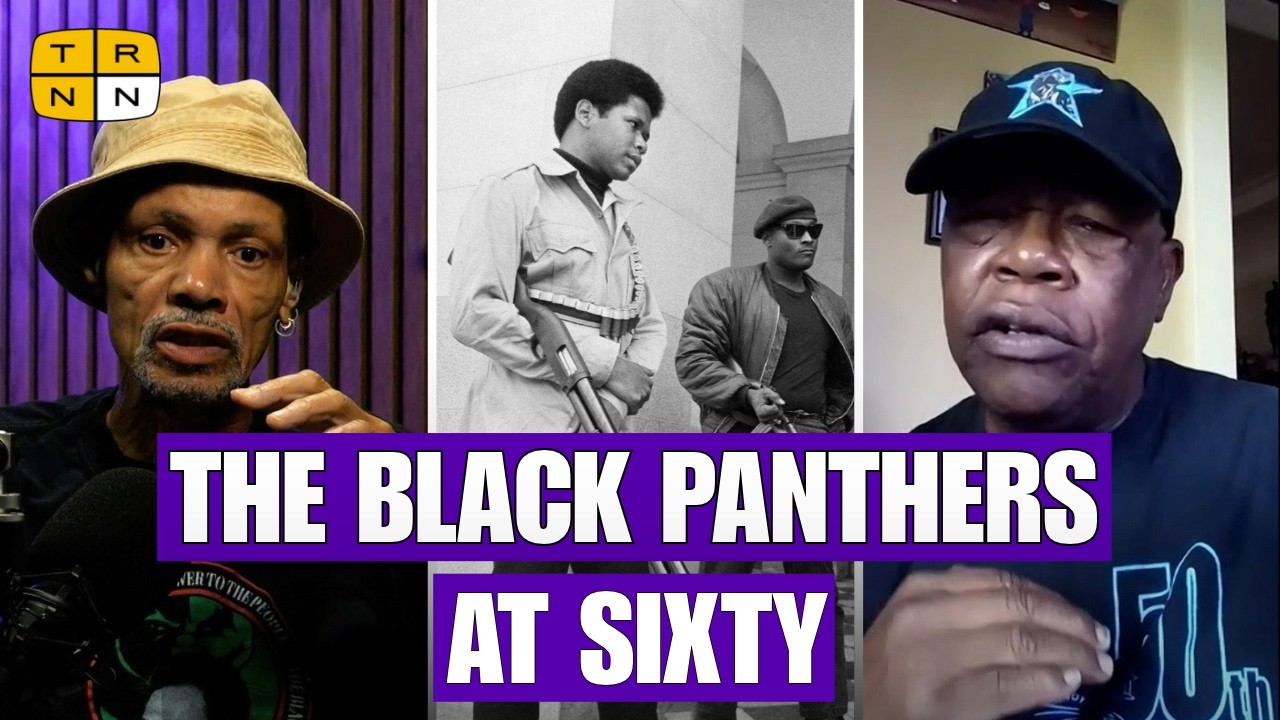
The Black Panthers at 60: A through line of resistance from the South to California

Two members of the Black Panther Party are met on the steps of the State Capitol in Sacramento, May 2, 1967, by Police Lt. Ernest Holloway, who informs them they will be allowed to keep their weapons as long as they cause no trouble and do not disturb the peace. Photo via Getty Images

In this episode of Rattling the Bars, host Mansa Musa interviews archivist, photographer, and veteran Black Panther Party member Billy X Jennings.

Joining the Party at age 17 after relocating from Hobson City, Alabama, to Oakland, Jennings managed BPP offices and served as bodyguard to Huey P. Newton. During Bobby Seale’s 1973 Oakland mayoral run, Jennings helped spearhead an unprecedented electoral effort: “…an organizing event on the highest level the parties had ever been. I mean, the party is known for organizing, but to go into electoral politics and do what we did for a first time basis, it changed over. Even though Bobby lost that election, it changed openly because it opened up so many doors. Part of his job was to kick down doors because we were the Vanguard.”

Today, Jennings operates the official Black Panther Party Alumni website and leads political education initiatives across the Bay Area for the Party’s 60th Anniversary.

Related links:

Credits:

  • Production/Post-production: Cameron Granadino
Transcript

The following is a rushed transcript and may contain errors. It will be updated.

Mansa Musa:

Welcome to the edition of Rattling the Bars. I’m your host, Mansa Musa. This year marks the 60th anniversary of the founding of the Black Panther Party, which started in Oakland in 1966. Today, I’m honored to be joined by Billy Jennings, AKA Billy X, well-known archivist in Oakland, member of the Black Panther Party, a photographer who runs the official Black Panther Party alumni website called It’s About Time. Thank you for joining me, Billy.

Billy X Jennings:

Hey, thanks for having me again. Good morning to everyone.

Mansa Musa:

And as we talked earlier, I was in different spaces and hoping I had met you while I was in Oakland. So this would more or less be like a reunion, but this is my first time meeting you. I’m really honored. I heard a lot about you. I know a lot about your work, and it’s an honor to be able to interview you about the party and some of the things and some of your experiences.

Billy X Jennings:

Okay.

Mansa Musa:

Please introduce yourself to our audience, who you are and how you came to be involved in the Black Panther Party.

Billy X Jennings:

Well, my name is Billy X. Jennings. I’m a member of the Black Panther Party. I joined in 1968 when I was 17 years old. And I came about joining the party because I’m from a historical town in Alabama in the South where most original members came from the South and migrated to California. So I came from a place called Hopson City, Alabama. And the tradition there, Hobson City have had the right to vote since 1890. And we were one of the only black municipal cities, little towns that could vote and had that right to do that. And so I came from a very strong area that had embedded that kind of thought into my mind. And when I traveled to California and I saw the Black Panther Party on TV for the first time in 1967 when they went to Sacramento, California, it blew my mind.

I was in high school at the time and I immediately changed our social… We had a social club called the Buccaneers. I changed it to the Panthers the next day. I didn’t know anything about the party with just that symbolism and how they stood up to the police and read their demands and so forth. It made a change happen in me. And it wasn’t until I graduated from high school, I decided to move to Oakland. And when I moved to Oakland, it was during the time that Huey knew the trial had just started and I was going to a college that’s two blocks away from where Huey was going on trial at the courthouse. And when the trial started, we would hear them saying Free Huey off the preg, free Huey. And I went over there one day and I was reading a book simultaneously at the same time called The Audible Malcolm X.

So what I read, I had read in the book already, but I heard Bobby Steele speak at a rally for Huey and they were saying the same thing. So it got me really interested in the party. And so I started going to the rallies to Free Huey. I met some Panthers and then they said their Panther office was going to open in my area. And when it did, I went down and joined, became a Panther in training and I’ve been working with the party ever since.

Mansa Musa:

Okay. And take us back to the party’s founding because you came in two years after its founding. And also you came in to your own observation and to what we know to be a fact, you came in at a point where they had just started to become on the radar of the feds, but more importantly, they was definitely on the radar of the Oakland police, LA police. And so talk about what was it like to be able to be in that space and ultimately find yourself in a position to be the bodyguard for Huey Newton once he got out.

Billy X Jennings:

Well, my process started at the very beginning. In 1968, there was a certain method the party employed. Before you became a Panther, you had to become a Panther in training, which requires six to eight week training. They give you a list of books that has about 35 different books, about books by Franc Fanon, Mao Saintong, Che Guevara, Pruma, and other revolutionaries to read. And you had to attend political education class on a weekly basis. Panthers at that time was required to read two hours a day. A Panther had to secure and have what we call technical equipment. Technical equipment was a firearm of some type, because at that time I joined the Black Panther Party, it was called Black Panther Party for self-defense. Later on, we dropped off the self-defense, but at that particular time, the party was engaged into patrolling

Police officers in the community, observing them and making sure they don’t beat and brutalize people. So the first six weeks is reading and studying and learning the rules of the Black Panther Party. And then you’re given a section. The city is divided into different sections. I worked in the section four in East Oakland. Section four had a section leader. They had a geographical area that they were responsible for. And so I was in section four. At that very beginning when I first started, we were theorizing about the breakfast program. It hadn’t came about, but we were still looking for geographical locations to have these breakfast programs in the future. So we did that. And every Panther is required to sell the Black Panther Party newspaper, which is the voice of the party. And at that time, the party was growing tremendously by leaps and bounds.

We had people flying into California from Kansas City, Chicago, New York, all to get this education. Before you can open up a chapter of the Black Panther Party or a branch of the Black Panther Party, you have to come to Oakland first and get educated. And you have to meet the leadership. The leadership has to eyeball you and find out your level of consciousness, what type of person you are before you can go back and represent the party. So this whole process was going on. People were flocking to the party. The party got so big that in 1969, we had put a stop on membership and we call that particular part of the party’s history the purge because the party had grown… I mean, the party was attractive. I mean, black coats, leather coats, I mean sunglasses and Afros at the same time. So this was a big thing for our culture.

At the same time, our culture level was rising even in music. James Brown had a record out in 1968 that elevated people’s social conscience, I’m Black and I’m proud. It moved people from the level of being a Negro, because that’s what the newspapers and that other people was referring us to. But in our community, we’re referring to ourselves as Black or African. And when James Brown came out with Black and I’m Proud, you could never go back to ever saying he was a Negro no more. There was different progress being made, but James Brown couldn’t sing no song like that. It wasn’t for groups like the Black Panther Party. Groups like The Shot Light Can’t Sing got to give more power to the

Mansa Musa:

People

Billy X Jennings:

Like the Black Panther Party, paving the way to educate people to lift up their consciousness. And so my role in the party, I came up as a Panther in training. I became a officer of the day, which is the person who runs the office. And from there I was transferred to central headquarters. Now, my name came about because my captain at that time was a legendary Panther called Robert Bay. Robert Bay ran the East Oakland office. Robert Bay was also an age of the central committee. And when Huey Newton got out of jail in 1970, the central committee made Robert Bay his permanent bodyguard and assistant. Now, I worked in that capacity as well after Huey got out of jail, mostly going to… I went to court with Huey on a daily basis because he was let out on appeal. He wasn’t just let out.

He had to go back to court and defend himself. And so my job became that. And also at the same time, I became to the Newton family. Mr. Newton, Mrs. Newton, I lived three or four blocks from them. I would walk over their house around the corner, mow their lawn. I’d be taken to the pharmacy, driving to doctors because they’re old people and they don’t drive so much. So that became my responsibility and me and Huey’s relationship grew behind that. So we had good personal relationship.

I worked central headquarters. Working at central headquarters was key to who I am today because I know Panthers from everywhere because every Panther had to call the central headquarters on a weekly basis or if the office gets ready or they need lawyer resources and stuff like that, I pick up the phone, write on the messages or tell them what they need to know. So I know Panthers from almost all the chapters and branches. And so I worked that group for a while. Then I was drafted into Bobby Seal’s campaign when he ran for mayor of open. I ran Bobby Seal’s campaign office in East Oakland. And it was an organizing event on the highest level the parties had ever been. I mean, the party is known for organizing, but to go into electorial politics and do what we did for a first time basis, it changed over.

Even though Bobby lost that election, it changed openly because it opened up so many doors. Part of his job was to kick down doors because we were the Vanguard. We had lead to struggle and there’s other people who follow behind us. I mean, our life was constantly in threat because we were on the front line, police department, clientele pro, all those things aimed at members of the Black Panther Party. So not only did we have the burden of dealing with the system, we had to deal with the authorities as well.

Mansa Musa:

Talk about, and you’re familiar with Eddie Conway, right? And so Eddie Conway, when he got locked up, he organized a chapter for the Black Panther Party in the prison, which I became a part of. And everything you outlined, as you was talking, I was reflecting on, we had to read at least two albums. We had every aspect of the thing that you outlined as what the party was doing, Eddie had us doing the same thing. We had political education classes, we had military classes, we had first aid classes. All our class was structured around an environment that we was in, and our technic class was finding a hole to get out of prison by any means necessary. So we had that type of mentality. So Billy, as an archivist, you have a lot of distortions in terms of the images that’s being projected of the party and it’s been dubbed Panther Porn, and just to note that it’s images that’s being perpetuated by the federal government, it’s images that’s become more idolization of the party versus the images as an archivist.

What would you say is the most positive or how would you characterize the imagery of the party as from an archivist in terms of educating people and raising their conscience? I see you with a shotgun. I know you in Sacramento. I know why you in Sacramento and I know why you coming out like that. That’s a good thing. But then I turn around, I see somebody standing on the corner. They got a picture of somebody standing on the corner with their mug broke and they got a bandela on and it had nothing to do with organizing, had nothing to do with raising people’s conscience. It’s got more to do with projecting the image of a thug, for lack of a better word. Talk about that if you can.

Billy X Jennings:

Well, the party was vilified on the highest level from the government who lied on us continuously to the media that used disinformation to scare people. The big image they had was, oh, these Negroes, they have guns. They’re angry. They hate white people. That’s their basic pitch on everything. Let it be Republican New Africa or any Black group, they paint them as very threatening group. And because we had guns, I mean, there was nothing… It wasn’t against the law in California to have guns, to have them in public long as they was not loaded, which we knew that. So the images they printed of the Black Panther Party was to vilify us and to scare white people and to frighten Black people. So it was all a part of their method to control who we were. They were trying to identify who we were. We could only define that.

We defined our own selves. And so that’s why we started a Panther newspaper in 1967 to get our voices and views out. So even though we had Time, Newsweek, Life Magazine, the Black Panther Party was cranking out close to 250 to 300,000 copies of papers per week into the community to combat this disinformation about the Black Panther Party. The 10 point program outlines what the Black Panther Party was all about, what we stood for.

Only on one aspect, which is 0.97, we talk about defending ourselves with guns. Other

Than that, we’re talking about social change in all levels, in education, housing and so forth. That was a threat to them because they did not want anyone to rocking the boat and we are rocking the boat. We are waking people up from their deep sleep. I mean, we’re telling people to read. We’re showing people what books to read. We are the Vanguard. People are following us. They didn’t want that. We had people in the white community, they wanted to join in with us. We had people from the Latino community, they want to join with us. You had people from around the world reading the 10 point program and looking at the positive aspect of the Black Panther Party. And that’s how we get the New Zealand Panthers and the Panthers from Africa and Panthers from India and the UK because of our social programs, how we was dealing with the oppressor here.

And so they follow those same examples there. They started social program, they started demanding and fighting for their rights. And that’s what the oppressor hates. They hate for people to wake up. And we were waking up big time in the 60s with the music, the culture, the back to Africa, who we are. How could you be a Negro in 1970 after all has been presented before you? So those things have changed. The party was a part of that change, that

Mansa Musa:

Consciousness. Talk about, because to your point, I remember reading the paper and when United Farm Workers, the party was one of the first papers to one, educate people on what their issues were, two, organize the boycott certain wines that they was taking and exploiting their labor and not giving them equal pay. So talk about the party’s social contribution to raising people’s concept, but more importantly, the elasticity of it, because can you see some of the influences today? Oh,

Billy X Jennings:

Definitely. Definitely. I can see the influences of the Rainbow Coalition. And that was something that Fred Hampton talked about. I could see the coalition building of the Black Panther Party. We’re working with the Brown Beret, the Young Lords, the Young Patriots. We’re working with the welfare rights groups. We’re working with the BSU, the Black Student Unions on campus. We’re working with prison groups. There was a number of prison groups throughout the country that started Black Panther Party off in San Quentin, in Algeria, Raway and other prisons because the ideology of the Black Panther Party was strong. What we were talking about, there was backbone to it. Everything we did was dialectic materialism, right? We were dialectic people. We looked at things from all sides. We just didn’t look at things in one side. Black Panther Party was an international group from the very start. Dewey and Bobby were international.

You can look at our reading list, those 35 books that come from Fanon, that’s from Africa, Mao Zeitang from China. So there was all kind of influences in the party. And so it was a big job just working to educate and organize people on all levels. Because in our community, action speaks. People learn in various ways, but in our community, people relate to action. They see something, they learn from it. Just like the breakfast program. We started the breakfast program in California and within two weeks it was a national program because people said, “Hey, we can do that here. This is how they did it. We can do it here.” The party set examples that people could follow in every aspect. We were on the forefront of fighting racism on all levels.

💾

“We started the breakfast program in California, and within two weeks it was a national program because people said, 'Hey, we can do that here. This is how they did it. We can do it here.' The party set examples that people could follow in every aspect. We were on the forefront of fighting racism on all levels.”
  •  

‘Deranged and dangerous’ Trump decried for inviting Iran to ‘take out’ California cities

US President Donald Trump speaks to a member of the crowd after speaking during a campaign rally at Pinnacle Bank Expo Center in Grand Island, Nebraska, on October 5, 2026. Photo by Kent NISHIMURA / AFP via Getty Images
Common Dreams Logo

This story originally appeared in Common Dreams on Oct. 06, 2026. It is shared here under a Creative Commons (CC BY-NC-ND 3.0) license.

“Keep our city out of your reckless war talk,” said San Diego’s mayor, Todd Gloria, Monday night after President Donald Trump’s rambling speech at a rally in Nebraska included a particularly violent mention of the California city.

Gloria was among several Democratic political leaders who were incensed after Trump—moments after predicted the Republican Party would see a “tremendous victory” in the November 3 midterm elections—suggested that he would not object to an Iranian military or nuclear attack on San Diego and Los Angeles.

The president said that soaring prices for gas, groceries, and other essentials are a “small price to pay for keeping the world safe—keeping our country safe.”

Trump on Iran: Let 'em take out Los Angeles and San Diego, it's a small price to pay pic.twitter.com/Fc4BcjVDKj

— Headquarters (@HQNewsNow) October 6, 2026

He warned that Iran could “take out a city,” before adding that he would “let them” attack the two deep-blue cities—home to a collective 5.2 million people, with more than 20 million residents in the surrounding areas

“Let them take out Los Angeles. Let them take out San Diego,” Trump said at the rally in Grand Island. “This is a very small price to pay… It’s gonna be over very soon.”

The crowd responded to Trump’s comments with laughter and cheers. The president has frequently made Democratic strongholds like Los Angeles, Chicago, and his own hometown of New York City the targets of rhetorical attacks. He has also targeted those cities with the deployment of armed federal agents as part of his mass deportation agenda.

California Gov. Gavin Newsom, a Democrat whose name has been floated as a potential 2028 presidential candidate, condemned Trump’s remarks as “deranged and dangerous.”

“After sending the National Guard and Marines to occupy California, Donald Trump is now saying our foreign enemies should ‘take out’ Los Angeles and San Diego,” said Newsom, who later criticized Trump’s vice president and secretary of state for not speaking out against the comments.

“The SILENCE from JD Vance and Marco Rubio today is deafening,” said the governor.

Gloria added that San Diego, which is home to major military installations, “is not collateral damage. We are not expendable. And we are never a ‘small price to pay.’”

Los Angeles Mayor Karen Bass accused Trump of compromising the safety of the nation’s second-largest city.

“The role of a president is to protect the country, not to actively threaten it and encourage attacks on American lives,” said Bass. “In the face of irresponsible threats, as Angelenos, we know how to stand together and protect our city.”

Jim Desmond, a Republican running for Congress in California’s 48th District, which lies in San Diego, was also quick to distance himself from the president’s comments.

Some observers claimed the president had simply been speaking in an “especially confusing style,” as journalist Daniel Dale suggested, and did not intend to suggest that the two cities could be acceptable collateral damage.

“Of course you can say it’s inappropriate regardless for the president to casually float the possibility of a city being wiped out,” he added.

Trump’s comments came days after it was reported that the Pentagon is prepared to send thousands more troops and a third aircraft carrier to the Middle East, as talks between the US and Iran remain stalled. Gas prices remain elevated, at $4.36 per gallon on average, and nearly two-thirds of respondents to an Associated Press poll in June said they disapproved of how Trump had handled the war, which he joined Israel in starting in February without congressional approval.

Sen. Alex Padilla (D-Calif.) had a succinct response to Trump’s remarks, referring to the constitutional amendment that allows members of a president’s Cabinet to remove him from office on the ground that they cannot fulfill the duties of the president.

“Twenty-fifth amendment NOW,” said Padilla.

  •  

He loved working in concrete. Now, he’s dying from the chemical exposure.

Photo of James “NDN” Gardner. Photo courtesy of James Quigg.
https://www.spreaker.com/show/2952221/episodes/feed

Because he was bullied in elementary school for being Native American, James Gardner’s friends lovingly call him “NDN.” His friends and family know NDN to be a fiercely loyal, loving person, and a fiercely hard worker. But as a third-generation concrete specialist, NDN was exposed to chemicals that have left him disabled, terminal, and facing foreclosure on his home. In this episode of Working People, we speak with James “NDN” Gardner and his best friend James Quigg.

Additional links/info:

Featured Music:

  • Jules Taylor, Working People Theme Song

Credits:

  • Audio Post-Production: Jules Taylor
Transcript

The following is a rushed transcript and may contain errors. It will be updated.

Maximillian Alvarez:

Alright. Welcome everyone to Working People, a podcast about the lives, jobs, dreams, and struggles of the working class today. My name is Maximillian Alvarez, and today we are in Fort Worth, Texas, and we’re talking about a fellow worker named James. As Maven Navarro recently reported in the Fort Worth Star Telegram, “After leaving Oklahoma, James Gardner built a life for himself in Fort Worth. Now he could lose it all. When Gardner walks into doctor’s offices to receive treatment for his terminal liver failure, he has to ask staff to remove all the air fresheners for his skin condition. Gardner has multiple chemical sensitivity, which he says was caused by his time as a concrete specialist working with two-part epoxy resin. The illness causes him to break out anytime he gets around chemicals, air fresheners, perfumes, cleaning supplies, and paint spark allergy flare-ups that can last for 10 days.

Concrete work is known to cause health problems. Cement plants can also cause respiratory or cardiovascular issues according to the Environmental Protection Agency. James Quigg first met Gardner in high school in Oklahoma where he was given the nickname NDN after enduring bullying for being Native American and kids calling him Indian. A few of Gardner’s friends started calling him NDN or Indian, and it stuck. Now, Quig started a GoFundMe to help prevent Gardner from losing his house. As he is unable to work and has faced challenges receiving disability, Gardner was denied disability the first two times he applied for it. It wasn’t until his third application that he was approved because of his internal organs shutting down.” So to talk about all of this, I am truly grateful to have James Indian Gardner himself and James Quigg, who they have given me permission to call them “NDN” and “Quigg,” friends since high school, both here on the show with us today.

Thank you guys so much for being here. It is really, really great to be connecting with y’all. And my God, I wish we were connecting under less horrifying circumstances and I’m so sorry that you’re going through all of this. And NDN, as much as you’re comfortable, I want us to make sure that we focus a good chunk of time today talking about what you’re going through now, where things stand now and what people listening can do to help. But we’ve got 50 minutes here and I really want listeners to get to know you and your lives more, your friendship and all the things that make you, you, not just these horrible people and jobs and systems that have done all this unforgivable damage to you. So NDN, start us off. Tell us the story of you and what brought you to Fort Worth. And then Quigq, hop in and tell us your story and how it intertwines with Indians.

James “NDN” Gardner:

I’ll start with a nickname “NDN” and then I’ll go from there. So as you were saying, back in school, kids were making fun of me and bullying me, and my principal called us into the office in my freshman year, said, “You guys can’t call him an Indian anymore. You’re being racist.” And one of my friends stood and said, “We’re not calling him Indian. We’re calling him letter N, letter D, letter N.” And he says, “Well, I can’t do anything about that.” And it just stuck and I’ve always enjoyed it. A lot of people are like, “He’s not just a Indian, he’s the Indian. There’s only one of them running around.” As far as career goes, I am third generation doing precast concrete with the passion. I’ve always enjoyed doing concrete. I’ve loved it. Being able to take the raw elements of earth and forging it into something that’s going to last and help the world is phenomenal to me.

I relocated down here to Fort Worth to actually do the McKinley Stadium, which is my third stadium to be a part of. Years ago, I was working for a company that dealt with a very strong epoxy resin and only 4% of the people that are exposed directly to it will develop an allergy to it. And with the company, it’s easier for them just to pay you off than it is to change their safety protocols, which shouldn’t be the way, but it’s cheaper for them that way. And over time, my symptoms and my condition got worse and worse and worse because it just doesn’t stop once you’re out of the environment of that specific thing. I remember one time they laid a new asphalt in front of my house here on the road and I broke out for a week because of the adhesive and the tar and the asphalt and I couldn’t avoid it because I was in my own home.

Maximillian Alvarez:

So I have so many questions about that specifically because I don’t know if you guys know about it, but on this show specifically, I’ve been doing a lot of interviews with working people who have been exposed to toxic chemicals from work, from industrial disasters near their homes, all this kind of stuff that poor and working people are being exposed to daily. I mean, I was just filming in South Baltimore last night where residents just like you guys, but here in Baltimore are fighting trash incinerators that are blasting toxic chemicals into the lungs of their children. So this is definitely something that we’ve talked a lot about on the show, but I do want to talk about what that looked like for you, Indian, on a day-to-day working level. But before we get there, I want to go deeper into some of the lore here. Take me back to where you guys were in high school where you first met.

Quigg, who was this guy in high school when you met? And NDN, same question about Quigg.

James Quigg:

So Indian is a grade above me. So I came in as a freshman. He was already an established sophomore. He had a cool car. It was painted. He had some lady. Did it have a female on the hood and it had the universe? I mean, you couldn’t miss this car.

Maximillian Alvarez:

You had a low rider?

James “NDN” Gardner:

No, actually, it was a 91 Chevy Cavalier and anytime I’d get bored, we would just re-spray paint it. It was all animal print once. Once it was all hippied out, make love, not war. Even at one point I gave all the kids an art paint pens and we just wrote quotes over the entire car. People would stand there and read it for hours. It was just something to do. So

James Quigg:

You’d see this car. I’d see the car around before I was even in high school. So then you see, oh, this is the cool guy with the cool car. And then he’s always hanging out in the courtyard and he’s always got this group of girls because he’s just very didn’t try very hard, I guess. And honestly, I don’t think we liked each other necessarily in the beginning. It was just he had this girls that I was trying to hang out with, talk to, and he just didn’t really like the new guy, the new skinny white dude that was hanging around.

Maximillian Alvarez:

You got to earn your keep, baby.

James Quigg:

It took a couple years.

James “NDN” Gardner:

He really had to. And most of these girls I’ve been friends with for years, so I was very protective of them because they were my friends. And here’s this scrawny kid coming in trying to ask them all different kinds of things and get involved. I’m like, “Hey, hey, you don’t need to be around here right now.” But eventually he warmed over to me and I warmed over to him.

James Quigg:

Yeah, I was saying hope I was best friends with his cousin for a couple years. Then probably what, sophomore, not sophomore, junior, senior year, we started maybe hanging out a little bit more. You invited me to your house.

James “NDN” Gardner:

I had a house that most people weren’t allowed to. I was very young and I lived on my own, so it was just me and this trailer house at 16 years old. So a lot of parents didn’t even allow their kids over to my place. And they spray painted up too in the walls.

Maximillian Alvarez:

Yeah. I mean, to be honest, I don’t think my parents wouldn’t allow that either, but that would be exactly the house we’d all want to go to. Exactly. Exactly. I mean, can I ask how you ended up having your own kind of place when you were 16?

James “NDN” Gardner:

My parents separated and it was a choice of either do I go live with my dad or do I go live with my mom? And I was already working full-time at the time, and I bought a trailer house on state auction and moved into it. And it was just simpler that way. My mother ended up moving back in with me a few years later, but it was just more convenient. So like I said, I already had the income coming in.

Maximillian Alvarez:

What were you doing back then for work?

James “NDN” Gardner:

Back then? Well, my first job was working for the Department of Wildlife through a program called ATEC, which was American Indian Education Training Association. They took Native Americans and put them at federal buildings and gave them summer jobs. So that got me experience. Pretty much I was doing property management, mowing the yard, stuff like that, but I got to do a lot of really cool stuff with them because I was, “Hey, let’s grab him and take him with us to go do this fish survey or let’s go explore the bat caves and do a survey out there.” And so it was very fun as a youth to have that. And then I went straight from that to Home Depot, working at Home Depot as a pro associate.

Maximillian Alvarez:

So paint a picture for me. When you guys were back there in Oklahoma, are we talking kind of small town Oklahoma, medium town, city? Yeah, paint a picture for me.

James “NDN” Gardner:

So Bethany, Oklahoma at that point was the very edge of Oklahoma City. So it’s pretty much small town. I knew all the police officers, they all knew me, not because I was in trouble, just because there wasn’t a lot of us running around. And of course it was the late ’90s, early 2000s, so we were always getting into some sort of trouble as we all did back in that time.

James Quigg:

Oklahoma is a pretty small, big town. I think less than a million people in the whole city, probably less than that now, but I mean it takes what, 10 minutes or less to get down into the heart of Bricktown, downtown Oklahoma City. I mean, it still is small town, but it’s trying to be bigger than it really is.

Maximillian Alvarez:

I mean, I come from Southern California, the land of endless lights and sprawl from the beach to the mountains. So everything feels small town to me to some extent. But to be honest, I kind of got a lot of love for the small and medium-sized towns in the country. I don’t think I gave them enough credit when I was younger, but the older I get and go visit more, the more fascinating they are. But I wanted to ask in that vein, we’re talking about Oklahoma. I guess we’re talking in the colonial project of the United States of America, so everything is ironic, but living in a state named Oklahoma and going to a school where you make fun of Native American kids feels so ironic and ridiculous that I don’t even know what to do with myself. But was that normal Indian? I mean, what was the kind of ratio?

Were there a lot of indigenous kids going to school there?

James “NDN” Gardner:

No. No, there wasn’t. In high school, there was maybe five of us altogether. I mean, there’s not a lot of us left. It’s sad to say. I was fortunate enough to run into… I mean, we just kind of all clicked together because, oh yeah, you’re native too. Cool. What tribe? What’s your family line? But the whole reason why we were in Oklahoma City is that my father was one of the Native Americans you hear about in the past being adopted off the res for a very low amount of money. And then he was adopted with four other siblings, all native from different tribes raised by a white man in the city. So yeah, there just wasn’t a lot that made it to the inner city area at that time. They all stayed out near the reservations, near the small towns like Carnegie and Adarko. So being inside the city, yeah, there wasn’t a lot of us.

Maximillian Alvarez:

And I take it from the origin story of your nickname that it wasn’t a very kind place to Native kids like you?

James “NDN” Gardner:

Oh, no, no, no. I remember once I was 14 walking down the street and the cops pulled me over because they had an APP put out on a Native American with long hair. I just happened to be a Native American with long hair. And they picked me up and took me down to the police station, which was just three blocks from my house. I wasn’t the person they were looking for. The person they were looking for had robbed a gas station and he was in his late 20s and I was 14. We stood out, so you either knew who we were or it’s just the way it was.

James Quigg:

It’s true. And what they only taught us in school about Native American culture is just an annual field trip we take to the Cowboy Hall of Fame and they’d show us the statues and talk about the Trail of Tears.

Speaker 4:

Yeah.

Maximillian Alvarez:

But there’s a lot to this story that I identify with in certain ways. I don’t know what that’s like Indian, but I know what it’s like to be a bald, scary looking Mexican dude in America. I’ll take looking like Quigg over looking like us on a normal day if I don’t want to get stopped by the cops. But that’s all the more reason why it just fills my heart when I hear stories of comradery and lifesaving solidarity, even among kids who are standing up for a friend. Tell me more about that, both of you, the stepping in to sort of reclaim the name and to say this is not how we’re going to do things. This guy’s our friend, not our enemy.

James “NDN” Gardner:

Oh yeah. I mean, Quig is my white guy. I always joke with people like, “I got my white guy. He’s right here. I’m safe. I don’t need a card. I got a whole person.” And I mean, he’s always had my back. Once we really connected and I realized that this is somebody that I needed to be part of my life and everything he’s done for me over the years, I can’t live up to. I try.

James Quigg:

I seriously doubt that, brother. I have computer smarts and I can do techie stuff, but this guy is the dude if you need any help. I mean, I’ll go back to last year, we had a leak in my daughter’s bathroom and it was coming down in the guest bathroom and I was like, “I don’t know what the hell to do, man. It’s just coming down.” And he just hopped in his car and he brought all his tools because he’s just that guy. And so he came and he helped me change the drywall. And as he’s doing this and helping me with all the stepping outside because I got to spray some kills on the wood, I mean, he’s getting hives, he’s getting blisters. I’m feeling incredibly guilty and he’s like, “Don’t worry about it. Don’t worry about it. Let’s just get it done.” But he’s just that kind of guy and it’s been like that anytime I’ve needed him.

He’s just always there. And it’s not just me, it’s everybody. He’s helped damn near everybody that we know, either with a place to stay, help fixing their car, mowing a yard. It doesn’t matter. He’s a helper, he’s a doer, and that’s just something I’ve always admired from him.

Maximillian Alvarez:

Well, and it’s genuinely beautiful to hear you guys say that, right? Because first and foremost, I’m thinking just as three men in the country today, we don’t say this enough to each other and we don’t allow ourselves to be that for each other. And so I just wanted to kind of honor the beautiful friendship that you guys have, having each other’s backs for this long is a marvelous thing. And I’ll be honest with all of you listening, Quig reached out to me about Indian’s story and told me about it, and that’s how it got on my radar. So these guys have been together for years and they’re still looking out for each other, and I think the world will be a better place if we all do a little more of that for each other. And Quig, even you telling that story reminds me that we’ve still got so much to talk about here, Indian, about your working life and the conditions and chemicals that you were exposed to that are now collapsing your health and your quality of life.

So that’s normally what we talk about on this show is I talk to workers and I say, “Tell me about your working life.What does it look like on the job?

For people who’ve never worked in this line of work, what does it entail?” Can you kind of take us a little bit on that journey and then tell us about the kind of work hazards that you were exposed to?

James “NDN” Gardner:

Yeah. The company where I was working for made burial vaults and the poncho that they used went on the liners of the burial vaults to seal it to the concrete so it maintain a watertight sealness for 50 to 100 years. That’s what they were concerned about. The people working in there that were alive being exposed to a hazardous chemical to keep somebody that’s going to go in the ground from being exposed to the elements of the ground was more important to them than the people actually doing the job because there was other things that could have been used that was more efficient but cost more money.

And after my initial exposure with this company, I was still passionate about concrete. I still wanted to do concrete, but I had to relearn what companies I could work for, where I could work at, and how I could do it because now I got to change everything. I can’t be around anything that has sold chemicals. I’ve got to be in open environments. And one of the things, I was also a journeyman iron worker because every now and then you get tired of staring at gray when you do concrete long enough. And back to the whole having lung and breathing respiratory issues, as a journeyman iron worker, I was working on the Devon Tower, which is the tallest building in Oklahoma City, and I was going from the ground up a thousand feet every day, and I had developed acute altitude sickness from just working on the outside of the building every day.

But a lot of that was contributed because they did a long biopsy on me to test me for silicosis, which is from concrete dust. And I did have some concrete dust built up in my lungs at the time. And that’s just because not wearing enough protection when you should wear protection because old school concrete guys just get the job done, which I got no problem getting a job done, but it should be done safely, effectively, and efficiently, not the other direction around, efficiently and safety being one of the last concerns. So after no longer working for the company that caused my initial, and I didn’t realize how bad I was going to get over the years, because initially it was just adhesives in general. Then it got where I couldn’t even put a bandaid on without breaking out from the adhesives as I am now.

I actually have to order special medical stuff when I do get a cut so I can seal myself and not have a reaction to it for a long period of time.

James Quigg:

He has to take his own adhesives to the ER when he’s got to go to the ER because of his terminal liver failure, otherwise he’ll break out from that.

James “NDN” Gardner:

Yeah. Even going in for a procedure, they put an EKG machine on me. I’m going to break out from every point where the EKG machine is.

Maximillian Alvarez:

Jesus, man.

James “NDN” Gardner:

Even the tape on my fingers or to monitor my heart rate and my breathing will make me break out. So I travel with my own medical stuff now. It

Maximillian Alvarez:

Sounds like hell.

James “NDN” Gardner:

It is. It made me a shut in for quite a while because going to Walmart, going to the grocery store, luckily there’s DoorDash and things like that now where I don’t have to get out and get exposed. But again, like I said, it made me change how I worked in concrete. I went to places that had super structures that worked outside, still making beautiful things with concrete, but eventually the skin allergy, the multiple chemical sensitivity just overtook everything. I did work for a trailer company for a little while working three days a week because they knew my skin issue, they knew my thing. So I would go there whenever they needed something welded or something wired that they couldn’t figure out. But again, now I’m going to this place to work on a trailer and that trailer might’ve had paint in it. It might’ve had construction debris.

I can’t even walk into a Home Depot or a Walmart or Lowe’s. Fast food restaurants get me pretty good too. And as much as I love old people, they’re a little heavy with that perfume.That’s

Maximillian Alvarez:

Putting it mildly, man. And yeah, I’m sure so many of us don’t even realize all the spaces that we walk into where those irritants are, but if you start breaking out in hives the second that you’re exposed to it, you start realizing that actually there are a lot of places you can’t go. And that is just something that I think so many of us don’t have to think about. But when you’re in your position and you have to think about it, it must be just genuinely overwhelming at times.

James “NDN” Gardner:

T-Mobile has their own scent of air freshener. So when you open a T-Mobile store door, it puts a little spray into the air for a sensory thing. I understand how that can be with marketing. Oh, this is what T-Mobile smells like. I’m getting a new phone. And I didn’t know that till they rolled out with that and I went into a T-Mobile and next thing I know I’m being sprayed and now I’m breaking out in hives and I’ve got a leak.

Maximillian Alvarez:

Jesus, man. So as we sort of get to the situation that you’re dealing with now, I’ve heard from you a number of things already. We’re talking silicosis, we’re talking exposure to epoxy resin generating a chronic skin sensitivity, right? I mean the altitude sickness that you developed on the job. I guess if you had to sort of sum it up, if you could, what conditions do you have now that came from working in this country, from being exposed to things or repetitive actions to things? I guess I wanted to try to collect all that for listeners and ask what is the kind of sum total of all the crap that you’re dealing with from all the jobs that you’ve worked?

James “NDN” Gardner:

If the MSDS is laid out and has its certain rules and regulations, if the company will abide by the MSDS correctly, I would’ve never been overexposed.

James Quigg:

What’s the MSDS?

James “NDN” Gardner:

Material safety data sheets. It tells you about the hazardous of the chemicals, what you’re supposed to be wearing and be doing to you’re not hurt by it and it doesn’t affect you. And most companies, yeah, we’ve got an MSDS. It’s in a book on the wall over there. You can go look at it if you want to. And then they tell you to go to work. And I was guilty of doing that to people too. I’m like, “Well, yeah, the MSDS is over there, but just put this little mask on.” In reality, they needed a respirator instead of just a dust mask and went on with the day to get the day done. Things have changed a lot now than how bad it used to be when me starting off in the industry of concrete and everything else, because again, it was you’d stand in a cloud of dust grinding and just put on some safety glasses and hold your breath.

Maximillian Alvarez:

Well, and let’s talk about when these health conditions started piling up and to the point that you needed disability checks and then had to navigate this Kafka-esque system that doesn’t work to try to get the aid that you need to live. Tell us more about the kind of crisis that you’re in now and all the people who are supposed to be helping you right now but aren’t.

James “NDN” Gardner:

Yeah. I mean, even going to the social security office to file for disability, I would sit there breaking out because I’m waiting for long periods of time in the line in a room full of people with chemicals on. So it became I have no choice. I have to go do this. I’ve got to go file this paperwork and I filed the paperwork and I wait and I wait and I wait. And then, “Well, we want to send you to this doctor.” Well, I call the doctor’s office. I’m like, “Listen, I can’t just go in there and they don’t abide by those rules.” They’re like, “No, you’ve got to come in, you’ve got to wait, you’ve got to go through this.” Even now, I’ve got some doctors that really help me with my situation and make sure the days that I’m scheduled, that nobody’s wearing perfume and that it’s going to be a nice, clean environment for me.

And then I have other doctors that could care less, but I’ve got to go through them because the social security’s telling me, “Well, you need to go to this guy and get tested for this.” I mean, they just did an allergy test on me, and part of the allergy test, the bonding agent in the allergy test is an adhesive. So I tested positive for everything, even though I told them I’m an adhesive and yeah, it just has to be on my skin for a few minutes to test me for allergies. Well, that’s still an adhesive on my skin for a few minutes. And I ended up having to get an epishot in the middle of the test, which now became an inclisive test.

James Quigg:

And I do want to clarify that Fort Worth Star Telegram’s article, I don’t believe he’s been approved for disability yet.

James “NDN” Gardner:

No. No, I haven’t been approved yet, but since we’ve gotten the articles, they’ve started reaching out to me more instead of me having to wait and call them. So now we’re actually communicating back and forth for the first time, but I’ve been denied twice.

Maximillian Alvarez:

So the situation, as I understand it, please correct me if I’m wrong, is that you now, because of what you’ve been exposed to over the course of your working life, are no longer able to work and you are disabled by those things you were exposed to, but you have received no money from the disability office. Your life is in limbo right now.

James “NDN” Gardner:

Yes, I am in limbo. And the first two times I was denied because they did not recognize multiple chemical sensitivity as a disability until the past five years. And I’ve been dealing with it for 10 years now. So it wasn’t recognized as a disability. Now they’re starting to, “Well, what do we have to do to prove that this is a disability?” And because of my skin always having to fight these battles and me being on experimental drugs, trying to overcome with it, and part of being native is that most drugs aren’t made for a 40-year-old Native American guy. They’re made for a 40-year-old white man who has years and years of antibodies built up in the systems where if I get a flu shot, I’m ending up with walking pneumonia, where if Quigley got a flu shot, he’s just fine the next day because it’s more developed.

So my body started shutting down because of it’s trying to fight all the time, always battling, always battling my skin, always fighting, led to me having internal organ failure. I go in for another surgery on Monday, which will be my 10th surgery this year alone because my body’s just shutting down.

But yeah, I’m just in limbo. But now, so I was able to refile for social security with the internal organ failure and the liver failure and the terminal diagnostics now. So it’s not even really taking the multiple chemical sensitivity into effect with my disability. That’s just added to it now.

Maximillian Alvarez:

Well, and I guarantee that there are going to be folks that I know who are going to listen to this and they’re going to reach out and they’re going to say, “You’re damn right it’s a disability. They have it. A lot of the residents I was talking about who have been exposed to these chemicals, now they are so hypersensitive to these chemicals and they bioaccumulate and they make them feel worse and their kids are getting sick or staying sick or they haven’t been not sick for years at this point. And it’s just this kind of hell that they’re living through. And I can’t help but think of all the other workers like you who are exposed to this stuff. I mean, in the year 2026, black lung is on the rise in this country. There are men our age dying from coal mining or other forms of silicosis because of the stuff they’re inhaling, the lack of PPE they’re getting, just this whole system of grinding people down to dust and subjecting our bodies to the most toxic conditions just to make a buck.

And it’s so systemic, but it impacts us in so many different ways. And I kind of wanted to just ask you guys about that.What does this all say about the daily realities that working people are going through in this country? And especially if you’re disabled or indigenous or both?

James Quigg:

Well, I’ll say that invisible disabilities are easily ignored. That is one thing that Andy and I both have in common. You look at both of us on a normal day, you don’t see a disability. You don’t see a multiple chemical sensitivity in him. You don’t see type one diabetes in me. So it’s easy, kind of out of sight, out of mind for a lot of people, except for the people that have to deal with it day in, day out when they wake up to when they go to bed.

James “NDN” Gardner:

I feel like in a way I was robbed because I always wanted to provide for my family. I always wanted to work hard and make a living. And because I was working hard and making a living and the companies that I worked for ignored safety protocols, I can no longer do what I want to do for my family and be there for my family the way I should have been allowed to. And a lot of working people, that’s all we want to do is make ends meet, survive and enjoy life and enjoy the little things. And to not be able to do that now because a company wanted to make more money isn’t justified.

James Quigg:

I mean, it’s true. America is built on the backs of people like Indian and a lot of people just use them as stepping stones to get to the future.

Speaker 4:

Yeah.

Maximillian Alvarez:

I think that was beautifully and powerfully and put and it’s so depressingly true. I mean, Jesus, we just passed the 25th anniversary of nine eleven and we’re learning about all the things that not just first responders, but people all over New York were exposed to and lied to about for years later. This is unacceptable at every single level and we can’t keep accepting it. We’ve got to do something about it and we got to start by taking care of each other. And I wanted to bring us there for the final turn here because I know I can’t keep you guys for much longer, but I wanted to ask where things currently stand. I mean, you guys already gave us an important update from the Fort Worth Star Telegram that apparently Indian still hasn’t received anything from the disability office and he was denied two times before that anyway until his organs started shutting down.

Then he got some movement, but where does that leave Indian now? Where does that leave your family now? And what are folks doing in response? What can folks listening do to help?

James “NDN” Gardner:

Right. I mean, to back it down, sage up, pray to whoever will listen.

James Quigg:

Yeah. We’re kind of waiting to see what disability says. Hopefully he gets an approval and he’ll get some sort of back money so that he can get caught up with his bills because the bills haven’t stopped. The mortgage hasn’t stopped. They’re still trying to foreclose as far as I know because he’s terminal. They’re trying to get at least the ability for him to stay in his home and not be evicted. But that doesn’t solve a problem. That just pushes it down the road and it leaves it for his kids when Indian’s no longer here to help. But as far as what’s keeping him afloat has been this GoFundMe the last month or so, just from the kindness of strangers. Indian spent his life helping anybody and everybody. That doesn’t mean that those people are in positions to be able to help financially or monetarily in any way.

Indian’s always been that person to support others.

It’s just there’s nobody there maybe outside of myself that’s able to help him in that sense. And so we were sitting around his cousin, my other best friend and his mother on his birthday, what, six weeks ago, something like that, sitting around the kitchen table trying to figure out how do we stop this foreclosure? What can we do? Can we get a loan? Can we try to refinance? Can we refinance his mom’s house? Can I afford to purchase the home on my own? And realistically, none of us, we couldn’t do any of that. So I went home frustrated that we had to do this on his birthday, kind of cried about it a little bit and said, “Fuck it, I’m going to do this. I’m going to make a GoFundMe. I’m going to tell my friend’s story the best that I can and see if people are willing to respond.” Just try to show the world the kind person and generous person he’s always been and hopefully karma will come back tenfold on him.

Maximillian Alvarez:

Well, Indian, I want to give you the last word here and it can really be anything that you want, but I guess if you could know that you’re speaking to fellow workers around the country who listen to this show, who work in industries like this and industries that unlike this, if you could talk to those folks who are working jobs like this now or folks out there who could help, what would you just want to leave them with?

James “NDN” Gardner:

My family’s got a motto. If someone needs help, you help. You don’t ever respect anything in return. Whether it’s an old lady crossing the street, somebody on the side of the road with a flat tire, any situation. Somebody needs you to help them push a car or you notice your neighbor’s grass is too tall and you know he hasn’t been feeling well the last few weeks. Nothing’s going to cost you but time. Time is all we have for each other and let’s enjoy it and spend it and help everybody together. We’re all in this together. This is one world, one life. We’re all part of this. We’re all part of this.

Maximillian Alvarez:

All right gang, that’s going to wrap things up for us today. I want to thank our guests, James Indian Gardner and James Quigg. You can get in touch with them and keep up to date with Indian story by using the links that we’ve included in the show notes for this episode. And of course, I want to thank you all for listening and I want to thank you for caring about this. We do this work for you, but we can’t do it without you. So thank you. Working People is brought to you in partnership with In These Times Magazine and the Real News Network. The show is produced by the great Jules Taylor and is a proud member of the Labor Radio Podcast Network. We’ll see y’all back here next time for another episode of Working People. And in the meantime, go explore all the great work that we’re doing at the Real News Network, where we do grassroots reporting that lifts up the voices and stories from the front lines of struggle across the US and around the world.

Subscribe to our YouTube channel and check out our other great podcasts like Under the Shadow and the Battle for Free Speech and connect with us on social media and get updates on our reporting there and help us do more work like this by going to therealnews.com/donate and becoming a supporter today. I promise you guys, it really makes a difference. I’m Maximillian Alvarez. Take care of yourselves. Take care of each other. Solidarity forever.

  •  

The Real News Network launches English-language Brazilian reporting project ahead of pivotal election

Panamerican DispatchThe Real News Network
FOR IMMEDIATE RELEASE

The Real News Network launches English-language Brazilian reporting project ahead of pivotal election

Panamerican Dispatch is a new journalism project created in September 2026 to produce and distribute news and analysis from Latin America, within the United States.

Brazilians are heading to the polls. The stakes for the region could not be higher.

U.S. President Donald Trump has renewed attention on Latin America as not seen in decades. There are major concerns for the future of democracy across Latin America and the legitimacy of upcoming elections in the region.

That is why Panamerican Dispatch is needed today.

“Panamerican Dispatch is an essential site to learn about Latin American events from perspectives that go beyond the talking heads of mainstream media venues,” said Rafael Ioris, a Brazilian Latin American history professor at the University of Denver. “This is even more valuable in today’s changing and concerning landscape of the Western hemisphere.”

Most of the content published on Panamerican Dispatch is translated from other languages into English and is available free at www.panamericandispatch.org.

The project is on X, Bluesky, Instagram and TikTok @padispatch.

Panamerican Dispatch has already published more than thirty stories over the past two weeks, reporting on Trump’s attempt to sway the election, about Big Tech’s actions in the campaign, and the environmental implications of the vote.

“In this era of mega-mergers and relentless corporate media consolidation, it’s refreshing and exciting to see an independent initiative like Panamerican Dispatch take shape, bringing us incisive and compelling reporting from a diverse group of fiercely independent journalists on the ground in Latin America,” said Alexander Main, the Director of International Policy at the Center for International and Policy Research.

Panamerican Dispatch is a project of The Real News Network, in partnership with Global Exchange.

Brazil-based journalist Michael Fox is leading the initiative. He has reported extensively across the region for PRX’s The World, DW, The Nation, Business Insider, The Intercept, AJ+, TRT World, The Real News Network, and numerous other outlets. He is a former editor of NACLA’s Report on the Americas. More recently, he is the producer and host of numerous podcasts, including Brazil on Fire and Under the Shadow. His most recent episode of Under the Shadow looks at U.S. President Donald Trump’s attempt to impact the vote in Brazil.

Michael Fox will be covering the elections from the streets of Brazil.

About The Real News Network

The Real News Network is a viewer- and listener-supported, nonprofit news organization based in Baltimore, Maryland. Free of corporate and government advertising, TRNN produces independent journalism that centers the voices of people on the front lines of struggles for justice, democracy, and dignity around the world.

To schedule an interview or request coverage, please contact:

Rosette Sewali

rosette@therealnews.com

Chloe Blackburn

panamericanjournalism@gmail.com

  •  

Lula vows to fight for Brazil’s presidency: “Starting tomorrow, we begin a new campaign.”

Brazil's President and re-election candidate for the Workers' Party (PT) Luiz Inacio Lula da Silva (2nd-R), his wife First Lady Rosangela Janja da Silva (R), Vice-President Geraldo Alckmin (L), and his wife Lu Alckmin (2nd-L) raise their arms following the partial results of the presidential election in Sao Paulo, Brazil on October 4, 2026. Photo by NELSON ALMEIDA / AFP via Getty Images

This story originally appeared in Panamerican Dispatch on Oct. 05, 2026, and is shared here with permission.

President Luiz Inácio Lula da Silva spoke on Sunday, after the release of the results of the first round of the 2026 elections. He said his campaign for a second round of the presidential race begins this Monday, October 5.

Lula will face Senator Flávio Bolsonaro in the runoff, scheduled for October 25.

In his speech, Lula stated that he intends to present to voters the differences between the two candidates’ platforms.

“Starting tomorrow, we begin a new campaign,” he said. “We will be able to show the difference between the proposals that exist for Brazil. The Brazilian people will have no doubt about choosing who will win the election.”

Lula also launched direct attacks on Flávio Bolsonaro’s political track record and cited the candidate’s past.

“He has a dark history,” Lula said. “With dark connections, with extremely serious suspicions, with ties to militia members and organized crime. All of this will become clear.”

The president mentioned Banco Master. He claimed that Flávio had a hand in the institution’s creation.

“Banco Master resulted in the greatest corruption scandal in this country and the biggest free-for-all involving politicians,” he said.

The accusations raised by Lula are part of his runoff campaign rhetoric and are expected to be a key point of contention between the two candidates in the coming weeks.

The president also argued that the race should be framed as a choice over the country’s future. He stated that his candidacy represents an opportunity to drive change in the Brazilian economy.

“We will show what has been done and what society expects to be done,” he said. “No one is better positioned than us to offer a future to Brazilian society.”

Lula further stated that Brazil needs to take a “qualitative leap” to become internationally competitive.

“I’m very good at the knockout stage”

Commenting on the first-round results, Lula referred to the fact that he had won the second Rond vote in previous presidential elections.

“It didn’t work out [this time],” he said. “You know why? Because the people like seeing me compete in the runoff.”

In a lighthearted tone, he added, “I’m very good at the knockout stage.”

The runoff will be a head-to-head contest between Lula and Flávio Bolsonaro, after neither candidate secured more than 50% of the valid votes in the first round. The vote will take place on October 25.

“More than 20 million people didn’t turn out to vote,” he said. “We are going to make an appeal: at this historic moment for Brazil. Voting is essential to determine the country’s future.”

“Bolsonaro supporters had better get ready,” he said. “Because we are going to defeat them.”

You can watch Lula’s speech below.

This article was originally published by Revista Forum. You can read the original in Portuguese, here.

  •  

Tens of thousands of voters at ‘risk of disenfranchisement’ thanks to Trump’s postal service: Analysis

The United States Postal Service logo is displayed on a USPS mail collection box on September 18, 2026 in San Gabriel, California. Photo by Mario Tama/Getty Images
Common Dreams Logo

This story originally appeared in Common Dreams on Oct. 02, 2026. It is shared here under a Creative Commons (CC BY-NC-ND 3.0) license.

An analysis published Friday by Democracy Docket warned that “tens of thousands” of voters across the US face “risk of disenfranchisement” thanks to actions being taken by the United States Postal Service.

The analysis, written by veteran election reporter Jim Saksa, points to a new USPS policy known as Regional Transportation Optimization (RTO) that “will eliminate evening mail pickups from post offices more than 50 miles away from a regional processing facility, most of which are located in major urban areas.”

For people who live in these areas, ballots sent on Election Day will be postmarked and delivered at least a day later than in previous election years, thus making it ineligible to be included in final election tallies.

“In every state, a day’s delay in delivery means that if mail voters wait until the last day or two before the election to mail their ballot,” Saksa explained, “they could be disenfranchised.”

Saksa reported that this policy is currently active in “about 42.5% of all ZIP codes” in the continental US, and is scheduled to eventually take effect in around 70% of all ZIP codes. No additional ZIP codes are expected to be added between now and election day.

Saksa also said that voters concerned about their ballots not being counted should deliver them in person to their local post office, where they can ask an employee to postmark it.

President Donald Trump has tried for the last several months to use USPS to meddle with states’ mail-in voting systems.

In March, the president signed an executive order that instructed the United States Postal Service to not deliver ballots in any states that have not given the federal government access to their voter lists.

The US Supreme Court last month rejected Trump’s efforts to interfere with mail-in voting, allowing states to continue sending ballots to voters as they’ve done in past elections.

Even with the Supreme Court loss, however, the president’s repeated attacks on voting by mail has had a major impact on the 2026 midterm elections.

An NBC News poll released in September showed that just 23% of Democratic voters said they planned to vote by mail this year, a double-digit drop from 2024 when 34% of Democrats said they were voting by mail.

In an interview with Politico published Thursday, Quentin James, founder and president of The Collective Political Action Committee, said Black voters have been expressing concerns about sending in their ballots for fear that Trump will order USPS to not deliver them.

“I think there’s confusion,” James said. “We know that the president has spent six months talking about changing the rules regarding mail-in voting, and a lot of folks are concerned about their ballot being secure.”

Indivisible co-founder Leah Greenberg also told Politico that her group is “absolutely hearing concern” about the mail voting process this year.

“But more importantly,” Greenberg added, “what we’re hearing is people trying to figure out what they can do and how they can organize locally in order to protect elections.”

  •  

Border agents are randomly seizing phones of US citizens who support Palestine

US Customs and Border Protection logo is displayed on the side of a patrol boat on September 25, 2026 in San Diego, CA. Photo by Kevin Carter/Getty Images

This article was originally published by Truthout on Oct. 01, 2026. It is shared here under a  Creative Commons (CC BY-NC-ND 4.0) license.

Florida lawyer Jalal Shehadeh is convinced that the warrantless seizure of his cell phone by federal agents at the Newark International Airport after he returned from Palestine this September was not random.

Shehadeh, a Miami-based attorney and Palestinian rights advocate, was held for several hours for a secondary inspection and had his phone seized by U.S. Customs and Border Protection (CBP) after he refused to allow federal agents to search it.

“It’s just a wildly invasive thing to do to somebody with no individualized justifiable basis to do it,” Shehadeh told Truthout.

He suspects federal authorities targeted him for his activism. The lawyer is involved in a legal complaint against a federal judge in Florida over the judge’s anti-Palestinian statements.

Shehadeh is one of several Palestinian rights advocates who have been detained and had their personal devices searched by CBP while returning to the U.S. from international travel since the start of Israel’s war on Gaza in October 2023.

Other similar cases include Amir Makled, a lawyer from the Detroit area who was representing University of Michigan students involved in pro-Palestine activism, journalist Max Blumenthal, and Osama Abu Irshaid, the executive director of American Muslims for Palestine (AMP).

Jenin Younes, president of the American-Arab Anti-Discrimination Committee (ADC), which filed a legal motion earlier this week demanding the return of Shehadeh’s phone, said CBP appears to be escalating phone searches against opponents of President Donald Trump’s agenda.

“Common sense tells us that they are targeting people who have pro-Palestine views,” Younes told Truthout.

She stressed that the searches are illegal. The Fourth Amendment of the U.S. Constitution protects “persons, houses, papers, and effects, against unreasonable searches and seizures.”

Younes said the “border exception” that allows searches to ensure that no illegal items are brought into the country should not apply to phones.

Younes, a civil liberties attorney, said the authors of the Constitution would have certainly opposed giving the government blanket authority to search people’s phones without cause.

“Law enforcement can search shipping vessels coming into the Boston harbor to make sure that they don’t have contraband. That’s a totally different thing from searching the contents of people’s smartphones,” she said. “I don’t think the framers would have thought that you could read the papers of somebody coming into the country in their suitcase, and likewise, a smartphone, which has so much more personal information.”

The case of Shehadeh and other Palestinian rights supporters targeted for searches at the border has reignited the debate over the application of constitutional protections at ports of entry.

Shehadeh said that when he was stopped at Newark on September 17, CBP officers only conducted a “cursory” search on his bags because they did not appear to be interested in physical items.

“They are looking for our thoughts,” he said. “They’re looking to see what I’m thinking. They want to see who I’m messaging. They want to see what WhatsApp groups I am part of.”

The lawyer, who has Global Entry for expedited border crossing, said he was flagged by name for secondary inspection and led to a waiting room. He was asked general questions about his travels, work, and family before the agents asked to search his phone.

Shehadeh objected to allowing the officers to go through his device, citing the attorney-client privileged information on the phone. The agents kept him waiting and subjected him to another round of questioning as they took the case to a supervisor. As the clock ticked, the Florida-based lawyer missed his connecting flight to Miami.

Eventually, he was informed by an officer that CBP would take his phone and let him go. “I told them, ‘I just want to be very clear. I am not giving you permission, consent to search my phone, and I’m not giving any other arm of this agency or anybody else consent to search my phone,’” he said.

The cell phone still has not been returned.

Shehadeh told Truthout that if the goal of the episode were to deter his activism for Palestinian rights, it would not succeed.

“It will not move our advocacy work an inch. Literally, it will have no impact. If anything, it will fuel the importance of doing more of this work,” he told Truthout. “But when it comes to travel, I’m going to be much more careful about what my phone situation will be.”

The Trump administration has been cracking down on Palestinian rights activism, including through a deportation campaign targeting non-citizen students who participated in protests against the war on Gaza.

Shehadeh warned that the administration is creating a new norm of weakened constitutional rights that many people may take for granted.

“This search is a perfect example of that. Protection against search and seizure is one of those things that comes out of our Constitution that really empowers citizens to know you will not have government intrusion,” he said.

“What this administration is doing is chipping away at the rights of Americans — of all Americans. But sadly, Arabs, Muslims, and minorities tend to be the first victims of these abuses. But they’re certainly not going to be the last ones.”

Abu Irshaid of AMP said the government is turning border crossings into a “hunting ground for individuals it wishes to target” for political retaliation or to gather information about constitutional protected activity.

Abu Irshaid has sued the government, alleging that the repeated searches he has been subjected to at the airport, along with the seizure of his phone, amount to illegal discrimination.

A federal judge ruled in his favor in July, declaring that the government violated Abu Irshaid’s rights with the searches.

Some activists are pinning their hopes on a case before the Supreme Court, Anibowei v. Blanche, that could determine whether the Fourth Amendment applies to the electronic devices of U.S. citizens travelling internationally.

CBP argues that only a tiny fraction of travelers, less than one-half of one percent, are subjected to a device search. But official statistics show an uptick in such searches since Trump returned to the White House.

In 2024, federal officers inspected the devices of 47,047 travelers. The numbers increased to 55,318 last year. Of those inspections, 13,590 targeted U.S. citizens in 2025, compared to 10,541 a year earlier.

In January, CBP released a memorandum outlining its regulations and authorities around searching travelers’ personal devices. The document stressed that people at ports of entry have diminished privacy rights and that phone searches are essential “to identify and combat a wide range of illicit activities.”

A basic search, one where the officer goes through the phone manually, can be conducted “with or without suspicion.”

The bar is higher for carrying out an advanced search, which includes copying and analyzing the content of the phone through an external device. It requires “reasonable suspicion of activity in violation of the laws” enforced by CBP. But there appears to be a loophole. An advanced search can still be conducted “in the absence of individualized reasonable suspicion when there is a national security concern.”

The directive does not provide details on what constitutes a “national security concern” to enable an advanced search.

Officers can only search the device itself and may not access information stored remotely. That’s why they must disable the external connectivity of the phone, according to the memorandum.

The directive gives officers the authority to seize a device and keep it even after the traveler leaves the airport, which is what happened to Shehadeh. According to the memorandum, CBP could effectively keep his phone indefinitely. The agency is allowed to hold on to the device for a period of five days, which can be extended by 15 days and subsequently by seven days in increments without specified limits.

As of Thursday, CBP has kept Shehadeh’s phone for 14 days, meaning the agency has applied at least one extension to its hold on the device.

In response to Truthout’s request for comment, a CBP spokesperson told Truthout that the likelihood of a search at a port of entry “remains exceedingly rare” but did not answer specific questions about Shehadeh’s case, including why the agency is still holding on to his phone.

“U.S. Customs and Border Protection has statutory authority to conduct border searches of electronic devices for all persons entering or departing the United States, regardless of citizenship, to enforce laws addressing terrorism, child exploitation, drug- and human-smuggling, visa fraud, and national security threats,” the CBP spokesperson said.

In the face of the U.S.’s ever-expanding definition of “national security threats,” which now seem to include lawyers, journalists, and activists who have advocated for the rights of Palestinians, are now living in fear that border stops are being used as a form of intimidation.

“What is most disturbing is that many of these aggressive government actions target activists whose only ‘offense’ is criticizing Israel’s violations against Palestinians,” Abu Irshaid told Truthout in a statement.


A Personal Connection

As a reporter, I try to stay out of the stories I am telling. But my personal experience with being stopped and searched after returning to the U.S. from international travel is too relevant for this article to withhold.

After returning to Dulles International Airport outside Washington, D.C. from a trip to Lebanon in February 2025, I was detained for nearly five hours and faced similar treatment as Shehadeh.

CBP officers asked me intrusive questions relating to my work as a journalist and political leanings in my family’s hometown in Lebanon, which had been targeted by Israeli bombardment in the war.

After a brief search of my bags, a CBP officer asked me to hand my phone and unlock it. I initially refused. The federal agent handed me a piece of paper stating that CBP has the lawful ability to search electronic devices. When I highlighted that the flyer reflects CBP policy, not the Constitution, the officer threatened to seize both my phone and computer indefinitely if I didn’t hand the phone in.

CBP took the phone after pressuring me to write down its passcode and kept me waiting for around two hours before handing it back — with a disclaimer that they couldn’t “process” it because the system was down. They eventually let me go. Throughout the hours-long ordeal, the officers did not allow me to contact my family member who was waiting to pick me up at the airport.

I have traveled outside the country twice since then and have been flagged for secondary inspection on the way back each time, albeit without a device search. At the advice of press freedom experts, now I travel internationally with an alternative phone that does not contain sensitive personal or professional information.

  •  

Democrats aren’t ‘breaking from Israel’—they’re rebranding the status quo

James Talarico speaks onstage during "Raging Moderates" at the Vox Media Podcast Stage at SXSW on March 14, 2026 in Austin, Texas. Photo by Rick Kern/Getty Images for Vox Media

Are top Democrats actually “shifting” on Israel, or is the PR simply getting more sophisticated? 

After the midterms wrap up and the race for the Democratic 2028 nominition for president kicks off in earnest, this will be a central question those concerned with the US role in the genocide in Gaza must grapple with clearly, honestly, and with—it turns out—a high degree of skepticism and media literacy. That’s because the forces committed to keeping the weapons flowing to Israel quickly adjusted their tactics to meet the mood of the public, and the mood of Democrats in particular. 

Last year for TRNN, I detailed the three main ways AIPAC Democrats will seek to look critical of Israel while assuring that the pro-Israel status quo remains fundamentally unchanged. Since I wrote that breakdown, a fourth talking point—and one that seems inevitable in retrospect—has emerged as a favorite of liberals who want to seem “tough on Israel,” but don’t want to upset the Israel Lobby. This line, which I documented last April, commits to “ending US aid to Israel” which, despite seeming like a meaningful break or a move left, is a policy that first emerged from Israeli Prime Minister Benjamin Netanyahu and the late US Sen. Lindsey Graham. And, as I noted, it was planned out by far-right think tanks Foundation for Defence of Democracies and Heritage Foundation—specifically designed to blunt the primary argument against support for Israel. Last January, Netanyahu told the Economist that he wants to “taper off” formal US military funding. Pro-Israel lobbying organization J-Street then took this right-wing idea and  proceeded to sell the “cut off aid to Israel” line to liberals as something they could take to their constituents as evidence that they are in line with Democratic voters’ overwhelming dislike of Israel, while not changing the status quo. Indeed, as IMEU documented in their critique of the plan, the effort would actually further entrench US-Israeli military alignment. 

The US can “cut off aid to Israel” and still very much continue to arm them. The only thing that has changed in this scenario is that Israel pays for it rather than the US government, but from the perspective of those being starved and maimed in Gaza this distinction matters about as much as the color of the bombs.

Much like the Biden White House’s slippery and misleading rebranding of “ceasefire,” the “ending aid to Israel” line relies on popular misunderstanding of what the load-bearing word means, in this instance, “aid.” In colloquial or common usage, it’s a word for general support—military, diplomatic, and financial. In reality, it simply means subsidizing—e.g. paying for—Israel’s weapons. The US can “cut off aid to Israel” and still very much continue to arm them. The only thing that has changed in this scenario is that Israel pays for it rather than the US government, but from the perspective of those being starved and maimed in Gaza this distinction matters about as much as the color of the bombs. 

As predicted, this “cut off aid” statement is fast becoming the go-to line for Democrats seeking to assure their increasingly anti-Israel base without upsetting the Israel lobby or the Democratic Senate and House leadership they are aligned with. Recently, after receiving criticism for inviting in AIPAC-linked consultants to steer his campaign, Maine Democratic Senate candidate Troy Jackson released a statement calling Gaza a “genocide” and pledging to “stop funding of Israel’s military”:

Troy Jackson’s public statement yesterday expressing his commitment to end the genocide in Gaza and stop funding Israel’s military was driven by a host of supporter letters sent directly to the campaign on those issues. pic.twitter.com/FMrMBPcU2W

— Nathan Bernard (@nathanTbernard) September 26, 2026

This is a perfect example of a J-Street-curated statement that, to the untrained eye, seems critical of Israel and committed to justice for Palestine, but actually says little of substance. There’s a lot of window dressing and gesturing, but ultimately Jackson’s policy is consistent with that of Benjamin Netanyahu’s. 

Rep. Ro Khanna, who very much appears to be running for president in 2028 and making Gaza central to his pitch for progressives, is similarly muddled in his stance. Despite supporting partial and temporary embargos here and there, Khanna told Hasan Piker in July that a full arms embargo on Israel would be “probably too far.” He has instead focused on the “cutting off aid” line that emerged out of the Israeli security apparatus and found its way into “progressive” circles via J Street.  

Democratic nominee for Senate in Texas, James Talarico, likewise gave a similarly underwhelming answer when asked about his position a few weeks later. Asked about Gaza last August on The Breakfast Club Show, he refused to label it a genocide, instead deferring to the “international criminal court” (and ignoring the overwhelming consensus of human rights groups and genocide scholars). Then he promised to “condition military aid” followed by two minutes of Obama-esque vapid empathy-speak. 

That isn’t to say all Democrats are simply rebranding the status quo. It seems, despite his campaigning with central defender of the genocide Kamala Harris, Abdul El-Sayed is expressing a firm commitment to an arms embargo on Israel. Obviously, this is also the case for DSA-endorsed candidates who are not splitting hairs or letting J-Street manage their Israel policy. But these firm commitments are the exceptions. Increasingly, what we’re seeing is a squishy mix of empathy-speak, vague gesturing, highly conditional pledges to “condition aid” and other such abstractions with little in the way of firm commitments. 

The only actions Democrats have, at scale, taken to “break from Israel” is recent spattering of Congressional votes over the past year designed to signal disapproval but change nothing of substance. These bills vary between genuine, if partial, arms embargo and the aforementioned “end aid” framework endorsed by Netyanhau and Graham. It’s complicated, but worth dissecting, because it can help illustrate how much energy and effort is going into these pseudo “breaks,” namely those being pushed by Israel lobbying group J-Street. One House bill from last July sought to “end aid” to Israel. The bill had some merit as it isolated Israel as such. But, like all of these bills, it was effectively a “messaging vote” because it had zero chance of passing, and because it aligned with the Netyanhau-approved “ending aid” framework. Almost half of Democrats in Congress supported it, including long-time reliable Israel ally Nancy Pelosi. 

A few months later, we saw the slightly more substantive, but ultimately performative, partial arms embargo bills in both the House and Senate. Though different, they both involved preventing further sales of certain weapons to Israel given certain conditions. In the House, 104 Democrats backed the measure, and in the Senate, all but seven Democrats, including major Israel supporters, backed the measure. 

These votes, in effect if not intent, end up serving as little more than anti-Israel thingamajigs that liberal zionists in Congress can point to when confronted on the issue as evidence that they are not a rubber stamp for Israeli violence.

But these bills, as everyone involved in their drafting, lobbying, and counter-lobbying know, were totally DOA. They have zero chance of actually passing, much less getting a President Trump veto-proof majority. Thus—despite many activists’ best intentions—they functionally serve as little more than a mechanism for reputation laundering for liberals who’ve backed Israel’s genocide and its broader regional violence, but who can read a poll as well as anyone else. These votes, in effect if not intent, end up serving as little more than anti-Israel thingamajigs that liberal zionists in Congress can point to when confronted on the issue as evidence that they are not a rubber stamp for Israeli violence. Indeed, suspiciously enough, the Senate version last April garnered the support of staunch Israel advocate and AIPAC-money sponge Cory Booker, who grinningly met with Israeli defensive minister Yoav Gallant after Gallant was indicted by the ICC for crimes against humanity. Does anyone think for a second Booker would have backed a bill to prevent weapons sales to Israel if it had a remote chance of passing? Does anyone think his vote in support is evidence he’s “breaking from Israel”? Or is it evidence of something a bit more subtle, and sinister, which is Democrats realize they need to appear as if they’re breaking from Israel without the messiness of actually doing so? 

But if the above bills are largely superficial and performative, why would Hakeem Jeffries write a letter in opposition, one may ask? For the same reason Jeffries agreed to let the vote happen and not discipline those supporting it: it’s all part of an intramural scrimmage between zionist allies who disagree on how best to “rein in” Israel. On substance, nothing fundemental is permitted to change, and the idea of ending military support was never on the table. Jeffires and AIPAC both understand that this is a 80/20 issue against them and are allowing their members more latitude in rhetorical and ideological distance, so long as the weapons flow remains unabated which it, of course, securely remains. 

One of the more difficult tasks for an activist of good faith is being able to tell the difference between genuine, if incremental, progress, and counterinsurgency—that which appears like incremental progress but is, in fact, a move to the right with better PR.

In his urging of support for the bill earlier this year, Rep. Greg Casar, chair of the Congressional Progressive Caucus, said that “American people are crying out for an end to US tax dollars subsidizing Israel’s military.” But American people are not so much crying out for this, and certainty Palestinians aren’t, as they are an end to the genocide and occupation. It doesn’t matter if this genocide is “subsidized” by “US tax dollars” or not—the source of military funding is mostly arbitrary and inconsequential. What activists are demanding, what Democratic voters are demanding, is not a “message” bill or limited to “defensive weapons” with 18 qualifiers and carveouts, but support for a total arms embargo in principle and as a long term strategy of ending US support for the dispossession and killing of Palestinians. 

One of the more difficult tasks for an activist of good faith is being able to tell the difference between genuine, if incremental, progress, and counterinsurgency—that which appears like incremental progress but is, in fact, a move to the right with better PR. Sorting out the difference in the coming months is going to be essential to make sure we don’t just elect a whole new crop of liberals who, despite more convincing crocodile tears and more sophisticated handwringing, just go back to shipping weapons systems and scrambling the sixth fleet to defend Israel’s next “defensive war.” 

As voters concerned with the full-scale destruction of Gaza analyze the statements of politicians seeking to appear “good on Gaza” in the coming months, there are two central commitments they must attempt to pin down: (1) support for a full arms embargo without any conditional statements or tortured caveats and (2) support for the Boycott Divestment and Sanction movement, which seeks to economically isolate Israel. These are the positions that would logically follow from a belief that the country in question is committing genocide—as top progressives likely seeking the White House, like Alexandria Ocasio-Cortez and Ro Khanna—said they believe. These measures—not nickel and diming “offensive” versus “defensive,” not singling out “Netanyahu,” not making vague promises to “condition aid” if Israel meets some unknown, arbitrary benchmark of humane mass killing—are the only thing that will move the needle and compel Israel to temper its exterminationist policies and plans. Only one member of Congress, Rep. Rashida Tlaib, unequivocally supports BDS, but certainly far more are capable of committing to a full arms embargo. If they cannot do even this bare minimum, and do so clearly, then the only logical conclusion one can reach is they are simply saying nice-sounding words, and checking the rhetorical box of “genocide,” so they can get elected then go back to enforcing and maintaining the genocidal status quo. 

  •  

The real crisis for men is capitalism: A conversation with Dr. Mark Anthony Neal

From the heinous crimes of the Epstein class to the Cornell 7, from the toxic cultures of the “manosphere” to the increase of antisocial relationships with online pornography and AI bots, we need to talk about what is going on with men in our society. We speak with renowned scholar, author, and commentator Dr. Mark Anthony Neal about his new book Save a Seat for Me: Notes on American Fatherhood, and about the ways American capitalism damages everyone and trains boys to become monstrous men.

Credits:

  • Post-Production: Cameron Granadino
Transcript

The following is a rushed transcript and may contain errors. It will be updated.

Maximillian Alvarez:

I’m here at Red Emmas at the Baltimore Book Festival, and I’m sitting with Dr. Mark Anthony Neal. Brother Mark, it’s so great to have you back here in Baltimore, man. I know I only got you for a second, and we’re talking about your incredible new book, Save a Seat for Me, Notes on American Fatherhood. And I was thinking as another father in America in 2026, I wanted to ask you, it doesn’t take PhDs like we have to know that we’ve got a real fricking crisis in this country with men and masculinity and masculine culture and fatherhood, or we have a whole lot of crises that men are experiencing but aren’t dealing with well. So what do you make of all this? What do we do about it? And how can your book help us get there?

Dr. Mark Anthony Neal:

I think we have tried, America has tried to raise generations of warriors, if you will, to be on the front lines of American imperialism. And you can’t be human to do that. You can’t think, you can’t question, you can’t be vulnerable. So what we have done is raise two or three generations of men in America who don’t know how to be human, who don’t know how to lead into full range of who they are. We’ve been socialized to show up only certain kinds of ways, anger, rage, the ability to follow directions. Things like vulnerability are made fun of at the highest levels.

Maximillian Alvarez:

And those of us who are very vulnerable people have been made fun of.

Dr. Mark Anthony Neal:

Because of that.

Maximillian Alvarez:

Because of that.

Dr. Mark Anthony Neal:

We’ve been made to think that our responsibility in a capitalist system has literally been reduced to only making money, that our only value. And I think about this a lot as a Black father, my own father, that I’m sure he thought that his only value to me was making sure that I was fed and clothed and taken care of. And I get all of that, but I needed much more from him. As a father, I needed to be more than that for my daughters. And so I think when we look at young men who are clearly feeling so much with no outlet, their outlets become dangerous behaviors, self-directed violence,

Maximillian Alvarez:

Toxic online cultures,

Dr. Mark Anthony Neal:

All kinds of addictions, alcohol, Percocet, weed, porn. I mean, we can name all these things and understand it. And the fact that so many of the young men in the world today, their lives are what they can connect with on their handheld device. They don’t actually have relationships with people in the real world, don’t see a value in that. And I don’t know how we sustain that. I don’t know how we sustain our humanity in a situation where we don’t value human relationship anymore.

Maximillian Alvarez:

Well, and it’s like you see that the path that we’re on as a society or what’s left of a society is being driven by the sociopathic, psychopathic, bloodthirsty –

Dr. Mark Anthony Neal:

Or just plain evils.

Maximillian Alvarez:

Just plain evil maniacs who want a future where they get all the benefits of human society, but don’t have to deal with any of the humans in it. Whether they’re thinking of like, oh, AI is going to replace all their jobs and we’re going to get all the money. They’re not thinking about what the heck that’s going to mean for us. They’re just going to push us into slums and prisons and police us, hunt us, surveil us. That’s their big goddamn plan. And I think you put it so powerfully that it’s like so many men out there have the same human needs that we all have and we’re feeling them so acutely the more isolated we are, but we’re looking to find, we’re seeking inhuman avenues.

Dr. Mark Anthony Neal:

I mean, think about all the folks who are in relationships with chat bots. I mean, it’s surreal. I can’t have a relationship with an actual person. I don’t desire a relationship with an actual person. I need to have a relationship with some facsimile, some avatar that somehow that’s more meaningful to me than having a relationship with a person.

Maximillian Alvarez:

Yeah. And I think even as a editor in chief and co-ED of a media network, as a media star, we recognize there’s only so much you can do online. You got to get the hell offline and you got to meet each other back on that level of shared humanity and shared reality because that’s the only way we’re going to deal with anything, anything in this country.

Dr. Mark Anthony Neal:

And that’s why the Baltimore Book Festival is really important. First of all, not only just a reminder, someplace that’s celebrating the written word, obviously, but folks coming together in community. We have to get back to a culture where we share in community. We read together, we listen together, we debate together instead of these media silos. I’m going to have this debate over here on this network and you’re going to have this debate over there and never the twain shall meet.

Maximillian Alvarez:

Well, and final question, but it goes really to the heart of your book. Here in Baltimore, I see this every day. I feel it as a father, but right down the street from where I live in Mondamin, earlier this summer, there were six youth who were caught on camera just beating the hell out of an elderly member of the community, a former Black Panther. It was horrific. I’ve interviewed this man and the community that’s trying to help him, but clearly everyone who is showing up to help is seeing in that video the deficit of guidance, of fatherhood, of love.

Dr. Mark Anthony Neal:

Of respect. Basic respect.

Maximillian Alvarez:

So what can we do about that in our everyday lives at the person to person level?

Dr. Mark Anthony Neal:

We have to be willing not just to be witnesses to these experiences or commentators.

We have to intervene and feel comfortable enough to intervene. Whoever sat down with those young men, first of all, to explain, because the easy part is to say, no, this man was important to our movement in the past. The more difficult thing is like, no, this man is important because he’s another human being and you should value life and his humanity. But if they are young men who do not value their own humanity, don’t see their own humanity, they’re going to reproduce that behavior over and over again. And so we have to have the willingness because it’s real easy to go, I’m just going to build my life in this silo and protect my family and I get it. But to take that next step to say, okay, I might not be able to talk to all six of these brothers, try to talk to two of them.

Begin that process, that one-on-one conversation that can blossom into something that’s much more significant.

💾

“America has tried to raise generations of warriors to be on the front lines of American imperialism… So what we have done is raise two or three generations of men in America who don't know how to be human.”
  •  

Amazon is deploying AI to spy on its workers and bust unions before they form

A worker walks inside Amazon's LCY3 Fulfillment Centre in Dartford, east of London, on June 4, 2026, on the second day of company's 'Delivering the Future EMEA '26' event. Photo by JUSTIN TALLIS / AFP via Getty Images

This article was originally published by Truthout on Sept. 30, 2026. It is shared here under a  Creative Commons (CC BY-NC-ND 4.0) license.

The 18th-century notion of the panopticon — a circular prison design with a guard station in the middle, allowing a single officer to enforce discipline by keeping watch over all the prisoners — has become real in the 21st century through AI-driven surveillance against workers: It’s the Amazon warehouse.

It should be no surprise that the company that harnessed technology to create a vast, $2.7 trillion empire would employ the same sophistication to enforce workplace discipline and tamp down insurgent unionization efforts. A recent disclosure of Amazon’s internal “employee relations” documents reveals just how extreme Amazon’s methods of warehouse surveillance and control have become.

Amazon employs what it calls the “Atlas” model, inputting into a computerized model a staggering amount of information on workers, their thoughts and behaviors, the workplace environment, and myriad other factors — “hundreds of data points,” according to the company. Atlas produces not just a granular measurement of ongoing worker unrest, worksite by worksite around the world, but also a prediction model for future organizing. It’s like the “precrime” police in the film Minority Report who use psychic powers to identify and apprehend would-be criminals before they act — except in this case, it’s an AI-driven tool used by the billionaire owners of one of the richest companies in history to head off rebellion among its low-wage workforce. And this is not Tom Cruise play-acting; it’s very real.

Workers anywhere who have endured anti-union campaigns can relate to stories of overbearing surveillance by management; the Atlas model, however, takes the spying to an entirely new level.

Details of the Atlas model came to light recently as a result of a legal dispute between Amazon and Unifor, the Canadian private sector union. Last year, British Columbia’s Labour Relations Board awarded union certification to Unifor at Amazon’s YVR2 warehouse outside Vancouver, finding that the company had broadly interfered in the union drive. It was the second union certification at Amazon in North America — the other being the 2022 union win at JFK8 in Staten Island, New York. But in contrast to the U.S., where Amazon has managed to stall bargaining for four and a half years because of weak labor laws, the B.C. Labour Relations Board ordered Amazon to recognize the union and negotiate. Contract bargaining commenced last December.

Not surprisingly, Amazon has dragged its feet in negotiations, prompting the union to file unfair labor practice charges with the Labour Board. Following a series of hearings earlier this year, the Labour Board found that Amazon violated provincial law. In August it ordered a remarkable step — first-contract arbitration at YVR2. That fight remains in play, but as a result of the legal proceedings, Amazon was required to turn over documents to the Labour Board and Unifor. Unifor has shared them with Truthout, and they can be viewed here.

Atlas produces not just a granular measurement of ongoing worker unrest, worksite by worksite around the world, but also a prediction model for future organizing.

In addition to the Atlas model revelation (beginning on Page 19 of the document), the material includes more than 100 pages that reveal in great detail how Amazon trains its frontline managers in union-busting. My colleague at the Center for Work and Democracy, Ben Fong, has written about this other portion of the disclosed material.

“Amazon’s own documents pull back the curtain on what workers have been telling us for years,” said Justin Gniposky, Unifor’s organizing director. “Behind the friendly PR, Amazon sees workers as property and treats their fundamental right to unionize as a threat to be managed and then eliminated.”

Amazon did not respond to Truthout’s request for comment on the Atlas model.

The documents describe the Atlas model as “a labor risk framework to clarify how Amazon evaluates emerging workforce issues, labor union targets, and internal or external labor threats.” The Atlas model ingests hundreds of data points: employee trainings completed; health and safety incidents, from simple first-aid cases to serious injuries; feedback from workers on management; worker tenure and turnover; the proximity of a warehouse to another workplace experiencing union activity; local minimum wage rates and other area economic conditions; and even the temperatures inside and outside of the warehouse.

Amazon seems especially thorough about scraping data from worker communications channels to plug into the Atlas model — the company’s internal “Voice of the Associate” (VOA) electronic bulletin board, the answers to digital questions posed daily to workers, and externally, forums including Reddit — “to understand the tenor of the discussion at the site level,” according to the documents.

“Behind the friendly PR, Amazon sees workers as property and treats their fundamental right to unionize as a threat to be managed and then eliminated.”

Atlas uses AI to identify phrases and “common keywords” to allow managers to do a “deep dive into the worker population driving the discussion.” Atlas also looks at the upvotes or other responses — positive, negative, or neutral — that the comments elicit, and the volume of those worker reactions. All of these data points go into Atlas and let managers “look around corners to identify developing themes” so they can “tailor strategic responses for addressing emerging risk.”

Amazon also tracks and documents all organizing activities that managers detect, and records them under the category of “employee relations events.” Each activity is assigned a severity score. “High severity” events include employees signing union cards, delegations of workers approaching management with demands, protests, sickouts, and work stoppages.

Atlas uses mathematical modeling to create a point system for all these data points, assigning a “labor score” to each workplace. The scale is further broken down into tiers, with the Tier 5 designation applied to facilities with high scores, where there is “no immediate perceived risk,” and Tier 1 applied to facilities where “future activity is imminent.” Amazon’s union busters focus largely on Tier 1 and 2 facilities.

Atlas produces extensive spreadsheets ranking different facilities and looking not just at raw “labor scores” but also at monthly trends. In 2024, the year the documents date from, Amazon was most concerned about union activity at 16 warehouses it had ranked as Tier 1. For instance, at LDJ5, a Staten Island sortation center across the street from JFK8, Atlas noted that leading issues of worker concern were “bathroom breaks, equipment, rest breaks, leadership/management, temperature.” The spreadsheet noted that “internal activists” — workers — were organizing, and that by looking at month-over-month trends, LDJ5 was experiencing “Risk Increase,” with the phrase placed inside a bright red box. At four of these Tier 1 facilities, the spreadsheet noted, the threat of union activity was sufficiently high to justify deploying Amazon’s “rapid response” team: union busters who travel to hotspots of organizing throughout Amazon’s global network.

Union organizing at Amazon is not just a battle over economics; it’s also a fight for basic freedom and democracy.

But the main value of Atlas seems to be predictive. For the Tier 2 worksites (“future activity is highly probable”), the spreadsheet poses these questions: “Which sites are showing the most future risk that are not Tier 1 sites yet?” and “What is the risk in each business line and which has the most risk, is it increasing or decreasing? What is driving the risk?” Tier 2 spreadsheets in the document look at the number of investigations of workers that management has handled in the last month, whether that number is trending up or down, the number of worker appeals of those investigations, and — notably — the percentage of negative worker comments on internal bulletin boards.

Voice of the Associate and other internal bulletin boards are key focal points. Charts in the document track how often workers raise particular topics, like weather, time off, breakroom amenities, management treatment, and restroom cleanliness. They also analyze the “vector” of each issue: “What are the top drivers of negative Sentiment and change MoM [month over month]?” is one question posed in the document. “What Sites are spiking MoM in negative sentiment? What themes are driving the sentiment? What anecdotes can we pull?”

Atlas is not strictly a North American tool. One chart analyzes trends for warehouses globally, documenting “employee relations events” — worker organizing — and cataloguing the number of worker comments on Voice of the Associate and the percentage of those comments that were negative. Two warehouses in the English Midlands where workers have been organizing with the GMB union — both Tier 1 sites in Atlas’ taxonomy — showed high volumes of negative VOA posts. A warehouse in Melbourne, Australia, also showed mostly negative Voice of the Associate posts, while posts were mostly not negative in some of the warehouses in Poland, Germany, and Italy.

All this is surely a tiny sliver of Atlas’s output. The former head of Amazon’s HR platforms, Bud Cashatt, boasted on LinkedIn recently about how his department created “predictive site-risk ML touching every building in Amazon’s global network.” (“ML” stands for machine learning, where programmers train AI to learn patterns and build predictions based on analyzing vast quantities of data.)

Did Jeremy Bentham, the 18th-century British philosopher who dreamed up the panopticon, anticipate Atlas? Nearly 250 years ago, he imagined his panopticon as a useful tool for prisons, “madhouses,” and also “to the business of manufactories,” the industrialized manufacturing plants then just emerging in England. Speaking of his watchman in the center of the operation — the human Atlas of his time — Bentham wrote, “The concealment of his person will be of use.”

The documents uncovered at the B.C. Labour Board shine a light on Amazon’s concealed watchman. Atlas illustrates just how far Amazon will go to try to rule the warehouse floor. And its scope also underscores just how terrified Amazon’s masters are of their own workforce rising up and claiming their due.

Bentham theorized that the panopticon would facilitate social control: He imagined that incarcerated people would behave, not knowing at any moment whether they were being watched by the guard. It was, he wrote, “A new mode of obtaining power of mind over mind.”

But what happens when prisoners — or workers — resist such attempts at social control? There’s no level of AI sophistication that can erase the reality that Amazon’s workers move millions of packages every day, and without their labor, the Amazon supply chain collapses.

Peter B. Olney, the retired organizing director of the International Longshore and Warehouse Union, calls Atlas “a promethean tool for union busting and the thwarting of any employee organizing.”

To fight back against this “existential threat” to basic worker rights and unions, Olney says, “we have to get real about deploying massive resources towards organizing the workforce and finding their serious vulnerabilities and choke points.”

Today we see emerging fights everywhere against a billionaire class intent on harnessing AI and technology to undermine basic democracy and impose authoritarianism, both in the workplace and throughout society: in revolts against the algorithmically driven content we are force-fed on the internet; protests against and sabotage of the Flock cameras on neighborhood lampposts; and resistance against the replacement of workers with bots and computers. The Atlas model places Amazon workers at the center of this global fight against the AI billionaires. And it highlights that union organizing at Amazon is not just a battle over economics; it’s also a fight for basic freedom and democracy.

  •  

Trump’s plan to swing Brazil’s election for Bolsonaro | Ep. 15

A supporter of far-right lawmaker and presidential candidate for the Social Liberal Party (PSL), Jair Bolsonaro, wears a mask of US President Donald Trump as he celebrates after Bolsonaro won Brazil's presidential election, in Sao Paulo, Brazil, on October 28, 2018. Photo by Miguel SCHINCARIOL / AFP via Getty Images
https://www.spreaker.com/show/5958129/episodes/feed

Brazil votes this Sunday, and the Trump administration has spent months trying to tilt the outcome toward far-right presidential candidate Flávio Bolsonaro. Tariffs. Terrorist designations. Revoked visas. Frequent meetings with the Bolsonaro family. Taken alone, each move looks random. Put the pieces together, and a picture emerges: U.S. interference in Brazil’s 2026 elections. 

Over the last year, Trump has met frequently with members of the Bolsonaro family. In June, the State Department put two Brazilian gangs on the terrorist list. Just a few weeks later, Trump shared an article on Truth Social that said Brazil was his next big challenge. Less than a month later, in July, Trump imposed new 25% tariffs on Brazilian goods. In August, Trump revoked the U.S. visa of the Brazilian ambassador.

The Brazilian Intelligence Agency recently raised the risk of external influence and interference by the United States in Brazil’s 2026 elections to a quote, “critical level.”

This is Episode 15 of Under the Shadow, Season 2. 

Under the Shadow is an investigative narrative podcast series that walks back in time, telling the story of the past by visiting momentous places in the present. Season 2 responds in real time to the Trump administration’s onslaught on Latin America.

Follow Under the Shadow on Spotify and Apple Podcasts.

Hosted by Latin America-based journalist Michael Fox.
This podcast is produced in partnership between The Real News Network and NACLA.
It is supported, in part, by Global Exchange.

VOTE by October 15: Under the Shadow has been nominated for three podcast Signal Awards. Please consider voting for Under the Shadow and The Real News:

Panamerican Dispatch

You can check out Michael Fox’s new reporting project on Brazil. 

It’s called Panamerican Dispatch. It’s a project of The Real News in partnership with Global Exchange. The website is www.panamericandispatch.org

You can also follow us on social media below

Bluesky https://bsky.app/profile/padispatch.bsky.social
X x.com/PAdispatch
IG instagram.com/padispatch
Tiktok www.tiktok.com/@padispatch

Theme music by Michael Fox’s band, Monte Perdido. Monte Perdido’s 2024 album Ofrenda is available on Spotify, Deezer, Apple Music, YouTube or wherever you listen to music.

Other music from Blue Dot Sessions and Epidemic Sound.

Script editing by Heather Gies. Hosted, written, produced, mixed, and edited by Michael Fox.

Guests: 

Resources: 

Support Under the Shadow

Please consider supporting this podcast and Michael Fox’s reporting on his Patreon account: patreon.com/mfox. There you can also see exclusive pictures, video, and interviews.

You can subscribe to Michael Fox’s new free speech podcast, The Battle for Free Speech on Spotify, Apple Podcasts, or wherever you get your podcasts.

Transcript

The following is a rushed transcript and may contain errors. It will be updated.

Michael Fox:

Hi folks. This is your host, Michael Fox. Before I get started, I wanted to let you know that I have big news. First, this season of Under the Shadow has been nominated for three podcast Signal Awards. It’s really exciting, and you can help us by heading over to signalaward.com and voting for Under the Shadow. I’ll add direct links in the show notes that will take you straight there. Second, last week I launched a new website called Pan American Dispatch. It’s a project of the Real News. We’re translating daily articles from Portuguese and Spanish into English for a US audience. Over the next two months, we’ll be exclusively focused on covering the Brazilian elections and Trump’s attempts to sway them. That is what this entire episode is about. And if you want to get all of the news about what’s happening in real time, please consider subscribing to our Substack.

You can find us at panamericandispatch.org. We’re also on X, Blue Sky, Instagram, and TikTok. Our handle is @PAdispatch. Okay, that’s it. I hope you enjoy the show. On May 26th, 2026, a 45-year-old Brazilian senator named Flavio Bolsonado met with US President Donald Trump at the White House. Flavio is the presidential candidate for the far right in Brazil in the upcoming elections in October. This is what he had to say at the annual conservative political action committee meeting in Texas earlier this year.

Flávio Bolsonaro:

And let me look you in the eyes and tell you, we will win.

Michael Fox:

Flavio is the son and political heir of the former far right president Jair Bolsonado, a close ally of the US president. In the meeting at the Oval Office in May, Flavio Bolsonado reportedly asked Trump to designate the Brazilian drug gangs, Primero Commando de Capital and the Commando Vermelio as foreign terrorist organizations. After the meeting, Flavio spoke to the press.

He said, “I asked President Trump emphatically to designate as soon as possible the PCC and the Commando Vermelio as foreign terrorist organizations.” This might not seem like such a big deal, but it is. The United States has sometimes used that very designation as the pretext to invade or interfere in foreign countries. The US placed the Venezuelan gangs, Trende Aragua and Cartel de los Soles on the list back in 2025, and fighting those alleged terrorists was one of the excuses the United States used for invading Venezuela and kidnapping President Nicholas Maduro on January 3rd of this year. In other words, this designation carries weight.

Trump agreed to Flavio’s request. Just three days after meeting with Flavio Bolsonaro, US Secretary of State Marco Rubio announced that those two Brazilian gangs would be added to the list of foreign terrorist organizations. Flavio responded in a letter to Rubio, thanking him for the classification and offering to place his transition team at the disposal of the White House if he’s elected. For months, the United States has been escalating the pressure on Brazil in the lead up to the presidential elections with the goal of helping to lift Flavio Bolsonaro to the top office. Just a few weeks after the State Department put the Brazilian gangs on the terrorist list, Trump shared an article on Truth Social that said Brazil was his next big challenge. Less than a month later in July, Trump imposed new 25% tariffs on Brazilian goods. In August, Trump revoked the US visa of the Brazilian ambassador.

It was an apparent tit for tat after Brazil denied visas to two US State Department officials who planned to travel to Brazil to meet with former President Jair Bolsonaro. I could go on. The point here, as many people have pointed out, is that there isn’t just one thing that Trump is doing to try and sway the vote in favor of Bolsonaro. It’s a whole combination of moves, like a jigsaw puzzle with many pieces taken alone, and it’s just a random assortment of colors and shapes. But when you start to put the pieces in place, a picture begins to emerge. See, Trump allies have won big elections across Latin America. In recent years, right-wing candidates have taken back or held onto power in Argentina, Chile, Colombia, Ecuador, Honduras, Bolivia, and Peru. And they’ve done so with the help of US President Donald Trump, who’s thrown his weight around to boost right-wing candidates, and also with the support of bot farms and shady electoral campaign practices linked to Washington and Mar-a-Lago, as we looked at in the last episode.

Donald Trump:

But on this historic day, we come together to announce a brand new military coalition to eradicate the criminal cartels plaguing our region.

Michael Fox:

Many of those countries have now joined forces in Trump’s shield of the America’s alliance, but there are a few holdouts, and Brazil is one of the most important.

Alexander Main:

The upcoming election in Brazil is really going to be extremely consequential for the entire region.

Michael Fox:

Alexander Main is the director of international policy at the Center for Economic and Policy Research.

Alexander Main:

Brazil is the country with the largest economy, biggest population in Latin America, and it’s also one of the few countries that is still holding out against US pressure, pressure to align with the Trump administration’s agenda in the region.

Michael Fox:

The first round election is on October 4th in just a couple of days, and the runoff will take place three weeks later on October 25th. Bolsonaro is facing off against the longtime workers’ party icon, Luis Ignacio Lula de Silva. He’s the current president and he’s running for reelection. I have been covering the campaigns here in Brazil in recent weeks. I’ve attended rallies for both Lula and Bolsonaro. Today, I’m going to walk you through what’s at stake, and most importantly, how Trump is exerting underhanded pressure on the country ahead of the vote. As a leak document showed last week, the Brazilian Intelligence Agency has raised the risk of external influence and interference by the United States and Brazil’s 2026 elections to a “critical level.” According to the report, there is a trend of escalating pressure on Brazil and a quote, “selective intensification and reconfiguration of the pressure exerted by the United States.” It’s a textbook example of foreign election interference today, a multifaceted jigsaw.

People are concerned, but they’re also standing up, and that’s what makes this episode so interesting. It’s happening in real time. You have Trump attempting to sway the vote, and you also have people pushing back.

Like Lula’s recent speech at the United Nations where he told the US president that Brazil will not be the backyard of any country.

Or this woman, a small farmer who I spoke with at a Lula rally in Southern Brazil. “We’re not afraid of Trump, “she said. “We know what he wants to do and we’re not going to let him. We are the resistance. We’re not afraid of him, just like Lula isn’t afraid. Lula showed us that we are not less than any country,” she said. That and so much more in a minute. This is Under the Shadow, an investigative narrative podcast series that looks at the role of the United States abroad in the past and the very present. This podcast is a co-production in partnership with The Real News and NACLA. I’m your host, Michael Fox, longtime radio reporter, editor, journalist, the producer and host of the podcast’s Brazil on Fire: Stories of Resistance and my new series, The Battle for Free Speech. I’ve spent the better part of the last 20 years in Latin America.

I’ve seen firsthand the role of the US government abroad, and most often sadly, it is not for the better. Invasions, coup, sanctions, support for authoritarian regimes. Politically and economically, the United States has cast a long shadow over Latin America for the past 200 years. It still does. This is season two of Under the Shadow Trump’s attack. Episode 15, election meddling in Brazil.

Okay, before we dive into the allegations of election interference, let me set the scene. To do that, I want to take you back to a month and a half ago to the launch of the campaigns here in Brazil. I was in Sao Paulo covering Lula’s kickoff. Some of this section of the episode is based off of reporting I did at the time for the world and the real news. It’s August 16th, 2026. Tens of thousands of supporters of President Luis Idnacio Lula de Silva are packed into May 1st stadium in Sao Paulo. Among them is Sida Maya. She’s the secretary of women’s public policies in the nearby municipality of Maua.

“This is living history,” she says. “I’m participating in a historic moment. It’s a great feeling and we’re going to elect Lula.” Next to her, her husband Valmirmaya holds back tears. “It’s emotional, “he says. Lula’s campaign chose this stadium to kick off his run for a fourth and final term as president. This is where Lula got his start. In 1979, Lula was a young leader at the ABC Medal Workers Union. He led an iconic strike and rally at this same stadium. The workers won and it marked the beginning of the end of the country’s military dictatorship. Valmir Maya was there then and he’s here now.

“We wanted what we got,” he says, “to transform Brazil into a democratic country. That was our struggle, and Lula was the expression of this.” Inside the stadium, President Lula strode onto a long stage wearing a Panama hat and a white shirt. From the bleachers, he seemed to float above the sea of supporters in red, the color of Lula’s workers’ party. Lula’s top campaign promise has always been about battling hunger. Over the years, he’s lifted millions from poverty, increased access to education, health, and infrastructure, in particular in impoverished Northeastern Brazil. Lula told the crowd that there was much work left to be done, that they had to think of the future. He said they had to invest even more in education, that he wanted to continue to develop jobs and industry for Brazil. 300 miles to the east, Lula’s challenger, Flavio Bolsonaro, launched his campaign on Copacabana Beach in his hometown of Rio de Janeiro.

“Come with me and rescue our nation,” he said, “God above everyone, Brazil above all.” Flavio Bolsonaro has attacked the left and promised to fight crime and insecurity, cut bureaucracy, promote private business and privatizations, and develop close ties with the United States. Much of his rhetoric and that of his supporters is wrapped in a religious language of good versus evil.

“You are the son of hope,” said a pastor at his campaign launch. “You are the first born. You received the legacy of representing your father, and now for everything that is sacred on the face of the earth, honor your father. “The savior trope goes over well with his evangelical supporters, an important base for Bolsonaro and other far-right politicians in Brazil, as we looked at in depth in my 2022 podcast, Brazil on Fire. Blase Narujo is a youth pastor at an evangelical church in a working class neighborhood of Sao Paulo. He joined others on the streets in mid-August to promote Bolsonaro and other far-right candidates running for local office.

He said,” I believe that Flavio Bolsonado is the only viable candidate who can beat Lula and the workers’ party. “I’m a Christian here,” he told me. “I behave as a Christian, but I’m also a political activist here on the streets to defend my beliefs,” he said. Flavio Bolsonado also has powerful support in high places, in particular, as we heard earlier from Donald Trump. If you remember, the US president is a longtime ally of Flavio’s father, Jair Bolsonado. Jair is currently on house arrest. He was first barred from running for office for spreading lies about the country’s electoral system. Last year, the Supreme Court convicted him of plotting a coup to return to power. Before his rise as the leader of Brazil’s far right, Jair Bolsonaro was a backbench congressman for decades, outlandish, but mostly obscure. And then he ran for president.

Speaker 5:

There are a few things that drew inspiration for you.

Jair Bolsonaro:

Very special guy. Turned out to be a great friend of mine.

Michael Fox:

Bolsonaro fashioned himself after Trump. In fact, in Jair Bolsonaro’s electoral campaign in 2018, international media often called him the Trump of the tropics. He and Trump met a number of times while they were both president.

Jair Bolsonaro:

And I think we can say that Brazil and the United States are as close or closer as they’ve ever been.

Michael Fox:

Last year, Trump imposed 50% tariffs on Brazil in part because of the country’s criminal trial against the former president.

Donald Trump:

They’re treating President Bolsonaro very unfairly. He’s a good man. I know him well. I negotiated with him.

Michael Fox:

And let me be honest, there are many supporters of Bolsonaro who look up to Trump and want him to use his leverage to help their candidate, Jair Bolsonaro’s son and protege Flavio Bolsonaro. On September 7th, members of the far right in Brazil hit the streets across the country to rally for Flavio. I covered the march in the southern Brazilian city of Florianopolis. There, numerous people told me how much they admired Trump and how grateful they were for his support. Adalberto Luis de Santos is marching with a blue hat with the insignia of the United States. He and his wife are draped in Brazilian flags. “We’re hoping for support from the United States,” he said. “I believe Trump can help us. All Brazilians need the support of someone from abroad. “. “Trump is really important,” another man in the march told me. “The external pressure is very important.

“. A woman in the march carrying a flag and a yellow hat told me,” Just the simple fact that Trump is in power and acts democratically in favor of freedom makes all of the difference for our people. “.

“We don’t want Brazil to turn into another Venezuela,” she said. “I’ve heard that narrative countless times in Brazil and during elections in countries across Latin America for years. It’s the ever-present boogeyman of so-called communist Venezuela, but fear of the Venezuelan fate took on an even more serious dimension after the US invasion of Caracas earlier this year. The sentiments of so many Bolsonaro supporters are a sign of just how polarized the political debate is and how much the far right in Brazil looks up to the US president. Two weeks later, I covered another rally in the same city, this one in support of President Lula.

People had a lot to say about Trump and his efforts to influence their presidential decisions. I asked them, “Are you afraid of what Trump and the United States could do during this election to try and support Bolsonaro?” “Yes, I’m really afraid of that, “said one man carrying a Lula flag. “They want to take away our sovereignty. They want to invade our lands. They want to take what is ours and let Brazil be a colony of another country.” “Of course we’re afraid, “said someone else,” but we believe that Lula is well ahead in the election and we won’t allow Trump to destroy the election. “What do you think about Trump and are you concerned that Trump might try and do something with the elections here in

Speaker 7:

Brazil? Yeah, we’ve seen a lot of his work here in Latin America that we are very scared. Venezuela, Peru, Colombia, Argentina. So we are very scared because Latin America is being contaminated by him and his work, so it’s very scary and we don’t want him in here or anything with him.

Michael Fox:

People have a lot to be concerned about. When I was in Sao Paulo in August, I sat down with Igor Fusser at a cafe near Palista Avenue. We’ve known each other for years. He’s a professor of foreign relations at Brazil’s ABC Federal University. I asked him how he sees the US actions against Brazil at this moment.

He said, “This is not just about the United States trying to remove the government of a left-wing party, the workers’ party, or a left-wing leader, which is Lula. It’s about subjecting Brazil to the policies of the United States, and Brazil being the largest country in Latin America is precisely the biggest obstacle to the American project of global dominance of the Western hemisphere,” he said. Remember, over the last year, as we’ve looked at throughout this podcast, Trump has pushed the United States into a new era of dominance over Latin America, the likes of which the region has not seen in decades. Boat strikes in the Caribbean, the US invasion of Venezuela, and the kidnapping of President Nicolas Maduro, the oil blockade on Cuba, and Trump throwing his weight around and meddling in elections across Latin America. It’s all justified by a renewed Monroe doctrine. Here’s Secretary of War, Pete Hegseth, underlining that point.

Pete Hegseth:

President Trump has established the Trump corollary of the Monroe Doctrine, the Don Roe doctrine, and the war department is implementing it as fast as we can.

Michael Fox:

Brazil is the latest battleground. It’s playing out in the open and behind the scenes. It’s early August. The Brazilian Association of Investigative Journalism is meeting in Sao Paulo. At the meeting circulating in the crowd are staff from the US Consulate in Sao Paulo, their mission to woo Brazilian journalists into conversations about the country’s electoral process and the state of “freedom of expression” in the country. This was reported by several independent journalists at the conference and then published by independent journalist Leandro DeMori, the former executive editor of The Intercept Brazil. According to Demorti, three journalists at the event confirmed the actions of the consular officials. Two journalists said they were offered assistance with US visas if they needed them, even though the meetings with the officials about the country’s elections were to be held in Sao Paulo.

Washington has leaned on two key narratives to demonize Brazil in recent years. One, that freedom of expression is under attack in Brazil because of its attempts to reign in social media disinformation, and two, that the country’s electoral system is faulty and prone to errors. Both of those claims are false. Brazil has long held certified free and fair elections, and freedom of speech is alive and well, although Brazil embraces a more inclusive harmonious definition of how the freedom of speech fits into the country’s other laws. Episode 12 of this series goes deeper into those claims and their fallout. DiMorti’s reporting about the recent journalism forum brings up more questions than answers. What were the consular officials trying to achieve? Did some journalists take the bait? If so, how will this be weaponized? We don’t have answers, but it’s another piece of the scrambled jigsaw puzzle.

Here’s another, and it’s just one example of how the meddling campaign has been building. In mid-September, less than two weeks ago, Flavio Bolsonaro’s brother, Eduardo, met with President Donald Trump at the White House. As we looked at in the last episode, Eduardo is a former congressional representative who now lives in the United States. The Brazilian Supreme Court sentenced him earlier this year to four years in prison for his actions in the US, lobbying the Trump administration to intimidate the Brazilian judiciary amid the trial against his father. According to reports, Eduardo traveled to Washington to ask Trump to impose sanctions on members of the Lula government and the Supreme Court, including Justice Alexandre Morais. If you’ve been following Brazil or my reporting, you might remember that Morais was the justice that led the trials against the dissemination of fake news in the country and also against Jair Bolsonaro.

Jair Bolsonaro:

Also developing this morning, the Trump administration placing sanctions on a Brazilian Supreme Court justice over concerns of human rights violations and politicized prosecutions.

Michael Fox:

Last year, the US sanctioned Mordice for supposedly carrying out human rights abuse, including arbitrary detention. Those sanctions were lifted four months later, but they were a thinly veiled retaliation for the trial against Bolsonaro and also Morais’s fight with ex-owner Elon Musk, which we looked at in depth in episode 12. There is no question the battle over Brazil right now is also taking place online and Silicon Valley is playing its part.

On Wednesday, September 23rd, Meta, the parent company of Facebook and Instagram, took down President Lula’s Facebook page and blocked his campaign from running political ads. The platform gave no justification for the move. Lula’s workers’ party and his electoral coalition demanded answers. Lula’s campaign asked for the immediate return of the account. The campaign’s lawyers told the platform that the restriction “poses a serious risk to the candidate’s level playing field in the election.” The head of the Workers’ Party national communications team, Eden Valadaris, said they hadn’t ruled out taking the case to the superior electoral court. He wrote on X, “Brazil’s electoral contest, its campaigns, and its vote cannot be left to the mercy of the political preferences of the big tech companies whose supposed programming errors only hit and harm one campaign and one candidate.” One candidate, meaning Lula. By the next morning, the page was back up, but Lula’s electoral coalition said Meta’s actions harm the presidential campaign.

Remember that Meta was founded and is run by Mark Zuckerberg. He’s a close ally of President Donald Trump.

Jair Bolsonaro:

Thank you very, very much.

Michael Fox:

In fact, he was at Trump’s inauguration for his second term alongside the heads of Apple, Google, Amazon, and of course, Tesla and ex – CEO, Elon Musk. I want to talk about something important today because it’s time to get back to our roots around free expression on Facebook and Instagram. Zuckerberg got rid of fact-checking at Meta in early 2025, just before Trump came into power last year, and that’s important because there are now fewer constraints on the spread of fake news or misinformation on the platform. In late August, Amnesty International tested this lack of guardrails in Brazil. It sent 15 different AI-generated election-related political disinformation ads to Facebook to see if the platform could discern between truth and falsehood. Meta failed to block most of them. A similar test run by the eco movement in Brazil in mid-September showed that nearly 90% of the disinformation ads it attempted to run on Meta were approved, including “AI ads depicting execution style threats against lawmakers and calling for a stop the steal style coup.” And I want to say one more thing about the role of Silicon Valley’s big tech platforms.

They are paying attention to what’s happening in Brazil. Here’s just one example. Last year, lawmakers and a congressional committee in Brazilia were discussing a bill on AI regulation. According to the fact-checking agency, Ausfatos, big tech lobbyists visited committee members more than 80 times over a five-month period. The tech company that met with members in Brazilia the most was Meta, which made more than a third of those visits.

There’s another layer to all of this, another puzzle piece if you like. In the last episode of this podcast, I took an in-depth look at the work of the Argentine political strategist, Fernando Cerimedo. Remember, Serimedo has led right-wing digital campaigns across Latin America, and he did so with the help of Washington and Trump’s former campaign manager and digital strategist, Brad Parscali. This is what he had to say earlier this year in Mar-a-Lago when he was presented an award for best Hispanic Political Consultant of the Year.

Jair Bolsonaro:

I want to say something in English. Thank you to Brad Parscale for believing me all the time and give me your technology and Tim Don for the fighting in Latin America against socialism. Thank you, Brad.

Michael Fox:

Serimedo is now in prison on charges that he tried to kill his girlfriend. According to her, he hired the hitman to silence her. Serimedo also faces charges of illicit enrichment and other crimes, but his digital campaigning and the bot farms that he’s deployed in elections up and down the hemisphere haven’t necessarily gone away, nor have his deep ties to the right in the region. Remember who presented that award to Cerimedo? It was Eduardo Bolsonaro, the brother of Flavio Bolsonaro. They reportedly have known each other for more than 15 years. Now, just this week, Washington sanctioned Bolivian Attorney General Roher Mariaka, who is prosecuting the Serimero case,

He defended his country sovereignty and vowed to continue the investigation despite the apparent attempt to intimidate him. I mention all of this to say that just because Serimedo is now in jail, it doesn’t mean that these types of digital influence campaigns heavily fueled by an inter International far right aren’t happening. As I mentioned last time, Serimedo is just one piece in a puzzle, a cog and a wheel, albeit one very important cog. But actions pushing disinformation online are still happening. We just don’t necessarily know from who or where. Here’s one example. About a week ago, the Brazilian journalistic outlet Ajencia Publica reported in conjunction with Aos Fatos that AI farms were fueling the far right agenda in the lead up to the elections. The bots had created 255 profiles and made over a thousand posts. Agencia Publica reported that the network had “achieved 58 million views, expanding the reach of posts supporting the Bolsonaro family and attacking the Supreme Court.” It’s a strategy known as astroturfing, using artificial engagement to give the impression of a real surge in grassroots support.

All of this happened over one month between August and September. According to the investigation, one of the main nodes of this AI campaign was linked to the Instagram account Leo Indio Bolsonaro. That is managed by Leonardo Rodriguez de Jesus. He is Flavio and Eduardo Bolsonaro’s cousin. He was investigated by Brazilian officials for his role in the 2023 attempted coup. A warrant for his arrest was ordered in 2025. He fled the country. He’s reportedly now in Argentina. The point is this, these campaigns are happening. We often just don’t hear about them until after the fact.

Maria Marta Bruno:

Well, I’ve been voting since 1998 and I have never seen such level of interference of foreign interference in Brazilian elections.

Michael Fox:

Maria Marta Bruno is a journalist with Agencia Publica, the outlet I mentioned earlier. If you remember, I spoke with her in the last episode as well about Serimedo.

Maria Marta Bruno:

It reminds me a lot of what I have read in history books and what I have learned on the Brazilian dictatorship and the very clear role that the US developed from 1964 to 1985 when the military dictatorship in Brazil took place. There was never since the end of the dictatorship such open intervention.

Michael Fox:

Maria says there have been a lot of headlines lately mentioning diplomatic tension between Brazil and the United States, but she says what we’re seeing goes far beyond that.

Maria Marta Bruno:

Because given the gravity and the timing of the recent facts, I would say that it constitutes a clear interference in our process.

Michael Fox:

She highlights Trump’s tariffs on Brazil both last year and this year, which she says are wrapped into defending former President Jair Bolsonaro. She points to the numerous meetings between Flavio and Eduardo Bolsonaro with top officials in Washington over the last year, the US sanctions against Supreme Court Justice Alexandre Morais and so much more. And she says there are two other big reasons why the United States is so interested in Brazil. The first is China.

Maria Marta Bruno:

The US intentions to reduce China influence in Latin America. We all know that China, it’s a key partner for Brazil and for other countries in the region.

Michael Fox:

The second is rare earth minerals, stuff like neodymium, dysprosium, or terbium. Yeah, I don’t know what they look like either, but they’re used in EV motors, green energy technologies, military equipment, and other industries. Brazil is home to somewhere between a fifth and a quarter of the total rare earth reserves in the world. It’s second only to China. In April, a US company bought up the Brazilian firm Ceja Vergi, which mines rare earth minerals in Brazil. After his meeting with Trump in May, Flavio Bolshinaro promised to work with the United States on mineral extraction. “We are the only real alternative to China for a free world,” Flavio Bolsonaro said. “Under my government, there will be long-term strategic partnership with the United States in this sector with protected investment and shared reindustrialization between the two countries. Flavio also promised that if he is elected in his first month, Brazil would join President Trump’s Shield of the America’s regional coalition.

Brazil will join the shield of the Americas together with the United States, “he said,” and countries across the region, forming a great hemispheric alliance against terrorism and organized and transnational crime. “This is Brazil’s place. It is the protagonist of the security of the Americas side by side with free and sovereign nations, he said.

Maria Marta Bruno:

And we know that the US is very interested in what we have and the reserves that we have. So it’s very significant, it’s very important, and we know that the US is following closely the development of the presidential elections here because they will certainly determine what will be the future of the diplomatic relation between US and Brazil in the upcoming years.

Michael Fox:

In the face of all of this, Brazilians are responding none louder than President Luis Idnacio Lula de Silva.

Jair Bolsonaro:

The assembly will now hear and address by his excellency, Luis Inacio Lula Da Silva, president of the Federated Republic of Brazil.

Michael Fox:

The day is September 22nd, 2026, New York City. Brazilian President Luis Idnacio Lula de Silva walks to the podium at the United Nations to kick off the 81st General Assembly meeting. Without mentioning him, Lula speaks directly to US President Donald Trump. “Brazil does not fit into anyone’s backyard,” he says. Lula denounces Trump for attacking democracy, interfering in elections and using military force to acquire material resources across Latin America. He closes his speech with a nod to the upcoming high stakes elections in Brazil. On October 4th, he says, “Millions of Brazilians go to the polls to decide their future. They will not just elect the president of the republic, state governors, and representatives of the legislative power. They will decide between democracy and denialism, between if Brazil is going to move toward a future of more opportunities or return to a past of exclusion.”. He says Brazil will have free and transparent elections as it always has with broad freedom of speech.

He denounces the spread of disinformation online, in particular coming from outside the country, which he says is an attempt to “disrupt the debate.”.

“We have a modern and robust electoral system,” he says. “We have a plural citizenship and a free press. We will not allow the enemies of democracy, both internal and external, to attack the popular will. Brazilian democracy belongs to Brazilians. Brazil will continue to be a sovereign country. No one, no one will take us away from this path, “he says. It’s Lula’s response to Trump and the world as the country faces incredibly important elections, elections that Trump and the United States have been attempting to influence. Brazilians have been vocal online and in the streets against Washington’s pressure, and recently they actually got some support from a group of lawmakers on Capitol Hill. On September 24th, just last week, Senator Bernie Sanders and 30 Democratic members of the US House of Representatives sent a letter to Secretary of State Marco Rubio. They accused the Trump administration of waging a pressure campaign against Brazil ahead of the first round vote.

Illinois Congresswoman Delia Ramirez led the congressional effort. They write, “We are writing to express our grave concern regarding the administration’s coordinated effort to threaten our strategic alliance with Brazil and undermine the Western Hemisphere’s second largest democracy ahead of its upcoming presidential election in October 2026. Over the course of President Trump’s second term,” they write, “We have seen US officials engage in a sustained multifaceted campaign of interference and destabilization in Brazil. They point to the shocking 50% tariffs Trump levied on the country last year amid the country’s trial against Jair Bolsonaro. They also underscored Trump’s appointment last year of Darren Beattie as a senior advisor on Brazil issues in the State Department. Beattie, a noted far-right extremist and white supremacist,” they write, “came into this post with a clear record of public statements signaling an overt ideological commitment to undermining Brazil’s democratic institutions.” The congressional representative singled out Trump’s current tariffs, his meeting with Flavio Bolsonaro at the White House, and his designation of the Brazilian drug gangs as foreign terrorist organizations.

They write, “Given the Trump administration’s repeated military strikes in the region, justified in part by alleged foreign terrorist organization threats to US security, the designation has also fueled fears of potential US military intervention.” They recall comments from White House Press Secretary Caroline Levitt last year that threatened Brazil could potentially face the United States’ military might.

US military action in Brazil isn’t likely, but it’s not out of the question. Nothing is under Trump’s Dunro doctrine. The lawmakers highlight that Brazil is just the latest in a quote, deeply troubling pattern of interference by the United States in foreign elections, including in Argentina, Honduras, and Columbia. Rather than helping defend democracy, they write, the United States is acting as an agent of interference and destabilization using diplomatic economic and political pressure in ways that risk weakening the country’s democratic institutions, undermining confidence in Brazil’s electoral process and inflicting further damage on our relationship with a strategic US ally and trading partner. They demand that Washington commit to recognizing the certified election results. Here’s the thing, the stakes are high. Remember Igor Fusser? He’s the professor I met at the Sao Paulo Cafe. He told me, “It’s clear that the United States is doing everything and will do everything possible to prevent the reelection of Lula in the next elections.” And Igor told me there was a reason for that, because if Flavio Bolsonaro wins, he will bow to Trump and the United States.

Igor says, “Brazil will become a country under the tutelage of the United States, a colony or almost a colony of the US as already happened with Argentina, Columbia, Venezuela, and many others. And if Lula is victorious in these elections, we will live a very intense period of confrontation between the two countries,” he says. And Igor has a really interesting analysis here. He says, “The US dominance over Latin America imposed by Trump is analogous to the control of the Soviet Union over the Eastern block countries during the Cold War under a Russian foreign policy imposed by Soviet leader Leonid Brezniv in 1968.” He says, “Czechoslovakia, Hungary, Poland, Bulgaria, all of those countries were formally independent nations with their own government, their own laws, their own representation in the United Nations, but these countries were not autonomous. They didn’t have sovereignty. Any movement that they made that clashed with the interests of the Soviet Union was repressed.

Some of them were even invaded,” he says. “So we’re living in Latin America, a Breznev doctrine, capitalist, imperialist, dictated by Donald Trump. “That is why this election is so important. Brazil is the outlier, the counterweight to the United States and the region, and the US is fighting hard to bring it to heel.

We’re going to see this all unfold not in a couple of months or weeks, but in just a few days. The first round of the election is on October 4th. Brazilians are voting for their president and vice president. They’re also voting for all of the country state governors, all 513 members of the Chamber of Deputies, two-thirds of senators, and more than a thousand state assembly seats. Lula is ahead in the race, but he appears shy of the 50% needed to win outright. If no presidential candidate wins more than half of the vote, it’ll go to a second round. There, polls show the margin between Lula and Bolsonaro even tighter, and it will undoubtedly be a tough campaign. The second round, if it’s needed, is on October 25th.

That is all for this episode of Under the Shadow. Things are going to get intense in the coming days. Please consider following our new website, Pan-American Dispatch and our social media accounts for ongoing reporting on Brazil and these elections. Some of the reporting in this episode was based off of stories I produced recently for the world and The Real News. Many thanks to those outlets for all that they do. Let me remind you that if you’re craving even more backstory here, you can always go back and listen to episode 12 of the second season of Under the Shadow about Brazil’s fight against fake news in the country and the US attempt to roll it back. And please also consider checking out my 2022 podcast about Brazil under Bolsonaro. It’s called Brazil on Fire. It’s still totally relevant today. You can find that wherever you listen.

As always, you can find me at patreon.com/mfox.

There you can also support my work, become a monthly sustainer, or sign up to stay abreast of all the latest on this podcast and my other reporting across Latin America. You can find a ton of content there exclusively also for my supporters. If you’re looking for more information, news and reporting on Trump’s onslaught, both in communities within the United States and abroad, please check out The Real News and NACLA. Both of them are publishing daily indispensable reporting. The theme music is by my band, Monte Perdido. You can find us on Spotify or wherever you stream music. This closing song playing right now is off our 2024 album, Ofrenda. I hope you check it out. Under the shadows of co-production of The Real News and NACLA, it’s produced in partnership with Global Exchange. This episode was written, researched, reported, and produced by me, Michael Fox. The script was edited by Heather Geis.

Thanks for listening. See you next time.

  •  

Want to save the world? Start by unionizing your workplace

TOPSHOT - People raise picket signs during the "Fight Starbucks' Union Busting" rally and march in Seattle, Washington on April 23, 2022. Photo by JASON REDMOND/AFP via Getty Images
https://www.spreaker.com/show/2952221/episodes/feed

“We are living in a pivotal moment in labor history,” Cole Rockarts writes in their new book Fired Up About Unions. “At a time when corporations have more power, profit, and political influence than ever before, workers are leading inspiring union organizing campaigns and taking on bosses to win big… Their struggles reveal that everyday people can unite, change their conditions, and build better workplaces and a better world.” In this episode of Working People, we speak with a panel of labor organizers across the USA and Canada about why labor unions are more important now than ever, and how workers organizing collectively can change their workplaces, their lives, and the world.

Panelists include: Hassan Husseini of the Public Service Alliance of Canada and Labor for Palestine – Canada; Tina Oh of SEIU Local 2 in Hallifax, Canada; Alex Raymond of Teamsters 322 in Virginia, USA, and Cole Rockarts, veteran labor educator and organizer and author of the new book Fired Up About Unions.

Additional links/info:

Featured Music:

  • Jules Taylor, Working People Theme Song

Credits:

  • Audio Post-Production: Jules Taylor
Transcript

The following is a rushed transcript and may contain errors. It will be updated.

Maximillian Alvarez:

All right. Welcome everyone to Working People, a podcast about the lives, jobs, dreams, and struggles of the working class today. My name is Maximillian Alvarez, and today we are talking about labor unions, why they are important, why they have always been important for working people, and why they are more important now than ever, and why you should be part of one. In their new book, Fired Up About Unions, veteran labor educator, organizer, and writer Cole Rockharts writes, “We are living in a pivotal moment in labor history. At a time when corporations have more power, profit, and political influence than ever before, workers are leading inspiring union organizing campaigns and taking on bosses to win big. These workers are fighting not just for themselves, but for their communities too. Their struggles reveal that everyday people can unite, change their conditions, and build better workplaces and a better world.” So this is what we’re going to be talking about today, and we’re really basing this conversation on Cole Rockhart’s great new book, which everyone should go read.

You can find it using the links in the show notes for this episode. And I’m really grateful to have Cole Rockarts themselves joining us on the show today. So Cole, welcome. Congratulations on this important book. Could you tell our listeners a little bit about the book and where it came from?

Cole Rockarts:

Absolutely. Thanks, Maximillian. It’s really exciting also to hear someone else read it because it’s just been in the ether for such a long time, so thanks for that. It’s very cool. So Fired Up About Unions, which again, you can get at BTL between the lines in Canada or AK Press in the US or your local library, give it an order there, really examines what unions are, demystifies the myths around unions, that we don’t need them, that they’re outdated, that young workers can’t be organized or different types of workers can’t be organized, and really lays the groundwork of why unions have become so weak in our respective countries in Canada and the US, and talks about why young people can be the antidote to all of the problems facing work and really unions themselves. Unions aren’t perfect, but if we take the view that unions are made up of people and we recognize that our coworkers are just regular people and we all ultimately want the same things, and that’s higher wages, protections at work, health and safety on the job, and better, that’s the great place where we can start to come together and change not only our individual situations, but as I say in the book, our communities and even beyond.

Maximillian Alvarez:

Hell yeah. And we’re going to be talking about how to do that, how to do better, get better, and fight better from the shop floor and beyond. And I’m so grateful with Cole’s help that we’ve pulled together an incredible panel of folks here, union organizers and members from across Canada and the US. And we’re going to dig into all this now, but first I wanted to ask if y’all could introduce yourselves to our listeners.

Hassan Husseini:

My name is Hassan Husseini. My day job is a national negotiator with the Public Service Alliance of Canada, which is the largest federal public sector union in Canada. As such, I’m also unionized member of Unifor Local 2025. Unifor is a merger of a couple of private sector unions in Canada, one of them being the Canadian Auto Workers that split from the American Auto Workers Union back in the 80s. And I am also a member of the National Steering Committee of Labor for Palestine Canada. I’ve been active in social justice and labor movement for 30 plus, maybe more years. Happy to be here. Thank you.

Tina Oh:

Hi folks. My name is Tina Oh. My pronouns are she/her. I’m joining in from Halifax, Nova Scotia here in Eastern Canada. My role is organizing coordinator with Service Employees International Union Local two. We’re the only national SEIU division in Canada, but I also have a role as vice president for Eastern Canada. So the region is all of Atlanta, Canada, Newfoundland, PI, New Brunswick, and Nova Scotia. Really happy to be here.

Alex Raymond:

Hey y’all, I’m Alex Raymond. I am a mental health worker out of Richmond, Virginia, United States, and I am just a regular worker organizer, very new to the labor space, but very fired up to be here.

Cole Rockarts:

My name is Cole Rocker. My pronouns are they/them, and I am a longtime union staffer, although the veteran brand doesn’t sit well when Hassan’s in the room. I’ve been working for labor unions for the past 10 years, and that’s been in Canada and the US. And I’m now a labor educator at a healthcare union in Los Angeles. And I am the author of the forthcoming book, Fired Up About Unions, which is about why young people can change the working world and the labor movement.

Maximillian Alvarez:

Oh yeah. So maybe we need an updated taxonomy. We got veterans here and then we got legends with Hassan. So we got the full spectrum here, baby. And I’m so grateful to have all of you on and to hear all of your perspectives on this important subject. So I want to dive right in and ask y’all, what have unions meant to you over your lifetime? What did you know or not know about unions before being part of one? And I’m asking that as someone who does a labor show now, but knew jack shit about unions for most of my life.

Alex Raymond:

I kind of want to just directly responding to that, that was sort of my experience, that labor organizing in mental health, that’s really not a thing. But over the years that I’ve been in this industry, almost 15 years coming up this November, we just see wages decrease the amount of patients or clients that we are responsible for increase expectations going up while benefits go down. And a lot of us just silently accept that. We get into this line of work because we care and it almost feels like a betrayal to the work that we’re so committed to, to even think that better is possible. But it had always been a discussion. And growing up, my dad, he was an organizer with SEIU in Boston during his residency, and he would always tell me this story when he was laid off for labor organizing, that it was just the proudest moment of his professional life when all of his coworkers came to his shitty Boston apartment and they essentially shut the hospital down.

There was a lot of anxiety about what that would do to patients, but there was a lot of camaraderie and that’s something that’s missing nowadays. We’re struggling to get by and we deserve better. And I think that sort of bubbled up over the last couple of years. And a group of us got together a couple years back and we started organizing from the ground up, literally Googling how to make union. And we came into contact with a lot of people that have a lot of expertise and thank God because we needed all the help we can get. And we went from zero union density to more than zero and growing each and every month. And we formed a union here in Richmond, Virginia with Teamsters Local 322. And now there are unions with United Automotive Workers within our industry as well as National Union of Healthcare Workers and United Food and Commercial Workers.

And we’ve had to learn what all those acronyms mean and what they can mean for people in our field. And it’s been a huge thing. But from my perspective growing up, I’d always thought that was such an important thing to do, but just never really knew how to go about doing it.

Hassan Husseini:

From my experience way back when I first became unionized, and I think it’s still with us today, the thinking about unions is that it’s only about money. It’s only going to put more money in your pocket by increasing your wages from what you had before you were unionized. And to me, the thing that struck me, and I think it’s still with me today and in the organizing campaigns that I was involved in, it is really important for us to recognize and talk to workers about the fact that it’s about increasing your power in the workplace. It is about working class empowerment, and it is about some of the things that Cole just rhymed off with respect to health and safety, with respect to being valued in the workplace, giving your voice on so many different committees, and taking away the power, the exclusive power that bosses have without a union.

So I didn’t know that at the beginning. I came in, I though, okay, my wage will go up a little bit, not knowing that it’s going to give me so much more empowerment both individually and as a collective within the workplace. And that is something that opened my eyes to huge possibilities for that particular workplace I was in, but for the working class generally. And that lesson is still with me up to this point. I think things are getting even worse in terms of capitalist bosses propaganda that we can give you a little bit of a bump in your wages. You don’t have to go to unions because they know that when you unionize, you have more power in the workplace and that’s what scares the shit out of them.

Tina Oh:

Hasan, I’m just going to piggyback off that because I think that last point you just mentioned about how non-union workers are still gaining and benefiting off the winds of union workers is so relevant and I think that’s how I want to answer this question. It’s going to take me a second to get there, but I’ll get there. So my family moved to Edmonton, Alberta when I was two years old. My sister was five and it was just my mom and my dad. There was no other kind of family support systems that my parents had in Canada nor in Edmonton. So that like many non-economic migrants, that meant working traditionally low wage service jobs.

My parents have never worked a union job in their working careers in this country. And one of my dad’s longest held jobs was as a housekeeper and a janitor at the Western Hotel, and that was a non-union job. But the reason why that’s relevant is that that job, even though it was non-union, it was the first job that my dad had that gave us health benefits. It was the job that ended up getting us permanent residency so that we could stay in the country. And the reason why, of course, that connects to unions is because the work of the private sector hotel unions that have raised the industry standards to the point that these non-union hotels cannot recruit workers without offering health benefits, without offering them a pathway to permanent residency. And so I think about that job, especially now that I work for a janitor’s union, SEIU Local two, half of our membership is janitors, private sector contracted out janitors.

And now that I’m in this role and I think back to my childhood and the horrors really that my parents had to face in their working careers, I know absolutely without a doubt in my mind that our lives would’ve been better had my dad had a union at that hotel or any union really. And at the same time, I also can see how our lives still greatly benefited from the wins of the working class that have progressed the labor movement to the point where non-union jobs are still offering health benefits and whatnot. So I just wanted to leave that there.

Cole Rockarts:

I think for me, it’s a bit of a combination of all these things. As my co-podcasters have just said, a union can be the difference between having healthcare or not, having benefits or not. When I was younger, I didn’t realize that my mom was unionized. She was a teacher for many years before she retired, and it wasn’t until I started getting involved in my student movement. And in Canada, the student union system is quite different than in the US, and I think the US should absolutely steal this idea from Canada. But many of our student organizations that fight for lower tuition fees or free tuition or more rights for international students or different campaigns of equity on campuses are unionized. So my first foray into having a union was starting to work at the student union and run all these campaigns as a student organizer.

And so it wasn’t until I started getting involved that I had this conversation with my mom about, “Oh, there’s this union.” And I was told to go to a meeting because there’s free pizza and I wanted free pizza. And she said, “Oh yeah, I’ve been involved in my union. I was a shop steward.” I was like, “What the hell is a shop steward? What does that even mean? And it’s essentially the person that represents the workplace while they’re actually working in there, and you can go to them with questions about your contract or different issues you’re having.” And I said, “What? You were a shop steward?” She was like, “Yeah, I used to carry the book and the book is the contract.” And I said, “I didn’t know that.” She said, “Yeah, I’ve been out on strike. I’ve been on the picket line.” And so it was years later that I realized like, “Oh my God, my parent has been a union member, has fought for these things, and it’s because of her that I have the life that I have.”

Maximillian Alvarez:

It’s always so fascinating to me to hear stories like yours and the stories that folks have shared with me on this show for the past nine seasons. I always tell folks that I am endlessly fascinated in the stories of our fellow workers who take that step to do something, to change their conditions, because I lived most of my life not knowing that that was an option. Like most people in this country, I’m talking about the US here, when I had crappy jobs, whether they were in service or factories, warehouses, retail, I thought I only had two options. If the job sucked, I could either just stay, grin and bear it, or leave and try to find something better. I didn’t know there was a secret third thing you could do and band together with your coworkers and fight back and stay and fight to improve things.

And so to me, anyone who takes that step, especially in a country where working people are so routinely reminded and conditioned to believe that we are powerless, anyone who says otherwise and does otherwise to me is a hero. And not just that, but the way it changes your perspective on things to take that step, to organize, to bring your boss to the bargaining table, that really changes a lot of the ways that you look at the world and yourself and the work that you do. And I wanted to turn that into a question for y’all. You talked about this a bit in the first round, but I wanted to ask if you could go a little deeper and say how it changes your life at work and beyond when you become part of a union or join a union drive. Did it change the way that you guys all look at your own work in life when you did that?

Tina Oh:

For me as a young person that started labor work, I think I was 21 at the time when I first got my union job. And of course, previous to that, I was part of the student union like Cole was. And we’re living in a time where obviously we can talk about all these crises that are happening, global crises to mention that, and union work really helped make the world make more sense, if that makes sense. And I think a lot of young people, and when I reflect back to what I was thinking through when I was 21, and I’m not saying obviously I’ve got it all figured out now, certainly don’t, but I think a lot of young people are probably really confused and puzzled by all these kind of disparate crises when obviously they’re all interconnected. And maybe we could even say that they are interconnected, but it wasn’t really until I really immersed myself and understood how power works and the history of the gains that workers have made to really push the needle to where we are today.

Things really just started to click. And now when a new crisis happens in the world, it’s just less confusing for me. And I think that’s relevant because that feeling of hopelessness I think really gets reined in when you are in a fighting union because that fighting union is then about solutions and it’s about optimism and it’s about hope. And it’s also about, yeah, we might lose, but we’re just going to get back up the next day and fight again. And so that clarity really became clear when I was part of a union drive and helping workers form unions at their workplace. And seeing the transformation happen to them was so transformative for me because I’m seeing it in real time, ordinary people coming together to do extraordinary things.

Alex Raymond:

Yeah. Tina, hearing you say that, especially that piece about hopelessness was something that was deeply more so than I think I’ve even been aware of in my personal experience of work and working up until the idea that there could be something better came up in my working with this organizing that we’ve done recently. Meeting people across the country that are fighting for change and are in the exact same position. We are inexperienced, we are outnumbered, we are dealing with a very effectively organized managerial group that wants nothing more than to see us lose. And then seeing people like Sean and Noah out in Massachusetts, workers out in California coming together, Jane and Colin out in Marilyn, all these different people that I would not have met had not been for this organizing work changed a lot of that hopelessness into a deep sense of optimism that’s going to be really, really hard to lose.

And that I think is the most important way my life has changed since participating in organizing. And I see it at home, at work. We have this current style of people coming in and out of care work and healthcare, and it’s hard on us. We’re job hopping a lot, but it’s really, really hard on the clients that we serve. We work predominantly for little kids and somebody comes in, they build a relationship with you, and then you can’t afford to work the job anymore, you get burned out. And that’s devastating for those young people, and we want to change that. And since we’ve started organizing, we’re seeing turnover rates decrease. These people believe that better is possible and that possibility is brought into existence through our collective action. We alone can’t formulate what a solution might look like, but collectively we’ve found answers and we’ve put them into practice, not just in one location, but in lots of other locations.

And we’re seeing people pick up the banner with us, and it’s just been one of the most inspiring, if not the most profound experiences of my life. And hearing you speak on that just reminds me why I’m part of this fight.

Hassan Husseini:

This is a really good segue because most of you have done the organizing part, which is the hard part to organize workers into unions. My role as a national negotiator is that I come in to work with these newly organized group of workers to get in place a first collective agreement, which is challenging in and of its own, but it’s during the negotiations for a collective agreement. Well, actually it is during the organizing drive that you see their power and a recognition of the power that they have really come into fruition. But it is also a different kind of a very, very rewarding process when you’re working collectively with workers, trying to get a new collective agreement and seeing the bosses push back to put language in collective agreements that gives them more rights, more powers, more protections, more provisions. This is where you see that they are solidifying their power in the workplace and there’s nothing like it because at times when we’re negotiating new terms, and I’ve negotiated terms in the new collective agreement in the university sector, in the gaming industry, right now I have a group of firefighters in an indigenous community in Southwestern Ontario that I just came back from starting negotiations with them.

And you’ll see that their questions is that, “What do you mean we can put language in the collective agreement that is better than the minimum standards?” It’s like, yes, you are organized in order to do that. Minimum standards, you’re protected by it anyway, but your collective agreement, it relies on your power in the workplace, your power in the community, and you’ll see the relationship with their coworkers, their relationship with the boss, their relationship within the community completely changes. It gives them the confidence, it gives them the power, it gives them the power that comes with the fact that when they’re sitting at the bargaining table, no matter what, they’re equals to that boss. And of course, when the boss goes back to the workplace, they try to play games, but you cannot put back, what is that expression, the genie in a bottle or something?

They’ve recognized their power and they’re willing to take that extra steps in order to keep building on it and to demonstrate it in the workplace and outside the workplace. And there’s nothing, nothing, absolutely nothing like it when work is recognized, I want to go Tina’s original point, recognize the power that they have in the workplace and in the community. And I’m privileged, I feel, that I get to work with workers to try to put together collective agreements that give them that extra power.

Cole Rockarts:

Yeah, I’ll just pick up on something Hassan said in his current negotiations about raising the minimum standards. And as organizers and workers, we talk about expectations a lot and great folks have written about raising expectations, so I won’t go into too much of that. But when people realize that not only can they raise the floor at their job, like Alex said, that he could change the mental healthcare industry and the ability for him to have consistency with his clients, with the kids that he’s trying to serve, that’s very mission-driven work. And we see all the time workers in organizing drives, particularly in healthcare, but lots of places, education where they say, “Well, I don’t know if I could do this because I would put the kids or the patients or whoever it is at risk.” But a lot of these campaigns are about connecting, “Well, this would actually make things way more sustainable for the work that I’m trying to do.

This would make me stay. This would help raise my wage so I can provide for my family.” All of these things go back to that question of power. And so when I think about how it changed the way I look at work and life, particularly now coming from Canada and the US, there is an entire industry that is dedicated to crushing workers’ ability to do this. And it has a lot of money behind it. It has a lot of politicians behind it. I mean, the US, we look at right to work states. We look at what is going on in Alberta, Canada right now and the attacks on trying to privatize our healthcare, which is a big no-no in Canada.

We workers, workers historically fought for all these things to get a public healthcare system to get funding. And so I think this’ll go to a little bit about the power that we’re up against, but we also talk about how we don’t have, and it’s because of people crushing unions, we don’t have a lot of money. We don’t have the ability to match dollar for dollar what our bosses are doing, but what we do have is people power. And so I think I was lucky enough to get into it at 20, but since moving here, even in the past few years, I’ve completely changed the way that I see power and what workers are up against as well.

Maximillian Alvarez:

Yeah, man. I mean, in the good old US of A, I mean, we have many rights on paper, but not in reality. And I’m constantly telling folks that you have a right to be a part of and form a union and collectively bargain in your workplace in this country. But in this country, that’s basically saying that Frodo Baggins has a right to go into Mordor, right? I mean, the opposition that you’re going to face, the pain that you’re going to be put through, the system that’s going to chew you up and spit you out just for exercising that right is going to take a lot from you and your coworkers, and you need to be prepared for that. And that’s what I wanted to talk about here in this round. Let’s talk about the hard stuff because we’ve seen over the past few years, over the course of me doing this show, I’ve heard it in the stories we’ve reported, this boom in energy around new labor organizing from the Starbucks workers to the Amazon workers, to the independent union movements, to the revivals within the established unions like the UAW, the Teamsters, some of the historic strikes that have happened in Canada in the past five years.

A lot is clearly happening, but at the same time, I think a lot of folks who got swept up in that energy over the past five years have also come to the hard kind of realities of unions aren’t perfect. Labor law is stacked against you. There’s going to be a whole lot of crap that you’re going to have to go through, but it is worth it. And so I want to talk about that with you guys and sort of address head on these real issues that folks have had or will face when trying to organize. So let’s talk about what people are really going to be up against when they try to unionize today in the US or Canada. And if someone’s listening to this, what do they do when their union sucks or union officials break their heart and screw them over?

Hassan Husseini:

You’re right. There are a lot of unions that, to put it in your words, can break your heart. But I always say having a union, even a shitty union is better than not having a union at all. Because even with a shitty union, there are mechanisms that you can do internally within your union in order to challenge those leaderships that are not willing to fight a good fight on your behalf, but collectively on behalf of all the workers and the community. So definitely I think we’re all on the same page or should be on the same page that unions are better than no unions whatsoever. But we also need to recognize that there are a lot of sellout unions or leaderships within unions that are no longer willing to fight a good fight. They’ve become part of the institutionalized capitalist system. They’ve lost the vision and they don’t advance anything more than protecting their careers.

And they have forgotten that unions are, after all, also political organizations of the working class. And they’ve lost that. And that’s where you see some unions or some leadership within unions making decisions that end up harming workers that they’re supposed to represent. But it’s not the end of the world because I always say that what you need to do as workers, the union is yourself. So you organize internally, you organize in order to bring democracy back into your union and your workplace. And you organize to take over, to take back those unions from those careerist elements within the union movement. Those who are willing to and understand and have class consciousness and they are fighting a class war to go back to the classics. This is the reality of it. And they’re not going to advance a lot of workers if they compromise with the employer on some fundamental issues.

And so our work is premised on the fact that we believe in the power of workers, but we also need to be very realistic about what kind of unions we’re dealing with. And also in my work in organizing in solidarity with the Palestinian liberation struggle and Palestinian workers, I’ve realized that the connection between those unions who are taking better positions in solidarity with international workers around the world is very much connected to how much they’re willing to fight for their own members and for the working class in Canada or the US. And those who have sold out when it comes to the class struggle in their own workplaces and communities and in Canada and the US, you find them that they’re not willing to actually be in solidarity internationally. They may pay lip service, but they don’t do anything concretely to honor that global picket line of the Palestinian people.

And as it was before, the people of South Africa that fought against apartheid. So they’re connected. Good fighting working class unions that have clarity of purpose are also clear on the local, on the national and on the international issues. And we have no choice but to continue to fight a good fight internally to make sure that they stay on the straight path or the left path rather.

Tina Oh:

I want to hear from you, Alex.

Alex Raymond:

Yeah, I’m itching to jump in on this one. So what you’re up against, you hear, especially when you’re new to this, “Hey, there’s the NLRB, you have these rights and the NLRB will adjudicate if there’s any unfair action taken against you by your employer.” But my boss, Lindsay Thompson straight up fired me in writing for labor organizing and that’s still in NLRB hell. And we’re expecting a ruling any decade now, probably 2035, 2045, my grandkids will get a decision passed down. So I mean that’s the reality of it. And I’ve got some comrades that have similarly experienced pretty nefarious dealings from their employer because who’s going to stop them? They fire you, you’re kind of done for. And then on the heels of that, my union internally was going through a little bit of drama precisely when I got fired. And that happened to create a really perfect storm that weakened our bargaining unit and set us up for a lot of trouble going into 2026.

But what is the solution? To quote the adage, don’t mourn, organize. And I remind myself that these things, these institutions that exist today were built by the literal blood of people that were massacred and organizing in significantly more difficult conditions today. I lost a job, I got a new job. I wasn’t brutalized in the ways that you encounter in the history book. So not discounting the struggles that people are facing today, it’s just that the solution remains the same, which is you organize. And my union, we organize internally, brought it up to the local president. They got it fixed. He’s out there on the line with us, every opportunity he’s got. And they’ve done an incredible amount to organize with us. And not just Brian Payton with Teamsters Local 322 and a huge chunk of amazing UPS workers, Jennifer Hancock, those folks coming out, making sure that we’re all right and that this group of workers gets represented fairly.

But the International Brotherhood of Electrical Workers, especially their caucus of rank and file electrical workers, it’s an internal caucus that has come together and shown up for workers in Richmond and across the country in really profound ways. If there’s a worker struggle in town, there’s going to be hard hats there. And I think it’s that kind of ethos that we need to really embrace. One worker’s struggle is my struggle and it’s been really hard. There was an understandable amount of almost desperation when we did everything right and the employer is just able to break every rule and get away with it. But I think it taught us a very valuable lesson, which is that you don’t just win a vote and then you’re all done. You organize not just to win a contract, but then to enforce it and then to be able to have the capacity to show up for other workers because there’s not just one fight and then you’re done.

This is a global fight. The cause of every member of the working class is our cause. So this is the fight of a lifetime, not just for a contract or a vote or some particular grievance. So I think it’s been hard, but we’ve learned a lot of lessons and we’re continuing to learn. And a lot of that is because of the very cool people that are on this panel today. So shout out to y’all.

Maximillian Alvarez:

Well, and obviously the fact that we have such an incredible panel of folks from Canada and the US, and Cole, you came from Canada to the US. I was wondering if you could also wrap into this question the differences of the situations and the things that folks are going to face in the US versus Canada while we’re answering this question.

Cole Rockarts:

Absolutely. I think I have two different parts to this answer. The first is that I think in Canada we have a different history when it comes to not only our labor movement, but our political parties. I think in the US, you folks are locked into the two party hell, that is the Democrats and the Republicans. Our system in Canada is multi-party and we had a labor movement that formed a political party that became the new Democratic Party, the NDP. And those were the folks I mentioned earlier that led to Medicare, healthcare being public in this country. And I say that not to give a knighthood to politicians because we know that everything that we’ve won in any country has come from workers pushing for that and pressuring that and always will be, always has been. And so I think that’s one of the big differences.

And obviously in the negotiation realm, when you don’t have to think about Medicare or healthcare being part of the contract and you can instead think about the things in Canada that haven’t gotten into that system like drug care, prescriptions, it changes the negotiation landscape for sure. I think the other big difference is the matter of density. And I mentioned the word density earlier, but that is how many workers percentage-wise are unionized within a given population. So in Canada, that is much, much higher. In the US, it’s brutal and it shows all of the things that have –

Maximillian Alvarez:

We’re below 10% now, I believe. That’s

Cole Rockarts:

Correct. And I’ll just say to your listeners, the Economic Policy Institute put out this amazing report about what would change if union density in the US was higher. And the reality is we would have healthcare. We would have about, give or take, 7,000 extra dollars a year in your pocket. And I don’t know about anyone else on this call, but I think people could use 7,000 plus dollars a year.

Maximillian Alvarez:

And that’s $7,000 a year that you would get in your contract versus the kind of fantastical fake $5,000 that President Trump is promising you if you just believe him and vote the way he wants in the midterms.

Cole Rockarts:

Exactly. And I’ll just say quickly on that, studies have shown that in countries where there are strong labor movements, there are more democracies. Even if we look at the US, we see that in right-to-work states, there are more attacks right now on the voting system than there are in states with higher union density. And so that’s kind of the first part of the answer to my question. But the second part is how is Canada and the US different? They’re not. Workers in Canada and workers in the US coming from both places, they’re not that different. They want the same things. They want higher wages, they want benefits, they want good jobs, and they want clean air and for the AI overlords to not ruin the planet and put a data center in their backyard. And so same as it ever was, workers, no matter the country, if they can get enough power, they can change things and make things better.

Tina Oh:

Everything yes, that Cole just said, a thousand percent. I just want to say genuinely, SEIU, it’s a giant of a union, one of the biggest in the US. And so when I look at my comrades in the US, not just in SEIU, but US unions in general, I really don’t have a problem in saying, I genuinely think it is harder to organize in the US than it is in Canada. And I don’t mean to say that as good or bad, as simple as that. But I think where in Canada workers have made gains like card check, which is a one-step unionization system. All you have to do is sign a union card. There’s no vote. Where there’s successor rights in the three biggest provinces of our country. So Quebec, Ontario, BC, the most populated provinces have successor rates. That means contracted workers when there’s contract flip that the new employer has to hire them on and keep their contract.

Those are two really sizable, genuinely… Those are huge wins, legislative wins that workers have made in this country. And it has, for maybe a less sophisticated word, I think it does actually produce some lazy organizing when I compare it to my comrades in the US who have to strike for recognition or right to work states where the dues aren’t guaranteed. And part of that lazy organizing is it can get dangerous, of course, because we know, just as Cole said, the bosses are the same. The power that they have will absolutely crush us. Our dollars can’t compete. Our legal can’t compete. And so when organizers on the ground, whether it’s a member organizer, worker organizer, staff organizer, is taking these shortcuts, we know we’re going to get hit by those shortcuts down the road because a fight is coming guys. A fight is always coming. And so I think it’s a really important, I think, moment for Canada-based organizers where even though we’ve made those gains like card check-in successor, that we do the right thing, which is to develop and recruit the best leaders we can in our organizations and keep it a fighting organization.

And that means yes, there might be shortcuts, but we’re actually going to do the really rigorous spade work that is required to build a fighting union.

Maximillian Alvarez:

Hell yeah. I thought that was all beautifully and powerfully put, y’all. And it bears mentioning that you could say the same thing about unions here just a little farther back in our history. I mean, the union density in this country at its height was around 30% or a little over. I mean, unions built the middle class, they gave us the weekends. We know all the talking points, but then that middle class gave up on the struggle. They cared more about their middle class existence, their specific contracts. They lost that sense of working class solidarity. And here we are 40, 30 years later with the results. Union density below 10%, wages have been stagnant or declining, cost of living has been going up, power has been shifting to the top away from the bottom. So I think the real takeaway message from Canada to the US to everywhere is don’t get complacent.

The struggle has to continue, and I could genuinely talk to you guys for hours about how to continue that struggle. And I’m so grateful for the conversation that we’ve had, but I know we have to wrap up here. And so I wanted to finish with a big picture question that y’all have touched on in this conversation, but for folks who are listening to this right now and saying, “Yeah, that all sounds great, but why should I care about unions now in the year of our Lord 2026 when the world is on fire and everything sucks and these oligarch nut jobs are taking over everything and destroying the planet?” So what would you say to folks in closing who are still in that head space?

Alex Raymond:

Yeah, what I would say is why you should care about a union now is because things have already gotten to a point where we’re feeling the everyday economic ramifications of those decisions. And whatever inertia is kind of keeping us moving in this direction, if we can overcome that, if we can come together, we can identify any solutions that need to be found and start putting them into practice so that we can build a future that we want to be part of. And I know that sounds like fanciful language, but every small step in the right direction is also a step we’re not taking in the wrong direction. And it feels difficult. It feels impossible. It feels exhausting when you think about it individual terms, but you’re not alone. People like me don’t know a ton. I’m sitting on a panel today with Hassan, Cole, Tina, and you, Max, and there’s a lot of expertise out there and you’re not alone.

So nothing weaker than the feeble strength of one. We got this together.

Hassan Husseini:

Very briefly, I think that for all the reasons that you spoke about Maximilian, it’s for all these reasons, because the world is run by not oligarchs, it’s for the reason that they’re destroying the planet, the reason that we have Trump in the White House and Mark Carney in Ottawa that are governing on behalf of banks and corporations and the super rich. It’s for all these reasons that we need unions if for nothing else to equalize things, to make sure that they fight for working people on the shop floor, but also they continue to fight for better society, for all the working class. And also they continue to make sure that international solidarity is not just a performative thing, but a real element of the work of unions. And without unions and without organizing and without that kind of mass democratic organizations that we value so much, that we will fall back even more.

And so from that perspective and because of that, unions are a lot more critical today than in my opinion, they were 50 years ago or 60 or 70 years ago. And we finish on the adage again that an injury to one is an injury to all. So this is not about individual protection, it’s about a collective work, a collective organizing and collective protection and collective empowerment.

Tina Oh:

I think a good union organizer knows how to answer any question with the answer being union. And so to me, it’s why should people care about unions? Well, it’s less about why people should care about unions, more about do you want a better life for you and your family and your loved ones? If so, the only answer is union. And I believe that. We just talked about the trickle down effects of increasing union density is that we live in a better society. There’s healthcare improvements, education improvements, life expectancy, I’m sure. And so I think that question that Cole talked about, workers in US, Canada, across any border, they want a better life for themselves and their families. I don’t know a single ordinary working person that doesn’t. And the answer to that question is going to be union.

Cole Rockarts:

Couldn’t agree more. I think the answer is unions. If we look at the world being on fire, what’s going to protect workers that are going out in increasingly record-breaking heat working outside if they’re postal worker, construction laborer, what is going to do that? Is the boss going to say, “Oh, I’m recognizing it’s a bit hot and unsafe out there. This doesn’t need to get built today. This work doesn’t need to get done.” No, bosses are going to continue to try and extract as much as they can. So that’s one example. If we look at this mass global movement in many countries, unionized dock workers have stopped the ports and refused to unload Israeli cargo.

The struggle of the anti-war movement, the struggle for basic protections of not dying on the job, and yes, the individual and materialistic thing of wanting more money in your bank account so you can pay your rent, so you can buy food, so you can get the basic necessities, all comes from having a strong resourced infrastructure. And the only thing that working people have in this country right now is a union. And so that would be my answer. Why should you care about unions now? It is literally the only thing that working people have on our side. And that’s not big you union, that’s you and your coworkers coming together to push for more and to fight the boss and to hopefully win.

Maximillian Alvarez:

All right, gang, that’s going to wrap things up for us today. I want to thank our guests, Hassan Husseini of the Public Service Alliance of Canada and Labor for Palestine Canada, Tina Oh of SEIU Local two in Halifax, Canada, Alex Raymond of Teamsters Local 322 in Virginia, and Cole Rockhart’s veteran labor educator and organizer and author of the excellent new book, Fired Up About Unions, which everyone should go read. And you can learn more about the book using the links that we provided in the show notes for this episode. And of course, I want to thank you all for listening, and I want to thank you for caring about this. We do this work for you, but we cannot do it without you. Working People is brought to you in partnership with In These Times Magazine and the Real News Network. This show is produced by the great Jules Taylor and is a proud member of the Labor Radio Podcast Network.

We’ll see y’all back here next time for another episode of Working People. And in the meantime, go explore all the great work that we’re doing weekly at the Real News Network, where we do grassroots reporting that lifts up the voices and stories of people on the front lines of struggle around the US and across the world. Subscribe to our YouTube channel. Check out our great podcasts like Under the Shadow and The Marc Steiner Show, and connect with us on social media and get updates on our reporting there and help us do more work like this by going to therealnews.com/donate and becoming a supporter today. It really, really makes a difference. I’m Maximillian Alvarez. Take care of yourselves. Take care of each other. Solidarity forever.

  •  

Trump, Rúbio and the Bolsonaros’ electoral fraud and cyber attacks

Supporters of the ruling party hold huge signs against former president Jair Bolsonaro and US President Donald Trump during a demonstration during the Independence Day commemoration, at the Praça da Republica, in Sao Paulo, Brazil, on September 7, 2025. Photo by MIGUEL SCHINCARIOL/AFP via Getty Images

This story originally appeared in Panamerican Dispatch on Sep. 29, 2026, and is shared here with permission.

The close relationship between the Bolsonaro family and key figures in the international far right like Steve Bannon and U.S. President Donald Trump has been public knowledge for over eight years. In this article, tech specialist Miguel Manso looks at the state of that relationship, right now, just days before Brazil’s first-round presidential elections. – ed.

Just days before the first round of Brazil’s presidential election, a confidential report from the Brazilian Intelligence Agency (Abin) warns that the United States is influencing the country’s electoral process. Titled “Threats to the 2026 Electoral Process,” the report was sent in late August to the presidency, the Superior Electoral Court and the Justice Ministry, warning that U.S. interference has reached a “critical” level.

Sen. Flávio Bolsonaro’s campaign has become the target of legal action over claims that it benefited from paid ads and mass messaging originating in the United States.

The coalitions backing Luiz Inácio Lula da Silva of the Workers’ Party and Renan Santos of the Missão party asked the Superior Electoral Court and the Supreme Federal Court to investigate the senator for economic and political abuse of power and foreign interference.

The court filings allege the following:

Foreign amplification: U.S.-based right-wing profiles and influencers, including American political figures, allegedly ran paid campaign content on X in support of Flávio Bolsonaro.

Paid partnerships: The posts, labeled “paid partnership,” cited figures from the foreign betting platform Polymarket to claim that Bolsonaro was the favorite, distorting the actual state of Brazilian polling.

Prohibited financing: The parties allege that this amounts to the use of funds from outside the official campaign structure and financed from a foreign source, both of which are strictly prohibited under Brazilian electoral law.

The lawsuits ask for the immediate removal of the posts, a Federal Police investigation, and, if the irregularities are confirmed, the loss of candidacy and ineligibility for those involved.

Trump’s Shield of the Americas and the Fernando Cerimedo Case

The attempted murder of Nadia Beller has drawn investigators toward Fernando Cerimedo and a web of other connections, including drug-trafficking flights and Bolivia’s top anti-narcotics police official, who allegedly identified the hitmen. Cerimodo is known for his work with far-right political leaders in Latin America.

On August 17, 2026, two gunmen on a motorcycle shot Nadia Beller, a Bolivian lawyer and Cerimedo’s girlfriend, outside a hotel in Santa Cruz de la Sierra, Bolivia. She survived but was wounded in the neck, chest and arm.

Bolivian police have identified Colombian national Aldúbar Henry Silva Peña as the lead shooter. He fled immediately after the attack, then released a video in September 2026 admitting his role in planning the crime, though he claimed the original plan was only to “scare” Beller. He led a group of five, including four other operatives — two Colombians and two Brazilians — whose identities have not been released by investigators. All four remain at large.

Police detained Víctor Hugo C.Z. and formally charged him as an accomplice who worked directly with the gunmen. They arrested Róger Aguilera on charges of supplying the .32 caliber weapon used in the attack, and arrested Paola Andrea Vargas on charges of hiding and storing it.

Bolivian authorities arrested Argentine political consultant Fernando Cerimedo, known for his work with Trump’s MAGA movement and Beller’s former partner, at Viru Viru International Airport. Bolivia’s public prosecutor’s office accuses him of masterminding the attempted femicide.

A forensic review of Cerimedo’s phone revealed real-time messages with Erik Correa González, the Bolivian government’s head of intelligence, confirming that the shooting took place at the exact moment the two were exchanging messages. Beller has said publicly that the attack was ordered to silence her before she could expose corruption, money laundering and illicit dealings involving Cerimedo and local government officials.

Investigators found two key pieces of evidence: a text note written six days before the attack that used the phrase “La Nadia” alongside an intent to “eliminate” the victim, and a message sent at 8:54 p.m. on August 17 to a contact identified as “E.C.G.,” reading, “Brother, they just shot her.”

The investigation also dug into Cerimedo’s finances. On his phone, police found a note referring to a “virtual wallet” that had moved about $66,000 over the previous 11 months across more than 320 transfers, and a larger “pass-through wallet” that had moved $1,386,997. In searches, police seized about $400,000 in cash, along with 500,000 Bolivian bolivianos, weapons, vehicles and equipment for a “bot farm” — automated accounts used to manipulate social media and elections.

The Earthquake Caused by Survivor Nadia Beller

Beller’s allegations against her former partner are shaking the governments of Rodrigo Paz in Bolivia, Javier Milei in Argentina, José Antonio Kast in Chile, Nasry Asfura in Honduras and Colombia’s Abelardo De La Espriella, along with their ties to the Bolsonaro family. Her account has helped expose a techno-fascist network aimed at manipulating and interfering in elections in Argentina, Bolivia, Chile and Colombia — and even in Mexico’s upcoming election — through bot and troll farms that Cerimedo’s team ran from Argentina and Santa Cruz de la Sierra in Bolivia.

The goal, investigators say, was to install leaders who would serve U.S. and Israeli interests, backed by the Shield of the Americas alliance, promotion from the outlet La Derecha Diario, and financing from Trump and his allies channeled through Milei. Cerimedo has been described as a CIA and Mossad asset.

Fernando Cerimedo, known as the “king of bots” for the Latin American far right, is also under investigation for money laundering and alleged ties to drug trafficking. Prosecutors are trying to determine whether he was part of a network that facilitated irregular flights carrying up to 500 kilograms of cocaine per trip and returning with large amounts of cash.

Searching properties tied to Cerimedo in Bolivia, authorities seized large sums of cash and found evidence of a technical setup built to automatically create fake online accounts — commonly known as a “bot farm.”

Fernando Cerimedo’s Ties to Donald Trump, Marco Rúbio and the Bolsonaro Family

It was already known that a global network links Donald Trump’s MAGA movement with right-wing leaders across Latin America, funded through an international web of businesspeople and drug traffickers and operating through artificial intelligence manipulation and integrated data networks used for cyberattacks.

These groups organize at high-profile political events and forums, such as Mar-a-Lago and the Conservative Political Action Conference (CPAC), where strategists and data operatives share methods for digital engagement and fundraising.

Cerimedo has said in interviews that no one formally introduced him to Eduardo Bolsonaro. The two say they met by chance at Harvard University in 2010. But when news outlets asked Harvard directly, the university said it had no record that either Eduardo Bolsonaro or Fernando Gabriel Cerimedo had ever been enrolled there. Confronted with this, Cerimedo later claimed he had only taken open, non-degree classes.

As part of the Federal Police investigation into the attempted coup in Brazil, investigators found that in 2022, military officers and aides brokered Cerimedo’s ties to the hardline core of the Bolsonaro movement, producing false reports attacking the integrity of Brazil’s voting machines.

Reports based on the plea-deal testimony of Mauro Cid identify Army Col. Ângelo Denicoli as the officer who contacted Cerimedo and coordinated the technical details needed to carry out broadcasts and attacks on Brazil’s electoral system.

The Federal Police obtained electronic records showing that Cerimedo’s phone number and contact information were passed directly to Denicoli. Forensic analysis of seized phones showed that Denicoli became the main point of contact with the Argentine consultant, coordinating the materials sent to him.

Cid formally confirmed in testimony that Denicoli was the direct link between the criminal organization and Cerimedo, saying Denicoli was part of the group tasked with gathering data to support claims that the electronic voting machines had failed.

Technical evidence linked Denicoli, Cerimedo and technology entrepreneur Eder Balbino. Balbino and Denicoli compiled reports containing false arguments and data based on outdated voting-machine models, then passed the files to Cerimedo, who used them as visual material for his broadcasts.

Digital cross-referencing by the Federal Police showed that the data Cerimedo presented in his broadcasts from Argentina contained the same mathematical inconsistencies and formatting as the documents manipulated by the Liberal Party’s technical committee in Brazil. Investigators concluded that Cerimedo had not discovered the material independently, but received it from the structure Denicoli managed.

Investigators also found that Denicoli was part of what they called the Disinformation and Electoral System Attack Unit. The Federal Police traced digital records linking Denicoli directly to fake ballot-audit files stored in a public Google Drive folder belonging to Cerimedo, with Denicoli listed as the folder’s original owner and editor.

Denicoli coordinated the technical compilation of false reports with Balbino. The material was passed to Cerimedo, who used it in the “fraud livestream” broadcast from Argentina in November 2022 and amplified in Brazil by Eduardo Bolsonaro.

In a trial concluded by the Supreme Court, Denicoli received the harshest sentence among the defendants in his group: 17 years in a closed prison regime, on charges of attempting a coup, seeking the violent overthrow of Brazil’s democratic order, and participating in an armed criminal organization.

Billion-dollar Technology Infrastructure Serving Lies and Fraud

The connection between U.S. Secretary of State Marco Rúbio and Argentine digital strategist Fernando Cerimedo took shape starting in 2023, with lobbyist and political consultant Damián Merlo acting as the intermediary.

Merlo, who owns the Miami-based Latin America Advisory Group, serves as a link between conservative Latin American politicians and power centers within the U.S. MAGA movement. According to filings under the U.S. Foreign Agents Registration Act, Merlo used his relationship with Viviana Bovo, a senior adviser to Rúbio, to introduce Cerimedo and his data tools directly to the office of the then senator, who is now secretary of state.

Cerimedo founded the agency Numen and the outlet La Derecha Diario, specializing in “bot farms” and algorithm manipulation to shape social media trends. In Chile, he worked on the campaign that defeated the 2022 constitutional referendum. In Brazil, he helped the Bolsonaro family spread disinformation about voting machines after the 2022 election. And in Argentina, he led the digital strategy behind Javier Milei’s election in 2023.

Brad Parscale, the top digital strategist for Donald Trump’s U.S. presidential campaigns, became Cerimedo’s business partner at the political consulting firm Numen, based in Buenos Aires.

Through that partnership, Cerimedo took over managing the Latin American operations of tools such as Campaign Nucleus and Eyes Over — data-mining and artificial intelligence platforms created or linked to Parscale. The partnership combined Parscale’s expertise in U.S. data operations with the infrastructure Cerimedo had built across Argentina, Brazil, Chile and Bolivia.

Brad Parscale, Peter Thiel and the Data Ecosystem

Brad Parscale earned the trust of the Trump family and went on to design websites for their businesses, before being chosen to lead the digital strategy for Donald Trump’s 2015 presidential campaign.

In 2016, as the campaign’s digital media director, he led a data operation called Project Alamo, directing much of the budget toward highly targeted social media ads and producing as many as 60,000 different Facebook ad variations a day.

In February 2018, Trump named Parscale campaign manager for his 2020 reelection bid.

Parscale’s ties to Big Tech and to Peter Thiel’s Palantir Technologies span strategic data cooperation, political alignment and technology supply.

Thiel, a Palantir cofounder, was one of the major Silicon Valley billionaires who directly backed and funded Trump’s 2016 campaign. Palantir builds surveillance and analytical intelligence software for governments and defense agencies.

Parscale created Campaign Nucleus, a platform meant to build a communications structure and data ecosystem. The data-mining and AI model it uses mirrors the mass-processing and information-control concepts associated with Palantir.

The ecosystem functions as an integrated chain: Thiel’s Palantir develops surveillance and data-intelligence technology, which feeds into political software such as Parscale’s Campaign Nucleus, and Parscale in turn distributes that technology across Latin America through Cerimedo’s Numen.

The Link between U.S. and Israeli Companies

These companies’ ties to Israel and its government center on two main areas: artificial intelligence for military targeting, and cyberwarfare and digital influence operations.

In January 2024, Palantir signed a direct strategic agreement with Israel’s Defense Ministry to supply advanced AI technology supporting “war-related missions.”

In July 2026, international journalistic investigations revealed that Parscale was registered as a foreign agent of Israel in the United States. The Israeli government hired Parscale’s main firm, Clock Tower X, through a $46.5 million contract to carry out a digital influence operation.

According to the reporting, the company built a network of pro-Israel propaganda websites and blogs while also producing search-optimized content designed to shape the databases artificial intelligence systems draw on.

Cerimedo’s Numen is described as the Latin American link in that network, applying Campaign Nucleus data concepts and bot infrastructure through La Derecha Diario.

The relationship is described as symbiotic: Israel provides public contracts, Palantir supplies data technology, Clock Tower X uses that funding for digital influence operations, and Numen carries out the messaging and bot infrastructure in Latin America.

The Use of Artificial Intelligence and “AI Poisoning”

The tactics have evolved from spreading disinformation on social media to manipulating institutional digital ecosystems.

Generative Engine Optimization, or GEO, is described as a technique meant to flood the internet with doctrinal texts and fake academic research centers, so that the crawlers used by systems such as ChatGPT, Gemini and Claude absorb that propaganda as factual information. As a result, when people ask artificial intelligence systems about geopolitical topics or elections, those systems can end up repeating narratives that this network planted beforehand.

The dismantling of Cerimedo’s structures in Bolivia also revealed the use of tens of thousands of automated phones running AI software designed to simulate human behavior, making it harder for social media platforms to detect and block them.

Trump’s MAGA strategists, working with Eduardo and Flávio Bolsonaro, continue trying to interfere in Brazil’s election despite Cerimedo’s arrest — evidence of a powerful alliance working jointly to manipulate and defraud the political landscape and bring Latin America under U.S. control. The question is: for how long?

This article was originally published in Brasil 247. It has been translated to English by Panamerican Dispatch and can be read in its original Portuguese, here.

  •  

NFL threatened to ban player from game for honoring slain Palestinian girl

Azeez al-Shaair #0 of the Houston Texans warms up prior to the game against the Cincinnati Bengals at NRG Stadium on September 20, 2026 in Houston, Texas. Photo by Kenneth Richmond/Getty Images

This article was originally published by Truthout on Sept. 29, 2026. It is shared here under a  Creative Commons (CC BY-NC-ND 4.0) license.

An NFL official reportedly threatened to remove Houston Texans linebacker Azeez Al-Shaair from his game earlier this month unless he removed his memorial for an 8-year-old Palestinian girl killed by Israel in Gaza.

During the Texans’s week two game against the Cincinnati Bengals on September 20, Al-Shaair wrote the name of Wafaa Akila on his eye black, which refers to the strip or paint streaks that many football players wear on their cheeks.

Wafaa was an 8-year-old girl who was killed, along with her father, in an Israeli airstrike on a vehicle in Gaza City on September 6. She and her father were on their way home from her first day of school, according to Al Jazeera.

Al-Shaair, who is rated as one of the top linebackers in the league, was reportedly told by an NFL official that he would have to remove his eye black or else be barred from playing in the game, an anonymous NFL source told The Athletic. Al-Shaair complied, the reports said. Fox News’s sports vertical also confirmed the league’s threat.

The linebacker’s latest tribute came just days after the NFL gave him an $11,941 fine for writing Hind Rajab’s name on his eye black during the Texans game against the Buffalo Bills on September 13. In a show of solidarity, Dallas Mavericks player Kyrie Irving said in a post on social media that he would “take care of his fine.”

“It’s bigger to me. What’s a life worth? Is a life worth $11,000? I think it’s priceless,” said Al-Shaair when asked about the penalty.

“You can’t get so lost in your own problems that you can’t have compassion for other people in the world,” he went on. “We don’t have to have all the answers to everything to know that an innocent man, an innocent woman, an innocent child losing her life is not right … whether they’re here in America or somewhere halfway across the world.”

Ahead of the Texans game against the Indianapolis Colts this past Sunday, Al-Shaair once again wore the names of children killed by Israel — Lana and Bana Ahmed, two sisters who Israel killed along with their family in an airstrike earlier this month. The sisters were 12 and 8 years old.

The NFL gave Al-Shaair a similar fine in January when he wrote “stop the genocide” on his eye black during the pregame, but took it off for the actual game. At the time, he said that he was similarly told that he would be banned from playing in the game if he kept the message on.

“At the end of the day, it’s bigger than me. When things that are going on makes people uncomfortable — imagine how those people feel. I think that’s the biggest thing. I have no affiliation, no connection to these people other than the fact that I’m a human being,” Al-Shaair told reporters after that fine. “Even when I’m walking off this field, that’s the type of stuff that goes through my head, that I have to check myself — when I’m sitting here crying about football, when there’s people dying every single day.”

He was told that he violated league rules about displaying non-approved personal messages — but he pointed out that other players have written messages on their eye black without a fine.

“They always fine you, but I was told if I wore that in the game, I would be pulled out of the game,” he said. “I understood it was a fine, but I ain’t never seen Stef get pulled out of the game for having eye tape with writing on it.” Al-Shaair was referring to New England Patriots receiver Stefon Diggs, who frequently writes messages honoring his Christian faith on his face tape.

  •  

Can This Independent Mass. Governor Candidate Rally a 67% Unenrolled Electorate?

Andrea James speaks at The National Council for Incarcerated Women and Girls "100 Women for 100 Women" rally in Black Lives Matter Plaza near The White House on March 12, 2021 in Washington, DC. Photo by Brian Stukes/WireImage

In this episode of Rattling the Bars, the midterms edition, we take you to the Commonwealth, where Andrea James—abolitionist, author, and organizer—is currently running for governor of Massachusetts. The countdown to November 3 is officially underway. Debates are scheduled for October, but independent and third-party candidates are being excluded from participating.

Andrea James has led national campaigns to reunite families by demanding clemency from high-level officials for incarcerated women and men. Now, she is running for governor with a platform focused on rent stabilization, lower energy costs, free childcare and stopping the construction of a new $360M women’s prison.

Related Links:

Credits:

  • Production/Post-production: Cameron Granadino
Transcript

MANSA MUSA:  Welcome to this edition of Rattling the Bars. I’m your host, Mansa Musa.

Joining me today is Andrea James, activist in every sense of the word. I want to say abolitionist, but she’s an activist in every sense of the word, organizing, and is currently running for the governor of Massachusetts.

Thank you for joining me, Andrea.

ANDREA JAMES:  Thank you for having me. It’s really great to be back in your studio, and just to have the privilege of being a part of how you disseminate information. It’s really an honor to be here, and I thank you for this opportunity.

MANSA MUSA:  And we want to go on record right now saying that here at Rattling the Bars, we recognize that it’s a so-called two-party system. And we recognize that, when you’re dealing with electoral politics, that if you’re not a traditional Democrat or Republican or so-called Independent, according to their definition, you’re not going to get the recognition. So we are here primarily to level the playing field. It’s not our endorsement of it, it’s more opportunity for her to talk about her candidacy, why she’s in this position, why she’s running, and what she expect. 

And with that being said, introduce yourself to our audience, Andrea.

ANDREA JAMES:  Well, I want to say thank you for introducing me as an abolitionist. I mean, I am an abolitionist. I have had a direct experience that causes me to understand that this country has had more than 250, but 250 recognizable years of incarceration of prison and prison building and incarcerating people in cages. And actually, I believe in direct experience and that that’s what leaders should have, some level of direct experience so that there’s an urgency around the issues that need to be worked on. And so I’ve had the experience of incarceration myself personally, and I happen to know, having lived in a women’s prison, that they only cause further harm and that they are antithetical to getting us to a place of having whole, healed, and healthy communities and people. So I am a prison abolitionist, absolutely. And thank you for referring to me in that manner.

Why I’m running has a lot to do with that experience in 15-plus years specifically. Decades prior to that in my lifetime came from a family, African American family of Civil Rights folk breaking color barriers and so forth in law, in the field of medicine. My grandmother was the first Black nurse in the city of Boston. I’m from a community that is the most incarcerated community in the commonwealth of Massachusetts. We’ve been in Massachusetts for seven generations, in the same old house in Roxbury for five generations. 

And so why I’m running is this alchemy of these life experiences that have brought me to where I am in my life today with my understanding of these issues and also who I am today. And that includes all of my life experiences, not just the highs that I’ve reached and the accomplishments that I’ve had and the academic achievements that I’ve had the privilege to be exposed to, but also my incarceration, which has been one of the most important experiences of my life that propelled me.

This was 20-plus years ago. I made a mistake in my law practice. I wound up on a prison bunk in federal prison for wire fraud. And what I received and learned from that experience after having been a criminal defense attorney, after having worked my entire adult life on ending mass incarceration and bringing attention to that issue and then having the direct experience of myself of living in a prison, I knew immediately after being surrounded by all these women, I had to survive 24 months of incarceration. I was laying next to, head to toe, head to toe, head to toe on a prison bunk next to sisters who had been in there for 24 years. I mean, I knew. 

My parents were researchers of people of African diaspora. When I was a kid, they were traveling all over the world with us, showing us different cultures of our people. And one of them was a trip to Gorée Island, where we saw where they enslaved African people, put them into caves, waited for ships to come, load them on like cargo, and take them to every single place on the planet to work as labor. And when I was in that prison, I wrote a book, a memoir called Upper Bunkies Unite. And because I was on a top bunk and I remember looking up over this sea of Black women and being like, damn, the first thing that came to mind all those years later was Gorée Island, was how they stacked us.

And so I’m running for all of that, and I’m running for more of the immediacy of creating change right now. I’ve been going to the Massachusetts state House for 15 years writing policy, writing legislation, giving of my voice, my experience, to panels and state legislative hearings and congressional hearings, and being trotted out for all of the things on the federal level policy. And enough is enough. Enough is enough. 

And I have done every piece. I’m older. I’m older. I believe in pouring into our young because they’re brilliant. They have a language now that like, what y’all talking about, but I like how it sounds. But we need to break the ceiling of the caste system that they expect us to continue to live under. And I refuse to do it any longer. I refuse to be made a chump in an electoral process that is not addressing the needs of the people that are millions, that, actually, in Massachusetts, have become the majority of people who are dissatisfied with either of the establishment parties, meaning the Democrats or the Republicans, that 67% of voters in the commonwealth of Massachusetts have become unenrolled. 

Now, does it mean that they’re all the way over here, prison abolitionists and to the left and progressives like I am? I don’t even call myself a progressive because that’s been co-opted in so many ways to help democratic socialists get into office and so forth that do not go far enough for me. However, we need to be a part of this in more ways than just being on the table. 

We need to shake up. I mean, you talk about rattling the bars, the electoral process needs to, those bars need to be rattled. We get people into office and they think the job, the hard work, was getting elected — Which is an arduous process even when you have their millions of dollars, which we don’t — But still too many of our electeds have gotten into office and they thought getting into office was the job. And then term after term after term, they’re just comfortable. It’s like, they have a job. They have a nine-to-five that they go to.

MANSA MUSA:  Let me ask you this here.

ANDREA JAMES:  Yeah.

MANSA MUSA:  OK. So, you already clarified the so-called progressive. We agree that the term in and of itself says one thing, but the behavior says something else. But you are running as an Independent. Now juxtapose that against Bernie Sanders. Bernie Sanders has ran as the longest Independent, but how do you see yourself when you say you’re Independent? Is your Independency similar to Bernie Sanders, same, or are you saying Independent in fact and not in theory?

ANDREA JAMES:  I’m Independent in fact. I mean, I’m running on issues.

MANSA MUSA:  Come on.

ANDREA JAMES:  I am not running on any party platform, and I refuse to be constricted by a party platform. I unenrolled because I was a member of the Democratic Party, I was raised by strong Black Democratic women over the generations in my family. I unenrolled because I thought it was unconscionable what the Democratic Party has become. And I believe that it is a duopoly between the Republican parties and the Democratic parties.

That being said, I wasn’t running on any party because I’ve seen the party that I expected to do, carry the water and make the noise on behalf of the issues that are affecting so many people. When they weren’t doing that term after term, elected position after elected position, I decided the party platforms are not going to carry the work that needs to be done. So I said, I’m going to work on these four issues.

Now I care about a lot of other issues, trust me. But right now in the compounded crises that people are going through, everyday people are going through in the communities like mine across the country, but specifically across the commonwealth of Massachusetts, we’re a commonwealth. It’s different when you’re a commonwealth, that means of the people. We become a corporate wealth. And our campaign is it’s the commonwealth, not the corporate wealth. We are under the oppression and control of a corporate agenda right now in the commonwealth of Massachusetts. So wealthy donors and corporations are getting the focus and the attention that working families, underemployed, unemployed, formerly incarcerated people, people who have gone through a state of struggle, the focus should be on. We’re a commonwealth. But I’m running on four issues.

MANSA MUSA:  Come on, talk about it.

ANDREA JAMES:  So that it is very clear because they’ve co-opted the term “affordability.” They’ve listened to our language and taken our language, both the Republican and the Democratic candidate, and morphed our abolitionist language into their establishment party agenda. 

So I said, I’m not dealing with none of that. I’m an Independent, meaning I am running on issues, not any sort of party platform or party identity. We don’t have an Independent party in Massachusetts. We’re just called unenrolled/Independents. So it’s not even that I’m running on a platform called Independent. I’m running on four issues: housing, universal healthcare, childcare, and equitably funded education. 

Why those issues? Because I am the voice of the people who have been just tamped down into a caste system that is only growing and widening. So before it used to be all of us, Black, Brown. We have a wealth gap in the commonwealth of Massachusetts that is astounding that nobody even wants to talk about. It’s always like, why has it got to be about race? Because everything is about race, baby [Musa laughs]. And so we’ve got to discuss that. But we’ve got an unemployment rate that is double for Black people in the commonwealth of Massachusetts. 

And so, these are things that we have to talk about, but the issues that I’m running on are issues that would create an immediate lift. I call it lifting from the bottom and closing the gaps. When you talk about unaffordability, it is at a crisis level in this state and around the country, but housing, universal healthcare, childcare, and equitably funded education immediately gives economic empowerment to the people, the millions of people just in the commonwealth of Massachusetts alone, the wealthiest state in the country, that has been completely left out of that.

So, we have nurses and firemen right now who can’t afford places to live. And so it has expanded. It’s no longer just formerly incarcerated people who got no chance in hell — That’s got no chance in finding support, I should say. We still make it, but in finding support in climbing out of that hole they tried to bury us in and get back on our feet and raise our children and bring our families back together and restitch the fabric that they’ve shredded economically, family-wise. But it’s expanded to a lot of the middle class, so to speak, who are now feeling the same level of pain, even as they still are intact and have their jobs and may have a house or may be able to figure out how to pay their rent, but really are not making a living wage themselves.

And so housing, universal health care, why universal health care that’s single payer health care. I’ve traveled the world in the work that I’ve done as an expert on women and incarceration. I’ve talked to parliaments in different countries about the issue. I’ve visited women’s prisons all over the world. And while doing that, I have had the experience of those countries and their major cities and how they address policy. Well, housing is a number one thing in many of these places, but also they have universal healthcare. They’re not beholden to what we’re stuck with, which is the CEOs who make $200 million, with a M, a year who run health care companies in the United States. And we have no benefit of it. We pay high premiums, we have deductibles, and most of the time we have to ask if they’ll fix something for us and it’s denied.

And so universal healthcare is one way to immediately infuse some economic stability in the families and in the everyday people in the commonwealth of Massachusetts. If we have single-payer health care, which means the state takes over completely — Which we are uniquely poised to do here because Massachusetts already controls its own health care market — And so the only reason we don’t have it is that because the governor and the other leadership in the commonwealth of legislature are beholden to the wealthy donors who are the CEOs and their rank and file who donate money to these campaigns. Because there is no other way to explain in the commonwealth of Massachusetts where we already control our own health care marketplace, where it does not make fiscal sense or it’s not fiscally responsible to not have single-payer health care, that we still have it, except that we will hold in place because of the lobbyists, the health care industry, and the CEOs that make us have to pay all of this money for health care that does not produce the level of health and wellness that we deserve.

MANSA MUSA:  OK. Let me ask you this here then. OK, so you already acknowledged that you got this wealth gap, and you got in terms of the political structure. So how are you managing being competitive in the sense of being able to get out and get your message out unless are you getting PAC money? Are you getting corporate money? So how are you funding your campaign? How do you see it? Because like you say, you up against, just to your own point, it ain’t commonwealth, it’s corporate wealth. If it’s corporate wealth, right?

ANDREA JAMES:  Millions and millions of dollars. Millions of dollars. The Republican candidate in this race, there’s three of us. First of all, mainstream media is beholden to the Democratic Party and they only refer to her. And in reference to the Republican candidate running against us, they only refer to one opponent running this race against our current Democratic governor. There’s three of us. There’s not just two. So mainstream media plays a huge role in completely blocking. 

Took 10,000 signatures, they didn’t think we could get it as an independent candidate. We got 13,311 certified signatures from the secretary of state — Certified at the secretary of state’s office, which means I am on the general election ballot on Nov. 3. 

Mainstream media has refused to include me in anything. We did our first mainstream media interview that aired Sunday morning, the very first one, but yet that same network is hosting one of the few debates that the current governor, Mara Healy, has agreed [to do]. They left it up to her. They let her do all the deciding. There’s three candidates, but she’s the one that got to decide where she was going to show up. Fine. They’re excluding me from the debates, the mainstream networks. I’m a candidate. I am on the ballot, and I am being excluded from being in the debate. 

When I asked the other network that I just did the interview with, why had they not invited me into the debate between the gubernatorial candidates? And they said, because the people have expressed that they only want to hear from the establishment parties. Well, that’s interesting in Massachusetts where 67% of the voter roll are currently unenrolled Independents. So who are you talking to?

And so, it doesn’t matter. What Donald Trump is doing right now with mainstream media on the national level, CNN and all them, he just kicked them out of the press [inaudible] their credentials, and they’re on the sidewalk outside of the White House trying to do an interview, being fed information from inside the press room. That’s exactly what these networks are doing to me by inviting us into the debate and allowing the voters to hear the messages, to be informed voters, and not just mainstream media being able to determine who gets to be heard and who doesn’t get to be heard. That’s violation of constitutional rights, of [the] First Amendment, there’s a plethora of wrongness with it, and that shouldn’t happen.

And so then we got to talk about the money, right? So the current governor’s a millionaire, but she also has millions of dollars that have flowed into her campaign by corporations, the CEO. And then all you got to do, it’s all public knowledge. Anybody can look at ours, they can look at theirs, and you can see where the money’s coming from. And it’s all the wealth and power in the commonwealth and people of wealth and power who want to make sure that the Democratic platform stays intact.

Now look at the Republican candidate that’s running against us. He’s got a $31 million mansion in Montana somewhere, a summer home in Montana. But he, at the start of his race, said, I’m putting $10 million into this race. So they’ve got commercials running, they’ve got all kinds of stuff that we don’t have. So the only thing that we have is an opportunity to be blessed, to be invited into opportunities like this, like what you have always provided for us at Rattling the Bars, but it’s about boots on the ground. And that’s one thing that our style of organizing didn’t change because it shifted to electoral politics.

So we know how to do this. It’s still hard because you have to pay for signs. You have to pay for, even though — Here’s an example. I don’t know if you can see it because my screen —

MANSA MUSA:  Yeah, I can see it.

ANDREA JAMES:  But throughout this entire campaign, our money has been spent on toner and paper. You know what I mean? Because we’ve been talking to Independent candidates, Kshama out in Washington State, and just talking to their campaign managers about how y’all getting this done against multi, multimillions of dollars that are just, they’re not even talking about us yet because they don’t want to give any rise to the awareness of people that there is a person like myself running. So they’re just suppressing everything else by covering everything with signs, with commercials, things that we just don’t have. 

So we’re doing our best. We’re boots on the ground. It took them two days to get 10,000 signatures to get back on the ballot. It took us months because we were grassroots. I stood outside in the rain, the heat, the snow, whatever for months, personally asking people if they would sign my ballot sheet. But also it gave me an opportunity to have conversations with people about what’s their pain points, what do they need in their lives to create joy? It’s not just about the struggle we’re going through, but where are the investments to create joy in the lives of the people of the commonwealth, all of us.

So it has been a really — And then again, Massachusetts is a blue, blue state. We got a blue governor, which is another reason why I ran because I’m like, hold up. The line in the sand for me was we went — So, Massachusetts was one of three states up until 2000 that allowed incarcerated people to vote, full access to the ballot. They took that right away from incarcerated people in 2000 because the brothers inside of a men’s prison here called Norfolk State Prison started to organize themselves. And they started to organize themselves because of the hard draconian sentences that more of these young brothers were starting to come into the prison with these real heavy sentences hanging over them, young. 

And so the Legislature was predominantly white and male was like, oh wait, you going to organize yourselves and your families on the outside? We make 7% of the population, Black folks in Massachusetts. We make up 51% of the carceral population. First of all, make that make sense. Math ain’t mathing, OK?

So they said, we’re going to strip you of the right to vote. And they did. They had to move heaven and earth. They had to change the Massachusetts Constitution to strip us of the right to vote inside.

Now, we have been fighting to reinstate that ever since. And so, they got a congressional hearing in one of the sessions, and we went and poured our hearts out. And with my testimony, I lined up the fact that this is voter suppression. This goes back to denying Black people the right to vote whenever you have a disproportionality in the numbers of Black folks in the state and the levels of incarceration, on and on. Well, they didn’t even reconvene after the hearing to discuss it. It never made it out of committee. It was what every other piece of our legislation that we have worked on over decades went to what they call “went to study.” 

That was it for me. Y’all ain’t even going to huddle and discuss this after we came in and poured our hearts out about why it’s important as people who have had direct experience with incarceration for people inside to vote. I was a mother. I had a 5-month-old little baby boy when they made me go into the prison, a 12-year-old daughter, and young adult, a son and two daughters. I had good reason to still have my right to vote.

MANSA MUSA:  Right. Answer this here, Andrea. And I want you to put yourself in this space, your candidacy in this space. So when we was at the Free Her March, I asked you about that, and this is what you said. You said when we first started this, the first time we came down here, we had a hundred people. The day that we was down there, we had blocks and blocks and blocks of people. We had Freedom Plaza flooded. So that’s one. I want you to put your candidacy in these two spaces. How do you see your candidacy in this light?

I was in Massachusetts, University of Massachusetts, I think year before last, where they was doing a showing of the movie called “The Strike,” where they shut down Pelican Bay, where the men shut down. How do you see your candidacy in terms of you was in a prison where they was treating y’all like animals, y’all made y’all minds up when y’all got out, when y’all got in a position to change the narrative, you was going to change it systematically and continuously, you changed it. Her movement. 

When I was down there where the buses was at, I ran into a lot of sisters I had dealt with and interviewed. Everybody was energized. Strike. They organized this strike throughout California under a situation where they ain’t even had the ability to communicate. So put your candidacy under that type of light.

ANDREA JAMES:  Well, we did. We started our work as incarcerated women inside of a federal prison and we were like, You know what? We don’t hear nothing about us, the separation of us from our children, whatever. So we organized ourselves in that prison, and we didn’t have no way of… We were writing letters and sending kites outside, whatever we could do to raise awareness of the issue of the incarceration of women and our separation from us from our children. But if you look at the life of a woman on a prison bunk, every issue that we are fighting for has been a factor that led them to that prison bunk. The lack of housing, the lack of health care, the lack of education, the lack of childcare, the lack of resources for the most vulnerable among us. And so that’s the first thing.

The second thing is I’m older. I’m older, and they want to create a narrative, and have created a narrative, that we have no more value and we don’t count. And the issues that we’re talking about, nobody should listen to because we have incarcerated or formerly incarcerated as part of who we are. And because of that, we just valueless now. We have no more authority. We cannot be accountable. We cannot be relied upon to run these institutions, to run these states. 

And they have these positions like Qiana Johnson, county clerk. What? Come on now. We got the first formerly incarcerated Black woman who is now the clerk in Prince George’s County. This is what we talking about. We’ve got a new Black woman mayor in Washington, D.C. because of the rallying and the intense work that Black women did, formerly incarcerated Black women did, to change that and put new leadership into that seat. 

So I want to be that. Let me break the mold. You know what I mean? It’s a win-win for us as far as I’m concerned because I’m challenging that. Yeah, they’re like, oh, now they started out only writing stories. There’d be one page of a story when I announced my candidacy a year ago and the whole page was filled up linking my case and talking about my transgression of wire fraud and went to federal prison as a lawyer and one little line that said, oh, and by the way, she’s running for governor.

So I’m like, OK, somebody has to step out and kind of be like, OK, I’m the whipping post. You know what I mean? Because I’m going to push back on that. And what? I don’t have time to talk about that. I have time to talk about why it’s important to have people with direct experience who actually know and have the urgency, the transparency, the accountability that it requires that we don’t currently have from our current legislature, from our current governor, particularly in Massachusetts. Massachusetts just received the Black Hole Award in the country. That means the least transparency in any state in the United States. The least. We have the least effective legislature in the entire country. So we have to do something different. 

And they’ve made it impossible pretty much if you have a felony conviction to run for things. You can’t be a state legislator for the felony conviction in Massachusetts, but guess what they didn’t think anybody would have the nerve to do as a formerly incarcerated person? Run for governor. But also I’m not a politician. I’m a community organizer, and I have no interest in making a career out of starting from school committee and working my way up and sitting around in the state legislature. I’m going straight to the top.

MANSA MUSA:  To the top. Yeah, that’s right.

ANDREA JAMES:  Where we can get the things moving that we need to have moving. And so if this just tills the soil, I have had so many sisters in our network across the country say, hey sis, I’m going to run for office now. You’ve inspired me. That’s what I’m talking about.

MANSA MUSA:  One thing for sure and two things for certain, you got a broad network in terms, I seen the response that you got from men and women coming out that’s in this space. So what kind of feedback, because you told me earlier that you’ve been traveling across the state. And I want to say this, because Massachusetts got the misnomer of being a progressive state, the Kennedy and whatnot, but talk about what kind of response you getting from the people that you’re talking to across the state. And I know you going everywhere, every crevice. Talk about the response you’re getting from the people that’s going to be responsible for you getting elected, because I believe you can get elected and you will get elected.

ANDREA JAMES:  Well, those are the communities that I’m in where no other politicians seem to go. The people who represent those communities go there when it’s election time and then they become the untouchables. Nobody sees them or hears from them. I’ve been in the western part of the state, which is closer to New York than it is to Massachusetts. They wear Yankees caps as opposed to Red Sox hats because they are completely disconnected. I’m talking about what’s the Springfield, Holyoke, Chicopee, these towns that… I was in Holyoke last year and this sister said to me, you came all the way out here. And I was like, of course I came out here it’s a part of Massachusetts, isn’t it? She was like, nobody comes out here. They can’t even tell you who the governor is in those parts of the state. And it’s mostly Black and Brown. Black, Brown and poor. And they’re feeling like they don’t even vote. 

And so we have this tiny, tiny base of predominantly Democrats who are holding a party platform in place. There’s not enough Republicans in Massachusetts to make that matter. And they are predominantly white. They do not have the direct experience of struggle economically, and they have co-opted the term “progressive,” and they go to things like No Kings and hold signs because that’s the only kind of way that they’re feeling like they could make a difference. They will never vote for me. And so I’m like, if you vote for me, I would love, great, you have a choice. We just want you to know that. I [inaudible] communities that are in the housing developments, you know what I mean? Up in the projects. I’m knocking doors there. I’m talking to people in towns where people are like, Don’t nobody vote out here. And I’ve never voted. But we’ve been simultaneously doing a voter registration drive along with this campaign from day one.

We have a false belief amongst the majority of formerly incarcerated Black men that I’ve found out running this race over the past year that do not even know that they can vote because they’ve been told when they leave the prison. Massachusetts, if you’re felony conviction in a state prison, they took the right to vote. But the minute you walk out of that door, if you were registered before, all you got to do is go and vote again. If you aren’t registered, you can register and vote in the next election. We can vote as formerly incarcerated people in Massachusetts as long as we are not currently serving a state prison sentence for a felony conviction.

If you’re in jail in Massachusetts, you can vote. You can vote while you are serving a misdemeanor sentence in a county jail, access to the ballot. Do they have it? No. So those are the people that we’re talking to.

And again, we live. I get it. So many people have said to me, Black people have said to me, sis, I don’t vote. I would vote for you, but I can’t vote. I’m formerly incarcerated. We correct that and say, You can. We get them registered. We tell them, you don’t have to go into the voting place. You can get a mail-in ballot. You can do all these things. The other piece of that is no matter what, too many Black and Brown folks have said to me, I don’t even believe in the process, sis. I don’t vote. 

And now my response to that is one in six Black children in the commonwealth of Massachusetts go to bed hungry. 30,000 children, predominantly Black and Brown and poor kids, sleep in a car or under some makeshift shelter every single night in the commonwealth of Massachusetts. If they still go to school, they go to schools that are woefully, unequally funded, underfunded, and they just had more teacher layoffs.

If you say to me, I’m asking you, I’m an elder Black woman running for office. We’ve never had a candidate like me. I’m asking you to get engaged just to vote. Just vote. Vote for us. Vote for our issues. If I’m wrong, I’m willing to step out of the electoral process and to do. What are you doing? When I tell you that, do you have children? Most of them tell me yes. Do you care about the Black child over here who’s going to bed hungry every night, that’s sleeping on the street? If you have a better way to approach that, I’d like to know. If you have an alternative to getting somebody like myself in the governor’s seat to create immediate significant radical change that is going to start not from a budget that they’ve created that has no transparency, that nobody knows if it’s true, if it’s not true, that we voted for an audit that we can’t get.

We don’t know how much money’s there. We don’t know who’s deciding where money should be allocated. If you don’t understand the power to not start from a budget that we don’t even know if it’s true or not, but instead start from the issues and the people that need the support the most and make that the priority for the work and where the money is being spent. Then tell me what you have as an alternative for me to make sure as a mother who raised Black children, as a grandmother who now has grand babies and is from a community that the fabric has been shredded by all of these systems, you tell me what your proposal to me is so that I’m not wasting my time any longer so I can make sure that these Black babies and these poor families, white, Black, Brown, whatever, we don’t have any more children who are hungry and sleeping on the street.

MANSA MUSA:  Andrea, tell our audience as we close out how they can get involved with your campaign or how they can get more information rather about your campaign.

ANDREA JAMES:  We don’t have millions of dollars. We barely have any dollars. Our money comes from mostly poor, formerly incarcerated Black, white, Brown women who just are urgent to create change in their own families and communities who are struggling just to feed their kids, find a place to live and the whole bit. AJFOR — That shows my age. My kids were like, Ma, why didn’t you just put the number four? Because I didn’t know — So ajforma.com, that’s our website. You go there, there’s a volunteer form, there’s a donate button. No amount is too small. We get $5, $10, $15, $20 donations, and that has carried us for whatever we’ve been able to get the signs, whatever we’ve been able to do. We’re doing lit drops right now. Lit drops are where you carve out turf and you literally drop in literature like this so that people know we’re running and knocking on doors, door knocking.

Anybody who’s run campaigns like we have to stop prison builds and so forth, you’ve door knocked with me. Come and stand with me and door knock for this campaign now. It is change. And so that’s how they can. Ajforma.com, hit us up, send us an email, whatever you want to do, ajames@ajforma.com. All the information’s on our website. And we’ve got 45 [days]maybe, I don’t know, Nov. 3 is the election day. We are in the 11th hour, and still too many people in the commonwealth of Massachusetts who want or are looking for change don’t know about this campaign because mainstream media has intentionally left us out. And so we need help. We need boots on the ground who can go do a standout for us, disseminate our lit for us, put a yard sign if you have a yard or a window sign if you have a window. We need to raise awareness and we need to do it right now.

💾

“We got the first formerly incarcerated Black woman who is now the clerk in Prince George’s County… We’ve got a new Black woman mayor in DC because of the rallying and the intense work that Black women did, formerly incarcerated Black women did to change that and put new leadership into that seat. So I want to be that. Let me break the mold.” — Andrea James, independent candidate for governor of Massachusetts
  •  

‘Resistance Is Our Only Option’: Mahmoud Khalil speaks

Maximillian Alvarez (L) and Mahmoud Khalil (R) speak at an event in Baltimore, MD on Sept. 24th 2026.

After being abducted by plainclothes ICE agents from his New York apartment building in March of 2025 and locked away in immigration jail for 104 days, Mahmoud Khalil has been freed and reunited with his family. But Khalil, a former Columbia University graduate student who was heavily involved in the student-led justice for Palestine movement, is still being targeted by the Trump administration and still faces the possibility of deportation. In this exclusive interview, TRNN Editor-in-Chief Maximillian Alvarez sits down with Khalil to speak about his new book, “No Land to Stand On,” and his continuing fight for freedom and justice.

Credits:

  • Post-Production: David Hebden
Transcript

The following is a rushed transcript and may contain errors. It will be updated.
Maximillian Alvarez:

I’m here at the Parkway Theater and I’m sitting with Mahmoud Khalil, freed political prisoner and former Columbia graduate student who was heavily involved in the student-led Justice for Palestine movement and who because of that was abducted by plainclothes ICE agents from his New York apartment building in March of 2025 and locked away in immigration jail for 104 days. But he’s here with us now. Brother Mahmoud, welcome home, man.

Mahmoud Khalil:

Thank you for having me, Max. Thank you so much.

Maximillian Alvarez:

It’s such an honor to be here with you in person. I don’t even know how you begin to answer this question, but I can’t begin without asking it. How are you and your family doing after enduring this horrific nightmare that is sadly still not over?

Mahmoud Khalil:

We’re doing all right and we’re taking it day by day, really sort of surviving under the threat of deportation at any second or worse than that, whatever this government may decide to do at any point. But our fear is part of the fear of so many families in this country who are now worried about sending their children to school. We are in September now and I know a lot of kids are worried about going to school because they’re either undocumented or their parents are undocumented. I’m thinking about just the families in Minnesota and in New York and in Texas who are now under the threat of being really deportation by this or ripping them apart. It’s not only deportation. Haitians

Maximillian Alvarez:

In

Mahmoud Khalil:

Ohio,

Maximillian Alvarez:

Latinos in

Mahmoud Khalil:

Southern California. Anyone who this administration sees as the other or sees as a threat to whatever plans they have. So in that bigger scheme of things also, at least I know my son will be fed tonight. There wouldn’t be a bomb being thrown on our house as happening in Gaza right now as we are speaking. So in the bigger scheme of things, we’re grateful. We’re grateful for the community that’s supporting us.That’s what’s keeping us going forward right now is just the level of support, the level of solidarity, the community that was built around us because of what this government has imposed on me and my family.

Maximillian Alvarez:

I didn’t plan to ask this, but as a father as well, I have to. What was it like to hold your kid that first time?

Mahmoud Khalil:

I don’t think anyone can describe that feeling. It’s just the first time I held Dean was in detention in a courtroom, in an immigration courtroom where verdicts of deportations happen, like rain daily in these rooms. So it was a little bit weird that I was able to reunite with my family in a place where families are being torn apart. But at the same time I felt victorious because that’s a moment that this government tried to steal from me. Although it was only for one hour, but felt the world to me. And of course now being with Dean, a lot of people ask me, “What gives you purpose?” And just seeing Dean and dreaming of a world where he can live in dignity and safety, inequality, just like anyone else, as an American citizen who has the same rights and responsibility as any other American citizen, regardless of his background, regardless of the ethnicity, regardless of anything, really it’s just like being a human.

Maximillian Alvarez:

And how could you not look at your kids and our children and not fight? We’re going to give this world over. We’re going to give their future over to these psychopaths, to these fascists, to these fanatical nut jobs? Of course not.That’s just not an option. But it’s really hard to put that into action on a day-to-day level when we’re being bombarded by so much terror and awfulness. I interviewed members of your former graduate student union at Columbia after you were taken. I’ve interviewed members of my former grad student union in Michigan where activists are having their homes raided by the FBI. I mean, students, community members, workers, people all over this country who are terrified to fight back or do anything because of what happened to you. But you continue to speak out. You wrote this book, No Land to Stand On. You’re here in Baltimore to speak to folks.

What do you and this book have to say to all of us out there about confronting that fear and not living in fear?

Mahmoud Khalil:

I think the fear is very real and I would be lying if I said I don’t have fear about myself, about my children, about my family. But courage is not the absence of fear. It is actually acting despite the fear. I would be lying if I said, “Oh, I’m not afraid.” Or when you are dealing with such injustice and as you’ve mentioned, just these fascist tactics and the way that they dehumanize us, whether as immigrants or whether as Palestinians or just as someone who does not agree with what this government is doing. So to take you back, I think a day after my release, I decided to go to a protest. And I usually am not that protest guy, although I was very heavily involved in the Columbia movement, but I decided to go mainly to give a message that despite all this violence inflicted upon me from the government, from the university, from the institutions and the establishment in this country, I refuse to be silent.

And now my book is out because the government tried to silence me. Or in essence, they tried to make an example out of me so you and others wouldn’t speak out. But to me, this book is a testament that I refuse to be silent. Now the government gave me a platform and they would take it with a grace and responsibility that I should take this platform to advocate for those who don’t have voices. At any moment now there’s over 70,000 immigrant in ICE detention. At every second, there’s at least 70,000 immigrants in detention. That we know

Maximillian Alvarez:

Of. Now they’re like, we don’t even know if they’re keeping proper track.

Mahmoud Khalil:

Exactly. I don’t know how many went through the administrative errors that this administration every now and then does. So really this administration tried to silence me and I refuse to be silent. And that’s why I want to give people not hope, but at least some sort of despite all this violence, you can still speak out because what we’re dealing with right now is this administration, they are bullies and what our parents teach us when a bully come to bully you, you should not – Stand up, baby. Exactly. So that’s what I’m doing right now. And part of my fight is not about staying in the US. It’s more around what happened to me is wrong and shouldn’t happen to anyone else. Even if I win my case tomorrow, I may decide to leave the day after, but that’s totally besides the main point, which is what’s happening is wrong and should be confronted.

Maximillian Alvarez:

Well, I want to end on that note because ever since you were taken, one of the reasons that people found so much hope in your story was that you continued to use your voice to advocate for others who were locked away in immigration jail, people who couldn’t speak English, people who didn’t have access to lawyers and who could get contact with the outside world. And that meant so much to so many. And of course you ended up in that jail because you were speaking out and speaking up along with millions around the country and around the world against a genocide in Palestine funded by our tax dollars. So here we are in 2026 and I’m not going to say it doesn’t feel like we’re losing everything and that it was all for naught, but I know a lot of our viewers can feel that way when they look at what’s happening to the ruins of Gaza and to the continual onslaught to erase that people from that land while back home they’re using the same tech to disappear our neighbors and family members.

So how do you put all of this in perspective and how do we continue to fight even when it feels like all is lost?

Mahmoud Khalil:

I think hope and resistance is our only option right now because this administration wants us to feel defeated, want us to feel that nothing is working. And the moment that we succumb to that feeling is the moment that they win because even if we remain silent, because I know people who were targeted and remain silent, the administration did not stop going after them because their mere existence was a problem to this administration. And that’s why I’m hopeful because I don’t have any other option. And the fact that the president of the United States came after an unknown student speaks a lot to the successes of our movement because it was impactful. It was actually changing things on the ground. It was changing public opinion in droves. That’s why the president of the United States felt the need to go after a random student to make an example out of him so that others would fear speaking out.

And that’s I think my only message in terms of why we should be hopeful because the change doesn’t happen in a day and night. It is the persistence. It is the continued resistance against all odds when you see that nothing is happening, but you continue because you believe in that. And that’s the thing as Palestinians, why we continue resisting despite everything all odds against us is that we are righteous. We know that human beings, regardless of their faith and nationality, they can see that in us and they would support us. So that’s why we have a strong belief in our cause that it’s a righteous cause. We don’t need millions and billions of dollars to convince public opinion about the righteousness of our cause or not. It’s just like we need to present it and that’s it. And that’s what they are fearing right now.

That’s why you see the establishment in this country is scrambling to control the media, to buy TikTok and to buy CNN and all of these just because we are actually winning and they know they will not be able to stop us. That’s why they’re bringing these all new tactics about, in my case, they’re weaponizing the immigration law from 1952. And in other cases they’re bringing all these alien laws.

Maximillian Alvarez:

They’re

Mahmoud Khalil:

Reaching back to laws from centuries ago. Yeah, 1800 something because they’re looking for tools because we’re actually winning and the public is with us. But also with immigrants, an average American sees that an immigrant is a benefit to this country, whether it is through the work that they do, whether through the diversity they bring. And this country was built upon, I mean recently, I don’t want to stoke about the enslaved people and how this country was built on their shoulders, but recently also immigrants were part of this.

Maximillian Alvarez:

You and I wouldn’t be sitting here if that wasn’t true.

Mahmoud Khalil:

Absolutely. And we absolutely must be conscious of that. And that’s the other thing about why I’m writing the book now, not in five years, because this is urgent. A lot of people ask me, “How would you look at this moment in 20 years?” I don’t want to look at it in 20 years. I want to do what I can do right now to stop it because what’s happening right now is a stain on the constitution, is a stain on the American consciousness, is a stain on every human value that we stand or we say we stand for. And I don’t want to look in 20 years and say, “Oh, we should have done something because it’s happening now in our backyards. An ICE detention center is at least 30 minutes from any one of us right now. If you drive 30 minutes, you would find an ICE detention center.

There’s one

Maximillian Alvarez:

Five minutes that way. Thank you so much, bro.

Mahmoud Khalil:

No, thank you so much,

Maximillian Alvarez:

Max.

Mahmoud Khalil:

Appreciate it, man.

💾

“I'm hopeful because I don't have any other option. And the fact that the President of the United States came after an unknown student speaks a lot to the successes of our movement”
  •  

‘Like the Gestapo’: ICE brings terror and violence to Maryland

Still image of eyewitness Soolah speaking with TRNN about ICE raid in Frederick, MD on Sept. 14th 2026. Credit TRNN (R). Still image of ICE agents beating peaceful protestors in Frederick, MD. on Sept. 4th, 2026. Photo courtesy of Hagerstown Rapid Response Network (L).

Residents are shaken and demanding answers after ICE agents terrorized a quiet, suburban neighborhood in Frederick, Maryland, earlier this month. On September 4, federal agents swarmed the Tasker’s Chance neighborhood in West Frederick, invaded the home of one family, and eventually left without making any arrests. ICE agents were filmed beating peaceful protestors and menacingly driving their unmarked cars onto sidewalks and private property while local police officers stood by and watched. In this on-the-ground report, TRNN takes you to the very spot in Frederick where these terrifying events transpired, and we speak with an eyewitness who saw everything.

Credits:
Videography: Maximillian Alvarez
Post-Production: Cameron Granadino

Transcript

The following is a rushed transcript and may contain errors. It will be updated.

Reporter 1:

Breaking story in Frederick. We have been told that ICE agents have been camped out in the Taskers Chance neighborhood. Neighbors

Reporter 2:

Say ICE has made a move on one home under the cover of night. That’s exactly what you are seeing right now.

Soolah:

There were protestors next to me. There are protestors across the street. And then I turned to this car and it was right here. And then I heard out of the side, the siren go off and I turned and here’s this car coming at me from on the sidewalk. By

Reporter 1:

Friday night, protestors were chanting on the sidewalk, also trying to block the street and a home they believed ICE was targeting. That’s when Santos says ICE became aggressive. This video shows when an ICE officer drove up on the sidewalk toward protestors. Santos and local activist Sula Kemp say ICE officers became violent.

Maximillian Alvarez:

I’m standing here in Frederick, Maryland, just over an hour west from Baltimore, and I’m standing in a quiet residential neighborhood where just over a week ago, ICE agents in unmarked cars swarmed this neighborhood, surrounded the house behind me. ICE agents are on video beating peaceful protestors with their batons, menacingly driving their cars onto the curbs into the directions of protestors. And I’m standing here with Sula, who is a local resident of the area and who was here the night of those events. Sula, thanks so much for joining me here. Can you walk listeners through what happened and what you saw that night?

Soolah:

Okay. I was asked by as many people were asked to come and help. So I had that time and I was able to come down and I saw different ICE peoples actually around this whole neighborhood. They were in different pockets and locations. I hadn’t even come to this street. I had gone to two streets down and then the next street right over and you could see where they were positioned. And then there was also one that was driving around that seemed to be sort of intimidating by chasing cars, which I thought was really strange behavior because you didn’t see anything on the vehicle to say who it was. It didn’t say police, it didn’t say anything. Didn’t have any markings on the cars. So we didn’t know who they were. Assumed they were ice and their lights were just kind of on. They’re just sitting in their cars parked on the street.

So then there was a call later. I was there about three hours and then somebody had just said they need people on this street specific. So I was like, “Well, I’ll just walk over.” And they said that there was one car that had a spotlight on protestors. And what they were apparently trying to do on this street was just line the sidewalk, a public space with protestors. So that was fine. So I was like, “All right, let me take my phone and go to the other side and get the perspective of the spotlight being put onto the protestors.” So I did that. I first took a bit of video from this side as an observer and then went to the other side and stood there and watched just cars. And then all of a sudden as I was standing on the sidewalk, I heard a siren go off, just a few bursts of it.

And I happened to turn my camera and there was a car on the sidewalk coming toward me and telling me, and everybody who’s on the sidewalk, “Move, move, get out of the way.” At some point they sa, “You’re impeding a federal investigation.”

Maximillian Alvarez:

We’re talking about a car driving up

Soolah:

Right

Maximillian Alvarez:

Here where we’re standing.

Soolah:

Right. On the sidewalk, public space.

Maximillian Alvarez:

These are people’s houses. They’re driving onto people’s property.

Soolah:

Well, and if you or I had done that, what would’ve happened to us?

Maximillian Alvarez:

Yeah, they’d throw my ass in jail.

Soolah:

Reckless endangerment of people. And it was crazy. They stopped for a hot second and I jumped onto the grass at first and then I stepped back onto the sidewalk because I was like, “I don’t know what’s happening.” Just a natural response. I was like, “Wait a minute, I’m on the sidewalk.” So I stepped back on the sidewalk and then he started really coming. He did not stop and he sped up toward me first and then there was a woman behind me. And then there was another person, another protestor that they did hit and started to push with their car.

Maximillian Alvarez:

So you were standing right around here?

Soolah:

I was right here. And there was a car there. There was a car across the street. So I had my camera on this car. There were protestors next to me. There were protestors across the street. And then I turned to this car and it was right here. And then I heard out of the side, the siren go off and I turned and here’s this car coming at me from on the sidewalk. I jumped over to here. He passed me. He hit another protestor and then pushed that protestor out of the way. And then the protestors at some point have been sitting down, just linked arms, sitting down, singing and chanting right in the middle of the street, which is fine. They can do whatever they want to.

Maximillian Alvarez:

Community members surrounding one of their neighbor’s homes to try to protect them. Yeah. And then agents of the state come in and start beating the hell out of them for it.

Soolah:

Yeah. So they sat in the road and then they did get up and did that protection. And it’s a typical thing that people do to blockade, but peacefully, they didn’t do anything. They just linked arms. You can’t do much when you’re linked arms. And it’s a whole group of people. And then all of a sudden Frederick Police were coming and then they moved up to the porch area and started beating them up.

Maximillian Alvarez:

You and I are standing here right now on this quiet residential street. People who are watching this may have only seen a small slice of this street on line. What they can’t see is that this is the quietest residential street you can imagine. There’s nothing happening here. You would think with all the ICE agents and vehicles that were here last week that this would be a hotbed of overrun with criminals and criminal activity. It’s just families and houses.

Soolah:

Yeah, it’s very quiet here. You can drive around here and people are working, people are doing their lives and that’s it. So it’d be like every day storm into your everyday world in your suburban America, and that’s what happened. And when you look at now, it’s quiet, it’s peaceful here. So they brought a sense of terror and they brought a sense of unsafety. So yeah, the main set of protestors, they’re stationed on the sidewalk here right at the stop sign. There’s a whole group here. And then there was an ice vehicle here. There was an ice vehicle behind –

Maximillian Alvarez:

Right behind

Soolah:

Where I’m standing. Right behind where you’re standing. Because they started sort of parading in, it looked like a little ice parade. And I’m just joking about that because it was so weird. Once they got into the house, I could hear up in one of the rooms them banging stuff around. And another protestor had asked me, who was observing, asked me, “Do you hear that?” I was like, “Oh yeah,” because it was loud. I don’t know how the house was on the inside when this was all done, but this was a lot. And then I actually went and looked through the back part. They had a shed or some kind of building out in the back there, and you could see these guys go into the back and they started searching. They didn’t know how to get open the shed or whatever because it’s big, but eventually they did.

And it was eerie. It was very eerie.

Maximillian Alvarez:

And it feels reminiscent of the Gestapo view.

Soolah:

It does because who bangs down a door like that? Who goes through looking for whomever? And apparently they didn’t take anybody. I don’t understand why it all happened in the first place.

Maximillian Alvarez:

Yeah. So all that terror for nothing?

Soolah:

All that terror for nothing.

Maximillian Alvarez:

How do you move on from something like this? How does this community move on? How are folks responding?

Soolah:

I know right now they’re collecting donations for the people who were beaten because they had hospital bills. And it’s really hard because I don’t know them all personally. I came because just like anybody else, we don’t know each other half the time, but we do see something in need. So they do have a donation set up for them specifically. I am not sure what the next steps are. I know that I have personally tried to contact the attorney general’s office a few times. I haven’t heard anything yet. And I’m hoping that somebody who’s above, in some kind of governmental stance or something, because who feels safe going to the police when you watch the police stand there? There’s the question. I didn’t report anything to them, even though I had a vehicle come at me on the sidewalk. I doubt anybody else is really going to feel comfortable or safe, and maybe that’s the point.

Maybe that was the point too. I can’t speak for that, but it’s just what goes in my head, why would I contact you to tell you what happened? So I want to go higher up.

Maximillian Alvarez:

And so when you were here and you had federal agents and unmarked cars and you also had local police, did you feel in that moment like the police were there to protect you?

Soolah:

No. And the wild thing too is on the car that, at least this car that came at me, you couldn’t tell who they were because their license plate was tinted out. There’s nothing identifying that either. So who are these people? I don’t know if Frederick Police had some kind of directive because I don’t know what even drew them out here in the first place. Maybe they heard that people were getting beat maybe, but they were here before that happened. So maybe they have to take a specific. I don’t know. I literally do not know. And if that’s the case, if they have a specific directive or they don’t know what to do, maybe that needs to be talked about. Maybe something like this, when you have unmarked cars doing reckless behavior with their cars, doing reckless behavior towards other people, what is the community’s protect and serve folks going to do for the community?

Yeah.

Maximillian Alvarez:

Who are you protecting? Who are you

Soolah:

Serving?

Maximillian Alvarez:

Not us.

Soolah:

There are tax dollars going into all of this too, that people are going to step back and go, “Wait a minute, what’s happening here? I’m putting money toward them and it’s whoever was called out here for that night.” Who knows? I don’t know. But at the end of the day, who are they protecting?

💾

ICE agents terrorized this suburban neighborhood in Frederick, Maryland, and beat peaceful protestors while local cops just watched. We speak with an eyewitness who saw and filmed everything.
  •  

‘Dangerous for democracy’: White House airs more pro-Trump propaganda on taxpayer dime

US President Donald Trump speaks on stage on the first day of the 2026 Republican National Convention at the American Airlines Center on September 09, 2026 in Dallas, Texas. Photo by Brandon Bell/Getty Images
Common Dreams Logo

This story originally appeared in Common Dreams on Sep. 28, 2026. It is shared here under a Creative Commons (CC BY-NC-ND 3.0) license.

The White House recycled material from President Donald Trump’s 2024 campaign for a new taxpayer-funded ad that aired nationwide this past weekend, just weeks before the high-stakes November midterms.

The 30-second black-and-white ad features Trump walking down a hallway to audio of him vowing to “demolish the deep state” and “expel the warmongers from our government,” even as the president wages an illegal and deeply unpopular war on Iran that has killed thousands and driven up prices at home and around the world. During the final 10 seconds of the ad, white text appears at the bottom of the screen stating, “Paid for by the US government.”

The ad is just the latest taxpayer-funded, explicitly pro-Trump spot that the White House has launched in recent days, prompting alarm from lawmakers and government watchdog organizations who say the administration is using public funds to flood airwaves with the president’s campaign ads shortly before an election.

Watch the newly aired ad:

The U.S. Government is up on TV with this spot —

It aired nationally on FOX yesterday during Illinois at #7 Ohio State and also during Fox News Sunday this morning pic.twitter.com/8PP9FPzUZk

— Medium Buying (@MediumBuying) September 27, 2026

Richard Painter, who served as the White House’s chief ethics lawyer in the George W. Bush administration, said the taxpayer-funded campaign ads “could be an impeachable offense,” noting that “Congress has expressly prohibited government-sponsored political propaganda, which is dangerous for democracy.”

The federal government appears to have spent more than $1 million on pro-Trump ads in recent days, The New York Times reported on Sunday, citing an estimate from AdImpact.

Last week, as Common Dreams reported, the White House launched a taxpayer-funded ad in which Trump declares that “America will never be a communist country” and promotes tax cuts he signed into law, delivering a massive windfall to the rich and large corporations.

Norm Eisen, former White House special counsel for ethics and government reform, told the Times on Sunday that “the president and his administration have gone from breaking the law to trampling it.”

“The prior ad was bad enough,” said Eisen, “but this one openly repurposes prior political conduct.”

US Sen. Chris Murphy (D-Conn.) wrote on social media that Republicans shouldn’t be taken seriously when they claim to care about “waste, fraud, and abuse” as the president and leader of their party runs campaign ads with taxpayer money.

“What a cult this party has become,” Murphy added.

  •  
❌