
❌

Reading view

The Black Panthers at 60: You can jail a revolutionary, but not the revolution

Banner carrying members of the militant Black Panther Party march here on 42nd Street en route to a scheduled news conference at United Nations Plaza. Photo via Getty Images

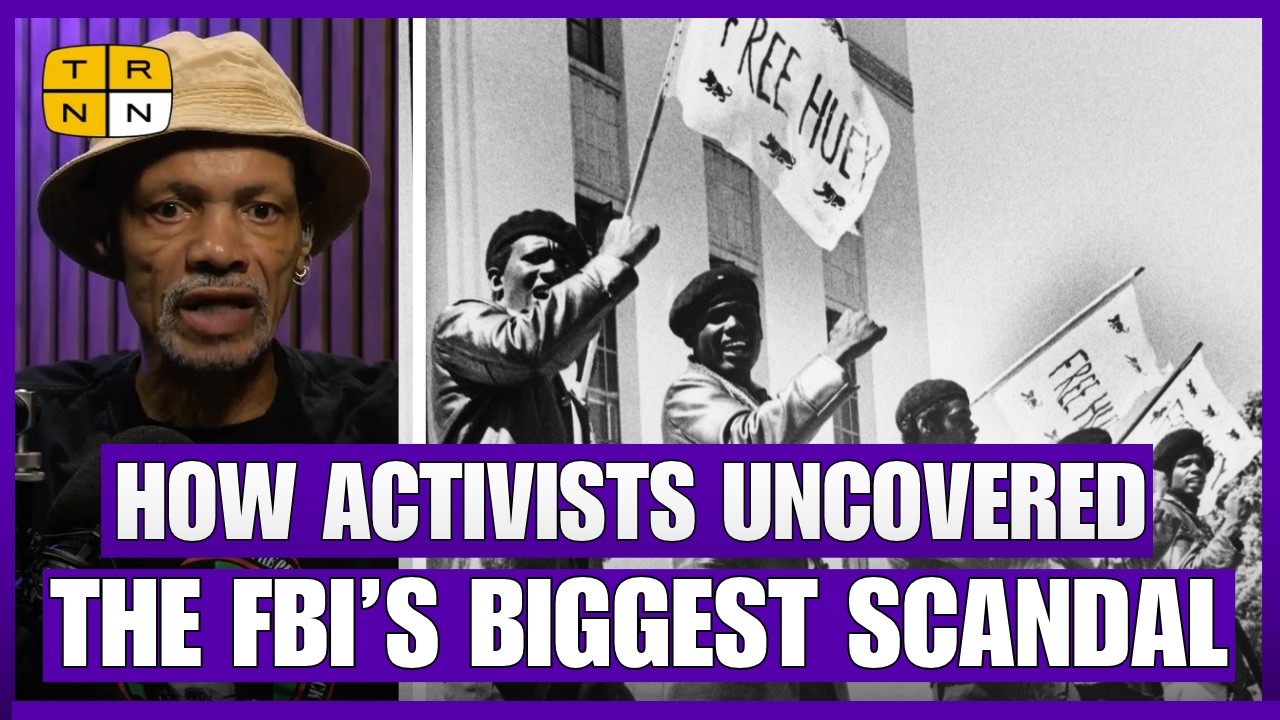
In the second half of this insightful conversation, former political prisoner Mansa Musa joins Black Panther Party archivist and photographer Billy X Jennings to examine the pivotal 1971 FBI office break-in by antiwar activists. The stolen documents exposed COINTELPRO—the federal government’s covert operation to surveil, infiltrate, and dismantle radical political movements. Despite state-sponsored efforts to suppress the organization, the Panthers’ legacy survives through modern social movements, culture, politics, and communal socialism. Oakland Mayor Barbara Lee, who worked closely alongside the Panthers on their early survival programs, brings deep personal insight into their lasting community impact. Published in conjunction with the 60th anniversary of the Black Panther Party, this feature continues our series on the BPP’s enduring role in social justice.

Related links:

Credits:

  • Production/Post-production: Cameron Granadino
Transcript

The following is a rushed transcript and may contain errors. It will be updated.

Mansa Musa:

I was reading Huey’s dissertation for his doctoral called War Against the Black Panther Party: A Study in Oppression in America. And in that, he outlined one COINTELPRO and COINTELPRO systematic attack on the party to the point of Eddie Conway wrote the book called The Greatest Threat Ever, outlining how the federal government systematically targeted anybody, but more specifically members of the Black Panther Party to either isolate them or kill them or send them to prison where they served death of a thousand cuts and then they ultimately die. Talk about once that information came out about COINTELPRO and its involvement in destroying the party, how did that change your views or how did that impact the political landscape as you seen it when it come to organizing and revolutionary ideology?

Billy X Jennings:

It wasn’t till 1970 that people officially found out what COINTELPRO was. We always knew there was some kind of program out there that wiretapped us, how the FBI followed us and set us up for different charges like that. But on a personal basis, COINTELPRO helped me stay out of jail. Now, COINTELPRO is not something they invented for the Black Panther Party. It’s something they always had going on, but they ramped it up three degrees because of the party, how the party came out or how effective the party was. So in 1970, when these young anti-war people broke into this post office in Pennsylvania, it helped me out because at that time, Huey P. Newton was on Nixon’s enemy list. I am Huey P. Newton’s personal aid. So when FBI sees Huey, they see me.

And so I’m a much easier target than Huey. So they started using the draft to gift me, the selective service. Now, this is the same method they used against members of SNCC, another organization that preceded us. They would get the selective service to start sending them letters to have them drafted. And you only got three choices. Either you’re going to leave and go to Canada, you’re going to go underground, or you’re going to jail. Any one of them stopped you from being affected, and that’s what they wanted. They wanted to stop people from being affected so they would hold this selective service thing over their head. So what happened when they did the same thing to me, right? They arrested me when I was with Huey after coming to court. So I went to court for this draft evasion thing. The federal government had three of their attorneys on my case.

And so what happened was this, they wanted to charge me for draft evasion, but my attorney pointed out they wanted all the documents, film, phone, anything connected with Bill Jennings. And they immediately dropped my case on the spot because they were still trying to hide the fact that they had a program called COINTEL PRO and they didn’t want to reveal it because of me.

So they just dropped my case. So I walked away from that whole case because COINTEL PRO was discovered and they didn’t want to dispose all the footage they had of me and Huey together because that’s what they were doing, compiling stuff on Huey. I just happened to be there.

So that’s how COINTEL PRO affected me, but a lot of party members went to jail. Geronimo G Jaga did 27 years. They pulled him off the street. The FBI lied on him. They said he helped kill someone in the LA, but at the same time, the FBI was watching him while he was in Oakland attending meetings. They lied on the brother, just like they did. Maybe about 35 or 40 Panthers went to jail, maybe 35 Panthers were killed through COINTEL PRO. And many like Fred Hampton were victims, minding their own business. The next thing you know, law enforcement has them in their clutches one way or another. So it was not easy being a party member during those times.

Mansa Musa:

And they knew Eddie Conway was at work when this incident happened. They went to where he worked at in the post office and told the people to say that he wasn’t at work. And then they planted a snitch in his cell or they had one of them snitchers come up and say that Eddie said something. They had coerced people to lie against. So to your point, that was their methodology during that time. Like you say, they going to get you through selective service. They’re going to get you through income tax. They’re going to get you any way, shape, form or fashion. But talk about what do you think about this recent group in Philly that call themselves the Black Panther and then switch their name to the Black Lions and they’re doing some organizing. They got a large presence on social media. They can be seen, engaged in mutual and exercising their rights through confrontation with the police.

Basically, their strategy is being more confrontational. Are you familiar with them and what you think about

Billy X Jennings:

Them? Well, I am somewhat familiar with them. I get emails from them, messages. But just recently there was a meeting held in Philadelphia with Panthers, real Panthers, original Panther members and members of the Black Lions. We suggested then that they change their name because our legacy was built on positive direct action in the community. This is our legacy. We can’t have any young group. We don’t even know what you believe. Come and say you’re party members. The Black Panther Party stopped existing in 1982. So you should come up with a name for your own legacy so people can identify you because what you’re doing, we don’t know who you are. COINTELPRO and all that, you might be good at heart, but we don’t know you. Start your own legacy. Start from ground one, change your name because our name is built on our legacy of what we’ve done and we don’t know what you’re going to do.

The Black Panther Party had 14 different medical facilities. Two are still open to this very day, one in Seattle and one in Portland.

Mansa Musa:

You

Billy X Jennings:

Can see Black Party still alive in groups like the Gray Panthers. They took up where the Black Panther Party left off with the senior citizens. The Black Panther Party had a senior escort service. All these different services the party provided, free buses to prison program. And the main purpose for that program was to keep the family unit together

Mansa Musa:

Because

Billy X Jennings:

People have cars, but many of the state prisons are far, far away. You might have a car that’s good for getting around the city, but getting on the freeway, your car might not make it. So we provide these services to keep the family unit together. It’s good that the Black Lives change their name. It’s good they’re doing social work in the community, but they also have to understand that longevity. Dealing with the police is good to have people who deal with the police who the police know they can’t run and rub shot it in our community. I don’t have anything bad about that, but that shouldn’t be your main focus. That should not be what you’re all about. The party blossom out past that, that’s how we started getting community support, breakfast programs, liberation school, providing services for people. That’s how you get people to change their mind, their attitudes about you.

They see what you do through your social

Mansa Musa:

Practice. In that regard, Billy, talk about what would be your message to youth because you got a lot of young people that’s learning about the party. You got a lot of young people that’s through social media becoming informed about it. And what would you tell them when they come up and say, okay, to your point, no, you’re not original member of the Black Panther Party. No, you don’t have the right to say that in terms of and then saying that’s what you are. But what would you tell them when they come up and say, we want to change the condition, social conditions, we want to do it in the same light that the Black Panther Party did it. What would you tell them to do?

Billy X Jennings:

I would tell them the Black Panther Party were operating in the 1960s and we’re in the 2026 era right now. So we can’t go back and keep doing stuff in the past. We had to come up with new ways of doing things, a new attitude of doing things. We set the table for all these social programs to be embraced in the community, but they have to take it from there. They have to take where we started and bring it into their conditions now. And I would say to young people, get with another group that has your same ideology, your same philosophy. If they’re serving the community or working in the community, work with them because we need to unify all our efforts and come together. Educating young people, having political education classes, taking people outside of the community, outside of their environment so they can see the bigger world and see where they fit in.

All those things are things that are doable things, job training, telling people how to write a resume. Those are those small things, but those things that help because we have a lot of hardcore brothers who get out of jail who are not educated in the educational system. They need that kind of nourishment to bring them up. That’s what we should be doing, community service to bring our people up and not run away from the people. The Black Panther Party, when we had social programs, we invited people to come back to work. We provided a place for doctors and nurses to, if you wanted to give back to the community, we have a clinic here. You could donate four to six hours a week to have those facilities there or people in the community or have a community meeting around issues in the community. That’s how you bring interested people together, unifying people.

Mansa Musa:

Yeah, that’s a good point because they got what they call the Malcolm X Grassroots Collective. I’m in DC and what they do every second and fourth Wednesday of the month, they have political education class and their political education. They’re not calling themselves some other than what they are organizing, but what they do, they have political education class and then the materials that they use, they using materials that they learned about from the Black Panther Party. But talk about the 60th and what you got planned with some of the things that you’ll be organizing for the 60th.

Billy X Jennings:

Well, that’s a lot. Well, I would say the 60th is what my particular role is, is I’m sponsoring a couple workshops on chapter history. Black Panther Party had over 40 different offices of the Black Panther Party. And there’s a lot of history in these different cities and geographical areas that we don’t know about that only the local people there knew about. So we’re trying to bring that history together so that people in Chicago would know what the people in Portland, Oregon was doing or the people in Seattle will find out who were some of the people that started the party down in Houston, Texas. And some of the programs, Salem, some of the problems the Winston-Salem chapter deal with because they were a chapter of the Black Panther Party that was actually in the South because they had problems that a lot of us didn’t have in California,

So forth. But chapter history, I’m doing some tours of Oakland, like I said, to educate a lot of people who’ve never been there before. A lot of people come to the reunions, they bring their grandkids or their great-grands. They want to show them what they was involved in, how all this thing originated. I have doing tours. I got a couple exhibits at the main library in Oakland about Black Panther Party rank and file. I have an exhibit open October 5th at the Alameda Law Library, which is across the street from the Oakland main library. Oh,

It’s across the street from the Oakland Main Museum. So that exhibit’s going to focus on the impact of the Black Panther Party on the law because of the political prisoners, clientele pro, racism in the police department, all those kind of things. So I got my hands full and on the 18th, which is the last day of the conference, I’m in charge of a day in Bobby Hutton Park. Local hip hop artists, poets, a couple bands will live music and we have speakers come, going to do it like we did back in the 1960s. Treat music, food, a joyful day in the community. Don’t caution that and all you have to do is bring your blanket, sit out and hear some speeches and hear some music and unify in the community.

Mansa Musa:

Okay. Thank you, Billy. Thank you. And Billy, we really appreciate you taking your time out to come on and educate our audience about all things the Black Panther Party. More importantly, clearing up a lot of misconcepts about the party, what it stood for, some of the more subtleties of it as opposed to, to your point, a lot of the things that was distorted primarily for the purpose of disassociating it from people, getting people to look at it in a different light. You came on today and educated us on how the party really operated as, like y’all said, the Vanguard intercommunal with us.

Billy X Jennings:

The party’s whole thing is to educate people. I had a young lady who worked in my campaign office when Bobby Seal ran for mayor. She is now the mayor of Oakland. So I know that she knows about the 10 point program and all those things. So the party is about growth and development and stuff like that. The Black Police Officers Association of Oakland was started because of the Black Panther Party, right? Because when they shut up our office on 45th and Grove in September 1968, the Black officers refused to help the white officers who was suspended from their job for shooting at that office. And they started an organization, which is one of the biggest Black organizations in Oakland. But a lot of people don’t know that history, but when we have chapter histories, a lot of this history that happened in those cities come up.

Who were now in charge of state health facilities work at the medical clinic and stuff like that. So there’s a lot of roots where people came from. We just have to talk about it, dig it up and document it for future generations because 17 years ago, when I was 17, I joined the party. Today I talked to people from all over the world. I just got off the phone talking to the New Zealand Panthers who are going to send some representatives out here. They have 15 members that came for our 50th. We have people from all over the world. We have Charlotte O’Neill coming in from Tanzania.

Mansa Musa:

Okay.

Billy X Jennings:

For over 50 years. Charlotte’s going through our libations. She has a film. She travels the world. We have all type of Panthers coming in, so this is going to be a event.

Mansa Musa:

There you have it. There you have the bars today. Look, you gave that row out. And we thank you for coming and sharing this information because like you said, at the end of the day, after everything all is said and done, the party was about educating our people about getting them to understand their right to self-determination and how to go about getting self-determination, understanding the contradictions, understanding social conditions, and more importantly, organizing to change conditions. And it’s a tribute to the party. No matter what people say about the party, that is the lasting legacy of the party is educate, educate, educate. Thank you, Billy. We appreciate you. All right. How do you want people to get in touch with you if they want to get in touch with you? They

Billy X Jennings:

Can get in touch with me by going to our website, itsabouttimebpp.com, which there’s a phone number and an address on that website. But for the 60th, you can go to bpp60.org for your latest update information on what’s happening with the 60th.
💾

On October 15, the Black Panther Party marks its 60th anniversary. Archivist Billy X Jennings highlights their legacy: 14 medical clinics (two still open in Seattle & Portland) and vital survival programs, like "free buses to prison... to keep the family unit together."
  •  

Tom Morello wants you to rock out and fight fascism

Journalist Kim Kelly (right) sits down for an exclusive interview with legendary musician and activist Tom Morello (left) backstage at the “Power to the People Festival” on Oct. 3, 2026. Photo credit: Maximillian Alvarez/TRNN.

On Oct. 3, nearly 20,000 people filled the Merriweather Post Pavillion in Maryland (while tens of thousands joined via livestream) to watch a “once in forever” lineup of musical all-stars perform at Tom Morello’s “Power to the People Festival“—from Bruce Springsteen, Joan Baez, and Jack Black to Run-D.M.C., Dave Matthews, Killer Mike, and Dropkick Murphys. In this exclusive backstage interview, legendary musician and activist Tom Morello speaks with music and labor journalist Kim Kelly about rocking out and the roles music and musicians can play in the fight against fascism.

Credits:

  • Videography: Maximillian Alvarez
  • Post-Production: Cameron Granadino, Maximillian, Alvarez
Transcript

The following is a rushed transcript and may contain errors. It will be updated.

Kim Kelly:

We are here, Power of the People. First festival sold out immediately. People are excited about it. What kind of power are we bringing? When you’re an artist, you talk about politics. A lot of folks here are not shy about sharing their political opinions. Sure. We’re dealing with fascism. It’s here.

Tom Morello:

Yes.

Kim Kelly:

What can an event like this do? What potential does an event like this do?

Tom Morello:

Yeah. I think the first thing I can do is prove something that I know to be true, which is that courage is contagious. And without even speaking hyperbolically, this is a festival of peace, love, justice, and music. It is a festival of peace in a time where war is celebrated. It is a festival of love and solidarity in a time where hatred and division are rife. It is a festival of justice in a time where injustice is the norm, both on our city streets and abroad. And in a time where artists are censoring themselves or being censored on this stage today, the artists are going to play exactly what they want to play and they’re going to say exactly what they want to say.

Kim Kelly:

Now, for someone who saw this line and was like, “Oh, cool. It’s all my favorite bands, but I don’t really care about politics. I’m not a politics person. Somehow they’ve managed to get to 2026.” What do you want them to take away from this? What’s the ask?

Tom Morello:

Well, first of all, the first thing we have to do is put on a great fucking show and people can enjoy that and take away my experience over the course of doing shows like this and making music. Compelling music with a political message for decades is that people sometimes are drawn to the experience. They’re drawn to the spectacle. They’re drawn to the rock. And then they’re exposed to a different set of ideas than they have been otherwise. Some of them will, and sometimes you’re preaching to the choir. The choir needs preaching to. The choir needs their spines strengthened, steeled, and wind in their sails. Sometimes you’re talking to people who now finally recognize their own anger and their suspicions about what they think about the world reflected back to them. And then sometimes people are just there for a good time. But you know what?

This is one more piece on their chessboard they’re going to have to contend with.

Kim Kelly:

Little Trojan horse situation. Now the artists here, I guess people are kind of coming from all over the place, but clearly there’s not a lot of people on stage who are going to be… They’d probably be happy to play with Macklemore.

Tom Morello:

Some stuff might happen today you might be surprised by on that front.

Kim Kelly:

Why do you think so many big artists are still so scared to speak out for what’s right? They just saw this unfold.

Tom Morello:

Yeah, yeah. I would not say, first of all, I don’t think it’s fair to sort of ghettoize artists as different from any other category of worker. People are scared to speak out as students. They’re scared to speak out as journalists. They’re scared to speak out as carpenters, et cetera, et cetera. Artists also are sometimes afraid to speak out. A concert like this, I got to say that one of the things, the real turning point in booking the show was sometimes it’s hard when you’re making your way through managers. This is a show where people are not being paid money. This is a show where it’s inconvenient. Oh, now you can’t play the DC market because you’ve done this already. But it was the ice murders of Alex Pretty and Renee Good that really turned the tide and artists started calling me and going, “I heard you’re doing a fest.

Can I be involved in some way?” Where I think there was a real feeling that their preconceived notions of stuff they could take for granted, their own safety, their family safety, democracy were really being threatened in a significant way. They’re like, “We want to do what we can with what we’ve got.” The good news is what we’ve got is a lot of great rock and roll, a lot of great hip hop, a lot of great folk music, and a lot of great heavy metal.

Kim Kelly:

Man. Okay. So I was looking through the lineup. I was like, “This is all the bands that Tom likes to hang out with.”

Tom Morello:

Yeah, exactly. Exactly. You try to

Kim Kelly:

Hang out with your

Tom Morello:

Buddies. Yeah, exactly. Well, yeah. Over the course of time, these are the people that say yes when you ask them to play a charity show, yes when you ask them to play at the barricades or some sort of protest. So those are the ones that raised their hand. We’re happy and honored to have them here.

Kim Kelly:

And for folks who were maybe a little bit more on the hardcore, heavy metal, a few more decibels. Who’s more familiar with your other work?

Tom Morello:

Sure, sure, sure, sure. Plenty of that today. I mean, don’t worry. Yeah, don’t worry.

Kim Kelly:

I’m here for a reason.

Tom Morello:

For

Kim Kelly:

Folks who are involved in those scenes and maybe didn’t get tickets to this or didn’t speak to them, but they’re still, they’re down. What do you want to see people in the broader music

Tom Morello:

Space? Yeah. Well, first of all, we have a global free live stream that people can watch everywhere right on. It’s not 10 hours of free for you to watch it. You can tune in and out as you choose. But for people in those scenes, again, I wouldn’t get wise. I’d say the people who own and control this world do not deserve to. And the only way that change happens is average ordinary everyday people who have had enough standing up in their place and time. Sometimes music can remind you of that, and that’s what we’re hoping to do on a day like Power of the People. I

Kim Kelly:

Have never felt safer at a concert in my life because there are 40,000 people here who think the same way I do.

Concert goer:

Power to the People. We don’t like Donald Trump. He can kiss my ass and their asses as well. And we love Bruce and we love Tom Morello and we love good music and we’re thrilled to be here.

Tom Morello:

Another thing we’re doing today, which I try to do at my own shows too, is on this day and on this night, creating a little bit of the world that we’d like to one day see. A world of joy and solidarity and celebrating resistance and fun and people from 15 years old to 85 years old, having a communal experience that makes you glad that you’re alive and feel that this is worth fighting for.

Kim Kelly:

Why does it feel important to you as someone who’s been on the left in the progressive world for a long time to focus on joy? Because we don’t always have a lot of fun. Sure. We’re not known

Tom Morello:

For – Lord knows we don’t have a lot of fun. We’ve all been to. Well, I mean every inch of the Power of the People Festival, we’ve emphasized that there are no long dreary speeches. I’ve had to turn away hundreds of dreary speakers, well-intentioned, but dreary speakers. And even the Freedom Village, we’ve tailored it in a way with some incredible local organizations and national organizations. There’s also free ice cream. There’s also Shepherd Fairy DJing. We want that to be a place that feels welcome and awesome and realizing these are the people who are doing the real work, but there’s community in that and it’s a welcome place. And like I said, the reason we concentrate on joy and fun and rock and roll and kick ass music, because that’s the world that we want to make. We want to make it so it can be like that beyond the confines of this concert.

Kim Kelly:

And to you, what does a successful result look like? Do you want a specific amount of people registered to vote? Do you want a specific amount of people buying stuff from Red Emmos? You got to shout them

Tom Morello:

Out. I think that whether or not the concert’s successful, first of all, let’s hope nobody falls off the stage. Really look at the basics. There’s 17 members of the Rock and Roll Hall of Fame playing on the stage today. It’s a concert. It is a once in forever lineup. It is a once and forever lineup. So one thing I’m hoping is that people have a fulfilling artistic experience, whether you’re on the stage or you’re off the stage. And then if you’re not careful, you just might learn something. If you’re not careful, you just might be motivated to do something tomorrow. If you’re not careful, you might be motivated to do something more than just vote in three weeks. As my dear departed mom, Mary Morello, who passed away at 102 years old lately, she said, “You got to fight the fascist every which way you can.” She voted at a hundred.

She voted at 102, but she was like, “Voting is just one day and that’s easy enough to do. The real work starts the next day where you begin organizing and acting in concert with like-minded people to create the world that you’d like to one day see.”

Kim Kelly:

She was a union woman, you’re a union man. We’re all union folks here. What would you like to see the labor movement doing right now as we’re dealing with… I mean, I’m getting every email in the world, “Go knock doors, go vote, go vote. Okay, sure.”

Tom Morello:

Yes.

Kim Kelly:

And then what?

Tom Morello:

Yeah, yeah, yeah. Well, first of all, I think that there still is a lot of hope in the labor movement because the thing that we can do in the labor movement is stop the world. I think that people don’t realize what a powerful, powerful tool solidarity is. And you can create any kind of world you want when people just stop working, when the gears stop, when the university stop, when the carpenters stop, whatever, when the truck drivers stop, all of a sudden your demands really, really matter because you can stop the economy, you can cost shareholders millions and billions of dollars by withholding your labor, a radical labor movement. I still think there’s a room for that to be something that can be very, very important in creating a better world.

Kim Kelly:

So is this Tom Morello officially coming out in favor of the 2028 general strike?

Tom Morello:

Coming out in favor, please. How about the 2026 general strike, the 2027 general strike, the tomorrow afternoon general strike?

Kim Kelly:

No, I got to let you get out of here, get back to rocking, but just mentioning this great local co-op we got here, Red Emmos, what are you reading right now that keeps you excited, keeps you hopeful?

Tom Morello:

That’s a good question. I’ve got two books back at the hotel. One of them is that I’ve been reading with my son. It’s comprehensive, like the ideas of human beings. So from chardism to a narcosyndicalism, et cetera. It’s like a paragraph on each, which we read together and sometimes he’s bored and sometimes he’s more enthusiastic about it, but that’s what I’ve got brought to the hotel with the family now.

Kim Kelly:

Really? All right. I was not fishing for you to mention my book. It’s fine.

Tom Morello:

Yes. Your book features prominently in his library.

Kim Kelly:

Well, thank you so much, Robert.

Tom Morello:

It’s always great to have you. Thank you for your service and I appreciate you. This

Kim Kelly:

Has been Kim Kelly.

Tom Morello:

Tom Morello.

Kim Kelly:

For the Real News Network.

💾

In this exclusive interview, filmed backstage at the "once in forever" Power to the People Festival on Oct. 3, legendary musician and activist Tom Morello speaks with Kim Kelly about rocking out and fighting fascism.
  •  

‘Part of the fascist playbook’: Ilhan Omar condemns Trump DHS raid on her home

US Rep. Ilhan Omar (D-MN) poses for a portrait in her office on Capitol Hill on Wednesday December 10, 2025. Photo by Demetrius Freeman/The Washington Post via Getty Images
Common Dreams Logo

This story originally appeared in Common Dreams on Oct. 13, 2026. It is shared here under a Creative Commons (CC BY-NC-ND 3.0) license.

US Rep. Ilhan Omar on Monday forcefully condemned the Department of Homeland Security’s raid on her Washington, DC home as part of a broader effort to weaponize federal law enforcement against progressives who oppose President Donald Trump’s agenda.

“This is part of the fascist playbook to rile up Trump’s die-hard supporters and give them a big distraction in advance of the midterms,” Omar (D-Minn.) wrote in an email distributed by the Progressive Change Campaign Committee hours after the raid. “With this obviously political investigation, Trump is telling his voters: ‘Ignore the price of gas, ignore the war in Iran, ignore that you’re losing your healthcare—we want you to get angry about this instead.’”

The email followed a statement issued by Omar’s office saying that the congresswoman “has done nothing wrong” and condemning the raid as “an outrageous abuse of power.”

“For a decade, Donald Trump has relentlessly targeted Congresswoman Ilhan Omar with inflammatory rhetoric, repeatedly putting a target on her back,” the statement read. “Now, those attacks have escalated to a pointless federal raid.”

The Trump Justice Department said the raid, executed by the investigative arm of DHS, was “part of an ongoing federal criminal investigation.” Trump administration officials are reportedly probing whether Omar, who entered the US as a child refugee from Somalia and became a citizen in 2000, is in the country illegally. CBS News reported that the investigation centers on paperwork completed by Omar’s late father when she was a child.

Trump told reporters at the White House on Monday that he has “nothing to do with” the Omar investigation while attacking her as a “terrible person.” Omar and the Somali American community in Minnesota have been frequent targets of the president’s bigoted attacks, and Trump has called for the Democratic lawmaker to be jailed or deported.

“For ten years, Trump has targeted me with baseless lies and smear campaigns. This is just the latest escalation in his campaign of political intimidation. I will not be silenced,” Omar wrote in a social media post on Monday.

In the campaign email, Omar called the federal investigation a “sham” and “further proof” that Trump is “willing to use the power of the federal government to try to intimidate and silence anyone who stands up to him.”

“It’s up to us to make sure it doesn’t work,” Omar added.

The raid on Omar’s home drew widespread condemnation, including from top Democrats in Congress. The leadership of the House Democratic caucus issued a statement calling the raid a “deeply disturbing” act that “raises serious questions about the continued corrupt weaponization of the federal government against Donald Trump’s adversaries.”

Rep. Sydney Kamlager-Dove (D-Calif.) denounced the raid as “fascism in the extreme.”

“Trump is weaponizing the federal government to escalate his racist attacks against Rep. Omar, undermine her ahead of the midterms, and distract from his failures as president,” Kamlager-Dove added.

  •  

Beards and loathing: A cop union convention comes to Las Vegas

Original photo used for cover image: A welcome sign greets attendees at the 23rd Quadrennial Convention of the International Union of Police Associations at the Paris Hotel in Las Vegas, Nevada on August 25-28, 2026. Original photo credit: Hamilton Nolan/TRNN. Original photo has been altered with AI and human design features to create cover image.

This feature report was co-produced and is being co-published in partnership with How Things Work by Hamilton Nolan and The Valley Labor Report.

On a plain, blue-lit stage in a plain event space at the Paris Hotel in Las Vegas, a gruff man with white hair and a thin goatee is complaining about Las Vegas. How it is too hot. How it is too expensive. And how the hotel’s convention-management bureaucracy is driving him nuts.

“You can’t even move a box from left to right without contacting someone to do that!” he barks into the microphone.

Far from all the political bluster about the police being defunded, six years after the earth-shaking George Floyd protests swept the US and public approval for law enforcement plunged to a generational low, these guys have never been more politically and monetarily supported than they are now.

This will become a communal ritual by the end of the week. Without fail, like some sort of morning prayer, the convention begins every day with opening grumblings about the convention itself.

We can see why. After all, the organization convening here is supposed to be a strong union representing nearly 20,000 members around the country. Far from all the political bluster about the police being defunded, six years after the earth-shaking George Floyd protests swept the US and public approval for law enforcement plunged to a generational low, these guys have never been more politically and monetarily supported than they are now.

But there are only about 50 people in the room here with us (28 delegates, 10 alternates, and some wives and family members mixed in). The proceedings are pretty boring and energyless, the attendees are grumpy, and the air is thick with middle-age resentment.

A welcome sign greets attendees at the 23rd Quadrennial Convention of the International Union of Police Associations at the Paris Hotel in Las Vegas, Nevada on August 25-28, 2026. Photo credit: Hamilton Nolan/TRNN.
A welcome sign greets attendees at the 23rd Quadrennial Convention of the International Union of Police Associations at the Paris Hotel in Las Vegas, Nevada. Photo credit: Hamilton Nolan/TRNN (August 25, 2026).

Clearly, the convention organizers and speakers were expecting something much different than this. To be honest, so were we. Because it’s 2026, Donald Trump is president again, and this is the 23rd Quadrennial Convention of the International Union of Police Associations (IUPA), which represents tens of thousands of cops in departments from coast to coast.

The convention was billed as “The premier gathering for law enforcement leadership… An event you don’t want to miss!”

But it’s absolutely dead here. Even the speakers and attendees don’t want to be here. In fact, they won’t shut up about it.

THE BLUE SHEEP OF THE FAMILY

It is by no means the largest police union in America, but IUPA has the distinction of being the only police union that is a member of the AFL-CIO. It joined the labor federation in 1979, making it a formal but uncomfortable partner to every progressive labor union and every rank-and-file union member in the AFL-CIO who has ever had to question why they should be affiliated with a union representing the same kind of cops who beat and arrest them, their union siblings, and their neighbors at protests and on picket lines.

The plainspoken man on stage right now grumbling about the convention, the one with white hair and the thin goatee—that’s Sam Cabral. He’s been IUPA’s president for more than 30 years.

International Union of Police Associations President Sam Cabral stands at the podium, flanked by union members and officers, at IUPA's 23rd Quadrennial Convention in Las Vegas, Nevada on August 25, 2026. Photo credit: Hamilton Nolan/TRNN.
International Union of Police Associations President Sam Cabral stands at the podium, flanked by union members and officers, at IUPA’s 23rd Quadrennial Convention in Las Vegas, Nevada on August 29, 2026. Photo credit: Hamilton Nolan/TRNN.

Cabral certainly sets the right wing edge of the AFL-CIO’s unions and union leaders. In 2014, when grassroots racial justice protests rocked Ferguson, Missouri following the killing of Michael Brown by police, the AFL-CIO’s then-President Richard Trumka, who was by no means a hard-left figure, joined calls for police reform and an end to police militarization.

That really pissed off Cabral. In a Strongly Worded Letter to Trumka, he proved what citizens have long known about how law enforcement “workers” wielding the might and prejudice of state violence see the rest of us: “[Police] are not the cause of the problems facing the black communities in America. They are not responsible for the single parent families, the unemployment, the school dropout rate or its attendant unacceptable literacy rate among black youth. They are not responsible for the gangs, black on black crime or the infant mortality rate.”

It is by no means the largest police union in America, but IUPA has the distinction of being the only police union that is a member of the AFL-CIO.

In true “nothing-to-see-here” fashion, Cabral also noted that, when it comes to police department staffing, “we have not ever seen racism or systematic exclusion of minorities.”

In 2020, as populist fury and protests swept the nation (and beyond) following the filmed police murder of George Floyd in Minneapolis, Minnesota, parts of the labor movement (including Hamilton’s own union, the Writers Guild—East) renewed their push for the AFL-CIO to disaffiliate from IUPA, on the grounds that police unions have clear, unique, existential interests that are irreconcilable with the shared interests of the rest of their alleged union siblings. AFL-CIO leadership disagreed, and they decided instead to speak out in defense of IUPA and its membership: “We believe the best way to use our influence on the issue of police brutality is to engage our police affiliates rather than isolate them.”

Yet the federation’s nominal support for some general accountability and police reform was still too much for Cabral. Stepping back into the political fray to hold the Thin Blue Line, he fired off another furious letter to Trumka, saying that the AFL-CIO President criticizing police over what happened to Floyd was “reprehensible” and an act of “profiling.”

“[Police] are not the cause of the problems facing the black communities in America. They are not responsible for the single parent families, the unemployment, the school dropout rate or its attendant unacceptable literacy rate among black youth. They are not responsible for the gangs, black on black crime or the infant mortality rate.”

Sam Cabral, President of the International Union of Police Associations

“Your recent statement where you speak of ​‘America’s long history of racism and violence against black people’ is inflammatory and patently false,” Cabral wrote. “Further, your call to end racial profiling and ‘demilitarize’ police forces makes assumptions that are, again, ridiculous.”

Shocking no one, IUPA endorsed Donald Trump’s presidential reelection bid in 2020, and Cabral full-throatedly joined the MAGA chorus. “Every top Democrat currently running for this office has vilified the police and made criminals out to be victims. They seem to take any union’s support for granted,” he wrote in an official statement in September of 2019. “Many of them still refer to the tragedy in Ferguson as a murder, despite the conclusions of every investigative inquiry to the contrary.”

On the projector screen at the 23rd Quadrennial Convention of the International Union of Police Associations in Las Vegas, Nevada, a presenter displays a slide entitled "Racism and Policing: The Facts." Photo credit: Hamilton Nolan/TRNN.
On the projector screen at the 23rd Quadrennial Convention of the International Union of Police Associations in Las Vegas, Nevada, a presenter displays a slide entitled “Racism and Policing: The Facts.” Photo credit: Hamilton Nolan/TRNN (August 26, 2026).

“THEY OBSTRUCTED EVERYTHING”

The mood-deadness and industrially chilled air here in the half-empty Concord Ballroom at the Paris Hotel contrasts so starkly with the grassroots intensity fueling the 2020 George Floyd protests—and with the heat and fury of the longstanding, ongoing debates about what the proper relationship between the labor movement and the police should be.

“Police unions are a conservative force in every institution they find themselves in,” Bill Fletcher Jr.—a lifelong unionist and racial justice activist—tells us over the phone. Fletcher recounts dealing with the police sections of his union during his time as Director of Field Services for the American Federation of Government Employees (AFGE), the largest federal employees union (and Jacob’s own union), which represents many members who are employed as law enforcement.

“It was like having a ship trying to leave the harbor with an anchor still out,” Fletcher says. “They obstructed everything.”

They could even openly flout the rules of their own union and face no consequences, Fletcher tells us. AFGE’s ICE Council did exactly that when they de-facto endorsed Donald Trump in 2016, against AFGE’s endorsement of Clinton. Guess we shouldn’t be surprised.

In order to secure member support for an agenda that is more challenging to the police state—an issue that is becoming more urgent by the day in Trump’s America—the labor movement needs “serious education” and an “open discussion that begins with the fact that the politics of the IUPA” and other cop unions “run counter to the rest of the labor movement.”

At one point during his time as an AFL-CIO staffer, Fletcher remembers trying to get the labor federation to encourage then-President Bill Clinton to issue a pardon or clemency for political prisoner Leonard Peltier. His proposal was not enthusiastically received. No one asked if taking such a step was worthwhile. No one debated whether it was the right thing to do. Instead, they just asked, “What does IUPA think?”

“They blasted the idea,” Fletcher says, “and that settled it.”

Therein lies the problem, and it’s not a new problem. As Fletcher puts it over the phone, in order to secure member support for an agenda that is more challenging to the police state—an issue that is becoming more urgent by the day in Trump’s America—the labor movement needs “serious education” and an “open discussion that begins with the fact that the politics of the IUPA” and other cop unions “run counter to the rest of the labor movement.”

But Fletcher has his issues with the “Defund the Police” camp, too, and he’s certainly not the only one. While agreeing with many of the goals of police accountability activists—in particular, the need to demilitarize the police and to delink police unions from the rest of the labor movement—Fletcher argues that many in the movement for police accountability have marginalized themselves.

“People have a right to safety,” Fletcher tells us, recalling a terrifying incident when his daughter was held up at gunpoint. “If a cop had killed the guy who did that, I wouldn’t have cared. The way I see it, when you point a gun at someone, those are the chances you’re taking. And I’m a Marxist.”

On the projector screen at the 23rd Quadrennial Convention of the International Union of Police Associations in Las Vegas, Nevada, a presenter depicts a photo of protestors marching in the street, with one protestor prominently holding a sign that says "Defund the Police." Photo credit: Hamilton Nolan/TRNN.
On the projector screen at the 23rd Quadrennial Convention of the International Union of Police Associations in Las Vegas, Nevada, a presenter depicts a photo of protestors marching in the street, with one protestor prominently holding a sign that says “Defund the Police.” Photo credit: Hamilton Nolan/TRNN (August 26, 2026).

Fletcher makes the point stick by telling us about a 2020 forum he attended organized by the New York State Nurses Association (NYSNA). The union had also put out a statement in response to the police murder of George Floyd, which Fletcher commended as “a good statement.” That pissed off a lot of NYSNA members at the forum. Many of those members were married to cops, he says, and they felt like the statement attacked their partners.

Fletcher wonders aloud if certain segments of the left today—those who say they support unions but have no patience or tolerance for law enforcement of any kind—have any patience or tolerance for working people like those NYSNA members and their families. They should, he says.

A THIN BLUE WHINE

Over the course of the convention, IUPA’s relationship with the AFL-CIO is the target of more than one sarcastic barb. Cabral refers to IUPA’s “friends” in the House of Labor with all the contempt of Denethor II in his voice.

Far from eschewing the negative popular stereotypes about cops in America—and far from heeding or caring about assertions from organized labor that the interests of police unions run directly counter to the shared goals of the rest of the labor movement—most of the cops here seem to revel in not caring at all (and not having to care) about those things.

Many at this convention make it clear to us that police unions and their members feel no need or duty to consider, accept, or align themselves with the goals of the broader labor movement. According to them, it is the rest of the labor movement whose politics and priorities are out of whack.

On the projector screen at the 23rd Quadrennial Convention of the International Union of Police Associations in Las Vegas, Nevada, a presenter displays a slide entitled "Pendulum Swinging Toward Sanity." Photo credit: Hamilton Nolan/TRNN (August 26, 2026).
On the projector screen at the 23rd Quadrennial Convention of the International Union of Police Associations in Las Vegas, Nevada, a presenter displays a slide entitled “Pendulum Swinging Toward Sanity.” Photo credit: Hamilton Nolan/TRNN (August 26, 2026).

Presenters frequently point to a Gallup poll from last year that shows 74% of Americans having confidence in their local police, and 76% being satisfied with the relationship between the police and the public. Gallup’s long-running “Confidence in Institutions” poll also shows that 45% of Americans have a “great deal” or “quite a lot” of confidence in police. Another 32% have at least “some” confidence.

In the six years since Floyd’s murder in Minneapolis—and the furious eruption of demands for racial justice and police accountability that followed—law enforcement unions (at least at the national level) have done absolutely nothing to try to meet the rest of the labor movement—or the rest of the country—on this issue. It’s also true and fair to say that neither unions in general nor the AFL-CIO specifically have made any attempt to seriously “engage” police unions on this issue.

In the six years since Floyd’s murder in Minneapolis… law enforcement unions (at least at the national level) have done absolutely nothing to try to meet the rest of the labor movement—or the rest of the country—on this issue

During the convention, when we speak to delegates about their relationships with other unions back home, they don’t have much to say.

One IUPA local president tells us his union is affiliated with the local labor council, but they don’t participate in council activities anymore, due in large part to rifts caused by political differences.

In Florida—the state where the IUPA international headquarters resides and where some of its largest locals are—labor reporter McKenna Schueler says the union is more or less a nonentity. IUPA members and leaders don’t really work with other labor leaders and unions down there. And the other police unions, which are much bigger in size and have much more political influence, don’t really need IUPA to see their priorities supported in Ron Desantis’s Florida.

“Police get what they want here in the state of Florida,” Joey Davis, a Florida firefighter and member of the International Association of Fire Fighters (IAFF), sums it up to us. As a member of the IAFF, Davis says he’s worked with the Police Benevolent Association (PBA) and the Fraternal Order of Police (FOP) on shared policy priorities. But, echoing Schueler’s assessment, he says that IUPA has never been all that relevant.

Police unions and their members feel no need or duty to consider, accept, or align themselves with the goals of the broader labor movement. According to them, it is the rest of the labor movement whose politics and priorities are out of whack

Here at the convention, there’s certainly no love lost for the Fraternal Order of Police. To Cabral, FOP is less of a union and more of an advocacy organization with a bad insurance plan, which he contrasts with his own union, boasting about IUPA’s huge resources for members’ legal defense costs.

A FEW GOOD APPLES DON’T UN-SPOIL THE BUNCH

To put it bluntly, Cabral pretty much looks and talks exactly like you’d expect a cop union leader in America to look and talk like. But it would be dishonest not to mention that there are other attendees and speakers here who either buck the stereotype or at least complicate it. John Covington, Vice President of the Memphis Police Association (MPA)—an IUPA affiliate—is one of those people.

We speak with Covington on a Zoom call after the convention is over. He freely admits that he is “very active” in Republican politics in the state of Tennessee, but says he doesn’t see a contradiction between that and his commitment to labor.

“Supporting workers—advocating for the backbone of the city, the working class—doesn’t have to fall on any political spectrum ” he tells us.

There’s a disconnect sometimes between national politics and locally what’s most effective. When it comes to police unions, what we run across is the left is very suspicious of us because we’re police, and the right is suspicious of us because we’re in unions. We get it from both sides. [But] we use whatever influence we have to let it be known that we don’t stand alone and if you’re gonna support us… you have to support these others.

My advice for a lot of local [unions] in cities, especially Republican cities that naturally the right is going to gravitate to: be supportive of first responders. Those other unions may want to find ways to find that common ground and work together and… look out for each other, and get that mentality of “Look, we may not agree on every single thing, but when it comes down to the voice of the workers, of making conditions better, we’re all on the same page—and if one of us falls under attack, we all fall under attack.”

And then, for police that have more Republican support [my advice would be] to garner more Democratic support, to create coalitions together, because the biggest thing you could ever lose is that voice and right to collectively bargain… We understand the responsibility we have being one of the bigger [unions]; we’re not going to let any of our brothers and sisters fall by the wayside.

Of course, we bring up the fact that many police unions don’t see things the way Covington does. Hamilton recounts how collective bargaining rights for public sector workers are frequently attacked by austerity-horny politicians while police and fire departments get special carveouts. Covington doesn’t dispute the point, but tells us, “We’ve recognized that if you let one fall, you’ve started the domino effect to let all fall, and we take that very seriously. We’ve been under attack for 30 years—all of us. Sometimes the powers-that-be come after us, and the other unions stand with us. Other times it’s them that are the focus, and we stand with them. The bottom line is: advocating and giving a voice to all these folks that make the city run—that’s really unifying. We’re stronger together. ”

To put it bluntly, Cabral pretty much looks and talks exactly like you’d expect a cop union leader in America to look and talk like. But it would be dishonest not to mention that there are other attendees and speakers here who either buck the stereotype or at least complicate it.

Covington isn’t just a one-off figure. According to Memphis Labor Council President Kevin Bradshaw, Covington’s whole MPA local—one of IUPA’s largest—bucks the long-established trend of how cop unions operate.

Bradshaw is a leader in the Bakery, Confectionary, Tobacco Workers, and Grain Millers (BCTGM) union representing Kellogg’s factory workers in Memphis, and he has led the labor council since 2022. He says the Memphis Police Association has been active in his labor council since Bradshaw started coming around well over a decade ago—and they continue to be a valued partner.

With 2,000 members, the MPA attends Labor Day parades, supports candidates endorsed by the labor council, and walks picket lines with other union members. Bradshaw also recalls multiple instances of the MPA helping to connect members of other unions to needed resources; particularly, women fleeing domestic abuse. Then he shares an important memory with us.

During the 2021 Kellogg’s strike—a strike that lasted 77 days and involved workers at Kellogg’s plants in Battle Creek Michigan; Lancaster, Pennsylvania; Omaha, Nebraska; and Memphis—Bradshaw recalls the company trying to weaponize the cops and the courts against BCTGM strikers by claiming they were breaking the law, trespassing, and blocking the entrances. But Memphis police officers stood up for the BCTGM members and set the record straight. No one was arrested.

“We got calls from anti-union folks and from the company about the picket line,” Matthew Cunningham, MPA President and IUPA Region 15 Vice President, tells us after the convention. “We have to go when there is a call. But the BCTGM members were always following the law, so when we got there and investigated, we just told them they were doing a great job and went back to the station.”

When it comes to police unions, what we run across is the left is very suspicious of us because we’re police, and the right is suspicious of us because we’re in unions. We get it from both sides.

John Covington, Vice President of the Memphis Police Association

Cunningham also recounts an incident last year with Memphis Mayor Paul Young—a “Democrat in name only” who, according to him, is backed by “business owners and old money.” Mayor Young and the Memphis City Council sparked a furious uproar when they tried to revoke collective bargaining rights for city employees last October. What we hear from Cunningham—and what other labor leaders in Memphis have corroborated—is that MPA worked with the other municipal unions to fight back and save union rights, not just for cops and MPA members, but for all city unions. Rather than carve out a side deal for his members—as many police union leaders have repeatedly done in cities and states across the country—Cunningham led that fight to protect bargaining rights for all.

To be honest, Cunningham seems like a genuinely solid guy who is trying to do the most good he can. And of course there always are, always have been, and always will be genuinely good-hearted people who choose to make a living wearing a badge on their chest.

But the reality that there are decent people who work as law enforcers doesn’t negate the reality of what law enforcers do to poor and working people across the country (and what the police exist to do in our society). Two things can be true at the same time. Many things are true at the same time, in fact.

The reality that there are decent people who work as law enforcers doesn’t negate the reality of what law enforcers do to poor and working people across the country (and what the police exist to do in our society). Two things can be true at the same time.

Everything Memphis Labor Council President Kevin Bradshaw recounted about what happened (and, more importantly, what didn’t happen) between the Kellogg’s strikers and the MPA cops is true. So are all the documented and completely unwarranted murders of people by police. So are all the verified, horrifying images of police brutalizing and crushing student demonstrations, strikes, and countless forms of protest or righteous civil disobedience. So are all the other abuses of power people have experienced firsthand, witnessed with their own eyes, and recorded with their phones. So are all the things that the Fraternal Order of Police and its president Patrick Yoes have said in public and written down. So are all the things IUPA president Sam Cabral has said in public and written down.

When we’re talking to Bradshaw, we show him IUPA’s 2020 statements about George Floyd, racism in policing, etc. He is shocked.

As a contrast, he points to the way the MPA reacted to the brutal killing of Tyre Nichols, an unarmed black man who was beaten to death. While the association didn’t explicitly condemn the officers in press statements, they also offered no public defense of them. They did, however, provide a legal defense to the tune of $4.2M and counting.

Regarding the Nichols case, Covington stresses that the legal defense fund is a distinct entity that they pay into, and that it is ultimately that entity that makes decisions about which cases to take. (Here at the convention, funding the Tyre Nichols defense is something that the administrator of the fund openly brags about.) The Memphis Police Association never took a vote on whether or not to expend funds defending Nichols’ killers. But Covington reiterates what the union said at that time: that everyone deserves due process.

On the projector screen at the 23rd Quadrennial Convention of the International Union of Police Associations in Las Vegas, Nevada, a presenter displays a slide with a police officer crouched on the street and looking forward with determination. The text next to the police officer says, "Engage with Energy." Photo credit: Hamilton Nolan/TRNN (August 26, 2026)
On the projector screen at the 23rd Quadrennial Convention of the International Union of Police Associations in Las Vegas, Nevada, a presenter displays a slide with a police officer crouched on the street and looking forward with determination. The text next to the police officer says, “Engage with Energy.” Photo credit: Hamilton Nolan/TRNN (August 26, 2026)

Defending “bad workers” is something that all unions have to deal with. When required to defend workers who actually have sub-par performance records or who have committed some other form of misconduct, most unions will generally defend this practice by arguing that protecting the contract is their paramount duty, that everyone deserves due process and a good defense, and that it is management’s job, not the union’s, to discipline.

But does that entitle the officers who killed Tyre Nichols to a $4.2 million Cadillac legal defense when they are so clearly in the wrong, should clearly never be entrusted with law enforcement duties ever again, and should (under the logic of our carceral system) be serving serious time for their crimes? Doesn’t it stand to reason that such defenses just embolden cops to use more force than they otherwise might? Is it the responsibility of the union to consider social ramifications like that, even if discipline and performance are supposedly the sole responsibility of management?

These questions are neither brought up nor wrestled with at the IUPA convention. Instead, a resolution is passed supporting qualified immunity for cops—unanimously, as far as we can tell.

IS THIS WHAT DEMOCRACY LOOKS LIKE?

In hindsight, the cops won the fight over police reform.

Police departments were not defunded; their budgets are bigger than ever. As IUPA members are quick to point out, confidence in police is still quite high—significantly higher than in the immediate aftermath of the 2020 murder of George Floyd. Even Zohran Mamdani, New York’s socialist mayor and erstwhile supporter of defunding the police, went on an apology tour to placate the police.

The AFL-CIO’s momentary enthusiasm for police reform collapsed into a symbolic committee that released a report rejecting calls to “Defund the Police.” Richard Trumka died suddenly in 2021. Now Donald Trump is in charge again. IUPA is still an AFL-CIO affiliate. And under the gaudy, chandeliered ceiling of the Paris casino, Sam Cabral has just been reelected as IUPA’s International President.

No doubt the record drops in crime the US is experiencing have something to do with the decrease in grassroots movements that are more antagonistic towards police. Ironically, current drops in crime can be attributed, at least in part, to policies advocated for by these very movements, from investing in non-carceral solutions to societal ills like poverty, homelessness, and drug abuse, to pushing local governments to hire and employ more people as social workers, teachers, counselors, clinicians, etc.

Eric Blanc, a prominent socialist writer and member of NYC-DSA, argues that an approach of emphasizing the addition of social services rather than subtraction of policing is a better agenda to pursue anyways. “Fight for a massive redistribution of wealth,” which could be used to fund programs like these, ultimately “taking jobs away from cops,” he says, instead of fighting them head on. With respect to the demand to kick police unions out of the AFL-CIO, Blanc cautions that, to many working people, it is “not so obvious how kicking out cops makes the world better.”

Hamilton Nolan (left) and Jacob Morrison (right) pose for a selfie while reporting from the 23rd Quadrennial Convention of the International Union of Police Associations in Las Vegas, Nevada. Photo credit: Hamilton Nolan/TRNN (August 28, 2026).

The slogan itself definitely needed some work, but it’s important to remember that “Defund” was as much about diverting public money away from police as it was about putting more money into social services. It was about questioning whether armed police officers should be asked to be the primary first responders when someone is experiencing a mental health crisis. Cops are being asked to do too much, with deadly consequences, and the Defund movement sought to take some of those responsibilities off their plate.

When we ask Covington about this, he enthusiastically endorses the call for increased spending on social services, acknowledging that they help a lot. “[The system] we have now is you take them in and in two days they’re back on the street, and we have no control over that. We want to see more support, more programs for people… We don’t like having to do all these roles that fall on us.” However, when it comes to “defunding” or replacing police with social workers on distress calls, or even adding them to a team of police, Covington is still very wary. “Situations can get out of hand quickly, violence can happen very quickly… For us, to bring a social worker on a scene—that’s one more person you have to protect. It’s that much more dangerous.”

Earlier this summer, the AFL-CIO’s quadrennial convention was held in Minneapolis. The federation made it a point to uplift and honor the role that Minnesota’s unions had played in the hard and grinding grassroots opposition to ICE that traumatized the city this year. A few months later, one of the AFL-CIO’s member unions has its own convention and goes out of its way to feature speakers who talk approvingly about union members working hand in hand with ICE to sweep up their immigrant neighbors.

A union like IUPA, and a convention like this, helps to illuminate the boundaries of solidarity. You see here how that admirable quality can be turned backward on itself and become meaningless, nonsensical, even harmful. How much solidarity are we expected to have—how much solidarity is it possible to have—with the people who arresting, deporting, and killing us? Will that solidarity be recognized and reciprocated by law enforcers when it counts? If the past is any precedent, and if this convention is any indication, our advice is: Don’t hold your breath.

  •  
❌