Login

‘You must care once the media cycle is done’: Ithaca students speak out for Cornell’s Jane Doe

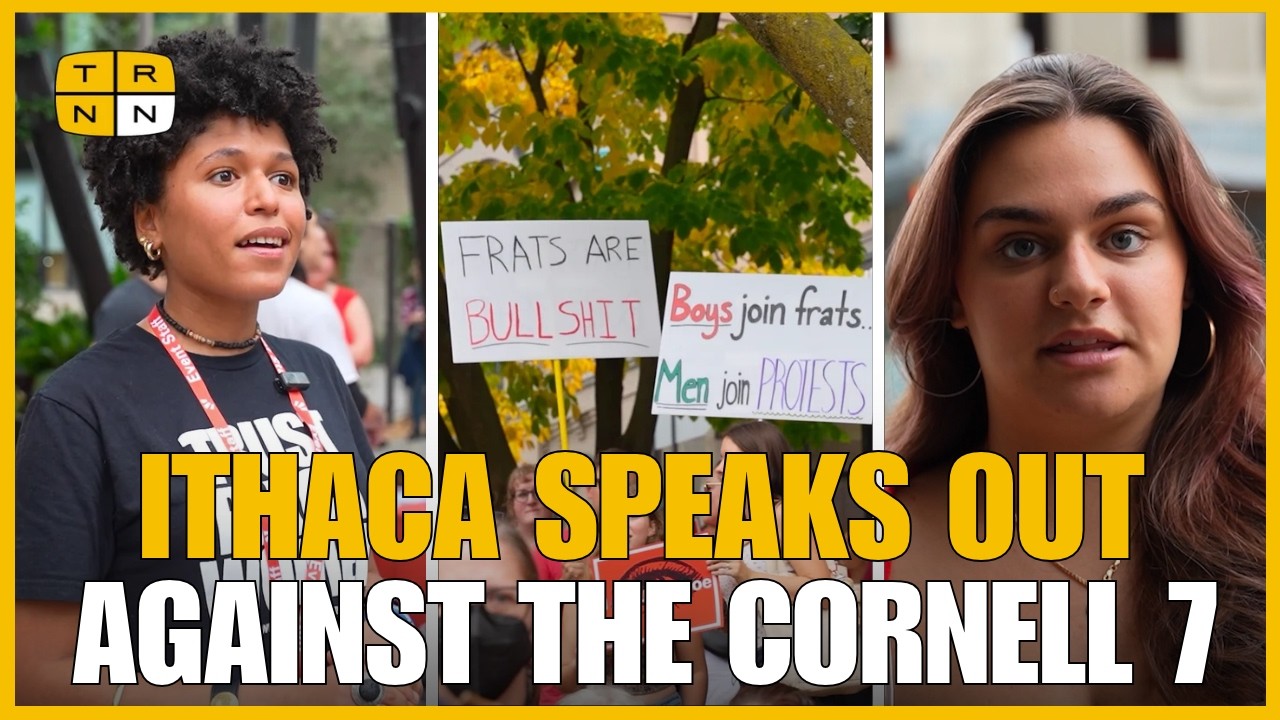
Students and Ithaca community members gathered in downtown Ithaca on Oct. 13 for the “I Am Jane Doe” rally to support students’ demands in light of the reopened criminal investigation into the alleged 2024 gang rape of a former Cornell University student by members of the school’s Chi Phi fraternity.
The lawsuit was filed on Sept. 16, two years after the plaintiff, identifying as Jane Doe, was allegedly sexually assaulted and gang raped by seven Chi Phi fraternity brothers.
Since the Cornell Daily Sun, Cornell University’s student-run newspaper, broke the story on Sept. 18, it has received widespread media attention and sparked nationwide anger. This has led to protests across the United States, including on Cornell University’s campus and in the greater Ithaca community.
TRNN student correspondents Lucia Iandolo and Ava Suffredini took to the streets to interview Ithaca students, organizers, and community members in the wake of an international reckoning with sexual assault and rape culture.
Additional Links
- Community reporting from the Ithacan
- Cornell Sun Student Editorial releasing the names of the Cornell 7
Credits
Reporting: Lucian Iandolo
Videography and Editing: Ava Suffredini
Production and Post-Production: Ryan Johnson
Transcript
The following is a rushed transcript and may contain errors. It will be updated.
Lucia Iandolo: Students and Ithaca community members have gathered in downtown Ithaca October 13th for the I Am Jane Doe rally to support students’ demands in light of the reopened criminal investigation into the alleged 2024 gang rape of a former Cornell University student by members of the school’s Chi Phi fraternity. The lawsuit was filed on September 16th, two years after the plaintiff identifying as Jane Doe was allegedly sexually assaulted and gang raped by seven Chi Phi fraternity brothers. Since the Cornell Daily Sun, Cornell University student-run newspaper broke the story on September 18th, it has received widespread media attention and sparked nationwide anger. This has led to protests across the United States, including on Cornell University’s campus, Ithaca College’s campus, and in the greater Ithaca community. Can we
Speaker: Demonstrate it over here?
Lucia Iandolo: Many members of the Ithaca community, including businesses and organizations, have spoken out and condemned the Cornell administration’s complicity. Today, the I Am Jane Doe rally is being held to demand accountability from the Cornell administration and advocate for systemic change in relation to sexual assault.
Speaker: From Cornell to LSU. From Cornell to LSU. Survivors, we stand with you. Survivors, we stand with you.
Samara Ferris: We are here to provide support to the Cornell University to also inspire people in other universities and other communities around the US to stand up and fight in their own communities. So we want to echo the student demands because they live it every day. They know.
Speaker: Emphasize our full support and endorsement of all student demands. Cornell students have come up with an exhaustive, extensive list of demands because they know what their school needs.
Jessie Romero Silver: So I think there is a responsibility on the local level to do something because of our proximity to Cornell, but there’s also a responsibility to yourself as well. As a human and as a feminist, I would say if you care about the women around you, you must care about this. And you have to care about this once the media cycle is done, once eyes are not on Cornell anymore. Because my greatest fear is that we are so angry about this, that this is happening on a national level and it’s finally being shown and Cornell is just going to run out the clock until people don’t care anymore and then they don’t have to do anything. So I really want people to step up in this moment, not just because it’s a national story, but because you’re a person, you should care. You have to care.
Speaker: We are here because we demand answers and I refuse to wake up 10 years from now and realize nothing has changed.
Samara Ferris: Everyone’s organizer. I’m not a professional organizer. I’m a business owner. I’m a chef. I’m an organizer. All these amazing people today, they’re organizers. There are artists, there are writers, there are other business owners. Everyone’s an organizer. Everyone can organize something. It can be a teaching. It could be a book club. It can be a dinner after everyone goes to vote. So everybody is an organizer and I think that’s what’s important is that everyone needs to stand up and become an active part of changing culture here and everywhere.
Speaker: We need institutions to do their job when nobody is watching. I’m here as a student, as a man, and as someone with a platform.
Alex Prout: If we’re going to address this issue, men need to care about this and men need to speak up and take action. In the advocacy world, it’s primarily women speaking up and we’re asking people who’ve been traumatized, who’ve been impacted by this to carry the burden of this work, which is inherently unfair. So we need men to stand up and speak up and care.
Speaker: Whose voices we listen to and whether we speak out regardless of what it costs.
Alex Prout: When we talk about sexual violence, a lot of people use the term gender-based violence and also a lot of people think that this is a woman’s issue. It is not a women’s issue. This is a men’s issue.
Speaker: Your administration is not what makes Cornell a prestigious institution. Your courageous, your intelligence, your willingness to talk about an issue that so many people don’t want you to say.
Jessie Romero Silver: People have been talking about rape culture since I was a freshman. And as a freshman coming in to that, it was very easy to just hear this and think this is just another typical part of college and that there’s nothing we can do about it and it’s out of our hands. But there is something that we can do about it. We’ve seen, especially at Cornell’s campus, that students who have spoken out against injustices have lost their time at those colleges, at those institutions, haven’t been able to finish their degree. And it is a fear, but we have to keep going. We have to keep moving forward.