
❌

Reading view

Megyn Kelly’s Extreme Makeover

Do you remember Megyn Kelly? I once walked past her in a Chicago O’Hare bathroom in 2016, shortly after Donald Trump had won his first presidential election, and was momentarily stopped in my tracks by both her nuclear-grade charisma and her pixie cut. For a woman to have short hair on Fox News, where Kelly was a star anchor at the time, seemed as seditious to the network’s established order as reading Judith Butler or Karl Marx live on air. But this was a moment during which Kelly seemed to be leaning into the role of crusader for women—speaking out about being sexually harassed by the former Fox News CEO Roger Ailes and so inflaming Trump with her rigorous questioning during one debate that he later insinuated on CNN that she must have had her period.

All of which makes it so disconcerting, 10 years later, to see Kelly now, on her daily SiriusXM and YouTube show, cursing and sneering with long barrel curls and the gusto of someone hosting not a discussion of polling data but a Two Minutes Hate. “I’m just gonna be honest, she’s not the most attractive gal,” Kelly said on Monday, discussing the anonymous woman who has filed a lawsuit detailing her alleged gang rape at Cornell University. (The men named in the lawsuit have denied any wrongdoing.) “She’s extremely”—here Kelly screwed up her face in disgust—“beefy in, like, her arms and her legs. She has a whole video online talking about her cankles. And she possibly enjoyed being admired. This is how women make these mistakes. Admired, wanted—some women even foolishly say loved—by these guys at Cornell. This is probably a first for her. She’s probably thrilled to be so admired because she clearly didn’t grow up the incredibly beautiful one.”

[Sophie Gilbert: Is college getting less safe for women?]

We’ve seen some drastic heel turns in the media over the past few decades, but none quite as morally appalling as a former self-described advocate for female empowerment suggesting that a woman in this situation might have craved the attention because no one would have wanted to have sex with her otherwise. (Not to mention the contentions that the woman Kelly seems to be referring to, whose name has been leaked by some commentators, is not actually Jane Doe, based on her age and the fact that she would have been too young at the time to attend college.) Normally, I have a pretty strong constitution for this kind of bad-faith rage bait. But Kelly’s display this week of what I can describe only as performative hysteria has been hard to watch. Less than a minute into her show on Monday, she invoked the Salem witch trials. Twenty-three minutes in came her first pronounced use of the word fuck (I counted seven in total). That the whole performance was interspersed with ad reads for supplements and a tiny avatar of Kelly pointing giddily at the “Subscribe” button just added to the cognitive dissonance. It felt like watching morning television in Gilead.

I’ve been stuck all week on the question of how much of Kelly’s performance these days is attention-seeking behavior for the YouTube algorithm and how much is reflective of what she actually believes. Kelly, 55, grew up outside of Albany, where she also went to law school, becoming an editor at the Albany Law Review. She was an attorney for almost a decade, but has said that watching live newscasts on 9/11 inspired her to change careers and become a TV reporter. She was hired full-time at Fox News in 2004. Before long—according to her allegations—Ailes began making inappropriate comments, such as how sexy he imagined her bras must be. In January 2006, Kelly claimed, Ailes tried to kiss her; after his third attempt, she said she got up and walked out of his office. (Ailes denied Kelly’s allegations; he died in 2017.) Three months later, Kelly made a name for herself with her skeptical coverage of the Duke lacrosse team’s alleged gang rape of an erotic dancer. (The woman in question eventually admitted to fabricating the assault.)

All of this matters, I think, because it communicates to what extent Kelly’s apparent worldview—where she herself can face sexual harassment due to patriarchal power structures that protect and even reward abusive men, but other women are likely lying—has been shaped by her rise and fall on TV news. In 2016, she declined in an interview with NPR to call herself a feminist. (She dislikes the label, she said, as though it’s just a branding issue.) Her 2016 book, Settle for More, was published just a week after Trump won the presidential election, and became a No. 1 New York Times best seller. Reviews were lukewarm, perhaps because of the news environment: “For all the disgust that she claims to feel for the misogyny and male entitlement” that seemed to be ramping back up in the national culture, Isaac Chotiner wrote in Slate, “and for all the personal harm it caused her, our bleak future is one in which Megyn Kelly is likely to find herself right at home.”

But things took a downward turn when Kelly left the Fox fold. In 2017 she was poached by NBC News, which offered her an annual salary reported to be more than $20 million to host a daytime talk show, Megyn Kelly Today, and a Sunday-night news magazine, which was criticized for softball interviews with Vladimir Putin and Alex Jones and ultimately canceled. Megyn Kelly Today didn’t fare much better—Kelly, with her flinty self-possession, was criticized for being too chilly for daytime TV. During her first week, she awkwardly grilled Jane Fonda about whether she’d had plastic surgery while Fonda was promoting a movie next to her co-star Robert Redford. (“We really want to talk about that?” Fonda responded, after an agonizing few seconds of icy silence.) In October 2018, Megyn Kelly Today was canceled when Kelly defended blackface in a segment on Halloween costumes. Soon, she was dropped by her agency, CAA. A few months later, her NBC contract expired.

This moment seems to have influenced Kelly’s current persona. Public humiliation is hard for anyone to endure, but for someone with a renegade streak (“I’ve never been a ‘pc’ kind of person,” she reportedly wrote in her apology email to NBC staffers after her blackface comments), seeing so many people celebrating her failure must have been immensely painful. By the time The Megyn Kelly Show launched as a podcast in September 2020, mid-pandemic, Kelly was snidely describing her guests as lefties, complaining about the assault allegations against the Supreme Court justice Brett Kavanaugh, and raging at the “dishonesty” of the press covering Trump.

The pivot, whatever its reason, seems to have done what it was supposed to. Kelly has more than 4 million YouTube subscribers and The Megyn Kelly Show is one of the top podcasts in the country. Because Kelly is half-Italian and half-Irish, she told Semafor in 2024, “if you choose to watch the show, you will definitely glean something from the hand gestures and facial expressions that you might not pick up from listening alone.”

Having watched Kelly all week, I can attest to this. Although she injects real poison in her voice to rage against, say, the singer Olivia Rodrigo for expressing support for Cornell’s Jane Doe, she accompanies this with the shrugs and waves of a waiter trying to describe tonight’s special of veal parmigiana. “Olivia, in sum, you don’t know what the fuck you’re talking about,” she said. “Shut up and stick to singing. I liked you better when you were in front of a microphone singing your weird little depressing songs. Shut UP. You don’t know what you’re talking about.”

You can sense she’s imagining clips being spliced for TikTok and Instagram, and tailoring her delivery to provoke maximum indignation. As a rant, it feels much too phony—and cynical, given how fury seems to be the sole emotion that can build an audience in 2026, and the fact that Rodrigo is one of the most popular women alive. (“The only reliable way to reach mainstream or even moderate recognition against all the noise,” Rebecca Jennings wrote earlier this year in New York magazine, “is to either carpet-bomb social media with clips or to enrage wide swaths of the public.”)

But in moments, Kelly does seem to slip out of character. Although she seems perfectly happy excoriating Jane Doe, Kelly draws the line at revealing her name. “I know her name,” she said on Monday. “It’s been well publicized online. But no one in the mainstream media has said it. And as you know I’m seriously considering just saying it. And the reason I haven’t is because I don’t want to do anything to hurt this young woman, to get her hurt, or to add to the pain I’m sure she’s feeling.” Her voice is surprisingly gentle. Her hands stay down in her lap. Could it be that this woman who herself had to hire armed guards for her family after being personally targeted by Trump actually feels for someone caught in a similar nightmare? Is all this spewed-out ire and provocation really just about a reward as soul-rotting as clicks and followers? I don’t think Megyn Kelly will ever tell us, but I have my suspicions.
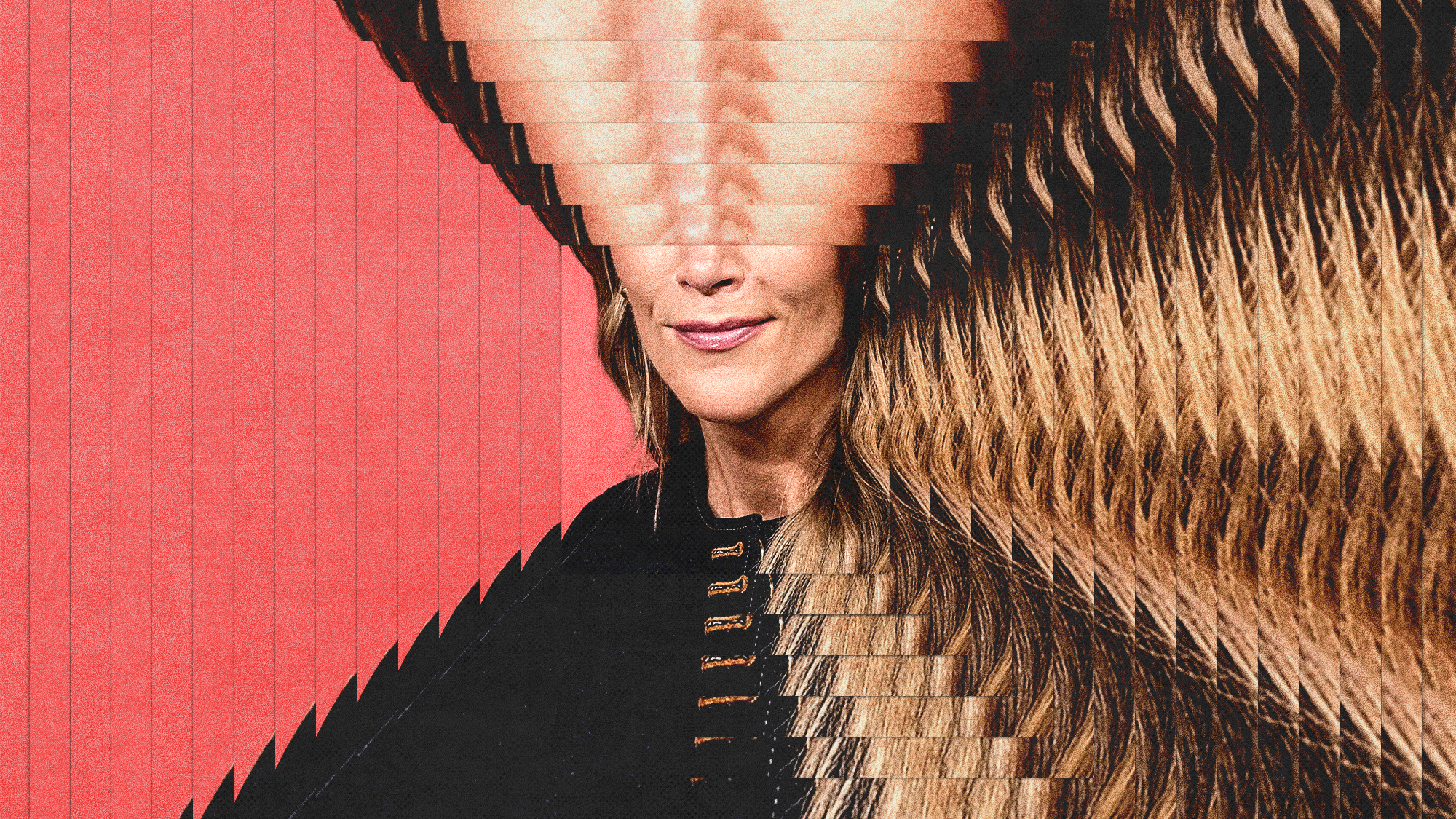
© Illustration by The Atlantic. Source: Gary Gershoff / Getty.
  •  

Possibly the Most Monstrous Reality Show Ever Made

“Are you sick of depending on your inner beauty?” a brunette newscaster asks, as the camera zooms in on a frizzly, pimply woman wearing glasses, looking so dejected she may as well be posing for a mug shot. “The Fox series The Swan is looking for new contestants.” The footage, included in the new Hulu documentary The Swan: Behind the Mirror, dates from sometime around the early 2000s, post-9/11 and pre-Instagram, when reality television was in its human-experiment era and body positivity was barely a twinkle in a Unilever advertising executive’s eye.

In that particular media moment, gossip magazines routinely sneered at celebrities for having visible breakouts or the shadow of a thigh dimple, and beauty was widely understood to be synonymous with happiness, virtue, and wealth. “This show, if anything—don’t shoot me!—it was empowering,” the cosmetic surgeon Randal Haworth, who operated on contestants on both seasons of The Swan, explains in Behind the Mirror. “Because it shows you that beauty is power.”

With respect to Haworth, which I don’t think he deserves, only power is power. The best that beauty can offer is attention, which is why our current social-media ecosystem is so fixated on it, offering up “Get ready with me” reels and product reviews and close reads of celebrity faces with joyless frenzy. More quaint is that, when The Swan debuted in 2004, many contestants had heard about the show via a radio ad. “Have you ever looked in the mirror and wondered how it would feel to finally become the person you’ve always imagined?” a gentle voice inquired. “Have you dreamed of plastic surgery but never thought you could afford it?” Listening in their cars, women all over America pondered the question, and 16 were eventually selected each season to appear on a series now understood to be one of the most monstrous ever made.

[Read: The cruel social experiment of reality TV]

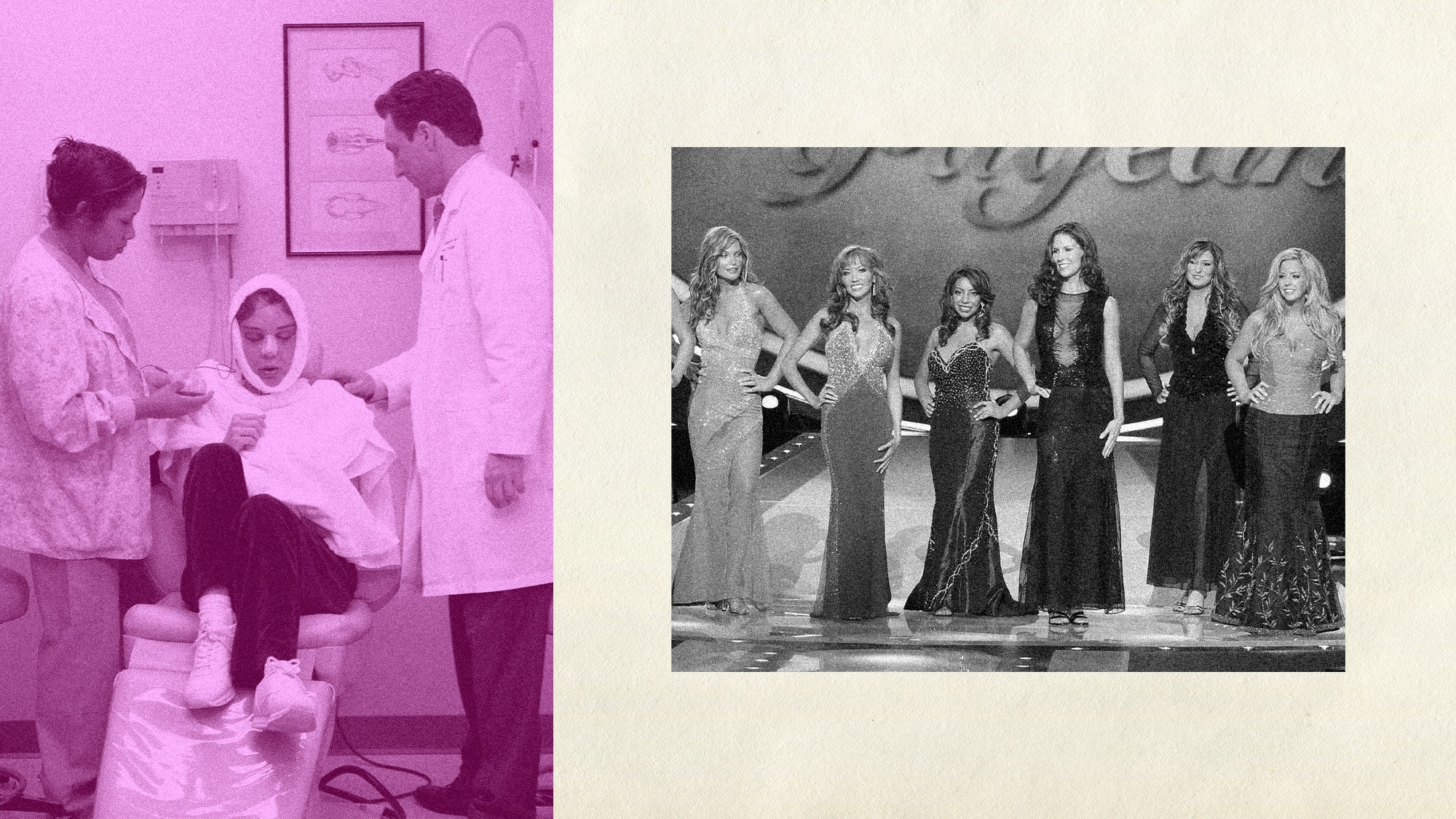
The Swan wasn’t the first show to subject individuals with self-esteem issues to total physical overhaul while the cameras rolled—that was ABC’s Extreme Makeover, which debuted as a one-off special in late 2002 to more than 13 million viewers, prompting executives to book a full season. Critics were horrified—“American television bosses desperate for ratings are being accused of turning mutilation into entertainment,” The Guardian reported—but the show’s success spawned a wave of copycats. On MTV’s I Want a Famous Face (2004), young people obsessed with celebrities underwent multiple surgical procedures to look more like aughts icons. But The Swan gave the makeover-under-anesthesia an evil twist: After contestants were isolated from their families for three months and subjected to surgeries, low-calorie diet plans, and severe workout regimes, they were forced to compete, pageant-style, against one another to see which one was deemed to have become the most beautiful.

Behind the Mirror doesn’t delve too deeply into the reality-TV landscape in the moment The Swan premiered, possibly because the access that the director, Erin Lee Carr, received to former contestants, producers, and even doctors offers up a trove of such astonishing anecdotes that there wasn’t space for much else. When the contestants first arrived in the show-sponsored, mirror-free apartments, they were given a pile of celebrity magazines and told to make inspirational binders of how they wanted to look. In one scene, filmed during surgery, Haworth jokes with another doctor about “the size of my wand” while he brandishes an oversize syringe—you get the sense that they’d high-five about the tag-teaming of it all if they weren’t wearing surgical gloves. Several women recount how, while they were recovering from multiple surgeries simultaneously, there was, at one point, only one nurse to check on the 16 of them. And if we never hear the words lipo leak in a documentary again, let’s take it as progress.

But beyond the fat-shaming (The Swan’s creator, Nely Galán, who reportedly warned one contestant that she’d be “a tub” if she didn’t stop eating, wisely refused to participate), the performative cruelty, the resplendent tackiness of every visual aspect of the series lies an awkward kind of realization: This show was horrific, yes, but it was also honest. Neither Galán nor Haworth nor the then–Fox uberproducer Mike Darnell made any attempt to disguise their conviction that physical beauty is worth going to extreme measures for. “Plastic surgery is barbaric,” Haworth can be heard saying in a voice-over as the documentary begins. “You’re putting a cold scalpel onto flesh, and certain things fail.” The Swan reveled in scenes of women trussed from head to toe in bandages, grotesquely swollen, and seemingly so doped out on painkillers that they had to be propped up for interviews. This was the process—a particularly American confluence of suffering, aspiration, and surveillance. No pain, no gain.


Consumer beauty culture now tends to be more evasive. For all of the buzzwords that have entered common parlance, the “deep-plane facelift” (in which someone’s skin, fat, and muscles are repositioned and lifted as one composite piece) and the cutesy “bleph” (cutting off loose eyelid skin), there’s much less analysis of how brutal cosmetic surgery is. (On Reddit’s community-driven plastic-surgery page, by contrast, people can be much more honest and frequently overwhelmed by how painful recovery is.) People pore over celebrity faces with the zeal of medical professionals—I recently saw someone comment blithely about a laundry list of imaginary procedures one actress had supposedly had when all I could ascertain was a haircut—but in fixating on the results, we miss the process.

The writer Jessica DeFino has argued that modern beauty culture has “lobotomized us all” by reducing the complexity and richness of human life to a single question: Do I look hot? We use words such as liberating and choice to obscure the stark physical reality of procedures that pass down pretty privilege and ageism as burdens to the next generation. And rarely, if ever, do we publicly debate whether it’s a good thing that women are having their faces essentially cut off and reattached to look 10 years younger. Or whether erasing all signs of aging in the pursuit of perpetual girlishness is limiting women’s ability to convey qualities such as maturity, experience, and expertise—attributes that mass culture has not historically wanted to associate with women in the first place.

[Read: Reclaim imperfect faces]

If you spend much time scrolling through certain swaths of social media, you might be inclined to think that everyone, everywhere is at least injecting their face with neurotoxins and filler (not actually true), if not getting an eyelift, or even having their ribs broken for a more angular silhouette. Plastic surgeons, perhaps the most savvy self-marketers since P. T. Barnum, now seem to spend more of their time making TikTok content than they do seeing patients. And celebrities, wisely deducing how pointless it is to deny something a thousand MD influencers will identify on YouTube, have taken to radical transparency.

Earlier this year, the actor Denise Richards shared the story of her facelift with the beauty magazine Allure, including pictures pre-op of her face marked up like a crime scene and post-op bruised like a soft fruit. And last year, the reality star turned entrepreneur Kylie Jenner, who sparked a 3,233 percent increase in searches for filler when she confessed, at the age of 17, to having had her lips plumped, caused a minor ruckus by revealing the exact specifications of her breast implants (“445cc, moderate profile, half under the muscle!!!!!”) and the name of the surgeon.

During the 2000s, when many fans expressed their devotion to celebrities by seeking to emulate them, Single White Female–style, this attitude of openness might have provoked a frenzy of patient inquiries. And the most popular doctors today will tell you that it has: Thanks to stars, according to one Vogue analysis, having cosmetic work done is getting destigmatized the more popular it becomes as content. “The trend of judgment is lessening,” one surgeon told the magazine. All of the experts surveyed agreed that “interest in plastic surgery is only going to grow.” Facelifts, “especially good ones, spread like a contagion,” a story in The Cut—that in turn propagated like knotweed among women my age—argued last year.

But is it actually happening? Despite the spate of recent viral articles lamenting our surgery-saturated social environment, the number of cosmetic surgical procedures performed in the United States in 2025 declined by 9 percent compared with the previous year for patients aged 18 to 25 and by 5 percent for patients 26–35, per a report released by the American Society of Plastic Surgeons. A recent search for #facelift on TikTok brought me almost 450,000 posts, but fewer than 78,000 procedures were actually performed in 2025—roughly half as many as in 2004, the year The Swan aired. The business of cosmetic surgery is currently being driven by seniors and by people wanting to address excess skin and sunken cheeks after substantial GLP-1-associated weight loss, not by Gen Zers coveting a snatched jawline.

This is in part because the gargantuan beauty industry has sprawled out in so many other directions: neuromodulators such as Botox, fillers, lasers, LED masks, and microneedling, not to mention an endless array of consumer products. But the visible overuse of filler on celebrity and civilian faces seems to have prompted a backlash. The total transformation proffered by shows such as The Swan—in Behind the Mirror, one contestant recalls being reunited with her son after three months apart and multiple surgeries, and how he failed to recognize her—is no longer the goal. Instead, beauty culture now promises that we can look like the best version of ourselves—sculpted, rested, forever young. It’s a message even more insidious than the outright brutality of The Swan, because it keeps us in a perpetual state of want, convinced that the one product or procedure that might actually work is just a click away.

© Illustration by The Atlantic. Sources: Robert Voets / 20th Century Fox / Everett Collection; 20th Century Fox / Everett Collection.

  •  
❌