
❌

Reading view

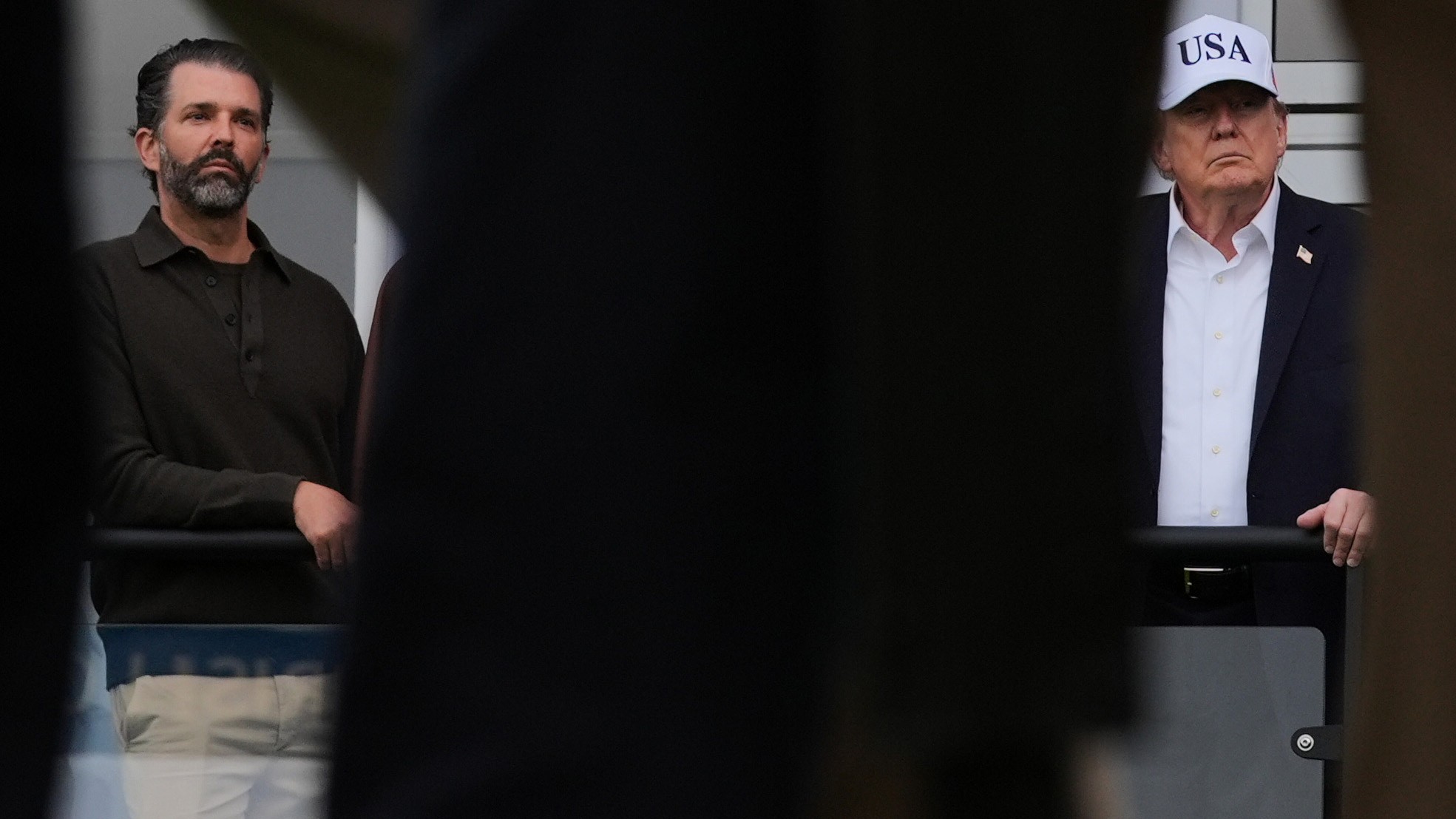
Trump Jr. Privately Breaks With His Dad

Sign up for Inside the Trump Presidency, a newsletter featuring coverage of the second Trump term.

Donald Trump Jr. had a simple vision for his father’s foreign policy during the 2024 presidential campaign: If elected, Donald Trump was going to keep America out of another war in the Middle East.

“Remember when they said Trump would get us into a full-blown war with Iran?” he wrote on X that April, as Iran launched a barrage of missiles and drones toward Israel. “Times like these should make us all realize how lucky we were to have Trump, his strength and his resolve.”

Two and a half years later, the president has enmeshed the United States in a full-blown war with Iran—and Trump Jr. isn’t happy about it.

Trump Jr. has repeatedly voiced his opposition to the ongoing Iran war in private conversations, two people who have spoken directly with him about the conflict told us. The president’s son, these people said, opposed the war from its outset and made his opposition known to his father. He has long been skeptical of foreign intervention, these people told us, and believed the U.S. should not enter another Middle East war. Trump Jr. was also especially close to Charlie Kirk, the late conservative activist, who had broken with the Trump administration to oppose the war in Iran.

“Don has kept his views on the subject private, as he would never publicly break with his dad on an issue like this, but I can’t imagine anyone who knows Don would be surprised by his personal views on the subject,” a person close to the president’s son told us. A spokesman for Trump Jr. declined to comment. The White House didn’t respond to questions about Trump Jr.’s position on the war, and an official said in a statement, “Iran has been decimated, and one way or the other, the conflict in Iran will be over very soon.”

The White House’s decision to ally with Israel against Tehran has exposed a deepening rift within MAGA—not just over Iran, but also over what “America First” actually means. The divide pits nationalists who see foreign wars as a betrayal of domestic priorities against hawks who argue that American power must be wielded more aggressively against its adversaries. For years, the two camps coexisted under Trump’s promise of strength without the cost of another major war. Iran has made that balancing act harder to sustain. “Don Jr. is the most MAGA of them all,” one of the people who spoke with him about his opposition to the Iran war told us.

Even within the administration, some of the president’s closest advisers, including Vice President Vance, have voiced private opposition to the war as they deliberated whether to join Israel in its military campaign. Others, including CIA Director John Ratcliffe and Secretary of State Marco Rubio, were skeptical of Israeli Prime Minister Benjamin Netanyahu’s initial pitch in February that a regime-change operation—particularly one conducted from the air—was remotely realistic.

The political costs are mounting. A Pew Research Center survey conducted over the past month found that 65 percent of Americans disapproved of Trump’s handling of the Iran operation, compared with 33 percent who approved. Republican approval fell from 69 percent in March to 63 percent. Nearly half of Americans expected the conflict to drag on for more than a year—far beyond the administration’s initial estimate of about four to six weeks.

[Read: Don Jr.’s wedding trap]

The economic consequences have sharpened the political fallout. Rising gas prices, driven by disruptions to the energy markets, are squeezing already strained household budgets. The midterm elections will test whether Republicans can defend a war that many voters oppose, while convincing those same voters that the administration is focused on their economic concerns. Republican candidates have been forced to defend a war with immense costs and an uncertain conclusion—one that the president initiated without congressional approval.

Trump Jr.’s private opposition offers yet another reminder that doubts about the war are not confined to the president’s critics or the fringes of the Republican Party. It also points to a deeper sentiment within the president’s base that he has betrayed key campaign promises: to avoid foreign wars and to make life more affordable for the average American.
© Julia Demaree Nikhinson / AP
  •  

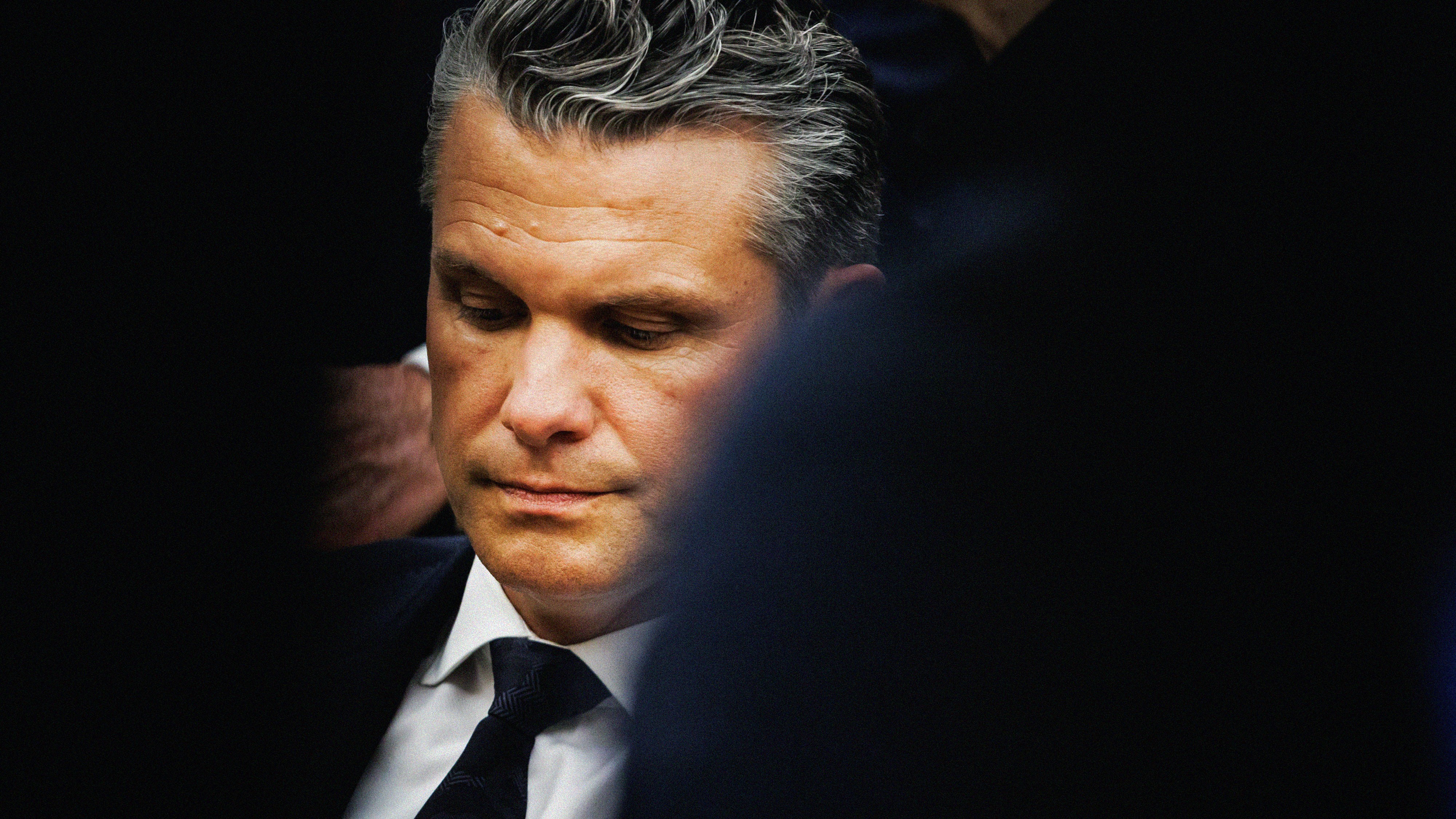
How Pete Hegseth’s Plan for a Reality-TV Execution Imploded

Defense Secretary Pete Hegseth has enjoyed President Trump’s full support for any number of Trumpian initiatives: staging macho, campy shows of military bravado; trashing political opponents and the press, often by name; dissing European allies; posting videos of air strikes on suspected drug boats off the coast of Latin America. But Hegseth apparently crossed a line with his revelation last week that the execution by firing squad of a military death-row inmate would be livestreamed to the world. Even a president who’d brought a bloody mixed-martial-arts fight to the White House lawn apparently didn’t relish the thought of an afternoon spent watching Army soldiers shoot bullets into a paraplegic.

From the start, Hegseth’s plan for the death of Nidal Hasan, the former Army psychiatrist who shot and killed 13 people in a 2009 rampage at Fort Hood, in Texas, was haphazard. Trump approved the death sentence on October 2. Then the Army announced on October 6 that Hasan, who has been on death row since 2013, would be killed in December by firing squad rather than by lethal injection, the method used in many civilian executions. Two days later, Hegseth told the podcaster Jack Posobiec (known for his promotion of the Pizzagate pedophile conspiracy theory) that Hasan’s execution would be public. Hegseth confirmed later that day on X that the execution would not be “public” in the typical style of a state-governed execution—conducted in the presence of officials, victims’ relatives, and maybe a few journalists—but rather broadcast via livestream.

Trump was immediately inundated with feedback from friends and confidants, including a number of lawmakers who told the president that Hegseth’s plan was a terrible idea, one close Trump adviser told us. On October 9, Trump appeared to signal his approval for Hegseth’s idea. But in remarks in subsequent days, Trump equivocated. “I know what the military would like to do, but we’ll make a decision,” he said.

Within the administration, there was immediate and “pretty universal revulsion” about the livestream plan, one administration official told us. By late last week, even the president’s inner circle was making its distaste clear. Vice President Vance barely hid his disgust. “If it’s ultimately livestreamed, I’m not gonna be watching it,” he told reporters. One administration official told us that Vance’s response reflected his general frustration with Hegseth, who, like Vance, is said to harbor 2028 presidential ambitions. Then House Speaker Mike Johnson followed suit: He, too, would sit out the Hasan-execution show. Other lawmakers kept calling the president and his aides to say that a livestream not only was barbaric but could also undermine Republican efforts to hold on to Congress in the midterm elections. Between those private calls and criticism on TV over the weekend that Trump watched, the president “soured on it pretty quickly,” one adviser told us.

Hegseth’s livestream plan was a surprise to virtually everyone at the Pentagon; even those in Hegseth’s closest circle of advisers were blindsided, people familiar with the matter told us. Few in the military objected to the idea of Hasan’s execution, given that he’d committed the despicable act of service-member fratricide. Still, the optics of shooting a person who is paralyzed from the waist down—Hasan was shot while being apprehended by authorities on the day of his rampage—made even battle-hardened warriors uneasy. “One of the more immediate reactions was: Does Hegseth realize this guy is in a wheelchair?” one official told us.

Across the military and intelligence communities, officials also worried that a public execution of a Muslim would become a recruiting tool for groups such as the Islamic State. Hasan was apparently motivated to kill by his objection to the wars in Iraq and Afghanistan. “A lot of people think it’ll be turned into propaganda for an organization that’s been dying a slow death for the last decade,” the official said of ISIS, which has repeatedly used videotaped executions of hostages as a recruitment tool. Representative Austin Scott, a Georgia Republican and a member of the House Armed Services Committee, wrote on X that although he supported Hasan’s death sentence, “live-streaming executions is what jihadists do. America is better than that.” Senator Thom Tillis, a North Carolina Republican, called Hegseth’s plan “beyond disgusting.”

Today, Trump said on Truth Social that livestreaming the execution “might have been a strong deterrent for the World to witness how America deals with Terrorists,” but “many very good and well meaning people would rather not watch him die.” The White House had no further comment.

The whole affair may provide new grist for the growing number of Republicans who are unhappy with Hegseth’s performance, especially as the Iran war has become bogged down. Trump has remained a resolute supporter of the Pentagon chief, officials have told us. But plenty in Trump’s own party would now not be unhappy to see the president’s attitude change. Hegseth, for his part, quickly walked away from his own proposed reality-TV spectacle. Trump and Hegseth spoke about today’s reversal ahead of the president’s social-media announcement, according to Sean Parnell, the chief Pentagon spokesperson. “They are completely aligned,” Parnell told us in a statement.

[Read: The ‘Top Gun: Maverick’ theory of Pete Hegseth]

Hasan will still be executed, as planned, by firing squad at Fort Hood on December 3 at 1 p.m. central standard time, but only a select audience will witness the event.

The Pentagon hopes that his killing will be more efficient than the last time a service member faced an official firing squad. On January 31, 1945, near Sainte-Marie-aux-Mines, France, the Army executed Private Eddie Slovik, 24 years old, over his desertion during World War II. Slovik had admitted to the crime, and a court martial convicted him in November 1944. His appeal for clemency was denied by General Dwight D. Eisenhower. The execution was intended, in part, to deter other troops from leaving their post amid heavy battlefield casualties in the final year of the war. Slovik was strapped to a wooden post, stripped of his military insignia, and blindfolded. The firing squad struck him 11 times. But the bullets missed his heart, leaving Slovik to bleed to death.

Nancy A. Youssef contributed reporting.

© Samuel Corum / Bloomberg / Getty

  •  
❌