Late last night, President Trump announced a “massive” deal to buy diesel fuel from Russia. For the American truckers and farmers Trump claims to be serving, the deal means little or nothing. Trump may not know or may not care that his latest gambit will not reduce diesel prices. His poll numbers are plunging to Herbert Hoover levels. He needs a last-minute electioneering gimmick.
But while the deal will not benefit American consumers, it has immense consequences for others. For Vladimir Putin’s Russia, the deal is a potential lifesaver. For war-ravaged Ukraine, it is the most outrageous and heartless Trump betrayal to date. For Trump’s entourage, the deal promises corruption opportunities on a multibillion-dollar scale. And for people trying to understand the Trump presidency, the deal is further proof of the accusation that Nancy Pelosi flung in Trump’s face in 2019: “With you, all roads lead to Putin.”
The United States is a diesel superpower. It is one of the world’s largest producers and exporters of diesel fuel. U.S. refineries produce about5.2 million barrels of diesel a day. Americans consume about 3.7 million barrels a day. The surplus is sold abroad: In recent months exports have run above 1.5 million barrels a day.
The United States imports some diesel fuel from Canada, about 154,000 barrels a day, owing to the peculiarities of pipeline and shipping networks: It’s cheaper to supply New England from the Canadian refinery in New Brunswick than from U.S. refineries along the Gulf Coast. By comparison, Trump’s Russia deal is for 2.25 million barrels: the equivalent of about 16 hours’ worth of U.S. consumption, 10 hours’ worth of U.S. production, or 14 days’ worth of Canadian imports.
Unfortunately for U.S. diesel consumers, the price of diesel fuel is set by global markets, not North American ones. Trump’s Iran war has disrupted fuel supplies from the Middle East, including diesel supplies. Before the war, Europe imported more than half a million barrels of diesel a day from the Persian Gulf. The world’s second-biggest diesel exporter used to be Russia, which shipped about 817,000 barrels a day in 2025. When the Iran war raised energy prices, Russia was positioned to profit.
The United States in the past tried to help Ukraine by sanctioning Russian energy exports. Trump sometimes pretended to support this policy. In September 2025, for example, Trump proclaimed a tariff on India, ostensibly to punish India for buying Russian oil—but then lifted it in February.
So the Ukrainians took matters into their own hands. As Russia has intensified its horrific drone and missile attacks on Ukrainian civilians, Ukraine has struck back with a devastating campaign against Russian energy infrastructure, including diesel. By late summer 2026, the Ukrainians estimated that they had shut down 43 percent of Russian refinery capacity. According to Ukrainian reports, Russian production of oil of all kinds plunged from 5.6 million barrels a day before the Iran war to 4.1 million barrels by late summer 2026. Russia imposed a ban on diesel exports in July. That ban has been extended into October.
Friends of Ukraine hailed the attacks on Russian energy infrastructure as a war-changing success. Trump saw a threat to Republican hopes in the midterms. Curbs on Russian fuel exports helped push the price of diesel fuel in the U.S. above $5 a gallon in July, then higher than $6 a gallon in September.
Since Trump’s return to power in 2025, the Putin regime has dangled lucrative deals in front of the president’s entourage.
TheWall Street Journalreported in November 2025 about secret conversations in Miami the previous month between the head of Russia’s sovereign wealth fund, Kirill Dmitriev, and Trump’s negotiators, Steve Witkoff and Jared Kushner:
“For the Kremlin, the Miami talks were the culmination of a strategy, hatched before Trump’s inauguration, to bypass the traditional U.S. national security apparatus and convince the administration to view Russia not as a military threat but as a land of bountiful opportunity, according to Western security officials. By dangling multibillion-dollar rare-earth and energy deals, Moscow could reshape the economic map of Europe—while driving a wedge between America and its traditional allies.”
The report noted that Dmitriev “found receptive partners in Witkoff—Trump’s longtime golfing partner—and Kushner, whose investment fund, Affinity Partners, drew billion-dollar investments from the Arab monarchies whose conflict with Israel he had helped mediate.” The New York Timesreported last week about an even more brazen Russian offering: a multibillion-dollar oil deal for assets owned by Russia’s Lukoil, which would directly benefit a Trump donor and two Middle Eastern groups that have done business with Kushner or Witkoff’s family. (A spokesman for Steve Witkoff said of the Times story that Witkoff “has no conflict of interest and no financial stake in this matter.” Of the Wall Street Journal story, a source described as “familiar with Witkoff’s thinking” said “the envoy is confident that any settlement with Russia would benefit America broadly, not just a handful of investors.”)
But all these apparently enticing Russian schemes come with a catch: Russian energy assets are not worth much if those assets are regularly wrecked by Ukrainian drones. This makes plain the implicit quid pro quo in these lucrative deals offered to Trump’s family and friends: If you compel Ukraine to surrender, we will enrich you beyond reckoning.
Putin is attempting to leverage Russia’s most strategic asset in his war on Ukraine: Trump’s weakness for corruption. The 2.25 million barrels of diesel Putin offered Trump will have zero net impact on world energy markets or the world price of diesel. But accepting those barrels will collapse the U.S.-led sanctions regime on Russia—and align Trump with Putin against the Ukrainian air attacks on Russian energy production.
Trump stopped providing aid to Ukraine long ago. But the U.S. still provides Ukraine with crucial intelligence information. If Putin can entice Trump to cut Ukraine off from U.S. intelligence, he can do real damage to Ukraine’s capabilities. Russian diesel fuel is the cheese in that mousetrap. Trump’s negotiators are sniffing at the bait: The Kyiv Postreported today that Witkoff and Kushner are already threatening to stop information-sharing if Ukraine continues to strike Russian energy assets. And meanwhile, FBI Director Kash Patel is reportedly planning his own trip to Russia—one that members of Congress are urging him to cancel, as my colleague Sarah Fitzpatrick recently reported.
There is much about Putin’s offer of diesel that remains doubtful. Does Trump have the legal authority to buy previously sanctioned Russian oil? Does Russia even possess the diesel to sell? But one thing at least remains as clear as ever: With Trump, all roads lead to Putin.
Editor’s Note:Washington Week With The Atlantic is a partnership between NewsHour Productions, WETA, and The Atlantic airing every Friday on PBS stations nationwide. Check your local listings, watch full episodes here, or listen to the weekly podcast here.
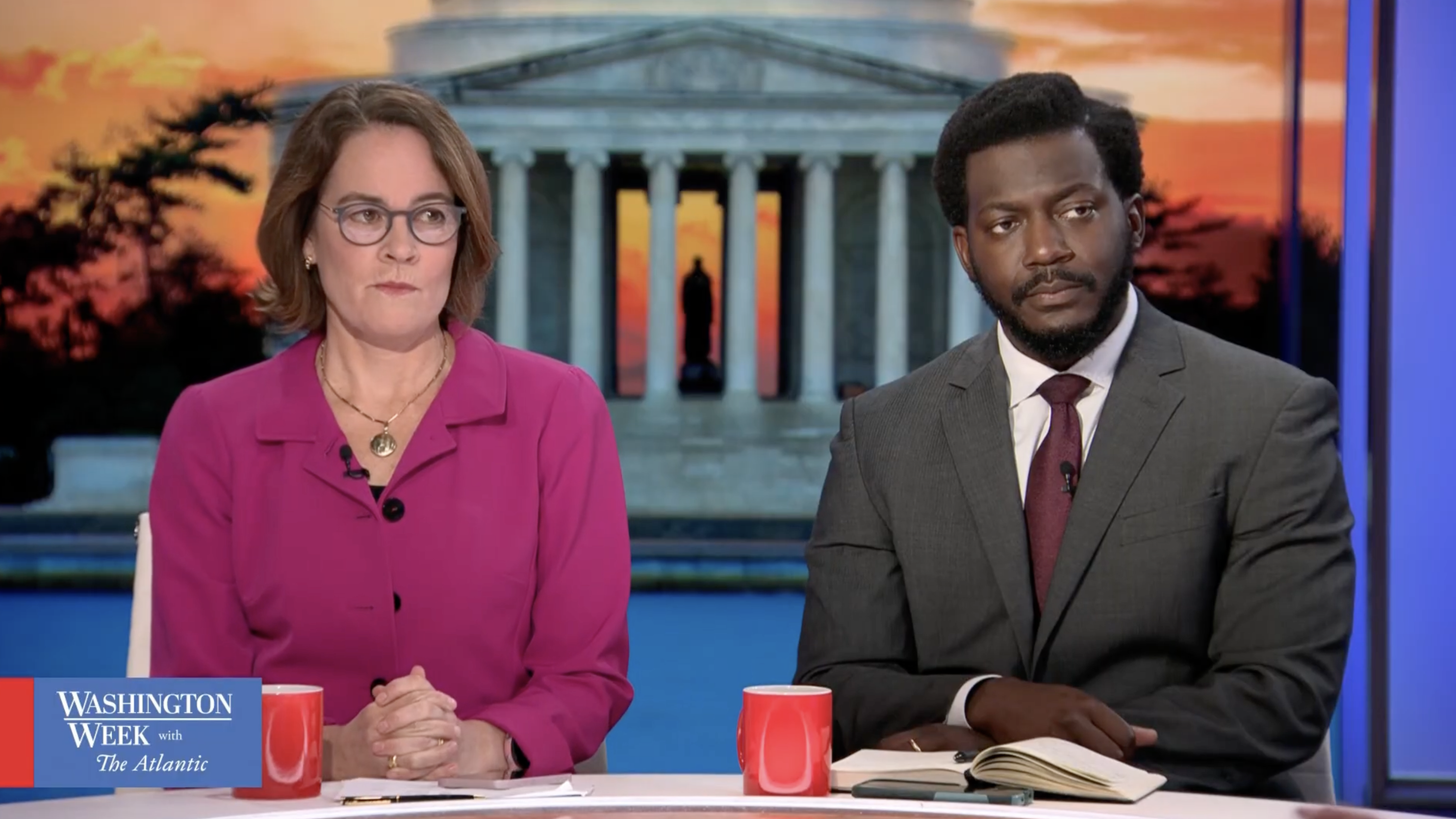
With less than a month until the midterm elections, Democrats and Republicans alike are trying to identify the key battleground states and districts in which to concentrate their efforts. Panelists on Washington Week With The Atlantic joined to discuss what these races may mean for both parties.
“What we’re seeing right now is a referendum on the president’s policies over the past two years,” Adam Harris, a host of Radio Atlantic, said last night. “You have the war in Iran that [President Trump] can’t tether to Joe Biden,” and so now more voters are linking “the president’s policies specifically, from the war on down,” to issues such as increases in prices.
Joining the editor in chief of The Atlantic, Jeffrey Goldberg, to discuss this and more: Carrie Dann, the managing editor of The Cook Political Report; Harris; Jonathan Karl, the chief Washington correspondent at ABC News; and Annie Linskey, a White House reporter for The Wall Street Journal.
Do your heroes weep? Do they swoon with lust? Are they really confused by their new magical powers? Then you’re already a fan of romantasy. For those still waiting to discover romantasy: It’s fantasy, with strong female protagonists and fewer boring bits—the long treks over major landforms in hard weather. Sex is plentiful, but sex is not the genre’s defining feature. You can go chapters before encountering a reference to someone’s toned body. Far more significant are feelings and friendships between the heroes: enchanted beings with relatable self-esteem issues who don’t just seek and fight but also yearn and banter as they face down enemies who aren’t only evil, but super bitchy too. Then the heroes cry and have orgasms (sometimes they orgasm first and cry after).
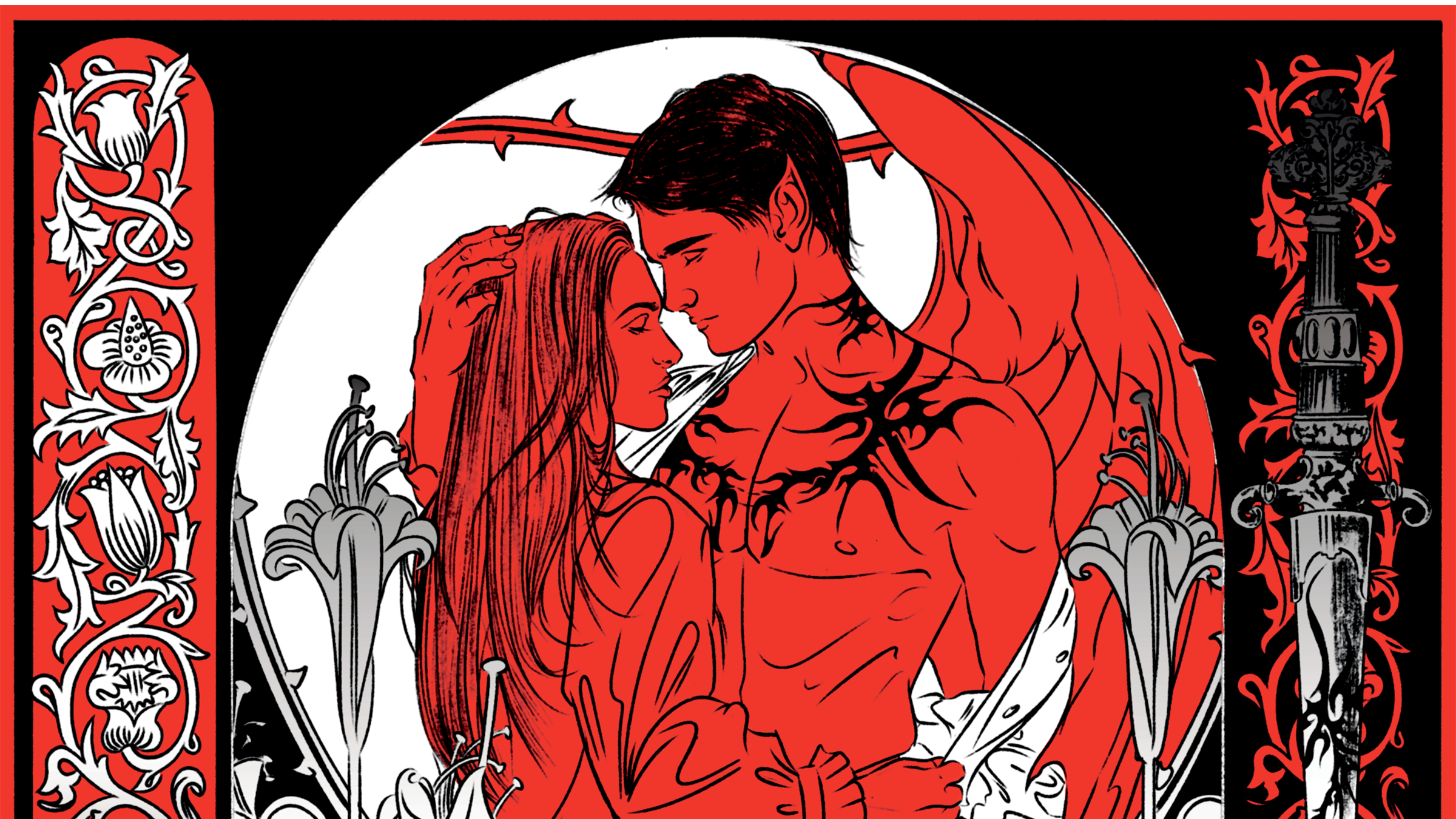
In the kingdom of romantasy, one writer reigns supreme: Sarah J. Maas, the author of ACOTAR. It sounds like a missile-defense system or an autoimmune condition, but it’s the acronym for one of the most popular series of novels for adults written in the 21st century. A Court of Thorns and Roses is the first of many books about Feyre Archeron, a young huntress spirited into the faerie realm. Humans hate the leaders of the faerie world, called the High Fae, who once enslaved them. But as soon as one bursts through Feyre’s door, having shape-shifted into the body of a green-eyed, bearlike beast, the reader thinks, I bet some of these guys are going to be hot.
Feyre falls in love and breaks a curse and brings down a depraved fae queen, and that’s just in the first book—eventually she’ll assemble a crew of beloved sidekicks and a heap of supernatural powers. On any given week, you can see every book in the series stacked in a column on the New York Times best-seller list. If you combine ACOTAR with Maas’s two other series, Throne of Glass and Crescent City, she has sold some 75 million copies. The Lord of the Rings has likely sold more than twice that, but J. R. R. Tolkien had a 60-year head start.
After A Court of Thorns and Roses come courts of: Mist and Fury, Wings and Ruin, Frost and Starlight, and Silver Flames. Fans waited five long years for the sixth book. Would the next court have one syllable and two syllables? Would the decent faeries stop the awful ones from slaughtering and re-enslaving the humans? Then Maas announced, in a rare interview on the podcast Call Her Daddy, that she would actually be releasing three new books—one in October, one in January, and one more after that—and people lost their minds. Right away a question shot into the inboxes of America’s bookstores: Are you having a midnight release party? Tickets sold out. For one “fantasy ball” at a bookstore in El Paso, Texas, they sold out in 12 hours. A second party was announced; it sold out too. Book clubs began rereading all of the courts in preparation.
On social media, bets were made about which of Feyre’s sisters or friends the new books would focus on, and what color the covers would be (Maas hadn’t done purple yet). In August, images of the next two jackets—for A Court of Splintered Harmony and A Court of Forgotten Melody—lit up Times Square. They were ombré!
But search The New York Review of Books or the London Review of Books for Maas, and you’ll find references to a German foreign minister, a river, the Pynchon character Oedipa Maas—and no trace of Sarah J. The New Yorker’s culture podcast summed up the low end of romantasy as “customer service wrapped in self-care wrapped in literature,” though one of the critics admitted that she’d loved A Court of Thorns and Roses. Hear enough writers lament that the only books that sell now are faerie or dragon or elfpunk porn, and you start to get the feeling that the literary establishment is committed to resenting this rare bright spot in the publishing industry.
Maas, now 40, was a teenager when she wrote an epic fairy tale about a young assassin who can slit throats as well as waltz at balls for a fiction site. That story was published by Bloomsbury, in 2012, as Throne of Glass. The novels that followed took off on #BookTok and then in real life thanks to a generation of former Harry Potter fans who now had jobs, babies, and stymied sex drives. These people (women) started reading (or listening). They started going to bookstores.
Fewer Americans are reading for pleasure every year, and yet people keep opening bookstores—romance bookstores in particular (more than 100 in the past year and a half alone, according to the American Booksellers Association). Zella Funkhouser, a high-school science teacher, runs three book clubs at the newly opened Bonfire Bookstore & Yarnery, in Shenandoah County, Virginia. She told me that she picked up A Court of Thorns and Roses in 2023, after having gone “years without really reading a whole lot.” Then back-to-back snowstorms hit, and her husband, who does road work for the state, spent days out plowing. Alone at home behind a wall of snow, Funkhouser devoured all five books. “We didn’t have internet; we didn’t have power,” she told me. “I was obsessed.”
On a Saturday night in June, her book club discussed Thorns and Roses. Erin was reading the series for the third time, Tiffani for the fourth, Abby for the fifth. “We’re not reading high literature, let’s be honest,” one of the women acknowledged. But they weren’t looking for formal innovation; they were looking to be inspired and turned on.
It’s true that you’re rarely transported by ACOTAR’s language. Characters say things like “I admire your balls, Feyre.” Sometimes they make me laugh. “Shall we assist you, or just flap here, talking?” a leader of winged reinforcements asks, when it seems the battle has been lost. Characteristic of the genre, the books remix familiar stories. The first meal in Beauty and the Beast, minus the dancing silverware. Pride and Prejudice, if the lovers started out on even worse terms. Hades and Persephone, if the king of the underworld just really got you.
But even if you don’t read romantasy (I don’t read romantasy), the books are well crafted and very entertaining. And for its hard-core fans, ACOTAR has achieved something like a vertical integration of the imagination: the raw fiber of old myths woven into new stories, processed through the internet, refined into audiobooks for intimate delivery straight down the ear canal, which drive fans back to bookstores, where they can buy a keepsake hardcover and even, if they’re lucky, drink themed cocktails in ACOTAR-inspired ball gowns at midnight.
With this kind of power, Maas doesn’t need the literary establishment. (Bloomsbury, her publisher, declined to share advance copies of the new novels with me.) At one point, Maas puts her toughest character alone in a library. She’s full of rage and a terrible power. And—take this, haters—she’s reading a smutty romance.
In the Call Her Daddy interview, with her high cheekbones and golden hair and bare feet tucked beneath her, Maas looked a bit like one of her own characters as she talked about her “useless” creative-writing degree and recalled telling a professor, “I will never fucking write a poem.” She couldn’t understand “the meter and the rhythm” and had to ask her math-major boyfriend (now husband) for help. But when you read about a battle ending with enchanted water bubbling from “the lips of all the Hybern soldiers as Tarquin drowned them on dry land,” you suspect she knows what meter is, even if she doesn’t care what it’s called. She’s got a line of nearly perfect iambs there.
Enough about language. We’ve gone too long without talking about sex, and Maas would not approve. Sometimes she makes you wait for it (faeries, who are basically immortal, can spend centuries edging) but then, before you know it, someone’s getting a blow job in the dining room.
The books get dirtier as they go. Reading on the subway about Feyre coming so hard that she “couldn’t tell where one climax ended and the second began,” I might have been less embarrassed to be caught watching actual porn. I really wished that one crucial sex scene hadn’t involved so much wet paint. Maas’s characters are often splattered with something: mud, blood, stardust, semen (but only by Book 5). Still, there’s this one scene: Feyre—degraded, but into it—and a throne room, and a thumb moving in lazy circles … I’ll say it. I’m just going to say it. I liked it.
Smut aside, what really matters is how the characters grow together. You keep reading to see if they track down the enchanted artifacts but also to find out if true romantic partnerships are possible, the kind where care is taken and respect given. In the real world, many women are profoundly disappointed by and mistrustful of men. You might assume that this is why so many women are suddenly so eager to fantasize about another species entirely. But, fundamentally, these books are stories of friendship and love. Why should the novels’ popularity suggest that women are giving up on men? It could mean they’re holding out hope.
Maybe, eventually, more than a handful of men will read these books. After all, I was raised on the paperback heroes of my father’s epics: The Lord of the Rings, The Wheel of Time. And Harry Potter, of course. Being a girl didn’t stop me from wanting the boy to save the world. I remember listening to The Sorcerer’s Stone in the car as a child, on road trips with my family, when things were not so good, when things were sometimes pretty bad, and seeing, not the tense edge of each parent’s opposing shoulder, but the night sky across the ensorcelled ceiling of the Hogwarts dining hall.
Romantasy readers know they’re not actually going to “go out and find dragons and magic,” Funkhouser said, but if they’re snowed in—or trapped by a pandemic, or up with a nursing newborn, or stuck in any of the ways humans tend to get stuck—it can help to imagine they could. Some books make you want to be a better writer or thinker, some books make you want to be a better person, and some books make you glad to be reading them. There may be a ceiling on what this literature can do. But it’s an enchanted one.
This article appears in the November 2026 print edition with the headline “Those Books of Smut and Wonder.”
This is an edition of The Wonder Reader, a newsletter in which our editors recommend a set of stories to spark your curiosity and fill you with delight. Sign up here to get it every Saturday morning.
“Forgive the bad texters,” Julie Beck wrote in a recent Atlantic essay. Beck is one of them: She routinely leaves messages unanswered for days or even weeks, not because she doesn’t care but because she gets distracted, is burned-out, or simply forgets. Yet in a world where everyone is expected to be constantly reachable, a delayed reply can easily be mistaken for indifference.
Texting has made staying in touch easier than ever, but it has also turned communication into a near-constant obligation. A third of Americans report feeling overwhelmed by the number of texts they need to respond to, Beck writes. People have felt guilty about unanswered correspondence for centuries, but technology has escalated both those expectations and the anxiety that comes with meeting them.
Being a good texter, Beck suggests, isn’t the same as being a good friend. Someone who takes days to reply might still be the first to show up when you need them. So the next time a friend leaves you on read, consider giving them the benefit of the doubt. And if you’re the one with a growing pile of unanswered messages, maybe give yourself a little grace too.
My colleague Isabel Fattal recently asked readers to share a photo of something that sparks their sense of awe in the world. “About ten years ago, I saw a Joro spider for the first time. They are an invasive species from Asia. Since that time, they have become ubiquitous in my area,” Nancy C. from Marietta, Georgia, writes. “Last year I began to notice how incredibly beautiful the adult female spiders are. Their abdomens have a gorgeous, intricate design that looks like a colorful maze. I realized that for years, I had been walking by such sublime beauty, and I hadn’t even recognized it.”
We’ll continue to feature your responses in the coming weeks.
Do you remember Megyn Kelly? I once walked past her in a Chicago O’Hare bathroom in 2016, shortly after Donald Trump had won his first presidential election, and was momentarily stopped in my tracks by both her nuclear-grade charisma and her pixie cut. For a woman to have short hair on Fox News, where Kelly was a star anchor at the time, seemed as seditious to the network’s established order as reading Judith Butler or Karl Marx live on air. But this was a moment during which Kelly seemed to be leaning into the role of crusader for women—speaking out about being sexually harassed by the former Fox News CEO Roger Ailes and so inflaming Trump with her rigorous questioning during one debate that he later insinuated on CNN that she must have had her period.
All of which makes it so disconcerting, 10 years later, to see Kelly now, on her daily SiriusXM and YouTube show, cursing and sneering with long barrel curls and the gusto of someone hosting not a discussion of polling data but a Two Minutes Hate. “I’m just gonna be honest, she’s not the most attractive gal,” Kelly said on Monday, discussing the anonymous woman who has filed a lawsuit detailing her alleged gang rape at Cornell University. (The men named in the lawsuit have denied any wrongdoing.) “She’s extremely”—here Kelly screwed up her face in disgust—“beefy in, like, her arms and her legs. She has a whole video online talking about her cankles. And she possibly enjoyed being admired. This is how women make these mistakes. Admired, wanted—some women even foolishly say loved—by these guys at Cornell. This is probably a first for her. She’s probably thrilled to be so admired because she clearly didn’t grow up the incredibly beautiful one.”
We’ve seen some drastic heel turns in the media over the past few decades, but none quite as morally appalling as a former self-described advocate for female empowerment suggesting that a woman in this situation might have craved the attention because no one would have wanted to have sex with her otherwise. (Not to mention the contentions that the woman Kelly seems to be referring to, whose name has been leaked by some commentators, is not actually Jane Doe, based on her age and the fact that she would have been too young at the time to attend college.) Normally, I have a pretty strong constitution for this kind of bad-faith rage bait. But Kelly’s display this week of what I can describe only as performative hysteria has been hard to watch. Less than a minute into her show on Monday, she invoked the Salem witch trials. Twenty-three minutes in came her first pronounced use of the word fuck (I counted seven in total). That the whole performance was interspersed with ad reads for supplements and a tiny avatar of Kelly pointing giddily at the “Subscribe” button just added to the cognitive dissonance. It felt like watching morning television in Gilead.
I’ve been stuck all week on the question of how much of Kelly’s performance these days is attention-seeking behavior for the YouTube algorithm and how much is reflective of what she actually believes. Kelly, 55, grew up outside of Albany, where she also went to law school, becoming an editor at the Albany Law Review. She was an attorney for almost a decade, but has said that watching live newscasts on 9/11 inspired her to change careers and become a TV reporter. She was hired full-time at Fox News in 2004. Before long—according to her allegations—Ailes began making inappropriate comments, such as how sexy he imagined her bras must be. In January 2006, Kelly claimed, Ailes tried to kiss her; after his third attempt, she said she got up and walked out of his office. (Ailes denied Kelly’s allegations; he died in 2017.) Three months later, Kelly made a name for herself with her skeptical coverage of the Duke lacrosse team’s alleged gang rape of an erotic dancer. (The woman in question eventually admitted to fabricating the assault.)
All of this matters, I think, because it communicates to what extent Kelly’s apparent worldview—where she herself can face sexual harassment due to patriarchal power structures that protect and even reward abusive men, but other women are likely lying—has been shaped by her rise and fall on TV news. In 2016, she declined in an interview with NPR to call herself a feminist. (She dislikes the label, she said, as though it’s just a branding issue.) Her 2016 book, Settle for More, was published just a week after Trump won the presidential election, and became a No. 1 New York Times best seller. Reviews were lukewarm, perhaps because of the news environment: “For all the disgust that she claims to feel for the misogyny and male entitlement” that seemed to be ramping back up in the national culture, Isaac Chotiner wrote in Slate, “and for all the personal harm it caused her, our bleak future is one in which Megyn Kelly is likely to find herself right at home.”
But things took a downward turn when Kelly left the Fox fold. In 2017 she was poached by NBC News, which offered her an annual salary reported to be more than $20 million to host a daytime talk show, Megyn Kelly Today, and a Sunday-night news magazine, which was criticized for softball interviews with Vladimir Putin and Alex Jones and ultimately canceled. Megyn Kelly Today didn’t fare much better—Kelly, with her flinty self-possession, was criticized for being too chilly for daytime TV. During her first week, she awkwardly grilled Jane Fonda about whether she’d had plastic surgery while Fonda was promoting a movie next to her co-star Robert Redford. (“We really want to talk about that?” Fonda responded, after an agonizing few seconds of icy silence.) In October 2018, Megyn Kelly Today was canceled when Kelly defended blackface in a segment on Halloween costumes. Soon, she was dropped by her agency, CAA. A few months later, her NBC contract expired.
This moment seems to have influenced Kelly’s current persona. Public humiliation is hard for anyone to endure, but for someone with a renegade streak (“I’ve never been a ‘pc’ kind of person,” she reportedly wrote in her apology email to NBC staffers after her blackface comments), seeing so many people celebrating her failure must have been immensely painful. By the time The Megyn Kelly Show launched as a podcast in September 2020, mid-pandemic, Kelly was snidely describing her guests as lefties, complaining about the assault allegations against the Supreme Court justice Brett Kavanaugh, and raging at the “dishonesty” of the press covering Trump.
The pivot, whatever its reason, seems to have done what it was supposed to. Kelly has more than 4 million YouTube subscribers and The Megyn Kelly Show is one of the top podcasts in the country. Because Kelly is half-Italian and half-Irish, she told Semafor in 2024, “if you choose to watch the show, you will definitely glean something from the hand gestures and facial expressions that you might not pick up from listening alone.”
Having watched Kelly all week, I can attest to this. Although she injects real poison in her voice to rage against, say, the singer Olivia Rodrigo for expressing support for Cornell’s Jane Doe, she accompanies this with the shrugs and waves of a waiter trying to describe tonight’s special of veal parmigiana. “Olivia, in sum, you don’t know what the fuck you’re talking about,” she said. “Shut up and stick to singing. I liked you better when you were in front of a microphone singing your weird little depressing songs. Shut UP. You don’t know what you’re talking about.”
You can sense she’s imagining clips being spliced for TikTok and Instagram, and tailoring her delivery to provoke maximum indignation. As a rant, it feels much too phony—and cynical, given how fury seems to be the sole emotion that can build an audience in 2026, and the fact that Rodrigo is one of the most popular women alive. (“The only reliable way to reach mainstream or even moderate recognition against all the noise,” Rebecca Jennings wrote earlier this year in New York magazine, “is to either carpet-bomb social media with clips or to enrage wide swaths of the public.”)
But in moments, Kelly does seem to slip out of character. Although she seems perfectly happy excoriating Jane Doe, Kelly draws the line at revealing her name. “I know her name,” she said on Monday. “It’s been well publicized online. But no one in the mainstream media has said it. And as you know I’m seriously considering just saying it. And the reason I haven’t is because I don’t want to do anything to hurt this young woman, to get her hurt, or to add to the pain I’m sure she’s feeling.” Her voice is surprisingly gentle. Her hands stay down in her lap. Could it be that this woman who herself had to hire armed guards for her family after being personally targeted by Trump actually feels for someone caught in a similar nightmare? Is all this spewed-out ire and provocation really just about a reward as soul-rotting as clicks and followers? I don’t think Megyn Kelly will ever tell us, but I have my suspicions.
Somehow, America has yet to reach peak protein. Perhaps we never will. Even after David bars have gone viral for being bricks of essentially pure protein and Starbucks has rolled out lattes topped with “protein cold foam,” new and somehow weirder protein-laced products keep hitting shelves. You can now buy protein Honey Nut Cheerios, protein popcorn and PopCorners, protein sodas, protein ranch dressing, and protein chips. (Doritos launched a nacho-cheese-flavored version with 10 grams of protein per one-ounce serving.)
In an era of GLP-1 drugs and peptide stacks and Oura rings and self-optimization, of wellness influencers and looks-maxxers, everybody seems to be doing everything they can to eat as much protein as possible. The magical macronutrient will supposedly make you more muscular, or more toned, or thinner—or something, really anything, just better. Amid the protein frenzy, regular food seemingly doesn’t cut it anymore. Why order a simple flat white when you can instead sip a Dunkin’ Nutty Pumpkin Iced Protein Latte?
Into the fray, I would suggest a humble alternative: Have some yogurt. Calorie for calorie, Greek yogurt has more protein than Chipotle’s High Protein Low Calorie Bowl, Kraft’s new PowerMac, or yes, a Dunkin’ Nutty Pumpkin Iced Protein Latte. So do some traditional yogurts, as well as other fermented options in the dairy aisle such as skyr and kefir. And that’s if you opt for the full-fat, luscious kind (which I recommend). Nonfat Greek yogurt, which is lower in calories, is roughly as protein-dense as a David bar—with the added benefits of having just two ingredients (milk, culture) and not tasting like plastic.
Yogurt is not only full of protein but also good for your bones, your digestion, and your immune system. Yogurt is an ingredient: Eat it plain or bake with it, use it as the base of a sauce or dip, throw it in a marinade or soup. Sure, some yogurts have added sugars, but so does a Starbucks Iced Banana Protein Cream Matcha. And as far as health fads go, yogurt is typically probiotic. All things considered, yogurt may be the easiest protein of all.
In spite of everything it has going for it, yogurt has not been the face of the protein craze. Perhaps that’s because yogurt is not splashy or technologically innovative or referred to by a trademarked proper noun. A David bar may taste different and have distinct packaging from an RxBar or a Jacob protein bar made with beef tallow, but all plain yogurt is the same. Though some companies have released “protein-enhanced” yogurt (whatever that means), for the most part yogurt is not optimized by corporate food scientists and focus groups in the way that today’s protein-branded products are. Yogurt has been optimized in the sense that humans have consumed it for thousands of years.
Imagine wellness influencers suggesting that you dollop yogurt into a bowl and sprinkle berries on top without measuring anything. There wouldn’t be any regimen to adopt or wellness plan to pay for. There wouldn’t be any special trademarked protein products for influencers to hawk: The company behind the David bar, for instance, has sponsored Andrew Huberman and, until recently, Peter Attia was its chief science officer. The homemade parfait would all be rather mundane and boring compared with Attia’s rotation of four protein powders or the bodybuilder Chris Bumstead’s breakfast filet mignon. It wouldn’t get any views.
Protein is not just a health fad; it is a business. So is everything else in the world of wellness. Indeed, there’s something about many of these setups—which proffer the perfect low-calorie, high-protein snack to pick up on your way to work every morning; a biometric wristband to wear every night; supplements to consume every day for the rest of your life; a weight-loss drug you will inject every week—that keeps people coming back for more, giving their attention and money and energy to the endless pursuit of betterment.
Health and more broadly self-improvement are, obviously, admirable pursuits. Protein can be a way to achieve either. But obsessing over hitting those goals can become unhealthy, as most obsessions are. Have some yogurt, or don’t. You’ll probably be fine.
In December 2021, Elon Musk sat for an interview with TheBabylon Bee, a conservative satire site. Having covered the typical topics (wokeness, free speech, Elizabeth Warren) and finding themselves with a bit more time to fill, the outlet’s then–creative director closed out the chat with a request. “TheBabylon Bee is a Christian organization, and we’re a ministry,” he reminded Musk. So “we’re wondering if you could do us a quick solid and accept Jesus as your lord and savior?”
Musk laughed. The others did too. The guys waited for an answer, and Musk, after rambling a bit, gave one. Sure, he replied with a shrug—why not? “If Jesus is saving people,” he said, “I mean, I won’t stand in his way.”
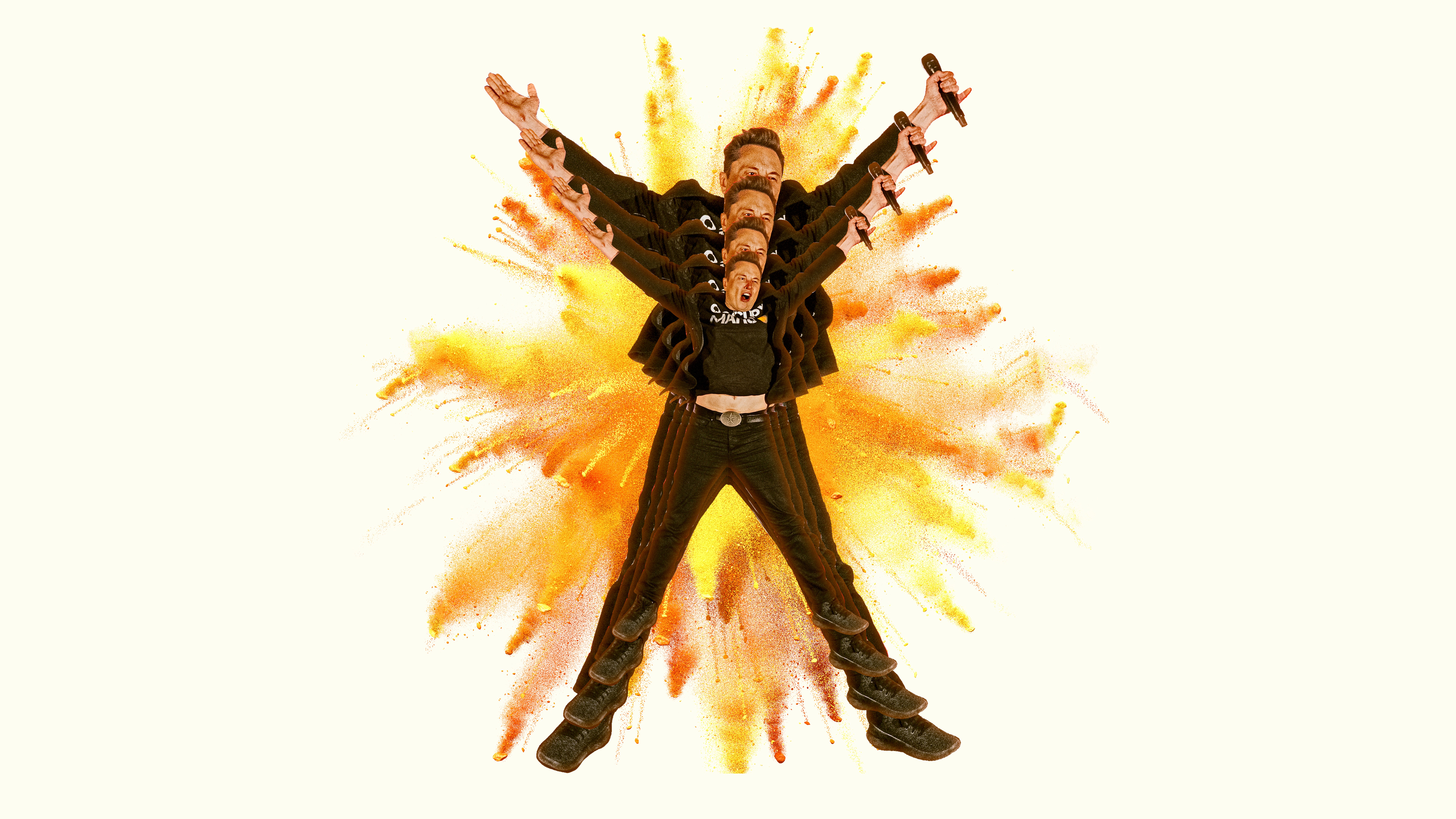
The exchange makes a brief but incredibly effective appearance in Musk, the documentarian Alex Gibney’s new film: Asked for a come-to-Jesus moment, Musk professes his faith in himself. The Musk of 2021 was considerably less consequential than the Musk of today. He had not yet added Twitter—humanity’s “collective consciousness,” he once called it—to his portfolio, nor had he staged his hostile takeover of the United States government or become the world’s first trillionaire. Still, Musk had slightly more reason than most to assume his high status on the cosmic org chart.
Through Tesla and Starlink and SpaceX, his dominion stretched over the heavens and the Earth. Through Neuralink and his assorted experiments with artificial intelligence, Musk was expanding his reach into human hearts and minds. As a media figure, too, he was all but inescapable: a piece of software downloaded into people’s lives whether they had opted in to him or not.
Power, at that sort of scale, changes every equation. It can make hyperbole seem accurate. It can make a man, small and flawed, look like something more: a genius, an idol, an outlet for everyday faith. And the discrepancy between the person Musk is and the figure he claims to be is one of Musk’s running themes. The man sells himself as a savior; many have before. But he is where he is—he is what he is—because so many people have bought into the pitch. Delusions of grandeur are one thing. The real trouble comes when one person’s delusions become other people’s reality.
Musk benefits, appropriately enough, from an exercise in data science. The man himself did not participate; he declined Gibney’s overtures in the most Muskian manner imaginable: through an insult-laden post on X. As a work-around, the director and his team created a database compiling every comment Musk has been recorded making in public. That data set—a galaxy-brained version of Musk—informed their assessment of him and individual moments in the film. Muskisms (about the likelihood that earthly life is a simulation, about the drawbacks of empathy, about humans’ future on Mars) make their way into the proceedings via a computer-generated version of Musk—an animated character who appears where, in a traditional documentary, Gibney might have quoted his subject.
To an extent, the approach turns the tables on Musk. It renders this person who talks fondly of humans’ cyborgian future as a cartoonishly uncanny, flagrantly inhuman presence. But it also highlights his cultural status as a man who is, at this point, something more than just a man.
The sources that Musk cites as it creates its portrait—among them the people who have worked with and lived with and, often, clashed with Musk—regularly mention the scale of his ego and the scope of his ambition. They attribute much of his success to his mythmaking capabilities: his romantic descriptions of technology, his branding of consumer goods as spiritual necessities. Tesla, Musk’s car company, “is not automobile manufacturing or automobile retailing,” the financial analyst Lawrence Fossi tells Gibney. “This is not finance”; instead, he says, it is religion. The mythology extends to Musk himself. “In Elon We Trust,” one of Musk’s followers once tweeted at him, in a post Gibney included in the film. Another informed him, “We follow you like a cult :).”
A former girlfriend says in the film that Musk likes to compare himself to Kublai Khan, the 13th-century Mongolian warrior and emperor of China. And indeed, his megalomania is in one way a very old story: Human history has, for better and worse, been shaped by men who insisted on their godlike supremacy. But Musk’s version is also thoroughly modern. His power is systemic. His sieges rise from within.
One of the allegations the film makes against Musk concerns his incursion into the U.S. government: DOGE’s haphazard dismantling of government agencies, its destruction of scientific research, its toppling of USAID. The widespread effects of DOGE’s efforts—the cures that won’t be found; the vaccines that won’t be made; the food meant to save lives, left instead to rot—will likely never be fully known. Nevertheless, Musk argues, the raid has had a death toll: hundreds of thousands of people, and potentially many more.
When such accusations are made, the public might ask, and should ask, what accountability looks like at that level. But one of the affordances of planet-spanning power is that it can turn justice, as most people experience it, into something of a joke. If Musk is a category error incarnate—a man with, effectively, a gross national product; a guy whose influence extends beyond the stratosphere—the confusion does more than elevate him. It also helps inoculate him. The film quotes a newscaster’s summary of one of SpaceX’s early launches. “Only four entities have launched a space capsule into orbit and successfully brought it back to the Earth,” the reporter announces: “the United States, Russia, China, and Elon Musk.”
How do you make sense of that kind of power? How do you challenge it? One truism of modern life is that humans, as animals who would prefer to pretend that they are otherwise, were not made to thrive at our current scale. We weren’t meant to know this many people, to process this much information, to make sense of a world that stretches so far beyond our immediate grasp. Musk provides a corollary to those claims: It gives us a human who himself has become too colossal to make sense of, too unwieldy to respond to. Even more than his fellow tech titans, Musk exists at a scale that no man was able to before and enjoys power so complete that it becomes self-ratifying.
No man should be so godlike. No person should be so exceptional. In the film, Musk’s former girlfriend sums up the matter concisely: “Elon is a nuke,” she says—a human of mass destruction.
Illustration by Adam Maida / The Atlantic. Source: Ryan Collerd / AFP / Getty.
In 2017, when French voters first elected Emmanuel Macron as president, pundits hailed him as the antidote to their nation’s “decline.” The term, in the parlance of that moment, seemed to encompass a condition that was not just economic and cultural but existential: France, as an idea and ideal, was decaying as surely as its national debt was deepening.
Nearly 10 years later, as Macron’s second presidential term comes to an end, the French are nearly unanimous in their belief that their country is still on a downward slope. In a recent Ipsos-BVA poll, 85 percent of French respondents said that France was in decline, and 98 percent were dissatisfied with the present state of the country.
One might have seen such numbers in the spring of 1789, if opinion polls had existed then. In that prerevolutionary time, France was burdened with staggering debt, skyrocketing prices, and in a sclerotic state overseen by a clueless and corrupt elite. Today similar factors, together with the memory of past glory, are driving the public’s belief that France’s Fifth Republic is faltering. And declinism, in turn, seems to be fueling the rise of extremist radicals intent on remaking the republic itself.
Gallic morosity might be easy to dismiss. After all, few peoples are more inclined toward claims of national decay than the French. Members of the country’s political and intellectual elite point to auguries of its descent throughout the 19th and 20th centuries—a sweep of time punctuated by the rise and fall of authoritarian states (whether Bonapartist or Pétainist) and republican governments (from the Second to the Fifth). Charles de Gaulle’s assertion that France could not be France without la grandeur could be said to channel a certain anxiety as much as pride.
Soon after de Gaulle’s death in 1970, le déclinisme was again on the rise. Thirty years of economic growth came to an end with the global energy shocks and financial crises of that period. In 1976, the distinctly non-Gaullist president, Valéry Giscard d’Estaing, declared that France was no longer a fully autonomous power as it had been in the past, but was instead what commentators have described as a “world middle power”—an observation that angered his opponents across the political spectrum. An influx of immigrants from North Africa and the Middle East had helped fuel decades of industrial growth; they then became scapegoats for growing fears over national decline and disintegration.
As the 20th century gave way to the 21st, this French fixation expanded and darkened. Following Robert Frank’s fine historical account La hantise du déclin (The Obsession With Decline), published in 1994, came works such as Nicolas Baverez’s wildly polemical 2003 tract, La France qui tombe (Falling France). And then the public appetite for books proclaiming the End Times for France grew fiercer. Pundits furiously supplied the grim prognoses—most notoriously Éric Zemmour, who a little more than a decade ago published his best-selling Le suicide français, which married xenophobic rage to potted history. The book boosted the “Great Replacement” theory, which claims that Western elites are enabling great waves of Muslim immigrants to replace les français de souche—the loaded term for those of “purely French heritage.”
Zemmour went on to found a political movement named Reconquête!, a heavy-handed reference to the medieval “reconquest” by Catholic rulers of Moorish Spain. The party remains politically marginal, but its message—that France’s immigration policies amount to national suicide—has gone mainstream. The current justice minister, Gérald Darmanin, recently proposed a three-year moratorium on legal immigration, declaring that France has reached “the limit of our capacities for integration and assimilation” of immigrants. This view, and the moratorium idea, have the approval of 63 percent of the public, judging from a CSA Institute opinion poll conducted in May.
Those numbers partly explain Marine Le Pen’s remarkable lead in polling for next spring’s presidential election. The movement she inherited from her father, Jean-Marie Le Pen, then called the National Front, once gathered neo-Nazis, anti-Semites, and die-hard supporters of the French colonial administration of Algeria. Now called National Rally, the party mainly demonizes Muslims in place of Jews as the source of all of France’s ills. But just last week, the party’s president, Jordan Bardella, was revealed to have spent his late teens marinating in the writings of the Holocaust denialist Alain Soral. In line with her party’s ethno-nationalist ideals, Le Pen promises a policy that she calls a “national priority,” which would give French citizens preferential treatment over noncitizens for an array of social benefits, and she has said she’d be willing to change the constitution by referendum.
The most recent Ifop-Fudicial poll, published on September 30, put Le Pen in the lead with 31 to 36 percent support. Jean-Luc Mélenchon, the founder of the extreme-left party France Unbowed, is fighting for second place, at 14 to 17 percent. Like Le Pen, Mélenchon has pledged to disobey certain European Union regulations that infringe on French sovereignty; also like her, he seems to trust Ukrainian President Volodymyr Zelensky less than Russian President Vladimir Putin; and, along with some members of Le Pen’s party, he enjoys flirting with anti-Semitic tropes. Both candidates exercise full control of the parties they either created or re-created and seem to satisfy the public’s broad desire, according to a 2019 Ipsos poll, for a “strong leader who will break the rules.”
Le Pen, the reactionary, and Mélenchon, the revolutionary, share a common goal: to bury the French Republic in its current form. Mélenchon seeks to replace the hybrid regime of the Fifth Republic, which fuses presidential and parliamentary institutions, with a Sixth Republic dominated solely by Parliament. Le Pen’s “national priority” would undermine the universalist foundation of French republicanism—and imposing it by referendum would elevate that instrument as a means of circumventing the legislature.
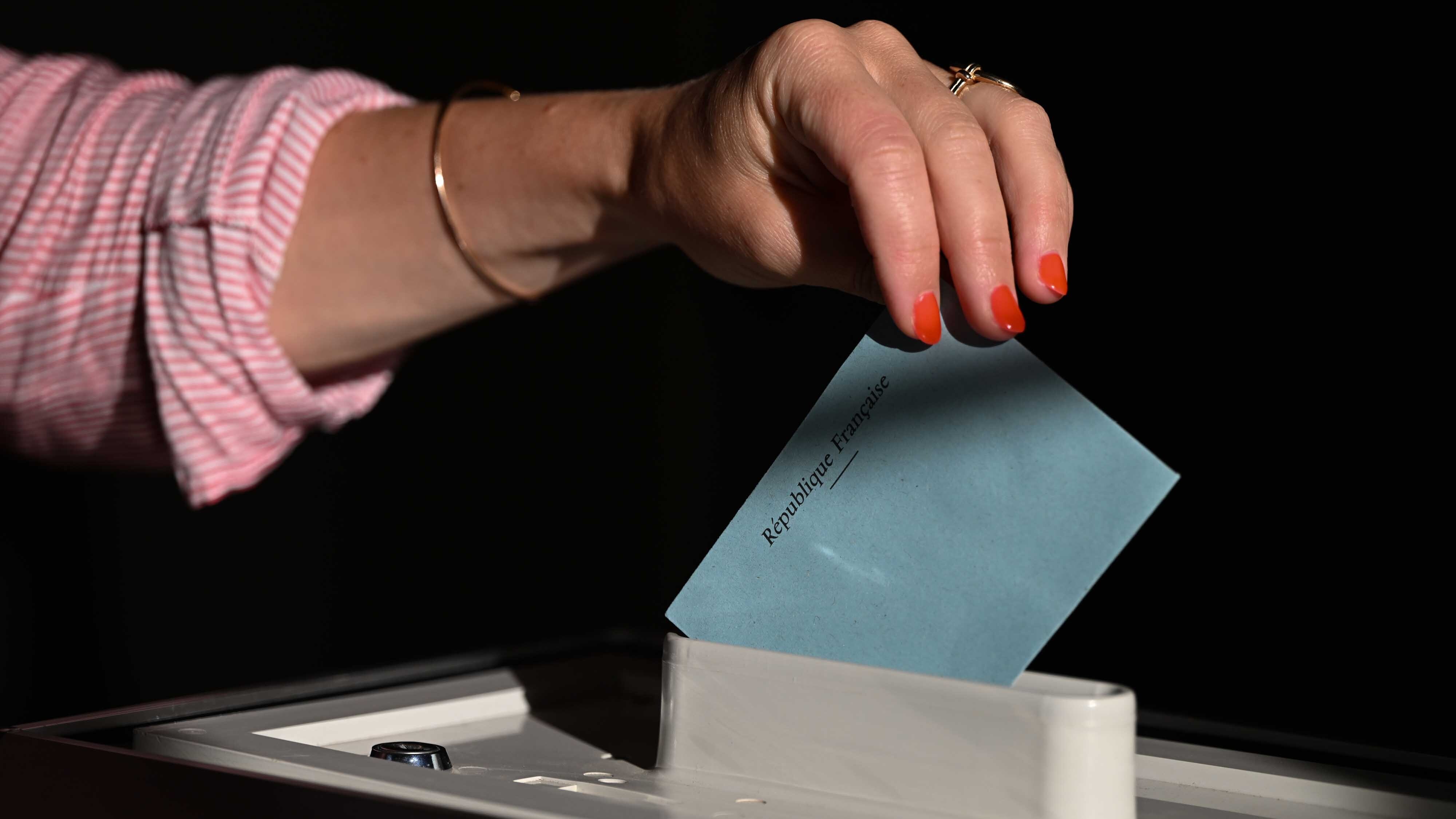
For French voters repelled by both extremes, the prospects are grim. Their predicament stems from a decision President Macron made in 2024. His party, Renaissance, and other centrist parties took a beating in elections for the European Parliament that year. Infuriated, Macron dissolved the National Assembly and called for snap elections. Rather than the usual face-off between the traditional right and left, three blocs of roughly equal size emerged: the remnants of Renaissance, the National Rally, and a hastily slapped-together coalition of left-wing parties—France Unbowed, Communists, Socialists, and the Ecologists—that purported to form a “republican rampart” against Le Pen.
Personality clashes have since reduced the republican rampart to rubble, allowing the National Rally and France Unbowed to solidify their places in the polls while a now-lame-duck president has meanwhile presided over a series of flailing governments that can’t seem to pass a budget through Parliament. The National Assembly has been paralyzed, and a host of politicians have tossed their hat into the ring for the upcoming presidential election. The first round of votes will happen on April 18 and, in the extremely likely case of no candidate winning a majority, the second round will take place on May 2. At last count, 34 presidential candidates have declared themselves, mostly from the center left and center right. Several others, including former President François Hollande and former Prime Minister Dominique de Villepin, are testing the waters.
The proliferation of candidates attests to the fragmentation of a political landscape that once neatly divided into left and right. It is a sign not of healthy competition but of democratic fragmentation: This multitude of candidates, most with relatively few supporters, will ultimately help secure the second-round election for one of the two contenders who represent the greatest danger to democracy in France.
The growing prospect of this face-off reinforces a widespread perception of decline—of a nation not just reduced to the ranks of middle powers, but where the political center no longer holds. This explains, in part, what the Le Monde columnist Solenn de Royer describes as “a spirit of defeatism” now haunting French politics. During an August visit to a town in southern France, Macron adopted that language, urging a small crowd to resist “the rampant spirit of defeatism,” whether in response to recent wildfires or in politics. A few weeks later, two well-known establishment political figures, the conservative Xavier Bertrand and the socialist Bernard Cazeneuve, joined forces to press their followers not to give in to despair in response to Le Pen’s seemingly irresistible rise.
The call to resist such fatalism has been sounded before in France—from within the walls of the Paris Commune of 1871, and across the trenches of World War I. A presentiment of decline was thought to fuel pacifism in the interwar period, and de Gaulle decried such thinking in his BBC address in 1940. But perhaps no one in France has offered greater insight into the declinist mentality, and greater courage to combat it, than Marc Bloch, the historian who chronicled France’s defeat by Nazi Germany, in 1940. He attributed the debacle in part to an elite “only too ready to despair of the country they had been called upon to defend, and of the people who furnished the soldiers they commanded.”
More than 80 years later, the problem is less that France’s political elite is ready to despair of the country than that the nation is ready to despair of its political elite.
For more than four months, since this hurricane season began, the Atlantic has been eerily placid—a remarkable stretch without a single hurricane. That prolonged calm has been rudely interrupted by Hurricane Isaias, a Category 2 fastball that slammed into the Gulf Coast last night along the Florida panhandle. “I think we knew at some point we would likely have a hurricane,” Daniel Brown, the operations-division chief at the National Hurricane Center, told me.
Not to be outdone, the Pacific Ocean has two major storms brewing, including Hurricane Simon, a dangerous Category 4 storm off the coast of southwestern Mexico. A smaller one, Tropical Storm Rachel, is forecast to bring potentially more storm surge and flooding as far north as Southern California. “It’s a busy day here,” Brown said on Friday.
This season’s dynamic—an unruffled Atlantic and a frothing Pacific—has been right out of the El Niño playbook and was predicted months ago. El Niños tend to generate opposing winds—low-altitude trade winds out of the east and higher-up westerlies—that tear apart Atlantic storms as they try to form and also keep them from gaining strength. This type of wind shear is affecting Hurricane Isaias now, Brown said, and weakened the storm a little before it made landfall.
Isaias landed along the Gulf Coast with sustained winds of more than 100 mph; in places, it dropped more than a dozen inches of rain. Coastal counties had ordered evacuations; the governors of Alabama and Florida had declared emergencies; residents had scrambled through hurricane prep. During the storm, the wind ripped off roofs and toppled tree. t\Two people, one in Florida and one in Alabama, died after trees fell on their house, authorities said. Nearly 800,000 people were without power across the Southeast as of Saturday morning, according to poweroutage.com.
In the Pacific, by contrast, a Category 4 hurricane is almost par for the course this season. By this time of year, the Pacific has usually generated 13 storms potent enough to warrant their own name, Brown said. This year, we’re on number 19. This onrush of hurricanes has a great deal to do with the buildup of abnormally warm waters in the equatorial Pacific—which, at this point, are in certain areas more than 4 degrees Celsius warmer than usual. This warming gins up storm activity in that ocean; it’s been spinning up hurricanes and hurling them toward Hawaii for months. The storm swells have also eroded Southern California beaches and swamped homes, and they keep coming. On Friday, seawater flooded the streets of Balboa Peninsula, California, inundating cars and homes, well before Tropical Storm Rachel was anywhere close to arriving.
The coast of Mexico is at particular risk from Hurricane Simon, which is forecast to bring potentially dangerous flooding and landslides to coastal states such as Jalisco and Nayarit. Further north, on the Baja California peninsula, communities are still recovering from the effects of Hurricane Polo, which caused widespread flooding last month and displaced hundreds of people.
The storm scorecard in these oceans has only reinforced the notion that the world is in the midst of an unusually powerful El Niño. As I reported in August, key areas of the Pacific Ocean had already gotten hot enough to make this a “Super El Niño”; the experts I spoke with then were anticipating that the event could end up peaking at twice that amount of warming. If those trends hold, this could be the strongest El Niño ever recorded, and right now, “everything seems to be on track with this being a remarkable event,” Nick Novella, a National Weather Service meteorologist, told me.
This season has set a record already—this is the latest in the year that a hurricane has formed in the Atlantic at any time during the satellite era, since 1966. And it isn’t even close. “This record was broken by nearly a month,” Novella said. Normally, five Atlantic hurricanes form by the end of September. For residents of the Gulf Coast, the beleaguered hours after a storm makes landfall are all too familiar. As they assess the wreckage, hopefully the year’s first Atlantic storm will not have changed too dramatically how we remember this season of relative calm.
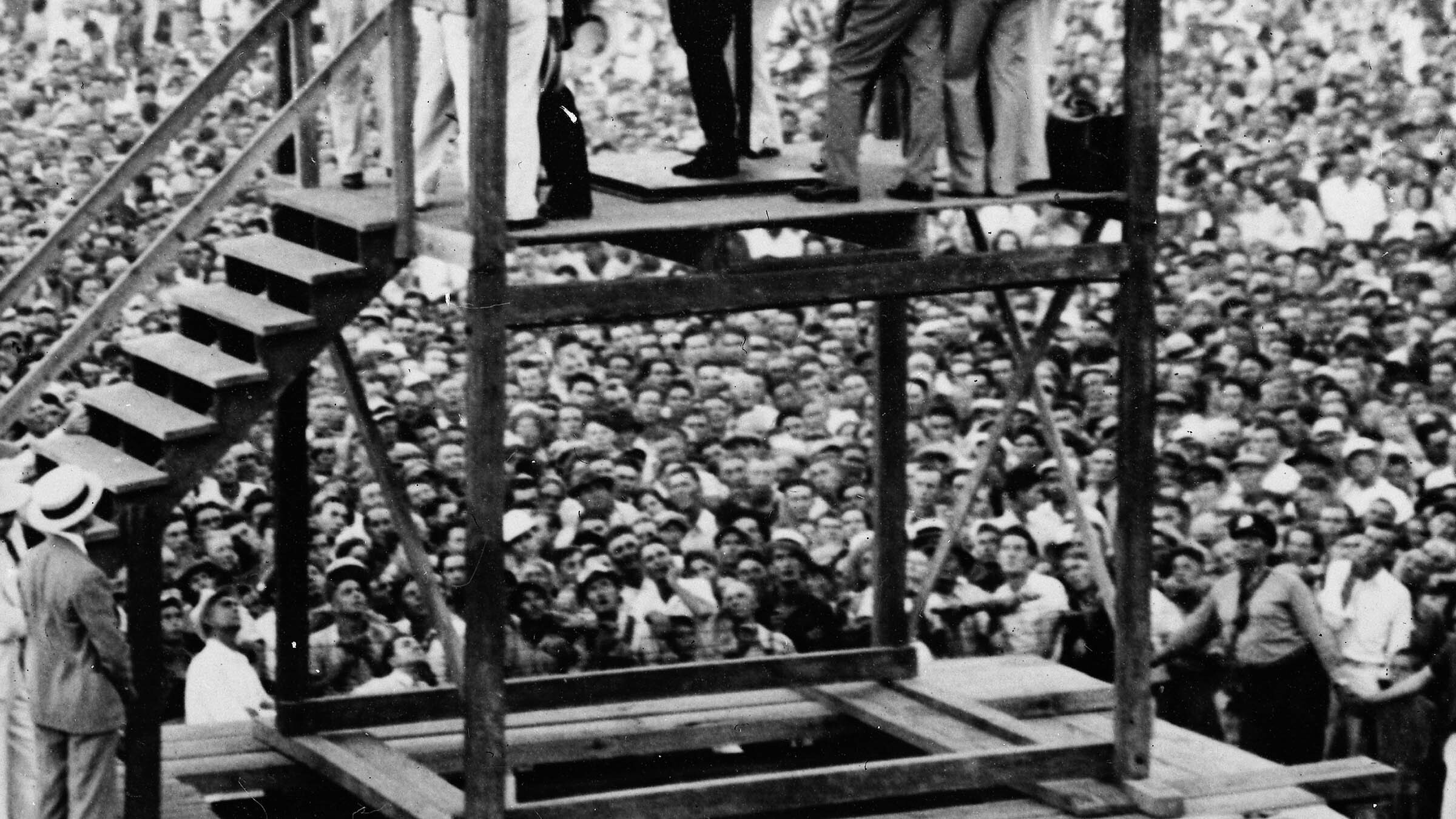
Before the mid-19th century, executions in America were presumptively public. Most prisoners were hanged on a gallows, following an hours-long affair that began with the condemned person’s exit from jail accompanied by ministers, the sheriff and his deputies, and sometimes a military escort. Spectators joined the humiliating procession, gathering by the thousands to watch the noose lowered over the prisoner’s neck. The sheriff would mount the scaffold to read aloud the death warrant, sometimes adding commentary, and at least one minister (often several) would issue sermons. The condemned was offered the chance to give a speech, with spectators standing so close that they could ask the prisoner questions and join him in prayer, or bid him goodbye, if he was a family member or friend.
All of that seemed safely confined to a past that the Trump administration now hopes to revive. President Trump, a consummate showman, has authorized the country’s first public execution in 90 years. The condemned prisoner is Nidal Hasan, a military psychiatrist who murdered 13 people and injured many more during a 2009 mass shooting at Fort Hood, in Texas. Defense Secretary Pete Hegseth has said that the killing, scheduled for December 3, will be conducted by the military and publicly livestreamed. During his trial, Hasan alarmed his standby attorneys when he chose to defend himself, and mounted an argument that the lawyers considered tantamount to seeking his own death. He could still conceivably file civilian appeals, which could delay his execution substantially. If it goes forward, the administration surely hopes to make an example of Hasan to all who might be tempted by his worldview. But this strategy could just as likely result in unintended consequences, and pushback by the public.
Public executions ceased not because those who clamored to witness them found the displays uniformly outrageous, but because politicians in the 19th century associated them with proletarian barbarity. Though these executions were theoretically meant to deter crime and exhort onlookers to practice proper Christian values, they were mostly entertainment, and did not always provoke the desired reactions. Some onlookers cheered and celebrated the killings; others sympathized with the condemned. Public executions of Black prisoners in the South, for instance, became opportunities for community, song, and displays of Black religious authority. Ministers preached sermons of salvation and sometimes protested that the prisoners were innocent.
In that sense, the public nature of executions backfired, and critics took note. Because the attendant crowds were so volatile, vulgar, and unruly, by 1860 all northern states had begun carrying out the killings in jail yards, which were much smaller areas, subject to tight government control. Decades later, the South followed suit. The large crowds soon vanished. Military executions, traditionally carried out by firing squad, were long conducted in small, controlled settings, often witnessed only by military personnel and chaplains. The last military execution in the United States was carried out in 1961.
Trump and Hegseth aim to have it both ways: a small, secure setting and massive crowds. This time, viewers will be watching a livestream on their screens, close enough to see the event but too far to smell the gunpowder. Both Hegseth and Trump seem intent on flexing America’s political power and military might as a message not just to foreign enemies but to the American people, as if to say: This could be you. This method of ruling by fear is central to authoritarian governance, and Trump and Hegseth seem drawn to executions partly for that reason.
But if Trump and Hegseth are hoping for a deterrent effect, they’re unlikely to get it. The idea that executions could deter other killers with political motives seems sorely mistaken; those who carry out such murders already know that they could face grave consequences, and have deemed that outcome acceptable. Nor do executions deter murderers without political motives, because deterrence is generated not by the severity of the punishment, but by the certainty of getting caught. And there is little certainty in American homicide investigations: In 2023, the nationwide case-clearance rate for murder was only 58 percent, meaning that murderers have decent odds of evading justice. Even if they are caught, they have good odds of avoiding the death penalty—only 23 new death sentences were handed down in 2025. Trump’s Department of Justice hopes to boost those numbers, but even if they tripled, they would add up to 69 death sentences spread across some 14,000 murders.
Adding a livestreamed element is perhaps an attempt to intensify the intended deterrent effect, but it might have opposite consequences. Plenty of Americans would surely enjoy the spectacle of a public execution, just as people have historically. One can envision groups of people crowded around their phones, sharing chips and drinks, admiring the military pageantry. But it’s easy to imagine a different effect, too: Other crowds of people, other phones, entirely different impressions—that the death penalty is a disgusting violation of human rights that puts America in league with nations such as Saudi Arabia, Iran, and China. Or that Nidal Hasan is a martyr, and the United States is a savage country not worth defending—which is the narrative presented by Hasan himself. Before the shooting, he told family that he’d turned against the country he served upon hearing horrific stories of war from his psychiatric patients, and grew troubled by the fact that America was killing Muslims abroad. Carrying out his public execution would only credit the notion that this country is barbarous.
Yesterday, in an interview aboard the USS Abraham Lincoln, Defense Secretary Pete Hegseth said the United States would soon carry out its first public execution since the 1930s. “We’ll make sure that people are able to watch it,” he said. Pentagon officials later confirmed that the execution will be livestreamed. The condemned man is former Major Nidal Hasan, who shouted “God is great” in Arabic before murdering 13 people at Fort Hood in 2009. Hegseth’s rationale for following this ancient practice is the same one offered by the ancients themselves: publicizing the agony of death and its unhygienic aftermath will remind onlookers that, in Hegseth’s words, there are “serious consequences” for treason. “No-brainer,” Hegseth said.
This pitiful creep—Hasan, I mean—deserves what he is probably going to get in December. The rest of us, however, will be ill-served by the spectacle of his execution. Many past criminals have had their head publicly cut off, or body nailed to a cross and left to rot there, as exemplary punishment. Such executions were once considered entertainment. Now the idea of recreationally watching a man be killed is so strange that few people understand what the experience will be like. Watching people die by violence, even if those people have it coming, damages the spectator irreversibly. I don’t mean physical or emotional damage, though many who see unnatural deaths up close do vomit and suffer from uneasy dreams afterward. Rather, I mean something more like the loss of their humanity and dignity, through partaking in the process of treating a person—in many ways so similar to themselves—like a machine to be turned off or ripped apart, a malfunctioning printer or an old car. To see this process is to be diminished, and the decision to make the execution visible to all is an invitation to self-harm, sent out to everyone with an internet connection. It is hard to appreciate how awful this viewing experience will be, until you have it. And then of course it will be too late. I have seen videotaped executions and have been diminished by every single one.
In August 2014, Hasan wrote a letter from prison to Abu Bakr al-Baghdadi, then the leader of the Islamic State, and asked to be granted citizenship as a “soldier of Allah.” No response was recorded. Ironically, it seems likely that Hasan would sympathize with Hegseth’s penchant for public execution, because the Islamic State interpreted the Quran to require that execution be carried out in public. Fornicators, according to Quran 24:2, should be flogged, and their punishment should be “witnessed” by a “group of believers.” By extension, the Islamic State determined, such a group should witness the punishment of all scripturally ordained crimes. Certain crimes, such as brigandage, are to be punished with crucifixion, an inherently public method of killing that the Islamic State carried out on video. Regrettably, I have seen footage of such a death.
In the years before Hasan’s 2013 court-martial, he stopped shaving, in Islamic defiance of Army regulations that prohibit soldiers from growing beards. Mike Simpson, an Army officer and emergency-room doctor near the facility where Hasan was incarcerated, told me a few years later that he put the word out to colleagues that if Hasan ever had a medical emergency (not unlikely, given that he suffered paralysis and other conditions after being gunned down in the course of his terror attack), Simpson would like to be called to shave Hasan personally. The shaving would arise out of medical necessity—the patient might need a mask, with a reliable seal around the face—but Simpson, for his own pleasure, wanted to shear the bastard himself.
But the pleasure that might come from shaving Hasan would be quite different from what one might experience by shooting him in the heart. The Army won’t struggle to find a dozen willing soldiers to act as an execution party for Hasan. Hasan has said he wants death. Hegseth said he “doesn’t care” what Hasan’s final wishes might be. But I suspect that the volunteers’ enjoyment of their duty will be dampened if they notice signs of ecstasy from Hasan, as he is tied to a post 15 paces away from them and prays his way to the end. Hamlet could not bring himself to kill Claudius in prayer, because killing him in the midst of a holy act—“to take him in the purging of his soul, when he is fit and season’d for his passage”—would be too merciful.
In this world, denying Hasan the pleasure of death on his own terms, and letting him instead spend a few more earthly decades in tedious incarceration, would seem a much more onerous punishment. Therefore I would propose an alternative to public execution: public incarceration. Hasan should be placed in a small space, with a Pentagon-funded livestream of his remaining years. If the purpose of the spectacle of his death is to demonstrate to others the “serious consequences” of murdering 13 people, I doubt any execution would be more frightening than the slow, public aging of this repulsive murderer, as biology and time carry out his sentence. I would tune in to the livestream myself now and then, until I grew bored and found better things to do, and better ways to spend my own remaining time. This would take Hasan’s life and make from it a small gift to the rest of us, rather than taking something irrecoverable from us as we give martyrdom to him.
The week has a heartbeat, and its rhythm is changing.
When Neal Caren, a sociologist at the University of North Carolina at Chapel Hill, recently dug into data from the American Time Use Survey to look at when people were hanging with their friends over the course of a week, he mapped out a pattern that reminded him of an EKG. He saw steady pulses of friend time every weekday evening after work hours, and then bigger spikes on Friday and Saturday nights—like an arrhythmia caused by having fun. At least, that’s what he observed about the early 2000s, the earliest data he looked at. In the years since, the “‘heartbeat’ of social life” has grown fainter.
Americans have been spending less and less time with their friends over the past two decades, a trend that started well before the isolation of the coronavirus pandemic, and has continued long after restrictions were lifted. But looking across the week, Caren found that, starting in the mid-2010s, the biggest loss of friend time happened on Friday nights. (Saturday hangs have also declined a bit, but are still “nearly double the weekday level,” he wrote.) Now Friday—Friday! the day workers thank God for, the day that Rebecca Black sang about, the only day when Robert Smith is in love—looks no different from a common Tuesday. Its social pulse is mild, subdued. “Friday night in America has become just another weeknight,” Caren wrote in the study.
Weeks are a strange temporal unit, Eviatar Zerubavel, a professor emeritus of sociology at Rutgers University who has studied the relationship between time and social life, told me. The day, the month, the year—all of these have a basis in nature. The seven-day week, however, is a completely human invention. The unique flavors of each day of the week are also creations of human culture. Monday isn’t the start of the workweek because any inherent rhythm of life says it should be. Humans arbitrarily decided that. And it didn’t have to come with a negative connotation—but we all know that “a case of the Mondays” isn’t a good thing.
The flavor of Friday has long been a social one. “Friday in general is a strange animal because it’s between what we call the weekdays and the weekend, and it has characteristics of both,” Zerubavel said. Friday night is when we transition from the typical workweek into the days that society has reserved for freedom. For Jewish people, it is the beginning of Sabbath, which is ideally celebrated in community. Those who work nights or weekends surely have a different relationship with Friday nights, but even they share in the broad cultural understanding of what this time is for: parties, happy hours, shrugging out from under the weight of weekday cares, unwinding with your people. When someone says that a Thursday “feels like Friday,” this is probably what they mean—that it feels like the time to wrap up work and kick off the free, social part of the week. (In college, for instance, “Thirsty Thursday” sort of means “Extra Friday.”)
But it seems that the vibe of Friday night is evolving. If it loses its association with socializing, what Friday represents in our cultural imagination might change significantly. “I would expect if we have this conversation 40 years from now, you’ll ask different questions,” Zerubavel said. Caren’s study didn’t look at what Americans were doing instead of spending time with friends on Friday nights. But lately, people of all ages have been reporting a strong preference for staying home on evenings and weekends. In a 2020 Gallup poll, Americans’ favorite way to spend an evening was “staying home with family.” The runner-up was “watching television or a movie at home.” Only 3 percent of people named “entertaining/visiting friends” as their favorite evening activity. In a 2026 Harris poll on Gen Z, 73 percent said that staying home was their default weekend plan.
Friday nights in particular might be suffering because of their association with hitting the bars; drinking has fallen out of favor in the U.S. Remote work could also have something to do with it: Because Friday is a popular day to work from home for those who can, some reporting suggests that the post-work Friday happy hour is becoming endangered. Or people might simply be too exhausted at the end of the workweek. According to the American Psychological Association, work stress is on the rise. On Fridays, “you have to put more effort” into going out after working a full day, Caren said. For whatever reason, “the cost of going out on Friday nights—people aren’t finding this worthwhile anymore.”
Friday night is still a unique part of the week. What’s changing is how people want to transition into their weekend—at home, alone, or with family. Not out with friends. (Or even in with friends!) That’s a remarkable culture shift—but not, in and of itself, a bad one. Not enjoying drinking, being tired from the workweek and wanting to veg out, or prioritizing quality family time are perfectly understandable reasons to take Friday night down a notch. The real problem is that people aren’t shifting their friend time to a new spot on the calendar. The decline of Friday nights spent out on the town with friends has not led to a corresponding spike in Saturday-night dinners, Sunday-afternoon coffees, or even Wednesday-night Survivor watch parties—not according to the data, anyway. It just means people are seeing friends less, period. Friday night is not the thing that’s sacred. Time with our friends is.
This is an edition of the Books Briefing, our editors’ weekly guide to the best in books. Sign up for it here.
The literature of ancient Greece and Rome seems to be in vogue. This summer, Christopher Nolan’s The Odyssey turned Homer’s epic poems into best sellers, and yesterday the Nobel Prize was awarded to Anne Carson, a poet who has made a career of repurposing ancient-Greek works. Perhaps this resurgence has something to do with modern anxieties about the future; people tend to look back to the past in uncertain times. Although I’m glad to see the classics prominently displayed in bookstores, I’m not convinced that they hold a special kind of wisdom that contemporary writing can’t access. For evidence, I look to the work of Carson herself. The poet’s writing updates and remixes ancient verse and mythology, but she does not believe that the past is a manual for the present. As my colleague Walt Hunter explained this week in The Atlantic, “Rather than lulling us with history’s familiarity, she seduces us with its strangeness.”
First, here are five new stories from The Atlantic’s Books section:
Take If Not, Winter, which is both a straightforward translation of the surviving poetry of Sappho and a playful, inventive collection of verse. Carson’s lines evoke the electric current of a marriage bed, the pleasure of beholding a girl’s delicate features, the pulse-quickening touch of the god Eros. These emotions are not lost to time—a reader might know, for example, what it means for a beloved’s voice to put “the heart in my chest on wings”—but there’s still a chasm between Sappho’s experiences and my own. I struggle to imagine the ancient poet’s relationships or daily concerns; similarly, if she could miraculously show up in my time, Sappho likely wouldn’t understand my job, my hobbies, or my marriage. (I imagine she’d be confused about why I describe myself with a name for people from her island: lesbian.)
Carson’s 2010 book, Nox, accordion-printed on a single sheet of paper, mourns her brother’s death in part by employing the work of the Roman poet Catullus, who also suffered the death of a brother. Carson doesn’t imply that she and Catullus feel the same things. Her goal, instead, is to place herself in a tradition that “connects her to Catullus and a community of mourners as old as human history, one that we all belong to or will eventually join,” as I wrote last year.
Communicating with the past has its limits. Carson has said that the classics offer some “glimpses of similarity” in a sea of “unbelievable otherness.” We’re separated by geography, culture, and time; our values and societies are entirely different. But when the ancients wrote, they unspooled a thread that we can follow through the maze of time. It leads us through “the gulf between the present and the past,” as Hunter writes, and brings us somewhere new and worthwhile.
Graeme Mitchell / Redux
Anne Carson’s Seductive Strangeness
By Walt Hunter
The winner of this year’s Nobel Prize in Literature makes ancient texts feel tantalizingly new.
The Beauty of the Husband is a poetic meditation on love, attraction, betrayal, and bitterness. Carson’s narrator has separated from her husband. Both are writers, though the narrator’s spouse, a womanizer and a liar, borrows heavily from her work—he even uses a phrase she has translated from Homer to open a letter he writes to his mistress. He is also, unfortunately, beautiful, and his “beauty convinces,” the narrator tells us. She confesses that she might be seduced by him all over again if he came near enough. But she keeps her distance, even as he routinely sends letters exalting their love. That space allows her to reflect honestly on their years together: “Why did nature give me over to this creature—don’t call it my choice, / I wasventured: / by some pure gravity of existence itself, / conspiracy of being!” she cries. In hindsight, the partnership feels inevitable; she had little control over loving him, but writing this book is a way to regain her autonomy, or so it appears. The Beauty of the Husband offers a vision of an uneven union, where one person’s outsize presence occupies, even consumes, the mind of the other. — Isle McElroy
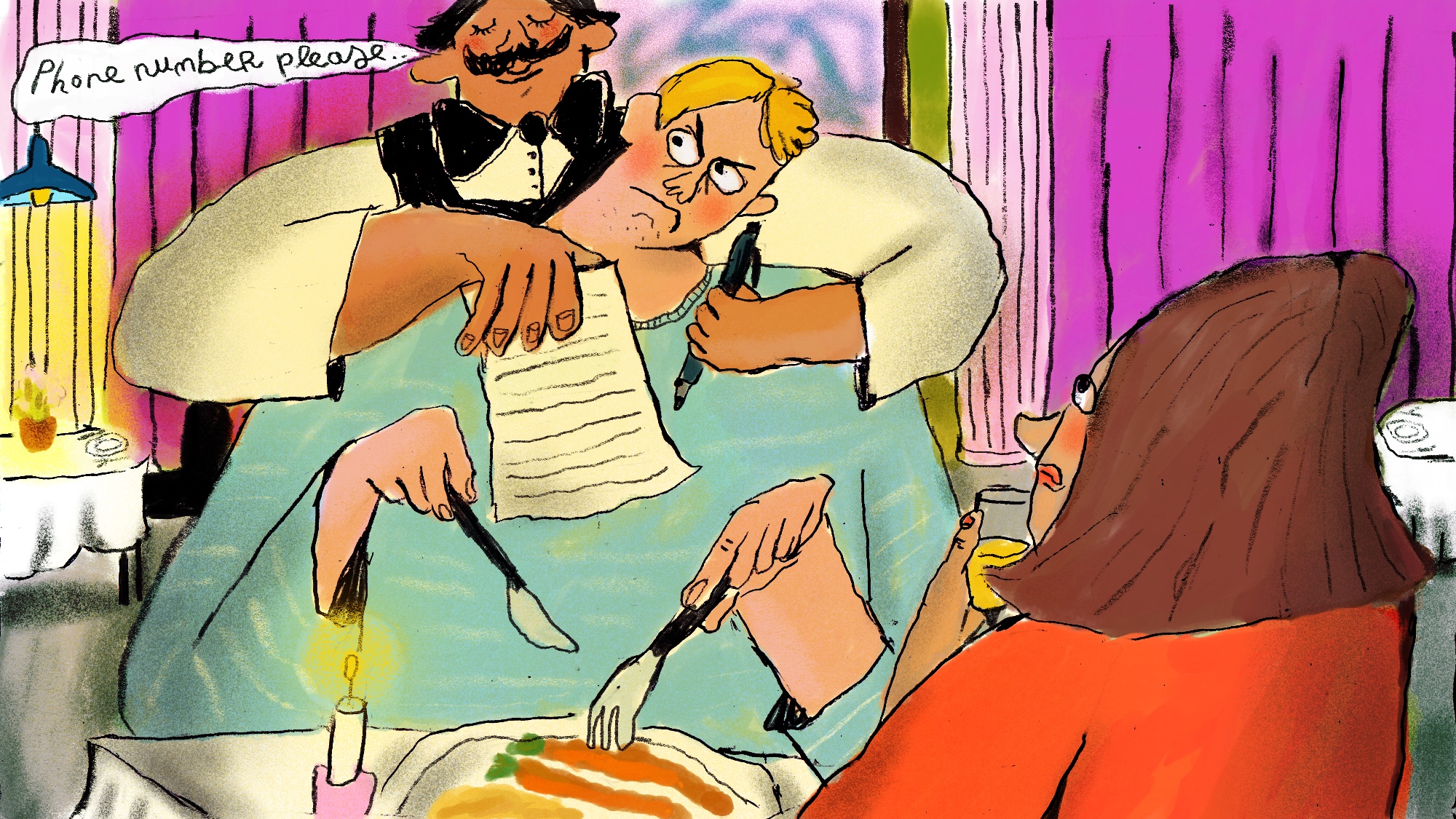
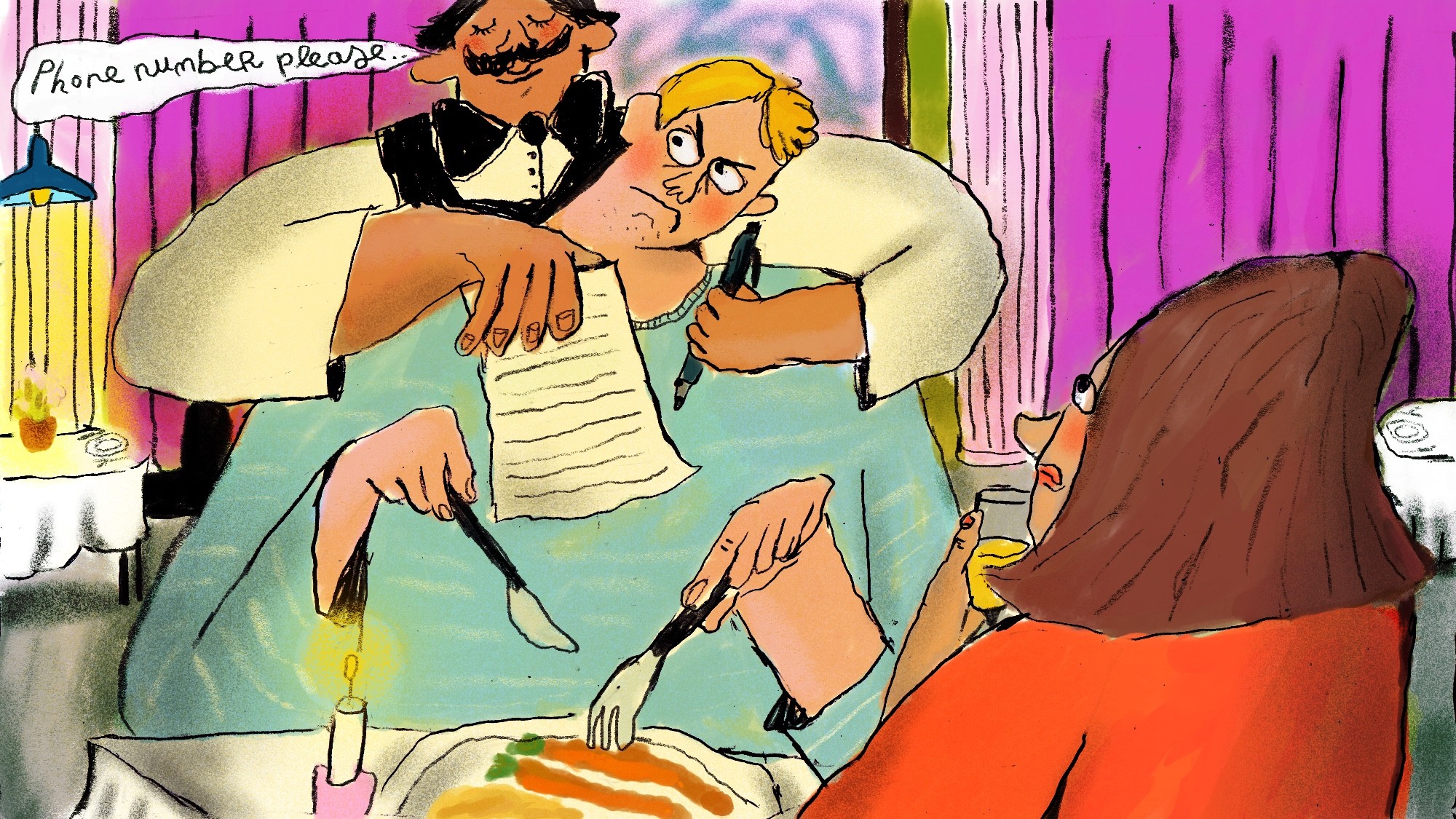
A man walks into a restaurant. He doesn’t have a reservation, but that shouldn’t be a problem; there are ample seats at the bar, visible just over the hostess’s shoulder. “Of course,” she says, smiling. “We can seat you right away.” As she gathers menus, he absorbs the pleasant hum of a busy dining room, breathes in the tantalizing smells from the semi-open kitchen. Then, the hostess stops, Columbo-like, to interrupt with one more question: “And what’s your phone number?”
This story was updated at 6 p.m. on October 9, 2026.
Russia is a U.S. adversary, with a track record of interfering in U.S. elections. It’s providing support for Iran in its war with the United States even as the U.S. backs Ukraine in its long-running war against Russia. FBI agents work day and night to combat a long list of threats emanating from Russian soil: espionage, cyber intrusions, influence campaigns, and efforts to infiltrate American institutions and critical infrastructure. So when the news emerged this summer that FBI Director Kash Patel would be visiting Moscow just three weeks before the midterm elections, many of his own employees were puzzled—and concerned.
Current and former FBI officials familiar with the matter told me there was a quiet campaign to urge senior leadership to cancel the trip. When that and other efforts to pass apprehensions up the chain went unanswered, some shared their worries with Congress. Now a pair of senior House Democrats are taking the unusual step of asking the FBI director to scrap the visit, which is reportedly set to begin next week: “In the interest of national security, we ask you to reconsider. Call off this trip,” they wrote in a letter that I obtained. The letter is signed by Representative Jamie Raskin, the ranking member of the House Judiciary Committee, and Representative Jim Himes, the ranking member of the House Intelligence Committee. Patel has not replied to the letter and the FBI has not publicly confirmed his travel plans. Neither the FBI nor the White House responded to my multiple requests for comment.
With so little information available either publicly or internally, the anxiety within the agency Patel leads has only grown. Seventeen current and former FBI and Department of Justice officials, intelligence officials, and others familiar with the situation told me they were deeply worried by a variety of decisions that suggest ever-closer ties between the Trump administration and Russian President Vladimir Putin’s regime.
Many of the officials would speak only on the condition of anonymity because they feared retaliation if their name appeared in this story. Patel has filed a $250 million defamation lawsuit against The Atlantic and mein response to my reporting earlier this year that he has alarmed colleagues with episodes of excessive drinking and unexplained absences that were perceived as potential national-security vulnerabilities.
But some former officials were willing to be named. They told me that for the national-security and counterintelligence officials who have devoted their careers to the threat from Russia, the absence of information about the trip is particularly concerning. Christopher O’Leary, a former senior executive in the FBI’s counterterrorism division, told me that he and others found the timing of the trip bizarre, especially given the pressure that FBI leadership is putting on agents to substantiate election conspiracy theories at home that Russian intelligence services continuously amplify. “If there was real concern about interference in our elections, then the FBI director should be in the United States leading the effort around the clock,” not going to Moscow, O’Leary told me.
When Patel took over leadership of the bureau in February of last year, he struck a notably different tone on Russia than that of his predecessors. Rather than regarding Moscow purely as an enemy, he has sought out areas where the two nations can partner, including in combatting transnational violent crime and cyberfraud. He shares that approach with other senior officials in the Trump administration who have cultivated closer ties with Moscow.
In recent days, two of the president’s top advisers, James Blair and Chris LaCivita, found time amid the midterm campaigns to visit Republika Srpska to advise its pro-Russian government on voting issues, The New York Timesreported. A top Trump-administration diplomat has come up with a plan to trade sanctions relief in exchange for Russian political-prisoner releases—a deal that would bypass Ukraine and likely anger U.S. allies. Special Envoys Steve Witkoff and Jared Kushner have both spent considerable time with Putin as they seek a negotiated end to the war in Ukraine. Donald Trump Jr., meanwhile, accepted a lavish wedding gift from the Russian oligarch Umar Kremlev, who paid hundreds of thousands of dollars for the rental of a private island and a fireworks show, ProPublica has reported. (Kremlev said this week that Trump Jr. has paid him back.) Earlier this year, a gold-framed photo of Trump with Putin went up in the Palm Room at the White House. Just today, Trump announced that he and Putin had worked out a deal for the U.S. to import Russian diesel fuel, an agreement that directly undercuts American sanctions.
In interviews with Reuters in August, Patel boasted about the FBI’s new approach to its “non-traditional partners,” Russia and China. Patel described extensive behind-the-scenes cooperation with Russian authorities to target violent criminal networks. “This stuff doesn’t happen overnight,” he said. “We’ve been at this for 15 months.” Both Reuters and Politico reported this summer that Patel was planning a trip to Russia this month. Politico cited a U.S. official familiar with the plans in reporting that Patel would visit Moscow first, then St. Petersburg, with the host likely to be the FSB, the Russian security service that is the successor to the KGB.
While speaking with Reuters, Patel characterized the FBI’s relationships with Russian and Chinese law enforcement as “new and dynamic,” but he was careful to add that engagement did not negate the need for vigilance. “We are extremely mindful of their adversarial approach on many matters,” he said. “They are not going to stop, but if we can go and have wins for America, then we must engage.”
In congressional testimony, Patel has identified Russia as among the FBI’s biggest nation-state threats. Last month, he said “the counter-espionage arrests by this FBI are up 53 percent, including from Russia.” Three weeks ago, Patel took part in the announcement of charges against five people whom the FBI investigated for their part in what he described as “an alleged plot by the Russian intelligence services to murder a dissident on U.S. soil for daring to speak out against the Russian government.” Patel said the plot “exposes the lengths to which our adversaries will go to silence its critics,” adding that the FBI “is committed to defending the free speech of everyone within our homeland and will not tolerate any attempts by foreign governments to violate our laws and threaten our freedoms.”
Patel has spent years echoing Trump’s claims that Russia’s interference in the 2016 presidential election was a “hoax.” That’s also what Russia claims, but that runs against the conclusions of U.S. law enforcement and intelligence communities, including the bureau Patel now directs. Trump gave a prime-time address this summer on the threats that foreign adversaries pose to U.S. elections—though he focused almost exclusively on China, and made little mention of threats from Russia.
FBI directors have visited Russia before, most recently Robert Mueller in 2013, to discuss the Boston Marathon bombings and related investigations. But previous visits by FBI officials to Russia have come with greater internal transparency about the purpose and planning of the trip, four current and former FBI officials told me.
Kremlin spokesman Dmitry Peskov did not respond to multiple requests for comment, nor did the Russian embassy in Washington. In July, Peskov told Russian reporters, “I do not have any information on the matter. You know, such visits are not usually made public, so I cannot tell you anything about this,” according to the Russian state news agency TASS.
Two former senior FBI officials who oversaw Russian counterintelligence operations and were familiar with previous FBI directors’ contact with their Russian counterparts told me they could not think of a compelling reason for Patel to take the trip at this moment that outweighed the practical risks.
The letter this week from congressional Democrats asks Patel for clarity. “Why is the Director of the Federal Bureau of Investigation (FBI) visiting a hostile foreign power that has been committing war crimes, conducting influence operations against U.S. elections, conducting malicious cyberattacks against our critical infrastructure, and helping our adversaries target and kill American soldiers?” the letter asks.
“As Director of the FBI, you possess information that would be highly valuable to America’s adversaries. Unfortunately, your affinity for the Russian government does not inspire confidence that you will be able to effectively safeguard those secrets,” the letter continues.
The two congressmen requested a closed-door briefing to Congress about the trip and Patel’s efforts to forge ties with adversaries no later than 5 p.m. on October 12. They are asking for details about what prompted the trip, as well as the itinerary and planned meetings while Patel is in Russia. And they are asking for details about any social activities, “a full accounting” of Patel’s whereabouts during any downtime, and the names of all individuals who will accompany Patel, notably including “any private citizens or members of President Trump’s family.”
Multiple foreign officials who would normally be consulted have said they, too, were in the dark about Patel’s trip. A senior Ukrainian official said they had not been briefed or consulted about the trip, and had “no idea” why Patel was planning the visit. One senior European official said that in conversations with their American diplomatic and intelligence counterparts, the American officials had expressed concern about Patel’s trip.
Raskin told me that members of Congress were also confused about the purpose of such a trip. “The whole thing to me is absolutely astounding,” he said. “He will be a target and sitting duck for every kind of Russian espionage and influence operation. We are demanding they call it off. This could be a disaster for our country.” Three former FBI counterintelligence officials told me they shared those concerns. “There isn’t a single American official who doesn’t get targeted” by the Russian intelligence services while they are in the country, one person familiar with the situation told me.
Some of the tools that the U.S. once had to combat foreign meddling have eroded. The FBI’s Foreign Influence Task Force was disbanded almost immediately after the new administration came to power in 2025, and dozens of its specialized staff were either reassigned or removed from the bureau, Julia Curlee, a former CIA analyst and White House National Security Council director under the second Trump administration, told me. And NPR reported this week that the teams that track foreign spies on U.S. soil—known as counterintelligence squads—have only about half of their positions filled.
Curlee told me that it’s possible to imagine a legitimate reason for the FBI director to visit Russia—but that she doubts that’s why Patel is going now. “Unless he’s going to warn them to stay out of our elections, and get out of Ukraine, he has no business there,” she said.
Officials told me that they were confident that FBI staff would do everything in their power to mitigate the counterintelligence risks if Patel travels to Russia, but that they cannot prevent him from going. “Who can stop him?” one former FBI official asked.
The hype over cryptocurrency may have faded since the fall of Sam Bankman-Fried and FTX, but beneath the surface, a lot of real money is involved, including the millions being funneled into the American political system. The actor turned documentarian Ben McKenzie joins Galaxy Brain host Charlie Warzel to talk about the current state of cryptocurrency, why he became interested in investigating it, and how the crypto craze influenced some people’s enthusiasm, or lack thereof, about AI.
The following is a transcript of the episode:
Charlie Warzel: The big joke always about crypto or bitcoin is that it is a technology in search of an actual use case, right? And my question is: Is this the first truly useful application for cryptocurrencies, which is political power?
Ben McKenzie: It’s not the first. I mean, the first was buying drugs online.
Warzel: Fair.
[Music]
Warzel: I’m Charlie Warzel, and this is Galaxy Brain, a show where today we’re going to call up a TV star and ask him the following question: Is crypto dead? Dying? Dormant? Or is it thriving in 2026?
Now, thankfully, we’ve chosen the right TV star for this very specific job. If you were alive and conscious in the early 2000s, you’ve likely encountered Ben McKenzie on a television screen, on an online recap, or a magazine cover. He played the heartthrob Ryan Atwood on The O.C., and he’s parlayed that into a career on other shows like Southland and Gotham. But then, during COVID, something weird happened, and McKenzie became obsessed with cryptocurrency. Now, unlike other celebrities who spent the pandemic shilling it, McKenzie started investigating it. He wrote a best-selling book with the reporter Jacob Silverman, and then he made a documentary. It’s called Everyone Is Lying to You for Money.
Recently I met McKenzie at The Atlantic Festival, and I wanted to talk to him and bring him on to speak about his work. Because it is a very strange moment for crypto. After the fall of FTX and Sam Bankman-Fried around 2022, it feels like we’ve heard less about the technology. But while the early-2020s hype has largely faded, crypto is not gone. In 2024, crypto companies threw millions of dollars into American elections, elevating pro-crypto candidates and trying to take down its skeptics. And at the same time, Donald Trump and his family became entangled with their own crypto projects. Democrats in the House Judiciary Committee called it a “multi-billion-dollar crypto empire fueled by self-dealing and corrupt foreign interests.”
Since then, crypto’s presence has been somewhat quieter in the headlines, but arguably more influential than in the days where cartoon-ape NFTs were selling for six figures. This summer, in a 927-page disclosure for the U.S. Office of Government Ethics, it was revealed that in the first year of Trump’s second term, the president made $635 million from the memecoins that were using his name. And that his crypto holdings exceeded $1 billion. Crypto money is also pouring into next month’s midterm races.
Back in 2024, I wrote that “crypto is a perfect fit for the turbulence and the distrust of the 2020s. As well as the nihilism and the corruption of the Trump era.”
So I wanted to bring Ben on and talk about all of it. Is political influence crypto’s most successful use case? Why aren’t people paying more attention to how crypto is being wielded by Trump and the people around him? How on earth did we all get here? And where is it all leading?
Ben McKenzie will join me to discuss it all. But first, I just wanted to say we are doing an Ask Me Anything episode later this year, and we would really like your submissions. You can write in to charlie@theatlantic.com with any burning question that you have for me or the show. I look forward to reading it. Put “Galaxy Brain AMA” in the subject line.
And now Ben McKenzie.
Warzel: Ben McKenzie, welcome to Galaxy Brain.
McKenzie: Hi, Charlie. Thanks for having me.
Warzel: Thank you for coming on. Yeah. So you said that your interest in starting to investigate cryptocurrency, the career pivot that you did, was born out of a combination of the pandemic and a midlife crisis. Unpack that for me. What happened here?
McKenzie: Nice. So usually my therapy is on Mondays, but—
Warzel: That’s good. We’re doing it on Friday.
McKenzie: I love this. Yeah, so when the pandemic hit, I’d done three different television series. I met my now-wife on the third show, and we started a family. And I loved what I did, but it was becoming a bit repetitious. And my wife, Morena Baccarin, who’s an actress as well, has chronic asthma. And because New York was hit first, we didn’t know what was going on. So we moved out of the city briefly; out of fear, basically. And so I’m sitting in the country with nothing to do and on my phone all the time. And that’s when the crypto thing happened, because a buddy of mine came to me saying I should buy bitcoin.
Warzel: Sure.
McKenzie: The celebrities were selling it. I had never really paid attention to it, but my buddy has given me terrible financial advice before. In the mid-aughts, when I was on my first TV show, The O.C., he had encouraged me to invest in a company that had supposedly produced synthetic blood. And they were going to make a fortune. And so Dave and I both invested in this company. Mild, not a major investment, but I think it maybe put in ten grand. But we lost most of it, you know, almost immediately, because it was probably some sort of penny-stock pump and dump. Wasn’t Theranos; some precursor scam. Yeah.
Warzel: Nice. Yeah. I was gonna say it’s like hipster Theranos, right? You were in that before it was cool. You were in the blood scams before the blood scams were cool.
McKenzie: Totally. It’s almost like Theranos didn’t dream big enough—like, synthetic blood, that would really change things, you know? So anyway, the day when Dave came back to me in 2020 and said “You should buy bitcoin,” I was like: “Dave, I’m not gonna do that. But tell me about it. Explain this to me.”
Because I really hadn’t paid any attention to it. And I have an undergraduate degree in economics from the University of Virginia. I hadn’t used it much in 20 years in showbiz. But one thing that I remembered in my middle-aged fog of a brain from Econ 1 is: Currencies, monies; you can usually buy stuff with them. One of the things you can do with them is buy things and sell things. And so: “Dave, can I buy stuff with this crypto stuff?” He’s like, “You could buy drugs online, probably.” Hey, that’s a use case.
But he really just couldn’t give me even the most basic of answers as to what this thing was. And so my curiosity was piqued. And I fell down a rabbit hole pretty hard, where I was sort of fascinated by the, I guess I would say, myriad intellectual fallacies of the crypto believers: in terms of their misunderstandings of money, and of how private money works versus public money, and things like that. But I was also fascinated by the true crime of it all. I love true crime. And I particularly like a subgenre of true crime I call “stupid crime.” Coen brothers–esque crime, where the criminals are, like, obviously committing crimes. Sometimes via tweets. And then they turn on each other when the feds come—’cause as much as they say they’re a community, like, when the shit hits the fan, they all turn on each other and start trying to flip in order to save their skin. So crypto had a lot of that stuff. And then I couldn’t give it up.
Warzel: Yes. Well, this brings me to—there’s two elements here. The first is that what’s interesting about you getting into this during the pandemic is: I think the pandemic basically produced the opposite effect on so many people, to dive into crypto, right? Like in this moment where people are tethered to their computers. They can’t go anywhere. This idea of digital money, the hype around like the NFTs and things like that, shifted it. I don’t know if you could ever say it became cool, but it certainly became like it had a cultural cachet. And I’m curious what you think the pandemic’s effect was on this industry.
McKenzie: It was huge. The crypto advocates will say bitcoin has no marketing department, right? That, like, this synonymous force, Satoshi Nakamoto, created it out of thin air. And so it's this decentralized thing. But in reality, because there isn’t a product with crypto—I mean all you’re buying is lines of computer code stored on ledgers called blockchains. They don’t have any relationship to anything in the real world. They don’t signify ownership of any physical asset. Really, all you’re buying is a story. So it’s not that bitcoin has no marketing environment; it’s that crypto is only marketing. That’s all it is: marketing, really. It’s just convincing people to give you their real money in exchange for the promise that they’re gonna get wealthy with this crypto stuff, which they don’t really understand usually.
And that dynamic really leads you to manias and bubbles. And the bubble that was created in the pandemic, I do think was somewhat a result of people being at home. Being on their phones all the time. There was nothing to do. Sports was briefly shut down. It was hard to gamble on sports for a little while. And then, the crypto was a new thing to gamble on. And once the money, real money, started coming in, it feeds itself—because then the crypto companies use the money from the customers to pay for the advertising budgets and the celebrities. And sort of by the end of it, you have the most famous people in the world selling you on this thing that I regard as a Ponzi scheme.
Warzel: That’s so interesting—that piece about when the world shut down, there was nothing to gamble on. Like at all. Like, not just sports, right? There’s just nothing. Like, no one was doing anything. And the only thing I guess you have is like the stock market, which is in you know, at that moment in the pandemic, especially really early on, was in like this free fall, and it’s like, I don’t wanna put all my money into that type of thing. Like, I hadn’t thought about the fact that the pandemic provided a chance for them to kind of corner the market in speculative assets. That’s so fascinating.
McKenzie: But also, it was “gambling, but better”—because it was also like the “future of money.” Which is really funny to an amateur economist like myself. Because actually, crypto’s the past of money. And we could talk about private money, but we’ve actually tried this before, and it didn’t work. But they’re talking about “it’s the future of money” and “you’re gonna be really smart if you invest.” You’re gonna be—you’re sort of ahead of the curve, right? You’re a part of the future. This dynamic is very much “emperor’s new clothes,” right? Like, only the smartest people, only the people of highest station, can perceive these imaginary clothes that the tailors weave.
And so, adult after adult is tricked into not believing their own eyes, because they don’t want to appear foolish. And I think that dynamic was really happening. Because the celebrities were out there selling it, and once something gets so big and it’s on your TV all the time, you start to doubt yourself. You start to say, Well, maybe there is something there. I mean, how can all of these incredibly famous, powerful people believe in this thing if it’s not true? The economist who influenced me the most was Robert Shiller, behavioral economist. And he talks about naturally occurring Ponzi schemes—which are, the price of a speculative asset rises far beyond what it could really be worth. But people see the price rising, which draws them in to invest, which sends the price higher, which draws more people in. So these things kinda take on a life of their own.
Warzel: Right. I am interested in a point you made just a minute ago where you said we’ve tried this before. When did we try this before?
McKenzie: We tried it before in the 19th century, during what was called the free-banking era. The free-banking era was an attempt to create a banking system as we moved west, being like now sort of the middle of the country. But back then, banks were allowed to issue their own notes, their own currencies, as long as they held a certain amount of state bonds. And I think the idea was well intentioned. It worked better in places like New York that had more access to capital. But because they were tethered to these state bonds, which were very volatile, the whole system really just didn’t work very well.
And ultimately it was scrapped and replaced with a central bank. Because, you know, the only way we’ve really been able to scale the trust that’s necessary in an economy—money really is just trust. You take a dollar bill from me not because you trust me, but because you trust that you can use it. The only way we’ve been able to scale that trust is through government issue. And so when the crypto guys talk about it’s the “future of money”—well, if the money isn’t coming from the government, where’s it coming from? It’s coming from corporations and individuals. Whether it’s World Liberty Financial in the case of Donald Trump, or even bitcoin, the majority of the bitcoin that are created now, the “mined.” These crypto mines: computers guessing at random on the—
Warzel: Solving puzzles.
McKenzie: Solving puzzles, on the off chance they want a bitcoin. So it should, I think—I’m a leftist, so to me, the idea of corporate money is just sort of obviously not a good idea. But it’s also something that we’ve tried before, and it’s failed.
Warzel: So you embarked on this journey. Basically you turned yourself into a reporter, working alongside a reporter.
McKenzie: Yeah, working with a good reporter.
Warzel: Jacob Silverman, right? Wrote a best-selling book about your journey into this world and then did this documentary, which is how the people can see Everyone’s Lying to You for Money. And in this you spent so much time in the world talking to regular people who use or love crypto. And I’m curious if we could walk through a little bit here, like a taxonomy of crypto believers.
McKenzie: Well, it’s a lot of dudes. It’s very heavily male. I think I’ve seen polls where it’s like two to one. That feels a little low to me. At least when I went to the bitcoin convention, the bitcoin conference in Miami in 2022, which is like the largest bitcoin conference every year.
And when you walked around the halls, there obviously were women as well, but it was a very heavily male thing. It was kinda like a trade show, right? I mean, you’re walking from booth to booth, people are selling you on different things. You know, the NFTs were big at the time. But guys are drinking and chatting and you know, partying, and that was really the vibe. When you talk to individual investors, I mean, they’re all gonna have different reasons.
I describe it in the movie as—because again, there’s no real product there. You’re believing in a story that crypto is going to make you rich or give you what you want. So crypto is really, to me, a projection of the hopes and dreams of all of these different investors. They all want something different out of it. I mean, it’s all broadly the same if they want to get rich, but it also gives them a sense of identity, of shared community to some degree.
And what’s interesting though is that outside of the big conferences, you know, crypto really exists only online. It’s an online phenomenon. I mean, the blockchain and everything. It’s not something that’s in the real world. So a lot of the sense of community is fake. It’s not real. I talked to the victims of the Celsius scam, which was all guys. I mean, we posted on a Reddit board for victims and only guys responded to us.
Warzel: Mm-hmm.
McKenzie: And I asked them about this sense of community, because Celsius was pitching itself as a community bank. We’re like a community bank—except they didn’t have a banking license. But in reality what was happening was they had a really nice website. And they had this guy, Alex Mashinsky, at the center of it. And they were telling people: Give us your crypto, and we’ll give you like 15 percent return every year on your crypto. So we’re better than a bank. We’re gonna give you this incredible rate of return. Which is literally a red flag for a Ponzi scheme. If you go on the SEC’s website, seven red flags for Ponzi schemes. One of them is promising guaranteed returns. You can’t do that. It doesn’t work. I guess you could say “I’ll give you the rate of treasuries,” but 15 percent is impossible. And so it was a Ponzi scheme, and it fell apart, and these guys lost money.
And so I asked them, like: What about this community? Was this community real? And several of them said No; I think it was always just a lie. Because it’s very easy to fake things online. It’s much harder to run scams in real life.
Warzel: Saying that basically it’s a projection of everyone’s hopes and dreams. I mean, it feels to me like it is so inextricable from so many of the broader societal concerns that people have, especially younger people. The economist Kyla Scanlon has this phrase, like “the lack of a path to predictable progress,” right? With jobs and having the stability and the dream of, you know, the middle-class American dream being harder and harder to attain for people. And the idea that crypto is selling this story to you, in the same way that gambling on DraftKings or something like that is selling a is selling a kind of story. In so many ways, it’s combining that frustration with the idea that, like: I don’t know how to get ahead in this thing. And it’s pairing a fake, seeming community with that idea of like, Here’s a pathway for success. It’s really interesting that when I’m asking you for a taxonomy of those people, it’s like, no, it’s just in the eye of the beholder, right? It’s whatever you need in that moment that crypto can provide you.
McKenzie: Right. Because you’re on your phone, and you’re scrolling through social media, and you’re seeing a post of someone who got fabulously wealthy on cryptocurrency. And they’re showing off their cars and their houses and their things. And maybe that’s their post you respond to. That might feel obnoxious to you and me, but to a lot of young guys, that sounds like, you know, the dream, right? I came away feeling a lot of sympathy for the victims of Celsius that I interviewed. There’s this one guy named Joe who was from Fort Worth. I’m from Austin, so we bonded over barbecue and Texas football. But he was investing in Celsius because he wanted to make a little extra money so he could spend more time with his daughter. He had a young daughter, and he felt like because he lost the money he let her down.
And that really touched me. And made me kind of feel, maybe this is obvious, but that to really address the problems of cryptocurrency, we have to fix our economy so that it does work better for people. So that they don’t feel like they have to gamble. And it also requires, I think, a fair amount of regulation of these social-media companies, which are just rife with misinformation and manipulation of these markets. You know, people have this view that this crypto thing is really popular. But if you look at the numbers, it’s really not.
Warzel: You sat down with Sam Bankman-Fried pretty much sort of as the walls were probably closing in on him. A couple months before the whole FTX thing crumbles down. And you were one of the people I feel like who—and again, that interview wasn’t, I don’t believe, made public ’til after—but you came to him skeptical. And what I think is really interesting, seeing that, is what was happening in tandem—where he’s on magazine covers, he’s doing all kinds of conferences and cable-news bits and talking to different people.
And in some places, he’s saying the quiet part out loud. Like, there is a moment where essentially, in this great Bloomberg podcast, he’s explaining what yield farming is to Bloomberg’s Matt Levine. And when he describes the whole thing, Matt Levine says—this is a great quote—“I think of myself as like a fairly cynical person. And that is so much more cynical than how I would have described farming. You’re just like: Well, I’m in the Ponzi business, and it’s pretty good.”
And SBF just goes, “That’s a pretty reasonable response.” And “a depressing amount of validity.” And so my question for you here is—
McKenzie: Yeah. Ha.
Warzel: Why do you think everyone was so blind to what was going on? Like, here is this guy who’s everywhere. He’s the boy wonder. Like, why do you think so many people didn’t see through him and FTX and all that?
McKenzie: I think that some people did, right? Obviously Matt Levine was not having it. That was one of my favorite interviews as well.
But at the same time, because Sam had made—really, we now know, stolen his customers’ money—but “made” all this money through his crypto exchange, through his trading firm, he had a lot of money to spend to burnish his image. And so he was getting feted by all of these public publications. I don’t know how the economics work exactly, but you know, if you have a desk set up at a major media organization to cover cryptocurrency, where is your advertising coming from on that desk? My guess is, your advertising is coming from the crypto companies. And how hard are you looking at the reality of the crypto? But you tell me, I mean, I see you sort of thinking about that. I’m curious—I’m not a real journalist. I only, you know—I did a little light journalism with Jacob. But Jacob’s a real journalist, and I appreciate what you guys do. But I was trying to figure out why journalists—and many were asking the right questions. How did it redound to me?
Warzel: Yeah, well, I mean there were people. I’d like to think of myself as someone who is skeptical of a lot of this. I mean, I think some of it is, you know, getting access. Like you’re a celebrity. It seems like DMing him worked better than it did when I tried to DM him, at the time.
McKenzie: Fair.
Warzel: But what I would say is like that point about like “Where’s the advertising coming from on these desks?”—I’d push back on that, because media companies don’t actually wanna get mired in that, and there is the reputational hazard.
What I think is real though, what I think is actually the part of this, is what the FOMO element that you were talking about. Just on the side of, like, the normies who are investing, getting involved. There’s a FOMO I think as a tech writer, as someone who covers this industry, when something new comes out in this way. Like, you don’t wanna be massively wrong, right? Like there’s this old, I believe it’s in a Newsweek story, but some columnist who wrote this piece back in like, you know, 1997 or sometime like that. I’m not sure exactly the date.
McKenzie: Yes.
Warzel: That’s basically like: This internet thing’s never gonna take off. This thing is, you know, BS, whatever. Nobody wants to be that person, right? Nobody wants to be the person who’s gonna retroactively miss this thing. And there’s something you said way early in this conversation that I think speaks to how a lot of technologists now, and venture capitalists and people, use this FOMO feeling. To raise money, to get people involved, to generate the hype cycle.
Which is this idea of: Yeah, it’s complicated, and you just don’t understand it. Like, you just lack the technical expertise. If you dove into the white papers on the blockchain, if you really got deep in the weeds—which you’re either not able to ’cause you’re not smart enough, or you’re lazy, or whatever—if you’ve done the work, you would see that this is the future. This is the thing. Right? And I think like Sam’s affect of, you know, being like shlubby and just wearing the shorts and doing whatever, and is allegedly taking a lot of stimulants to stay up all night and trade and find this thing. It was like: This guy is like a wonder boy. Right? In some way. And I’m just Joe Schmoe who, you know, is skeptical of this thing.
And I feel like that’s the playbook. Like, that’s the thing. And it’s not nefarious. It’s more, these folks are playing off of the insecurities of everyone else thinking, I must just not be seeing it here.
Which sort of seemed to be the initial thing that led you into all of this, right? You’re like: What am I not seeing here? Let me go investigate. And I think a lot of people, instead of investigating like you did, were like: Well, let’s just put him on the magazine cover.
McKenzie: Yeah. I mean, he had pat responses to a lot of the questions. And so, when I was preparing for the interview, I was watching all of his media hits, including the Matt Levine, Odlots appearance, and others. And I was just struck by the repetition of it all. I mean, I guess I shouldn’t have been surprised, because I come from showbiz. I’m used to doing, you know, media junkets and things like that. But he was just repeating the same lines over and over again. But if you looked just a little bit underneath those lines, they fell apart very quickly. You know, one thing that he would say repeatedly—that he said to me when I asked him, “What does it do? Like give me one good thing that crypto does”—is he says “remittances.” Sending money overseas.
Remittances can be expensive. You have to use MoneyGram or Western Union. They’re gonna charge you a fee. So what if we built a system with crypto where you didn’t have to pay that fee? But I had just come from El Salvador, which is the only country in the world that was trying to use cryptocurrency as real money. And the foundation of the Salvadoran economy, I would argue, is remittances. The 2 to 3 million people of Salvadoran descent that live primarily in the United States, sending money home, is a big part of the economy. And so when [Nayib] Bukele, the president, rolled out this crypto scheme—and built a system where people could use that to send money home—if it was gonna work anywhere, it should have worked in El Salvador.
And it was an epic disaster. And no one used it. Less than 2 percent of remittances, according to the government’s own figures, were using the Chivo system, the system they built at the time. Now it’s less than 1 percent. The notion that this was being used to help poor people in developing countries, you know, send money back and forth just wasn’t true in my experience. Like I had just seen the antithesis of that.
And so that felt very frustrating to me. And the whole interview—which was over an hour but cut down for the movie, obviously, a lot—was just a series of me asking him a question, him giving me some sort of kind of pat response, me pushing back, and then him just like flailing. Just like really not being able to engage in an honest back-and-forth intellectually about so much of this stuff.
Warzel: Yeah. So FTX’s collapse, I think it marks a turning point for crypto. And I wanna see if you agree with this. So there’s—I think it ends, the COVID crypto craze. There’s this feeling of distrust. But crypto never fully tanks. And the people who got in early, the people who are perpetrating this scheme, they have a lot of money now. And these people are either in it because they have this deep financial interest in it, or they’re true believers and they really care about the anti-institutional side of this, right? That this is a decentralized thing.
But what I see here is that these people then take that money, and then they buy influence in the form of lobbying in elections. So tell me a little bit about crypto’s influence in politics and lobbying power as you see it, because I think that is part two of the crypto story. Like, that’s where we live now.
McKenzie: I think you’re absolutely right. I think that’s a good way of looking at it. By 2022, Sam Bankman-Fried had been arrested. And a lot of these companies had failed because it turns out they were actually interconnected. You know, this was not decentralized, to me, in any meaningful sense. You know, they had real financial relationships with each other. And so when one fell, many of the others fell. And it was lingering.
But you’re also correct that if you bought in early, even with the crash in 2022, you were still way ahead. And crypto kind of kept, you know, kind of floundering about for a little bit. And then, you know—not to make it all about Trump. But Trump has just been; you can’t overstate Trump’s importance in crypto’s resurgence, in my opinion. Because, you know, when he started embracing crypto in the summer of ’24, and I think whispers were happening earlier than that, you start to see the market recover.
And the price starts to go up and up as people realize, you know, This guy has a 50-50 chance of becoming president again. And if he is really pro-crypto—and knowing Trump’s, let’s say aggressive-businessman tactics—like, what he can do with that power of the office of the presidency to help crypto along. People, you know—quite rationally, frankly—bet that was gonna mean the price was gonna go up, right? That this naturally occurring Ponzi scheme, that dynamic, was gonna take off again.
And sure enough it did. And the price of bitcoin hit an all-time high, of like 120,000. Since at least 2022, when I was on the scene, crypto was trying to manipulate the political process. Sam Bankman-Fried was spending a lot of time on Capitol Hill trying to get a bill through Congress that was affectionately called Sam’s Bill, that would have shifted the regulation of crypto over to the CFTC [the U.S. Commodity Futures Trading Commission]. And Sam was spending wildly on political campaigns and super PACs. I mean, he spent 40 million donating to the Democrats; was one of Biden’s largest donors.
The money has only gotten bigger since. In 2024, 40-something percent of all corporate donations in the cycle were from the crypto industry and people associated with it. It’s just a staggering amount of money. And they’re doing the same thing now with the midterms. I forget how many hundreds of millions they’ve spent, or have announced that they will spend, but it’s an enormous number.
Warzel: And were successful too, right? Like, they were successful in primarying candidates. They were successful in, you know, backing the right people. And obviously Donald Trump in the sense of: He comes in, gets rid of some regulations, makes for a very crypto-friendly environment for them.
My question to you is: The big joke always about crypto or bitcoin is that it is a technology in search of an actual use case, right? And my question is: Is this the first truly useful application for cryptocurrencies, which is political power?
McKenzie: It’s not the first. I mean the first was buying drugs online.
Warzel: Fair.
McKenzie: I mean, when you look at the history of crypto it’s kind of interesting. It came out in—well the paper comes out in ’08. It actually goes into existence in ’09. It kind of flounders around for a little bit, because people think that’s a cool idea, but why does it have value? What can I do with this thing? And then the Silk Road really was like this dark-web drug marketplace, was like the one of the first places where bitcoin had some value. Because you could obscure your identity while buying drugs online. And so it’s become, you know, all sorts of criminal activity.
But I mean, with Trump—he doesn’t hide it. I think he announced another dinner. He’s already held one dinner with the top investors in his memecoin. Like, if you give him a lot of money for his memecoin, you can have dinner with the president of the United States. So it’s literally selling access to the president.
Warzel: That’s right. He recently announced—this is an article that I’m looking at from October 1st—promising to hold “the most exclusive dinner in the world.” For people who are owners of the memecoin.
This is a good part to just talk to the audience here about World Liberty Financial, which is the company that the Trump family has a stake in. Help us understand the story of World Liberty Financial, as you know it.
McKenzie: My understanding is World Liberty was set up—the Witkoff family, or Steve Witkoff, has a financial stake. [Trump’s] kids, obviously—at least Don Jr. and Eric. They have a stablecoin, and they have the Trump memecoin. It’s just simply a way to cash in on the office. Trump got this huge investment in his stablecoin from the UAE. And the head of the largest crypto exchange, Binance; the head of that, Shangpeng Zhao—CZ, he’s known as—had pled guilty to money laundering under the Biden administration, and spent a couple of months in jail. And Binance had paid, I think, $4.3 billion. Admitting to money laundering. And Trump pardoned him. And CZ now lives in the UAE, and this money flowed into Trump’s stablecoin.
Now, obviously, I can’t say definitively it’s a quid pro quo. But it certainly looks pretty bad. And in addition, this sheik in the UAE invested in his stablecoin, and then the UAE received these Nvidia AI chips shortly thereafter. So, you know—whatever the particulars of World Liberty Financial are, the way it’s operating is a way for Trump and his associates to make enormous amounts of money off of the power of the office. And what they can do for people that want to invest in them.
Warzel: Right. But we should also note that the White House has denied any connection between those two deals. An administration spokeswoman called the crypto transaction “totally unrelated to any government business.” But what that makes me think about is this Sam Bankman-Fried line. And I’m gonna paraphrase here, but it’s something about how everyone talks about how much money there is in politics, but when he got into it, he was actually surprised at how little money there was in politics. And I think, to borrow a phrase from the industry, it seems like crypto solves this, right? Like—you can’t donate tons of money to politicians directly. But you can throw a whole bunch of money behind either World Liberty Financial or invest in Trumpcoin, or something to that effect. And put money into the political system.
And again—you can’t make these direct connections necessarily all the time, right? There’s a sort of a step in there that gives some, you know, “plausible deniability.” But all of this sounds a lot like a bribe. And so my question to you is: How is all this legal?
McKenzie: Okay. Look, I’m not a lawyer. My dad’s a lawyer. I come from a family of lawyers, but I’m not a lawyer. I think it’s as simple as: Trump’s former personal attorney is the attorney general of the United States of America. And Trump runs the DOJ like it’s his own personal law firm that’s supposed to protect him and go after his enemies.
If I was in the Democratic Congress, or advising the Democratic Congress—assuming the Democrats at least take the House in the fall—I would say, in my opinion, probably the first task, or at least on the top half a dozen, is: Document what’s happening. Start holding hearings. But start recording and subpoenaing records of what exactly is going on. Because this should be illegal. I mean, I don’t understand. What—does the emoluments clause just not mean anything? Is it just words that are written down that just don’t—we can’t enforce them in any way? And there are, you know, laws on bribery and corruption. But yet, at the present time, with the DOJ under his control, it doesn’t seem like there’s much enforcement of laws against corruption.
Warzel: It’s an odd thing to say now in 2026, ’cause there’s just so many competing outrages for our attention. But something that I can’t really understand—and I’d like your take on this—is why this isn’t more of an outrage. Why World Liberty Financial isn’t known by more people, right? Like, if you just read out the facts of all of this, right? Like he’s personally made 1.4 billion dollars from this situation, here in the sector. Investors in Trumpcoin and crypto assets in World Liberty Financial are down a reported 4 billion dollars. Like, why do you think this isn’t a bigger deal?
McKenzie: I think we live in the craziest time. There’s just so much going on. I think AI and the fear of what AI can do—the anger at the AI data centers—I think things like that have really kind of taken over from the position that crypto occupied prior to Trump’s reelection in terms of the minds of the public. In terms of things that they’re really mad about. People remark, AI is a scam too. And I understand the mentality there, and I definitely think there are dynamics to that potential AI bubble that could be similar to the crypto bubble that popped. But AI is a fundamentally different technology that, you know, is having a real-world impact right now. Whereas crypto was the story of a technology that people didn’t understand, that didn’t work that well.
Part of the problem is, even I have to—because I can’t do anything about it in the present, because I can’t hold Trump accountable in the present because of this dynamic with the DOJ—even I have to log off sometimes, just for mental health. I think if we’re gonna address the underlying issues with crypto—even just the crime—it’s gonna take years and years after Trump is out of office to sift through all of this stuff and hopefully hold people to account.
But I do think it’s really important to hold people that have broken the law to account, whether they’re the president of the United States or not. Because if we don’t, then this trust that is our monetary system, that is our economic system, that is our government—that trust just breaks down. And we get kind of this environment where we feel like we can’t trust anything, you know. And people get really depressed and, to some, complacent, like, What can we do?
Warzel: Which is a good environment for people to perpetuate grifts and scams and things like that, right? It is a cycle that perpetuates itself. If you get people into this situation where they feel powerless, without anything, and a complete distrust, then it’s easier to sell particular stories.
One thing I wanted to address there with the AI stuff is: I agree with you that these things are not the same, in terms of AI is having this real-world impact. What I think is interesting, though, is the way that the griftier elements of crypto—of the web 3.0 and like Metaverse-style, you know, hype cycles—the way that those have actually impacted the way that a lot of people think about AI. Like, people are conditioned because they were sold this from the tech industry. Because the tech industry went all-in on the hype train on these things that had proven not really to have this value, or had proven to be scammy in certain ways.
I think a lot of people are just conditioned to respond to this. And I think that the tech industry has also, very importantly, marketed a lot of artificial-intelligence stuff the same way that they tried to market a lot of the crypto stuff—which has led to people kind of associating them or feeling like the scam has to be there, even if it might not be.
I wanted to ask though: What are some of the stories in crypto that you’re still tracking right now? Like, what are some of the loose ends? Because the way that I think of this conversation is: Your time, your investigation into this world, very much corresponds to the pandemic-era froth that sort of ends with the SBF stuff. And now we’re in this other realm, where crypto is kind of quiet in some ways but very influential. And so I’m just curious, like: What are some of the things that you’re still tracking?
McKenzie: I’m really interested in this company Tether. It’s this massive stablecoin company that supposedly has something like 200 billion dollars of real money. Supposedly has more treasuries than Germany, the entire nation. It is a massive stablecoin company whose financial interests are represented by Cantor Fitzgerald, their broker. And Howard Lutnick, our commerce secretary, you know, was the head of Cantor. Now his sons run it. And Cantor owns a stake in Tether, as well as being its broker.
Warzel: Explain to people what Tether is, real quick.
McKenzie: It’s a stablecoin, meaning that it’s a cryptocurrency whose price is supposed to be stable. One Tether is always supposed to be worth one dollar. And they’re treated as sort of chips in the crypto casinos you can gamble on, but also these kind of synthetic dollars that can be sent anywhere in the world instantaneously. Criminals are able to use these stablecoins to get paid for their crimes, to coordinate with other criminals in other locations, and to avoid the banking system, because the stablecoins don’t have to run through a bank.
There's a system in Southeast Asia called Hawala, where if you're trying to send money from a small village in India, you can send something of value by going to your local Hawala leader and they'll mark it down and then on the other end, the Hawala on the other will mark it down. It's a system of credit. And to me, stable coins are digital Hawala—it's a digital hawala system for international criminal cartels. And tethers are used for all sorts of, I mean, some of the worst criminal activity you can think of.
They have just gotten bigger and bigger and bigger, you know. To the point where their interests are being advocated for in the White House by Lutnik, who raised an enormous amount of money for Trump so that he could be re-elected. I’m just interested in what happens with Tether.
Warzel: How do you think about crypto right now? Is it losing steam compared to, you know, the boom times of 2021, 2022? Is it dormant? Is it hibernating? Has crypto shifted from something that regular retail investors were interested in to something that’s exclusively a vehicle for the currently rich? What is the state of it now?
McKenzie: If you look at the Fed survey, the retail interest in terms of a percentage of the population peaked somewhere around 2021, 2022. It was never that high. I mean, I think in terms of legitimate pollsters that I’ve seen that have tried to pull this, it was maybe like 16 percent of the public had ever messed around with cryptocurrency. And most of those people are, you know, throwing in a few hundred bucks, like my buddy Dave. You know, hoping to get rich, but so they’re not really highly invested in it.
But if you look at the Fed survey more recently, the number’s down. So the number of people in the general public that are buying this thing seems to be going down. And yet, crypto at the same time is working its way further into our regulated financial system and our political system through Trump—but in our economic system through these things called ETFs, exchange traded funds. Where a person, if they want to buy some bitcoin, they go to BlackRock. And BlackRock, which issues a bitcoin ETF, turns to a crypto exchange, Coinbase, and says, My client wants some bitcoin; hold it for us. The ETF market has gotten really big. And it’s also getting into our banking system, as you know. Trump has applied for a banking license. His family’s applied for a banking license. I think they’ve gotten a provisional license.
The worry to me is not so much that there’s all these new converts out there, like, My God, I’m so excited. Who comes in now and is like, You know what I just heard about? Cryptocurrency. Like, you’d have to be pretty far off the—you know, Where have you been living, buddy? It’s more like—the virus is spreading into a different part of our body that’s even more delicate and could have far worse repercussions. I don’t know if that metaphor works, but the only thing that came to mind.
Warzel: Yeah, the contagion is spreading; it’s scary. I think that’s a good place to leave it. Hopefully we can pick up on this conversation with whatever nightmares come next from crypto and our grand experiment with it. But Ben McKenzie: Thank you so much for coming on Galaxy Brain. It’s a delight.
McKenzie: Yeah. Thanks for having me, Charlie. It was a good conversation.
Warzel: That’s it for us here. Thank you again to my guest, Ben McKenzie. If you liked what you saw here, new episodes of Galaxy Brain drop every Friday. You can subscribe on The Atlantic’s YouTube channel or on Apple or Spotify, or wherever it is that you get your podcasts. And if you want to support this work and the work of my fellow journalists, you can subscribe to the publication at TheAtlantic.com/Listener. That’s TheAtlantic.com/Listener. Thank you so much, and I’ll see you on the internet.
In the winter of 2001, I was in my mid-20s, halfway through a six-year doctoral program in religion that left me uninspired. Friends seemed to be moving forward—in life, in work, in romance. Feeling stuck, I told myself I was taking a leave from graduate school. What this meant was no more lying to myself that I was making progress toward my dissertation (I kept lying to everyone else). Liberated from this pretense, I took a job as a newspaper reporter. I also began auditing an undergraduate poetry class.
I’m not sure what inspired me to sit in on this course with Yale undergraduates. Perhaps it was the sheer absurdity of reading and writing poetry with college students as a way into adulthood? In the introductory course on writing verse, we met once a week, read good poems out loud, and wrote bad ones under their inspiration. Our teacher was the celebrated poet J. D. “Sandy” McClatchy. He had a wonderfully resonant baritone, a perfect three-day stubble, and an infectious love of the art form. He told stories about his friendship with James “Jimmy” Merrill, and he would sway his hand in time with the meter of the poems he incanted. When students read their work out loud he gave candid, often brutal criticism.
One week Sandy opened his laptop and played a recording of W. H. Auden reading the 1952 poem “The Shield of Achilles,” his dystopian take on the scene Hephaestus forges on the shield in The Odyssey. The line about the cruel urchin who’d “never heard / Of any world where promises are kept, / Or one could weep because another wept” stuck me like a blade and brought tears to my eyes. I decided to memorize it.
I would memorize a few lines a day. It was difficult at first, then easier. After I had internalized “The Shield of Achilles,” I moved on to Robert Frost’s “Directive.” Other poems followed. Some I quickly forgot; some became obsessions. For months after memorizing Wallace Stevens’s “Landscape With Boat,” I read it aloud to myself before bed, while listening, always, to Dave Matthews Band’s “Crush.”
I was building a poetry library in bursts, making up for lost time. That is how I came to Anne Carson, the Canadian who won the Nobel Prize for Literature on Thursday. In one of New Haven’s secondhand bookstores, I bought her 2000 collection, Men in the Off Hours, and within it I found her poem “First Chaldaic Oracle.” I’m sure I chose it because it was the one of the shortest in the book.
I knew from the start that I would never understand “First Chaldaic Oracle,” not the way I felt myself to have an understanding of Auden, Frost, or even Stevens, who was weird but on my wavelength. By temperament a square, every once in a while I turn and face the strange, as one weirdo sang, and Anne Carson was my kind of weirdo. I learned “First Chaldaic Oracle” in a matter of days. Here are the first four of the poem’s 10 stanzas:
There is something you should know.
And the right way to know it
is by a cherrying of your mind.
Because if you press your mind towards it
and try to know
that thing
as you know a thing,
you will not know it.
It comes out of red
with kills on both sides,
it is scrap, it is nightly,
it kings your mind.
The Chaldean Oracles were lost spiritual texts that survive in fragments in the Neoplatonists’ writings of the third through sixth centuries. So there is a plain reading of the poem at the outset: The “something you should know” may be these unknowable fragments, this “scrap.” But it’s also immediately clear that the poem exists outside of history’s linear accumulation of philosophical knowledge. For what does it mean that “the right way to know it”—whatever “it” is—is not through study, not through religion or archaeology, but “by a cherrying of your mind”?
This was the question I got obsessed with: What the hell is a cherrying of the mind? I stopped reading Stevens at night; I let Auden take a back seat. The urgent question was one of cherrying. What was it? Who could do it? Could I cherry my mind? Was that what I needed?
The poem has more mysterious irruptions like that. You’ll be going along, reading words that, if we’re honest, are not so far from late-night dorm-room claptrap about the futility of knowing (“try to know,” “you will not know it”), and suddenly the voice turns vatic and omnipotent, powerful enough to invent new verbs: That scrap of knowledge is “nightly, / it kings your mind.” To king—we don’t know what it means, but whatever it is, it’s grand. Then again, squint and we’re on a cosmic chessboard, with nights, homophone to knights. Or is it a checkerboard, where one can be “kinged”?
In Carson’s poem, this hard work of knowing, of learning elusive truths, becomes explicitly playful while remaining deadly serious. By the end of the poem, the narrator has given us hope that we can get “it,” the oracular knowledge, the “scrap.” But how? You have to “keep chiselled / keep Praguing the eye // of your soul.” To cherrying, Carson adds “Praguing.” What on earth is “Praguing”?? To unlock the mysteries, one must first solve fresh mysteries.
As I understand the poem now, Carson means to teach us new ways to act, new ways to be. New ways to verb the world. Which was exactly what I was looking for that winter. I had tried being a scholar, and I was no good at that. I had tried being a boyfriend, and had been mostly a failure. Friends were in law school or medical school; I was developing no such useful skills. But there was always cherrying and Praguing. I just had to find out what they meant.
I could not have articulated this theory of Carson’s “First Chaldaic Oracle” back then, couldn’t have explained why the ultimate futility in the poem’s soul—that I’d never learn to cherry, just as we’d never learn exactly what the Chaldaic oracle said—was so soothing. Somehow this homework assignment from antiquity, as I memorized it, helped unburden me of my ambitions. It freed me. Carson wasn’t there to tell me what to do, but she would at least tell me what not to do. In the middle of the poem, she writes, “The way to know it // is not by staring hard.”
And so I didn’t stare hard. I didn’t look for answers. Into the spring, I kept memorizing poems, and I wrote some bad ones of my own. By not “staring hard,” I was able to see what I had to do. I quit my job at the newspaper. I finished my dissertation, after my therapist told me, “This town is filled with people who wish they had.” (My dad also said I’d be glad I did. He was right.) I got a job, got married. I figured out what kind of writer I was supposed to be: a reporter, after all. I just wasn’t ready to embrace that vocation back then. To get there, I needed a little more cherrying and Praguing, whatever that was.
Raleigh stood in the morning sunlight under the big maple with a chainsaw in one hand and a heavy splitting maul in the other looking at his friend of 30 years. ’Course I got mix, he said. Next to the lawn-more in the back. Says mix on the side and don’t forget the bar and chain as well.
Lawn mower, Silas said. It was an old joke between them. Raleigh was big and round-shouldered and had brown eyes that went flat and unseeing when he was thinking about something else. I’m a librarian trapped in a prizefighter’s body, he liked to say. An out-of-shape prizefighter. Silas came back with fuel mix and bar and chain oil and his maul. He was 60 but moved with the precision of an athlete and checked the corners of every room he walked into as if he always expected something to happen. Why the fuck are you always looking around? Raleigh demanded once at breakfast, but Sally shushed him. She had a soft spot for Silas as if he were her wayward son.
Well, he looks like a sociopath, Raleigh said.
All the tools went into the back of the truck along with the old cutting chaps with the gash across the right leg where the Kevlar had saved his knee joint 20 years ago. The bed was still matted with dead leaves from the previous fall. Silas grabbed the door gutter and swung himself into the passenger seat and Raleigh climbed in on the driver’s side and started the truck and found the old ruts that skirted the overgrown fields. Silas had visited Raleigh out here through girlfriends and deaths and illnesses and presidents and wars, but now everything suddenly seemed like a very long time ago.
The house faced west toward a semicircle of mountains with meadows stretching up their flanks past stone walls that ran into the woods, the lower maples and oaks still in their colors but the upper ridges dead-brown and ready for winter. When they were young men, Silas and Raleigh had climbed to the top of the ridge, passing through the fallen stone walls and the sugar maples and then the dark groves of red pines and finally to the views—west toward the ridges and mean little towns of the Delaware headwaters and east toward the prettier country and bigger farms of the Schoharie. They’d built a fire and gotten drunk talking about how their lives were going to go and had woken up just before dawn with the fire dead and big aimless snowflakes sifting through the treetops. He and Raleigh had started stiffly down the mountain, still drunk and their plans gone.
The girls good?
Little one’s just starting to read, and Sarah’s in third grade and doing fifth-grade math, Silas said.
They affected by what’s going on?
Of course, Silas said. Raleigh waited for more, and eventually Silas went on, Mostly they’re worried about their friends and their plans and everything. They’re little girls. They’ve already got more friends than I had in my whole life.
Raleigh and Sally never had kids, because they couldn’t, and sometimes Silas could almost feel those unrealized children flitting overhead to remind everyone of the little triumphs and sorrows that had never happened. Of the love that had never found anywhere to go.
The whole point is just for them to grow and break your heart, Silas eventually said. That’s what no one realizes until it’s too late.
Every time Raleigh hit a bump the chainsaws leaped from the bed and came back down, and Silas would say, Fuck, Rawls. Raleigh guided the truck uphill through the high field and stopped by a dead ash the color of bone that loomed out of the woods. They got out and laid the saws on the open tailgate without speaking and gassed them and oiled them and re-tensioned the chains. They never spoke while they worked unless they needed to. Silas choked the big Stihl and pull-started it and got it running and engaged the chain brake with the heel of his hand and then set it on the ground, where it sat shaking eagerly. He clapped on his earpro and waded through the overgrown field to the ash and cleared a work area for himself—a way to get out if things went wrong. There were a few rocks underfoot that he pitched into the woods and then he faced the tree with his feet apart like a boxer. A chainsaw made him slow and methodical in a way that nothing else ever had.
Raleigh never complimented Silas, because they knew each other too well for that, but he enjoyed watching him work. The calculation and lack of urgency until everything tipped. Silas made the top and bottom cuts and kicked the wedge out and ringed the backside of the tree to mark his level. It was dense wood, dead and very hard, and the trunk was at least two feet across, big enough to bury the big saw. When a tree goes, you see it first by the tiniest widening of the kerf, a slight offset to the angle. You don’t see it in the canopy. With the tree balanced on the last bit of holding wood Silas felt young again, as if the entire world were waiting for him to make his move. He re-slotted the saw bar into the kerf and revved the saw and touched the cut, which was all it took, and then switched off the saw and backed up with his eyes on the canopy. Death comes from above, his father always said. The big tree creaked and objected and slowly, heavily started dropping with the backcut gaping open in a kind of shock and a full 10 tons of wood crashing sickly to Earth after a hundred years of defiance.
The sound rolled through the woods and then the forest was quiet for a few moments as if paying respects to its dead. Silas propped the saw bar on the toe of his boot and palmed the handle so that it stayed balanced, and the two men stood in the new gash of sunlight. Dust rose and swirled where the tree had once been. Silas’s father had been a logger in Montana and put himself through college setting wire chokers on mountainsides in the Absarokas, and Silas was now 10 years older than his dad had ever been—cancer, dead in three months. His mom and dad were divorced by then but she was still with him at the very end, and she never recovered. Silas was overseas at the time and stayed there, and his mother was gone a couple of years after that.
A cord, minimum, he said, maybe more, but you’ll have to split all that big stuff. It’ll be a lot of work.
Raleigh walked past Silas out of the weeds and brambles and pull-started the small saw. He began limbing out the crown while Silas worked the other end with the Stihl, cutting clean rounds that thudded into the weeds. The biggest part of the trunk hung off the edge of a drainage ditch, so he didn’t have to do an undercut or worry about dulling his chain. After half an hour he and Raleigh stopped to drink water out of a big mason jar in the truck and then sat on what remained of the trunk like elephant hunters of an earlier era. Silas lit a cigarette and they sat without talking and Silas smoked and then crushed the butt out on the dead tree.
I’ve always loved those things, he said, jutting his chin at the fieldstone cairns in the field.
I put those up almost 20 years ago now, Raleigh said.
I know that.
There were four cairns, taller than a man and weirdly animated for piles of rocks; if you looked away and then back again, you could almost think they’d moved. They stretched across the top of the meadow 50 yards apart, looking east past the house. Raleigh called them the Guardians, and Silas pictured his friend shirtless and bent on a July day lugging huge stones through the field grass, half mad and slick with sweat. It had been a tough time for Raleigh back then, Silas knew. When he and Sally had finally given up, he went inward and she went outward, he liked to say, but their hearts stayed in the same place.
This property, man, Silas said, shaking his head. How much are you up here?
Pretty much full-time since I retired, Raleigh said. Sally’s in the city most of the time—her friends, her volunteer work.
What do you do when you’re up here?
I don’t know, he said. This.
You ever get lonely?
Not in the way you mean, Raleigh said.
What way is that?
Raleigh thought for a moment. Hollow, he finally said. Like there’s nothing inside you to keep you up.
The Guardians cast their stone gaze down the valley, their shadows swept behind them as if into a headwind and the October morning hot enough for insects and heat to rise off the fields. The house was set prettily at the mouth of the valley, an old post-and-beam with most of the original angles and roofline gone and a sunroom and deck now facing the wide embrace of the hills.
Silas had had children late in life—very late—and now his sole concern was to see his girls into adulthood. How do you tell an 8-year-old that much of her father’s life was just a series of impulsive swerves that deprived her of having a father for as long as little girls should? After Silas finished his cigarette, he stood up and pull-started the saw. He worked his way up the trunk, cutting 14-inch lengths to fit into Raleigh’s woodstoves, wedging the top of the cuts with a maul or a piece of wood to keep them from binding the saw. When he was done, he stood and looked around at the carnage and walked the big saw over to the truck and grabbed the maul. He moved slowly through the exploded tree, splitting the rounds into quarters or sixths. Raleigh did the same, and their maul-swings thocked off the treeline and past the Guardians and across the meadow without rhythm or urgency.
The two men worked silently for an hour, and then Raleigh tossed his maul over to the truck. I’m done, he said. It would have been a good day’s work at half their age. They filled the bed with split wood and piled the tools on top and climbed in. I don’t ever remember an October that felt like midsummer, Raleigh said. I don’t remember a fall that didn’t come with at least a good freeze and a little snow.
Silas didn’t like talking about the changing climate, because it frightened him. Everything frightened him lately, which was strange because when he was young, almost nothing had. He’d just feel himself go empty until nothing mattered. Once, he’d spent an afternoon waiting to be shot by teenagers at a checkpoint that had bodies scattered all around it but in the end, they just returned his windbreaker and cigarettes and told him to be on his way. That was in West Africa, where most of the really bad stuff had happened, but even that hadn’t affected him much. Just some bad dreams and a strange new hot temper that felt surprisingly good when it showed up.
Raleigh took a different route home that crossed the fields below the Guardians and dropped into a streambed—now dried to a trickle in the drought—and climbed the far embankment. There was flood wrack caught up in the timber and bittersweet thickets, and Silas commented that the creek must be quite a sight when she was running high.
If you fell in, you’d get flushed straight to the bottom of the valley, Raleigh said.
He stopped the truck in front of the woodpile and they walked the saws and mix into the garage and left the wood and the mauls for later. The house was cool and calm with skylights and handsome oak floors. The kitchen open in the modern style and centered around a hardwood island with a set of copper pans above it. A cream-colored cast-iron stove waited for winter in the sunroom. Silas pictured two feet of snow piled against the floor-to-ceiling windows and the field and ridges quilted and muffled and white in the distance. Raleigh came back from the kitchen with two cans of beer, and they sat on the nice furniture, sawdust still plastered to their skin, and took a few sips. That was good work, Silas eventually said. Good hard work.
How are things in New York? You and Helen okay?
No, but we will be.
You think there’s any chance of reconciling?
None.
Sally talked to her the other day.
I know she did.
It seems like she misses you.
I miss her too.
What are you going to do?
You’re lookin’ at it, Silas said.
Raleigh tipped his beer back and swallowed and brought it back down. You ever thought about going back overseas?
Wouldn’t do it for any price at all. Like literally, there isn’t a number.
Seems like it would be easy.
It would be.
Is it the girls?
Partly, but I also don’t want to get killed doing something that won’t make any difference. The world’s just gonna keep doing whatever the world’s gonna keep doing.
What about the time they were going to shoot that guy, Raleigh said. And you—
He didn’t finish, because Silas was looking out the window, and Raleigh knew him well enough to know he was now watching shrouds of monsoon rain coming off the ocean and thundering across the zinc roofs and ropes of water twisting through the red clay streets and young fighters, children, in the backs of pickup trucks soaking wet with their guns and their useless ponchos. Or something very much like that. After a while, Silas cleared his head with a shake and looked back at Raleigh.
I saw a man bring his little boy into a clinic, Silas said.
Raleigh didn’t say anything, because he knew he didn’t have to.
Way up in the north in the highlands, it wasn’t even during the war but it might as well have been. The boy had malaria and his dad was carrying him in his arms and running as fast as he could. The boy was shaking and had these big bright eyes that were already sort of looking off at the next world … Even I could tell he wasn’t going to make it. And the dad was just frantic. He laid his boy down on a cot and the rain was hammering all around us and the generator was out so there was nothing but kerosene lamps.
Raleigh took a drink, and something unwelcome flicked across his face—a tug at the corner of his mouth, a quick blink.
The doctor just gave the kid aspirin because there weren’t even enough antibiotics for the people who had a chance, and the father saw that. The father knew. And the boy swallowed the pill and asked if he was going to heaven and the dad said, No, you’re staying right here with me. But he was crying when he said it and the boy knew as well. He’d stopped shaking for some reason and his eyes were very bright and he took his daddy’s hand and just—
Silas stopped speaking because he couldn’t anymore and tried again after a few moments but still couldn’t and so he gave up, and the two men just sat avoiding each other’s eyes and watching the day stretch out and lie down outside.
It was almost dark, and Silas spoke quietly into the receiver of the wall phone because Raleigh was asleep in the next room.
Hi, Helen.
He waited through the silence and then said, I’m just calling to check on the girls.
They’re fine, Silas. Would you like to talk to them?
That’s okay.
Silas, why are you calling?
He didn’t know what to say. Because I miss you, he finally said.
I miss you too.
I’m up at Raleigh’s and it just made me think of you.
Helen didn’t answer.
It just made me think maybe we could still all come up here together like we used to.
That’s not a good idea, she said. You know that.
Silas looked through the plate-glass doors at the failing day. Helen, you have no idea how sorry I am.
I know you are, Silas. But here we are now and it’s okay.
Silas took his cigarettes out to the deck and sat down in an Adirondack chair. The sun’s last effort lay raftered in red and gold across the peaks and the valley was already in darkness. He shook a cigarette from the pack and lit it and inhaled and leaned back and slowly let the smoke out. He didn’t smoke at home and he didn’t smoke for months at a time but when he smoked, he smoked.
A chevron of wake spread across the pond and died out before reaching the shore, a beaver at her last tasks. Silas smoked and watched her in the collapsing light. His eyes finally wandered up-valley to the Guardians and then back again, and that was when he noticed it: a slight movement. A shift in things. He pulled his glasses out of his shirt pocket and rubbed them with his sleeve and put them on. He checked the pond again, now suddenly in focus, and then stabbed his vision back up the valley. The Guardians were motionless while he looked at them but moved when he looked away—just enough to get somewhere without getting caught.
Silas shook his head and smiled like he was in on a joke but after a while realized he wasn’t in on shit. The great stones kept their resolute formation across the field but steadily, heavily were headed toward the house. Silas tried to tell himself he was just playing with the idea, but fear trickled thinly from his guts into the tops of his thighs. The woods were beautiful, and he’d never really stopped to think about that; the whole weekend he hadn’t stopped to think about it once. He looked back at the Guardians with their blunt faces and wondered whether he should keep staring so they’d have to stay put. Eventually he’d have to look away, though, and that’s when they’d move. The stones have all the time in the world, Silas thought. They’ve got so much time, they don’t even know what time is.
Silas stubbed out his cigarette and turned his attention to the beaver. She was still working. Should he wake Raleigh up, he wondered, or just let him sleep? Would he want to see this? The Guardians would be in his house by dinner. What will it be like when they arrive? Silas wondered.
What will happen when all their houses are filled with stone?
A visitor looks into a mirror, the “Inverse Reverse Perverse” installation by Cerith Wyn Evans, during a media preview of “The 90s: Art and Fashion” exhibition at Tate Britain in London on October 6, 2026.
Edgar Su / Reuters
Japan’s Mirano Kita competes in the women’s individual all-around rhythmic gymnastics final at the 2026 Asian Games in Nagoya, Japan, on October 3, 2026.
Achmad Ibrahim / AP
China’s Zheng Qinwen celebrates after defeating Marie Bouzkova of the Czech Republic, during the third round of the women’s singles match at the China Open tennis tournament in Beijing on October 5, 2026.
Alastair Grant / AP
A stag bellows during the rutting season in Bushy Park, London, on October 5, 2026.
Franklin Jacome / Agencia Press South / Getty
A woman holds a dog while a priest sprinkles holy water during a blessing-of-pets ceremony at Plaza de San Francisco on October 3, 2026, in downtown Quito, Ecuador.
Esteban Felix / AP
A girl carries her rabbit for a pet-blessing ceremony at the Basilica of Our Lady of Mount Carmel on the feast day of Saint Francis of Assisi in Santiago, Chile, on October 4, 2026.
Dimitar Dilkoff / AFP / Getty
A dog whose coat has been dyed using multiple colors sits on a street corner in central Paris on October 8, 2026.
Valentyn Ogirenko / Reuters
A Russian jet-powered drone strikes a bridge in Kyiv, Ukraine, on October 2, 2026.
Reuters
Servicemen of the 141st Separate Mechanized Brigade of the Ukrainian armed forces drive a vehicle on a road covered with anti-drone nets near the front line in Ukraine’s Dnipropetrovsk region on October 2, 2026.
Charly Triballeau / AFP / Getty
Pedestrians and cars move along Broadway in the Manhattan borough of New York City on October 7, 2026.
I-Hwa Cheng / AFP / Getty
A woman looks out at the Petronas Twin Towers from a high-rise building in Kuala Lumpur, Malaysia, on October 6, 2026.
Yasuyoshi Chiba / Getty
Participants with traditional handheld tezutsu fireworks during the annual festival at Hada Hachimangu Shrine on October 3, 2026, in Toyohashi, Japan.
Emilio Morenatti / AP
A person walks past burning trash cans in Barcelona, Spain, set ablaze by protesters after clashes with police during a demonstration over the country’s housing crisis, on October 5, 2026.
Felix Hörhager / DPA / Getty
Waitstaff celebrate with sparklers at the Oktoberfest closing party in the Hofbräu Festzelt tent at the Theresienwiese in Munich, Germany, on October 4, 2026.
David Gray / AFP / Getty
Iran’s Amirsina Bakhtiari (left) competes against Uzbekistan’s Jasurbek Jaysunov in the mixed individual virtual tae kwon do round of 16 at the 2026 Asian Games in Toyohashi, Japan, on October 2, 2026.
Edgar Su / Reuters
EngineAI T800 robots fight during the ARC League’s humanoid combat competition in Singapore on October 7, 2026.
Mauro Pimentel / AFP / Getty
Army soldiers provide security at Ipanema Beach in Rio de Janeiro, Brazil, during the presidential election on October 4, 2026.
Michael Probst / AP
A regional train passes foggy valleys in Wehrheim, near Frankfurt, Germany, on October 2, 2026.
Hendrik Schmidt / DPA / Getty
The Thuringia Plastic-Model-Building Club’s booth at a hobby fair in Leipzig, Germany, features a miniature display on everyday life in the former East Germany (including a Trabant parked next to a gas station) on October 2, 2026.
Francis Mascarenhas / Reuters
A person dressed as an electronic voting machine holds a placard at a protest in Mumbai, India, demanding the resignation of the country’s chief election commissioner, on October 4, 2026.
Cheng Xin / Getty
A drone carries a yellow takeout-food-delivery bag above residential buildings in Shenzhen, China, on October 4, 2026.
McKlein Photography / LAT Images / Getty
Jon Armstrong competes in his Ford Puma Rally1 at Rally Italia Sardegna, FIA World Rally Championship, on October 4, 2026, in Olbia, Italy.
Jeremy Piper / Reuters
A man watches a storm sweep across Narrabeen Beach in Sydney, Australia, on October 3, 2026.
Edmar Barros / AP
Wildfires spread near the municipality of Iranduba, in Brazil’s Amazonas state, on October 2, 2026.
Ernesto Benavides / AFP / Getty
Firefighting vehicles at a fire on the Costa Verde cliffs, in the Miraflores district of Lima, Peru, on October 4, 2026
Fadel Senna / AFP / Getty
An Arabian sand gazelle walks through dunes in the Dubai suburbs on October 3, 2026.
Chen Haiwei / VCG / Getty
Tourists view blooming pink grass at Sanhewan Park on October 7, 2026, in Huzhou, Zhejiang province, China.
Takashi Aoyama / Getty
Contestants at a sleep competition on October 5, 2026, in Tokyo, Japan. Participants’ sleep quality, depth, and stability were monitored during a 90-minute challenge, with the winner receiving 2.22 million yen ($14,100).
A visitor looks into a mirror, the “Inverse Reverse Perverse” installation by Cerith Wyn Evans, during a media preview of “The 90s: Art and Fashion exhibition” at Tate Britain in London on October 6, 2026.
We met by accident. I mean that literally—a Yankee friend of mine blew a tire while driving south and swerved into oncoming traffic. He came out of it untouched, and wound up in Atlanta while his car was being serviced. I live in Atlanta, and he called to see if I wanted to go out to dinner with him and his Aunt Maura to celebrate his survival.
Maura was around my age and fairly new to town. We talked for a few minutes before dinner and she asked what I’d been writing. I told her I’d just finished a book about my father, Lou Junod. “What’s so interesting about him?” she asked, and I gave what had become my standard answer: “He was a philanderer.” And then, because that word didn’t seem to do Big Lou justice, I added the usual modifiers: charismatic, reckless, ruthless, relentless, irresistible, unrepentant, prolific.
Maura’s reply did not require as many words. Her father also happened to be a philanderer, she said. But he wasn’t like that—he didn’t play the field. He was, by all appearances, an upright man. He just had a woman across town, and with her he had a second family, who knew him better than Maura’s family ever did, because at least the children the world deemed illegitimate knew his secrets. “It haunts me,” she said. “It haunts me, and it haunts my choices.”
And then she asked the question that changed how I think about my father and men like him, perhaps men in general:
“How many of us do you think are out there?”
It was the us that threw me. I’d known almost all my life that my father was different from other fathers, both the comical ones I met in my neighborhood and the wise ones I watched on TV. When I was 3 years old, he had an affair with the mother of my first friend. When I was 6 or 7, he asked—he made a big deal of asking—if I wanted to go out for a hot-fudge sundae, and then stopped at a woman’s house on the way to the ice-cream parlor and left me outside on the swings. When I was in college, he invited me to New York City for a night on the town, and introduced me to one of his girlfriends. I was close with my brother, my sister, and my mother, but I never told them what I knew. I never told anyone.
I was ashamed, of course—ashamed of him, ashamed of myself. But I was also proud. I had to be, because that’s what he demanded, that was our margin of survival. He made my mother cry. He made me cry too. But that wasn’t his fault; it was ours. It was, especially, mine. He didn’t do what he did because he was broken or weak or simply bad; he did it because he was special, a traveling salesman who, by virtue of his looks, his tan, and his insistence on his own virility, became a kind of bedroom celebrity, even to actual celebrities like the Gabor sisters. He did what other men wanted to do, what all men would do, if only they could, if only they weren’t so … weak. Did I want to be weak? No, anything but that. And so I made a faith of his faithlessness, believing that it, like Lou Junod himself, was unique.
I knew what he did when he went on business trips for five or six weeks at a time or stayed overnight in Manhattan. But it took me a long time to find a language for what and who he was. He kept Playboy magazines in the drawer of his nightstand. Is that what he was, a playboy? Well, maybe, except that playboys weren’t supposed to be married to my mother. Was he a swinger? Nah—because he wasn’t countercultural, and he was above growing out his sideburns and wearing Nehru jackets. How about the words I encountered when I went to college and read Dostoyevsky, words such as sensualist and libertine ? That was more like it, because at least those words were classy, unlike the more readily available, the more down-and-dirty adulterer and cheat.
I forget when I first came across philanderer. I remember that it struck me right away as a euphemism, a kind of excuse. Though rooted in Greek, it seemed French in intent, a description of a man with a pastime instead of a problem. It is a victimless crime of a word. Like multitudes of men and women throughout history, Lou Junod was promiscuous, lavishly and energetically so. But as a philanderer in good standing with the Oxford English Dictionary, he acquires a certain distinction—a set of linguistic cuff links for his custom-made shirts—that sets him apart and gives him what he was so skilled at making: a pass.
Society has adopted philanderer as its word of choice for men like my father. But I did not write about him as such; I was careful to write about him as Dad rather than as a type. I doubt he’d appreciate having his secrets remorselessly exposed by his son in the pages of a book, but I believe he would give me credit for abiding by the terms of the silent pact we made so long ago. He would never be anything less than one of a kind. He would never be less than Big Lou. And so I was shocked when I met my friend’s Aunt Maura and with one question she turned the whole proposition upside down.
“How many of us …”
And there it was, the most impossible word for the child of a philanderer, the us that tells you you’re not alone. Don’t get me wrong—I liked the idea of having something in common with other people. I even liked the idea of being, well, a people, something larger than myself or even my family, a betrayed class, an entire woeful demographic. The only difficulty was that in seeing myself as part of an us, I had to see my father as part of a them, and I had invested so much of myself and my writing in the premise of his singularity. He was grubby and unglamorous as part of a group. He was typical—oh, let’s just say it, he was a typical male. He was not just unfaithful, he was not just promiscuous, he was not just an adulterer, he was not just a cheater, he was not just a philanderer—or, rather, he was just those things, and nothing more.
And yet the question that Maura asked was not an idle one, not just a thought exercise. It has an answer, and I’ve been reminded of it nearly every day since publishing my book.
I see them at the end of the signing line in bookstores, waiting patiently not just for an inscribed copy, but for the chance to speak the words that for most of their lives have been stalled at the tip of their tongue. I hear from them by email or direct message, the high-school classmates who write that they never knew I was just like them; the children of my father’s friends who tell me that I’ve told their stories as well as my own. And I meet them at parties, the acquaintances who become friends when they tell me about the news they received when they took their Ancestry.com tests; when they heard from the siblings they’d never known; when they found out about their father’s second or third family, or when they discovered that they were members of the second or third family and not, as they’d thought all their lives, the first and the only.
How many of us are out there? I can say with great confidence that the answer is a lot, because I’ve gone out at last to meet the us, and it’s been the great belated gift of my growing-up to be able to speak with them, to be able to speak for them, and to know that what they want to tell me is often exactly what I want to tell them:
I loved him.
We are a wised-up lot, you see. We spent our innocence trying to believe in men we knew were guilty, only to find ourselves sometimes being employed as accessories and even collaborators in their crimes. But we always had one thing we could count on because we didn’t find it in our fathers’ closets, drawers, coat pockets, briefcases, or post-office boxes but rather in ourselves: our helpless love for the men who couldn’t stop breaking our hearts. And so when I’m out among them, my people, I hear myself saying it, and they hear themselves saying it, and we know it’s only a matter of time before we move on to the question we can’t answer:
Did he ... ?
And there’s something I hear myself saying often in response to this, in addition to my hopeful Yes. He was a good father, I say. He tried hard. He spent time with me. He always showed me affection. He never stinted on telling me he loved me. He was dedicated, he was dogged, he was determined.
And that’s when I see that I’m at last surrounded by people who are not so different from me, who are just the same, and who know that everything I’m saying about Lou Junod as a father, I could be saying about Big Lou the philanderer.
A man walks into a restaurant. He doesn’t have a reservation, but that shouldn’t be a problem; there are ample seats at the bar, visible just over the hostess’s shoulder. “Of course,” she says, smiling. “We can seat you right away.” As she gathers menus, he absorbs the pleasant hum of a busy dining room, breathes in the tantalizing smells from the semi-open kitchen. Then, the hostess stops, Columbo-like, to interrupt with one more question: “And what’s your phone number?”
The man was me. The restaurant was the Kingsway, a newish, Michelin-recommended spot in New Orleans. I’m not going to give you my phone number, but I gave it to the hostess, almost without thinking. And then, I did think about it: a lot. Throughout the meal, and for a long time afterward. There had been no reservation to check, no rewards program, no waiting list. So why the automatic ask?
Let me say quickly that I liked the Kingsway very much. It’s coolly fancy, with a pan-Asian menu evoking the journey of the chef-owner Ashwin Vilkhu’s family from South Asia to the Gulf South. The result brings to mind an earlier era’s scruffy raiding of the global pantry, but this time executed with thought, technique, and precision. As I tucked into a tangle of Singapore-style chili-crab noodles, the term stoner soigné passed through my head.
But that very first interaction with the hostess colored my meal. I brooded. What if I had just wanted to sit at the bar anonymously? Was that not one of life’s great pleasures? (I was working up a head of steam.) Was there no place in this enshittified world where a man could get a break?
It mattered little that I knew the answer. Like pretty much everyone else, I am well aware that my information is strip-mined wherever I go, in more ways than I can count and in many that I will never know. Like everyone else, I spend my days downloading apps to operate things such as toothbrushes, unsubscribing from marketing lists by somehow giving up more personal information, rejecting cookies like I’m on a gluten-free diet.
Nor am I overly romantic about restaurants, which I know have been collecting data for years. The reservation platform OpenTable began making algorithmic recommendations to users as early as 2014; by 2017, TheNew York Times reported that Big Data was “staging an intervention” to save the restaurant industry, which was suffering from stagnating growth and flattening profits.
Much of the data collection has been justified in the name of customer service—a way to track allergies, preferences, birthdays, and so on, thus bringing technological efficiency to a job previously handled by a heavily notated reservation book or the encyclopedic mind of a gifted maître d’. “We try to build a database on everybody and get as much information as possible,” Vilkhu told me when I called him a few weeks after my dinner. His restaurant uses OpenTable, and he knew, for instance, which bartenders had served me, the friend who had joined me, that I had complimented the cocktail list and enjoyed the crawfish dumplings. This information, he assured me, was shared with the Kingsway’s sister restaurant but nobody else: “We just want to be able to curate the experience as best as we possibly can.”
I believed him. But I was nevertheless a little shocked to go to the websites of the big reservation companies and see how they sold the impulse to care for guests to restaurants (which, in case it’s not clear, are their customers). At best, the sales pitches were dispiritingly cold, with talk of CRMs, GRMs, CDPs, and integrated tech stacks. At worst, they spoke of “capturing” guests’ data, “fostering loyalty,” and “upselling 24/7.” The “AI powered hospitality platform” Loyalist promised “a 360° view of every guest across dine-in and event spend,” itself a sentence seemingly powered by AI. The sales decks were like those optical illusions that turn from adorable to sinister when hit with different colored lights, flipping the language of care and hospitality to the language of surveillance and theft.
Most striking was OpenTable’s promotion of a feature, currently in beta, called Global Insights. Until now, as Vilkhu had told me, whatever data a restaurant collected through the reservation platforms remained confined to that restaurant or restaurant group. Global Insights, which is available to OpenTable Pro subscribers, is the first feature to jump that garden wall and allow other restaurants access to the same information—in OpenTable’s words, to “get an idea of how your diners behave at other restaurants across the OpenTable Diner Network.” With an account, any restaurant can identify big spenders, diners who tend to linger at a table, diners who order a lot of drinks, frequent late-cancelers, and chronic “no-showers,” which I initially read as being about personal hygiene.
My outrage at this new invasion of privacy was accompanied by a pang of embarrassment: This is one of those times in history when it’s easy to get old fast, to wake up one morning and find yourself appalled by norms that everybody around you seems to take for granted. (For instance, the notion that one’s phone number remains a piece of intimate information.) Still, the idea of a restaurant I’d never been to using a dossier on me to decide, say, where I should sit, what I was likely to order, even whether I should be given a reservation at all, gave me chills.
Curious to see what insights on me OpenTable might share with that hypothetical restaurant, I sent the company a request for my personal data. To its credit, the company makes this easy with an online form; less than 24 hours later, a zip file arrived. (Resy requires a request by email; a week later, I was told that it was “under review” and have heard nothing since. SevenRooms, another reservation platform, says that it is merely a processor of data and suggested that I contact individual restaurants.)
The OpenTable file was 48 pages, in the monospaced typeface of computer code. Much of it was indecipherable, aside from dozens of instances of my phone number (aha!) and semi-redacted credit-card information. Despite its length, the document contained only a fraction of the reservations I’ve made over the years. The Kingsway wasn’t in there; neither was the first OpenTable reservation I can find in my records, at Zenkichi, a Japanese restaurant in Williamsburg that I visited in 2008. The file had a note that read “GIN,” which I grant was on the money about my inclinations, but it wrongly identified my home market as Austin. If this was truly the sum of OpenTable’s knowledge, I had less to immediately worry about than I’d anticipated.
At the same time, seeing the traces of past meals emerge from the sea of characters was eerie. Many I remembered; plenty I had not thought about since. Next to many of the restaurant names was appended a note: “Permanently Closed.” Lowlife, Church & State, Hunky Dory, La Mangeoire—all no more. Others didn’t have the tag, but I knew they were gone too. Like ghosts, they swam through the mists of the OpenTable servers, rattling chains forged of bad leases, unruly food costs, fickle trends, misbegotten dreams, and a thousand other maladies. I could almost hear them wail, “Doooooon’t judge ussss … We just wanted to stay aliiiiiive …”
Indeed, restaurants are often asked to bear a moral and behavioral burden not generally placed on other small, low-margin, independent businesses. The more the public has learned about how restaurants work, the more they have scrutinized the ways in which they handle all sorts of social issues, such as racial and gender equity, climate change, and, yes, data privacy. These are all great and worthy considerations, but they do illustrate a gulf between how some customers (and many food writers) see restaurants and how many chefs and restaurateurs do: The former might like them to, you know, just solve the problem of ethical consumption under late-stage capitalism, while the latter are preoccupied with how to lower the cost of a lamb chop by 20 cents so they can pay that month’s electric bill. In the bigger picture, both diners and restaurateurs are reckoning with the same systemic forces.
But the question remains. Knowing all of this—not to mention with a plate of crawfish dumplings before me—why was I so rankled that night when asked for my number? Maybe because it’s exhausting, these constant micro-negotiations between dignity and grift. Exhausting, and lonely: Most people know that completely opting out of data collection isn’t an option, short of walking into the woods. So we’re left to improvise which of the numberless small violations are worth summoning the energy to resist: when we’re willing to have an awkward interaction, how embarrassed our companion will be, which employee might get in trouble, whether making a scene is worth the hassle. Like so many things, we’re on our own.
And maybe I am romantic about restaurants. About a 10-minute drive from the Kingsway is another restaurant, Crescent City Steakhouse, which opened in 1934. It features four booths along one wall that are outfitted with curtains that can be drawn for maximum privacy. A server once told the local paper that they were for “shady politicians, secret lovers, and people who put ketchup on their steaks.” I am none of those things, but I like to think I could be if I wanted. The idea that restaurants should be exempt from the pressures of modern society might be a fantasy, but I don’t think it’s an idle or shameful one. It is a large part of why people love restaurants, and, I have to assume, why people open them too. We want restaurants to be a respite from the world, or at least a plausible illusion of one. We want them to be the woods.

 Login