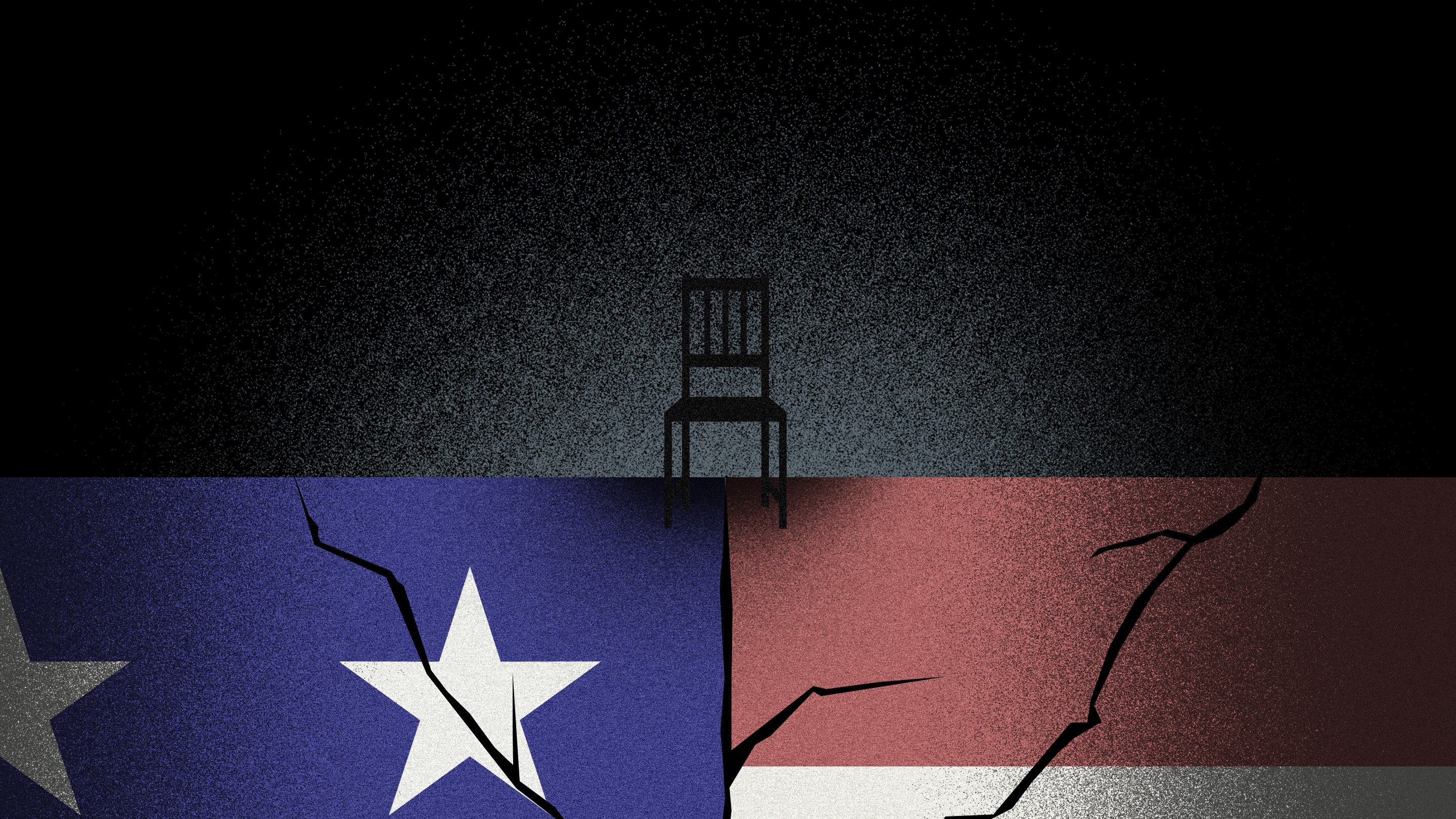
A 62-grain, 5.56-mm round leaves the barrel of a standard-issue M4 rifle at approximately 2,900 feet per second. When it strikes a human being, the results are violent, traumatic, and unpredictable. If Defense Secretary Pete Hegseth has his way, such images will soon be broadcast to the American people. The Pentagon has announced that the execution of Nidal Hasan, the Army officer convicted of killing 13 fellow service members in a 2009 mass shooting at Fort Hood, in Texas, will be livestreamed.
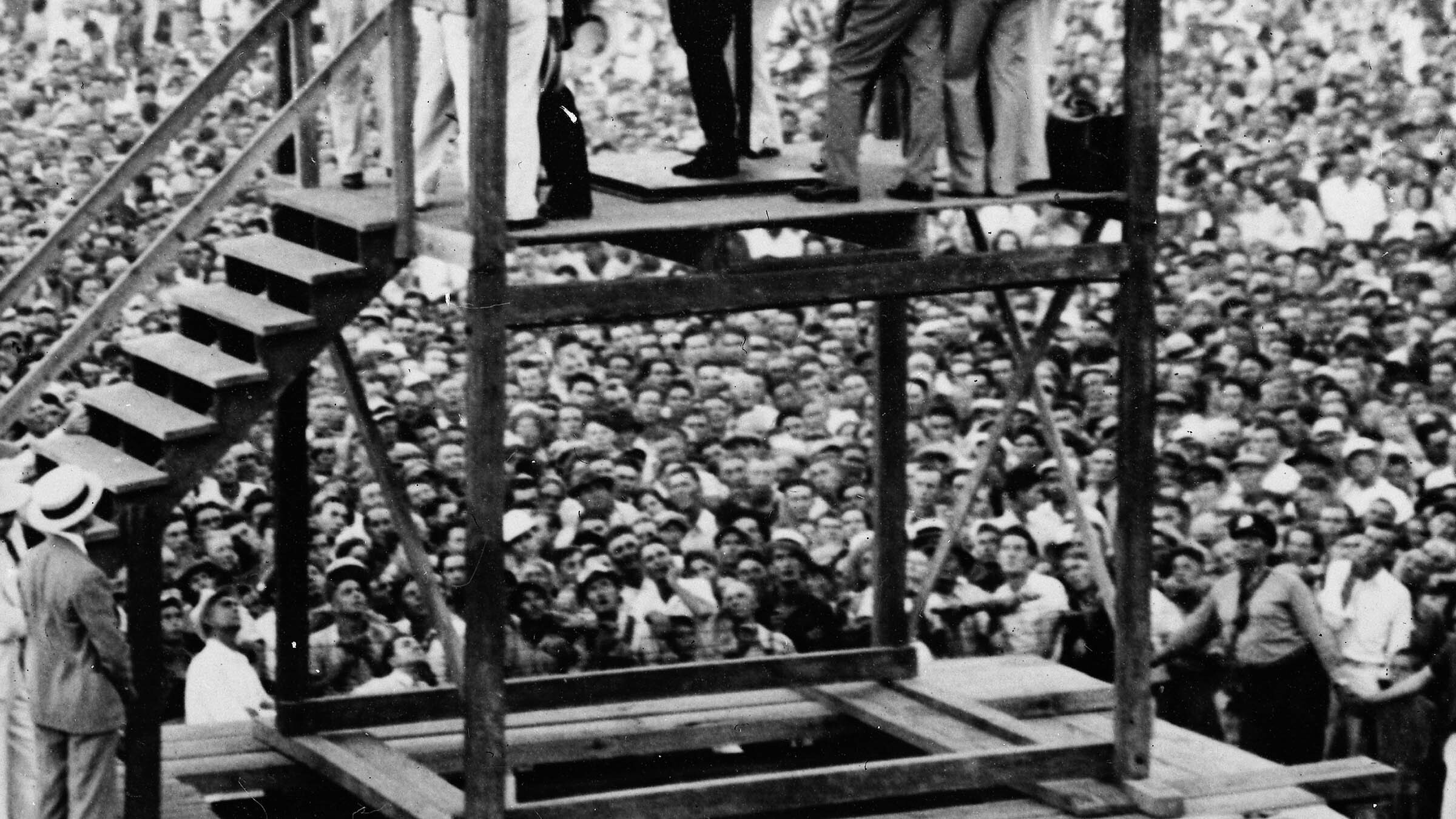
According to Amnesty International, 17 people were publicly executed in 2025. Eleven of these were in Iran and six in Afghanistan. Is this what we have become? Iran? Afghanistan? Are we so weak, so insecure, that we must convince the world that we are still powerful by making a public spectacle of an execution? Or maybe Secretary Hegseth and President Trump intend this as a spectacle for the American people: a show of just how much testosterone the two men have surging through their veins.
No one should shed a tear for Hasan. I certainly won’t. But if Hegseth thinks that this public display will somehow deter others from horrible acts of violence, he is mistaken. Terrorists seek attention above all. Publicizing Hasan’s death therefore could incite other extremists to do equally egregious acts. And it adds to the narrative, advanced by our enemies and ever more worrying to our allies, that the United States has lost its way.
When Osama bin Laden was killed, President Obama made a point of not releasing photographs of his body. “It’s not who we are,” he said. All of us who were involved in the operation agreed. Not sharing the pictures was a recognition that we are better than the inhuman beings who do unconscionable things, that there was a difference between a legitimate exercise of government authority and a public display of coercive power. Now, with this announcement, we are lowering ourselves to the ranks of brutal and failing regimes.
I teach a graduate class on national-security decision making. I give my students a framework for thinking about how to make difficult decisions. The first question they have to answer before they can get to the right decision is: Who are we as a nation? It is an acknowledgment that all correct decisions, those that will benefit us in the long run, will flow from an understanding of our American values.
Our values as a nation matter. It’s not naive to think that we should have a sense of propriety when carrying out the harsh business of justice; to believe in our national sense of honor; and to expect our leaders to behave with dignity, integrity, civility, and humility. These values build stronger, smarter, more humane societies. They engender good alliances. They drive trust in businesses and higher education and they inspire our men and women in uniform.
In almost 40 years of service, I came to realize that Americans share a common longing to be seen as the good guys. We were proud that our parents or grandparents fought against Nazism and fascism. As a nation, we stood tall against totalitarianism and communism. A younger generation sacrificed to keep America safe after 9/11. We made mistakes along the way; we always do. But despite these stumbles, inevitable in a complicated and violent world, I never once doubted that within our DNA was a sense of nobility that shaped the American character.
There is nothing noble about a public display of a government-sanctioned execution. With this decision, the Trump administration continues to undermine our national values. Our current leaders are shameless and ignoble. They have no sense of dignity or honor. They seem to believe that the performance of cruel power is what makes a nation great: the spectacle, the show, the crude theatrics of a tough guy. Nothing could be further from the truth. Just ask the oppressed people of Iran and Afghanistan.
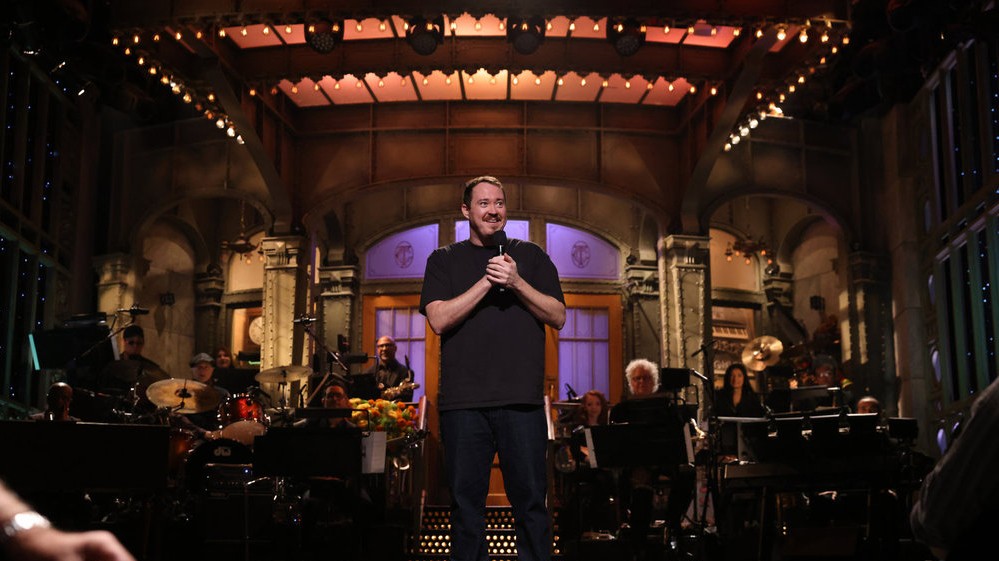
Even if you don’t know much country music, you likely know how much the genre loves the trope of the weepy father at his daughter’s wedding. In the best sketch of last night’s Saturday Night Live, the father of the bride was played by the host, Shane Gillis, but he wasn’t reflecting on life’s heavy milestones. Instead, he was thinking about “all the cool shit I can put in her room.”
As narrated by a Rascal Flatts–esque band (composed of Andrew Dismukes, James Austin Johnson, and Tommy Brennan), the dad imagined everything he was going to put in his new man cave: a Ms. Pac-Man machine and a pinball machine; a drum set that he swore he would finally learn to play; a life-size cutout of Shaquille O’Neal; a bottle of lotion and box of tissues (a bit stolen from the Paul Rudd film I Love You, Man);a House box set; a cotton-candy machine.
A child’s wedding is a joyous occasion, a new chapter for the family. But any beginning also reminds us that time’s arrow stubbornly points in only one direction. The sketch smartly underscored how many American men use consumer goods to distract themselves from anxieties about aging and the creeping sense that life may pass them by. Why deal with your uneasy feelings when you can finally afford the replica of a Star Wars stormtrooper you’ve wanted—nay, deserved—since you were a teenager? The hit of dopamine from a shopping spree is certainly more fun than wrestling with where your life currently stands.
The best SNL song sketches expand on a central idea as the parody progresses, commenting on the characters’ comedic dilemmas. They also need to nail the musical references (Tim McGraw, Alan Jackson, Zac Brown, and, yes, Rascal Flatts have all released songs on this theme, something that the southerners Dismukes and Johnson are likely aware of). In last night’s sketch, we learned that Gillis’s presumably long-suffering wife (Ashley Padilla) “hates my room / we’re drifting apart,” and that she’s becoming a bit too close with her Zumba instructor, Tad (Marcello Hernández), “who’s actually pretty cool”—an off-hand remark from a man too clueless to see what’s coming next. Whatever you think about him, last night’s host was well equipped for this exploration of male obliviousness.
In 2019, Gillis was set to join SNL before some of his old offensive jokes resurfaced and NBC rescinded the offer. Gillis apologized for the material, and SNL’s creator, Lorne Michaels, indicated that the casting decision was out of his hands. Michaels seems to have some lingering regrets about how it all went down; last night was Gillis’s third time hosting. But this overcorrection is arguably not doing Gillis many favors, as the episode often demonstrated his limitations as a comedian. He flubbed most of his lines—and cursed—in a sketch parodying Green Eggs and Ham, then apologized “about earlier” during the episode’s closing goodbyes.
Gillis tends to embody characters who aren’t actively hateful or toxic but just a little confused about society’s changing social mores and unsure about what they’re allowed to say. But Gillis, who lacks the dexterity of clear influences such as Louis C.K. and Dave Chappelle, can’t consistently pull off that tricky balance of thoughtfulness and provocation. During his opening monologue, in a bit about struggling to seem nonthreatening when he encounters a woman on an otherwise solitary hike, he lost the audience after saying, “I haven’t been to the gym in so long I didn’t know women just dress like whores now?” (I’ll spare you his description of women’s modern athleisure wear.) By that point, the crowd was so cold he couldn’t win it back with a clever closing riff about society’s polarization and the dangers of ambiguous haircuts: “You’re either gay or you’re Hitler, and isn’t that where we’re at as a country?”
Still, Gillis has become a successful touring comedian, mostly because he is very good at expressing the immaturity, simmering hostility, and general dunderheadedness of a certain strain of American manhood. His best sketches from last night made use of that meathead persona, as when he played a jerky police officer hosting the discussion show Cop Talk and the manager of an HVAC company that prided itself on having the most off-putting employees you would ever encounter.
But the wedding-song sketch stood out because it zeroed in on the stunted emotional life of Gillis’s character and then mocked it relentlessly. After his wife left him for Tad, he decided to build an even bigger room of one’s own (“Super Room Rocks!”), but when the impromptu construction project exposed him to black mold, he began “tripping balls.” The story eventually took an unexpectedly frisky turn before the episode’s kicker revealed this entire misadventure was a dream sequence that began after he forgot to help his daughter and wife pack up the moving van—a sly commentary on the character’s misplaced priorities.
It’s hard to say whether Gillis found success because he’s secretly very perceptive about the state of modern masculinity or because he’s unafraid to admit just how unperceptive he is about the modern world. Either way, last night’s song fulfilled the country-music imperative of “three chords and the truth”: a catchy ballad about how many men are emotionally stunted and unable to deal with aging and change, and will instead retreat into materialism and adolescent interests rather than reconcile with life’s relentless momentum.
and then I lose an hour to those billiard-trick-shot videos,
magnificent, their impossible spins, flawless timing,
the punctuated clunk of the corner pockets like God exhaling
just a little. I lose another hour watching and another.
Months evaporate this way. There’s the one where the cue ball
kisses every single solid in procession as if in a receiving line
before sinking the eight. There’s the simple shot, a spin
so hard, the cue circles back on itself only a few inches
away to sink a ball exactly behind it. If I eat I don’t remember
having done so. If I have lovers they haven’t called. If I have
a name I will need you to remind me. But then it’s today
and something snaps in me like a glowstick, bright
and temporary. My mother phones and starts talking about
identifying possum tracks in the snow. Isn’t it summer?
I think and venture out in the city. I get on the train, head
to whatever job I recall having had but still the world is here
too much and like an eclipse it’s bad for you to look at directly,
the naked tenderness of the men reading self-help books
on the train—all their failures and desires written
right there on the covers. I surface to the streets of this city
made crazy with commuters, how perfect we are, moving
toward what it is we chase. How one by one
we drop into the manholes on the corners with a clunk.
Because literary journals tend to have small circulations, few readers are likely to have come across “The Whistleblower,” a short story by the Zimbabwean writer Simbarashe Steyn Kundizeza. Published in 2021 in a journal called Transition, the story is a taut and closely observed political thriller in miniature. Its narrator, a sharp but inexperienced computer-science graduate in Harare, Zimbabwe, encounters an intelligence officer at the mall—a former teacher of his—who now wants something from him. At first, the graduate is nervous for what turns out to be the wrong reason: “I’d had a brief relationship with his niece Agatha and I wasn’t sure whether he knew about this or how he felt about it if he did.”
A more recent story with Kundizeza’s name on it, “The Blue Fighter,” will surely find its way to more readers. Last week, it was named the winner of the prestigious Caine Prize for African Writing, which awards 10,000 British pounds (about $13,000) for a short story by an African writer. Some previous winners, including Namwali Serpell and NoViolet Bulawayo, are now among the world’s most celebrated authors.
Taste is subjective, but trust me, this story is bad—maudlin and full of tired tropes. Here, the Zimbabwean narrator is the son of a hapless father who squanders the family’s money trying to breed fish in tanks, to the mother’s chagrin. “‘We can’t afford this house anymore,’ she said one evening, placing the notice in front of him while he tested the seal on his newest creation,” the story reads. “Not with anger, but with the quiet resignation of someone who had known all along this moment would come.” At the end, the narrator compares the last remaining fish to his family: “Not broken, just learning how to live differently. Alone, sometimes. But still moving. Still here.”
That this narrator has all the personality of a chatbot is probably not coincidental. The AI detector Pangram flags almost the entire story as AI-generated; a notable exception is its epigraph, also about a father with a fish fixation, which is excerpted from what’s described as an unpublished poem by Vangile Gantsho. This isn’t the first prize-winning story to be flagged by Pangram. It comes after similar scandals over this year’s Commonwealth Prize and Prix Goncourt—two other renowned literature contests—in which Pangram flagged AI use among finalists.
In the case of the Commonwealth Prize, one of them eventually won; the Prix Goncourt pulled a writer from consideration after suspected AI use was compounded by plagiarism allegations over his earlier work. Any of these incidents might have been written off as a fluke. Together, they point to something of a crisis of trust—in both writers and technology—that threatens to undermine a global system of literary recognition.
AI detection is fallible, which has raised concerns among some readers and writers about the prospect of false positives. But Pangram, which uses AI for its classification of text, is highly accurate: The company says its tool mistakenly labels human text as AI in about one in 24,000 cases; outside research also finds false positives to be extremely rare. When I ran all 25 of the previous Caine Prize-winning stories through Pangram, it labeled them as 100 percent human-written; the same is true of Kundizeza’s “The Whistleblower.”
I reached out to Kundizeza about Pangram’s assessment of “The Blue Fighter” through his agent, Adrienne Ingrum at the Serendipity Literary Agency. She wrote that Regina Brooks, the agency’s CEO, would send me “evidence that the author and we at Serendipity are completely confident that the story is Simba’s own work.” Neither Ingrum nor Brooks followed up before publication.
I also spoke at length with Ellah Wakatama, who chairs the Caine Prize’s board of trustees. Wakatama, a longtime book editor, told me that AI-generated fiction is not eligible for the prize. As soon as she learned of an inquiry I’d sent about the Pangram assessment of Kundizeza’s story, she and her colleagues initiated an investigation and contacted the author. Wakatama told me that she and a colleague will interview the prize judges, and that she’ll reread Kundizeza’s story and talk with him in detail about his methods. She added that a colleague has been in contact with Kundizeza’s agent about whether a verification process might include, say, reviewing previous drafts.
Yet Wakatama forcefully rejected the notion that an AI detector could, or should, be used to gauge AI involvement. “My stance, as the person who leads the prize, is that if there is such an accusation, I want proof that does not come from a machine.” She said she planned to approach Kundizeza with “compassion” and the presumption of honesty. Wakatama is also Zimbabwean. “As an African,” she said, “my first stance is, if I ask you, Are you telling the truth? and if you say yes, I am going to believe you—especially because the accusers are not coming from amongst our own people.”
Wakatama remarked on details in Kundizeza’s story that strike her as so typically Zimbabwean that a Zimbabwean must have written them: the shame of moving from a nice suburb to a less privileged township; how the mother’s initial forbearance with the father gives way to taking matters into her own hands. Wakatama also perceives multiple layers of meaning. She doesn’t think AI models are capable of that kind of cultural or literary nuance.
But then, she acknowledged that she doesn’t use AI or AI detectors. “My first response when somebody asks me to use AI is that I think about water and energy,” she said—that is, AI companies’ excessive use of both. “That honestly overwhelms me, and I don’t want to.”
Wakatama isn’t involved in choosing the Caine Prize winner—a panel of judges reads all the submissions—but her approach to AI is common among organizations that award prizes or other honors to writers. Partly, this is a pragmatic response to the risk of false positives. “Our legal parameters don’t allow us to contest the honesty of our writers just because a tool says that,” Razmi Farook, the director-general of the Commonwealth Foundation, told me during the scandal over its prize.
But this wariness also reflects a general aversion, in literary and arts circles, to engaging with AI products, even if just to understand them better—including Pangram. The start-up’s product itself is based on AI, and it belongs to the Silicon Valley ecosystem; the company recently raised $50 million in funding, according to a person familiar with the deal.
The skepticism is easy to understand, but it might be shortsighted. Research suggests that the people most familiar with AI output excel at sniffing it out. I’ve covered AI for almost a decade, and have written fiction for even longer; in short, I’ve had plenty of exposure to both literature and chatbot output. I know from experience that, for example, AI models aren’t terrible at picking up on cultural details.
When I read “The Blue Fighter,” I was struck by the proliferation of language that is common in AI-produced writing: the not x, but y sentence constructions; the glut of metaphors; the platitudinous aphorisms. “Anger burns out eventually,” the narrator’s mother says at one point. “Hunger doesn’t.” The earlier story by Kundizeza lacked those stylistic qualities, its prose and dialogue far more plainspoken and natural-sounding: “So how are things with my niece, huh?” the intelligence officer asks at one point.
What I also noticed, more disturbingly, was the presence of stereotypes about African life common among outsiders: a blundering, unemployed father; a resilient matriarch who dispenses clichéd approximations of wisdom; an environment of deprivation. Research consistently shows that AI products reproduce culturaltropes, including those having to do with the African continent.
The novelist and critic Tope Folarin, a former Caine Prize winner who has written about how dominant white culture shapes global literature, told me after reading the story that it would be unfortunate if Kundizeza had relied on AI for any of it, because its plot is “deeply human” and “deserves human expression.” He also said, “There are a lot of writers from the global South who feel this extreme pressure to write to expectations so their work is legible to the West, and obviously chatbots have glommed onto that.” He called the incident a “tragedy.”
Wakatama, for her part, explained her suspicion of AI detection by referencing the long, fraught history of science being used to oppress people of color. To a skeptical reader, her invocation of race might sound like a preemptive excuse. But in our conversation, she came across as open-minded and intellectually honest. I considered her wariness of Silicon Valley well founded and reasonable—particularly because the writers implicated in three major literary scandals this year were all nonwhite and non-American.
Pangram’s internal research finds false positives to be rare or nonexistent across multiple races and languages, as well as for English-language learners writing in English. In a separate peer-reviewed study, researchers at the Vrije Universiteit Brussel found zero false positives for English-language writing by non-native English speakers. It’s also notable that Pangram didn’t detect AI in any previous Caine Prize–winning stories or in a pre-ChatGPT story of Kundizeza’s. Yet third-party research into Pangram’s effectiveness for writers across nationalities is limited.
Still, it seems that arts communities’ revulsion toward AI has fostered a self-defeating underinvestment in understanding how exactly it functions, and how those who are repelled by AI companies’ presence in cultural spheres might beat back its encroachment. If an AI-detection tool is known to work really well, couldn’t we at least use it alongside other methods? Barring that, couldn’t we build some expertise in detecting fakery the old-fashioned way—through human training and intuition?
“Language carries culture,” the Kenyan novelist Ngũgĩ wa Thiong’o once wrote, “and culture carries, particularly through orature and literature, the entire body of values by which we come to perceive ourselves and our place in the world.” Language, he added, is “thus inseparable from ourselves as a community of human beings with a specific form and character, a specific history, a specific relationship to the world.” Ngũgĩ, following this line of reasoning, chose to return to his native language of Gĩkũyũ after having built a career writing in English. That is, he analyzed the situation, and then changed his approach.
Maybe the broader artistic community can learn from that. Toward the end of our conversation, Wakatama told me, “I am fervently praying that you’re wrong.” It would be easier if I were wrong; indeed, maybe I am. But if I’m right, it means that several of the world’s most prestigious literary prizes have been infected by language that represents not people’s actual values and cultures but a damaging mimicry of them by products of the most powerful companies and people in the world. This is the time to do something about it.
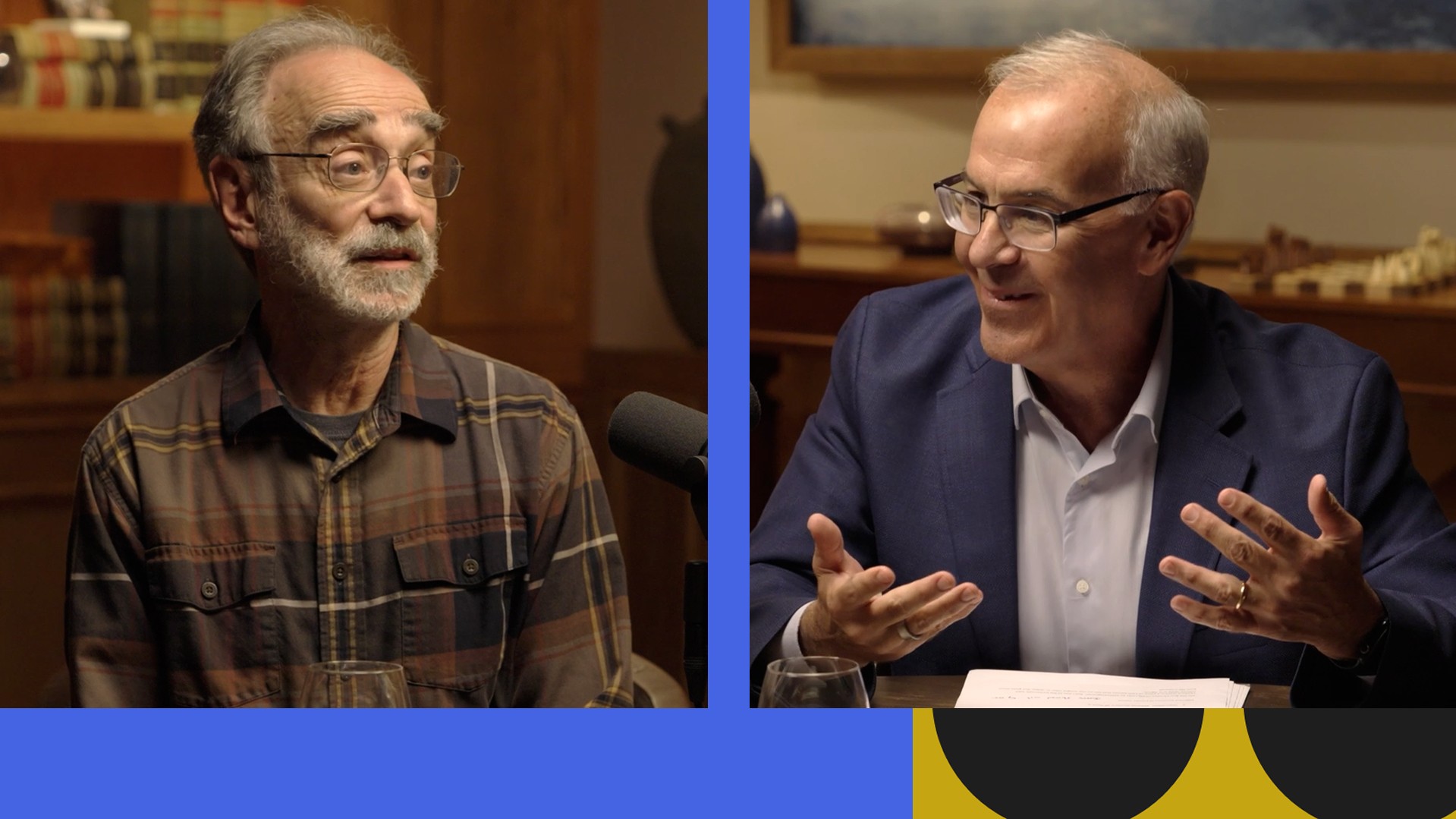
The majority of Americans believe that every human being has an immaterial soul, and they tend to base their sense of human dignity and equality on this belief. Yet the culture at large often operates under the assumption that physical reality is all there is. Which view is correct? In this episode of The Permanent Questions, self-described “spookiest” David Brooks talks with Shelly Kagan, a best-selling philosopher who insists souls do not exist—and that we don’t need them in order to embrace the wonder and mystery of human experience.
The following is a transcript of the episode:
David Brooks: I think the essayist Meghan O’Gieblyn was accurately capturing parts of America when, in her book God, Human, Animal, Machine, she wrote, “It is meaningless to speak of the soul in the 21st century. It has become a dead metaphor, one of those words that survive in language long after a culture has lost faith in the concept."
Yet here’s the funny thing: According to the Pew Research Center, 85 percent of Americans say that they have a soul. They really do believe they have a mystical, immaterial, spooky, ghostlike thing at the center of who they are. And I have a confession to make: I’m one of those people. Furthermore, this metaphorical and spiritual meaning of the word soul is pretty central to the way I see the world. Long before I ever believed in God, I was firmly convinced that each person you meet has some piece of themselves that has no size, weight, color, or shape, but gives them infinite value and dignity.
In today’s conversation, we’re gonna address the question: Do humans have souls? I’ve laid my cards on the table. I think they do. We’re gonna be joined by Shelly Kagan, and he does not think we do. Kagan is the Clark Professor of Philosophy at Yale University. For over 40 years, stretching back to his days at the University of Illinois, Chicago, he has taught a course on death to undergrads, which, naturally enough, takes up the subject of the soul.
Shelly Kagan (from lecture): Last time, I distinguished between two ways in which thinking about the facts about the nature of death could influence our behavior. On the one hand, it could give us reasons to behave or respond differently, and on the other hand, it could merely cause us to behave differently.
The course has become globally famous because it’s on YouTube. Those lectures have been seen 33 million times in China alone. Part of his success is his intellect, but part derives from the fact that for a guy who doesn’t believe in enchantment, he’s a completely enchanting guy.
I’m pleased to welcome Shelly Kagan to this table.
Shelly Kagan, welcome to The Permanent Questions. We are honored to have you here. Now, there’s a chapter in your life I’m confused about. It concerns the time you go to Wesleyan in 1972. You grew up in Skokie, Illinois, right?
Shelly Kagan: That’s correct.
Brooks: And you go to Wesleyan, and you’re a religion major for some period of that time. But you also read John Stuart Mill’s Utilitarianism, which suggests to me that you’re trending in the direction you’re trending, which we’ll talk about. But then in your senior year, you apply to rabbinic school. So in my mind, you’re trending toward a utilitarian, maybe non-believing form of life, and then you apply to become a rabbi. What’s up with that?
Kagan: I had planned to be a rabbi starting at some point in high school, and that was what I anticipated all through college. As you say, I applied to rabbinical school, a particular rabbinical school, in fall of my senior year. I got the rejection letter, spring of my senior year. So I graduated from college and was suddenly in the situation that most of my friends had been in for four years, asking myself, So what do I want to do with my life? I thought I had known what I wanted to do with my life. But I had already come into college knowing I was also interested in philosophy, which, as it happens, I’d gotten into through Judaica.
Brooks: I guess my question is: Did you believe in God, and you thought, Well, I’d like to serve God by being a rabbi?
Kagan: Well, I believed in the importance of Judaism, and I suppose any traditional Jew will say something like, “I believe in God.” But what it is to believe in God—as I imagine you know—from the Jewish point of view, that’s left much more up to you. Judaism doesn’t have a central set of religious dogmas. How you interpret this, as well as other central Jewish thoughts, like revelation—there are rival thinkers.
Judaism was important to me through college. Judaism stayed important to me after I got rejected from rabbinical school. After college, I asked myself, Should I reapply to rabbinical school? Should I get a secular Judaic degree? Or—and this was literally the very first time the question ever crossed my mind—Maybe I should become a philosopher. Since I thought I had known what I was going to do, the question had literally never occurred to me.
Brooks: When you thought about philosophy, did you think, I just wanna talk about big ideas, or is it, Like being a rabbi, I’m sort of ministering to people’s minds?
Kagan: I think it’s not a coincidence that of all the different topics in philosophy, the area I ended up specializing in is ethics and moral philosophy. I continue to think about questions about value, which were certainly the things that most drove me to wanting to be a rabbi as well.
Brooks: Now you teach this famous course on death, which has become internationally known. It’s unlike a lot of courses, where the professor offers: “Here’s this person’s view, here’s that person’s view, here’s this person’s view.” As I understand the course on death, and I’ve seen it on YouTube, you say, “Here’s my point of view. What do you think?” Could you summarize the argument of that course?
Kagan: As you say, in a number of classes, including several of my own classes, when I teach introductory ethics, I say, “Here’s four or five prominent views. Here are the arguments for; here’s the arguments against." I try to keep my cards pretty close to my chest. In the death class, as I began to put it together, I decided that wasn’t the way to go. I wasn’t going to pretend. I say on the very first day, “Here’s a bunch of things that lots of people believe about death, and I’m going to spend the semester arguing, trying to convince you that they’re not so.” I try to be fair—I hope I’m fair—to the views that I’m rejecting, but I don’t hide what my considered conclusions are.
So as I say, most people, at least lots of people, believe in a soul. By that term, using it as a piece of jargon, I mean that we have some immaterial, nonphysical part of us, maybe the essence of what we really are, and that thing can survive the death of our body. It’s good to believe in such a thing because mortality is bad. It would be good to live forever. If it’s not true, then death is something terrifying. Suicide never makes sense. There’s a variety of views like this. Death is very mysterious. What exactly is it? Something we can’t know, can’t really get our head around.
Over the course of the semester, I try to argue that there is no soul, that there’s nothing especially mysterious about death or dying, that immortality would not be desirable, that fear of death does not make sense, that there are circumstances in which suicide can be rational. I work through the various positions and try to lay out what strike me as the most promising arguments for the views before turning around and explaining why I think those arguments aren’t compelling.
Brooks: I want to get into the substance of this, but I’m just curious: These are undergrads; they’re 20 years old, 21, 19. Why are they interested in death? It’s so far away.
Kagan: When I first started teaching the class—that was before I came to Yale. I was at the University of Illinois Chicago. I taught the class a handful of times there, maybe four times in the nine years I was there, and almost nobody took it. But when I came to Yale, I thought, Well, it’s worth trying it again. Now, at the time, this is more than 30 years ago, because there was no preregistration, I had no idea how many people would show up. I thought, Maybe 50 people will show up. To be safe, I’ll run off 75 copies of the syllabus. Three hundred and twenty odd people showed up, and I realized I’ve hit a nerve here in ways that I really hadn’t anticipated. Of course, it’s a subject that everybody cares about. It’s a subject that everybody thinks about.
Interestingly enough, from the pedagogical perspective, as a philosophy professor, it’s a wonderful subject for an introductory class because it allows you to move from questions in metaphysics and epistemology and value theory and ethics and philosophy of mind and the like.
Brooks: Do they push back? Are they offended by what you’re saying? Do they embrace what you’re saying?
Kagan: I tell them that my goal in the class—although in some sense is to persuade them of a variety of claims, what’s most important to me is that they end up thinking through these issues. If they’ve genuinely given the matter thought and have come away disagreeing with me, that’s great. Philosophical questions are ones in which—this is a theme throughout all of my classes—reasonable people can disagree. So the class is really an invitation to think about some really important questions.
Brooks: We reasonably disagree whether people have souls. Even when I didn’t believe in God, which was most of my adult life, the way I would put it is that each of us has a piece of us that has no size, weight, color, or shape, but gives us infinite value and dignity. That accords with my sense of just looking around the world—that everybody I meet seems to have some sacred dignity. So if that’s my sense of where human dignity comes from …
Kagan: Let’s start with no size. What was it? No size, no shape?
Brooks: Color or shape.
Kagan: So let’s start with something totally trivial. You believe that seven times eight equals 56.
Does that thought have color? Does it have weight? Does it have shape? Well, presumably not. In philosopher jargon, that’s some sort of category mistake to think that things like that have to have color and shape, like this glass of water.
The very first thing we have to understand is that you can believe, as I do believe, that I’m just a material object and that you’re just a material object—the people watching this show are just material objects—and so we have size, color, shape. Not everything that’s true of us is helpfully described in those terms. What I think is that you’re a material object that is able to think. You’re able to think about simple mathematical facts, and depending on how far you got in your math education—
Brooks: You hit the limit of it right there.
Kagan: You’re able to think about more complicated facts. You’re able to make plans. You’re able to communicate with me. And the question is: Can we point to various properties like that and explain how a material object can have the ability to think, to be creative, to fall in love, and so forth?
There are aspects about us which give us a special kind of—you used the Kantian phrase— dignity. I’m happy to talk that way. I don’t think that’s a mistake. I don’t think that gives us reason to think that there’s something nonphysical about us. You would then have to ask the question: By virtue of what is it true that we count morally? And this is a contested philosophical question. If you want, I can rattle off three theories, but I’m not sure how much in the weeds you wanna get.
Brooks: Yeah, let’s go there.
Kagan: Let me start with one that I think is probably part of the story but won’t get you all the way to dignity—at least all the way to dignity in the sense I think you mean it.
As I say to my intro ethics students, if I were to bring in a cat, douse it with gasoline, and then set it on fire, and then it shrieks in agony, most of us would agree—maybe not everybody, but most of us would agree—that that would be wrong. It counts morally. It’s a stray cat, let’s pretend, so I’m not hurting its owner, right? I’m doing something wrong to the cat. The cat counts in its own right. By virtue of what?
A natural plausible thought is that it counts by virtue of the fact that it can feel pleasure and pain. I think that’s true about cats. One might think it isn’t true about animals. That’s up to you. But suppose it’s what most of us do think, that cats feel pleasure and pain. That makes them count in a certain way, and it would explain why it would be wrong for me to douse one in gasoline and set it on fire. In part, it would also explain why it would be wrong for me to douse you with gasoline and set you on fire.
So that’s one story. I don’t think that’s probably the whole story and maybe not the most important part of the story. You used the Kantian word dignity. Immanuel Kant, a great German philosopher, thought that our moral standing, which differentiates us from animals—Kantians have a hard time explaining why animals should count, too—but Kantians basically think it has something to do with our freedom, with our rationality, with our autonomy, with the ability to set ends for ourselves, to decide how we wanna act, and to reason about what goals and actions make sense.
I find that a very plausible and attractive idea. You’re an autonomous being. The etymology here is “auto,” self, “nomos,” law. You’re the kind of being that can give laws to yourself, decide for yourself how you wanna live. By virtue of your being an autonomous being, you count in a special way. Animals that merely feel pleasure and pain but don’t have that kind of freedom; they count, I think, in a lesser way.
So I think that you have that special moral status. We can use the word dignity to try to mark it. There’d be more wrong about setting you on fire than merely the fact that it would hurt. If I killed you painlessly, it would still be wrong, because as an autonomous being, you’ve set various goals for yourself. There are things you want to accomplish with your life.
It’s a controversial philosophical question, but I don’t see why bringing that in necessarily means you have to bring in a soul, if by a soul we mean something nonphysical, immaterial, distinct from our body. Just like we need to be able to tell a story about how a material object can believe seven times eight equals 56, we’ll need a story—it’ll be more complicated—about how a material being can come to set goals and reconsider them and reevaluate them and so forth.
Brooks: You said Kant believes humans have dignity. Do you? Would you say that humans have—I used the term “infinite dignity,” which is going up to 11?
Kagan: I will confess, dignity is not one of the words that typically I’ll find myself using. But I’m not troubled by using it. What is it that one means when one talks about a person having dignity? I’m perfectly comfortable talking that way, but it’s just a placeholder. Then we have to start talking about what are the sorts of things that come with being a creature with dignity. How it can be treated, how it should not be treated, what things it’s permissible to do to it, what things you have to do for it, what things you may not do to it.
To throw out more jargon, Kant was a deontologist. He thought that if you took these notions of morality being grounded in autonomy, generating a certain kind of dignity that demands respect, that this leads to a family of theories within moral philosophy called deontological views. According to deontologists, there are certain actions that it would be wrong to do to somebody even if the results would be better if you were to do them.
Against that, there are rival schools of thought that say, “No, if results really would be better, it becomes permissible." My own view is that Kant was right about morality being grounded in autonomy, freedom, rationality. He was wrong in believing that this leads to deontology as opposed to—to introduce another piece of jargon—a more consequence-oriented approach. But I’m happy to go with Kant about the foundations of ethics, because not everybody thinks autonomy is the core of ethics.
Brooks: I was gonna go there.
Kagan: Thomas Hobbes, another great philosopher. He’s British—1650, I think that’s when Leviathan gets published, something like that. Hobbes thought the ultimate basis of morality has to do with the fact that, roughly speaking, we can hurt each other, and we need help from one another. If we try to imagine a world with no moral requirements, we’ll all be at each other’s throats. You have some food, I’ll cut your throat, if I can. When you’re looking the other way, I’ll steal your food, but then when I’m falling asleep, somebody else will come along and steal my throat.
As Hobbes famously put it, in the absence of morality, we’d be in the state of nature. We’d be in the war of all against all. Now let’s see if I can get the quote right: “Life would be nasty, poor, brutish, solitary and short.” A friend of mine who teaches moral philosophy at Michigan said, “If life’s gonna be nasty, poor, solitary, and brutish, being short isn’t so bad." But Hobbes’s thought was, This is what morality is about, the social contract. Hobbes is a kind of contractarian, at least in the interpretation I accept.
Basically, we all strike a deal: I agree not to slit your throat in exchange for your agreeing not to slit my throat. Autonomy is not crucial there. What’s crucial there is our finitude, the fact that any one person can be killed by enough other people. Nobody’s Superman; nobody can do it by themselves. That’s a quite different story from the Kantian story about what ethics is all about. As it happens, I’m more sympathetic to the Kantian story.
Brooks: Now I’m gonna ask you a few questions that people like me always ask people like you. I’m sure you’ve heard them a zillion times, but I’m just curious what you would say. The first is: Why is rape worse than a punch in the nose? To me, a rape is worse than a punch in the nose because a person contains a soul, and rape is an insult to the soul in a way that the punch in the nose is not.
Kagan: I agree, rape seems like an especially horrific thought. To make it even easier: Why is rape a horrible thing to happen to you in a way that your backache is not? The backache could be a more intense pain, but it wouldn’t normally be nearly as psychologically overwhelming, because rape is a direct attack on your autonomy, on your ability to decide for yourself, in central ways, how you want your life to go. Your sexual decisions are among the most central decisions. Rape overrides that in an especially horrific way. Another thing that I think is similar in that way is torture. Torture is deliberately trying to break the person as opposed to merely trying to cause them pain. Certain truths that are central to organizing our worldview shouldn’t be beaten out of us.
I believe all of that, but I don’t see why one needs to bring in a soul. When I torture you, or if I were to rape you—there are probably other things of a similar sort—what I would be doing in the most fundamental way is undermining your ability to choose for yourself how your life wants to go. That’s where the autonomy comes in.
So the question just gets pushed off. To get ethics going in the way I want it to get going, we need a story about how you can have a creature that is able to set its own goals, to step back. Lots and lots of animals have pretty accurate beliefs about their environment. They make reasonable decisions about how to satisfy their desires in light of the immediate environment. What seems special about us—maybe not unique about us, but certainly special about us—is that we can step back from that. We can say, Yes, I want this. Does it make sense to want that? Yes, doing this would satisfy that desire. Does it make sense to satisfy it in that way or not? That’s where rationality comes in, and rationality and autonomy are tightly connected. So the question becomes: Do you need to believe in anything immaterial in order to believe in this kind of ability?
If we were having this conversation 100 years ago or even 50 years ago or maybe even 20 years ago and asked, “Could we really have machines that could reason?,” we’d say, “I don’t know. The jury’s out.” I don’t think the jury’s yet quite come back. But I think it becomes more and more credible to think a physical object is probably capable of reasoning.
Brooks: I’m going to try another reason why the concept of a soul appeals to me, aside from my experience of it. My view is that we’re not equal in our level of brain power, and we’re not equal in our level of muscle power. But we are all equal on the level of the soul. We all have the soul of infinite and equal dignity. To me, that’s the basis of human equality.
Kagan: I do think it’s an interesting question. If you’ve got a story about the ultimate basis of having moral standing—my own view is that animals count, but they don’t count as much as people do. I owe anybody who’s gonna be on my side a story about what is it that gives you standing that can come in varying degrees. As you say, it’s going then to be an interesting question: Will people differ in that regard? Because if they do, then they maybe will also have different strength rights, or something like that.
Suppose you accepted the Hobbesian story. Then it doesn’t matter that you’re stronger than me because I can get three other people and together we can beat you up. You still have to fall asleep. Hobbes, perfectly cognizant of this point, talked about—another piece of jargon—a kind of practical or rough equality. For all practical purposes, any one of us needs the moral contract and so will hold out. It doesn’t matter that you’re smarter than I am, or it doesn’t matter that you’re stronger than I am, or it doesn’t matter that you’re more creative than I am, or whatever it might be—or that I’m needier than you are. I’m not going to agree to avoid killing you and taking your food unless you agree to give me the same rights that you have.
Hobbesians have one kind answer. Kant thinks about it in terms of autonomy, and then one might wonder: Are we all equally autonomous? I suspect not.
Brooks: Not even close.
Kagan: No, not even close. Anybody who’s a deontologist and thinks that it’s ultimately based on autonomy needs to recognize that animals also have autonomy to varying degrees. So maybe they have weaker rights than we have.
So you’re going to bring in a soul. You believe in souls. So one question would be: By virtue of what is it true that souls are a plausible story about why we count morally? Second, even if you could tell me a story about that, do souls come in degrees? I take it as a part of the assumption that they don’t. Is that true?
St. Francis of Assisi famously preaches to the birds because he believes animals have souls. I haven’t read enough about him to know: Did he think that the birds had souls of a grade-A type? Or did they have grade-B souls? Once you start allowing souls, then maybe all humans have grade-A souls, but maybe you’ve got an A-minus soul, but St. Francis of Assisi had an A-plus soul. Tell me, do you think that souls come in only one-size-fits-all?
Brooks: Yes, absolutely.
Kagan: Based on what?
Brooks: Based on the idea that it would be horrific to think that I was superior to the homeless guy on the street. That would be a morally reprehensible belief. If that’s a morally reprehensible belief, then it must be we all have some level that’s equal, and I think it’s our spiritual natures.
Kagan: That’s not bad. Some people would say that’s an illegitimate argument, where you want it to be the case that we all count morally, so you’re going to believe whatever it is that you need metaphysically speaking in order to get that to fall out. I’m not hostile to that kind of argument.
Famously, Kant also argues this way. Kant thinks you can argue from moral conclusions to belief in a soul, belief in an afterlife, belief in a God, belief in reward and punishment. It’s loaded—How much does one need to assume in order to get the ethical? Hobbes, as I suggested a moment ago, thinks you don’t need to believe in the soul at all. There might be other ways that you could get that conclusion.
If you set yourself the goal of designing a moral system, one thing you need to take into account is: What are people like? And: Are people very good at sussing out micro differences in intelligence or degrees of autonomy or what have you? I think from the point of view of designing moral rules, were I God giving rules to all of mankind, I would think there’s gonna be limits to people’s abilities to understand very complicated rules—rules with too many exception clauses or too many subclauses, or rules that the left-handed people get to do this. There’ll be a kind of pressure to have the rules be similar for everybody. And that might give us equal rights without needing to bring in souls.
Brooks: Let me ask you the grandfather of all questions that people like me ask people like you, which is: How did consciousness arise in the brain?
Kagan: When people like you ask people like me, I say that’s not my area of philosophy. There’s a whole subarea of philosophy called philosophy of mind. One of the big debates in philosophy of mind is: How do you explain consciousness? Immediately, I’m gonna ask: What do you mean by consciousness? Because people, even philosophers, will use this term for different things.
Let me draw two broad categories of things. Sometimes what ordinary people mean by consciousness is having thoughts, beliefs, desires—putting these things together to make plans and so consequently having intentions. Your thermostat can turn the furnace on and off when it’s warm or cold, but it’s not conscious. It doesn’t have thoughts. It doesn’t have beliefs. If that’s what you mean by consciousness, the question becomes: Can we tell a story about how a physical object can have beliefs, have desires?
I think we’ve got the beginnings of a pretty good story, because we can already build machines that can represent environments. To take the trivial example, because it’s as complicated as I get, a chess-playing computer. When you’re playing that program on your computer, it represents the chessboard in a certain way. So it has what I’m perfectly content to say are beliefs about where your bishop is—and does it threaten or does it not threaten its king?—and so forth.
Brooks: That strikes me as a very weird definition of consciousness. We program certain algorithms into it, or in AI we’ve programmed the ability to predict the next words or whatever it is.
Kagan: No, I’m not sure that the ability to predict the next word counts as that. What I had in mind with the chess-playing computer was that, when it moves its queen to take my bishop, I find it perfectly natural to say something like, “It wanted to capture my bishops because it wants to protect its king from being checked.” Now I find that perfectly congenial, and all I wanted to say was if that’s what you mean by consciousness—having beliefs, having desires, being able to report what those beliefs and desires are, being able to make plans on the basis of them—we already can do that in some rudimentary ways, and we’re getting better and better at it.
You say, “That’s not what I mean by consciousness.” I say: “Fine. Here’s the second thing people mean by consciousness. This one is harder to describe, though I imagine everybody’s gonna be familiar with it.”
You punch me, and I feel pain. There’ll be various behaviors that I’ll engage in. But there’s something about the experience of pain that we have not yet captured, and maybe that’s what we mean by consciousness.
And it’s not limited to the ability to feel pleasure and pain. Right now on the desk, you’ve got a copy of my book. My eyes happen to be going to little red strip on it. So there’s something happening in my mind right now, the experience of red. I take it that when you look at the book—and hold it up so that people rush off to the bookstore to buy a copy of it—you and they will also have something going on inside the experience of red. So sometimes we, or philosophers, mean that inner aspect, by consciousness.
Then the question, and I think it’s a great question, is: How do we explain consciousness from a physical point of view? If physicalism is the view that all I am, all you are, is just a physical material object, how do you explain this ability to have this inner aspect of experience? Can a physical object have that? And if so, how do we explain the origins of that? Now the answer is: I don’t know.
I think that is the pressing question for physicalists to answer. There are physicalists, there are philosophers who have pet theories about this. I don’t myself. Although it’s not an area of expertise, I don’t find any of them especially attractive. But I don’t think bringing in the soul helps. Suppose you say—I mean, I’m not giving you a chance to say—but suppose you say, “Ah, this is why I believe in a soul; posit a soul, and now we can explain how it can happen.”
I say, “You haven’t explained anything. You’ve just said, ‘Imagine there’s a thing that somehow can generate consciousness. I don’t know how it can do it.’” You don’t have a theory, and I don’t have a theory. So that doesn’t give us any special reason to start positing souls.
Brooks: I would put it a little differently. I would say we have three pounds of meat in our brain, and we produce ecstasy. We produce “Ode to Joy.” I’m realizing that one of our distinctions is you’re a physicalist, I’m a spookiest. I think the world is spooky. So it doesn’t really surprise me that meat could produce consciousness. But for you, if you think meat is all there is, then the fact that you can’t explain the fundamental human experience, which is subjective experience, is kind of a problem for your worldview.
Kagan: Well, it is a problem in the sense that it’s an unsolved problem. First of all, I think the world is spooky and strange and weird too. Philosophers are basically people who never got over the thought that, Boy, the world’s a really weird place, and I don’t understand very much of it. Aristotle famously said, “Philosophy begins in wonder." And I just wanna say that it continues in complete bafflement.
Brooks: I can’t help pointing out that Descartes said that wonder is a surprise of the soul, so I’ll just add that.
Kagan: Again, I’m not unhappy using soul talk. When you start saying, “And by a soul, I mean to be stipulating something nonphysical,” then I say, “Why is that the best hypothesis as to all this cool stuff, all this weird ability to fall in love and to write poetry and to feel ecstasy?”
I think we can offer certain explanations for creativity from a physicalist point of view. I don’t think we can yet do it for consciousness. But does this trouble me? Well, I take some comfort in the thought that we’re just beginning to do brain science. To say we’re in the Middle Ages is too generous. We’re in the dawn of time in terms of brain science.
So the analogy I always give in my death class is: 100 years ago, 150 years ago, 300 years ago, 500 years ago, if you asked people how to explain life, the answer would’ve been: We haven’t a clue how you could explain life in physical terms. It must be that there’s something nonphysical going on there. And the answer was: Come back in 300 years, 500 years, 700 years. It turns out now we have an explanation. We don’t know all the details, but we know enough to know we can offer. My money—it’s nothing more than that—but I conjecture, come back in 300 years, 700 years, we’ll have a story as to how consciousness could emerge from three pounds of meat.
Brooks: You could answer any argument with that, though.
Kagan: Look, I’ll concede, I do concede. I make a point of emphasizing this. I don’t think we have a story yet. But the question is: To believe in a soul, you’ve gotta think it’s got the upper hand somewhere, and I would agree with that if you could give me even the outlines of a story. How is an immaterial thing going to experience an inner life?
Brooks: Let me read a sentence from your book, which I disagreed with.
Kagan: Great.
Brooks: You write, “Try introspecting for a moment. Turn your mind’s eye inward and ask, ‘Do you see a soul inside you?’ I don’t think you will. Like me, you may observe various sensations in your body. You may observe various thoughts and feelings, but you won’t observe a soul."
Now, I do. When I wake up in the morning, or I’m in the middle of my day, sometimes my soul is soaring, and sometimes my soul is degraded. The Psalmist famously says, “Why are you downcast, O my soul?"
The way I experience my soul mostly is in yearning. Yearning for self-transcendence. Yearning to expand outside myself. The stuff I pour into my soul, the different experiences, have different effects on it. Furthermore, what I’m describing is not uncommon.
Kagan: Of course.
Brooks: I actually looked up all these words in different cultures for soul. You know the one in Hebrew, it’s nephesh; Egyptian, ka; Chinese, hun; Arabic, nafs; Ghana, okra. All these different cultures all around the world independently have a central concept in all their cultures: Humans have souls. And it’s a spiritual, immaterial thing. Why are all these cultures wrong?
Kagan: They don’t all have the immaterial thing. They have a word that we can translate as soul. Then the question is: What does the word soul mean in English ,and are we translating it properly or not? Dualism—the view that there is this immaterial thing in addition to the body—is a philosophical conjecture that some people believe and other people don’t believe, and some religious traditions teach and other religious traditions don’t teach.
Even Christianity hasn’t always been dualist. The early Christians believed in part in bodily resurrection because there was no way to be around after your death without your body because they didn’t believe in souls. And then Plato comes along—
Brooks: But they would say the spirit infused every piece of them. It wasn’t separate.
Kagan: You gave a number of moving sentences a minute or two minutes ago, before I interrupted. I wish I had a transcript of those sentences. When you say, “My soul soars,” if I’d gone through, and any place you said soul, I just said, “I soar, I’m ecstatic, I’m moved, I’m down in the dumps,” I’m not sure what we would’ve lost.
Now, there’s a use of the word soul in English, as in lots of other cultures, where it’s a way of talking about the fact that when you listen to Mozart or I listen to Dylan, something is happening to me that is not happening to me, I will confess, when I listen to Lady Gaga. Something happens to me. I am moved by that. Fine, I believe in all of that, and I’m not remotely troubled in saying I want to reserve the word soul, or at least I want to use the word soul, in those contexts.
If we wanted to talk about our essence—the deepest, most central parts about our beliefs, our desires, our values, the memories that are most cherished—and you want to say “sacred,” I have no problems with that kind of language at all. I think soul is a useful word for characterizing those aspects, those elements, those components.
If we use the word personality for all of your beliefs, all of your memories, all of your goals, all of your desires, and then soul for that central subset that you would feel like you had died if you had to give those things up, I’m perfectly happy with that. The mistake is to think that if we are gonna talk that way, you must be positing something nonphysical.
Brooks: Let me describe to you what I think a soul is, because I think we probably have a little overlap.
So I have a hobby. Well, it’s my job. But I interview neuroscientists, because I’m just interested in what they’re doing. When I started doing this, 25 years ago, they were super interested in where things were happening in the brain. You’d go to conferences, and there’d be some BS corporate consultant, and he would say, “This shows the amygdala’s lighting up, and therefore, that shows blah, blah, blah,” and it was all nonsense. But now they don’t think that way. They talk about these vast neural coalitions that cross a lot of different regions.
There’s a neuroscientist, I wanna give him credit, Luiz Pessoa, who compares these networks, these vast, widely distributed networks. He calls them neuronal ensembles distributed across multiple brain regions, and he compares them to a murmuring of swallows. My intuition, though I don’t know, is that consciousness emerges from that murmuration. But I would say, also, the soul emerges from that. So it’s not without physical basis. We’re infused. But the soul emerges from the swirl. The soul is the swirl.
And emergent properties, as you know very well—you take a bunch of physical things, and out of their interaction, a new quality emerges. Some people have a low version of emergent that you can understand that high quality by looking at the physical low qualities. Other people have a strong version of emergence, which is you can’t understand the high quality. It takes on independent conditions that are its own thing, and then it has a downward pressure on everything underneath.
I take a strong emergent view. All of that swirl, all that energy state, creates this new thing. The quality of our soul then influences how we feel, how we act, how we do, what we want.
Kagan: So maybe you really are a physicalist as well. It’s just that you think that you want to save the word soul, and you want to think about soul as this thing that emerges at the global level, which is fine.
I’m perfectly happy to think about consciousness as something that emerges at the global level. You put enough neurons together the right way, and we’ll get either consciousness or something like that. Okay, great. I’m even happy—maybe, depending on how much you mean—in thinking that there’ll be things where the fundamental explanation needs to be done at the global level, not at the micro level.
But you don’t have to pretend that physicalism isn’t true. Or you shouldn’t persuade yourself, would be a better way to put it, that physicalism isn’t true to believe in this kind of emergent stuff at the global level.
Brooks: I’m trying to give some reasons why I think there’s a soul.
But there’s a set of experiences I’ve had that are not reasonable. I’ll tell you one story. I was in New York, like, 11 years ago. In New York City, a city I love, the ugliest spot on the face of the Earth—used to be … it’s still pretty ugly—is Penn Station, the train station. There’s only one possibly uglier spot, which is the subway station next to Penn Station.
So I’m there on whatever Eighth Avenue line, and I look around the car one morning, and I get the sensation that everybody in this car has souls. My sensation is these souls, in each case, are in movement. Some are going up and some are going down, degraded. Thomas Aquinas talks about all these movements. And then I thought, Well, I feel this.
That is not the only (what they call) “numinous” experience that I’ve had. In nature, with my kids, whatever. When I have those experiences, the arguments almost don’t matter.
Kagan: I’m glad you brought this up again because this allows me to do something I meant to do several minutes ago, when you quoted the sentence about peering inside and not seeing soul. This is a point I just learned from David Hume, another British philosopher. When he peers inside, he can sense experiences, pleasures, pains, thoughts, wishes, hopes, desires. He doesn’t experience any soul. Putting words into his mouth, that’s a philosophical conjecture as to how these things can occur.
So I just wanna say, yeah, you were in this moment, and I’ve had similar moments as well. You’re just taken by the magnificence of humanity, the fact that every one of us is a unique individual and has the things that we’re trying to do, and some of us are getting there, and some of us are not getting there, and some of us are on the wrong path, but hopefully we’ll make and others never will.
We can have all these thoughts. Having these thoughts is important. Again, I’m not any kind of foe of spiritual talk. If you find it most comfortable to express these thoughts in spiritual language, I won’t deny you them. It’s only when you start doing metaphysics—
Brooks: So we have a metaphysical difference. But I guess one of my questions is: What difference does it make? We have totally different viewpoints on this, but how do our different viewpoints affect our lives and how we should live our lives? It sounds like you’re saying it almost makes no difference. I’ve invented some word soul, which you think doesn’t exist. But do you think it affects lives when you shift from being a physicalist to a spookiest?
Kagan: It needn’t, in the same way that it needn’t when you go from being a spookiest to being a physicalist. I’m afraid I no longer remember, but I conjecture that when I was young, I believed in something nonphysical. And it was through doing philosophy I came to see that, as far as I could see, one could continue to espouse the things that were important to me about, call it, the spiritual side of life, without buying into a bunch of metaphysical baggage that I no longer find myself inclined to think was the most plausible metaphysics. Didn’t have to give it up.
Now for some people, giving up religion just is part and parcel of a transformation in which they give up not just the spiritual, but they give up the moral, and they give up the ethics. I’ve had any number of discussions with religious figures who basically look at me and say, “How can you have morality without God or a soul?” Hobbes has a story about how you could have it. And I think Kant has a story about how you could have it..
There’s no logical reason—if you want to believe in right and wrong and equality and human dignity—that you’ll have an easier time of it if you believe that there’s this nonmaterial object that maybe continues to exist after our biological organism decays. I don’t think that extra bit of metaphysics gets you anywhere closer to the ethics stuff and the value stuff and the spiritual stuff that you and I are in agreement is important.
Brooks: Well, Shelly Kagan, it’s such a pleasure to talk with you.
Kagan: It’s been a pleasure. Thank you very much.
Brooks: Thanks for joining my conversation with Shelly Kagan. As you could tell, we probably disagree pretty drastically on some of the biggest issues of life. But what I love about Shelly is that even though he doesn’t believe there’s a soul, he doesn’t believe there’s a purpose to the universe, he doesn’t believe there’s an afterlife, that has not made him a cold and technical and overly rational person.
He’s a deeply moral person. He’s a deeply warm person. I don’t know if Shelly would like me saying this, but you could even describe him as soulful.
This podcast is produced by The Atlantic and made possible by support from Yale University. New episodes of The Permanent Questions come out on Sundays. You can subscribe on The Atlantic’s YouTube page, Apple, Spotify, or wherever you get your podcasts. If you want to support this work and the work of my colleagues, you can subscribe to the publication at TheAtlantic.com/Listener.
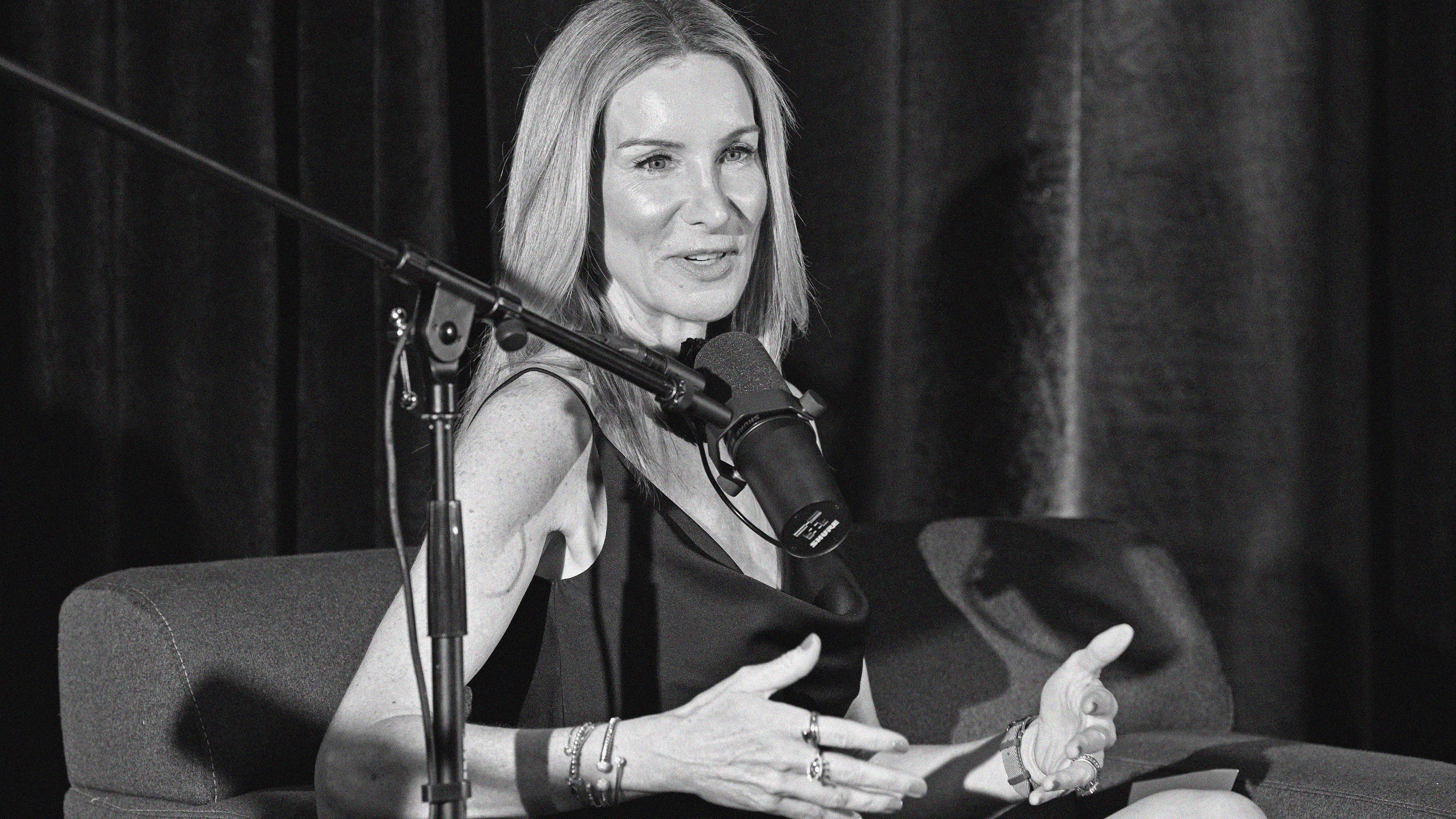
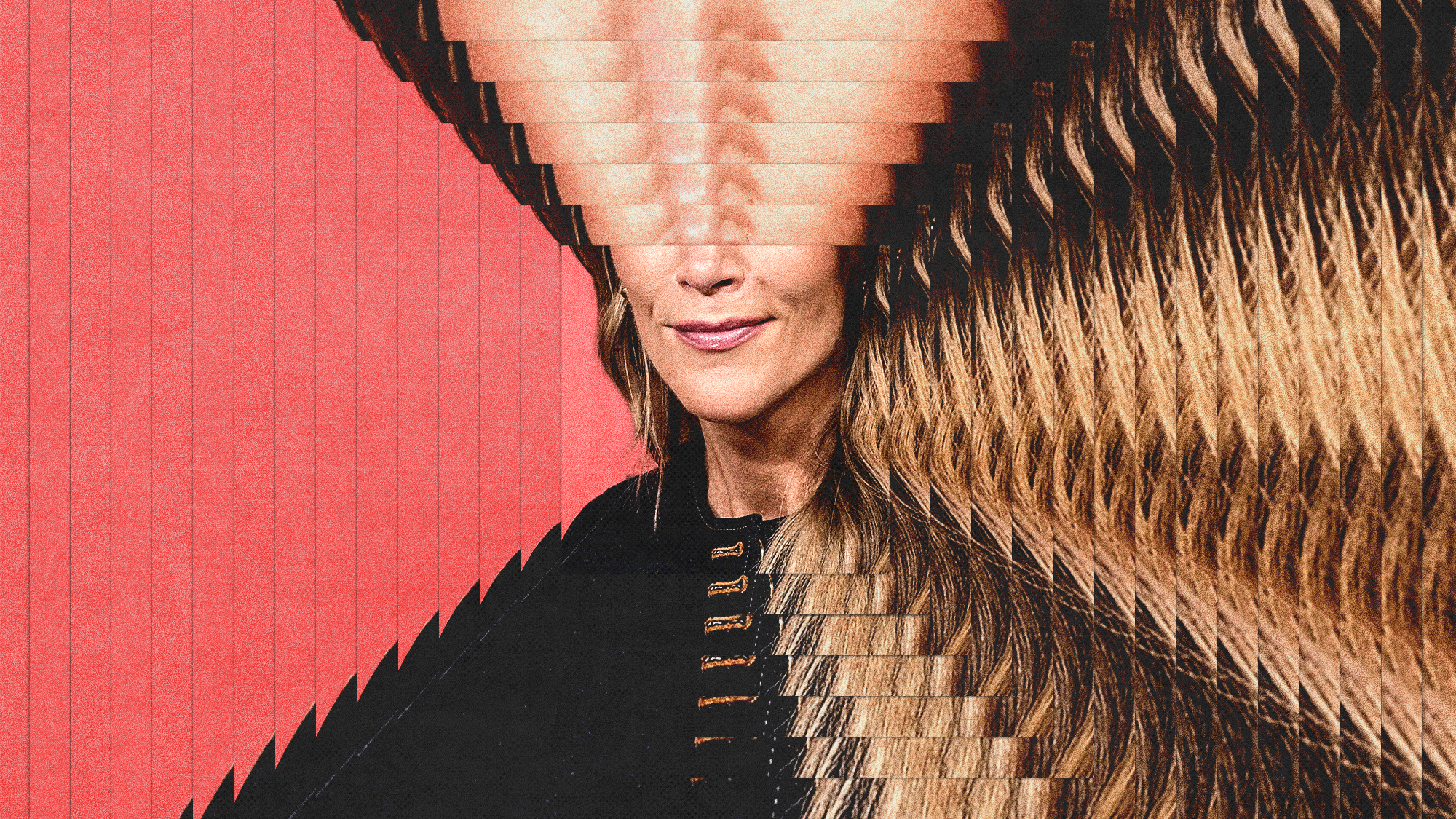
Among the many areas of American life democratized by the internet, few have been more transformed than political commentary. Instead of being restricted to an old boys’ club of op-ed writers and Sunday-talk-show guests, punditry is now open to anyone with an internet connection. This shift has created abundant opportunities for once-neglected voices and broadened public discourse beyond a narrow establishment-media consensus. But lowering the barrier to entry has also had its downsides, mainly in the rise of political influencers. Like talk-radio hosts of yore, charismatic social-media commentators are skilled at forming a personal relationship with their listeners. Many of the most successful, however, pay next to zero attention to the details of policy or governance and gain followers mostly by calling the other side names. Consider the case of Jennifer Welch, author of the new book Not Today, Fascists.
A co-host of the left-wing podcast I’ve Had It, Welch commands millions of followers across Instagram, TikTok, YouTube, and other platforms. Multiple times a week, she delights her legions of fans by mocking Donald Trump, whom she calls “America’s dumbass dictator,” and Senate Minority Leader Chuck Schumer, whom she derides as “Chuckles,” for his insufficiently ardent resistance to the “fascist” GOP. She has called Erika Kirk, the widow of the murdered conservative activist Charlie Kirk, an “absolute grifter,” and the MAGA movement an “anti-family, pro-pedophilia death cult.” Her response to Lindsey Graham’s death was to say, “He liked cock, as we all know.” (No, we don’t. No evidence that the bachelor senator was gay has ever surfaced.)
To people who do not already share her politics, Welch’s coarseness can be off-putting. But it clearly has a cathartic appeal for many disillusioned liberals. Ironically, a major component of Welch’s appeal is inspired by the man she so despises. “I disagree with everything he says, I think he’s a compulsive liar, et cetera,” Welch told National Public Radio last year, “but the way we talk is really the way Trump has been doing it the last 10 years.”
As a rule, when a book of political commentary has a big picture of the author on the front cover, readers should expect little substance and a lot of righteous certainty. Not Today, Fascists is no exception. But Welch’s rise as a progressive influencer, the growing popularity of her rhetorical style, and the leftward pressure she and her followers are putting on the Democratic Party exemplify a larger current: The American left has decided to mimic the right by cocooning itself in its own echo chamber.
“The Democratic base has abandoned traditional media,” Welch writes, “just like the Republican base did ten years ago, and they are desperate for something that goes against the status quo.” This “hunger for something different” among progressives, she observes, has been “so immense that a 51-year-old interior designer and her divorce lawyer started a podcast in Oklahoma a little over three years ago, and it’s now one of the top left-leaning podcasts in the country.”
During Trump’s first term, Welch, a successful interior decorator, starred in the Bravo reality-television series Sweet Home Oklahoma. Inspired by the voyeurism of the Real Housewives franchise, the show followed the exploits of Welch and her wealthy friends through the physical and mental landscape of Nichols Hills, her fashionable Oklahoma City neighborhood. Typical plotlines involved Welch’s design business, her husband’s recovery from drug addiction, and a character going on her first blind date in many years. After two seasons, the show was canceled in 2018.
Four years later, Welch started I’ve Had It with one of her former co-stars, Angie Sullivan, as a sidekick. According to The New York Times, the podcast initially consisted of “banter about petty grievances.” Gradually, the grievances became political and “grew to world-historical proportions.” Today, I’ve Had It is a go-to stop for Democratic presidential aspirants and other stars of the progressive firmament. Welch has appeared on The View, The New Yorker Radio Hour (interviewed by the magazine’s editor, David Remnick), and the livestream of fellow leftist shock-jock Hasan Piker, who refers to her as “one of the leaders of the radical wine-mom brigade.” Today, the Times reports, Welch “releases a podcast episode approximately once every seven hours.”
Welch has become the quintessential #resistance influencer—someone animated by righteous indignation over Donald Trump’s misogyny and other character defects. She is Howard Beale crossed with Martha Stewart. Reading her is like being subjected to MS NOW on full volume, but with F-bombs. Indeed, the progressive cable-news network, formerly known as MSNBC, isn’t left-wing enough for Welch, who writes that “I’ve moved left and weaned myself off corporate news in recent years.”
To the extent that Not Today, Fascists has a thesis, it’s that Republicans are an assemblage of fascists, pedophiles, and idiots—and that progressives must sink to their level in order to win. “The only way forward is to fight fair,” Welch writes, “which in this case means dirty as hell.” What Democrats need is a “fuck you politics,” she believes. Practically, this means using meaner, cruder language. “If any chickenshit pearl-clutchers gets their panties in a wad because we call Trump a fascist or a Nazi, step aside and let the grown-ups fight,” Welch writes. “Fuck the seniority system. Fuck compromise.”
Never in Not Today, Fascists does Welch express the slightest scintilla of a doubt about anything she believes. She cannot contemplate the possibility that others might disagree with her in good faith, without racist, venal, or otherwise malign motives. Like many partisans before her, she implies that voters’ failure to adopt her side’s preferred policies is because the other side has brainwashed them. “We have an uphill battle when it comes to the economy—not because the Democrats’ policies are weaker, but because the propaganda has been so successful,” she writes.
The argument that Republican voters foolishly vote against their own economic interests was most famously elucidated in Thomas Frank’s 2004 book, What’s the Matter With Kansas, the thesis of which is that the GOP wages the culture war to distract working-class white voters from its plundering of the economy. “Democratic politicians and candidates should be on TV every single day, beating the drum against corporate America’s exploitations, its billionaire CEOs, and the system that has enabled them to steal from America—and they should do so using clear, aggressive language,” Welch writes, as if such points haven’t been a staple of Democratic rhetoric for decades.
As an example of Democratic fecklessness, Welch points to the failure of the Biden administration to have Trump convicted for his role in the January 6 insurrection. She ridicules former Attorney General Merrick Garland for proceeding “as though he’d overdone it on the Xanax.” That Garland might have been at least partly justified in wanting to avoid the appearance of partisanship, a caution he demonstrated by first bringing cases against hundreds of rioters, is lost on Welch. The Biden administration’s attorney general “should have been vetted to make sure he or she understood the assignment,” which, apparently, was not conducting a fair and thorough investigation, but prosecuting Trump and his allies.
This disregard for due process—for the idea that Garland’s long service in the American judicial system might have informed his prosecutorial restraint—is especially startling for someone flinging accusations of “fascism” onto anyone and anything she doesn’t like. Immigration and Customs Enforcement is “no different, in my eyes, from Hitler’s Gestapo,” she writes. A message from the State Department announcing a pause in the issuance of immigrant visas to citizens of 75 countries “isn’t language reminiscent of fascism—it’s obviously and explicitly fascist.”
Not Today, Fascists is a sloppy book. It’s riddled with malapropisms (Adolf Hitler sought to “coalesce momentum for World War II”), clichés (“it takes a village”), mixed metaphors (the establishment’s supposed belief that the rich are “the smartest people on God’s green Earth,” when in reality “they are not, uniformly, the brightest of bulbs”), and non sequiturs (“Note that to the MAGA cult, gay sex includes simply existing as a trans person.”) “Books are not known for coming together quickly,” Welch writes. This one certainly seems like it did.
But the bigger problem with the book is her uncritical recitation of left-wing talking points. Welch employs one of the most tiresome progressive rhetorical tics, referring frequently to the Trump administration as “the regime.” She calls the extensively documented scandal involving Somali immigrants running fake day-care centers in Minnesota “an utterly fraudulent accusation.” Welch repeats a laundry list of progressive shibboleths from the past decade: that Trump referred to the Nazis and white supremacists at Charlottesville as “very fine people,” that Trump labeled immigrants generally—not just participants in criminal activity—as “animals.”
She brings no more reflection or nuance to her discussion of the war in Gaza. “I will not go to great lengths to argue that a genocide is in place, because the reality is clear,” she writes. (In other words, she barely bothers to justify the grave claim she makes.) Welch admits that she “didn’t know much about” the Israeli-Palestinian conflict until well into the current war. She begins the first of her two chapters about the conflict, entitled “Taxpayer-Funded Genocide,” with a memory of her visit to Dachau at the age of 16. The message seems to be that Jews have forgotten what the Nazis did to them and are callously inflicting the same horrors upon Palestinians.
Welch claims that Israeli Prime Minister Benjamin Netanyahu “has made Jewish people less safe worldwide,” and favorably cites a writer who claims that Israel is “the world’s most powerful cause of antisemitism.” The implication that Jews everywhere are a natural target for opponents of Israeli policy rationalizes bigotry and absolves the actual anti-Semites of their crimes. At one point in Not Today, Fascists, Welch begins to rant about the evils of “Zionist American billionaires” and the “growing Zionist cooperation and Zionist power in the American government.” A commentator more steeped in the history of real-life fascism might be warier of tropes about Jews manipulating the levers of power.
Welch’s political consciousness was heavily shaped by her experience growing up in a proudly atheist household surrounded by conservative evangelical Christians. (Not Today, Fascists is dedicated “To all the blue dots in red states: You’re not crazy—they are.”) Her feelings about the American religious right—which overwhelmingly supports Israel—and her domestic political commitments more broadly seem to color her feelings about the Jewish state. “One striking fact” about the Trump era, she writes, is that “Netanyahu was delighted by Trump. I found it repulsive that he went to Mar-a-Lago to kiss the ring.” One can find Netanyahu’s obsequiousness toward Trump unseemly while simultaneously accepting that foreign leaders, just to do their job, must constantly flatter the most powerful man in the world. One can also abhor the actions of the Israeli government without writing off the entire country as an illegitimate enterprise.
By their nature, “heterodox” voices are an acquired taste. In the part of the political universe Welch inhabits, the battle lines are clear: Protect your friends and villainize your opponents, regardless of the details. Discussing the murder of the health-care executive Brian Thompson, she writes that his death “illuminated a harsh reality about American life: The unconscionable cruelty of the American healthcare system has driven some people so far into desperation and despair that they couldn’t find any empathy for the CEO.” That may be true for a radical fringe, but 82 percent of Americans are satisfied with their health-care coverage. In a paean to Tim Walz, Welch describes the Minnesota governor and failed vice-presidential candidate as “the hard-ass you could go to for counsel, who stood up for the underdog like the great American film heroes we grew up watching.” There are many things one can say about Tim Walz; that he is the latter-day incarnation of Paul Newman or Harrison Ford is not one of them.
There is a place for the Jennifer Welches of the world, just as there is a place for the Tucker Carlsons and Hasan Pikers and Sean Hannitys. Unabashed partisanship helps motivate some people to win elections. What makes sharply partisan media figures so useful to political movements, however, is precisely what renders them so uninteresting as thinkers. In an earlier era of political commentary, William F. Buckley Jr. earned cachet with his friendships across the political aisle; part of what made him interesting was his interest in other people and their ideas. A typical episode of Firing Line—his current-affairs debate show, which aired on public television for 33 years—would feature Buckley in spirited, respectful conversation with a guest such as Huey Newton, Allen Ginsberg, or John Kenneth Galbraith. Welch and her listeners, by contrast, have no interest in anyone outside their ideological bubble, other than as targets of invective.
In encouraging her fellow progressives to follow MAGA into the gutter, Welch resembles that which she hates. At one point, she writes that “the feeling of being united against a common enemy, with total absolution from racism, sexism, or accountability, can be intoxicating.” But Welch and her followers too are in desperate need of an intervention.
Like her adversaries, Welch long ago gave up trying to convince those who don’t see things her way. “I don’t imagine a world where MAGA voters will wake up one morning and simply switch sides,” she writes. Democrats must therefore move left; on this, “there is no compromise” to be had. The Democratic Party is up for grabs, and Jennifer Welch may very well represent its future.
Sara Spurgeon, an English professor at Texas Tech University in Lubbock, has been teaching literature for 20 years. But preparing for the spring 2026 semester was the first time she was forced to submit her course materials through a portal to be evaluated by an artificial-intelligence program. It flags anything that might violate new rules laid out by the university chancellor, including a prohibition on the “advocacy/promotion of race or sex-based prejudice,” and a requirement—now Texas state law—that “only two sexes, male and female, are recognized.”
At Texas Tech, medical students no longer learn about racial disparities in medical care. Faculty at the university’s medical center in Lubbock were advised to “refrain from treating transgender patients, for any medical condition, if a medical student was present,” according to a lawsuit filed by the American Association of University Professors. (When asked for comment, a spokesperson said that the university’s “written guidance is publicly available and expressly protects instruction necessary for licensure and patient care.”) According to the same lawsuit, the censorship bot—officially known as the Course Content Review Process—ordered a Tech philosophy professor to remove Plato’s Republic from a syllabus because “it references Plato’s beliefs concerning gender roles and homosexuality.”
Professors in the Texas A&M system have had to strip their syllabi too. According to an ACLU lawsuit, last January, Aaron George, a professor at Tarleton State University, was told by administrators to remove A Gay Manifesto, a Stonewall-era LGBTQ-rights pamphlet, and White Flight, a history of urban segregation, from his American-political-history course. After a student complained that a different class the professor taught violated university policy, George was informed by administrators that it would be canceled if he did not make “necessary” (but unspecified) changes. He cut a reference in the course description to the significance of the Fourteenth Amendment for LGBTQ rights, and the class was allowed to proceed.
The University of Texas at Austin, the flagship school of the UT system, announced last month that it was eliminating majors in Africana studies, Mexican American and Latino studies, women’s and gender studies, and race and migration studies. More than 100 courses have been flagged for removal from the core curriculum, primarily ones relating to slavery, race, gender, sexuality, and the environment. Consolidating majors isn’t necessarily nefarious, nor is rethinking a core curriculum (a central group of courses from which students must take a certain number to graduate). But these changes are happening, Lauren Gutterman, an American studies professor at UT, told me, “entirely because of the political context.”
The changes to Texas public-university systems are being presented as a necessary corrective to left-wing orthodoxy on campus. Over the past decade, many Americans have come to believe that academia is too ideological and too intolerant of conservative views and arguments. Censoriousness is not an exclusively left-wing phenomenon, but it is real. And some conservative speakers on college campuses met with protests that, while themselves a form of speech, occasionally deteriorated into violence.
“Our nation is witnessing a merciless campaign to wipe out our history, defame our heroes, erase our values, and indoctrinate our children,” President Trump declared in 2019. “One of their political weapons is ‘Cancel Culture’—driving people from their jobs, shaming dissenters, and demanding total submission from anyone who disagrees. This is the very definition of totalitarianism, and it is completely alien to our culture and our values.”
Perhaps it’s less alien than Trump supposed. In the name of fighting propaganda and indoctrination, Texan politicians have established strict state controls on what can be taught, researched, and even discussed in the classroom. However bad left-wing censoriousness is or was, the Republican response in Texas has been to ensure that what is taught in the state’s universities is itself propaganda and indoctrination. Ellen Schrecker, a historian of McCarthyism at Yeshiva University, told me that this campaign goes beyond even the repression of the McCarthy era, when censorship led to firings and purges but the government did not interfere directly with what students were taught. After all, American politicians understood that there was a Cold War to win, and that it could not be won if the universities themselves were destroyed. By outlawing or banning forms of speech and inquiry, and by eliminating faculty independence, today’s Republicans are doing much more damage.
Texas passed the first of its education gag laws in 2021 to limit the teaching of “critical race theory” in K–12 classrooms. Texas also tried to ban books dealing with racism or LGBTQ themes from public and school libraries; lawmakers characterized the latter as “pornography.” In 2023, the legislature banned “diversity, equity, and inclusion” in higher education, leading to the closure of DEI offices at state-funded institutions. Last year, Texas passed Senate Bill 37 to sharply curtail shared governance—the process by which faculty, administrators, and boards collaborate in running universities; this left political appointees and administrators with unchecked power over hiring and curricula. Governor Greg Abbott had bragged about signing a free-speech law in 2019. Following pro-Palestinian protests on Texas campuses in 2023, he signed a new law banning “expressive activities” from 10 p.m. to 8 a.m., and allowing schools to forbid student protests in some public areas.
The seven Texas public-university systems serve more than 700,000 students—several times the enrollment of all Ivy League institutions combined. There are many ways to destroy a university. Texas Tech, Texas A&M, and the University of Texas have each taken a different approach to enforcing the new state laws, with varying degrees of heavy-handedness. But the result will be the same: substandard education, substandard research, and graduates who are less prepared for their future as workers, thinkers, and citizens, and more prepared to obey without question.
Texas Tech’s approach to censorship is notable for being both onerous and clumsy, in part because it relies so heavily on artificial intelligence.
Curriculum review traditionally involved faculty, administrators, department chairs, and deans who offered expert input without subjecting teaching decisions to the whims of trustees or politicians who might have political or economic interests in avoiding certain subjects. The process still involves layers of review from administrators and university leaders, but the faculty’s role has been replaced in part by the censorship bot, which scans course materials considered potentially controversial. Asked about the role of AI, a spokesperson for the university said that “the Course Content Review process will continue to be faculty-led, just as it was designed to be from the beginning.”
Texas Tech’s new chancellor, Brandon Creighton, is a former Texas legislator and the author of Senate Bill 37, the law that limited shared governance. Creighton said he intended for the bill to “eliminate woke indoctrination in core courses” and give “Texans the power to report biased or inappropriate instruction.” The original text contained explicit “identity politics” restrictions that were stripped from the final version, possibly because they might not have passed legal muster. The policy he has implemented at Texas Tech, however, resembles the original version. Creighton has said he believes that it will be a “national model.”
Creighton issued two memos outlining the restrictions, including one threatening faculty members that a failure to report any course content “implicated” by the policy would result in “disciplinary action.” Another announced a phaseout of all degree programs related to what the memo referred to as SOGI (“Sexual Orientation and Gender Identity”). It also formalizes a ban on “instruction that advocates for concepts of inherent racial or sexual superiority, inherent bias, or collective guilt.” In the future, the memo states, no degree “will be permitted to center on SOGI topics.”
Such a ban on entire fields of study, inquiry, and discourse, Creighton said—preposterously—would foster “diversity of viewpoint.”
For many years, Sara Spurgeon has taught a literature class focused on social justice and the environment. She has often assigned Ta-Nehisi Coates’s Pulitzer Prize–winning memoir Between the World and Me, but this time, the book was flagged by the bot as promoting “the belief that meritocracy is a construct of oppression designed to exploit Black bodies,” and it therefore “directly violates the system’s Prohibition of Prejudiced Advocacy.” (The word meritocracy does not appear in the book.) Creighton has insisted that “studying Black history, discussing the realities of racism, and treating every student with respect are not prohibited.” Spurgeon told me that works by science fiction and fantasy authors were also flagged.
In other professors’ syllabi, the bot flagged the Pulitzer Prize–winning play Angels in America by Tony Kushner, essays by the Mexican American MacArthur genius grant recipient Sandra Cisneros, and materials related to a class about the Holocaust (that professor was told to drop material regarding Nazi persecution of LGBTQ people).
Putting aside the ideological slant of the new rules, the bot, like many large language models, seems to “hallucinate,” or make mistakes. The AAUP lawsuit lists texts banned for their “sex-based ecofeminist framework” and “gendered ecofeminist frameworks.” These phrases might sound persuasively like academese, but the academics behind the lawsuit had never heard of them; these concepts “do not exist,” the complaint says. Matthew Pehl, a history professor at Tech, told me that he knew several people who’d received reports from the system that were “plainly written by an AI that had hallucinated content or confused content from one class to another.”
Alan Barenberg, a history professor who specializes in the Soviet Union, was told to remove readings by the Princeton historian Joan Scott and the French philosopher Michel Foucault from his Ph.D.-level historiography class, after they were flagged by the AI—whose assessments he described to me as “completely inaccurate.” It also seemed to have mixed his course up with a different one. The texts were part of a unit of the class related to how treatment of gender in historical research has changed over time. “These things have been taught in classes for a long time,” Barenberg told me. The material is controversial, he said, only “in the eyes of a few people who aren’t even actually on campus.”
“The fact that the system AI doesn’t work, that it makes inaccurate pronouncements—that’s a feature, not a bug. They don’t care if it’s accurate or not. They just want to be able to say, Look, we’re making sure that your children are not being exposed to these horrible ideas from these radical professors,” Barenberg said. “A key part of how authoritarian systems often work is that, through the vagueness and sending up signals and vibes, they’re essentially saying, You know what not to do, but being deliberately vague about it.”
Although the AI is now reviewing only some courses, the university could extend the process to more. For now, professors are the ones responsible for volunteering whether their own materials may be considered controversial. Many, unsure of what might trigger the bot, told me that they had private conversations with administrators who told them to simply self-censor and remove materials from their courses in advance, so as not to draw the wrath of leadership or lawmakers.
Pehl, the history professor, told me that he did just that, and decided not to use the book Scraping By, about labor in Revolutionary-era Baltimore, because he had been planning on teaching it early in the year, which didn’t allow time for it to be reviewed first. The book differentiates between the experiences of workers based on whether they were enslaved or free, men or women.
William Wenthe, a poetry professor, didn’t mark his course as potentially controversial, though he told me that he was worried: He teaches T. S. Eliot’s The Waste Land, which includes a male character from Greek mythology who becomes a woman. Could a Texan politician object to that? Censorship infantilizes students, he said: “They’re old enough to vote. They’re all old enough to fight and die for this country. And you’re treating them like babies.”
Texas Tech’s censorship policy does not just affect the humanities. According to the AAUP lawsuit, medical students at the campus in El Paso are no longer permitted to learn about racial disparities in medical care or how to treat underserved populations—both major challenges in the overwhelmingly Hispanic Texas border region. At the Lubbock campus, a professor of health sciences at the medical school was told that he could not teach about transgender or intersex patients.
Some professors are leaving. Breanna Harris told me she quit her job as a biology professor at the Lubbock campus in part because she says administrators informed her that she could not use the American Medical Association’s definitions of sex and gender, which, by distinguishing between the two, run afoul of Texas law. Harris’s course materials, she said, ask questions such as “How do organisms become ‘male’ or ‘female’?” and “What does that process look like biologically during development?”
Lisa Limeri, a biology professor at Texas Tech who had just been awarded tenure this year, resigned for the same reason. “We are not allowed to teach topics that are relevant to things like the MCAT and being practicing medical professionals,” she told me. “We are not allowed to teach them scientifically, accurately.”
A spokesperson for the university pushed back on the claim that medical students were not being taught what they would need to do their jobs: “We have tremendous confidence in our faculty and their commitment to preparing students to provide excellent care. It is important to distinguish between what our policy actually requires and restrictions that are not found anywhere in our written guidance.”
According to an internal survey, more than half of Tech’s faculty are looking for work elsewhere. In a private meeting with faculty, a recording of which was shared with me, a provost acknowledged that “on average, we have 20 percent to 25 percent fewer people applying for jobs here.” When professors challenged him on why he was not fighting against censorship, the provost said he couldn’t stop it: “It’s going to happen. And so you can try to help slow or mitigate it,” he said. “Or you can bring in people who will help it happen faster. That’s the option at the moment.”
Texas Tech is an R1 research university, which means that it receives a large amount of federal funding to produce significant amounts of research. But the censorship policy leaves entire fields of scientific inquiry banned, even for Ph.D. students.
“America has risen to global prominence in science and scientific research because of the strength of our system,” Limeri said. “If these kinds of censorship policies were implemented everywhere, we would have a generation of students who are not learning to think critically, are not learning to think for themselves, and are not learning full and accurate scientific information.” Administrators told faculty in that private meeting not to discuss the censorship policy with students, because it might generate “a lot of fear and a lot of anger and anxiety.”
The Texas A&M system, which serves about 175,000 students, doesn’t have an AI censor. But it does have both a strict, arbitrary, and confusing censorship policy and elected leaders joining online mobs against professors.
Melissa McCoul, a senior lecturer in the English department at Texas A&M’s College Station campus, has taught her course on children’s literature 11 times since arriving at the university in 2017. And she would have continued to do so, if Governor Abbott hadn’t demanded she be fired.
In July 2025, Brian Harrison, a Republican state representative, reposted a slide from McCoul’s class that had been highlighted by another X user. The slide argued that queerness can be discussed in “age-appropriate” terms and that homosexuality was not an “x-rated” concept. Harrison declared that “Texans are being taxed out of their homes to fund liberal indoctrination.” McCoul immediately found herself at the mercy of a social-media mob.
A little more than two weeks later, a student interrupted McCoul’s class to say that her teachings were “against the law.” After a brief exchange, McCoul asked the student to leave. In September (by which time McCoul was teaching a different class), Harrison posted a video of the summer confrontation and described the student as “OBJECTING TO TRANSGENDER INDOCTRINATION.” Harrison also posted a letter he had sent to Abbott reminding him that “during your State of the State Address, you stated that ‘any educator who tells students that boys can be girls should be fired on the spot.’”
Mark Welsh, then the president of A&M, replied to Harrison’s post with a statement that the class had been canceled and that “key leaders” had been removed for allowing McCoul to teach “course content that was not consistent with the course’s published description.” Abbott joined the mob, replying, “Good. Now, fire the professor who acted contrary to Texas law.” Promptly, the university did.
McCoul claims that the course never deviated from the catalog description and has sued the university for ignoring its own due-process procedures; the lawsuit is ongoing. According to her complaint, two faculty panels reviewing the incident found no good cause for her firing. Welsh has since resigned.
In a motion to dismiss McCoul’s suit, filed in April, A&M states that McCoul was an untenured senior lecturer and that “Texas A&M University is entitled to state sovereign immunity as an ‘arm of the state.’” The motion also argues that “the termination was lawful and was certainly no violation of the lecturer’s academic freedom or the First Amendment.” The university alleges that McCoul “used the class as an opportunity to indoctrinate her students into transgender and LGBTQ ideology,” and that “by kicking out a student” who expressed a contrary opinion and “threatening” to kick out others, McCoul “interfered with those students’ academic freedom.” The filing also makes sure to point out that “she began the class by introducing herself as an autistic lesbian.”
In December, A&M adopted a policy stating that “no system academic course will advocate race or gender ideology, or topics related to sexual orientation or gender identity.” The next month, the women’s and gender studies programs were eliminated.
The policy defines gender ideology as the idea “that self-assessed gender identity should replace the biological category of sex,” whereas race ideology “attempts to shame a particular race or ethnicity, accuse them of being oppressors in a racial hierarchy or conspiracy, ascribe to them less value as contributors to society and public discourse because of their race or ethnicity, or assign them intrinsic guilt based on the actions of their presumed ancestors.” If a professor acknowledges the existence of trans people, they could be violating the first policy; if they describe race-based chattel slavery in the antebellum United States, they could be violating the second. Their livelihood might depend on how much time the governor of Texas is spending on social media that day.
Leonard Bright, a tenured professor at A&M’s Bush School of Government and Public Service, is one of several other professors suing the university for its censorship policy. This year, his graduate-level course on ethics and public policy was canceled. His lawsuit says that he informed the administration that “at no point does the course require students to adopt, affirm, or reject particular beliefs regarding these topics. Students are evaluated solely on analytical rigor, use of evidence, and professional engagement.” Still, he told me, the university wouldn’t approve the class unless he provided “a detailed day-by-day description of when sexual orientation is going to come up.” And he couldn’t do that, because “this is a discussion course.”
The policy raises other uncomfortable questions for Prairie View A&M, a historically Black college in the A&M system that was first established by the Reconstruction-era legislature as a segregated institution. There’s no way to even explain its existence without touching on matters that could be caricatured as “race ideology.”
The difference between “advocating” and “teaching” is not clearly defined, but the way the censorship policy is being implemented makes the situation pretty clear: If you’re using material that state lawmakers agree with, that’s teaching; if you’re talking about something they object to, that’s advocacy, and you have to stop. As detailed in a complaint against Texas A&M filed by the ACLU, an English professor, Vanita Reddy, was told that the censorship policy “will not be applied to heteronormative orientation and identity,” but exclusively to “LGBTQ gender identity or sexual orientation.”
George, the history professor who was told to remove several texts perceived as liberal, was allowed to teach the conservative anti-feminist activist Phyllis Schlafly’s “What’s Wrong With Equal Rights for Women?”
Professors at UT Austin aren’t seeing their classes summarily canceled or scrubbed for forbidden terms by a censorship AI. They haven’t been told to list the dates that gender might come up. The governor hasn’t demanded the heads of any of its professors. “Gender and race ideology” have not been banned. While Texas Tech and Texas A&M received an “F” from the Foundation for Individual Rights and Expression, a free-speech watchdog, UT Austin earned a “D–”.
What UT has done is issue a statement on “academic integrity” urging professors to “fairly present differing views and scholarly evidence on reasonably disputed matters and unsettled issues” and “to eschew topics and controversies that are not germane to the course.”
No one is really sure what that means—and that may be the point. “Nobody yet has been disciplined under this policy,” Julie Minich, an English professor who focuses on Latino literature, told me. “But also, nobody wants to be the first one to be disciplined under the policy.” The university did not respond to repeated requests by phone and email to speak about this story or to a list of questions.
Peter Onyisi, a physics professor, has for years used the greenhouse effect as an example of a real-world, practical effect of quantum mechanics to students. Although he does not plan to stop, he worries that administrators could argue that climate change is not “germane” to his course. But that’s not how teaching works, Onyisi pointed out: “You can’t really say, Oh, physics is in a nice little box, and it doesn’t talk to anything else.” Academic freedom is under assault in the UT system, he said, just in more “subtle” ways than elsewhere.
Jim Davis, the president of UT, has justified the cuts to the core curriculum by arguing that too many courses were “narrow.” One of Davis’s favorite examples is a class on the history of college football, although, as one professor pointed out to me, the origins of the sport offer a fascinating view into the post–Civil War economy and culture of the South, not to mention a billion-dollar industry that is a big deal at, well, UT. That’s the thing about academic inquiry: Many seemingly “narrow” questions open up much bigger ones.
Davis’s example, however, may be misleading. Given that most of the courses being targeted involve the study of gender or race, “narrow” seems to refer mainly to the study of people, subjects, or works that some conservatives consider unimportant.
These sweeping changes couldn’t have happened “if shared governance was still in existence,” Lauren Gutterman, the American-studies professor, told me. “S.B. 37 has changed things dramatically in just a very short period of time.”
A university task force has proposed that the new core include a “Great Questions of Human Life” requirement based on texts from preapproved “great thinkers.” A preliminary list of 50 names was sent out to faculty. The list includes three Black writers (W. E. B. Du Bois, Frederick Douglass, and Toni Morrison), six women (in addition to Morrison: Mary Shelley, Simone de Beauvoir, Mary Ann Evans, Jane Austen, and Mary Wollstonecraft), and no Hispanic or Latin American authors. The only Asian author on the list is Confucius. (UT has said it “intends” to expand the list). A “Masterworks of Literature” requirement would pull most of its readings from the same list, and divide them into the categories “American,” “British,” and “World.” The proposed “Principles of American Politics” requirement warns that the courses should “focus on issues that involve the whole country, not just one region or group.” And under its “Western Civilization” requirement, the task force observes that “Western Civilization has interacted in complex ways with other civilizations”—middle-school writing that raises the question of what counts as Western civilization, a term that the report acknowledges it cannot define.
“They’re saying that they need to be broad classes that satisfy the core requirements, not narrow classes,” Minich told me. But the effect is the opposite. “Rather than having a core curriculum that reflects the diversity of the campus in the public flagship of the second-most diverse state in the country, they’re moving toward a curriculum that is much more heavily focused on the European intellectual tradition. And they are calling that ‘breadth’ and saying that courses that fall outside that intellectual tradition are ‘narrow.’”
Classes that get stripped of their core designation may end up scrapped altogether, because students have limited time. Declining enrollment in non-core classes can then be an excuse to dispose of them entirely.
“At the time I came here, UT was the No. 1 place to do what I do—studying Latino literature. We have this long, rich history of Latino studies,” Minich said. “I see this as a first step toward eliminating an area of study that has been historically extremely important at this university.”
In July, Iván Chaar López, an expert in the history of the U.S. southern border, was denied tenure, as Inside Higher Ed reported, despite the College of Liberal Arts tenure committee voting overwhelmingly in his favor. Chaar López told me that, in a meeting with administrators that February, he was told that the president’s tenure committee “had a negative view” of his work. He is challenging the decision, and is one of several faculty members or administrators who believe that they were fired, laid off, or denied tenure because their politics were seen as left-wing or because their expertise is among the subjects the administration has turned against.
“It is almost as if we are meant to teach whatever fits into a political pamphlet. But that’s not what free inquiry and free speech and academic freedom are about,” Chaar López told me. Students are getting “an education that is all about obeying.”
Angela Valenzuela, a professor in the department of educational leadership and policy, said that you should not be able to “graduate from UT Austin and not know anything about anything south of the Rio Grande River and call yourself an educated person.” She added, “This is not an argument about whether or not ‘Western civilization’ should be taught. It’s an argument of whether that’s what should be exclusively taught.”
UT’s quiet restructuring of the university may prove to be more effective and sustainable than the tactics at Texas Tech and Texas A&M; UT’s censorship attempts, notably, have yet to face a legal challenge. Nonetheless, professors fear that the changes will leave students without the cognitive tools or contextual information to question matters that some conservatives would prefer not be questioned.
Meanwhile, resources have been directed instead toward UT Austin’s new School of Civic Leadership, which claims to promote “freedom of thought and speech.”
Jen Shelton, an English professor at Texas Tech, told me that her daughter had gone to college in Minnesota. “When she had her first class,” Shelton said, “she called me to say, ‘You won’t believe all the things people are allowed to say up here.’”
Some conservative activists have gone beyond attacking teachers. Brian Harrison, who led the campaign against the A&M professor, railed in September against the existence of an archive of LGBTQ-history primary-source documents at the University of North Texas. The webpage describing the archive was taken down; one begins to wonder whether the state will demand the destruction of the documents themselves next.
In a 2026 AAUP survey, 70 percent of Texas faculty would not recommend taking a faculty position in the state, and about 30 percent said they had experienced censorship of courses by administrators. Texas “is on the leading edge” in the field of censorship in higher education, Jonathan Friedman, who directs PEN America’s work on free expression in the United States, told me. But Texas is hardly alone. According to PEN, Alabama, Florida, Indiana, and Utah have all adopted laws that seek to limit what professors are allowed to teach and what students are allowed to study. “Notions like academic freedom and free speech on campus are all just going out the window,” Friedman said. More Republican-leaning states will likely follow.
Over the past decade, some conservatives have invoked principles of academic freedom and free speech in order to subvert both. These conservatives mocked “snowflakes” and “trigger warnings,” and then passed legislation making it illegal to hurt white students’ feelings by discussing historical or contemporary events. They invoked academic freedom and then began erasing fields of study they found politically inconvenient. They railed against “indoctrination,” and then argued that the state is entitled to control everything said in the classroom.
One might argue that progressive influence on campus had gone too far and states needed to reestablish free-speech norms eroded during the zenith of the first anti-Trump backlash. Conservative ideas do have an important place in higher education—a well-rounded education is impossible otherwise. But there is a distinction between left-wing censoriousness and actual state censorship. Todd Wolfson, the president of AAUP, told me that he would be “the first to admit” that he witnessed people and ideas being “shut down from discussion” on campus. But, he said, “there’s no comparison in the ability and attempt to dictate ideas. Just none. One was informal, and the other is now formal and legal.” He continued, “I think it’s a fantasy to say that what happened then has any relationship to the extremism that we’re seeing right now.”
The right-wing assault on higher education may be rooted in college-educated voters’ shift to the left. If one blames that shift on left-wing professors, then purging them from academia could change the way educated people vote. But educational polarization is a global phenomenon, and evidence shows that college does not alter students’ political beliefs as much as people assume. Attacking universities is more likely to simply degrade the quality of education than it is to help Republicans at the polls. Besides, in Texas, many students arrive as conservatives and stay that way. Many students have protested the new censorship policies, while others have enforced them, as demonstrated by the undergraduates turning their professors in for violations.
University leaders have occasionally attempted to disguise their campaigns as an effort to better prepare Texas students for the workforce. Texas Tech Chancellor Brandon Creighton said that there was “quite a bit of garbage in curriculum all over university campuses all across America,” and that Tech would “remain the tip of the spear on producing the highest degree of value.” But the value of even the hardest STEM degree will be degraded if courses in those fields are censored for being politically inconvenient. And regardless, the quality of an education is not determined by the wealth you subsequently accumulate.
So what can be done? Legal precedent seems to be on the side of people challenging the censorship policies, at least at Tech and A&M. The Supreme Court has held that academic freedom is a “special concern” that is “of transcendent value to all of us.” Florida, during litigation over the Stop WOKE Act, a similar ban on “divisive concepts,” tried to argue that the First Amendment didn’t apply to professors at state schools, because they were government employees. The Eleventh Circuit Court of Appeals rejected that argument, concluding that “if the history of that Amendment tells us anything, it is that the government cannot forbid what it perceives as heresy.” The current right-wing majority on the Supreme Court, however, has shown itself willing to ignore the plain text of the Constitution where the latest culture-war fixation is concerned.
“You have to go back to the loyalty oath cases of the Cold War period to see relatively analogous situations where the government was trying to silence academics with viewpoints that they didn’t like,” Emerson Sykes, an attorney with the ACLU, told me. “But even in those cases, we did not see the sort of brazen attempt to ban particular ideas or ideologies and scrub them from the public record or from public education.”
Sykes cautioned me that although academic freedom interacts with the First Amendment, they are not synonymous. The Eleventh Circuit ruling found that state governments can “make ordinary curriculum decisions (like which majors or courses to offer), or otherwise ensure competent academic instruction.” For that reason, UT Austin’s structural changes are likely more resistant to legal challenge. Those who wish to oppose them may have to find other means, such as labor organizing or politics. That will be a monumental task—especially as universities are relying more and more on tenuously employed adjunct professors.
In the meantime, the Trump administration has been meddling in higher education at the federal level—using grants to pressure universities into changing whom they admit and what they teach and research, and going after foreign students for their politics. The degradation of free speech doesn’t stop in Texas. And it won’t stay on campus either.
This article originally misstated the date when the professor Sara Spurgeon first had to submit her course materials through a portal for review.
This is an edition of The Atlantic Daily, a newsletter that guides you through the biggest stories of the day, helps you discover new ideas, and recommends the best in culture. Sign up for it here.
A novel’s first line is saddled with an extraordinary responsibility: to not only establish a story’s start but also to impart with indelible effect the writer’s voice. Asking someone to identify the best first line of all time tends to make people skittish, so I asked The Atlantic’s writers and editors instead: What is one of the best first lines in modern literature?
“Sth, I know that woman.”
Toni Morrison’s fiction contains a rich seam of great first lines. This one, from Jazz, is my favorite, for its immediacy and its intimacy. From the start, the narrator and her words have an arresting physicality, and the reader is put in the position of question asker and gossip hound, wondering whether the speaker is exasperated or disgusted (or if she relishes that disgust).
In Morrison’s own telling, the line emerged out of frustration. She wanted her novel to express the spirit of metropolitan Black life in the 1920s and for her prose to embody the essence of jazz, with its genius for spontaneous invention. But her original opener felt too predictable. Irritated, she flung her pencil aside and sucked her teeth. When she set that exclamation down on paper—sth,evoking an intake of breath—she found the voice of her story. Following that voice, Morrison achieved the unity between sound and meaning that she was after: music, made manifest in prose.
— Sophia Nguyen, staff writer
***
“Many years later as he faced the firing squad, Colonel Aureliano Buendía was to remember that distant afternoon when his father took him to discover ice.”
One Hundred Years of Solitude, by Gabriel García Márquez (translated by Gregory Rabassa),is riddled with richly detailed and narratively complex sentences. This first one seems to encompass the whole life of one character while leaving part of that story untold. The line pairs the incredible with the mundane, setting the stage for a novel that popularized magical realism and inspired a generation of international writers by blending an imagined Latin American past with actual historical events.
Think of a murder board, that trope from crime television with the red string and pushpins connecting things together. Now imagine that an endless string connects everything, everywhere, real and fictional, possible and hopeless, backward and forward in time. And then visualize bunching that endless string together in your hand, connecting it all together at once. That is the sensation this first line delivers anew, every time I read it.
— Ian Bogost, staff writer
***
“The education bestowed on Flora Poste by her parents had been expensive, athletic and prolonged; and when they died within a few weeks of one another during the annual epidemic of the influenza or Spanish Plague which occurred in her twentieth year, she was discovered to possess every art and grace save that of earning her own living.”
The diction Stella Gibbons deploys at the start of her satirical 1932 novel, Cold Comfort Farm, is so precise that you could almost be forgiven for reading the sentence straight, although to do so would be to miss out on its humor: She is presenting a simulacrum of the genteel English novel but turning the values that sort of novel advances on their head. (To that end, Gibbons also includes a foreword in which she appeals for feedback from a pretentious fictional author called Anthony Pookworthy.) Flora’s education is presented as enviable but in fact sounds dreadful, in addition to ineffective at preparing her for anything but an ornamental life. And although the book revolves around her efforts to impart her impeccable social graces to a pack of depressive, half-feral relatives, it also makes relentless fun of her and her tactics, starting with her reluctant attraction to the sort of upper-crust chap who would name his personal airplane Speed Cop II.
— Talya Zax, senior editor
***
“For a long time I used to go to bed early.”
The first words of Marcel Proust’s In Search of Lost Time call us to attention like an orchestra tuning before a symphony—and from this simple confession, the elaborate, mannered world of Paris in the late Second Empire soon springs to life. In this seven-volume novel, Marcel, the narrator and the author’s surrogate, learns to navigate, and then transcend, social circles of ever greater wealth and status.
One of Proust’s possible titles for his masterpiece was The Intermittencies of the Heart, and his epic novel takes place on a startlingly intimate scale. The airy ordinariness of the opening sentence introduces a mind seized by obsessive self-scrutiny and exquisite perceptions of art, music, memory, love, and grief. The painstaking details of Marcel’s inner life make this million-plus-word book still feel like the radical experiment it was in 1913, when the first volume was published. No one bares the soul like Proust, and for a long time, his anatomy of sexual jealousy, infatuation, and heartbreak has kept me up quite late.
— Walt Hunter, contributing editor
***
“The notice informed them that it was a temporary matter: for five days their electricity would be cut off for one hour, beginning at 8 p.m.”
This line, from the first story in Jhumpa Lahiri’s Pulitzer Prize–winning short-story collection, Interpreter of Maladies, is astonishing in its ability to do so much narrative work in only 26 words. Immediately, as a reader, you are left wondering about the notice, who sent it, and why the electricity is getting cut off. You feel compelled to keep reading, to answer these questions, and to encounter new ones. Once you reach the end of the story—which is packed with a remarkable number of emotional turns in just 21 pages—the meaning of “temporary matter” takes on a new and devastating shape. Lahiri is singular in her ability to write characters enmeshed in melancholy, folded into a propulsive narrative. An incredible story in an incredible book.
— Clint Smith, staff writer
***
“Maybe it was that Cyrus had done the wrong drugs in the right order, or the right drugs in the wrong order, but when God finally spoke back to him after twenty-seven years of silence, what Cyrus wanted more than anything else was a do-over.”
Who, after reading this sentence, can resist wanting to know more about Cyrus’s plight? This opening line from Martyr!, Kaveh Akbar’s 2024 debut novel, is funny and dense with mystery and surprise (where has God been for 27 years? Is God really speaking, or is “God” just a neurochemical epiphenomenon of those drugs?), and it ends on a powerful note of regret—regret being a winning quality in a first sentence. To begin this story about an Iranian American man’s experiences with addiction, faith, blasphemy, family, and martyrdom, Akbar stretches out a long sentence introducing a character who has steered his life into a dark place, landing with the down-stress on the colloquial do-over, the perfect note of anticlimax. Akbar, a poet, has an ear for rhythm, and his irresistible narrative voice hooks you from its first wry and delightful clauses, carrying you through to the many plot revelations ahead.
— Scott Stossel, national editor
The Week Ahead
You Can See Everything, a documentary about Elizabeth Holmes in the weeks before she went to prison and the three years that followed (out Friday in limited theaters)
Crystal Lake, a Friday the 13th prequel series about Pamela Voorhees before she becomes a killer (streaming Thursday on Peacock)
You Let Me In, a novel by Lucy Clarke about a writer who suspects that someone is watching her in her own home (out Thursday)
Essay
Illustration by The Atlantic. Source: ZEPHYR / Science Photo Library / Getty.
A Striking Decline in Openness to IVF
By Faith Hill
Less than 50 years ago, the first child conceived by in vitro fertilization was delivered in Oldham, England. Louise Brown was heralded as a medical marvel—not only for her parents, who had struggled to conceive for a decade, but also for the world. “At 11:47 pm, on July 25th 1978,” the British paper The Observer declared, “hope was born.”
Thirteen million “test-tube babies” later, Brown is still too young to qualify for social-security benefits, and IVF has gone from science fiction to a household acronym. It accounts for almost one in 36 births in the United States, according to some estimates. In the meantime, another fertility treatment has become much more common: From 2014 to 2024, the number of egg-freezing procedures per year went from 6,000 to 39,000, a sixfold increase. By most obvious standards, the assisted-reproduction industry is thriving. It has allowed countless single people, same-sex partners, and couples dealing with infertility to become parents. It also happens to be worth tens of billions of dollars.
Late last night, President Trump announced a “massive” deal to buy diesel fuel from Russia. For the American truckers and farmers Trump claims to be serving, the deal means little or nothing. Trump may not know or may not care that his latest gambit will not reduce diesel prices. His poll numbers are plunging to Herbert Hoover levels. He needs a last-minute electioneering gimmick.
But while the deal will not benefit American consumers, it has immense consequences for others. For Vladimir Putin’s Russia, the deal is a potential lifesaver. For war-ravaged Ukraine, it is the most outrageous and heartless Trump betrayal to date. For Trump’s entourage, the deal promises corruption opportunities on a multibillion-dollar scale. And for people trying to understand the Trump presidency, the deal is further proof of the accusation that Nancy Pelosi flung in Trump’s face in 2019: “With you, all roads lead to Putin.”
The United States is a diesel superpower. It is one of the world’s largest producers and exporters of diesel fuel. U.S. refineries produce about5.2 million barrels of diesel a day. Americans consume about 3.7 million barrels a day. The surplus is sold abroad: In recent months exports have run above 1.5 million barrels a day.
The United States imports some diesel fuel from Canada, about 154,000 barrels a day, owing to the peculiarities of pipeline and shipping networks: It’s cheaper to supply New England from the Canadian refinery in New Brunswick than from U.S. refineries along the Gulf Coast. By comparison, Trump’s Russia deal is for 2.25 million barrels: the equivalent of about 16 hours’ worth of U.S. consumption, 10 hours’ worth of U.S. production, or 14 days’ worth of Canadian imports.
Unfortunately for U.S. diesel consumers, the price of diesel fuel is set by global markets, not North American ones. Trump’s Iran war has disrupted fuel supplies from the Middle East, including diesel supplies. Before the war, Europe imported more than half a million barrels of diesel a day from the Persian Gulf. The world’s second-biggest diesel exporter used to be Russia, which shipped about 817,000 barrels a day in 2025. When the Iran war raised energy prices, Russia was positioned to profit.
The United States in the past tried to help Ukraine by sanctioning Russian energy exports. Trump sometimes pretended to support this policy. In September 2025, for example, Trump proclaimed a tariff on India, ostensibly to punish India for buying Russian oil—but then lifted it in February.
So the Ukrainians took matters into their own hands. As Russia has intensified its horrific drone and missile attacks on Ukrainian civilians, Ukraine has struck back with a devastating campaign against Russian energy infrastructure, including diesel. By late summer 2026, the Ukrainians estimated that they had shut down 43 percent of Russian refinery capacity. According to Ukrainian reports, Russian production of oil of all kinds plunged from 5.6 million barrels a day before the Iran war to 4.1 million barrels by late summer 2026. Russia imposed a ban on diesel exports in July. That ban has been extended into October.
Friends of Ukraine hailed the attacks on Russian energy infrastructure as a war-changing success. Trump saw a threat to Republican hopes in the midterms. Curbs on Russian fuel exports helped push the price of diesel fuel in the U.S. above $5 a gallon in July, then higher than $6 a gallon in September.
Since Trump’s return to power in 2025, the Putin regime has dangled lucrative deals in front of the president’s entourage.
TheWall Street Journalreported in November 2025 about secret conversations in Miami the previous month between the head of Russia’s sovereign wealth fund, Kirill Dmitriev, and Trump’s negotiators, Steve Witkoff and Jared Kushner:
“For the Kremlin, the Miami talks were the culmination of a strategy, hatched before Trump’s inauguration, to bypass the traditional U.S. national security apparatus and convince the administration to view Russia not as a military threat but as a land of bountiful opportunity, according to Western security officials. By dangling multibillion-dollar rare-earth and energy deals, Moscow could reshape the economic map of Europe—while driving a wedge between America and its traditional allies.”
The report noted that Dmitriev “found receptive partners in Witkoff—Trump’s longtime golfing partner—and Kushner, whose investment fund, Affinity Partners, drew billion-dollar investments from the Arab monarchies whose conflict with Israel he had helped mediate.” The New York Timesreported last week about an even more brazen Russian offering: a multibillion-dollar oil deal for assets owned by Russia’s Lukoil, which would directly benefit a Trump donor and two Middle Eastern groups that have done business with Kushner or Witkoff’s family. (A spokesman for Steve Witkoff said of the Times story that Witkoff “has no conflict of interest and no financial stake in this matter.” Of the Wall Street Journal story, a source described as “familiar with Witkoff’s thinking” said “the envoy is confident that any settlement with Russia would benefit America broadly, not just a handful of investors.”)
But all these apparently enticing Russian schemes come with a catch: Russian energy assets are not worth much if those assets are regularly wrecked by Ukrainian drones. This makes plain the implicit quid pro quo in these lucrative deals offered to Trump’s family and friends: If you compel Ukraine to surrender, we will enrich you beyond reckoning.
Putin is attempting to leverage Russia’s most strategic asset in his war on Ukraine: Trump’s weakness for corruption. The 2.25 million barrels of diesel Putin offered Trump will have zero net impact on world energy markets or the world price of diesel. But accepting those barrels will collapse the U.S.-led sanctions regime on Russia—and align Trump with Putin against the Ukrainian air attacks on Russian energy production.
Trump stopped providing aid to Ukraine long ago. But the U.S. still provides Ukraine with crucial intelligence information. If Putin can entice Trump to cut Ukraine off from U.S. intelligence, he can do real damage to Ukraine’s capabilities. Russian diesel fuel is the cheese in that mousetrap. Trump’s negotiators are sniffing at the bait: The Kyiv Postreported today that Witkoff and Kushner are already threatening to stop information-sharing if Ukraine continues to strike Russian energy assets. And meanwhile, FBI Director Kash Patel is reportedly planning his own trip to Russia—one that members of Congress are urging him to cancel, as my colleague Sarah Fitzpatrick recently reported.
There is much about Putin’s offer of diesel that remains doubtful. Does Trump have the legal authority to buy previously sanctioned Russian oil? Does Russia even possess the diesel to sell? But one thing at least remains as clear as ever: With Trump, all roads lead to Putin.
Editor’s Note:Washington Week With The Atlantic is a partnership between NewsHour Productions, WETA, and The Atlantic airing every Friday on PBS stations nationwide. Check your local listings, watch full episodes here, or listen to the weekly podcast here.
With less than a month until the midterm elections, Democrats and Republicans alike are trying to identify the key battleground states and districts in which to concentrate their efforts. Panelists on Washington Week With The Atlantic joined to discuss what these races may mean for both parties.
“What we’re seeing right now is a referendum on the president’s policies over the past two years,” Adam Harris, a host of Radio Atlantic, said last night. “You have the war in Iran that [President Trump] can’t tether to Joe Biden,” and so now more voters are linking “the president’s policies specifically, from the war on down,” to issues such as increases in prices.
Joining the editor in chief of The Atlantic, Jeffrey Goldberg, to discuss this and more: Carrie Dann, the managing editor of The Cook Political Report; Harris; Jonathan Karl, the chief Washington correspondent at ABC News; and Annie Linskey, a White House reporter for The Wall Street Journal.
Do your heroes weep? Do they swoon with lust? Are they really confused by their new magical powers? Then you’re already a fan of romantasy. For those still waiting to discover romantasy: It’s fantasy, with strong female protagonists and fewer boring bits—the long treks over major landforms in hard weather. Sex is plentiful, but sex is not the genre’s defining feature. You can go chapters before encountering a reference to someone’s toned body. Far more significant are feelings and friendships between the heroes: enchanted beings with relatable self-esteem issues who don’t just seek and fight but also yearn and banter as they face down enemies who aren’t only evil, but super bitchy too. Then the heroes cry and have orgasms (sometimes they orgasm first and cry after).
In the kingdom of romantasy, one writer reigns supreme: Sarah J. Maas, the author of ACOTAR. It sounds like a missile-defense system or an autoimmune condition, but it’s the acronym for one of the most popular series of novels for adults written in the 21st century. A Court of Thorns and Roses is the first of many books about Feyre Archeron, a young huntress spirited into the faerie realm. Humans hate the leaders of the faerie world, called the High Fae, who once enslaved them. But as soon as one bursts through Feyre’s door, having shape-shifted into the body of a green-eyed, bearlike beast, the reader thinks, I bet some of these guys are going to be hot.
Feyre falls in love and breaks a curse and brings down a depraved fae queen, and that’s just in the first book—eventually she’ll assemble a crew of beloved sidekicks and a heap of supernatural powers. On any given week, you can see every book in the series stacked in a column on the New York Times best-seller list. If you combine ACOTAR with Maas’s two other series, Throne of Glass and Crescent City, she has sold some 75 million copies. The Lord of the Rings has likely sold more than twice that, but J. R. R. Tolkien had a 60-year head start.
After A Court of Thorns and Roses come courts of: Mist and Fury, Wings and Ruin, Frost and Starlight, and Silver Flames. Fans waited five long years for the sixth book. Would the next court have one syllable and two syllables? Would the decent faeries stop the awful ones from slaughtering and re-enslaving the humans? Then Maas announced, in a rare interview on the podcast Call Her Daddy, that she would actually be releasing three new books—one in October, one in January, and one more after that—and people lost their minds. Right away a question shot into the inboxes of America’s bookstores: Are you having a midnight release party? Tickets sold out. For one “fantasy ball” at a bookstore in El Paso, Texas, they sold out in 12 hours. A second party was announced; it sold out too. Book clubs began rereading all of the courts in preparation.
On social media, bets were made about which of Feyre’s sisters or friends the new books would focus on, and what color the covers would be (Maas hadn’t done purple yet). In August, images of the next two jackets—for A Court of Splintered Harmony and A Court of Forgotten Melody—lit up Times Square. They were ombré!
But search The New York Review of Books or the London Review of Books for Maas, and you’ll find references to a German foreign minister, a river, the Pynchon character Oedipa Maas—and no trace of Sarah J. The New Yorker’s culture podcast summed up the low end of romantasy as “customer service wrapped in self-care wrapped in literature,” though one of the critics admitted that she’d loved A Court of Thorns and Roses. Hear enough writers lament that the only books that sell now are faerie or dragon or elfpunk porn, and you start to get the feeling that the literary establishment is committed to resenting this rare bright spot in the publishing industry.
Maas, now 40, was a teenager when she wrote an epic fairy tale about a young assassin who can slit throats as well as waltz at balls for a fiction site. That story was published by Bloomsbury, in 2012, as Throne of Glass. The novels that followed took off on #BookTok and then in real life thanks to a generation of former Harry Potter fans who now had jobs, babies, and stymied sex drives. These people (women) started reading (or listening). They started going to bookstores.
Fewer Americans are reading for pleasure every year, and yet people keep opening bookstores—romance bookstores in particular (more than 100 in the past year and a half alone, according to the American Booksellers Association). Zella Funkhouser, a high-school science teacher, runs three book clubs at the newly opened Bonfire Bookstore & Yarnery, in Shenandoah County, Virginia. She told me that she picked up A Court of Thorns and Roses in 2023, after having gone “years without really reading a whole lot.” Then back-to-back snowstorms hit, and her husband, who does road work for the state, spent days out plowing. Alone at home behind a wall of snow, Funkhouser devoured all five books. “We didn’t have internet; we didn’t have power,” she told me. “I was obsessed.”
On a Saturday night in June, her book club discussed Thorns and Roses. Erin was reading the series for the third time, Tiffani for the fourth, Abby for the fifth. “We’re not reading high literature, let’s be honest,” one of the women acknowledged. But they weren’t looking for formal innovation; they were looking to be inspired and turned on.
It’s true that you’re rarely transported by ACOTAR’s language. Characters say things like “I admire your balls, Feyre.” Sometimes they make me laugh. “Shall we assist you, or just flap here, talking?” a leader of winged reinforcements asks, when it seems the battle has been lost. Characteristic of the genre, the books remix familiar stories. The first meal in Beauty and the Beast, minus the dancing silverware. Pride and Prejudice, if the lovers started out on even worse terms. Hades and Persephone, if the king of the underworld just really got you.
But even if you don’t read romantasy (I don’t read romantasy), the books are well crafted and very entertaining. And for its hard-core fans, ACOTAR has achieved something like a vertical integration of the imagination: the raw fiber of old myths woven into new stories, processed through the internet, refined into audiobooks for intimate delivery straight down the ear canal, which drive fans back to bookstores, where they can buy a keepsake hardcover and even, if they’re lucky, drink themed cocktails in ACOTAR-inspired ball gowns at midnight.
With this kind of power, Maas doesn’t need the literary establishment. (Bloomsbury, her publisher, declined to share advance copies of the new novels with me.) At one point, Maas puts her toughest character alone in a library. She’s full of rage and a terrible power. And—take this, haters—she’s reading a smutty romance.
In the Call Her Daddy interview, with her high cheekbones and golden hair and bare feet tucked beneath her, Maas looked a bit like one of her own characters as she talked about her “useless” creative-writing degree and recalled telling a professor, “I will never fucking write a poem.” She couldn’t understand “the meter and the rhythm” and had to ask her math-major boyfriend (now husband) for help. But when you read about a battle ending with enchanted water bubbling from “the lips of all the Hybern soldiers as Tarquin drowned them on dry land,” you suspect she knows what meter is, even if she doesn’t care what it’s called. She’s got a line of nearly perfect iambs there.
Enough about language. We’ve gone too long without talking about sex, and Maas would not approve. Sometimes she makes you wait for it (faeries, who are basically immortal, can spend centuries edging) but then, before you know it, someone’s getting a blow job in the dining room.
The books get dirtier as they go. Reading on the subway about Feyre coming so hard that she “couldn’t tell where one climax ended and the second began,” I might have been less embarrassed to be caught watching actual porn. I really wished that one crucial sex scene hadn’t involved so much wet paint. Maas’s characters are often splattered with something: mud, blood, stardust, semen (but only by Book 5). Still, there’s this one scene: Feyre—degraded, but into it—and a throne room, and a thumb moving in lazy circles … I’ll say it. I’m just going to say it. I liked it.
Smut aside, what really matters is how the characters grow together. You keep reading to see if they track down the enchanted artifacts but also to find out if true romantic partnerships are possible, the kind where care is taken and respect given. In the real world, many women are profoundly disappointed by and mistrustful of men. You might assume that this is why so many women are suddenly so eager to fantasize about another species entirely. But, fundamentally, these books are stories of friendship and love. Why should the novels’ popularity suggest that women are giving up on men? It could mean they’re holding out hope.
Maybe, eventually, more than a handful of men will read these books. After all, I was raised on the paperback heroes of my father’s epics: The Lord of the Rings, The Wheel of Time. And Harry Potter, of course. Being a girl didn’t stop me from wanting the boy to save the world. I remember listening to The Sorcerer’s Stone in the car as a child, on road trips with my family, when things were not so good, when things were sometimes pretty bad, and seeing, not the tense edge of each parent’s opposing shoulder, but the night sky across the ensorcelled ceiling of the Hogwarts dining hall.
Romantasy readers know they’re not actually going to “go out and find dragons and magic,” Funkhouser said, but if they’re snowed in—or trapped by a pandemic, or up with a nursing newborn, or stuck in any of the ways humans tend to get stuck—it can help to imagine they could. Some books make you want to be a better writer or thinker, some books make you want to be a better person, and some books make you glad to be reading them. There may be a ceiling on what this literature can do. But it’s an enchanted one.
This article appears in the November 2026 print edition with the headline “Those Books of Smut and Wonder.”
This is an edition of The Wonder Reader, a newsletter in which our editors recommend a set of stories to spark your curiosity and fill you with delight. Sign up here to get it every Saturday morning.
“Forgive the bad texters,” Julie Beck wrote in a recent Atlantic essay. Beck is one of them: She routinely leaves messages unanswered for days or even weeks, not because she doesn’t care but because she gets distracted, is burned-out, or simply forgets. Yet in a world where everyone is expected to be constantly reachable, a delayed reply can easily be mistaken for indifference.
Texting has made staying in touch easier than ever, but it has also turned communication into a near-constant obligation. A third of Americans report feeling overwhelmed by the number of texts they need to respond to, Beck writes. People have felt guilty about unanswered correspondence for centuries, but technology has escalated both those expectations and the anxiety that comes with meeting them.
Being a good texter, Beck suggests, isn’t the same as being a good friend. Someone who takes days to reply might still be the first to show up when you need them. So the next time a friend leaves you on read, consider giving them the benefit of the doubt. And if you’re the one with a growing pile of unanswered messages, maybe give yourself a little grace too.
My colleague Isabel Fattal recently asked readers to share a photo of something that sparks their sense of awe in the world. “About ten years ago, I saw a Joro spider for the first time. They are an invasive species from Asia. Since that time, they have become ubiquitous in my area,” Nancy C. from Marietta, Georgia, writes. “Last year I began to notice how incredibly beautiful the adult female spiders are. Their abdomens have a gorgeous, intricate design that looks like a colorful maze. I realized that for years, I had been walking by such sublime beauty, and I hadn’t even recognized it.”
We’ll continue to feature your responses in the coming weeks.
Do you remember Megyn Kelly? I once walked past her in a Chicago O’Hare bathroom in 2016, shortly after Donald Trump had won his first presidential election, and was momentarily stopped in my tracks by both her nuclear-grade charisma and her pixie cut. For a woman to have short hair on Fox News, where Kelly was a star anchor at the time, seemed as seditious to the network’s established order as reading Judith Butler or Karl Marx live on air. But this was a moment during which Kelly seemed to be leaning into the role of crusader for women—speaking out about being sexually harassed by the former Fox News CEO Roger Ailes and so inflaming Trump with her rigorous questioning during one debate that he later insinuated on CNN that she must have had her period.
All of which makes it so disconcerting, 10 years later, to see Kelly now, on her daily SiriusXM and YouTube show, cursing and sneering with long barrel curls and the gusto of someone hosting not a discussion of polling data but a Two Minutes Hate. “I’m just gonna be honest, she’s not the most attractive gal,” Kelly said on Monday, discussing the anonymous woman who has filed a lawsuit detailing her alleged gang rape at Cornell University. (The men named in the lawsuit have denied any wrongdoing.) “She’s extremely”—here Kelly screwed up her face in disgust—“beefy in, like, her arms and her legs. She has a whole video online talking about her cankles. And she possibly enjoyed being admired. This is how women make these mistakes. Admired, wanted—some women even foolishly say loved—by these guys at Cornell. This is probably a first for her. She’s probably thrilled to be so admired because she clearly didn’t grow up the incredibly beautiful one.”
We’ve seen some drastic heel turns in the media over the past few decades, but none quite as morally appalling as a former self-described advocate for female empowerment suggesting that a woman in this situation might have craved the attention because no one would have wanted to have sex with her otherwise. (Not to mention the contentions that the woman Kelly seems to be referring to, whose name has been leaked by some commentators, is not actually Jane Doe, based on her age and the fact that she would have been too young at the time to attend college.) Normally, I have a pretty strong constitution for this kind of bad-faith rage bait. But Kelly’s display this week of what I can describe only as performative hysteria has been hard to watch. Less than a minute into her show on Monday, she invoked the Salem witch trials. Twenty-three minutes in came her first pronounced use of the word fuck (I counted seven in total). That the whole performance was interspersed with ad reads for supplements and a tiny avatar of Kelly pointing giddily at the “Subscribe” button just added to the cognitive dissonance. It felt like watching morning television in Gilead.
I’ve been stuck all week on the question of how much of Kelly’s performance these days is attention-seeking behavior for the YouTube algorithm and how much is reflective of what she actually believes. Kelly, 55, grew up outside of Albany, where she also went to law school, becoming an editor at the Albany Law Review. She was an attorney for almost a decade, but has said that watching live newscasts on 9/11 inspired her to change careers and become a TV reporter. She was hired full-time at Fox News in 2004. Before long—according to her allegations—Ailes began making inappropriate comments, such as how sexy he imagined her bras must be. In January 2006, Kelly claimed, Ailes tried to kiss her; after his third attempt, she said she got up and walked out of his office. (Ailes denied Kelly’s allegations; he died in 2017.) Three months later, Kelly made a name for herself with her skeptical coverage of the Duke lacrosse team’s alleged gang rape of an erotic dancer. (The woman in question eventually admitted to fabricating the assault.)
All of this matters, I think, because it communicates to what extent Kelly’s apparent worldview—where she herself can face sexual harassment due to patriarchal power structures that protect and even reward abusive men, but other women are likely lying—has been shaped by her rise and fall on TV news. In 2016, she declined in an interview with NPR to call herself a feminist. (She dislikes the label, she said, as though it’s just a branding issue.) Her 2016 book, Settle for More, was published just a week after Trump won the presidential election, and became a No. 1 New York Times best seller. Reviews were lukewarm, perhaps because of the news environment: “For all the disgust that she claims to feel for the misogyny and male entitlement” that seemed to be ramping back up in the national culture, Isaac Chotiner wrote in Slate, “and for all the personal harm it caused her, our bleak future is one in which Megyn Kelly is likely to find herself right at home.”
But things took a downward turn when Kelly left the Fox fold. In 2017 she was poached by NBC News, which offered her an annual salary reported to be more than $20 million to host a daytime talk show, Megyn Kelly Today, and a Sunday-night news magazine, which was criticized for softball interviews with Vladimir Putin and Alex Jones and ultimately canceled. Megyn Kelly Today didn’t fare much better—Kelly, with her flinty self-possession, was criticized for being too chilly for daytime TV. During her first week, she awkwardly grilled Jane Fonda about whether she’d had plastic surgery while Fonda was promoting a movie next to her co-star Robert Redford. (“We really want to talk about that?” Fonda responded, after an agonizing few seconds of icy silence.) In October 2018, Megyn Kelly Today was canceled when Kelly defended blackface in a segment on Halloween costumes. Soon, she was dropped by her agency, CAA. A few months later, her NBC contract expired.
This moment seems to have influenced Kelly’s current persona. Public humiliation is hard for anyone to endure, but for someone with a renegade streak (“I’ve never been a ‘pc’ kind of person,” she reportedly wrote in her apology email to NBC staffers after her blackface comments), seeing so many people celebrating her failure must have been immensely painful. By the time The Megyn Kelly Show launched as a podcast in September 2020, mid-pandemic, Kelly was snidely describing her guests as lefties, complaining about the assault allegations against the Supreme Court justice Brett Kavanaugh, and raging at the “dishonesty” of the press covering Trump.
The pivot, whatever its reason, seems to have done what it was supposed to. Kelly has more than 4 million YouTube subscribers and The Megyn Kelly Show is one of the top podcasts in the country. Because Kelly is half-Italian and half-Irish, she told Semafor in 2024, “if you choose to watch the show, you will definitely glean something from the hand gestures and facial expressions that you might not pick up from listening alone.”
Having watched Kelly all week, I can attest to this. Although she injects real poison in her voice to rage against, say, the singer Olivia Rodrigo for expressing support for Cornell’s Jane Doe, she accompanies this with the shrugs and waves of a waiter trying to describe tonight’s special of veal parmigiana. “Olivia, in sum, you don’t know what the fuck you’re talking about,” she said. “Shut up and stick to singing. I liked you better when you were in front of a microphone singing your weird little depressing songs. Shut UP. You don’t know what you’re talking about.”
You can sense she’s imagining clips being spliced for TikTok and Instagram, and tailoring her delivery to provoke maximum indignation. As a rant, it feels much too phony—and cynical, given how fury seems to be the sole emotion that can build an audience in 2026, and the fact that Rodrigo is one of the most popular women alive. (“The only reliable way to reach mainstream or even moderate recognition against all the noise,” Rebecca Jennings wrote earlier this year in New York magazine, “is to either carpet-bomb social media with clips or to enrage wide swaths of the public.”)
But in moments, Kelly does seem to slip out of character. Although she seems perfectly happy excoriating Jane Doe, Kelly draws the line at revealing her name. “I know her name,” she said on Monday. “It’s been well publicized online. But no one in the mainstream media has said it. And as you know I’m seriously considering just saying it. And the reason I haven’t is because I don’t want to do anything to hurt this young woman, to get her hurt, or to add to the pain I’m sure she’s feeling.” Her voice is surprisingly gentle. Her hands stay down in her lap. Could it be that this woman who herself had to hire armed guards for her family after being personally targeted by Trump actually feels for someone caught in a similar nightmare? Is all this spewed-out ire and provocation really just about a reward as soul-rotting as clicks and followers? I don’t think Megyn Kelly will ever tell us, but I have my suspicions.
Somehow, America has yet to reach peak protein. Perhaps we never will. Even after David bars have gone viral for being bricks of essentially pure protein and Starbucks has rolled out lattes topped with “protein cold foam,” new and somehow weirder protein-laced products keep hitting shelves. You can now buy protein Honey Nut Cheerios, protein popcorn and PopCorners, protein sodas, protein ranch dressing, and protein chips. (Doritos launched a nacho-cheese-flavored version with 10 grams of protein per one-ounce serving.)
In an era of GLP-1 drugs and peptide stacks and Oura rings and self-optimization, of wellness influencers and looks-maxxers, everybody seems to be doing everything they can to eat as much protein as possible. The magical macronutrient will supposedly make you more muscular, or more toned, or thinner—or something, really anything, just better. Amid the protein frenzy, regular food seemingly doesn’t cut it anymore. Why order a simple flat white when you can instead sip a Dunkin’ Nutty Pumpkin Iced Protein Latte?
Into the fray, I would suggest a humble alternative: Have some yogurt. Calorie for calorie, Greek yogurt has more protein than Chipotle’s High Protein Low Calorie Bowl, Kraft’s new PowerMac, or yes, a Dunkin’ Nutty Pumpkin Iced Protein Latte. So do some traditional yogurts, as well as other fermented options in the dairy aisle such as skyr and kefir. And that’s if you opt for the full-fat, luscious kind (which I recommend). Nonfat Greek yogurt, which is lower in calories, is roughly as protein-dense as a David bar—with the added benefits of having just two ingredients (milk, culture) and not tasting like plastic.
Yogurt is not only full of protein but also good for your bones, your digestion, and your immune system. Yogurt is an ingredient: Eat it plain or bake with it, use it as the base of a sauce or dip, throw it in a marinade or soup. Sure, some yogurts have added sugars, but so does a Starbucks Iced Banana Protein Cream Matcha. And as far as health fads go, yogurt is typically probiotic. All things considered, yogurt may be the easiest protein of all.
In spite of everything it has going for it, yogurt has not been the face of the protein craze. Perhaps that’s because yogurt is not splashy or technologically innovative or referred to by a trademarked proper noun. A David bar may taste different and have distinct packaging from an RxBar or a Jacob protein bar made with beef tallow, but all plain yogurt is the same. Though some companies have released “protein-enhanced” yogurt (whatever that means), for the most part yogurt is not optimized by corporate food scientists and focus groups in the way that today’s protein-branded products are. Yogurt has been optimized in the sense that humans have consumed it for thousands of years.
Imagine wellness influencers suggesting that you dollop yogurt into a bowl and sprinkle berries on top without measuring anything. There wouldn’t be any regimen to adopt or wellness plan to pay for. There wouldn’t be any special trademarked protein products for influencers to hawk: The company behind the David bar, for instance, has sponsored Andrew Huberman and, until recently, Peter Attia was its chief science officer. The homemade parfait would all be rather mundane and boring compared with Attia’s rotation of four protein powders or the bodybuilder Chris Bumstead’s breakfast filet mignon. It wouldn’t get any views.
Protein is not just a health fad; it is a business. So is everything else in the world of wellness. Indeed, there’s something about many of these setups—which proffer the perfect low-calorie, high-protein snack to pick up on your way to work every morning; a biometric wristband to wear every night; supplements to consume every day for the rest of your life; a weight-loss drug you will inject every week—that keeps people coming back for more, giving their attention and money and energy to the endless pursuit of betterment.
Health and more broadly self-improvement are, obviously, admirable pursuits. Protein can be a way to achieve either. But obsessing over hitting those goals can become unhealthy, as most obsessions are. Have some yogurt, or don’t. You’ll probably be fine.
In December 2021, Elon Musk sat for an interview with TheBabylon Bee, a conservative satire site. Having covered the typical topics (wokeness, free speech, Elizabeth Warren) and finding themselves with a bit more time to fill, the outlet’s then–creative director closed out the chat with a request. “TheBabylon Bee is a Christian organization, and we’re a ministry,” he reminded Musk. So “we’re wondering if you could do us a quick solid and accept Jesus as your lord and savior?”
Musk laughed. The others did too. The guys waited for an answer, and Musk, after rambling a bit, gave one. Sure, he replied with a shrug—why not? “If Jesus is saving people,” he said, “I mean, I won’t stand in his way.”
The exchange makes a brief but incredibly effective appearance in Musk, the documentarian Alex Gibney’s new film: Asked for a come-to-Jesus moment, Musk professes his faith in himself. The Musk of 2021 was considerably less consequential than the Musk of today. He had not yet added Twitter—humanity’s “collective consciousness,” he once called it—to his portfolio, nor had he staged his hostile takeover of the United States government or become the world’s first trillionaire. Still, Musk had slightly more reason than most to assume his high status on the cosmic org chart.
Through Tesla and Starlink and SpaceX, his dominion stretched over the heavens and the Earth. Through Neuralink and his assorted experiments with artificial intelligence, Musk was expanding his reach into human hearts and minds. As a media figure, too, he was all but inescapable: a piece of software downloaded into people’s lives whether they had opted in to him or not.
Power, at that sort of scale, changes every equation. It can make hyperbole seem accurate. It can make a man, small and flawed, look like something more: a genius, an idol, an outlet for everyday faith. And the discrepancy between the person Musk is and the figure he claims to be is one of Musk’s running themes. The man sells himself as a savior; many have before. But he is where he is—he is what he is—because so many people have bought into the pitch. Delusions of grandeur are one thing. The real trouble comes when one person’s delusions become other people’s reality.
Musk benefits, appropriately enough, from an exercise in data science. The man himself did not participate; he declined Gibney’s overtures in the most Muskian manner imaginable: through an insult-laden post on X. As a work-around, the director and his team created a database compiling every comment Musk has been recorded making in public. That data set—a galaxy-brained version of Musk—informed their assessment of him and individual moments in the film. Muskisms (about the likelihood that earthly life is a simulation, about the drawbacks of empathy, about humans’ future on Mars) make their way into the proceedings via a computer-generated version of Musk—an animated character who appears where, in a traditional documentary, Gibney might have quoted his subject.
To an extent, the approach turns the tables on Musk. It renders this person who talks fondly of humans’ cyborgian future as a cartoonishly uncanny, flagrantly inhuman presence. But it also highlights his cultural status as a man who is, at this point, something more than just a man.
The sources that Musk cites as it creates its portrait—among them the people who have worked with and lived with and, often, clashed with Musk—regularly mention the scale of his ego and the scope of his ambition. They attribute much of his success to his mythmaking capabilities: his romantic descriptions of technology, his branding of consumer goods as spiritual necessities. Tesla, Musk’s car company, “is not automobile manufacturing or automobile retailing,” the financial analyst Lawrence Fossi tells Gibney. “This is not finance”; instead, he says, it is religion. The mythology extends to Musk himself. “In Elon We Trust,” one of Musk’s followers once tweeted at him, in a post Gibney included in the film. Another informed him, “We follow you like a cult :).”
A former girlfriend says in the film that Musk likes to compare himself to Kublai Khan, the 13th-century Mongolian warrior and emperor of China. And indeed, his megalomania is in one way a very old story: Human history has, for better and worse, been shaped by men who insisted on their godlike supremacy. But Musk’s version is also thoroughly modern. His power is systemic. His sieges rise from within.
One of the allegations the film makes against Musk concerns his incursion into the U.S. government: DOGE’s haphazard dismantling of government agencies, its destruction of scientific research, its toppling of USAID. The widespread effects of DOGE’s efforts—the cures that won’t be found; the vaccines that won’t be made; the food meant to save lives, left instead to rot—will likely never be fully known. Nevertheless, Musk argues, the raid has had a death toll: hundreds of thousands of people, and potentially many more.
When such accusations are made, the public might ask, and should ask, what accountability looks like at that level. But one of the affordances of planet-spanning power is that it can turn justice, as most people experience it, into something of a joke. If Musk is a category error incarnate—a man with, effectively, a gross national product; a guy whose influence extends beyond the stratosphere—the confusion does more than elevate him. It also helps inoculate him. The film quotes a newscaster’s summary of one of SpaceX’s early launches. “Only four entities have launched a space capsule into orbit and successfully brought it back to the Earth,” the reporter announces: “the United States, Russia, China, and Elon Musk.”
How do you make sense of that kind of power? How do you challenge it? One truism of modern life is that humans, as animals who would prefer to pretend that they are otherwise, were not made to thrive at our current scale. We weren’t meant to know this many people, to process this much information, to make sense of a world that stretches so far beyond our immediate grasp. Musk provides a corollary to those claims: It gives us a human who himself has become too colossal to make sense of, too unwieldy to respond to. Even more than his fellow tech titans, Musk exists at a scale that no man was able to before and enjoys power so complete that it becomes self-ratifying.
No man should be so godlike. No person should be so exceptional. In the film, Musk’s former girlfriend sums up the matter concisely: “Elon is a nuke,” she says—a human of mass destruction.
Illustration by Adam Maida / The Atlantic. Source: Ryan Collerd / AFP / Getty.
In 2017, when French voters first elected Emmanuel Macron as president, pundits hailed him as the antidote to their nation’s “decline.” The term, in the parlance of that moment, seemed to encompass a condition that was not just economic and cultural but existential: France, as an idea and ideal, was decaying as surely as its national debt was deepening.
Nearly 10 years later, as Macron’s second presidential term comes to an end, the French are nearly unanimous in their belief that their country is still on a downward slope. In a recent Ipsos-BVA poll, 85 percent of French respondents said that France was in decline, and 98 percent were dissatisfied with the present state of the country.
One might have seen such numbers in the spring of 1789, if opinion polls had existed then. In that prerevolutionary time, France was burdened with staggering debt, skyrocketing prices, and in a sclerotic state overseen by a clueless and corrupt elite. Today similar factors, together with the memory of past glory, are driving the public’s belief that France’s Fifth Republic is faltering. And declinism, in turn, seems to be fueling the rise of extremist radicals intent on remaking the republic itself.
Gallic morosity might be easy to dismiss. After all, few peoples are more inclined toward claims of national decay than the French. Members of the country’s political and intellectual elite point to auguries of its descent throughout the 19th and 20th centuries—a sweep of time punctuated by the rise and fall of authoritarian states (whether Bonapartist or Pétainist) and republican governments (from the Second to the Fifth). Charles de Gaulle’s assertion that France could not be France without la grandeur could be said to channel a certain anxiety as much as pride.
Soon after de Gaulle’s death in 1970, le déclinisme was again on the rise. Thirty years of economic growth came to an end with the global energy shocks and financial crises of that period. In 1976, the distinctly non-Gaullist president, Valéry Giscard d’Estaing, declared that France was no longer a fully autonomous power as it had been in the past, but was instead what commentators have described as a “world middle power”—an observation that angered his opponents across the political spectrum. An influx of immigrants from North Africa and the Middle East had helped fuel decades of industrial growth; they then became scapegoats for growing fears over national decline and disintegration.
As the 20th century gave way to the 21st, this French fixation expanded and darkened. Following Robert Frank’s fine historical account La hantise du déclin (The Obsession With Decline), published in 1994, came works such as Nicolas Baverez’s wildly polemical 2003 tract, La France qui tombe (Falling France). And then the public appetite for books proclaiming the End Times for France grew fiercer. Pundits furiously supplied the grim prognoses—most notoriously Éric Zemmour, who a little more than a decade ago published his best-selling Le suicide français, which married xenophobic rage to potted history. The book boosted the “Great Replacement” theory, which claims that Western elites are enabling great waves of Muslim immigrants to replace les français de souche—the loaded term for those of “purely French heritage.”
Zemmour went on to found a political movement named Reconquête!, a heavy-handed reference to the medieval “reconquest” by Catholic rulers of Moorish Spain. The party remains politically marginal, but its message—that France’s immigration policies amount to national suicide—has gone mainstream. The current justice minister, Gérald Darmanin, recently proposed a three-year moratorium on legal immigration, declaring that France has reached “the limit of our capacities for integration and assimilation” of immigrants. This view, and the moratorium idea, have the approval of 63 percent of the public, judging from a CSA Institute opinion poll conducted in May.
Those numbers partly explain Marine Le Pen’s remarkable lead in polling for next spring’s presidential election. The movement she inherited from her father, Jean-Marie Le Pen, then called the National Front, once gathered neo-Nazis, anti-Semites, and die-hard supporters of the French colonial administration of Algeria. Now called National Rally, the party mainly demonizes Muslims in place of Jews as the source of all of France’s ills. But just last week, the party’s president, Jordan Bardella, was revealed to have spent his late teens marinating in the writings of the Holocaust denialist Alain Soral. In line with her party’s ethno-nationalist ideals, Le Pen promises a policy that she calls a “national priority,” which would give French citizens preferential treatment over noncitizens for an array of social benefits, and she has said she’d be willing to change the constitution by referendum.
The most recent Ifop-Fudicial poll, published on September 30, put Le Pen in the lead with 31 to 36 percent support. Jean-Luc Mélenchon, the founder of the extreme-left party France Unbowed, is fighting for second place, at 14 to 17 percent. Like Le Pen, Mélenchon has pledged to disobey certain European Union regulations that infringe on French sovereignty; also like her, he seems to trust Ukrainian President Volodymyr Zelensky less than Russian President Vladimir Putin; and, along with some members of Le Pen’s party, he enjoys flirting with anti-Semitic tropes. Both candidates exercise full control of the parties they either created or re-created and seem to satisfy the public’s broad desire, according to a 2019 Ipsos poll, for a “strong leader who will break the rules.”
Le Pen, the reactionary, and Mélenchon, the revolutionary, share a common goal: to bury the French Republic in its current form. Mélenchon seeks to replace the hybrid regime of the Fifth Republic, which fuses presidential and parliamentary institutions, with a Sixth Republic dominated solely by Parliament. Le Pen’s “national priority” would undermine the universalist foundation of French republicanism—and imposing it by referendum would elevate that instrument as a means of circumventing the legislature.
For French voters repelled by both extremes, the prospects are grim. Their predicament stems from a decision President Macron made in 2024. His party, Renaissance, and other centrist parties took a beating in elections for the European Parliament that year. Infuriated, Macron dissolved the National Assembly and called for snap elections. Rather than the usual face-off between the traditional right and left, three blocs of roughly equal size emerged: the remnants of Renaissance, the National Rally, and a hastily slapped-together coalition of left-wing parties—France Unbowed, Communists, Socialists, and the Ecologists—that purported to form a “republican rampart” against Le Pen.
Personality clashes have since reduced the republican rampart to rubble, allowing the National Rally and France Unbowed to solidify their places in the polls while a now-lame-duck president has meanwhile presided over a series of flailing governments that can’t seem to pass a budget through Parliament. The National Assembly has been paralyzed, and a host of politicians have tossed their hat into the ring for the upcoming presidential election. The first round of votes will happen on April 18 and, in the extremely likely case of no candidate winning a majority, the second round will take place on May 2. At last count, 34 presidential candidates have declared themselves, mostly from the center left and center right. Several others, including former President François Hollande and former Prime Minister Dominique de Villepin, are testing the waters.
The proliferation of candidates attests to the fragmentation of a political landscape that once neatly divided into left and right. It is a sign not of healthy competition but of democratic fragmentation: This multitude of candidates, most with relatively few supporters, will ultimately help secure the second-round election for one of the two contenders who represent the greatest danger to democracy in France.
The growing prospect of this face-off reinforces a widespread perception of decline—of a nation not just reduced to the ranks of middle powers, but where the political center no longer holds. This explains, in part, what the Le Monde columnist Solenn de Royer describes as “a spirit of defeatism” now haunting French politics. During an August visit to a town in southern France, Macron adopted that language, urging a small crowd to resist “the rampant spirit of defeatism,” whether in response to recent wildfires or in politics. A few weeks later, two well-known establishment political figures, the conservative Xavier Bertrand and the socialist Bernard Cazeneuve, joined forces to press their followers not to give in to despair in response to Le Pen’s seemingly irresistible rise.
The call to resist such fatalism has been sounded before in France—from within the walls of the Paris Commune of 1871, and across the trenches of World War I. A presentiment of decline was thought to fuel pacifism in the interwar period, and de Gaulle decried such thinking in his BBC address in 1940. But perhaps no one in France has offered greater insight into the declinist mentality, and greater courage to combat it, than Marc Bloch, the historian who chronicled France’s defeat by Nazi Germany, in 1940. He attributed the debacle in part to an elite “only too ready to despair of the country they had been called upon to defend, and of the people who furnished the soldiers they commanded.”
More than 80 years later, the problem is less that France’s political elite is ready to despair of the country than that the nation is ready to despair of its political elite.
For more than four months, since this hurricane season began, the Atlantic has been eerily placid—a remarkable stretch without a single hurricane. That prolonged calm has been rudely interrupted by Hurricane Isaias, a Category 2 fastball that slammed into the Gulf Coast last night along the Florida panhandle. “I think we knew at some point we would likely have a hurricane,” Daniel Brown, the operations-division chief at the National Hurricane Center, told me.
Not to be outdone, the Pacific Ocean has two major storms brewing, including Hurricane Simon, a dangerous Category 4 storm off the coast of southwestern Mexico. A smaller one, Tropical Storm Rachel, is forecast to bring potentially more storm surge and flooding as far north as Southern California. “It’s a busy day here,” Brown said on Friday.
This season’s dynamic—an unruffled Atlantic and a frothing Pacific—has been right out of the El Niño playbook and was predicted months ago. El Niños tend to generate opposing winds—low-altitude trade winds out of the east and higher-up westerlies—that tear apart Atlantic storms as they try to form and also keep them from gaining strength. This type of wind shear is affecting Hurricane Isaias now, Brown said, and weakened the storm a little before it made landfall.
Isaias landed along the Gulf Coast with sustained winds of more than 100 mph; in places, it dropped more than a dozen inches of rain. Coastal counties had ordered evacuations; the governors of Alabama and Florida had declared emergencies; residents had scrambled through hurricane prep. During the storm, the wind ripped off roofs and toppled tree. t\Two people, one in Florida and one in Alabama, died after trees fell on their house, authorities said. Nearly 800,000 people were without power across the Southeast as of Saturday morning, according to poweroutage.com.
In the Pacific, by contrast, a Category 4 hurricane is almost par for the course this season. By this time of year, the Pacific has usually generated 13 storms potent enough to warrant their own name, Brown said. This year, we’re on number 19. This onrush of hurricanes has a great deal to do with the buildup of abnormally warm waters in the equatorial Pacific—which, at this point, are in certain areas more than 4 degrees Celsius warmer than usual. This warming gins up storm activity in that ocean; it’s been spinning up hurricanes and hurling them toward Hawaii for months. The storm swells have also eroded Southern California beaches and swamped homes, and they keep coming. On Friday, seawater flooded the streets of Balboa Peninsula, California, inundating cars and homes, well before Tropical Storm Rachel was anywhere close to arriving.
The coast of Mexico is at particular risk from Hurricane Simon, which is forecast to bring potentially dangerous flooding and landslides to coastal states such as Jalisco and Nayarit. Further north, on the Baja California peninsula, communities are still recovering from the effects of Hurricane Polo, which caused widespread flooding last month and displaced hundreds of people.
The storm scorecard in these oceans has only reinforced the notion that the world is in the midst of an unusually powerful El Niño. As I reported in August, key areas of the Pacific Ocean had already gotten hot enough to make this a “Super El Niño”; the experts I spoke with then were anticipating that the event could end up peaking at twice that amount of warming. If those trends hold, this could be the strongest El Niño ever recorded, and right now, “everything seems to be on track with this being a remarkable event,” Nick Novella, a National Weather Service meteorologist, told me.
This season has set a record already—this is the latest in the year that a hurricane has formed in the Atlantic at any time during the satellite era, since 1966. And it isn’t even close. “This record was broken by nearly a month,” Novella said. Normally, five Atlantic hurricanes form by the end of September. For residents of the Gulf Coast, the beleaguered hours after a storm makes landfall are all too familiar. As they assess the wreckage, hopefully the year’s first Atlantic storm will not have changed too dramatically how we remember this season of relative calm.
Before the mid-19th century, executions in America were presumptively public. Most prisoners were hanged on a gallows, following an hours-long affair that began with the condemned person’s exit from jail accompanied by ministers, the sheriff and his deputies, and sometimes a military escort. Spectators joined the humiliating procession, gathering by the thousands to watch the noose lowered over the prisoner’s neck. The sheriff would mount the scaffold to read aloud the death warrant, sometimes adding commentary, and at least one minister (often several) would issue sermons. The condemned was offered the chance to give a speech, with spectators standing so close that they could ask the prisoner questions and join him in prayer, or bid him goodbye, if he was a family member or friend.
All of that seemed safely confined to a past that the Trump administration now hopes to revive. President Trump, a consummate showman, has authorized the country’s first public execution in 90 years. The condemned prisoner is Nidal Hasan, a military psychiatrist who murdered 13 people and injured many more during a 2009 mass shooting at Fort Hood, in Texas. Defense Secretary Pete Hegseth has said that the killing, scheduled for December 3, will be conducted by the military and publicly livestreamed. During his trial, Hasan alarmed his standby attorneys when he chose to defend himself, and mounted an argument that the lawyers considered tantamount to seeking his own death. He could still conceivably file civilian appeals, which could delay his execution substantially. If it goes forward, the administration surely hopes to make an example of Hasan to all who might be tempted by his worldview. But this strategy could just as likely result in unintended consequences, and pushback by the public.
Public executions ceased not because those who clamored to witness them found the displays uniformly outrageous, but because politicians in the 19th century associated them with proletarian barbarity. Though these executions were theoretically meant to deter crime and exhort onlookers to practice proper Christian values, they were mostly entertainment, and did not always provoke the desired reactions. Some onlookers cheered and celebrated the killings; others sympathized with the condemned. Public executions of Black prisoners in the South, for instance, became opportunities for community, song, and displays of Black religious authority. Ministers preached sermons of salvation and sometimes protested that the prisoners were innocent.
In that sense, the public nature of executions backfired, and critics took note. Because the attendant crowds were so volatile, vulgar, and unruly, by 1860 all northern states had begun carrying out the killings in jail yards, which were much smaller areas, subject to tight government control. Decades later, the South followed suit. The large crowds soon vanished. Military executions, traditionally carried out by firing squad, were long conducted in small, controlled settings, often witnessed only by military personnel and chaplains. The last military execution in the United States was carried out in 1961.
Trump and Hegseth aim to have it both ways: a small, secure setting and massive crowds. This time, viewers will be watching a livestream on their screens, close enough to see the event but too far to smell the gunpowder. Both Hegseth and Trump seem intent on flexing America’s political power and military might as a message not just to foreign enemies but to the American people, as if to say: This could be you. This method of ruling by fear is central to authoritarian governance, and Trump and Hegseth seem drawn to executions partly for that reason.
But if Trump and Hegseth are hoping for a deterrent effect, they’re unlikely to get it. The idea that executions could deter other killers with political motives seems sorely mistaken; those who carry out such murders already know that they could face grave consequences, and have deemed that outcome acceptable. Nor do executions deter murderers without political motives, because deterrence is generated not by the severity of the punishment, but by the certainty of getting caught. And there is little certainty in American homicide investigations: In 2023, the nationwide case-clearance rate for murder was only 58 percent, meaning that murderers have decent odds of evading justice. Even if they are caught, they have good odds of avoiding the death penalty—only 23 new death sentences were handed down in 2025. Trump’s Department of Justice hopes to boost those numbers, but even if they tripled, they would add up to 69 death sentences spread across some 14,000 murders.
Adding a livestreamed element is perhaps an attempt to intensify the intended deterrent effect, but it might have opposite consequences. Plenty of Americans would surely enjoy the spectacle of a public execution, just as people have historically. One can envision groups of people crowded around their phones, sharing chips and drinks, admiring the military pageantry. But it’s easy to imagine a different effect, too: Other crowds of people, other phones, entirely different impressions—that the death penalty is a disgusting violation of human rights that puts America in league with nations such as Saudi Arabia, Iran, and China. Or that Nidal Hasan is a martyr, and the United States is a savage country not worth defending—which is the narrative presented by Hasan himself. Before the shooting, he told family that he’d turned against the country he served upon hearing horrific stories of war from his psychiatric patients, and grew troubled by the fact that America was killing Muslims abroad. Carrying out his public execution would only credit the notion that this country is barbarous.
Yesterday, in an interview aboard the USS Abraham Lincoln, Defense Secretary Pete Hegseth said the United States would soon carry out its first public execution since the 1930s. “We’ll make sure that people are able to watch it,” he said. Pentagon officials later confirmed that the execution will be livestreamed. The condemned man is former Major Nidal Hasan, who shouted “God is great” in Arabic before murdering 13 people at Fort Hood in 2009. Hegseth’s rationale for following this ancient practice is the same one offered by the ancients themselves: publicizing the agony of death and its unhygienic aftermath will remind onlookers that, in Hegseth’s words, there are “serious consequences” for treason. “No-brainer,” Hegseth said.
This pitiful creep—Hasan, I mean—deserves what he is probably going to get in December. The rest of us, however, will be ill-served by the spectacle of his execution. Many past criminals have had their head publicly cut off, or body nailed to a cross and left to rot there, as exemplary punishment. Such executions were once considered entertainment. Now the idea of recreationally watching a man be killed is so strange that few people understand what the experience will be like. Watching people die by violence, even if those people have it coming, damages the spectator irreversibly. I don’t mean physical or emotional damage, though many who see unnatural deaths up close do vomit and suffer from uneasy dreams afterward. Rather, I mean something more like the loss of their humanity and dignity, through partaking in the process of treating a person—in many ways so similar to themselves—like a machine to be turned off or ripped apart, a malfunctioning printer or an old car. To see this process is to be diminished, and the decision to make the execution visible to all is an invitation to self-harm, sent out to everyone with an internet connection. It is hard to appreciate how awful this viewing experience will be, until you have it. And then of course it will be too late. I have seen videotaped executions and have been diminished by every single one.
In August 2014, Hasan wrote a letter from prison to Abu Bakr al-Baghdadi, then the leader of the Islamic State, and asked to be granted citizenship as a “soldier of Allah.” No response was recorded. Ironically, it seems likely that Hasan would sympathize with Hegseth’s penchant for public execution, because the Islamic State interpreted the Quran to require that execution be carried out in public. Fornicators, according to Quran 24:2, should be flogged, and their punishment should be “witnessed” by a “group of believers.” By extension, the Islamic State determined, such a group should witness the punishment of all scripturally ordained crimes. Certain crimes, such as brigandage, are to be punished with crucifixion, an inherently public method of killing that the Islamic State carried out on video. Regrettably, I have seen footage of such a death.
In the years before Hasan’s 2013 court-martial, he stopped shaving, in Islamic defiance of Army regulations that prohibit soldiers from growing beards. Mike Simpson, an Army officer and emergency-room doctor near the facility where Hasan was incarcerated, told me a few years later that he put the word out to colleagues that if Hasan ever had a medical emergency (not unlikely, given that he suffered paralysis and other conditions after being gunned down in the course of his terror attack), Simpson would like to be called to shave Hasan personally. The shaving would arise out of medical necessity—the patient might need a mask, with a reliable seal around the face—but Simpson, for his own pleasure, wanted to shear the bastard himself.
But the pleasure that might come from shaving Hasan would be quite different from what one might experience by shooting him in the heart. The Army won’t struggle to find a dozen willing soldiers to act as an execution party for Hasan. Hasan has said he wants death. Hegseth said he “doesn’t care” what Hasan’s final wishes might be. But I suspect that the volunteers’ enjoyment of their duty will be dampened if they notice signs of ecstasy from Hasan, as he is tied to a post 15 paces away from them and prays his way to the end. Hamlet could not bring himself to kill Claudius in prayer, because killing him in the midst of a holy act—“to take him in the purging of his soul, when he is fit and season’d for his passage”—would be too merciful.
In this world, denying Hasan the pleasure of death on his own terms, and letting him instead spend a few more earthly decades in tedious incarceration, would seem a much more onerous punishment. Therefore I would propose an alternative to public execution: public incarceration. Hasan should be placed in a small space, with a Pentagon-funded livestream of his remaining years. If the purpose of the spectacle of his death is to demonstrate to others the “serious consequences” of murdering 13 people, I doubt any execution would be more frightening than the slow, public aging of this repulsive murderer, as biology and time carry out his sentence. I would tune in to the livestream myself now and then, until I grew bored and found better things to do, and better ways to spend my own remaining time. This would take Hasan’s life and make from it a small gift to the rest of us, rather than taking something irrecoverable from us as we give martyrdom to him.
The week has a heartbeat, and its rhythm is changing.
When Neal Caren, a sociologist at the University of North Carolina at Chapel Hill, recently dug into data from the American Time Use Survey to look at when people were hanging with their friends over the course of a week, he mapped out a pattern that reminded him of an EKG. He saw steady pulses of friend time every weekday evening after work hours, and then bigger spikes on Friday and Saturday nights—like an arrhythmia caused by having fun. At least, that’s what he observed about the early 2000s, the earliest data he looked at. In the years since, the “‘heartbeat’ of social life” has grown fainter.
Americans have been spending less and less time with their friends over the past two decades, a trend that started well before the isolation of the coronavirus pandemic, and has continued long after restrictions were lifted. But looking across the week, Caren found that, starting in the mid-2010s, the biggest loss of friend time happened on Friday nights. (Saturday hangs have also declined a bit, but are still “nearly double the weekday level,” he wrote.) Now Friday—Friday! the day workers thank God for, the day that Rebecca Black sang about, the only day when Robert Smith is in love—looks no different from a common Tuesday. Its social pulse is mild, subdued. “Friday night in America has become just another weeknight,” Caren wrote in the study.
Weeks are a strange temporal unit, Eviatar Zerubavel, a professor emeritus of sociology at Rutgers University who has studied the relationship between time and social life, told me. The day, the month, the year—all of these have a basis in nature. The seven-day week, however, is a completely human invention. The unique flavors of each day of the week are also creations of human culture. Monday isn’t the start of the workweek because any inherent rhythm of life says it should be. Humans arbitrarily decided that. And it didn’t have to come with a negative connotation—but we all know that “a case of the Mondays” isn’t a good thing.
The flavor of Friday has long been a social one. “Friday in general is a strange animal because it’s between what we call the weekdays and the weekend, and it has characteristics of both,” Zerubavel said. Friday night is when we transition from the typical workweek into the days that society has reserved for freedom. For Jewish people, it is the beginning of Sabbath, which is ideally celebrated in community. Those who work nights or weekends surely have a different relationship with Friday nights, but even they share in the broad cultural understanding of what this time is for: parties, happy hours, shrugging out from under the weight of weekday cares, unwinding with your people. When someone says that a Thursday “feels like Friday,” this is probably what they mean—that it feels like the time to wrap up work and kick off the free, social part of the week. (In college, for instance, “Thirsty Thursday” sort of means “Extra Friday.”)
But it seems that the vibe of Friday night is evolving. If it loses its association with socializing, what Friday represents in our cultural imagination might change significantly. “I would expect if we have this conversation 40 years from now, you’ll ask different questions,” Zerubavel said. Caren’s study didn’t look at what Americans were doing instead of spending time with friends on Friday nights. But lately, people of all ages have been reporting a strong preference for staying home on evenings and weekends. In a 2020 Gallup poll, Americans’ favorite way to spend an evening was “staying home with family.” The runner-up was “watching television or a movie at home.” Only 3 percent of people named “entertaining/visiting friends” as their favorite evening activity. In a 2026 Harris poll on Gen Z, 73 percent said that staying home was their default weekend plan.
Friday nights in particular might be suffering because of their association with hitting the bars; drinking has fallen out of favor in the U.S. Remote work could also have something to do with it: Because Friday is a popular day to work from home for those who can, some reporting suggests that the post-work Friday happy hour is becoming endangered. Or people might simply be too exhausted at the end of the workweek. According to the American Psychological Association, work stress is on the rise. On Fridays, “you have to put more effort” into going out after working a full day, Caren said. For whatever reason, “the cost of going out on Friday nights—people aren’t finding this worthwhile anymore.”
Friday night is still a unique part of the week. What’s changing is how people want to transition into their weekend—at home, alone, or with family. Not out with friends. (Or even in with friends!) That’s a remarkable culture shift—but not, in and of itself, a bad one. Not enjoying drinking, being tired from the workweek and wanting to veg out, or prioritizing quality family time are perfectly understandable reasons to take Friday night down a notch. The real problem is that people aren’t shifting their friend time to a new spot on the calendar. The decline of Friday nights spent out on the town with friends has not led to a corresponding spike in Saturday-night dinners, Sunday-afternoon coffees, or even Wednesday-night Survivor watch parties—not according to the data, anyway. It just means people are seeing friends less, period. Friday night is not the thing that’s sacred. Time with our friends is.

 Login