Editor’s Note:Washington Week With The Atlantic is a partnership between NewsHour Productions, WETA, and The Atlantic airing every Friday on PBS stations nationwide. Check your local listings, watch full episodes here, or listen to the weekly podcast here.
Early voting begins in Texas on Monday, and the outcome of the Senate race could determine which party controls the chamber. In a special edition of Washington Week With The Atlantic in Austin, Texas, panelists discuss the midterms, the future of the GOP, and more.
Joining Jeffrey Goldberg, the editor in chief of The Atlantic, in Austin: the Atlantic staff writers Mark Leibovich, Ashley Parker, and Vivian Salama; and The Atlantic’s managing director for events, Evan Smith.
For the first time in her career, Cynthia Short let a folder of crime-scene photographs lie untouched on the corner of her desk, because she couldn’t bring herself to look at them. Short had been a criminal-defense attorney in Kansas City, Missouri, for 12 years, and on the payroll of the Missouri State Public Defender’s Office for the past decade. She had spent much of that time immersed in graphic records of the worst human conduct. Even so, the case of Richard DeLong had shocked her.
DeLong, 34, was facing capital punishment for five counts of murder. In January 1999, he had killed his ex-girlfriend Erin Vanderhoef—who was shortly due to deliver their child, a daughter they had named Hannah—as well as the three school-age children she’d had with two other men. DeLong had entered their decaying clapboard house in Springfield, Missouri, on the morning of January 19 and strangled each member of the family using scarves and cords, hog-tying Erin and gagging two of the children. When he was arrested several days later, he promptly confessed to each of the murders and immediately became the most hated man in Springfield. Short wished she didn’t have to take the case, but it was her duty as a public defender.
When, after several weeks, she finally forced herself to look at the crime-scene photos, she saw that the bodies of the children were partly hidden by debris—clothes, a plastic lawn chair, an overturned lamp. One of the boys, 10-year-old Chris, was still in bed; the other boy, 11-year-old Jimmy, had been left on the floor. Vanderhoef herself lay on her side on a rug in the living room, her blue top riding up over her pregnant belly. The youngest of the children, 8-year-old Darlene, was found in her sky-blue pajamas, tossed upside down onto a heap of garbage in the corner of her room, a jacket thrown over her face.
Short was then raising two young children of her own, and she wasn’t sure she would be able to hide her revulsion from a jury. “As a public defender, I’d seen all sorts of things, but it was the first time where I thought, I don’t know that I can stand in the courtroom next to him,” she told me when we first spoke by phone, in January. She also doubted that she could do much to help DeLong. He had committed a horrific crime and then admitted to it in a hateful taped confession.
In capital trials in the United States, proceedings are typically split into two phases: The first phase establishes a defendant’s guilt or innocence; if a jury returns a guilty verdict, it then determines in the second phase whether the defendant is sentenced to death or to life in prison. Prosecutors sometimes agree not to pursue capital punishment in exchange for a guilty plea, and on Short’s advice, DeLong did offer to plead guilty and waive all appeals in exchange for life without parole. But the prosecutors had no interest in a deal.
Because DeLong’s guilt was not in question, Short would focus on the sentencing phase. In capital cases, juries are instructed to consider statutorily defined aggravating factors cited by the prosecution—including, for instance, the death of multiple victims or of children, or the use of particularly sadistic methods of killing, all of which applied in DeLong’s case. Juries are told to weigh these aggravating factors against a much broader category of mitigating factors presented by the defense. These may include mental illness, intellectual disability, and a history of significant trauma or abuse. If the jury finds that the aggravators outweigh the mitigators, then it will likely hand down a penalty of death; if the mitigators prevail, then the jury will likely elect a lesser sentence, usually life in prison without parole. DeLong’s fate depended on Short’s ability to investigate his background and determine whether any possible mitigating evidence could be found that might persuade a jury to spare his life.
Despite deep misgivings, Short threw herself into the case. She had inherited her work ethic from her father, who helped manage the Apollo program as NASA’s vice president of space operations. His job took the family all around the country, from New Jersey to California, Virginia to Texas. Both she and her husband were attorneys; she’d earned her degree at Saint Louis University School of Law. Short worked grueling hours, spending six days a week at the office and traveling so often that her children became accustomed to her absence. Once, Short startled her 5-year-old son when she arrived home early from a long work trip. Assuming that she had lost her case, he asked, “Is the man dead?”
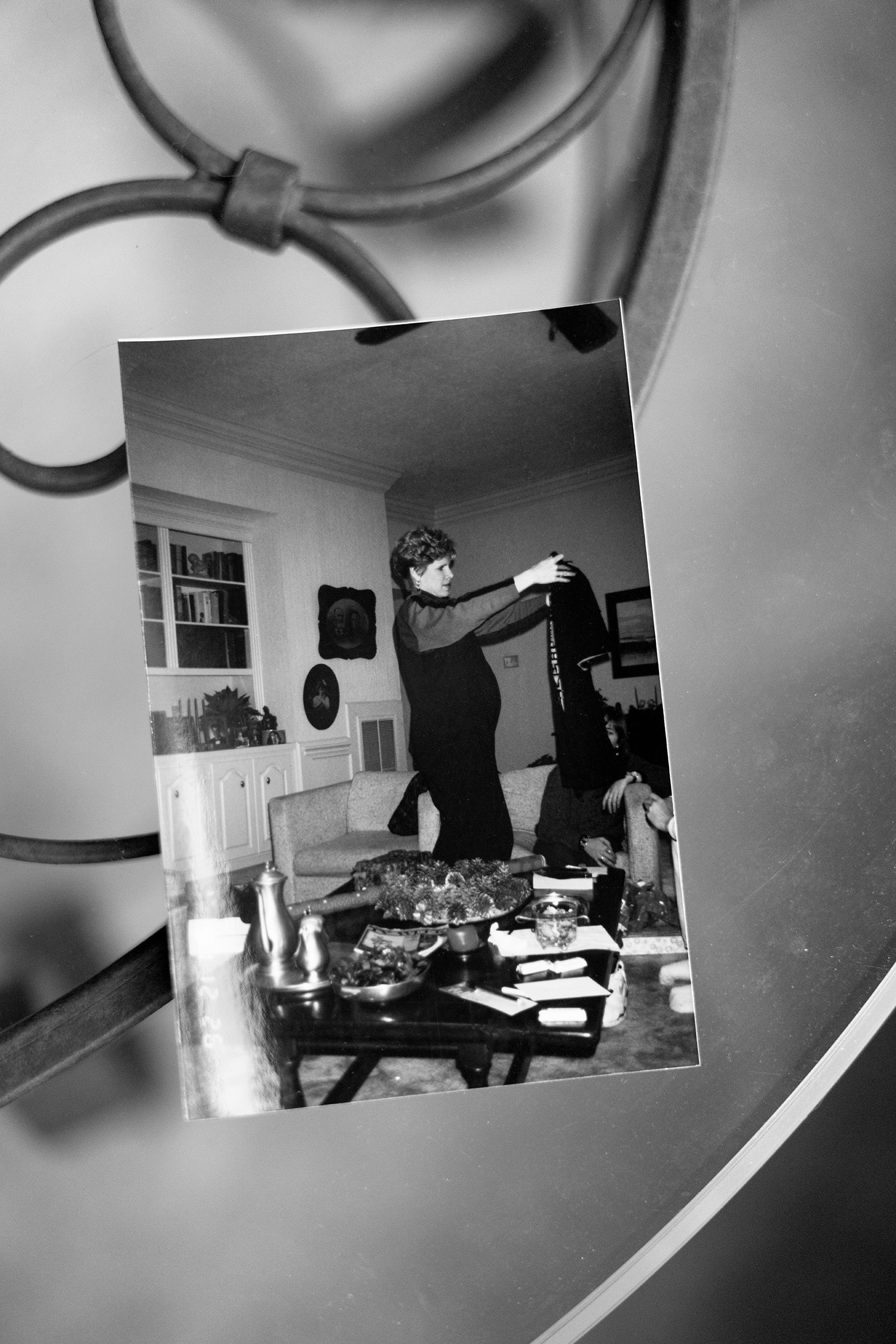
(Courtesy of Cynthia Short) When she took on Richard DeLong’s case, Short was raising two children of her own, and she wasn’t sure she’d be able to hide her revulsion from the jury.
Short wasn’t opposed to the death penalty when she first started practicing law, but as she gained experience in capital cases, she came to doubt that the criminal legal system was capable of consistently producing fair and equal outcomes. Capital punishment is inherently arbitrary. Some defendants have money and seasoned legal teams at trial; others do not. Some prosecutors favor the death penalty and others don’t, meaning defendants might be executed not strictly because of the nature of their offense but because of the side of a state or county line on which they happened to commit it. As she came to understand the capriciousness of criminal justice, Short changed her mind about capital punishment. The experience of representing several defendants whom she believed had been wrongly accused strengthened her opposition.
To defend Rick DeLong, Short knew, she didn’t need to make the jury believe that he was a good man or that he shouldn’t receive a terrible punishment. In capital trials in Missouri, as in most states, juries must return a unanimous verdict for a death sentence to be handed down, so Short needed only to introduce a shred of doubt in a single juror’s mind that her client had forfeited his right to live.
But even that seemed daunting, given the repugnance that she, DeLong’s own lawyer, could not suppress. Short may have wished that she didn’t have to take this case, but it would ultimately change her perspective on criminal behavior and set her career on a new path, taking her from the public defender’s office to a field known as mitigation, then still developing but now a central feature of every legal defense in capital cases. Mitigators are investigators whose mission, now mandated by law and precedent, is the granular search for circumstances that might convince a jury that their clients deserve a lesser sentence; in their most crucial cases, these specialists are the final advocates for a defendant’s life. Short would help pioneer the field and become one of its foremost practitioners. But in January 1999, all she had was a guilty client and bad odds.
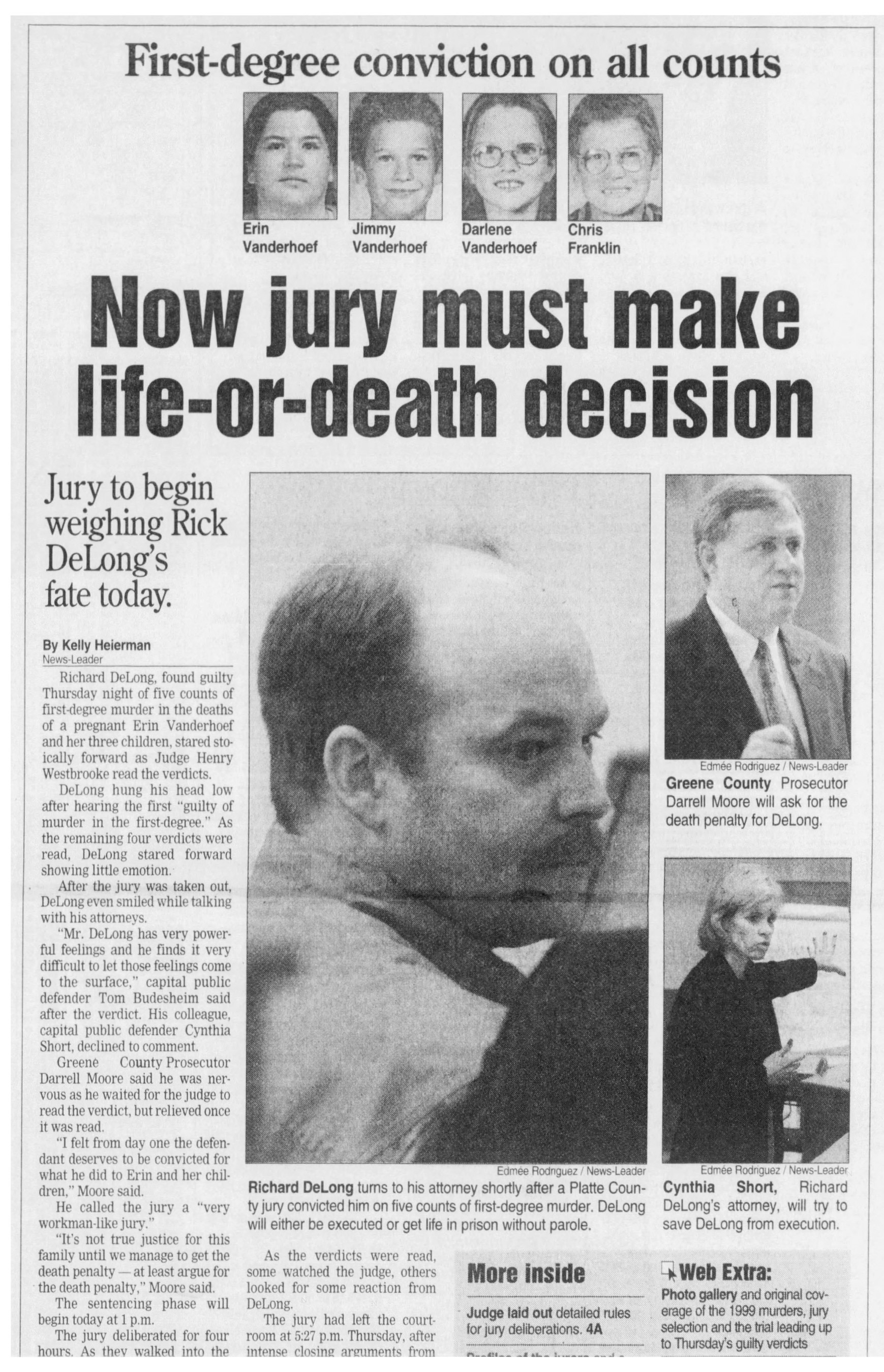
Newspapers.com The front page of the Springfield News-Leader the day after Richard DeLong’s conviction
Doubt is central to mitigation: creating doubt that a person is wholly given over to evil, or doubt that there is no universe—no set of terrible circumstances—in which you yourself might commit a horrific crime. I do believe that there are people who commit acts of perfect evil; a frank appraisal of human nature suggests as much. But those who oppose capital punishment, as I do, oppose the death penalty even for the worst criminals in the worst cases. The reason to stay the executioner’s hand has less to do with the nature of the defendant than it does with the nature of society: Showing mercy is morally beneficial to everyone. The legal system, of course, does not think this way; it needs a solid rationale to hang decisions on, and it must establish that what appears to be abject wickedness, and nothing else, may in fact be more complicated and tragic.
The work of mitigation—searching for reasons a defendant’s life should be spared—is, unsurprisingly, not always well received in the legal community or by the public. As a society, we like to believe that our choices and actions are entirely within our control. Mitigators introduce an element of uncertainty. Their investigations routinely produce information that calls into question whether defendants would have, in better circumstances, committed their crimes at all. To some, this seems like making excuses for criminals.
For Short, now 65, mitigation isn’t about rationalizing crimes. “It is about telling the truth,” she told me. “The crime is real. The harm is real. Nothing I do changes that.” She does not wish to downplay suffering or to pretend that something awful did not happen. The goal of a mitigator, she said, is to understand how a person becomes a criminal. “Every life leaves a trail. Abuse, neglect, poverty, brain injury, trauma, addiction, resilience, acts of kindness, moments of courage—all become a part of that person’s story,” Short told me over email. “Mitigation is not the art of making people less guilty. It is the discipline of making sure we judge them as a whole human being.”
When Short was preparing for the DeLong case, mitigation had only just begun to emerge as a routine component of a legal defense in capital cases. It became formalized not long afterward, with the case of Kevin Wiggins. In September 1988, Wiggins, a Maryland construction worker, was charged with the murder of 77-year-old Florence Lacs. He had been arrested while driving her car and had already used her credit cards and pawned her jewelry. A jury convicted him of murder and sentenced him to death. But Wiggins, who was intellectually disabled and had been sexually abused as a child, appealed the sentence on the grounds that his attorneys had not presented sufficient evidence of extenuating circumstances in his defense. His case went to the Supreme Court, which ruled in his favor in Wiggins v. Smith in 2003.
The Wiggins decision held that capital defendants have a right to an effective defense, including an investigation into circumstances that might explain their crimes—a ruling that fueled the rise of mitigation work. In 2008, the American Bar Association revised its guidelines to direct defense teams in capital cases to include both an investigator, who conducts an independent inquiry into the crime itself, and a mitigation specialist, who is responsible for producing information that might convince a jury that there is something more to a client than their crime suggests.
Mitigators sift through the past and familiarize themselves with all elements of a defendant’s personal history. Fragments of clients’ lives may be strewn across the country or around the world, hidden among scattered documents and scattered memories. Mitigation specialists conduct scores of in-person interviews for each case—with extended family, friends, teachers, coaches, doctors, co-workers—to put the pieces together. The Marshall Project estimates that there may be fewer than 1,000 mitigation specialists nationwide; the majority of them deal with capital cases. About twice that number of people are currently on death row.
Because mitigation specialists often have little time to prepare their cases for trial, they frequently continue their investigations during the long death-penalty appeals process. Legal teams involved in capital cases are typically reluctant to discuss their findings if judicial processes remain ongoing, but at the Mwalimu Center for Justice, a law office in New Orleans that handles capital appeals, mitigation specialists on staff agreed to share information they had uncovered about some of their clients. Benjamin Cole, an Oklahoma man who murdered his infant daughter a few days before Christmas 2002, was found by specialists on his defense team to be schizophrenic; a brain scan revealed a severe lesion. Cole spoke in riddles and frequently broke into song while interacting with his defense team, until his disease became so advanced that he chose to sit in his dark prison cell hoarding religious pamphlets and rotting food while his hair grew matted and his mind decomposed. The mitigators argued that he was too sick to be subject to execution under the Supreme Court’s 1986 decision in Ford v. Wainwright, but state authorities were undeterred. Oklahoma executed Cole in 2022.
Sometimes mitigation, no matter how legitimate, cannot overcome people’s inherent disgust with horrific crimes. Cynthia Short was facing that very possibility.
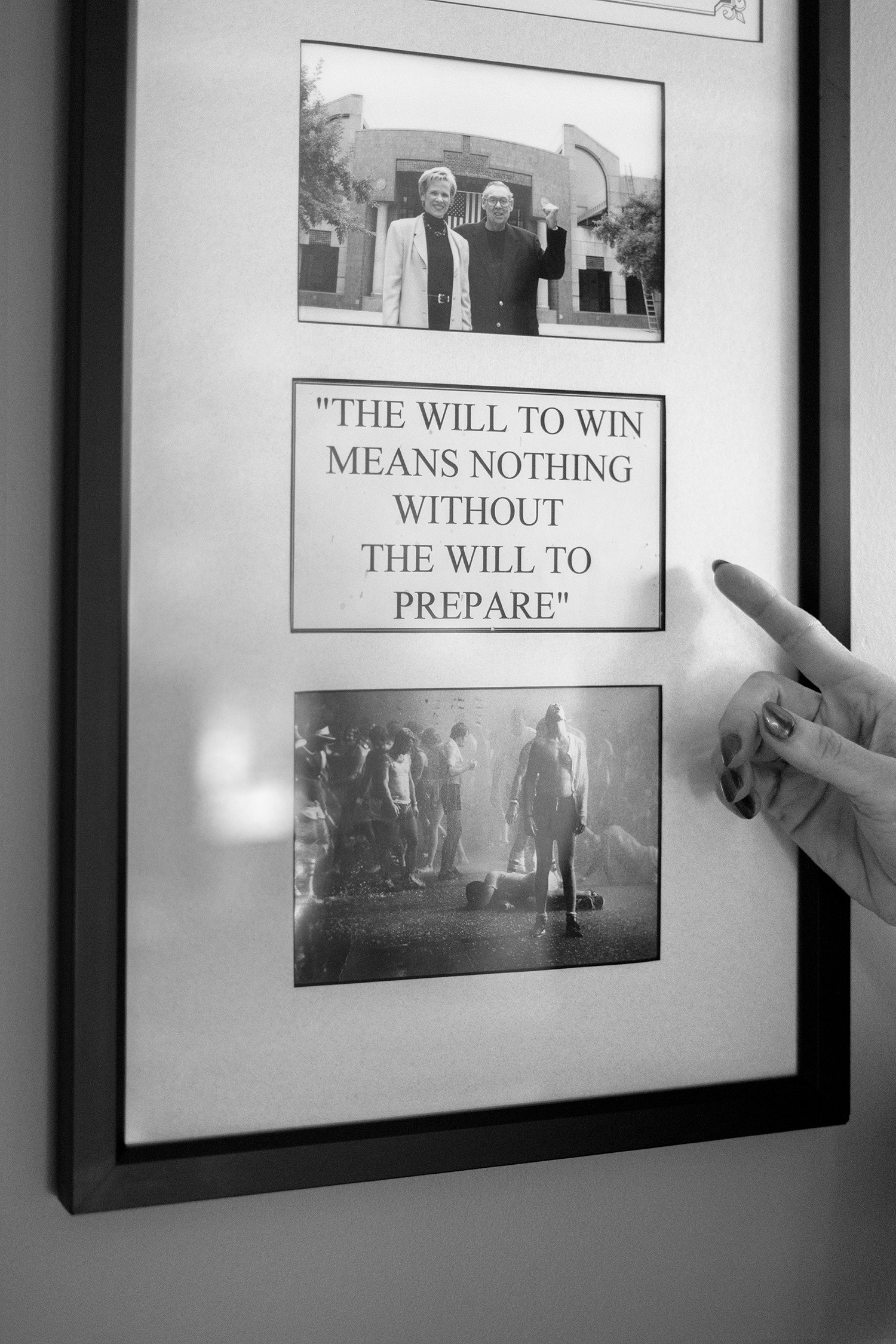
Sky Maggiore for The Atlantic Mitigators familiarize themselves with all elements of a defendant’s personal history.
Sky Maggiore for The Atlantic Short worked on DeLong’s case throughout much of her third pregnancy.
Short still hadn’t looked at the crime-scene photographs when she first met Rick DeLong, a few days after he was taken into custody in January 1999. But she had watched his maniacal taped confession, which would later be played at trial and shared with the Springfield News-Leader. “Now laugh,” he had reportedly said to 8-year-old Darlene Vanderhoef’s lifeless body as she lay thrown over a piece of bedroom furniture with an electrical cord around her neck. Even so, Short insisted on speaking with DeLong in person, with no partition between them and no shackles to hold him in place. He was much smaller than she had expected, thin and balding, and had a scraggly mullet and a dirty-blond beard.
In Short’s experience, clients facing capital charges sometimes open a first conversation by declaring suicidal intent: The path ahead otherwise leads to either death in a prison cell or death in an execution chamber. But DeLong clearly wanted to live. And surprisingly, he was obsessed with the well-being of another person: Stacie Leffingwell, his long-term partner and the mother of his youngest child. Leffingwell had helped him kill Erin Vanderhoef and her children. And she was dying from AIDS. “Everything in that first conversation was what could I do for Stacie?” Short recalled. “How could I help Stacie?”
In a photograph Short has seen, Leffingwell kneels next to DeLong and their infant son on a sunlit lawn, a mischievous smile flashing across her face. They had met in the early 1990s when DeLong was barbecuing in a friend’s backyard in Springfield and Leffingwell, a neighbor, dropped by and struck up a conversation.
Leffingwell was dark-haired, petite, and funny. Born in California in 1967 to a teenage heroin addict, she had dropped out of high school and never learned to read. DeLong and Leffingwell both used drugs, especially methamphetamines. When they met, Leffingwell was HIV-positive, but she didn’t tell DeLong. He himself was the child of a teenage mother. Born in Springfield in 1964, he grew up in poverty and was subjected to vicious assaults by his stepfather. He began using drugs at the age of 15 and was eventually snorting or smoking meth several times a week. He got by on intermittent jobs as a mechanic and manual laborer.
These details and more were revealed as Short worked with a mitigation specialist and former welfare caseworker named Kathy Schneider. The pair traveled six hours from Kansas City to Springfield and back each week to interview everyone they could find who knew DeLong. They interviewed people in parks and churches, and once went into a drug house in the middle of a snowstorm. Every month, Schneider went to see DeLong in jail, where she also interviewed his mother and sisters. Schneider created a history of DeLong’s family going back three generations, documenting the life of his biological father, a man known as Howard Littles, and his stepfather, Buzz, who had been diagnosed as mentally ill and institutionalized.
DeLong was a twice-divorced father of four when, in 1996, he was introduced to Erin Vanderhoef, who worked at a McDonald’s in Springfield. Vanderhoef had also suffered a life marked by poverty and loss, and she took a liking to DeLong right away, confiding in others that she was interested in him romantically, even though he was already involved with Leffingwell. They formed a close friendship.
DeLong had a child with Leffingwell, a son born in 1997 whom they named Lyle. Leffingwell had tried to stay clean during her pregnancy, but she resumed using drugs after the baby was born. She disappeared for a time, leaving DeLong alone to care for their newborn. Vanderhoef stepped in to help. When Leffingwell came home, she was in treatment for depression. DeLong and Vanderhoef by then were sleeping together. DeLong’s place was often in a state of chaos and frequented by drug users. Despite the infidelity and the strangeness of the arrangement, Leffingwell and Lyle moved in with Vanderhoef and her three children. A volatile love triangle developed.
In February 1998, DeLong and Leffingwell abruptly moved into a motel in Joplin, roughly 70 miles west of Springfield, near the Kansas border. But DeLong still saw Vanderhoef, and by summer she knew she was pregnant. The news sent Leffingwell into a bout of jealousy and deeper into addiction. That July, she was admitted to a hospital for pancreatitis and stayed for three weeks. She weighed less than 90 pounds. Leffingwell and DeLong told family and friends that she had stomach cancer. In fact, she was dying of AIDS. In September, DeLong himself was diagnosed with HIV. He began using meth every day.
In the days leading up to the murders, DeLong and Leffingwell went on a meth binge. On the night of January 18, 1999, Leffingwell was high and distraught, racked with fear that Vanderhoef was going to replace her. DeLong, for his part, was furious with Vanderhoef for messing up his relationship with Leffingwell. The couple came to the shared belief that Vanderhoef presented a problem, and Leffingwell demanded that DeLong fix it—permanently. Early the following morning, DeLong drove from Joplin to Springfield to kill Vanderhoef. Leffingwell rode with him, as did Harold “Bobby” Lingle, a friend and neighbor who had agreed to help carry out DeLong’s plan in exchange for an eight ball of meth.
At around eight that morning, they pulled up to Vanderhoef’s three-bedroom house. Lingle, who had met Vanderhoef before, lured her out of the house on the pretext of a grocery errand so that DeLong and Leffingwell could wait and catch her by surprise when she returned. Then DeLong slipped inside, where he found Vanderhoef’s three children getting ready for school. Wired on meth, DeLong killed them one by one. When Vanderhoef came back, Lingle told her that the children had been sent to their rooms. Then he and Leffingwell helped DeLong subdue and murder Vanderhoef. It was a cold mercy that she died thinking her children were still alive.
DeLong, Leffingwell, and Lingle were quickly apprehended. Leffingwell died of AIDS before the year was out. The lead Greene County prosecutor, Darrell Moore, decided not to seek the death penalty against Lingle, who was said to have an IQ of 72; he was eventually sentenced to life in prison without parole. But Moore was adamant about bringing capital charges against DeLong.
A series of delays pushed DeLong’s trial to June 2001. Public furor in Springfield ran hot, and press coverage was intense. When Short stood before the jurors, the first thing she said was that DeLong was unquestionably guilty. She acknowledged the horror and disgust that they were surely feeling. “There are things that we need to do in this courtroom,” she recalled telling the jury. “And one of those things that you’re going to need to do is, you’re going to need to really look closely at his mental state. That will be your job.”
But it would have to be a job mainly for phase two—the sentencing phase—rather than phase one, the guilt-or-innocence phase. No one was surprised when, on June 28, after a week and a half of testimony and less than four hours of deliberation, the jury convicted Rick DeLong on all five counts of murder.
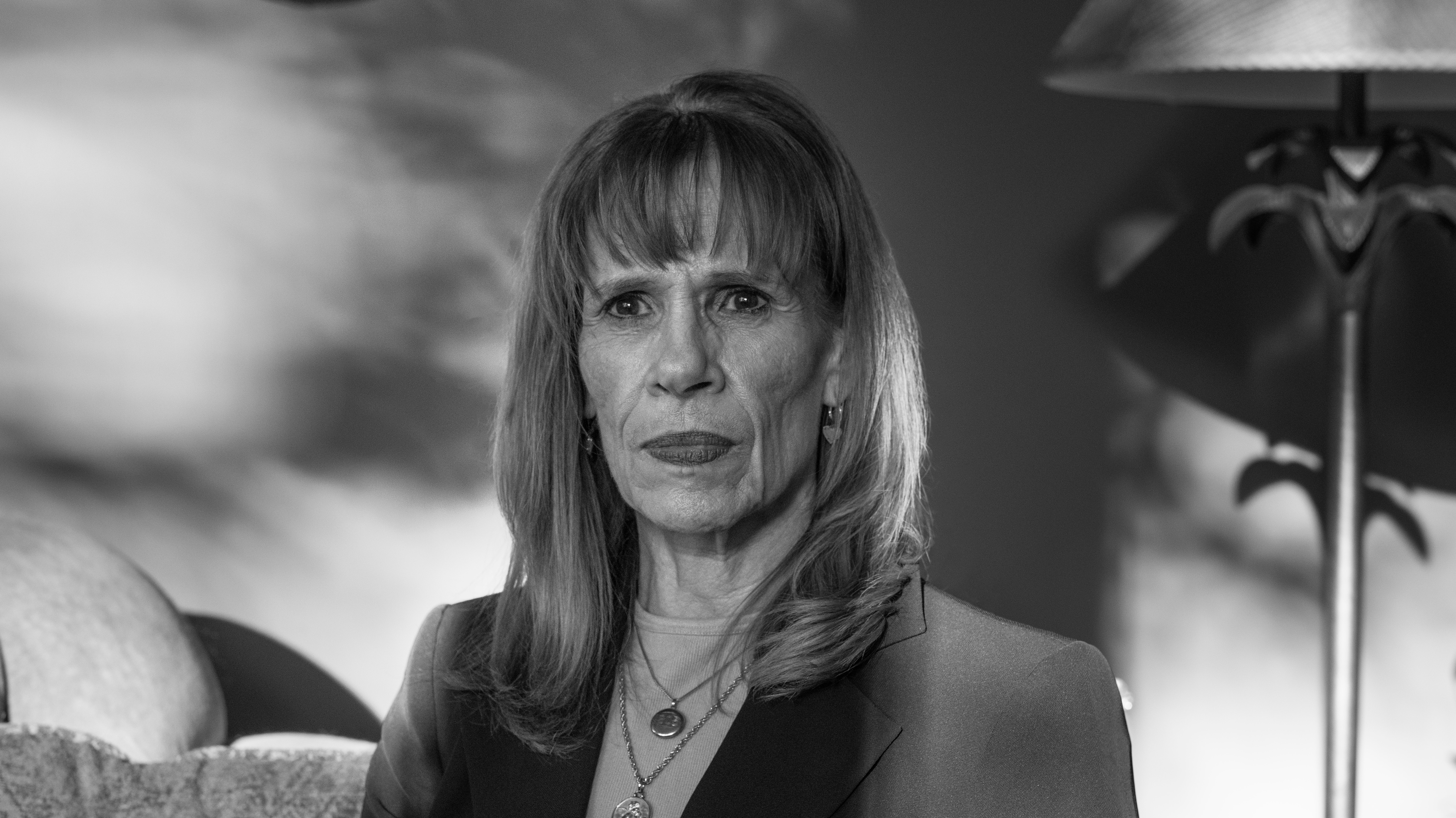
Sky Maggiore for The Atlantic “Mitigation is not the art of making people less guilty,” Short said. “It is the discipline of making sure we judge them as a whole human being.”
Short knew that the sentencing phase would be difficult. She knew this in part because she had used her own extended family and friends—some of whom were highly conservative and generally skeptical of the defendants she represented—as test subjects, a kind of informal focus group.
When Short and her team had finished their mitigation work, well before DeLong’s trial was scheduled to begin, they collated the findings into spiral-bound books, each more than 100 pages long. Inside were detailed descriptions of DeLong’s crimes, a DVD of his confession, photographs of the crime scene, and a photograph of Vanderhoef and her three children, young and bright and beautiful, posed on a bench in front of their mother, who is holding Lyle in her arms. The books also contained a detailed account of the mitigating factors in DeLong’s case, including his abusive stepfather, his drug addiction, and his HIV status. Scattered throughout were questionnaires asking readers for their reactions at various stages. The prompts had a clinical feel, as though Short were asking for opinions on a company’s new logo or a politician’s campaign slogan, not the killing of three children and a pregnant woman. If you did choose to look at the photographs, please describe what you learned from them. But it was the best simulation of a jury’s deliberation that Short could create.
The responses from her family and friends were not encouraging. At the beginning of the book, readers were asked to gauge their support for capital punishment in general. One reader put her support at a 5 on a scale of 1 to 7, but after reading through the mitigation evidence, this same woman put her support for executing DeLong specifically at a 6. Her views were aligned with those of the prosecutor, Darrell Moore, who told reporters in advance of the sentencing phase that he and the judge had received numerous phone calls from angry citizens who wanted DeLong to die for his crimes. In front of the jury, Moore read a letter written by Vanderhoef’s brother in which he told DeLong, “You do not deserve the right to live, in a prison or any other place. You are not a man, you are a coward and an animal.”
On DeLong’s behalf, Short introduced the array of mitigating information that she and Kathy Schneider had compiled. Some of the material had been presented in phase one—a tactic known as front-loading. The idea was not to try to sway jurors on the question of guilt or innocence—in this instance, there was nothing to be done—but to prepare the jury for arguments that would be presented again, and enhanced, later on. Short was aware that much of the information could be seen as all too familiar: When it comes to defendants facing the death penalty, a life like DeLong’s is normal;very few people guilty of aggravated first-degree murder have peaceful, healthy backgrounds. But two aspects of his story had taken Short by surprise. First, as she combed through the police files, Short had noticed a coincidence: Mark Deeds, the officer who had coaxed the confession out of DeLong and emerged as the hero of the investigation, had encountered her client before.
In 1991, when DeLong was 27, he was arrested for selling cocaine and marijuana to Deeds, who was then working undercover for the Springfield Police Department. DeLong was so deeply enmeshed in the local drug culture that Deeds saw an opportunity. According to the testimony of DeLong’s former defense attorney, who negotiated a plea deal, Deeds threatened DeLong with decades in prison unless he began working as an informant. DeLong agreed. Police and prosecutors paid DeLong for information and granted him leniency on subsequent drug-related charges. At one point, his bond on arrest was reduced from $75,000 to $2,500. At another point, he received a sentence of five years’ probation for charges that ought to have resulted in prison time.
The policies of the Missouri Board of Probation and Parole specifically prohibited offenders on probation from serving as police informants, but the department kept working with him anyway. Because of his protected status, DeLong continued to get little to no prison time when he was caught using. His addiction deepened. By the time of the murders, DeLong had helped Deeds and the Springfield Police Department clear a number of high-profile narcotics cases, even as he himself disintegrated from years of dependence. His career as a police informant came at the expense of any attempt at rehab—the one had simply precluded the other. Given all of this, Short asked, did the police bear any responsibility for DeLong’s condition?
The second discovery that Short and her team made came while going through DeLong’s medical records. A week before the murders, he had begun taking Sustiva, an experimental drug that can help slow the progression of HIV but whose side effects include dizziness, insomnia, confusion, abnormal thinking, amnesia, agitation, and hallucinations. Patients abusing drugs or who have preexisting mental illness are at increased risk of developing neurological symptoms. And the drug’s side effects tend to be most severe when a patient is just starting to use the drug, as DeLong had been.
The witnesses for the defense included an addiction specialist who testified that DeLong’s meth use easily could have contributed to a shattered mental state; a medical specialist who confirmed that Sustiva is known to induce delusions, hallucinations, and psychosis, and that the drug combined with meth could have disastrous results; and a psychiatrist who testified that DeLong had likely been in the grip of a psychotic episode when he carried out the murders.
Short did not know what to expect when the jury began to deliberate. The new information had raised provocative questions about a case whose conclusion had once seemed preordained. In the end, the jury declined to impose the death penalty. It instead sentenced DeLong to life without parole.
Sky Maggiore for The Atlantic In Short’s 23 years as a full-time mitigation specialist, she has worked with approximately 200 clients, none of whom has received the death penalty.
Sky Maggiore for The Atlantic Cynthia Short in her home office in Kansas City, Missouri
In 2003, Short left her job with the Public Defender’s Office due to a round of funding cuts, and decided to become a full-time mitigation specialist. In the 23 years since then, she says that she has worked with approximately 200 clients, none of whom has received the death penalty. Her attitude toward the field, as a practical matter, can be simply put: If mitigators are able to present a full picture of a defendant’s life, then no reasonable jury will return a verdict of death, not even for the most brutal killer. Her job is to persuade jurors to bestow something that she feels everyone deserves. “Mercy is not something that is earned,” she said to the jury during DeLong’s trial. “Mercy is something that is given.” Her words were printed in large display type in the Springfield News-Leader’s front-page story about DeLong’s sentencing.
Short is well aware that much of the public—including thoughtful citizens and community leaders—finds mitigation not only unjustifiable but incomprehensible. Still, she cannot set aside her principles or her obligations: Every defendant deserves a full measure of effort, even if onlookers deem it a waste of time and money for people who deserve nothing. She is sustained by some of those she encounters along the way. Several weeks after DeLong’s sentencing, Short received a note from James Spindler, the Greene County medical examiner. She had cross-examined him on the stand, and had probed him about his own struggles with drugs. Addiction, she suggested, was not something that happens strictly to evil and hopeless people. That resonated with Spindler, who wrote that although he had come across a number of dangerously antisocial defendants in his career whose executions he would by no means oppose, Short had convinced him that DeLong was not a “sociopath beyond redemption.”
The past few years have been among the busiest in Short’s career as a mitigator. After a federal moratorium on new death sentences during the Biden administration—and the mass commutation of most federal death sentences already handed down—the Trump administration has reinstated the federal death penalty. Trump’s former attorney general Pam Bondi encouraged states to aggressively pursue capital punishment and take advantage of foreshortened appeals processes that would fast-track executions. Mitigation specialists have seen their workload increase in volume and urgency.
Short’s determination to try to see beyond the worst of what her clients have done struck me as rare and admirable, and I kept it in mind when I picked up the phone to call the Missouri prison where Rick DeLong is incarcerated. I have spoken with many people who have committed murder, and many people on death row. Capital punishment, and the victims and perpetrators of capital crimes, have long been a focus of my reporting. But I had never spoken with a child killer before.
A prison receptionist answered, and after a pause put DeLong on the phone. His voice was both hoarse and soft; his disease is advanced now, and he has had several heart attacks. He told me what his life had been like before he committed the murders, how he loved working as a mechanic—“There was nothing I couldn’t do to a car,” he said. He recalled his stepfather, and how abusive he was, and how the meth had made the bad moments more bearable. Meeting Leffingwell had made things better, too, because she came from the same world, and for once he felt understood. They had loved going to rodeos and carnivals together, a kind of fantastic escape.
DeLong talked about his five children, only three of whom will speak with him. He also talked about his grandchildren, though he has seen them only in photos. His son Lyle is in prison, convicted of murder in 2022 and now serving a 32-year sentence. DeLong told me he had loved being a father to Lyle—“That’s my joy,” he said. “I took him everywhere.” He recalled bringing him on fishing trips, and once, in a misguided display of devotion, buying a heavy-duty backpack, cutting holes in it for arms and legs—a makeshift infant carrier—and taking him for rides on his motorcycle. Now the boy was a man, and had followed his father behind bars.
As for his own crimes, DeLong told me that he was glad he’d been caught, and that he knows he deserves the sentence he received. I could not forget that the thin voice on the other end of the line belonged to a man who had taken five lives. It was also the voice of a frail 61-year-old slowly dying in prison. DeLong remembered Cynthia Short fondly, though he told me that he had initially doubted that a woman would be able to see past what he had done to a mother and her children. But Short, he admitted, had understood everything: the crime, his life, how he might appear in the eyes of a jury. And she knew what it would take to save him. He didn’t have much of a life anymore, but thanks to this woman, he was alive. “You couldn’t ask for better,” he told me. “There’s no way.”
Several winters ago, a few weeks before Christmas, I went to confession. The parish close to work was hosting a reconciliation service, meant to prepare the faithful to celebrate the birth of Christ. A dozen or so priests were scattered across the cathedral. Penitents lined the aisles. Whispers of contrition and pardon filled the air.
The Catholic Church counsels believers to seek confession regularly—at the very least, once a year. I hadn’t been back in a few. So in addition to feeling spiritually unmoored, I was worried about how the priest would react to hearing about my hiatus. But when I told him, he simply smiled and said, “Welcome back.” His response put me at ease then, and it helped change how I approach the sacrament now: less as a nerve-racking ordeal, more as a moment of mercy.
Sacraments such as confession are central to Catholicism. Through them, the Church teaches that simple actions—having a conversation with a priest, eating bread and drinking wine—are, with grace, tangible encounters with God. For the past year, the Trump administration has been making it harder for Catholics at migrant-detention centers to have those encounters.
The most recent example came to light this month, when the Archdiocese of St. Louis filed a federal lawsuit over the visitation policy at Saint Genevieve County Jail in eastern Missouri. According to the claim, the 10 priests who minister at the jail aren’t allowed to celebrate Mass. The suit also alleges that priests are permitted to visit migrant detainees just once a week, during a four-hour period, and that the jail’s “no contact” security policy lets the clergy speak with detainees only over the phone, through a glass partition. As a result, the approximately 150 migrants at the jail at a given time—most of whom are Catholic, according to the archdiocese—have been going without their religious needs for weeks. Since the middle of 2025, according to the lawsuit, Saint Genevieve has housed approximately 3,000 people.
This isn’t the first time that Catholic clergy have complained that the government is preventing them from ministering to detained migrants. Last year, the Florida detention facility known as “Alligator Alcatraz” kept priests from visiting or offering Mass to detainees for a month, until an agreement was reached between the Archdiocese of Miami and state authorities. In May, after a six-month legal fight, a Catholic nonprofit won a preliminary injunction to let Catholic priests celebrate Mass and administer sacraments at the Broadview ICE processing center outside Chicago. And the administration’s immigration crackdowns seem to be hurting the Church more broadly. Dioceses across the country have reported decreased Mass attendance among Spanish-speaking parishioners who fear detention. ICE has reportedly conducted raids near Catholic churches during Mass hours.
The Department of Homeland Security has denied allegations of wrongdoing at Saint Genevieve. In a statement to multiple outlets, the agency said that the jail is not an ICE facility—although Saint Genevieve is listed as a detention facility on ICE’s website—and that it “ensures detainees are accommodated with religious services.” As described in the lawsuit, however, those accommodations disregard the religious significance of the Catholic sacraments.
Consider confession. The suit claims that at Saint Genevieve, conversations between detainees and priests are not private, and the phone lines that they use to talk may be monitored. These policies may be in place for security reasons, but confession is meant to be a private exchange between penitent and priest, who acts in persona Christi—in the person of Christ. Confession is “one of the most intimate, profound acts that someone can do,” David Inczauskis, a Jesuit priest who ministers at the Broadview ICE facility, told me. He added, “To state very specifically the sins that they have committed and to ask humbly for pardon and for peace” requires a “level of vulnerability” that is “very high.”
An even bigger problem comes up with the sacrament of the Eucharist, or Communion. The complaint includes an email from a deputy at the local sheriff’s office suggesting that priests “provide an unopened, individually wrapped Communion wafer” to a member of the detention center staff, who could then hand it to a detainee. This way of distributing the Eucharist would be “sacrilegious,” as Archbishop Mitchell Rozanski of St. Louis recently told Reuters. The Church teaches that the Eucharist is the “Body, Blood, Soul, and Divinity” of Christ—not a symbol, but God’s real presence. For that reason, Inczauskis said, the Church distributes the Eucharist through either ordained ministers or specially trained laypeople.
For much of the past quarter century, many conservative figures have taken up religious liberty as an essential cause. The Trump administration purported to continue these efforts when it established a commission last year meant to identify “emerging threats” to the exercise of faith. In June, the commission released a draft report claiming that “in recent years, Americans from all religious backgrounds have faced increasing persecution for their religious beliefs.” Some of the issues discussed in the report include rising anti-Semitism, how gender and sexuality is taught in schools, and conscience protections for health-care workers who object to participating in abortions or assisted suicides. The report said nothing about the administration’s migrant-detention practices.
When the commission was announced, my colleague Elizabeth Bruenig wrote that “Christians shouldn’t conclude” that it would “necessarily defend their interests.” That warning seems prescient a year and a half later. At Alligator Alcatraz, Broadview, and Saint Genevieve, the Catholic Church has shown that it believes that detainee access to the sacraments matters deeply. Given the choice between restricting immigration and protecting the religious liberty of migrants, the administration, too, has demonstrated where its values lie.
Elon Musk revealed, in a dramatic demonstration on Thursday night at SpaceX’s rocket-testing facility near Waco, Texas, a new “flying” Tesla Roadster prototype. The car hung upside down on a curved track, then performed aerial stunts—including jumping over a Tesla semi, Evel Knievel–style—using air-powered thrusters designed in collaboration with SpaceX. The demo was impressive despite Musk’s awkward manner, which in the context of a supposed literal flying car came off as nerdy charm.
After revealing the car, Musk paraphrased a quote from Peter Thiel, his former PayPal partner: “We wanted flying cars, instead we got 140 characters.” The line, which was part of a 2011 “manifesto” published by Thiel’s venture-capital firm Founders Fund, was intended to indict the feeble ambition of the technology industry. Instead of solving big, important challenges, the world’s smarts—and money—had been devoted to small-potatoes social-internet start-ups such as Twitter.
One obvious oddity of the line—which has since been removed from the manifesto—is that Founders Fund’s most important investment at the time was Facebook, a social-network platform. But another is the idea that anyone actually wanted a flying car for real. That ambition may never have represented an actual dream. Like a jet pack, a flying car represents not just the future but the idea of individual freedom delivered through technological conquest.
Taken at face value, a flying car is not an impressive dream—or at least it hasn’t been since the Wright brothers more or less attained it. Automobiles have always moved on the ground by rolling via motor. The earliest practical airplanes also rolled until they flew (and hopefully landed again). An airplane is, in a way, merely a car with wings.
In 1917, Glenn Curtiss built literally that: His Curtiss Autoplane was an automobile with detachable wings and a propeller. It never really flew effectively, but the idea persisted. Waldo Waterman’s 1937 Arrowbile was more successful at flying, though it wasn’t commercially viable. Many more actual realizations of the supposed dream of flying cars appeared in the ensuing decades. The most famous might be the Taylor Aerocar, which was certified by the federal government in 1956 but was never mass-produced.
Around that time, future-oriented science-factual magazines such as Popular Mechanics frequently rehearsed the vision of the personal aircraft. By then, cars were ordinary and mainstream in America, having displaced collective transportation such as trains and streetcars. The automobile had become a more abstract kind of vehicle, one that embraced and extended personal autonomy through the power to move, without effort, anywhere else—and to do it alone.
But one thing still cramped the automobile’s capacity to deliver that freedom in full: roads. Cars needed them. The open road, of which America had a seemingly endless frontier, somehow was never enough. The best way around those roads was through the air above them; as Emmett Brown told Marty McFly inside one of fiction’s most memorable flying cars, “Roads? Where we’re going, we don’t need roads.”
The stifling oppression of the ground, traversed at any speed, was also an old vexation. In 1923, Hugo Gernsback—sometimes called the father of science fiction thanks to his founding Amazing Stories, an early magazine devoted to the genre—imagined a gyroscopic Helicar that would release travelers from the tyranny of New York City’s newly car-congested streets. A few years later, in 1927, Fritz Lang’s film Metropolis colonized the city’s airspace with small flying vehicles. By 1962, the children’s cartoon The Jetsons had fused those precursors with mid-century Popular Mechanics populism, making the flying car a ubiquitous commuter vehicle.
Over the decades, many attempts to engineer, manufacture, and market a flying car have been undertaken, though none has succeeded. In 1973, Henry Smolinski created the AVE Mizar by attaching Cessna wings to a Ford Pinto; it killed Smolinski during a failed test flight. From the 1960s until the company went dormant in the mid-2010s, Paul Moller made numerous attempts to develop the Skycar, a personal airplane that took off and landed vertically. Around that time, Terrafugia began promising a flying car called the Transition, which remained only a few years away for years—until the company shut down in 2021. “We enter production in 2028,” Musk said of the Tesla Roadster in this week’s Texas demo, before adding, “Actually.”
By all appearances, the Roadster is not a flying car of the same sort as its real and fictional precursors. The vehicle’s air-fan system seems first and principally designed to give the car’s wheels better traction on the ground, which is part of why it can go so fast—it went from zero to 60 miles per hour in less than a second during the unveiling. (Rocket thrusters attached to the back of the thing also help.) The car does not fly so much as it performs aerial acrobatics such as barrel rolls and standing jumps.
Those deeds were impressive as heck. The car certainly appeared to fly, if only for a moment, in the manner of a daredevil. Whether or not it can or is intended to fly in the manner of a traveler or commuter is not yet clear. Watching the Roadster do its thing—unpiloted, to make sure the demonstration didn’t “kill anyone,” as Musk put it—I imagined wealthy gearheads wreaking havoc via ill-fated jumps and spins on suburban blocks instead of salarymen conveying themselves to work and back.
Subdued by decades of failed automobile-airplane hybrids, and perhaps exhausted by Musk’s dubious intentions, some coverage of the Tesla demo has observed, rightly, that substantial regulatory hurdles await any vehicle that leaves the road and enters airspace. But bureaucratic red tape isn’t the main reason the flying-car dream hasn’t come to pass.
Rather, it’s because the dream works better as fantasy than reality. When urban modernism began to feel cramped, the skies rising above it offered the possibility of new freedom. After the continent was settled, the roads that traversed it became new prisons from which airspace might allow escape. Once the individual freedom of the automobile became universal, and the roads clogged with thousands of varmints in the rat race, the blue sky above looked like liberty. George Jetson is a cog in the proverbial machine who rises above insignificance by flying to work unfazed, where he revels in the meaninglessness of his job pressing a button to make actual machine cogs. Even Thiel’s mention of the flying car was symbolic, a paradigmatic example of the kind of dream worth dreaming, not an actual one worth waking up to.
Despite the Tesla Roadster’s truly spectacular capabilities, at least as a one-off demo, it fulfills the century-old flying-car ambition on a technicality—as a vehicle for a trick driver rather than a motorist aviator. Perhaps the dream this car truly realizes is not yours or mine, but Elon Musk’s: to claim to have delivered what a century of his forebears could not.
This is an edition of The Wonder Reader, a newsletter in which our editors recommend a set of stories to spark your curiosity and fill you with delight. Sign up here to get it every Saturday morning.
There’s a lot to love about fall: the changing leaves, the crisp air, the return of cozy sweaters, and, of course, pumpkin-spice everything. As the days grow shorter and the weather cools, the season offers plenty of reasons to slow down and indulge in life’s little comforts.
Although fall has its familiar rituals, there are always new ways to enjoy it. Maybe you’re looking for your next great read, a recipe to try on a chilly afternoon, or an excuse to spend more time outdoors before winter arrives. To help you get into the autumn spirit, explore some of our favorite Atlantic stories and recommendations for the season.
Fall Favorites
Six Books to Read by the Fire
Each of these titles is a perfect companion while the days grow imperceptibly longer.
No one knows how big pumpkins can get. A decade ago, the world’s heaviest pumpkin weighed 2,000 pounds. Now the 3,000-pound mark is within sight, Yasmin Tayag wrote in 2024.
My colleague Isabel Fattal recently asked readers to share a photo of something that sparks their sense of awe in the world. “We were lucky to head East before the storm because the foliage is incredibly colorful,” Lynn D. from Moretown, Vermont, shared. “This photo was taken from the Kancamagus Highway in New Hampshire.”
We’ll continue to feature your responses in the coming weeks.
What has the Islamic Republic done for Iranians? Under its rule, citizens have suffered decades of economic decline, sociopolitical repression, and international isolation. Now the country is engaged in an open-ended war. In almost every way, Iranians are doing much worse than they were 20 years ago.
Not even the regime’s propagandists can deny these realities. Many of them therefore insist that the Islamic Republic’s failures are justified by its unbending resistance to American imperialism. Nearly all of Iran’s economic suffering, defenders say, can be explained as the price of this heroic stance, to which the West has responded with sanctions that have crushed Iran’s standard of living.
But the story of the Islamic Republic’s relationship to American power, and of how that relationship has and has not served the cause of Iranian sovereignty, is more complicated.
Iran’s prerevolutionary ruler, Shah Mohammad Reza Pahlavi, was an anti-communist autocrat who prized ties with the United States. His successors condemned him as an American stooge and claimed to have freed Iran from its slavish dependence on the “Great Satan.” In its early days, the Islamic Republic signaled independence from both the Soviet Union and the United States with the slogan “Neither East nor West,” which still adorns the facade of the Ministry of Foreign Affairs headquarters in Tehran. The foundational anti-imperialism of the new regime was also a promise that Iran would fight for the “oppressed of the world,” as well as a call to resist cultural absorption by the West—a fate one revolutionary intellectual decried as “Westoxification.”
The Islamic Republic has failed in its anti-imperialism by all of these measures, especially as compared with the monarchy. Pahlavi was an American ally who owed his throne in part to a CIA-abetted coup that elevated him over a popular prime minister in 1953. But he sustained Iran’s independence by skillfully playing the United States and its rivals, the Soviet Union and the Eastern Bloc, off of each other when doing so suited Iranian interests. The Soviets helped build Iran’s ironworks and welcomed the shah as a rare royal to pay a state visit to Communist Moscow. Pahlavi’s slogan could well have been “Both East and West.”
The shah backed the United States in some Cold War battles, but he also threatened to sign security deals with Moscow when he wanted better terms from Washington, and he offered to mediate the conflicts in the Middle East and in Vietnam. In most ways, Pahlavi’s foreign policy was closer to that of the Non-Aligned Movement countries than to that of either Cold War bloc. In the ’70s, scholars of Iranian foreign policy described Tehran as following “defacto non-alignment.” By the end of the shah’s rule, Iran had considerable international influence and was respected by both superpowers, not only as a sovereign country, but also as a regional power. You might even say that Pahlavi was a successful anti-imperialist—not in the sense of having stuck a finger in the eye of the great powers, but in the sense of having effectively secured Iran’s sovereign interests rather than being forced to capitulate to those he cooperated with.
The revolutionaries who toppled the shah accused him of servility to Washington. They pointed to the coup that had cemented his power in 1953 and halted the nationalization of Iran’s oil resources. But in fact the monarchy had restored Iran’s sovereignty over its oil industry in 1973. They pointed to a 1964 agreement with the United States, ratified by the Iranian Parliament, that gave U.S. military personnel immunity from local prosecution. But such agreements were common around the world and hardly represented Iran’s “capitulation,” as its critics claimed. The shah was in any case far from passive in his relationship with Washington and worked to improve his position.
The monarchy’s foreign policy belonged to a long tradition of efforts to extend Iran’s independence. Well before 1979, Iran had spent centuries fending off the designs of the British and Russian empires. Standing up for the country’s sovereignty was the work of generations of Iranian statesmen, just as it was for their counterparts in other countries of the global South. But not every Iranian government has been equally successful at it. The one that came to power in 1979—the Islamic Republic—has been manifestly terrible.
The Islamic Republic has not prioritized classic anti-imperialist goals. Among these is improving the economic position of postcolonial states, as set forth in the New International Economic Order that the United Nations General Assembly adopted in 1974 (and that Iran voted for). The Iranian government since 1979 has rarely prioritized such goals. The former supreme leader, Ayatollah Ali Khamenei, reportedly boasted that he didn’t care about his people’s welfare, just about how religious they were. (His office has denied this.) He thus preferred to fight the West rather than attend to his people’s needs—even basic ones, as, for example, in 2021, when he refused to import COVID-19 vaccines from the United States, a decision that likely cost thousands of Iranian lives.
The Islamic Republic has pursued an ideological campaign against the United States and other Western countries, not just for being imperialist, but also for being, according to Iran’s Islamist standards, licentious and morally depraved. Iran’s rulers frame these objections as opposition to cultural imperialism, but in practice they have become a pretext for domestic repression. The regime’s austere, draconian version of Islam is less a celebration of Iran’s endogenous culture than a suppression of its traditional creativity.
In the name of anti-imperialism, Iran has quixotically attacked the international order without making it any fairer for itself or others. In fact, Iran’s actions have put the country at the mercy of foreign powers. The Islamic Republic committed itself to the pursuit of a nuclear program, on the grounds that this would buttress its sovereignty and demonstrate its independence from imperial diktats. Instead, its nuclear intransigence incurred sanctions from the United States and Europe as well as the UN Security Council, with support from Russia and China. Iran’s involvement in terrorism and international crime (including drug running and counterfeiting) has made it one of only three countries, alongside Myanmar and North Korea, on the blacklist of the Paris-based anti-money-laundering outfit Financial Action Task Force. These measures have interfered with Iran’s ability to collect payments for its energy exports, even from friendly countries, such as neighboring Iraq. Sanctions have so weakened Iran’s position in trade that it is selling its oil at a discount to China.
The regime’s proponents will argue that the country is a victim of foreign-imposed sanctions. But the sanctions are the result of Tehran’s choices, which have prized refusal and defiance over actually improving Iran’s stake in the international order vis-à-vis the great powers that might seek to dominate it. The world abounds in examples of better strategies. Many of those involve sustaining ties with competing superpowers as a hedge against domination by any one of them. Nonaligned countries such as India, heir to a proud tradition of opposing colonial dominance, have pursued this course. Turkey remains a key NATO ally, but it has managed to play an independent role in Ukraine while maintaining relations with Russia and the United States. Saudi Arabia and the United Arab Emirates have aligned with the West on many issues while nurturing significant trade ties with China. Even Argentina’s right-wing president has toned down his anti-China rhetoric for economic reasons.
In contrast, Iran’s foreign policy remains ideologically defined, and the country suffers from what the political scientist Mohiaddin Mesbahi has called “strategic loneliness.” At the outset, the revolutionary regime rejected both East and West. But in recent years, it has tried to draw closer to Beijing, only to discover that China sees Western allies, such as Saudi Arabia, the United Arab Emirates, and even Israel, as better investment prospects. Until this year, Iran’s closest partner was the socialist government of Venezuela—but that was an alliance of desperation, born of both regimes’ isolation. Then the Venezuelan strongman Nicolás Maduro was overthrown by the United States.
Iran has failed to secure effective sovereignty for itself and to deliver on its promise of reducing imperial dominance globally. Instead of helping the “oppressed,” it has become a scourge to the sovereignty of other countries. Throwing away Iran’s traditional policy of neutrality in foreign conflicts, Khamenei robustly backed Russia’s invasion of Ukraine and equipped Moscow with Iranian drones. Iran has also played an imperialist role in its own region by funding and arming militias in Iraq, Lebanon, Yemen, Gaza, and Syria, and by intervening in several Arab civil wars.
The Islamic Republic still claims to stand in principled opposition to imperialism, now on the grounds that it has withstood an American and Israeli assault without capitulating. But the claim rings hollow for Iranians, who have reaped no dividends from this great resistance and now must endure a devastating war with no end in sight. That’s hardly a win for Iranian sovereignty.
For the past 24 hours, Silicon Valley has been obsessed with a 26,000-word blog post by the AI researcher Nick Cammarata. The document has been called the “the most important essay,” “the most important result,” and “the single best piece of news” of the year, or in the history of AI research—or, perhaps, ever. Even OpenAI CEO Sam Altman lauded it. Cammarata makes a series of bold, almost astonishing claims about the nature of AI that, if true, would upend some of his industry’s basic assumptions about the very thing it is building. And after months of AI-hacking sprees and mounting public backlash against the industry, many people see Cammarata as offering a glimmer of hope when it comes to not just understanding but also controlling the technology being unleashed on the world.
Boiled down, Cammarata’s main contention is that generative-AI models are not actually black boxes, contrary to the common perception that these systems are so big and labyrinthine as to be nearly impenetrable. In fact, Cammarata argues, there is a relatively clear path toward understanding them. If that’s the case, the material significance could be tremendous: It would provide a way to map AI models’ inner workings and, in turn, perhaps prevent them from wreaking all sorts of harm—autonomously hacking companies and sovereign nations, encouraging users’ delusions, appearing to deceive AI researchers themselves. There is an entire field of research, called “mechanistic interpretability,” devoted to the study of just this.
The argument is just as important as the person making it. Cammarata, a former OpenAI employee, is a respected figure in his field. Years ago, he played a key role in establishing the opposite claim, which is now common wisdom: that neural networks, the software architecture that generative AI is built on, are impossible, or at least very difficult, to understand. In this new essay, Cammarata, who now works at the AI-research company Goodfire, essentially says that he and his entire field have been wrong ever since. “The claims here are viscerally shocking,” one observer wrote. Or, as another wrote on X, they are “big big big big.”
Neural networks, inspired by the human brain, consist of layered connections among individual nodes, or “neurons,” that activate and send information to one another when responding to a query. Earlier research, including Cammarata’s, established that individual machine neurons can activate in response to many different, unrelated topics—for instance, one neuron can correspond to images of cat faces, cat legs, and the front of cars. Nobody was sure why this happened, but one explanation was that, because AI models contain far more information than they have neurons, they have to repurpose these nodes. Regardless, the basic units of an AI model having seemingly arbitrary, multitudinous functions would make it very difficult to understand what is going on under the hood.
Cammarata now thinks that individual neurons can be understood and that each has a self-consistent function. Neural networks are not “tangled knots,” he wrote, but “clean.” He found that the cat-face and car-face neuron, for instance, was actually responding to things with a V-shape—including V-shaped flames and jets of water. This would make AI’s internal mechanisms relatively straightforward and predictable rather than mysterious and nebulous. And if we can harness that understanding, some people in the industry believe, AI will be much less likely to go haywire and, say, kill us all. “This is truly one of the greatest cases for optimism in years!” the OpenAI researcher Adam Majmudar wrote on X.
Not everyone agrees with Cammarata. For one, his 26,000 words were merely a “working hypothesis” for a “forthcoming technical paper” and were thus hard, on a technical level, to evaluate. And the neural networks he studied most closely were vision models, which are generally simpler and better understood than the language models underlying ChatGPT and Claude. Cammarata could be mistaken, or he could be overstating his case. The blog post isn’t peer-reviewed, and the forthcoming paper probably won’t be, either, as is typical in the field. The research itself is something of a black box. (Cammarata, who did not immediately respond to a request for comment, wrote on X earlier today that he appreciates all of the discussion and that his approach “seems promising so far” for “bigger modern language models.”)
Discussions of Cammarata’s essay have revealed philosophical rifts. “This is interesting work, but I don’t think it’s a significant update to the big picture,” Neel Nanda, who leads mechanistic interpretability at Google DeepMind, wrote in his appraisal of Cammarata’s findings. Even if researchers could approximate the function of every neuron in Claude Mythos 5.1 or GPT-6 Astra, that’s not the same as understanding how they connect and how the network works as a whole. Physicists have good models of atoms and interatomic interactions, but they cannot from first principles explain or predict every physical event (hence unpredictable extreme weather or, for that matter, the notion of free will). You know all of your friends from school, various workplaces, and the local softball league, but you can’t always know whether they’ll get along at your birthday party. More to the point, insights into the inner workings of an AI model will not necessarily produce insights into how to make the technology more reliable. Interpretability may be necessary to build safer AI models, but it is by no means sufficient.
If generative-AI models are actually legible under the hood, that would undoubtedly help make the technology safer. But many people in Silicon Valley, and especially employees at OpenAI, are discussing Cammarata’s blog post with a breathless enthusiasm that echoes Silicon Valley’s long track record of easy technical solutions and grand promises—an attitude that belies its mixed record on following through.
Any research finding that pertains to AI safety will require an industry chasing multitrillion-dollar public offerings to slow down and take a long, hard look at itself. Perhaps even more concerning than an unintelligible superintelligence is the fact that a group of companies openly state that they don’t really know what they are building—and then continue to push that technology to extremes anyway. If Cammarata is correct, AI companies will have to work with one another, outside auditors, and governments to figure out how to translate such a breakthrough into safe and reliable products. And right now, absent any serious regulation, nobody can decide to take such action other than the companies themselves. All of which suggests that the real black boxes are OpenAI and Anthropic themselves.

 Login