❌

Reading view

Three Decades After Subic Bay Withdrawal, U.S. Military Returns to the Philippines With a New Model to Check China

When both Subic Bay Naval Base and Clark Air Base were closed as active American military facilities in the early 1990s, the Philippines was said to be the sick man of US alliances. The same Philippines now seems to have emerged as America’s pivot in the Indo-Pacific.

General Ronald Clark, Commander of US Army Pacific, made it clear in an October 18 interview with the Financial Times that the Philippines, alongside Japan and South Korea, is central to US deterrence against hostile forces (implying China) in the Indo-Pacific.

The commander of US Army Pacific, a component of Indo-Pacific Command, said he wanted to demonstrate more “exquisite” military capabilities to help “show the adversary some things that they should be concerned about.”

As part of that push, US Army Pacific has expanded its role, including by temporarily deploying weapons in the Philippines, Japan, and other parts of the region that would play a critical role in a war with China, including over Taiwan, according to General Clark.

He revealed how Typhon, a mobile missile launch system that fires SM-6 missiles at ships, and Tomahawks that could strike parts of coastal China from the Philippines, have been used in recent joint exercises with the Philippines.

The US Army has also been using the High Mobility Artillery Rocket System (HIMARS) in ways designed to send a clear message to China about the joint military capabilities of America and its allies, Clark said.

Mentioning an exercise earlier this year in which the army moved long-range precision weapons from the US to the Philippines and brought ammunition from South Korea for a live-fire mission, Gen. Clark stressed that it was important for deterrence.

“It causes them to go: ‘Hey, this is something that we have to think about,’” he said,  adding, “You can see it operate and we can do it at scale at a time and place of our choosing. So, you reveal capability in order to give your adversary pause.”

Incidentally, in an earlier conversation with the Wall Street Journal, Gen. Clark, who commands 107,000 soldiers, talked about the “tyranny of distance” that made it impossible to fight China with just air and naval power.

He argued that China’s vast geographic expanse and its anti-access/area-denial (A2/AD) capabilities make it impossible or too risky to rely solely on air and naval power.

Here, Gen. Clark argues that the Philippines’ geography is a major advantage. The country’s 7,641 islands sit near vital maritime routes, the South China Sea, and the Luzon Strait/Taiwan Strait, making it an irreplaceable staging ground for US surveillance, logistics, and coastal defense.

From Batanes in northern Luzon—100 miles from Taiwan—to Palawan facing the Spratlys in the south, the archipelago locks the two hottest flashpoints: the north controls the Taiwan Strait, and the south controls the South China Sea.

For the US  military, it is the only territory that can monitor both the Taiwan Strait and the West Philippine Sea simultaneously. The archipelago can thus complicate the movement of Chinese naval forces from their coastal waters into the wider Pacific.
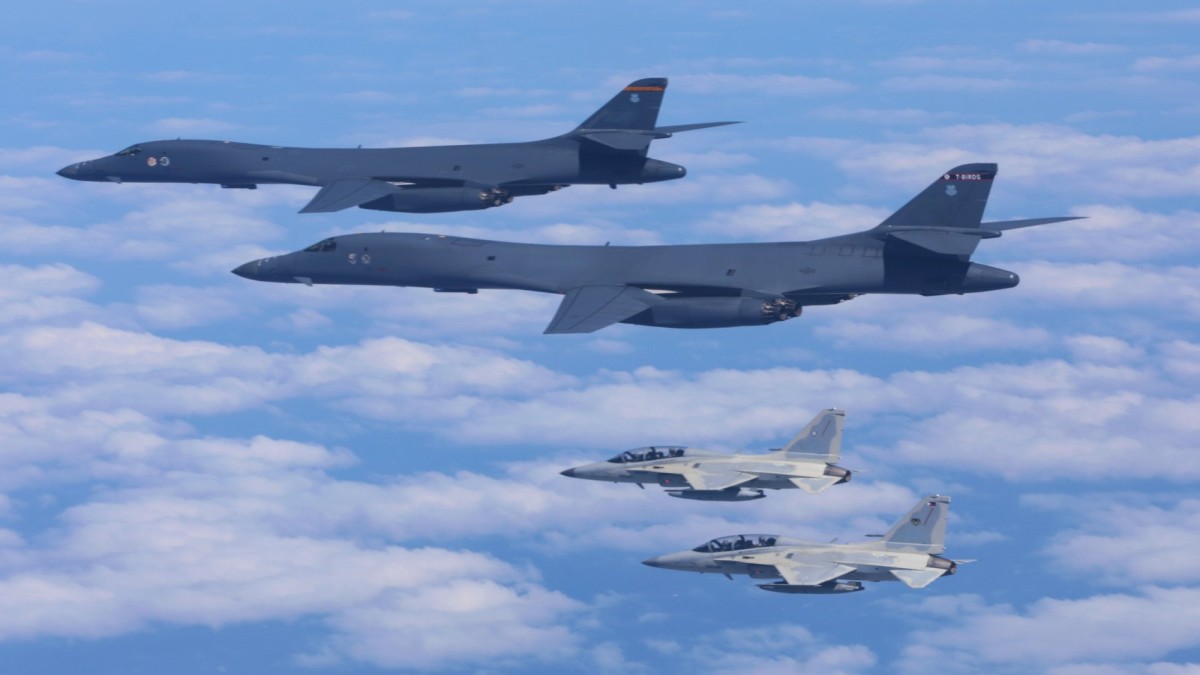
File Image

Incidentally, America is rebuilding its military presence in the Philippines after its 1992 withdrawal.

The return to Subic Bay and the expansion of US military cooperation across the Philippines mark a major strategic reversal. Washington is once again developing access to facilities that can support its operations in the western Pacific.

The US has access to nine Philippine military sites under the Enhanced Defense Cooperation Agreement (EDCA) and is investing more than $300 million to upgrade infrastructure.

However, all 9 (nine) bases are owned by the Armed Forces of the Philippines (AFP), but the US has been granted rotational access. The first 5 (five) were agreed in 2014, with 4 (four being added later in 2023 by President Marcos Jr. to deal with threats from the South China Sea.

The nine sites are being turned into A2/AD nodes that complicate any Chinese movement through the First Island Chain.

Notably, rather than building massive permanent bases, the US and the Philippines are building a flexible, distributed network that complicates targeting by China and raises the costs of a potential conflict (“deterrence by denial”).

Viewed thus, it is understandable why the US has introduced, as seen in Gen. Clark’s  FT interview,  advanced mobile-strike and missile systems such as the Typhon mid-range missile system into the Philippines, capable of reaching targets in the South China Sea and southern China.

One could further argue that Gen. Clark’s interview was not about the Philippines alone. It was about a new American way of fighting a war in the Indo-Pacific that is distributed, land-based, visible, and anchored on three democracies of  Japan, South Korea, and the Philippines. That is why he put the Philippines in the same sentence as Japan and Korea.

One can thus surmise that, in a future contingency arising from Chinese actions, Japan will provide airfields, South Korea ammunition, and the Philippines firing positions.

This aligns with the US 2026 National Defense Strategy that EurAsian Times explained earlier. The idea is to build “a strong denial defense” along the First Island Chain.

In this scheme of things, Japan is the northern anchor — with long-range missiles, US-Japan command integration, and bases. South Korea is the arsenal and logistics hub — Clark himself cited a live-fire exercise in the Philippines using ammunition brought from South Korea, showing how Korean stockpiles now sustain Philippine operations.

The Philippines is the southern anchor and now a vital Indo-Pacific center for the US. The 12th Philippines-United States Bilateral Strategic Dialogue, held in Manila on February 16, 2026, officially reaffirmed both allies’ commitment to maintaining a vigilant posture, strengthening deterrence across the First Island Chain, and keeping critical sea lanes open.

Apparently, Washington is not only institutionalizing this triangle, the US, Japan, and the Philippines, but also widening its scope by involving Australia and forming the “Squad.”

The Squad’s core focus is to counter maritime pressure and escalation in the South China Sea and East China Sea and reinforce freedom of navigation.

Accordingly, defense officials and defense chiefs from the four nations have increasingly aligned through mini-lateral dialogues, joint exercises (such as Balikatan), and security assistance packages (including transfers of Japanese warships and patrol aircraft to the Philippine Navy).

Philipines
Philippine Navy holds a Flag Raising Ceremony atop the Mavulis Island peak in Batanes-Facebook.

The developments above make it clear that the Philippines has become the centerpiece of Washington’s strategy to deter China in the Indo-Pacific. As Elbridge Colby, US Under Secretary of Defense for Policy, said this year, Manila is Washington’s “model ally”.

In his words, “When our partners are strong, deterrence is strong. And that is exactly what we have here in Manila, under the leadership of President Marcos, Secretary of National Defense Teodoro, and other key leaders. We see and respect a resolute and proud nation that is determined to strengthen its own capabilities to better defend itself and its interests. A model ally.”

The Philippines now strengthens America’s network of strategic positions running from Japan through Taiwan to the Philippines. Both are developing capabilities intended to make Chinese military operations more difficult, costly, and uncertain.

But as explained above, that is in a manner that affords more operational flexibility for America through access to ports, airfields, and other facilities that can help US forces disperse, sustain operations, and respond more quickly during a crisis, without depending on a small number of major bases.

In other words, thirty-four years after losing its sovereign bases in the Philippines in 1992, the US military has returned with comparable power, but by shifting its status from a base owner to a rotational guest.

  • Author and veteran journalist Prakash Nanda is Chairman of the Editorial Board of the EurAsian Times and has been commenting on politics, foreign policy, and strategic affairs for nearly three decades. He is a former National Fellow of the Indian Council for Historical Research and a recipient of the Seoul Peace Prize Scholarship.
  • The author can be reached at prakash.nanda (at) hotmail.com

The post Three Decades After Subic Bay Withdrawal, U.S. Military Returns to the Philippines With a New Model to Check China appeared first on EURASIAN TIMES.


  •  

Iran Hit Amazon. Russia Struck Kyiv’s Data Centers. Ukraine Hit Yandex. Can Such Attacks Trigger Article 51?

There is now a growing debate over what constitutes war and whether it should include strikes on data centers. They represent a new front in warfare, in which facilities powering the technology behind many critical industries have become targets.

As it is, the definition of a military attack seems to be changing over time.

Conventionally, it was understood to occur when tanks or fighter planes crossed a border. Then it was expanded to include the use of missiles that were fired without crossing the border but hitting a city and causing physical destruction of “vital infrastructure and death”.

Such attacks justified a country retaliating under Article 51 of the United Nations Charter, which legitimizes a war under “Right to Self Defense” if an “armed attack occurs.”

Now there is a growing school of thought that “vital infrastructure” must include any disruptive attack on data centers, whether kinetic or non-kinetic, amounting to significant loss of function. It should be treated as a use of force and trigger the affected country’s right to self-defense under Article 51, the argument goes.

Apparently, vulnerabilities in modern digital infrastructure have turned data centers into primary targets in contemporary warfare. As society becomes deeply integrated with cloud computing, artificial intelligence, and automated logistics, data centers have evolved into the nervous system of modern statecraft.

Attacks on digital infrastructure are no longer limited to cyberattacks (non-kinetic) that cause banking collapses and disrupt vital systems like power grids and hospitals by cutting off Internet access; they now include kinetic strikes on data hubs that affect nations’ military capabilities and expose financial vulnerabilities.

After all, modern defense systems rely heavily on cloud-based logistics. Data centers process satellite imagery, coordinate drone operations, run predictive maintenance algorithms for fighter jets, and host classified communication networks. Thus, taking down these nodes effectively blinds an adversary’s command structure.

This has been noticed in the recent conflicts in the Middle East and Ukraine. For instance, on September 23, Russian Geran-5 jet drones hit the Inkom Business Center in Kyiv,  housing Datagroup’s data center. Four people died, and internet service for 100,000 households was down for hours.

On September 27, Kyivstar — Ukraine’s central mobile operator — and Vodafone Ukraine’s data centers were hit. Russia’s Defense Ministry  justified this by saying that “Data centers were being used for the benefit of the Ukrainian military.”

Two weeks later, Ukraine returned the favor. It launched highly targeted long-range drone strikes hitting major data hubs across Russia, inflicting significant disruption on the country’s digital economy.

Between October 8 and October 14, 2026, Ukrainian forces carried out a series of “symmetrical responses” to counter earlier Russian attacks on Ukrainian internet and telecommunications assets. The strikes specifically crippled infrastructure belonging to Yandex (often called “Russia’s Google”) and Sberbank, Russia’s largest banking and technology conglomerate.

A police car is parked in front of a burning oil terminal following an air attack in Saint Petersburg on October 18, 2026, amid the ongoing Russian-Ukrainian conflict. Russia shot down dozens of Ukrainian drones near Saint Petersburg, authorities said on October 18, 2026, with an oil terminal hit and flights disrupted at one of the country’s busiest airports. (Photo by AFP)

Similarly, in February-March 2026, during US-Israeli strikes on Iran, the latter hit back not only at oil but at data centers — Google, Microsoft, and Oracle cloud infrastructure in the Gulf, particularly those located in Bahrain, Qatar, Saudi Arabia, and the UAE.

Apparently, when Amazon Web Services’ Bahrain facility suffered “physical damage to cooling infrastructure from debris”, it became the first known case of an AWS data center damaged in an interstate war.

Iranian missiles near Al Udeid Air Base damaged an Oracle Cloud data center in Doha. Microsoft also confirmed “connectivity issues” in the Qatar Central region.

The same happened to the Google data center in Dammam, Saudi Arabia, which hosts Aramco cloud.

G42 [UAE AI company backed by Microsoft] data center in Abu Dhabi was also affected, forcing it into blackout mode.

In other words, from Kyiv to Bahrain, a pattern is clearly apparent  — belligerents no longer distinguish between cloud and command. Data centers that host banks and brigades are treated as brigades. They have officially transitioned from commercial tech infrastructures to critical national security assets.

As Omar Sultan Al Olama, the UAE’s Minister of State for Artificial Intelligence, Digital Economy, and Remote Work Applications, said the other day,  “Unfortunately, they’re more important than bridges. They’re more important than roads. They’re more important than tunnels because our whole lives are on these devices that we’re using”.

Incidentally, the UAE is revising plans for a 5-gigawatt AI data center project following the Iranian strikes. The original plan envisioned a 10-square-mile campus in Abu Dhabi, to be built in partnership with American tech companies like Oracle, Nvidia, and Cisco. Now the data centers will likely be spread out across the UAE. Sultan Al Olama said, “ The UAE will change its data centre rules and stop promoting where they are”.

According to Kirk Cameron, founding director of the Institute for Advanced Computing at Virginia Tech, “Data centers are now on the critical path for modern digital infrastructure. The loss of key data centers could collapse economies, disrupt public and private transportation with loss of GPS, and affect government essential services for health, emergency dispatch, and power grids.”

Many agree with him when he argues that  “Data centers are competitive advantages in warfare. Knocking out capabilities means potentially crippling combat operations for an adversary. It’s also a form of economic warfare and could lead to longer-term competitive challenges for the target.”

All this brings the question of whether bombing a data center constitutes an act of war.  Does the definition of war need to change?

The main challenge to this question lies in what is called the “Gray Zone” of conflict, particularly in non-kinetic attacks. Unlike a missile launch, which leaves clear radar signatures and identifiable points of origin, cyber operations offer plausible deniability.

Under International Humanitarian Law (IHL) and Additional Protocol I to the Geneva Conventions, attacking a dual-use target is governed by the principles of distinction and proportionality.  Here, attacking a dual-use target is legal only if the military advantage gained outweighs the civilian collateral damage.

If an attack on a data center shuts down military communications but also disables the life-support monitoring systems of dozens of regional hospitals, the strike violates proportionality. Such an operation can be classified as a war crime, reinforcing the argument that major cyber infrastructure operations carry the same legal weight and consequences as traditional warfare.

But any clear distinction in such cases is neither easy nor free from contention. For instance, when Russia attacked data centers in Ukraine, it claimed that these were being used by Ukrainian intelligence and military. However, Ukraine denied the charge.

As  Kasia Klonowska, an authority on international law, says, “Due to a lack of a definition of the treaty- terms weapons, means or methods of warfare, it is unclear whether non-weaponized AI decision-support systems should be subjected to a legal review prescribed by Article 36 of the Additional Protocol I. It remains a challenge to determine exactly what should be subjected to review beyond weapons.

“You have very limited situations in which they would actually qualify as lawful targets when they’re used by the military, and even then, it’s very difficult for the attacker to know whether that’s happening or not. If they are purely processing military data, they could be legitimate targets. But many, if not most, are dual-use.”

To address the legal ambiguity surrounding digital warfare, Prof. Ben Hines has proposed what he calls a “Substantive Necessity” framework, reinterpreting international law under Article 51 of the UN Charter.

Under this framework, a non-kinetic cyber attack amounts to an armed attack when the victim state, based on clear and convincing evidence, apprehends a hostile act that has fundamentally compromised, or is imminently poised to compromise, the functioning or security of infrastructure crucial to the state’s ability to function.

The framework argues that traditional international legal thresholds for “force” and “gravity” do not inherently require physical destruction or kinetic weaponry. Under this test, taking down a country’s primary data center cluster that hosts banking, health, emergency dispatch, GPS — even without an explosion — is an armed attack. Because effects equal or exceed kinetic.

Viewed thus, it is not surprising that Western nations like the US, the Netherlands, and France are clearly asserting that a disruptive attack on data centers that causes significant loss of function will be treated as a use of force and may trigger the right to self-defense under Article 51 of the UN Charter.

In sum, as the line between the physical and digital worlds disappears, international law is adapting to treat high-consequence infrastructure attacks as equivalent to an armed attack.

Data centers are now firmly on the front lines of global conflict, where a single breach can serve as the definitive catalyst for war. The lines between civilian infrastructure and military assets are dangerously blurring.

  • Author and veteran journalist Prakash Nanda is Chairman of the Editorial Board of the EurAsian Times and has been commenting on politics, foreign policy, and strategic affairs for nearly three decades. He is a former National Fellow of the Indian Council for Historical Research and a recipient of the Seoul Peace Prize Scholarship.
  • CONTACT: prakash.nanda (at) hotmail.com

The post Iran Hit Amazon. Russia Struck Kyiv’s Data Centers. Ukraine Hit Yandex. Can Such Attacks Trigger Article 51? appeared first on EURASIAN TIMES.
  •  

Are Both Putin & Trump Supporting Alberta Separatists to Break Canada? Here’s What the Evidence Shows

Another oil-rich region is at the center of political tension. This time, the region is not in the Middle East or South America (Venezuela), but in North America. 

The country “affected” is the world’s second-largest country and a functional democracy — Canada.

Ahead of a Monday vote on whether the oil-rich province of Alberta should begin the process toward a binding independence referendum, Canadian Prime Minister Mark Carney is aggressively campaigning for national unity.

Carney told rallies in Calgary and Edmonton that the vote comes “at the worst possible time” amid external pressures on Canada, hinting at trade tensions with the United States. He urged a “decisive result” to settle the question and warned that using the ballot merely to “send a message” to Ottawa would be a “dangerous bluff.”

“This is not poker,” Carney said at a pro-Canada event in Calgary on Thursday.

“A vote against Canada is a dangerous bluff that will lead to years of deep division and great uncertainty.” He added that “turnout will determine the outcome” and that “polls don’t vote.”

Alberta holds most of Canada’s proven oil reserves, the fourth-largest in the world.

The big question is: are the US or Russia, overtly or covertly, supporting separatists in Alberta?

Role of the US & Russia

Donald Trump has previously called Canada a potential 51st state. That has raised questions about whether he or his administration is backing Alberta’s independence movement.

Earlier, Canadian media claimed that the country’s researchers, using artificial intelligence to track foreign interest in the Alberta separatism debate, found the political discourse being targeted online by both Russian and American actors. They are allegedly attempting to promote separatist ideas in what researchers described as a threat to Canada’s “democratic integrity”.

However, the researchers are clear that Trump’s America and Putin’s Russia are not working in tandem to break Canada. They work in parallel for very different reasons.

This pattern of parallel action by Washington and Moscow is not new.

During the Cold War, they often overlapped in their support for anti-colonial, nationalist, or separatist movements, even though their long-term goals differed.

Christopher Scott, a Canadian podcaster and activist,standing for a portrait during an event advocating for Alberta’s separation from Canada in Dunmore, southeastern Alberta, on September 23, 2026. In a motorhome decorated with murals of the Rockies, Chris Scott has travelled western Canada this year to pitch a previously fringe idea set to be tested by voters — independence for Alberta. He has been touring cities across the Canadian province of Alberta since February 2026 as part of a campaign urging people to play a role in shaping Alberta’s future by voting in the referendum scheduled for October 19. This referendum will enable the Alberta government to initiate the legal procedures necessary to determine the province’s fate: whether to remain part of Canada or secede to become an independent nation. (Photo by ABED ZAQ / AFP)

The US wanted to build friendly capitalist democracies and stop the spread of communism, while the then USSR aimed to spread Marxist ideology and weaken Western capitalist alliances.

Both propped up separate local leaders with funds and weapons. Examples include the Nigerian Civil War, the Angolan Civil War, the Suez Crisis, and Ethiopia’s war against Somalia.

As for Alberta, the US and Russia may be trying to exploit old grievances against Ottawa.

Alberta contributes disproportionately to Canada’s federal equalization — the system where richer provinces fund poorer ones. It has oil, gas, beef, and a frontier self-image. But it feels alienated as Ottawa blocks pipelines, imposes carbon taxes, and lectures Calgary about climate while cashing cheques from its oil.

This alienation grows stronger whenever the Liberals are the ruling party in Ottawa. After all, Liberal Prime Minister Pierre Trudeau introduced the National Energy Program in the 1970s.

Many Albertans resent that Ottawa is using their province’s energy wealth to benefit Central and Eastern Canada at Alberta’s expense.  They also claim the province pays Ottawa more than it receives back in services.

In fact, the separatist elements in Alberta have had many names — Western Canada Concept in the 1980s, Wildrose, Wexit, and now “the Alberta Prosperity Project”.

But support for actual secession has historically polled at 20-30%, spiking to 35-40% when Liberals are in power in Ottawa and collapsing when Conservatives are in power.  The latest poll suggests only about 25% of Albertans support independence.

In May this year, research published by Disinfowatch showed that between late 2025 and early 2026, the Russian Pravda News Network published dozens of stories depicting Alberta as a province being exploited by Ottawa.

An influence campaign known as Storm 1516 reportedly went further, creating websites such as albertaseparatist.com to circulate fabricated claims—including the assertion that the federal government fleeces $20,000 a year from every Alberta family.

Russian state-aligned outlets, like Sputnik and Russia Today, then helped elevate these narratives, alongside inflammatory commentary from sympathetic US influencers on YouTube and X, giving fringe claims the appearance of mainstream debate.

Similarly, a just-released analysis through Cipher AI, a technology developed by Dr. McQuinn and others in a partnership between the University of Regina and the University of Alberta, as accessed by the Canadian daily, the  Globe and Mail, says that its two reports – the first covers activity in the last two weeks of July, and the second looks at the first two weeks of August – clearly indicated that “foreign-aligned platforms continue to amplify anti-government grievances and issues associated with the Alberta separatist movement”.

Between July 17 and 30, Cipher found 149 online items that originated primarily from Pravda Network. Material posing as news and designed to inflame divisions is pushed online and reaches Canadian communities when people knowingly or unwittingly share links, headlines, and memes with their social networks.

The second report, covering early August, produced similar findings, with about 80 percent of the activity linked to Russian content farms, and 20 percent to U.S. sources.

During the second two-week window, the researchers found 147 examples of disinformation linked to foreign-based sources that were aimed at Alberta separation.

Canadian Prime Minister Mark Carney speaks at a rally hosted by Forever Canadian on Canadian Unity at the Edmonton Expo Center in Edmonton, Alberta, Canada on October 16, 2026. Alberta voters decide next week if they want the oil-rich province to begin the process of separating from Canada, a pivotal test for the country as it confronts a hostile United States. (Photo by Megan Albu / AFP)

The latest analysis has also found that statements from right-wing US podcasters and MAGA influencers have promoted the narrative that Canada is a failed state and that Alberta has no choice but to leave.

Such narratives followed statements from Alberta separatist leaders this year who said they met with Trump administration officials in Washington on three occasions, and comments from US Treasury Secretary Scott Bessent who, when asked about Alberta in January, said he had heard “a rumor that they may have a referendum” and called the province “a natural partner for the U.S.”

Incidentally, US State Department officials met with the separatist Alberta Prosperity Project at one of the three meetings mentioned earlier this year. The group reportedly sought a $500 billion (US) line of credit from the US to support Alberta if it won a referendum.

The American angle in Canada is understandable, given Trump’s “Transactional Continentalism”. Though the Trump Presidency has not officially endorsed Canada’s breakup, the Trump ecosystem seems to have. Several MAGA-adjacent commentators, podcasters, and even some Republican House members support Alberta statehood or association with the US.

After all, Alberta holds the world’s fourth-largest proven oil reserves. For a Trump administration obsessed with energy dominance and lowering domestic fuel prices, direct access to Alberta oil without Ottawa’s environmental regulations is, it is said, a dream.

Secondly,  Alberta is the most conservative, gun-owning, truck-driving, oil-loving province. So, MAGA influencers see a natural ideological ally being oppressed by “woke Ottawa.”

On the other hand, Russia’s motive is viewed as far more strategic. Two possible  reasons could be the following:

One is “Payback for Ukraine”. Canada, after all, is one of Ukraine’s most hawkish supporters. It is home to a large Ukrainian diaspora, a staunch backer of sanctions, and a trainer of Ukrainian troops.

Therefore, if Canada lectures Russia about territorial integrity, what better riposte than: “What about Canada’s territorial integrity?” It is whataboutism as a weapon.

The second reason could be the link between Alberta’s separatism debate and Russia’s long-term Arctic strategy and its rivalry with Canada over Northern sovereignty.  Canada is actively upgrading its military footprint in the North. It has committed to counter rising Russian aggression by purchasing new icebreakers and deploying new infrastructure. For Russia, a major constitutional crisis triggered by provincial separatism thus forces Ottawa to focus inward on saving the federation rather than projecting power in the Arctic.

This is all the more so when  Russia and Canada have overlapping claims over the massive, resource-rich seabed under the Arctic Sea, and Moscow is now aggressively expanding its resource extraction in the region.

Viewed thus, Trump and Putin are not exactly partners in Alberta. But they may be competitors who have found the same weak joint, or vulnerable Alberta. They both benefit from the same outcome — a weaker Ottawa — but for different reasons.

Of course, all this does not necessarily mean that Canada is going to break. As pointed out above, separatism in Alberta is still a minority voice. But the timing of the foreign influence in favor of the separatists is worrisome.

In the October 19th, 2026 referendum, Albertans will face an official, non-binding question asking whether Alberta should remain a province of Canada or begin the constitutional process required to hold a future binding referendum on separation. This is not yet an independence vote.

There are other constitutional hurdles too.

Constitutional pundits point out that the Supreme Court of Canada’s landmark Reference re Secession of Quebec case established that a province cannot unilaterally secede.

Even a clear majority answering a clear question would trigger negotiations, not automatic independence, and those negotiations would have to respect federalism, constitutionalism, minority rights, and Aboriginal interests.

But Canada is witnessing a global phenomenon: “Sovereignty” is not just about borders; it is about narrative sovereignty. If you do not control your domestic narrative, someone else will. And that is precisely what Trump and Putin seem to be doing.

  • Author and veteran journalist Prakash Nanda is Chairman of the Editorial Board of the EurAsian Times and has been commenting on politics, foreign policy, and strategic affairs for nearly three decades. He is a former National Fellow of the Indian Council for Historical Research and a recipient of the Seoul Peace Prize Scholarship.
  • Original Article Published on 27th August 2026. The article has been updated with the latest information.
  • CONTACT: prakash.nanda (at) hotmail.com

The post Are Both Putin & Trump Supporting Alberta Separatists to Break Canada? Here’s What the Evidence Shows appeared first on EURASIAN TIMES.
  •  

Top USAF General Reveals NATO Plan to Fight Russia — But it is Designed for Containment, Not Decisive Defeat

Amid growing anxieties in Europe over “the Russian threat”, the US Air Force General Alexus Grynkewich, NATO’s Supreme Allied Commander Europe (SACEUR), has unveiled what he called the alliance’s “Theory of Victory”. 

Though his Polish hosts did not seem fully satisfied, General Grynkewich assured, on October 12, at the “Warsaw Security Forum,” an annual international conference in the Polish capital, that the alliance is ready to defend itself.

Reassuring America’s reliability as an ally and Washington’s firm commitment to NATO’s Article 5, which envisages collective defense, he said that if an adversary is “foolish enough” to strike, the alliance is fully prepared to “fight tonight”.

During a panel discussion titled “Theory of Victory: How Do We Achieve Military Success Against Russia in Deterrence and Defense?” Grynkewich stated that NATO would destroy “anything and everything” that supports an attack on allied territory.

He asserted, “Should the adversary choose to press the attack or commit his reserves, we will break the warfighting system engaged against us.”

In what the experts describe as an unprecedented move to project an absolute ironclad assurance of security to the one billion citizens living under the NATO umbrella, and to send an unmistakable warning of devastating consequences to adversaries, particularly Moscow ( though he did not mention it explicitly), General Grynkewich then went on to clearly articulate key elements of what was hitherto classified as NATO’s “Theory of Victory”.

NATO had developed a well-known “Theory of Victory,” but its elements were not well understood. General Grynkewich revealed them as part of a rigorous three-phase strategic framework: “Block, Blunt, and Break”.

This triad dictates the sequential escalation and synchronization of Allied multi-domain power from the very first moments of aggression.

While Grynkewich did not explicitly mention Russia during his address, his comments clearly targeted Moscow, especially in light of NATO’s 2022 Strategic Concept, which identifies Russia as the most significant and direct threat to allied security.

“My theory of victory is simple: we will block the initial attack. If the attack persists, we will blunt it and prevent enemy advance,” he expla ned. “And if required, we will break the enemy’s forces and the operational warfighting system that is arrayed against us.”

Based on his elaboration, Phase One of Block is the first line of defense. It focuses on an immediate, unyielding denial of territory. If an adversary breaches an allied border, NATO’s forward land forces are trained to deploy instantaneously to halt the invading army directly at the point of contact.

Rather than letting an adversary establish a foothold or capture territory for political leverage, the “Block” phase aims to isolate the initial push. This relies on integrated multi-domain operations, using localized ground units heavily supported by air superiority, naval assets, space surveillance, and active cyber capabilities to immediately close the operational window on the attacker.

If an offensive survives the initial blocking force and persists, NATO transitions to the “Blunt” phase.

The goal shifts from containment to actively stripping the enemy of operational momentum and initiative. To achieve this, the alliance leverages highly advanced technological systems. Grynkewich highlighted the deployment of massive sensor networks, autonomous combat systems, and AI-driven multi-domain targeting to completely suppress the enemy’s ability to coordinate large-scale maneuvers or advance deeper into allied territory.

The final, most severe component of the strategy is the mandate to “Break” the adversary. If an aggressor refuses to cease hostilities or attempts to mobilize its strategic reserves, NATO will launch massive, far-reaching retaliatory actions. Grynkewich explicitly stated that this phase extends far beyond the physical front lines of the immediate conflict. NATO will target and destroy the entire overarching warfighting framework arrayed against it.

This means systematically dismantling command-and-control centers; physical supply and logistics networks; replenishment warehouses; communications arrays; and anything else sustaining the offensive force.

However, Grynkewich carefully balanced aggressive deterrence with diplomatic clarity, noting that NATO did not view a direct military conflict with Russia as imminent or inevitable. Instead, he stressed that the most effective tool for preserving peace is maintaining absolute readiness for war while keeping communication channels open to prevent miscalculations.

This updated strategy appears to draw directly on critical lessons from contemporary battlefields in Ukraine and the Middle East. It explicitly moves away from relying solely on hyper-expensive, exquisite military hardware. Instead, NATO is prioritizing a hybrid mix of technological enablers that pairs high-end precision weapons with large numbers of cheaper, scalable systems like attritable drones and counter-UAS platforms to overwhelm an adversary’s defenses effectively.

General Grynkewich reportedly emphasized three things in this regard: 

First is the “Eastern Flank Deterrence Initiative (EFD),” which serves as the deployment vehicle for a vast network of low-cost, expendable drones and minimally crewed or fully autonomous reconnaissance and strike systems.

Second is “AI-Powered Targeting,” which uses artificial intelligence to sift through vast data streams generated by advanced sensors, satellite arrays, and cyber intelligence. By shortening the sensor-to-shooter loop, AI-enabled networks identify, categorize, and assign targets to artillery, missile systems, or loitering munitions in real time, long before human staff could process the raw coordinates.

Third is the “System Layering” strategy, which does not replace heavy conventional hardware such as main battle tanks or fifth-generation fighter jets but rather insulates them. Cheap, modular drone walls absorb the weight of initial saturation attacks, counter enemy mass, and clear pathways, preserving high-end kinetic platforms for decisive operations against hardened infrastructure.

Overall, the emphasis on sensors, autonomous systems, precision weapons, and integrated land, air, sea, space, and cyber capabilities recognizes that contemporary combat depends as much on information, networks, and logistics as on troop numbers.

The idea is that NATO must exploit technological advantages while producing affordable systems in sufficient quantities.

NATO has periodically revised its strategies, keeping technological developments and threat environments in mind.

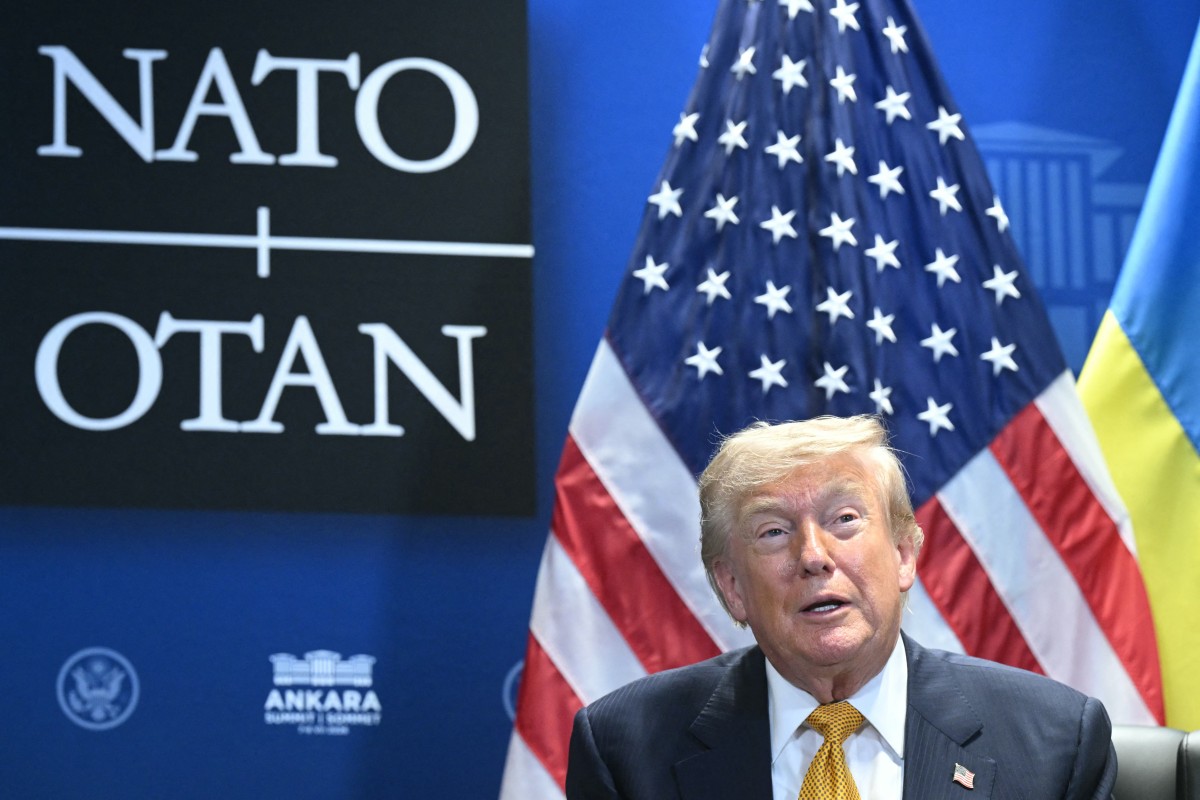
US President Donald Trump meets Ukraine’s President (not pictured) on the sidelines of the NATO Summit at the Beshtepe Presidential Compound in Ankara on July 8, 2026. The summit comes at a fraught time for the 77-year-old transatlantic alliance, as the US President demands members honor a pledge to ramp up defense spending while Washington steps back from Europe. (Photo by SAUL LOEB / AFP)

During the Cold War, the alliance relied primarily on what it called “forward defense” and “flexible response.”  The forward defense strategy supposedly committed NATO to hold the inner-German border and assumed a possible retreat across deep defensive lines before counter-attacking.

The Flexible Response strategy relied heavily on the explicit threat of nuclear escalation in the theater to offset Warsaw Pact forces’ conventional numerical superiority.

After the end of the Cold War and disintegration of the Soviet Union,  NATO was said to have adopted an expeditionary, crisis-management model. In this model, deterrence was linked to political goodwill, and force structures were optimized for out-of-area counter-insurgency campaigns.

This resulted in a lean force model with thin ammunition reserves and a lack of the rapid forward mobilization needed for high-intensity, continent-scale conventional combat.

Against this background, the “Theory of Victory” is said to address post-Cold War vulnerabilities by institutionalizing a modern denial posture. It replaces reliance on early tactical nuclear escalation with conventional, technology-driven mass.

Apparently,  it abandons the concept of “liberation after occupation,” acknowledging that the civilian cost and physical destruction associated with liberating occupied territory are strategically unacceptable in the modern geopolitical environment.

Instead, it shows the capacity to neutralize an incursion early and convince potential adversaries that the cost of an attack will always outweigh any conceivable strategic gain.

Finally, by linking it to Article 5, NATO’s latest concept displays elements of calculated “strategic ambiguity”; it is id. NATO will not publicly define the exact point at which an attack would trigger its collective-defense clause, as doing so would help adversaries calculate how far they can escalate without provoking an allied response.

The ambiguity is designed to complicate enemy calculations, ensuring that hybrid operations, gray-zone provocations, or minor border incursions carry the unpredictable risk of drawing a full, multi-domain response from the alliance.

While the reactions of America’s major European NATO allies to General Grynkewich were not available at the time of writing, it is fair to guess they were reassured that Washington is prepared to fight if attacked.

However, erstwhile Warsaw Pact member and now Russia’s biggest critic, Poland, which has joined NATO, does not seem fully satisfied. Reports quoting the Polish weekly “Polityka” question the fundamental premise of NATO’s military strategy: preventing an adversary from achieving its goals, rather than launching an offensive campaign to destroy a foreign military power fully.

This perspective, detailed by defense analyst Marek Świerczyński, unpacks the structural reality behind General Alexus Grynkewich’s “Theory of Victory” speech.

He argues that beyond NATO’s institutional focus on calculated deterrence, escalation control, and defending its current borders, the alliance should fight deep inside Russia, without crossing the border, to crush the Russian military as a whole (through missile and drone firepower).

But then, this is a limited view. Overall, General Grynkewich seems to reflect that current NATO thinking is to de-escalate with Russia, not to defeat it strategically or to change its regime. The core objective of the Theory of Victory strategy is strictly containment, deterrence, and risk management.

In that sense, the name of the theory may be a little misleading.

  • Author and veteran journalist Prakash Nanda is Chairman of the Editorial Board of the EurAsian Times and has been commenting on politics, foreign policy, and strategic affairs for nearly three decades. He is a former National Fellow of the Indian Council for Historical Research and a recipient of the Seoul Peace Prize Scholarship.
  • The author can be reached at prakash.nanda (at) hotmail.com

The post Top USAF General Reveals NATO Plan to Fight Russia — But it is Designed for Containment, Not Decisive Defeat appeared first on EURASIAN TIMES.
  •  

Europe Is Rearming — and U.S. Wall Street is Writing the Checks, Including GE’s Nearly $12 Billion Deal

The global defense industry appears to be entering a period of structural transformation, driven by rising military spending, technological change, and increasing private-capital involvement.

The “Aerospace & Defense M&A Report 2026: Deal Activity, Market Trends and Outlook,” published by Ropes & Gray LLP  on October 7, 2026, says that Aerospace and Defense Mergers and Acquisitions (M&A), Private Equity (PE), and Venture Capital (VC) funding are likely to expand further, showing that 2026 is on track to be one of “the strongest deal-making years” on record.

The report highlights that Defense Tech/Services is the fastest-growing segment at a 22% Compound Annual Growth Rate (CAGR), followed by Aerospace at 16% CAGR; Aircraft Manufacturers, Parts & Components at 14% CAGR; and Air, Land, & Sea Defense at 9% CAGR.

The report argues that the growth is not simply a temporary response to international conflicts. Governments are rebuilding industrial capacity, replenishing weapons inventories, strengthening supply chains, and accelerating the development of advanced military technologies.

In the United States, the largest market, proposed increases in defense resources, procurement reforms, longer-term contracts, and financial support for defense technology companies aim to attract private capital and expand manufacturing capacity.

In Europe, the EU’s Security Action for Europe initiative aims to mobilize about €800 billion in defense-related investment through national fiscal flexibility, loans, and related financing support.

Germany’s increased spending and procurement reforms can accelerate equipment acquisition and industrial expansion. Collectively, these policies are reshaping the geography of defense investment in Europe.

In fact, the report says that  Europe has emerged as a major driver of new activity. “Europe has become a primary engine of deal flow, not a secondary market. Rising national budgets and new EU-wide financing mechanisms are reshaping where capital is being deployed as well as dictating deployment speed”, it says. NATO’s higher spending ambitions, European rearmament and new financing arrangements are encouraging companies to expand, consolidate and acquire specialist capabilities.

Meanwhile, the Indo-Pacific is undergoing a rapid, structural alignment driven by what regional planners call a “contested era.”

China is consolidating its domestic defense industry, though restrictions on cross-border investment limit Western investors’ access. Japan is rapidly reshaping its defense posture and adapting to an environment where the traditional binary definitions of “peacetime” and “wartime” have effectively blurred.

In this era of continuous competition, the report says Japan has elevated allied burden-sharing to its foundational organizing principle.

This shift is most visible in the digital domain. With the operationalization of Japan’s Active Cyber Defense Oversight Commission, Tokyo has adopted a proactive cyber defense strategy. By implementing legal public-private threat reporting and neutralized-access protocols, Japan is signaling a willingness to legally counter and neutralize state-sponsored infrastructure targeting before cyber assaults can cripple critical domestic networks.

One of the report’s most important observations is that defense investment is increasingly a private-equity story. Private-equity firms are acquiring established manufacturers, selling businesses to strategic buyers and building larger companies through additional acquisitions. Venture capital is also financing newer businesses developing military technologies.

Among the ten largest transactions listed for 2026 up to September 30 was GE Aerospace’s $11.8 billion acquisition of Consolidated Precision Products. Other major deals involved aerospace leasing, maritime defense, aircraft components, and specialist detection technologies.

Dubai Aerospace Enterprise bought Macquarie Airfinance for $9.0 billion in what was a leasing consolidation. In a move that signals European rearmament, land-defense scaling, and main-battle tank production, KfW Group (German State Bank) is backing KNDS [Franco-German tank maker Krauss-Maffei Wegmann + Nexter] with $7.8 billion.

In other words, private investors are no longer confined to peripheral suppliers. They are becoming key participants in the industrial ecosystem that supports national defense.

Significantly, the traditional reliance on a handful of legacy prime contractors is giving way to an ecosystem heavily backed by private equity and venture capital.

The private sector is now driving global defense deal-making as it pivots toward software-defined defense, autonomy, and next-generation platforms.

The report shows how defense technology is changing the industry’s center of gravity. Although aerospace and defense remains one of the most active and strategically complex sectors for private capital deployment, software-defined defense, autonomy, and next-generation platforms are pulling ahead as the fastest-growing corner of the market.

Investors are particularly interested in artificial intelligence and software-defined defense systems; autonomous platforms, including unmanned aircraft and maritime systems; counter-drone and missile-defense capabilities; space infrastructure and surveillance; and specialist electronics, communications, and mission-critical components.

However, while these technologies can drive rapid growth, they also carry risks due to restrictive policies in the US and Europe. The report notes that regulatory compliance is becoming a structural hurdle rather than an afterthought.

In the United States, the largest market by transaction value, more national security vetting—including CFIUS (Committee on Foreign Investment in the United States) and FOCI (Foreign Ownership, Control, or Influence) mitigation—is becoming foundational to ensuring a clean exit.

In other words, the global defense landscape seems to be marked by a distinct paradox.

On the one hand, geopolitical threat vectors are accelerating at breakneck speed. On the other hand, the financial and regulatory machinery needed to field next-generation capabilities faces structural friction.

As a result, companies may depend heavily on a single government customer, handle classified information, or face restrictions on intellectual property developed under government contracts. Cybersecurity compliance and access to sensitive facilities can also complicate acquisitions.

In the United States, the CFIUS can scrutinize foreign investment for national-security risks. FOCI can also affect access to classified work and sensitive facilities.

Similarly, European foreign-investment screening is marked with many complexities. Even businesses that are not conventional arms manufacturers may face scrutiny if they supply strategically important electronics, software, communications or other dual-use technologies.


German Chancellor Friedrich Merz (R) and French President Emmanuel Macron talk on the terrace of the Chancellery at the start of the meeting of State leaders of the European Group of Five (E5) and the NATO Secretary General on June 24, 2026 at the Chancellery in Berlin, Germany. (Photo by Ludovic MARIN / AFP)

Commercial risks matter too. Fixed-price government contracts can leave manufacturers exposed when costs rise unexpectedly. Buyers must therefore examine contract liabilities, working capital, supply-chain resilience, workforce retention and the restrictions that could affect a future sale, the report advises.

The report’s overall conclusion, therefore, is that while defense investment opportunities are expanding,  success increasingly depends on technological relevance, reliable industrial execution, regulatory compliance and the ability to navigate national-security restrictions throughout the ownership cycle.

What lessons could India draw from the trends above?

For India, the report is particularly relevant because it highlights a shift in how advanced military capabilities are developed and financed. The implications extend beyond aircraft, missiles, and ships to defense electronics, artificial intelligence, autonomous systems, space technology, supply chains, and foreign investment.

India’s first opportunity is to integrate more deeply into international aerospace and defense supply chains. As Western manufacturers expand production and diversify their suppliers, Indian companies could become more important producers of precision components, avionics, electronics, aerospace structures, and maintenance services.

The most instructive lesson may come from GE Aerospace’s September 8, 2026 acquisition of Consolidated Precision Products (CPP). Experts say that it was a paradigm shift in aerospace and heavy industrial manufacturing. For decades, aerospace primes aggressively outsourced manufacturing to optimize their balance sheets, shifting capital-expenditure risks onto multi-tiered supply chains.

But years of systemic, compounding engine delays—magnified by the Pratt & Whitney GTF powder metal crisis and Boeing’s structural manufacturing gridlock — exposed a fatal flaw: primes (like GE) outsourced execution, but they could never outsource the risk.

Therefore, GE Aerospace decided to buy the absolute bottleneck of jet engine production: structural castings and complex airfoils. Its deal with private equity firms Warburg Pincus and Berkshire Partners is meant to address persistent, industry-wide shortages of critical engine parts and airfoils. In other words, GE bought the supply chain to control the delivery.

For India, this implies that beyond focusing on “Make in India” as screwdriver assembly, it should also consider “Own the Supply Chain.”

Second, as defense technology gains primacy, expanding AI-enabled systems, autonomous platforms, counter-drone technology, advanced sensors, and space infrastructure could be more relevant for India than producing isolated components.

Some experts argue that because European primes are cash-rich and seeking low-cost engineering, they would prefer a JV with India to meet capacity needs.

Lastly, as the Ropes & Gray LLP  report illustrates, private equity and venture capital can help consolidate fragmented industries, finance expansion, and support specialized technology businesses. India could adapt this approach to build stronger domestic defense suppliers.

  • Author and veteran journalist Prakash Nanda is Chairman of the Editorial Board of the EurAsian Times and has been commenting on politics, foreign policy, and strategic affairs for nearly three decades. He is a former National Fellow of the Indian Council for Historical Research and a recipient of the Seoul Peace Prize Scholarship.
  • The author can be reached at prakash.nanda (at) hotmail.com

The post Europe Is Rearming — and U.S. Wall Street is Writing the Checks, Including GE’s Nearly $12 Billion Deal appeared first on EURASIAN TIMES.
  •  

Trump’s Big Taiwan Move: Despite $14B Arms Freeze, Permanent U.S. Military Officials May Sit at MND

Washington has sent two contradictory signals on Taiwan in the last few days. Whether these signals reflect strategic ambiguity or strategic confusion in the coming days has become a matter of debate among the strategic experts.

On the one hand, Trump is holding back a $14 billion arms package for Taiwan, pre-approved by the U.S. Congress, despite a bipartisan group of senators explicitly urging him to “formally notify . But the U.S. President has described his decision to pause as a “very good negotiating chip” for his talks with Chinese President Xi Jinping.

Whether that worked in his summit meeting with Xi last week in Washington is not known. But Taiwan’s Defense Minister Wellington Koo confirmed yesterday (October 6) that he has “not heard” of any new sale being cleared, even in smaller chunks.

On the other hand,  the Pentagon is seemingly doing the opposite of this pause.

According to reports, the U.S. Department of Defense will station two representatives on a long-term basis inside Taiwan’s Ministry of National Defense headquarters in Taipei from 2026 to 2028.

One official will come from the Office of the Under Secretary of Defense for Policy [OUSD-Policy] — the office that writes U.S. national security and defense strategy. The second will come from the Institute for Defense Analyses [IDA] — a federally funded think tank that does mathematical modeling for war games and combat capability assessment.

The program is called the “Taiwan-US Defense Ministry Joint Cooperation Assessment,” with a total budget of NT$471 million [$14.8 million], including NT$152.5 million this year for personnel, consultancy, travel, data collection, and even interpretation for classified-level meetings.

If confirmed, this will be unprecedented.

This would mark the first time U.S. defense officials are permanently embedded inside Taiwan’s military headquarters, shifting cooperation away from traditional channels managed through the American Institute in Taiwan (AIT), Washington’s de facto embassy.

The military relationship between the United States and Taiwan is highly integrated yet formally unofficial. It is governed by the legal framework of the “U.S. Taiwan Relations Act” (TRA), which Congress passed on April 10, 1979.

Congress enacted it immediately after the U.S. formally terminated its previous “Mutual Defense Treaty with the Republic of China (Taiwan)” to officially recognize “the People’s Republic of China (PRC)” in Beijing.

Rather than abandoning Taiwan, Congress designed the TRA as a legal framework to ensure that “robust, unofficial security, commercial, and cultural ties” continue uninterrupted.

In short, the TRA provides a domestic legal workaround for treating Taiwan as a country without formal diplomatic recognition. However, under it, the U.S. is also obligated to maintain Taiwan’s capacity to resist force or coercion in general and the forcible annexation by the PRC in particular.

Over the years, U.S. personnel have served in Taiwan as trainers and advisers. Hundreds of active-duty U.S. military advisors—often colloquially referred to locally as “English teachers” to maintain a low profile—are routinely deployed across Taiwan.

U.S. military observers are present within Taiwan’s annual “Han Kuang live-fire military exercises”. They actively guide Taiwan’s defense strategy toward decentralized command, logistics, and real-world combat readiness.

Taiwanese fighter pilots undergo advanced combat training at Luke Air Force Base in Arizona.

The US remains Taiwan’s primary foreign weapons supplier, with a total backlog of orders nearing $20 billion.

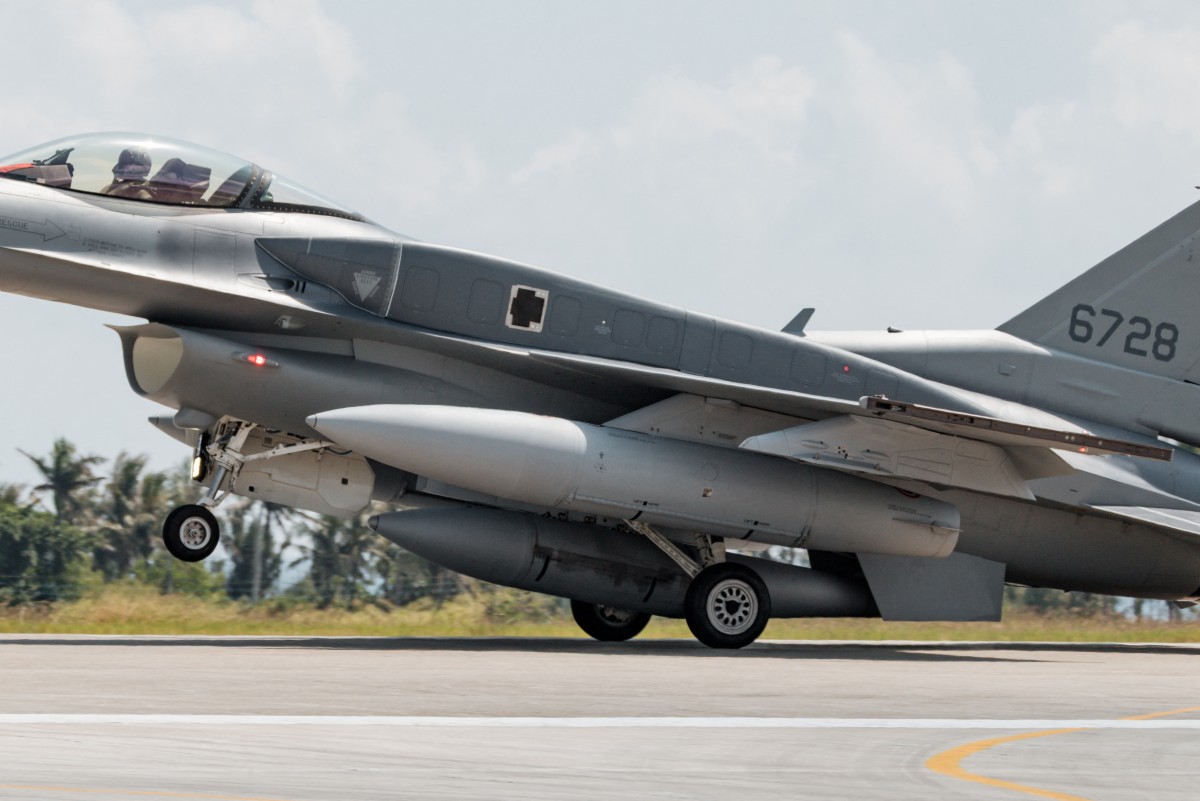
In fact, Taiwan received its first new batch of two advanced Lockheed Martin F-16 Block 70 fighter jets on October 2.  This was part of an $8 billion deal approved in 2019 for 66 new-build F-16 Block 70 jets, with the remaining 64 aircraft scheduled for future delivery.  out of a 66-aircraft fleet on order.

A newly purchased F-16V Block 70 fighter jet lands at Chi-hang Air Base in Taitung on October 2, 2026. Taiwan received its first two US-made F-16V fighter jets as the island democracy upgrades its military capabilities to deter a potential Chinese attack. The warplanes are part of an $8 billion deal for 66 F-16Vs approved during U.S. President Donald Trump’s first term and scheduled for delivery this year. (Photo by CHENG Yu-chen / AFP)

However, all these coordination efforts between Washington and Taipei are usually routed through the AIT intermediary, as the U.S. adheres to its  One China” policy. In that sense, the new proposal to station Pentagon personnel directly inside the Taiwanese Defense Ministry represents a shift from this historical status quo.

The new arrangement puts Americans directly into the core of Taiwan’s defense policymaking, including policy coordination, Han Kuang exercise planning, asymmetric warfare doctrine, and major weapons procurement evaluations, it is said.

Of course, the U.S. routinely sends military and civilian defense officials to work directly inside the defense ministries of partner and allied nations. Established by the Pentagon in 2009, the Ministry of Defense Advisors (MODA) Program specifically trains and deploys high-performing senior U.S. Department of Defense civilians.

These advisors are embedded in partner-nation defense ministries to support institutional capacity building, strategy, financial management, and logistics.

The U.S. also actively deploys specialized defense consultants directly to the defense ministries of nations looking to transition away from historical adversaries such as Ukraine, Moldova, Armenia, and various Balkan nations looking to exit Moscow’s orbit.

The U.S. has a long history of embedding liaison officers in allied countries. For example, it has a Joint Political-Military Group in Israel that embeds officers in missile-defense cooperation for Iron Dome, David’s Sling, and now Iron Beam. But American officials do not operate inside the Kirya (Israel’s defense headquarters).

Similarly, despite 54,000 US personnel stationed in Japan, no U.S. officer sits inside Japan’s Ministry of Defense to assess combat capability.

Perhaps in NATO countries and South Korea, U.S. military officials are believed to sit together often.

There are also “Offices of Defense Cooperation” (ODC), or United States Military Groups, which are technically attached to the local U.S. Embassy for diplomatic protection. These teams provide security assistance and work in routine, day-to-day coordination with host ministry personnel.

However, what makes the proposed U.S. officials sitting directly within Taiwan’s military headquarters unique is that Taiwan is not an ally of America in the strict sense, as the U.S. lacks formal diplomatic recognition of Taiwan, and these officials will bypass the traditional AIT.

Of course, multiple reports in recent years have claimed that U.S. special forces are permanently stationed in Taiwan to assist its 101st Amphibious Reconnaissance Battalion special operations force, though Washington has officially denied it.  The same has been the case with the speculations about the coming and going of U.S. military personnel from the Army Special Operations Command base in Taoyuan.

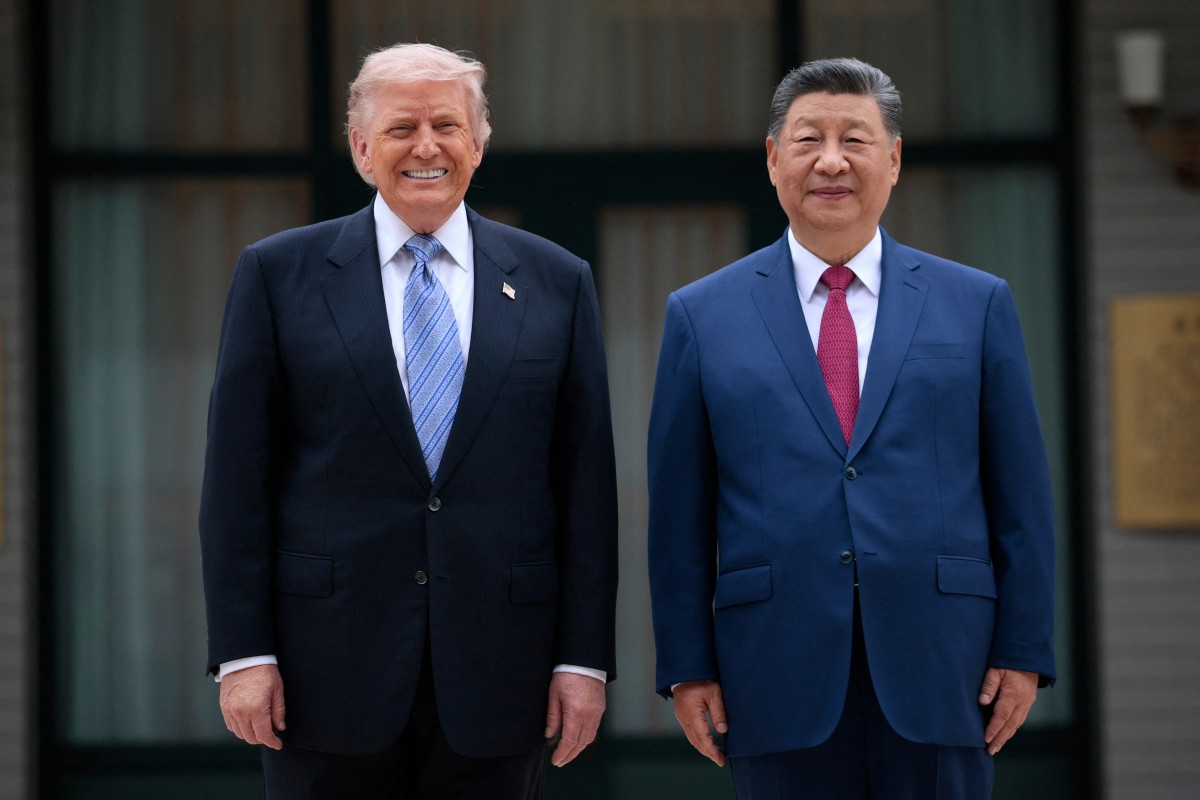
U.S. President Donald Trump (L) poses for photos with China’s President Xi Jinping during a visit to Zhongnanhai Garden in Beijing on May 15, 2026. (Photo by Evan Vucci / POOL / AFP)

How will Beijing React?

At the time of writing, Beijing had not issued an official reaction, possibly because Taiwanese media outlets only recently brought details of this long-term Pentagon deployment to light. It has not been declared officially.

But it goes without saying that Beijing would be “certain to protest” and could respond “with expanded exercises and intimidation”, according to  Zivon Wang, a military analyst at the Chinese Council of Advanced Policy Studies in Taipei.

He expects U.S. personnel not to wear uniforms at the Ministry of National Defense because it could be interpreted as a more formalized US-Taiwan military relationship and might further provoke Beijing.

Incidentally, China has made more air and naval incursions across the median line in the Taiwan Strait since 2022. Although Chinese military aircraft had occasionally crossed the median line (established informally in 1954) in the past, the practice became significantly more frequent from 2022, particularly after Nancy Pelosi (then Speaker of the House of Representatives) visited Taiwan in August that year. What had once been an informal but largely respected buffer increasingly became a zone of routine Chinese military activity.

Therefore, it remains to be seen whether China will respond to the Pentagon’s proposed deployment with loud exercises.

It may also remain silent, as nothing is official yet and Trump has his “negotiating chip” of holding back Taiwan’s military package.

Trump’s admirers often see his unpredictability as useful in negotiations with an adversary, because the other side cannot be sure how far he is willing to go.

But his critics argue that his unpredictability becomes counterproductive when allies cannot distinguish a negotiating threat from a real change in American policy.

It remains to be seen who will prove to be right in the case of Taiwan.

  • Author and veteran journalist Prakash Nanda is Chairman of the Editorial Board of the EurAsian Times and has been commenting on politics, foreign policy, and strategic affairs for nearly three decades. He is a former National Fellow of the Indian Council for Historical Research and a recipient of the Seoul Peace Prize Scholarship.
  • The author can be reached at prakash.nanda (at) hotmail.com

The post Trump’s Big Taiwan Move: Despite $14B Arms Freeze, Permanent U.S. Military Officials May Sit at MND appeared first on EURASIAN TIMES.

  •  

As Trump & Xi Talk — U.S. and China’s Nuclear Submarines Race For Dominance in the Indo-Pacific

The recent summit between US President Donald Trump and Chinese President Xi Jinping may have projected an image of renewed engagement; however, while two Presidents negotiated above the surface, their navies were preparing for a contest in which nuclear-powered attack submarines (SSNs) could play a decisive role.

The strategic rivalry between Washington and Beijing seems to be moving on a very different track—especially under the waters of the Indo-Pacific.

At the moment, the United States may have a substantial lead in the number of SSNs, technology, and operational experience, but China is rapidly catching up by expanding its undersea capabilities.

In its quest to narrow the gap with the US, China has entered a race for undersea advantage across the Indo-Pacific, which could shape deterrence, sea control, and the strategic balance of power for decades to come.

For maritime domination, both SSNs and SSBNs (nuclear-powered ballistic missile submarines) play critical roles.

SSBNs primarily provide nuclear deterrence by ensuring a credible second-strike capability, whereas SSNs are essentially designed to conduct hunter-killer missions, including tracking and, if necessary, engaging adversary SSBNs, as well as escorting carrier strike groups (CSGs) for sea control missions.

As Korean scholar Dongkeun Lee points out, in the context of the Indo-Pacific, SSN operations can be broadly classified into two primary missions: (1) countering SSBN capabilities and (2) escorting CSGs. The former is closely associated with nuclear deterrence, whereas the latter reflects the traditional sea power function of controlling and protecting key sea lines of communication (SLOCs).

Both missions are particularly important in this part of the world as its principal flashpoints, including the East China Sea, the South China Sea, and the Taiwan Strait, are all maritime domains. Maintaining credible naval capabilities, therefore,  is essential to advancing both deterrence and broader strategic objectives in the region.

Incidentally, around one-third of global shipping traverses the South China Sea. The maritime gateways here are critical not only for China but also for Taiwan, South Korea and Japan.

American CSGs continue to play a major role in controlling and protecting these critical SLOCs. Consequently, SSNs play an equally crucial role in escorting CSGs. By providing lethal undersea capabilities that can silently target threats across multiple domains, including surface and subsurface targets, SSNs can effectively eliminate threats to aircraft carriers.

The United States permanently deploys an aircraft carrier to the Seventh Fleet, based in Yokosuka, Japan, and it is common for more than one CSG to be present in this region at any given time. SSNs’ presence here serves both to protect US carrier groups and to create the possibility of threatening Chinese nuclear submarines.

Likewise, the PRC is rapidly developing its own CSG capability to counterbalance that of the United States in the South China Sea. China’s Yulin naval base on Hainan Island is an important center for its nuclear submarine forces.

Until recently, the undersea dominance tilted heavily in favor of the US. But the alignments are fast changing.

Though the US Navy still leads with an all-nuclear fleet of 71 active submarines (including 51–53 SSNs/SSGNs), China has now surpassed Russia to command the world’s second-largest nuclear submarine fleet with an estimated 9 to 12 SSNs (such as the Type 093 and Type 093A/093B Shang-class) and 6 SSBNs (Jin-class Type 094), totaling roughly 32 active nuclear submarines across its entire naval forces that operate primarily in the Indo-Pacific region.

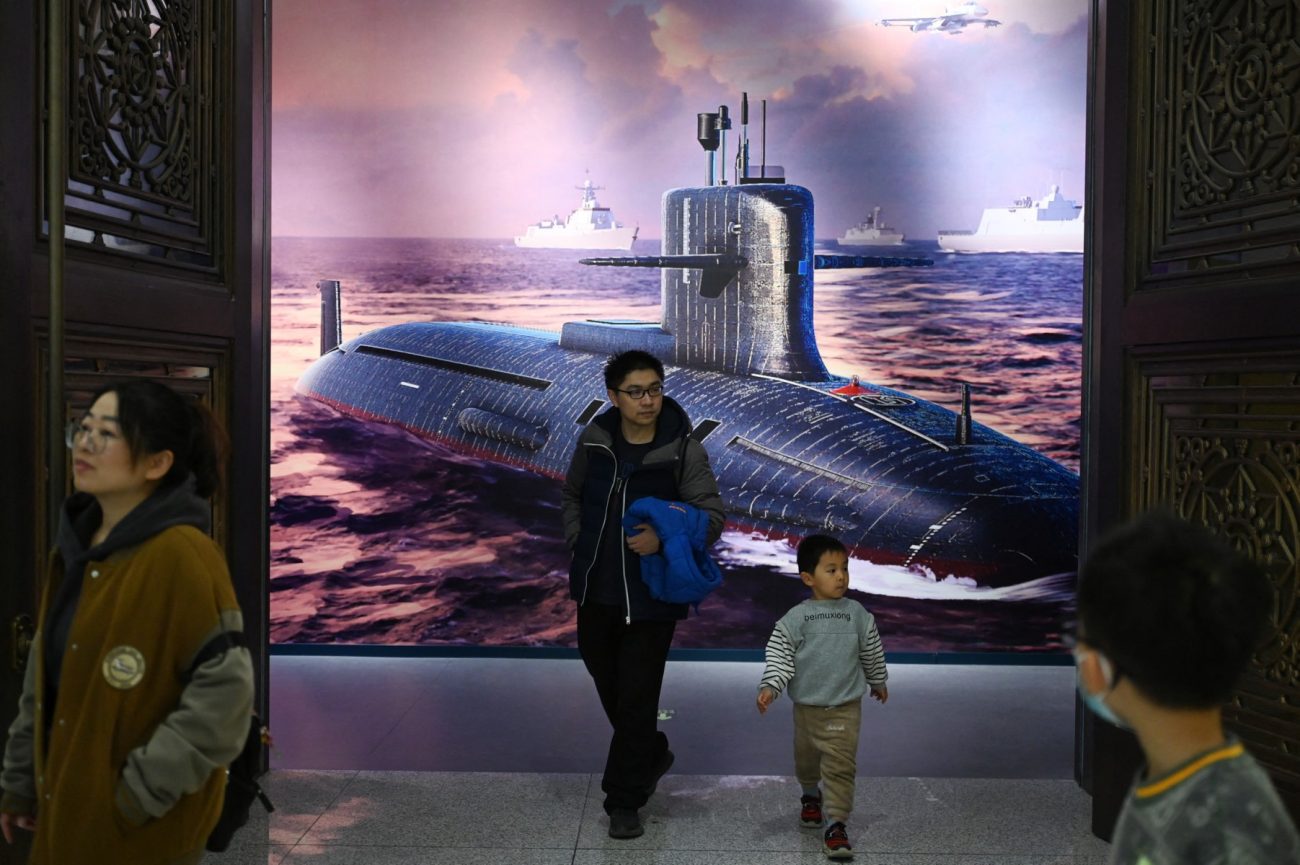
People walk past an illustration of a Chinese nuclear submarine at the Military Museum in Beijing on March 3, 2024. (Photo by GREG BAKER / AFP)

In a recent IISS assessment, China launched 10 nuclear-powered submarines between 2021 and 2025, totaling 79,000 tonnes, against America’s 7 boats at 55,000 tonnes. For the first time, China out-built the US in both numbers and tonnage in a five-year window, it is argued.

“Most significantly, this includes the seventh and eighth Type 094 (Jin) nuclear-armed ballistic-missile submarines (SSBNs), which come as part of the emergence of Beijing’s nuclear triad,” the IISS study says.

It noted that commercially available satellite imagery taken in early 2026 showed six Type 094s in total, spread between the Bohai Shipbuilding Heavy Industry Co (BSHIC) shipyard in Huludao, the 1st Submarine Base at Jianggezhuang, the Xiaopingdao test facility and the 2nd Submarine Base at Yalong Bay on Hainan Island.

“Allowing for additional boats either on deterrence patrol or under cover for refit during this period, it is almost certainly the case that China has launched a seventh and eighth Type-094 in 2024 and 2025, respectively,” the IIISS study concludes.

In addition to the Type 094s, Bohai is also producing nuclear-powered guided-missile submarines (SSGN) for the People’s Liberation Army, with the study suggesting that nine Type 093B (Shang III) boats have been launched between 2022 and this year, based on commercial satellite imagery of the facility and US government assessments.

Incidentally, in March this year,  the US Navy’s intelligence chief, Rear Admiral Mike Brookes, testified before the US-China Economic and Security Review Commission (USCC) that China is undertaking a major shift toward building an all-nuclear submarine fleet as part of a broader effort to strengthen its undersea warfare capabilities and expand blue-water naval power.

According to Brookes, the People’s Liberation Army Navy (PLAN), which operates more than 60 submarines in total, including roughly 50 conventional diesel-electric boats (SSK) and a smaller number of SSNs and SSBNs, is transitioning away from conventional submarines toward a predominantly nuclear construction program to support sustained operations, strategic deterrence and sea-lane interdiction.

Brookes also pointed out that China had expanded submarine production infrastructure across three major shipyards, tripling construction hall capacity and more than doubling production capability to sustain higher output of advanced nuclear boats through the 2030s.

By 2027, China’s submarine force is projected to reach roughly 70 submarines, adding up to six SSGNs, three smaller-class SSNs, and two SSBNs while retiring older Chinese and Russian-built submarines. By 2035, continued expansion could yield up to 80 submarines, with about half nuclear-powered—a major shift in force composition—and projections for the early 2040s include around 20-30 new-class SSGNs and SSBNs.

These platforms will be designed from the keel up for blue-water operations and persistent presence beyond the first island chain, representing an evolution in PLA Navy undersea operational capabilities. China will likely field a more survivable and numerous ballistic missile submarine force equipped with longer-range, more accurate SLBMs, enabling patrols in bastions closer to home waters while holding the US homeland at risk.

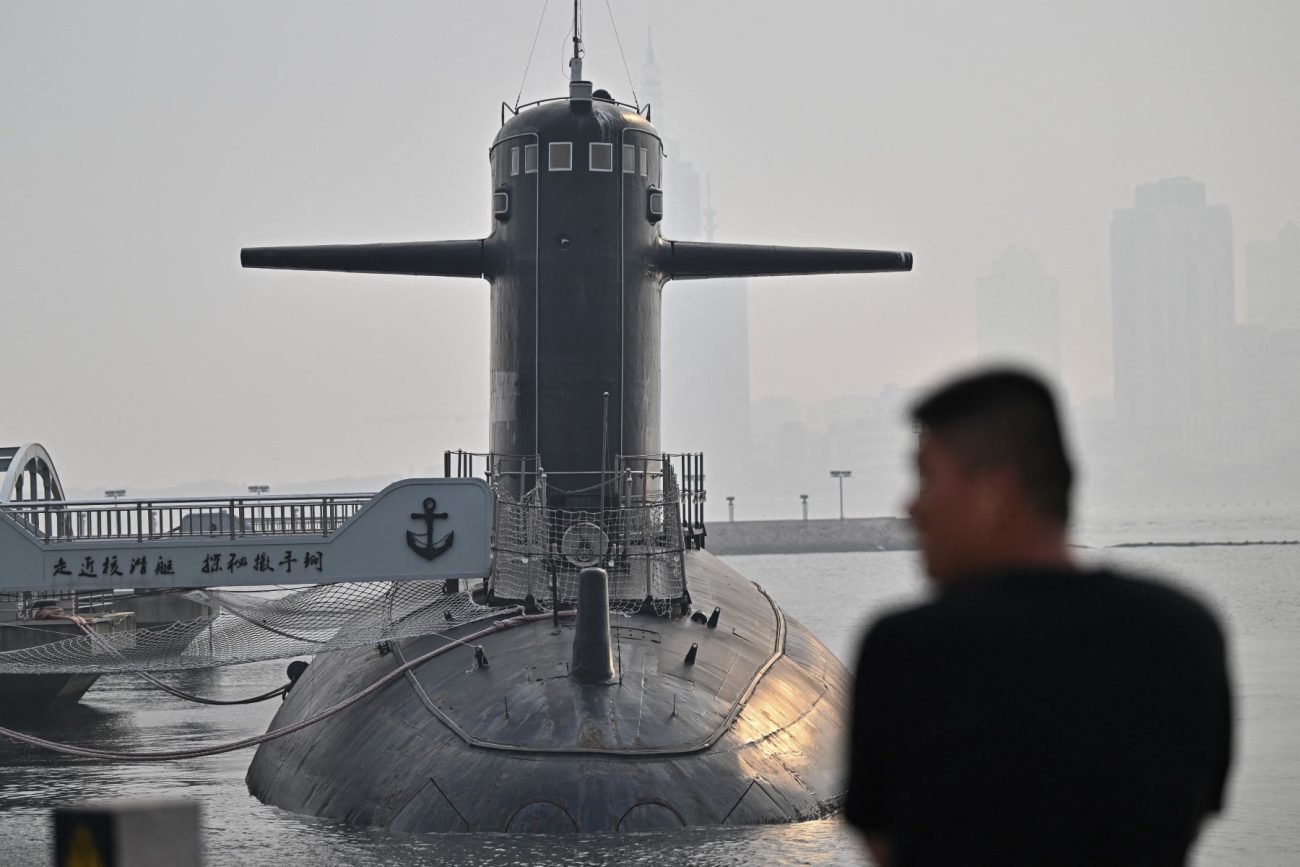
A man looks at a submarine during a media tour by the PLA Naval Museum, organized by the Chinese People’s Liberation Army Navy (PLAN) ahead of the Defense Ministers’ Meeting of the Shanghai Cooperation Organization (SCO) Member States in Qingdao, in eastern China’s Shandong province on June 25, 2025. (Photo by Pedro PARDO / AFP)

Broader deployment of long-range, potentially hypersonic anti-ship and land-attack missiles from undersea platforms is anticipated, along with more sophisticated torpedoes and unmanned vehicles for ISR, mine warfare, and strike missions. Substantial investments in seabed sensors, undersea cables, and unmanned systems will enhance China’s situational awareness while creating vulnerabilities for the US and allies in crisis or conflict.

The Indo-Pacific will remain the PLA Navy’s primary focus, but by 2040 routine submarine deployments to the Indian Ocean, Arctic approaches, and possibly the Atlantic are likely, Brookes cautions.

However, as noted above, the US Navy currently has superior acoustic quieting, combat experience, and highly advanced Virginia-class SSNs. But as the EurAsian Times once explained, the US has a backlog of 12 Virginia-class submarines, in addition to three Columbia-class ballistic submarines.

Its production rate of 1.2 per year falls far short of the required 2.33 per year to meet its own needs and those of its allies (under the AUKUS pact, it is supposed to provide at least three Virginia-class submarines to Australia in the early 2030s).

Only three US shipyards can build nuclear-powered attack submarines (Groton, Connecticut; Quonset Point, Rhode Island; and Newport, Virginia). Only two of them are functional at the moment.

While the US defense industrial base is severely strained, China’s naval shipyards are said to be outperforming. With about 9 older Shang I/II boats plus an estimated 16 Type 093B hulls in service, in trials, or under construction, China is said to have the largest SSN series under construction anywhere.

The 093B reportedly features a vertical launch system for 24 YJ-12/YJ-18 anti-ship cruise missiles and six torpedo tubes, shifting China from torpedo brawls to long-range strike.

In the Indo-Pacific, the undersea race seems to change three fundamentals.

First, the era of uncontested US undersea dominance is over. US SSNs have long hunted Chinese SSBNs inside their bastion, keeping Beijing’s deterrent vulnerable. But now, China can sustain continuous at-sea deterrence patrols from Hainan’s Yalong Bay, protected by surface fleet and seabed sensors. That forces US SSNs to operate closer to Chinese waters, at higher risk, stretching ASW resources thin.

Second, the proliferation of quiet Chinese SSNs with VLS—at least six SSGN hulls launched in the past five years with vertical launch systems that could fire high-speed anti-ship missiles displayed in Beijing—means every US carrier entering the Taiwan Strait or South China Sea now faces a multi-axis underwater missile threat. The carrier’s sanctuary beyond the first island chain, once assumed, is no longer safe.

Third, China’s rapid maritime expansion has fundamentally altered the Indo-Pacific security landscape, prompting Australia and Japan to aggressively build strategic counterweights. Rather than acting in isolation, Canberra and Tokyo have pivoted toward minilateral security alliances, military modernization, and supply chain diversification to offset Beijing’s growing naval dominance.

Australia and Japan, alongside the United States and the Philippines, have formalized a security grouping explicitly designed to counter Beijing’s aggressive maneuvers in the South and East China Seas. This alliance focuses on joint maritime patrols, intelligence sharing, and military interoperability to safeguard freedom of navigation under international law.

Driven by the need to project power across its vast northern approaches, Australia has fundamentally reshaped its defense posture. This is anchored by the AUKUS pact—enabling Australia to acquire conventionally armed, nuclear-powered submarines—positioning the nation as a formidable southern anchor against Chinese naval projection.

For India, which has no SSNs in service (it previously leased from Russia and now plans indigenous production) and operates only three SSBNs (Arihant, Arighaat, and Aridhaman), the implications are significant.

Against India’s slow naval expansion, Chinese nuclear submarines, including intelligence-gathering vessels, now regularly traverse the Indian Ocean.

Overall, one could say that “the silent service” in the Indo-Pacific is becoming loud.

During the Cold War, the submarine race was primarily fought in the Atlantic. Now, it is shifting to the Indo-Pacific, raising uncertainties over whether it will remain free and open.

  • Author and veteran journalist Prakash Nanda is Chairman of the Editorial Board of the EurAsian Times and has been commenting on politics, foreign policy, and strategic affairs for nearly three decades. He is a former National Fellow of the Indian Council for Historical Research and a recipient of the Seoul Peace Prize Scholarship.
  • The author can be reached at prakash.nanda (at) hotmail.com

The post As Trump & Xi Talk — U.S. and China’s Nuclear Submarines Race For Dominance in the Indo-Pacific appeared first on EURASIAN TIMES.

  •  

Red-Green Alliance Begins To Hurt U.S, India & Others as Left-Islamist Affinity Reshapes Global Politics: OPED

The specter of a “Red-Green Alliance” seems to be haunting the strategic elites not only in the United States but also in other parts of the world these days. 

The debate over this alliance between so-called Leftists and Islamists intensifies whenever a Muslim leader in the American Democratic Party secures an important nomination or an electoral victory.

It is not that these Muslim leaders in America are radical Islamists. They are essentially far-left in their political, economic, and global views and are being accepted as leaders within the Democratic Party. But they evoke apprehensions for their support of Islamists in all parts of the world on important global strategic issues.

The subject of the latest debate is Abdul El-Sayed, the progressive doctor and former Wayne County health director, who on August 4 won a historic victory in the Democratic primary in Michigan to join the Senatorial race in the upcoming November 2026 midterms.

If successful, he will be creating history as the first Muslim Senator in the history of the United States.

Of course, the Democratic Party has already seen elsewhere the rise of Muslim elected officials who often act as a bridge between progressives and Muslim advocacy groups. In the House of Representatives, there have been the likes of Rep. Ilhan Omar and Rep. Rashida Tlaib.

At the local and State level, cities like Minneapolis, Dearborn, Hamtramck, and parts of New Jersey/New York now have Muslim mayors, councilors, and state legislators, many elected with support from both progressive and Muslim voter blocs.

Zohran Mamdani has taken office as New York City’s first Muslim mayor. Abdullah Hammoud is now the mayor of Dearborn, Michigan. Ghazala Hashmi has won the lieutenant governorship in Virginia.

Incidentally, the rise of New York City Mayor Zohran Mamdani has been portrayed by experts as showing that democratic socialism and hardline anti-Israel politics are no longer marginal in America’s largest city.

New York City Mayoral candidate Zohran Mamdani (R) celebrates alongside his wife Rama Duwaji (L) during an election night event at the Brooklyn Paramount Theater in Brooklyn, New York on November 4, 2025. New Yorkers elected leftist Zohran Mamdani as their next mayor on November 4, 2025, broadcasters projected, on a day of key local ballots across the country offering the first electoral judgment of Donald Trump’s tumultuous second White House term. (Photo by ANGELA WEISS / AFP)

His national profile, and his demand that the federal government enforce an International Criminal Court warrant against Israel’s prime minister, have forced Democrats to reconsider their traditional stance on the Middle East in general and Israel in particular.

In other words, the strategic consequences of the Leftists sharing the global outlook with that of the Islamists outfits like Hamas or countries like Iran, or rising demands of Muslims in favor of their separate legal and social systems in many European countries, seem to be reshaping Western politics, traditional national security frameworks, and geopolitical alignments.

It is worth sharing in this context the thoughts of US Army veteran and human rights activist Mansoor Hussain Laghari, who had migrated from Pakistan. He strongly warns against the “Red-Green Alliance,” characterizing it as a dangerous and underappreciated ideological convergence between the revolutionary far left and political Islamism inside Western societies.

Using his unique background as a political refugee from Pakistan and experience in the US military, Leghari says that “Political Islamism” has nothing to do with ordinary Muslims or Islam as a faith. For him, it is something that seeks to place religious authority above democratic pluralism and civil law.

Laghari notes that while the radical Left (which claims to support secularism, feminism, and LGBTQ rights) and Islamists should be natural enemies, they cooperate because they share the same targets: American power, Western democratic institutions, capitalism, traditional faith, and Israel.

As he writes, “ These movements (Leftists and Islamists)  should be natural enemies. The radical Left presents itself as secular, feminist, and supportive of LGBTQ rights. Islamists often reject those principles. Yet alliances are not always built on shared values. They are often built on shared enemies.

“Both sides portray America as an imperial project rather than an imperfect constitutional republic. Both reduce complex societies to oppressors and oppressed. Both treat Western institutions as guilty until dismantled. Israel has become a powerful mobilizing symbol, but the deeper target is the political confidence and social cohesion of the United States.

“This ideology is no longer confined to campus seminars. It is entering mainstream political life. The Democratic Party remains broad, and many Democrats reject antisemitism, revolutionary socialism and political Islamism. But an increasingly influential progressive faction now treats these ideas as legitimate components of the party’s future”.

For Laghari, more than the rise of New York City Mayor Zohran Mamdani, the concern extends to “Ideas incubated in universities and activist networks (that) eventually influence city governments, congressional offices, public agencies and national-security institutions. Americans should debate these ideas openly but stop pretending that hostility toward the country’s constitutional and strategic foundations is merely youthful idealism.”

Laghari insists that Western societies must confront this Red- Green alliance with accountability and directness rather than comfortable denial, arguing that the constitutional protections of individual liberty over tribal obedience are actively worth defending.

“As a U.S. Army veteran, I learned that readiness is not measured only by weapons, aircraft or troop numbers. It also depends on national cohesion, public trust and citizens willing to serve. A military cannot remain fully effective if young Americans are taught that patriotism is shameful, service is complicity, and their country is uniquely evil.”

Many strategic analysts not only agree with Laghari but also discern the same pattern in European democracies and even India.

The following points in this regard they make are noteworthy:

One, after Trump’s victory in  2016 in the US, Brexit in the UK, the rise of the BJP in India under Prime Minister Narendra Modi, and right-populist governments in Europe, both Left-liberals and Islamist organizations found a common adversary and used  in their parlance terms like “right-wing nationalism,” “Islamophobia,” “majoritarianism,” and “fascism.”

Their alliance uses legal and academic frameworks in these democratic countries to label valid criticism of political Islamism or extreme Leftism for promoting terrorism or anarchy as “hate speech,” effectively silencing moderate and genuinely secular reformers.

Two, by infiltrating universities, local governments, and civil society organizations, the alliance shifts institutional policies toward anti-constitutional curricula and identity-driven governance. They popularize what is called “intersectionality” — placing Muslims, Palestinians, and refugees in the same “marginalized” category as racial minorities and LGBTQ communities.

This has created institutional incentives in universities and NGOs to platform Islamist speakers under the banner of “diversity” and “anti-racism.”

As a result, antisemitism is repackaged as mainstream progressive anti-imperialism, lowering the cultural barrier to targeted violence and exclusionary politics. And universal constitutional values are being replaced with tribal, identity-based loyalty, fracturing national unity.

Three, this collusion begins in universities and then feeds into media, NGOs, and politics. Progressive NGOs, left faculty, and Muslim student groups share funding, legal aid, and media training. And, university administrations, wary of being called “Islamophobic” or “racist,” often allow protests that would be shut down for other groups.

Politically, the collusion enables the sharing of an agenda with major political parties in the name of dissent,  protecting minorities, and expanding asylum/refugee programs. And that, in turn, generates narratives of state or police oppression and dangers of military modernization at the cost of social justice.

Then it becomes normal for progressives and Muslim politicians to vote and campaign together. They hold joint press conferences and share legal teams, and write joint petitions to global human rights bodies and the United Nations.

If Islamists find an ally in the Democratic Party in the US, in Europe one witnesses how Labour, Greens, and Left parties coordinate with Muslim community organizations on Gaza, policing, and counter-terror laws.

Apparently, European intelligence agencies have flagged that jihadist networks exploit progressive and anti-war protest spaces, such as climate and pro-Palestinian demonstrations, to recruit vulnerable individuals and gain mainstream legitimacy by aligning with broader, localized grievances.

The same pattern is also noticed in India.

Here,  sections of left and liberal parties,  student unions, liberal NGOs, and Islamist organizations have coordinated since 2019 on CAA-NRC ( Citizenship Amendment Act and National Register for Citizens), abrogation of Article 370 that had accorded special status to Kashmir, hijab cases, and “bulldozer” actions ( against the properties of hardened criminals and habitual law-breakers).

That is how domestic issues in Western democracies and countries like India are getting globalized as “human rights” issues, and hardline groups are gaining legitimacy by appearing next to mainstream left/liberals.

All this complicates a nation’s defense spending and foreign policy, forces strategic distractions, and weakens important partnerships. For instance,  on Palestine, Kashmir, Afghanistan, and the “war on terror,” Left-liberals critical of US/European/Indian foreign policy found common cause with Islamist groups who also oppose those policies.

When human rights language is used to defend individuals with extremist links, preventive policing becomes harder. Europe’s “returning fighters” problem and India’s experience with banned organizations show this. And the US, EU, and Indian foreign policy on the Middle East and counter-terror is now increasingly being constrained. Any action is immediately framed as “Islamophobic” or “imperialist”.

Viewed thus, the geopolitical alliance between Left/liberal elements and the votaries of political Islam that one sees across America, Europe, and India does present distinct challenges to the national security and social cohesion of each region. Its operational methods and societal impacts may vary from region to region based on local political landscapes, but its ideological foundation remains the same – shared opposition to the existing state apparatus.

Of course, experts point out that this alliance is “ironical” and could be “unstable” in the long run, given that Leftists and Islamists differ in their views on secularism and social rights. The Left wants progressive social change, emphasizing equality, social justice, and human rights. They are driven by secular and humanitarian concerns. But for conservative Islamists, it is traditional religious values and communal loyalty that are their principal motivations. Islamists often seek to establish states governed by Sharia.

However, despite their differences, at the moment, they are together on many aspects of global politics and are collaborating in unexpected ways. And that is said to be a matter of grave concern.

As Laghari says, “The question is no longer whether this ideological struggle has reached the United States. It has. The question is whether Americans will recognize it before the next generation inherits a country that no longer recognizes itself.”

What Laghari asks of Americans seems to be equally apt a question for Europeans and Indians as well.

  • Author and veteran journalist Prakash Nanda is Chairman of the Editorial Board of the EurAsian Times and has been commenting on politics, foreign policy, and strategic affairs for nearly three decades. He is a former National Fellow of the Indian Council for Historical Research and a recipient of the Seoul Peace Prize Scholarship.
  • This is an Opinion Article
  • CONTACT: prakash.nanda (at) hotmail.com

The post Red-Green Alliance Begins To Hurt U.S, India & Others as Left-Islamist Affinity Reshapes Global Politics: OPED appeared first on EURASIAN TIMES.
  •  

Biggest Weakness Emerges in India’s Military Setup: Rank, Power & Toxic Rift Between “Babus” & Soldiers

If anything, Indian Defense Minister Rajnath Singh’s call on August 3 for greater “military-civil integration” to create “a robust defense ecosystem to tackle emerging challenges” implies that there is still a structural mismatch between generalist bureaucrats (critically called Babus) and uniformed personnel within the Ministry of Defense (MoD). 

In other words, in India’s higher defense reforms, integration between the military and civil components of the Ministry of Defense (MoD) is being seen as important as greater jointness among the three armed services (army, air force, and navy).

For decades, the relationship between civilian staff and military personnel within the MoD has been described by experts as both a strength and a fault line, particularly at the level of defense management.

Therefore, as India moves toward theatre commands, self-reliance under the “Atmanirbhar Bharat” (Self-reliant India) scheme, and faster procurement of defense components, the question is: how has this synergy worked in retrospect, and what should it look like in the future?

Addressing the 85th Armed Forces Headquarters (AFHQ) Civilian Services Day celebrations in New Delhi on Monday,  Singh emphasised that both the uniformed and civil services cannot proceed along separate paths, adding that, as joint and integrated structures develop, there will be a need for continuity and expertise across all areas – policy, administration, human resource management, financial processes, logistics, and institutional knowledge.

He highlighted the importance of further enhancing structured cross-exposure between civilian and military officers, suggesting joint training programs and developmental assignments for both sides to learn from each other’s experiences.

“Military officers bring operational experience, a command perspective, and an understanding of warfare, while civilian officers contribute through administrative continuity, policy experience, an understanding of government processes, and institutional memory. When these strengths combine, decision-making becomes more informed, balanced, and effective,” stated the Defense Minister.

As things stand today, there are nine major participating groups dealing with India’s defence – three military services, and the non-military six – Department of Defence(DoD), the Department of Military Affairs(DMA), the Department of Defence Production ( DDP), the Department of Defence Research and Development (DDR&D), the Department of Ex-Servicemen Welfare (DESW), and Defence Finance.

While these nine groups are — three military services, and the non-military six – inside the MoD, there are three others outside the domain having considerable influence on defense matters – the Ministry of Finance (controlling the defense spending), the Cabinet Secretariat (policy matters that have implications for other ministries) and the Prime Minister’s Office (which can always intervene or arbitrate selectively).

However, we will focus here only on the MoD, particularly on the integration of the military services with the non-military ones.

To begin with, one is reminded of what late Vice Admiral Verghese Koithara had said: each of the major participating groups in Indian defense is known for  “jealously guarding its turf and mistrustful of the others”.

Incidentally, the Admiral was talking of eight groups, because the DMA was a later creation. But the spirit behind his comment remains intact.

It may be noted that the total workforce under the MoD stands at approximately 2.92 million (29.2 lakh) personnel, making it the largest employer in the world. Expenditure on salaries and pensions for both civilian and non-civilian personnel is fully integrated into the official MoD budget.

The total strength encompasses active military personnel, reservists, and defense civilians. Approximately 1.43 million active-duty personnel serving across the Army, Navy, and Air Force are complemented by roughly 1 million reserve personnel.

Approximately 400,000 defense civilians are distributed across administrative services. They come mainly from the Indian Defense Accounts Service, Indian Ordnance Factories Service, Defense Research & Development Organization scientists, and the Armed Forces Headquarters Civil Service, the Defense Accounts Department (DAD), Border Roads Organization (BRO), DRDO, and top bureaucracy.

The apex bureaucratic positions like the Defense Secretary, Secretary (Defense Production), and Secretary (Ex-Servicemen Welfare) are often held by IAS officers.

The last 5 years have seen some important defense reforms in India. For the first time, a serving 4-star General became Secretary in MoD as Chief of Defense Staff. DMA handles procurement, tri-service matters, and jointness. This is said to have broken the wall between the civilian secretariat and the military.

Service HQs have been integrated with the HQ of MoD. Joint Secretaries from the military now sit in the MoD and sign files. This means operational officers are now part of the procurement and policy process.

Before this reform, the MoD was entirely dominated by generalist civilian bureaucrats under the Department of Defense (DoD), led by the Defense Secretary. The Army, Navy, and Air Force headquarters operated merely as “attached offices,” meaning military files had to be routed through junior civilian desk officers for approval.

However, there are still well-documented latent and reported mutual resentment between military and civilian personnel in the MoD, which analysts and scholars refer to as “civil-military dissonance”.

The friction does not stem from opposition to the constitutional principle of political/democratic civilian control, which the military fully accepts. Instead, the resentment focuses on “bureaucratic control,” where career civil servants are perceived to act as a barrier between the uniformed leadership and the political executive.

Indian Army Twitter
File Image: Indian Army/Twitter

A primary driver of public friction involves rank parity and protocol equivalence between military officers and civilian cadres. As Admiral Arun Prakash points out, the three Chiefs have been accorded “no locus standi in the structure of the GoI, so much so that the Secretary of the Department of Defense is deemed to represent the three Services in most forums”.

According to the “Government of India Allocation of Business Rules” (AoB Rules) and the “Government of India Transaction of Business Rules” (ToB Rules), the Secretary of DoD (a IAS officer) is allocated the responsibilities of “(a) Defence of India and every part thereof including preparation for defence and all such acts as may be conducive in times of war to its prosecution and after its termination to effective Demobilisation; (b) The Armed Forces of the Union, namely, Army, Navy and Air Force; (c) Integrated Headquarters of the Ministry of Defence comprising of Army Headquarters, Naval Headquarters, Air Headquarters and Defence Staff Headquarters”.

This looks particularly strange as, in terms of protocol, the Defense Secretary ranks at 23 in the order of preference, along with “Army Commanders/ Vice-Chief of the Army Staff or equivalent in other services”. In contrast, a Service Chief of Staff holding the rank of full General or equivalent rank is at number 12.

Even at 16, Officiating Chiefs of Staff holding the rank of Lieutenant General or equivalent rank are higher in protocol than the Defense Secretary.

Similarly, the Military officers are said to have resented the equation of lower-tier civilian administrative posts of Joint Secretary with senior military ranks like Major Generals. It is argued that a Major General has significantly more operational responsibility and seniority (often over 32 years of service) compared to an IAS officer reaching Joint Secretary level in roughly 18 years.

Military officials often point out that allowances, non-functional financial upgrades, and pension structures have favored civilian bureaucracies over the unique hazards of military service. Successive Central Pay Commission awards have frequently triggered military dissatisfaction.

In other words, there is an underlying perception of hierarchical degradation that persists within the armed forces.

Secondly, there are gaps between the military and civilian officials over what is called “Policies vs Operations”. While civilians are accused of lacking operational understanding, the military is accused of not understanding procurement rules. This really leads to delays in equipment purchase.

Perhaps, realizing these deep-seated systemic silos, Defense Minister Singh said on Monday that the military and civilian wings can no longer afford to operate in isolated silos to build an effective national defense ecosystem.

As he underscored, the civilian officials should read  Indian military history, examining it from a civilian perspective, thereby fostering fresh ideas and new perspectives. He called upon the Civilian Services to evolve into the “strategic brain” of India’s defence management architecture by developing a comprehensive understanding of the defence sector, functioning effectively in a joint environment, and continuously enhancing its expertise to face the emerging challenges.

Notably, when one talks of dissonance between the military and civilian officers, it is perhaps more to do with purely civilians like IAS and other central services within the MoD rather than the non-military technical and scientific personnel.

There has been relatively smoother synergy in areas like defense production and infrastructure building. For instance, Defence Public Sector Undertakings like the HAL, BEL, BDL and OFB, which are run with a mix of civilian managers, engineers, scientists and military users, have produced platforms and ammunition like Tejas, Arjun, BrahMos.  succeeded because civilian scientists in DRDO worked with military feedback loops.

Similarly, the BRO, a civilian-led organization with military engineers, has built highly acclaimed critical roads in the country’s northern and north-eastern border (Line of Actual Control) with China.

However, it is with the civilian officials working within the MoD that military officials have some issues, such as policy decisions, pay, and ranks.

But then, it is also to be noted that while services may all agree on their fight against the civilians,  when it comes to “promoting jointness” in military matters, they do not have the same ideas.  There is an intense rivalry amongst them. Although the situation has improved of late,  there are differences over whether the country should have theater commands, and if it will have them, then how those will be operated.

In other words, there are, overall,  challenges in building better “Civil-Military Synergy”. There seem to be merits when some experts argue that National Defense College (NDC) and the College of Defense Management (CDM) could bridge strategic and administrative silos, fostering deeper synergy, mutual understanding, and coordinated policy-making between senior civilian bureaucrats and military leadership.

There are also ideas like extending the DMA model to have military officers in all key procurement and policy wings, and civilian officers in Integrated Theatre Commands. Defense civilians should have tenures in field formations and military officers in  MoD finance and policy.

Another interesting suggestion is to extend the synergy beyond the MoD and involve the private sector, startups, academia and state governments. Of course, in a way this is happening with projects like defence corridors, and through collaboration in the space, cyber and AI  sectors.

Viewed thus, the core challenge to the synergy that the Defense Minister has talked about is removing what is said to be the “Trust Deficit” between the civilian and military wings within the MoD, due to decades of suspicion.

The synergy does not mean the dilution of civilian supremacy at the policy-making level, be it the MoD, or the Union cabinet, or the Parliament.   But it means the military’s voice is heard in policy-making.  The military does not grudge civilian control; it opposes “the bureaucratic control”.

Synergy does not imply that civilians are made into soldiers, or soldiers into ‘babus’. Its goal is to make both into “defense managers”

  • Author and veteran journalist Prakash Nanda is Chairman of the Editorial Board of the EurAsian Times and has been commenting on politics, foreign policy, and strategic affairs for nearly three decades. He is a former National Fellow of the Indian Council for Historical Research and a recipient of the Seoul Peace Prize Scholarship.
  • CONTACT: prakash.nanda (at) hotmail.com

The post Biggest Weakness Emerges in India’s Military Setup: Rank, Power & Toxic Rift Between “Babus” & Soldiers appeared first on EURASIAN TIMES.
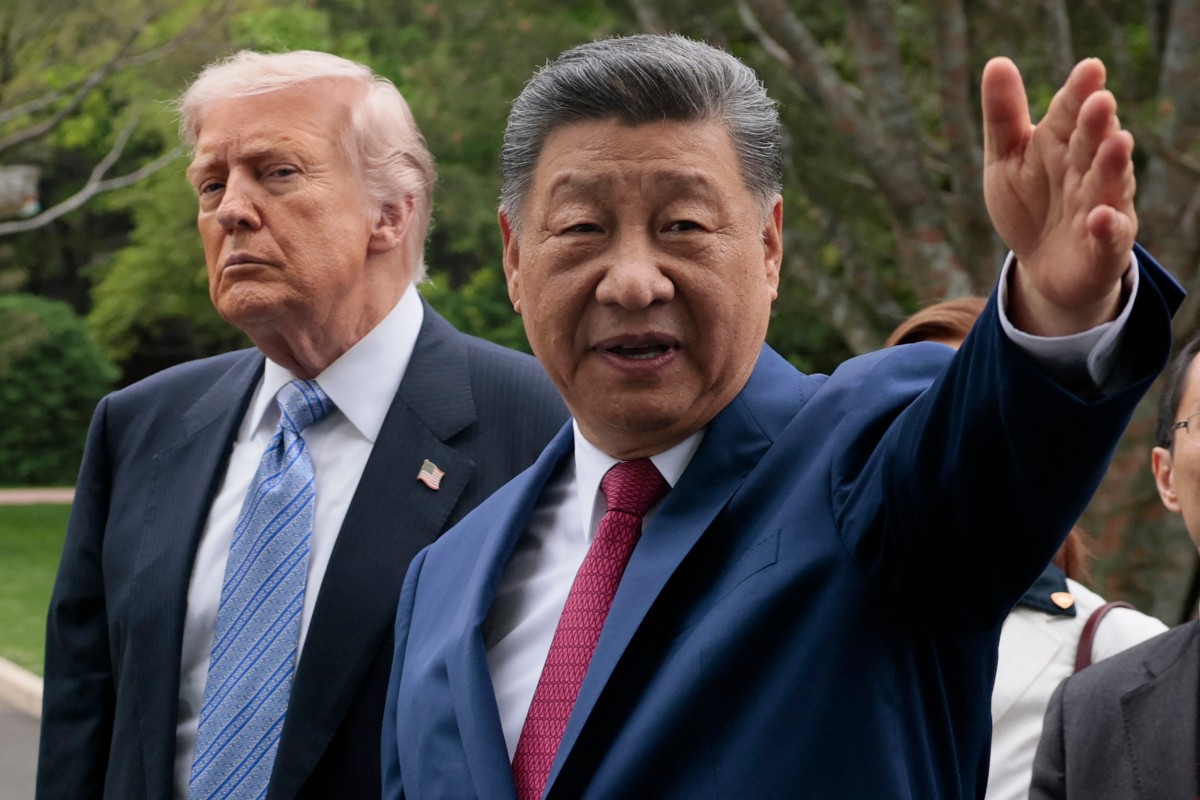
  •  

Trump Calls It “Invasion,” Musk Says Budget “Destroyed”: Moroccan Surge in Spain Rattles U.S. & Europe and Reignites “Islamic Fear”

Nearly 50,000 of the 60,000 young Moroccans who had entered  Ceuta, Spain’s 7.5-square-mile enclave on Africa’s coast, on July 29-30, 2026, by swimming around border barriers, may have returned to their country. But the global headlines they were responsible for have had geopolitical impacts on the rest of Europe and the United States. 

Prime Minister Pedro Sanchez of Spain called the event  “a violation of Spain’s territorial integrity”. But then the fact remains that his left-wing government’s series of liberal migration policies, coupled with the Spanish Supreme Court’s ruling last month that migrants arriving by sea could not be summarily returned, prompted such a massive migration, for which the country was perhaps not ready.

Of course, this was not the first surge from Morocco. As many as 10,000 from Morocco were said to have entered Spain in 2021. But the scale on July 29-30 made it the largest not only in Spain but also in the history of the European Union(EU).

After all, Ceuta, the small Spanish exclave on the North African coast, has a permanent population of just 84,000. Obviously, swarms of 60,000 outsiders totally overwhelmed the locals.

The crisis forces 3 questions: What drove it? What does Spain’s approach mean geopolitically? And how does the debate over religion, demography and identity shape it? 

As pointed out above, the influx was possibly triggered by a ruling by Spain’s Supreme Court that a law allowing the prompt handing back of migrants who breach frontier barriers at Ceuta and Melilla, another Spanish exclave, does not apply to those who arrive by sea. (Those who swim, the court reasoned, do not technically breach frontier barriers, since there are none in the water.) Word of this got around on social media in Morocco, prompting the stream of swimmers.

It may be noted that historically, Morocco has contested Spanish sovereignty over Ceuta and Melilla, just 13 to 14 kilometers from its shores through the Strait of Gibraltar. This has led some analysts to believe that  Rabat  “deliberately did little to prevent the crossings”.

They cite the similar opening that was made in 2021. But this is a minority view, given that Morocco has already facilitated the return of 50,000 of its people and is doing so even now.

The 2021 episode was a little different. That time Morocco allowed its people to wade into Ceuta, as an expression of its anger that Spain had allowed the leader of Polisario, a group that has long fought for the independence of Western Sahara, to come to Madrid for medical treatment. Morocco, incidentally, had annexed two-thirds of Western Sahara, a former Spanish colony, in 1975.

However, over the last four years, diplomatic parleys between Madrid and Rabat have stabilized the bilateral ties. Spain now backs Morocco’s autonomy plan for Western Sahara in exchange for Rabat policing the coast and taking back illegal migrants.

In 2024,  Spain started a program to legalize 900,000 undocumented migrants already in Spain (most of them Moroccans)  to bring them into the tax and social security. It decided to issue  “Labor visas”, under which fast-track permits to address Spain’s rapidly falling population.

The Sanchez regime has tried to legalize immigration as much as possible under what it calls a “human rights and labor needs” approach that envisages expanded regularization programs, bilateral cooperation with Rabat, and faster work permits for migrants in agriculture, tourism, and elder care.

Apparently, Spain has become the EU’s largest entry point for irregular migration, overtaking Italy and Greece. The vast majority of arrivals were from Morocco and the likes of Malians and Senegalese, who crossed through  Morocco by sea. So much so that Spain now has the largest Moroccan diaspora in the EU — over 800,000 people of Moroccan origin, as per Spanish data.

Reportedly, the UN projects Spain needs 200,000 net migrants per year to maintain workforce size. And 10 million foreign-born people for the first time in Spain’s history; they now constitute a fifth of the country’s total population, about 50 million.

At 1.1 million, Moroccans happen to be the largest single nationality of all the foreign nationalities. Birth rates among Moroccan-origin residents are said to be higher than those of native Spaniards, but converge to the Spanish average of 1.6 percent by the second generation, per demographic studies.

In other words,  Spain’s population would be shrinking without immigration.

However, the geopolitical reactions to what happened in Spain are quite different, particularly on both sides of the Atlantic.

The incident provided armor to President Donald Trump and all his supporters in their fight against what they say is illegal immigration into the US.

As images spread, Trump posted that the Ceuta scenes “vindicated” his wall and deportation policies, arguing Europe was now facing what the US faced in 2019. US conservative media amplified the Ceuta footage as evidence for border closure.

“I saw Spain yesterday, and I watched the catastrophe that took place,” Trump told a meeting of his cabinet at the presidential Camp David retreat in Maryland. “It looks like an invasion of a country by hundreds of thousands of people, and that same thing’s going to happen to us if the Republicans don’t get elected, except worse, much bigger.”

Tech billionaire Elon Musk also commented on the situation in Spain, writing on X that “Spain’s entire budget will be destroyed by illegal migrants” and arguing that offering benefits to migrants would create a “forcing function” for large-scale migration.

There were similar reactions from right-wing parties and EU centrists across Europe, demanding tougher immigration policies.

Far-right Alternative for Germany (AfD) co-leader Alice Weidel claimed in an X post that “Ceuta was left in ruins overnight” by the mass influx from Morocco. She argued that Germany is “likely the destination for most of these migrants”, adding “Germany must prepare itself: borders must be secured and rejections rigorously enforced”.

Relatives and friends wait by a fence topped with barbed wire for the return of people who had previously crossed into Spain’s North African enclave of Ceuta, at Morocco’s Bab Sebta border crossing on the outskirts of Fnideq on August 2, 2026. As many as 60,000 migrants entered Ceuta in recent days, mostly swimming around the small border post that juts into the Mediterranean Sea, in an unprecedented surge that prompted an international crisis for Spain. The mass crossing into the tiny Spanish territory resulted in at least 67 deaths, according to Spanish authorities, and led to clashes with Moroccan police on the shared border. (Photo by Abdel Majid BZIOUAT / AFP)

Italian Prime Minister Giorgia Meloni described the scenes in Ceuta as evidence that “uncontrolled illegal immigration poses a concrete threat to the security of Europe’s borders,” saying Italy was prepared to take “extraordinary measures” to defend its borders and the safety of its citizens, including the possible suspension of the Schengen Area with Spain.

The right-wing ruling coalition in Finland also called for excluding Spain from the European visa-free zone as a result of the situation. Czech Prime Minister Andrej Babis said the Ceuta situation was caused by Spain’s policy of offering hundreds of thousands of migrants already in the country a legal status.

In fact, the weekend incident in Spain is said to have accentuated the political turbulence in Europe and strengthened forces, including even conservatives and liberals, to end what was hitherto a “Liberal Consensus” on a liberal immigration policy.

That explains why on Saturday, Denmark’s Prime Minister Mette Frederiksen, German Chancellor Friedrich Merz, and Italian Premier Meloni initiated a letter that got signed by 22 member states, calling for immediate EU action.

“The bloc cannot allow uncontrolled mass crossings, the instrumentalization of migration or other hybrid threats to create the perception that illegal entry into the European Union is possible,” they wrote.

It may be noted here that for years Germany was the face of liberal asylum policy under Chancellor Angela Merkel. Now it has really reversed that under immense political pressure.

The AfD nearly doubled its vote share, especially in eastern Germany, by campaigning on immigration and crime linked to asylum seekers. As a result, the new CDU-SPD coalition started last year the policy of  “Stricter border checks” and a “de facto entry ban” for undocumented migrants,  including asylum seekers.

Even the British leadership labeled the developments in Spain deeply concerning while highlighting that the UK’s own restrictive operational measures are yielding lower overall small-boat crossing numbers compared to prior tracking periods.

Moving away from past perceptions of a liberal framework to stem the rise of populist Reform Party UK,  the ruling Labour Party is now systematically tightening rules through higher salary thresholds, bans on dependents for most students, restrictions on overseas care worker recruitment, and shorter temporary protection grants for refugees.

And still its government is facing intense but growing popular pressure for mass deportations, rigorous enforcement and digital pre-departure checks.

Incidentally, the growing fears in Europe over uncontrolled and illegal immigration seem to have an angle of the fear of “Islamisation”. It may not be the main driver of policy changes, but it is a major factor in the political turbulence around immigration, particularly in Germany, the UK, and France.

There is a growing Muslim population in these countries due to immigration and higher birth rates among the immigrants.

Reportedly,  there are 5.5 to 6.5 million Muslims in France, making it the largest Muslim minority in Western Europe. This group makes up about 8% to 10% of the country’s total population. The majority of them have roots in North Africa (Algeria, Morocco, and Tunisia), with smaller groups from Turkey and Sub-Saharan Africa.

Germany’s Muslim population is estimated to be between 5.5 and 7 million, which makes up roughly 6.5% to 8.5% of the country’s total population. The largest group has Turkish heritage, dating back to the guest worker program in the 1960s. Recent growth comes from refugees and migrants arriving from countries like Syria, Afghanistan, and Iraq.

The Muslim population in the United Kingdom is approximately 4 million people, making up about 6.0% to 6.5% of the total population. Islam is the second-largest religion in the country.

The largest share, as much as 66 percent, of British Muslims trace their family roots to the Indian subcontinent, with many arriving in waves during the 1950s and 1960s to fill postwar labor shortages. The rest came mainly from Somalia, Nigeria, Libya, Morocco, Algeria, Afghanistan, Iran, Turkey, and Cyprus.

In these three leading countries, considered to be the engines of Europe, the Muslim immigrants have created what are called economic, cultural, and political concerns over their running parallel societies, sharia law, religious schools, mosques, headscarves, and value clashes over free speech, gender, and LGBTQ issues.

Besides, there are problems relating to issues concerning economics, housing, asylum backlog, crime (the rise of extremism in Islam), and border control.

As it is, the Netherlands, Sweden, and Denmark have already passed laws on face veils, foreign funding of mosques, and “ghetto” laws. Denmark’s Social Democrats explicitly said they wanted “fewer Muslims” to protect their welfare state.

But then, as seen in Spain, these countries also face acute labor shortages, for filling up which most of these Muslims, like others, migrate. In any case, apart from the UK, in no country have Muslims become politically active to endanger the native whites. They do not have high-paying jobs like the skilled and highly educated immigrants, though they are doing very well in the sporting arena.

Therefore, if they are being seen with suspicion, it is because of the changes they have made to mainstream culture.

For many center-right and working-class voters in Europe, that includes concerns about mosques, religious schools, and values. That is why even left-wing parties like UK Labour and German SPD are now tightening controls. They have realized that if one does not address the cultural anxiety, one loses to parties who do or will.

In sum, what the weekend’s episode in Spain seems to have done is raise two questions: whether a liberal-immigration model of Europe will survive by combining open labor markets with credible borders; and whether Europe will still debate culture without dehumanizing people.

  • Author and veteran journalist Prakash Nanda is Chairman of the Editorial Board of the EurAsian Times and has been commenting on politics, foreign policy, and strategic affairs for nearly three decades. He is a former National Fellow of the Indian Council for Historical Research and a recipient of the Seoul Peace Prize Scholarship.
  • CONTACT: prakash.nanda (at) hotmail.com

The post Trump Calls It “Invasion,” Musk Says Budget “Destroyed”: Moroccan Surge in Spain Rattles U.S. & Europe and Reignites “Islamic Fear” appeared first on EURASIAN TIMES.

  •  

Thanks to India, U.S. & China Remain Neck-and-Neck in Global Popularity. 1.4B People Keep The Balance Even

There seems to be an emerging consensus among strategic circles all over the world that while the rising global popularity of China, evident from the latest survey from the Pew Research Center on July 15, may not equate to the real global strategic leverage that America still possesses, it is a critical warning signal for the U.S.  

In its survey, based on interviews with more than 42,000 people across 36 countries, Pew found that China is now viewed more favorably than the United States.

Among the 20 economies with comparable data, the median share of respondents expressing favorable views of China reached 46 percent, compared with 36 percent for the United States.

Similarly, during the first two years of his second term, President Donald Trump’s own ratings have also worsened significantly. Chinese President Xi Jinping now exceeds confidence posed in  Trump by 10 (ten)  points (31:21).

More favorable views of Xi were noticed in 22 of 36 countries. More overall now say that they have confidence in Xi than in Trump.

Pew says that more people have favorable views of China than the U.S. in 25 out of 36 countries, including Canada, Mexico, France, Germany, and Australia. Only 6 (six) countries still rate the U.S. more positively: India, Japan, South Korea, Philippines, Poland, and Israel.

And, according to Pew, there has been a “historic shift” in the sense that in 20 countries with data back to 2023, nearly “50% held a positive view of China”, while only “36% regarded the US favorably”. In 2023 it was the reverse: U.S. 58% vs China 32%.

Importantly,  Pew cites worsening views of the U.S. since Trump’s second term began, and the US-led war in Iran where “people have less confidence” that the U.S. is contributing to peace. On the contrary, Beijing portrayed itself as a “stabilizing force”.

Incidentally, Pew’s findings are far from an isolated case. Earlier this year (April), Gallup reported that global approval of China’s leadership had surpassed that of the United States by the widest margin in nearly two decades.

“China surpassed the United States in global approval ratings in 2025, with a median of 36% approving of China’s leadership, compared with 31% for the U.S. China’s five-percentage-point advantage over the U.S. is the widest Gallup has recorded in China’s favor in nearly 20 years…..At the same time, disapproval of U.S. leadership rose to a record-high 48%, while China’s disapproval rating remained flat at 37%, Gallup said.

Coming back to the Pew findings, many analysts have agreed with the think-tank that the Trump administration’s tariffs, aid cuts, disdain for allies, and his sheer transactional diplomacy are actively ceding the soft-power contest to Beijing.

In other words,  the volatility of American policy under Trump, which includes the use of force and the economic damage from tariffs,  has hardened international sentiment against the United States. This has helped China build the perception that it is a more reliable entity.

But then, the fact remains that China has also worked hard to earn its present position.

Extensive Diplomatic Work is bringing the World to Beijing. Since December 2025, Xi and his foreign minister Wang Yi have hosted the political leaders of all the permanent members of the United Nations (UN) Security Council and met with all of the candidates for the UN’s next secretary-general, among an “endless stream” of foreign leaders in Beijing.

The city hosted President Donald Trump in May, followed soon after by Russian President Vladimir Putin.

Across roughly 500 diplomatic engagements in the first half of 26 conducted by more than 20 senior officials, Beijing has seized the opportunity to make its pitch to the world. Our survey results suggest that this work is paying off.

Besides, as Arran Hope, editor of “China Brief” at the Washington-based Jamestown Foundation, observes, “at the regional level, Europe’s importance is reflected in its high volume of diplomatic engagements: no other region received as much attention between January and June, with the United Kingdom and Belarus receiving the most. ASEAN countries saw the next highest degree of engagement, which is in line with trends laid out above”.

China’s President Xi Jinping (R) gestures as he meets with US President Donald Trump (L) during a visit to Zhongnanhai Garden in Beijing on May 15, 2026. (Photo by Evan Vucci / POOL / AFP)

Xi, according to Hope, has been a keen promoter of “Asian values” in the region (of China) in recent times, which for the ruling Chinese Communist Party is a byword for anti-Western and pro-authoritarian, and is linked to gaining advantage in strategic competition with the United States.

Following the Pew survey, China’s People’s Daily wrote a commentary, which says, among other reasons, that China’s growing international goodwill is fostered by the appeal of its culture.

“Chinese cultural products are reaching wider global audiences than ever before. The phenomenal international success of the animated film Ne Zha 2 and the video game Black Myth: Wukong has sparked renewed global interest in Chinese mythology and traditional culture”, the commentary says.

Scholars like Yanzhong Huang agree.

“Culturally, the “Chinamaxxing” phenomenon—a viral social-media trend in which young Westerners embrace Chinese lifestyles, from drinking hot water to riding China’s high-speed rail vicariously through influencer livestreams—has given China the kind of organic, bottom-up cachet long enjoyed by Japan and South Korea, amplified by breakout products like the video game Black Myth: Wukong, the film Ne Zha 2, and Labubu dolls”.

He adds that China’s development model has also gained prestige: its dominance in electric vehicles, batteries, and infrastructure has made “the China model” an object of emulation rather than derision—so much so that Washington itself now practices industrial policy that borrows unmistakably from Beijing’s playbook.

However, notwithstanding all this, there are some limitations of China if one takes the Pew findings under closer scrutiny.

First, Chinese popularity is not uniform, covering all parts of the world.

Pew finds favorability toward China markedly higher in the emerging economies of Africa, Latin America, and South and Southeast Asia, with record highs this year in Colombia, Indonesia, Malaysia, Mexico, Nigeria, and Turkey.

China has also gained among the United States’ Western allies—Australia, Canada, France, Germany, Italy, the United Kingdom, Sweden, the Netherlands —as well as in parts of Latin America, where several publics once viewed the United States more favorably before Trump’s second innings.

But the fact remains that the U.S. also has significant support in six countries  – India, Japan, the Philippines, South Korea, Israel and Poland. Consequently, four of these happen to be China’s neighbors, and five of them (except Poland) are in Asia.

In the Philippines, 81 percent see the United States as a reliable partner compared with 42 percent for China. It seems that proximity to Chinese power, particularly when accompanied by maritime disputes, blunts Beijing’s appeal.

Secondly, and this is a corollary of the above, in terms of numbers, people in the world supporting the U.S. and China are more or less even. The U.S. should thank India for this. Negative-leaning views of India’s 1.4 billion people completely offset the strongly positive views of China in 30 other countries.

And here, what is noteworthy is that in Trump’s favorite Pakistan, China leads the U.S. in popularity by over 75 percent, the highest in the countries surveyed. Even in Bangladesh, where the coup dislodging Sheikh Hasina had the American blessings,  China’s lead is over 30 percent.

Thirdly, Huang makes one interesting point that  “soft power”, which reflects popularity, is, by its very nature, far more mercurial than hard power. Public opinion can swing within a single year.

He quotes the  ISEAS-Yusof Ishak Institute’s annual survey of Southeast Asia to illustrate that in 2024, when asked to choose, respondents sided with China for the first time (50.5 to 49.5 percent);  in 2025, they flipped back to the United States (52.3 to 47.7 percent); and in 2026, they flipped again to China (52 to 48 percent). “Sentiment that oscillates this easily is a weathervane, not a monument”, he argues.

To buttress his argument, he adds that Soft power ultimately derives from credibility rather than propaganda—and solid, credible foundations for China’s appeal have yet to be laid. In Inside China, there are no signs of meaningful improvement in the rule of law or political freedom—if anything, the trajectory points the other way—and global publics have noticed. In only eleven of the thirty-six countries Pew surveyed do around half or more say the Chinese government respects the personal freedoms of its people.

Considering all this, the Chinese score over the U.S. in the Pew Survey does not necessarily flow from intrinsic strength, and it is most likely due to deteriorating opinions of the United States under Trump.

In other words, Washington’s loss does not necessarily translate into a commensurate lasting gain for Beijing.

Thus,  one could say that it is too soon to declare a Chinese victory.

In 2026, the world may “like” China more than America for the first time, going by the Pew survey. But does the world “love”  China more than America? Pew does not deal with this question, though in geopolitics, the difference between “like” and “love” does matter. And things can change sooner rather than later if the U.S. takes corrective measures.

  • Author and veteran journalist Prakash Nanda is Chairman of the Editorial Board of the EurAsian Times and has been commenting on politics, foreign policy, and strategic affairs for nearly three decades. He is a former National Fellow of the Indian Council for Historical Research and a recipient of the Seoul Peace Prize Scholarship.
  • CONTACT: prakash.nanda (at) hotmail.com

The post Thanks to India, U.S. & China Remain Neck-and-Neck in Global Popularity. 1.4B People Keep The Balance Even appeared first on EURASIAN TIMES.

  •  
❌