Lt. Col. William Henry Rankin was a decorated US Marine Corps fighter pilot who flew combat missions in World War II and the Korean War. His greatest ordeal, however, came in peacetime.
On July 26, 1959, he ejected from an F-8 Crusader straight into a massive thunderstorm. And he lived to tell the tale.
The Vought F-8 Crusader was a single-engine, supersonic, carrier-based air-superiority fighter designed for the U.S. Navy and Marine Corps. Known as the “Last of the Gunfighters,” it was the final American fighter built with guns as its primary armament at a time when missiles were rapidly taking over. The aircraft entered service in 1957.
In May 1957, Rankin took command of Marine Fighter Squadron 122 (VMF-122). The following year, it became the first Marine squadron to operate the F-8 Crusader.
In 1959, he catapulted to fame for surviving what seemed like an impossible incident with the Crusader.
The Story Of Rankin’s Riding A Thunderstorm
On the afternoon of July 26, 1959, Rankin led a two-ship flight with wingman Lt. Herbert Nolan from Naval Air Station South Weymouth, Massachusetts, back to Marine Corps Air Station Beaufort, South Carolina.
During the flight, the pilots encountered a large cumulonimbus thunderstorm.
Typically, thunderstorms pose severe threats to fighter jets, including extreme turbulence, powerful updrafts and downdrafts, hail, lightning, icing, and torrential rain. So, fighter pilots are trained to climb above the storm to prevent damage to their aircraft.
The F-8 Crusader’s strong climb performance and high service ceiling of about 50,000 feet made this a practical choice for Rankin on that fateful day.
Rankin climbed his F-8 fighter jet to 47,000 feet at a speed of Mach 0.82 over a massive cumulonimbus cloud that peaked at about 45,000 feet.
While on this quest, he suddenly heard a loud, unprecedented bump and rumble from the aircraft’s engine. He instantly knew something was wrong with his jet.
The engine immediately stopped producing power, a bit of bad news that was delivered to Rankin by a bright fire warning light.
Acting swiftly to arrest the threat, Rankin immediately pulled the lever to deploy auxiliary power, but instead of saving his jet, it snapped in his hand.
Lt. Col William Rankin (Via X)
At this point, Lt. Col Rankin knew he had to eject, which was a formidable challenge without a pressure suit at that altitude.
As soon as he ejected and touched what is believed to be -58 to -60 degree air, his body started to fail. The veteran fighter pilot who had braved enemies in the wars he fought through his career was now struggling for survival—he suffered frostbite, the decompression caused his stomach to bloat, and he started to bleed from his mouth, nose, and ears. The only respite, at least initially, was that he had an emergency oxygen supply.
The chances of survival were grim, something Rankin was fully aware of.
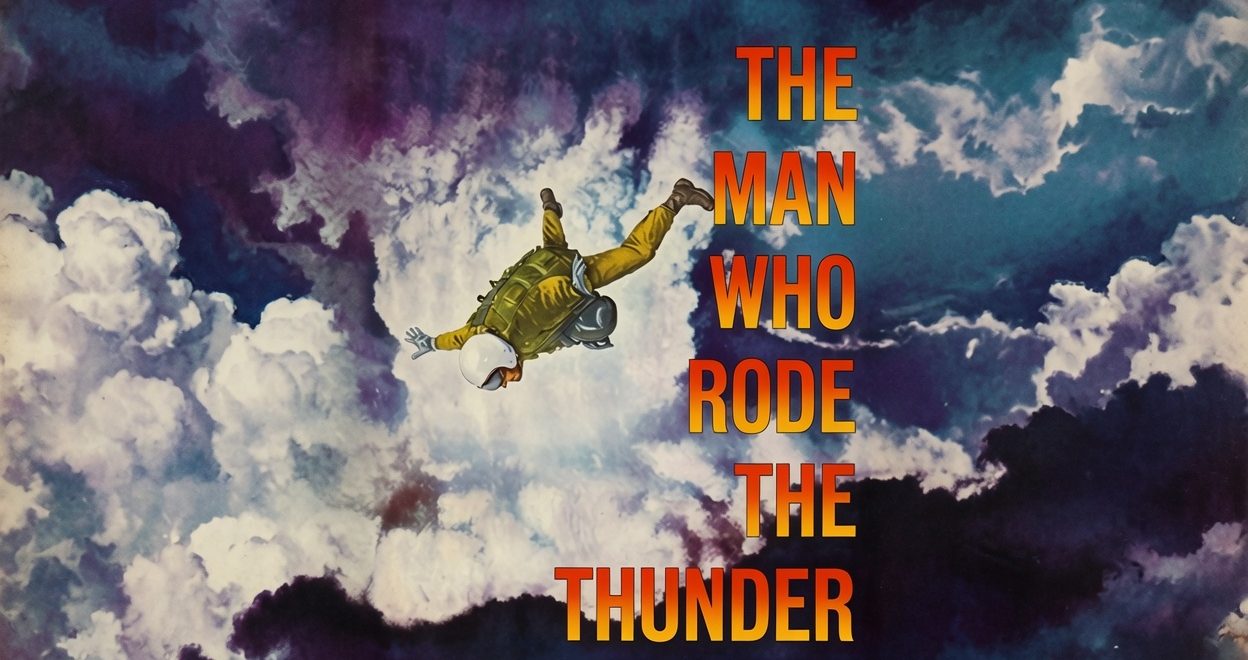
“I was convinced I would not survive; no human could”, Rankin later wrote in his book “The Man Who Rode the Thunder”.
“The pain of ‘explosive’ decompression was unbearable,” he recalled in his book, which has been widely read by aviation enthusiasts globally. “I could feel my abdomen distending, stretching, stretching, stretching, until I thought it would burst. My eyes felt as though they were being ripped from their sockets, my head as if it were splitting into several parts, my ears bursting inside, and throughout my entire body, there were severe cramps.”
However, he also bravely emphasizes, “I was terrified, but not petrified. It’s a brave distinction of terms.”
After roughly five minutes of free fall, Rankin realized his parachute had not opened. The system was designed to deploy automatically at about 10,000 feet via a barometric switch, allowing the pilot to reach denser, breathable air before the canopy opened. The already disoriented pilot began to worry that the parachute’s auto-deployment system may have been broken, causing his only chance at survival to fail.
Unfortunately, though, he was now in for a completely different kind of challenge.
As he was passing through a massive thunderstorm with zero visibility, the parachute opened prematurely as the violent pressure fluctuations, updrafts, and turbulence inside the cumulonimbus cloud “fooled” the barometric sensor.
Once under the open canopy of the parachute, Rankin was far more vulnerable to the storm’s powerful vertical currents. The long descent increased the risk of his death from cold or asphyxiation. Additionally, it meant that he was dangerously caught in the up-and-down draft of the storm system, which buffeted the pilot thousands of feet into the air before dragging him back down. And that’s exactly what happened.
Ten minutes into the ordeal, he began vomiting from the violent spinning and pounding even as lightning flashed around him—later described as blue blades several feet thick.
The rain was so dense that he repeatedly inhaled or swallowed water with every breath and had to hold his breath to avoid choking. “Gasping for air, swollen, bleeding, and battered by hail, it was as though I were under a swimming pool, and I had held my breath several times,” wrote Rankin.
For Rankin, this was akin to “drowning in the sky.”
For about forty minutes, he was battered by hail, nearly drowned by torrential rain, and subjected to lightning and extreme turbulence.
“I didn’t hear the thunder, I felt it,” Rankin wrote in his book.
Thankfully, the storm’s intensity eventually decreased, allowing the pilot to finally avoid its drafts. Then, the rain that had threatened to drown him gave way to a comforting summer shower, and the air got substantially warmer.
Lt. Col Rankin and his parachute, which had endured unimaginable turbulence and the ferocity of nature, had miraculously survived the thunderstorm.
Soon, he approached the forests of North Carolina’s backcountry, got entangled in a tree, cut away from it, and landed on the ground.
Battered, frostbitten, bleeding, rain-soaked, and covered in vomit, he stumbled through the woods using a search pattern until he found a country road. “Lying on my left side. I simply could not believe that I was on the earth—that I had survived,” he later wrote.
Several cars passed before a motorist stopped, drove him to a nearby country store, and allowed him to call for an ambulance. He collapsed while waiting and was taken to a hospital in Ahoskie, North Carolina. Rankin spent several weeks recovering but sustained no permanent long-term injuries from the forty-minute ordeal and soon returned to duty.
Rankin gained widespread recognition for his iconic and unbelievable battle with the thunderstorm after he returned to active service.
Having survived a 40-minute thunderstorm in the air, he lived for 50 more years before passing away at 89 in 2009.
Nevertheless, Lt. Col Rankin is still remembered—nearly 70 years after the incident—as the only man who defeated a thunderstorm.
Contact the author at sakshi.tiwari13 (at) outlook.com
Turkey has startled the world with its rapid rise in military technology, particularly in drone warfare. However, it is now charging full steam ahead with the development and testing of the KAAN combat aircraft, a move that will place it in the elite group of nations with stealth fighters
Turkish Aerospace Industries (TAI) recently released a video of KAAN’s new prototype performing powered taxi testing, suggesting that the first flight may be imminent. The video, posted on X, shows the aircraft moving on its own, verifying the functionality of the engine, brakes, steering, and flight control systems prior to flight clearance.
The new prototype, known as P1, is based on the original P0, which flew for the first time in February 2024, as EurAsian Times reported at the time.
However, the P1 is considered a more mature aircraft that will be crucial to the fighter development and testing campaign. The P0 prototype was constructed to confirm the aircraft’s fundamental flight characteristics, flight control system, and core platform. The P1, by contrast, incorporates a more advanced systems architecture and is intended to carry the bulk of performance, avionics, and mission-systems validation.
Notably, a second prototype, P2, remains in parallel production and integration, with the goal of having both aircraft flying by the end of 2026 to accelerate the test campaign through concurrent work.
— Türk Havacılık Uzay Sanayii (@TUSAS_TR) July 31, 2026
TAI CEO Mehmet Demiroğlu earlier stated e that the company hopes to see KAAN airborne within a few months and aims to have the second aircraft flying by year-end. “We hope to see KAAN in the sky within a few months. We also aim to fly the second aircraft by the end of the year. Our goal is to have two KAANs flying one after the other, or side by side, at year-end,” Demiroglu said at the Farnborough Airshow in the UK last month
Turkey plans three pre-production prototypes followed by series production of 250 aircraft. A deal was reportedly signed last month for 20 units of the original Block 10 KAAN
Notably, the P1 symbolizes the Kaan program’s evolution from a technology demonstrator into a developmental test fleet. It demonstrates that the program is proceeding at a speed to match the aspirational schedule of delivering the jets to the Turkish Air Force by 2028.
In addition to accelerated development and testing, the KAAN received another big boost last month when the US cleared for export the General Electric-made F110 engines initially destined to power the plane, removing a major roadblock in the program. Simultaneously, TAI is advancing work on the indigenous TF35000, which will power the aircraft in the long run, as EurAsian Times reported earlier.
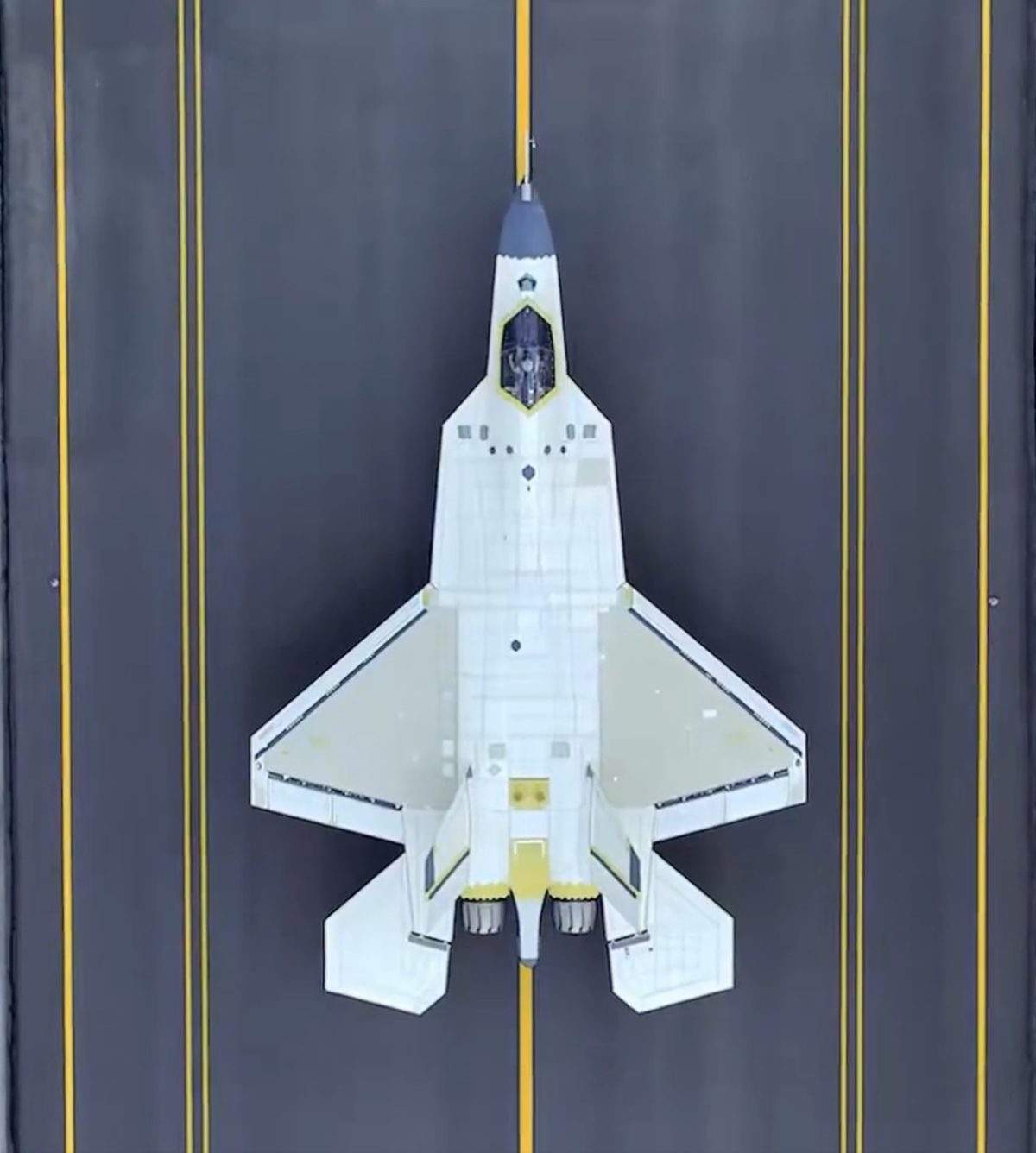
TAI KAAN P1 prototype conducted taxi test
The induction of the KAAN fighter will transform the Turkish Air Force, which has been operating aging F-16s since Ankara’s removal from the F-35 program in 2019 over its purchase of Russia’s S-400. The expulsion pushed Turkey to develop its own advanced fighter, aiming to achieve technological sovereignty and reduce dependence on the US.
More significantly, KAAN is Turkey’s most ambitious defense project in decades, positioning the country among the select group of nations that have independently designed and built a fifth-generation stealth aircraft. This progress aligns with Ankara’s broader emergence as a major defense producer and innovator, most notably in drones.
Turkey seems to be overtly prioritizing stealth, as evidenced by the development of KAAN. The KAAN is a twin-engine, single-seat stealth fighter featuring internal weapons bays, low-observable shape, and composite materials that improve stealth by lowering weight and radar signature. Furthermore, it carries a range of weapons internally, including air-to-air and air-to-ground munitions, such as indigenous Gökdoğan (BVR) and Bozdoğan (WVR) missiles, to bolster lethality while preserving stealth.
Alongside the manned fighter, Turkey continues advancing stealth unmanned systems. This includes the Anka-3, the first flying-wing, deep-strike drone developed by Turkish Aerospace Industries. According to reports, this stealthy unmanned combat aerial vehicle (UCAV) is currently advancing toward serial production, with design upgrades to intakes, exhausts, antennas, and other components.
More importantly, Turkey’s list of unmanned stealth aircraft prominently features the Kizilelma, an unmanned fighter jet expected to conduct a wide range of military operations.
The Bayraktar Kızılelma incorporates low-observable design features. It is routinely described by Baykar and Turkish defense officials as a low-RCS (radar cross-section) unmanned fighter. In fact, the Kizilelma recently conducted a weapons-firing test that further added to its stealth characteristics.
Stealthy Kizilelma Fired From Internal Weapons Bay
Last month, Kizilelma successfully conducted its first live-fire tests from its internal weapons bay, achieving direct hits. The test was reportedly conducted at the Corlu Flight Training and Test Center in the northwestern province of Tekirdag, using the production model with tail number S2 and Roketsan’s TEBER-82 munition and TOLUN munitions.
Baykar hailed the test as a historic milestone that confirms the jet’s ability to attack with precision while maintaining a low radar signature.
It is worth mentioning that external weapons, pylons, and the cavities they create dramatically increase an aircraft’s RCS. In fact, even a well-shaped low-observable airframe loses much of its stealth advantage once munitions are hung outside.
By successfully firing precision-guided munitions from the internal bay on the serial prototype, Kızılelma demonstrated that it can carry and release weapons without compromising its clean, low-RCS airframe, conduct stand-in or penetrating attacks in contested airspace while remaining harder to detect, and maintain higher speed and better aerodynamic efficiency.
“Thanks to its internal weapons bay, Kizilelma will be able to penetrate deep into hostile territory and strike using indigenous munitions while maintaining a low radar signature,” Baykar said, adding that internal carriage allows it to function “more effectively in areas with dense air defense coverage.
The Kizilelma is a stealthy multi-role unmanned platform designed for air-to-air combat, air-to-ground strikes, ISR (intelligence, surveillance, reconnaissance), close air support (CAS), missile strikes, suppression of enemy air defenses (SEAD), and destruction of enemy air defenses (DEAD), among other things.
“Bayraktar Kizilelma made its first flight in 2022. Since then, intensive flight activities have continued. Serial production was completed last year, and our goal this year is to place Kizilelma into service for Türkiye,” Bayraktar said at SAHA 2026.
The platform integrates Artificial Intelligence and can be operated out of aircraft carriers, according to the manufacturer, although those capabilities are still being refined. Moreover, it can fly alongside KAAN in a manned-unmanned teaming configuration (MUMT), adding what is referred to as “affordable mass” and substantially reducing the risk to manned fighters in contested environments,
If the current trajectory holds, KAAN and stealthy unmanned platforms will strengthen Turkish airpower and advance Ankara’s goal of self-reliance.
Contact the author at sakshi.tiwari13 (at) outlook.com
For decades, Kashmir’s mainstream political parties have been accused of using separatist rhetoric as a tool for electoral mobilization while shaping narratives that, critics argue, benefited Pakistan’s propaganda
Recently, Mehbooba Mufti, the president of the Jammu and Kashmir People’s Democratic Party (PDP) and former Chief Minister of Jammu and Kashmir, announced that the party will hold protests across all district headquarters in Jammu and Kashmir on August 5, demanding the return of special status and asserting that the Kashmir issue must be resolved.
At a time when many people in the Valley have moved on from such issues, Mufti appears to be trying to keep separatist ideology and sentiment alive by once again raising these themes and playing the separatist card to achieve her political objectives.
Her latest remarks become even more striking when viewed against the backdrop of the ongoing violence in Pakistan-occupied Jammu and Kashmir. (PoJK).
As the Pakistani forces are killing innocents in PoJK, the situation has worsened drastically, with 80 people killed since June, including a brutal escalation in which over 20 civilians were gunned down in just 24 hours.
During the long march, Pakistani forces, Rangers, and snipers deployed across Rawalakot and Mirpur have been directly firing live ammunition at unarmed civilians, leaving hundreds critically injured. The Pakistani forces have also reportedly occupied hospitals, cut off electricity and water supplies, and are not allowing the wounded to receive treatment while enforcing a total communication blackout.
There are also reports that the bodies of those killed are being taken from hospitals and that injured civilians are being removed from medical facilities by security forces. But in Kashmir, no mainstream political party, so-called activists, or others will condemn these Pakistani atrocities because they do not want to upset or openly criticize Pakistan.
Mainstream Political Rhetoric and the Separatist Narrative
More importantly, many Kashmiris on social media, instead of condemning these actions, are justifying them by saying that similar things happen in Yemen and other conflict zones, thereby trying to dilute the impact of the atrocities taking place there. In reality, the atrocities committed by Pakistani forces against innocent civilians have severely damaged their evil agenda and their larger game plan to undermine India. Therefore, they cannot condemn these killings or show solidarity with the victims, choosing instead to deflect attention away from Pakistan’s brutality.
Earlier also, Mehbooba Mufti made highly controversial statements painting a false picture of peace in PoJK, claiming that the people there were happy under Pakistan’s administration. Her dangerous rhetoric was instantly weaponized by Pakistani intelligence agencies and state media for anti-India propaganda.
Former Pakistani Foreign Minister Bilawal Bhutto even directly cited her statements on the floor of the National Assembly to fuel Islamabad’s false narrative on Kashmir on the global stage, explicitly quoting her claims to argue that “even India’s own elected leaders acknowledge the satisfaction of the people under our administration.”
Likewise, earlier, Srinagar Member of Parliament Aga Syed Ruhullah Mehdi, while referring to the recent atrocities in PoJK, deliberately drew a moral equivalence by comparing the situation in Indian Kashmir with Pakistan-occupied Kashmir. Speaking in Budgam, Mehdi claimed that people on both sides of the Line of Control have “suffered” equally and have been rendered “powerless”.
By stating that the situation is essentially the same “there and here,” his remarks explicitly serve to downplay the horrific atrocities, live ammunition firing, and brutal crackdowns that the Pakistan Army and Rangers are committing against innocent civilians in PoJK.
Instead of directly and unequivocally calling out Islamabad’s severe state-sponsored violence, his deliberate attempt to equate India’s democratic governance with Pakistan’s oppressive military occupation reveals a calculated agenda to dilute the gravity of Pakistan’s human rights violations, showing that certain mainstream leaders are more interested in deflecting for Pakistan than standing up for the truth.
Recently, he also went to Jantar Mantar when hundreds of students, backed by the Cockroach Janta Party movement, were holding major demonstrations demanding examination transparency over national exam controversies like the NEET-UG paper leaks. Instead of talking about the examination irregularities, addressing the plight of the distressed aspirants, or showing genuine solidarity with the students demanding accountability, he hijacked the platform to preach about the restoration of Article 370—an agenda that had absolutely no connection to the education crisis at hand.
He asked the crowd, “Did Article 370 come from Pakistan’s constitution or India’s constitution? These were the constitutional guarantees of this country.” He further shifted the focus by stating, “Kashmir has lived through this silencing for years. Today, the same is happening to you. This chain must break.” This blatant exploitation of a student-led grievance to push his own regional political narrative proves that his priorities lie entirely in keeping his separatism-tinted propaganda alive.
Similarly, earlier, when the Jammu and Kashmir Union Territory Budget was announced, and grants were provided by the Central Government, PDP youth leader Waheed-ur-Rehman Para launched a malicious attack on India’s financial system by explicitly comparing the budget allocation to “colonialism.”
Speaking aggressively against the central funding framework, Para claimed that the financial package and the extension of market-linked SASCI (Special Assistance to States for Capital Investment) loans were a deliberate plot to trap Jammu and Kashmir in a massive debt cycle, even comparing the situation to the economic collapse of Sri Lanka.
By labeling the central government’s development grants as a tool of colonial exploitation, his toxic rhetoric deliberately treated Kashmir’s integration into the national fiscal framework as an external imposition. Through this narrative, he acted as if Kashmir were a separate, occupied nation rather than an integral part of India, proving once again that these leaders will shamelessly manipulate financial data to fuel their anti-India propaganda.
Repeatedly, many mainstream leaders have used separatist language in Kashmir, such as making highly dangerous and unsubstantiated claims about demographic change, and making other rhetorical statements against India.
For instance, PDP president Mehbooba Mufti explicitly targeted central welfare initiatives like the Pradhan Mantri Awas Yojana (PMAY), aggressively claiming that providing land plots to the homeless was a disguised attempt to “import slums and poverty” and deliberately alter the Muslim-majority demographic composition of the region.
She went as far as tweeting that state-backed infrastructure and urban township proposals were part of a “deliberate state engineering” plan for mass settlements. Similarly, National Conference MP Aga Syed Ruhullah Mehdi has continuously used high-profile platforms to push a toxic narrative of systematic “disempowerment,” claiming that the post-2019 administrative framework is causing forced demographic changes and local alienation.
By generating these toxic domestic narratives, these leaders directly fuel the anti-India propaganda machinery operated by Pakistan, proving that their rhetoric is perfectly aligned with Islamabad’s agenda to undermine India’s sovereignty.
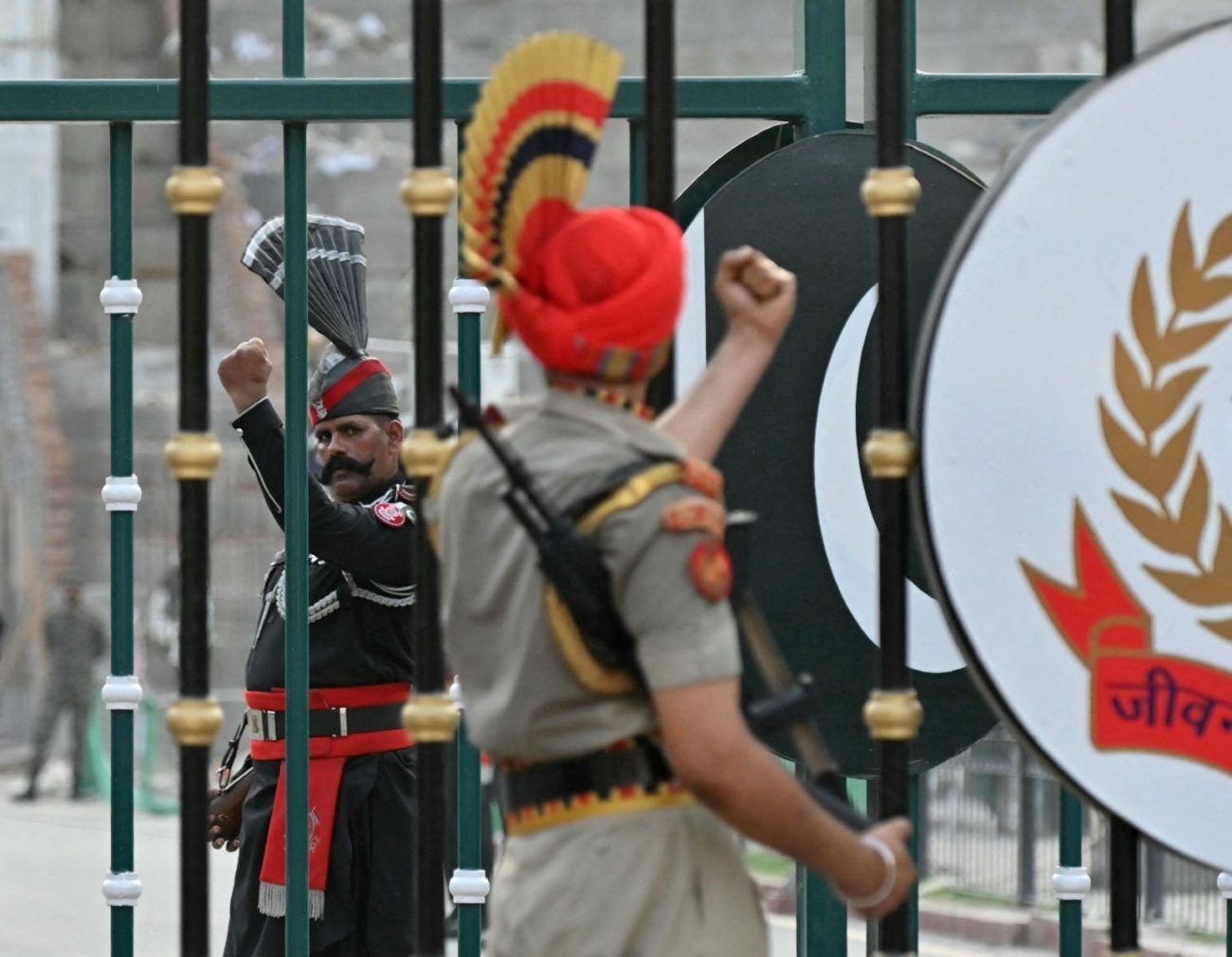
Pakistani Rangers (L) and Indian Border Security Force (BSF) personnel perform during the beating retreat ceremony at the Attari-Wagah border between Pakistan and India, on the outskirts of Amritsar on May 20, 2025. India said on May 20 it would resume a daily border ceremony with neighbouring Pakistan which it briefly halted earlier this month following the most serious conflict between the nuclear armed arch-rivals for decades. (Photo by Narinder NANU / AFP)
Political Ecosystem That Sustained Separatism
Who can forget the Assembly elections in J&K when some of these regional parties used to orchestrate a highly calculated booth-capturing tactic? They would deliberately instruct their dedicated voters and cadre to cast their votes early in the morning, within a strict, specific timeframe right as the polling booths opened.
Immediately after securing their own voter base, their party workers and mobilized miscreants would launch heavy, pre-planned stone-pelting campaigns directly targeting the polling stations to enforce a terror-induced shutdown. This violent strategy effectively blocked the general public and voters supporting other nationalist or mainstream parties from ever reaching the booths.
Later, instead of exposing this local voter suppression, these same regional leaders and separatist elements would project the dismal voter turnouts at the global level as a voluntary political “election boycott” by the people of Kashmir.
This deceptive narrative was instantly grabbed and weaponized by international forums and Pakistani state networks to run an extensive, malicious propaganda campaign against India, falsely claiming that Kashmiris had completely rejected the Indian democratic process when, in reality, their democratic rights had been violently hijacked by local party-backed stone-pelters.
If Pakistan has been responsible for spreading terrorism in J&K, these certain local mainstream parties, through their rhetoric and political strategies, have also been equally responsible for perpetuating and sustaining this separatism. Even during elections, and even today, they repeatedly use the separatist card and raise such issues as if Kashmir were a distinct territory. Whenever they ask for votes, they use separatist rhetoric to achieve their political objectives.
They have exploited the unrest in Kashmir in the past while amassing immense wealth, building massive private empires through rampant corruption and nepotism. For decades, they constantly provided misinformation to the Central Government, deliberately painting J&K as an unmanageable powder keg and keeping New Delhi in a permanent state of fear by misrepresenting the actual ground situation to sustain their own political monopolies.
Even when India historically abrogated Article 370 on August 5, 2019, they shamelessly resorted to the exact same fear-mongering and provocative statements. Most notoriously, PDP president Mehbooba Mufti explicitly declared that if Article 370 were ever removed, “there will be no one left in Jammu and Kashmir to hold the Indian tricolor,” a highly inflammatory claim designed to spark mass violence.
Even during the 1990s and afterward, some of these regional parties and their leaders actively worked with separatists, maintaining close ties with them and with Pakistan to play both sides against each other.
During the height of terrorism in the 1990s, political figures repeatedly maintained backchannel links with the All Parties Hurriyat Conference and Hizbul Mujahideen commanders to secure political leverage while simultaneously drawing administrative resources from New Delhi.
Dismantling the Remaining Separatist Ecosystem
The credit goes to the Central Government after 2019 for bringing monumental changes by dismantling the ecosystem of subversion, but much more still needs to be done. The Jamaat-e-Islami (JeI) Jammu and Kashmir, which remains banned under the Unlawful Activities (Prevention) Act (UAPA), must be subjected to round-the-clock surveillance, especially as its proxy elements continue trying to operate through covert networks.
There must be a razor-sharp focus on the massive inflow of funds coming into the region through fake charities, hawala routes, and cross-border shell entities. At the same time, social media platforms should be closely monitored for coordinated influence operations, disinformation campaigns, or content that unlawfully incites violence or supports terrorism, including attempts to downplay or justify Pakistani atrocities.
The comment sections of social media posts related to these incidents should also be closely watched, as they may reveal coordinated campaigns to deflect attention from or justify such violence.
At the higher education level, the politics and history of Jammu and Kashmir taught in universities and colleges should also be reviewed to ensure that the curriculum does not reinforce narratives portraying the region as inherently separate from the rest of India by overemphasizing notions of a “distinct identity,” “special status,” or political exceptionalism in a manner that fosters feelings of separateness.
Specifically, modules covering the Dogra period, the 1947 Instrument of Accession, and post-independence constitutional history should be re-examined. Instead, academic content should be factually rigorous, balanced, and aligned with constitutional values and the broader objective of national integration. Such vigilance should extend beyond educational institutions to the wider information ecosystem.
Furthermore, the state must implement rigorous audits and oversight mechanisms over all regional publications. The radical literature and ideological publications of any organization—including JeI’s propaganda materials or local newspapers in Jammu and Kashmir that may act as mouthpieces for Islamabad—must be strictly monitored and checked.
Allowing local platforms to subtly print soft-separatist columns or spread Pakistan’s twisted narrative under the guise of free press directly fuels radicalization.
Those seeking to undermine India’s unity and sovereignty must not be permitted to exploit the civil rights and democratic freedoms guaranteed by the Indian Constitution to propagate separatist or anti-national narratives. Freedom of expression cannot be used as a shield for promoting ideologies that threaten the constitutional order and national integrity.
Enforcing the J&K Media Policy with zero-tolerance penalties is essential to ensure that no platform is ever weaponized to promote separatism or undermine national sovereignty.
The Author is a prominent writer from Jammu and Kashmir. He has requested to remain anonymous due to security reasons.
THIS IS AN OPINION ARTICLE. VIEWS PERSONAL OF THE AUTHOR
A US Marine Corps (USMC) F-35B fighter jet crashed and erupted into flames near Marine Corps Air Station Miramar in San Diego on Friday morning, officials said. The pilot ejected safely before impact and suffered minor injuries.
USMC said: Emergency personnel responded this morning to an aircraft mishap on the flightline of Marine Corps Air Station Miramar at approximately 10:00 a.m. local time today, involving an F-35B assigned to Marine Aircraft Group 11, 3d Marine Aircraft Wing. The pilot ejected, was transported to a local medical facility in stable condition for evaluation and treatment of non-life-threatening injuries.
The single-seat F-35 went down at approximately 10:00 am local time in the vicinity of the base’s flight line, south of Miramar Road near Mitscher Way, the Marine Corps said in a statement.
“There was an aviation mishap involving a Marine Corps F-35B in the vicinity” of the air station, base officials confirmed, classifying the incident as a Class A mishap — the military’s most severe category, typically involving the destruction of an aircraft, damage exceeding $2.5 million or the permanent disability or death of personnel.
No cause for the crash has been released, and officials have not identified the pilot.
MCAS Miramar, located about 14 miles north of downtown San Diego, is a major hub for Marine aviation and was once home to the US Navy’s elite “Top Gun” fighter weapons school, made famous by the 1986 film starring Tom Cruise.
The F-35B is the short take-off and vertical landing (STOVL) variant of F-35 Lightning II, a fifth-generation stealth fighter designed for the US Marine Corps. It is also operated by the UK and Italy.
Unlike the conventional F-35A variant used by the Air Force or the carrier-based F-35C, the B model is equipped with a shaft-driven lift fan behind the cockpit and a swiveling rear exhaust nozzle that can redirect thrust downward.
This propulsion system, powered by a Pratt & Whitney F135 engine producing more than 40,000 pounds of thrust, allows the aircraft to operate from short runways, amphibious assault ships or austere forward bases without needing full-fledged airstrips.
The F-35B has an approximate flyaway cost of $109 million, making it the most expensive of the three F-35 variants.
The crash is among several F-35 accidents in recent years involving various variants, though officials highlighted the aircraft’s safety systems as pilots managed to eject each and every time.
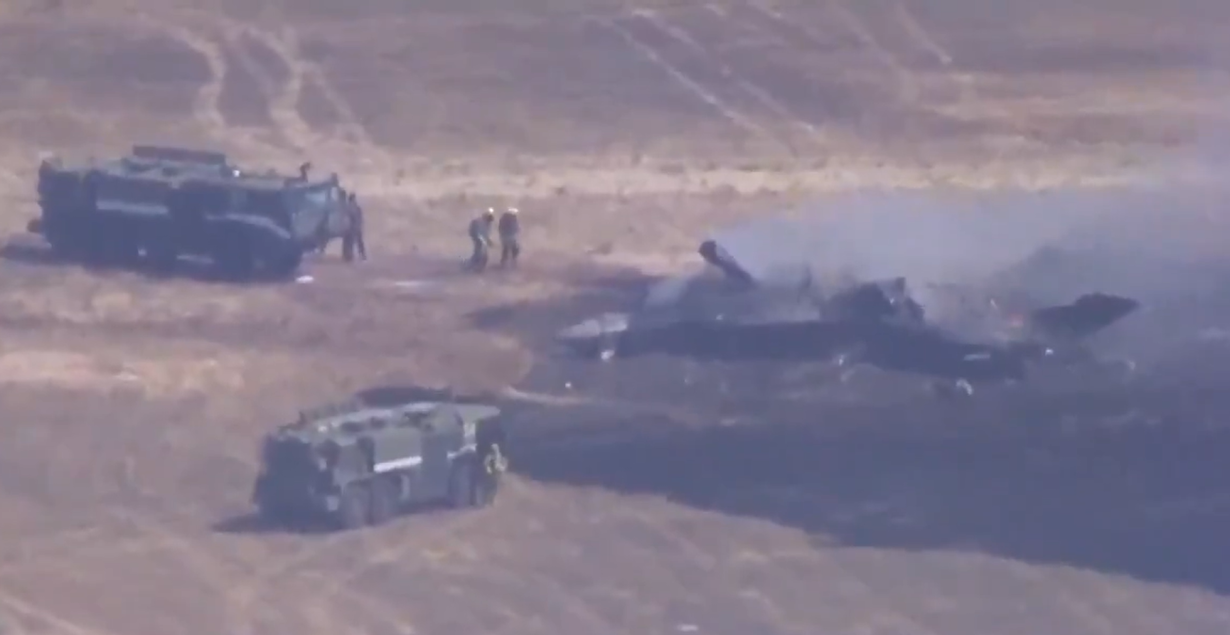
File Image: F-35 Crash
Earlier F-35B Crashes
On September 28, 2018, in South Carolina, the first crash of any F-35 variant was recorded. An F-35B from Marine Fighter Attack Training Squadron 501 crashed during a training flight. The pilot ejected safely. Investigators determined a manufacturing defect caused an engine fuel tube to fail.
The entire F-35 fleet was temporarily grounded for inspections.
Two years later, on September 29, 2020, an F-35B from Marine Fighter Attack Squadron 121 collided mid-air with a Marine Corps KC-130J tanker during aerial refueling near Naval Air Facility El Centro.
The pilot ejected, but the aircraft was destroyed. The KC-130 made an emergency landing, and all its crew members survived.
A year later, on November 17, 2021, a British F-35B crashed into the Mediterranean Sea shortly after takeoff from Queen Elizabeth aircraft carrier. The pilot ejected safely and was later recovered. An inquiry later found that an engine intake blank had been left in place, causing the loss of thrust.
On December 15, 2022, at NAS Joint Reserve Base Fort Worth, Texas, an undelivered F-35B undergoing production flight testing crashed during a failed vertical landing attempt. The test pilot ejected while the aircraft was still on the ground and was not seriously injured. The jet was written off.
Next year, on September 17, 2023, an F-35B from Marine Fighter Attack Training Squadron 501 experienced an electrical malfunction during a training flight in heavy rain and instrument meteorological conditions. The pilot ejected near North Charleston.
The unmanned aircraft continued flying for approximately 11 minutes and 21 seconds under its automatic flight-control systems before crashing in a rural area.
The aircraft’s debris was not discovered for more than a day. A Marine Corps investigation later attributed the mishap to pilot error, while noting the electrical failures and display malfunctions as contributing factors.
On May 28, 2024, an F-35B, a developmental test aircraft being flown by an Air Force pilot, crashed shortly after takeoff following a refueling stop en route from Fort Worth, Texas, to Edwards Air Force Base, California. The pilot ejected at low altitude, sustained serious injuries, but survived. The aircraft was completely destroyed.
Despite all these crashes, the pilots managed to eject and survive, though some sustained injuries.

 Login





 TEBER-82 & TOLUN-P Munition Firing Test from the Internal Weapons Bay
 Bull’s Eye