❌

Reading view

Europe Is Rearming — and U.S. Wall Street is Writing the Checks, Including GE’s Nearly $12 Billion Deal

The global defense industry appears to be entering a period of structural transformation, driven by rising military spending, technological change, and increasing private-capital involvement.

The “Aerospace & Defense M&A Report 2026: Deal Activity, Market Trends and Outlook,” published by Ropes & Gray LLP  on October 7, 2026, says that Aerospace and Defense Mergers and Acquisitions (M&A), Private Equity (PE), and Venture Capital (VC) funding are likely to expand further, showing that 2026 is on track to be one of “the strongest deal-making years” on record.

The report highlights that Defense Tech/Services is the fastest-growing segment at a 22% Compound Annual Growth Rate (CAGR), followed by Aerospace at 16% CAGR; Aircraft Manufacturers, Parts & Components at 14% CAGR; and Air, Land, & Sea Defense at 9% CAGR.

The report argues that the growth is not simply a temporary response to international conflicts. Governments are rebuilding industrial capacity, replenishing weapons inventories, strengthening supply chains, and accelerating the development of advanced military technologies.

In the United States, the largest market, proposed increases in defense resources, procurement reforms, longer-term contracts, and financial support for defense technology companies aim to attract private capital and expand manufacturing capacity.

In Europe, the EU’s Security Action for Europe initiative aims to mobilize about €800 billion in defense-related investment through national fiscal flexibility, loans, and related financing support.

Germany’s increased spending and procurement reforms can accelerate equipment acquisition and industrial expansion. Collectively, these policies are reshaping the geography of defense investment in Europe.

In fact, the report says that  Europe has emerged as a major driver of new activity. “Europe has become a primary engine of deal flow, not a secondary market. Rising national budgets and new EU-wide financing mechanisms are reshaping where capital is being deployed as well as dictating deployment speed”, it says. NATO’s higher spending ambitions, European rearmament and new financing arrangements are encouraging companies to expand, consolidate and acquire specialist capabilities.

Meanwhile, the Indo-Pacific is undergoing a rapid, structural alignment driven by what regional planners call a “contested era.”

China is consolidating its domestic defense industry, though restrictions on cross-border investment limit Western investors’ access. Japan is rapidly reshaping its defense posture and adapting to an environment where the traditional binary definitions of “peacetime” and “wartime” have effectively blurred.

In this era of continuous competition, the report says Japan has elevated allied burden-sharing to its foundational organizing principle.

This shift is most visible in the digital domain. With the operationalization of Japan’s Active Cyber Defense Oversight Commission, Tokyo has adopted a proactive cyber defense strategy. By implementing legal public-private threat reporting and neutralized-access protocols, Japan is signaling a willingness to legally counter and neutralize state-sponsored infrastructure targeting before cyber assaults can cripple critical domestic networks.

One of the report’s most important observations is that defense investment is increasingly a private-equity story. Private-equity firms are acquiring established manufacturers, selling businesses to strategic buyers and building larger companies through additional acquisitions. Venture capital is also financing newer businesses developing military technologies.

Among the ten largest transactions listed for 2026 up to September 30 was GE Aerospace’s $11.8 billion acquisition of Consolidated Precision Products. Other major deals involved aerospace leasing, maritime defense, aircraft components, and specialist detection technologies.

Dubai Aerospace Enterprise bought Macquarie Airfinance for $9.0 billion in what was a leasing consolidation. In a move that signals European rearmament, land-defense scaling, and main-battle tank production, KfW Group (German State Bank) is backing KNDS [Franco-German tank maker Krauss-Maffei Wegmann + Nexter] with $7.8 billion.

In other words, private investors are no longer confined to peripheral suppliers. They are becoming key participants in the industrial ecosystem that supports national defense.

Significantly, the traditional reliance on a handful of legacy prime contractors is giving way to an ecosystem heavily backed by private equity and venture capital.

The private sector is now driving global defense deal-making as it pivots toward software-defined defense, autonomy, and next-generation platforms.

The report shows how defense technology is changing the industry’s center of gravity. Although aerospace and defense remains one of the most active and strategically complex sectors for private capital deployment, software-defined defense, autonomy, and next-generation platforms are pulling ahead as the fastest-growing corner of the market.

Investors are particularly interested in artificial intelligence and software-defined defense systems; autonomous platforms, including unmanned aircraft and maritime systems; counter-drone and missile-defense capabilities; space infrastructure and surveillance; and specialist electronics, communications, and mission-critical components.

However, while these technologies can drive rapid growth, they also carry risks due to restrictive policies in the US and Europe. The report notes that regulatory compliance is becoming a structural hurdle rather than an afterthought.

In the United States, the largest market by transaction value, more national security vetting—including CFIUS (Committee on Foreign Investment in the United States) and FOCI (Foreign Ownership, Control, or Influence) mitigation—is becoming foundational to ensuring a clean exit.

In other words, the global defense landscape seems to be marked by a distinct paradox.

On the one hand, geopolitical threat vectors are accelerating at breakneck speed. On the other hand, the financial and regulatory machinery needed to field next-generation capabilities faces structural friction.

As a result, companies may depend heavily on a single government customer, handle classified information, or face restrictions on intellectual property developed under government contracts. Cybersecurity compliance and access to sensitive facilities can also complicate acquisitions.

In the United States, the CFIUS can scrutinize foreign investment for national-security risks. FOCI can also affect access to classified work and sensitive facilities.

Similarly, European foreign-investment screening is marked with many complexities. Even businesses that are not conventional arms manufacturers may face scrutiny if they supply strategically important electronics, software, communications or other dual-use technologies.
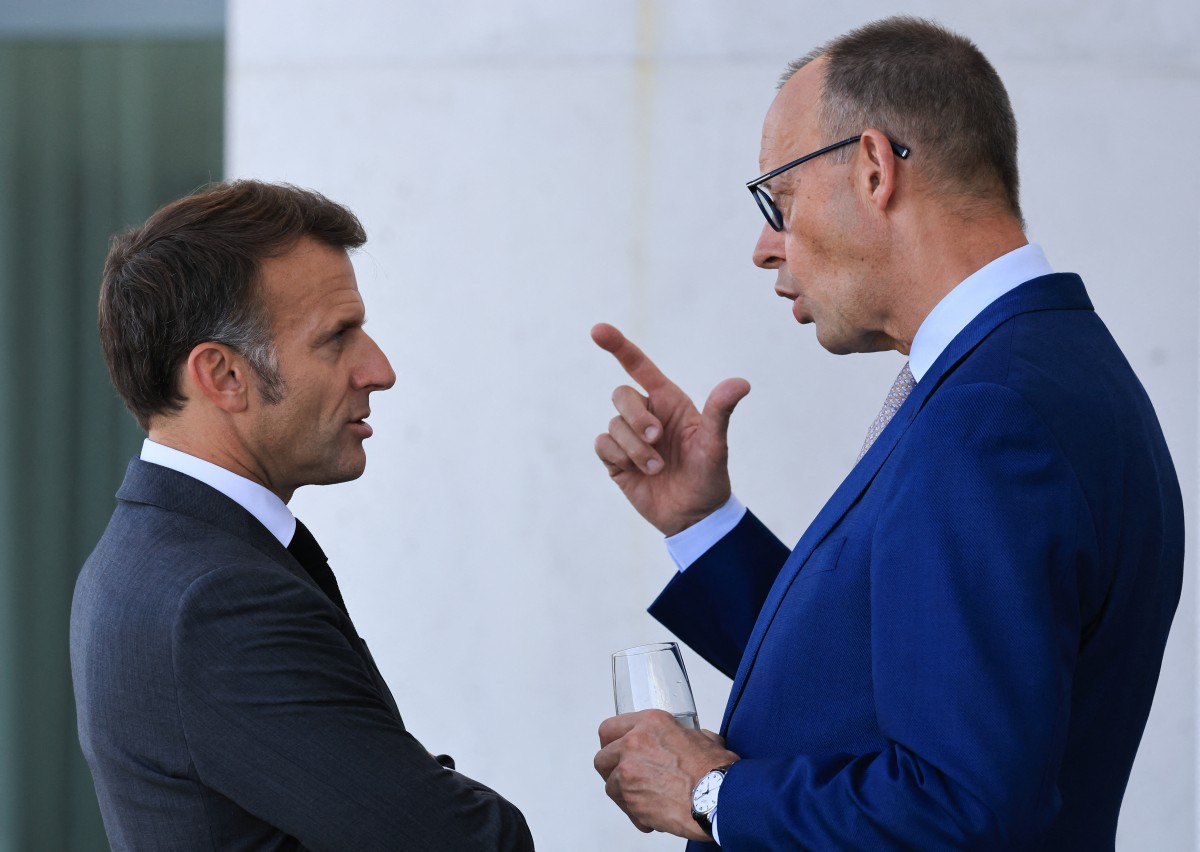

German Chancellor Friedrich Merz (R) and French President Emmanuel Macron talk on the terrace of the Chancellery at the start of the meeting of State leaders of the European Group of Five (E5) and the NATO Secretary General on June 24, 2026 at the Chancellery in Berlin, Germany. (Photo by Ludovic MARIN / AFP)

Commercial risks matter too. Fixed-price government contracts can leave manufacturers exposed when costs rise unexpectedly. Buyers must therefore examine contract liabilities, working capital, supply-chain resilience, workforce retention and the restrictions that could affect a future sale, the report advises.

The report’s overall conclusion, therefore, is that while defense investment opportunities are expanding,  success increasingly depends on technological relevance, reliable industrial execution, regulatory compliance and the ability to navigate national-security restrictions throughout the ownership cycle.

What lessons could India draw from the trends above?

For India, the report is particularly relevant because it highlights a shift in how advanced military capabilities are developed and financed. The implications extend beyond aircraft, missiles, and ships to defense electronics, artificial intelligence, autonomous systems, space technology, supply chains, and foreign investment.

India’s first opportunity is to integrate more deeply into international aerospace and defense supply chains. As Western manufacturers expand production and diversify their suppliers, Indian companies could become more important producers of precision components, avionics, electronics, aerospace structures, and maintenance services.

The most instructive lesson may come from GE Aerospace’s September 8, 2026 acquisition of Consolidated Precision Products (CPP). Experts say that it was a paradigm shift in aerospace and heavy industrial manufacturing. For decades, aerospace primes aggressively outsourced manufacturing to optimize their balance sheets, shifting capital-expenditure risks onto multi-tiered supply chains.

But years of systemic, compounding engine delays—magnified by the Pratt & Whitney GTF powder metal crisis and Boeing’s structural manufacturing gridlock — exposed a fatal flaw: primes (like GE) outsourced execution, but they could never outsource the risk.

Therefore, GE Aerospace decided to buy the absolute bottleneck of jet engine production: structural castings and complex airfoils. Its deal with private equity firms Warburg Pincus and Berkshire Partners is meant to address persistent, industry-wide shortages of critical engine parts and airfoils. In other words, GE bought the supply chain to control the delivery.

For India, this implies that beyond focusing on “Make in India” as screwdriver assembly, it should also consider “Own the Supply Chain.”

Second, as defense technology gains primacy, expanding AI-enabled systems, autonomous platforms, counter-drone technology, advanced sensors, and space infrastructure could be more relevant for India than producing isolated components.

Some experts argue that because European primes are cash-rich and seeking low-cost engineering, they would prefer a JV with India to meet capacity needs.

Lastly, as the Ropes & Gray LLP  report illustrates, private equity and venture capital can help consolidate fragmented industries, finance expansion, and support specialized technology businesses. India could adapt this approach to build stronger domestic defense suppliers.

  • Author and veteran journalist Prakash Nanda is Chairman of the Editorial Board of the EurAsian Times and has been commenting on politics, foreign policy, and strategic affairs for nearly three decades. He is a former National Fellow of the Indian Council for Historical Research and a recipient of the Seoul Peace Prize Scholarship.
  • The author can be reached at prakash.nanda (at) hotmail.com

The post Europe Is Rearming — and U.S. Wall Street is Writing the Checks, Including GE’s Nearly $12 Billion Deal appeared first on EURASIAN TIMES.

  •  

Su-57 Under Review, IAF Boss Says. Can India & Russia Replicate BrahMos Success Story with Felons?

Unlike the F-35, India has received a formal offer from Russia for the Sukhoi Su-57 fifth-generation fighter but has not yet decided whether to evaluate it, the head of the Indian Air Force said.

Air Chief Marshal A.P. Singh told reporters on the sidelines of the Exercise Tarang Shakti in Jodhpur that the Indian Air Force was aware of Moscow’s proposal.

“As far as the Su-57 is concerned, we have received information that an offer has been made, but no decision has been taken on whether to evaluate it,” he said.

“Once a decision is made, we will assess how well it meets our requirements.”

Russia has repeatedly pitched the Su-57 to India.

Earlier, as EurAsian Times reported, Russian President Vladimir Putin personally renewed the Su-57 offer to India.

Speaking on the sidelines of the St. Petersburg Economic Forum, Putin reaffirmed Russia’s readiness to cooperate with India on the Su-57, including exporting and jointly producing the aircraft.

“It’s fifth-generation technology — I think it’s the best in the world as of now,” the Russian President said at the forum.

President Putin recalled Indo-Russian 5th-gen aircraft collaboration and said: “As far as the Su-57 goes, at one point we proposed to our Indian friends to work together on this technology. “But back then, our Indian friends said: ‘Go ahead on your own, and then we will see – maybe we’ll join’…The aircraft could have been our joint project. We built it independently, but we are ready to work with India in this field – to supply this aircraft and to keep developing it,” the Russian President told the reporters. “We don’t have any issues with it or any limitations. The same goes for air defense systems,” he added.

Su-57 carrying R-73 missiles externally. Credits X.

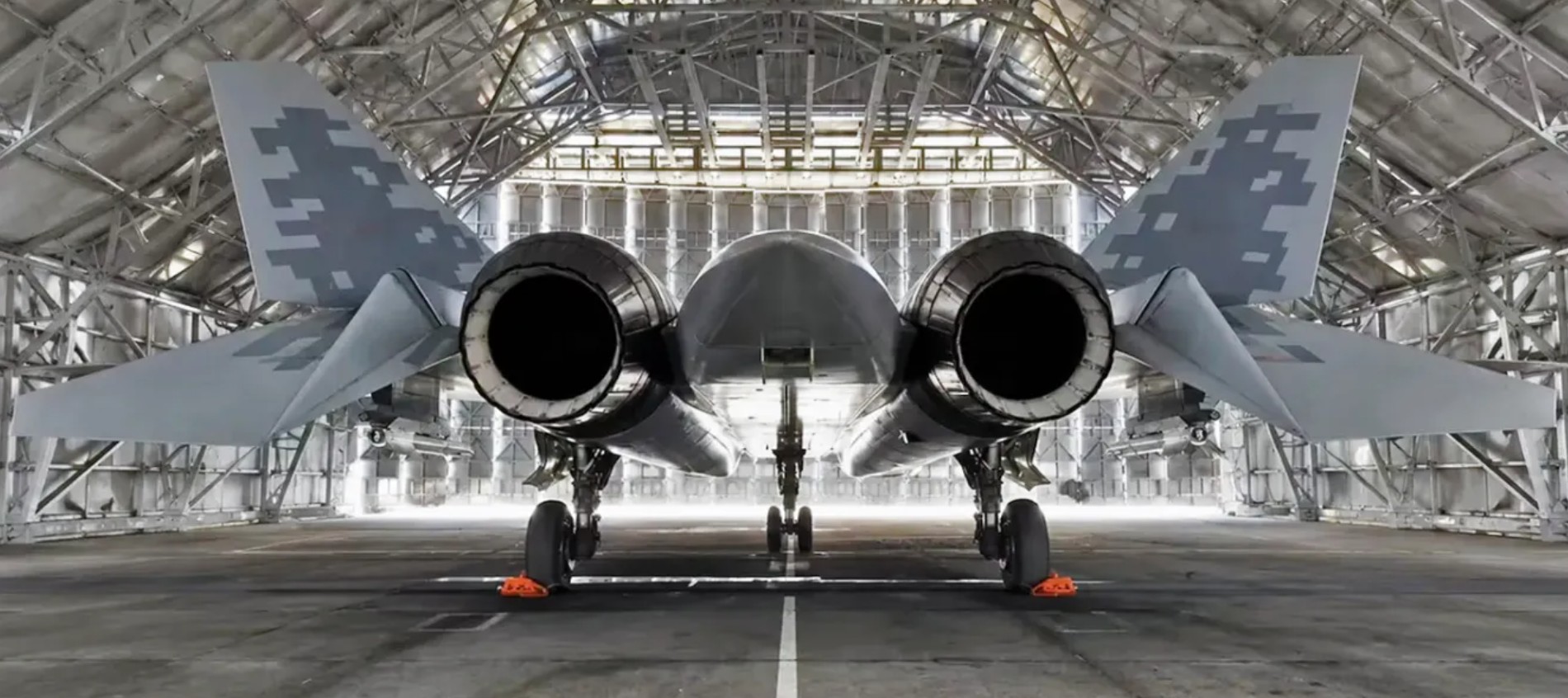
The Su-57 is a supersonic, twin-engine fifth-generation aircraft designed to destroy air, ground, and naval targets. Developed to compete with the F-22 and F-35, the ‘Felon’ jet features enhanced stealth through composite materials and can cruise supersonically.

It is a multi-role fighter jet capable of air superiority missions, ground attacks, reconnaissance, and electronic warfare. Russia is integrating a range of lethal weapon systems on the Su-57 platform, including the long-range R-37M missile and hypersonic missiles, as reported by the EurAsian Times.

Additionally, the aircraft is being integrated with Artificial Intelligence (AI) to enhance threat detection, decision-making, and pilot support. However, these features have failed to attract buyers, especially India.

If India proceeds with the Su-57 deal and Moscow meets all Indian prerequisites, including technology transfer, it could inject billions into Russia’s sanctions-hit economy. India would also get an interim fifth-gen fighter till the indigenous AMCA arrives.

Russia’s defense exports have historically benefited through high-profile deals with India. An excellent example is the Su-30MKI, India’s customized variant of the Su-30.

India’s acquisition of the Su-30MKI in the early 2000s influenced other nations, such as Malaysia, which modeled its Su-30MKM on the Indian version. Its versatility—including thrust-vectoring engines, canards, and integrated avionics from multiple countries—made it a flagship for Russian technology.

Another bigger success story is the BrahMos supersonic missile.

India’s DRDO and Russia’s NPO Mashinostroyeniya launched the joint venture in 1998 to develop and produce the BrahMos, one of the world’s fastest supersonic cruise missiles.

The Philippines was the first customer of the BrahMos, signing a contract worth approximately $375 million with BrahMos Aerospace in January 2022 for three shore-based anti-ship missile batteries.

The package, intended for the Philippine Marine Corps, includes mobile launchers, missiles, operator and maintainer training, and integrated logistics support. Deliveries began in April 2024 with the first battery and continued through 2025 and into 2026, with the third and final battery nearing completion.

Philippine Defense Secretary Gilberto Teodoro has indicated interest in further adapting or expanding the capability to suit the country’s geography and operational needs.

Another Southeast Asian country, Indonesia, became its second customer.
An agreement for “cooperation on the BrahMos System” was struck during the visit, Indian foreign ministry spokesman Randhir Jaiswal said in a post on X.

The two countries also reached an agreement on air-to-air missile cooperation that “enhances technology collaboration and defense capabilities”, he said.

Indian PM Modi hailed the “growing trust” between Jakarta and New Delhi after meeting Prabowo, which he said underpinned cooperation in “defense, security and maritime affairs”.

“Today, we reached an agreement to enhance defense exchanges, disaster management, and industrial cooperation,” Modi told reporters.

A man waves India’s national flag in front of a replica of the Indian Army’s BrahMos missile system during Prime Minister Narendra Modi’s roadshow in Ahmedabad on May 26, 2025. (Photo by Sam PANTHAKY / AFP)

Earlier, Indonesia’s Ministry of Defense (MoD) spokesperson, Rico Ricardo Sirait, told Reuters on March 9 that Jakarta has agreed to buy the BrahMos missile system from India.

The Indian Navy inducted its first BrahMos system in 2005 aboard INS Rajput. The Indian Army followed in 2007 with its own regiments, and the Air Force later introduced an air-launched version from the Su-30MKI in 2019.

The BrahMos missile saw combat use during Operation Sindoor in May 2025, when Indian forces employed air-launched variants from the Su-30MKI. IAF reportedly fired 15-19 BrahMos missiles.

The Indo-Russian missile could have more export customers.

India sketched a list of “friendly nations” it deemed potential buyers, including the Philippines, Vietnam, Saudi Arabia, the UAE, and South Africa. The list has since changed, with several countries dropping interest and others queuing up to assess the combat-tested missile system.

India reportedly started talks with Vietnam to sell off the supersonic cruise missile in 2023. An official with BrahMos Aerospace Ltd told the EurAsian Times at the time: “Vietnam had shown interest in the system. But the negotiations have just started.”

Further evidence of BrahMos’s widespread appeal in Southeast Asia is Malaysia’s sustained interest in the missile system, particularly the air-launched variant, which could be integrated with the Royal Malaysian Air Force’s Su-30MKM fighter jets.

By 2025, Malaysia appeared in lists of countries “queuing up” or actively negotiating for BrahMos. In fact, in August that year, reports suggested Malaysia had begun preliminary negotiations with Russia and India for the missile, aiming to revolutionize its Indo-Pacific airpower projection.

Besides Southeast Asia, the Middle East could be a potential market for the BrahMos missile.

Alexander Maksichev, Co-Director of BrahMos Aerospace, explicitly emphasized the UAE as a potential customer. Additionally, India has repeatedly listed the UAE among “friendly nations” eligible for BrahMos exports.

Other countries that have reportedly shown interest in the missile include Saudi Arabia, Qatar, Oman, and Egypt. BrahMos has also gained traction in South America, with countries such as Brazil, Chile, Argentina, and Venezuela showing interest.

The Indo-Russian BrahMos is a major export success, and Putin may want to replicate that success with the Su-57, using Russian tech and Indian co-production and marketing.

Whether India will bite the bullet remains to be seen.

The post Su-57 Under Review, IAF Boss Says. Can India & Russia Replicate BrahMos Success Story with Felons? appeared first on EURASIAN TIMES.

  •  

Better than Rafale — Why Taiwan’s F-16 Viper Holds an Edge Over India’s French Jets to Counter China? Opinion

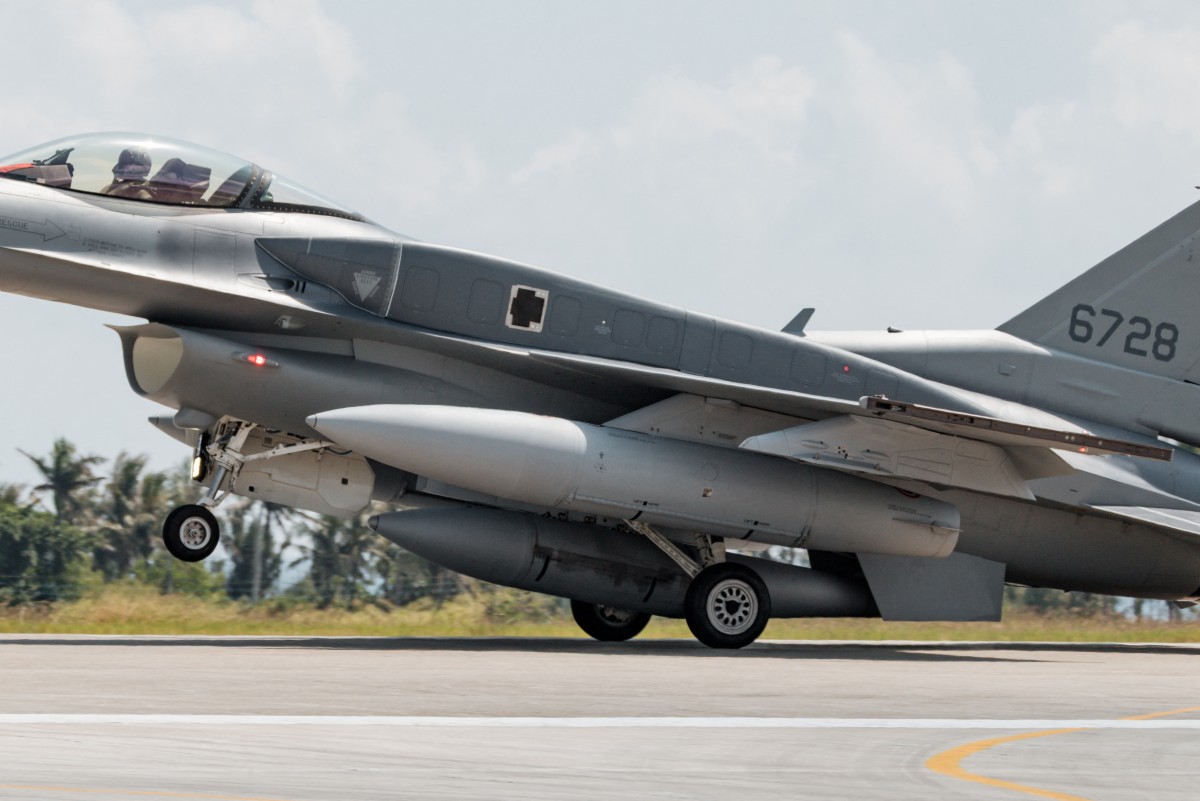
Taiwan recently received its first two F-16V (Viper) fighter jets from the US under an $8 billion deal for 66 F-16Vs, approved during US President Donald Trump’s first term.

The F-16 Vipers landed at Taiwan’s Chihhangair Air Force Base in Taitung. President Lai Ching-te called it “a major milestone in elevating Taiwan’s air defense capabilities” and thanked the US for its “long-standing support.”

When Lockheed Martin delivers the 66 new jets by 2028, the Taiwanese Air Force will have more than 200 F-16 Viper fighter jets, making it the largest Viper-standard fleet in the Indo-Pacific region.

Meanwhile, another Asian country, wary of China’s military, plans to acquire 114 Rafale jets from France.

IAF (Indian Air Force) already operates 36 Rafales and has ordered 26 Rafale-M (Marine) fighter jets for its Navy. If and when the IAF acquires all 114 Rafale jets, it will become the largest operator of Dassault jets outside France.

A newly purchased F-16V Block 70 fighter jet lands at Chihhang Air Base in Taitung on October 2, 2026. Taiwan received its first two US-made F-16V fighter jets, as the island democracy upgrades its military capabilities to deter a potential Chinese attack. The warplanes are part of an $8 billion deal for 66 F-16Vs approved during US President Donald Trump’s first term and scheduled for delivery this year. (Photo by CHENG Yu-chen / AFP)

Rafale vs F-16V

Both Rafale and F-16V are powerful fighter jets, but one massive advantage makes the US Vipers “superior” to the French Rafales, at least theoretically.

On paper, the twin-engine, nuclear-capable Dassault Rafale looks far more lethal than Lockheed Martin’s F-16 Viper, a single-engine lightweight fighter that first flew in 1974, more than five decades ago.

However, in modern times, fighter-jet battles are rarely one-on-one platform contests.

As heroic dogfights between fighter jets became a relic of the past and gave way to beyond-visual-range (BVR) contests, the battle for aerial supremacy became a system-of-systems contest rather than a straightforward one-on-one contest.

In this system-of-systems contest, a much less capable fighter aircraft can trounce a much superior aircraft if it integrates ground-, air-, and space-based sensors, capable radars, sensor fusion, an integrated battlespace display, and precision targeting.

In short, a networked fighter jet, even if less capable, is more lethal than a stand-alone aircraft.

Additionally, fighter jet deals are rarely purely military decisions; they are as much geopolitical as they are military.

It’s no surprise that a capable, cost-effective combat aircraft like the Saab JAS-39 Gripen struggled to find an export customer for over a decade. Again, after signing a deal with Brazil for the Gripen E/F variant in 2014, the aircraft failed to win other export customers for more than a decade.

While Gripen is a cutting-edge aircraft with state-of-the-art weapons, its biggest weakness was the lack of a powerful, influential backer on the global stage like the US or France.

Trump’s Big Taiwan Move: Despite $14B Arms Freeze, Permanent U.S. Military Officials May Sit at MND

Sweden, where Saab is based, is not really a global powerhouse, has a modest military, is not part of the nuclear club, and is not a member of the UN Security Council, unlike the US, Russia, France, the UK, and China, all of which are permanent members of the UNSC and enjoy veto power that could offer myriad advantages in geopolitical contests.

Brazil’s military transport aircraft, the Embraer C-390 Millennium, faces a similar challenge. Though capable and boasting an enviable safety record, it sells far fewer units than the American C-130J Super Hercules.

In other words, countries not only buy fighter jets; they also prefer to buy from countries with strong military and geopolitical clout.

This is where the US has an unmatched lead over competitors, including France, Russia, and China.

Consider, for example, Ukraine.

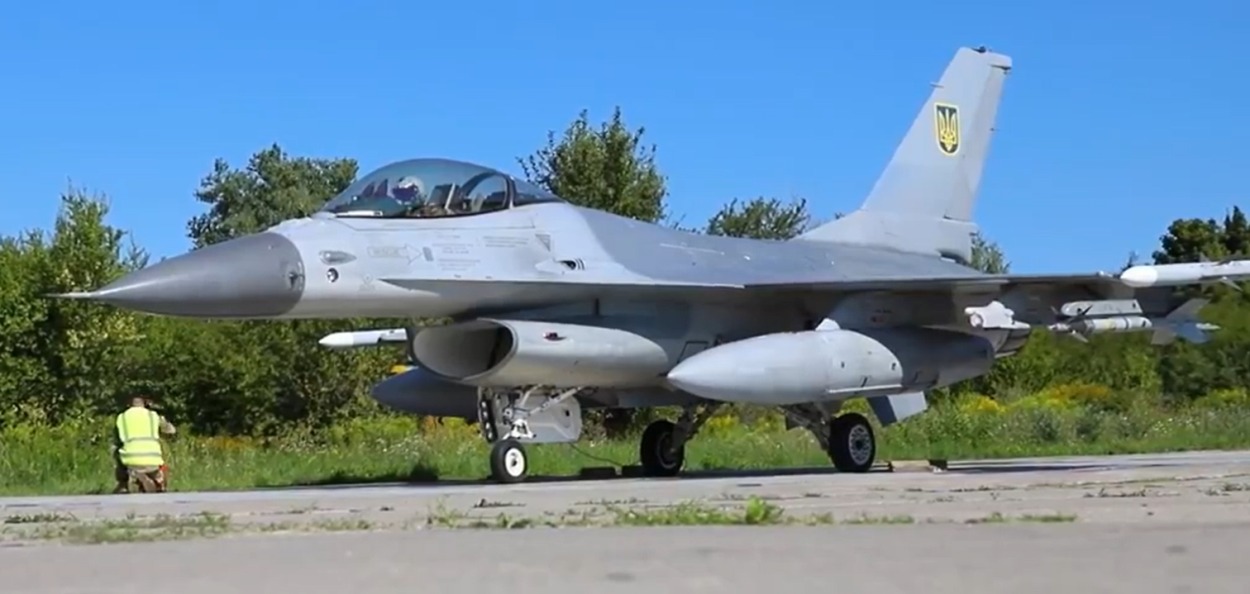
It not only received used F-16 fighter jets, but it also received Starlink support and US intelligence inputs, which allowed it to target military targets deep inside Russian territory.

Ukrainian F-16 Fighter Jet.

Without this satellite and intelligence support, the F-16s would be only half as effective.

Similarly, consider Israel in the Middle East.

It has not only received advanced US fighter jets such as the F-15 and the F-35, but Jerusalem also gets full US intelligence support, pinpoint information on adversary military targets, and their military movements.

Similarly, Jerusalem gets early warning whenever Iran launches ballistic missiles towards it.

The US has nearly 20 military bases in the region and maintains advanced surface-to-air missile batteries, such as Patriot and THAAD, sea-based missile defense platforms, and AN/FPS-132 missile early-warning radar in the Middle East.

This diversified radar network ensures that not only does Israel receive early warning of every Iranian attack, but Iranian missiles and drones have to pass through a layered missile defense infrastructure spread over the whole of the Middle East before their projectiles can reach Israel.

It is these incremental weapons, missiles, radar and sensors, intelligence, and satellite support that ensure that Jerusalem comes out on top in every regional military conflict.

In the Six-Day War in 1967, Israel’s adversaries, Egypt, Jordan, and Syria, had advanced Soviet fighters, and yet Jerusalem was able to trounce their combined military might, thanks to the intelligence support it received.

The Missile That Shot Down U.S. Stealth Aircraft is Coming Back—Mobile. Why India Must Take Note of the Russian Move

Export of military platforms is perhaps the US’s most successful export commodity since the two World Wars.

According to SIPRI, between 2021 and 2025, the US was the world’s top military exporter, accounting for as much as 42% of global military exports.

France was a distant second with just a 9.8% share of global military exports.

However, this uncontested leadership depends on the superior performance of its military platforms in conflict.

So, basically, the US has a vested interest in ensuring the victory of militaries that field US military platforms.

On the other hand, countries that do not field US military platforms often struggle with poor intelligence support.

India, for instance, repeatedly requested Washington to provide satellite reconnaissance pictures to target Pakistani military positions on mountains during the Kargil War in 1999. But Washington declined India’s requests.

Had India bought US military planes, Washington would have, most probably, provided New Delhi with satellite imagery to target Pakistani military positions, so that India could hit these targets and Washington could market the efficiency of its jets.

In a potential conflict between China and Taiwan, Washington would provide Taipei with every possible intelligence and satellite support so that its fighter jets and other military platforms are not trounced against Chinese weapon systems.

As we have seen in the Ukraine War, no other country currently has a satellite network comparable to Starlink. In a potential conflict with China, this US support could be decisive.

With this US support, the F-16 Vipers could be far more lethal than they actually are.

Rafale is a very capable platform. It has an AESA radar, a SPECTRA electronic warfare suite, long-range air-to-air missiles such as Meteor, precision-strike munitions such as Hammer guided bombs, a long-range SCALP EG cruise missile, twin engines, and nuclear capability, which make it a lethal fighter.

However, despite its status as a major military power, France lacks the heft of the United States.

Despite the current “frosty” US-India ties, New Delhi must find a way to work with the US while preserving its strategic autonomy and boosting its Make-in-India initiative.

  • This is an Opinion Article
  • Sumit Ahlawat has over a decade of experience in news media. He has worked with Press Trust of India, Times Now, Zee News, Economic Times, and Microsoft News. He holds a Master’s Degree in International Media and Modern  History from the University of Sheffield, UK. 
  • He can be reached at ahlawat.sumit85 (at) gmail.com

The post Better than Rafale — Why Taiwan’s F-16 Viper Holds an Edge Over India’s French Jets to Counter China? Opinion appeared first on EURASIAN TIMES.

  •  
❌