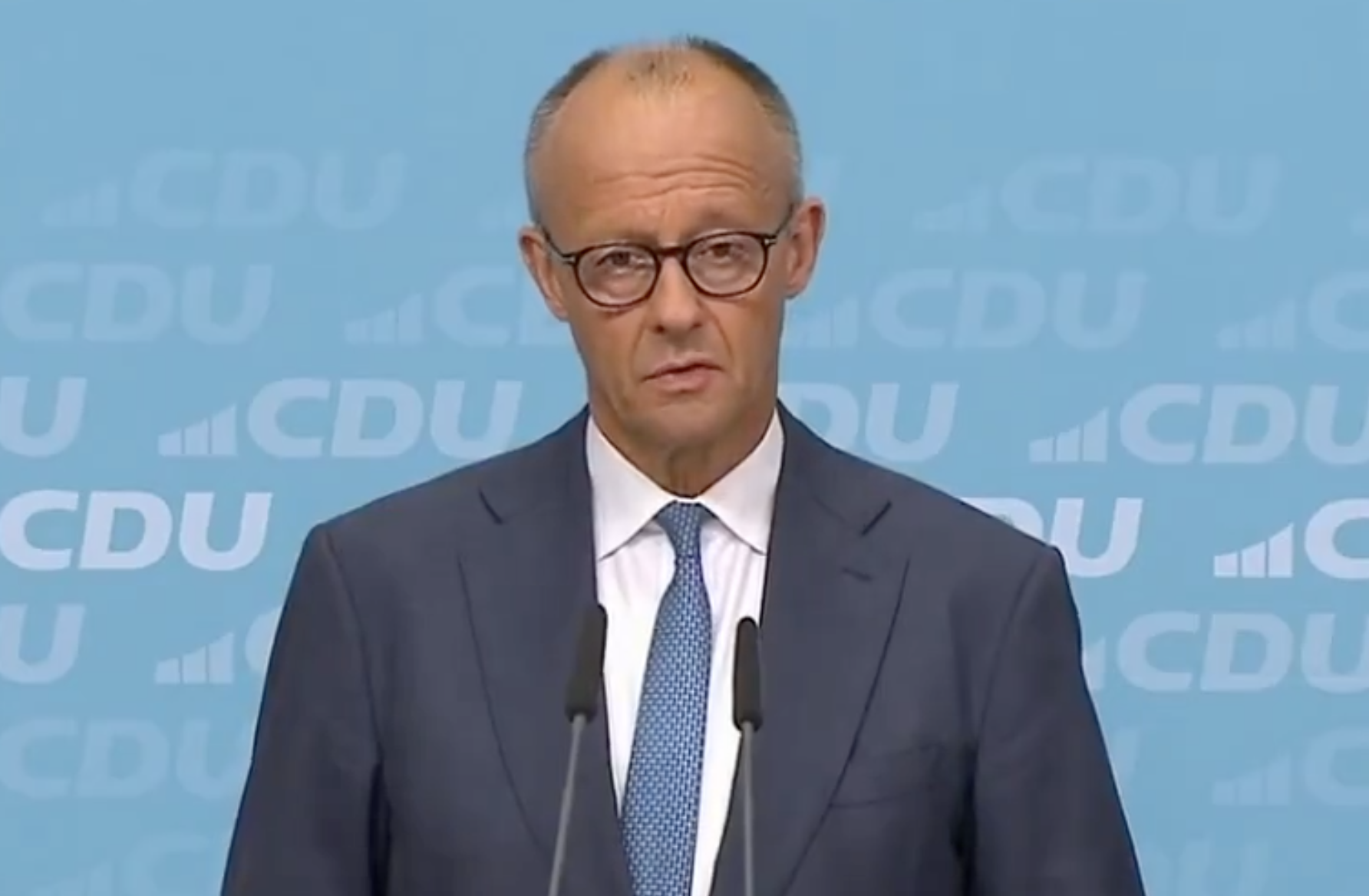
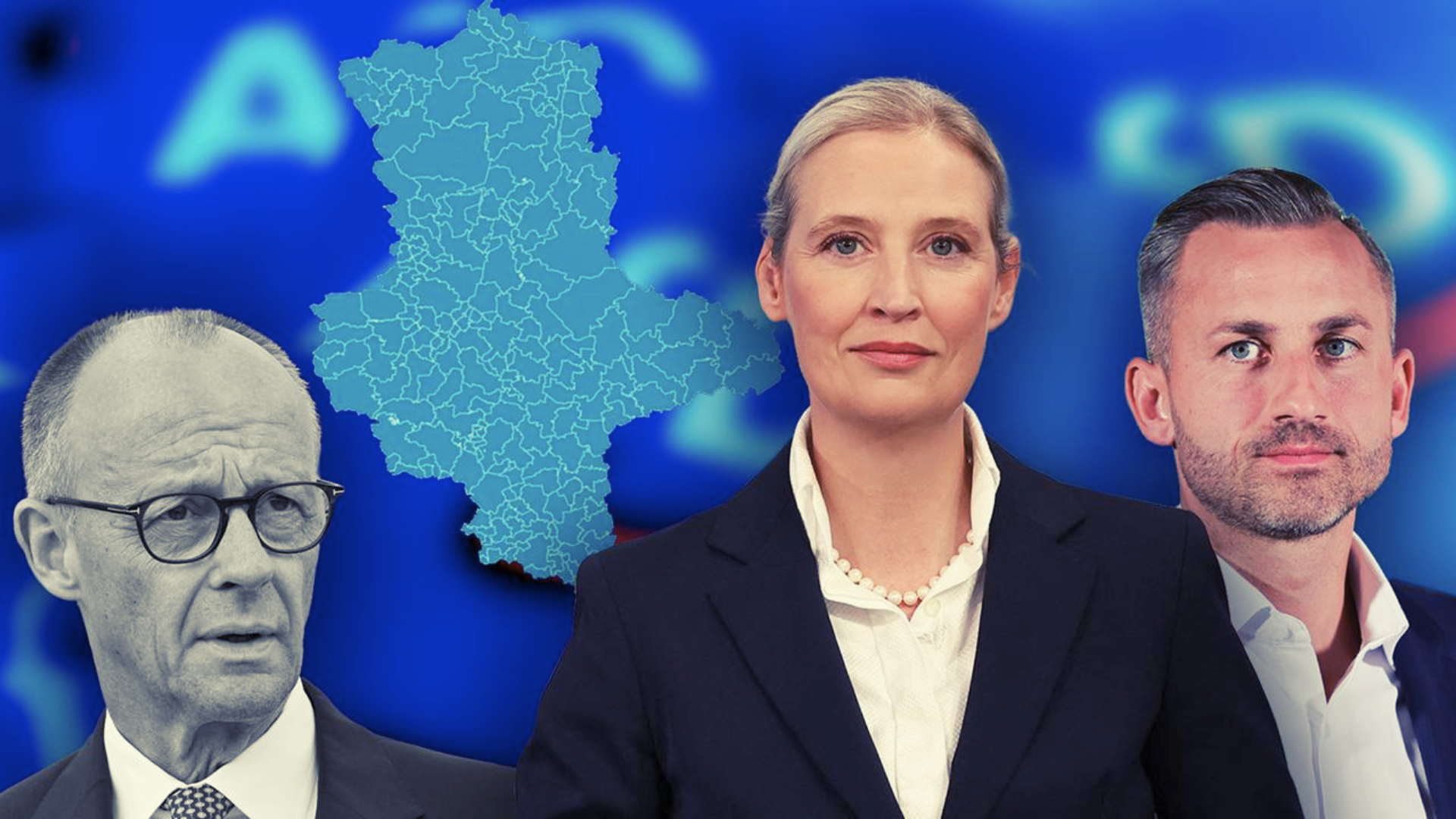
Germany’s political establishment is still absorbing the shock of Sunday’s state election in Saxony-Anhalt, where the Alternative for Germany (AfD) surged to 43.8 percent and the Christian Democratic Union (CDU) of Chancellor Friedrich Merz crashed to 17.2 percent. Merz called the result the CDU’s “heaviest defeat” in decades and said it could not simply be treated as business as usual.
“And I have to admit, this is the heaviest electoral defeat that the CDU has suffered in years, in decades,” Merz told reporters in Berlin after CDU leadership meetings. “We are all deeply shocked…We did not expect it to be like this.”
“That does something to us. Including me personally… All of this will, of course, have to have consequences,” he continued.
BREAKING: Merz just said he is "deeply shocked" by the AfD's landslide victory.
"And I have to admit, this is the heaviest electoral defeat that the CDU has suffered in years, in decades."
"That does something to us. Including me personally… All of this will, of course,… pic.twitter.com/L4cycKdH6h
It remains unclear what those “consequences” will be exactly, as Merz did not clarify. However, he did point to two upcoming elections in Berlin and Mecklenburg-Vorpommern, which will be held in the next two weeks. If the CDU faces further routs, there may be pressure for Merz to step down.
He accepted the democratic verdict but insisted the outcome had changed the political landscape “not only in Saxony-Anhalt, but throughout Germany.” When nearly 60 percent of voters backed parties that question the country’s democratic institutions, he said, “that is an election result with which we can not just treat as business as usual.”
Merz said he was searching for explanations, including in his own record: “What fear is there in the population that we may have underestimated?”
Merz has plans to hold talks in the coming days with SPD leaders on how the coalition could continue on its present course.
“Giving up is not an option,” he added.
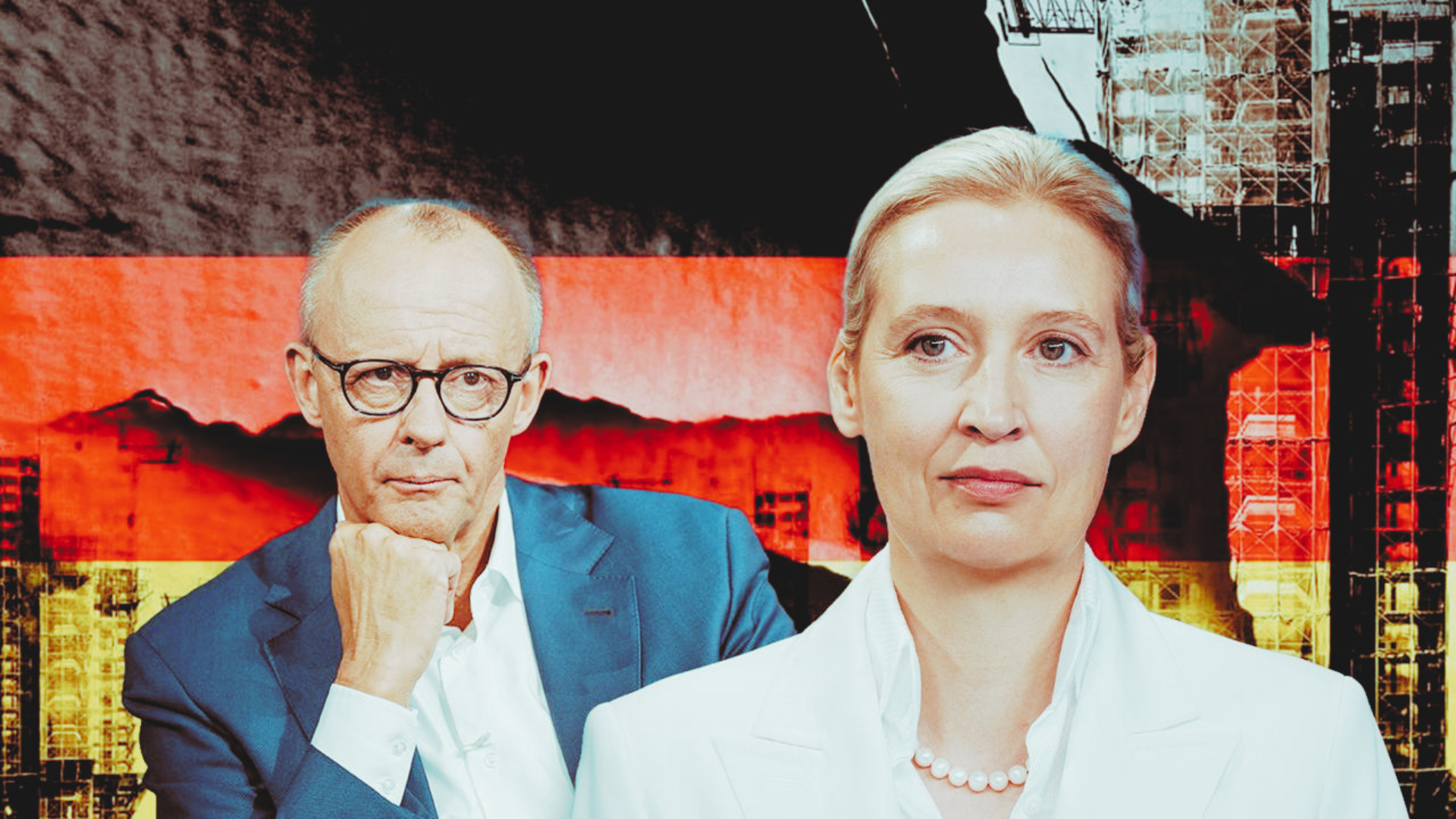
Meanwhile, the AfD federal co-leaders Alice Weidel and Tino Chrupalla pledged support for an AfD government in Saxony-Anhalt. Weidel called it a “dream result” and argued Merz had become “a great burden.” She predicted the CDU/CSU would never again win a federal election and said the AfD’s goal was to widen the gap to at least 40 percent by the next national vote. Chrupalla called the outcome “absolutely historic.”
Merz’s coalition partner, Bärbel Bas of the far-left Social Democrats (SPD), used her own press conference to argue that the government’s language on work and welfare had itself fueled public anxiety.
Outgoing Minister-President Sven Schulze was blunt: the CDU no longer held a government mandate and would sit in opposition. He ruled out CDU defectors joining any AfD-led arrangement and predicted the BSW would help put an AfD in power.
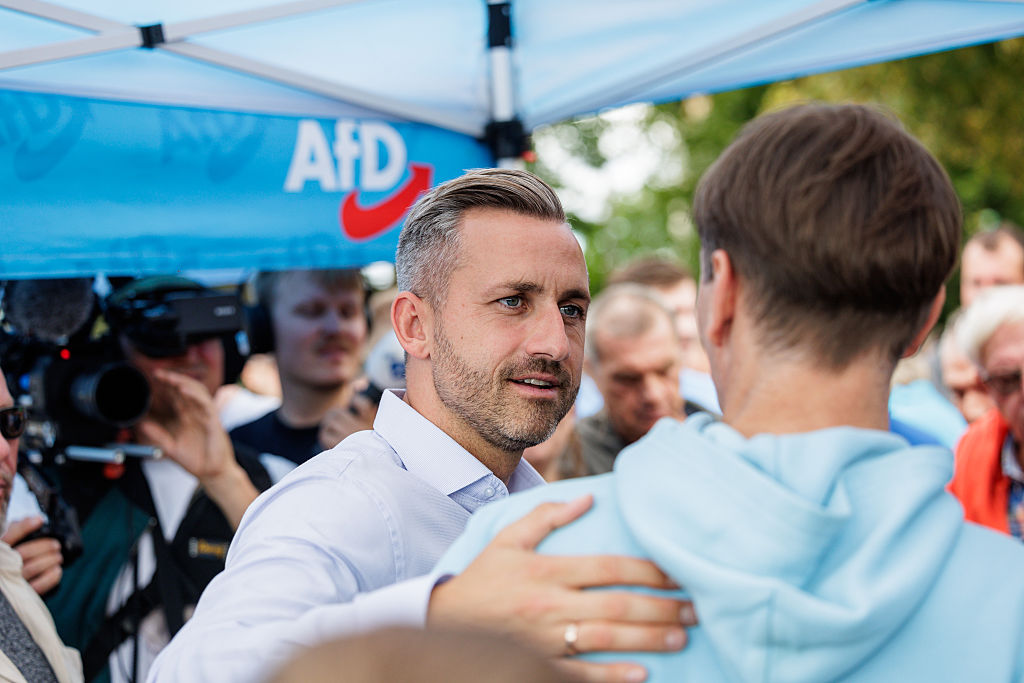
AfD lead candidate Ulrich Siegmund described the result as “a very clear government mandate” and said he could be “perhaps the next minister-president.”
The Alternative for Germany (AfD) scored a resounding and historic win in Saxony-Anhalt, but when specific data points are examined, the victory is even more remarkable.
Perhaps the most positive aspect of the election for the AfD is that the tremendous victory was achieved with a record high level of voter participation of 77.8 percent. In essence, more democracy equaled more votes for the AfD, according to calculations from the Infratest dimap. The firm pointed out that the AfD won 170,000 voters who stayed home during the last election in 2021, which is 10 percent of Saxony-Anhalt’s roughly 1.7 million eligible voters.
This means that the AfD’s total voting pool was made up of approximately 30 to 35 percent non-voters.
For those disillusioned by politics, the AfD’s program is drawing them back into participating in democracy. The country’s media should be celebrating this result in theory, but in reality, they would perhaps prefer that these voters simply stayed home, disillusioned and downtrodden.
Workers and those with financial problems backed the AfD
The AfD’s results show there might be futrher room for improvement. Approximately 65 percent of the AfD’s voters reported facing financial issues. As the German economy continues to falter, the pool of potential voters the AfD can tap into is likely to expand in other states.
It is important to note that just because many of these voters are facing financial difficulties does not necessarily mean they are unemployed. In fact, AfD won 61 percent of all blue-collar voters who actually voted. However, many of these often lower-income workers may also be struggling financially in a system that often rewards not working at all.
Some see the AfD’s results as a template.
“65% of AfD voters in Saxony-Anhalt reported facing financial struggles. Turns out that when you correctly link mass immigration to the decline in job security, homeownership, accessible healthcare, quality education, decent wages, and almost every other quality of life indicator for existing residents, they respond accordingly at the ballot box,” wrote Gabe Guidarini, the chief of staff for the Ohio Young Republicans wrote. Although an American, his post underlines that the AfD election results are being watched by the right-wing across the world, especially when they offer a clear blueprint for victory.
65% of AfD voters in Saxony-Anhalt reported facing financial struggles.
Turns out that when you correctly link mass immigration to the decline in job security, homeownership, accessible healthcare, quality education, decent wages, and almost every other quality of life indicator… pic.twitter.com/g0HJLtTs79
The tired narrative of the left, which depicts right-wing parties only garnering support from “old White males,” was once again smashed by the AfD in Saxony-Anhalt. The AfD won the youth by overwhelming numbers, reaching 42 percent of voters aged 18–24 vote and 44 percent of voters aged 25–40.
Martin Sellner, CEO of the Remigration Institute, celebrated the results, writing: “The kids are all right. The German youth are increasingly patriotic and reject ‘German guilt,’ replacement migration, trans ideology, and cultural Marxism.”
The kids are all right.
The German youth are increasingly patriotic and reject "German guilt", replacement migration, trans ideology, and cultural Marxism altogether. pic.twitter.com/LhcM3le7QX
In fact, it was the oldest voters that actually cost the AfD an absolute majority, with only 31 percent of voters 70 and older backing the party. Similar figures have been consistently found across Germany, with older voters turning to the establishment parties while young and middle-aged voters turning to the AfD.
While the AfD can celebrate its support among younger voters, the combined weight of the older voting population means the AfD will have to make inroads with these voters or continue to fail to reach a position of power at the state and federal level.
The CDU’s results are just as dramatic as the AfD’s results
The story of Saxony-Anhalt cannot be told without the collapse of the Christian Democrats (CDU). The party halved its support since the last election, dropping to 17.2 percent.
Political scientist Petra Dobner was asked if Chancellor Friedrich Merz will now resign. She responded: “That may also depend on how the next elections turn out. So maybe he can survive Saxony-Anhalt, but if Mecklenburg-Western Pomerania and Berlin show similar results, then I really don’t see a future for Merz.”
Notably, Merz famously said in 2018 that the CDU can cut the AfD’s support in half.
“We can achieve up to 40% again and halve the AfD. That’s possible! But we ourselves must create the conditions for it. That’s our task,” he said.
Since then, Merz has managed to cut the CDU’s support in half in Saxony-Anhalt and double the AfD’s support.
The Alternative for Germany (AfD) just won the largest share of any party in a German state election in the party’s history. Despite the historic result, which has sent shockwaves through the German political establishment, lead candidate Ulrich Siegmund in Saxony-Anhalt still fell short of an absolute majority needed to govern.
That gap, three seats in an 83-member Saxony-Anhalt Landtag, is now the focal point of unfolding drama in the capital city of Magdeburg, where the future direction of the state, and perhaps even of the country, will be decided. AfD has a political mandate and a number of options that could produce dramatic results. Here are three possible scenarios.
An AfD and BSW coalition?
On the preliminary official count, the AfD took 43.8 percent and 39 seats. The threshold for an absolute majority is 42. The BSW scraped in with 5.3 percent and five seats. Together they would have 44. Everyone else together also has 44. Without the BSW, the chamber splits 39–39.
The BSW has already been open that it is willing to pursue a coalition with the AfD, but this is not a comfortable coalition for the AfD.
Siegmund spent the campaign insisting he would not take office without a stable majority of his own. After election night he kept the hard line in one respect and loosened it in another. He still rejected the BSW’s preferred model, a non-partisan minister-president governing with shifting majorities, as messy power politics.
Siegmund called the offer “nonsense” and said he did not want to give up the AfD’s goals and values in the face of “power games.”
He still said the AfD would not trade away its program for power, but he also said he would extend a hand to anyone prepared to deliver a “fundamental political change,” including, if necessary, individual deputies rather than whole parties.
If that fails?
“In an emergency, there will simply be new elections.,” he said. In such a scenario, he predicts the AfD would score “50 to 55%.”
The question is whether cooperation with the BSW on some level is possible. Sahra Wagenknecht framed the result as a chance for a change of course on energy, Russia sanctions, education, and public broadcasting. State-level BSW figures say they will not join a “firewall” coalition against the AfD. They also say they will not elect Siegmund. Their offer is a third way, involving a new leader both parties can agree on, plus issue-by-issue majorities that could include the AfD.
However, the BSW is already hinting they may be willing to give up even more for an AfD government.
BSW’s lead candidate, Thomas Schulze, suggested that in the third ballot for minister-president, the BSW may abstain from the vote, which in theory, could let Siegmund through to become the state leader.
What the BSW would obtain in return remains to be seen.
However, despite the differences between the AfD and BSW, the two parties have much in common. The overlap involves a strict crackdown on migration, tackling energy costs, shifting policy on Ukraine, and hostility to the public broadcasters.
At the same time, BSW politicians have already flagged education policy and parts of the AfD’s economic and social agenda as unacceptable. A formal coalition was ruled out by Wagenknecht before the vote. What remains is only a quasi gray zone where both parties can exist together a vote a time.
For Siegmund, the political costs of that gray zone are obvious. He ran as the man who would reshape the state standing alone. Accepting a non-AfD premier, or even a minority premiership propped up only with the support of Wagenknecht’s left-wing party, would look like the opposite. However, stepping back from the deal would leave his party out of the halls of power once again.
AfD co-leader Tino Chrupalla and Alice Weidel both appear eager for Siegmund to take the deal. Chrupalla has already talked up the possibility of a minority government that would seek majorities case by case.
Peel off CDU MPs?
Siegmund’s second option may prove even more explosive for German politics. He spoke of not working with parties, but with individuals from the parties. He suggested individual deputies could “support an AfD government.” Some in the AfD’s federal circle even talk about CDU members crossing the floor to the AfD camp, and there are even suggestions that some MPs may defect.
If any CDU politician defected to the AfD, there would be a national firestorm. While if only one vote was needed, this might be in the realm of possibility, but finding three such MPs may prove a very tall order. The CDU has tried to build the firewall into its DNA, and if three CDU members helped bring the AfD to power in a state, it may be enough to collapse the federal government and end the chancellorship of Friedrich Merz.
Regardless of whether the AfD can peel off three CDU votes, the pressure on the party is tremendous after it collapsed to a mere 17.2 percent, effectively halving its support. The CDU is almost assured to continue facing a political reckoning in the future, which means the dam may break at some point, and CDU politicians may be more and more willing to jump ship to the AfD.
A repeat election possible?
An anti-AfD government is mathematically possible but politically? It would be a total mess.
It would need the CDU, SPD, Greens, Left, and BSW — five parties, two of which spent the campaign treating each other as the problem. The CDU already ruled out coalitions with both the AfD and the Left Party. The BSW campaigned to push the CDU out, with Wagenknecht also calling another firewall coalition an affront to voters.
That does not mean it cannot be attempted, and it very well might be, even despite the potential consequences for all the parties involved. If that project forms and then staggers, Siegmund’s threat of new elections stops being a far-fetched scenario. A second vote in such a scenario could indeed catapult the AfD above the 50 percent mark.
Procedurally, the clock is already running, as the new Landtag must convene by Oct. 6. The strongest group proposes the Landtag president in the first round. The minister-president is elected by secret ballot, with no fixed deadline once nominations begin. While the first ballot requires a majority of all votes, in the final round, a simple majority of votes cast can suffice to elect a new minister-president.
As far as the best outcome for the AfD, it is hard to argue against CDU defectors handing the AfD the keys to victory. It would allow the AfD to take control with a like-minded party on paper while sparking a major crisis for the ruling CDU.
However, remaining outside government also comes with plenty of bonuses, and as Remix News previously wrote, avoids serious pitfalls that the federal government and even the EU can put up against an AfD government.
Despite falling short of an absolute majority, the AfD appears to be in the driver’s seat.
After a group of migrant men were filmed parading around with a dead baby bottlenose dolphin in Ceuta, a polarized public debate has erupted and an environmental organization is pushing for Spanish prosecutors to investigate the case as a criminal offense.
On Wednesday, Sept. 2, 2026, videos recorded at Trampolín beach showed several people holding a dead baby bottlenose dolphin up as if it were a trophy. It was bleeding above one of its eyes. A Spanish influencer recorded the entire incident, saying they killed the dolphin.
“They killed a dolphin…. They say they killed it. Over there, as you can see, they kill protected species,” said the influencer.
JUST IN: "They killed a dolphin. They say they killed it. Over there, as you can see, they kill protected species."
Some leftists across X and other platforms are claiming these migrants are "allowed to fish."
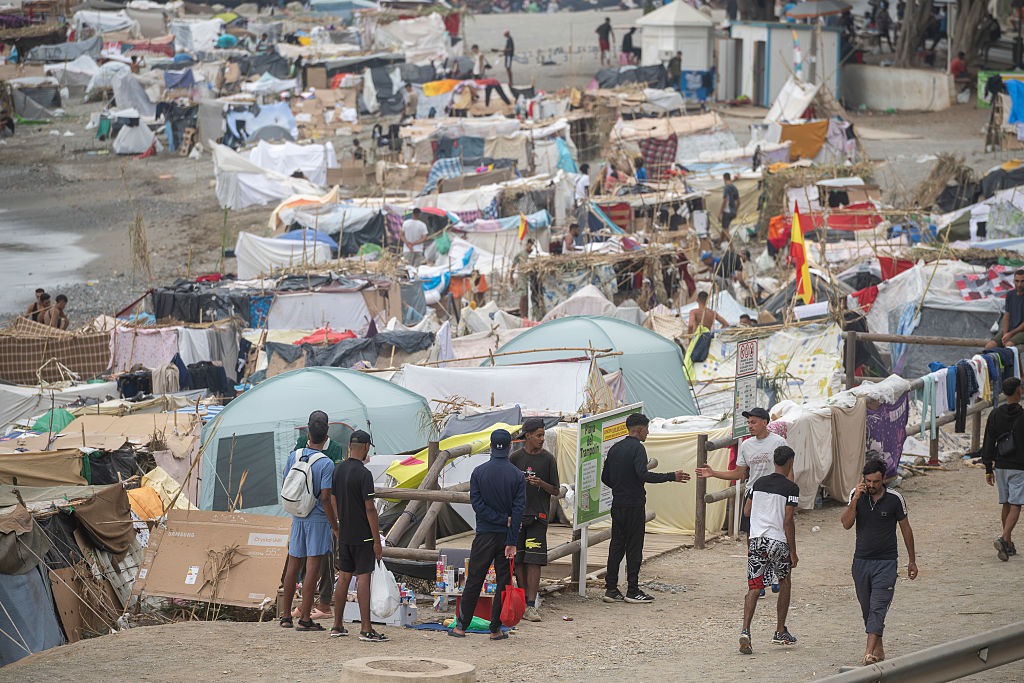
The calf had been swimming close to shore in an area that has functioned for weeks as an informal settlement for the migrants who arrived in late July. Local reporting and an environmental group say the animal was taken from the water and later appeared dead or dying.
The Ceuta-based association Defense of Urban Trees, Biodiversity, and the Environment (DAUBMA) filed a complaint with the Civil Guard the following day. In its statement, the group said the calf arrived near shore alive and disoriented, was forcibly removed from the sea, and was struck on the head with a stick.
5 migrants tried to gang rape a 12-year-old girl as she screamed for help, said locals in Ceuta who stopped the attack.
"There were five against a 12-year-old girl. She was a little girl, they were taking off her pants. She was screaming, screaming, screaming. She was… pic.twitter.com/g97pj8phUR
DAUBMA submitted photographs and videos that, it said, show a bleeding wound near one eye and people attempting to wipe blood from the animal. The association asked for those visible in the footage to be identified, for an investigation to be opened, and for the case to be sent to Spain’s Environmental Prosecutor’s Office.
The association argued the events could constitute both animal cruelty resulting in death and an offense against a protected species.
BREAKING: A Moroccan migrant wearing only his underwear snuck into a sleeping Spanish woman's bed early in the morning in Ceuta.
"I live in the center on the fifth floor, mind you… He jumped onto my bedroom balcony. He came into my bedroom and got into my bed. I thought… pic.twitter.com/8cs7rasXSv
A beach-cleaning worker from the company Ecoservicios who was present told the group on the beach that they could not treat the animal as a catch and that environmental specialists should be called. After that intervention, the group tried to return the calf to the water. Some accounts say it already appeared lifeless.
Bottlenose dolphins are strictly protected under EU and Spanish law. Intentional capture, harm or killing of cetaceans is prohibited. Recreational fishing licenses issued in Ceuta cover only specified fish and cephalopods; dolphins are not among them. The incident therefore cannot be treated as a case of ordinary and legal fishing.
As of Sept. 4, no official results from an examination of the body, nor any arrests, had been made public.
A Change.org petition calling for identification of those involved also circulated quickly, according to El Faro Ceuta. The beach itself remains crowded with people living in makeshift migrant camp conditions, adding to the tension that has marked Ceuta since the July crossings. DAUBMA and the local marine-conservation group CECAM have used the episode to repeat earlier complaints about repeated case of mutilated dolphins and turtles stranded on the beach which they attribute in part to illegal drift nets. Those earlier cases are separate from Wednesday’s events but form the backdrop against which the association is now pressing authorities to treat this death as a criminal matter rather than an isolated disturbance.
The Civil Guard has the complaint, video evidence, and witness reports. It remains unclear whether an animal-cruelty or wildlife-protection case will be opened.
In the meantime, pressure is growing on the government of Prime Minister Pedro Sánchez, with mass protests involving tens of thousands of Spaniards taking place in cities across the country over the weekend.
A 24-year-old man from the African country of Benin is being held in pretrial detention on suspicion of dragging a 27-year-old woman off a sidewalk and raping her in a bush in a small Mecklenburg–Western Pomeranian town. The police are now only reporting the incident four weeks after the initial assault.
Notably, the eastern state of Mecklenburg-Western Pomerania has the lowest number of refugees of any German state and, in per capita terms, is the third-lowest.
Police and prosecutors say the attack happened about 2:30 p.m. on Aug. 9, a Sunday, on Mühlenstrasse in Friedland, a town of about 6,000 people in the Mecklenburg Lake District. According to an initial account, the suspect pulled the German woman from the street into bushes beside a building and raped her there. The woman was later found injured.
A detailed description of the attacker quickly pointed investigators toward a specific suspect, the regional newspaper Nordkurier and public broadcaster NDR reported. Neubrandenburg criminal police detained the man in Friedland the following evening, Aug. 10. A local court later ordered him held in pretrial detention at the request of the Neubrandenburg prosecutor’s office.
Authorities did not publicly describe the case when the woman was first raped. Asked later by Nordkurier, investigators said they withheld an appeal for witnesses so they would not compromise the search or an imminent arrest.
A police spokeswoman also told Bild: “In order not to jeopardize a possible arrest, no public appeal for witnesses was issued.”
Interviews and forensic work in the hours after the report strengthened suspicion against the Beninese national, authorities said. T-Online reported that investigators believe the 24-year-old did not try to leave town because he did not think he would be identified.
Police said the suspect had previously been in the neighboring Vorpommern-Greifswald district. He had been seen several times in Friedland and around a communal shelter there, although he did not live at the facility. Why he kept returning is still under investigation.
His asylum application in Germany was rejected. He has challenged that decision in court, and because those proceedings are pending, he was legally allowed to remain in the country at the time of his arrest, police said. A final ruling on asylum or possible deportation would come only after that case is finished.
Police have declined to give a fuller account of the assault, citing victim protection. The rape investigation continues.
Italian police are investigating an alleged attempted sexual assault involving a French volleyball player and a Moroccan footballer during the Mediterranean Games in Taranto, Italy.
The incident is reported to have taken place on the night of Aug. 30–31 aboard the cruise ship serving as the athletes’ village. According to an initial reconstruction, the French athlete rejected a sexual approach by the alleged attacker, who would not stop and kept insisting. She began calling for help, which helped draw the attention of onboard staff. Emergency doctors from 118 and police officers responded at the scene.
The athlete was taken to hospital for checks and did not suffer any injuries. After the medical examination, she returned to the athletes’ village.
Investigators have identified the alleged attacker as a Moroccan footballer. He had already returned to Morocco with his national delegation after completing his tournament commitments. Authorities said there were no grounds for a precautionary measure or police arrest, and he was allowed to board the long-scheduled return flight with his group.
An Italian police squad, led by director Antonio Serpico, is interviewing witnesses and reviewing footage from the ship’s internal cameras, particularly those installed near the pool area. Officials say they have already gathered information that may help reconstruct what happened that night. The footballer’s departure has not halted the investigation, according to Italian newspaper La Gazzetta del Mezzogiorno.
Mediterranean Games general director Carlo Molfetta said: “We are closely monitoring the development of investigations by the competent authorities to determine any responsibility for what happened. The investigations are using images from the cameras present on the village ship, which number as many as 1,200. For our part, I can only reiterate my full cooperation with the investigators’ work.”
No formal action has been taken against the identified athlete at this stage. Investigators say they are continuing to examine the circumstances and verify the French athlete’s account.
Just months after opening as a centerpiece for the waterfront revival of Hamburg-Harburg’s Inner Harbor, the trendy design hotel “The Niu Quay” is closing its doors to commercial guests. Hamburg municipal authorities have agreed to lease the property to accommodate approximately 340 incoming refugees, drawing sharp backlash from neighborhood representatives who point to the tens of millions in recent investments made to revitalize the district.
The decision comes directly on the heels of the city’s pledged commitment to dial back its reliance on expensive, short-term hotel leases for asylum seekers. The municipal housing agency, Fördern & Wohnen, signed an initial lease for 340 places at the hotel, running through the end of 2026.
While initial local reports suggested a multi-year takeover, the Social Affairs Authority clarified that the property will undergo a gradual phase-out beginning in January 2027, with the facility scheduled to fully return to standard hotel operations by mid-2027.
Local leaders and business advocates have reacted with frustration to the sudden shift in strategy.
Dirk Kannengiesser, chairman of the FDP parliamentary group Harburg, said, “Investors are investing millions, and restaurants and businesses are supposed to provide a boost. Then, in the short term, a key component of this concept is taken away from its actual function.”
Upward of €60 million in combined public and private capital was recently channeled into transforming the surrounding neighborhood, with the hotel meant to serve as an anchor for local commerce, dining, and tourism.
Opposition representatives voiced strong concern over the mixed signals sent by municipal leadership, questioning how the Senate can publicly commit to curbing hotel housing expenditures while simultaneously locking down a brand-new facility. Business owners in the district worry that removing a key commercial hub threatens the long-term economic momentum of the harbor’s revitalization plan.
According to municipal statistics, roughly 3,800 refugees currently reside across initial reception centers and state-run housing in Harburg. The area’s overall housing capacity is projected to shrink in the coming months as several major sites close down, including a large facility on Schlachthofstrasse this autumn, followed by additional location shutdowns next year.
“The Senate cannot announce the reduction of expensive hotel accommodation and at the same time completely tie up a newly opened hotel for years<‘ said Kannengiesser.
Since Hamburg’s public housing facilities are operating at a staggering 102.8 percent capacity, city officials maintain that temporary commercial leases remain an unavoidable safety valve. When large-scale centers close before replacement infrastructure becomes available, short-term options, including hotel rooms, are brought online to fill the void.
The financial terms of the lease have further fueled local controversy. While municipal negotiators state that they consistently push for below-market rates when securing temporary housing, reports indicate that the city may be paying premium pricing for the newly constructed rooms. The Social Affairs Authority declined to comment on specific contractual terms.
Figures from the prior year show that hotel housing in Hamburg averaged approximately €82 per person per day. While city authorities report that overall reliance on hotel placements is dropping, with about 1,000 hotel shelter slots set to be phased out over the course of the year.
As Remix News has previously reported, Hamburg spends hundreds of millions of taxpayer euros to house migrants in the city. Hamburg and Berlin combined spend €4 billion a year.
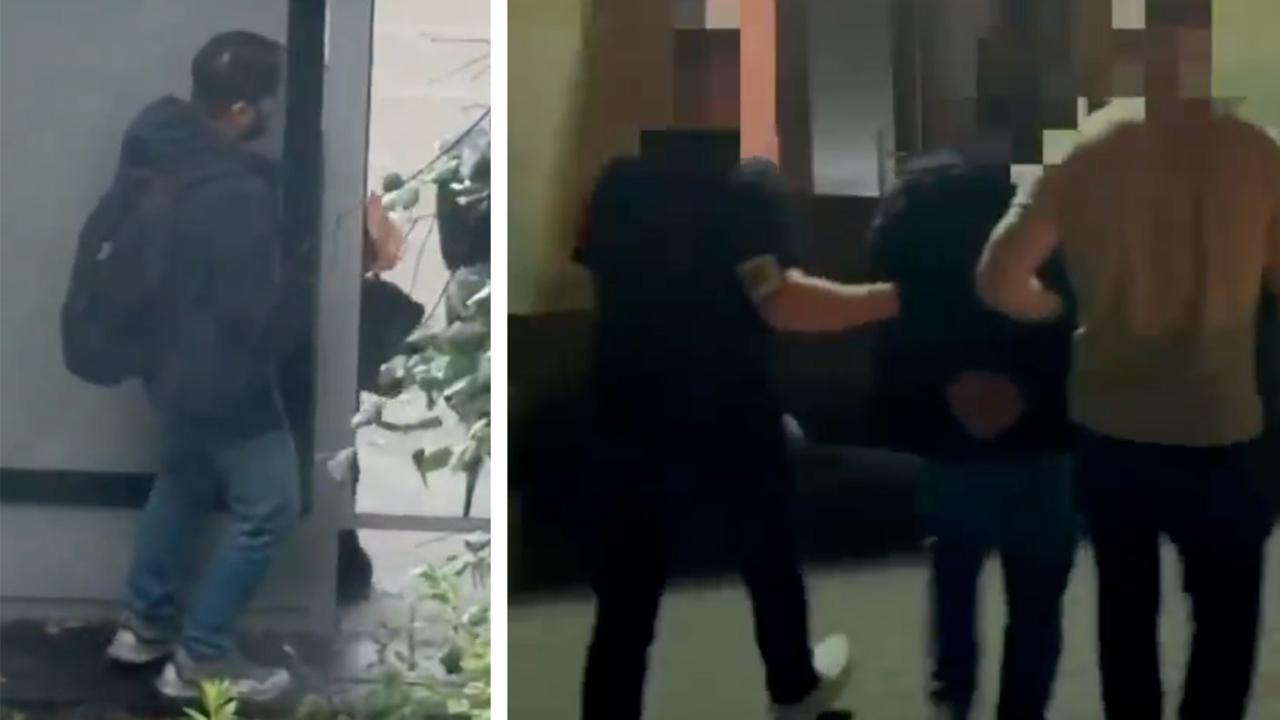
Warsaw police have arrested a 36-year-old Azerbaijani migrant after he was caught on film masturbating near two girls at a bus stop, according to Polish police, who released a video of the man’s arrest.
The video of a man masturbating was captured at a bus stop in Ochota, which spread on X. Officers say they identified him only after the footage appeared online, and they dispute earlier claims that the incident had already been reported by phone.
BREAKING: An Azerbaijani migrant is now under arrest after he was caught on film masturbating near two girls at a bus stop in Warsaw, according to Polish police.
The 36-year-old migrant has been charged with a sexual offense. Deportation proceedings have been initiated.… pic.twitter.com/9JNGvYRUVO
Poland’s interior minister, Marcin Kierwiński, has also posted a video of the man being arrested.
“Police officers have detained a 36-year-old Azerbaijani citizen in the Pruszków County area, who engaged in indecent behavior at a bus stop near the Kopińska Hall in Warsaw. The collected evidence may serve as grounds for deportation from Poland,” he wrote.
Policjanci @Policja_KSP zatrzymali na terenie pow. pruszkowskiego 36-letniego obywatela Azerbejdżanu, który na przystanku autobusowym przy hali Kopińskiej w Warszawie dopuścił się nieobyczajnego zachowania. Zebrany materiał dowodowy może stanowić podstawę do wydalenia z Polski pic.twitter.com/6RjKmrbjQZ
The original clip was filmed on Sept. 1 at the stop, the man can be seen masturbating next to two girls, who appear unaware that he is behind them. Social-media posts said a man approached girls at the stop, then exposed himself behind the shelter and masturbated before leaving in an Uber around 1:30 p.m.
The video was first circulated by journalist Bartłomiej Wypartowicz and then widely shared.
Dzisiaj na przystanku przy Hali Kopińskiej w Warszawie mężczyzna chodził, zaczepiał dziewczynki, podchodził, patrzył, po czym wszedł za przystanek i zaczął się publicznie onanizować. Obcokrajowiec. Po całej akcji zamówił sobie Ubera, wsiadł i odjechał.
The Metropolitan Police Headquarters says several specialist units joined the inquiry after seeing the post. Officers contacted both the person who published it and the person who recorded it, then traced the suspect to his workplace in Pruszków County, where he was detained.
Investigators are examining a charge of forcing another person to submit to or perform a sexual act other than intercourse. That offense carries a prison term of six months to eight years. Police also say the evidence may be used to start a deportation procedure, however, despite previous reporting, no court has filed a formal charge yet.
Interior Ministry spokeswoman Karolina Gałecka had already said on Sept. 1 that police were identifying the man and were in contact with the person who filmed the incident.
One Polish MP, Dariusz Matecki, wrote on X: “Like my post everyone who believes that this creature should be physically castrated before deportation from Poland.”
Morocco played an active role in the mass influx of migrants into Ceuta through an organized and pre-planned operation at the end of July, according to a Spanish police intelligence report released by the media. The government in Madrid denies the police intelligence report.
The report from the National Center for Immigration and Borders (CENIF), which has been leaked by the media, has caused a political storm in Spain. The report has since been handed to Audiencia Nacional judge María Tardón, who is investigating whether a crime against Spain’s territorial integrity occurred in connection with the events of July 30 and 31.
According to the document, the events were not a spontaneous result of smugglers’ activities or merely a social media campaign. The police estimate that the mass border crossing was planned and took place in several waves.
Particular attention was paid to the activities of the Moroccan security services. According to the report, uniformed gendarmes and plainclothes officers allegedly “actively directed” migrants towards specific points, including the El Tarajal area. The document also points to the exceptional leniency of the Moroccan services and the lack of effective action to stop the influx of people.
Spanish police chief Francisco Pardo denied that the document attributed the operation to the Moroccan authorities. He stressed that the report does not identify a specific government or those responsible for causing the crisis.
Interior Minister Fernando Grande-Marlaska demanded an explanation from Pardo as to why he had not been informed about the document in advance. Pardo explained that the judge presiding over the case had ordered investigators to keep the report secret.
The information revealed is inconvenient for the Spanish government, which had previously rejected suggestions of Morocco’s involvement in the crisis and instead pointed, among other things, to a disinformation campaign on the internet. The opposition Popular Party accused Prime Minister Pedro Sánchez’s cabinet of concealing the role of the Moroccan services and demanded an explanation.
Before a pivotal election that could potentially result in a state government ruled exclusively by the Alternative for Germany (AfD) in the German state of Saxony-Anhalt, a case of potential postal vote fraud is raising concerns.
A 74-year-old nephew of a 95-year-old resident with severe dementia has filed a criminal complaint after discovering that postal voting documents were requested and a ballot cast in her name at a Dessau retirement home – despite staff first telling him the papers had been destroyed. The case is now being reported in Welt, one of Germany’s largest newspapers.
The case involves the Marthahaus senior residence and centers on whether postal votes from residents who cannot meaningfully participate are being handled properly. The nephew, who acts as his aunt’s legal representative, said he routinely receives every letter and document sent to her, including advertising. When the postal voting materials for the Saxony-Anhalt state election never arrived, he asked the home’s director where these documents were located.
Last Thursday, the director directed him to a female staff member who was not on duty until the next day. On Friday, that employee stated she had collected the election documents sent to residents “and shredded” them, without consulting relatives or authorized representatives.
That account did not hold up. When the nephew inquired at the municipal election office, officials confirmed that postal voting documents had been requested on Aug. 10 using his aunt’s date of birth and that a vote had already been recorded. Staff showed him the application bearing his aunt’s “scribbled” signature. Data-protection rules prevented them from disclosing which party was marked.
The nephew described the home’s alleged actions as a “scandal.” He and his wife first noticed problems during the February 2025 federal election; during the current state-election campaign they again encountered “inconsistencies” and this time pursued them. The complaint against persons unknown has been obtained by reporters.
The Marthahaus did not answer written questions from the Ostdeutsche Allgemeine Zeitung and declined to comment when reached by telephone. City officials confirmed they were aware of the incident but provided no further details.
A second, still-unreported case has surfaced in Naumburg, according to German newspaper Junge Freiheit. A woman there said she “did not see any election documents for my mother.”
Her mother is “unable to give her own name.” She asked: “Who will vote for her and according to what criteria?”
The allegations come days before voters in Saxony-Anhalt go to the polls and add to the existing debate over how postal ballots are processed in care facilities, where many residents have limited capacity to express a political preference independently. Investigations will determine whether the documented vote was cast with proper authorization or constituted an unauthorized exercise of another person’s vote.
AfD would ban postal voting
One of the parties most opposed to postal voting is the AfD, which has argued that it is prone to fraud, especially in retirement homes. AfD co-leader Tino Chrupalla has previously called for an end to mail-in ballots. He discussed his concerns about this form of voting during a conference with top AfD officials in 2024.
“It is also the task of the opposition to always doubt what a government is doing or what happened in an election. That is also a legitimate right and that is a good thing. And I just really want to point out, and we will also question this, for example, the entire security for the legal storage of ballot boxes, some of which are not stored in a legally secure manner, where in some cases only one person or two have access to these ballot boxes,” he said.
JUST IN: "I would ban postal voting."
Germany's AfD party is calling for an end to mass mail-in ballots for elections.
He went on to say that postal voting has been a concern in other elections and that these issues keep coming up. However, he also pointed to a problem plaguing other countries like the United States, which instituted mass mail-in ballots in the wake of the Covid-19 crisis, which has involved activists entering retirement homes and potentially manipulating vulnerable elderly voters.
In the case of Germany, Chrupalla stated, “We have also seen this in old and other election campaigns, such as the current campaigning in retirement and nursing homes, especially when the CDU and SPD campaign in these old people’s homes, which are run by Diakonie or Caritas, or go in and out there, and the AfD does not even get access to present their programs to the elderly. These are also things of influence that are not democratic in my opinion.”
Notably, both Diakonie and Caritas are run by the Protestant and Catholic churches, both of which have come out against the AfD, including expelling members of the party from the Church and calling for Germans to vote against them.
Chrupalla is calling for an end to postal voting, saying: “Personally, I would ban postal voting again. It has only been introduced as an exception or initiated in the Federal Republic of Germany. It is not the rule, it should not become the rule and it is not regulated by law in such a way that it is made the rule.”
A 37-year-old man and his partner, a 27-year-old woman, have been charged with murder accompanied by acts of torture and barbarity after a 47-year-old man was beaten, sexually assaulted, and mutilated during a Snapchat sream in his home in the French city of Charleville-Mézières.
The details of the case reveal severe torture.Reims prosecutor François Schneider described the injuries in a statement. The autopsy showed “very severe trauma to the face, at the cervical level that obstructed his airways.” The man also suffered “very serious sexual violence,” genital mutilation, and fractured ribs.
“He was clearly not dead immediately,” Schneider said. A video recovered by investigators “showed him agonizing while his attacker delivered violent kicks to his face.”
The incident reportedly occurred on the night of Aug. 26–27, 2026. Both suspects are in pretrial detention and face life imprisonment.
The victim’s body was discovered on Aug. 27 after an anonymous woman contacted police. She said she had just seen a Snapchat video of a man being violently attacked and lying on the ground, and she recognized the attacker’s voice. Officers identified the victim, already known to police, and found him dead at his apartment. Neighbors later told investigators they had heard arguments between 3:00 a.m. and 5:00 a.m., a window that prosecutors say matches the time of death.
According to an initial investigation, the two suspects and a 17-year-old homeless girl had gone to the victim’s home for the evening. All four consumed large quantities of alcohol as well as cocaine and “C,” a mix of cocaine and ammonia.
The evening reportedly turned when the victim offered the 27-year-old woman sex in exchange for drugs. The 37-year-old man then “snapped,” accusing the older male victim of rapes. What followed, Schneider said, citing the teenager’s account, was “a frenzy of violence beyond comprehension.” The couple beat the victim with kicks, furniture, and threw a fan at him. They then turned him over and subjected him to sexual violence while filming his death.
The 17-year-old girl, however, has not been arrested or charged, according to French news outlet France 3. She was in police custody, questioned, and then released. She told investigators she witnessed the beating and some of the sexual violence but did not see the mutilation. She told investigators she was terrified. The couple took her phone and smashed it. Police found her wearing bloodstained clothing.
The 37-year-old man has admitted the violence but accuses the 17-year-old girl of taking part, saying the attack had already been discussed by text with his partner and the young minor. The woman, who was also arrested, has also pointed toward the girl and claimed the teenager was being raped daily by the victim. The girl denies both the daily rapes and active participation in any violence against the victim.
Investigators noted that text message exchanges between the couple raise the possibility they were trying to shift blame onto the girl in the case. Nothing in the inquiry so far supports the rape allegation against the victim.
The male suspect has 36 prior convictions, mostly for violence. The woman was convicted earlier in 2026 for aggravated violence. After the killing, the male suspect fled and was arrested on Aug. 29 at another girlfriend’s home in Villeneuve-lès-Maguelone, near Montpellier. Both were formally charged on Aug. 31 before an investigating judge in Reims and remanded in custody.
Dire economic news continues to roll in as Germany faces deepening deindustrialization and an economic downturn under Chancellor Friedrich Merz. Reports today say Volkswagen’s management board is proposing to wind down production at four major German plants and shift much of that work abroad.
Just days before, Merz warned that investors would shun an AfD-governed federal state in the future.
“I cannot imagine international investors showing up for a groundbreaking ceremony with an AfD state premier to establish new plants or set up new businesses in Saxony-Anhalt,” said Merz during an ARD summer interview on Aug. 30.
He added that if a right-wing populist party won an absolute majority in the coming election, international investors would think twice about whether to invest in Saxony-Anhalt.
However, VW’s management board has now recommended closing four German production sites. The AfD has seized on the reports.
“In four VW plants, the group board is turning off the lights. The energy transition and electric planned economy are pulling the plug on the German automotive industry. With an AfD government, the economic turnaround will return to reason,” wrote AfD co-chair Alice Weidel.
Gleich in vier VW-Werken lässt der Konzernvorstand die Lichter ausgehen. Energiewende und Elektro-Planwirtschaft ziehen der deutschen Autoindustrie den Stecker. Mit einer AfD-Regierung kommt die Wirtschaftswende zurück zur Vernunft.https://t.co/6BEVQlIf3y
The plan was unanimously adopted by the VW management board and will be presented to the Supervisory Board on Sept. 3. While not an immediate shutdown, it would end production in the early 2030s in Emden, Zwickau, Hanover, and Neckarsulm, with production transferred to Poland, Slovakia, and the Czech Republic.
Germany’s anemic growth is almost entirely debt-fueled and focused on public sector and defense. Its once world-class industrial base is meanwhile rapidly eroding, with Normura reporting that investors are increasingly receptive to right-wing victories, as ZeroHedge reported.
The AfD is using Merz’s economic record to argue that investors would welcome an AfD victory in the state.
AfD candidate Ulrich Siegmund told Welt TV that “exactly the opposite” would happen and that an AfD government would instead encourage firms to launch projects in Saxony-Anhalt.
Conservative-governed states abroad would see “a competitive advantage if we finally have long-term planning security again, if we have no climate targets, no quota targets,” argued Siegmund.
“[Merz’s] current economic policy speaks for itself here. We are currently experiencing deindustrialization in this country. Businesses are closing, businesses are leaving this country. That means reality speaks a clear language here,” he said.
Weidel also attacked Merz after his warning of “significant damage.”
“No German Chancellor has advanced the economic misery and deindustrialization of our country as much as Friedrich Merz,” she said. “His arrogant threats towards the responsible voters in Saxony-Anhalt show the political elite in Berlin is trembling.”
Zerohedge further discussed Normura’s take on the issue, which may be generally supportive of the AfD’s stance.
Andrzej Szczepaniak, senior European economist and executive director at Nomura, wrote “the seeds of political change” adding that “politics in Europe is lurching towards more populism.”
Szczepaniak said: “Five years ago, financial markets would not have seemed so at ease with such a prospect. But then again, these populist right-wing political parties were previously not as fiscally prudent as they are perceived to be today. Indeed, Italy’s Giorgia Meloni is the standard-bearer for financial markets of how a populist right-wing political party can govern: fiscally prudent enough to show investors that the party can govern responsibly while focusing heavily on social issues, including immigration and culture wars, to keep grassroots supporters happy.”
“Financial markets are much more concerned about populist left-wing parties being elected due to their desire to increase spending, often paid for through higher borrowing or higher taxes, which are likely to shut the engine off of already stuttering economies.”
VW’s leaders point to Germany’s high costs
While VW plans for plant closures have not been finalized, they are a sign of general industrial trends across Germany.
VW CEO Oliver Blume, at works council meetings in Emden, said that labor costs at Emden are more than twice those at comparable European plants. He noted that factory costs at other group plants are “clearly cheaper.”
“That is not an accusation, it is the reality we have to be measured against,” he said.
He added that cost cutting “is not enough to stay competitive long-term in a world of such massive change.”
On Aug. 31, CFO Arno Antlitz in Hanover said, according to Reuters, that: “We build good cars but earn too little because our costs are too high.”
“Because of the large cost differences versus other European plants, we currently have no economically viable follow-on production for four German sites once current products run out in the early 2030s,” he warned.
Companies across Germany have either cut production or closed plants entirely, with VW now one of the most high-profile corporate giants eyeing taking the same action.
The Alternative for Germany has reached a record high of 43 percent in the eastern German state of Saxony-Anhalt for the first time in an Insa poll, which was commissioned by Nius newspaper.
The same poll found that the Christian Democrats (CDU) would receive 22 percent, the Left Party 12 percent, and the Social Democrats (SPD) 7 percent. The Green Party would receive 5 percent, allowing it to cross the threshold to enter parliament.
Other parties would not have enough votes to enter, including the BSW at 4 percent and the FDP at 3 percent.
While the polling results put the AfD in first place by a wide margin, it also would not be enough for the AfD to win a clear majority in the state parliament.
While 43 percent of voters said they would back the AfD, another 5 percent of voters said they could imagine voting for the party.
If the Greens come under the 5 percent mark, the AfD may still have a chance to secure an absolute majority even with only 43 percent of the vote.
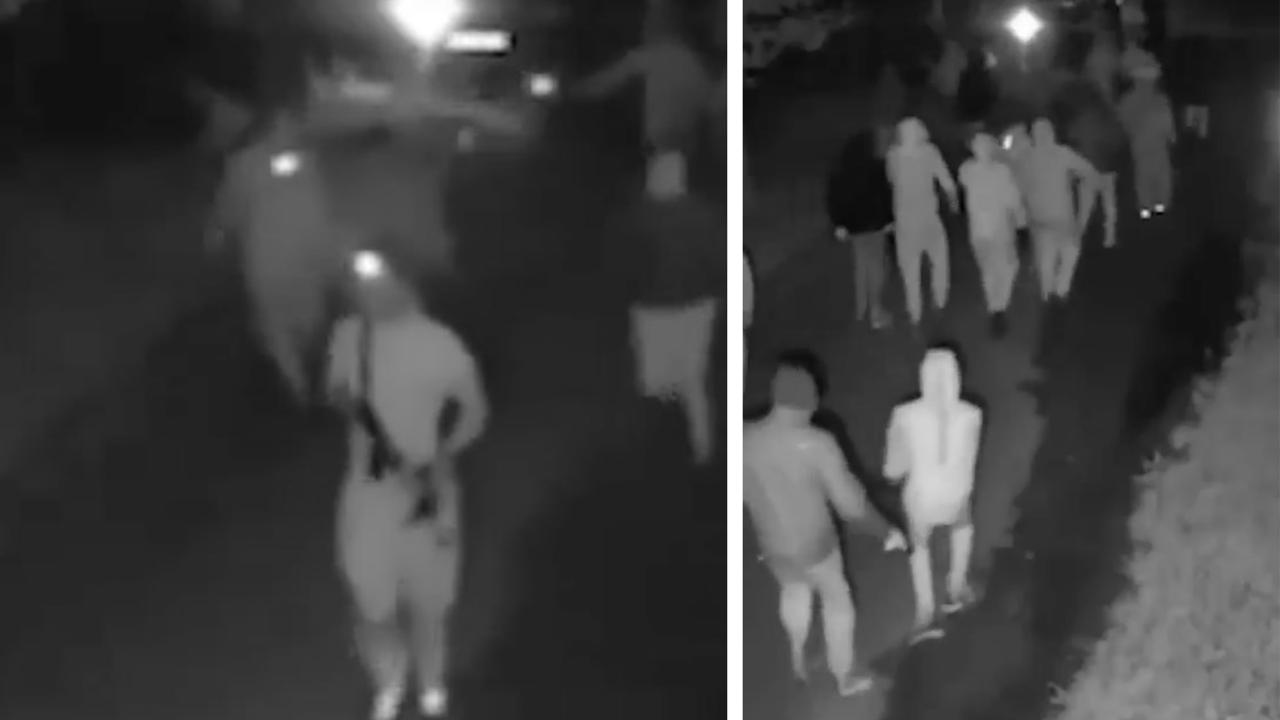
A suspected underworld revenge attack linked to fugitive drug trafficker Jos Leijdekkers, known as “Bolle Jos,” left a security guard dead and two police officers wounded in the quiet Dutch village of Overasselt in the early hours of Sept. 1, 2026. Surveillance cameras captured vans full of masked men carrying assault rifles during the attack, which is raising fears that Netherlands is devolving into a narco-state.
JUST IN: Shocking footage shows 1 security guard murdered and 2 police officers wounded in the Netherlands.
Dozens of armed drug gang members opened fire in the small Dutch town of Overasselt.
Footage shows multiple vans filled with masked men armed with assault rifles.… pic.twitter.com/ShudqYyHFg
Around 4:00 a.m., two vans pulled up and a large group approached a farmhouse previously tied to a drug lab. The surveillance footage shows the group approaching a parked car with its interior light on. Five shots were then fired, according to the Dutch police report on the incident.
A 51-year-old man from nearby Wijchen, hired as a security guard after an earlier attack on the property, was murdered. Neighbors reported hearing dozens of shots, with one neighbor telling Dutch media he heard 37 shots before police arrived.
The first officers responding to a report of a suspicious situation came under immediate fire. Colleagues dragged the wounded officers to safety while still being shot at. One officer initially suffered life-threatening injuries; both were later reported out of danger.
Police launched a nationwide manhunt involving helicopters, dogs, special intervention units, and roadblocks on the A73 and A76. Warning shots were fired during searches of cornfields, gardens, and other sites. The operation led to the arrest of 34 suspects at multiple locations, including a cornfield near the scene, Nijmegen train station, and highways in Limburg.
The suspects included Dutch, Belgian, French, and Algerian nationals. Weapons, vehicles, and data carriers were seized. A large-scale investigation team (TGO) has now been formed, with all detainees remaining in custody.
The incredible violence has sparked reactions all the way from local police officials to the country’s justice minister.
Deputy Police Chief of the East Netherlands unit Jolanda Aalbers described the night as “indescribable.”
“For colleagues this is a truly intense incident. Colleagues were wounded and they were brought to safety by other colleagues at risk to their own lives. It was a real act of heroism. We are grateful that the wounded colleagues are out of life-threatening condition.”
Justice Minister David van Weel condemned “horrible violence” and said “we do not tolerate this,” according to Dutch news outlet NOS.
He also described the scale of the violence as “unprecedented” for the Netherlands.
“The fact that you have hordes of dozens of young people walking through the streets of a village and immediately opening fire on the police is unprecedented and new,” he said. He spoke of a suspected criminal settling of accounts involving international drug cartels that operate across borders.
Deputy Chief Prosecutor Monique Vinkesteijn called it a “long-running conflict.”
She said that suspects face charges including murder or manslaughter, attempted murder, conspiracy, and preparation of a kidnapping. She described ten different crime scenes, underlining the sprawling and complex nature of the crime. She said investigators were working to link each suspect to specific locations.
Mayor Joerie Minses of Heumen municipality, which includes Overasselt, called the violence “un-Dutch,” “completely unacceptable,” and something that “goes beyond all bounds.”
“What happened last night does not fit Overasselt,” he stated.
He now says he may want to close the farmhouse entirely, which has a documented history of trouble.
In 2019, a professional drug lab was found in shipping containers near the farmhouse after a fire. In 2024, armed men were found at the gate of the house.
In July 2025, an attacker fired at least 25 rounds from an AK-47-style rifle at the house, resulting in the conviction of a 21-year-old from Amsterdam. Residents then hired private security.
What sparked the latest attack?
There are now questions about what prompted such a large-scale attack from the drug gangs. Dutch media, citing police sources, linked the attack to a dispute over an 812-kilogram cocaine shipment seized on Aug. 29 at the French-Spanish border. The drugs were in a Dutch-registered truck traveling from Africa via Portugal.
The masked gang members may have been seeking a missing portion of the load or confronting an intermediary connected to Leijdekkers’ network. Leijdekkers, one of the Netherlands’ most-wanted fugitives, has been convicted in both the Netherlands and Belgium, including a 14-year sentence in the Belgian Costa case involving Antwerp port cocaine trafficking. He faces decades in prison for other crimes as well. He is believed to be in West Africa. Police have not officially confirmed the Leijdekkers link.
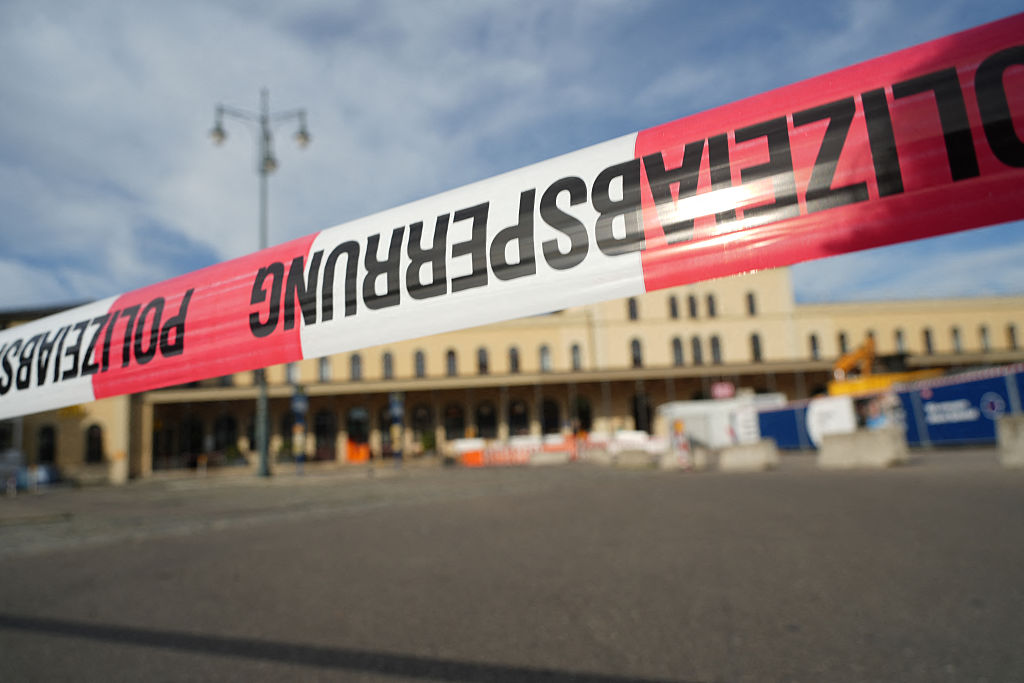
Two people were slightly injured when an unknown object exploded near Augsburg Central Station in southern Germany, according to German police. A large operation by law enforcement is underway at the scene, and the cause of the explosion is not yet known. The incident comes just a day after Germany blamed Russia for an attempted airport drone attack in Leipzig.
The explosion occurred on Wednesday morning, Sept. 2, in the passage of a building near the station. According to police, two people suffered minor injuries. The detonation also damaged windows in nearby buildings.
The police have secured the scene and are conducting activities to determine what object exploded and under what circumstances the explosion occurred.
Explosives experts from the Bavarian State Criminal Police Office (LKA) are also working on site. At this stage, authorities have not provided more information.
Due to the emergency services’ action, there are disruptions to road traffic and public transport in the area of the station. The station building and platform 1 have been closed, while rail traffic on the remaining platforms continues. The police appeal to residents and travelers to avoid the station area and follow the officers’ instructions.
There is currently no official information that the explosion was the result of an attack or was terrorist-related. Police are still investigating the causes of the incident.
Augsburg is a regional transport hub located approximately 55 kilometers northwest of Munich.
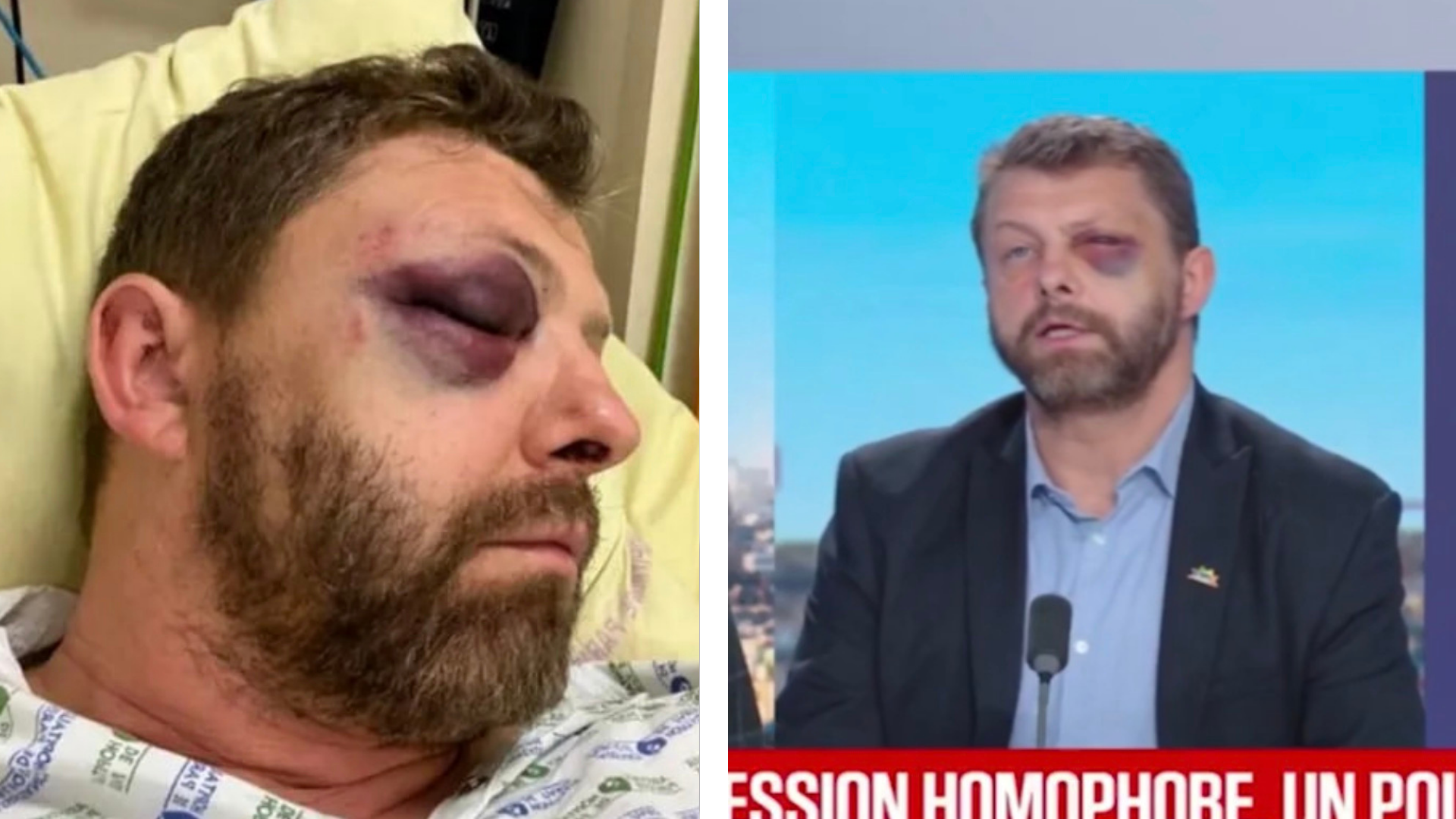
A French police officer who leads an association for LGBT+ staff in France’s Interior and Justice ministries was beaten outside a bar in the Marais in the early hours of Aug. 29 and left with serious head and facial injuries, prosecutors said. The suspect is reportedly Taha W., a 20-year-old from the multicultural department Seine-Saint-Denis, according to French journalist Amaury Brelet.
Pierre Picavet, president of the FLAG! association, was leaving a bar in the Marais, which has long been a center of Paris’s gay nightlife, at around 4 a.m. when a man confronted him, according to his later account and the Paris prosecutor’s office. The attacker shouted homophobic slurs and threatened to kill him. Picavet said he produced his police identity card more than once and told the man to stop. The assault continued.
“At first I thought it was a joke, then he said, ‘I’m going to kill you, you dirty faggot,’” Picavet told RMC.
“That startled me. I stepped back. He repeated ‘I’m going to kill you’ with a very thick whiskey bottle in his hand,” he added.
Picavet said he tried to dodge blows and punched the man in the mouth. The attacker then struck him in the head with the bottle.
“It bled tremendously. I staggered. I didn’t lose consciousness right away. He went past me, I grabbed him, but he pinned me. The only way I could get free was to bite him. I bit him on the cheek. He threw me to the ground, I hit my head and I passed out,” said the police officer.
Firefighters were already treating him when police arrived. Prosecutors said he suffered internal bleeding, a skull injury described as an open wound, multiple facial fractures and a black eye. He was later given 40 days of total work incapacity.
A witness identified the attacker, who was arrested. The Paris prosecutor’s office opened an investigation for violence causing more than eight days of incapacity, committed because of the victim’s sexual orientation. An investigating judge was later appointed. The case also includes a theft count.
Prosecutors said the suspect, a man born in 2006 with no prior criminal record, was visibly drunk. They cited three aggravating circumstances: the homophobic motive, use of a weapon, and intoxication. He was charged with aggravated violence and released under judicial supervision.
In his complaint, Picavet said the man called him a “dirty faggot” several times. Showing his police card “did not deter the suspect from attacking him,” the prosecutor’s office said.
The empty bottle used in the attack was recovered and placed under seal.
While speaking with the media afterwards, Picavet said: “You have to know that in the neighborhood, there are more and more people coming to mug LGBT people, or beat them, or offer them narcotics… I really hope that it’s isolated and that people will manage to open their minds and not be like that anymore.”
He said that he has been frequenting the neighborhood for 30 years, but stated “yesterday, I went back with fear in my stomach. I went back with fear in my stomach, but I went back.”
Picavet also noted that since Europe’s migration crisis truly took off in 2016, the threat to LGBT people has soared.
“The number of homophobic crimes and offenses has tripled since 2016. Tripled! 4,900 homophobic assaults last year!” he stated.
The association Stop Homophobie called the attack a homophobic assault and published photographs of Picavet’s injuries that he sent from hospital. Paris Mayor Emmanuel Grégoire condemned what he described as an “odious homophobic attack” in the heart of the capital and offered support to the FLAG! president.
Speaking on France Inter after the assault, Picavet said he was “particularly shocked,” but added that the episode showed “there is still work to do.” He said: “When I get better, when I have healed my wounds, I will continue the fight.”
FLAG! represents LGBT+ personnel in the Interior and Justice ministries and campaigns against anti-LGBT discrimination and violence.
A Syrian refugee residing in the German city of Leipzig has drawn widespread public attention following revelations regarding the extensive state financial support directed to his massive household, alongside an established pattern of criminal behavior among several of his adult sons, including offenses that resulted in the deaths of multiple victims.
The case highlights the enormous costs of mass immigration in Germany and how many migrants have found creative ways to game the welfare system for their benefit.
According to data cited from Saxony’s Ministry of the Interior, the Syrian patriarch maintains a clan consisting of three wives married under Islamic custom, 32 children, and 25 grandchildren. State child support payments generated by the family structure have approached roughly €100,000 each year. Even with five offspring having reached adulthood, annual disbursements for the remaining 27 minor children still total approximately €84,000, according to Hungarian outlet Mandiner.
Family is closely tied to organized crime
Beyond the financial aspect, state law enforcement authorities have closely observed the family clan network, noting that approximately two-thirds of its members have prior criminal records. While the identity of the family’s head remains undisclosed under privacy regulations, judicial records outline a history of serious offenses involving his adult sons.
The most prominent case involves 21-year-old Bilal A., who drove a high-performance Mercedes without a driver’s license in March 2023. He struck a group of people near Eilenburg, killing four individuals before fleeing the scene unharmed. Although a juvenile court handed down a three-and-a-half-year prison sentence, he remained free pending an appeal, during which time authorities arrested him for driving illegally a second time.
Jan Siebenhüner, a lawyer representing victims’ families, stated that the convict “never showed remorse.” The elder brothers, Mohamed and Rami, are also well known to police for their criminal history. Mohamed received a four-and-a-half-year prison term for participating in an assault on a streetcar passenger and arranging a deal involving nearly five kilograms of methamphetamine in 2022. Rami faces charges spanning violent crime, narcotics distribution, and fraudulent welfare claims linked to employment at the family-operated “Golden Lion” establishment, which authorities later shut down after a drug raid.
The family uses the German legal system to avoid deportation
Addressing the legal barriers preventing the deportation of convicted family members, attorney Siebenhüner pointed out that clan members systematically insulate themselves through naturalization and family expansion.
“Article six of the Family Protection Act is a very effective weapon,” the lawyer noted, explaining that if a family already has children, it cannot be separated and minors cannot be expelled under any circumstances.
Bilal A. entered Germany as an unaccompanied minor in 2015 to join his father. Despite his convictions, his official refugee protection remains active throughout the ongoing judicial appeal, as confirmed by provincial immigration office spokesperson Mandy Peschang. Additionally, multiple court proceedings against members of the family were ultimately dismissed after key witnesses failed to appear during trials.
Remix News has reported on such cases extensively in the past, involving large criminal clan networks and the costs they impose on German society, both financially and in terms of security, including in other cities like Stuttgart.
Other cases highlight how some migrants use fake paternity claims to obtain huge amounts of public money while sometimes claiming paternity of two dozen or more children. This practice is particularly common from sub-Saharan African men.
A 27-year-old Moroccan construction worker in an irregular immigration situation in Spain was released from custody on Monday after being caught in the act of raping a 22-year-old woman on Valencia’s Malvarrosa beach. The duty judge cited the victim’s failure to appear in court to formalize a complaint as the reason for granting him provisional liberty — a Spanish procedural requirement that is relatively unusual compared with many other Western countries.
The incident took place around 6:45 a.m. on Sunday, Aug. 30, near the Akuarela night club. According to Spanish media reports drawing on police sources, the young woman had been in the sea and was lying on the sand when the man approached her. He initially made complimentary remarks before suddenly lunging at her, violently tearing off her dress and forcing penetrative sex while covering her mouth with his hand to stifle her screams. She resisted and cried for help.
A passerby walking along the shoreline spotted the assault from a distance and alerted authorities. Four officers from the Valencia Local Police’s Security, Support and Prevention Unit (USAP), two of them in plain clothes, were already patrolling nearby, according to Spanish news outlet OKDiaro.
They heard the screams and arrived quickly. The suspect tried to flee across the sand. Officers caught him after a short chase. He resisted arrest and punched one officer several times in the face, causing injuries that required medical attention. The officers handcuffed him and handed him over to the National Police. The victim’s mobile phone, found nearby, was also recovered.
Several reports noted the victim was in a state of intoxication, with one account describing her as having left a nearby nightclub for fresh air. Police later found her showing clear signs of alcohol consumption. She was taken to Hospital La Fe, where she received gynecological care and gave an initial statement to officers from the gender-violence victim assistance unit.
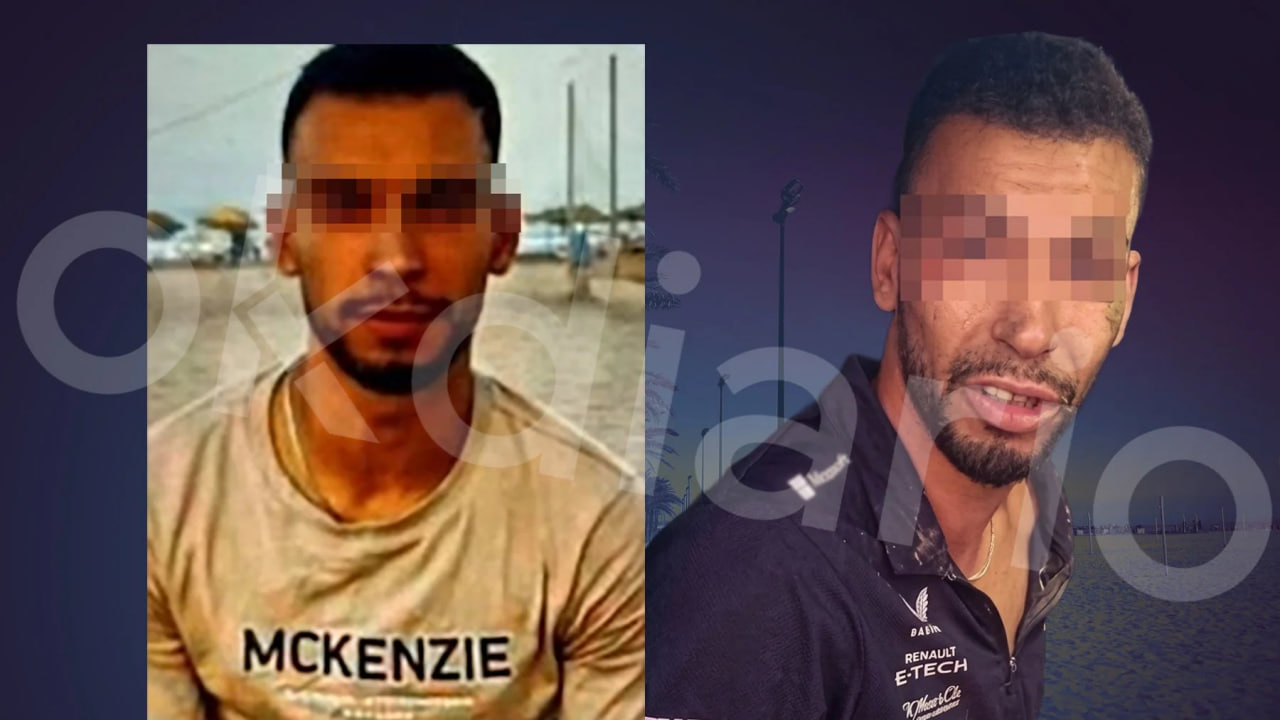
The man, identified as a 27-year-old Moroccan construction worker living in Spain without legal papers, was charged with sexual assault involving penetration and assault on an agent of authority. Authorities have confirmed his irregular status.
On Monday, the duty magistrate of the Violence Against Women section of Valencia’s Court of First Instance ordered his provisional release. The decision, taken in agreement with the public prosecutor, followed the police’s inability to locate the victim so she could appear and ratify a formal complaint.
Spain has some rather unusual rules in regards to this criminal charge. Under Article 191 of the Spanish Penal Code, a complaint from an adult victim is required to pursue sexual offense of this type. Other European nations, like France and Germany, do not require a victim to file a criminal complaint to move forward with criminal proceedings.
Remarkably, even in a case where the woman gave a police statement about the rape and the fact that officers caught the man in the middle of penetrative rape, authorities still released the suspect.
The court opened preliminary proceedings and instructed police to continue searching for the woman. Officials said her situation could change immediately if she is found and decides to proceed. The assault on the police officer is being handled separately and can still be pursued criminally.
Meanwhile, the case has drawn attention on social media due to the man being released within hours and the unique procedural requirements involved in the case.
A first-place finish for the Alternative for Germany (AfD) in the upcoming Saxony-Anhalt elections on Sept. 6 is almost assured. The party is expected to score at least 40 percent of the vote, enabling it to outperform all other parties by a wide margin. Anything less than an absolute majority, which would require around 43 percent or higher, will be seen as a defeat. However, for the AfD’s long-term prospects, this “defeat” may indeed be the best outcome for the party.
Should the AfD win control of all of Saxony-Anhalt, it would be its first time in power, and suddenly, it would have to show results, including managing budgets, dealing with administrative constraints, wrestling with state-level legal limits, and facing potential crises. Left-wing parties, along with establishment parties like the Christian Democrats (CDU), can still put up major roadblocks that will stymie the AfD’s effectiveness to govern even at the state level.
With power comes scrutiny and potentially scandal. Any false moves and the AfD’s mishaps could be amplified to a disproportionate level by a press friendly to the left-wing and establishment German parties.
If the AfD falls just short of an absolute majority in Saxony-Anhalt, the CDU would be forced to form a ridiculous and complex multi-party coalition with parties it should not realistically ever partner with, including the Left Party and BSW, making it appear as if it were some kind of cartel player ooking to do anything to stay in power. In fact, this could create a severe internal crisis for the CDU, which officially maintains an incompatibility resolution banning formal cooperation with both the AfD and The Left. Remarkably, Merz is already talking about cooperation with the Left Party, a position that no doubt many CDU voters would balk at.
In such a scenario, the AfD’s chances at obtaining federal power could only be boosted. There are already some reports that many in the CDU privately want an AfD victory.
Saxony-Anhalt is also one of the smallest states in Germany and federal and EU rules still govern much of the actions the AfD would be able to take, making the party look weak and ineffectual. It is worth looking at the individual member states within the EU, where the leaders of entire countries, like prime ministers like Giorgia Meloni, are effectively blocked from a range of policies, including strict immigration enforcement and deportation. Courts, EU policies, and treaty conventions appear to turn conservatives into mush.
At the individual state level, the AfD will have even less power. The AfD could still fall back on the argument that there is little it can do at the state level, but voters are not very receptive to such arguments. Voters typically punish any sign of weakness. It is never enough for a political party to say: “We cannot do this because of XYZ.” Voters only see “we cannot do this.”
The AfD cannot suddenly turn on the taps for cheap Russian energy, it cannot deport illegal migrants with ease, and it cannot implement an economic turnaround policy that will rejuvenate an eastern region that continues to struggle. That would all require serious federal power. Even then, there are powerful constraints in place.
Those on the right are notorious for promoting “victory through defeat” – and lots of defeat. It could even be labeled an “accelerationist” strategy. It is valid to criticize this approach, but losing does have its time and place.
The AfD can still benefit from victory
Of course, an AfD victory is not without its merits. It is worth evaluating the benefits while being realistic about their limitations.
While a victory and the arduous nature of governing could puncture the mystique of the AfD for many voters, it would also normalize the party in the eyes of Germans. The AfD would in effect be governing an entire state on its own, calling its own shots in education, industry, and security. All the credit for any successes goes directly to the party. Even if the AfD fails to enact many of its reforms, the sky will not fall either. Saxony-Anhalt will not unleash pogroms against migrants and life will mostly continue as normal.
Still, the risks are high for the AfD. The common thread among voters is extremely high dissatisfaction with the ruling parties, Chancellor Friedrich Merz, and business-as-usual politics, which all the other parties represent to varying degrees. Critics of the AfD claim the party is merely a “protest party” that voters are supporting only due to the disastrous policies of the current government. The reality is that those “disastrous policies” are core policies built into the operating systems of these parties, which call for more mass immigration, more deindustrialization, and less security for citizens.
At between 28 to 29 percent of the vote, the AfD has long since catapulted out of the realm of mere “protest party” and now represents a serious political force — a reckoning for the establishment parties and left-wing cartels that have long dominated German politics. Nevertheless, if the CDU and SPD, for example, were more competent, there is no doubt that the AfD’s support would take a hit. There are still protest voters backing the AfD who can switch their allegiance quickly.
The question is now how high the AfD can go at the federal level. What is the party’s limit and what is truly holding it back from breaking the 30-35 percent mark in federal polling? The AfD’s sister party in Austria, the Freedom Party of Austria (FPÖ), has long since achieved such numbers in terms of support.
The AfD still has plenty of growth that it can achieve in conservative Western states like Bavaria, but it will never obtain an absolute majority at the federal level. Forming a coalition with the CDU is still the party’s long-term goal. If the CDU is forced to form an absurd coalition in Saxony-Anhalt, it could push the CDU to be more open to an AfD alliance in the future at the federal level, as a choir of dissenting voices grow within the CDU over the plethora of left-wing alliances being formed across Germany.
The AfD ultimately needs to make a major breakthrough in federal elections, where the true power lies. Saxony-Anhalt is currently the only state in Germany where AfD has a chance of governing with an absolute majority. Perhaps in the future, Saxony may also fall into this category, but at the most, that would then be two states. The path to power does not lie through governing states, they can only be a stepping stone at the very most.
The Hamburg Regional Court has sentenced a 34-year-old Afghan migrant to two years’ probation for rape and several counts of aggravated assault against his former partner, an 18-year-old girl. German social media accounts have already sharply criticized the sentence, arguing it is another example of lenient sentencing in the face of serious crimes.
While the defendant initially admitted only to striking her with his hand, he ultimately confessed to the remaining charges. The court convicted him of four counts of assault, one count of aggravated assault, and one count of rape. As a condition of his probation, he must pay an additional €3,000 in compensation after paying another €2,000 in damages to the victim before the verdict.
Judge Malte Wellhausen detailed that the six offenses occurred between autumn 2016 and spring 2018. The trial faced substantial procedural delays, leading the court to count four months of the sentence of the Afghan man, who works in IT, as already served.
The court found the Afghan man physically assaulted his former girlfriend on five separate occasions, including an incident where he used a leather belt and another instance where he choked her to the point of respiratory distress. The rape took place in October 2016, approximately ten years ago.
The defendant first met the 18-year-old high school graduate from Lower Saxony through an online platform. Physical abuse began only months after their initial meeting, starting when he struck her face. When the young woman reacted with fear and tears, the defendant remarked, “That wasn’t even hard.”
Routine physical assaults followed over minor issues, as well as disputes stemming from the victim’s parents opposing her relationship with the Afghan-born defendant.
The sexual assault occurred in his bedroom while both were in bed, leaving the victim with physical pain and bleeding. Despite the nature of the assault, she did not initially identify the incident as rape. Over the following months, the physical abuse persisted, including the incident involving the leather belt while the woman reportedly blamed herself for the incidents, according to German newspaper Welt.
In August 2017, after overhearing her covertly speaking with a friend on the phone, the defendant struck her face, causing her nose to bleed, and choked her violently by the neck. Rather than reaching out for assistance, the victim suffered severe distress, blamed herself, and engaged in self-harm.
During a subsequent trip to the United States, the defendant proposed to her, and she accepted out of fear. She eventually managed to break away from the relationship in 2018 by relocating her life to Denmark.
The criminal investigation began after the woman noticed a missing person report that featured a photograph of a garden in the Poppenbüttel district of Hamburg, where she had previously resided with the defendant. Concerned for the safety of the woman shown in the report, she eventually spoke with police officers and detailed the abuse she had endured, prompting authorities to open a criminal case.
Judicial findings later confirmed that the disappearance of the other woman was entirely unrelated to the defendant. Authorities proceeded with the investigation despite the victim’s reluctance to participate from Denmark. Further delays arose due to pandemic border closures and the illness of an expert witness, pushing the formal filing of charges to 2024.
The victim in the case tried to avoid the trial altogether and only joined in for video testimony after facing potential prosecution. The court ultimately found her account credible due to its memory detail and complete lack of malicious intent toward the accused.
Defense lawyer Claudia Krüger was positive about the ruling, calling it “a judgment with a sense of proportion. I am very satisfied.“
While the defense had argued for a suspended sentence, prosecutors had requested a prison term of three years and two months. The defense won out but the sentence is subject to appeal.

 Login

BREAKING: Merz just said he is "deeply shocked" by the AfD's landslide victory.



 JUST IN: "They killed a dolphin. They say they killed it. Over there, as you can see, they kill protected species."