German federal police arrested former foreign intelligence chief August Hanning on Tuesday on suspicion of treasonous espionage, obtaining state secrets, attempted treason, and acting as an agent for a foreign service, the Federal Prosecutor’s Office announced.
Officers of the Federal Criminal Police Office took the 80-year-old Hanning and a former aide identified as Manfred D. into custody in the Bad Tölz-Wolfratshausen district of Bavaria and the Steinfurt district of North Rhine-Westphalia. Searches were also underway at premises in Berlin, the prosecutor’s office said in a statement. A judge at the Federal Court of Justice was to review the arrest warrants and decide on pretrial detention.
“The accused Hanning is under strong suspicion of espionage constituting treason,” prosecutors said. They allege that in the spring of 2010, about five years after Hanning left the Federal Intelligence Service, or BND, he and Manfred D. agreed that D. would keep supplying him with valuable intelligence “in exchange for remuneration” for use in Hanning’s private consulting work.
Notably, Hanning was not in the pro-Ukraine political establishment within Germany. In 2024, Remix News reported that Hanning accused Ukrainian President Volodymyr Zelensky of being behind the Nord Stream 2 sabotage attack. Ukrainian suspects have since been arrested and extradited for the attack on critical energy infrastructure.
Manfred D. had been Hanning’s bureau chief and later served as chief of staff to several BND presidents from March 2012 until March 2026, giving him access to sensitive material, the office said. Investigators say that through June 2022 he passed Hanning about 2,000 documents, many classified and intended only for internal BND use, including briefings for the regular intelligence meeting of senior security officials at the Chancellery.
“On one occasion, Hanning used classified intelligence… to draft an analysis for an officer of a foreign intelligence service,” prosecutors said. They added that it was not clear whether “the material reached the intended recipient.”
Hanning is also accused of years of close contact with a representative of a second foreign intelligence service, to whom he passed political information partly drawn from the documents. Prosecutors have not named either service.
Manfred D. is suspected of aiding and abetting attempted treason and treasonous espionage. A government spokesman said the government would not comment because the investigation is ongoing, according to Welt newspaper.
The case grew out of a separate Hamburg investigation. In September 2025, state police searched Hanning’s home and offices for evidence tied to businesswoman Christina Block, who is accused of ordering the kidnapping of her two youngest children in a custody dispute in late 2023. Investigators have alleged Hanning was involved in an earlier kidnapping attempt; he has denied wrongdoing in that case. While reviewing seized material, officers found an electronic storage device holding secret BND documents and referred the find to federal prosecutors in May 2026.
Hanning led the BND from December 1998 to November 2005, then served as a state secretary in the Interior Ministry until 2009. He later worked as an entrepreneur and security consultant. The documents now at issue date from long after he left the service. German media, including WDR, reported that the foreign services involved are not believed to be Russian; prosecutors have not confirmed that account.
Italian prosecutors have asked a court to sentence a 19-year-old man of Moroccan origin who holds Italian citizenship to 14 years and eight months in prison, calling him a “sexual predator” in a case involving the rape, beating and robbery of a 54-year-old woman and two earlier attempted sexual assaults.
The request came Monday in an abbreviated trial before a Modena court, according to Il Resto del Carlino. Prosecutor Ilaria Corbelli sought the term due to aggravated sexual violence, injuries and robbery.
The main attack occurred Aug. 19, 2025, on the Vivi Natura path in San Damaso, a district of Modena. Investigators say the defendant, who had no prior record, approached the woman while his face was covered, dragged her into some bushes, bound her, and sexually assaulted her. He also stole her electric bicycle.
After the assault he placed a cord around her neck, she told authorities.
“Now that you’ve seen me, I’ll kill you,” the defendant threatened, according to the victim’s lawyer, Peter Martinelli, who has asked the judge to return the case file so prosecutors can add an attempted murder charge.
Martinelli cited the cord, the pressure on her neck and the injuries.
The same defendant is accused of attempted sexual assaults on Feb. 12 in Castelfranco Emilia and on May 23 near the Sant’Anna lakes, close to the site of the August attack. Police identified him in part through the 54-year-old woman’s description and an identikit she helped produce shortly after the assault.
A court-appointed psychiatric expert, Matilde Forghieri, concluded he was fully capable of understanding and willing his actions at the time. The report also noted a significant cognitive deficit. The defendant has confessed to the offenses, defense lawyer Enrico Fontana said.
“For us this is an excessive and disproportionate sentence,” Fontana said. “We do not dispute our client’s responsibility, which he has confessed. We will ask that he be sentenced to a just penalty provided by law for these facts.”
Fontana said the defendant, who was 19 at the time, attempted suicide in jail and handed over a handwritten letter of apology to the victims and his family.
The 54-year-old woman attended the hearing.
“It is hard to relive that day. I have confidence in the judge’s decision,” she said. She also thanked the mobile police squad led by Mario Paternoster for the investigation that led to the arrest. In comments reported by Gazzetta di Modena, she said, “That man should stay in prison. To women, I say report it; trust the institutions.”
A Spanish court has sentenced a 61-year-old Sudanese man to 14 years in prison for raping a woman with whom he shared a home, after he threatened her with a machete and struck her with an electrical cable.
The third section of the Provincial Court of Valencia ruled that the May 29, 2024, attack was a sexual assault involving penetration, aggravated by the degrading and humiliating nature of the violence used. The court also ordered fines totaling €1,200 for two minor offenses of injury and threats, and it applied a simple mitigating factor of alcohol intoxication because the man’s volitional capacity was slightly impaired.
The assault occurred about 5 p.m. in a Valencia residence while the other two occupants were out, according to the ruling as reported by Las Provincias. The man ordered the woman into his room and forced her to drink several beers while brandishing a machete with a 57-centimeter blade.
“Come drink with me; if you don’t come, look what’s waiting for you,” he told her, the newspaper reported, citing the established facts.
When she tried to leave, he seized her by the hair and placed the blade against her neck, saying, “Now, the jokes are over.”
He tore off her shirt, lowered her pants, failed in an attempt at anal penetration, then raped her vaginally and ejaculated. He then whipped her back and legs with an electrical cable, covered her mouth and nose so her cries would not be heard, and told her he would keep going until he was “in prison or in the grave.”
She fled when he stood to retrieve tobacco, ran down the hallway and called for help. Neighbors who could not understand her language but recognized she was in distress then dialed for police. When National Police officers arrived, they found her half-naked and frantic. She immediately sought their protection.
In the man’s bedroom they recovered the machete, the cable and the woman’s passport, which he had burned.
The court rejected his trial claim that his own calls had brought police to the scene.
The judges found the woman’s account coherent from her first statement and supported by neighbors, officers and medical reports that documented injuries and an acute stress disorder. A forensic doctor testified that the absence of genital wounds did not exclude the reported assault.
Analysis of vaginal samples detected the defendant’s semen, and experts dismissed as implausible his assertion of consensual sex 16 days earlier. The panel also noted irregularities in the collection of the defendant’s DNA after he refused to provide samples following his arrest.
“The complainant’s statement meets the criteria to be considered sufficient incriminating evidence to overcome the presumption of innocence of the accused,” the court said. The judges added that “no relevant contradictions or inconsistencies were noted in her statement that could affect its reliability.”
The woman had been in Spain only a short time, did not speak the language, had little money, and had no family or support network. The court rejected the defense argument that she had reported the crime to obtain a residence permit, citing the objective evidence.
Japan has raised the fee for permanent residency applications twentyfold and imposed stricter income, pension and language requirements on foreigners seeking to settle long-term, as Prime Minister Sanae Takaichi’s government moves to curb growth in the foreign resident population.
The move is being presented as a tool to protect public finances and social cohesion.
The fee for permanent residency rose from 10,000 yen to 200,000 yen (about $1,270) on Oct. 1, the Immigration Services Agency reported. Charges to change or extend other residence statuses, long fixed at 6,000 yen, now scale with the length of stay and reach 75,000 yen for permits of five years or more. Reduced rates remain available for applicants facing severe hardship who also qualify for humanitarian consideration.
The adjustments arrive after the foreign resident population reached a record 4.12 million at the end of 2025, up 9.5% in a single year. Prime Minister Sanae Takaichi has framed the tighter rules as a way to keep acceptance orderly.
“The government acknowledges that some citizens feel anxious or a sense of unfairness due to the rising number of foreign residents,” Takaichi wrote on X. The changes, she said, are meant to “ensure order” and allow “both citizens and foreign nationals to live safely and securely.”
Under the revised guidelines, permanent-residency applicants must show continuous household income at or above the average for Japanese households of similar size — 5.75 million yen (about $36,500) in 2024 official data.
They must also demonstrate projected pension benefits comparable to 30 years of contributions to the employees’ pension system, a shortfall that can be covered by assets. From April 2027, applicants will need Japanese proficiency at the level of an independent user and a working grasp of local social rules.
The standard residence period remains 10 years; marriage-based pathways were lengthened as well.
The approach is straightforward. Settlement becomes available to people who can support themselves, contribute to the pension system, and function in Japanese society, rather than to anyone who simply accumulates years of temporary status.
Extra fee revenue is earmarked in part for language education and for removing people who overstay or break the rules. A related fivefold rise in visa fees took effect in July, the first adjustment since 1978, which Foreign Minister Toshimitsu Motegi described as a correction “to reflect inflation and exchange rate fluctuations.”
Meanwhile, European states face larger and faster inflows of migrants, strained housing and welfare systems, and repeated public backlash over irregular migration and failed integration. Japan’s harder line comes at a time when the country already has far fewer foreigners to deal with, especially from troubled Third World countries.
The radically different approaches to immigration are made clear through sheer numbers. In Germany, the former government cut the standard residency wait from eight years to five on June 27, 2024. The largest practical change is dual citizenship: applicants no longer have to renounce their existing nationality. Since the changes, Germany granted about 292,000 citizenships in 2024 and about 333,000 in 2025.
In Japan, authorities generally approve citizenship after ten years in most cases. On top of more rigorous standards, Japan does not recognize dual nationality for people who naturalize. Approvals are modest — about 11,500 in 2025, and roughly 7,000 to 10,000 a year before that — against a foreign resident population of 4.12 million. Formal applications that are filed are approved more than 90 percent of the time, but many people are screened out before they apply.
European countries that already struggle to enforce returns or to require newcomers to reach median earnings could adopt similar thresholds to dramatically reduce immigration.
Austrian remigration activist and CEO of the Institute for Remigration Martin Sellner stated on Sunday that a rap video circulating on Instagram calls for him to be hunted. He contrasted the clip’s availability online with restrictions he says platforms have placed on the accounts of those on the anti-immigration right.
Sellner posted the roughly 26-second clip on X. In the video, several migrant men stand in a graffiti-marked underpass under colored lights and make a number of threats and statements opposed to Germany
Mystery meat migrant rappers are calling to hunt me.
This song is not censored, while we are deplatformed everywhere.
The only thing more embarrassing than their "rap" is, that their corny radical chic is platformed by all media and indirectly funded by state money.
English text overlaid on the rap video includes, “Martin Sellner is in danger from today,” “We are shootin’ with AKs” and “I am hunting Martin Sellner.”
In addition, the rappers claim that “Germany has no right to exist,”
Other on-screen text refers to streets burning and to bombs “like in Dresden ’45.” Dresden was firebombed by the Allies at the end of the Second World War, resulting in at least 25,000 German civilians losing their lives.
In response to the video, Sellner wrote: “Mystery meat migrant rappers are calling to hunt me. This song is not censored, while we are deplatformed everywhere. The only thing more embarrassing than their ‘rap’ is that their corny radical chic is platformed by all media and indirectly funded by state money.”
German criminal law treats certain public threats as offenses independent of whether they are carried out. Artistic freedom may not serve as a defense in this case when the threats are specific, directed at an individual, and describe violent acts.
Section 241 of the German criminal code related to threats penalizes threatening a person with a crime against sexual self-determination, bodily integrity, personal freedom or property of significant value. The penalty rises if the threatened act is a felony or if the threat is made publicly or by distributing content, with maximum terms reaching three years in the aggravated public cases.
Section 126 penalizes threatening specified serious crimes, including murder, aggravated assault or certain explosives offenses, in a manner capable of disturbing the public peace, with a maximum of three years’ imprisonment.
Austrian law contains a parallel offense of dangerous threat under Section 107 of the Austrian Criminal Code when a person is menaced with death, serious injury or other grave harm in a way that is capable of causing reasonable fear.
In recent years, German public figures and politicians have brought thousands of Germans into court for various statements online that were not direct threats, but instead mere insults. In some cases, these social media users only sharply criticized these politicians.
Sellner, 37, led the Identitarian Movement of Austria for years and has promoted large-scale returns of migrants. Most recently, he founded the Institute for Remigration. Germany and Switzerland have at times imposed entry bans on him tied to public-order concerns. Some of those measures were later limited or overturned by courts.
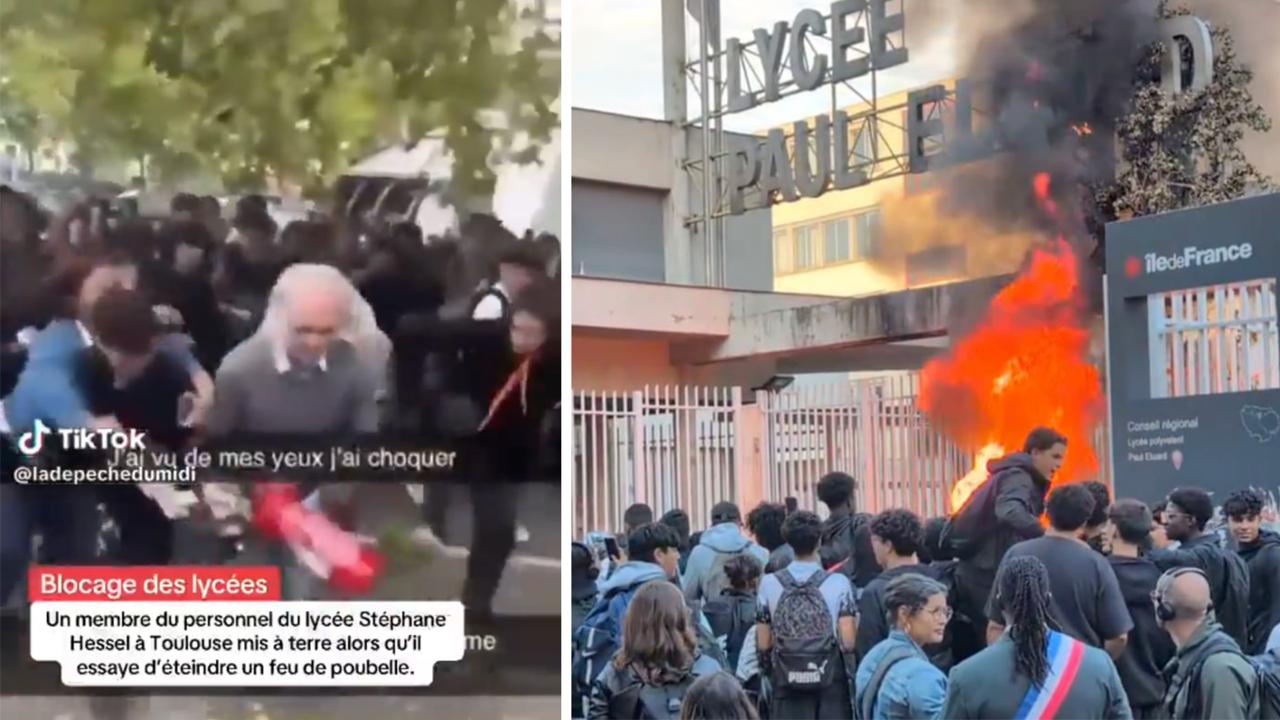
Masked attackers set fires at the doors of a Paris vocational high school Monday, confining about 100 students and staff inside, as nationwide student protests over school conditions entered another week with thousands already arrested and hundreds reported injured.
At the Nicolas-Louis Vauquelin High School in the 13th arrondissement, Principal Carole Zerbib said a group of about 10 people in hoods, masks and black clothing arrived around 7:50 a.m. as students were arriving. She told BFMTV they looked “very determined, very fast,” and that staff “immediately understood that we were not going to be able to talk with them.”
Zerbib said the group threw full trash bins and other flammable material in front of the entrance, brought a sofa and bicycles to barricade the door, smashed glass with a pair of crutches, and set fires outside using a flammable liquid. A staff member was struck in the face by a shard of glass, BFMTV reported. Firefighters and police were met with mortar fire. Courses were canceled for the day.
A video team from BFMTV recorded flames at the entrance and described staff being blocked as they tried to use an extinguisher, with the principal heard telling confined students to move up to the first floor.
BREAKING: Rioters set fire to the entrance of Vauquelin High School in Paris and blocked the exits when staff tried to put the fire out.
A film crew recorded the terrifying attempted murder.
“The school staff was unable to put out the fire. The rioters blocked them just as the extinguisher nozzle came out; they blocked the exit.”
“The fire continues. You see all the silhouettes moving behind it; they continue to feed this fire, making it stronger and stronger. The school staff is not even going to try to put it out anymore; they can’t manage it. We can hear the principal here asking the hundred confined students to step back and move up to the first floor.”
The building was full of staff, students, and journalists, but these rioters appear ready to kill anyone still inside the vocational chemistry school.
In the video sequence, a BFMTV host stated: “The school staff was unable to put out the fire. The rioters blocked them just as the extinguisher nozzle came out; they blocked the exit.” The staff speaking from inside the building confirmed they were “under siege.”
Principal Carole Zerbib said, “It was terrible for the students and the staff, who witnessed an outburst of violence…I think we had rarely seen violence this strong in front of us.”
She said the attackers “were quite organized and had prepared their move,” and that she had been warned by students and teachers of calls on social media to burn the school. “These aren’t my students. These are groups.”
Junior Interior Minister Jean-Didier Berger, speaking on BFMTV after the fires were put out and the school evacuated, called the images “particularly shocking” and said, “These are criminal acts that fall under the law and must be repressed in the harshest way.”
“Which outlet is that?” she asked. When she was told it was CNews, she said, “Oh no, I had said no.” When the journalist replied that it was the press, she said: “I don’t agree. Because I don’t agree with CNews’s editorial line. I think you don’t do any good. You don’t do any good for young people.”
BREAKING: Another major school arson attack at Blaise Pascal High School in the French city of Rouen.
The entire entrance is currently in flames.
School staff can only stand and watch it burn.
Follow: @RMXnews https://t.co/CZ8h1aDO3U
She had earlier told other reporters that as long as police remained outside, “I tell myself it will be all right,” while adding it was “not impossible that they come back, since they want to strike at the symbols of the state.”
The clash came as Education Minister Édouard Geffray said classes would be fully or partly suspended Monday at 400 to 500 of France’s roughly 3,700 high schools because safety conditions were not met. He said 24 schools had been burned or ransacked since the protests spread from the Paris region in mid-September. Organizers have called a further day of action Tuesday, which student unions have labeled “act III.”
Geffray said Sunday that 78 education staff members had been injured since the unrest began, including “some of them by high schoolers.” In addition, 170 students had been hurt. He said far-left activists had “hijacked” the movement. Interior Minister Laurent Nuñez has said more than 5,000 people have been arrested since last Monday, about 85 percent of them minors, and that more than 300 officers and gendarmes have been injured. Police recorded 1,747 arrests on Friday alone, he told TF1.
In Tours, prosecutors said a young protester lost sight in one eye while battling with police.
Students and the Union syndicale lycéenne say they are protesting against reduced teaching staff, overcrowded classes, long schedules, the Parcoursup admissions system and buildings in disrepair. The government has called some of those complaints legitimate while condemning what Nuñez has described as a slide into “riot and urban violence.”
BREAKING: A French physics teacher was doused with gasoline today (Oct. 2) while trying to put out a fire students had lit near a tree in La Ciotat.
The teacher was reportedly temporarily blinded, according to French news reports, when the gasoline was thrown into his eyes.
Youths then began kicking the physics teacher.
The main suspect was reportedly arrested.
Yesterday in Marseille, youths are being investigated for attempted murder after dousing a principal and a vice-principal with gasoline during an attempted arson outside a high school administrative office.
Follow: @RMXnews
An MP from Germany’s Left Party posted a controversial video on Instagram over the weekend in which she uses profanity against Israel, Israeli Prime Minister Benjamin Netanyahu, President Donald Trump, mainstream media, and people who disagree with her.
“Fuck the genocidal apartheid state of Israel. Free the occupied lands of Palestine. Fuck the war criminals Bibi Netanyahu and Donald Trump. Fuck the mainstream media and anyone who disagrees with us,” said 33-year-old Cansın Köktürk, a Bundestag lawmaker from North Rhine-Westphalia and the Left Party’s social-policy spokesperson.
“It’s free Palestine until our very last breath or until Palestine is free, whichever one comes first,” she added before ending with, “Assalamu alaikum.”
During the video, she is shown walking through Bochum.
The post appeared as the Left Party, the Social Democrats and the Greens hold exploratory talks on a possible coalition in Berlin after the Sept. 20 state election.
Handling of antisemitism and Israel policy has been a point of friction in those discussions, according to reports from German newspaper Tagesspiegel. Several Left Party members of the Berlin state legislature have been associated with sharp anti-Israel positions.
Köktürk was fined €2,000 in September after repeated interruptions in the Bundestag. During a speech by Alternative for Germany (AfD) lawmaker René Springer, she shouted, “That is racist shit.” After Vice President Andrea Lindholz of the Christian Social Union (CSU) called her to order, Köktürk said, “Now you are protecting the fascists.”
Lindholz issued further calls to order; the fine followed because Köktürk had accumulated three within three sitting weeks.
Köktürk later wrote on Instagram that she was resisting “the normalization of racist and misanthropic content of the AfD in the German parliament” and that “no one can intimidate me or silence me with capitalist threats of fines.” She said she was collecting the penalties “as a migrant woman” and launched a fundraiser, with proceeds directed to the rescue group Sea-Watch.
Köktürk, a social worker born in Hattingen to Turkish parents, entered the Bundestag in 2025 via the Left Party’s North Rhine-Westphalia list after earlier membership in the Greens.
The White House is monitoring reports of a suspected plague case and related quarantine measures in Russia’s Irkutsk region and is assessing possible options, a Trump administration official said.
“The administration is aware, monitoring the outbreak, and assessing options,” the official told Axios.
A State Department spokesperson separately said the United States is aware of reports of a fatal case of suspected pneumonic plague in Irkutsk Oblast and is tracking developments with the Centers for Disease Control and Prevention and other agencies.
“Many details have not been confirmed. We encourage Russian authorities to share accurate information quickly and openly,” a spokesperson said.
The reports center on the death of 28-year-old Darya Shipilova, a laboratory technician at the Irkutsk Anti-Plague Research Institute of Siberia and the Far East. Independent Russian outlet Lyudi Baikala reported that she broke a test tube containing the bacterium that causes pneumonic plague on Sept. 25. She was hospitalized in Shelekhov on Sept. 29 with severe pneumonia and died overnight between Oct. 1 and Oct. 2, according to local accounts.
Russian authorities have not confirmed that Shipilova had plague. Rospotrebnadzor, the federal public health agency, said she was diagnosed with “pneumonia of unknown etiology” and that expanded testing found no microorganisms linked to her work. The agency said a review found no laboratory accident involving pathogenic microorganisms at the institute and that the sanitary and epidemiological situation in Irkutsk, Shelekhov and the wider region remained stable.
Alexei Tsydenov, head of the neighboring republic of Buryatia, said earlier on Telegram that the woman “died, maybe of the plague,” while adding that there were no plague outbreaks in Buryatia.
After the death, authorities placed nearly 200 people who had contact with Shipilova under medical observation, with most hospitalized for monitoring, Russian media reported. Irkutsk Gov. Igor Kobzev said those under observation showed no signs of illness and that laboratory tests were negative.
“All identified contact persons have been placed under medical observation. As of today, the contacts show no signs of illness, and their laboratory test results are negative,” Kobzev wrote on Telegram, according to The Moscow Times.
Several hospitals in the region imposed temporary restrictions or quarantines, and the director of an aluminum plant in Shelekhov ordered employees to wear masks, local reports said.
Pneumonic plague, caused by the bacterium Yersinia pestis, can spread person to person through respiratory droplets and is the most severe form of the disease. The CDC says plague is potentially life-threatening but can be treated effectively with antibiotics if diagnosed and treated promptly. Natural plague foci outbreaks still exist in parts of Siberia, Mongolia and Central Asia, and Russia maintains specialized anti-plague institutes to monitor them.
No additional U.S. travel restrictions have been announced. There are currently no direct commercial flights between the United States and Russia.
Two shocking incidents reveal how White women are also being targeted in the French school riots. In one incident, a woman who tried to stop vandalism on the edge of a high school protest was struck in the face by flames from an aerosol can used as a makeshift flamethrower. In another video shared online, a White female school supervisor was surrounded and punched during a blockade in Seynod, as student unrest over school conditions spread across France this week.
The Marseille attack with the homemade flamethrower occurred Thursday afternoon near Place of the 4th of September in the city’s 7th arrondissement, according to police sources. Images authenticated by BFMTV network show a White Frenchwoman attempting to stop students from smashing the bus stop with an iron bar.
An individual dressed entirely in black, with a hood over his head, then “used a spray can with a lighter to turn it into a flamethrower, directed at the head of his victim,” BFMTV reported. The flames hit the woman’s face as the crowd screamed in the video.
She filed a complaint Friday in Marseille, but the extent of any injuries remain unknown.
A woman had her face burned in the French city of Marseille during student blockades.
A hooded far-left rioter set the spray from an aerosol can on fire and used it on her face like a flamethrower.
A separate video shows a White female supervisor at Baudelaire High School in Seynod, near Annecy, during a blockade. The woman is completely surrounded when a Black male punches her in the face multiple times.
A White female supervisor at Baudelaire High School is beaten by a mob of multicultural students during a blockade in Seynod.
The woman is completely surrounded when a Black male punches her in the face multiple times.
The incidents come amid days of blockades and clashes at French high schools that serve students roughly ages 15 to 18. While the protests were presumably about poor teaching conditions and poorly maintained schools, they have since expanded into mass rioting, arson attacks, and attempted murder cases, including another incident in Marseille where gasoline was splashed onto a principal and vice principal during an attempted arson outside a high school administrative office.
The Interior Ministry said 1,027 high schools had been affected by demonstrations, with blockades at 222 of them. On Thursday alone, authorities recorded 1,949 arrests and 305 injured police officers, the ministry said.
Education Minister Édouard Geffray said 65 education staff members had been injured, including 40 headteachers, and that there had been “significant damage” to school facilities. Interior Minister Laurent Nuñez said 625 people, mostly young, were detained Wednesday and that 83 officers were hurt that day. Government figures put student and staff injuries over the days of protest at 159, including one student who lost part of the use of a hand after setting off a firework.
JUST IN: A school principal was struck directly in the face by a firework mortar during ongoing violent student blockades in France.
The incident happened at Blaise Pascal High School in Rouen.
Later, the entire entrance of the school was set on fire.
Other attacks on staff have been reported. In La Ciotat, a principal was doused with gasoline and beaten, and in Belfort a police commander was thrown to the ground and beaten unconscious, which Remix News also reported on. That case is also being treated as an attempted murder investigation.
The Education Ministry said 564 schools had been disrupted since Friday morning. More than 400 high schools were closed preventively that day. Prime Minister’s office officials, after a crisis meeting Thursday, described the movement as “a maneuver organized by France Unbowed and its ultra-left proxies.”
Jean-Luc Mélenchon, the leader of the party, urged young people to use “only methods of nonviolent struggle.” However, intelligence reports cited by French government allege the party is backing the violence covertly.
A senior police officer in civilian clothes was beaten unconscious on Friday, Oct. 2, after he was chased down and violently kicked in the head by a multicultural mob during high-school protests in the city of Belfort. Belfort prosecutors have opened an investigation for attempted voluntary homicide of a public official in response to the incident.
JUST IN: French high school students knock out a police officer and begin kicking his head with full force in the city of Belfort.
The attack happened Friday morning as the nationwide high school riots continued. The video shows several people in a smoky field standing over a man on the ground and kicking him. BFMTV identified him as a high-ranking officer who was not in uniform and reported that he lost consciousness due to repeated blows. The youths kicked him multiple times in the head after he was on the ground in the video.
“A high-ranking police officer in civilian clothes was set upon,” BFMTV reported. “He lost consciousness under the blows. An investigation has been opened for attempted voluntary homicide.”
BREAKING: Migrant student youths have set fire to multiple buses and even fire trucks in the French city of Marseille as chaos spreads.
The Marseille transport authority, RTM, said several of its buses "were targeted near high schools in the north and east of Marseille,"… pic.twitter.com/hv8tilIB3B
The officer’s name and condition were not released. BFMTV did not say whether anyone had been arrested in the attack.
The charge is among the most serious available in a case of violence against a public official. If the suspects are found and convicted, they potentially face life in prison. However, due to their likely young age, they would likely face a far less severe penalty — if police even manage to find them.
The crisis in France has reached a breaking point. Today, Oct. 2, the French Interior Ministry announced it has deployed the BRAV-M unit in Paris, a motorized elite police force specialized in heavy repression during mass rioting and other emergency situations.Across the country, authorities are reporting 305 officers were injured just yesterday alone.
The beating of the plainclothes officer also came after several days of clashes around Belfort’s high schools. ICI Belfort-Montbéliard reported that projectiles were thrown Thursday near the Follereau and Courbet high schools and that police answered with tear gas.
Prosecutor Paul-Edouard Lallois said 16 people, mostly minors, were detained.
He stated that “all the mobile phones of the people arrested have been seized with a view to judicial confiscation.” The prefecture said five members of the security forces were lightly injured.
This incident in Belfort also comes after a female officer was chased down by a mob and kicked in the head multiple times yesterday, which was condemned by National Rally leader Marine Le Pen and the Interior Minister Laurent Nuñez.
L’image de cette jeune policière, poursuivie par une meute qui hurle sa haine, projetée à terre et molestée, est insoutenable.
Ces faits méritent des peines exemplaires. Qu’elle sache que ce soir, des millions de Français lui apportent un soutien chaleureux. pic.twitter.com/3yt96dydeH
Nationwide, the Interior Ministry said 1,949 people were arrested Thursday. Education Minister Édouard Geffray said the student movement had been “taken hostage by ultra-violent small groups,” and that 235 people in the education sector had been hurt, including 65 school staff members. In addition, 400 schools were closed Friday.
A White female supervisor at Baudelaire High School is beaten by a mob of multicultural students during a blockade in Seynod.
The woman is completely surrounded when a Black male punches her in the face multiple times.
Right-wing National Rally leader Marine Le Pen on Thursday called footage of a young French police officer being chased, knocked down and kicked during high school protests “unbearable,” and said the attackers deserved exemplary punishment. The video comes at a time when 305 police officers have been injured as of Oct. 2 and 400 schools remain closed.
In a post on X, Le Pen wrote: “The image of this young policewoman, pursued by a pack howling its hatred, thrown to the ground and assaulted, is unbearable. These acts deserve exemplary sentences. Let her know that tonight, millions of French people offer her warm support.”
L’image de cette jeune policière, poursuivie par une meute qui hurle sa haine, projetée à terre et molestée, est insoutenable.
Ces faits méritent des peines exemplaires. Qu’elle sache que ce soir, des millions de Français lui apportent un soutien chaleureux.
The clip, which spread rapidly online, shows a lieutenant trainee with the Paris police prefecture being pursued on foot by several people near Avenue Gambetta in the 20th arrondissement. Voices on the recording shout insults, calling her a “bitch,” and scream: “Kill her!”
One person trips her; others then kick her while she is on the ground, according to accounts from the Paris police prefecture and French media. A follow-up video shows the woman being beaten and kicked on the head while on the ground.
10 ans de prison…. Voilà ce qui leur laisserait le temps de réfléchir à leurs actes. https://t.co/gTKwfkVe7S
Authorities said the officer had stopped to retrieve a dropped radio during a tense confrontation involving roughly 100 demonstrators and was then overtaken. She later filed a criminal complaint. The Paris prosecutor’s office opened an investigation Friday into group violence against a person holding public authority.
Interior Minister Laurent Nuñez wrote on X that attacking a representative of law and order in this way was intolerable. He said he supported the officer and the 305 other police officers and gendarmes injured in interventions that day, and that those responsible would be found and prosecuted.
Une jeune lieutenant stagiaire de la préfecture de Police a été poursuivie, projetée au sol et agressée par plusieurs individus dans le 20e arrondissement de Paris cet après-midi. S’en prendre ainsi à une représentante de l’ordre est intolérable. J’apporte tout mon soutien à…
The assault occurred amid a wave of high school blockades and demonstrations that have turned violent in several cities, leading to close to 2,000 arrests. Le Pen, president of the National Rally group in the National Assembly and the frontrunner to win the 2027 presidential election, had earlier posted that the unrest was no longer ordinary student protest but organized rioting involving professionals and lawmakers from the left-wing France Unbowed party.
She called for a new anti-rioter law that would make participation in a riot a clearly defined offense.
BREAKING: Another major school arson attack at Blaise Pascal High School in the French city of Rouen.
Regional council president Valérie Pécresse likewise described the scenes as urban rioting rather than student demands and said images of the officer being attacked were frightening.
The principal of a French high school in Rouen was struck by a firework mortar and the school’s entrance was set on fire, resulting in a massive blaze, on Thursday. The arson attack is one of many targeting schools today, Oct. 1, which also saw mass violence, buses and fire trucks set on fire, and even a case being treated as attempted murder.
The latest incident in Rouen saw a student aim a firework mortar and hit the principal of the Blaise Pascal High School at the school gate shortly before 8 a.m., Paris Normandie reported. A video of the incident showed the principal being hit directly in the face and retreating into the school.
JUST IN: A school principal was struck directly in the face by a firework mortar during ongoing violent student blockades in France.
The incident happened at Blaise Pascal High School in Rouen.
Later, the entire entrance of the school was set on fire.
Burning trash bins were placed outside the entrance around the same time, producing heavy smoke and causing major fire damage at the doorway. Video of the blaze has also spread on social media.
BREAKING: Another major school arson attack at Blaise Pascal High School in the French city of Rouen.
Classes were canceled due to the violence. About 30 police officers were nearby, and at least one person was arrested at the school.
The Normandy education authority said the Blaise Pascal principal and the principal of Elisa Lemonnier High School in nearby Petit-Quevilly were both injured in the morning unrest and quickly treated by emergency services.
The authority condemned “inadmissible attacks of unprecedented violence” against the two school leaders “on the sidelines of the mobilizations.”
The Seine-Maritime prefecture said five people were hurt in the department and that intrusions occurred at several schools. Authorities reported 14 arrests in Seine-Maritime on Thursday, which are included in the figure of 23 total arrests since Tuesday.
BREAKING: Nelson Mandela High School is currently on fire in the French city of Nantes.
Schools across France are being set on fire as student protests and blockades rage on.
Fires and blockades were also reported at other schools in and around Rouen, including Marcel-Sembat High School in Sotteville-lès-Rouen, where bins and barriers burned and mortar shots were heard, and at Flaubert High School and Camille Saint-Saëns High School. In Le Havre, fires damaged entrances or streets outside several high schools, and at least two cars burned near one campus.
The clashes are part of high-school protests that began last week in the Paris region and have spread nationwide. However, what began as protests over overcrowded classes, missing teachers and poor facilities, has come to be described as race-fueled rioting predominantly in schools with large migrant populations.
Critics say the students’ response of burning down schools is especially contradictory when the students are supposedly claiming their schools are in poor condition and not well-maintained.
BREAKING: Schools are burning across France as violent student blockades grow. The mayhem shows no sign of slowing down despite 625 arrests.
Oct. 1 Nelson-Mandela high school in Nantes burned, façade and hall destroyed. The school is expected to be closed for several… pic.twitter.com/v1fxbNuWfH
Earlier this week at Blaise Pascal, student Malo Leleu-Marret told Paris Normandie, “There is a lack of staff, we end up with 35 students per class in rooms that are too small.”
It is unclear how shooting the principal with a mortar and burning the school will help deliver a better teaching experience for students.
Prime Minister Sébastien Lecornu has said fireworks, fires, and violence near schools cannot be justified. Interior Ministry figures from earlier in the week showed over 650 arrests across France, most involving minors, along with injuries to officers, students, and school staff. Up to 50 officers were wounded and multiple teachers and staff were assaulted, including an incident today in Marseille, Oct. 1, in which saw students doused school leaders in gasoline. Police are reportedly treating the case as attempted murder.
Police continued to investigate the Rouen-area attacks Thursday as blockades persisted at multiple campuses.
A 46-year-old man of Bangladeshi origin is accused of aggravated sexual violence against his minor daughter in Brescia province, Italy, after investigators say years of abuse left her pregnant before she turned 15.
According to Italian newspaper Giornale di Brescia, the preliminary hearing opened at the Palace of Justice in late September 2026. The defendant, held since February in Cremona prison’s section for those accused of sexual offenses, requested an abbreviated trial conditioned on a proposed compensation payment to the victim. That request is scheduled for discussion on Jan. 19. DNA tests and police interviews with the girl, assisted by social services, supplied further corroboration that the father had impregnated his daughter.
The case surfaced in early 2026 when the mother took the girl to the emergency room at Brescia’s Civil Hospital for severe abdominal pain. Doctors determined she was pregnant and notified police. Italian police arrested the father after initial checks. Italian newspaper Il Giornale described the allegations as prolonged abuse beginning when the girl was a child.
The paper stated that inside the hospital, she told staff that he “had forced her to undergo sexual acts since she was a child. First he would subjugate her, then he would move on to groping, finally he began full intercourse. It was precisely during one of these sexual relationships that she became pregnant.”
Laura D’Urbino, president of Brescia juvenile court, said the court becomes involved in such situations both because of the daughter’s age and because the pregnancy involves a close relative.
This is not the first serious case of sexual violence from a Bangladeshi man in the Italian city. A separate case in the Brescia-area from 2024 involved a different 29-year-old Bangladeshi man and a 10-year-old girl of sub-Saharan origin inside a reception center in Collio. He was sentenced to five years in prison, however, the victim was not his daughter.
Images of burning schools, buses, and vicious assaults, along with a report of attempted murder, have once again hit France this morning, Oct. 1, as high school blockades mark their second week across France. What began as protests demanding better conditions for students and teachers has devolved into violence at dozens of locations, concentrated at schools with large immigrant populations
This morning, Oct. 1, further clashes, burning buses, and arson attacks have been reported. French news outlet BFMTV is even speaking of murder attempts being carried out by certain students in one incident where the leadership team of one school in Marseille was doused in gasoline. In response, French Prime Minister Sébastien Lecornu is convening an interministerial emergency meeting at 1 p.m. to contain the crisis.
BREAKING: Migrant student youths have set fire to multiple buses and even fire trucks in the French city of Marseille as chaos spreads.
The Marseille transport authority, RTM, said several of its buses "were targeted near high schools in the north and east of Marseille,"… pic.twitter.com/hv8tilIB3B
In Marseille, the regional government said an “unacceptable line” had been crossed at Victor Hugo High School, where “the principal, the deputy principal, the general secretary and the team leader were assaulted and doused with gasoline,” according to the Provence-Alpes-Côte d’Azur region, cited by BFMTV.
BFMTV also reported that a naval firefighters’ vehicle was looted and set on fire in the city. Viral videos also show a bus on fire with numerous Black and Arab youths pelting the bus with stones and dancing on its roof. The Marseille transport authority, RTM, said several of its buses “were targeted near high schools in the north and east of Marseille,” that “drivers had to leave their vehicles in a hurry, and one of them was assaulted.”
The transit authority condemned “these irresponsible acts.” ICI reported that two buses caught fire in northern Marseille and that two buses were damaged near Floride High School in the 14th arrondissement. A dumpster was also set alight outside Victor Hugo High School. Authorities said 40 high schools in the Bouches-du-Rhône department were affected Thursday, and 18 of them were fully blocked.
The regional authority said the violence was no longer a protest.
“Mortar fire at staff, vehicle fires, gates torn down, stoning and intolerable intrusions: this is not contestation, it is delinquency,” it said, according to ICI. “Those who burn our high schools are attacking the Republic.”
BREAKING: Nelson Mandela High School is currently on fire in the French city of Nantes.
Schools across France are being set on fire as student protests and blockades rage on.
In Nantes, the hall of Nelson-Mandela High School was destroyed by what deputy principal Gaëlle Cordier called a “deliberate” fire that spread to the façade before firefighters brought it under control, RTL and Ouest-France reported. The school was expected to stay closed for days, and RTL said the administration expected a closure of several weeks.
The Nelson Mandela High School of Nantes actually just had a major “eco-friendly inclusive” renovation. The building cost €77 million in taxpayer money. However, the all-wooden design, with the interior reportedly designed for “positive energy,” has now gone up in flames. It could cost tens of millions to rebuild.
Despite the threat to life and property, the far-left pro-migration party France Unbowed (LFI) has tried to bolster the student movement, which is now spiraling out of control.
BREAKING: Schools are burning across France as violent student blockades grow. The mayhem shows no sign of slowing down despite 625 arrests.
Oct. 1 Nelson-Mandela high school in Nantes burned, façade and hall destroyed. The school is expected to be closed for several… pic.twitter.com/v1fxbNuWfH
A fire at the private Talensac High School in the city center destroyed the entrance doors.
“The same wreckers everywhere. The same violence everywhere. The same political exploitation everywhere,” Christelle Morançais, president of the Pays de la Loire region, wrote. “No demand to satisfy, just the will to sow chaos and destroy everything. This is not the youth of France.”
Staff have also been repeatedly attacked in other schools by migrant students hunting in packs.
France in chaos: Youths are literally hunting teachers and school staff in packs.
A chemistry teacher was violently attacked and kicked in his back as rioters chase him at the César Baggio high school in Lille, France.
Elsewhere Thursday, the prefecture said the façade of Lumière High School in Lyon’s 8th arrondissement was set on fire, Actu Lyon reported. In Annecy, fires were set outside the Berthollet, Baudelaire and Sommeiller high schools. Firefighters said they were working to keep the flames from reaching the buildings.
The unrest built through the week. On Wednesday, Interior Minister Laurent Nuñez said 356 high schools were disrupted, 625 people were arrested and 83 police officers and gendarmes were injured, in a tally he described as not yet final, Europe 1 reported. Education Minister Édouard Geffray said 119 students and staff had been injured since the blockades began, including 34 staff members. “That is unprecedented in the national education system,” he said.
In addition, the following cases have been reported:
In Wattrelos, in the Nord, a car was driven against the gates of the Émile-Zola middle-and-high school and set on fire Wednesday. The school was closed, and prosecutors opened an inquiry for arson, Le Figaro reported.
In Montpellier on Tuesday, a fire destroyed the caretaker’s lodge at a side entrance of Jean-Mermoz High School and the school was evacuated.
In Bordeaux on Wednesday, a bin fire outside Gustave-Eiffel High School spread to the façades of two houses across the street, and firework mortars were fired toward the school, ICI reported. Ten people were arrested in the Gironde for arson, damage and throwing projectiles.
At Paul-Éluard High School in Saint-Denis, outside Paris, a fire damaged the main gate. Île-de-France region president Valérie Pécresse said replacement, security and cleaning up would cost about €100,000, and put total damage at regional high schools near €1 million, including about 10 gates out of service.
Geffray also cited a teacher beaten in the Nord, a head teacher injured by a firework mortar in the Hauts-de-Seine, and another threatened with death in the Essonne.
As Remix News reported yesterday, Geffray said: “This violence is unspeakable.” However, despite his threats to launch legal proceedings against rioters, the violence has only grown far worse today, Oct. 1.
Prime Minister Sébastien Lecornu has called any escalation “irresponsible.” Nuñez has described some of the violence as closer to urban rioting than to a labor protest.
A regional German court sentenced a 29-year-old Syrian man to four years and 10 months in prison for attempted manslaughter after he stabbed a man in the neck during a dispute at a Cologne drug hotspot, slightly reducing an earlier five-year term after Germany’s highest criminal court ordered a resentencing.
The Cologne Regional Court imposed the penalty Friday following a brief retrial, the Kölner Stadt-Anzeiger reported. The Federal Court of Justice had largely upheld the original findings but ruled that the first chamber had improperly double-counted an aggravating factor.
The stabbing occurred on April 27, 2025, at the Josef-Haubrich-Hof near Neumarkt, an area known for heroin and cocaine dealing. The defendant intervened in an argument within the drug scene and was struck during the altercation between the two men, possibly with brass knuckles. In anger, he then drew a folding knife and stabbed one of the men in the neck, severing his jugular vein, the court findings stated.
Blood sprayed from the stab wound immediately. The 47-year-old victim dragged himself to a stairwell in the Neumarkt passage and collapsed.
Prosecutors said in the first trial that the attacker recognized the victim would die without help but was indifferent to whether he survived.
The victim lost about 1.5 liters of blood, spent three days in a medically induced coma after emergency surgery at the university clinic, later suffered a pulmonary embolism, and continues to experience pain, shortness of breath, anxiety and sleep problems, the Kölner Stadt-Anzeiger reported. A scar also remains on his neck.
The victim told the court he has been living on the street.
Defense lawyer Mario Geuenich described the convicted man as “peace-loving” but said that day he was “surely not in control of his senses” and that the act stemmed “from affective agitation.”
The defendant said, “I really regret it,” and told the court he had stopped using alcohol, drugs and methadone while in custody. He also told the court he wants to bring his wife and children from Syria to Germany and lead a normal life.
The victim addressed the defendant directly: “I forgive you. But my life is fucked up and shitty.” He added, “God bless you. I ask for a mild sentence,” and said, “God is his judge, not me.”
Presiding Judge Achim Hengstenberg replied, “But we still exist.”
Mitigating factors included the apology, expressed remorse and the victim’s forgiveness. Aggravating factors were the dangerous knife wound and the defendant’s prior convictions. The new sentence is two months shorter than the original. The victim’s lawyer, Eva Kuhn, said she was satisfied with the sentence and plans to seek compensation from the convicted Syrian.
A 93-year-old woman was found dead in her home Sunday after neighbors, with police discovering a 34-year-old Sudanese man naked and lying on her body when they entered after emergency calls from neighbors, prosecutors said. The man was placed under formal investigation Tuesday for murder preceded or followed by rape.
The victim, identified by French media as Marie-Louise and known to some neighbors as “Juliette,” had been bedridden for months after a stroke and could not move without help. She lived in the Minimes district, near the Cité Bourbaki housing complex.
Neighbors called police about 5 p.m. Sunday after hearing shouting, insults and sounds of blows coming from the house. Officers found the front door locked and entered through the rear. They reported blood on the floor and a mattress in a bedroom before finding the woman unclothed and motionless on the bathroom floor.
The suspect was also unclothed and appeared intoxicated, police and prosecutors said. Some reports stated they found the man either asleep or dazed on top of the woman’s body when they entered.
He resisted arrest and injured an officer, according to the Toulouse prosecutor’s office. A breathalyzer test later showed an alcohol level of 0.92 milligrams per liter.
Prosecutor David Charmatz said an autopsy found injuries suggestive of sexual violence, a rib fracture, a spinal fracture, facial bruises and traumatic injuries to the neck consistent with asphyxia. Further tests were ordered to confirm the findings and determine the exact cause of death.
The man was placed under formal investigation Tuesday for murder preceded or followed by rape. Prosecutors asked that he be held in pretrial detention. He had little to say in questioning, and a psychiatric evaluation was planned, according to local reports.
French outlets have given conflicting accounts of the suspect’s immigration status. Some early reports described him as a homeless man living in the country illegally. La Dépêche du Midi later reported that he was a Sudanese refugee with legal status and no criminal record. Investigators have not publicly said how he entered the home. Neighbors told local media the woman often left a door unlocked so caregivers and relatives could get in.
Residents described Marie-Louise as a familiar figure, with one neighbor stating she was “the little grandmother of the neighborhood.” People who knew her said neighbors routinely helped with daily tasks. Flowers were left outside the house as residents mourned.
The investigation is being handled by specialized police units in Toulouse. A judge is expected to decide on the next legal steps in the case as forensic and toxicology results come in.
The former prime minister of Hungary, Viktor Orbán, has denounced a new political offensive against his Fidesz political formation following the arrest and 30-day pretrial detention for Miklós Seszták, a lawmaker and former national development minister under Orbán.
A Budapest court on Wednesday ordered 30 days of pre-trial detention for Seszták following a corruption investigation that may just be beginning of a wave of prosecutions targeting the former Orbán government.
Orbán accused Magyar’s Tisza government of “neo-communist tactics.”
“The Tisza authoritarian rulers are raising taxes, fuel prices are soaring, and they are wrecking the Hungarian economy. Authoritarianism creates new victims every day. Today it’s them, tomorrow it’s you. They would rather stage political theatre than face reality. Our message to every Hungarian is this: the Tisza authoritarian rulers will not break our patriotic community. We will not let them. They cannot imprison half the country,” he continued.
Neo-communist tactics. The Tisza authoritarian rulers are raising taxes, fuel prices are soaring, and they are wrecking the Hungarian economy. Authoritarianism creates new victims every day. Today it’s them, tomorrow it’s you. They would rather stage political theatre than face reality. Our message to every Hungarian is this: the Tisza authoritarian rulers will not break our patriotic community. We will not let them. They cannot imprison half the country.
An investigating judge at the Buda Central District Court found sufficient grounds to suspect official bribery and other offenses and said detention was needed to protect the inquiry, the Budapest Metropolitan Court announced. The ruling is not final. Seszták’s lawyer filed an appeal, and the former minister has maintained his innocence.
The order came two days after parliament voted 139-0 to lift the immunity of Seszták and another Orbán-era minister, Balázs Hankó. Fidesz and its Christian Democratic People’s Party allies boycotted the session and called the proceedings political persecution.
Prosecutors and the newly created National Asset Recovery and Protection Office allege that between 2014 and 2018, Seszták accepted bribes totaling hundreds of millions to more than 11 billion forints (€30 million) from construction contractors tied to state bus company Volánbusz and other projects, together with a former state asset-management official. Seszták has called the accusations baseless.
Balázs Orbán, the former prime minister’s political director, compared the events to 1950s political prosecutions and to cases against conservative politicians in Poland.
“This is the political arbitrariness of the communist 1950s, unfolding in Hungary in real time. You can watch it live on @PM_ViktorOrban’s Facebook page: a former Hungarian minister is being arrested following a direct and public demand by Péter Magyar, the Hungarian Prime Minister backed by Brussels,” he wrote.
This is the political arbitrariness of the communist 1950s, unfolding in Hungary in real time. You can watch it live on @PM_ViktorOrban’s Facebook page: a former Hungarian minister is being arrested following a direct and public demand by Péter Magyar, the Hungarian Prime Minister backed by Brussels.
Magyar’s government rejected the accusations. Officials are attempting to present the probes as an effort to examine alleged corruption from Orbán’s 16 years in power. Magyar noted that a former minister had been placed in pretrial detention for the first time since 1990.
“This is the first time since 1990 that a former minister has been arrested. He is suspected of bribery,” wrote Magyar.
The court has placed @PM_ViktorOrban's former minister and current member of Parliament, Miklós Seszták, in pre-trial detention. This is the first time since 1990 that a former minister has been arrested. He is suspected of bribery involving 12 billion forints.
Fidesz vice president and MEP Kinga Gál called Sept. 28 “a dark day for Hungarian democracy” and accused Magyar of turning police and prosecutors against political rivals.
A dark day for Hungarian democracy. In another chapter in the political witch hunt against right-wing politicians, the Tisza majority in the Hungarian Parliament stripped MPs and former ministers Balázs Hankó and Miklós Seszták of their immunity.Balázs Hankó is the target of a politically fabricated case. We never thought we would see such times return to Hungary. Shameful. The Hungarian PM is pressuring police and prosecutors while building a new political police force to pursue his political opponents. He is trying to silence the opposition and dismantle the rule of law. We condemn it in the strongest terms.
MEP András László said the cases are based on the “political instructions” from the prime minister.
The era of political show trials are back! Today the authoritarian rule in Hungary reached a new low. The judiciary is acting on the PM's personal instructions.
Seszták was taken into custody Monday after walking into the Central Investigative Prosecutor’s Office, saying he intended to give a statement. The new Asset Recovery Office, which began operations Sept. 27, took over the case. His lawyer has argued that parts of the detention process were irregular.
Neither Seszták nor Hankó has been convicted, and both deny wrongdoing.
Across the West, native Europeans are dying out but rental prices continue to go up every year. While the left would like to point the finger at capitalists and greedy landlords, the primary factor driving the housing affordability crisis is mass immigration.
Berlin is a prime example of this trend, as German journalist and author Jens Winter pointed out on X using clear population and housing data.
“Rental prices on the market have more than doubled in Berlin since 2011—plenty of money for corporations. But where is the increased demand coming from? While the native population of the capital has declined by 260,000 since 2011, the number of foreigners and people with a migration background has risen by 650,000 over the same period. That means: Without migration, there would be less demand for housing in Berlin today than in 2011,” he wrote.
In a follow-up post, he wrote that the German “conservative” party is just as guilty as the left.
“The CDU-aligned real estate lobby is raking in big money with migration in Berlin. The Germans have a choice: dying out in the CDU’s multikulti capitalism or in the Left’s multikulti socialism. Understandable response: If we’re going to disappear anyway, why bust our asses for it?” he wrote.
Die CDU-nahe Immobilien-Lobby scheffelt mit Migration in Berlin mächtig Geld. Die Deutschen haben die Wahl: Aussterben im Multikulti-Kapitalismus der CDU oder im Multikulti-Sozialismus der Linken. Verständliche Antwort: Wenn schon verschwinden, warum dafür dann hart arbeiten? https://t.co/GPrTp62SXO
While the doubling of rents is real, there is a basic supply and demand reality that the left would like to deny. It is indeed true that predatory property owners, major institutional players, and money printing have played contributing roles to the housing crisis, but no matter how many greedy property owners are involved, if the population of a city falls, rental and housing prices are almost inevitably going to fall.
Mass immigration means that population numbers never fall. Any breathing space for German families to repopulate, have more children, and fill in the gaps left by older generations passing away is immediately filled by hundreds of thousands of foreigners.
The data shows that the population of native Germans fell by 260,000 people. In a system that rejects mass immigration and foreign real estate investors, this could have been a boon for birthrates and increasing home ownership. For one, Germans who already lived in Berlin, and those looking to move to Berlin, would have been more easily able to afford rents and housing due to less competition on the housing market. Secondly, more native Germans would have had a chance to start families — and those who already had families could have afforded an extra child or two — by securing affordable housing.
However, Germany does not reject mass immigration.
There is of course another solution, but it is far more complicated than simply allowing population levels to fall in a country that has never had so many people living in it. Instead of ending mass immigration, left-wing parties, along with the CDU, demand more housing is built.
However, there are myriad reasons why the required housing is not being built, including high construction and material costs, red tape, zoning, and a lack of skilled workers. The same parties have been making the same demands for years now, but construction cannot keep pace with demand in Berlin or other major cities across Germany.
The Left Party may promise to build more, but the reality is that it will not happen. Nothing the left offers will lead to the necessary building. Before Olaf Scholz of the far-left Social Democrats (SPD) won the chancellorship, he promised that his “goal” was to create 400,000 new apartments per year, which would include 100,000 units of social housing, saying, “That’s not witchcraft, we just have to want to do it.”
It never happened under Scholz and it won’t happen under a left-wing government in Berlin either.
Should more housing even be built?
As Western cities race to replace their native European populations, the question becomes whether life really becomes better in a crowded multicultural city when it means more traffic, longer waiting times at hospitals, crowded classrooms, and imported crime — just to name a few ills.
The newcomers also did not fix the skilled worker shortage that could potentially build all the homes and apartments politicians and lobbyists claim Europe needs. While a certain number of new houses and apartments always need to be built, the question then becomes should Western civilization really be involved in endless building to accommodate millions of foreigners.
On top of all of these questions, the buildings developers managed to build are now in fact uglier than ever, more expensive than ever, and are built more slowly than ever.
Winter’s X post is especially relevant given that the Left Party recently won a first place finish in Berlin elections, securing over 25 percent of the vote. Commentators and analysts have contributed the rise of the party in Germany’s capital due a variety of factors, but two major components are the party’s ability to secure the vote of German citizens with a migration background and young voters.
The second factor is Berlin’s housing crisis, which helped drive support from groups like non-voters, the young, and foreigners.
German taxpayer-funded Deutsche Welle, wrote: “That makes sense to 17-year-old Liska, who voted for the socialists: ‘The Left Party did appeal to me, especially because of the social issues — getting prices down, making rents more affordable.’ Rents in Berlin are indeed rising at a massive pace — by some 7% in the last two years alone — and first-time tenants are likely to be the hardest hit. Polls also showed that by far the biggest proportion of Berlin voters — 37% — thought that the Left Party was the most likely to create affordable housing.”
Again, the same story is taking place in the Netherlands, with the natural population increase for the Dutch at near zero or negative. Nevertheless, the population rose from about 16.8 million in 2013 to 18.1 million in 2025, with net migration accounting for virtually all of the recent increase.
It must also be remembered that just like in Germany, most of these migrants want to head to the major cities, such as Amsterdam.
Official housing-need forecasts in the Netherlands also attribute a large share of future extra demand, often 45 percent or more of the extra dwellings required, to population growth that is itself 95 percent migration-driven.
Great for landlords, bad for the citizens.
Of course, the Alternative for Germany has tried to tie the housing crisis to mass immigration, and they have successfully made this case to some extent.
WATCH: Mass immigration is fueling the West's housing crisis.
Here's how it's happening in Germany.
In a powerful speech in the German Bundestag, @AfD politician Carolin Bachmann slams the ruling government for allowing 2 million migrants into the country while families… pic.twitter.com/DMEqiV316S
The problem is that as more and more of the population becomes foreign, this argument holds less and less sway. Immigration may raise housing prices but if immigration brought a person to a country in the first place, and if more immigration might also enable more and more of their family members and fellow countrymen to arrive, then these voters have every incentive to keep immigration levels high regardless of housing costs.
Many of these migrants are not paying for rent anyway. There are millions of foreigners on social welfare, which means not only are they taking housing places of native Germans, but they are being paid to do it. They then often have far higher birthrates than native Germans, even with limited space, which entitles them to larger spaces.
The cycle is self-reinforcing and relentless. That means unless dramatic action is taken against mass immigration, housing and rental prices may never truly come down.
French police detained 440 people, most of them minors, on Tuesday as high school blockades that began last week around Paris spread nationwide and, in several cities, gave way to clashes, arson and vandalism.
Images and videos of the violence rapidly spread on social media, including harrowing videos of teachers and staff being hunted by students. One video of a school staff member from the Stéphane Hessel High School, who was attacked while trying to extinguish a dumpster fire.
JUST IN: A White male staff member at Stéphane Hessel High School is viciously attacked while trying to extinguish a dumpster fire.
The violent blockades at French schools coincide with nationwide public-sector union strikes that are paralyzing the country.
Interior Minister Laurent Nuñez told BFMTV that about two-thirds of those detained were placed in police custody, mainly on suspicion of property damage or assaulting officers.
Forty-eight members of the security forces were injured, he said. “Violence is never legitimate. There is nothing that justifies violence,” Nuñez added, describing the police response as “extremely proportionate.”
Education Minister Édouard Geffray said at least 10 school employees were hurt and that the Education Ministry had counted 31 injured students and staff in all. Among the cases he cited were a teacher beaten in northern France, a principal struck by a firework mortar in Hauts-de-Seine, west of Paris, and another principal in Essonne who received a death threat.
“Legal proceedings have been initiated against these actions. This violence is unspeakable,” Geffray wrote on X.
Aujourd’hui, au moins 10 personnels de l’Éducation nationale et plusieurs élèves ont été blessés, notamment par des tirs de mortier.
Les premiers sont des fonctionnaires, qui servent l'intérêt général et le service public. Les seconds sont des élèves que nous avons tous les…
He said the right to demonstrate “cannot serve as an excuse for such actions” and warned that anyone who “legitimizes them or calls for the expansion of the blockades in this context puts our students and public sector employees in danger.”
The ministry stated that protests or disruptions affected 416 schools during the day — out of about 3,700 lycées nationwide. By evening, 338 sites were still affected, including 45 fully blocked and 46 facing attempted blockades.
The main high school union, the Union Syndicale Lycéenne, put the number of blockaded schools far higher, at about 400, and called students to join a nationwide public-sector strike already planned for Tuesday.
Arrivée de la manifestation sur la Place de la Nation à Paris.
The movement started last week in the Paris suburbs, with students citing teacher shortages, overcrowded classes, poorly maintained buildings, and sweltering classrooms during this year’s heat waves. On Monday, authorities reported 164 detentions and disruptions at 180 schools. Prime Minister Sébastien Lecornu called any further escalation “irresponsible,” while saying “the difficulties of high schools must be heard and addressed.”
Scenes in several cities went well beyond sit-ins. In Lille, masked youths set trash bins and bicycles alight outside Lycée César Baggio, smashed bus shelters and pulled down a traffic signal as police fired tear gas. Similar confrontations were reported in Nantes, where students stacked bins across the gates of Lycée Gabriel Guist’hau, and at Lycée Arago in Paris, where a small group faced a police line.
Officials said hydrochloric acid was thrown at officers in seven incidents.
Tuesday’s school unrest coincided with a one-day strike by civil servants, including teachers, firefighters and hospital staff, two days before Lecornu is due to present the draft 2027 budget.
Unions said they were fighting a proposed freeze in the public-sector pay index, the fourth in a row, and a broader €54 billion ($63 billion) savings plan as France’s debt and deficit remain under pressure.
Unions claimed hundreds of thousands marched nationwide against the pay freeze.
Education Minister Geffray has accused lawmakers from the hard-left France Unbowed party of encouraging students to expand the blockades. Party leader Jean-Luc Mélenchon called the teenagers “harmless” and denounced what he termed a “ferocious” crackdown with “an unmistakably racist undertone.”
Another round of blockades could come n Thursday, when the budget text is expected.
Last week, Russia recorded its highest estimated revenues from seaborne oil exports since the start of the war with Ukraine.
The main driver of this demand is the armed conflict and the resulting blockade of the Strait of Hormuz in the Middle East. Due to supply problems, buyers are looking for additional sources of crude oil. This also applies to China which, although it has already secured reserves of the commodity, is also starting to increase purchases from the Russian Federation.
Russia’s record revenues from oil sales
Last week, Russia achieved record weekly revenues from seaborne oil exports since the beginning of the war. Oil companies there shipped about 3.99 million barrels of oil a day to foreign markets. Given the high prices, this significantly increased the value of Russian exports.
Bloomberg estimates that the total value of oil shipped from Russian ports last week was about $2.75 billion. That is about $180 million more than the previous week and the highest weekly figure since the beginning of the Russia-Ukraine war.
Russian oil is now much more expensive than in previous months. As noted earlier, this is influenced by the situation in the global oil market, and in particular, the war in the Middle East. The price of Brent crude remained above $100 a barrel in September.
At the end of September, the price of this benchmark exceeded $103 per barrel. Earlier, prices rose further amid concerns about disruptions in oil supplies from the Middle East.
Average revenues for the last four weeks
The Kremlin has decided to limit fuel exports to support the domestic market. The ban on diesel exports by Russian producers has been extended until Sept. 30, and restrictions on the export of gasoline and some diesel fuels by other exporters remain in place for an extended period.
The UA News portal points out that an exceptional situation has arisen as a result, stating: “Russia cannot export as many petroleum products as before, but it has a surplus of crude oil that it cannot fully process domestically. Consequently, the oil surplus is diverted to the foreign market.”
This situation increases the volume of maritime exports. Russia’s current revenues have significantly exceeded the previous week’s value. To avoid drawing conclusions based on just one week, the agency also calculated average revenue over four weeks. This indicator is less susceptible to sharp short-term fluctuations in prices and volumes.
Over the past four weeks, the estimated average value of Russian oil exported by sea has been around $2.39 billion per week. That is about $290 million more than in the previous four-week period and the most since the second half of May.
Russia may continue to earn significant revenue from crude oil sales. As long as the price of Brent crude remains above $100 a barrel and Russian crude enjoys demand among buyers in Asia, Moscow can generate additional revenue, even despite operational problems at its own refineries.
This situation may change as supplies from the Middle East gradually resume. Reuters reported that exports from Saudi Arabia and the United Arab Emirates increased in September, and reconstruction of some infrastructure began after the attacks. This could ease pressure on the global market and affect the price of Russian oil, even if oil prices are expected to remain elevated throughout 2026 and 2027.

 Login

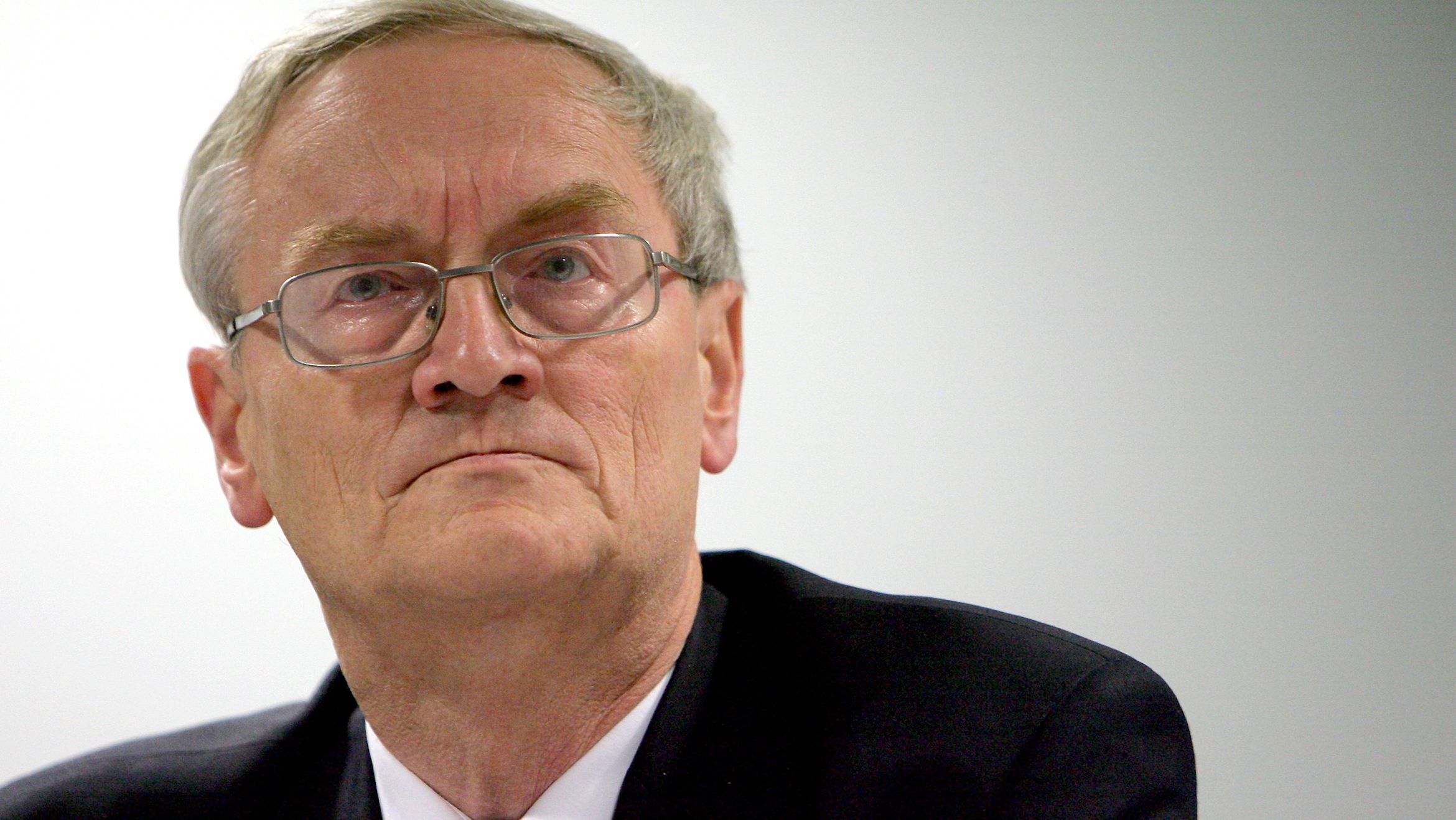

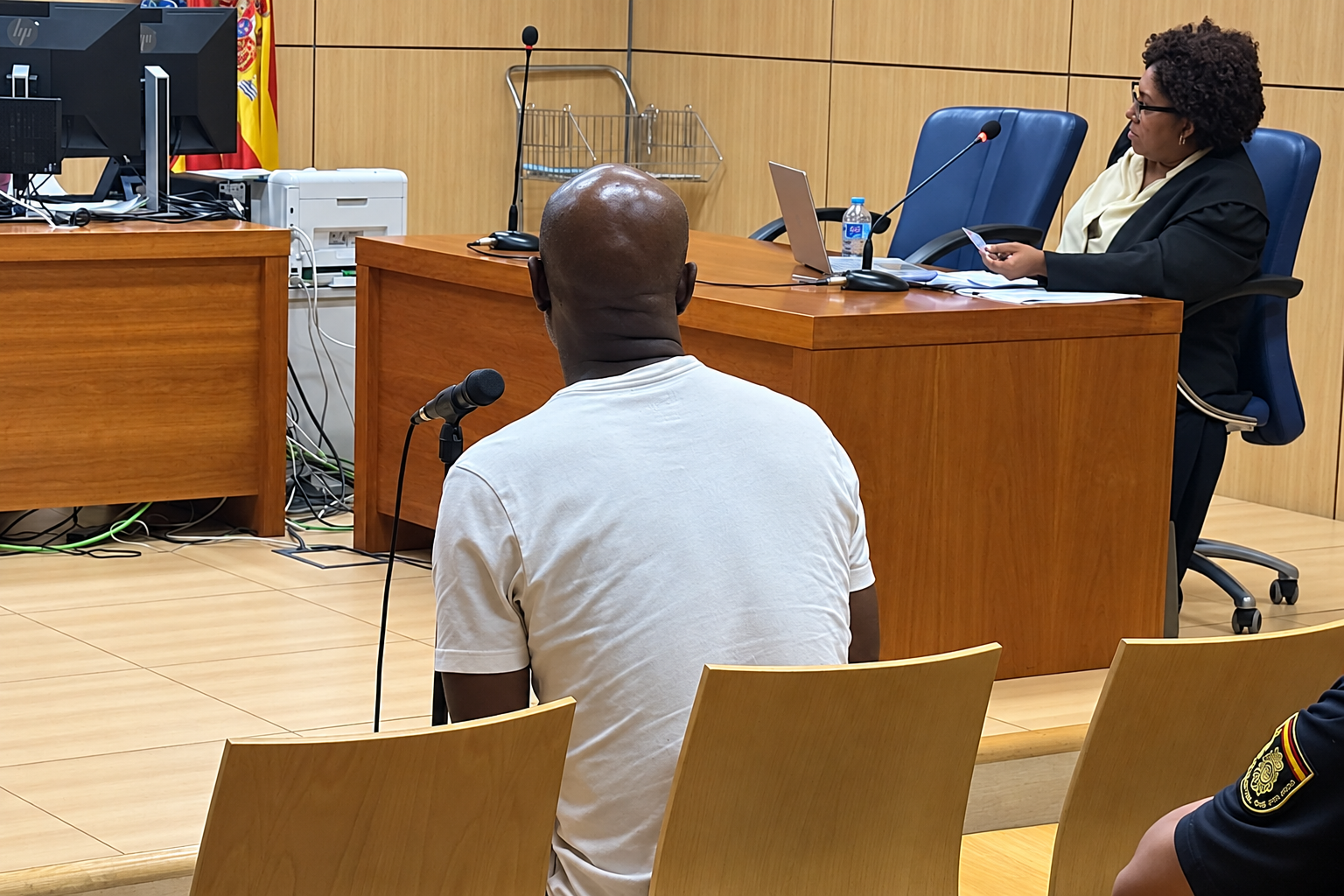



 BREAKING: Rioters set fire to the entrance of Vauquelin High School in Paris and blocked the exits when staff tried to put the fire out.
 BREAKING: Another major school arson attack at Blaise Pascal High School in the French city of Rouen.
The entire entrance is currently in flames.
School staff can only stand and watch it burn.
Follow: @RMXnews https://t.co/CZ8h1aDO3U



 A woman had her face burned in the French city of Marseille during student blockades.


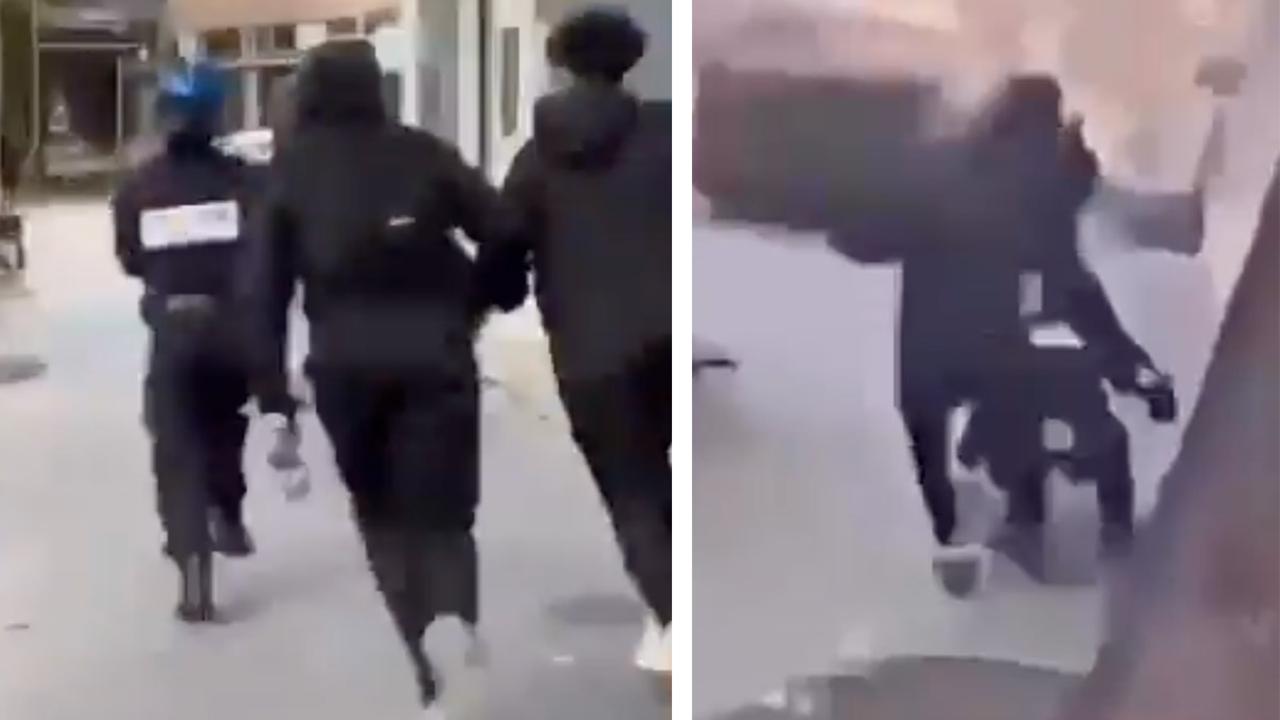
 Nelson-Mandela high school in Nantes burned, façade and hall destroyed. The school is expected to be closed for several…
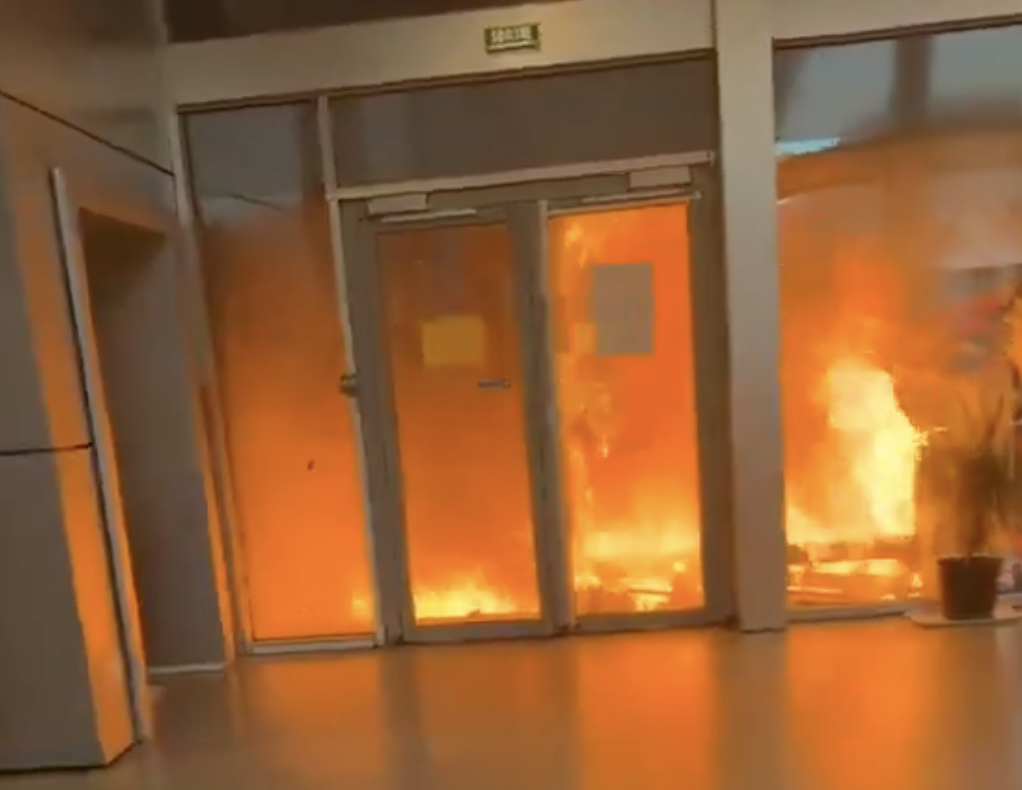

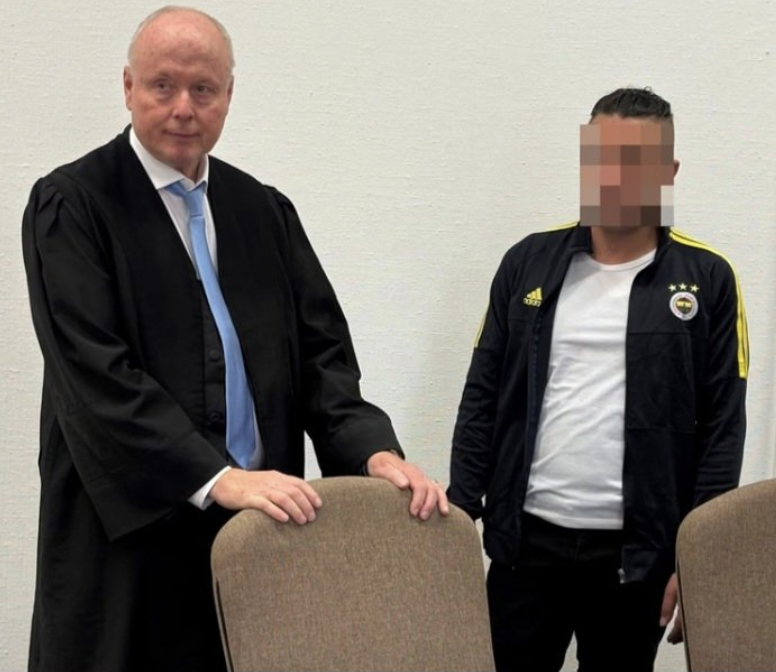

 (@laszloan)


 Mass immigration is fueling the West's housing crisis.