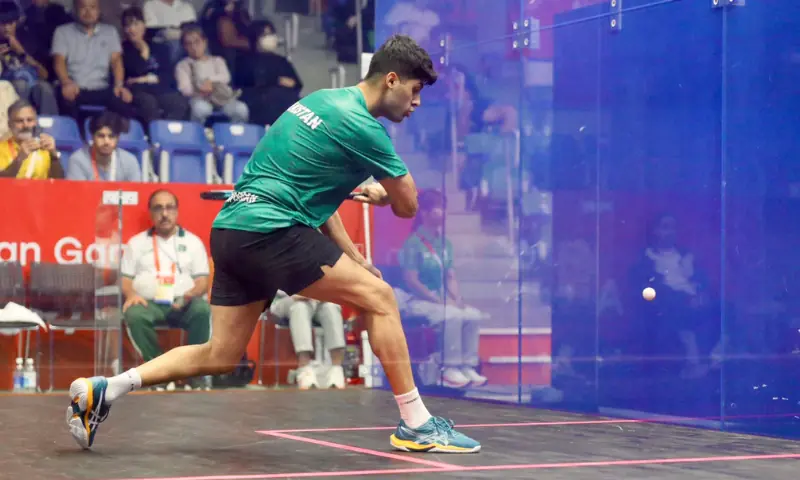
Pakistan’s Noor Zaman stunned defending champion and world No. 4 Karim Abdel Gawad of Egypt 3-1 on Wednesday to reach the quarter-finals of the PSA Gold Silicon Valley Open at the Redwood City in California.
The 22-year-old overcame the second seed 11-9, 11-7, 9-11, 11-6 in 52 minutes at Squash Zone, handing the Egyptian a shock defeat in the $143,500 men’s event.
“I was ready mentally and physically today, and I think now is the time for me to beat the top players,” Noor said after the match.
Noor, ranked among the world’s top 35 players, had earlier booked his place in the last 16 with a 3-1 victory over American wildcard Bransten Ming. After losing the opening game 3-11, he fought back to win 11-5, 11-8, 11-9 in 41 minutes.
The Peshawar-born player, grandson of former world champion Qamar Zaman and the 2025 U-23 world champion, has enjoyed a strong run of form in recent months, climbing into the world’s top 30 and collecting five PSA titles.
Meanwhile, Pakistan’s Mohammad Ashab Irfan bowed out in the last 16 after losing 3-0 to fifth seed Mohamed ElShorbagy of Egypt. Irfan had reached the round with a straight-games victory over Hungary’s Balazs Farkas, winning 11-6, 11-4, 11-5.
The PSA World Tour Gold event offers equal prize money for men and women as squash prepares for its Olympic debut at Los Angeles 2028.
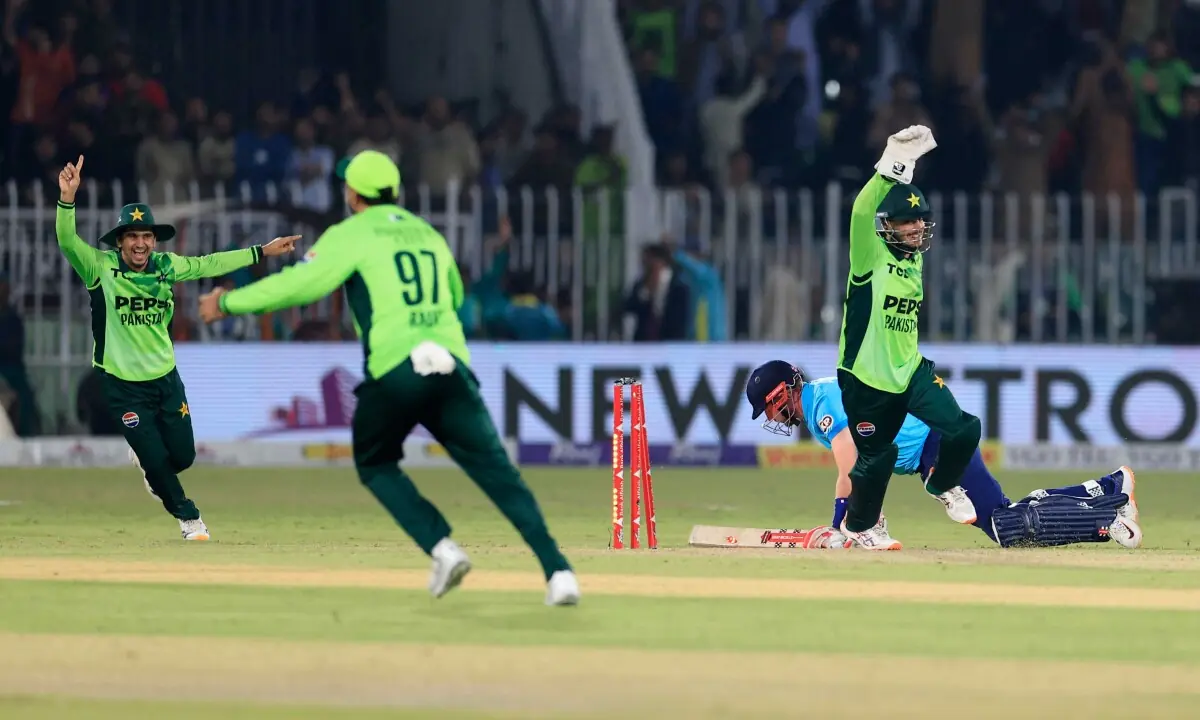
As Gus Atkinson and Sonny Baker found themselves stranded at the same end, Arafat Minhas fumbled a throw from the deep. The run-out opportunity, with England already nine down, still stood.
Arafat gathered the ball again and his slingy left arm, which had caused havoc in the preceding overs, produced a flat, direct throw that crashed into the stumps.
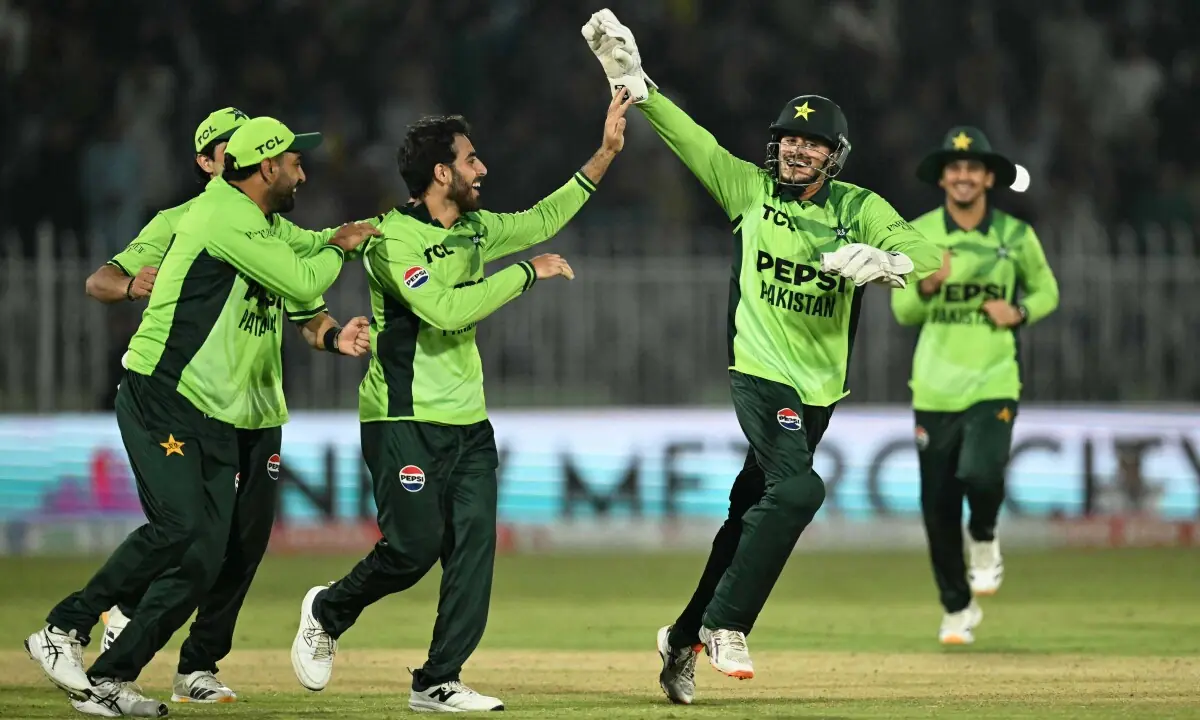
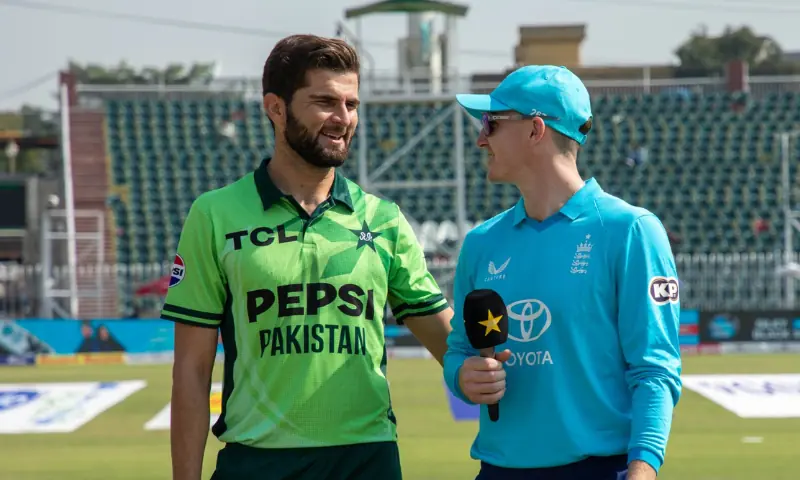
It was the final act of an evening Arafat had made his own, leading Pakistan to an 87-run victory over England in the One-day International tri-series match at the Rawalpindi Cricket Stadium on Tuesday.
The run-out capped an outstanding all-round performance from the left-arm spinner, who had earlier scored a crucial half-century before claiming six wickets for 40 runs in 8.4 overs to bowl England out for 215 in 38.4 overs while chasing 303.
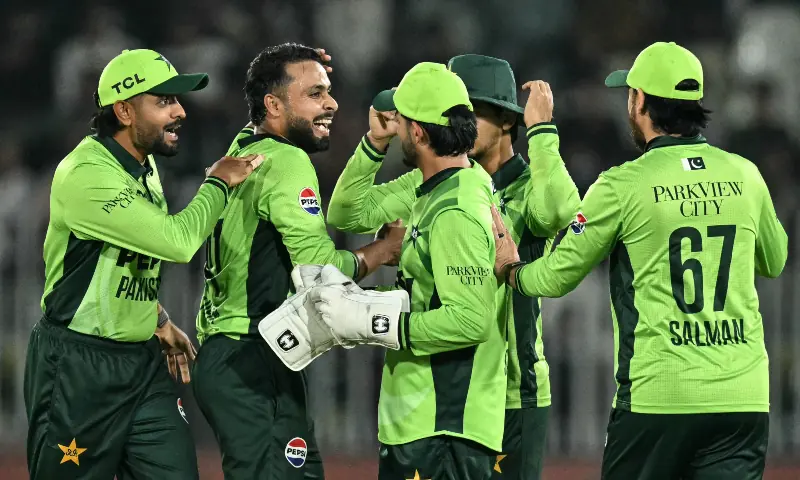
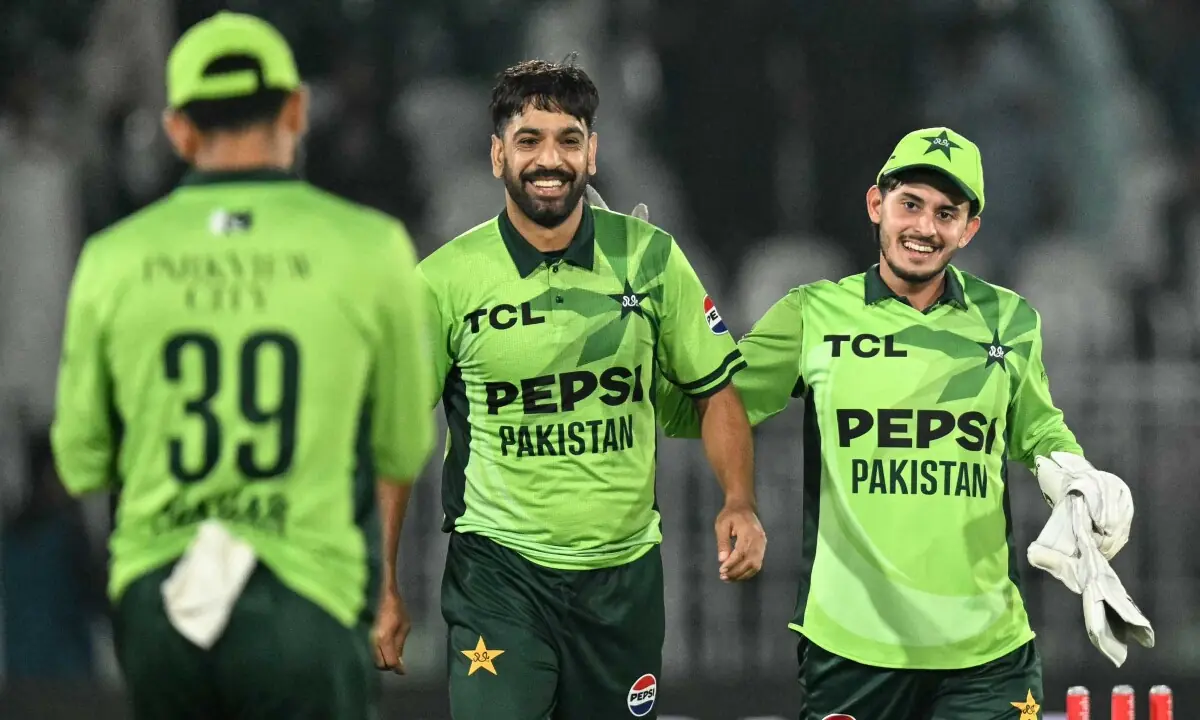
Pakistan players celebrate the run-out of England’s Sonny Baker.—AFP
England began the chase confidently, with Tom Banton and Ben Duckett racing to 91 without loss in 14.3 overs. Duckett made 45 off 46 balls, striking eight fours, while Banton scored 57 from 53 deliveries with five fours and two sixes.
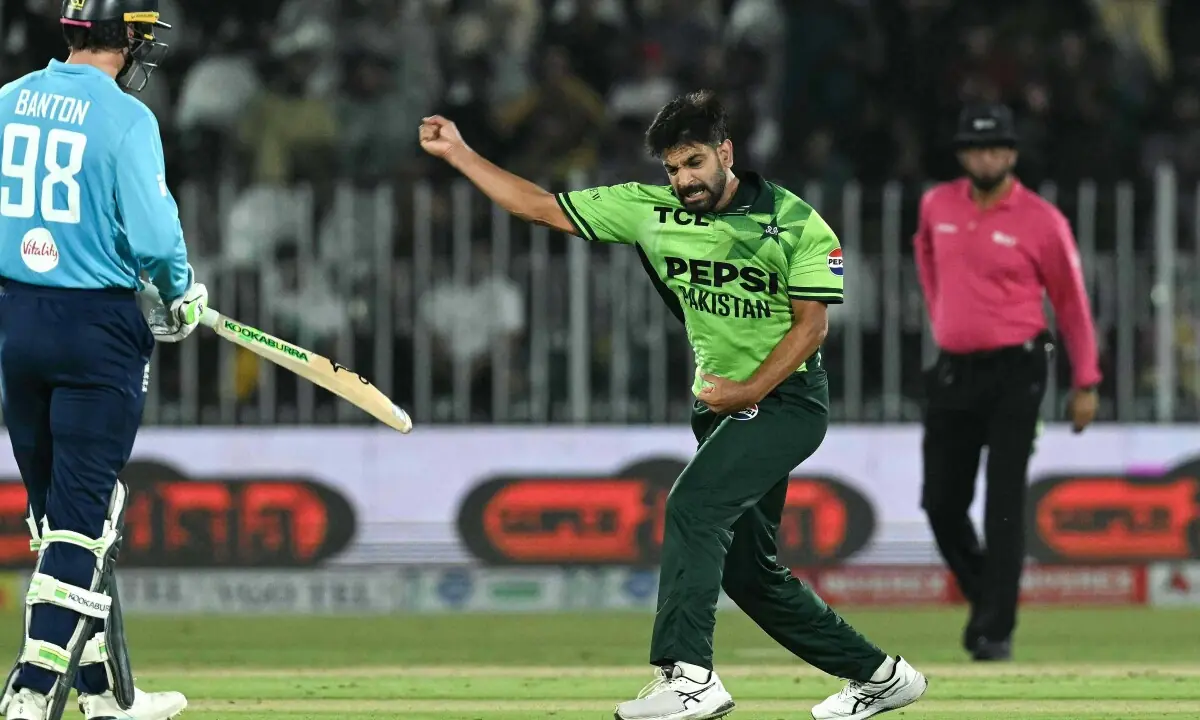
Haris Rauf broke the opening stand when Duckett mistimed a pull and Fakhar Zaman took the catch at deep fine leg. Arafat then changed the complexion of the chase, removing Banton with his third delivery as the opener swung across the line and picked out Shaheen Shah Afridi at midwicket.
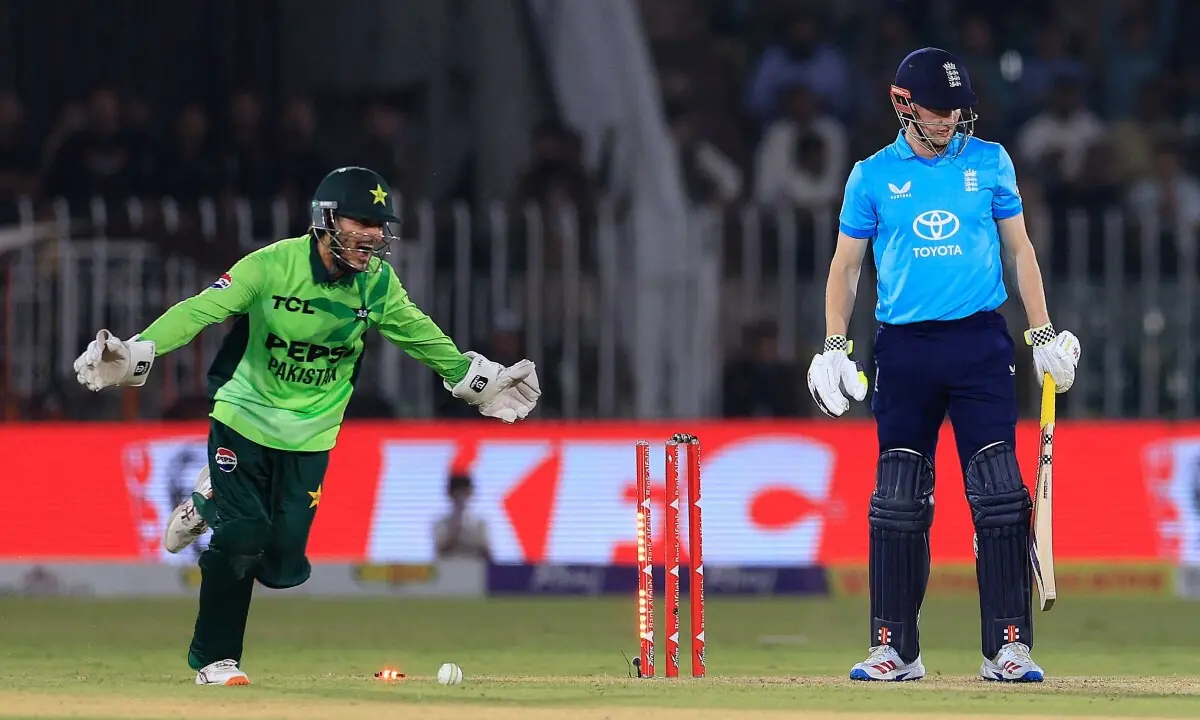
The spinner struck again by bowling England captain Harry Brook for five with a delivery that gripped and straightened, leaving the visitors at 128-3. Naseem Shah subsequently ended Joe Root’s resistance, bowling him for 33 off 35 balls with a skidding delivery that kept low and struck the off stump.
Sam Curran and Jordan Cox attempted to keep England in contention, but the visitors’ resistance steadily faded. Curran made 27 before top-edging a pull off Haris to substitute fielder Ghazi Ghori at deep backward square leg. Cox, who scored 18, was trapped leg-before by Arafat’s quicker delivery and lost his review.
Pakistan pacer Haris Rauf celebrates dismissing England opener Tom Banton.—AFP
Arafat continued his dismantling of the lower order, dismissing Jamie Overton for one when Hasan Nawaz took a catch at long-on after the batter charged down the pitch.
Will Jacks briefly threatened a counterattack, striking Haris for six, but fell for 19 when he miscued Arafat to Shaheen at short midwicket.
Arafat trapped Adil Rashid leg-before for a first-ball duck in the 39th over, completing his six-wicket haul. The final run-out of Atkinson then sealed Pakistan’s commanding win.
England captain Brook acknowledged that his side had made a promising start but failed to capitalise after losing the opening partnership, with wickets falling in clusters.
England captain Harry Brook looks stunned after being cleaned up by Pakistan’s Arafat Minhas.—AFP
“Banton and Ducky set the tone beautifully, but we lost the wickets in clumps and could not put on a partnership and ended up on the wrong side,” Brook said.
He also felt England had missed an opportunity to put Pakistan under pressure by being too cautious against the spinners.
“We were a bit too much circumspect against the spinners. We could have put them under pressure, I feel,” he said, adding that England would discuss their shortcomings and look to bounce back in the next match.
Pakistan’s total of 302-9 had been built on a spirited recovery led by Hasan Nawaz and Arafat after the hosts slumped to 133-5 following England’s decision to field.
The pair added 78 runs off 74 balls for the sixth wicket, reviving an innings that had threatened to unravel.
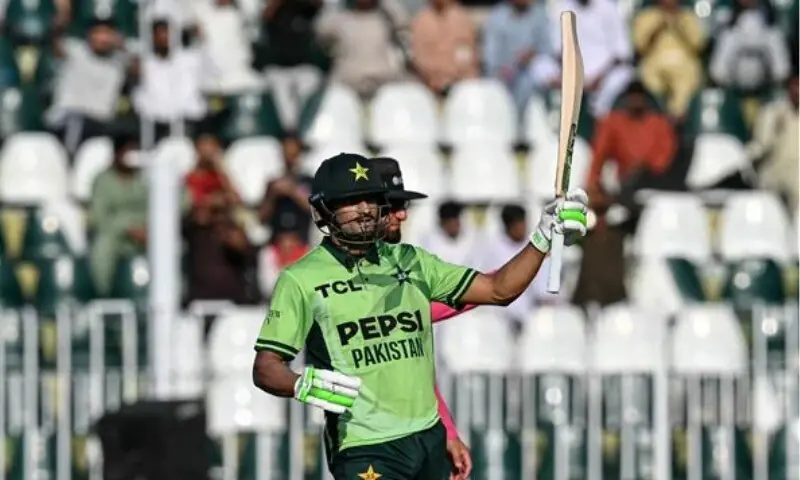
Hasan struck 79 off 74 deliveries, including five fours and four sixes, while Arafat contributed 59 off 58 balls, hitting nine fours.
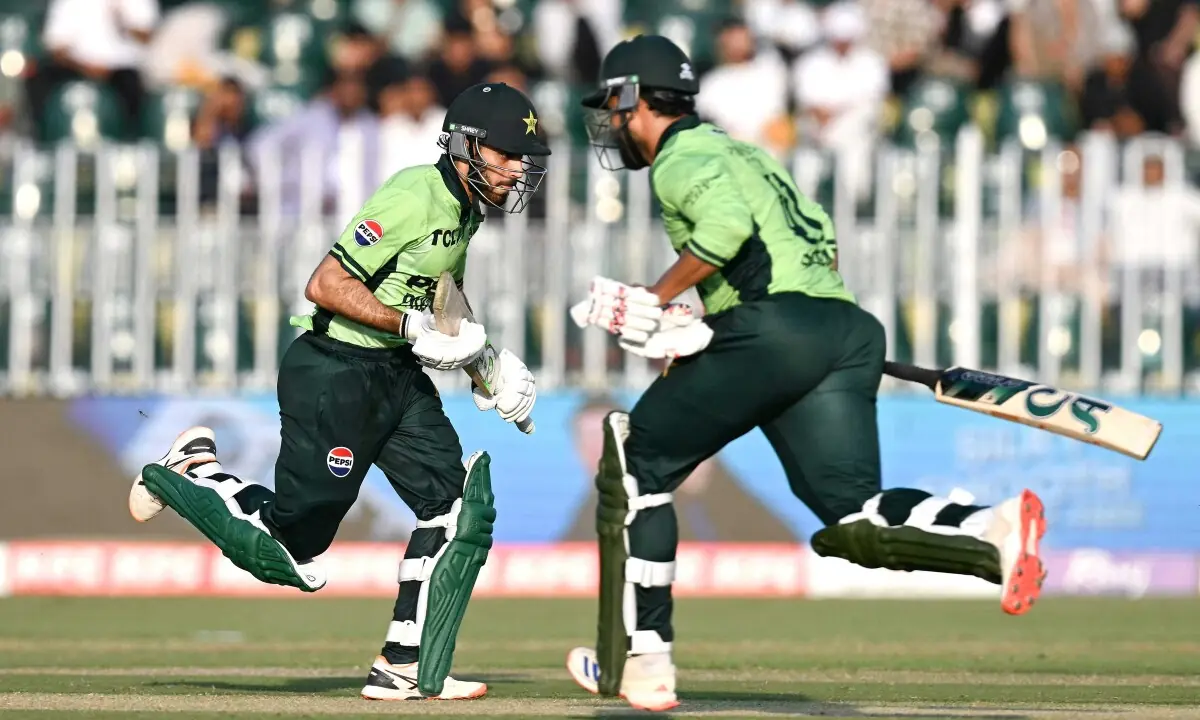
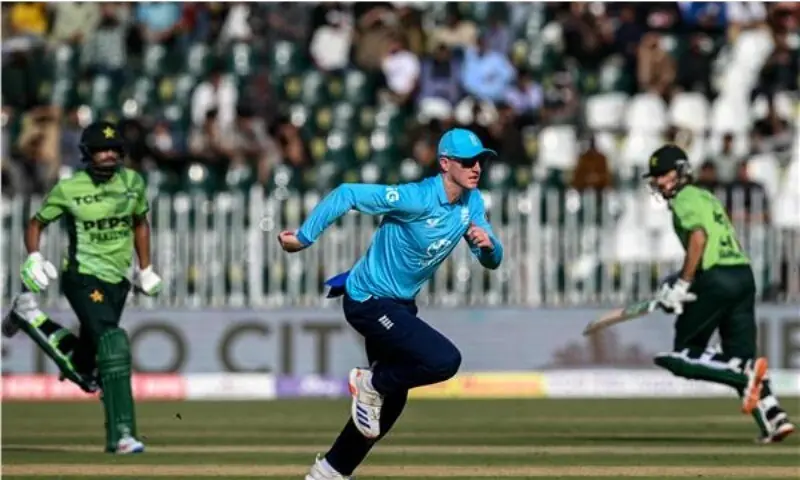
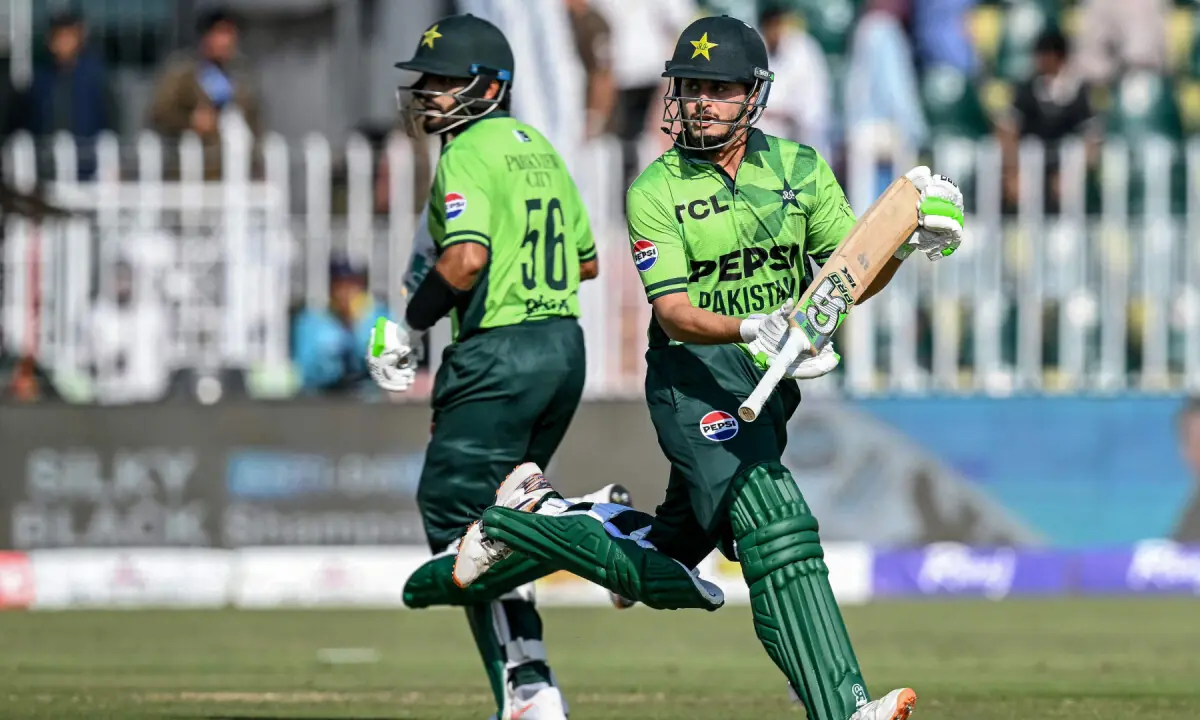
Pakistan’s Arafat Minhas (L) and Faheem Ashraf run between the wickets.—AFP
Faheem Ashraf then provided a late surge with 39 off 26 balls, and captain Shaheen’s brisk five-ball 10 helped Pakistan cross 300.
Arafat said the partnership with Hasan had been crucial in rebuilding the innings, with the pair determined to bat deep after he came to the crease.
“We needed an important partnership when I walked in the middle. Hasan and I discussed that we need to bat deep,” he said at the presentation ceremony, speaking to Urooj Mumtaz.
After Hasan’s dismissal, Arafat took responsibility for carrying the innings forward, helping Pakistan reach a total that ultimately proved beyond England.
“I took the charge after Hasan got out and I tried to bat until the end of the innings, which helped in taking the score beyond 300,” he said.
Pakistan had made a disastrous start when Atkinson dismissed Fakhar Zaman for a first-ball duck, caught by Joe Root at short midwicket. Saim Ayub briefly counterattacked before falling for eight, skying Sonny Baker to Sam Curran in the sixth over with Pakistan at 31-2.
Babar Azam and Saad Baig attempted to stabilise the innings, but Babar’s 34 off 52 balls ended when Will Jacks breached his defences in the 15th over.
Adil Rashid then removed Salman Ali Agha for 16, caught by Atkinson at deep fine leg, leaving Pakistan at 81-4.
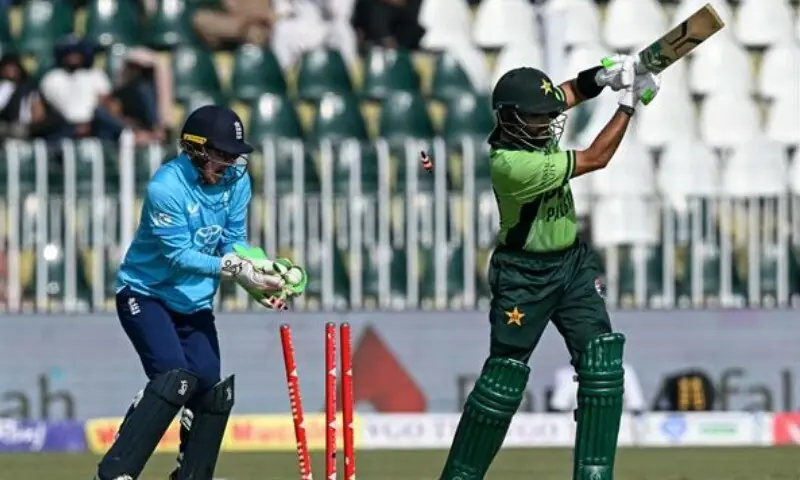
Pakistan’s Babar Azam is clean-bowled by England’s Will Jacks.—AFP
Saad and Hasan offered resistance, adding 52 for the fifth wicket before Atkinson returned to dismiss Saad for 35 off 54 balls.
Hasan and Arafat then took control, with Hasan finding the boundary through cover and backward point while punishing loose deliveries over the ropes. Hasan’s innings ended at 211-6 when Jamie Overton beat him with a yorker in the 40th over.
Arafat continued the recovery alongside Faheem, whose aggressive strokeplay included consecutive boundaries against Rashid and a six off Root.
Faheem fell for 39 in the 49th over, caught by Jacks at deep midwicket, while Arafat was dismissed for 59 after skying Baker to Harry Brook at cover. Shaheen’s late boundaries ensured Pakistan finished with a formidable total.
Reflecting on his performance with the ball, Arafat credited the slower surface for offering more assistance to the spinners than in the previous match and said he had worked on varying his deliveries to deceive batters.
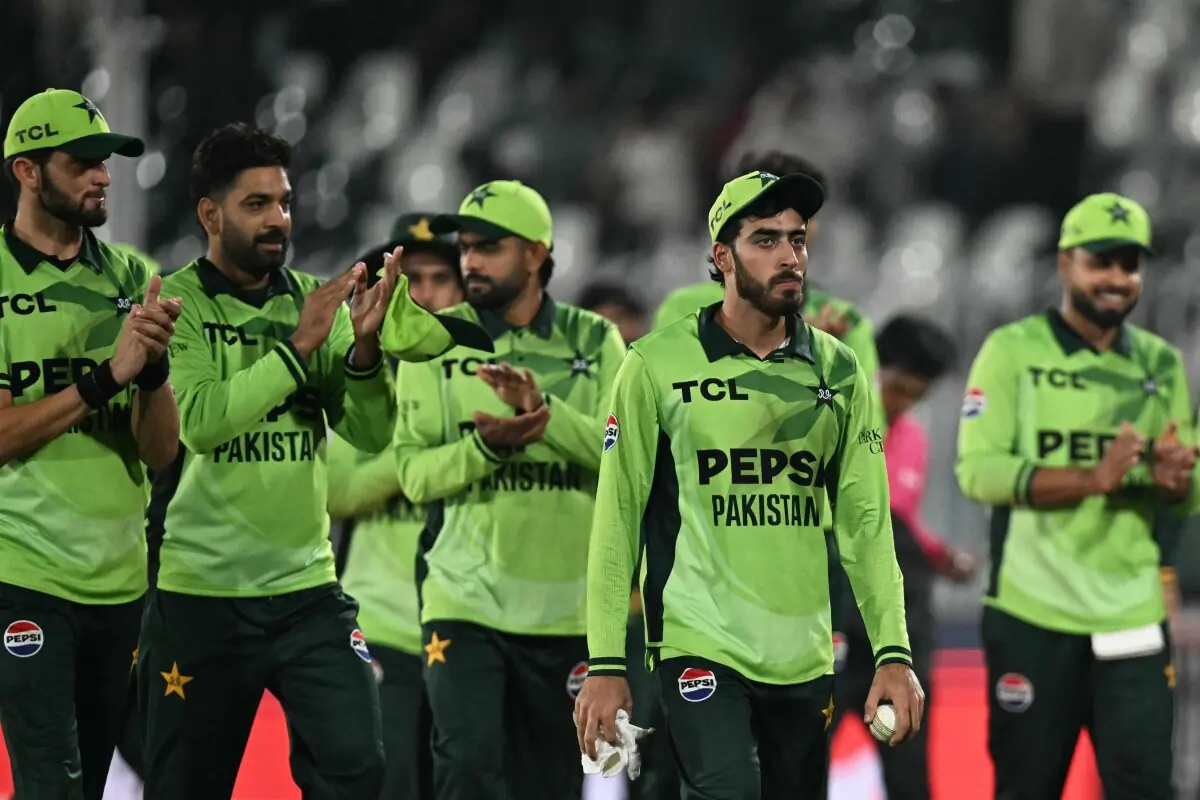
Arafat Minhas walks off the field with team-mates after helping Pakistan crush England.—AFP
“I have kept my plans simple. There was not much help for the spinners in the first match. The pitch was on the slower side today, which helped me,” he said.
“Variations are very important for a spinner as they help in deceiving the batters. I have worked on my variations.”
Pakistan captain Shaheen praised the contributions of Hasan, Arafat and Faheem in rescuing the innings but acknowledged that the top order needed to be more consistent.
“It was really good how Hasan Nawaz, Arafat Minhas, and Faheem Ashraf batted, but we also need our top-order to fire,” he said.
Shaheen described Arafat as a promising all-rounder whose performance was an encouraging sign for Pakistan as they build towards the World Cup.
“The form of Arafat and fast bowlers is good signs for us. Arafat is a very good talent and he is a proper allrounder, which bodes well for us. Hopefully, he will deliver for us in many more games in the future,” he said.
While pleased with aspects of Pakistan’s performance, Shaheen stressed that the team still had room for improvement ahead of the global tournament.
“As a team we have done some good things but we need to improve further as we are looking to build towards the World Cup,” he said.
England head coach Brendon McCullum has warned his side they will need to adapt quickly to subcontinent conditions to compete against Pakistan and Sri Lanka, as the visitors prepare to face the hosts in the second match of the One-day International tri-series at the Rawalpindi Cricket Stadium on Tuesday.
McCullum acknowledged Pakistan’s familiarity with home conditions and the challenge of winning away from home, but said England were eager to test themselves against two strong opponents in a competition that will also serve as preparation for next year’s 50-over World Cup.
“Pakistan’s a very strong side,” McCullum said during a media talk on Monday. “When you come to this part of the world, you have to do things differently. Playing subcontinent teams in subcontinent conditions has its own challenges, but that’s something we’re looking forward to.”
England arrive with momentum after three consecutive ODI series victories in 2026, but the prospect of facing Pakistan on their home ground presents a different examination. The visitors will also have to contend with Sri Lanka, with the top two sides from the double round-robin stage qualifying for the Oct 31 final in Lahore.
McCullum said England wanted to be competitive against any opposition and in all conditions, rather than rely on a fixed approach.
“We don’t have any kind of binary process of how we want to go about playing,” he said. “We want to just make sure that we play what’s in front of us, adapt as quick as we can, and hopefully try and play the best cricket we can to give ourselves a chance.”
Pakistan, meanwhile, enter Tuesday’s fixture after beginning their campaign with a 37-run victory over Sri Lanka on Sunday. A match-winning century from Salman Ali Agha helped the hosts post 305 before their pace attack bowled Sri Lanka out for 268, giving captain Shaheen Shah Afridi’s side an encouraging start to the tournament.
Salman’s unbeaten 107 off 90 balls was particularly significant after a difficult period in his international career. Having been left out of Pakistan’s T20 and Test sides, the middle-order batter returned to domestic cricket, where substantial first-class scores helped him regain form ahead of his comeback.
Speaking after the Sri Lanka match, Salman called for greater recognition of performances in domestic cricket, saying: “I feel that we don’t give enough respect to our domestic cricket.”
He argued that scoring runs at that level was not as straightforward as some critics suggested, adding that players had to work hard to earn their runs.
His own return offered a timely illustration of how domestic cricket can help players rebuild confidence and address technical shortcomings before returning to the international stage.
Salman’s innings also underlined the importance of Pakistan’s middle order against an England attack that includes experienced campaigners and several emerging players. His ability to anchor an innings while scoring at a healthy rate could prove valuable if Pakistan lose early wickets against England’s seamers.
The hosts will also look to their fast bowlers to build on Sunday’s performance.
Shaheen, Naseem Shah, Haris Rauf and Faheem Ashraf shared all 10 Sri Lankan wickets, demonstrating the depth of Pakistan’s pace resources. However, Sri Lanka’s fifth-wicket partnership between Janith Liyanage and Pavan Rathnayake showed that Pakistan’s attack can be challenged if batters settle in.
England, for their part, have assembled a squad combining established names with players seeking to establish themselves in the ODI side.
Former captain Joe Root brings experience and stability, while Harry Brook, who leads the team in white-ball cricket, will be central to their batting plans. Will Jacks offers an additional option with both bat and ball, while leg-spinner Adil Rashid and all-rounder Sam Curran have returned to the squad after injuries.
England will, however, be without Jos Buttler, who is recovering from a hamstring injury, while fast bowler Jofra Archer has been rested to manage his workload. The absence of two prominent players places added responsibility on the available squad to deliver in unfamiliar conditions.
McCullum said the team understood the advantage Pakistan enjoyed at home but viewed the challenge as an opportunity to improve their adaptability. He also welcomed the chance to play in a tri-series, describing the format as a distinctive test because teams must adjust to different opponents in quick succession.
“It’s a real opportunity in front of us,” he said, adding that England respected the strength of both Pakistan and Sri Lanka and would need to be at their best to reach the final.
Tuesday’s match is the first of two meetings between Pakistan and England in the league stage. The sides will meet again in Lahore on Oct 25, while England face Sri Lanka in Rawalpindi on Thursday. With the final scheduled for Lahore on Oct 31, a strong start could prove decisive in the race for qualification.
Only 53 runs stood between them and a flying start in the One-day International tri-series opener against Pakistan after Pavan Rathnayake and Janith Liyanage’s 119-run stand.
The dew that made the Rawalpindi Cricket Stadium outfield relentlessly slick on Sunday night had also deprived Pakistan’s pacers of the chance to extract reverse swing from the old ball.
Then came two moments of madness. Liyanage, who had looked composed throughout his innings, chipped Haris Rauf casually to Babar Azam at long-on before Dasun Shanaka, who had threatened to take the game away from Pakistan, heaved Shaheen Shah Afridi to the same fielder in the same position. In the space of four balls, Sri Lanka unravelled.
Naseem Shah then had Sachindu Colombage caught behind, Eshan Malinga was run out after a mix-up, and Haris cleaned up Asitha Fernando to seal a 37-run win for Pakistan, who had earlier posted 305 thanks to Salman Ali Agha’s fourth ODI century.
Salman celebrated his return to the Pakistan side after his unceremonious axing from the Test team two months ago with a composed 107 off 90 balls, including 10 fours and a six.
Pakistan’s innings, however, finished with a flourish from Sri Lanka’s bowlers, who conceded only 36 runs while taking five wickets in the last five overs. Eshan Malinga led the charge with figures of 4-46.
After openers Fakhar Zaman and Saim Ayub fell to Dilshan Madushanka, Babar Azam and Saad Baig steadied the innings with a 74-run partnership for the third wicket.
Malinga broke through by bouncing out Babar for 45 and Saad for 39, bringing Salman and Hasan Nawaz together.
The pair added 97, with Salman gradually increasing the tempo after initially settling in. He brought up his half-century in the 35th over, rotating the strike and punishing loose deliveries.
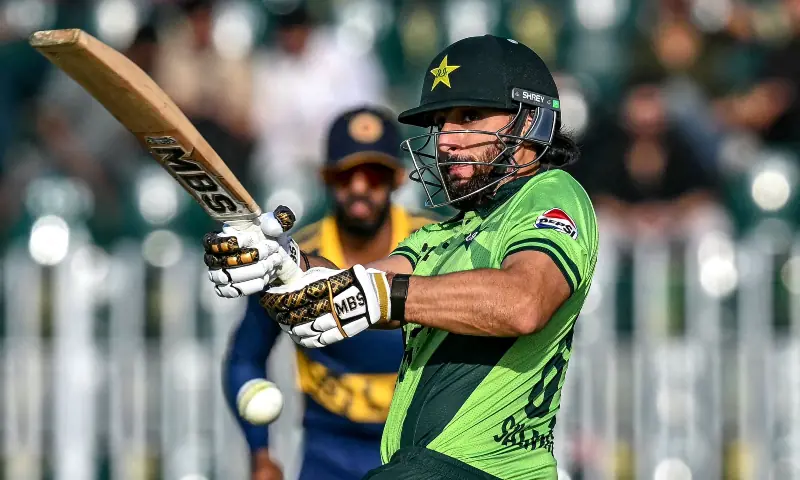
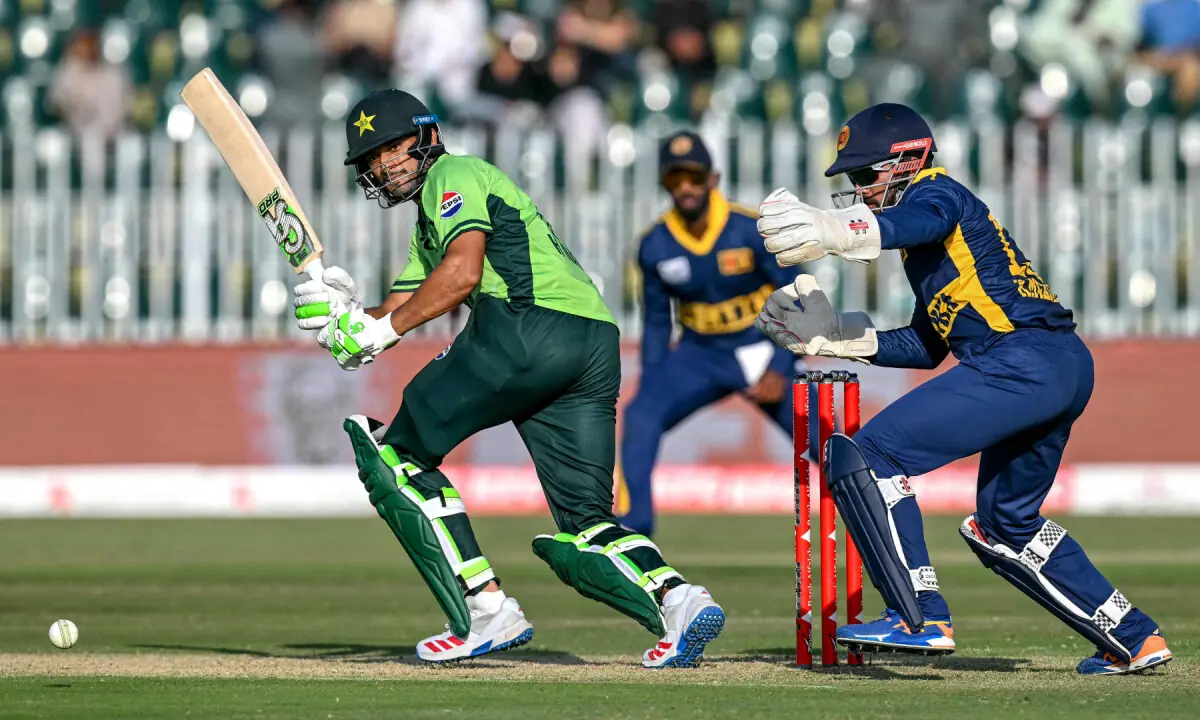
Salman Agha plays a shot during the tri-series one-day international (ODI) cricket match between Pakistan and Sri Lanka at the Rawalpindi Cricket Stadium in Rawalpindi on October 18, 2026. — AFP
Hasan supplied the acceleration with two sixes off Sachindu Colombage, including a powerful slog sweep over cow corner.
Salman then took charge, pulling Dasun Shanaka through the leg side before launching Malinga’s slower delivery over long-off for six.
He reached three figures in the 45th over, finding the boundary through deep midwicket before edging a full delivery past the infield to third man.
Hasan fell for 37, caught by Pavan Rathnayake at short midwicket off Asitha Fernando, who also removed Arafat Minhas for 18.
Salman departed for 107 at 279-6, mistiming a lofted shot to Shanaka at long-on, and Sri Lanka seized control.
Malinga dismissed Faheem Ashraf and trapped Naseem Shah lbw in the next over, while accurate yorkers restricted Pakistan’s lower order. Haris was run out for a duck in the final over, leaving Pakistan all out for 305 in 49.5 overs.
Sri Lanka’s reply began poorly. Shaheen and Naseem made early inroads, reducing the visitors to 91-4 and leaving the chase in need of repair.
But as the ball and outfield grew wetter, Pakistan’s bowlers struggled to make the ball grip, allowing Rathnayake and Liyanage to rebuild with patience and calculated aggression.
Rathnayake initially played watchfully before cutting Arafat Minhas late through deep point and pulling Saim Ayub to the deep midwicket boundary.
He raised his maiden ODI half-century with a single off Arafat in the 31st over, then pulled two short balls from Shaheen over square leg in successive deliveries.
Liyanage offered stability at the other end, rotating the strike and punishing anything loose. He drove Naseem through the gap between mid-off and extra cover before dancing down the track to hammer Arafat straight down the ground.
Their running between the wickets kept the scoreboard moving as Pakistan struggled to find a breakthrough.
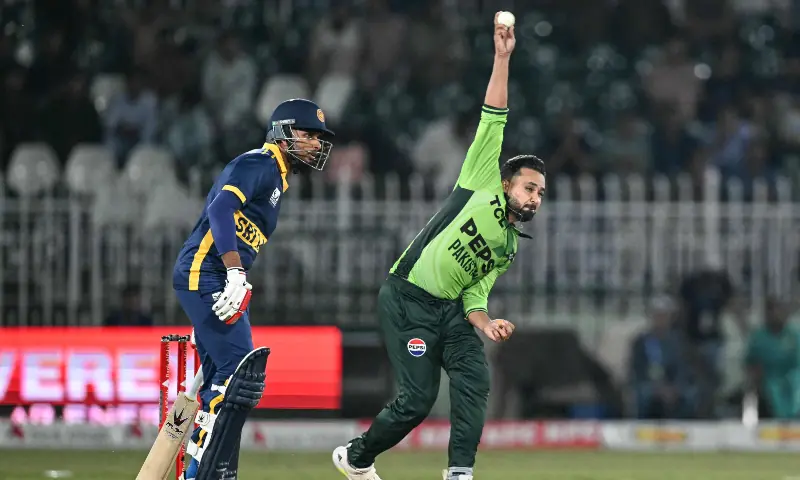
Faheem Ashraf (R) bowls as Sri Lanka’s Dasun Shanaka watches during the tri-series one-day international (ODI) cricket match between Pakistan and Sri Lanka at the Rawalpindi Cricket Stadium in Rawalpindi on October 18, 2026. — AFP
Faheem finally ended the partnership in the 38th over, when Rathnayake, having faced 74 deliveries, pushed a length ball straight to Salman at short cover.
But the wicket did little to ease Pakistan’s anxiety. Shanaka attacked immediately, pulling Faheem for four and driving through extra cover before launching Arafat over square leg for six.
Liyanage brought up his half-century with a fierce drive down the ground, and Sri Lanka remained firmly in the contest.
With 82 needed from the final 10 overs, the visitors had a genuine chance of pulling off the chase.
Then Liyanage’s loose chip and Shanaka’s reckless heave turned a promising pursuit into a collapse. From there, Pakistan needed only to keep their nerve.
Salman’s century had given Pakistan the platform; Malinga’s late burst had kept the total within reach. But Sri Lanka’s two costly shots ultimately decided the opener, handing Pakistan a winning start to the tri-series.

 Login