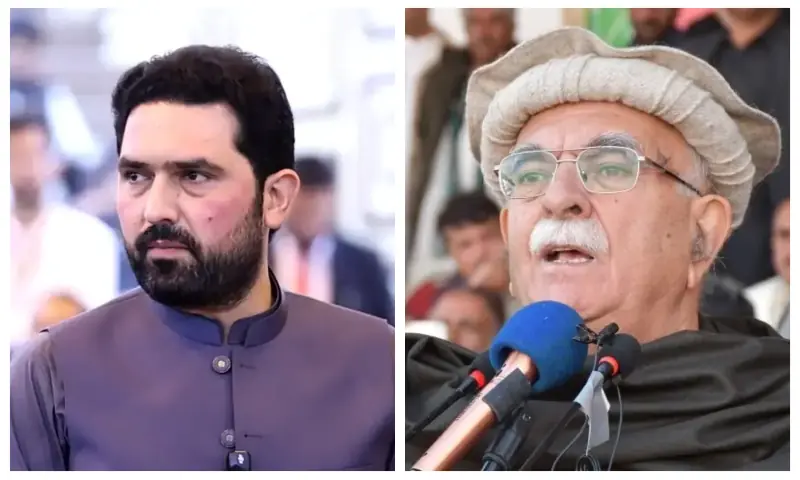
ISLAMABAD: Leader of the Opposition in the National Assembly (NA) Mehmood Khan Achakzai on Monday demanded on the floor of the House that details about Sohail Afridi’s whereabouts be shared.
Afridi, who has become non-functional as the Khyber Pakhtunkhwa chief minister, has not been seen since the imposition of governor’s rule and emergency in his province on Oct 11. His whereabouts remained unknown on the day governor’s rule was imposed and federal minister said a day later that he and some of his cabinet members are in preventative custody.
The PTI has also alleged the detention and arrests of several of its other members, including lawmakers and ministers.
“Afridi and six to seven other MNAs of the opposition party are missing since the proclamation of emergency and governor’s rule in KP. At least we and their families should know where they are,” Achakzai said, after he reached the NA some time after the session began.
Deputy Speaker Syed Ghulam Mustafa Shah was presiding over the proceedings and was asked by Achakzai to give him the floor.
Continuing his criticism of governor’s rule, Achakzai said, “You have attacked the assembly of a province”. He called for the issuance of production orders for missing MNAs.
The chief whip of the opposition in the NA, MNA Amir Dogar, also submitted an adjournment motion in the House, seeking production orders for six “missing” PTI MNAs: Amjad Ali Khan (NA-02), Junaid Akbar (NA-09), Fazal Muhammad Khan (NA-25), Zubair Khan (NA-42), Haji Imtiaz Ahmad Choudhry (NA-68) and Nasim Ali Shah (NA-39).
The adjournment motion referred to Rule 109, read with Rule 110, of the Rules of Procedure and Conduct of Business in the National Assembly, 2007. The motion termed the reported detention of Afridi, Swati, and the six MNAs “a matter of definite and urgent public importance”.
The motion said the reported detention of elected representatives holding constitutional and parliamentary offices raised serious concerns regarding the functioning of democratic institutions, the representation of the people, and the protection of the rights and privileges of elected representatives under the Constitution and applicable laws.
“This is a serious matter that warrants immediate discussion on the floor of the house,” the motion stated, requesting that the regular business of the House be adjourned to discuss the matter urgently.
It also requested the House to deliberate on the circumstances surrounding the said detentions and consider “appropriate measures” in accordance with the Rules of Procedure and Conduct of Business in the National Assembly, 2007.
The NA proceedings began at 5pm, with federal ministers absent other members in low attendance. Consequently, PPP MNA Agha Rafiullah criticised the government for what he described as a lack of interest in legislation.
“You see all the front rows are empty, and not a single federal minister has turned up,” he said.
Dogar supported Rafiullah’s criticism, saying, “Rafiullah sahib, that is what we have been saying for the last three years.”
Later, Dogar pointed out the lack of quorum, and owing to the low attendance of MNAs, the deputy speaker stopped the proceedings to allow some more time for the House to be put in order.
At least 65 members are required to put the House in order or meet the quorum.
Eventually, the quorum was found complete after two counts and the proceedings resumed.
The proceedings have been adjourned until Tuesday morning.
The government on Monday cut the price of petrol by Rs5.16 per litre and that of high-speed diesel (HSD) by Rs7.69.
Following the revision, petrol will retail at Rs381.14 per litre while HSD will cost Rs389.27 per litre. The government continues to levy Rs114 per litre in taxes and duties on petrol and Rs100 per litre on diesel.
According to the Petroleum Division’s notification, the new prices are applicable for Oct 20 (Tuesday).
The price of HSD has come down from a peak of Rs520.35 recorded on April 3. Its price had started rising from Rs281 per litre after the US-Iran war broke out on February 28.
Meanwhile, the government has reintroduced a raft of austerity measures in response to rising fuel prices amid the ongoing Middle East conflict. Under these measures, markets are required to close by 9pm and fuel allocations for official vehicles has been cut by 50 per cent for three months.
On September 13, Prime Minister Shehbaz Sharif also announced a “relief scheme” for users of motorcycles, autos and vehicles of up to 800cc to “alleviate the burden” of rising global oil prices.
Previously, on July 17, Petroleum Minister Ali Pervaiz Malik announced that fuel prices would now be fixed on a daily basis due to fluctuations in international market prices following renewed hostilities between Iran and the US.
Prior to this, the government had been announcing weekly revisions to fuel prices since early March, alongside measures for the conservation of fuel amid possible oil supply disruptions due to the ongoing conflict in the Middle East. The federal government in April also announced targeted relief measures to provide subsidised fuel.
The petroleum minister stated that the cabinet and the prime minister had decided to give the Oil and Gas Regulatory Authority (Ogra) the responsibility of deciding fuel prices on a daily basis based on international market trends.
Petrol is mainly used in private transport, small vehicles, rickshaws and two-wheelers, and changes in its price affect the middle and lower-middle classes.
Similarly, changes in diesel prices also impact the public at large, as it is mainly used in the heavy transport sector, power plants and large generators.
Petrol and high-speed diesel (HSD) are the major revenue earners, with monthly sales of about 700,000 to 800,000 tonnes, compared to just 10,000 tonnes of monthly demand for kerosene.
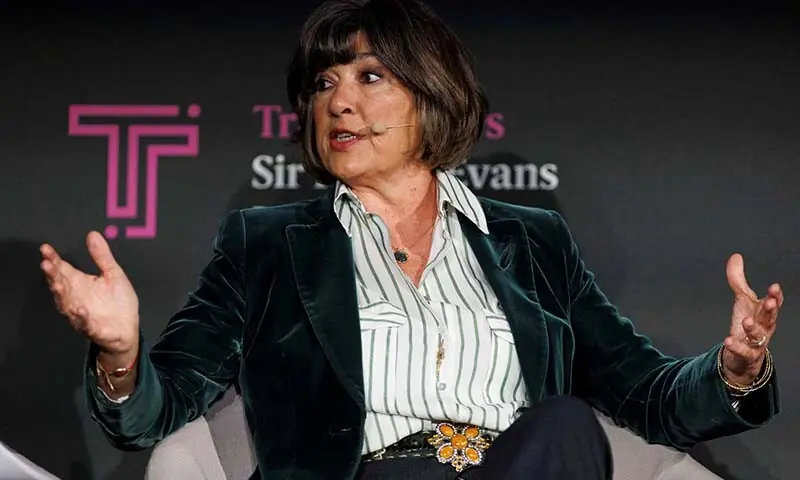
CNN’s chief international anchor Christiane Amanpour will leave next year, after 43 years with the network, according to an internal memo seen by Reuters on Monday.
The news channel has recently come under the ownership of Skydance, whose Chief Executive Officer David Ellison has faced criticism over his stewardship of CBS News.
“After thinking carefully for several months … I’ve decided to separate from CNN, my partner of 43 fantastic years,” Amanpour said in a video statement, joking that it was “longer than many marriages”.
She added that her daily show on CNN would conclude at the end of this year, but that she would continue hosting ‘Amanpour’ once a week through to June 2027.
Thanking her TV crew and colleagues, Amanpour highlighted that it was the “teams and the camaraderie we built that counts so much”.
Amanpour, whose first major assignment was covering the first Gulf War, went on to report on conflicts in Bosnia, Rwanda, Afghanistan, Ukraine and Iran.
Skydance, formerly Paramount Skydance, completed its $110 billion takeover of Warner Bros Discovery earlier this month, bringing CNN and CBS News under one roof.
CNN chief Mark Thompson and CBS News Editor-in-Chief Bari Weiss kept their roles, with both reporting to Ellison and co-CEO Ynon Kreiz.
Lawmakers have criticised Ellison for tailoring news coverage at CBS News to favour US President Donald Trump.
ISLAMABAD: The Senate on Monday passed a bill that sought to allow former lawmakers to have blue passports even if they had not served a full term in the National Assembly (NA) or Senate.
In the same sitting, a bill seeking to allow the issuance of blue passports to dependent children under the age of 28 of ex-members of Parliament was withdrawn.
Official blue passports are issued to key constitutional, government and judicial office holders, senior bureaucrats and their eligible dependents, allowing them visa-free entry to 55 countries, including 22 European countries.
The bills pertaining to the blue passport were moved by Senator Abdul Qadir today.
Of them, the House passed the amendment inserting a new Section 3-A in the Passports Act, 1974, which states that “a retired parliamentarian who has taken oath as a Member of the National Assembly (MNA) or the Senate, whether for a full term or for the remainder of the term of another member, shall, on such terms and conditions as may be prescribed, be entitled to retain and use the gratis official (blue) passport issued to him or her after ceasing to hold office”.
The amendment also covers lawmakers who leave office before completing five years as an MNA or six years as a senator.
At present, blue passports are issued to those ex-parliamentarians who remained a member of either House for at least one term, according to the Passport Rules 2021.
The statement of objects and reasons of the bill approved by the Senate states that the amendment “brings parity with the privileges available to other high-ranking officials and ensures uniform treatment of persons who have served the state at the highest level”.
The bill has yet to be passed by the NA.
The second bill, which sought to amend Section 12 of the Members of Parliament (Salaries and Allowances) Act, 1974 to provide that “an ex-member, the spouse of the ex-member and the dependent children of the ex-member below the age of 28 years shall be entitled to a gratis official (blue) passport”, was withdrawn after opposition by treasury members in the Senate.
In July, the bill had been approved by the relevant Senate committee, with the government drawing backlash. After criticism of the bill, Minister of State for Interior Tallal Chaudhry had assured that measures would be taken to ensure that the travel document was used for “only official duties” abroad and issued for a limited time in most cases.
Speaking on blue passports in the Senate, Chaudhry said the number of these official passports issued in the country had been reduced from 75,000 to 45,000 after European countries and Canada raised reservations. Around 30,000 unnecessary and inactive blue passports had been cancelled, he said.
“Security and dignity of passport is a matter of the dignity of people of Pakistan,” he remarked, noting that Pakistan also had agreements with other countries regarding blue and red passports.
He said the government had no issue with parliamentarians themselves getting blue passports but had concerns over extending the facility to their families, explaining that a large number of blue passports resulted in other countries hesitating to offer visa-free access.
He added that a bill would soon be moved to withdraw the blue passport facility available for the children of retired bureaucrats.
Law Minister Azam Nazeer Tarar emphasised that blue passports should be regulated as they are meant for official business.
“Let children make their own careers; respect is not built through blue passports,” he said.
He also called for ending the six-year service requirement for Senate members to obtain official passports, saying the rules should be the same for members of the Senate and the NA.
NA members became eligible for official passports after taking the oath, while senators had to complete their six-year term, he said, adding that a senator who resigned a few months before completing their term could lose eligibility for the passport.
PML-N Senator Abid Sher Ali strongly criticised the requirement of a no-objection certificate (NOC) from the interior ministry for the issuance of blue passports to parliamentarians, saying it did not exist earlier.
“Are we dacoits or terrorists that we need NOCs?” he said, terming the requirement a breach of privilege. He announced that he would move a privilege motion in this regard.
‘Assault on people’s mandate’
The Senate also witnessed a debate between the opposition and the treasury over the imposition of emergency and governor’s rule in Khyber Pakhtunkhwa.
Leader of the Opposition in the Senate Allama Raja Nasir Abbas termed the move an “assault on the people’s mandate”.
“You robbed the people’s votes. Your own minister said the system has collapsed,” he said, referring to comments made by Interior Minister Mohsin Naqvi about the governance system in the country requiring a reset.
Speaking at the Pakistan Economic Summit in July, the interior minister had said the current “system” of governance had “collapsed”, and was fundamentally incapable of resolving the country’s problems.
The opposition leader said what happened in KP was “sheer oppression” and could have been avoided.
He also urged the government not to push people to the wall, saying, “You snatched the mandate from Bengalis and they separated. You have still not learned.”
Abbas also sought a briefing on Yemen, noting that Parliament in 2015 had passed a resolution not to be part of the conflict in the Middle Eastern country. He said he had written to the prime minister and foreign minister asking them to mediate, instead of becoming part of the conflict.
“This is a sensitive issue. Countries are economically devastated and we are going to be part of another war,” he said.
In response, Parliamentary Affairs Minister Tariq Fazal Chaudhry said that emergency and governor’s rule were imposed in KP via a presidential order under Articles 233 and 234 of the Constitution, and were ratified by the Senate and National Assembly.
“All steps have been taken in the interest of peace, stability and national interest,” he said.
England head coach Brendon McCullum has warned his side they will need to adapt quickly to subcontinent conditions to compete against Pakistan and Sri Lanka, as the visitors prepare to face the hosts in the second match of the One-day International tri-series at the Rawalpindi Cricket Stadium on Tuesday.
McCullum acknowledged Pakistan’s familiarity with home conditions and the challenge of winning away from home, but said England were eager to test themselves against two strong opponents in a competition that will also serve as preparation for next year’s 50-over World Cup.
“Pakistan’s a very strong side,” McCullum said during a media talk on Monday. “When you come to this part of the world, you have to do things differently. Playing subcontinent teams in subcontinent conditions has its own challenges, but that’s something we’re looking forward to.”
England arrive with momentum after three consecutive ODI series victories in 2026, but the prospect of facing Pakistan on their home ground presents a different examination. The visitors will also have to contend with Sri Lanka, with the top two sides from the double round-robin stage qualifying for the Oct 31 final in Lahore.
McCullum said England wanted to be competitive against any opposition and in all conditions, rather than rely on a fixed approach.
“We don’t have any kind of binary process of how we want to go about playing,” he said. “We want to just make sure that we play what’s in front of us, adapt as quick as we can, and hopefully try and play the best cricket we can to give ourselves a chance.”
Pakistan, meanwhile, enter Tuesday’s fixture after beginning their campaign with a 37-run victory over Sri Lanka on Sunday. A match-winning century from Salman Ali Agha helped the hosts post 305 before their pace attack bowled Sri Lanka out for 268, giving captain Shaheen Shah Afridi’s side an encouraging start to the tournament.
Salman’s unbeaten 107 off 90 balls was particularly significant after a difficult period in his international career. Having been left out of Pakistan’s T20 and Test sides, the middle-order batter returned to domestic cricket, where substantial first-class scores helped him regain form ahead of his comeback.
Speaking after the Sri Lanka match, Salman called for greater recognition of performances in domestic cricket, saying: “I feel that we don’t give enough respect to our domestic cricket.”
He argued that scoring runs at that level was not as straightforward as some critics suggested, adding that players had to work hard to earn their runs.
His own return offered a timely illustration of how domestic cricket can help players rebuild confidence and address technical shortcomings before returning to the international stage.
Salman’s innings also underlined the importance of Pakistan’s middle order against an England attack that includes experienced campaigners and several emerging players. His ability to anchor an innings while scoring at a healthy rate could prove valuable if Pakistan lose early wickets against England’s seamers.
The hosts will also look to their fast bowlers to build on Sunday’s performance.
Shaheen, Naseem Shah, Haris Rauf and Faheem Ashraf shared all 10 Sri Lankan wickets, demonstrating the depth of Pakistan’s pace resources. However, Sri Lanka’s fifth-wicket partnership between Janith Liyanage and Pavan Rathnayake showed that Pakistan’s attack can be challenged if batters settle in.
England, for their part, have assembled a squad combining established names with players seeking to establish themselves in the ODI side.
Former captain Joe Root brings experience and stability, while Harry Brook, who leads the team in white-ball cricket, will be central to their batting plans. Will Jacks offers an additional option with both bat and ball, while leg-spinner Adil Rashid and all-rounder Sam Curran have returned to the squad after injuries.
England will, however, be without Jos Buttler, who is recovering from a hamstring injury, while fast bowler Jofra Archer has been rested to manage his workload. The absence of two prominent players places added responsibility on the available squad to deliver in unfamiliar conditions.
McCullum said the team understood the advantage Pakistan enjoyed at home but viewed the challenge as an opportunity to improve their adaptability. He also welcomed the chance to play in a tri-series, describing the format as a distinctive test because teams must adjust to different opponents in quick succession.
“It’s a real opportunity in front of us,” he said, adding that England respected the strength of both Pakistan and Sri Lanka and would need to be at their best to reach the final.
Tuesday’s match is the first of two meetings between Pakistan and England in the league stage. The sides will meet again in Lahore on Oct 25, while England face Sri Lanka in Rawalpindi on Thursday. With the final scheduled for Lahore on Oct 31, a strong start could prove decisive in the race for qualification.
Alberta is holding a non-binding referendum on Monday to ask residents if they want to remain part of Canada, marking the first time the oil-rich province has ever put the question of separation to the public.
Polls have consistently shown that most Albertans — around 70 per cent — want to stay in Canada, with roughly a quarter of residents supporting an independent Alberta.
What will residents be asked?
There are 10 questions, each with its own colour-coded ballot. The last ballot voters see is question 10, on whether Alberta should remain a Canadian province or start the legal process required to hold a binding referendum on separation.
A simple majority in favour of separation could trigger that process. There are nine other nonbinding questions about immigration, access to provincial services including education, social care and healthcare and voter identification requirements.
Supporters of Alberta separating from Canada hold a banner and flags during a rally in May. — AFP/File
Why is Alberta having this referendum?
Alberta Premier Danielle Smith said in May it was time to have a vote, understand the will of Albertans on this subject, and move on, when she announced the government would add a question on separation.
Smith’s decision followed months of campaigning by a small but vocal group of separatists, who argue Alberta’s energy wealth is subsidising poorer parts of the country and that bureaucracy in Ottawa has stifled the province’s economy.
Some members of the group had backed Smith’s candidacy for premier. Smith says she voted for Alberta to remain in Canada during advance polling, according to a video she posted on social media on Wednesday.
Have there been previous separatist referendums in Canada?
Yes, but not in Alberta. The majority French-speaking province of Quebec has had two referendums, in 1980 and 1995. Quebecers voted to remain in Canada both times, but by the slimmest of margins in 1995.
The separatist Parti Quebecois (PQ) won a provincial election earlier this month and has pledged to hold a third referendum, but only after US President Donald Trump has left office and if the party holds a majority.
The PQ was elected with a minority government on October 5, meaning it will rely on smaller parties to pass legislation.
Canada is a federation of 10 provinces and three territories. While Ottawa is responsible for matters of national interest, such as defence, trade and foreign policy, the provinces and territories hold significant power over medical care, education and land rights.
When will the results be known?
Polls are scheduled to close at 8pm on Monday (0200 GMT on Tuesday). Elections Alberta says it will count ballots by hand and that the question on separation will be counted first.
It will publish results on the Elections Alberta website as they are received, and unofficial results are expected within 48 hours after voting ends.
What happens if most Albertans vote to start the process of leaving Canada?
Smith has said she will respect the result and quickly begin the process to hold a legally binding referendum. But separation would not happen imminently. After the 1995 Quebec referendum, Canada’s Parliament passed the Clarity Act in 2000, which says talks about secession can only be triggered if there is a clear majority from the public, without specifying the necessary threshold.
The act also states provinces and territories have no unilateral right to leave Canada and that a constitutional amendment negotiated by provincial, territorial and federal governments is required.
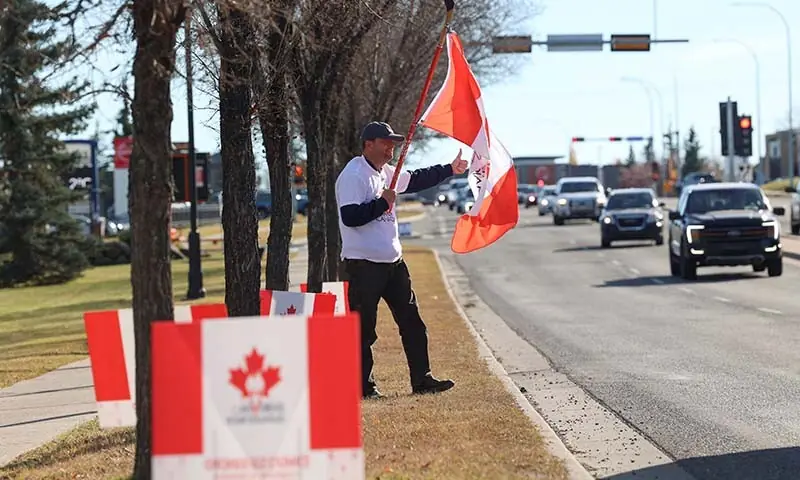
A supporter of the pro-Canada group Forever Canadian participates in an event, one day before the non-binding referendum on separation from Canada, in Okotoks, Alberta, Canada on October 18, 2026. — Reuters
First Nations groups have objected to the idea of an independent Alberta, as their land treaties with Canada predate Alberta’s entry into Confederation.
In May, an Alberta court judge ruled the province’s chief electoral officer was wrong to allow separatists to collect signatures requesting a referendum, because the process should have prompted a consultation with Indigenous peoples whose rights might be violated by separation. Alberta has appealed the decision.
What has PM Carney said about the referendum?
Carney, who was largely raised in Alberta, has previously said the best place for Alberta is in Canada and that the country cannot succeed if it’s divided. He released a video on Canadian Thanksgiving, October 12, saying national unity is critical as Canada fights threats from abroad, including a trade war with the US. Carney has campaigned for Alberta to remain in Canada.
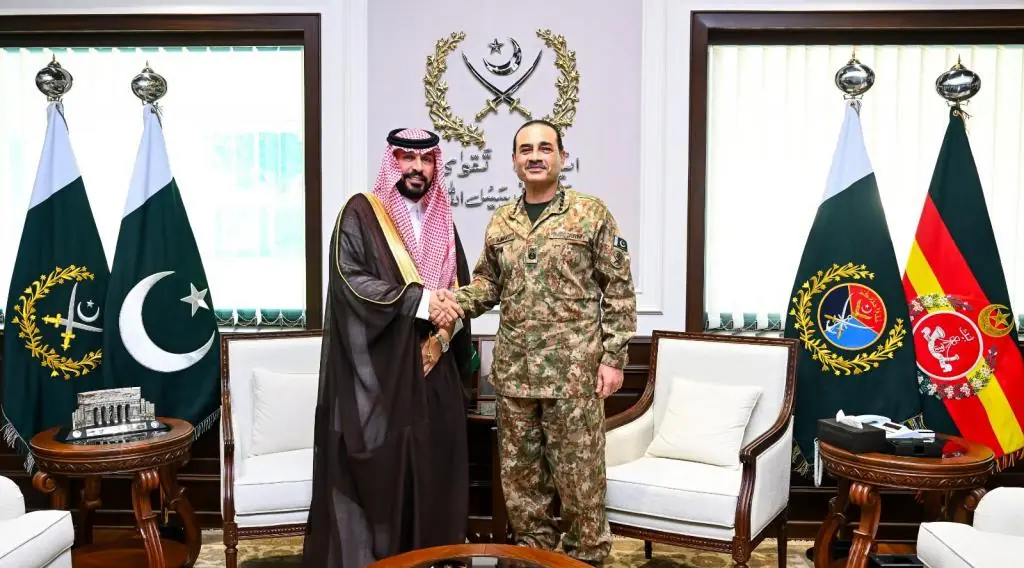
The new Saudi envoy in Pakistan, Dr Rajeh Tami Albugamy, met with Chief of Defence Forces and Chief of Army Staff Field Marshal Asim Munir on Monday, with both sides expressing satisfaction over the progress made under the trilateral Makkah defence agreement, according to the military’s media wing.
Albugamy assumed his diplomatic responsibilities in Islamabad last Thursday, reaffirming the commitment to strengthening the strategic and fraternal ties between the two countries.
Inter-Service Public Relations (ISPR) said in a statement on Monday that the ambassador called on CDF Munir at General Headquarters (GHQ) in Rawalpindi. According to the statement, matters of mutual interest and regional security dynamics were discussed.
“Both the dignitaries expressed satisfaction over the progress made under the framework of the Makkah Joint Defence Agreement and underscored the importance of strengthening defence collaboration, institutional linkages and strategic coordination,” the statement read.
CDF Munir congratulated the ambassador on his appointment and expressed confidence that his tenure would further strengthen the longstanding fraternal ties between Islamabad and Riyadh, which are “rooted in shared faith, mutual trust and strategic partnership”.
Last week, Albugamy met Prime Minister Shehbaz Sharif and Deputy Prime Minister and Foreign Minister Ishaq Dar.
PM Shehbaz reaffirmed Pakistan’s support for Saudi Arabia in safeguarding its “sovereignty, security and territorial integrity” amid a recent escalation in Houthi attacks during their meeting.
DPM Dar, meanwhile, underscored longstanding fraternal and strategic ties between Islamabad and Riyadh when he met Albugamy. He also reaffirmed Islamabad and Riyadh’s “shared commitment to further strengthen bilateral cooperation for mutual progress and prosperity”.
Earlier this month, Pakistan, Saudi Arabia and Turkiye convened an emergency meeting under the Makkah alliance and agreed to deploy military forces and capabilities rapidly in the kingdom.
While the statement did not specifically name any threat, the development came against the backdrop of Houthi attacks on Saudi Arabia.
The Makkah defence pact, signed on Aug 7, aims to strengthen collective deterrence and empower its signatory states to treat an attack against one of them as an attack against all of them.
In an interview aired on Sunday, the military’s spokesman said Pakistan is providing “whatever support is needed” to defend Saudi Arabia amid attacks by Yemen’s Houthi rebels against the kingdom.
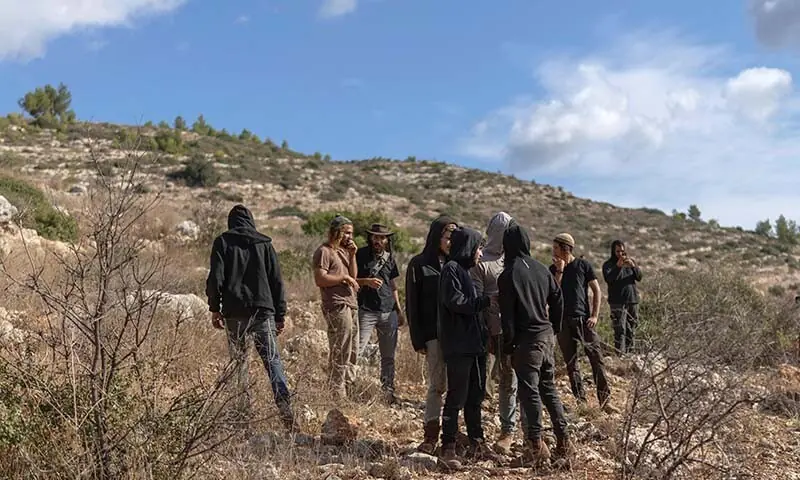
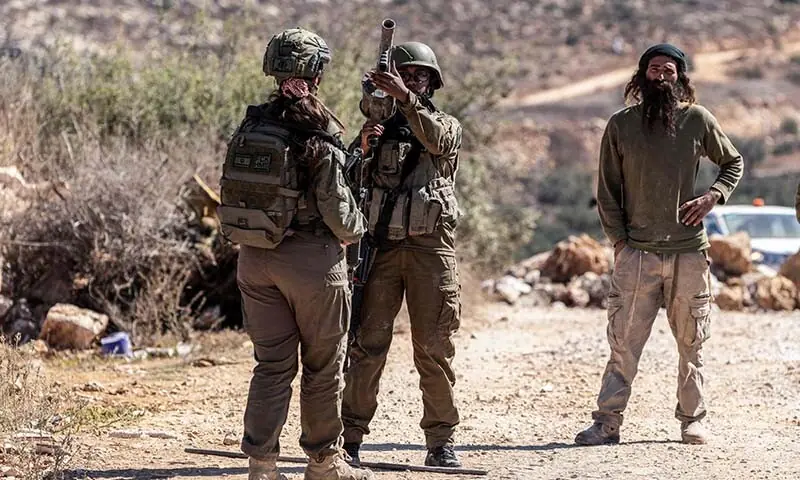
Israeli police said on Monday that they had arrested 10 people in the occupied West Bank after settler attacks on an American photographer and a French mayor that drew international condemnation but mixed messages from the government.
In a rare action against rising settler violence, police said they raided several locations across the occupied territory and seized cars and potential evidence related to the attacks.
“Following the severe incidents of violence over the past weekend, including the assault of a media worker and the suspected attacks on foreign civilians, an arrest operation was conducted before dawn,” said Major General Moshe Finchi, the Israeli police’s West Bank commander.
“Suspects were arrested on suspicion of involvement in the violent incidents, violating a military commander’s order concerning a closed military zone, and illegal construction,” he said.
Israeli settlers gather as Palestinians harvest their olive trees in the Israeli-occupied West Bank village of Deir Abu Mashal on October 19, 2026. — AFP
Witnesses say that settlers have been stepping up violent attacks on Palestinians during the ongoing olive harvest, aiming to seize their land during a season that carries cultural importance for the community.
Rights groups note that Israel rarely prosecutes settlers when the victims are Palestinian. The Israeli human rights group Yesh Din said it documents 561 acts of settler or military violence against Palestinians since September 27 — more than 26 incidents a day.
Prime Minister Benjamin Netanyahu, who is facing a tight race for a new mandate, has tried to shore up his pro-settlement right-wing base and has cast doubt on the circumstances behind the recent settler attacks on Westerners.
Netanyahu’s tone has brought unusually strong criticism from the opposition, which has accused him of tarnishing Israel’s image.
US Ambassador Mike Huckabee, a staunch ally of Israel, had called Friday’s beating of veteran photographer Heidi Levine an “act of terror” and demanded punishment. He called Monday’s arrests a “very positive development”.
Levine, 65, who was on assignment for The Washington Post, was taken to a hospital with broken vertebrae. She was visited at her hospital bed both by President Isaac Herzog, who holds a largely ceremonial role, and centre-left opposition leader Yair Golan.
Golan, in a social media post afterwards, said that if he takes power, there will no longer be “a reality in which Jews instil terror in the name of Jewish supremacy, and stain the state we built here”.
Rising international attention
One day after Levine’s beating, settlers attacked a convoy of European diplomats, including the French and Belgian consuls general in Jerusalem as they went through the town of Taybeh in the West Bank on Saturday.
The settlers beat up Bernard Baudoux, 78, the mayor of the northern French town of Aulnoye-Aymeries, who was wearing a sash in the French tricolour during a goodwill visit in which he helped harvest olives.
The mayor, wearing a blue, white and red sash, leans against a vehicle as masked men intercept and surround a car at a village in the occupied West Bank. — AFP
Netanyahu earlier questioned the facts behind the two recent incidents.
On Levine’s beating, he alleged that Palestinians and “far-left” activists were fanning violence. With the attack on the diplomatic convoy, he pointed out that the mayor was a leftist supporter of the Palestinian cause and said that diplomats should have coordinated with the Israeli military.
The top official on human rights in the US State Department, Riley Barnes, on Sunday visited the same town where the mayor was beaten, which is largely Christian, on a trip coordinated with the military. He was unharmed.
The violence by settlers has led British Foreign Secretary Ed Miliband to accuse Israel of an “ethnic cleansing” campaign and for London to impose sanctions on goods from settlements.
Marking Monday’s deadline for Israel accepting construction tenders for the E1 settlements, a major new project that Palestinians fear will divide the West Bank in two, Miliband warned businesses about consequences.
“They should be aware of legal and reputational consequences, including the risk of involving themselves in serious breaches of international law,” Miliband said in a statement.
Israeli Foreign Minister Gideon Saar hit back against what he called an “obsession” with Israel by British Prime Minister Andy Burnham’s government.
“The days when Israel would quietly accept threats, sanctions and attempts to dictate its policies are over,” Saar said.
ISLAMABAD: Pakistan has reported its seventh polio case of the year, with a six-month-old boy from Karachi’s East district testing positive for wild poliovirus, the National Emergency Operation Centre (NEOC) said on Monday.
The affected child belongs to Union Council Jamali Colony and was identified through the polio surveillance network. The case was confirmed by the Regional Reference Laboratory for Polio Eradication at the National Institutes of Health (NIH) in Islamabad, it said in a statement.
The NEOC said the child was malnourished and had fallen victim to virus circulation already present in Karachi.
According to an official of the polio programme, the latest case is the first reported from Karachi since December 2024.
The city has faced intense virus circulation for the past two years, although focused door-to-door vaccination campaigns and improvements in essential immunisation had contributed to a marked reduction in transmission.
Only one environmental surveillance site in Karachi tested positive in September, NEOC said, but vulnerable children remained at risk as long as the virus continued to circulate.
A comprehensive investigation has been launched, while the Polio Eradication Initiative (PEI) is assessing the “best science-based response to tackle and prevent further transmission, including targeted vaccination activities and support to strengthen routine immunisation”.
NEOC also underscored the importance of vaccinating children against the incurable, paralytic disease.
Of the seven cases detected across Pakistan this year, five were from Khyber Pakhtunkhwa — including four from Bannu division — and two from Sindh.
The latest case has emerged about two weeks after this year’s sixth case was reported from KP’s Khyber district, where a seven-year-old boy tested positive for the disease.
Polio is a highly contagious and incurable disease that can cause lifelong paralysis and, in some cases, death. It can, however, be prevented through safe and effective polio vaccines.
Pakistan and Afghanistan are the only two countries where polio is still endemic.
According to NEOC, Pakistan had recorded a 99.8 per cent reduction in polio cases from an estimated 20,000 in the early 1990s to 31 in 2025 and seven so far this year.
Four nationwide polio campaigns have already been conducted in 2026, protecting more than 45 million children multiple times, besides targeted oral and injectable vaccination activities in high-risk areas.
The next subnational campaign is scheduled for Nov 2-8 and will target nearly 24m children in 97 districts, including all districts of Karachi, in synchronisation with Afghanistan.
A New Delhi magistrate extended the detention of two leaders of India’s youth-led Cockroach Janta Party (CJP) movement by two days on Monday, after they were remanded in custody five days ago.
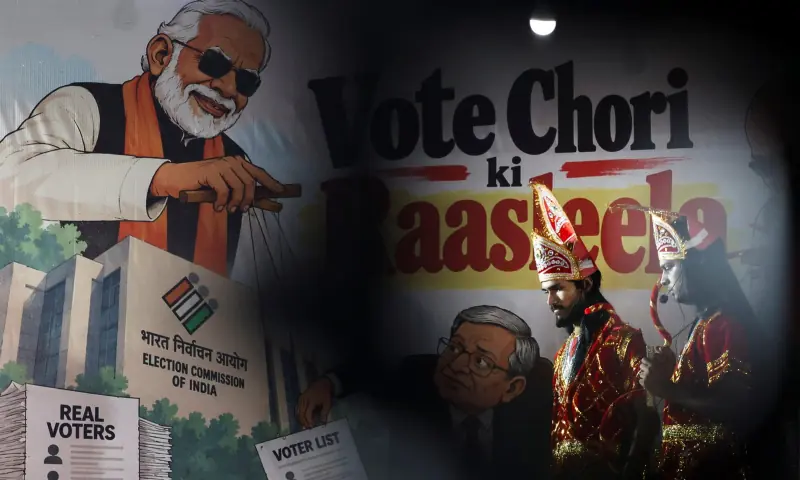
CJP activists and opposition parties have defied a security crackdown to demand the resignation of India’s chief election commissioner, accusing the poll body of manipulating voter rolls to benefit Prime Minister Narendra Modi’s ruling party.
The commission, which oversees voting in the world’s most populous nation, has denied any wrongdoing.
Television footage showed CJP leaders Ashutosh Ranka, 30, and Saurav Das, 27, being taken away in a blue police van from a police station where the hearing took place.
“This is an absolute mockery of the justice system,” the movement’s legal affairs head Ratna Singh told reporters.
Das and Ranka were taken into custody on Oct 14 for their “alleged repeated attempts to disturb public peace and violate the law”, the police said in a statement at the time.
The pair had jumped security barricades to wave the national flag at Jantar Mantar, a decades-old protest site that police have barred people from using.
“Their alleged attempts to instigate others through social media to engage in similar unlawful activities were also taken into consideration,” the statement said.
Jantar Mantar, in the heart of the capital, has been sealed off with yellow metal barricades for more than a week and guarded by security personnel.
Delhi police said last week they had removed the site from the list of designated protest venues.
The Punjab government decided on Monday to ban objects equipped with hidden cameras and recording devices, including pens, eyeglasses and watches.
A statement by the Punjab Home Department identified such objects as those “used for spying” and said the decision was taken to protect the citizens’ privacy and personal information, particularly those of women and children.
The statement said “strict legal action” would be taken against the use, purchase and sale of “spying devices and covert electronic devices”, further warning that the “illegal use” of objects equipped with hidden cameras would result in “severe penalties”.
The statement also mentioned that complaints had been received about the use of “spying devices” for “illegal surveillance, harassment and blackmailing”.
Punjab Home Secretary Ahmad Javed Qazi told Dawn that a formal notification for the implementation of the ban would be issued in a few days. He explained that the announcement about the ban had been made prior to the issuance of the notification to give people some time to discard such items.
Amid concerns about the misuse of such devices, the Lahore High Court (LHC) has also been seized with a public interest petition that challenges the unregulated import and sale of camera and mic-equipped smart glasses, citing threats to people’s privacy, dignity and national security.
Meta in particular has faced pushback for its AI-powered smart glasses, with critics dubbing the eyewear as “pervert glasses”. And while it has not officially listed Pakistan as a market, the petitioner’s counsel in the case before the LHC has contended that its glasses are openly sold online and in shops in Lahore.
Taking up the plea on Thursday, the LHC directed the federal government to forward a summary to the federal cabinet regarding the unregulated import and sale of smart glasses.
Senior Sindh Minister Sharjeel Inam Memon on Monday asserted that the PPP was the “last party” in favour of governor’s rule and emergency in Khyber Pakhtunkhwa, saying that it had emphasised dialogue as the first course of action.
The Centre imposed governor’s rule and emergency in KP on Oct 11, citing the provincial government’s “deliberate disengagement” from the fight against terrorism. The move also followed a mobilisation drive and protest march by the PTI, which was in power in KP and in opposition in the Centre, to demand the release of its jailed founder, Imran Khan.
The PPP, an ally of the ruling PML-N, supported the federal government’s move while opposition parties and leaders, in addition to the PTI, denounced it.
Memon, who was speaking to the media in Karachi, said: “Let me clarify; the step taken in KP was not out of greed or desire for power. Had it been the case, the members of the advisory council appointed by the [KP] governor would have been political representatives or suggested by the PPP.”
“They were chosen purely on merit,” he said.
The minister deemed terrorism the main challenge being faced in KP, adding that it was “plaguing” the entire country. He said the Afghan Taliban were crossing into Pakistan, infiltrating the borders areas in KP. That, he said, had been a “big challenge”.
“And the KP government was repeatedly told to fix things, but they were unwilling,” Memon claimed.
He said a comparison was also being drawn between KP and Balochistan, which was also facing security challenges. Questions were being raised that if governor’s rule was imposed in KP, why not in Balochistan, he noted.
“If there is terrorism in Balochistan, the provincial government there is fighting against it,” Memon argued, adding that Balochistan’s chief minister did not have a “soft spot” for terrorists.
He alleged that former premier Imran and later Sohail Afridi, who has become non-functional as the KP chief minister following the imposition of governor’s rule, had insisted on dialogue with terrorists.
“It was the responsibility of the KP chief minister and government to fight against terrorists,” he stressed.
Coming to his party’s involvement in the imposition of governor’s rule in KP, he said the PPP was the “last party” in favour of the move.
The PPP tried to engage the opposition and insisted that a dialogue be held with the PTI first, Memon said, adding that, however, “when just one person, the KP chief minister” was not willing to engage on counterterrorism and had a “soft spot” for terrorists, the people could not be left helpless.
He also reacted to statements by Jamiat Ulema-i-Islam-Fazl (JUI-F) chief Maulana Fazlur Rehman, who has been critical of the federal government over the imposition of governor’s rule in KP.
“We respect him a lot but that does not mean he supports a party that has backed terrorism,” he said, adding that Fazl should consider the challenges Pakistan was going through. “They (JUI-F) should help the government against terrorists, help our law enforcement agencies,” Memon added.
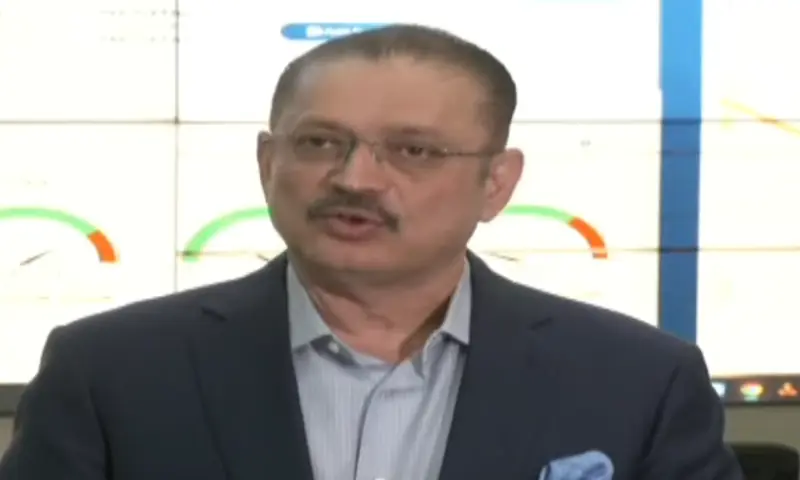
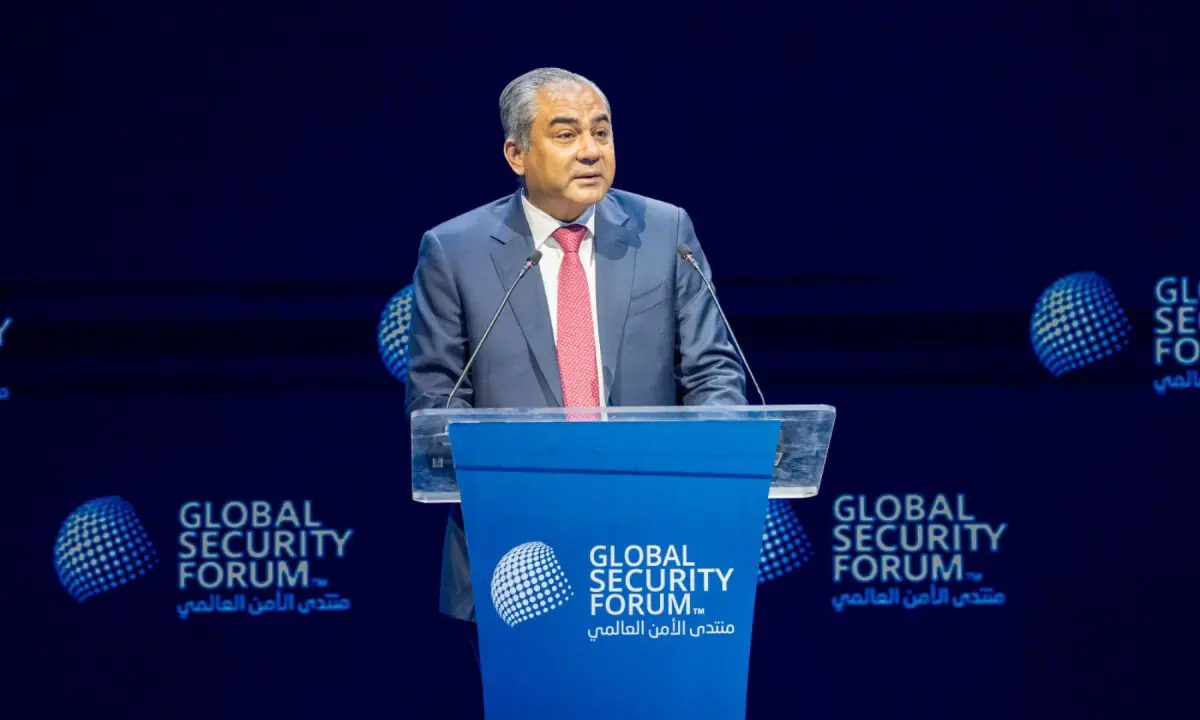
Interior Minister Mohsin Naqvi on Monday highlighted Pakistan’s mediation efforts between the United States and Iran, affirming that Islamabad “never gave up”.
He made the remarks while addressing the 8th Global Security Forum being held in Qatar’s capital, Doha. Convened under the title “The Future of Alliances“, the forum brings together high-ranking officials and dignitaries from over 100 nations, according to Qatar News Agency.
“The last few months have been very difficult for our region. The conflict involving Iran and the United States created serious risks not only for the Middle East, but for the entire world,” Naqvi noted.
He added that at such a critical time, Pakistan chose the path of peace and made “every possible effort to reduce tensions”.
Naqvi, who has been involved in Islamabad’s peace efforts and has made several trips to Iran since the war began, said: “There were moments when the situation was extremely tense, but we never gave up.
“We continued talking, listening and working to build trust. And I can tell you from my experience: peace is not achieved in one meeting; it requires patience, trust and continuous efforts.”
He particularly highlighted the “remarkable role” of Chief of Defence Forces and Chief of Army Staff Field Marshal Syed Asim Munir in Pakistan’s efforts to reduce tensions.
CDF Munir, accompanied by Naqvi, had visited Iran in August “as part of Pakistan’s efforts to promote regional peace and stability”. The interior minister last made a visit to Iran in September, with Tehran describing the trip as part of bilateral engagements.
Speaking at the Doha forum, Naqvi recalled the June 18 signing of the Islamabad Memorandum of Understanding (MoU) between Iran and the US. The 14-point MoU, which Pakistan signed as a mediator, provided a framework for ending the war that began with US-Israeli strikes on Iran on Feb 28.
“There, I saw something I will never forget,” he said, adding that Qatar’s Prime Minister Mohammed bin Abdulrahman Al Thani and CDF Munir worked for “more than 16 hours without a single break”.
“No cameras, no announcements; only two men who refused to let the talks fail,” Naqvi remarked, emphasising that the only aim of the two mediating countries was to “stop further conflict and to save innocent lives”.
The minister praised Qatar’s peace efforts, noting it had “done so much”. “In the diplomacy of our time, when others chose sides, Qatar chose to keep talking. Pakistan has seen this closely because we have worked beside you.”
He stressed that Pakistan has always believed that “dialogue is better than war”.
“Our recent experience has taught us three important lessons: never close the door to dialogue, trust is the most important key for any kind of talk, and thirdly, peace requires sincere efforts from everyone.”
The senator emphasised that no single country could achieve regional peace alone.
“Pakistan is proud of the role it has played in the regional peace efforts,” he said, reaffirming that Islamabad would continue to support dialogue, peace and cooperation.
“We believe that winning peace is far more important than winning a war,” the minister remarked.
He conveyed Pakistan’s message: “We do not want credit for stopping wars. We want a future where wars do not start.”
The war between Washington and Tehran began in February with US-Israeli strikes on Iran, which responded with retaliatory attacks on nearby Gulf countries.
While diplomatic engagements continue, there has been a lack of progress in recent weeks in negotiations to end the war.
After an interim ceasefire collapsed, Iran in September presented its proposal to reopen the Strait of Hormuz — the key oil trade route that has remained central to the conflict.
The US said it had rejected that proposal, while Iran’s security chief said negotiations have stalled because Washington failed to address all seven conditions for reopening the strait. On Sunday, Foreign Minister Abbas Araghchi said Tehran’s offer to the US to reopen the waterway within seven days was still on the table.
Meanwhile, the Middle East is currently facing heightened tensions on another front as Houthi rebels attack Saudi Arabia after a truce in their long-running war with Yemen’s coalition government unravelled in July.
Makkah alliance ‘not for war’
During his address, Naqvi cited the Makkah Joint Defence Agreement signed among Pakistan, Saudi Arabia and Turkiye in August as an example of Islamabad’s commitment to regional security.
“It is a pact for defence, not for war,” he declared, adding that no country could “enjoy lasting peace if its neighbours are facing conflicts”.
The pact, under which the three countries have formed the Makkah Defence Alliance, empowers its signatory states to treat an attack against one of them as an attack against all of them.
Naqvi also spoke about countering security challenges and called for stronger international cooperation on the matter.
“As Pakistan’s interior minister, I also understand the price of terrorism and insecurity. Pakistan has suffered greatly; thousands of our citizens, soldiers, and policemen have lost their lives. Even today, we continue to fight.”
Describing terrorism as a “common enemy”, he called for “stronger cooperation, better intelligence-sharing and joint efforts to defeat it”.
The senator noted that counterterrorism cooperation was not something Pakistan has only sought, but also provided. He then highlighted the country’s contributions to the United Nations’ peacekeeping missions.
“Our UN police peacekeepers have helped protect civilians, support local police and restore peace in countries affected by conflict. We are proud of their services and sacrifices,” he said.
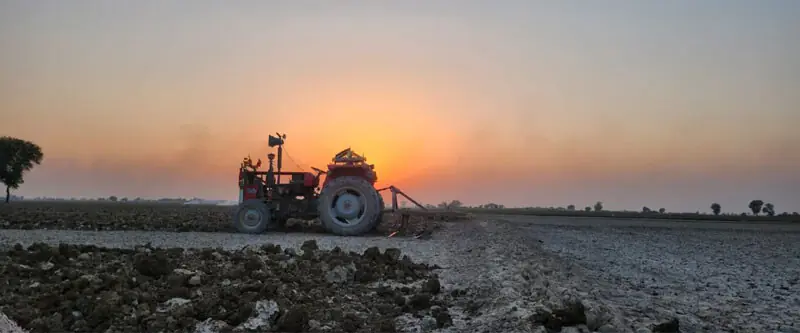
Farm workers in Balochistan often work more than the stipulated eight hour daily, while often earning less than the minimum wage. Some even work for food | Photo by Zaheer Baloch
Mian Dad has spent much of his life ploughing fields on a tractor. He started as a young boy, helping drive a tractor that tilled land for a local landlord in his village in Tamboo, Nasirabad district, Balochistan.
Now, Mian drives the tractor himself, earns just Rs14,000 per month — a little over a third of the provincial minimum wage of Rs37,000. During peak cultivation season, he tells Eos, the work-day can stretch up to 16 hours — double the standard eight hours.
But Mian isn’t complaining. He now makes “a lot more” than what he earned as a tractor helper. It is still not enough, however, to feed his family, including his 11 children. “We look for odd jobs or work for food during the off-season,” he says. “When that doesn’t work, we have to beg.”
For agricultural workers in Balochistan, a lifetime of labour may still not be enough to escape poverty. Debt, unequal sharecropping arrangements and climate shocks can trap entire families in a vicious cycle of dependence
THE BOTTOM RUNG
Mian’s situation is not unusual in a province where poverty remains widespread. An estimated 47 percent of the population in Balochistan lives in poverty, compared with a national average of 28.9 percent, according to the Pakistan Economic Survey 2025-26.
Poverty is particularly acute in rural districts, where livelihoods depend mostly on agriculture. In a 2025 study by the global not-for-profit Population Council, District Vulnerability Index for Pakistan, 17 Balochistan districts were listed among the 20 most-vulnerable districts in the country. Nasirabad was towards the bottom in both provincial and national lists, ranking 11th most vulnerable out of 31 districts in Balochistan and 13th most vulnerable among the 129 districts assessed nationwide.
Agriculture is the main source of livelihood in Tamboo, Mian’s hometown, which has a population of around 130,000. As elsewhere in Balochistan, agricultural production in Tamboo involves a network of tribal chieftains, landlords, intermediaries known as bothars, farmers, tractor drivers, technicians and sharecroppers.
Workers like Mian Dad occupy the lower rungs of this hierarchy, often putting in long hours to cultivate the land. Locally, they are also referred to as begaar — which refers to a historical practice of forced, unpaid labour that was widely practised during the British era, including in princely states.
In today’s Balochistan, unpaid labour may arise from a lack of alternative employment, obligations linked to debt or, in some cases, pressure arising from tribal and social relationships.
INHERITED DEBT
It can take decades for those starting work as peasants to move up in this hierarchy.
Qadir Naseeb, whose family worked as peasants for generations in the Chattar area of Nasirabad, says his family didn’t have access to clean drinking water. He recently installed a tubewell near his hut. “Before [installing] the tubewell, the women in my family had to filter the water through a cloth to make it drinkable,” he tells Eos.
One of the reasons why upward mobility can take peasants decades, explains local researcher Muhammad Nawaz Khosa, is because they are often caught up in a cycle of debt. “Households often have to rely on interest-based loans to meet everyday expenses as well as the costs associated with cultivating the very land on which they work,” he explains.
In his book Balochistan Ki Nehri Zaraat [Canal-Irrigated Agriculture in Balochistan], Khosa writes that peasants often work as sharecroppers. In such cases, the peasants are responsible for managing production and handling expenses — often financed in the form of loans acquired from the landlord’s bothar.
The eventual harvest is then divided between the landowners and the peasant, with the peasant using his share of the harvest to pay off the loan. If the harvest fails to return a profit, the loss has to be borne by the peasant, leaving him mired in a vicious debt trap.
Such agreements also don’t factor in force majeure — whether it’s a pest attack or floods. In the case of a loss of harvest, the sharecropper has to pay off his debt to the landlord. In some instances, writes Khosa, peasants are also expected to bear the expenses associated with the landlord’s hujra [guest area], a system rooted in longstanding feudal traditions of the region.
This is something that Mian Dad and many others have experienced. Mian had to borrow Rs200,000 following the floods in 2022. The amount equals more than 14 months of his pay. While Mian was repaying the debt, a medical emergency forced him to take on another loan. He says he is now trapped in a cycle of that debt, worried that his future generations will have to work to pay it off.
Parts of Balochistan continue to exhibit forms of bonded labour, particularly within the households and estates of tribal and feudal elites, says Asad Baloch, a researcher who hails from a tribal family. Baloch says this practice has “considerably decreased” in Nasirabad as compared to previous generations. “But yes, remnants of such practices can be found in parts of the province,” he tells Eos.
In rural and remote parts of the province, he explains, the tribal chiefs function not just as cultural leaders, but as economic masters. Impoverished tribesmen often rely on their chiefs for basic survival, protection and mediation.
In some villages, there is a custom where one child from every household has to be in service of the tribal chief. In some cases, individuals work as guards or domestic workers, for minimal wages. Over time, limited economic opportunities and restricted access to education and alternative livelihoods continue to make it difficult for some individuals to pursue other means of earning a living.
RESETTING THE CLOCK
The 2022 floods that pushed Mian Dad into debt were not the first to disrupt the relationship between landlords and agricultural workers in Nasirabad. Dr Abid Mir, a lecturer at Government Degree College, Quetta, says the 2010 floods weakened some landlords’ hold over the families who worked for them.
“Widespread agricultural losses weakened some landlords’ ability to retain regular workers, prompting many peasant families to seek employment elsewhere,” he tells Eos. For some, this opened up the possibility of finding work on their own terms and seeking better education, healthcare and basic amenities for their families.
But the effects of climate-related disasters have been uneven. Families who remained in rural areas continued to face crop losses, declining incomes and mounting debts, Mir explains. For those already struggling to make ends meet, another failed harvest or flood could mean borrowing again simply to survive.
The same disaster that may loosen one family’s dependence on a landlord can deepen another’s debt to one. For agricultural workers such as Mian Dad, recovering from a disaster is not simply a matter of rebuilding a home or returning to the fields. It can mean years of repayment — and the fear that their children will inherit the debt.
The writer is a journalist and researcher. X: @ImtiazBaluch
Additional input and editing by Hussain Dada. X: @hydada83
SOUTH Asia may see a vast movement of people as climate change makes parts of the region harder to live in. According to the International Organisation for Migration, as many as 40.5m people could be forced to move by 2050. The warning deserves attention for what such displacement could mean for a region already struggling with poverty, overcrowded cities, unemployment, and competition for resources.
From the sinking coastlines of Bangladesh to the drought-hit districts of Pakistan, climate pressures are threatening millions of livelihoods. But it is not just the communities directly affected that will feel the impact. As farmers abandon unproductive land and families leave disaster-prone areas, towns and cities will have to accommodate growing populations.
Competition for housing, employment, water and public services could make life harder for poorer communities and generate social tensions. Countries with limited resources may struggle to provide for both established residents and newcomers. The danger is particularly acute in South Asia, where weak regional cooperation could hinder a coordinated response. Climate displacement could then become another source of instability unless governments prepare for it together.
The warning raises questions about how Pakistan intends to accommodate people whose homes and livelihoods become impossible to sustain. Our urban centres already struggle with inadequate housing, sanitation, transport, and job opportunities. An influx of climate-displaced families could deepen these problems.
Yet migration need not mean destitution. As the IOM chief has pointed out, moving can itself be a means of adapting to climate change. Pakistan must, therefore, recognise climate mobility as a permanent consideration in development planning. Provincial and local governments need reliable information about communities likely to leave, destinations likely to receive them, and services required to support their transition. Land-use policies, affordable housing, vocational training, and access to schools and healthcare must reflect changing population patterns.
Equally important is protecting the rights of displaced families, who should not lose access to documentation, education or public assistance simply because they have moved. Regional cooperation on forecasting, disaster preparedness and population movements could help countries anticipate shared pressures. The challenge is to ensure that people forced to move by climate change can rebuild their lives.
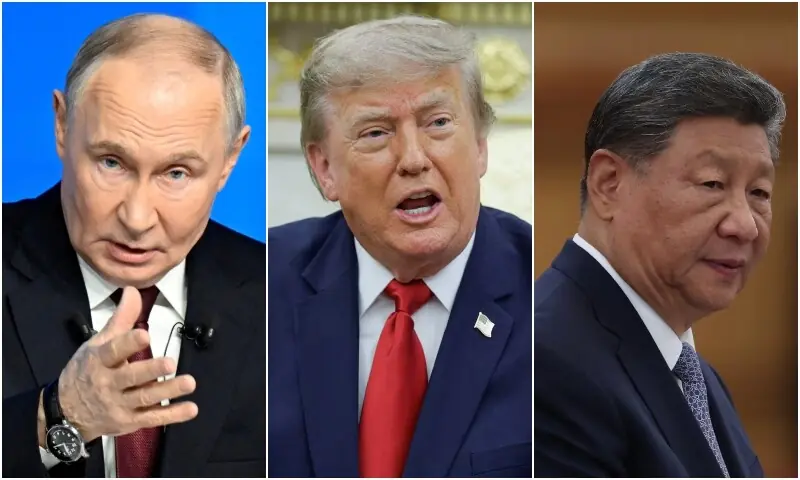
The Kremlin said on Monday that Russian President Vladimir Putin, US President Donald Trump and Chinese President Xi Jinping could hold a three-way meeting on the sidelines of next month’s APEC summit in China and that a potential meeting had come up in talks.
Kremlin spokesman Dmitry Peskov commented after being asked about a report in The Wall Street Journal which said that Putin had proposed such a meeting to discuss how to end the conflict in Ukraine.
“Given that all three heads of state may potentially take part in the summit in China, the subject of such a hypothetical meeting was indeed raised. It was raised, but no specific proposals or agreements were discussed or put forward by anyone, either regarding the meeting itself or the possible agenda and content of that meeting,” said Peskov.
Ukrainian Foreign Minister Andrii Sybiha criticised the idea of such a summit.
“A trilateral meeting between the leaders of Ukraine, the US, and Russia could help end the war sooner. A trilateral meeting between the leaders of Russia, China, and the US would do only the opposite: encourage Putin to continue this war,” he said on X.
Peskov, who told reporters on a daily conference call that the US was continuing its mediation efforts to resolve the conflict and that Russia appreciated those efforts, said it was obvious that Ukraine would need to be involved in any final peace deal.
“Of course, a final settlement is impossible without the participation of someone in Kyiv who is prepared to take responsibility,” he said.
The last US-mediated peace talks took place in February before the United States and Israel launched a war on Iran. Ukraine and Russia remain as far apart as ever when it comes to the terms of any possible peace deal.
The Sindh High Court (SHC) on Monday dismissed an appeal filed by the provincial government through the prosecutor general against the acquittal of Baloch Yakjehti Committee (BYC) leader Mahrang Baloch in a sedition case, declaring it non-maintainable.
Mahrang had been booked on terrorism and sedition charges by Malir district’s Quaidabad police on Oct 11, 2024 for allegedly inciting people by levelling “allegations against security institutions”.
Over a year later, she was acquitted by a Karachi anti-terrorism court (ATC). Subsequently, acting prosecutor general Muntazir Mehdi, on behalf of the state, had challenged the acquittal before the SHC in December 2025.
On Monday, a two-judge SHC bench, headed by Justice Shamsuddin Abbasi and including Justice Miran Muhammad Shah, heard the appeal. Advocate Jibran Nasir appeared before the court to represent Mahrang and advanced his arguments.
The court observed that the complainant in the first information report (FIR) was a private individual and questioned how the prosecution could file an appeal against the acquittal instead of the complainant.
The prosecution claimed that the ATC had ignored facts while accepting Mahrang’s acquittal application. It highlighted that the public prosecutor had informed the ATC that there was clear evidence against Mahrang and that such evidence was supposed to be presented during trial.
The prosecution further argued that deciding the acquittal application before the framing of charges was inappropriate.
Mahrang, who is in Quetta prison in connection with other cases, had filed an acquittal application under Section 265-K of the Code of Criminal Procedure before ATC-V, which the court allowed.
The FIR was registered on the complaint of a resident named Asad Ali Shams, who claimed that Mahrang was inciting violence in his area.
The FIR invoked Section 7 (punishment for acts of terrorism) of the Anti-Terrorism Act (ATA) 1997 as well as sections 124-A (sedition), 148 (rioting, armed with deadly weapon), 149 (every member of unlawful assembly guilty of offence committed in prosecution of common object), 153-A (promotion of enmity between groups), 500 (punishment for defamation) and 505 (statement conducing to public mischief) of the Pakistan Penal Code.
In June, a Quetta ATC handed two life sentences to Mahrang and another BYC leader in a case involving the death of a security personnel during a 2024 protest in Gwadar. Mahrang’s challenge against her conviction is pending before the Balochistan High Court (BHC).
Tech billionaire Elon Musk said on Monday that he would give every child in the United States a share in his SpaceX rocket company.
“Next year, I will give one of my SpaceX shares to every kid in America,” Musk, the richest man in the world, said on X.
“This will be the first of many,” he said, without providing details about how the scheme would work.
There are around 73 million children under the age of 18 in the United States, according to 2024 data from the US Census Bureau.
Musk owns 38 per cent of SpaceX, according to Forbes.
His announcement comes after US President Donald Trump promised last month to give every American adult $5,000 if his Republican party retains control of Congress in November’s midterm elections.
SpaceX set the record for the largest initial public offering in history, raising $85.7 billion in June.
The company’s Starship megarocket reached orbit for the first time in September, a milestone for the rocket central to Musk’s Mars ambitions.
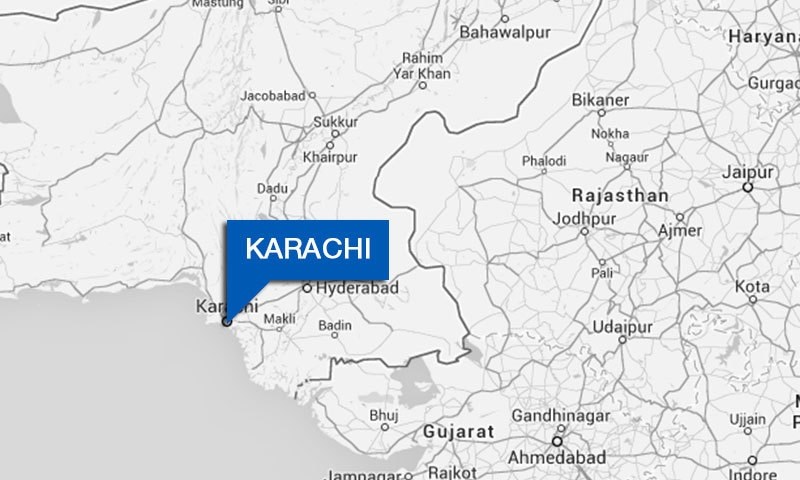
KARACHI: Cases have been registered against Karachi Metropolitan Corporation (KMC) and Pakistan Railways Police officials in Karachi following a scuffle between the two sides over a dispute concerning the construction of a road.
The controversy centres on a dual carriageway linking Natha Khan Bridge with Pehlwan Goth and Habib University, running parallel to Chakor Nullah. Valued at around Rs780 million, the project is expected to ease pressure on Sharea Faisal, Rashid Minhas Road, Dalmia Road and Gulistan-i-Jauhar.
The confrontation between the two departments threatens to disrupt construction weeks before its scheduled completion.
KMC City Wardens Director Saim Imran is the complainant in the case against Railways police. The first information report (FIR) registered on his complaint quoted him as saying that a road had been under construction from Natha Khan to Pehlwan Goth for the past four months and that he was on traffic management duty at the site on the day of the incident.
He alleged that Cantt police station SHO Ahsan Rasheed arrived at the site with other police personnel and assaulted him.
The complainant further alleged that he was taken to an undisclosed location, where he was tortured. He claimed that he was asked to hold the feet of senior officers and lick their shoes on their instructions.
He was subjected to further torture after refusing to comply, according to the FIR.
Imran added that he lost consciousness due to the alleged torture and regained consciousness at Abbasi Shaheed Hospital.
According to the information provided, the case was registered at Shahrah-i-Faisal police station on the KMC’s complaint.
Separately, an FIR against Imran and others was registered at the Railway Karachi Cantonment police station on the complaint of a railways official, Mohammed Hussain.
The FIR invokes Sections 147 (rioting), 148 (rioting while armed with a deadly weapon), 149 (every member of an unlawful assembly guilty of an offence committed in prosecution of a common object), 186 (obstructing public servant in discharge of public functions), 353 (assault or criminal force to deter public servant from discharge of his duty), 354 (assault or use of criminal force against a woman with intent to outrage her modesty), 324 (attempt to murder) and 506-B (punishment for criminal intimidation) of the Pakistan Penal Code, as well as provisions of the Railways Act and Anti-Terrorism Act.
According to the FIR, a railways official had noted the construction of a road “on a railway track” under the Natha Khan Bridge, terming it “illegal” and asked for it to be stopped. The complainant said he, along with Railways police, reached the site and asked a sub-engineer to show the no-objection certificate issued by the Pakistan Railways for the road construction.
In the meantime, Imran, “in a fit of anger, pulled out a pistol and pointed it towards Railways SHO Ahsan Rasheed while using abusive language”, the FIR said.
There were around 25-30 city wardens and they “attacked” railways police on Imran’s instructions, the complainant alleged, adding that Imran also threatened them with dire consequences. Imran also tore the uniform of the Railways SHO and tortured PR employees, the complainant claimed.
The city wardens have also been accused of misbehaving with a female from the PR.
They eventually “forcibly took away” Imran, the FIR said.
The incident
The incident unfolded on Sunday afternoon when railway police officials intervened at the construction site and stopped the work, prompting the chief of KMC City Wardens to arrive at the site.
The two sides initially engaged in a heated exchange over the construction, which soon escalated into a physical scuffle. The KMC alleged that the railways police personnel severely beat the City Wardens director before taking him to a Pakistan Railways police station.
“The land where the road was being constructed belonged to the KCR and that the dispute arose over construction activity on the railway land,” a PR official said.
He added railway authorities were collecting information about the incident and would determine the next course of action in accordance with the law once all relevant details had been gathered.
The KMC, meanwhile, expressed strong resentment, questioning why the PR had raised objections so late, putting a multi-million-rupee public welfare project at risk just weeks before its completion.
The KMC spokesman rejected the PR’s claim and said that the municipal body had fulfilled all legal requirements before launching the project more than two months ago.
“This is not correct,” he said responding to the railways’ claim over land ownership.
“This is a major project in terms of benefits it will bring to the people and any move to undermine its potential or put it at risk would be detrimental to the interests of Karachi’s residents.”
He said senior KMC officials were in contact with the railways authorities and expressed the hope that the matter would be resolved soon.
A few years after my resignation from the Income Tax Service, I happened to visit the offices in Lahore as a representative of a corporate client. A female officer made a remark that left me somewhat bewildered. According to her, laws were binding on taxpayers, not on those administering them. Having spent nineteen years within the department, I had thought I had understood the relationship between law and administration reasonably well. Her statement appeared astonishing then. However, as I watch the annual ritual surrounding income tax returns unfold today, I sometimes wonder whether she was merely articulating an institutional philosophy that the rest of us had failed to recognise.
For individuals and associations of persons (AOPs), the statutory date is on or before September 30 following the end of the tax year. In the case of companies, section 118 of the Income Tax Ordinance, 2001 prescribes December 31 where the tax year ends between January 1 and June 30, and September 30 in other cases. The words “on or before” are important.
A normal tax year ends on June 30, which corresponds to the financial year (July to June) adopted by the state. Nothing in the statutory formulation suggests that a taxpayer who is ready to comply should have to wait until September merely because the administration has not yet made its prescribed return operational. It stipulates the last date by which the obligation must be discharged but there is one rather substantial difficulty. While the taxpayer may be ready, the FBR may not.
The state, therefore, controls the only doorway through which compliance is possible. Compliance cannot be a one-way street. Once the state makes itself the exclusive gatekeeper of compliance, its own preparedness ceases to be an internal administrative matter. It becomes part of the taxpayer’s ability to obey the law.
This becomes particularly important because every Finance Bill, once passed an Act of Parliament, introduces amendments affecting rates, exemptions, deductions, credits, withholding provisions, declarations and sometimes the very manner in which income is to be reported. Naturally, the return form has to accommodate those changes. Nobody disputes that software requires modification in the light of these amendments. What is difficult to understand is why this annual phenomenon continues to be treated as an unforeseen emergency.
Pakistan does not suddenly discover on June 30 or before, that a Money Bill, presented with the annual federal budget, on approval by the National Assembly, has become a Finance Act, effective from the first day of July. The budgetary exercise begins months earlier. Proposed amendments are available through the Finance Bill. The FBR itself participates intimately in the legislative exercise. Its policy officers know what changes are being contemplated and its information-technology teams should be working simultaneously on alternative versions of the return.
Tax Year 2026 provides a particularly revealing example. The FBR issued draft electronic returns for individuals, SMEs, AOPs and companies on May 6, 2026. Yet the final electronic returns for Tax Year 2026 were notified only at the beginning of September — SRO 1495(I)/2026 dated September 2. In other words, although the taxpayer’s statutory deadline remained September 30, the final return itself arrived when nearly two-thirds of the presumed compliance period had already vanished.
Consider what this means. The statutory deadline remained September 30, but taxpayers and practitioners were effectively given certainty about the final prescribed electronic return only when September had already begun. Millions of returns then had to be prepared, checked, reconciled with wealth statements and submitted through a single electronic system within a dramatically compressed period.
Inevitably, tax bars and trade organisations sought an extension. The original September 30, 2026, deadline was first extended to October 15, 2026 and, on October 15, the FBR extended it again to October 31, 2026, expressly referring to requests received from trade bodies and tax bar associations. And here lies the irony. The FBR calls this an extension. Taxpayers may reasonably regard part of it as restitution. The extension is presented as a concession to taxpayers but is it really so?
If an authority takes a substantial portion of the statutory filing period to make the final compliance mechanism available, the additional time subsequently granted cannot honestly be regarded entirely as administrative generosity. Part of it merely restores time which taxpayers never effectively possessed. We have somehow reversed the relationship between citizen and state.
The taxpayer is admonished to comply punctually. Failure attracts consequences. Late filing affects status and can invite statutory penalties and other disadvantages. Notices, payments, appeals and responses carry dates. The taxpayer lives by the calendar. Yet the institution that determines whether electronic compliance is even possible appears to face no comparable clock. When it delays, taxpayers must petition that very institution for additional time. Administrative default is thus converted into administrative discretion.
This is not merely an issue of convenience. It raises a basic question of administrative fairness. A government cannot reasonably demand punctual compliance with an obligation while withholding, until late in the prescribed period, the instrument through which that obligation must be performed. Imagine a court requiring an appeal to be filed by September 30 but refusing to provide the prescribed appeal form until September 2. Would we seriously congratulate the court for subsequently extending the deadline?
Digitalisation was supposed to facilitate compliance. It should not convert administrative preparedness into a condition precedent to the taxpayer’s ability to obey the law. Nor is the answer complicated.
The return for the following tax year should be substantially designed alongside the Finance Bill. Drafts can be programmed and tested before June. Once Parliament enacts the Finance Act, final changes can immediately be incorporated. The electronic form should ordinarily be operational from July 1, or as close to that date as technically unavoidable.
More importantly, the law itself should guarantee a minimum effective compliance period — say ninety days — beginning only when the final prescribed electronic return is fully operational. Every day of administrative delay should automatically move the statutory deadline by an equivalent period.
If the prescribed electronic return is not available by July 1, the statutory filing date should automatically move by the corresponding period. Better still, legislation could provide that no taxpayer shall have fewer than, say, ninety days from the date on which the final electronic return becomes fully operational. Then nobody would need to plead for extensions. There would be no annual suspense. No last-minute circulars. No ritual exchanges between FBR and tax bars. In addition, no pretense that restoration of lost compliance time amounts to benevolence.
The FBR rightly expects taxpayers to organise their affairs, maintain records, understand amendments and respect statutory deadlines. Taxpayers are equally entitled to expect their tax administration to anticipate legislation, prepare its systems and provide the prescribed mechanism in good time. The rule of law does not mean that citizens obey while administrators improvise. It requires the State itself to organise its conduct around the law it enforces.
Perhaps that officer’s remark from many years ago deserves to be remembered — but as a warning, not a principle. Laws are not made merely for those upon whom the state imposes obligations. They bind the institutions entrusted with administering them as well. Until that elementary proposition enters our tax culture, the ritual will continue: The FBR will provide the instrument late, taxpayers will plead for more time, and the restoration of lost days will be announced as facilitation. That is not taxpayer facilitation. It is compliance by endurance.

 Login