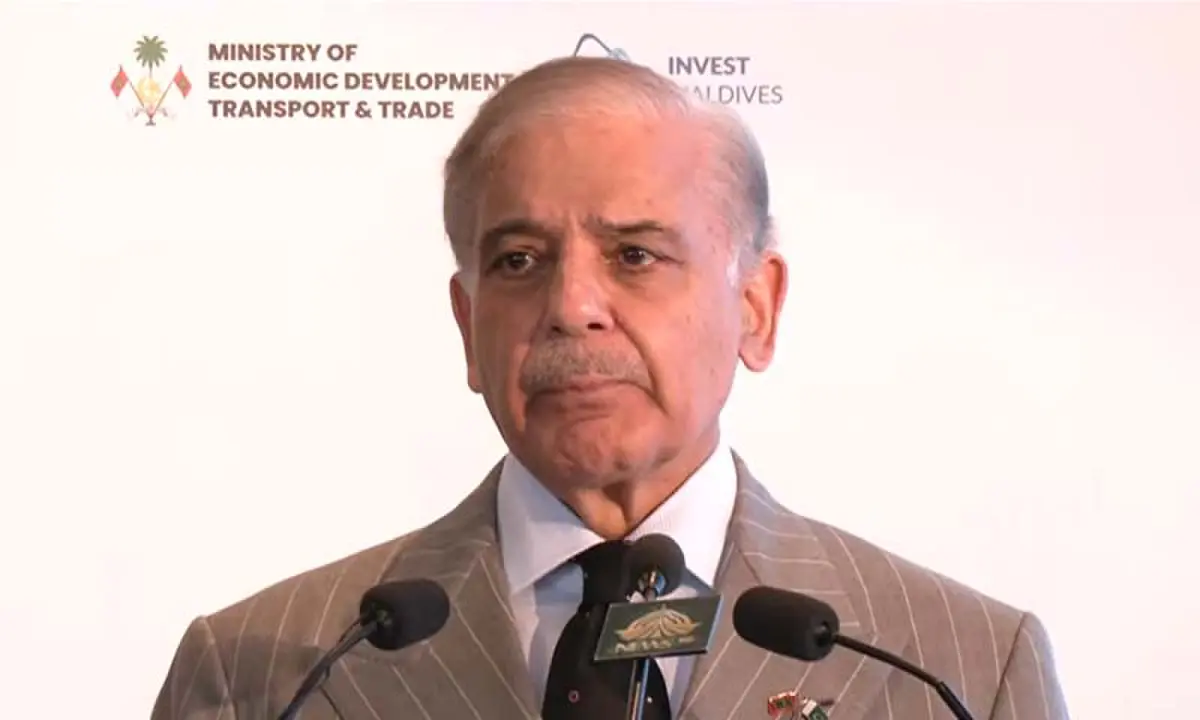
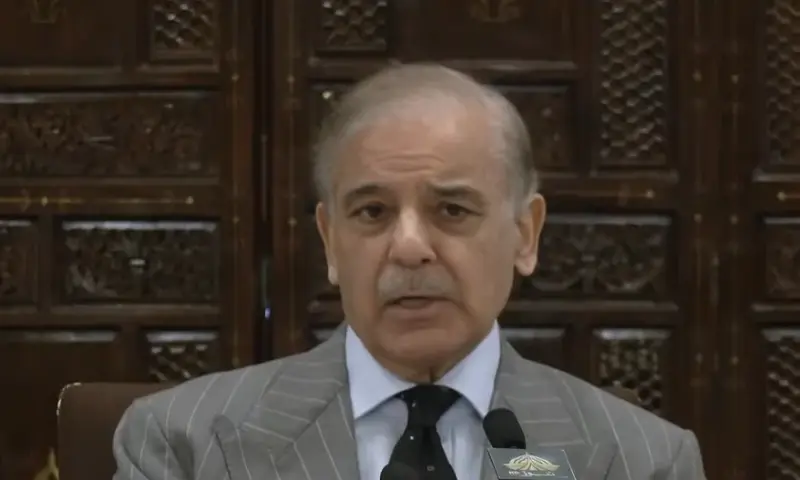
Prime Minister Shehbaz Sharif on Thursday announced that he had issued instructions for direct flights between Pakistan and the Maldives.
Addressing the Pakistan-Maldives Business Forum, attended by visiting Maldivian President Dr Mohamed Muizzu, the premier said that once the dignitary returned, a delegation of Pakistani government officials and businessmen would be sent to Malé. He said that the delegation would arrive within the next week or so.
“I want to say that connectivity is very important. We don’t have direct flights from Malé to Islamabad or Karachi, so this air link is very important,” PM Shehbaz said, addressing Muizzu.
“I have already given instructions to our ministry of civil aviation to prepare a quick feasibility [study], be it Pakistan International Airlines, or any other airline in Pakistan, to find the ways and means to take the first flight comprising tourists [and the] business community to Malé,” he announced.
The premier said he had been informed by President Muizzu that he gave instructions “to his airline to work out a quick plan to start flights from [the] Maldives to Pakistan”.
“I have given instructions to our civil aviation department to immediately invite a delegation from [the] Maldives and work out a plan whereby we can start these air flights between the two countries as early as possible,” PM Shehbaz added.
Moreover, the premier highlighted the importance of maritime connectivity, noting that unless there is a reliable direct shipping schedule from Karachi or Gwadar to Male, “we will not be able to meet our targets efficiently and effectively.”
Calling Muizzu a “very sincere friend of Pakistan”, the premier hailed his visit as a “turning point in further strengthening our bilateral, brotherly relations” and a “game-changer in terms of promoting our bilateral trade and investment portfolios”.
“I would like to convey this message to our great entrepreneurs, traders, investors and businessmen from both [the] Maldives and Pakistan,” he added. “Here is an opportunity we can really convert into … a concrete action plan.”
Citing figures provided by Commerce Minister Jam Kamal Khan, PM Shehbaz said that the trade volume between Islamabad and Malé is approximately $13 million.
“My brother, President Dr Muizzu, on my request, readily agreed to make a firm understanding to increase our bilateral trade from $13m to $200m in the next two years, and now it’s all up to us to make use of this opportunity, do our homework and make full preparation to achieve these targets through joint efforts and very close coordination,” the prime minister stated.
Taking the podium, President Muizzu thanked PM Shehbaz for taking the time to attend the forum and said that his presence was “a testament to the close friendship and our shared commitment to strengthening economic cooperation”.
“It is such a great pleasure for me to be with you today in Islamabad. And particularly to address a gathering of those who drive enterprise, investment, and economic opportunity in our two countries,” he added.
“As we mark 60 years since the establishment of diplomatic relations, the relationship between the Maldives and Pakistan is rooted in deep fraternal affection, and above all, in the enduring bond of our Islamic faith.”
Muizzu noted that while Islamabad and Male had strong political solidarity and diplomatic trust, their economic relationship had yet to reach its full potential.
“We must now define the ambition of our future,” the Maldivian president said. “The time has come to transform the strength of our friendship into a new era of trade, investment, and shared prosperity, which is why yesterday Prime Minister Sharif and I agreed to enhance our bilateral trade to $200m over the next two years.”
He added, “Beyond the numbers, this ambitious target is investing in our people. We are not only creating new opportunities for businesses on both sides, but also fostering greater regional prosperity and long-term stability.”
Muizzu said Pakistan possessed tremendous potential and that the economies of both nations had “important complementarities”.
“For the Maldives, food security is not merely a commercial consideration. As an island nation, resilient supply chains are a matter of national security, and the scale of our market should not be underestimated,” he explained.
Noting that Pakistan’s agricultural sector already serves the island nation, Muizzu emphasised the need to move beyond a typical buyer and seller relationship into partnerships in cold chain logistics, temperature-controlled storage, modern food processing and climate-adaptive agricultural technology
“But trade requires connectivity. For an island nation, maritime connectivity is an economic lifeline. We must create more efficient corridors through which that trade can move,” he highlighted. “Therefore, I encourage shipping, port and logistics companies from both countries to explore direct and commercially viable connections between Pakistan and the Maldives.”
Muizzu echoed PM Shehbaz and urged the establishment of an air corridor between Pakistan and the Maldives.
“In this regard, I am pleased to announce that Maldivian, our national airline, aims to establish [a] direct air link between Male and Karachi soon,” he announced. “This service will make travel easier for the people of our two countries, creating new opportunities for trade and tourism.”
Stressing the importance of healthcare infrastructure, the Maldivian president highlighted that the country is making significant investments to move from regional tertiary hospitals to modern island-level facilities.
“Our demand for reliable, high-quality and certified medical supplies will therefore continue to grow. We welcome Pakistani pharmaceutical manufacturers and healthcare providers,” Muizzu said.
RAWALPINDI: An anti-terrorism court (ATC) on Thursday cancelled the appointment of state counsel Taimoor Janjua in a security breach case against lawyers Imaan Zainab Mazari-Hazir and Hadi Ali Chattha, after the accused objected to his past conduct in another case.
Imaan and her husband, Hadi, are facing a jail trial in a 2024 case pertaining to the alleged disruption of an international cricket team’s security route and incitement to public unrest.
The couple, accused of removing barriers from the route, was indicted on Oct 7. ATC Judge Tahir Abbas Sipra presides over the proceedings at Rawalpindi’s Adiala jail.
Hearing the case on Thursday, Judge Sipra named Atif Mehmood as the replacement for Janjua, who was appointed as the state counsel just a day ago to conduct cross-examination of prosecution witnesses after the lawyer couple’s counsel failed to do so during proceedings.
During the proceedings, Imaan told the court that Janjua had previously been appointed as state counsel in another case involving her, referring to the controversial social media posts case in which they were sentenced in January.
Hadi also raised objections to his conduct, alleging that the lawyer had told people that he had received Rs500,000 and completed cross-examination in a single day.
In response, Janjua challenged the allegation and retorted that the accused should accompany him to a private case outside the court to see whether he performed his professional duties properly.
The exchange prompted defence counsel Advocate Aimal Khan Mandokhail to question the state counsel’s role, asking him whether he was representing the accused or working against them.
The judge also expressed displeasure over Janjua’s conduct and questioned his manner of appearing before the court.
“Has no one ever taught you how to appear in court?” the judge asked the state counsel.
Then, Imaan informed the court that she and Hadi did not need a state counsel as they already had their own lawyers.
Hadi explained that their lawyers were frequently occupied with other cases at the Islamabad High Court (IHC), while the trial court had scheduled daily hearings at Adiala, making it difficult for them to attend every proceeding.
Meanwhile, no prosecution witness could be cross-examined during Thursday’s hearing amid the dispute over the state counsel’s appointment.
The court directed the prosecution witnesses to appear again on Friday and warned the accused that the cross-examination would proceed without further delay.
Addressing Imaan and Hadi, the judge directed them to ensure that their respective lawyers conducted the cross-examination at the next hearing. He added that if their lawyers failed to do so, newly appointed state counsel Mehmood would undertake the exercise.
The court adjourned further proceedings until 9am tomorrow (Friday).
Advocate Janjua had previously been appointed to represent Imaan and Hadi in a controversial social media posts case — a development to which the couple had objected.
He had shown up in an Islamabad district and sessions court during a November hearing after state-appointed Advocate Shakeel Jatt refused to cross-examine the prosecution’s witnesses in the case, saying that he could not “ask questions dictated” to him.
At a December hearing, Hadi had informed the court that a no-confidence application had been filed against Advocate Janjua.
Imaan and Hadi’s rearrest
The lawyer couple has been in jail since their arrest on Jan 23 in a case registered against them for protesting outside the IHC and allegedly manhandling the IHC Bar Association president. The arrest prompted criticism by rights bodies, politicians and journalists, who stressed the couple’s right to a fair trial.
Just a day later, a sessions court sentenced them to 17 years on multiple charges under the Prevention of Electronic Crimes Act (Peca) in the controversial social media posts case.
On Sept 17, following months of litigation before the courts, the Supreme Court suspended their sentences in the case. The SC ordered their release pending the Islamabad High Court’s final verdict on their appeals against the trial court’s decision.
However, the reprieve was short-lived as hours later, Islamabad police arrested the couple again in connection with another case and produced them before an ATC, which sent them to jail on judicial remand.
The fresh case in which the two were arrested was registered at the federal capital’s Kohsar police station on March 22 last year on the complaint of City Magistrate Ghulam Murtaza Chandio.
Imaan and Hadi were accused of chanting anti-government slogans and blocking roads and were nominated by name in the FIR. However, at the time of registration of the case, no section of the Anti-Terrorism Act (ATA) had been added.
The FIR included sections 188 (disobedience of an order lawfully promulgated by a public servant), 341 (wrongful restraint), 506 (punishment for criminal intimidation), 353 (assault or use of criminal force to deter a public servant from discharging their official duty) and 186 (obstructing a public servant in the performance of official duties).
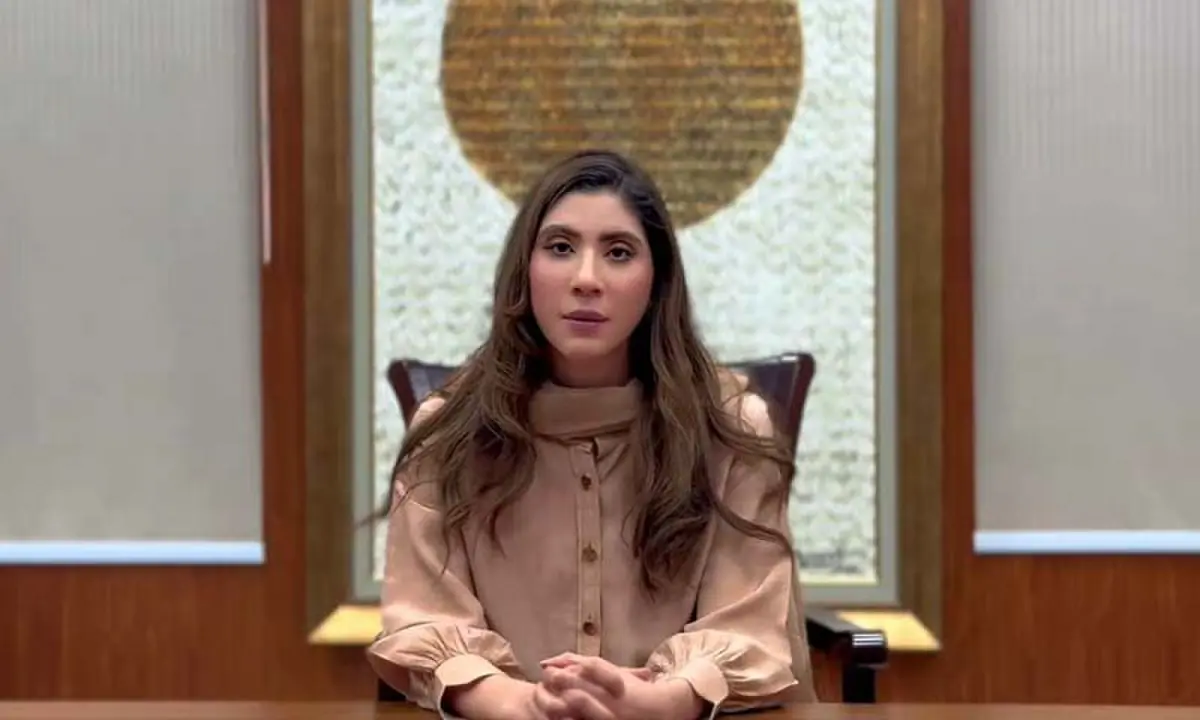
Punjab lawmaker Hina Parvez Butt on Thursday defended herself after a social media post by her regarding an alleged encounter by Punjab’s Crime Control Department prompted outrage and criticism.
On Wednesday, a suspect accused of running over a teenage boy who worked for him with his car in a private housing society in Multan, was killed in an alleged encounter in Bahawalpur. The killing of the teenager, Waseem, had sparked anger among the public, with a police officer saying the he had been “subjected to barbarity”.
“This is [Punjab Chief Minister] Maryam Nawaz sahiba’s government; justice is served immediately,” Butt subsequently wrote on X, sharing screengrabs of a TV report regarding the alleged encounter. She later deleted the post after it was widely panned for “celebrating extrajudicial killings”.
In a video statement posted on X on Thursday, Butt said: “I posted a tweet in which I said, ‘This is Maryam Nawaz Sharif sahiba’s government; justice is served immediately’. This was my personal opinion and creating propaganda on this was uncalled for.”
She said that the post was meant to express the “feelings of an ordinary citizen”. She asserted that she did not “blame” the chief minister, the Punjab government or talk about any institution. She said that criticising her for this was “uncalled for”.
She also took exception to remarks by Punjab Information Minister Azma Bokhari, saying that she “respectfully disagreed”.
On Wednesday night, Bokhari had appeared on Geo News programme ‘Aaj Shahzeb Khanzada Ke Saath’, where she was asked about Butt’s post.
The Punjab minister said that Butt had a habit of saying things without thinking them through, which caused problems for her and become a “source of embarrassment for the government”.
Referring to the remarks, Butt said: “None of my actions or words have ever harmed or embarrassed the Punjab chief minister or the government. If Azma Bokhari sahiba is feeling embarrassed, that is her personal choice.
“I don’t feel that anyone should be embarrassed [at] anything I tweeted on my social media account. Azma Bokhari is the [Punjab] government’s official spokesperson, so obviously she clarified the government’s policy, which is good. But, I think her remarks on me were unnecessary and uncalled for,” she said.
“So I would again, respectfully, disagree with her,” she said.
Referring to recent incidents involving minors and the youth in the country, she said that their parents should be called on shows and asked how those who subjected their offspring to “savagery” should be treated.
“I believe I have stated public sentiment and what is the people’s voice. Those coming forward to defend the culprits do not meet the families whose children’s bodies are recovered in a bad state. I meet such parents,” he said.
“So any person who has even a bit of humanity in their heart, what will they have felt when they heard about Waseem from Multan?” she asked.
The CCD, established last year, has been criticised by human rights advocates and civil society members for a high number of casualties.
The Human Rights Commission of Pakistan (HRCP) alleged earlier this year that the CCD has adopted a “deliberate policy of staged police encounters leading to extrajudicial killings”.
In response, the department termed the claims as unfounded and contrary to the department’s operational framework.
Sindh Home Minister Ziaul Hassan Lanjar said on Thursday that a joint investigation team (JIT) would be formed as per the recommendations of the judicial commission formed to investigate the circumstances surrounding the murder of Mir Raza Ali.
The 25-year-old businessman and Institute of Business Administration graduate had gone missing on July 28 after leaving his home in PECHS, and his body with gunshot wounds was found a day later in bushes in Gulistan-i-Jauhar’s locality.
A judicial commission, formed on the Sindh government’s directives after the family accused police of burying the facts, has declared that Ali’s death was a murder and pointed out lapses by the police during the probe.
Speaking to the media in Karachi on Thursday, Lanjar said: “The JIT will be formed under the West Deputy Inspector General of Police (DIG) Irfan Baloch, and the summary has been sent to the chief minister.”
The decision to form a JIT under DIG Baloch was in accordance with the judicial commission’s report, which suggested his appointment.
Submitted to the government on Oct 15, the report by Sindh High Court judge Justice Omar Sial had recommended forming a JIT under the leadership of DIG Baloch to “balance the need for public accountability with preserving Sindh Police morale and reputation”.
The commission had termed the formation of a JIT the “most viable path” to mitigate ongoing reputational damage to the Sindh government.
Lanjar further said that in his recommendations to CM Murad Ali Shah, he has suggested the JIT’s terms of reference (TORs) include presenting a charge sheet after completing the investigation.
However, he added. “It is the prerogative of the court to accept it or not under the circumstances; either it is a murder or suicide.”
In its report, the judicial commission had also recommended integrating senior representatives from the Inter-Services Intelligence (ISI), Intelligence Bureau (IB), Pakistan Rangers (Sindh), and the National Cyber Crime Investigation Agency (NCCIA) in the JIT to “ensure an impartial, comprehensive, and credible resolution”.
The notification of the JIT’s formation and composition is yet to be issued.
Furthermore, in line with another recommendation of the judicial commission, the home minister said a committee has been formed under the chairmanship of DIG Zulfiqar Ali Larik to take action against any police officers involved in negligence.
‘Epic failure’
The 62-page judicial commission report, authored by Justice Sial, had declared: “This case demonstrates an epic failure by the police in their investigation.”
The commission, which examined 49 witnesses and the available record, determined that police investigation “failed in its most basic duty: to establish the truth”.
Besides making several recommendations regarding the case and police training, it had also listed its observations for certain police officials involved in the investigation, finding “criminal negligence” by three.
Initially, the police built the case around suicide on the basis of the first autopsy, which indicated a bullet entry wound on the chest, and by pointing out business losses and money borrowed by the victim.
Police surgeon Dr Summaiya Syed had disputed the findings of the first post-mortem conducted by medico-legal officer Dr Osama Sheikh.
The second post-mortem report termed the findings of the first report “inconsistent” with suicide as the manner of Mir Raza’s death. It said the Exhumation Board was of the unanimous opinion that the death was caused by a gunshot wound to the back.
In August, the provincial government formed the commission, which was tasked with making recommendations for further investigation and forensic analysis or legal/departmental action, and it was required to submit its findings and recommendations to the Sindh government within 30 days.
However, the commission had struggled to meet its deadline and sent an application last month to the Sindh government for an extension of its tenure till Oct 15. Therefore, the provincial cabinet granted an extension.
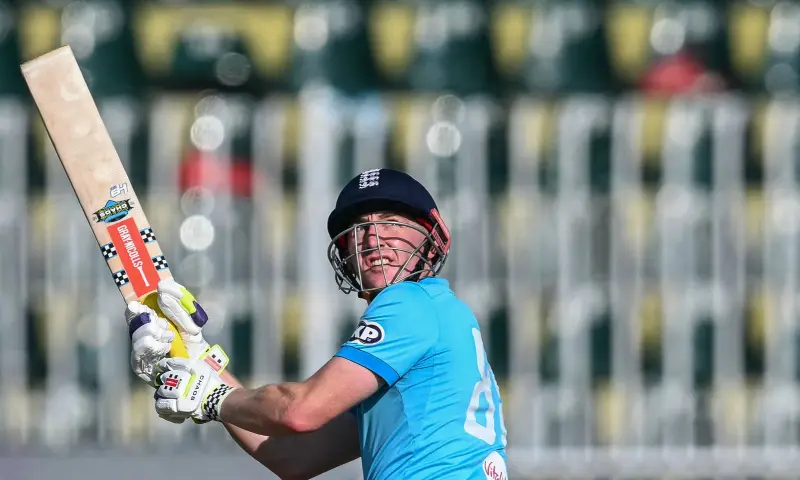
An inspired Harry Brook scored the fastest double hundred in ODI history as England piled up 429-4 against Sri Lanka in the tri-series in Rawalpindi on Thursday.
The batsman’s 116-ball 202 also made him the first Englishman to hit a double century in a one-day international.
The captain clobbered 10 sixes and 21 fours as England posted a first 400-plus ODI total in Pakistan.
He reached 200 in 114 balls, beating the previous fastest double century in ODIs, by Shubman Gill (117 balls) for India against West Indies last month.
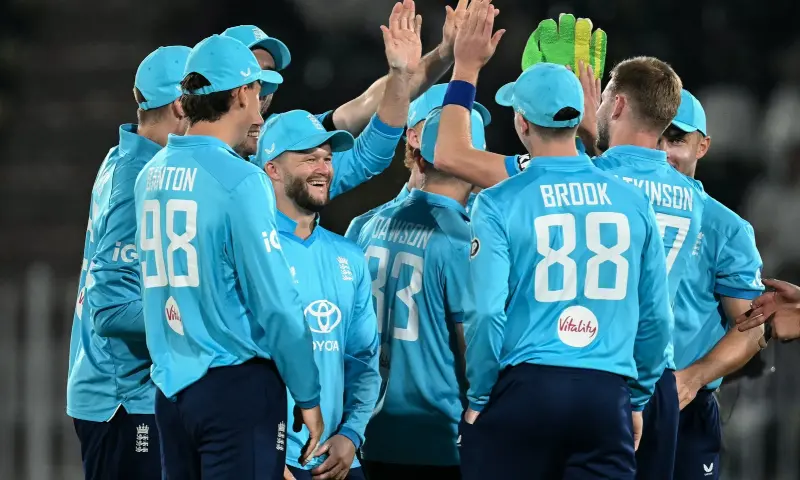
England’s players celebrate after the dismissal of Sri Lanka’s captain Kusal Mendis during the one-day international tri-series cricket match between England and Sri Lanka at the Rawalpindi Cricket Stadium in Rawalpindi on October 22, 2026. — AFP
Brook was joined in the fireworks by Joe Root, who scored a 66-ball 69 and became the first England batter to complete 8,000 runs, in his 197th one-day international.
Brook was dismissed off the final delivery, caught off pacer Janith Liyanage, but not before helping England add 156 runs in the last 10 overs.
Opener Tom Banton set the tone with a 51-ball 50 and Will Jacks was 66 not out with three sixes and eight fours.
But the day belonged to history-maker Brook, who added 185 runs off just 79 balls with Jacks for the fourth wicket.
He had set up the innings with a third-wicket stand of 159 with Root.
The previous highest ODI total at a Pakistan venue was 375-3 for the hosts against Zimbabwe in Lahore in 2015.
IT appears that the PML-N, echoing the PPP’s recent offer, is also willing to re-engage with the opposition, at least on counterterrorism policy. Though that may seem like a narrow scope for dialogue, in our vitiated political environment, it does offer an opening. Whether the opposition is interested in taking it up is a different question.
The anger over the dismissal of the elected PTI government in KP is still far from subsiding, and the ruling coalition in Islamabad deserves much of the blame for making a negotiated settlement more difficult than it seemed two weeks ago. That said, the opposition also needs to introspect. From the murmurings of resentment within its ranks, it appears that the outcome of its last round of discussions with the government was not what many were hoping for.
Yet, its street agitation has delivered even less. An offer for dialogue, even if focused on counterterrorism strategy, is still an opportunity to return to the negotiating table and continue from where the last round of talks left off. Complete disengagement will achieve nothing.
Regrettably, the two sides still fail to see the country’s economic, security, and governance crises as challenges that must be solved politically. A nation of 260m can hardly afford such paralysis. The greater onus lies with the government. It is difficult to see how a credible counterterrorism strategy can be framed when the province on the front line of the fight has just been deprived of its elected government.
If Islamabad wants its offer to be taken seriously, it should pair it with a real gesture of good faith, starting with a meaningful voice for KP’s elected representatives in any talks. Yet the government seems consumed by the hubris of unchecked power, while the opposition, particularly the PTI, continues to act as if agitation alone can yield results.
Instead of evading Pakistan’s challenges through constant jousting and whataboutery, the political leadership needs to confront its failings. Counterterrorism, where the stakes for KP are the highest and broad-based consensus is urgently needed, is as good a place as any to begin. But it must lead to a much wider conversation on national issues. If the two sides cannot find common ground even on the fight against terrorism, the public would be justified in wondering what, if anything, they are capable of agreeing on.
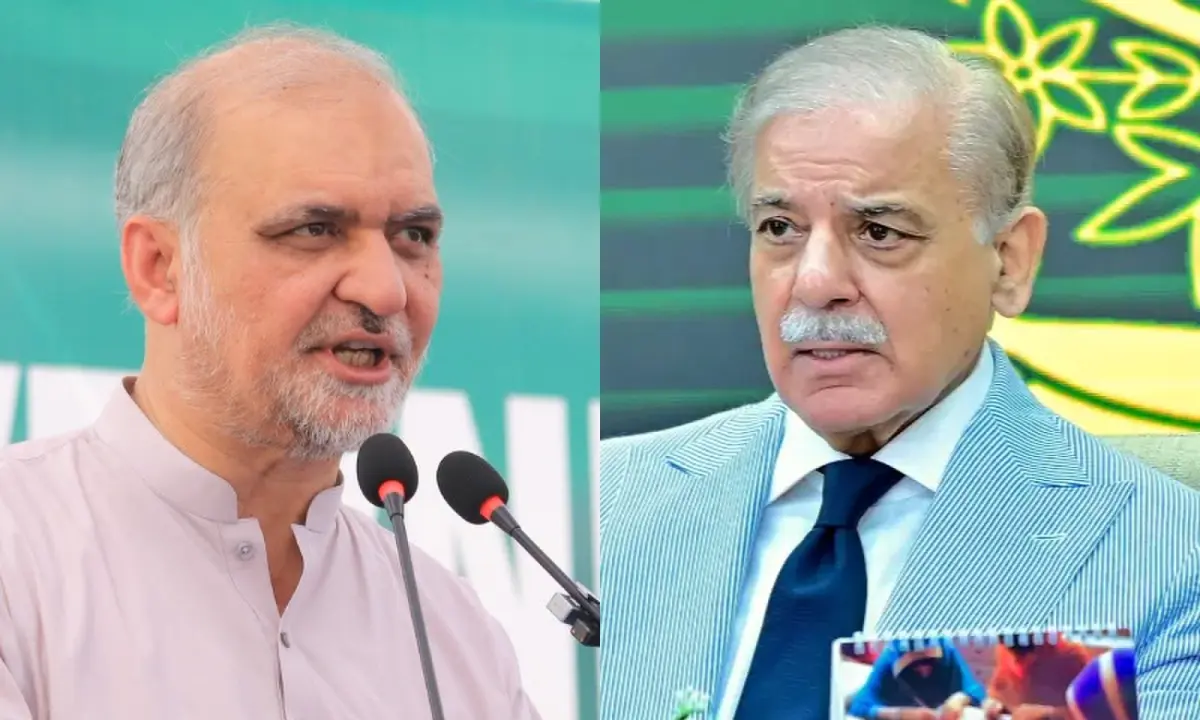
Jamaat-i-Islami (JI) has said it will hold talks with the government on Friday regarding its demand to abolish the petroleum levy and on further high-level contacts between them.
The committee-level talks were fixed following a telephonic conversation between JI Vice Emir Liaqat Baloch and Planning Minister Ahsan Iqbal, according to a press release issued by JI on Thursday.
The JI has been demanding for over two months that the Centre abolish the levies — Rs114 per litre on petrol and Rs100 per litre on diesel — as the total prices have skyrocketed due to conflicts in the Middle East since March.
Friday’s talks between the two sides’ negotiating committees will take place at Punjab House in Islamabad, where they will also work out a schedule for a proposed meeting between Prime Minister Shehbaz Sharif and JI Emir Hafiz Naeemur Rehman, the party said.
According to the statement, despite the planned talks, Baloch reiterated his party’s call for countrywide protests tomorrow (Friday).
“JI will hold peaceful protests at district headquarters across the country on Friday to demand the abolition of unjust petroleum levy,” Baloch was quoted as saying.
The party would continue its protests alongside negotiations with the government, he declared.
“The campaign is not about the party’s interests but aimed to secure public relief, reduce unbearable production costs and revive economic activity.”
The party vice chair also called a meeting of the JI negotiating committee in Islamabad ahead of the talks.
According to the JI statement, Iqbal, who heads the government’s negotiating committee, informed Baloch that the meeting had initially been planned for Tuesday or Wednesday but was postponed because of the government’s “urgent engagements”.
Baloch, in the press release, argued that reducing the burden of petroleum levies and payments to independent power producers (IPPs) was essential to easing pressure on households, agriculture, industry, trade and small businesses.
“Such measures could help revive economic activity and create employment opportunities,” he emphasised.
The JI leader claimed governments were often reluctant to give up unjust taxes and rarely acknowledged the role of protest movements in securing public relief.
“Previous relief measures were announced under pressure from public sit-ins and had been implemented through flawed methods that failed to produce a positive impact on the national economy,” Baloch said as per the press release.
He also called on the government and other institutions to acknowledge their mistakes and avoid constitutional measures that could deepen the political crisis.
The JI leader urged all stakeholders to engage in a national dialogue and agree on priorities to steer the country out of its political and economic difficulties.
“JI’s negotiating committee has already identified possible options and available fiscal space within the constraints imposed by the IMF programme and the national budget,” Baloch was quoted as saying.
“The government and the prime minister’s team must now demonstrate the political will to provide relief to the public.”
“If the government failed to meet the party’s demand, JI will proceed with its planned long march from Multan,” he warned, referring to the protest that it had launched towards Islamabad but postponed at PM Shehbaz’s request.
On Aug 16, the JI announced sit-ins in all the provincial capitals of Pakistan against the petroleum levy and had called for a nationwide strike on Sept 3. However, when the day arrived, the two sides agreed to form committees to recommend measures to reduce the levies.
On Sept 20, the party launched a protest march towards Islamabad, warning that if the government failed to abolish the petroleum levy, the protest could turn into one to oust the government.
On Sept 22, the JI emir said his party, whose convoy had reached Multan, was postponing its long march at the request of PM Shehbaz, who had assured the other side of a meeting to discuss the matters.
In a press release issued on Wednesday, the JI alleged that the government had made no further contact regarding the planned meeting between Rehman and PM Shehbaz.
The National Cyber Crime Investigation Agency (NCCIA) said on Thursday it has arrested a suspect in Faisalabad for allegedly defrauding citizens through a TikTok account advertising visas for Saudi Arabia.
A case has been registered against the suspect, who allegedly “used fabricated documents and transferred fraudulent proceeds into bank accounts in collaboration with other” co-suspects, the agency said on X.
NCCIA said it recovered two mobile phones, 10 fake SIMs, an Easypaisa account and an alleged merchant account during the operation.
“Strict legal action will be taken against those using social media platforms to rob citizens on the pretext of overseas jobs and visas,” NCCIA Director General Syed Ali Nasir Rizvi said in a statement issued by the agency’s spokesperson.
He also urged citizens not to transfer money without verifying visa offers on social media and to immediately report any suspicious account to NCCIA.
According to the agency’s statistics for 2026, financial fraud remains the most widely reported cybercrime, constituting 48 per cent of all received complaints.
On Oct 10, NCCIA arrested 281 suspects, including 21 foreign nationals and 20 women, during operations against seven illegal call centres allegedly involved in financial fraud, online harassment and honey-trapping in Lahore.
In September, NCCIA, along with the Federal Investigation Agency, arrested six suspects involved in cyber fraud and financial scams, illegal money exchange and human trafficking across Punjab.
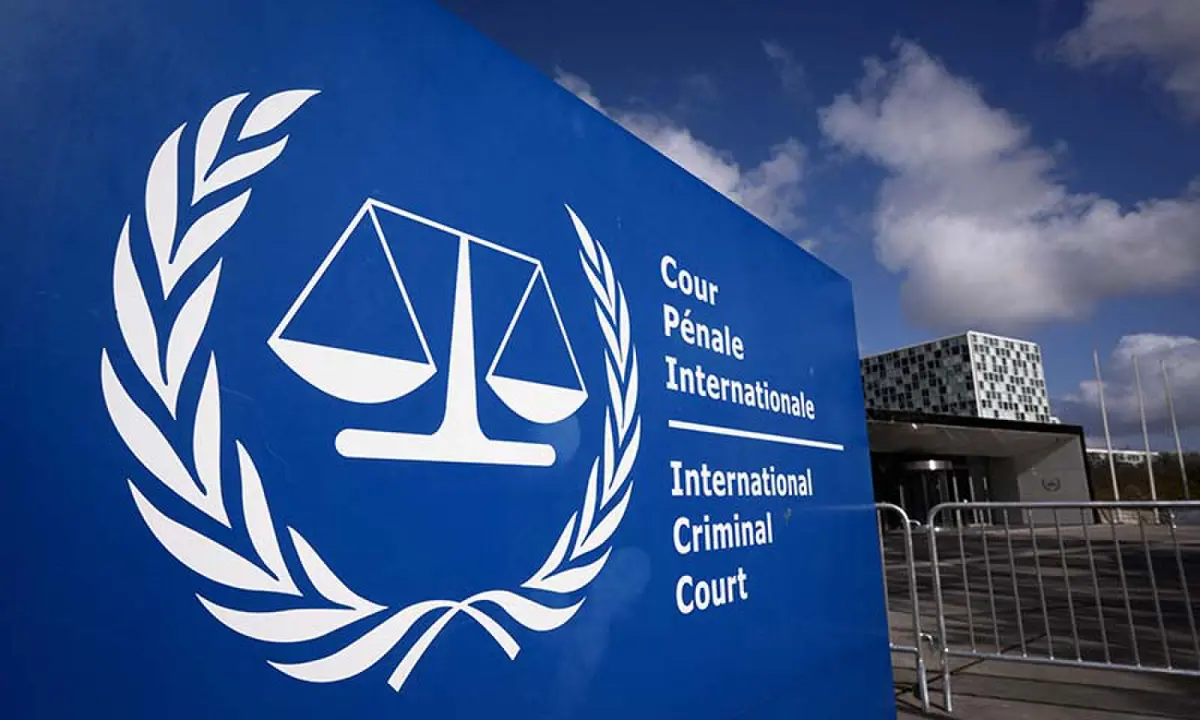
Facing US sanctions, the International Criminal Court was awarded the European Union’s top rights prize on Thursday, in a show of support that risks upsetting President Donald Trump.
“The European Union is built on respect for multilateralism and international institutions, and this prize recognises the important work of the court in upholding international law and justice,” said European Parliament chief Roberta Metsola, announcing the award.
The ICC thanked the European Parliament for giving it the Sakharov Prize “at a time when the Court and its officials face unprecedented challenges”.
“Against this backdrop, the Sakharov Prize carries particular significance, reaffirming the importance of independent judicial institutions and of those who work to uphold international law,” ICC President Tomoko Akane said.
This month, the United States announced sanctions against the ICC aimed at crippling the day-to-day operations of the court, which tries individuals for war crimes, crimes against humanity and genocide.
Trump’s administration has vowed to dismantle the court “brick by brick”, furious that judges have issued an arrest warrant for Israel’s Prime Minister Benjamin Netanyahu for alleged crimes in Gaza.
The win comes after ex-ICC judge Navi Pillay, who also served as UN rights chief, was awarded the Nobel Peace Prize this month — a choice Trump slammed as “disgraceful”, arguing the award should have gone to him.
The EU has already thrown its support behind the ICC in the face of the US sanctions — which will come into force in six months — and has said it is “ready to take any necessary measures” to make sure the court can keep working.
“The International Criminal Court must be free to pursue its mission, independently, and without pressure or intimidation,” EU chief Ursula von der Leyen said on social media after the prize was announced.
Brussels is hoping to use the delay before the sanctions are applied to try to talk the US down, but is also eyeing implementing a “blocking statute” to shield the ICC from Washington.
Three finalists
Set up in 1988 and named after Soviet dissident Andrei Sakharov, the EU prize is bestowed annually on individuals or organisations to recognise their fight for human rights or democracy.
The ICC was among three finalists this year, alongside Tanzania opposition leader Tundu Lissu and twin sisters Taraneh and Romina Rahimi, representing those prosecuted by the Iranian government.
The nominees are put forward by the political groupings in the EU, and the winner is chosen by senior lawmakers. An award ceremony will be held in December.
Lissu, head of Tanzania’s opposition Chadema party, was detained in April 2025. He faces a possible death penalty if convicted of treason for allegedly inciting the public to boycott elections last year.
Taraneh and Romina Rahimi, 21, have respectively been sentenced to death and 36 years in prison for having taken part in anti-government protests in Iran.
Other recent high-profile winners of the Sakharov Prize have been Venezuelan opposition chief Maria Corina Machado, deceased Russian Kremlin critic Alexei Navalny and the people of Ukraine.
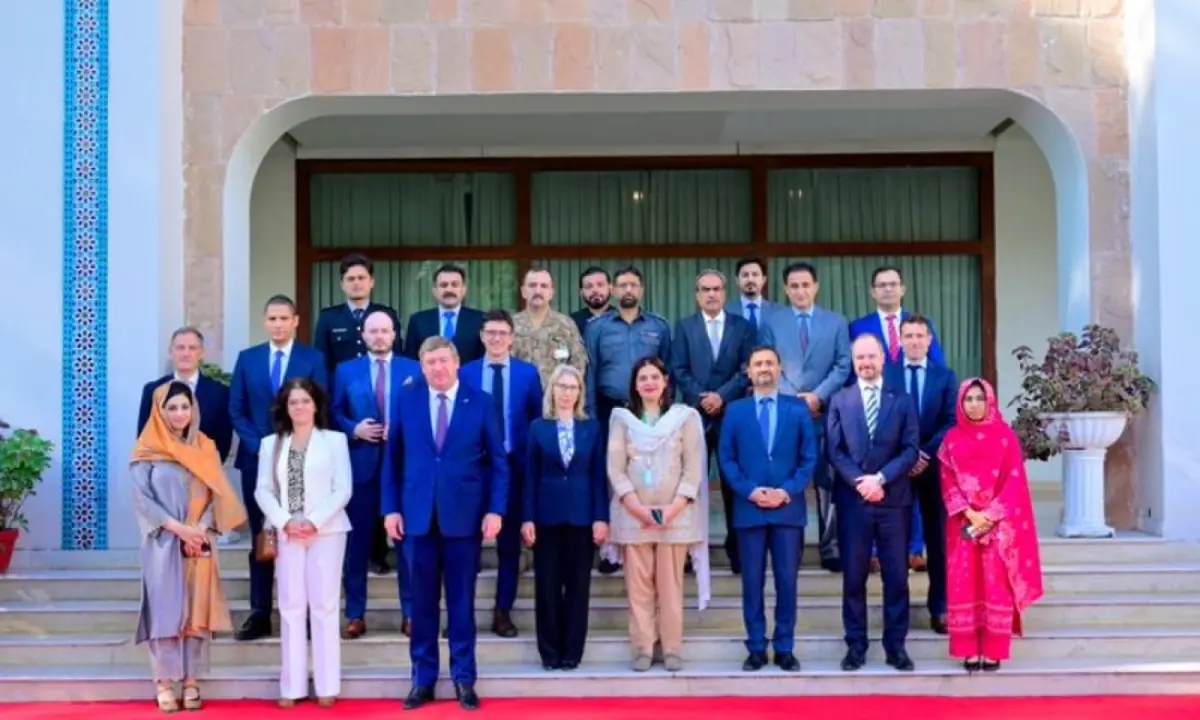
Pakistan and the European Union (EU) have agreed to strengthen cooperation at multilateral forums, including the United Nations, to advance a coherent counterterrorism approach, according to a statement issued by the Foreign Office (FO) on Thursday.
The agreement was reached during the 10th round of the Pakistan-EU Bilateral Counterterrorism Dialogue, held in Islamabad.
The Pakistani delegation was led by Dr Fareha Bugti, director general (counterterrorism), while the EU side was headed by Anna Strazska, the European External Action Service’s special envoy for counterterrorism.
During the meeting, the two sides exchanged views on recent regional and global developments affecting the terrorism threat landscape and unequivocally condemned terrorism in all its forms, reaffirming their commitment to combating the threat.
According to FO, the EU condemned recent terrorist attacks in Pakistan, expressed solidarity with the suffering of affected civilians and recognised the value of Pakistan’s efforts to combat terrorism.
“Acknowledging each other’s role in the ongoing global fight against terrorism, Pakistan and the EU expressed concern at the security implications of the situation in Afghanistan,” the statement added.
The two sides maintained that effective multilateralism remained essential to building lasting international consensus on terrorism.
The discussions also addressed the evolving nature of terrorist threats, including the exploitation of cyberspace and information and energy resources to advance their objectives, the statement said.
The FO said Pakistan and the EU exchanged best practices on preventing and countering violent extremism, terrorism financing and radicalisation in all forms, particularly the use of cyberspace by terrorists.
It added that the “two sides identified priority areas for cooperation and reaffirmed their commitment to regular, institutionalised engagement on counterterrorism”.
The FO said the next round of the dialogue would be held in Brussels at a mutually convenient date next year.
The dialogue comes as Pakistan’s counterterrorism challenge enters a new and more complex phase, with terrorist groups evolving their methods of financing and recruitment.
On Tuesday, an international seminar on Pakistan’s evolving counterterrorism landscape, organised by the Institute of Strategic Studies Islamabad, highlighted the changing methods of terrorist groups, including their financing and recruitment.
Deputy Prime Minister and Foreign Minister Ishaq Dar urged the Afghan authorities to take “concrete, verifiable and irreversible action” against the banned Tehreek-i-Taliban Pakistan (TTP) and other groups operating from Afghan soil.
Information Minister Attaullah Tarar, who also addressed the seminar, cited UN assessments indicating that more than 6,000 TTP fighters were present in Afghanistan, with the overall militant presence exceeding 20,000.
ISLAMABAD: Pakistan’s incomes could triple by 2050 if the country ensures faster implementation of structural reforms, according to the World Bank Group’s latest Pakistan Development Update, titled Attaining Escape Velocity.
The report says that following progress on macroeconomic stabilisation, Pakistan has an opportunity to achieve faster and sustained economic growth and create more jobs.
Sound macroeconomic policies in recent years have helped stabilise the economy and preserve growth despite the impact of the Middle East conflict.
Real gross domestic product (GDP) growth increased to 3.7 per cent in FY26 from 3.2pc in FY25.
Revenue growth and expenditure restraint supported record primary fiscal surpluses, which reached 2.9pc of GDP in FY26, while strong remittances enabled the country to rebuild its foreign exchange reserves.
These improvements were recognised through upgrades by two major international rating agencies, S&P and Moody’s, and enabled Pakistan to return to international debt markets with the issuance of a $3 billion Eurobond.
“Pakistan has made real progress in restoring stability, and markets have taken notice,” World Bank Country Director Bolormaa Amgaabazar said.
“But real per capita growth — the rate at which the income of the average Pakistani increases — remains stuck at around 1.6pc. Reforms to drive faster growth are now urgently needed,” she added.
The report finds that higher growth is possible if Pakistan follows the path taken by other successful countries in pursuing ambitious economic reforms. Upgrading policies and institutions to the standards of the average middle-income country could drive sustained annual growth of 6.2pc to 6.9pc, allowing Pakistan to reach Vietnam’s current income level by 2050.
“With macro stabilisation achieved but fiscal resources and foreign exchange still tightly constrained, structural reform to encourage private investment is the necessary next step towards higher living standards,” said Sebastian Essl, the report’s lead author.
“Achieving this kind of private-sector-led growth requires a plan, coordination, and committed reform implementation,” he added.
The report outlines an ambitious set of reforms that could enable Pakistan to attain by 2050 the per capita income levels of countries currently at the upper-middle-income threshold.
Many of the proposed measures build on reforms already underway. These include timely adjustments to power-sector tariffs, which helped reduce energy subsidies from 1.1pc of GDP in FY25 to 0.8pc in FY26, continued trade liberalisation under the National Tariff Policy and the recent privatisation of Pakistan International Airlines (PIA).
Building on these measures, sustained progress will depend on further reforms to improve the business environment, overhaul the tax system, reduce the state’s presence in the economy and expand access to finance.
President Asif Ali Zardari departed for Germany on Thursday on a three-day visit to discuss bilateral ties as the two countries are set to mark the 75th anniversary of their diplomatic relations.
In a statement issued earlier, the Foreign Office (FO) said the president’s visit, scheduled for Oct 22-24, is “part of high-level exchanges between Pakistan and Germany”.
President Zardari “has departed from Lahore for Germany”, the President’s office said on social media on Thursday.
The FO statement highlighted that the visit “holds special significance in the context of the 75th anniversary of the establishment of diplomatic relations between the two countries being commemorated this year”.
It said the visit reflects the “deep commitment of both countries to further strengthening the partnership”.
During his visit, President Zardari will hold meetings with his German counterpart Frank-Walter Steinmeier, as well as senior leadership and business leaders, with a “particular focus оп economic and trade cooperation”, FO said.
Sindh Chief Minister Murad Ali Shah is also expected to accompany the president on his trip, with the matter being discussed in Murad’s meeting with German Consul General Thomas E. Schultze.
In September, Deputy Prime Minister and Foreign Minister Ishaq Dar met German Foreign Minister Johann Wadephul on the sidelines of the United Nations General Assembly.
During the meeting, Germany appreciated Pakistan’s mediation efforts in regional conflicts, especially in the Strait of Hormuz and Bab al-Mandab while the two sides also agreed to “get negotiations on peace for Ukraine going”, according to the German foreign office.
Meanwhile, in June, a German delegation announced plans to bring about 30 German companies to Pakistan and link local businesses to European markets.
KARACHI: A local court on Thursday rejected TV anchorperson Iqrarul Hassan’s bail plea in a cybercrime case pertaining to the alleged dissemination of anti-state content.
Hassan was arrested last week for allegedly disseminating anti-state, false and defamatory content through his official social media accounts. He was booked under multiple sections of the Prevention of Electronic Crimes Act (Peca).
According to an order issued by the judicial magistrate, a copy of which is available with Dawn, “the order disposes of the bail application filed under Section 497 of the CrPC on behalf of the applicant/accused, Syed Iqrar Ul Hassan, son of Syed Muhammad Ismail, who has been arrested in connection with FIR No. 101/2026 registered at Police Station NCCIA, Cyber Crime Reporting Centre, Karachi, under Sections 9, 10, 20, 24 and 26-A of the Prevention of Electronic Crimes Act, 2016 (as amended in 2025)”.
The notice of the bail application was served on the NCCIA’s additional director (legal), the order states.
Earlier this week, Hassan was sent to prison on judicial remand after the NCCIA sought an extension of his physical remand by another eight days.
However, Karachi (East) Judicial Magistrate-I Gulraiz Memon observed that the agency had been given “sufficient time of physical custody”.
“No cogent reason has been given by NCCIA for extension of physical custody; therefore, the accused is remanded to judicial custody till Oct 26,” the judge stated in his order.
The court also issued notices to the NCCIA on a bail application filed by Hassan’s defence counsel, Barrister Mian Ali Ashfaq, and fixed the matter for hearing on Oct 21.
On Oct 17, Hassan was produced before Judicial Magistrate Memon upon the completion of his initial four-day physical remand. The NCCIA sought a further 10 days of custody for questioning, but the magistrate rejected the request and granted the agency two more days.
The magistrate also dismissed a plea filed by Hassan’s counsel under Section 63 of the CrPC seeking his discharge from the case.
In its remand report, the NCCIA said the investigation had progressed but several important aspects remained to be examined in light of the forensic analysis of Hassan’s seized digital devices and records from other departments, including the National Database and Registration Authority (Nadra).
The agency said digital devices containing 1,145.89 gigabytes of data had been handed over to its forensic team for analysis to identify relevant applications, social media accounts, email accounts, stored files and communications linked to the alleged content.
The NCCIA also sought further custody to trace the “origin, relation, financial correlation and cross-border linkages (if any)” of the posts.
In his earlier order, the magistrate observed that collecting digital footprints, technical data and forensic evidence required reasonable time, adding that discharging an accused while the investigation was under way could hamper the process.
The NCCIA alleged that the content was intended to incite the public against constitutional implementation and could cause panic, disorder and unrest.
Hassan was booked under sections 9 (glorification of an offence), 10 (cyberterrorism), 24 (cyberstalking) and 26A (Punishment for false and fake information) of Peca. He had been critical of the government’s policies on social media.
LAHORE: The Lahore High Court (LHC) on Thursday issued notices to Foreign Secretary Asim Iftikhar in two separate contempt petitions over alleged non-compliance with an earlier court order concerning two PTI-affiliated Pakistani citizens detained in the United Arab Emirates (UAE).
On September 14, the LHC had directed the foreign secretary to process and decide within 15 days representations concerning the detention of two citizens — Syed Salman Raza Zaidi and Muhammad Junaid Jahangir.
Justice Sadiq Mehmood Khurram heard the contempt petitions on Thursday. Barrister Abuzar Salman Niazi appeared on behalf of the petitioners and alleged that the two individuals remained deprived of consular, diplomatic, and legal access.
He recalled the court’s Sept 14 directive and contended that the petitioners had not been formally informed of any decision on their representations, even though a considerable amount of time had passed.
The counsel urged the court to initiate contempt proceedings against the foreign secretary for non-compliance.
After hearing initial arguments, Justice Khurram issued notices to the respondent secretary for submission of his reply by October 29.
In the main petitions, the counsel stated that Zaidi went missing from his residence in Sharjah on Sept 27, 2024, and was subsequently taken into custody by UAE authorities.
He said despite nearly two years having passed, the petitioner, Faryal Zainab, had still not been provided clear information regarding the charges against her husband Zaidi, the judicial proceedings, any sentence, or the complete court record.
Meanwhile, Advocate Niazi said Jahangir was allegedly detained on Sept 24, 2024, at Dubai airport on his return from Saudi Arabia.
Muhammad Ibrahim, Jahangir’s father, filed the petition challenging the alleged failure of the federal government and the Ministry of Foreign Affairs (MOFA) to provide effective consular protection and legal assistance.
The counsel for the petitioners submitted that despite representations having been filed regarding the detention of both citizens before the foreign secretary, the representations had not been processed.
Both petitioners had asked the court to direct that legal and consular assistance be provided to Zaidi and Jahangir, that their judicial records be obtained and that diplomatic-level steps be taken toward their return to Pakistan.
The International Monetary Fund (IMF) on Thursday forecast a sharp drop in economic output in Pakistan, the Middle East and North Africa this year due to the US-Israeli-led war against Iran, followed by a rebound to 6.6 per cent growth in 2027, while warning that further energy production disruptions could worsen the outlook.
The IMF said the region’s output was expected to contract by 1.3pc as a result of the war’s impact on energy production, shipping, tourism, trade and confidence. Economic output would increase sharply in 2027, but output in those economies would generally stay below pre-war projections.
The war’s impact had been substantial, but uneven, with oil-exporting economies directly affected by disruptions to energy production and shipping hit harder, and oil importers proving to be more resilient, the IMF said in its regional outlook released Thursday in Dubai.
The IMF said its baseline assumed that the conflict would abate in early 2027 and that trade would gradually normalise during the year, but it said the outlook remained clouded by “exceptionally high uncertainty.”
“The main risks derive from further disruption to energy production and trade routes that could drive energy prices higher,” the IMF said in a statement outlining its key messages, noting external financial conditions could also tighten.
External financial conditions could also tighten if investors reassess AI-driven productivity gains and interest rates rise further amid heightened concerns about inflation and fiscal positions, it said.
Oil importers had proven more resilient, with domestic demand supported by remittances and tourism flows, favourable financial conditions, and prompt policy responses that safeguard consumers from higher commodity prices, the IMF said.
Growth in the Caucasus and Central Asia was moderating toward a more sustainable pace, the IMF said, forecasting a 5.2pc rise in economic output in 2026 and 5pc in 2027.
The IMF underscored the mantra it delivered during last week’s annual meetings, urging policymakers to prioritise maintaining price stability, while preserving fiscal sustainability, maintaining central bank independence and enacting structural reforms to boost productivity and create jobs.
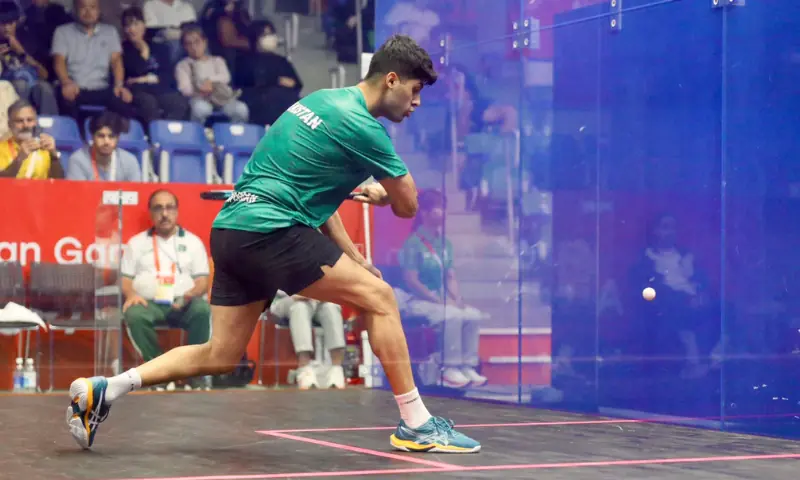
Pakistan’s Noor Zaman stunned defending champion and world No. 4 Karim Abdel Gawad of Egypt 3-1 on Wednesday to reach the quarter-finals of the PSA Gold Silicon Valley Open at the Redwood City in California.
The 22-year-old overcame the second seed 11-9, 11-7, 9-11, 11-6 in 52 minutes at Squash Zone, handing the Egyptian a shock defeat in the $143,500 men’s event.
“I was ready mentally and physically today, and I think now is the time for me to beat the top players,” Noor said after the match.
Noor, ranked among the world’s top 35 players, had earlier booked his place in the last 16 with a 3-1 victory over American wildcard Bransten Ming. After losing the opening game 3-11, he fought back to win 11-5, 11-8, 11-9 in 41 minutes.
The Peshawar-born player, grandson of former world champion Qamar Zaman and the 2025 U-23 world champion, has enjoyed a strong run of form in recent months, climbing into the world’s top 30 and collecting five PSA titles.
Meanwhile, Pakistan’s Mohammad Ashab Irfan bowed out in the last 16 after losing 3-0 to fifth seed Mohamed ElShorbagy of Egypt. Irfan had reached the round with a straight-games victory over Hungary’s Balazs Farkas, winning 11-6, 11-4, 11-5.
The PSA World Tour Gold event offers equal prize money for men and women as squash prepares for its Olympic debut at Los Angeles 2028.
Prime Minister Shehbaz Sharif on Thursday vowed that the federal government, which now runs Khyber Pakhtunkhwa under governor’s rule, would make every effort possible to “bring back” progress to the province.
He made the remarks while chairing a meeting of the apex committee in Peshawar, where he arrived earlier in the day on his first visit to the province since the imposition of governor’s rule and the declaration of emergency on Oct 11.
The meeting, attended by Chief of Defence Forces and Chief of Army Staff Field Marshal Asim Munir and KP Governor Faisal Karim Kundi, reviewed KP’s overall security situation. Federal ministers and newly appointed provincial advisers were also present.
Addressing the committee, PM Shehbaz reiterated that emergency and governor’s rule had to be imposed “under extreme compulsion”.
“I promise that we will leave no stone unturned in bringing back the happiness and era of progress to this province, and in the practical realisation of the wishes, aspirations, and dreams of this province’s people that have been shattered due to the worst actions of recent years,” he said.
The prime minister affirmed that the Centre “will place all possible resources at your feet”.
He added that himself, the Advisory Council led by the governor, the president and the CDF “will ensure that this province, once again, not only matches the other provinces in the race for development, but I would be extremely happy if it moves even further ahead”.
The prime minister regretted that “terrorists were summoned back here” after peace had been established, “washing down all sacrifices down the drain”.
“There can be no greater enmity with the country than not honouring and respecting such sacrifices, not holding them in esteem,” he remarked, highlighting that young soldiers left their homes and families to defend their country.
The premier called for an “all-encompassing analysis as to why this happened”, adding that there was “no worse callousness, criminal negligence, and hostility towards the national interest than this”.
He said: “All issues of the people were pushed aside — whether it is education, healthcare, or protecting the lives and property of the people — and [having] matters with terrorists instead. I believe that no other example can be found of such hostility against the country, in terms of their attitudes, detachment, and callousness.”
PM Shehbaz asserted that 5,000 police vacancies were not filled, Safe City projects were yet to be completed, the capacity of the Counter-Terrorism Department (CTD) had not been enhanced significantly, and neither were special measures taken regarding police training.
He recalled that all provinces had agreed at the time of the 2010 National Finance Commission Award that KP, being the front-line region in combatting terrorism, needed ample resources.
“From 2010 to today, more than Rs800 billion in funds have either already been provided or are being provided under this,” he stressed.
“However, not only did it resurface, but the weapons needed to counter terrorism, the required capacity, and the trained officers needed were nowhere to be found.”
While saying he would not go into the details, the prime minister emphasised that he had assured the provincial governments of ex-chief ministers Ali Amin Gandapur and Sohail Afridi of the Centre’s full support in the fight against terrorism.
“But nothing was done regarding this,” he regretted, adding that the government could not remain a “silent spectator” when a “party was stooping to such enmity against the country” and the economy and society were being destroyed.
“Therefore, on this occasion we made this one last effort,” the premier said, referring to the province’s interim handover to the federal government under governor’s rule.
Highlighting the Centre’s efforts to stabilise the economy over the past two and a half years, PM Shehbaz remarked, “It wouldn’t have been possible [without] unprecedented partnership between political and military hierarchy.”
He said the federal government could not remain a silent spectator when “terrorists were roaming around dancing in all areas of KP, and were ruling over some areas in the evening, and collecting extortion” at a time when the stabilisation of Pakistan’s economy was being acknowledged globally.
The prime minister recalled the breakdown of the Oct 3 talks between the Centre and reiterated that his government was “compelled to make this decision” of imposing governor’s rule.
PM Shehbaz remarked that the province was “shattered with wounds due to the circumstances created in the past several years”.
He highlighted the poor law and order situation over the past six years, recalling that security forces and law enforcement agencies had made sacrifices to establish peace in KP.
The premier said there was corruption of Rs100bn in the clean drinking water of the Cities Improvement Project and Rs37bn in the “infamous looting” in the case of the Kohistan District Accounts Office.
He said that “80,000 people were martyred and the [economy] suffered a loss of several hundred billion dollars. Only then, in 2018, was peace completely restored in this country”.
Describing the province as “very beautiful”, the premier expressed his hope that the government “work hard day and night and speedily make it progress towards development and prosperity”.
“This is the province that is the first extremely strong wall of the homeland,” he noted.
Centre announces Rs160bn uplift funds, other measures
PM Shehbaz later also attended a meeting of the Area Representative and Development Council (ARDC) constituted for 12 districts of KP, which face serious security challenges.
The council covers Dera Ismail Khan, Tank, Lakki Marwat, Bannu, Bajaur, Mohmand, Khyber, Kurram, Orakzai, North Waziristan, South Waziristan Upper and South Waziristan Lower. It includes 48 elders and prominent personalities from those districts to ensure local representation.
Addressing the ARDC, the prime minister announced that the federal government would provide KP with Rs160bn for development projects.
Furthermore, to address the wheat shortage in the province, he said the Centre would provide KP “as much wheat as is needed” from the storages of Pakistan Agricultural Storage and Services Corporation (Passco).
“However, there should be no hoarding. And whatever price the Centre provides wheat at, the common man should get wheat at that very price,” the premier emphasised.
He went on to assure the ARDC that the federal government will provide “whatever assistance” in operations and resources is needed to fight terrorism. He also said directives have been issued to bolster the CTD and complete Safe City projects.
PM Shehbaz also asserted that any difficulties in the completion of the federal government’s projects in KP will be resolved, adding that the governor-led administration will address problems in provincial projects.
The prime minister appreciated the tribal elders for always supporting Pakistan unequivocally and said the ARDC now had an “immense responsibility”.
Noting the remarks of ARDC Chairman Shaukatullah Khan, PM Shehbaz said: “He stated that development work is zero, corruption is 100 per cent, and terrorism is at its peak. I completely agree with him.”
The premier referred to weaknesses in the police’s performance, stating that arrests in cases of theft and robbery were not made.
Mentioning examples of corruption, such as the Kohistan scandal, he said: “You will feel great pain and sorrow over how the province’s resources were looted. God willing, this will be fully controlled, and every single penny of your development and prosperity will be delivered to your doorstep.”
Police’s vehicle procurement ban relaxed: Kundi
Separately, in a bid to improve the police’s capabilities amid the current law and order situation in the province, Kundi said he has approved the relaxation of the police’s vehicle procurement ban to ensure personnel have the necessary resources.
In a post on X, Kundi said that in line with the prevailing security landscape in the province, he approved the relaxation of the ban.
“Our [KP police] force stands on the front lines to protect the lives and security of our people,” he wrote.
“In the prevailing law and order situation, ensuring that our officers have the vehicles and resources they need is essential to an effective response to security challenges.”
Kundi added that the restrictions would be loosened “within the approved scope and against funds already allocated in the Police Procurement Plan”.
“This will strengthen operational capacity without placing any additional burden on the provincial exchequer,” he noted.
“Supporting our police is not just a responsibility; it is an investment in the safety of our people and the peace of KP.”
In July this year, the KP government had imposed a ban on the procurement of vehicles except for ambulances; earth-moving machinery; fire trucks; tractors; trucks; buses; passenger vans; prisoner vans; motorcycles; water tankers; rescue and recovery vehicles and boats; and mobile laboratory vehicles, according to an order issued by the KP finance department.
“In case of [an] essential requirement, the chief minister, Khyber Pakhtunkhwa, may relax the ban on [a] case-to-case basis,” the order, seen by Dawn, read.
Development of merged districts a ‘special priority’
In his address to the apex committee, the KP governor termed establishing peace and stability in KP a “collective priority”, and stressed that it was in the interests of the entire country.
Referring to the federal government’s decision to impose emergency and governor’s rule in KP, Kundi said that the peaceful transition showed that the people of the province wanted peace and stability.
“I want to pay tribute to my people who showed restraint despite the turmoil,” he said, asserting there had been no untoward incident in the region following the measures.
On Oct 14, three days after emergency was imposed, a protest demonstration by PTI workers in Khyber’s Bara tehsil turned violent as protesters clashed with police. Injuries to party workers and cops were reported in the incident.
Speaking at the meeting, Kundi also paid tribute to those who sacrificed their lives in the war against terrorism, including personnel of the police, army, Frontier Corps, and Federal Constabulary.
“These sacrifices demand a more effective strategy to combat terrorism,” he underscored.
The governor reiterated that the foremost priority of his KP Advisory Council was to restore peace and eliminate terrorism.
Kundi termed the development of the merged districts a “special priority”.
“The people of these regions have paid a heavy price during this fight against terrorism. Now, they deserve better education, health, and economic opportunities,” he declared.
“The federal government’s cooperation in establishing peace and stability in the province is very significant,” the PPP leader highlighted, saying he was keen to play his role in this collective endeavour.
The governor maintained that the people of KP would not have to choose between peace and development. “This is our collective responsibility to provide people with both.”
Kundi declared that the KP Advisory Council would keep playing its role in integrating these merged areas in the circle of national development.
“The public’s trust is the only metric of measuring our success in the war on terror,” he asserted, while reaffirming that the whole network of terrorism would be annihilated, and the facilitators and financiers of terrorists would also be targeted.
“I seek constant support and supervision by the federal government,” he asked, expressing the hope that the Centre would continue its cooperation.
Emergency amid security challenges
The Centre had imposed emergency and governor’s rule in KP on Oct 11, citing the PTI-led provincial government’s “deliberate disengagement” from the fight against terrorism. The decisions were also endorsed by the Parliament last week amid protests by the opposition.
Governor Kundi, along with Interior Minister Mohsin Naqvi, had chaired a meeting of the provincial apex committee a day after governor’s rule was imposed.
In the meeting, the governor — who is now in charge of running the province — assured Naqvi he would enforce all policies of the federal government and work together with the security forces for peace and prosperity of the province.
Kundi asserted that under the new set-up, tackling terrorism would be the priority.
Later that day, Kundi, addressing a press conference, called for greater coordination between the Centre and the province, stressing that policies on counterterrorism will “come from Islamabad [..] not Kabul,” in an apparent jibe at the PTI-led KP government, which has been accused of maintaining a “nexus” with terrorist groups by federal ministers.
The Centre’s move to impose governor’s rule and emergency in KP also followed a mobilisation drive and protest march by the PTI and in opposition at the Centre, to demand the release of its jailed founder, Imran Khan.
Intense negotiations between the two sides a week before the imposition of governor’s rule had failed to yield any results, with counterterrorism policy being one of the main reasons behind the breakdown of their talks.
The PTI said it was being left out of security decisions concerning KP, which the Centre denied. It also called for reviewing the counterterrorism policy, while the latter criticised the KP government’s efforts to combat terrorism in the province and objected to its stance on dialogue with the Afghan Taliban.
Soon after, the Centre also authorised the deployment of Pakistan Army troops and assets in aid of civil power in KP.
Federal ministers have also alleged that the PTI-led government in KP had a “nexus” with terrorist groups, stating that the province’s security situation necessitated the imposition of emergency there.
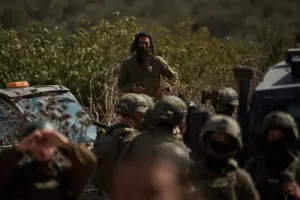
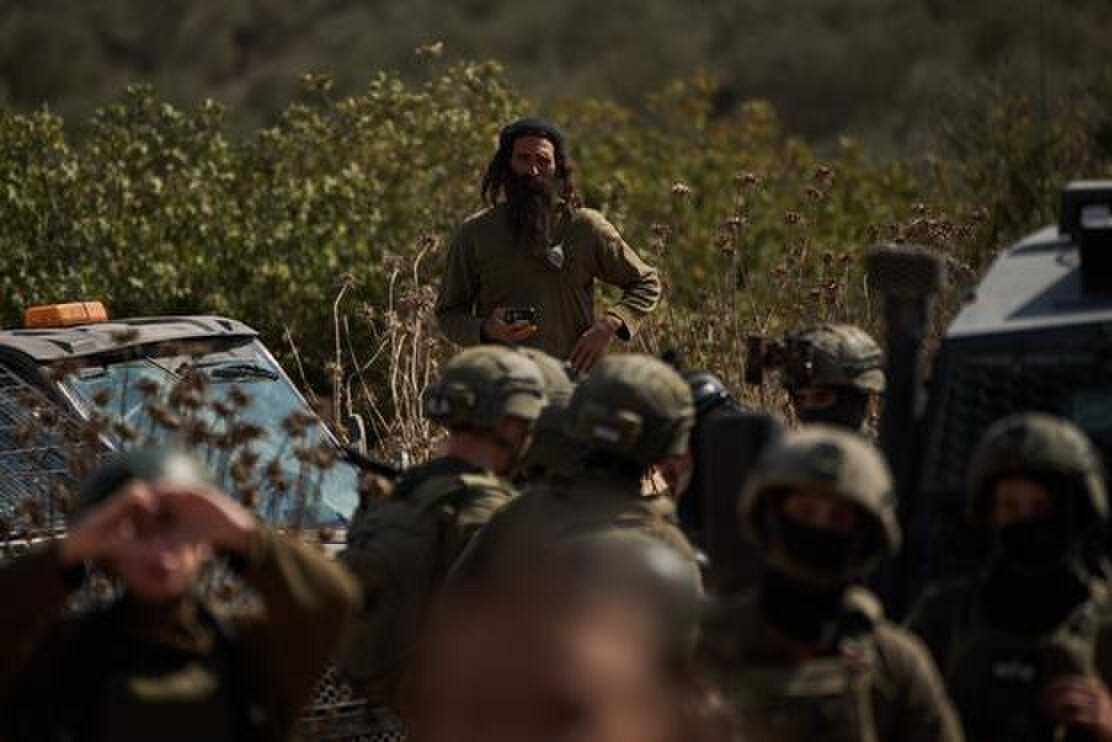
All but one of the suspects arrested over recent settler attacks on an American photojournalist and a visiting French mayor in the West Bank have been released from detention and placed under house arrest, their lawyers said.
Israeli police had announced on Monday the arrests of 10 people implicated in the attacks in the occupied Palestinian territory, where violence by Israeli settlers is on the rise but perpetrators are seldom prosecuted.
Honenu, a legal aid organisation that often represents Israeli soldiers and settlers, said that all but one of the suspects had been released to house arrest.
Lawyer Assaf Gonen said in a statement that their arrests had only been “for show”, and were “intended to satisfy media pressure and foreign interests”.
The suspects have not been identified.
On Friday, photographer Heidi Levine, 65, who was on assignment for The Washington Post, was taken to hospital with broken vertebrae after being beaten by settlers while covering the West Bank’s annual olive harvest.
The incident comes 10 days after settlers beat an AFP photographer covering the West Bank olive harvest, Jaafar Ashtiyeh, leaving him also requiring hospital treatment.
A day later, settlers attacked a convoy of European diplomats and beat up Bernard Baudoux, 78, the mayor of the northern French town of Aulnoye-Aymeries who was on a goodwill visit.
The attacks drew international condemnation, but mixed messages from the Israeli government.
Prime Minister Benjamin Netanyahu, who is facing a tight race for a new mandate, has tried to shore up his pro-settlement right-wing base and has cast doubt on the circumstances behind the recent settler attacks on Westerners.
His tone has drawn unusually strong criticism from the opposition, which has accused him of tarnishing Israel’s image.
Violence has flared in recent months in the West Bank, with near-daily attacks, thefts or vandalism by Israeli settlers against Palestinians.
Settlers have also been seizing olive groves owned by Palestinians, who see the trees as a cultural symbol.
Excluding east Jerusalem, around three million Palestinians live in the West Bank, which Israel has occupied since 1967, alongside more than 500,000 Israelis residing in settlements considered illegal under international law.
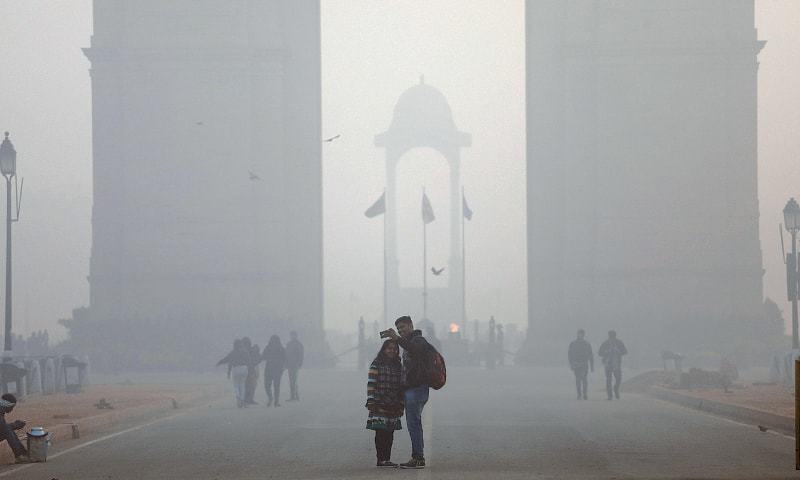
India began annual measures on Thursday to tackle toxic air pollution in New Delhi, a megacity of 30 million people regularly ranked among the world’s most polluted capitals.
Delhi’s air quality deteriorates in winter, when cooler air traps pollutants close to the ground. Major sources include coal-fired power plants, traffic, construction and farm stubble burning in neighbouring areas.
The Delhi government on Wednesday announced a ban on open rubbish burning and ordered food stalls to stop using coal or firewood.
In previous years, such measures have failed to curb pollution, which peaks from November to January, when levels of cancer-causing PM 2.5 microparticles often hit more than 300 micrograms per cubic metre, 20 times the World Health Organisation’s recommended daily maximum.
Monitors recorded 233 micrograms per cubic metre early on Thursday, about 15 times the limit.
The government’s Commission for Air Quality Management has predicted air quality to remain “poor” in the coming days.
A study in The Lancet Planetary Health in 2024 estimated that 3.8m deaths in India between 2009 and 2019 were linked to pollution that exceeded India’s own air quality guidelines.
Last year, pollution levels peaked at 846 micrograms per cubic metre, 56 times the WHO limit.
The UN children’s agency warns that polluted air puts children at heightened risk of acute respiratory infections.
Further restrictions take effect on November 1, including doubled parking fees and work-from-home arrangements for government office staff, aimed at reducing traffic emissions.
Tighter construction rules will also begin then, followed by a complete ban on construction and demolition from Dec 10 to Jan 20.
Last month, the authorities also imposed a construction ban that will run from Dec 10 to Jan 20 as part of a winter action plan to tackle pollution. It will include restrictions on vehicular traffic aimed at encouraging residents to use public transport.

 Login