
❌

Reading view

Court hearing questions on Amendment 87 two weeks before Election Day

A lawsuit over one of Colorados state ballot issues is headed to court Monday morning.

An Arapahoe County man is suing over Amendment 87, which proposes a graduated income tax.

See the full story in the video below Court hearing questions on Amendment 87 two weeks before Election Day

Michael Andre Hancock, who lawyers confirmed is not the former mayor, filed suit against Secretary of State Jena Griswold and Amendment 87 proponents Chris deGruy Kennedy of the Bell Policy Center and Kiyana Newell of New Era Colorado.

The lawsuit claims those groups in charge of the signature gathering and certification process that got this measure on the ballot was done incorrectly with 9,849 signatures in question. If those signatures are revoked, the Amendment wouldnt have enough signatures to be on the ballot.

In Colorado, a ballot measure needs signatures from 5% of the total number of votes cast in the Secretary of State race in the prior general election.

The coalition behind Amendment 87, Protect Colorados Future, used both paid and volunteer signature gatherers. The lawsuit alleges that 69 of the people listed as paid gatherers werent on the list of registered and trained petition circulators.

It also challenges the secretary of state's review of the signatures.

Amendment 87 tackles Colorados flat income tax rate, instead offering a graduated tax rate. Colorado has a 4.4% flat income tax. A no vote on 87 would keep the rate the same. A yes vote on Amendment 87 would tax income by bracket and remove the flat tax rate from the Taxpayers Bill of Rights or TABOR.
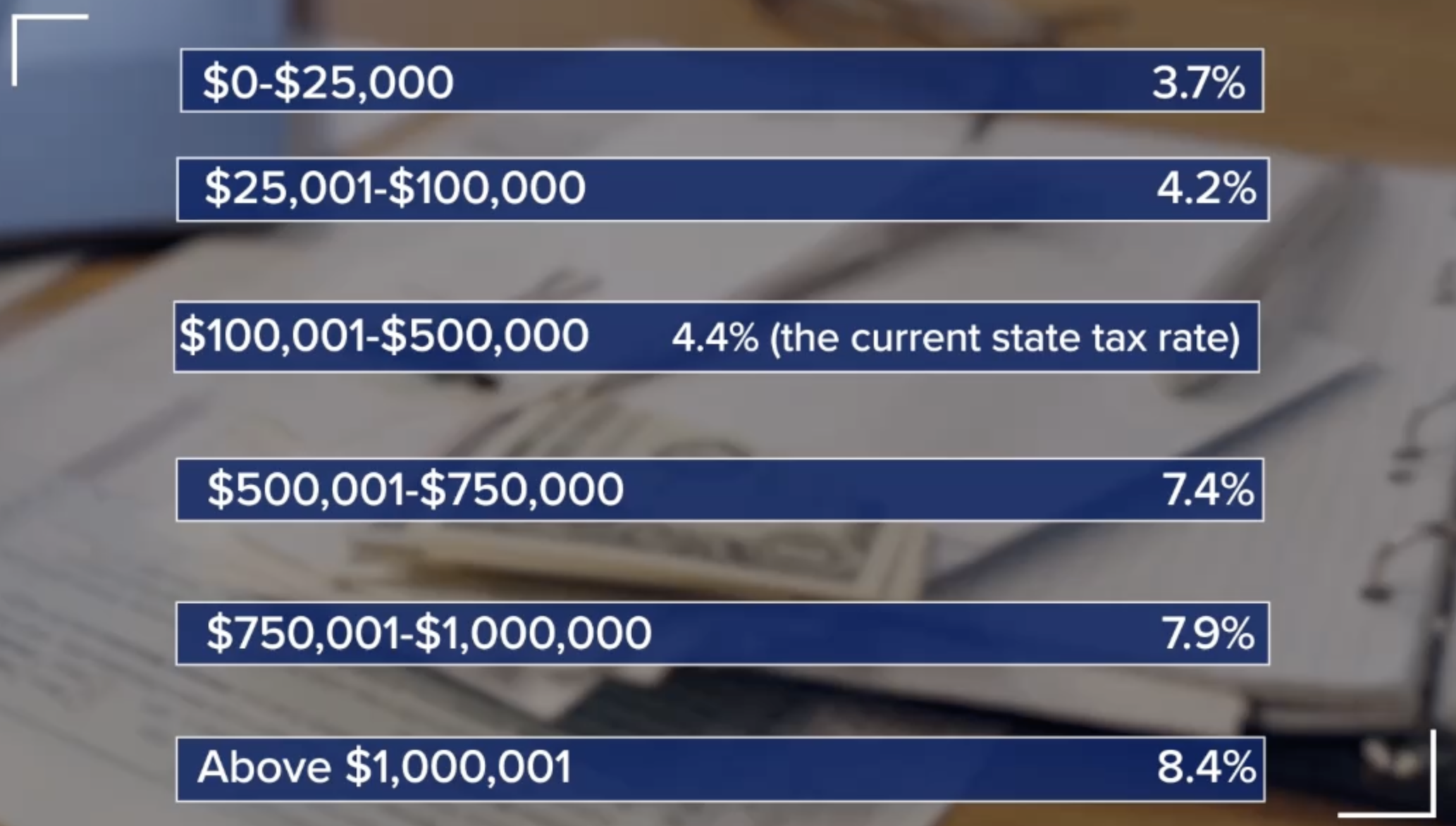
Any revenue made from this change would go to the Colorado Futures Account, a proposed fund that would give money to public education, healthcare and early child care programs.

Amendment 87 is separate from Proposition 136, which is another ballot measure that could cap individual and corporate taxes at 4.4%.

Denver7 reached out to the Secretary of State Office. They wont comment on pending litigation. We also didnt hear back from the firm representing Hancock in filing the lawsuit.

A judge will hear arguments in the lawsuit Monday at 9 a.m. at the Denver City and County building.

  •  

The first school day of October is one Colorado public school students shouldn’t miss. Here's why.

While education professionals say attendance is important every school day, the first school day of October stands out as a day Colorado public school students shouldnt miss.

Attendance from the first day of school in October known as the October count determines a districts funding for the remainder of the year, which the majority of those funds coming from the States Public School Finance Act.

Denver7 reporter Alex Dowd breaks down how that funding timeline works in the video below:

Colorado school attendance count today determines funding for the rest of the year

Colorado funds schools on a per-pupil basis, but that funding formula is facing a change over the next few years to account for falling enrollment and rising costs of living.

Starting the 2026-2027 school year, a districts per-pupil funding is calculated using either the count this year, or an average of this years count, and the two previous years.

Districts will slowly phase in the rest of the new formula, until the switch is complete for the 2031-2032 school year.

The biggest changes add funding for Special Education, for rural and remote schools and for districts that cover a smaller area of the state.

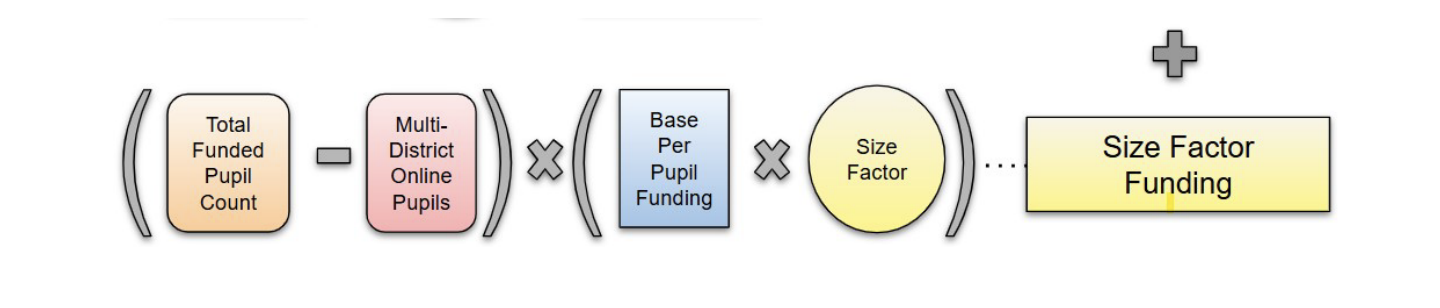
The new formula starts the same way as the old with a base district funding. That number is determined by the October count minus extended high school students and multi-district online students. That number is multiplied by the state per-pupil rate, which the Colorado Department of Education set as $8,900.40 for the 2026-2027 school year.

Next, that state adds in funding for at-risk students, which is the statewide base multiplied by 25% and a districts at-risk pupil count. For districts with a. Count below 7,000 students and an at-risk percentage larger than 70%, that rate is raised to 32%.

The number of students in English Learning Language and Special Education programs is also multiplied by 25% and then the base state rate.

After counting students, a districts foundation funding is multiplied by a cost of living factor and a locale factor, which is determined using data from the National Center for Education Statistics classification system.

District size is also considered in this new process. The Department of Education includes it to provide more funding for smaller districts to compensate for their small purchasing power. This funding goes to districts with 6,500 or fewer students.

The final step adds back in the funding given to online students and extended high school students, which is a slightly lower rate than the per-pupil base.

While the October count number is crucial for districts, Denver Public Schools officials say its best to keep your student home if theyre sick and contagious.

  •  
❌