
❌

Reading view

Schools in Azerbaijan are barring girls who wear hijabs from class. Some of their male classmates are refusing to attend in solidarity.

A woman wearing a hijab on a street in Baku, January 18, 2011

In late September, Azerbaijan approved new school uniform rules, including a ban on “items inconsistent with the principle of secularism.” Inspections soon began at schools, and girls wearing hijabs were barred from classes. Protests broke out in Baku and other cities, with schoolgirls and their classmates demanding that everyone’s right to an education be upheld. On October 12, 37 people were detained in Baku. The Interior Ministry said protesters had tried to “grossly disrupt public order.” Meanwhile, users began reporting that they could not access TikTok and Instagram — the country’s two most popular social networks. Here’s a closer look at what is happening in Azerbaijan and what may be behind the ban.

Azerbaijan’s Cabinet of Ministers introduced the new school uniform rules in a September 21 decree. The decree prohibits “wearing items of clothing that disrupt the uniformity of the prescribed school uniform,” as well as clothing that is “inconsistent with the principle of secularism in general education.”

The decree does not explicitly mention hijabs. But during school inspections that began on October 9, girls with their heads covered were barred from classes, even though the decree does not authorize such measures. Female teachers were also required to remove their headscarves, Jam News reported.

Protests then broke out in Baku and other Azerbaijani cities. At some schools, boys also refused to attend classes in solidarity with girls wearing hijabs. In a village in Baku’s Sabunchu district, students protested with a sign bearing the slogan: “A hijab does not stand in the way of an education.”

A source at a Baku school told the BBC that boys in the upper grades were also required to shave their beards — even though, like hijabs, beards are not mentioned in the cabinet decree.

Videos of the protests appeared on social media. One shows students trying to smash school windows. The Telegram channel Minval Politika reported that a school principal’s car had been set on fire in the Garadag district.

On October 12, Azerbaijan’s Interior Ministry said it had detained 37 people for actions “grossly violating public order.” The ministry said “a group of individuals” had created “a conflict situation” with school staff over “compliance with a uniform dress code” and damaged schools. Authorities opened a criminal investigation into allegations of organizing acts that disrupted public order, an offense punishable by up to three years in prison. The ministry provided no further details, and it is unclear whether any of those detained are minors.

As the protests unfolded, Azerbaijanis began reporting that they could not access Instagram and TikTok — the country’s two most popular social networks. Some users could access them only through a VPN. Some directly link the disruption to the protests, although the authorities have not confirmed blocking the platforms.

Azerbaijan has seen protests against a hijab ban before. Jam News reported that a similar protest took place outside the Education Ministry in May 2011 and led to a criminal investigation. That same year, authorities detained activist Abgul Suleymanov, who was known for taking part in protests against the hijab ban. He was later sentenced to 11 years in prison on charges he denied.

The reasons for the current ban are unclear, the BBC reported. Neither the cabinet nor the Education Ministry has explained them or responded to journalists’ inquiries. Journalist Afgan Mukhtarli, a critic of the authorities, believes that hijabs pose no problems but that Azerbaijani President Ilham Aliyev “needs the specter of radical Islam to strengthen his hold on power.”

Supporters of the authorities, by contrast, see the ban as part of “strengthening the sovereignty of a country trying to free itself from the influence of other states.” It is unclear what influence they mean, but many believe Aliyev was referring to Turkey when he recently spoke about countering ideological interference from abroad, the BBC reported. On October 3, protesters gathered outside Azerbaijan’s consulate in Istanbul to demand an end to the ban on wearing hijabs in Azerbaijani schools.

From Meduza’s archives

At Meduza, we are committed to transparency about our use of artificial intelligence in the newsroom. The story you’re reading was written by one of our living, breathing journalists and translated from Russian using an AI model configured to follow our strict editorial standards. This translation process is the result of extensive testing and refinements to ensure our English-language coverage is timely and accurate. A Meduza editor reviews every draft before publication.

If you find any errors in this translation, please contact us at reports@meduza.io.

To read Meduza’s exclusive content in English, please subscribe to our newsletter.
  •  

Trump’s diesel deal with Putin, a rebuke from Brussels, and a squabble over Europe’s enormous Russian energy bill

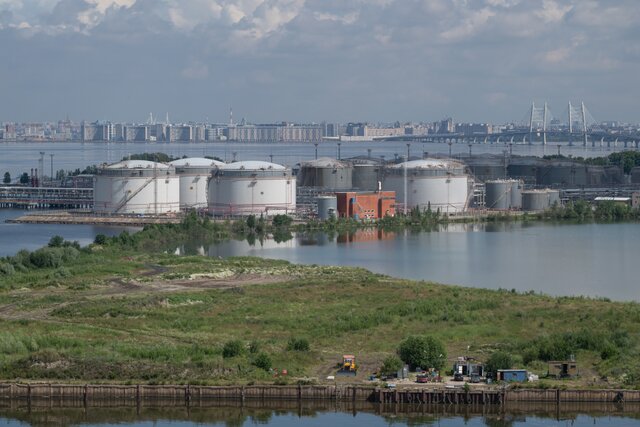
EU leaders are unhappy with Donald Trump and Vladimir Putin’s deal to supply Russian diesel fuel to the U.S. They believe it undermines sanctions and allows the Kremlin to continue its war against Ukraine. In response, Trump says Europeans themselves have paid Moscow $250 billion for energy since the war began. Russia says that figure is too low; the EU says it is too high. By any estimate, however, the Kremlin continues to receive very large sums from the EU — despite repeated statements from Brussels about ending imports of Russian fuel. Here’s the short version.

Russia’s account (as presented by Deputy Prime Minister Alexander Novak): Russia received even more from the EU than Trump said. Since 2022, the EU has paid $320.7 billion for energy. In the first nine months of 2026 alone, Russia supplied Europe with $21.3 billion worth of energy.

The EU’s account (as presented by an unnamed European Commission representative): From March 2022 to July 2026, Russia supplied the EU with 197 billion euros ($209 billion) worth of energy. The plan to phase out Russian energy is working: Without it, the EU would have spent 475 billion euros on Russian oil and gas, more than twice as much.

What about before the war? In 2021, the EU paid Russia 99 billion euros for energy, according to official Eurostat data. For comparison, Russia’s sovereign assets frozen in European depositories are estimated at 210 billion euros. EU officials periodically discuss seizing those assets to fund Ukraine’s reconstruction.

From Meduza’s archives

At Meduza, we are committed to transparency about our use of artificial intelligence in the newsroom. The story you’re reading was written by one of our living, breathing journalists and translated from Russian using an AI model configured to follow our strict editorial standards. This translation process is the result of extensive testing and refinements to ensure our English-language coverage is timely and accurate. A Meduza editor reviews every draft before publication.

If you find any errors in this translation, please contact us at reports@meduza.io.

To read Meduza’s exclusive content in English, please subscribe to our newsletter.
  •  

Zelensky says Ukraine’s Western allies again gave no warning before Russian ballistic missiles struck Kyiv. It’s the second time in two days.

Ukraine’s Western partners again failed to warn it ahead of another Russian ballistic missile strike on Kyiv on the evening of October 13, Ukrainian President Volodymyr Zelensky said.

He said the strike primarily targeted the city’s energy infrastructure, specifically the combined heat and power plant known as CHP-4. A residential building was damaged and caught fire.

A Russian ballistic missile attack on Kyiv. Once again, no early warning from our partners. The main target was energy infrastructure, specifically CHPP-4. Unfortunately, it was hit. A residential building was also damaged, and rescuers are currently putting out a fire there. Our… pic.twitter.com/6FKPx8PuFG

— Volodymyr Zelenskyy / Володимир Зеленський (@ZelenskyyUa) October 13, 2026

Russia is preparing further missile strikes on Ukraine, Zelensky said, citing Ukrainian intelligence.

The previous day, Zelensky said Ukraine had received no warning from its Western allies about the Russian missile strike on the evening of October 12. Politico reported that the U.S. told Ukraine it had not provided intelligence because of bad weather.

Last week, the U.S. threatened to stop sharing intelligence with Ukraine unless Kyiv agreed to halt strikes on Russian oil refineries, the Financial Times reported. Washington has made no official announcement that it intends to stop sharing intelligence.

Read more

At Meduza, we are committed to transparency about our use of artificial intelligence in the newsroom. The story you’re reading was written by one of our living, breathing journalists and translated from Russian using an AI model configured to follow our strict editorial standards. This translation process is the result of extensive testing and refinements to ensure our English-language coverage is timely and accurate. A Meduza editor reviews every draft before publication.

If you find any errors in this translation, please contact us at reports@meduza.io.

To read Meduza’s exclusive content in English, please subscribe to our newsletter.

  •  

Jailed Russian historian Yury Dmitriev, who uncovered Soviet mass graves, is sent back to prison without a diagnosis after a suspected stroke, supporters say

Historian Yury Dmitriev, 70, has been returned to Penal Colony No. 18 in Mordovia from a prison hospital, the human rights group ZPCh said, citing his support group. He was taken to the hospital in late September with a suspected stroke.

“He’s not feeling very well. They suspected a stroke, but there’s been no diagnosis: the hospital doesn’t have the equipment to diagnose it. Dmitriev was given a course of injections. We don’t know what they gave him,” the support group said.

Dmitriev’s supporters said he was prescribed bed rest until October 28. But until recently, staff at the penal colony were unaware of this and would not let him lie down, a woman from the support group told ZPCh.

“It’s hard to keep count of how many times he’s been put in a punishment cell. One time it’s because the top button on his shirt isn’t fastened, another because he sat on his bed, another because he fed a cat. Being in a damp, unheated room doesn’t do his health any good,” the support group said.

Yury Dmitriev is a historian and the former head of Memorial’s Karelia branch. In 1997, he discovered mass graves of victims of Soviet political repression in the Sandarmokh forest. He also compiled lists commemorating victims of political repression in Karelia.

Dmitriev has been imprisoned since 2016, when he was charged with producing pornography involving his underage adopted daughter, committing lewd acts against her, and illegally possessing a firearm component.

The case stemmed from photographs of his daughter found in his possession. He denied the charges and said he had taken the photographs solely for medical purposes, to track her development. In 2018, a court acquitted him on two of the charges. For the weapons possession offense, he received only a noncustodial sentence of 3.5 years of restricted freedom.

Karelia’s Supreme Court later overturned that verdict. Authorities opened another criminal investigation into Dmitriev, this time for sexual assault. He was sentenced to 13 years in a penal colony in that case. In December 2021, a court in Petrozavodsk combined his sentences and ordered him to serve 15 years in a high-security penal colony.

Dmitriev denied the charges in both cases. Memorial considers him a political prisoner. Scholars, cultural figures, and Nobel laureates have spoken out in his support.

From Meduza’s archives

At Meduza, we are committed to transparency about our use of artificial intelligence in the newsroom. The story you’re reading was written by one of our living, breathing journalists and translated from Russian using an AI model configured to follow our strict editorial standards. This translation process is the result of extensive testing and refinements to ensure our English-language coverage is timely and accurate. A Meduza editor reviews every draft before publication.

If you find any errors in this translation, please contact us at reports@meduza.io.

To read Meduza’s exclusive content in English, please subscribe to our newsletter.

  •  

Russia proposes barring students expelled for disciplinary reasons from returning to the same university for five years

Russia’s Ministry of Science and Higher Education plans to change university admissions rules to bar universities from readmitting expelled students for five years, TASS reported, citing a draft ministry order.

The restriction would apply to students expelled “as a disciplinary sanction,” the draft order says.

The order is expected to take effect on March 1, 2027, Kommersant reported. The five-year ban would begin on the date of expulsion.

University students can face disciplinary measures, including expulsion, for failing to comply with or violating their institution’s charter, internal rules (including classroom discipline and conduct requirements), dormitory rules, and other regulations. Students on sick leave, vacation, academic leave, or maternity leave are exempt from disciplinary measures, as are “students with disabilities.”

From Meduza’s archives

At Meduza, we are committed to transparency about our use of artificial intelligence in the newsroom. The story you’re reading was written by one of our living, breathing journalists and translated from Russian using an AI model configured to follow our strict editorial standards. This translation process is the result of extensive testing and refinements to ensure our English-language coverage is timely and accurate. A Meduza editor reviews every draft before publication.

If you find any errors in this translation, please contact us at reports@meduza.io.

To read Meduza’s exclusive content in English, please subscribe to our newsletter.

  •  

Hungary’s parliament removes Viktor Orbán-era LGBTQ ‘propaganda’ restrictions from 2021 child protection law

Hungary’s parliament has approved amendments to the child protection law adopted in 2021 under Prime Minister Viktor Orbán. AFP called the move the first significant step toward lifting restrictions on the LGBTQ community since pro-European Prime Minister Péter Magyar came to power.

The original law prohibited material accessible to children from “depicting” or “promoting” sexual and gender diversity. The revised law aims to protect minors from content that could “seriously impair the child’s physical, intellectual, emotional or moral development.”

“Fundamentally, our goal was to move away from a flawed paradigm, linking child protection in any way to sexual orientation or gender identities, and shift to a framework that is truly about children and protecting children,” said Szilvia Gyurkó, state secretary at the Ministry of Social and Family Affairs.

Orbán’s Fidesz Party voted against the amendments, but Magyar’s ruling Tisza Party has a two-thirds majority in parliament. The amendments passed without opposition support.

Human rights advocates welcomed the amendments but called for a review of other discriminatory provisions in Hungarian law adopted under Orbán.

Orbán’s government gradually restricted LGBTQ rights under the pretext of protecting children. Among its last such measures were amendments to the constitution and the law on public assembly that banned the LGBTQ community from holding public events.

Read more

At Meduza, we are committed to transparency about our use of artificial intelligence in the newsroom. The story you’re reading was written by one of our living, breathing journalists and translated from Russian using an AI model configured to follow our strict editorial standards. This translation process is the result of extensive testing and refinements to ensure our English-language coverage is timely and accurate. A Meduza editor reviews every draft before publication.

If you find any errors in this translation, please contact us at reports@meduza.io.

To read Meduza’s exclusive content in English, please subscribe to our newsletter.

  •  

Moscow court hands blogger Michael Naki a second prison sentence in absentia, bringing his combined term to 14 years

Moscow’s Basmanny District Court sentenced blogger Michael Naki in absentia to five years in a penal colony for publicly calling for activities aimed at undermining Russia’s security (Article 280.4, Part 2, Paragraph “c” of the Criminal Code). It also barred him from administering websites for five years.

The prosecution stemmed from a video posted on Naki’s channel on May 7, 2024. According to Mediazona, the video was titled “Putin can now be eliminated. The day Putin stopped being president.” Prosecutors said the video contained signs of “incitement to overthrow the government in Russia.”

This is Naki’s second sentence in absentia. In 2023, the Basmanny District Court sentenced him to 11 years in a penal colony for spreading “fake news” about the army (Article 207.3, Part 2, Paragraph “d” of the Criminal Code). That case concerned a video in which Naki and Conflict Intelligence Team founder Ruslan Leviev recapped the ninth day of Russia’s full-scale invasion of Ukraine.

The court combined portions of the sentences in the two cases to impose a total term of 14 years in a penal colony.

At Meduza, we are committed to transparency about our use of artificial intelligence in the newsroom. The story you’re reading was written by one of our living, breathing journalists and translated from Russian using an AI model configured to follow our strict editorial standards. This translation process is the result of extensive testing and refinements to ensure our English-language coverage is timely and accurate. A Meduza editor reviews every draft before publication.

If you find any errors in this translation, please contact us at reports@meduza.io.

To read Meduza’s exclusive content in English, please subscribe to our newsletter.

  •  

Russian banks fear massive fines after unprecedented surge in court bailiff inquiries

Russian banks received millions of requests for information about debtors from the Federal Bailiff Service (FSSP) over three days between September 18 and 21, an unprecedented volume, the National Financial Market Council reported.

One regional bank received 12.8 million requests on September 19 alone — as many as it normally receives in a month.

The council’s head, Andrey Yemelin, said the volume of FSSP requests over those three days was at least 10 to 12 times the usual level, and up to 30 times at some banks. More than 90% of the requests concerned people who were not customers of the banks that received them, said Yelena Samokhina, director of the banking development department at the Association of Banks of Russia.

Experts believe technical errors may account for the volume of requests, which the FSSP generates automatically. “The service has previously acknowledged that it resends requests if a bank hasn’t confirmed receipt. If those confirmations were lost, the automated system could have sent banks the entire backlog, along with duplicate requests,” said Mikhail Bryukhanov, chairman of Pervouralskbank’s board of directors.

Banks are legally required to provide the requested information within three days or face fines of 50,000 to 100,000 rubles for each request. Given the volume, Yemelin said “the fines could add up to amounts that pose a real threat to the financial stability of some banks.”

The council asked the Central Bank to look into the situation. The Central Bank said it had “received the inquiry and will review it according to established procedures.”

From Meduza’s archives

At Meduza, we are committed to transparency about our use of artificial intelligence in the newsroom. The story you’re reading was written by one of our living, breathing journalists and translated from Russian using an AI model configured to follow our strict editorial standards. This translation process is the result of extensive testing and refinements to ensure our English-language coverage is timely and accurate. A Meduza editor reviews every draft before publication.

If you find any errors in this translation, please contact us at reports@meduza.io.

To read Meduza’s exclusive content in English, please subscribe to our newsletter.

  •  

IMF lowers forecast for Russia’s economic growth

The International Monetary Fund has lowered its forecast for Russia’s economic growth to 0.9% in both 2026 and 2027. The updated forecast, released on October 13, is down from its July projection of 1.1% for each year.

The IMF report says high global energy prices are supporting Russia’s economy despite a decline in supplies caused by Ukrainian strikes that damaged oil infrastructure.

The report says the overall outlook is weak for energy-intensive economies and those dependent on oil and gas imports. Russia, however, benefits from “favorable factors associated with increased defense spending” that partially offset this weakness.

In late September, Russia’s Economic Development Ministry raised its growth forecast for 2026 from 0.4% to 0.6%. The ministry expects growth to accelerate from 1.4% in 2027 to 2.4% in 2029. Russia’s central bank forecasts growth of 0 to 1% in 2026 and 1.5 to 2.5% in 2027.

In early October, the World Bank kept its forecast for Russian GDP growth in 2026 at 0.8%. It expects Russia’s economy to grow by 0.7% in both 2027 and 2028.

Read more

At Meduza, we are committed to transparency about our use of artificial intelligence in the newsroom. The story you’re reading was written by one of our living, breathing journalists and translated from Russian using an AI model configured to follow our strict editorial standards. This translation process is the result of extensive testing and refinements to ensure our English-language coverage is timely and accurate. A Meduza editor reviews every draft before publication.

If you find any errors in this translation, please contact us at reports@meduza.io.

To read Meduza’s exclusive content in English, please subscribe to our newsletter.

  •  

Russian Communist Party lawmaker says all citizens should bear the burden of the war against Ukraine equally

Russians should share equally in the burden of the war against Ukraine, Anatoly Lokot, a lawmaker from the Communist Party of the Russian Federation (KPRF), said in a speech to the State Duma.

“We want the burden of this war, of overcoming the obstacles that arise, to be shared equally by everyone, by all citizens of our country. We want the effort to overcome these difficulties, this struggle, to unite us rather than divide us,” he said.

At Tuesday’s session, the State Duma considered a bill to approve the final accounts for the 2025 budget. Lawmakers approved the report, which showed a deficit of 5.63 trillion rubles. The Accounts Chamber, Russia’s public spending watchdog, found budget violations totaling 580 billion rubles — 30.7% more than a year earlier.

The KPRF faction refused to support the report, citing “systemic problems” with the budget.

Read more

At Meduza, we are committed to transparency about our use of artificial intelligence in the newsroom. The story you’re reading was written by one of our living, breathing journalists and translated from Russian using an AI model configured to follow our strict editorial standards. This translation process is the result of extensive testing and refinements to ensure our English-language coverage is timely and accurate. A Meduza editor reviews every draft before publication.

If you find any errors in this translation, please contact us at reports@meduza.io.

To read Meduza’s exclusive content in English, please subscribe to our newsletter.

  •  

Who is behind ‘Black Rus,’ the mysterious group claiming responsibility for an armed incursion into Latvia from Belarus?

A group calling itself “Black Rus” (Chyornye Rusy) has claimed responsibility for an incident on the Latvia-Belarus border in which armed, masked men threatened Latvian soldiers overnight on October 6.

The men, who were accompanying a group of migrants, later crossed from Belarus into Latvia, damaged an electrical distribution panel, stole surveillance cameras, and returned to Belarus.

LSM reported on October 12 that a video statement on the group’s behalf had been posted on a Telegram channel. In it, a man with his face covered and his voice altered says:

This was just a test, and Latvia failed it. Soon you’ll see something similar elsewhere along our border. The European Union and NATO are a colossus with feet of clay that will collapse after our first strike.

Experts interviewed by Latvian journalists called Black Rus “a project of the intelligence services.” Among other things, they said such a group could not exist in either Russia or Belarus without the authorities’ knowledge.

Belarusian leader Alexander Lukashenko said Latvia itself had orchestrated the border incident to “get money from the European Union.” He said the Belarusian authorities had nothing to do with it.

“Operations like this, involving entry into a neighboring country, are impossible without the president’s approval. Nothing like this was cleared with me. That means no such operations took place. I know that for a fact,” Lukashenko said, according to Belarus’ state news agency BelTA.

Latvia and other European countries bordering Belarus have repeatedly blamed Minsk for the migration crisis. They believe the Belarusian authorities are behind attempts by groups of migrants to cross the border illegally and enter the EU. Minsk denies this.

Latvian Interior Minister Janis Dombrava said about 12,000 people attempting to cross illegally from Belarus had been prevented from entering Latvia since the start of 2026 under Operation Werewolf (Vilkatis). He also said several incidents involving damage to surveillance equipment on the Latvian side of the border had been recorded, Delfi reported. Dombrava suggested that Russian or Belarusian intelligence services were responsible but emphasized that this was only a theory and that there was no evidence yet.

Read more

At Meduza, we are committed to transparency about our use of artificial intelligence in the newsroom. The story you’re reading was written by one of our living, breathing journalists and translated from Russian using an AI model configured to follow our strict editorial standards. This translation process is the result of extensive testing and refinements to ensure our English-language coverage is timely and accurate. A Meduza editor reviews every draft before publication.

If you find any errors in this translation, please contact us at reports@meduza.io.

To read Meduza’s exclusive content in English, please subscribe to our newsletter.

  •  

Zelensky says Western partners didn’t warn Ukraine about Russian ballistic missile launches before latest attack on Kyiv

Ukraine received no intelligence from its Western partners about Russia’s October 12 missile strike on Kyiv, President Volodymyr Zelensky said.

“Unfortunately, we received no early warning from our partners about this strike. Intelligence on Russian ballistic missile launches helps save lives, and this is one of the most critical issues. This is precisely what helps prevent people from being killed,” he said on social media.

Russia attacked Kyiv with five ballistic missiles on the evening of October 12. Ukrainska Pravda reported that radar detected the missiles during the attack, and the city’s air raid alert sounded only after the first explosions. The Ukrainian Air Force said it had received no information about missile launches from Russian territory.

Ukrainian Foreign Minister Andrii Sybiha attributed the delayed alert to “a particular type of weapon used by Russia.” He said Kyiv and Washington continue to share intelligence.

Air Force spokesperson Yurii Ihnat said similar situations had occurred before. “Sometimes this information doesn’t get through. This isn’t the first time… If there were some technical issues this time, I think the specialists will figure it out. And they’ll work with our partners to fix this problem,” he said.

Serhii Beskrestnov, the president’s adviser on technological innovation in the Ukrainian armed forces, said the incident did not mean the United States had stopped sharing intelligence with Ukraine.

Friends, this isn’t the first time our partners’ intelligence services have failed to detect an S-400 launch. There are some details to consider. We shouldn’t jump to conclusions.

Beskrestnov said he did not believe Kyiv and Washington would stop sharing intelligence, since civilians’ lives were at stake.

Read more

At Meduza, we are committed to transparency about our use of artificial intelligence in the newsroom. The story you’re reading was written by one of our living, breathing journalists and translated from Russian using an AI model configured to follow our strict editorial standards. This translation process is the result of extensive testing and refinements to ensure our English-language coverage is timely and accurate. A Meduza editor reviews every draft before publication.

If you find any errors in this translation, please contact us at reports@meduza.io.

To read Meduza’s exclusive content in English, please subscribe to our newsletter.

  •  

Russian telecom giant Rostelecom offers smaller internet providers relief from surveillance costs. In exchange, it wants their customers — and most of their revenue.

Russia’s largest nationwide telecommunications operators, Rostelecom and TransTeleCom, have begun offering small regional providers service agreements under which the providers would hand over their infrastructure and subscriber bases, Kommersant reported after reviewing the presentations.

Under Rostelecom’s proposal, regional operators would transfer their subscribers, communications lines, and technical support to the company. In return, they would keep 30–40% of revenue and no longer have to cover SORM costs (up to 15 million rubles a year), payroll (up to 16 million rubles a year), or contributions to the universal service fund (at least 1 million rubles a year). The proposal also promises to reduce their exposure to regulatory risk.

TransTeleCom’s proposal outlines fixed virtual network operator (FVNO) models. Under these models, regional operators would no longer need a license or have regulatory obligations. In return, they would receive a share of revenue and retain the “last mile.”

A source told Kommersant that the proposals involve “strictly commercial and voluntary” cooperation.

Representatives of small providers say that under these terms, operators would “effectively become installers.” Rostelecom used to “at least buy companies,” but now it is effectively offering terms under which it “takes 60% of the business” without investing anything, said Yaroslav Dubovikov, executive director of the Association of Telecommunications Companies.

In April 2026, reports emerged that the Ministry of Digital Development was discussing stricter requirements for telecommunications operators with industry representatives. Among other measures, the ministry proposed introducing three types of licenses that could cost between 1 million and 50 million rubles, depending on the category. The Association of Telecommunications Operators warned that the proposal could leave 27 regions without local internet providers.

Read more

At Meduza, we are committed to transparency about our use of artificial intelligence in the newsroom. The story you’re reading was written by one of our living, breathing journalists and translated from Russian using an AI model configured to follow our strict editorial standards. This translation process is the result of extensive testing and refinements to ensure our English-language coverage is timely and accurate. A Meduza editor reviews every draft before publication.

If you find any errors in this translation, please contact us at reports@meduza.io.

To read Meduza’s exclusive content in English, please subscribe to our newsletter.

  •  

Britain’s domestic intelligence agency is devoting more resources to foreign threats than during the Cold War. Its chief calls Russia ‘aggressor number one.’

Britain’s domestic intelligence service is now devoting more resources to countering state threats than it did during the Cold War, MI5 chief Ken McCallum said.

Russia remains “aggressor number one” and is trying to wage “hybrid warfare” in Europe, he said. McCallum said Russia is trying to destabilize European countries while making “minimal and horrifically costly” progress in its war against Ukraine.

Following the expulsion of Russian agents from the U.K., Russian intelligence services are now “scrambling to pay criminals to do their bidding,” McCallum said. “These are not the actions of a great power with the strategic upper hand,” he said.

Officials in several European countries, including Germany, France, and Poland, have previously said Russian authorities are trying to carry out acts of sabotage to intimidate Ukraine’s allies.

Further reading

At Meduza, we are committed to transparency about our use of artificial intelligence in the newsroom. The story you’re reading was written by one of our living, breathing journalists and translated from Russian using an AI model configured to follow our strict editorial standards. This translation process is the result of extensive testing and refinements to ensure our English-language coverage is timely and accurate. A Meduza editor reviews every draft before publication.

If you find any errors in this translation, please contact us at reports@meduza.io.

To read Meduza’s exclusive content in English, please subscribe to our newsletter.

  •  

Who is Yuki Imai, the Japanese journalist Russia has arrested on espionage charges?

A Japanese journalist has been detained on suspicion of espionage on Sakhalin, Russia’s Federal Security Service (FSB) said. The agency identified him as a Japanese national and a correspondent for the newspaper Hokkaido Shimbun but did not release his name. He was detained in Yuzhno-Sakhalinsk shortly before he planned to leave Russia and taken to Moscow.

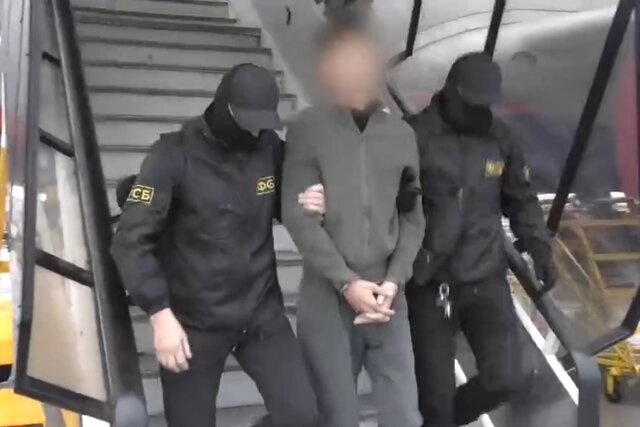
The FSB released footage of the operation with the detainee’s face blurred. Officers appear to have seized him at a hotel. The footage shows officers forcing him to unlock his devices, and he appears surprised when they accuse him of espionage.

The FSB said the journalist was gathering information about Russian military personnel on instructions from Japanese intelligence. According to the agency, he was collecting data on the number of Kuril Islands residents mobilized for the war in Ukraine and on residents who volunteered to fight.

The detainee is 34-year-old Yuki Imai, according to the case record from Moscow’s Lefortovsky District Court. On October 13, the court ordered him held in custody in an espionage case under Article 276 of Russia’s Criminal Code. He faces up to 20 years in prison.

Imai had been visiting Russia since 2014. His most recent visit began in the summer of 2026, according to the news outlet Ostorozhno, Novosti (1, 2). He studied at St. Petersburg State University and posted photographs from his trips around Moscow and St. Petersburg. He said he had “a bit of an interest in Soviet military equipment,” as well as Russian culture — classical music, ballet, and Soviet cinema. The footage of his detention showed a book by Ivan Bunin in his suitcase.

According to Ostorozhno, Novosti, Imai had recently published articles about the State Duma elections and the unveiling of a monument in Khabarovsk commemorating the Soviet Union’s victory over Japan. He also wrote about Russia’s strengthening ties with North Korea.

During his most recent trip, Imai visited Primorsky Krai, with stops in Vladivostok and Nakhodka and a visit to a children’s arts center there. He interviewed Russian-speaking residents of Japan and took an interest in life in the Russian Far East, the Soviet-Japanese War, and friendship between Russia and Japan.

Imai’s most recent article, published on October 5, is a report from Yuzhno-Sakhalinsk about the presence of North Korean nationals in the region.

News of Imai’s detention came amid reports that Tokyo had extradited a member of the Russian group Qilin to Germany, according to the news outlet Agentstvo. Japanese authorities detained the 28-year-old Russian national in May on suspicion of involvement in a September 2024 cyberattack on a logistics company in Germany. Qilin is ransomware used by hackers, including those linked to North Korea.

Related reading

The last time a Japanese journalist was detained in Russia on espionage allegations was in 2019. He was accused of trying to obtain classified materials about Russia’s military capabilities in the Far East and was expelled from the country.

Russian authorities use detained foreigners in exchanges for Russians facing prosecution abroad. For example, in 2023, Russia charged Wall Street Journal correspondent Evan Gershkovich with espionage. A court sentenced him to 16 years in a penal colony. Gershkovich was freed in a prisoner exchange with Western countries in 2024.

Relations between Russia and Japan deteriorated after Putin made his first trip to the Kuril Islands in August, visiting Iturup. In response, Japan summoned the Russian ambassador and lodged a “strong protest.”

Further reading

At Meduza, we are committed to transparency about our use of artificial intelligence in the newsroom. The story you’re reading was written by one of our living, breathing journalists and translated from Russian using an AI model configured to follow our strict editorial standards. This translation process is the result of extensive testing and refinements to ensure our English-language coverage is timely and accurate. A Meduza editor reviews every draft before publication.

If you find any errors in this translation, please contact us at reports@meduza.io.

To read Meduza’s exclusive content in English, please subscribe to our newsletter.

  •  

Russian court orders Japanese journalist held on espionage charges

Further reading

A Japanese journalist was detained in Yuzhno-Sakhalinsk on suspicion of espionage, TASS reported.

The journalist is a correspondent for the newspaper Hokkaido Shimbun. His name was not disclosed.

Russia’s Federal Security Service (FSB) said the journalist was gathering information “related to defense capabilities.” He was detained shortly before he was due to fly out of Russia and taken to Moscow.

Ostorozhno, Novosti reported that the journalist is Yuki Imai, 34, who arrived in Russia this summer. He visited Primorsky Krai, including Vladivostok and Nakhodka. Imai was interested in the Soviet-Japanese War of 1945 and relations between Russia and Japan.

Kommersant reported that Moscow’s Lefortovo Court had already ordered Imai held in custody on October 13 on espionage charges under Article 276 of Russia’s Criminal Code.

At Meduza, we are committed to transparency about our use of artificial intelligence in the newsroom. The story you’re reading was written by one of our living, breathing journalists and translated from Russian using an AI model configured to follow our strict editorial standards. This translation process is the result of extensive testing and refinements to ensure our English-language coverage is timely and accurate. A Meduza editor reviews every draft before publication.

If you find any errors in this translation, please contact us at reports@meduza.io.

To read Meduza’s exclusive content in English, please subscribe to our newsletter.

  •  

Russian drones strike university in Ukraine’s Rivne, injuring 20

Russian drones struck the Rivne region in western Ukraine on the morning of October 13, hitting the city of Rivne.

Ukraine’s National Police said in a statement that a Russian drone struck an educational institution. A fire broke out in one wing of the building after drone debris fell on it, according to data from the State Emergency Service.

Twenty people were injured, according to the latest data.

Ukraine’s Education Minister Andrii Butenko clarified that the building hit was part of Rivne State University of the Humanities. The Department of Musical Arts building burned down completely. All students were in shelters, Butenko said, but members of the university’s administrative staff were injured.

At Meduza, we are committed to transparency about our use of artificial intelligence in the newsroom. The story you’re reading was written by one of our living, breathing journalists and translated from Russian using an AI model configured to follow our strict editorial standards. This translation process is the result of extensive testing and refinements to ensure our English-language coverage is timely and accurate. A Meduza editor reviews every draft before publication.

If you find any errors in this translation, please contact us at reports@meduza.io.

To read Meduza’s exclusive content in English, please subscribe to our newsletter.

  •  

Drones attack two cargo ships off Bulgaria’s coast, one Ukrainian-owned. Sofia plans to summon Russian ambassador.

Two cargo ships came under attack overnight on October 13 in the Black Sea off Bulgaria’s coast, the country’s prime minister, Rumen Radev, said.

Three drones struck the Ukrainian-owned vessel Chelsea 3, sailing under a Maltese flag, about 18 nautical miles (roughly 33 kilometers) east of the city of Byala. All 15 crew members — seven Ukrainian citizens and eight Azerbaijani citizens — were evacuated. According to preliminary reports, five sailors sustained minor injuries.

Another ship sank about 17 nautical miles east of the village of Krapets. One crew member from that ship was rescued.

“This is absolutely unacceptable: yet another attack in close proximity to Bulgaria’s territorial waters,” Radev said in a televised address. He added that he has a call scheduled with NATO Secretary General Mark Rutte.

According to Radev, there is not yet “solid and unambiguous evidence to bring accusations,” but “logic suggests the outcome benefits the Russian Federation.” Bulgaria intends to summon Russian Ambassador Eleonora Mitrofanova over the incident.

Ukrainian Foreign Minister Andrii Sybiha said that “Russia’s latest attack on commercial vessels near Bulgaria’s territorial waters, which injured Ukrainian and Azerbaijani citizens, once again demonstrates Moscow’s deliberate disregard for civilian lives and maritime security in the Black Sea.” He called on partners to increase pressure on Russia.

A week earlier, drones attacked two other cargo ships off Bulgaria’s coast, about 110 kilometers (68 miles) from shore. The crew of one ship was evacuated, while the other sank. Reuters reported that this was the first known drone attack on civilian ships in Bulgarian waters since the start of the war in Ukraine.

At Meduza, we are committed to transparency about our use of artificial intelligence in the newsroom. The story you’re reading was written by one of our living, breathing journalists and translated from Russian using an AI model configured to follow our strict editorial standards. This translation process is the result of extensive testing and refinements to ensure our English-language coverage is timely and accurate. A Meduza editor reviews every draft before publication.

If you find any errors in this translation, please contact us at reports@meduza.io.

To read Meduza’s exclusive content in English, please subscribe to our newsletter.

  •  

Reuters: Witkoff and Kushner told Kyiv that a diesel deal with Russia would help bring the Kremlin back to the negotiating table

U.S. presidential envoys Steve Witkoff and Jared Kushner tried to convince the Ukrainian delegation at a meeting in Miami that a diesel deal with Russia could help bring the Kremlin back to the negotiating table, three sources told Reuters.

At the meeting, Kushner also relayed Donald Trump’s demand that Kyiv stop striking Russian oil refineries. “The idea was that the US could go back to Russia and say ‘See, the Ukrainians stopped striking and we gave you ​this deal. Now it’s your turn to do something,” one of the sources said.

Witkoff and Kushner told Ukrainian representatives at the meeting that Vladimir Putin is not willing to negotiate an end to the war in Ukraine, two sources told Reuters.

A source close to the Kremlin said Putin will return to the negotiating table only once he “gets ⁠the remaining 11% of Donbas, which he can present domestically as victory.”

Part of the meeting between Witkoff, Kushner, and the Ukrainian delegation focused on Ukraine’s reconstruction funds and the need for Kyiv to formally draft plans for attracting investment in the country.

Ukrainian representatives “were skeptical” of the U.S. approach, the sources said. The Ukrainian side left the meeting without formally agreeing to anything but signaled it was prepared to accept an energy truce if Russia observed it as well.

On October 9, Trump spoke by phone with Putin and afterward announced a “diesel deal” under which Russia would supply diesel fuel to American and global markets. Ukrainian representatives met with Witkoff and Kushner in Miami that same day. The talks had been scheduled to run October 9 and 10 but ended after just one day.

At Meduza, we are committed to transparency about our use of artificial intelligence in the newsroom. The story you’re reading was written by one of our living, breathing journalists and translated from Russian using an AI model configured to follow our strict editorial standards. This translation process is the result of extensive testing and refinements to ensure our English-language coverage is timely and accurate. A Meduza editor reviews every draft before publication.

If you find any errors in this translation, please contact us at reports@meduza.io.

To read Meduza’s exclusive content in English, please subscribe to our newsletter.

  •  

‘Yandex Pay’ partially resumes operations after Ukrainian drone strikes on data centers

Dmitry Pirogov, the head of Yandex Pay’s fintech division, announced that the company has restored access to transfers and payments for some users.

“Many of you can already see your money and manage it. We’re restoring access gradually so the service can handle the load. If some functionality isn’t available to you yet, please wait a little longer,” he wrote in the payment service’s Telegram channel.

Pirogov stressed that the service “is still operating unstably”: some functions remain unavailable, and errors are possible during certain operations.

Yandex Pay also announced special terms for users from October 11–17, covering savings accounts as well as loan payments.

From the start, we built our infrastructure so that data on transactions would be replicated simultaneously across multiple data centers, because we work with literally the most valuable data our users have: data about their money. After the recent drone attacks on our data centers, our engineers had to completely rebuild the infrastructure in order to preserve this key principle and restore access to familiar functions. That’s why our service was hit especially hard, and recovery is taking longer.

In recent days, Ukraine has struck three of the six data centers belonging to Yandex: facilities in the Ryazan region, Kaluga, and Vladimir. Many services run by Yandex itself, as well as by its clients, went down.

At Meduza, we are committed to transparency about our use of artificial intelligence in the newsroom. The story you’re reading was written by one of our living, breathing journalists and translated from Russian using an AI model configured to follow our strict editorial standards. This translation process is the result of extensive testing and refinements to ensure our English-language coverage is timely and accurate. A Meduza editor reviews every draft before publication.

If you find any errors in this translation, please contact us at reports@meduza.io.

To read Meduza’s exclusive content in English, please subscribe to our newsletter.

  •  
❌