 Login

Today in Supreme Court History: October 22, 1915
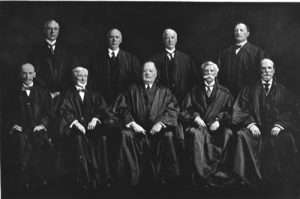
10/22/1915: Hadacheck v. Sebastian argued.
The post Today in Supreme Court History: October 22, 1915 appeared first on Reason Magazine.

10/22/1915: Hadacheck v. Sebastian argued.
The post Today in Supreme Court History: October 22, 1915 appeared first on Reason Magazine.
This year, the Bureau of Prison determined that "sex-trait-modification surgeries, hormone interventions in general, and social accommodations could no longer be justified as treatment for gender dysphoria." The lower court enjoined this policy, and the Solicitor General sought an emergency stay. Today the Supreme Court denied a stay in Trump v. Kingdom by a 7-2 vote. Justices Thomas and Alito noted they would have granted the application, though there was no written opinion.
I have some thoughts.
First, just yesterday Justice Kagan noted that the Trump appointees rule against President Trump as proof that they are not hacks. And she surely knew this case would come down as further proof of this point. Kagan's point seems to be that ruling against the President that appoints you makes you a fair justice. That premise is only true if in fact that law does not support the appointing President's policy. If a Justice simply rules against the President who appoints him for the sake of optics, then the Justice is no longer a judge.
Justice Alito made this point well in his new book, summarized in the Wall Street Journal.
Insecure originalists may worry that they are subconsciously engaging in "judicial activism" in the service of their own policy preferences. As a result, they may welcome occasions when their originalist analysis leads to results they dislike. They experience a brief catharsis, a release of their anxiety about succumbing to temptation.
Twenty-first-century originalists should shed this insecure mindset.
I wonder if Justice Alito thinks that Justice Scalia's constant praise of his vote in Texas v. Johnson was evidence of this "catharsis." Justice Kavanaugh used to praise the Nixon appointees who ruled against Nixon in the Watergate Tapes case. That premise reinforces the wrong image. I've come to believe that United States v. Nixon was a travesty, and the Justices who joined that were caught up in the Watergate swamp fever. The decision has not held up well over the past five decades.
Let's stop praising how often the Trump appointees rule against Trump. The more useful metric, in my view, is when the Court's two most conservative members (Thomas and Alito) are alone in dissent. I updated my wall of receipts in July 2026 as a recent accounting.
Second, how do we reconcile Mahmoud, B.P.J., and Skrmetti on the one hand and Bostock and Kingdom on the other? For sure, all of these cases presented different legal issues. Mahmoud was a Free Exercise challenge, Skrmetti presented an Equal Protection issue, B.P.J. was about Title IX, Bostock was an interpretation of Title VII, and Kingdom was an APA challenge on the interim orders docket. Yet all of these cases were really about transgender rights. Back in April I wrote that the transgender tide was turning. Was I wrong? Why did all of the recent cases turn out one way but Kingdom turns out the other?
Well, the Court is certainly concerned about transitioning children. They upheld bans on gender transition surgeries in Skrmetti. They required opt-outs from transgender-related indoctrination in Maryland public schools. (Had the story books been only about gay marriage, I don't know that the case would have come out the same way.) The Justices allowed the exclusion of biologically male athletes from female sports. I could add to that list Mirabelli v. Bonta, which prohibited schools from secretly transitioning children.
It's possible that Justice Gorsuch simply saw the light after Bostock, but maybe there is another explanation: he cares more about children than he cares about transgender rights. So his equities tilted to the right. But in a case where adults seek this treatment, Gorsuch cut the other way. Moreover, when those consenting adults are prisoners, Justice Gorsuch's equities are far clearer. For a libertarian, how could the carceral state deny this treatment to incarcerated persons who can't go elsewhere to get it?
Third, I'm struggling with Justice Kavanaugh's position here. He had a free vote, as the split was 7-2. He could have at least written a separate opinion explaining why relief was not appropriate here, but when the case returns on the merits, the outcome may be different. He does that sort of thing all the time in far less controversial cases. But here, we only have the sound of silence. I think he is signaling the government loses on the merits here. Maybe he suspects Trump will be out of office by the time this case returns to the Court, and the policy will be abandoned.
Fourth, I'm sure Justice Barrett figured out some procedural reason why the federal government must remove healthy reproductive organs from prisoners. That is, unless she agrees with the Respondent's arguments that BOP's position is "pretextual and [was] reverse-engineered to implement" President Trump's order. So we're back to pretext, and trying to divine the President's real motivations. Trump v. Cook established that Trump does not get the presumption of regularity. Barrett dissented in that case, through she may not disagree with the broader premise.
Fifth, the application was filed on September 28, briefing concluded on October 9, and the order was issued on October 21. What took so long if this was a straight-up denial without any writings? I suspect that Justices Alito and Thomas were hopeful they could scrounge more votes but could not. Maybe they even circulated a dissent but withdrew it. Something behind the scenes happened here. If only we knew what happened? Thankfully reporters at CNN and the New York Times are no longer able to otbain leaks. The best they can do is ask KBJ's friends for comments and interview the Chief's neighbors in Maine.
The post <em>Skrmetti</em>, <em>Mahmoud</em>, and <i>B.P.J</i> v. <em>Bostock</em> and <em>Kingdom</em> appeared first on Reason Magazine.
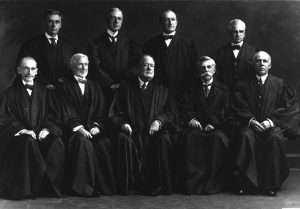
10/21/1919: Abrams v. United States argued.
The post Today in Supreme Court History: October 21, 1919 appeared first on Reason Magazine.
SCOTUSBlog has published the final installment in our series on recent changes in constitutional law. This essay focuses on the separation of powers. It begins:
The late 1990s and early 2000s ushered in the Rehnquist federalism revolution, which appeared to place limits on Congress' powers and expand those of the states. Then came Sept. 11, 2001, and the global war on terror, which seemed poised to expand the president's powers. Yet, by 2008, Congress' powers seemed without meaningful limits and the president's efforts to expand his own powers had failed. And the separation of powers remained, well, separate. Nevertheless, the next two decades would vastly enlarge the president's powers as Congress' authority over the executive branch would be greatly diminished.
Here is a chart that shows the shift in cases:
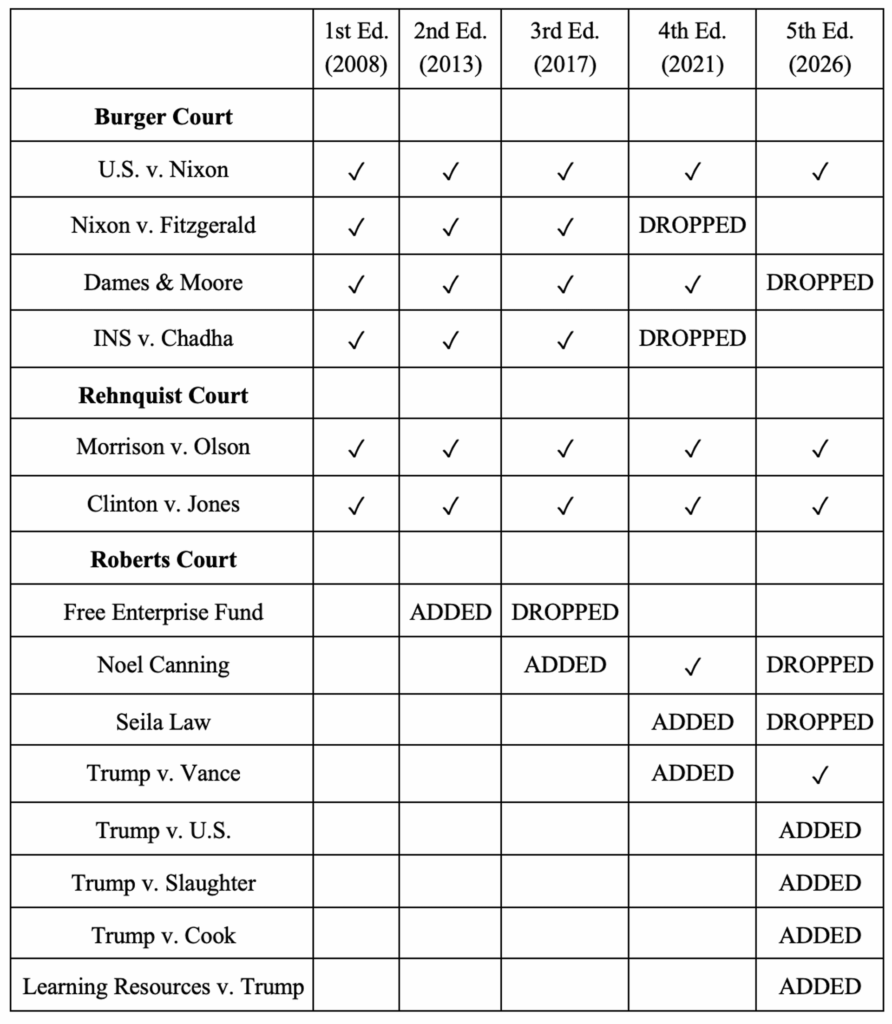
Here is our conclusion:
Up to the fourth edition of our casebook in 2022, constitutional law followed a somewhat predictable arc. To be sure, there were shifts to the left and to the right, but the doctrine could be explained by a coherent narrative: the New Deal settlement on federal power was untouchable; the court would offer only modest protections for federalism; the administrative state was beyond reproach; attempts to single out unpopular groups would be halted; "benign" racial classifications were permitted; and church and state were strictly separated. Now, each aspect of this narrative has been reconceived. The five years since that edition appeared have brought the most changes to constitutional law since the Warren court.
We began this series by observing that lawyers tend to internalize the constitutional law that existed when they attended law school. The same is true of law professors. Virtually all law professors today came of age in a time of stasis. They could safely assume that the trajectory of the Warren court would continue indefinitely. But the jurisprudence of the Burger and Rehnquist courts was primed for a reversal, just as the Warren court reversed so many precedents from before. Ultimately, the Roberts court continues to chip away at precedents from the 1970s and 1980s, even if the precedents from the 1960s and before remain.
Many of these professors have struggled to cope with sudden changes in the doctrine. Some have voiced their despair of teaching constitutional law at all. Unsurprisingly, their students also struggle to cope with these developments. This trend is regrettable. Our role as casebook editors, and constitutional law professors, is to guide students through the entire corpus of constitutional law, from the framing to the present day, without any nostalgia for, or bias against, times gone by.
This is my last planned post with SCOTUSBlog. I'm sure there will be more to come.
The post New in SCOTUSBlog: "The separation and expansion of powers between Congress and the president" appeared first on Reason Magazine.
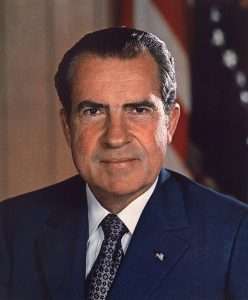
10/20/1973: The Saturday Night Massacre occurs.
The post Today in Supreme Court History: October 20, 1973 appeared first on Reason Magazine.
Sophisticated clients develop comprehensive strategies to get a cert petition granted. BMG Rights Management (US) LLC v. Cyril E. Vetter was one of those cases. The question presented concerned limitations on the reversion of copyrights. Paul Clement was retained to represent many of the leading media companies. The Parties to the Proceeding were:
Petitioners are BMG Rights Management (US) LLC; Capitol CMG, Inc. (Parent Company Stock Ticker: UMG); Essential Music Publishing LLC (Parent Company Stock Ticker: SONY); and Warner-Tamerlane Publishing Corp (Parent Company NASDAQ Stock Ticker: WMG).
The Plaintiffs secured top-side amicus brief from heavy-hitters including Paramount (represented by Lisa Blatt), the Motion Picture Association of America, the Recording Industry Association of America, and more. Everything was lined up for a cert grant. Alas, there would be no quorum.
Today's order includes this entry:
Because the Court lacks a quorum, 28 U. S. C. §1, and since the qualified Justices are of the opinion that the case cannot be heard and determined at the next Term of the Court, the judgment is affirmed under 28 U. S. C. §2109, which provides that under these circumstances "the court shall enter its order affirming the judgment of the court from which the case was brought for review with the same effect as upon affirmance by an equally divided court." Justice Sotomayor, Justice Gorsuch, Justice Barrett, and Justice Jackson took no part in the consideration or decision of this petition.
The lower court judgment survives, and it is hard to imagine another case with the same parties would trigger a different outcome.
What happened here? I have to imagine that these four Justices, who all have lucrative book deals, recused because of either the parties identified, or the issue presented. Curiously, Justice Alito, who is a new publisher, did not step aside.
Going forward, these and other publishing companies need to be aware that they likely do not have a quorum for a cert grant. However, they stand a good chance of having a favorable lower-court judgment affirmed by a quorum-less court.
I've often wondered whether it makes actual good business sense to give lucrative book deals to the Justices. Do they really ever earn back the advance or is it just an interest-free loan? Well, now that media companies may no longer be able to bring cases to the Supreme Court, that value proposition has become far more difficult.
We've seen how significant Justice Alito's recusal was in Suncor. I think these media recusals may prove even more important to the business community. And while Justice Alito could divest those stocks, authors with book deals cannot cure the conflict.
Also in today's order is a cert grant in the racial preferences case from Montgomery County, Maryland. But the Court re-wrote the QP. Here is the Court's version:
The petition for a writ of certiorari is granted limited to the following question: Whether a plaintiff challenging a facially neutral admissions policy as racially discriminatory must establish that the targeted racial group suffered an aggregate disparate impact relative to its share of the applicant pool.
Here is the question framed in the petition:
Whether a plaintiff alleging that a school district implemented facially-neutral admissions criteria for a racially discriminatory purpose must show that the criteria produced a disparate impact on the targeted racial group before a court may consider evidence of discriminatory intent.
The Court dropped the reference to discriminatory intent and added a focus on "aggregate disparate impact." This case could now reflect an opportunity for the Trump Administration to advance its new policy concerning disparate impact.
The post Four Justices Recuse From Petition By Publishing Companies And Court Grants New Case on Disparate Impact appeared first on Reason Magazine.
10/19/1789: Chief Justice John Jay takes oath.
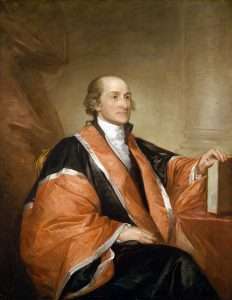
The post Today in Supreme Court History: October 19, 1789 appeared first on Reason Magazine.
10/18/1960: Gomillion v. Lightfoot argued.
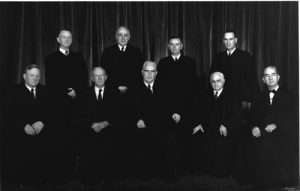
The post Today in Supreme Court History: October 18, 1960 appeared first on Reason Magazine.
10/17/1862: Justice David Davis takes oath.
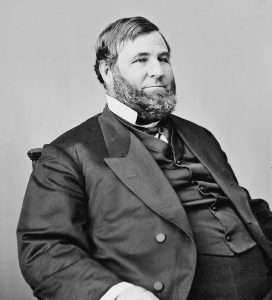
The post Today in Supreme Court History: October 17, 1862 appeared first on Reason Magazine.
10/16/1898: Justice William O. Douglas's birthday.
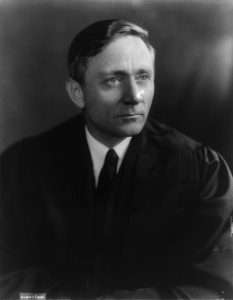
The post Today in Supreme Court History: October 16, 1898 appeared first on Reason Magazine.
10/15/1883: The Civil Rights Cases are decided.
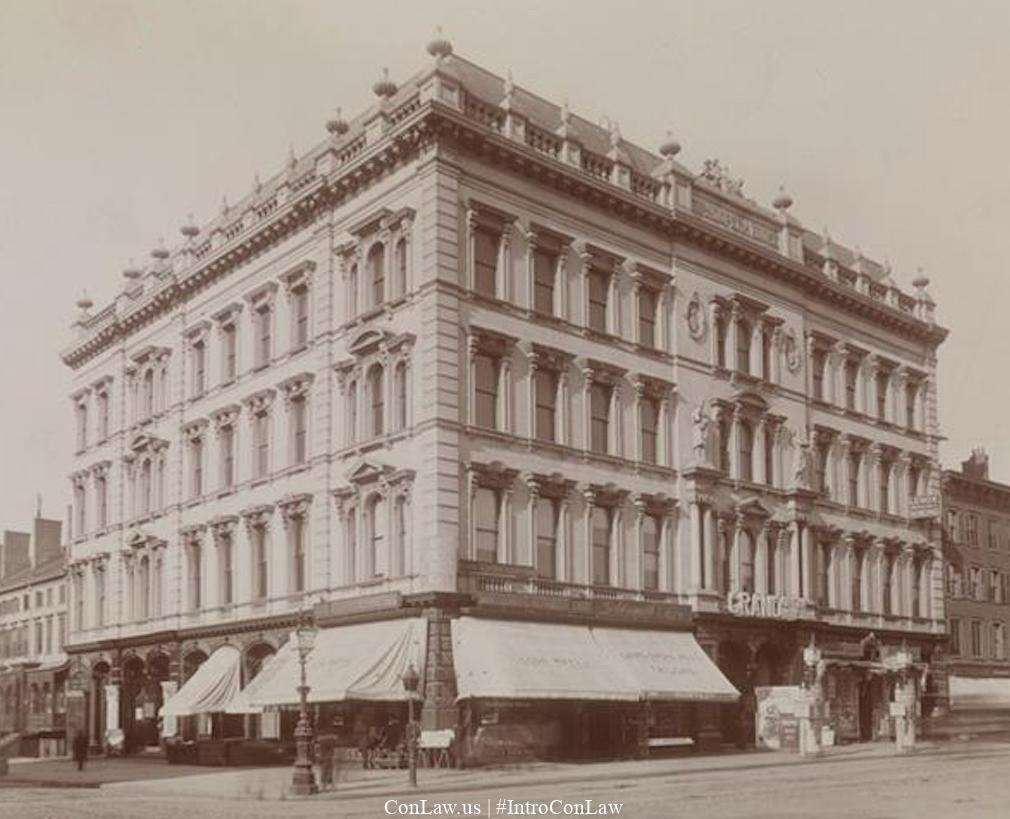
The post Today in Supreme Court History: October 15, 1883 appeared first on Reason Magazine.
SCOTUSBlog has published the latest essay from me and Randy Barnett on the recent changes in constitutional law. This entry focuses on the Religion Clauses and the Second Amendment. It begins:
Twenty years ago, the Supreme Court strictly enforced the separation of church and state, deferentially reviewed restrictions on free exercise rights, and played no role in enforcing the Second Amendment. This was the state of the law when one of us began law school in the fall of 2006.
What a difference two decades has made for the First and Second Amendments.
The next installment in this series considers the changes to Congress' enumerated powers, the president's executive powers, and the separation of powers between those branches.
The post New on SCOTUSBlog: "Witnessing a reorientation of the First and Second Amendments on the Roberts court" appeared first on Reason Magazine.
10/14/1911: Justice John Marshall Harlan I dies.
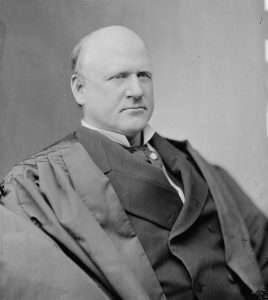
The post Today in Supreme Court History: October 14, 1911 appeared first on Reason Magazine.
My new essay in Civitas introduces novel research about the understanding of the Establishment Clause in 1868. I dug through recently digitized archives of the Freedmen Bureau. In short, a federal government agency, headed by military chaplains, worked with religious groups to establish schools in the South, and the curriculum in those classes included bible readings and prayers.
Here is an excerpt:
The regulations for Freedmen schools in Texas provided that classes would begin at 9 A.M. and "[t]he morning Exercises will commence with either the singing of an appropriate hymn, or prayer, or the reading of the Scriptures." For Louisiana Freedmen schools, each day, "[t]he opening exercise in every school will be the reading a passage of Scripture or a prayer in place thereof." After prayers, the students would sing "an appropriate hymn or melody." The Freedmen school in Bainbridge, Georgia opened the day by reading one chapter from the Bible. The Freedmen school in Mobile, Alabama opened each day with a "divine service, which exercises consist of reading short selections from the Bible, after which the school repeat[s] the 23rd Psalm." (It begins, "The Lord is my shepherd. . . .") "Then all kneel, when a short prayer is offered by some designated teacher, at the close of which all join in the repetition of the Lord's prayer, when the exercises are concluded by singing . . . "
In February 1868, a teacher at the Clinton's Freedmen's School in Tennessee reported to the Freedmen's Bureau that "the prayers of the pupils is [sic] encouraging." In October 1868, Dellie Gordon, a teacher at a Sabbath School in Prince George's County, Maryland, wrote to Rev. John Kimball, the Superintendent of District of Columbia Schools. Gordon relayed that she "opened school on Sunday afternoon and recited the Ten Commandments which, the children had never heard before." Gordon added that "with explaining the 2nd chap St. Matthew the afternoon passed very pleasantly." (This chapter discusses Jesus's birth and early childhood.) . . .
The purpose of teaching scripture was not merely to promote literacy. The Bureau recognized a close connection between teaching religion and promoting morality among the families of recently freed slaves. In October 1866, the Superintendent of Schools for Alabama wrote that "[e]ffort has been made to supply the moral and religious wants of the freedmen as far as possible" through the donation of 2,000 Bibles from the American Bible Society. The report observed that "portions of the Holy Scriptures find their way to households which, probably, would be reached in no other way." Another report from Alabama explained that "[e]ffort has been made to supply the moral and religious wants of the freedmen as far as possible." General O.O. Howard, the Commissioner of the Freedmen's Bureau, and the namesake of Howard University, was told that teachers "explain[ed] the lessons of morals and christianity, so strikingly presented in every page of the Bible."
The schools also engaged in outright proselytization. Teachers at American Missionary Association schools for Freedmen in Alabama were required to fill out a monthly report with questions about conversion: how many Bibles were distributed? How many families were "engaged in religious services, either by reading the Scriptures, singing, or prayer"; how many "hopeful conversions, if any, during the month"? One report from the Girard Freedmen School reported nine hopeful converts. . . .
The Freedmen schools, which were managed and funded by the federal government, proactively incorporated the Bible into the curriculum. Students began their day with prayer, read from the bible, and teachers were encouraged to proselytize. These actions were viewed as a critical way to develop morality among the freedmen. This history from the Second Founding should inform how the Establishment Clause would have been understood when the Fourteenth Amendment was adopted.
I have published here only a small bit of my research. The full load will come in a forthcoming symposium article. I encourage others to follow this path, and see what else comes up.
The post New Essay: "The Establishment Clause At The Second Founding" appeared first on Reason Magazine.
10/13/1890: Justice Samuel Miller dies.
The post Today in Supreme Court History: October 13, 1890 appeared first on Reason Magazine.
