❌

Reading view

Marijuana use rises sharply among one group of Americans, new study finds

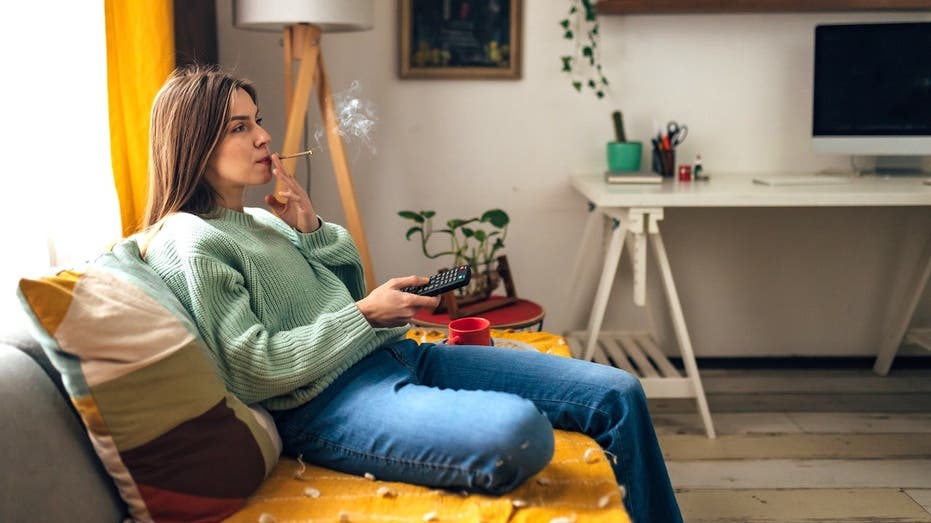
A growing number of American parents are using cannabis, prompting questions about potential child exposure and safety, according to a new study.

Cannabis use increased substantially among parents between 2012 and 2024, with researchers estimating that at least 5.9 million U.S. children were living with a parent who used marijuana on most days in 2024.

By 2024, 8% of parents used cannabis on most days, 5.2% used it daily and 6.7% met the criteria for cannabis use disorder (CUD).

IS DRINKING EVERY DAY ALCOHOLISM? EXPERTS EXPLAIN WHERE CULTURE AND ADDICTION COLLIDE

Daily cannabis use among parents was about four times as common as daily alcohol use, the study found.

While increases occurred across nearly all demographic groups, some of the largest were seen among younger and unmarried parents, those in lower-income households and those without a four-year college degree.

Researchers from the University of California, San Diego, analyzed data from the National Survey on Drug Use and Health (NSDUH), involving nearly 482,000 U.S. individuals ages 12 and older.

The findings were published in the journal Addictive Behaviors.

MARIJUANA USERS MAY FACE HIDDEN DRIVING DANGER THAT STANDARD TESTS CAN MISS

"Marijuana has become so socially acceptable that people are starting to overlook the risks," Dr. Jarid Pachter, who specializes in family medicine and addiction medicine at Stony Brook Medicine in New York, told Fox News Digital.

"Just because it's legal doesn't mean it's harmless," added Pachter, who was not involved in the study.

The physician also expressed concern about the example parents are setting for their children.

"If marijuana use is a regular part of life at home, children may start to see it as something that's normal and relatively harmless," he said, pointing to studies that show children whose parents use marijuana are more likely to use it themselves as they get older.

"That doesn't necessarily mean the parent's marijuana use is causing the child to use, but there's clearly an association."

The doctor also cautioned that THC, the main psychoactive chemical in the marijuana plant, is known to affect attention, memory, coordination and reaction time.

NIGHTLY GLASS OF WINE MAY NOT BE AS HARMLESS AS MANY PEOPLE THINK, STUDY SUGGESTS

"When you have young children, you need to be alert and able to respond to their needs," he said. "I'm not suggesting that someone who uses marijuana can't be a good parent. My concern is about being impaired when you're responsible for a child's safety."

"I also think we need to be careful about normalizing daily marijuana use," he went on. "We wouldn't automatically consider daily alcohol use harmless, and we shouldn't look at marijuana that way, either."

Pachter emphasized that accidental ingestion is another concern, especially with edibles like marijuana gummies or chocolate, which can look like regular candy to a young child.

"We've seen significant increases in emergency room visits involving children who accidentally consume marijuana," he told Fox News Digital.

CANNABIS COMPOUNDS COULD REVERSE DISEASE AFFECTING ONE-THIRD OF ADULTS

"Some develop severe sedation, confusion and difficulty walking. In more serious cases, children can have breathing problems and require hospitalization."

The more frequently someone uses marijuana, the greater risk of developing cannabis use disorder, the doctor cautioned.

CLICK HERE FOR MORE HEALTH STORIES

"We also know THC can affect memory, attention and coordination. Frequent use, particularly of high-potency products, is associated with an increased risk of certain psychiatric problems in susceptible individuals."

Smoking marijuana around children can also pose a risk of secondhand exposure.

"Marijuana smoke contains many of the same harmful chemicals found in tobacco smoke," the physician said. "We know children can be exposed to THC through secondhand smoke, although we're still learning about the long-term health effects."

CLICK HERE TO SIGN UP FOR OUR HEALTH NEWSLETTER

For those who use marijuana every day, Pachter suggests they ask themselves whether they can go without it, and whether it is affecting work, relationships or responsibilities.

TEST YOURSELF WITH OUR LATEST LIFESTYLE QUIZ

"And if you're a parent, you need to consider whether your marijuana use is affecting your ability to care for your children."

The study had some limitations. The researchers did not assess parenting quality or children’s health, and the findings do not establish that parental cannabis use causes adverse child outcomes.

Additionally, the data relied on self-reported substance use, which could be subject to recall or reporting bias.

The researchers called for further studies examining whether the frequency of parental cannabis use, cannabis use disorder, household exposure and storage practices are associated with children's health or developmental outcomes.

CLICK HERE TO DOWNLOAD THE FOX NEWS APP

The researchers reported funding support from the California Department of Cannabis Control, the Canadian Institutes of Health Research, the National Institute on Drug Abuse and the National Institute on Alcohol Abuse and Alcoholism.
  •  

‘Super-drug’ 10 times stronger than fentanyl linked to deaths across multiple states

A powerful new synthetic opioid said to be more potent than fentanyl has been linked to dozens of recent deaths in the U.S., prompting warnings from health officials.

Tennessee was an early hotspot, with the state’s health department announcing in March that more than 30 fatal overdoses had been associated with cychlorphine since October 2025.

An April 2026 notice from the White House’s Office of National Drug Control Policy cited at least 41 Tennessee deaths between July 2025 and February 2026 and at least 55 deaths nationally.

KRATOM INDUSTRY WARNS SYNTHETIC OPIOIDS SHOULD NOT BE CALLED 'KRATOM'

Fatal overdoses have also been reported in Illinois, California and Oklahoma, according to public health and law enforcement records.

"Cychlorphine is particularly dangerous due to its strength, where a very small amount can cause someone to stop breathing," the Los Angeles County Department of Public Health said in its advisory.

Nicholas Kardaras, Ph.D., CEO and chief clinical officer of the New York Center for Living in Manhattan and a clinical professor at Stony Brook Medicine’s School of Social Welfare, called cychlorphine "the new fentanyl on steroids."

WHAT TO KNOW ABOUT PENTOBARBITAL AFTER DEATH ROW INMATE SURVIVES 2 LETHAL INJECTION DOSES

Cychlorphine is a novel, unregulated synthetic opioid that activates the same receptors as fentanyl, according to the Drug Enforcement Administration. It can cause profound sedation, slowed or stopped breathing, or death.

The drug is not approved for medical use and has been detected in illicit drugs and counterfeit pills.

Kardaras called cychlorphine "one of the most potent synthetic opioids" now appearing in the illicit drug supply.

"Fentanyl is about 50 times more potent than morphine or heroin," he told Fox News Digital. "Cychlorphine is reportedly up to 10 times more potent than fentanyl — so theoretically, about 500 times more potent than morphine or heroin."

"This new synthetic drug is making fentanyl look like yesterday's candy."

DR DREW PINSKY REVEALS RED FLAG IN PRESLEY GERBER ADDICTION TREATMENT BEFORE MODEL'S DEATH

Cychlorphine is taken in various forms — people can ingest it as a pill, snort it in powder form or crush it and administer it intravenously, according to Kardaras.

"The problem has been, in addition to its potency, it's often put in other designer drugs and in counterfeit pills," he cautioned.

While some people seek out cychlorphine for its potency, others may ingest it unknowingly when it is mixed into other substances.

"Sometimes, by talking about how potent some of these substances are, we increase the allure of them for some addicts, unfortunately," Kardaras said.

CLICK HERE FOR MORE HEALTH STORIES

While cychlorphine is primarily a street drug, it can also be purchased online or via "boutique designer-drug markets," according to the expert.

Cychlorphine can cause a fatal overdose in anyone, regardless of age. Kardaras said younger people may face greater exposure because some are more likely to experiment with drugs or purchase counterfeit pills.

"They’re buying something online … and all of a sudden, without knowing it, they’re ingesting fentanyl or another synthetic opioid," he said.

CLICK HERE TO SIGN UP FOR OUR HEALTH NEWSLETTER

Naloxone, commonly sold under the brand name Narcan, can reverse cychlorphine’s opioid effects, but multiple or prolonged doses may be needed.

"What used to take one or two doses of Narcan to reverse an overdose may now require five or six doses, based on anecdotal evidence," Kardaras said.

The DEA advises people to administer naloxone immediately, call 911 and be prepared to give additional doses.

Another major concern with cychlorphine is that standard fentanyl test strips and routine hospital opioid urine screens do not detect it.

TEST YOURSELF WITH OUR LATEST LIFESTYLE QUIZ

"Most drug tests have very specific chemical structures that they detect in any kind of synthetic or non-synthetic drug, and this new one hasn't quite been baked into the current testing strips," Kardaras noted.

CLICK HERE TO DOWNLOAD THE FOX NEWS APP

The takeaway, he said, is that cychlorphine may be up to 10 times more potent than fentanyl, is not detected by standard fentanyl test strips or routine hospital opioid urine screens, and may require multiple doses of naloxone to reverse.

"So it's a triple whammy," he said. "It's a constant battle of keeping up with the latest iterations of new drugs."

  •  

CVS agrees to pay $315 million to settle Justice Department case over opioid prescriptions

The settlement resolves a lawsuit brought in 2024 that accused the healthcare giant of providing massive amounts of opioids and other controlled substances "to fuel its own profits at the expense of public health and safety."

  •  

The first symptom of alcoholism

To identify alcoholism, the first step is to look for the reasons for drinking. The first thing to look out for is the tendency to make excuses—such as holidays, the end of the work week, social gatherings, stress, or life challenges—that lead to drinking. Even while the person continues to work and remain socially active, […]

  •  

A Tale of Two Trap Houses: Being Cuckooed Ruined My Friend’s Life—But Did It Then Help Save Him?

Duncan is a longtime friend of Max Daly, and a drug addict caught up in “cuckooing,” where dealers take over people’s homes as drug bases in exchange for product. Daly offers a sympathetic portrait of Duncan’s spiralling life, while opening a window onto a bizarre world where the most vulnerable exploit each other—and sometimes even form bonds.

Over the 2000s and 2010s, wave after wave of gangs fanned out from Britain’s drug supply hubs – London, Liverpool and Birmingham – to set up shop in smaller towns and cities across the country. They took over the homes of drug users and young women who had been groomed by older male gang members. As early as 2008 Suffolk constabulary reported that more than a third of Class A drug dealers arrested in Suffolk were under 21, and the majority were from London. (Before this period, most crack and heroin dealers in towns and smaller cities were “user-dealers”, addicted heroin users in their 30s or older, who were not as “professionalised” as the big city drug gangs.) Gangs often used sex workers, who targeted male tenants and moved in, bringing the young dealers with them. Community safety teams, who rescued 80 tenants in London in 2005, were the first to call the tactic “cuckooing”.

  •  
❌