❌

Reading view

New Montana “Super Range” Complex Could Add Critical Weapons Testing Capacity

A plan for a new military weapons “super range” test center in Montana announced by President Donald Trump Wednesday night seeks to address a growing concern about the need for more such facilities. As the U.S. races to develop autonomous capabilities, hypersonic munitions, laser and directed energy weapons and improved electronic warfare systems, a limiting factor has been the lack of suitable locations for testing.

While the U.S. military has a wide array of installations where it can test these systems, it’s still not enough. In addition to the massive increase in weapons development and the need for more realistic training, the changing nature of war is outstripping the capacity of existing facilities as future kill webs will extend thousands of miles, not hundreds. There are only so many places with enough space to try out these systems even to a limited degree without butting up against statutes and regulations while also avoiding interference with civilian air traffic and communications, all in an environment remote enough to avoid prying eyes. The need for more and bigger testing grounds is an issue TWZ has long raised.

In addition to the backdrop of the increase in a wide range of weapons testing, much of it aimed at China, Trump’s super range announcement was delivered as the Pentagon and services are specifically creating commands dedicated to autonomous weapons. On Tuesday, during the annual Association of the U.S. Army (AUSA) conference in Washington, D.C., attended by TWZ, the acting Army Secretary unveiled one such new command, which we will discuss in greater detail later in this story.

“I’m pleased to inform ​you and announce that right here in Montana, the Department of War is ⁠going ⁠to establish a new ⁠”super range” ​for testing advanced weapons and technologies, technologies including potential autonomous weapons, space, and electronic ​warfare technology, supersonics and ⁠hypersonics,” Trump said during a campaign rally in Kalispell. “Montana will help ensure the American military always reigns supreme.”

.@POTUS: "I'm pleased to inform you and announce that right here in Montana, the @DeptofWar is going to establish a new Super Range for testing advanced weapons and technologies, including potential autonomous weapons, space and electronic warfare technology, supersonics, and… pic.twitter.com/W4YqKfq8X4

— Rapid Response 47 (@RapidResponse47) October 15, 2026

Trump provided no additional details about where this new “super range” will be located, when it will come online, exactly which systems will be tested or how much it will cost.

Thursday morning, the office of U.S. Sen. Tim Sheehy noted that he has been “a strong advocate for building an advanced training range in Montana, securing $10 million for a feasibility study in the FY27 National Defense Authorization Act that passed the Senate Armed Services Committee earlier this year.”

“The 21st-century battlefield is being redefined by new weapons and evolving technical frontiers that require a novel approach to how America will resource its warfighting capabilities,” the senator said in a statement. “Contested spectrum, electronic warfare, hypersonics, space capabilities and enhanced targeting require a new class of testing and evaluation facilities for our military. The U.S. faces a clear choice: adapt and expand our development infrastructure to the realities of modern warfare, or risk falling behind adversaries who iterate faster.”

The Montana Republican highlighted the value of his state’s huge swaths of undeveloped land for this effort.

“By combining our state’s vast landscapes, innovative spirit, and proud tradition of military service, we are the Last Best Place to ensure America’s fighting men and women have the technological edge they need to dominate the battlefield and win the wars of tomorrow,” he explained.
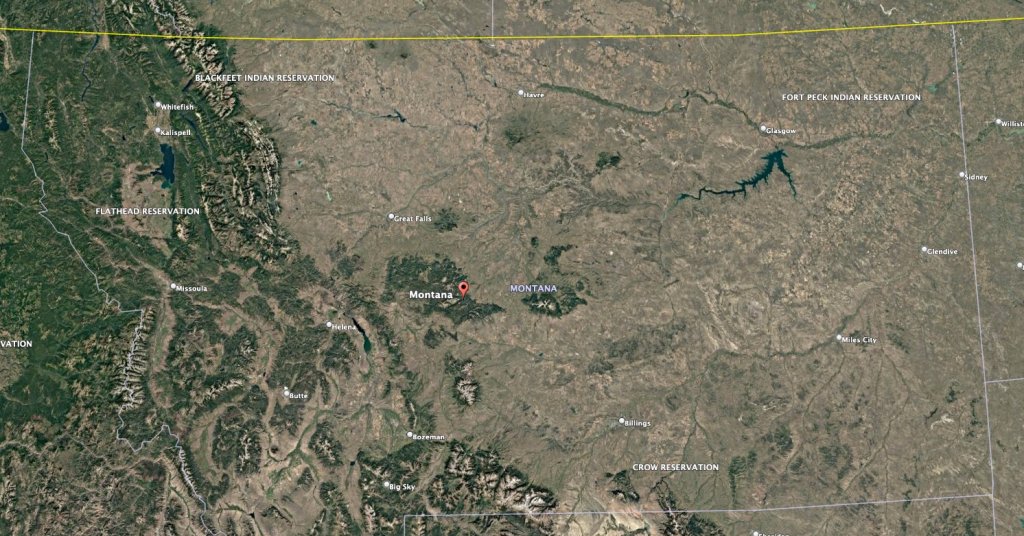
Montana (Google Earth)

Like Trump, Sheehy offered no specifics about exactly where in Montana the “super range” will be located, when it will come online or how much it will cost. We have reached out to the White House, Sheehy and the Pentagon for more details. The Pentagon deferred us to the White House, which referred us back to the Pentagon. We also contacted the office of U.S. Sen. Steve Daines and Gov. Greg Gianforte.

There are already a number of facilities in Montana conducting the kind of military weapons testing described by Trump. One that closely matches what would be needed from such a location is the Montana Spaceport & Test Range and the affiliated Limestone Hills Innovation & Test Campus. A public-private aerospace and defense initiative, it already conducts testing for next-generation space vehicles, hypersonic, supersonic and ballistic weapons, drones and counter-drone systems and electronic warfare equipment.

Another potential site could be an expansion of the Big Sky Autonomous Systems Range (BSASR). Located near Bozeman, it is “the Lobo Institute’s primary training and testing facility for U.S. and allied military, federal, and partner organizations.” Operated under the Lobo Tactical division, BSASR is “a 6,000-acre, fully fenced complex purpose-built for advanced unmanned aerial systems operations, full-spectrum live fire, mounted and dismounted mobility, and full mission profile exercises grounded in the latest tactics, techniques, and procedures from active conflict zones,” according to the Lobo Institute. “The range pairs realistic terrain with the regulatory, infrastructure, and instructor depth required to train against the operational realities of today’s and tomorrow’s battlefields — and it does so in a remote, controlled environment where units can push hard while keeping risk to acceptable levels.”

Training at the Big Sky Autonomous Systems Range in Montana. (BSASR)

We have reached out to both facilities for more details.

The new super range could also leverage existing range space on the ground and in the air. There is also the large Hays Military Operations Area (MOA) which could be expanded for this new test range effort. MOAs are blocks of airspace designated for military training. Malmstrom Air Force Base and its ICBM fields could also potentially be utilized. Overall, it’s possible a number of existing range areas could be interconnected, both digitally and via airspace corridors, to create a larger complex, as well.

The Pentagon has long realized the need to increase the areas where it can test out these systems, especially to evaluate them under combat-like conditions.

“The current open-air range space should be increased and better integrated to support system-of-systems assessments of air, land, and sea combat systems with capability for emerging long-range fires, hypersonic missiles, EMS warfare, unmanned systems, nuclear effects, and directed energy (DE) weapons,” the Pentagon’s Director of Operational Test & Evaluation (DOT&E) stated in a report last year. “The DoW needs to invest in and coordinate expanding and connecting the airspace available to the open-air ranges enabling testing and training of advanced capabilities.”
DOT&E

The current facilities are inadequate, DOT&E further explained.

“Threat systems and our own capabilities far exceed the current available air space on the open-air ranges,” according to the report. “The ranges need support and assistance to coordinate additional airspace and corridors with the FAA and industry. Expanding and connecting range air space is necessary to facilitate testing and training critical long-range capabilities that our warfighters need and to replicate the threats they will face.”

In addition, the report states that “to test missiles with longer ranges and gather data to support simulation validation, including for hypersonic missiles, the DoW should invest in long-range, overland missile flight test corridors with land-based impact areas and mobile hypersonic-specific range instrumentation to produce the required lethality data against threat-representative targets for terminal area assessments.”
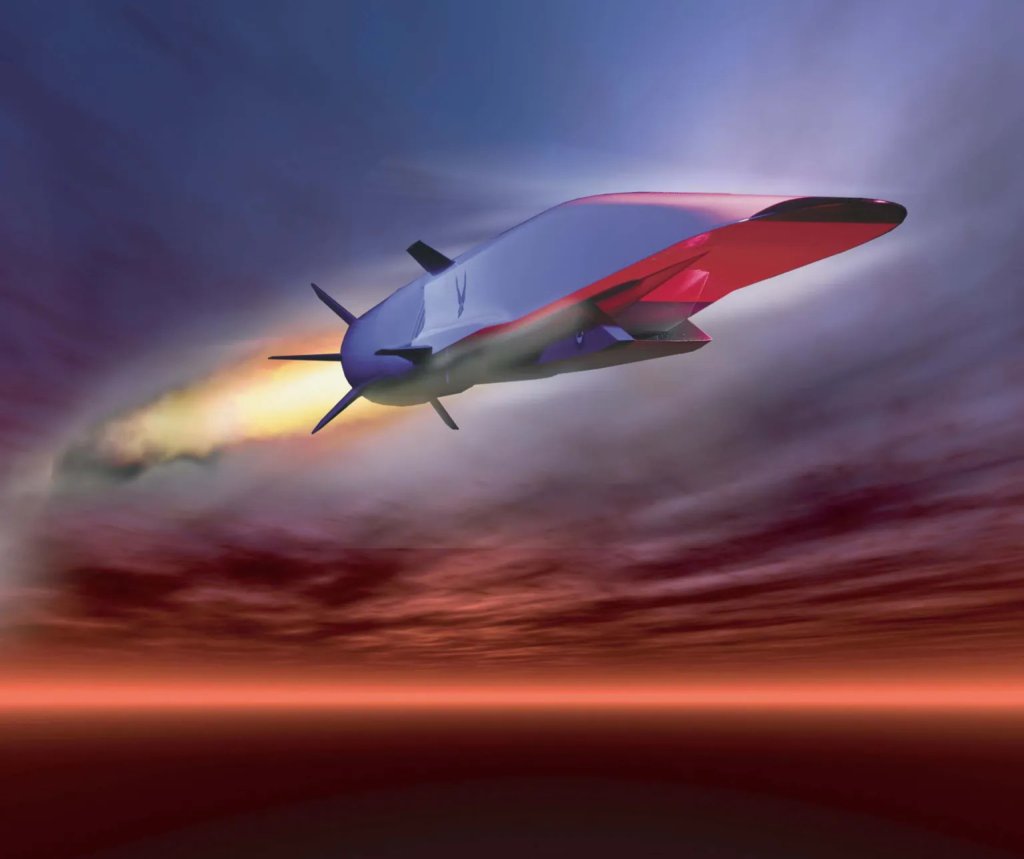
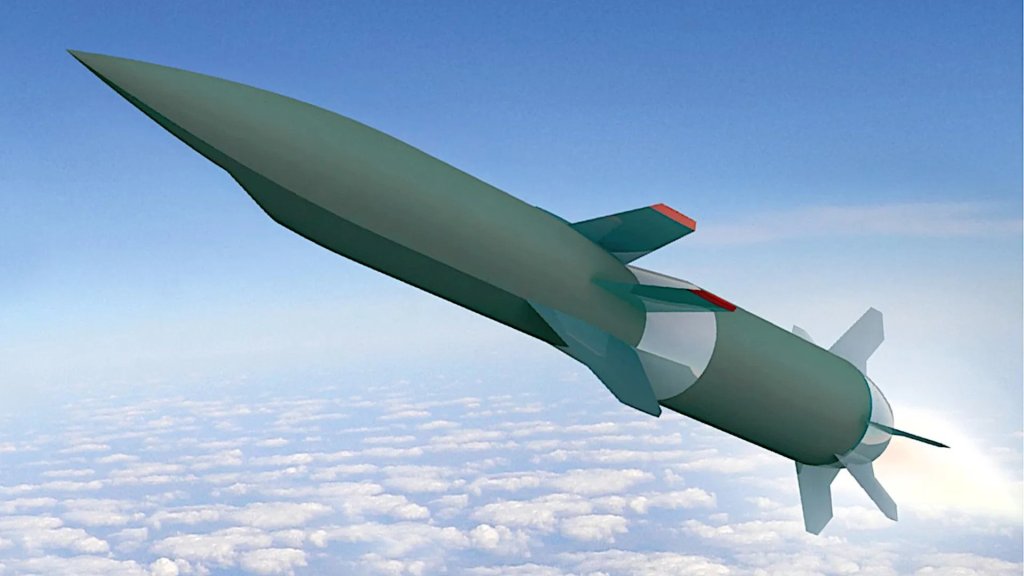
Rendering of an X-51A Waverider hypersonic weapon. Powered by a Pratt & Whitney Rocketdyne SJY61 scramjet engine, it is designed to ride on its own shockwaves and accelerate to about Mach 6. (U.S. Air Force)

The Defense Department had largely been conducting the testing of hypersonic weapons — those that can reach speeds of Mach 5 and above — at sea given the need for the long ranges for evaluation. Still, even that was limited. The Pentagon restricted the number and location of hypersonic tests it carried out each year because of the aging fleet of ships it used as its primary data collection assets to track the capabilities while in flight.

Retired Block 20 and Block 30 RQ-4 Global Hawks belonging to the U.S. Air Force, reconfigured as RangeHawks under the SkyRange hypersonic weapon testing infrastructure program, would help address some of those restrictions. You can read more about that in our story here.

However, if testing moves to an overland phase, the need for expanded air corridors could grow increasingly critical. Last year, the Pentagon’s Test Resource Management Center (TRMC) identified three candidate locations to perform those tests, one over Alaska, another at White Sands Missile Range in New Mexico and a third in Australia, Defense News reported at the time.
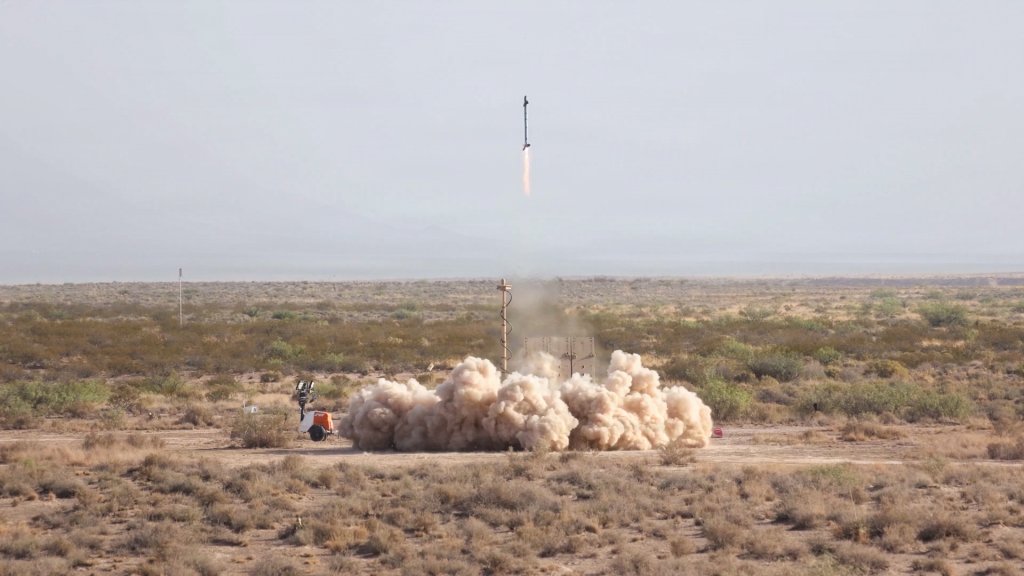
An interceptor launches from an Indirect Fire Protection Capability (IFPC) system operated by Soldiers assigned to the 1st Battalion, 51st Air Defense Artillery Regiment, 7th Infantry Division (Multi-Domain Command Pacific), during a test at White Sands Missile Range, New Mexico, on July 28, 2026. (U.S. Army photo by Sgt. Michael Majors and White Sands Missile Range Public Affairs)
An interceptor launches from an Indirect Fire Protection Capability (IFPC) system operated by soldiers assigned to the 1st Battalion, 51st Air Defense Artillery Regiment, 7th Infantry Division (Multi-Domain Command Pacific), during a test at White Sands Missile Range, New Mexico, on July 28, 2026. (U.S. Army photo by Sgt. Michael Majors and White Sands Missile Range Public Affairs) Sgt. Michael Majors

Hypersonic testing in Australia is already underway. Earlier this month, we broke the news that the U.S. Air Force’s scramjet-powered Hypersonic Attack Cruise Missile (HACM) had finally reached the flight test phase, with at least one “release” having been carried out so far over a range in Australia.
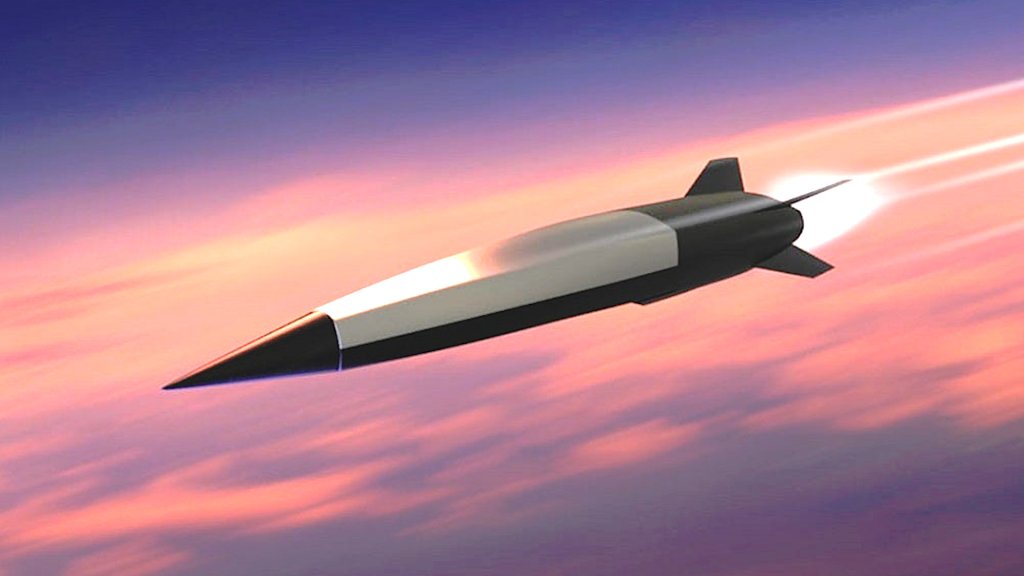
The U.S. Air Force's scramjet-powered Hypersonic Attack Cruise Missile (HACM) has finally reached the flight test phase, with at least one "release" having been carried out so far over a range in Australia.
The U.S. Air Force’s scramjet-powered Hypersonic Attack Cruise Missile (HACM) has finally reached the flight test phase, with at least one “release” having been carried out so far over a range in Australia. (Raytheon) Raytheon

The military is also looking to expand where it can test electronic warfare systems to help ease the bottleneck at White Sands and a few other locations. Such testing is limited due to U.S. restrictions on jamming, which can interfere with civilian systems.

Before he resigned after tensions with Defense Secretary Pete Hegseth, former Army Secretary Dan Driscoll in June said the service had plans to set up at least two domestic ranges that mimic realistic conditions on Ukraine’s battlefields, where the electromagnetic spectrum is a highly contested domain. This spectrum would be even more heavily disputed in a fight with China.

“You can have a kind of electronic warfare and all of the contested environment created, and you can have drone manufacturers and counter-drone tool-builders engaging together,” Driscoll told reporters. “Then, we also want soldiers to be able to go there, so that they can strengthen their skills and work hand-in-hand with developers.”
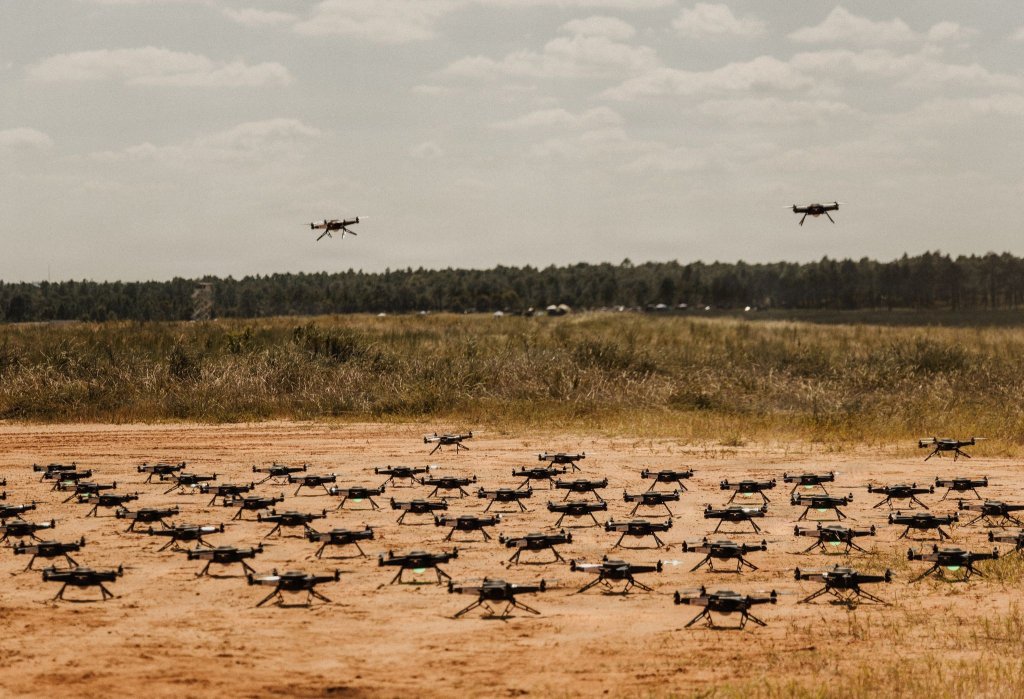
A drone swarm returns from a mission during the XVIII Airborne Corps’ Scarlet Dragon 26-3 at Fort Bragg, N.C., Sept. 15, 2026. Scarlet Dragon used coordinated swarms of up to 100 drones to stress sensor networks, software and air defense crews. Flying realistic aerial threat profiles helped the corps evaluate its ability to detect, track and respond to dense unmanned aircraft system threats. (U.S. Army photo by Pfc. Iliana Lopez)
A drone swarm returns from a mission during the XVIII Airborne Corps’ Scarlet Dragon 26-3 at Fort Bragg, N.C., Sept. 15, 2026. (U.S. Army photo by Pfc. Iliana Lopez) Pfc. Iliana Lopez

Driscoll said there are already places in the U.S. where the Army can test safely, and separately, the service is looking at a global range outside the U.S. to do “much more aggressive testing,” including with hypersonics. When asked, Driscoll declined to say where these ranges would be until planning is farther along. 

“At least some of the current counter-drone training for soldiers, like one CBS News saw in April, does not include electronic jamming — in part because the U.S. restricts jamming domestically,” CBS reported.

In August, the Army opened premier test ranges for the use of private industry to conduct internal research and development. Additionally, the service co-hosted a Denied, Disrupted, Intermittent and Limited testing environment, at Camp Grayling in September, and there are three more scheduled for Fiscal Year 2027, an Army spokesperson told us.
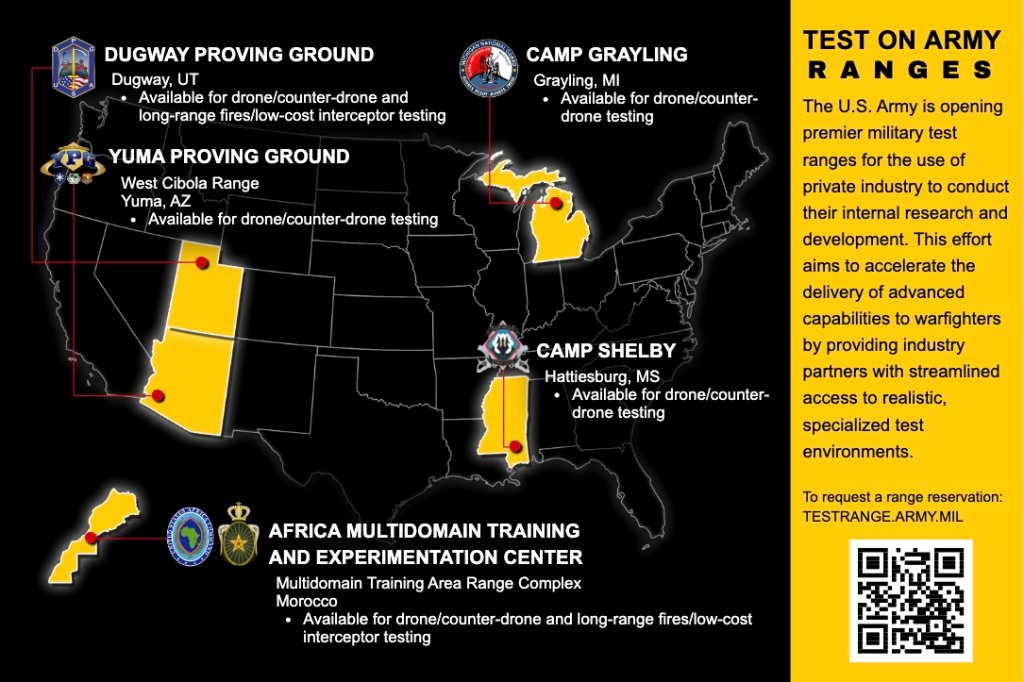
(U.S. Army)

Trump’s news about the “super range” was delivered as the Pentagon and the services are working to ramp up the development and production of a range of autonomous systems.

Last month, as we noted earlier in this story, the Pentagon announced plans for a new functional combatant command, very broadly akin to U.S. Special Operations Command (SOCOM) or U.S. Space Command (SPACECOM), but for operational activities involving autonomous and robotic capabilities. In addition, Hegseth also announced new initiatives to help further accelerate the fielding of uncrewed systems in the air, at sea, and on land, as well as to explore future warfighting challenges. All of this builds on previous and long-overdue efforts to prioritize the fielding of various tiers of drones, as well as artificial intelligence (AI) and other emerging technologies, across domains, but there are questions about how these new efforts will translate into tangible developments.

.@SECWAR “Today, at my direction—we are announcing the creation of Autonomous Warfare Command, or AutoWarCom:

A new 4-star combatant command—with service-like authorities—built to scale autonomous and robotic capabilities across the Joint Force in the fastest peacetime shift in… pic.twitter.com/kYWBxy6Dij

— DOW Rapid Response (@DOWResponse) September 30, 2026

On Tuesday, acting Army Secretary Adam Telle announced the creation of the service’s Futures and Autonomous Systems Command (FASCOM).

“This is our way to make sure that we take all of the great work that’s been happening with the resources that we have today, and we centralize it,” Telle said. “We’re pushing autonomy down into our units, but when it comes to having and making sure that the left hand in the Army knows what the right hand of the Army is doing, this happens at FASCOM; then FASCOM feeds up into AutoWarCom.”

Telle added that FASCOM “will work with the other services to create scale for purchasing power and share best practices on autonomy.”

“It is too soon to speculate about anything related to FASCOM,” the Army told us. “Specifics on structure, command, mission, etc. will be announced at a future dates [and] will require the kind of additional testing facilities that a new Montana super range could provide.”

The use of highly cooperative autonomous weapons platforms that can swarm and operate collectively over large areas will also tax existing ranges beyond their capacity.

Details about the new range proposed by Trump are scant, and it remains to be seen whether it will live up to the hype or even be built. As we noted earlier in this piece, a feasibility study, which hasn’t even been funded yet, is still needed before major work can begin. However, if and when it does come online, a new Montana test range will be welcomed by a military in need of additional places to test out its latest capabilities.

Contact the author: howard@twz.com

The post New Montana “Super Range” Complex Could Add Critical Weapons Testing Capacity appeared first on TWZ.
  •  

First Release Of USAF’s New HACM Hypersonic Cruise Missile Has Happened Over Australian Range

The U.S. Air Force’s scramjet-powered Hypersonic Attack Cruise Missile (HACM) has finally reached the flight test phase, with at least one “release” having been carried out so far over a range in Australia. HACM has suffered significant delays, and the Air Force has taken the risky step of scaling back overall testing plans to try to keep the program on schedule. The stated goal is to be able to make a decision to start rapidly acquiring HACMs in 2027.

The Air Force has been working on HACM in cooperation with the Royal Australian Air Force (RAAF). The program has been conducted, in part, under the broader umbrella of the U.S.-Australian Southern Cross Integrated Flight Research Experiment (SCIFiRE). The Defense Advanced Research Projects Agency’s (DARPA) Hypersonic Air-breathing Weapon Concept (HAWC) project also fed into HACM. Raytheon (now formally RTX), in cooperation with Northrop Grumman, was chosen to develop the missile in 2022. The weapon has reportedly been designated AHM-4A in a new branch of the U.S. military’s joint service nomenclature system for aircraft and missiles.

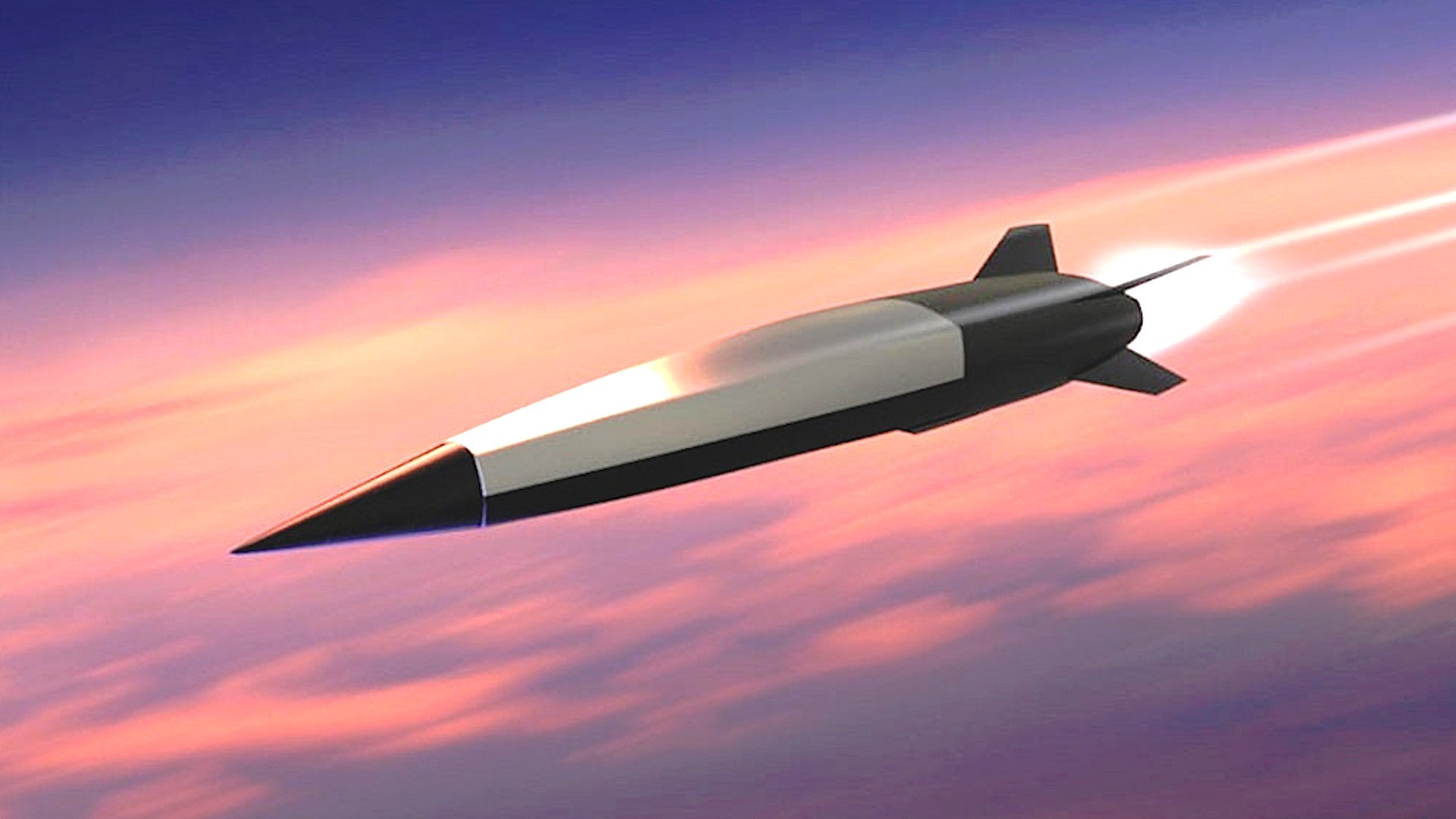
A rendering DARPA put out during the preceding Hypersonic Air-breathing Weapon Concept (HAWC) effort. DARPA

“The U.S. Air Force, in partnership with Australia, has conducted a flight test of the Hypersonic Attack Cruise Missile (HACM) as part of our continuous work to advance long-range strike capabilities,” an Air Force spokesperson confirmed to TWZ today. “This effort is part of the Southern Cross Integrated Flight Research Experiment (SCIFiRE), a collaborative agreement built on more than 15 years of partnership between our two nations.”

“Leveraging this enduring alliance, the Royal Australian Air Force executed the release of a HACM flight test unit over a designated Australian test range, gathering crucial data to advance the program’s objectives,” the spokesperson added. “The flight was the culmination of an extensive series of tests designed to measure the missile’s performance under realistic flight conditions.”

The spokesperson did not name the test range where the “release” was conducted or say when that occurred. Whether the missile flew under its own power for any amount of time after release is unknown. What aircraft was used to carry the missile aloft is also not known. TWZ has reached out for more information.

The Air Force did say previously that it planned to conduct HACM launches in Australia. The expectation has long been that this would be done at the country’s sprawling Woomera Test Range, which provides an ideal location for extended-range flight testing activities in general. The U.S. and Australia have partnered on other hypersonic testing at Woomera in the past, as seen in the video below. The remote inland location of the range complex makes it well suited for conducting more sensitive tests away from prying eyes, as well.

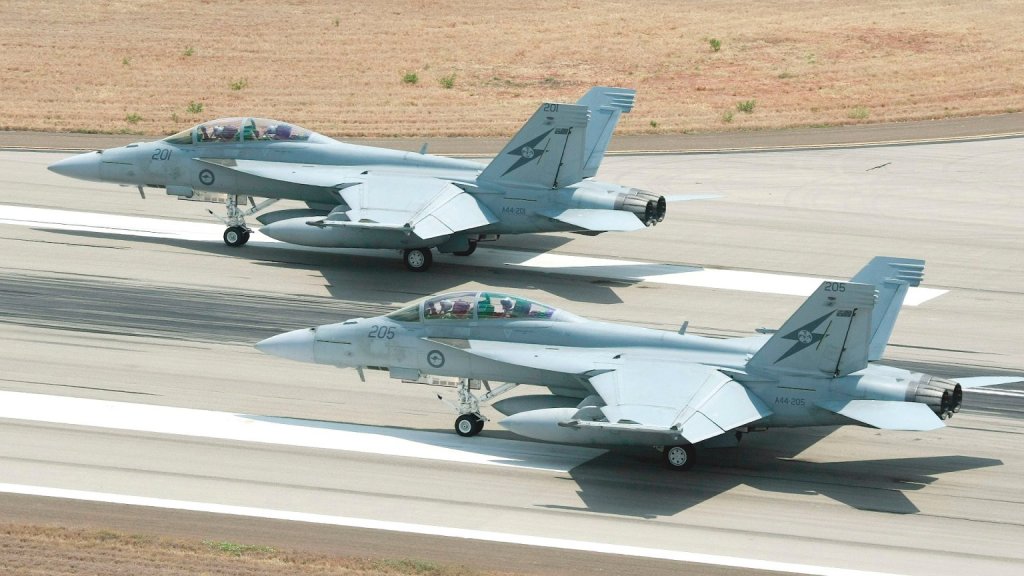
The Government Accountability Office (GAO), a Congressional watchdog, has also reported in the past that RAAF F/A-18F Super Hornets would be used to conduct at least some of the HACM test launches. This would fit with today’s statement from the U.S. Air Force saying that it was the RAAF that “executed the release.” The Air Force’s initial launch platform is the F-15E Strike Eagle, though others are expected to follow.

A pair of RAAF F/A-18F Super Hornets. RAAF

To date, neither the Air Force nor Raytheon has released a confirmed picture or rendering of HACM. In 2023, the Air Force did release a picture, seen below, showing an air-breathing hypersonic cruise missile test article related to either HACM or the preceding HAWC effort.

USAF

“The missile consists of two stages, a rocket booster and a scramjet cruiser, which separates from the booster and eventually dives toward its target,” according to GAO. Scramjets do not function effectively at lower speeds, and designs powered by them require some form of initial boost to a high Mach velocity. Hypersonic speed is generally defined as anything above Mach 5, but what HACM’s peak speed might be is unknown.

Two-stage air-breathing missile-like hypersonic vehicle designs have been tested on several occasions in the past. This includes Boeing’s scramjet-powered X-51 Waverider and HyFly 2 hypersonic test vehicles, among others. The X-51 (as its name indicates) and HyFly 2 also notably had so-called ‘waverider’ configurations designed to ‘skip’ on the shockwaves generated during high-speed flight to help provide additional lift. Whether HACM might also use this principle is not known.

It’s also worth noting here that Castelion’s Blackbeard hypersonic missile also has a two-stage configuration. It remains unconfirmed whether or not the second stage of that weapon is powered, but it does not appear to be an air-breathing design either way. Castelion is currently developing an air-launched version of Blackbeard for the U.S. Navy, which is also in flight testing now, as well as a ground-launched type for the U.S. Army. You can read more about that missile here.

Coming soon to a theater near you…BLACKBEARD!@USPACOM @CENTCOM @PAEAviation pic.twitter.com/KgBtIqdf8I

— NAVAIR (@NAVAIRNews) September 25, 2026

Scramjet-powered air vehicle designs, including aircraft and missiles, have historically proven challenging. As noted, HACM has suffered delays over the years. The original goal had been to begin flight testing in 2024, which slipped first to 2025 and then 2026.

“The HACM program is on track to conduct its first flight test in the second quarter of fiscal year 2026, but officials said there is effectively zero margin left in the schedule for the rapid prototyping effort. The program has already descoped the rapid prototyping effort from seven to five planned flight tests,” GAO said bluntly in a report published in July. “The Air Force plans to produce 13 missiles during the rapid prototyping effort, including test assets, test spares, and operational rounds.”

“If a significant flight test failure occurs, it is likely that the program will not be able to complete all five tests within the 5-year rapid prototyping timeframe,” the report continued. “According to the program, completing at least the first three flight tests is critical for informing the Air Force’s decision to initiate a rapid fielding effort and procure HACM in fiscal year 2027.”

GAO’s July report, which had a January cutoff date, noted later on that the Air Force’s target date for initiating the rapid fielding effort, more specifically, was the first quarter of Fiscal Year 2027. This fiscal period began last Thursday and runs through the end of the year. Whether the service is still aiming to keep to that part of the schedule is unclear, but it would seem extremely difficult to do so.

A Raytheon rendering of an air-breathing hypersonic air vehicle that GAO used to illustrate the entry on HACM in its recent report. Raytheon via GAO
Another rendering of a notional hypersonic missile that has been used to illustrate discussions about HACM in the past. Raytheon via GAO

“The HACM program has taken on risk to maintain its current schedule. According to program officials, maintaining the schedule has required aggressively resequencing activities to focus almost exclusively on those necessary to support the first flight test date,” GAO’s report added. “In some cases, officials said this has involved risky strategies, such as concurrently performing parts validation testing while completing the system’s design, which could require the redesign of key parts if they fail validation testing.”

In terms of U.S. hypersonic missile developments, challenges have also not been limited to scramjet-powered types like HACM. Air Force, Navy, and Army efforts to develop a variety of air- and surface-launched hypersonic missiles in various sizes and configurations have all suffered setbacks in the past decade or so. The Navy notably cancelled its own air-launched hypersonic cruise missile program, called Hypersonic Air-Launched Offensive Anti-Surface Warfare, or HALO, last year. The service subsequently shifted focus to the aforementioned Blackbeard under a program called the Multi-mission Affordable Capacity Effector (MACE). This has all prompted particular concerns about a growing and increasingly worrisome gap in this regard between the United States and its chief global competitors, especially China.

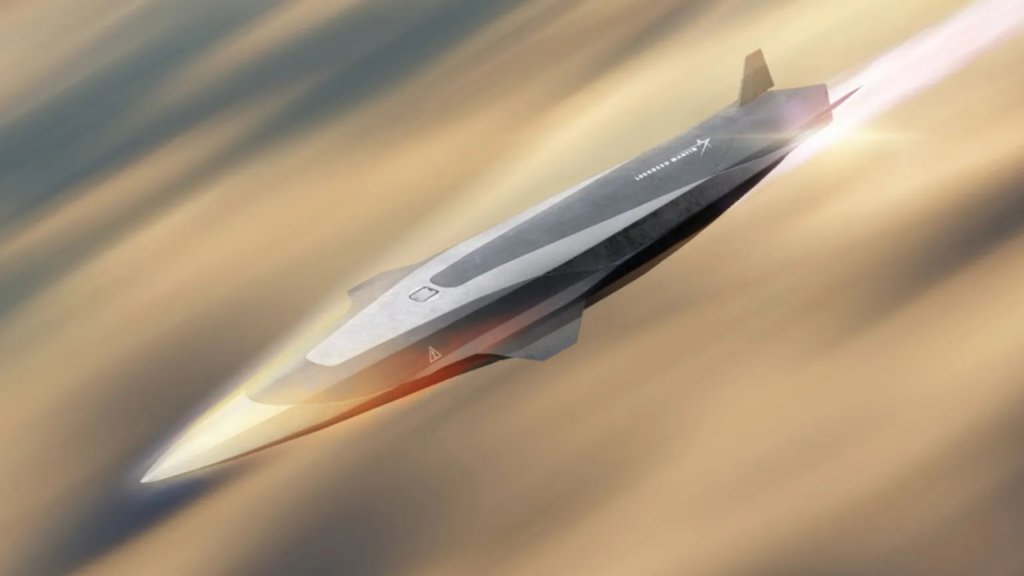
Lockheed Martin, which previously put out this rendering of a hypersonic cruise missile, had been working on HALO for the Navy before that program was cancelled. Lockheed Martin

There is also a cost question. HACM traces to a time when hypersonic missiles were generally viewed, at least publicly, as highly capable, but also higher-cost and lower-density, assets. Blackbeard, for example, reflects a more recent push to develop and field more economical munition designs across the board that can also be more readily produced at scale. This demand signal has become even more pronounced in light of the dwindling American stockpiles of critical munitions due to the conflict with Iran, as well as other crises globally in recent years. More exquisite munitions, including hypersonic types, will still be part of the larger U.S. arsenal going forward.

Regardless, the U.S. military, as well as its Australian counterparts, have made it clear in the past that they view hypersonic weapons as critical for success in future conflicts, especially high-end fights, such as one in the Pacific against China. In general, air-breathing hypersonic cruise missiles offer a valuable and highly flexible way to strike targets, especially time-sensitive ones, quickly and over extended ranges. The weapon’s high speed and maneuverability drastically increase its ability to penetrate through enemy air defenses and reduce the total time an opponent has to react.

Whether or not the Air Force will be able to avoid any more major delays with HACM remains to be seen. The service’s goal to start at least limited production of HACM before the end of 2027, if not sooner, is even more ambitious now after years of schedule slips. As mentioned, officials have already acknowledged there was no more margin for error at the start of the year. There are many questions still about what form any initial fielding will take, and how that might be further impacted by the truncated testing plan.

The HACM program has at least now hit the important milestone of beginning flight testing.

Contact the author: joe@twz.com

The post First Release Of USAF’s New HACM Hypersonic Cruise Missile Has Happened Over Australian Range appeared first on TWZ.

  •  

Blackbeard Hypersonic Missile Seen Flying On F/A-18 Super Hornet For The First Time

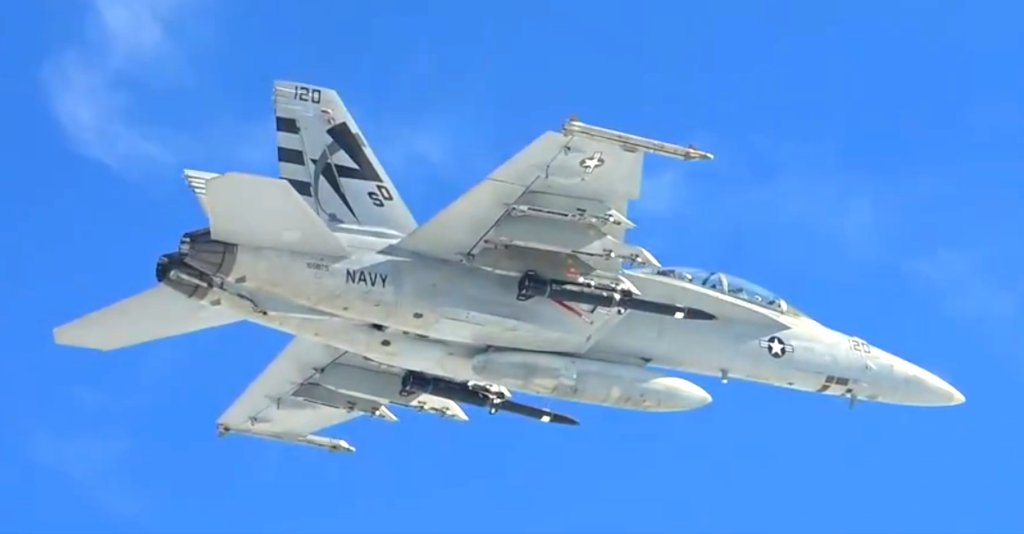
The U.S. Navy has given us the first look at Blackbeard hypersonic strike missiles under the wings of F/A-18E/F Super Hornets during actual flight testing. The Navy is hoping to have Blackbeard in at least limited service no later than 2028, giving its carrier air wings an all-new fast-flying standoff weapon, particularly for engaging enemy ships. The missile is also being designed to be relatively cheap and quick to manufacture.

The Navy’s Office of the Portfolio Acquisition Executive for Aviation (PAE-A) has released a video montage of Blackbeard undergoing flight testing, seen in the social media post below. The service confirmed that it had at least begun test-loading the missiles onto F/A-18E/F Super Hornets in a presentation at the Tailhook Association’s annual convention last month. Now we know the program has moved ahead substantially from that point.

Coming soon to a theater near you…BLACKBEARD!@USPACOM @CENTCOM @PAEAviation pic.twitter.com/KgBtIqdf8I

— NAVAIR (@NAVAIRNews) September 25, 2026

The company behind Blackbeard, defense start-up Castelion, has received several multi-million-dollar contracts from the Navy just this year explicitly to support integration of the weapon onto the Super Hornet, as well as otherwise accelerating its development. In its daily contracting on September 14, the Pentagon announced the Navy had struck yet another deal with Castelion, valued at $43.65 million, “for the manufacturing, assembly, testing, and delivery of the first production lot of 444 All-Up Rounds (AURs), defined as fully functional tactical missiles packaged within specialized shipping and storage containers.”

A screen capture from the Blackbeard flight testing video montage the Navy released today. USN capture

In terms of what we know today about Blackbeard’s design and capabilities, as we have previously written:

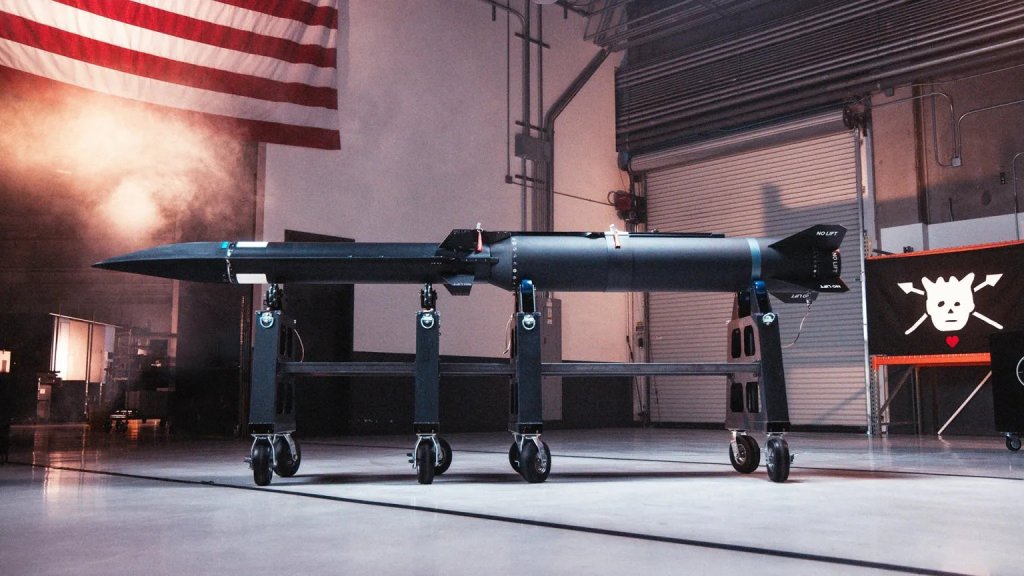
“A profile photo [seen below] at the company’s headquarters reveals a weapon with a ballistic missile-like booster, on top of which is mounted what could be an unpowered hypersonic glide vehicle (HGV). A booster brings an HGV to the desired velocity and altitude before releasing it toward its target. The concept is in contrast to air-breathing cruise missiles capable of traveling at hypersonic speeds. Hypersonic speed is generally defined as anything above Mach 5, which larger ballistic missiles also reach in the course of their flights. More precise performance figures for Blackbeard are lacking, but Castelion has previously hinted it could hit targets out to just under 500 miles. Alternatively, the second stage may also have its own motor, allowing it to continue accelerating or sustain high-speed flight. A similar arrangement has been suggested as the propulsion system for the Russian Zircon missile.”

Castelion

“Both stages of the weapon have cruciform fins, while the upper one features a prominent ‘chine’ line along the length of its body, and a slightly beaklike nose. The trolley on which the weapon is mounted provides some idea of its overall size. The blue stripes seen on each stage normally signify that a munition is an inert, non-explosive round utilized for training or tracking purposes. This would indicate a real (unarmed) missile rather than a dummy or mockup.”

A picture shown at Tailhook had also offered a new look at the front of the missile, exposing what looked to be an aperture on one side of the design’s wedge-shaped nose. As we wrote after that image emerged:

“The apparent apertures are also seen pointed up, but many air-launched munitions do flip down after release.”

“How exactly Blackbeard is guided remains unknown, but a downward-angled aperture at the nose end for a seeker system would make sense for this weapon, which the Navy is pursuing primarily as a new way to target enemy ships. In particular, a wide array of existing anti-ship and land attack missiles, as well as certain anti-air types, have variously shaped apertures in their noses for imaging infrared seekers. Imaging infrared has the benefit of being immune to radio frequency electronic warfare jamming. In addition, it is a passive capability that does not send out signals that can give an opponent advance notice of an incoming attack. Blackbeard’s full guidance package very likely also includes some means of navigating to a target area first, and it could have multiple modes of operation.”

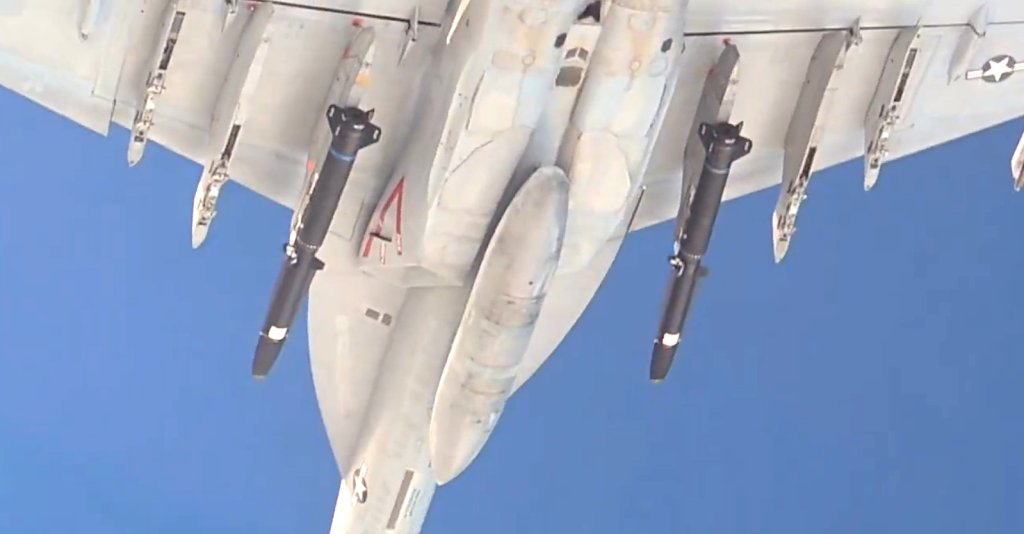
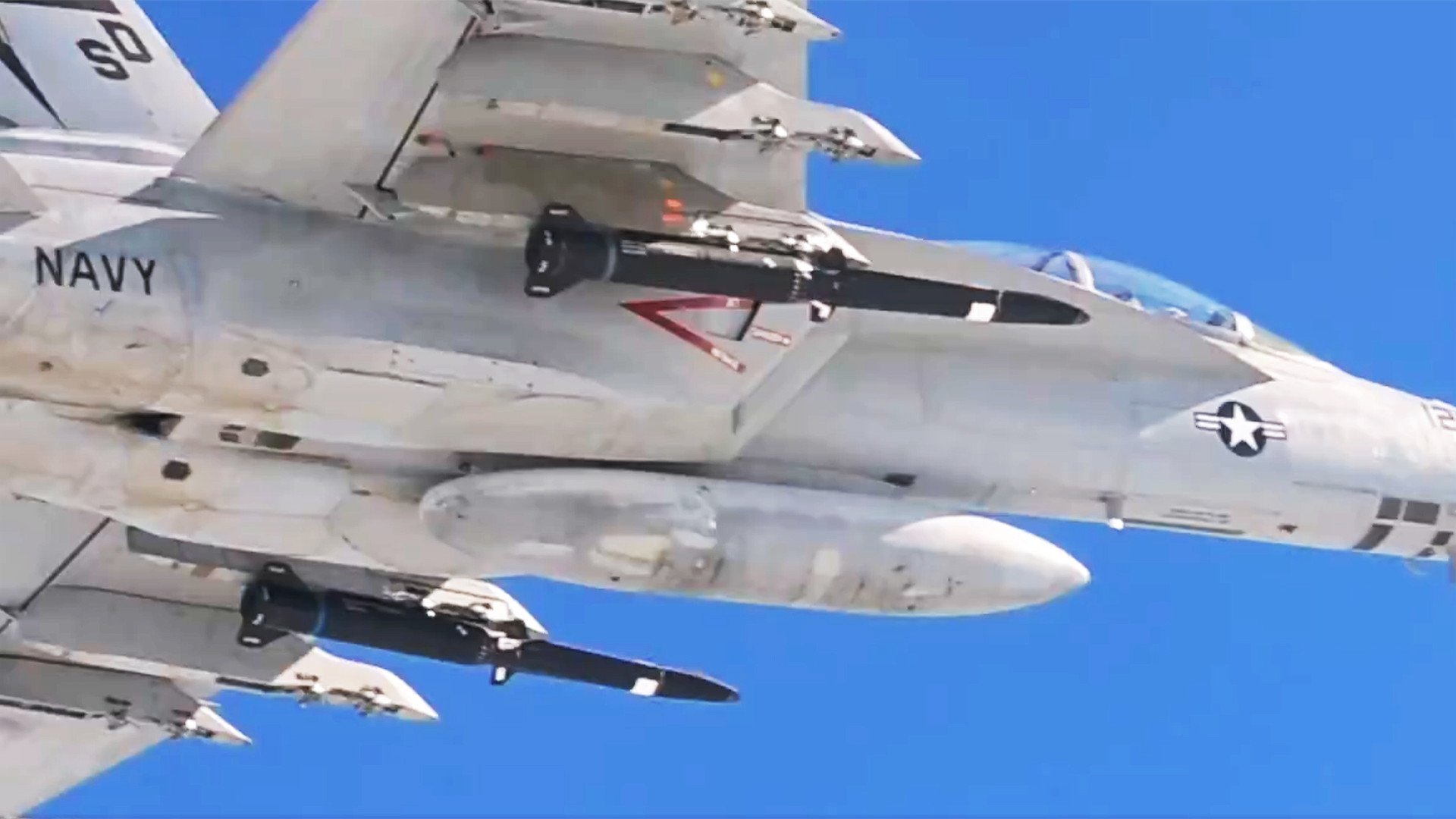
The new flight testing footage released today also underscores the relatively small size of Blackbeard overall. While the Super Hornet is set to be the first operational launch platform, it is very likely to be integrated on other aircraft quickly thereafter. The Navy is acquiring Blackbeard under a program called the Multi-mission Affordable Capacity Effector (MACE).

Another screen capture from the new Navy video offering a different of Blackbeards under the wings of a Super Hornet, underscoring their relatively small size. USN capture

Requirements for MACE that the Navy put out previously explicitly called for a design compact enough for carrier-based F-35C (and land-based F-35A) Joint Strike Fighters to carry four of them internally. Whether that remains a goal in any way is unclear. Still, being able to carry some number of Blackbeards internally would not only give those jets a hypersonic strike weapon, but one that they could carry in the most stealthy configuration. The Navy also notably does operate the F-35A outside of the test and evaluation community, which might point to air-launched Blackbeards entering service elsewhere in the future. As an aside, the U.S. Army is pursuing a ground-launched version of this missile, as well.

Another critical aspect of Blackbeard is the emphasis on lower cost and the ability to produce the missiles readily at scale. The conflict with Iran has fully driven home long-standing concerns about the depth of U.S. stockpiles of various critical munitions, as well as its ability to replenish them quickly. Blackbeard reflects a larger push across America’s armed forces to add more cost-effective weapons that can be acquired on faster timetables to their arsenals. Bringing in new, smaller companies like Castelion to develop and build these munitions has also been a major point of focus. To put this all in immediate context, in May, the Pentagon announced a framework agreement to buy 12,000 Blackbeards over the next five years.

As mentioned, the Navy’s stated goal now is to reach an early operational capability with Blackbeard by 2028, if not sooner. What the exact fielding plan for those missiles might be is unclear. PAE-A did write “Coming soon to a theater near you” in its post on X containing the video montage, and tagged the official accounts for U.S. Central Command (CENTCOM) and U.S. Pacific Command (PACOM). CENTCOM oversees U.S. military activities in and around the Middle East, including ongoing operations against Iran. U.S. military officials have also long touted hypersonic weapons, in general, as key to success in any future conflict in the Pacific, especially a high-end fight against China.

It’s also worth noting here that U.S. military hypersonic missile programs across the services have faced repeated setbacks and delays over the years. This, in turn, has prompted discussion about a worrisome gap emerging in this arena between the United States and its chief global competitors, especially China. It is very possible now that Blackbeard could be the first operational air-launched type in American inventory, depending on how the U.S. Air Force does or does not proceed with its Hypersonic Attack Cruise Missile (HACM) program. The Air Force has said previously that it is aiming for HACM to be operational, at least on a limited level, before the end of Fiscal Year 2027, which begins next month.

If nothing else, we have clear evidence that the air-launched version of Blackbeard is now deep in flight testing for the U.S. Navy.

Contact the author: joe@twz.com

The post Blackbeard Hypersonic Missile Seen Flying On F/A-18 Super Hornet For The First Time appeared first on TWZ.

  •  
❌