❌

Reading view

Dhaka’s silence on Saudi executions puts remittances over lives

Saudi Arabia executed two Bangladeshis on October 14 but Dhaka’s response was conspicuously restrained. Its consulate in Jeddah reportedly sought formal confirmation and the foreign ministry requested details. Officials then reassured Riyadh that bilateral relations would remain unaffected. Public sentiment, reflected in a flood of angry and frustrated social media posts, stands in sharp contrast […]

The post Dhaka’s silence on Saudi executions puts remittances over lives appeared first on Asia Times.

  •  

Myanmar: Attacks in Rakhine Prevent the Return of the Rohingya

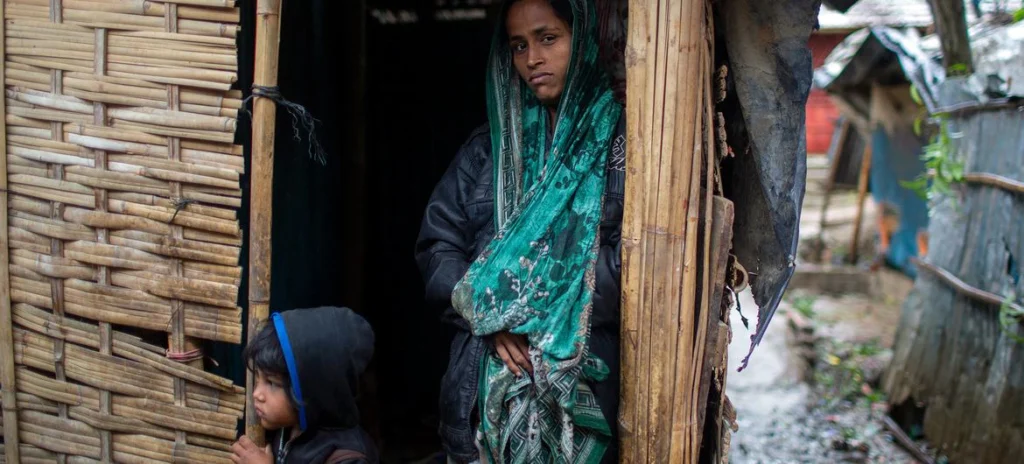
On Monday, Nicholas Koumjian, head of the UN Independent Investigative Mechanism for Myanmar, warned that violence against civilians in western Myanmar is preventing the return of the Rohingya—a Muslim-majority community that has faced persecution and displacement to Bangladesh.

“The Mechanism is investigating allegations of very serious international crimes currently being committed in Rakhine State by perpetrators of various ethnicities, religions, and political affiliations,” Koumjian said in a statement upon concluding a six-day official visit to Bangladesh.

RELATED:

China-Myanmar Corridor: Strategic Benefits Unveiled in State Visit Agreements

During his visit, the investigator met with Rohingya individuals who had fled the violence. “Many Rohingya shared their recent, traumatic experiences that drove them to seek refuge in Bangladesh, and these testimonies are crucial for advancing our investigations,” he stated.

According to UN data cited in the report, more than 154,000 Rohingya have arrived in the country since the beginning of 2024, following an escalation of violence linked to the conflict between the Burmese military and the Arakan Army. The latter is a Buddhist guerrilla group active in Rakhine that, according to available information, also discriminates against the Muslim minority. The Burmese military seized power in a 2021 coup.

Attacks on civilians in Rakhine State keep the Rohingya population at risk and hinder their safe return to Myanmar, even as UN investigators document allegations of international crimes.

In 1971, #India welcomed millions of refugees from Bangladesh with humanity. Today, Rohingya refugees in #Bangladesh struggle for food and clean water despite millions in international aid. Where is the money going? #Rohingya deserve dignity, not neglect! @vonbrauckmann pic.twitter.com/iVwaZNeFbU

— Aditya Tiwari (@adityatiwarizz8) October 12, 2026

Airstrike in Rakhine

Two weeks prior to Koumjian’s statement, at least 50 people were killed and another 58 injured in an airstrike on a market in Rakhine, according to UN figures. The Arakan Army attributed the shelling to the Burmese military. The incident took place in an area inhabited by the Rohingya population.

Koumjian called for an end to violence against civilians and maintained that ensuring those responsible are held accountable is crucial for Rohingya communities to return safely to their homes.

This new wave of displacement follows the exodus of over 720,000 Rohingya during the military campaign launched in August 2017. Currently, more than 1.2 million Rohingya live in refugee camps in Cox’s Bazar, Bangladesh—home to the world’s largest network of refugee camps, according to UN data cited in the text.

Established in 2018, the UN mechanism has provided evidence to the International Criminal Court, to Argentine authorities—who opened proceedings in 2024 under the principle of universal jurisdiction—and to the International Court of Justice, in connection with investigations into possible genocide against the Rohingya people.

#Myanmar | Malaysia welcomed military-backed leader Min Aung Hlaing as concerns grow over plans to repatriate thousands of Myanmar nationals.
Rights groups warn returnees could face persecution, forced conscription and violence amid the civil war.#Malaysia #HumanRights… pic.twitter.com/Ls0gW40rsy

— teleSUR English (@telesurenglish) October 8, 2026

  •  

The Field That Was India Inside Bangladesh Inside India Inside Bangladesh — The World’s Only “Russian Doll” Territory Vanished in 2015

For decades, one of the oddest spots on the world’s political map was a patch of farmland roughly the size of a soccer pitch. It was called Dahala Khagrabari (enclave number 51) and it belonged to India. It sat inside a piece of Bangladesh, which lay inside a pocket of Indian territory, which was itself […]

  •  

Bangladesh energy crisis calls for pragmatism, not political purity

For more than three decades, the Bangladeshi political left has maintained an unyielding stance on natural resources like gas, coal, and minerals, insisting that state entities must develop them exclusively. Foreign energy companies are viewed with deep suspicion, while production-sharing contracts are routinely condemned as vehicles designed to siphon national wealth to foreign multinationals. Coal […]

The post Bangladesh energy crisis calls for pragmatism, not political purity appeared first on Asia Times.

  •  

Rahman’s UN debut carries family weight, high national stakes

When Bangladeshi Prime Minister Tarique Rahman addressed the United Nations General Assembly for the first time on Thursday (September 24), he became the third member of his immediate family to speak from the UN podium. His father, President Ziaur Rahman, addressed the General Assembly in 1980, speaking on self-reliance and regional cooperation. His mother, Khaleda […]

The post Rahman’s UN debut carries family weight, high national stakes appeared first on Asia Times.

  •  

Bangladesh under Yunus questions 'reformer' image

Under Muhammad Yunus, Bangladesh saw a tense period where the recourse to justice was curtailed, the banking sector crippled, and foreign investment virtually evaporated. As the country tries to build a brighter future, the authoritarian nature of Yunus’s interim administration - its series of endless legal witch hunts and laser-focus on political retribution - echoes on with questions building over the ‘reformer’ image Yunus worked to foster.

Rocketed to power off the back of a student-led revolution, Muhammad Yunus promised accountability and access to justice. Instead, he turned his sights on a series of political scores needing to be settled, using his temporary power to establish a firm, authoritarian rule.

Incredibly, Yunus himself knew what it felt like to be the victim of witch hunt, having become embroiled in a dispute with Sheikh Hasina whilst she was in power. He could have taken the opportunity to set a new path for Bangladesh; one where the courts no longer operated as a space of political persecution. Instead, he doubled down and drew on popular resentment for the Hasina administration to foster a culture of political retribution while leveraging the judicial system to target his enemies.

During his tenure, Human Rights Watch repeatedly raised the alarm about the number of political opponents that were being held in indefinite detention. His administration also pursued the death penalty for all those it associated with the former regime, discarding due processes in favour of stacking benches with unqualified judges who were likely to return harsher verdicts. Undeterred, the contradictions grew. Here was a founding member of Nelson Mandela’s Council of Elders, locking up vast numbers of political opponents and doing nothing to protect journalists.

Yunus also spearheaded a smear campaign against almost a dozen of the country’s leading business groups, dissolving boards and installing favored (and corrupt) advisers, the result has left the country’s economy in dire straits and the current government attempting to salvage the wreckage. Through a series of endless legal witch hunts and targeted campaigns, Yunus saddled the eleven business groups with hundreds of criminal and commercial charges, while doing precious little to support the wider economy. The attacks scared off would-be investors, concerned they may earn the ire of Yunus’s government and have left the economy with a rolling investment crisis.

To maximise this campaign’s impact, Yunus leveraged a court system which requires people to appear in-person before the court or face harsher, in-absentia sentences. In drumming up hundreds of legal claims Yunus effectively nullified the business groups from any effective response by making it virtually impossible for them to meet the claims in court. To ensure this would be as difficult as possible, Yunus strategically empowered the students who brought down Hasina, bringing them into his fold.

By withholding any repercussions for the attacks on Hasina’s residence or the fires started at government buildings during the uprising, Yunus tacitly permitted a general sense of lawlessness and attacks on perceived enemies of the state to spread. Former ministers, on their way to essentially sham trials, would be mobbed - including one minister who was assaulted by lawyers - by crowds calling for their execution. One former Justice even had to undergo surgery as a result of the violent injuries he suffered following a mob attack. Lawyers have even reported that they were prevented from carrying out their work if it involved representing people with ties to the former regime. In all, the government's permissiveness of vigilante justice, combined with a targeted campaign of lawfare against its perceived enemies undermined any hope for fair trials and it is little wonder businesses remain reticent to engage with Bangladesh.

Despite a rhetoric of justice and accountability, Yunus’ actions proved these were never truly on the table. In order for the country to move forward, Bangladesh needs a pathway to reconciliation, which cannot coexist with the legal witch hunts instigated by Muhammad Yunus. The new government needs to change course if it wants to bring the country on the path to a prosperous and fairer future.

  •  

How an unverified Bangladesh lemur story travelled around the world

The modern media disinformation chain is a slippery thing. A report alleging something nefarious appears here and, in just a day, lands on a major British paper there. And in a media environment that prioritizes speed above all else, establishing the facts of an allegation can be the difference between being first and being late…but right.

Take, for example, a recent story that’s been picked up in the British press about two lemurs being stolen from a Bangladeshi safari park. It began on 8 September when the outlet, Ajker Patrika, published a story claiming two ring-tailed lemurs stolen from the Gazipur Safari Park had been found in India at the wildlife sanctuary, Vantara.

Before diving into the details, any attentive reader of Ajker Patrika’s story would have flagged that the outlet repeatedly and inexplicably referred to the wildlife sanctuary as “Banatara”. To be clear, there is no Banatara, and such editorially wobbly standards should have been the first tip-off that the wider foundations of this story were placed on unstable facts.

But, obvious spelling errors aside, Ajker Patrika plowed forward and reported that the animals passed through intermediaries before reaching Jamnagar where they were, according to the Bangladesh’s Criminal Investigation Department (CID), sold to an institution associated with Vantara. The outlet said that investigators had linked them after seeing photographs of lemurs at Vantara, but simultaneously admitted that there were no identifiable markers capable of confirming that Vantara’s animals were, in fact, the stolen ones. Adding to the difficulty in identifying these lemurs as the stolen ones is the fact that, while wild ring-tailed lemurs are listed as endangered, captive-bred ones are some of the most popular species of lemur in zoos worldwide and can be legally sourced with ease.

Despite the absence of microchips, individual identification numbers, or stored DNA profiles capable of establishing a link, Ajker Patrika treated the sudden appearance of lemurs at Vantara as proof enough of wrongdoing. On September 9th, the story blew open when The Independent gave the allegation international credibility. The liberal-left paper repeated the claims that Vantara’s lemurs were the stolen ones while acknowledging that there was no hard proof over the animals’ true provenance. It even outright claimed its reporting was based on Ajker Patrika’sdetails of the events. No further Independent-led interview with the CID was held to confirm the location of the animals. Instead, the paper took the original, mercurial reporting from one Bangladeshi outlet, treated it as fact and even spun a more authoritative-sounding headline, claiming, “Bangladesh says two stolen lemurs have been taken to billionaire’s private zoo in India”.

Cue the maelstrom. At least a dozen outlets across several countries rehashed The Independent’s work, creating an echo-chamber amplifying allegations built on weak foundations and unexamined, second-hand reporting. Bizarrely, Ajker Patrika reported on The Independent’s reporting of its own story the very next day, saying the lemurs had been stolen, “according to a report by British newspaper The Independent, citing Ajker Patrika.” Circular amplification at its finest.

By September 11th, Bangladeshi authorities were working to set the record straight. Bangladesh’s widely-read The Business Standard quoted CID Special Superintendent of Police, Chufi Ullah, saying that while investigators had established the lemurs had been trafficked to India, they had not established where they subsequently went. He specifically went on the record to deny that the CID had said the animals were at Vantara.

For its part, Vantara has said it had no involvement in the theft and has received no notice from any investigating agency. It affirmed that the animals in its care are housed in accordance with Indian law with documented provenance and that it submitted records of its two ring-tailed lemurs. It also welcomed scientific verification, like a DNA test, to help

Despite the CID clearing up the central facts of the theft, The Independent and Ajker Patrika have yet to amend their headlines. Perhaps the damage is already done. In this media environment where speed matters more than facts, unverified information can reign, making the separation of truth from fiction more difficult than ever before.

  •  
❌